Clinical application of PET in
Cardiology
Dr. Raghu Kishore Galla
A positron emission tomography (PET) is a
nuclear medical imaging technique which
produces a three dimensional image of
functional processes in the body.
• PET is a non-invasive, diagnostic imaging
technique for measuring the metabolic
activity of cells in the human body.
• It was developed in the mid 1970s and it was
the first scanning method to give functional
information about the brain.
A brief history of the positron & PET
• Existence first postulated in 1928 by Paul Dirac.
• First observed in 1932 by Carl D. Anderson, who gave the
positron its name.
• The concept of emission and transmission tomography
was introduced by David E. Kuhal and Roy Edwards in the
late 1950s at the university of Pennsylvania.
• In the 1970s, Tatsuo Ido at the Brookhaven National
laboratory was the first to describe the synthesis of 18-F
FDG, the most commonly used PET scanning isotope
carrier.
What is a Positron….
• A Positron is an anti-matter electron, it is identical
in mass but has an apposite charge of +1.
• Positron can come from different number of
sources, but for PET they are produced by nuclear
decay.
• Nuclear decay is basically when unstable nuclei
are produced in a cyclotron by bombarding the
target material with protons, and as a result a
neutron is released.
18-O + proton => 18-F + neutron
• In PET the target material is chosen so that the
product of the bombardment decays to a more stable
state isotope by emitting a positron, for instance 18-F
has too many protons, so one of these protons decays
into a neutron emitting in the process a positron an a
neutrino.
proton (+1 charge) => neutron (0 charge) + positron
(+1 charge) + neutrino (0 charge)
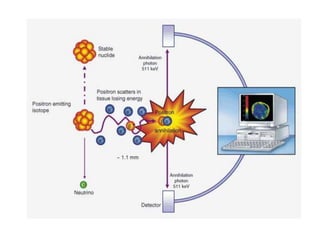
• Positron begins its activity in colliding with other
particles and gradually losing its kinetic energy and
thus slowing down.
Annihilation of a positron and electron…
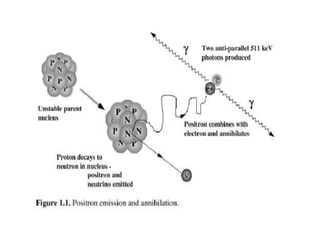
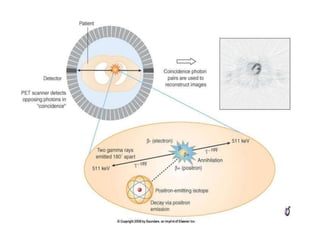
• The positron will encounter an electron and
completely annihilate each other resulting in
converting all their masses into energy. This is the
result of two photons, or gamma rays.
• Because of conservation of energy and momentum,
each photon has energy of 511keV and head in an
almost 180 degrees from each other.
• 511keV is the ideal rest state annihilation value.
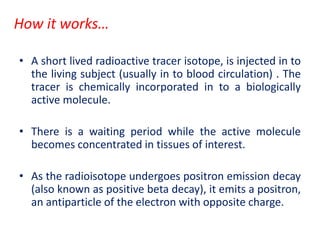
How it works…
• A short lived radioactive tracer isotope, is injected in to
the living subject (usually in to blood circulation) . The
tracer is chemically incorporated in to a biologically
active molecule.
• There is a waiting period while the active molecule
becomes concentrated in tissues of interest.
• As the radioisotope undergoes positron emission decay
(also known as positive beta decay), it emits a positron,
an antiparticle of the electron with opposite charge.
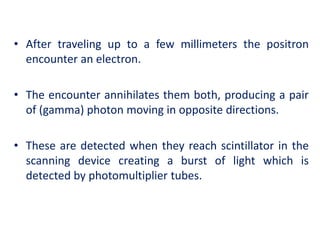
• After traveling up to a few millimeters the positron
encounter an electron.
• The encounter annihilates them both, producing a pair
of (gamma) photon moving in opposite directions.
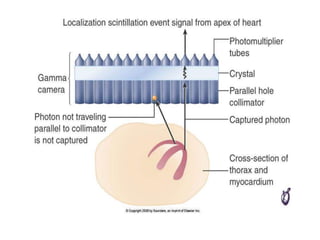
• These are detected when they reach scintillator in the
scanning device creating a burst of light which is
detected by photomultiplier tubes.
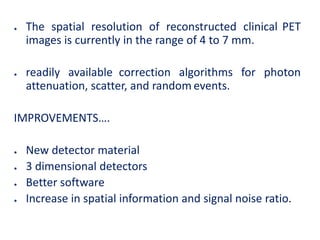
● The spatial resolution of reconstructed clinical PET
images is currently in the range of 4 to 7 mm.
● readily available correction algorithms for photon
attenuation, scatter, and random events.
IMPROVEMENTS….
● New detector material
● 3 dimensional detectors
● Better software
● Increase in spatial information and signal noise ratio.
PET in cardiology
● First positron emission tomography(PET) scanner
in 1975
● Use in research in
- myocardial blood flow regulation
- myocardial substrate metabolism
- cardiac autonomic innervation
In Cardiology, PET has become the 'gold standard' for
• - Non-invasive evaluation of stunned (ischemic)
myocardium
- Differentiation of ischemic heart muscle from
infracted myocardium
- Absolute quantification of myocardial blood flow
- Determining the candidates most suitable for
coronary bypass
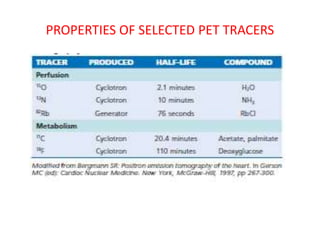
PROPERTIES OF SELECTED PET TRACERS
TRACERS OF MYOCARDIAL PERFUSION
• Tracers that are only partially extracted by the
myocardium
- Rb 82 chloride
- N 13 ammonia
• Tracers that are freely diffusible
- O 15 water
Rubidium 82 PET MPI
• Rb 82 is a monovalent cation with a ultra short half life of
75 seconds
• Can be done without a onsite cyclotron
• Serial evaluations of regional myocardial perfusion can be
made at intervals as short as 5 mins
• First pass extraction at rest is 50-60% via Na-K ATPase
pump similar to Thallium 201 and less than N 13
• Uptake is a function of both blood flow and myocardial cell
integrity
• Usually performed before and after the vasodilator
stress.
• Infarcted myocardium doesn’t retain IV administered Rb
82.
• Washes of rapidly from damaged myocardial cells
fallowing the initial uptake phase.
• Despite of short half life modern PET gamma cameras
are able to obtain good quality of images.
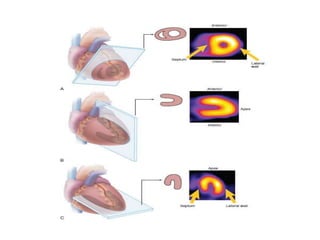
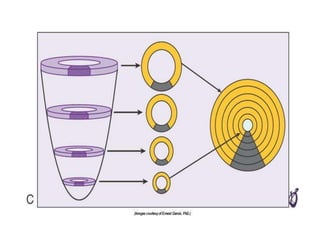
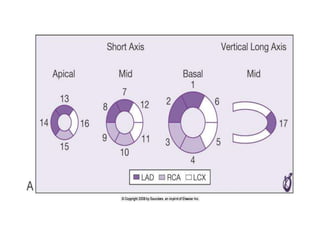
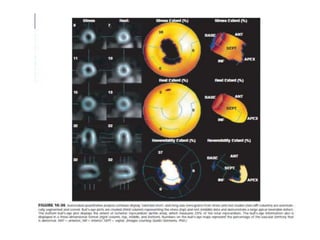
• Displayed using polar maps utilizing the bulls eye
approach with the apex located at the center and the
base at the rim.
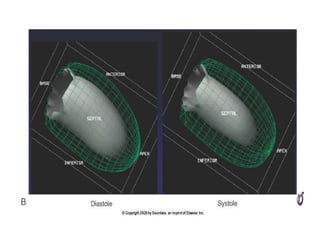
• 3D displays of Rb82 activity are more quantitative
with respect to polar maps.
• The sensitivity and specificity of PET MPI is superior
to other non invasive tests.
• In addition to four studies directly comparing 342
patients undergoing SPECT with Thallium 201 and RB
82 PET, numerous studies of PET MPI found excellent
sensitivity of 92% and a specificity of 90%.
• Though all patients of intermediate probability of
CAD can undergo PET MPI, its is preferable to SPECT
MPI in patients with attenuation problems like…
- obese patients
- women
- breast implants or left mastectomy
- chest deformity
- left pleural or pericardial effusion
N13 Ammonia or O15 water PET MPI
• Widely used for the last 2 decades
• Has 10 mins half life
• Needs a onsite cyclotron
• Takes 100-120 mins for the procedure
• Both rest and stress images can be gated
• Good quality of gated & ungated images
• Cumbersome and time taking
• Some normal volunteers show mild defect in lateral
wall of LV in N13 ammonia retention
Stress 18 FDG PET MPI
• Direct imaging using FDG radionucleotide during
exercise or pharmacological stress and rest.
• The differential uptake of glucose in ischemic and non
ischemic myocardium can help in development of “hot
spots” of imaging agent for myocardial ischemia.
• Longer half life allows single dose on a daily basis.
• 18F would allow assessment of perfusion during
treadmill test rather than vasodilator stress alone
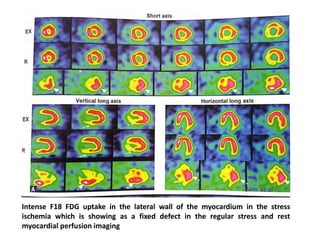
Intense F18 FDG uptake in the lateral wall of the myocardium in the stress
ischemia which is showing as a fixed defect in the regular stress and rest
myocardial perfusion imaging
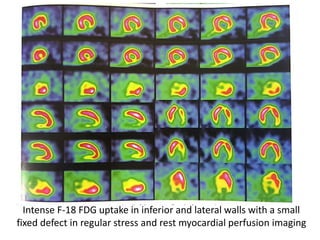
Intense F-18 FDG uptake in inferior and lateral walls with a small
fixed defect in regular stress and rest myocardial perfusion imaging
• Under fasting conditions the normal myocardium primarily
utilizes fatty acids while glucose utilization and thus FDG
uptake is minimal.
• The ischemic myocardium has enhanced glucose metabolism,
markedly takes up FDG which is displayed on PET images as
hotspot.
• Under the fasting conditions there is heterogeneous
distribution of FDG into normal myocardium showing higher
FDG uptake in lateral wall than in septum.
• For these reasons FDG PET under fasting conditions is not
been recommended for clinical viability assessment.
• Most commonly used protocol
– Oral loading of 50-70gms of glucose stimulating
insulin secretion and increasing FDG uptake
into normal myocardium to near maximal
• Euglycemic insulin clamping is an alternative
technique and is more complex but guarantees
more stable and controlled metabolic conditions
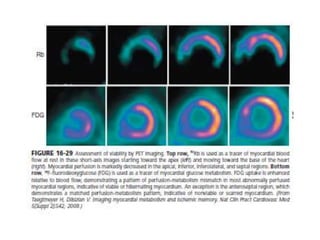
• FDG uptake into normal and ischemic but viable
myocardium is enhanced and negative FDG uptake
is considered to indicate scar tissue
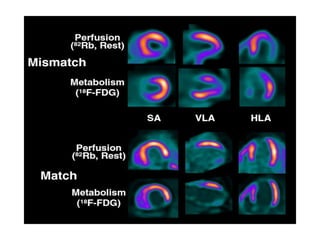
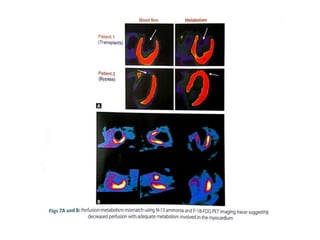
Hibernating myocardium
• Demonstrate increased FDG uptake in the fasting
state unlike the surrounding normal myocardium
• But in post-prandial state it demonstrates FDG
uptake
• Therefore, either preserved or even enhanced
FDG uptake in dysfunctional myocardial regions
represent presence of myocardial viability by the
help of most popular criteria of flow metabolism
mismatch
Stunned myocardium
• Regional dysfunction due to stunned myocardium
may be manifested by normal/enhanced/reduced
glucose utilization using FDG and flow images
• Only criteria to diagnose stunned myocardium is
presence of regional myocardial wall motion
abnormalities
• Perfusion – Metabolism match indicates myocardial
scar.
Cardiac PET: Myocardial Perfusion Imaging- Appropriate
Use Criteria
1. Detection of CAD in the symptomatic patient:
– a. Evaluation of Ischemic Equivalent (Non-Acute)
– b. Acute Chest Pain
– c. Acute chest pain (rest imaging only)
2. Detection of CAD/Risk Assessment without Ischemic Equivalent
– a. Asymptomatic- High CHD Risk (ATP III Risk Criteria)
– b. New-Onset or Newly diagnosed Heart Failure with LV
Systolic Dysfunction without Ischemic Equivalent
– c. Ventricular Tachycardia
– d. Syncope with Intermediate or High CHD risk (ATP III Risk
Criteria)
– e. Troponin elevation without additional evidence of acute
coronary syndrome
3.Risk Assessment with prior test results and/or known
chronic stable CAD
– a. Equivocal, borderline or discordant stress testing where
obstructive CAD remains a concern
– b. New or worsening symptoms- Abnormal coronary
angiography OR abnormal prior stress imaging study
– c. Coronary stenosis or anatomic abnormality of uncertain
significance. Asymptomatic, High CHD risk, Agatston score
between 100-400
– e. Asymptomatic, Agatston score greater than 400
– f. Asymptomatic, Intermediate-Risk Duke Treadmill Score
– g. Asymptomatic, High-Risk Duke Treadmill Score
Cardiac PET: Myocardial Perfusion Imaging- Appropriate
Use Criteria
• 4. Risk Assessment: Preoperative Evaluation for Non-Cardiac
Surgery without Active Cardiac Conditions
– a. Intermediate-Risk Surgery
– b. Vascular Surgery
• 5. Risk Assessment: Within 3 months of an Acute Coronary
Syndrome
– a. STEMI
– b. UA/NSTEMI
• 6. Risk Assessment: Post Revascularization (PCI or CABG)
– a. Symptomatic
– b. Asymptomatic- Incomplete Revascularization or greater
than or equal to 5 years post CABG
Cardiac PET: Myocardial Perfusion Imaging- Appropriate
Use Criteria
Cardiac PET: Myocardial Perfusion Imaging- Appropriate
Use Criteria
• 7. Assessment of Viability/Ischemia
– a. Ischemic Cardiomyopathy
– b. Assessment of Viability for patient eligible for
revascularization
• 8. Evaluation of Left Ventricular Function
– a. In absence of recent reliable diagnostic
information from another imaging modality
– b. Baseline and serial measures after key
therapeutic milestones or evidence of toxicity from
potentially cardiotoxic therapy
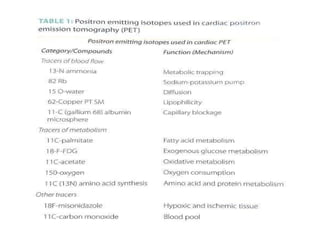
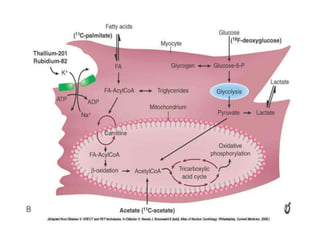
Metabolic tracers
• Flourine-18 FDG
– Deoxy glucose is an analogue of glucose can be labelled
with F-18 a cyclotron produced radionuclide to form F-
18FDG reflects the overall myocardial utilization of
glucose
• C-11 Palmitate
– Palmitate, a naturally occurring fatty acid labeled with
cyclotron produced radionuclide C-11, uptake and
clearance of which reflects myocardial utilization of fatty
acids
• C-11 Acetate
Cardiac PET: Myocardial Viability – Appropriate
Use Criteria
• The applications for Cardiac Viability Imaging with
FDG PET are:
1. The identification of patients with partial loss of heart
muscle movement or hibernating myocardium is important
in selecting candidates with compromised ventricular
function to determine appropriateness for
revascularization.
2. Distinguish between dysfunctional but viable
myocardial tissue and scar tissue in order to affect
management decisions in patients with ischemic
cardiomyopathy and left ventricular dysfunction.
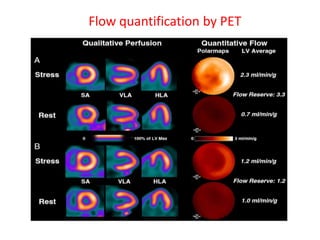
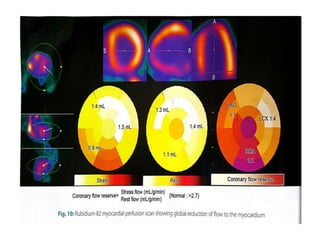
Flow quantification by PET
• It is helpful in patients suffering from
– Severe CAD having balanced ischemia
– Subclinical CAD (micro vascular dysfunction)
– Monitoring response to therapy
(progression or regression of CAD)
• PET quantification of perfusion reserve by use of
Rb82 net retention may suggest a greater extent of
disease than the other standard approaches of MPI
Flow quantification by PET
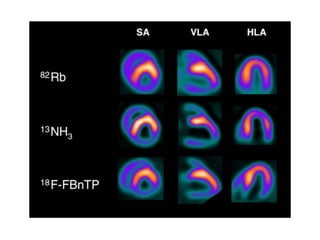
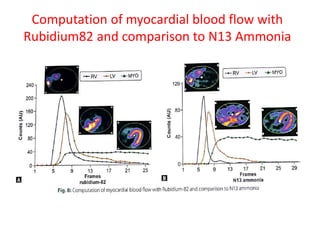
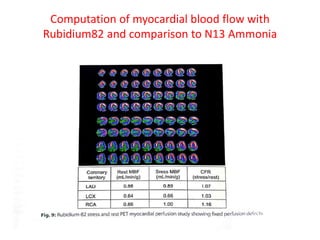
Computation of myocardial blood flow with
Rubidium82 and comparison to N13 Ammonia
Computation of myocardial blood flow with
Rubidium82 and comparison to N13 Ammonia
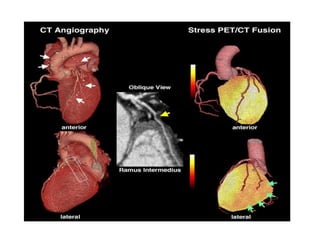
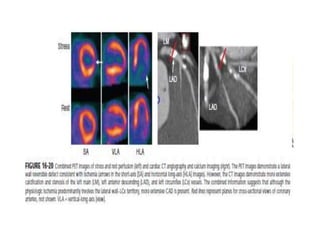
Hybrid PET-CT
● Combines CT-derived morphologic information with
PET-derived functional information
● Schenker et al. measured myocardial perfusion and
coronary calcium in a single cardiac PET-CT study in
695 patients
● They observed an increasing prevalence of abnormal
PET with increasing coronary calcium scores
Novel myocardial perfusion tracer
• PET perfusion tracers have half-lives that are very short. This
limits their applicability for exercise stress
• Flurpiridaz F-18
– New PET-MPI radiopharmaceutical
– In phase III clinical trial
– Binds to mitochondrial complex with high affinity
– Has an extraction ratio of >90%
– Has a long half life 110min
• Can be used during exercise stress testing unlike other
traditional PET tracers
Molecular imaging
● Cardiovascular molecular imaging is a rapidly
emerging discipline that aims toward visualization
of specific molecular targets that precede
changes in morphology, physiology, and function.
● Examples are the use of neuronal imaging to
identify subjects at risk for ventriculararrhythmia
● Great potential to facilitate discovery and
development of novel therapies
Takayasu arteritis
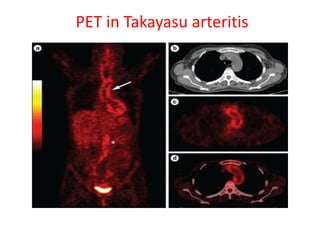
• 18F-fluorodeoxyglucose positron emission tomography
(18F-FDG-PET) allow diagnosis of TA earlier in the disease
course than standard angiography.
• Gold standard for knowing the extent of involvement and
the activity of the inflammation
• provide a means for monitoring disease activity.
• Early detection of relapse in patients receiving
immunosuppressive therapy
PET in Takayasu arteritis
MYOCARDITIS
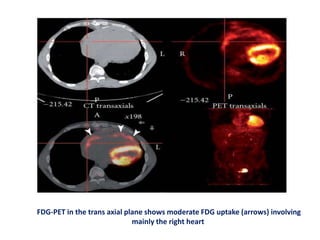
• Cardiac FDG PET/CT with Very High Fat Low Carbohydrate
Protein Preferred diet is shown to be an excellent modality in
diagnosing inflammatory myocarditis.
• Combined positron emission tomography (PET) and CT may
depict inflammatory processes before structural changes occur.
• unmatched in patient with ICD devices where MRI could not be
done.
• In the era of practice of evidence based medicine this has been
shown to be very promising investigation to show the treatment
response.
FDG-PET in the trans axial plane shows moderate FDG uptake (arrows) involving
mainly the right heart
Other applications of PET-MPI
• FDG PET – sarcoidosis
– Acute Vs Chronic
– Disease activity
– Follow-up
– Recurrence
• Sympathetic innervations
– C11 Hydroxyephedrine
– F18 Fluorobenzyl guanidine
– Provides high resolution imaging of regional analysis
of cardiac innervation
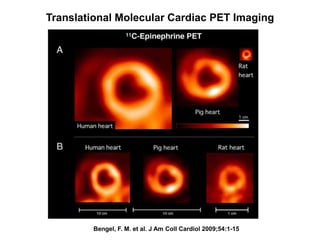
Bengel, F. M. et al. J Am Coll Cardiol 2009;54:1-15
Translational Molecular Cardiac PET Imaging
• F-18 FDG is an excellent probe to target macrophage
infiltration as a marker of plaque inflammation
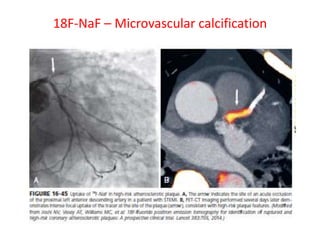
• F18 NaF targets active microcalcifications in the
atherosclerotic plaques and highest uptake was observed
in the culprit lesion
• F18 GalactoRGD targets both macrophages and intra
plaque neovasculature that may directly involved in the
degradation of protective fibrous cap of atherosclerotic
plaques
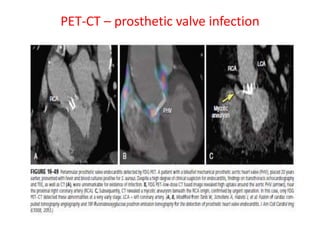
• FDG PET-CT can reliably detect cardiac prosthetic valve
infection very early
Other applications of PET-MPI
18F-NaF – Microvascular calcification
PET-CT – prosthetic valve infection
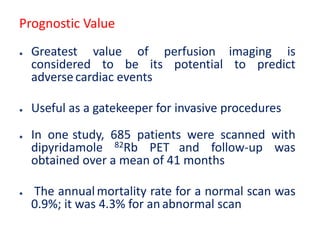
Prognostic Value
● Greatest value of perfusion imaging is
considered to be its potential to predict
adversecardiac events
● Useful as a gatekeeper for invasive procedures
● In one study, 685 patients were scanned with
dipyridamole 82Rb PET and follow-up was
obtained over a mean of 41 months
● The annualmortality rate for a normal scan was
0.9%; it was 4.3% for an abnormal scan
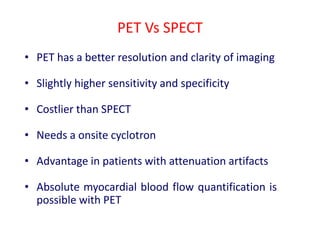
PET Vs SPECT
• PET has a better resolution and clarity of imaging
• Slightly higher sensitivity and specificity
• Costlier than SPECT
• Needs a onsite cyclotron
• Advantage in patients with attenuation artifacts
• Absolute myocardial blood flow quantification is
possible with PET
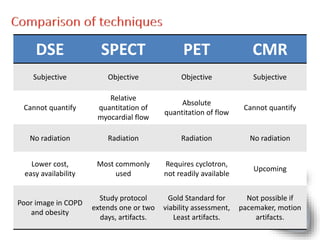
DSE SPECT PET CMR
Subjective Objective Objective Subjective
Cannot quantify
Relative
quantitation of
myocardial flow
Absolute
quantitation of flow
Cannot quantify
No radiation Radiation Radiation No radiation
Lower cost,
easy availability
Most commonly
used
Requires cyclotron,
not readily available
Upcoming
Poor image in COPD
and obesity
Study protocol
extends one or two
days, artifacts.
Gold Standard for
viability assessment,
Least artifacts.
Not possible if
pacemaker, motion
artifacts.
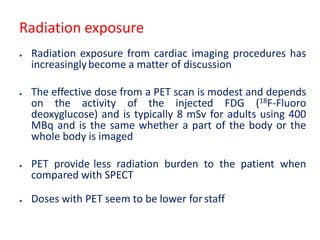
Radiation exposure
● Radiation exposure from cardiac imaging procedures has
increasinglybecome a matter of discussion
● The effective dose from a PET scan is modest and depends
on the activity of the injected FDG (18F-Fluoro
deoxyglucose) and is typically 8 mSv for adults using 400
MBq and is the same whether a part of the body or the
whole body is imaged
● PET provide less radiation burden to the patient when
compared with SPECT
● Doses with PET seem to be lower for staff
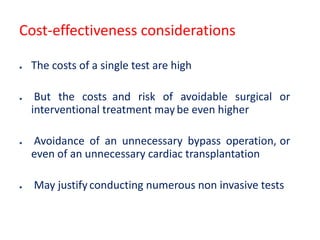
Cost-effectiveness considerations
● The costs of a single test are high
● But the costs and risk of avoidable surgical or
interventional treatment may be even higher
● Avoidance of an unnecessary bypass operation, or
even of an unnecessary cardiac transplantation
● May justify conducting numerous non invasive tests
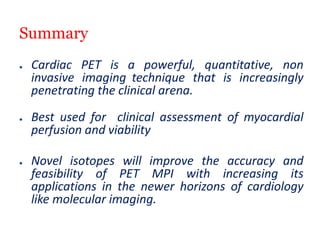
Summary
● Cardiac PET is a powerful, quantitative, non
invasive imaging technique that is increasingly
penetrating the clinical arena.
● Best used for clinical assessment of myocardial
perfusion and viability
● Novel isotopes will improve the accuracy and
feasibility of PET MPI with increasing its
applications in the newer horizons of cardiology
like molecular imaging.
THANK U

PET scan in Cardilogy

  • 1.
    Clinical application ofPET in Cardiology Dr. Raghu Kishore Galla
  • 2.
    A positron emissiontomography (PET) is a nuclear medical imaging technique which produces a three dimensional image of functional processes in the body.
  • 3.
    • PET isa non-invasive, diagnostic imaging technique for measuring the metabolic activity of cells in the human body. • It was developed in the mid 1970s and it was the first scanning method to give functional information about the brain.
  • 4.
    A brief historyof the positron & PET • Existence first postulated in 1928 by Paul Dirac. • First observed in 1932 by Carl D. Anderson, who gave the positron its name. • The concept of emission and transmission tomography was introduced by David E. Kuhal and Roy Edwards in the late 1950s at the university of Pennsylvania. • In the 1970s, Tatsuo Ido at the Brookhaven National laboratory was the first to describe the synthesis of 18-F FDG, the most commonly used PET scanning isotope carrier.
  • 5.
    What is aPositron…. • A Positron is an anti-matter electron, it is identical in mass but has an apposite charge of +1. • Positron can come from different number of sources, but for PET they are produced by nuclear decay. • Nuclear decay is basically when unstable nuclei are produced in a cyclotron by bombarding the target material with protons, and as a result a neutron is released. 18-O + proton => 18-F + neutron
  • 6.
    • In PETthe target material is chosen so that the product of the bombardment decays to a more stable state isotope by emitting a positron, for instance 18-F has too many protons, so one of these protons decays into a neutron emitting in the process a positron an a neutrino. proton (+1 charge) => neutron (0 charge) + positron (+1 charge) + neutrino (0 charge) • Positron begins its activity in colliding with other particles and gradually losing its kinetic energy and thus slowing down.
  • 7.
    Annihilation of apositron and electron… • The positron will encounter an electron and completely annihilate each other resulting in converting all their masses into energy. This is the result of two photons, or gamma rays. • Because of conservation of energy and momentum, each photon has energy of 511keV and head in an almost 180 degrees from each other. • 511keV is the ideal rest state annihilation value.
  • 9.
    How it works… •A short lived radioactive tracer isotope, is injected in to the living subject (usually in to blood circulation) . The tracer is chemically incorporated in to a biologically active molecule. • There is a waiting period while the active molecule becomes concentrated in tissues of interest. • As the radioisotope undergoes positron emission decay (also known as positive beta decay), it emits a positron, an antiparticle of the electron with opposite charge.
  • 10.
    • After travelingup to a few millimeters the positron encounter an electron. • The encounter annihilates them both, producing a pair of (gamma) photon moving in opposite directions. • These are detected when they reach scintillator in the scanning device creating a burst of light which is detected by photomultiplier tubes.
  • 14.
    ● The spatialresolution of reconstructed clinical PET images is currently in the range of 4 to 7 mm. ● readily available correction algorithms for photon attenuation, scatter, and random events. IMPROVEMENTS…. ● New detector material ● 3 dimensional detectors ● Better software ● Increase in spatial information and signal noise ratio.
  • 16.
    PET in cardiology ●First positron emission tomography(PET) scanner in 1975 ● Use in research in - myocardial blood flow regulation - myocardial substrate metabolism - cardiac autonomic innervation
  • 17.
    In Cardiology, PEThas become the 'gold standard' for • - Non-invasive evaluation of stunned (ischemic) myocardium - Differentiation of ischemic heart muscle from infracted myocardium - Absolute quantification of myocardial blood flow - Determining the candidates most suitable for coronary bypass
  • 19.
  • 21.
    TRACERS OF MYOCARDIALPERFUSION • Tracers that are only partially extracted by the myocardium - Rb 82 chloride - N 13 ammonia • Tracers that are freely diffusible - O 15 water
  • 22.
    Rubidium 82 PETMPI • Rb 82 is a monovalent cation with a ultra short half life of 75 seconds • Can be done without a onsite cyclotron • Serial evaluations of regional myocardial perfusion can be made at intervals as short as 5 mins • First pass extraction at rest is 50-60% via Na-K ATPase pump similar to Thallium 201 and less than N 13 • Uptake is a function of both blood flow and myocardial cell integrity
  • 23.
    • Usually performedbefore and after the vasodilator stress. • Infarcted myocardium doesn’t retain IV administered Rb 82. • Washes of rapidly from damaged myocardial cells fallowing the initial uptake phase. • Despite of short half life modern PET gamma cameras are able to obtain good quality of images. • Displayed using polar maps utilizing the bulls eye approach with the apex located at the center and the base at the rim.
  • 24.
    • 3D displaysof Rb82 activity are more quantitative with respect to polar maps. • The sensitivity and specificity of PET MPI is superior to other non invasive tests. • In addition to four studies directly comparing 342 patients undergoing SPECT with Thallium 201 and RB 82 PET, numerous studies of PET MPI found excellent sensitivity of 92% and a specificity of 90%.
  • 30.
    • Though allpatients of intermediate probability of CAD can undergo PET MPI, its is preferable to SPECT MPI in patients with attenuation problems like… - obese patients - women - breast implants or left mastectomy - chest deformity - left pleural or pericardial effusion
  • 31.
    N13 Ammonia orO15 water PET MPI • Widely used for the last 2 decades • Has 10 mins half life • Needs a onsite cyclotron • Takes 100-120 mins for the procedure • Both rest and stress images can be gated • Good quality of gated & ungated images • Cumbersome and time taking • Some normal volunteers show mild defect in lateral wall of LV in N13 ammonia retention
  • 33.
    Stress 18 FDGPET MPI • Direct imaging using FDG radionucleotide during exercise or pharmacological stress and rest. • The differential uptake of glucose in ischemic and non ischemic myocardium can help in development of “hot spots” of imaging agent for myocardial ischemia. • Longer half life allows single dose on a daily basis. • 18F would allow assessment of perfusion during treadmill test rather than vasodilator stress alone
  • 34.
    Intense F18 FDGuptake in the lateral wall of the myocardium in the stress ischemia which is showing as a fixed defect in the regular stress and rest myocardial perfusion imaging
  • 35.
    Intense F-18 FDGuptake in inferior and lateral walls with a small fixed defect in regular stress and rest myocardial perfusion imaging
  • 36.
    • Under fastingconditions the normal myocardium primarily utilizes fatty acids while glucose utilization and thus FDG uptake is minimal. • The ischemic myocardium has enhanced glucose metabolism, markedly takes up FDG which is displayed on PET images as hotspot. • Under the fasting conditions there is heterogeneous distribution of FDG into normal myocardium showing higher FDG uptake in lateral wall than in septum. • For these reasons FDG PET under fasting conditions is not been recommended for clinical viability assessment.
  • 37.
    • Most commonlyused protocol – Oral loading of 50-70gms of glucose stimulating insulin secretion and increasing FDG uptake into normal myocardium to near maximal • Euglycemic insulin clamping is an alternative technique and is more complex but guarantees more stable and controlled metabolic conditions • FDG uptake into normal and ischemic but viable myocardium is enhanced and negative FDG uptake is considered to indicate scar tissue
  • 38.
    Hibernating myocardium • Demonstrateincreased FDG uptake in the fasting state unlike the surrounding normal myocardium • But in post-prandial state it demonstrates FDG uptake • Therefore, either preserved or even enhanced FDG uptake in dysfunctional myocardial regions represent presence of myocardial viability by the help of most popular criteria of flow metabolism mismatch
  • 40.
    Stunned myocardium • Regionaldysfunction due to stunned myocardium may be manifested by normal/enhanced/reduced glucose utilization using FDG and flow images • Only criteria to diagnose stunned myocardium is presence of regional myocardial wall motion abnormalities • Perfusion – Metabolism match indicates myocardial scar.
  • 42.
    Cardiac PET: MyocardialPerfusion Imaging- Appropriate Use Criteria 1. Detection of CAD in the symptomatic patient: – a. Evaluation of Ischemic Equivalent (Non-Acute) – b. Acute Chest Pain – c. Acute chest pain (rest imaging only) 2. Detection of CAD/Risk Assessment without Ischemic Equivalent – a. Asymptomatic- High CHD Risk (ATP III Risk Criteria) – b. New-Onset or Newly diagnosed Heart Failure with LV Systolic Dysfunction without Ischemic Equivalent – c. Ventricular Tachycardia – d. Syncope with Intermediate or High CHD risk (ATP III Risk Criteria) – e. Troponin elevation without additional evidence of acute coronary syndrome
  • 43.
    3.Risk Assessment withprior test results and/or known chronic stable CAD – a. Equivocal, borderline or discordant stress testing where obstructive CAD remains a concern – b. New or worsening symptoms- Abnormal coronary angiography OR abnormal prior stress imaging study – c. Coronary stenosis or anatomic abnormality of uncertain significance. Asymptomatic, High CHD risk, Agatston score between 100-400 – e. Asymptomatic, Agatston score greater than 400 – f. Asymptomatic, Intermediate-Risk Duke Treadmill Score – g. Asymptomatic, High-Risk Duke Treadmill Score Cardiac PET: Myocardial Perfusion Imaging- Appropriate Use Criteria
  • 44.
    • 4. RiskAssessment: Preoperative Evaluation for Non-Cardiac Surgery without Active Cardiac Conditions – a. Intermediate-Risk Surgery – b. Vascular Surgery • 5. Risk Assessment: Within 3 months of an Acute Coronary Syndrome – a. STEMI – b. UA/NSTEMI • 6. Risk Assessment: Post Revascularization (PCI or CABG) – a. Symptomatic – b. Asymptomatic- Incomplete Revascularization or greater than or equal to 5 years post CABG Cardiac PET: Myocardial Perfusion Imaging- Appropriate Use Criteria
  • 45.
    Cardiac PET: MyocardialPerfusion Imaging- Appropriate Use Criteria • 7. Assessment of Viability/Ischemia – a. Ischemic Cardiomyopathy – b. Assessment of Viability for patient eligible for revascularization • 8. Evaluation of Left Ventricular Function – a. In absence of recent reliable diagnostic information from another imaging modality – b. Baseline and serial measures after key therapeutic milestones or evidence of toxicity from potentially cardiotoxic therapy
  • 46.
    Metabolic tracers • Flourine-18FDG – Deoxy glucose is an analogue of glucose can be labelled with F-18 a cyclotron produced radionuclide to form F- 18FDG reflects the overall myocardial utilization of glucose • C-11 Palmitate – Palmitate, a naturally occurring fatty acid labeled with cyclotron produced radionuclide C-11, uptake and clearance of which reflects myocardial utilization of fatty acids • C-11 Acetate
  • 49.
    Cardiac PET: MyocardialViability – Appropriate Use Criteria • The applications for Cardiac Viability Imaging with FDG PET are: 1. The identification of patients with partial loss of heart muscle movement or hibernating myocardium is important in selecting candidates with compromised ventricular function to determine appropriateness for revascularization. 2. Distinguish between dysfunctional but viable myocardial tissue and scar tissue in order to affect management decisions in patients with ischemic cardiomyopathy and left ventricular dysfunction.
  • 50.
    Flow quantification byPET • It is helpful in patients suffering from – Severe CAD having balanced ischemia – Subclinical CAD (micro vascular dysfunction) – Monitoring response to therapy (progression or regression of CAD) • PET quantification of perfusion reserve by use of Rb82 net retention may suggest a greater extent of disease than the other standard approaches of MPI
  • 51.
  • 52.
    Computation of myocardialblood flow with Rubidium82 and comparison to N13 Ammonia
  • 53.
    Computation of myocardialblood flow with Rubidium82 and comparison to N13 Ammonia
  • 56.
    Hybrid PET-CT ● CombinesCT-derived morphologic information with PET-derived functional information ● Schenker et al. measured myocardial perfusion and coronary calcium in a single cardiac PET-CT study in 695 patients ● They observed an increasing prevalence of abnormal PET with increasing coronary calcium scores
  • 59.
    Novel myocardial perfusiontracer • PET perfusion tracers have half-lives that are very short. This limits their applicability for exercise stress • Flurpiridaz F-18 – New PET-MPI radiopharmaceutical – In phase III clinical trial – Binds to mitochondrial complex with high affinity – Has an extraction ratio of >90% – Has a long half life 110min • Can be used during exercise stress testing unlike other traditional PET tracers
  • 60.
    Molecular imaging ● Cardiovascularmolecular imaging is a rapidly emerging discipline that aims toward visualization of specific molecular targets that precede changes in morphology, physiology, and function. ● Examples are the use of neuronal imaging to identify subjects at risk for ventriculararrhythmia ● Great potential to facilitate discovery and development of novel therapies
  • 61.
    Takayasu arteritis • 18F-fluorodeoxyglucosepositron emission tomography (18F-FDG-PET) allow diagnosis of TA earlier in the disease course than standard angiography. • Gold standard for knowing the extent of involvement and the activity of the inflammation • provide a means for monitoring disease activity. • Early detection of relapse in patients receiving immunosuppressive therapy
  • 62.
    PET in Takayasuarteritis
  • 63.
    MYOCARDITIS • Cardiac FDGPET/CT with Very High Fat Low Carbohydrate Protein Preferred diet is shown to be an excellent modality in diagnosing inflammatory myocarditis. • Combined positron emission tomography (PET) and CT may depict inflammatory processes before structural changes occur. • unmatched in patient with ICD devices where MRI could not be done. • In the era of practice of evidence based medicine this has been shown to be very promising investigation to show the treatment response.
  • 64.
    FDG-PET in thetrans axial plane shows moderate FDG uptake (arrows) involving mainly the right heart
  • 65.
    Other applications ofPET-MPI • FDG PET – sarcoidosis – Acute Vs Chronic – Disease activity – Follow-up – Recurrence • Sympathetic innervations – C11 Hydroxyephedrine – F18 Fluorobenzyl guanidine – Provides high resolution imaging of regional analysis of cardiac innervation
  • 66.
    Bengel, F. M.et al. J Am Coll Cardiol 2009;54:1-15 Translational Molecular Cardiac PET Imaging
  • 67.
    • F-18 FDGis an excellent probe to target macrophage infiltration as a marker of plaque inflammation • F18 NaF targets active microcalcifications in the atherosclerotic plaques and highest uptake was observed in the culprit lesion • F18 GalactoRGD targets both macrophages and intra plaque neovasculature that may directly involved in the degradation of protective fibrous cap of atherosclerotic plaques • FDG PET-CT can reliably detect cardiac prosthetic valve infection very early Other applications of PET-MPI
  • 68.
  • 69.
    PET-CT – prostheticvalve infection
  • 70.
    Prognostic Value ● Greatestvalue of perfusion imaging is considered to be its potential to predict adversecardiac events ● Useful as a gatekeeper for invasive procedures ● In one study, 685 patients were scanned with dipyridamole 82Rb PET and follow-up was obtained over a mean of 41 months ● The annualmortality rate for a normal scan was 0.9%; it was 4.3% for an abnormal scan
  • 71.
    PET Vs SPECT •PET has a better resolution and clarity of imaging • Slightly higher sensitivity and specificity • Costlier than SPECT • Needs a onsite cyclotron • Advantage in patients with attenuation artifacts • Absolute myocardial blood flow quantification is possible with PET
  • 72.
    DSE SPECT PETCMR Subjective Objective Objective Subjective Cannot quantify Relative quantitation of myocardial flow Absolute quantitation of flow Cannot quantify No radiation Radiation Radiation No radiation Lower cost, easy availability Most commonly used Requires cyclotron, not readily available Upcoming Poor image in COPD and obesity Study protocol extends one or two days, artifacts. Gold Standard for viability assessment, Least artifacts. Not possible if pacemaker, motion artifacts.
  • 73.
    Radiation exposure ● Radiationexposure from cardiac imaging procedures has increasinglybecome a matter of discussion ● The effective dose from a PET scan is modest and depends on the activity of the injected FDG (18F-Fluoro deoxyglucose) and is typically 8 mSv for adults using 400 MBq and is the same whether a part of the body or the whole body is imaged ● PET provide less radiation burden to the patient when compared with SPECT ● Doses with PET seem to be lower for staff
  • 74.
    Cost-effectiveness considerations ● Thecosts of a single test are high ● But the costs and risk of avoidable surgical or interventional treatment may be even higher ● Avoidance of an unnecessary bypass operation, or even of an unnecessary cardiac transplantation ● May justify conducting numerous non invasive tests
  • 75.
    Summary ● Cardiac PETis a powerful, quantitative, non invasive imaging technique that is increasingly penetrating the clinical arena. ● Best used for clinical assessment of myocardial perfusion and viability ● Novel isotopes will improve the accuracy and feasibility of PET MPI with increasing its applications in the newer horizons of cardiology like molecular imaging.
  • 76.