Personality

word derived from a
LATIN expression ‘PERSONA’.

The

mask worn by Theatrical
Players in Ancient Greek Dramas

A

superficial social image that an
individual adopts in playing life’s
role.


Personality may be understood as the
characteristics pattern of
behavior and
modes of thinking that determine a person’s
adjustment to the environment.



Personality can be describe as how a person
affects others, how to understands and views
himself and his pattern of inner and outer
measurable traits.


It includes internal and external traits.



Relatively stable.



Both inherited as well as shaped.



Each individual is unique in behaviour.
Self concept theory
 Psycho Analytical theory
 Socio/cultural theory
 Trait theory

 Self-concept

is defined as ‘the
totality of Individual thoughts and
feeling having reference to
himself/herself to an object.



Consumers have a variety of enduring
images of themselves



These images are associated with
personality in that individuals
consumption relates to self-image
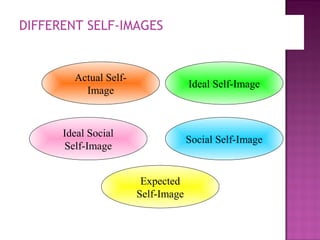
DIFFERENT SELF-IMAGES

Actual SelfImage

Ideal Self-Image

Ideal Social
Self-Image

Social Self-Image

Expected
Self-Image
This product
appeals to
a man’s
self-image.


Father of theory: FREUD



Three components of Personality:
Id
Ego
Superego


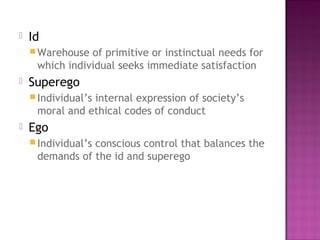
Id
 Warehouse

of primitive or instinctual needs for
which individual seeks immediate satisfaction



Superego
 Individual’s

internal expression of society’s
moral and ethical codes of conduct



Ego
 Individual’s

conscious control that balances the
demands of the id and superego






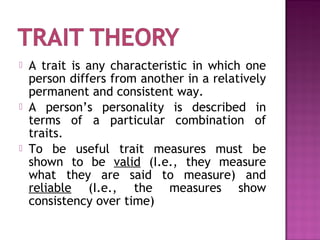
A trait is any characteristic in which one
person differs from another in a relatively
permanent and consistent way.
A person’s personality is described in
terms of a particular combination of
traits.
To be useful trait measures must be
shown to be valid (I.e., they measure
what they are said to measure) and
reliable (I.e., the measures show
consistency over time)
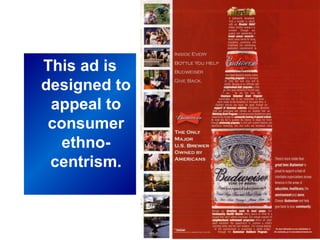
This ad is
designed to
appeal to
consumer
ethnocentrism.
Marketers
often use a
fictitious
location to
help with
personality.
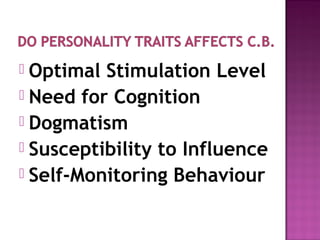
Optimal Stimulation Level
 Need for Cognition
 Dogmatism
 Susceptibility to Influence
 Self-Monitoring Behaviour


Personality

  • 2.
    Personality word derived froma LATIN expression ‘PERSONA’. The mask worn by Theatrical Players in Ancient Greek Dramas A superficial social image that an individual adopts in playing life’s role.
  • 3.
     Personality may beunderstood as the characteristics pattern of behavior and modes of thinking that determine a person’s adjustment to the environment.  Personality can be describe as how a person affects others, how to understands and views himself and his pattern of inner and outer measurable traits.
  • 4.
     It includes internaland external traits.  Relatively stable.  Both inherited as well as shaped.  Each individual is unique in behaviour.
  • 6.
    Self concept theory Psycho Analytical theory  Socio/cultural theory  Trait theory 
  • 7.
     Self-concept is definedas ‘the totality of Individual thoughts and feeling having reference to himself/herself to an object.  Consumers have a variety of enduring images of themselves  These images are associated with personality in that individuals consumption relates to self-image
  • 8.
    DIFFERENT SELF-IMAGES Actual SelfImage IdealSelf-Image Ideal Social Self-Image Social Self-Image Expected Self-Image
  • 9.
    This product appeals to aman’s self-image.
  • 10.
     Father of theory:FREUD  Three components of Personality: Id Ego Superego
  • 11.
     Id  Warehouse of primitiveor instinctual needs for which individual seeks immediate satisfaction  Superego  Individual’s internal expression of society’s moral and ethical codes of conduct  Ego  Individual’s conscious control that balances the demands of the id and superego
  • 13.
       A trait isany characteristic in which one person differs from another in a relatively permanent and consistent way. A person’s personality is described in terms of a particular combination of traits. To be useful trait measures must be shown to be valid (I.e., they measure what they are said to measure) and reliable (I.e., the measures show consistency over time)
  • 14.
    This ad is designedto appeal to consumer ethnocentrism.
  • 15.
  • 17.
    Optimal Stimulation Level Need for Cognition  Dogmatism  Susceptibility to Influence  Self-Monitoring Behaviour 