Interpersonal Skill:
Self Awareness
www.humanikaconsulting.com
Seta A. Wicaksana
0811 19 53 43
wicaksana@humanikaconsulting.com
• Managing Director of Humanika Amanah Indonesia –
Humanika Consulting
• Managing Director of Humanika Bisnis Digital – hipotest.com
• Ahli Senior di Komite Kebijakan Pengelolaan Kinerja
Organisasi dan SDM (KPKOS) Dewan Pengawas BPJS
Ketenagakerjaan
• Wakil Dekan II dan Dosen Tetap Fakultas Psikologi Universitas
Pancasila
• Pembina Yayasan Humanika Edukasi Indonesia
• Penulis Buku “SOBAT” Elexmedia Gramedia 2016
• Organizational Development Expertise
• Pengembang Alat Tes minat bakat BRIGHT dan Sistem Tes
Psikologi berbasis aplikasi di hipotest.com
• Sedang mengikuti tugas belajar Doktoral (S3) di Fakultas Ilmu
Ekonomi dan Bisnis Universitas Pancasila Bidang MSDM
• Fakultas Psikologi S1 dan S2 Universitas Indonesia
• sekolah ikatan dinas Sandi Negara
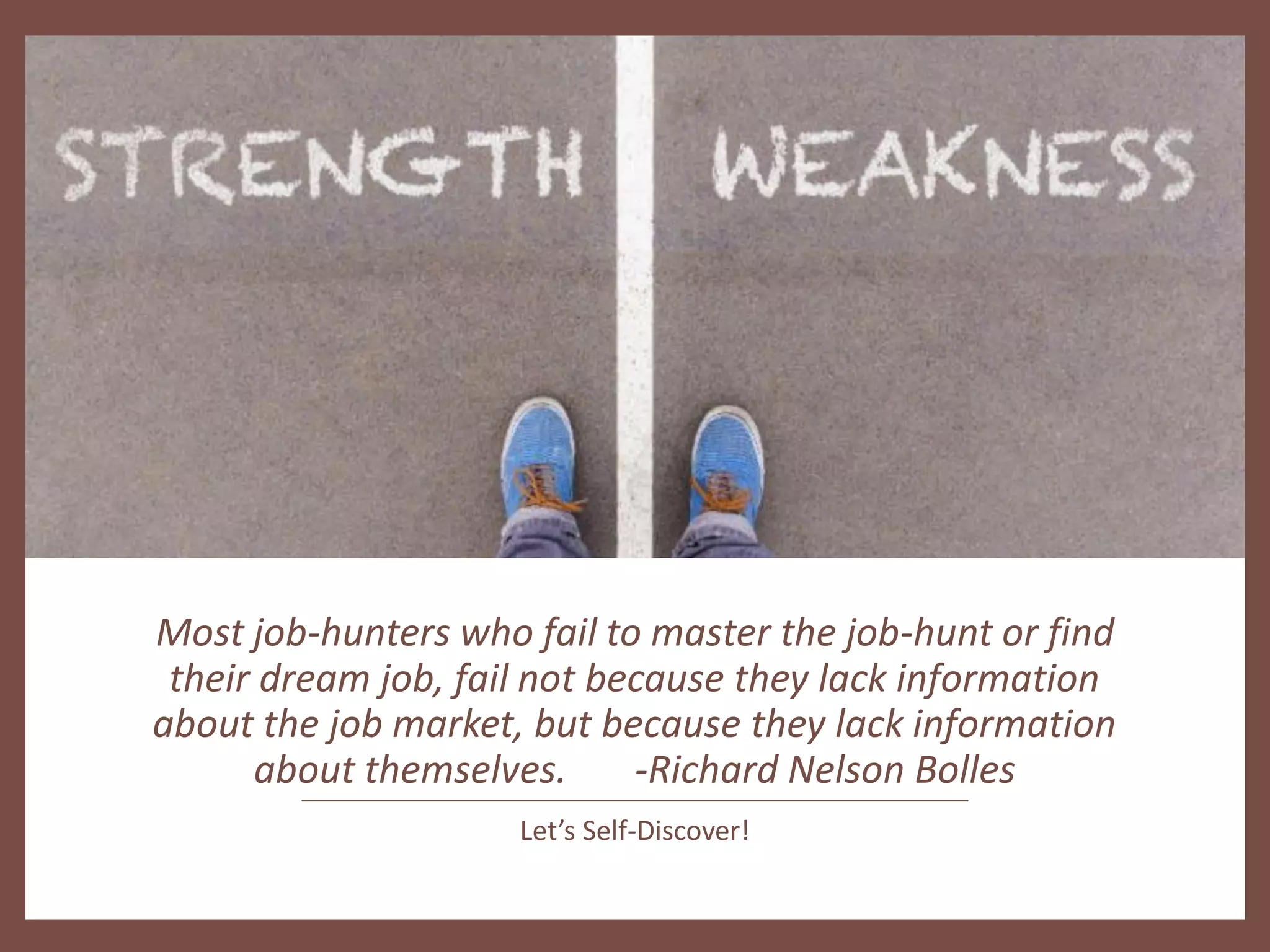
Most job-hunters who fail to master the job-hunt or find
their dream job, fail not because they lack information
about the job market, but because they lack information
about themselves. -Richard Nelson Bolles
Let’s Self-Discover!
KNOW THYSELF
…. (Bennis, 1989)
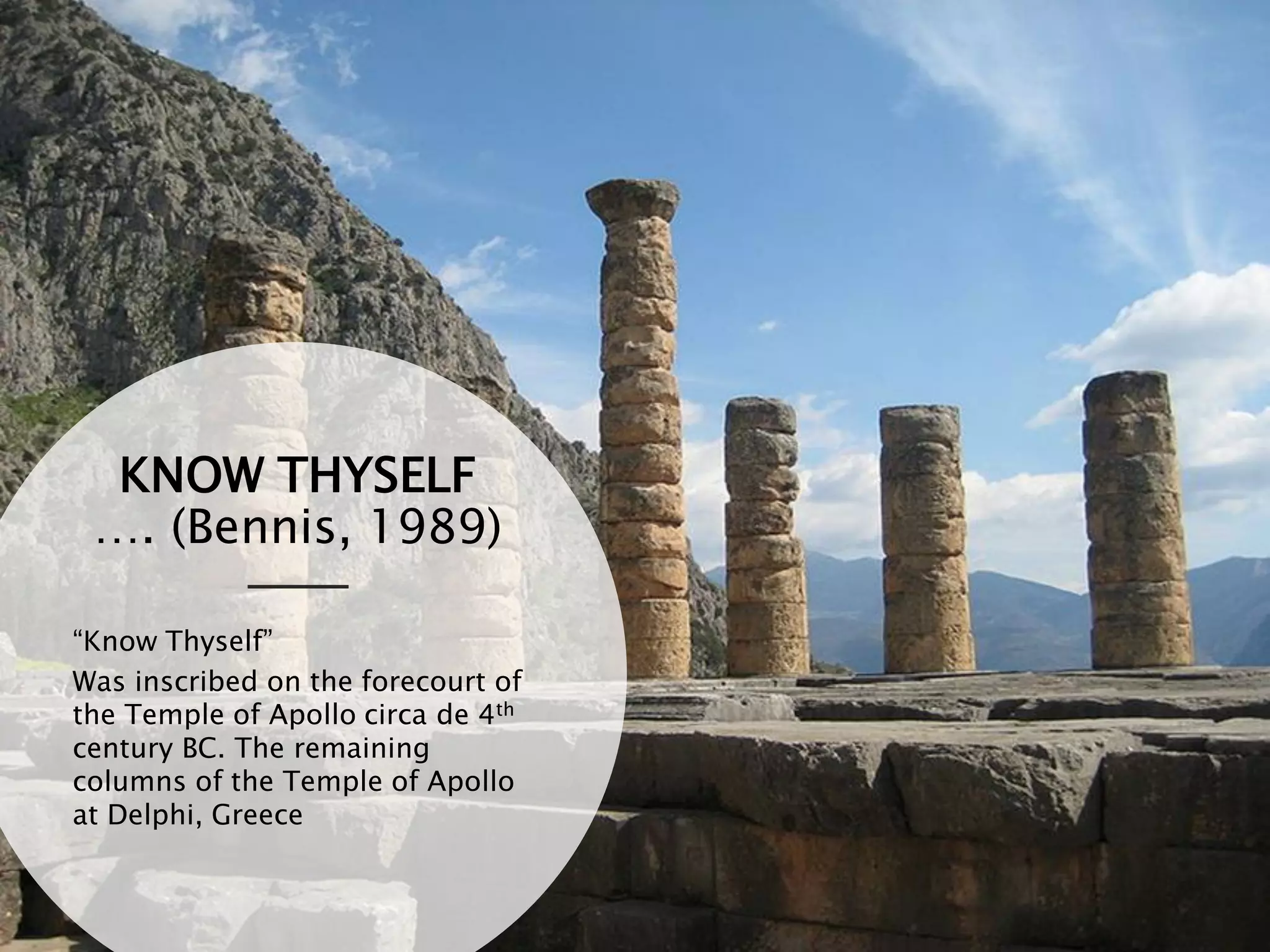
“Know Thyself”
Was inscribed on the forecourt of
the Temple of Apollo circa de 4th
century BC. The remaining
columns of the Temple of Apollo
at Delphi, Greece
Let’s begin with
Self-Awareness
• This is a key aspect of being a
leader
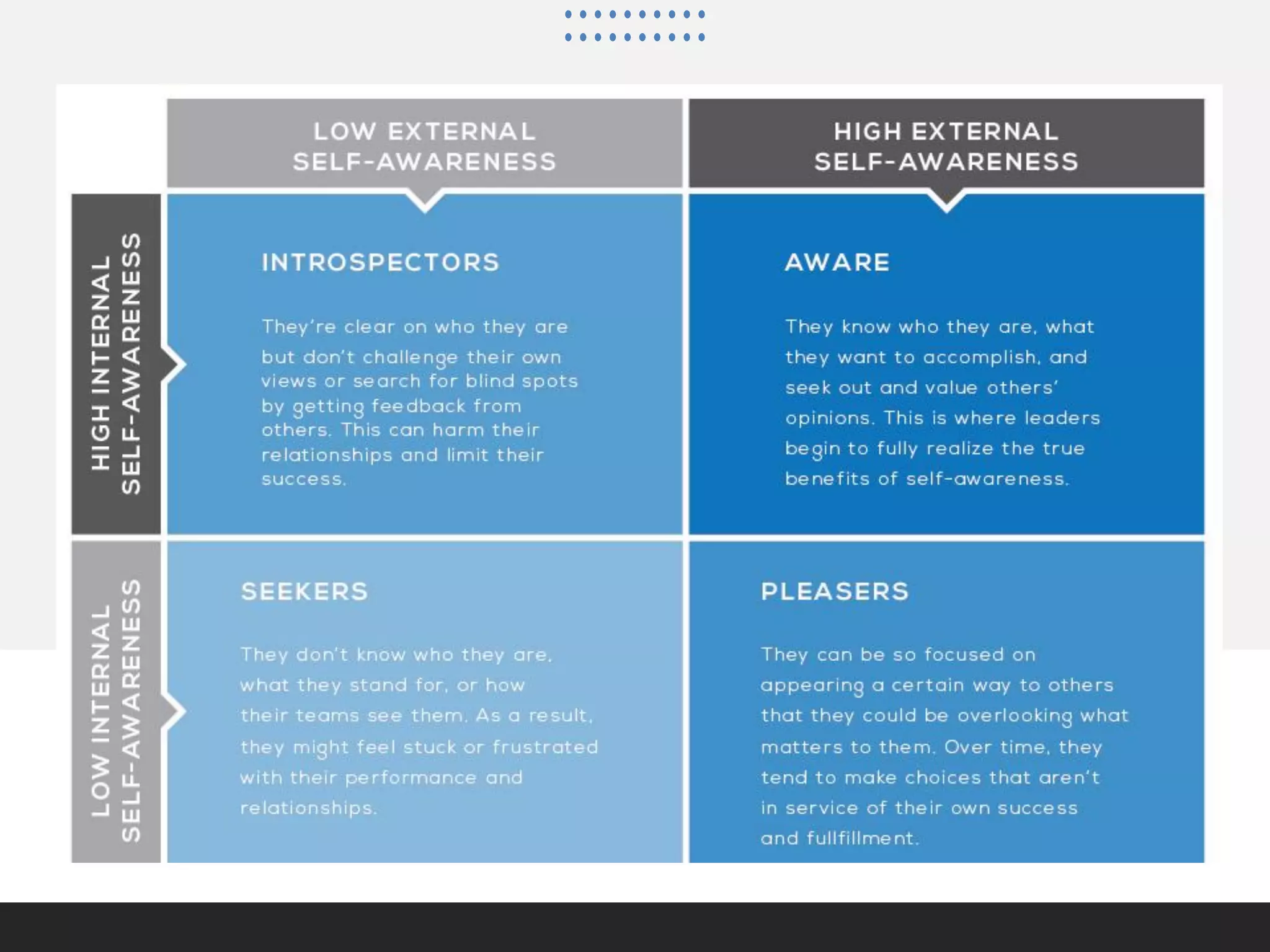
• Self-awareness means knowing
your own interests, skills and
limits.
• It also means knowing what
your family or other adults
think about your future and
how they can help.
• The ability to recognize and
understand your moods,
emotions, and drives, as well as
their effect on others
• Self-confidence (but not
arrogance)
• Self-assessment
• Self-deprecating - sense
of humor (rolling with
the punches)
• What are my strengths and
weaknesses
Self-Awareness
Survey
• Be very honest with yourself!
• Get feedback from others!
• You will be adding more information as we move through
the lessons.
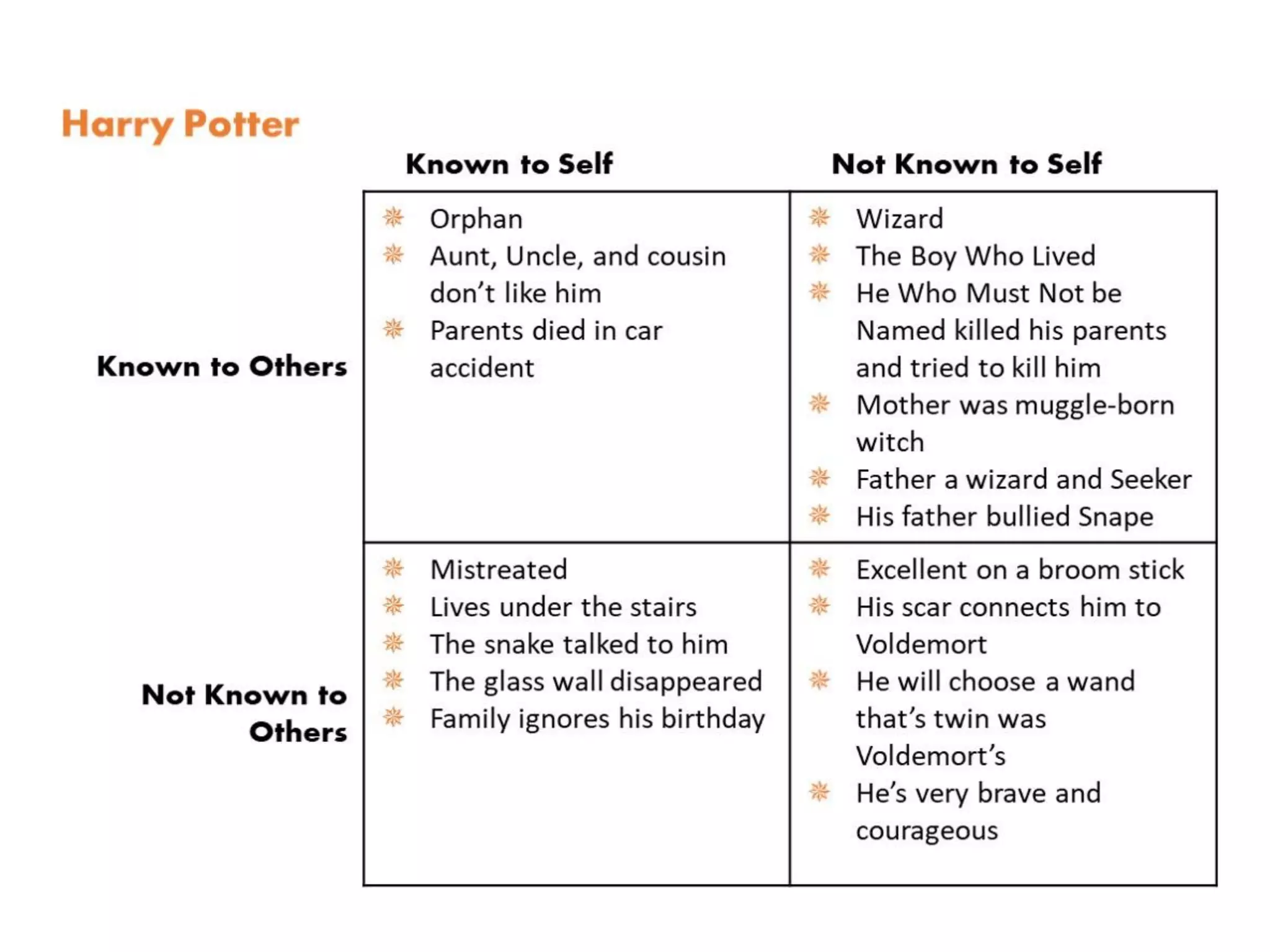
JOHARI WINDOW
• Cell 1 - Known to self and
known to others. This is what we
communicate to others. It is
what the communication
process is all about.
• Cell 2 - Known to self and
unknown to others. This is what
we conceal from others.
Sometimes there is a good
reason for holding something
back, e.g. gossiping. At other
times it might be bad for the
communication process; e.g.
holding something back because
it gives us a false sense of job
security.
• Cell 3 - Unknown to self and
known others. Sometimes we
communicate something we are
unaware of. For example, I might
say, "I'm not angry," while
slamming my fist on the table.
• Cell 4 - Unknown to self and
unknown to others.
Johari
Window
The more open you are to
yourself and to others…. the
more you will get out of the
class.
Self-Regulation
• This is another key aspect of being a
leader
• Self-regulation is the ability to
manage your emotions and reactions
• Others can and should be
understanding, but SELF-regulation --
is up to YOU!
• Bad scenes stick in people’s minds
Self-Regulation
• Creates an
environment of trust,
safety, and fairness
• Discourages those
around you from losing
control or reacting
impulsively
• Helps you avoid the
temptation of easy or
quick fixes
• Is characterized by
thoughtful reflection
and being comfortable
with uncertainty
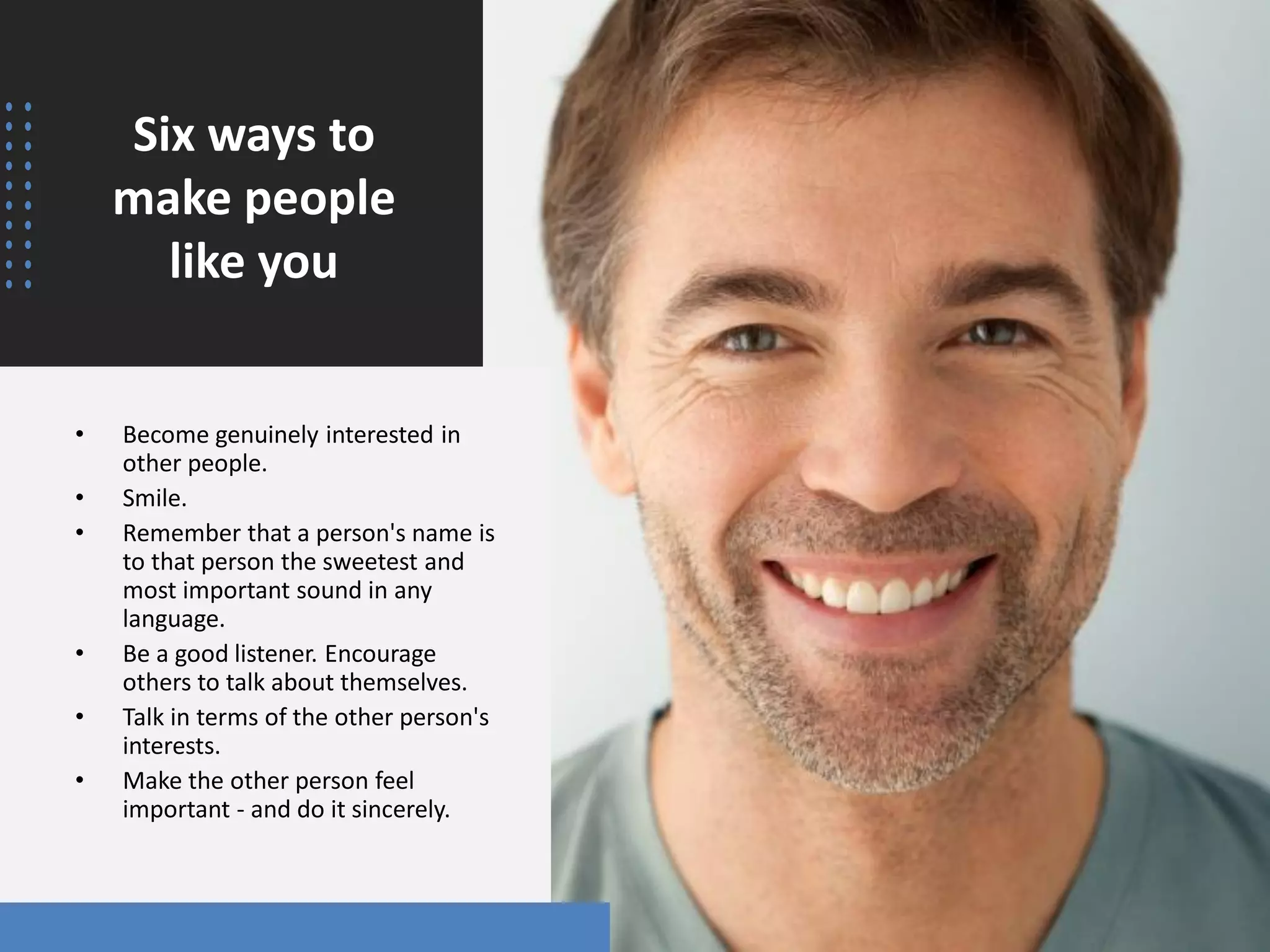
Six ways to
make people
like you
• Become genuinely interested in
other people.
• Smile.
• Remember that a person's name is
to that person the sweetest and
most important sound in any
language.
• Be a good listener. Encourage
others to talk about themselves.
• Talk in terms of the other person's
interests.
• Make the other person feel
important - and do it sincerely.
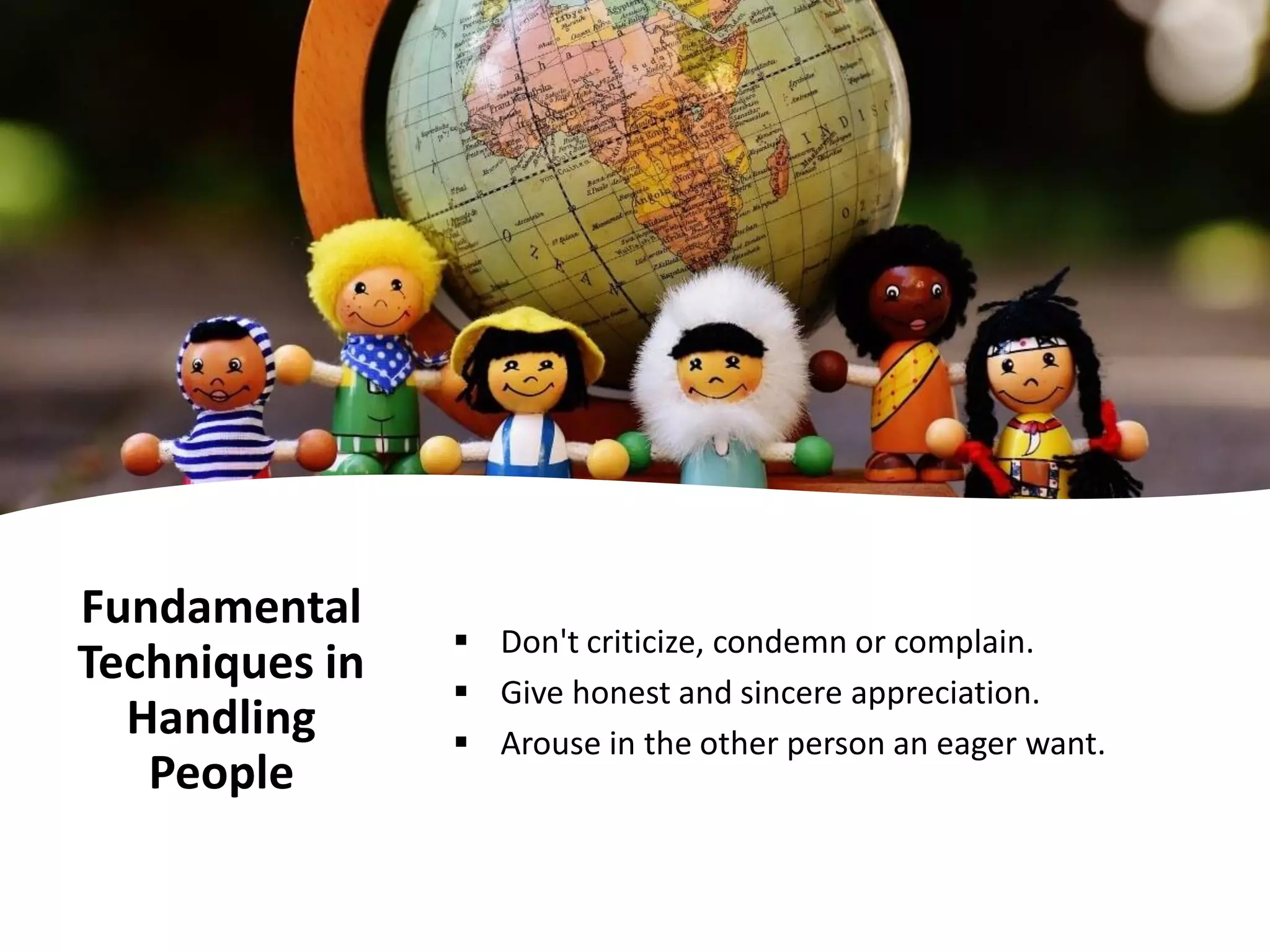
Fundamental
Techniques in
Handling
People
▪ Don't criticize, condemn or complain.
▪ Give honest and sincere appreciation.
▪ Arouse in the other person an eager want.
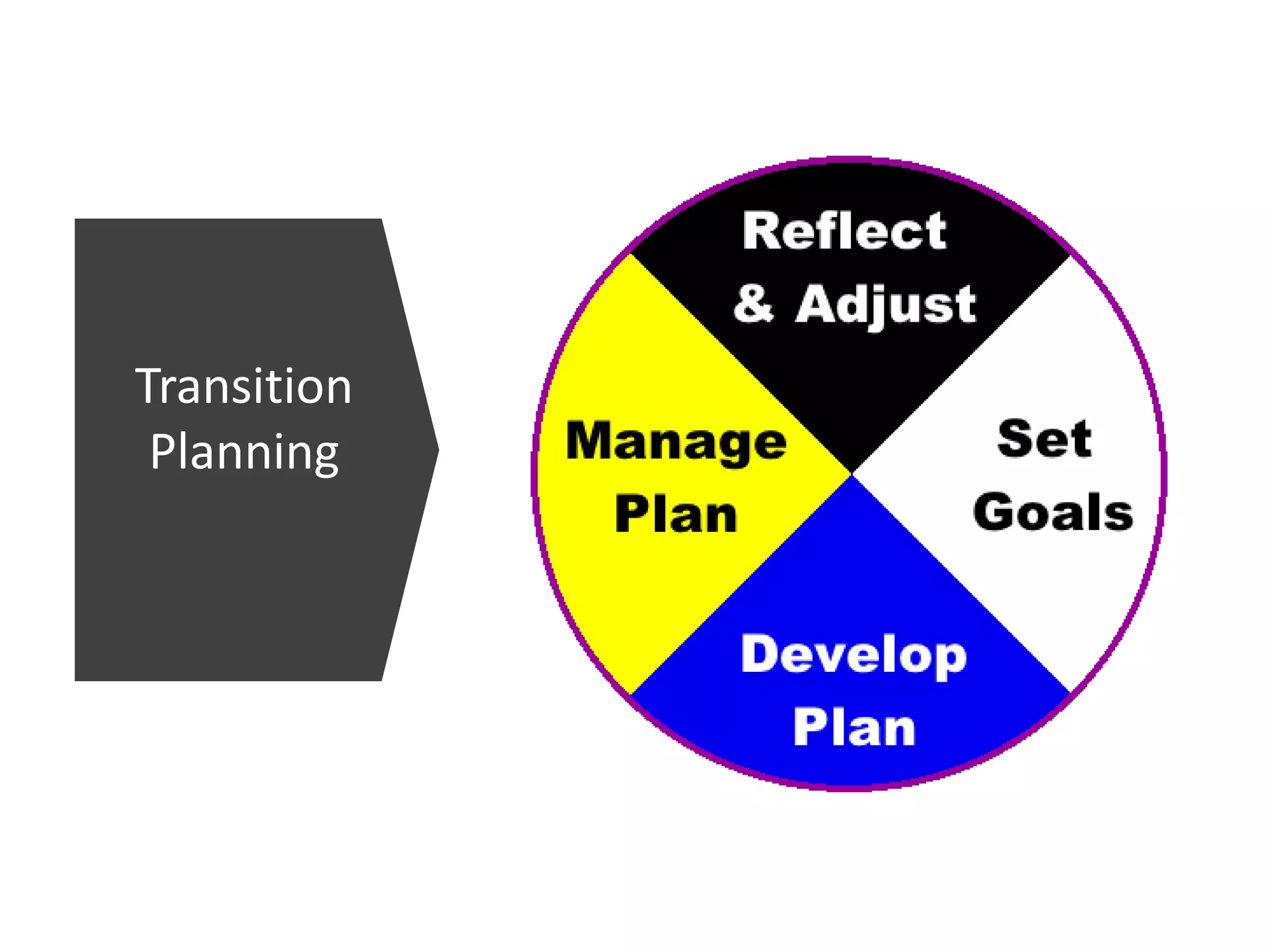
Transition
Planning
Transition
Planning
• Begins early! (no later than 16, and sometimes
earlier!)
• Helps you identify career interests, abilities,
and experiences
• Helps you decide your post-secondary career,
education, and living goals
• Helps identify community services and prepare
applications for college and/or adult support
services
• Means preparing and keeping a file with
references and skills you have acquired.
Setting Goals
• Knowing what’s
important to you
and your family:
• can help you
set realistic and
achievable
goals.
21
Developing a Plan
• What do I want?
• Why do I want to do it?
• How am I going to do it?
• When will I do it?
• What help do I need
• How will I find out how I’m doing?
• Do I need to make changes?
Managing
the Plan
• Did I get what I wanted?
• Was I motivated to do it?
• What steps did I take?
• Did I follow my schedule?
• Did I get the help I needed?
• Did I get information on
how I did?
Reflect
and
Adjust
Experience Outcomes and Learn
PRINCIPLES IN THE
UNDERSTANDING OF HUMAN
BEHAVIOR IN THE WORK SETTING
• Man is one.
• Man is unique. ( The principle of
individual differences)
• Man has dignity.
• All of man’s behavior is caused.
Why Work: It’s
implications on human
life
• Earn a livelihood –
Economic Security for
oneself and one’s
family.
• Share or continue in
the procreative powers
of God in the use of
resources.
• Makes man more
human in the
development of his
intellectual talents and
abilities, the use of his
intellect and will.
• Service to humanity
• A source of Joy
• One’s passport to the
next life
Quality-Driven Work Ethics
• Excellence at what one does
• Integrity – the quality of work that adheres to moral acceptability: Honesty, Incorruptibility,
unassailable by others.
• Service-Driven Motivation that springs from a sincere desire to render quality service to the
client or service user.
• Self-effacing service above self
• Just and fair dealing sincere, Judicious business dealings with others, no shady or exploitative.
WEEKLY BOOK
RECOMMENDATION
“I found myself speechless. How could
I know I had a problem if I didn’t even
what the problem was?” p. 7
The Arbinger Institute. (2002). Leadership and self-
deception. San Francisco: Berrett-Koehler Publishers,
Inc..
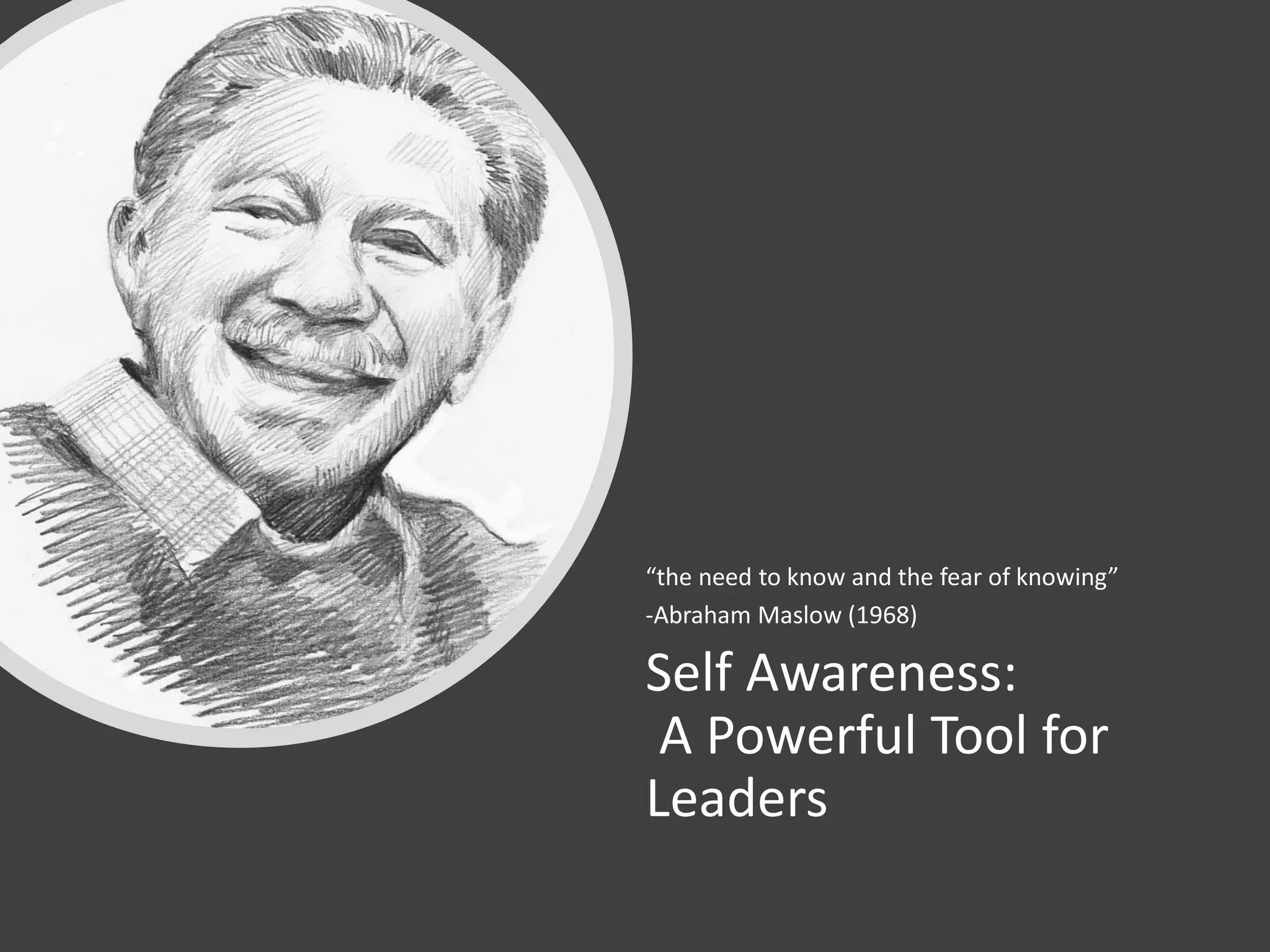
Self Awareness:
A Powerful Tool for
Leaders
“the need to know and the fear of knowing”
-Abraham Maslow (1968)
Learning and Giving
for Better Indonesia
www.humanikaconsulting.com

Interpersonal skill - self awareness

  • 1.
  • 2.
    Seta A. Wicaksana 081119 53 43 wicaksana@humanikaconsulting.com • Managing Director of Humanika Amanah Indonesia – Humanika Consulting • Managing Director of Humanika Bisnis Digital – hipotest.com • Ahli Senior di Komite Kebijakan Pengelolaan Kinerja Organisasi dan SDM (KPKOS) Dewan Pengawas BPJS Ketenagakerjaan • Wakil Dekan II dan Dosen Tetap Fakultas Psikologi Universitas Pancasila • Pembina Yayasan Humanika Edukasi Indonesia • Penulis Buku “SOBAT” Elexmedia Gramedia 2016 • Organizational Development Expertise • Pengembang Alat Tes minat bakat BRIGHT dan Sistem Tes Psikologi berbasis aplikasi di hipotest.com • Sedang mengikuti tugas belajar Doktoral (S3) di Fakultas Ilmu Ekonomi dan Bisnis Universitas Pancasila Bidang MSDM • Fakultas Psikologi S1 dan S2 Universitas Indonesia • sekolah ikatan dinas Sandi Negara
  • 3.
    Most job-hunters whofail to master the job-hunt or find their dream job, fail not because they lack information about the job market, but because they lack information about themselves. -Richard Nelson Bolles Let’s Self-Discover!
  • 6.
    KNOW THYSELF …. (Bennis,1989) “Know Thyself” Was inscribed on the forecourt of the Temple of Apollo circa de 4th century BC. The remaining columns of the Temple of Apollo at Delphi, Greece
  • 7.
    Let’s begin with Self-Awareness •This is a key aspect of being a leader • Self-awareness means knowing your own interests, skills and limits. • It also means knowing what your family or other adults think about your future and how they can help. • The ability to recognize and understand your moods, emotions, and drives, as well as their effect on others • Self-confidence (but not arrogance) • Self-assessment • Self-deprecating - sense of humor (rolling with the punches) • What are my strengths and weaknesses
  • 8.
    Self-Awareness Survey • Be veryhonest with yourself! • Get feedback from others! • You will be adding more information as we move through the lessons.
  • 9.
    JOHARI WINDOW • Cell1 - Known to self and known to others. This is what we communicate to others. It is what the communication process is all about. • Cell 2 - Known to self and unknown to others. This is what we conceal from others. Sometimes there is a good reason for holding something back, e.g. gossiping. At other times it might be bad for the communication process; e.g. holding something back because it gives us a false sense of job security. • Cell 3 - Unknown to self and known others. Sometimes we communicate something we are unaware of. For example, I might say, "I'm not angry," while slamming my fist on the table. • Cell 4 - Unknown to self and unknown to others.
  • 10.
  • 12.
    The more openyou are to yourself and to others…. the more you will get out of the class.
  • 14.
    Self-Regulation • This isanother key aspect of being a leader • Self-regulation is the ability to manage your emotions and reactions • Others can and should be understanding, but SELF-regulation -- is up to YOU! • Bad scenes stick in people’s minds
  • 15.
    Self-Regulation • Creates an environmentof trust, safety, and fairness • Discourages those around you from losing control or reacting impulsively • Helps you avoid the temptation of easy or quick fixes • Is characterized by thoughtful reflection and being comfortable with uncertainty
  • 16.
    Six ways to makepeople like you • Become genuinely interested in other people. • Smile. • Remember that a person's name is to that person the sweetest and most important sound in any language. • Be a good listener. Encourage others to talk about themselves. • Talk in terms of the other person's interests. • Make the other person feel important - and do it sincerely.
  • 17.
    Fundamental Techniques in Handling People ▪ Don'tcriticize, condemn or complain. ▪ Give honest and sincere appreciation. ▪ Arouse in the other person an eager want.
  • 18.
  • 19.
    Transition Planning • Begins early!(no later than 16, and sometimes earlier!) • Helps you identify career interests, abilities, and experiences • Helps you decide your post-secondary career, education, and living goals • Helps identify community services and prepare applications for college and/or adult support services • Means preparing and keeping a file with references and skills you have acquired.
  • 21.
    Setting Goals • Knowingwhat’s important to you and your family: • can help you set realistic and achievable goals. 21
  • 23.
    Developing a Plan •What do I want? • Why do I want to do it? • How am I going to do it? • When will I do it? • What help do I need • How will I find out how I’m doing? • Do I need to make changes?
  • 24.
    Managing the Plan • DidI get what I wanted? • Was I motivated to do it? • What steps did I take? • Did I follow my schedule? • Did I get the help I needed? • Did I get information on how I did?
  • 25.
  • 26.
    PRINCIPLES IN THE UNDERSTANDINGOF HUMAN BEHAVIOR IN THE WORK SETTING • Man is one. • Man is unique. ( The principle of individual differences) • Man has dignity. • All of man’s behavior is caused.
  • 27.
    Why Work: It’s implicationson human life • Earn a livelihood – Economic Security for oneself and one’s family. • Share or continue in the procreative powers of God in the use of resources. • Makes man more human in the development of his intellectual talents and abilities, the use of his intellect and will. • Service to humanity • A source of Joy • One’s passport to the next life
  • 28.
    Quality-Driven Work Ethics •Excellence at what one does • Integrity – the quality of work that adheres to moral acceptability: Honesty, Incorruptibility, unassailable by others. • Service-Driven Motivation that springs from a sincere desire to render quality service to the client or service user. • Self-effacing service above self • Just and fair dealing sincere, Judicious business dealings with others, no shady or exploitative.
  • 29.
    WEEKLY BOOK RECOMMENDATION “I foundmyself speechless. How could I know I had a problem if I didn’t even what the problem was?” p. 7 The Arbinger Institute. (2002). Leadership and self- deception. San Francisco: Berrett-Koehler Publishers, Inc..
  • 30.
    Self Awareness: A PowerfulTool for Leaders “the need to know and the fear of knowing” -Abraham Maslow (1968)
  • 31.
    Learning and Giving forBetter Indonesia www.humanikaconsulting.com