Downloaded 102 times
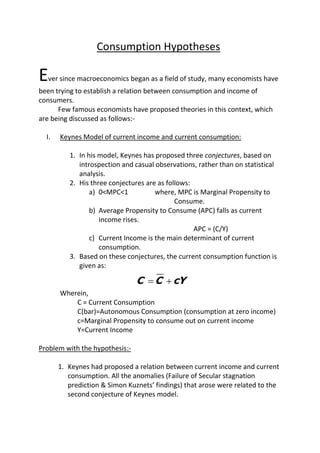
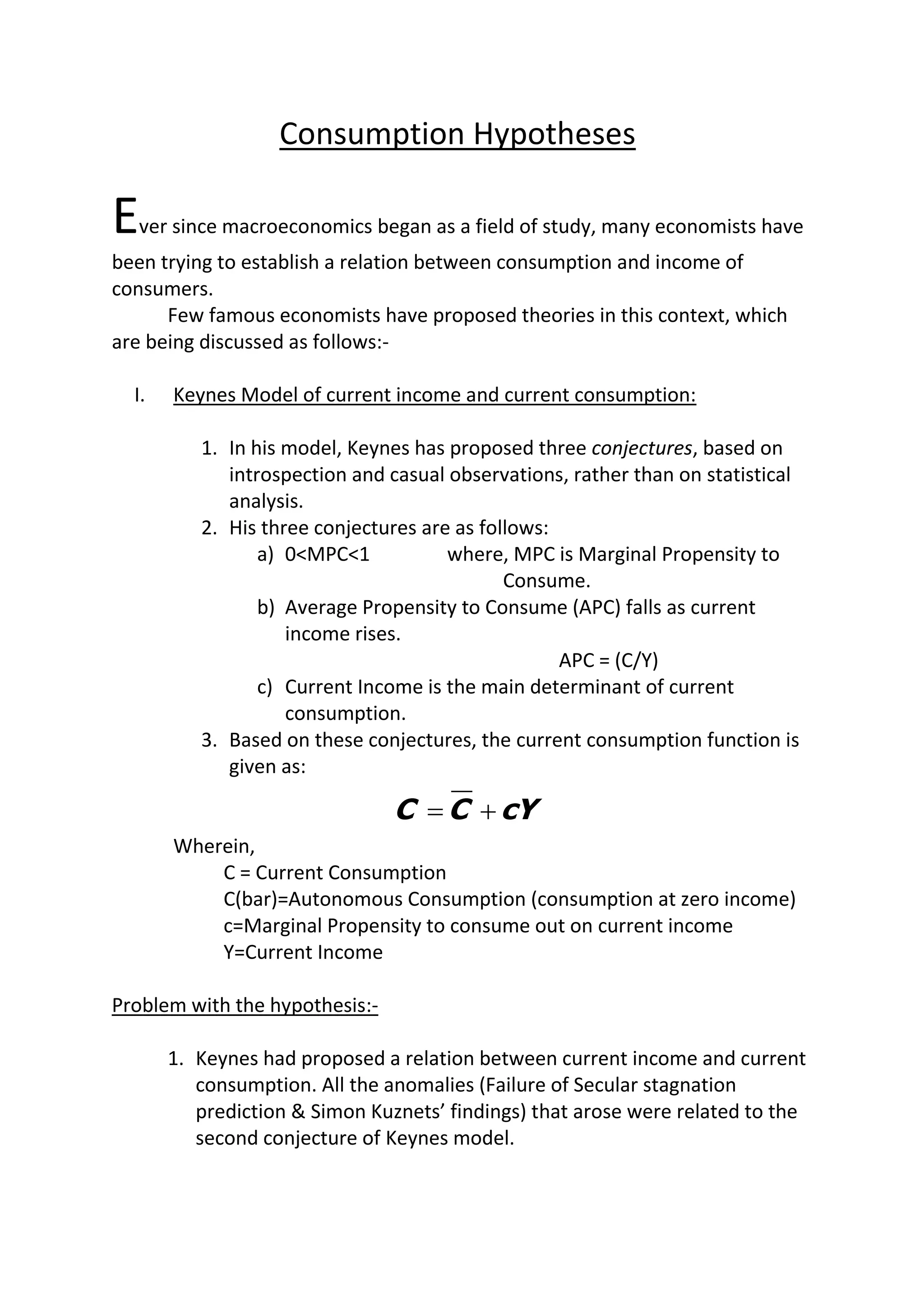
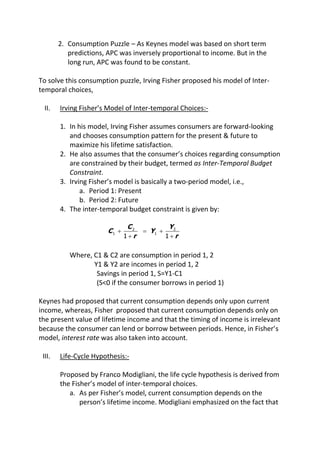
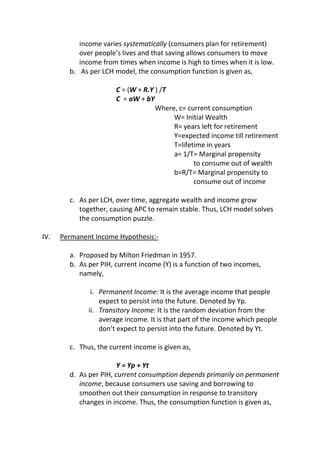


1) Several economists have proposed theories to explain the relationship between consumption and income over time. Keynes proposed that current consumption depends on current income, while Fisher argued that consumption depends on lifetime income and consumers smooth consumption over periods. 2) Modigliani built on Fisher's model with the life-cycle hypothesis, arguing consumption depends on lifetime wealth and income that varies over one's career. Friedman's permanent income hypothesis claims consumption depends on permanent rather than transitory income, allowing consumers to smooth consumption. 3) Hall's random walk hypothesis adds that if consumers have rational expectations, then consumption changes should be unpredictable and only change with unanticipated income or wealth fluctuations. Laibson challenged the assumption of


