PERIODONTAL MEDICINE
BY
SANGEETHA. K
PG II
CONTENTS
• Introduction
• Historical aspects of periodontal medicine
• Periodontal disease effects on cardiovascular system
• Periodontal disease effects on respiratory system
• Periodontal disease and diabetes
• Periodontal disease and pregnancy outcome
• Periodontal disease and rheumatoid arthritis
• Periodontal disease and osteoporosis
• Periodontal disease and Alzheimer's disease
• Periodontal disease and oral cancer
• Conclusion
• Reference
INTRODUCTION
• Periodontal medicine refers to those aspects of systemic disease that interact with
periodontal disease
• Its also defined as the management of periodontal disease to modify the links
between systemic and periodontal disease
Definition: Offenbacher 1996
defines periodontal medicine as a rapidly emerging branch of periodontology which
focuses on the research of new data establishing a strong relationship between
periodontal health or disease and systemic health or disease.
.
HISTORICAL ASPECTS OF PERIODONTAL MEDICINE
Focal infection theory
• W. D. Miller in 1891 propounded the theory that local infection affecting a small
area of the body can lead to subsequent infection or symptom in other parts of the
body due to spread of the infecting agent itself or toxins produced by it.
• Connection between oral sepsis & resulting systemic condition could be shown by
removal of causative sepsis through extraction & observation of improvement in
systemic health
• This theory fell into dispute in 1940’s & 1950’s when widespread extraction failed
to reduce or eliminate the systemic conditions to which the supposedly infected
dentition has been linked.
• Debelian et al., (1994) identified 3 pathways
• Metastatic infection from the oral cavity due to transient bacteremia
• Metastatic injury due to oral microbial toxins
• Metastatic inflammation due to immunologic injury caused by oral
micro-organisms
PERIODNTAL DISEASE AND CARDIOVASCULAR DISEASE
• The framingham heart study at the age of 40, 49% of men and 32% of women
show clinical manifestation of ischemic disease their life time
• Periodontitis, which is a chronic inflammation initiated by microbial plaque can
predispose to atherosclerosis
• Atherosclerosis is a focal thickening of the arterial intima, the innermost layer
lining the vessel lumen, and the media, the thick layer under the intima that
consists of smooth muscle, collagen, and elastic fibers
• PD may have both direct and indirect effect on cardiovascular tissue
• Periodontitis and atherosclerosis both have complex etiologic factors that
combine genetic and environmental influences.
• Systemic infections are known to induce a hypercoagulable state and increase
blood viscosity
• Fibrinogen levels and white blood cell counts and CRP are often increased in
patients with periodontal disease.
• Individuals with poor oral health may also have significant elevations in
coagulation factor VIII/von Willebrand factor antigen, thereby increasing the risk
of thrombus formation
• Factors effecting blood viscosity in health
• plasma fibrinogen
• plasma lipoprotein (LDL/VLDL)
• white blood cell count
• DeStefano et al. investigated the incidence of mortality or admission to hospital
because of coronary heart disease and total mortality in subjects suffering from
periodontitis.
• They noted that patients with periodontitis had 25 % increased risk of mortality
due to coronary heart disease.
Systemic disease risk
cardiovascular 1.2 to 2.8 times
stroke 2.6 to7.4 times
PLBW delivery 4.5 to 7.9 times
Respiratory disease 4.5 times
glycemic control 10% reduction after treatment
Ischemic heart disease is associated with the processes of atherogenesis and thrombogenesis
Schematic overview of potential mechanisms linking periodontal infections and endothelial dysfunction/incipient
atherosclerosis
Potential mechanisms linking periodontal infections and fatty-streak formation/plaque maturation.
Potential mechanisms linking periodontal infections to mature atherosclerotic plaques and plaque rupture
RESULTS: We identified seven articles of good or fair quality from seven cohorts.
Several studies found periodontal disease to be independently associated with
increased risk of CHD. Summary relative risk estimates for different categories of
periodontal disease (including periodontitis, tooth loss, gingivitis, and bone loss)
ranged from 1.24 (95% CI 1.01–1.51) to 1.34 (95% CI 1.10–1.63). Risk estimates
were similar in subgroup analyses by gender, outcome, study quality, and method
of periodontal disease assessment.
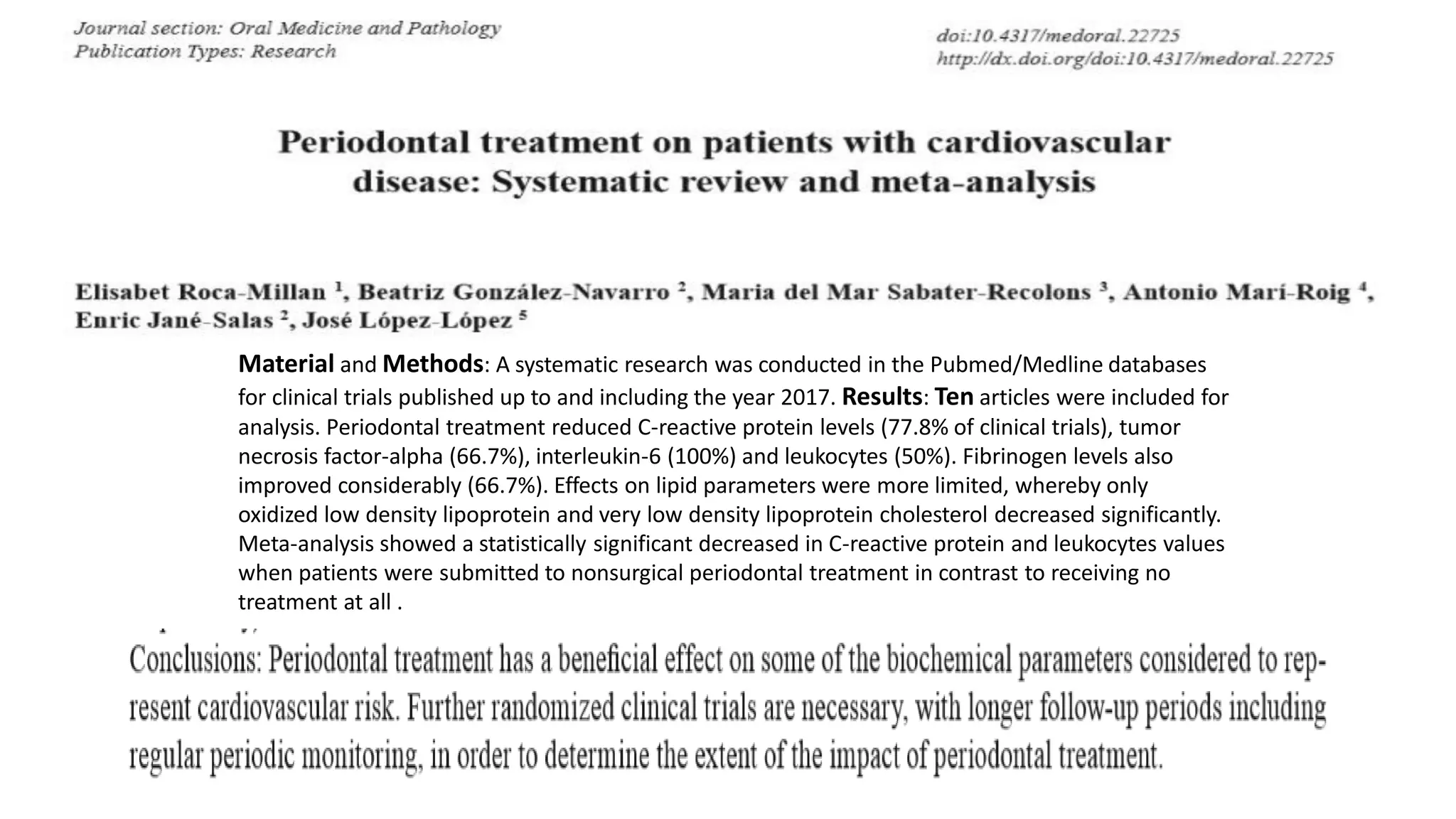
Material and Methods: A systematic research was conducted in the Pubmed/Medline databases
for clinical trials published up to and including the year 2017. Results: Ten articles were included for
analysis. Periodontal treatment reduced C-reactive protein levels (77.8% of clinical trials), tumor
necrosis factor-alpha (66.7%), interleukin-6 (100%) and leukocytes (50%). Fibrinogen levels also
improved considerably (66.7%). Effects on lipid parameters were more limited, whereby only
oxidized low density lipoprotein and very low density lipoprotein cholesterol decreased significantly.
Meta-analysis showed a statistically significant decreased in C-reactive protein and leukocytes values
when patients were submitted to nonsurgical periodontal treatment in contrast to receiving no
treatment at all .
PERIODNTAL DISEASE AND COPD AND PNEUMONIA
• Chronic obstructive pulmonary disease (COPD) is characterized by airflow
obstruction that results from chronic bronchitis or emphysema
• Chronic bronchitis is the result of irritation of the bronchial airway, which causes
an expansion of the proportion of mucus-secreting cells within the airway
epithelium and Emphysema is defined as the distention of the air spaces distal to
the terminal bronchiole with destruction of the alveolar septa
• COPD shares similar pathogenic mechanisms with periodontal disease, In both
diseases , the released neutrophil causes pathological changes seen in
connective tissue
• It is hypothesized that, despite some variations in the triggers and the possible
susceptibility factor, the pathological mechanism of both diseases converges on
activating and utilizing neutrophils.
How periodontitis could contribute to the development of COPD.
• Scannapieco has proposed several mechanisms to explain the potential role of
oral bacteria in the pathogenesis of respiratory infection:
• Aspiration of oral pathogens (such as Porphyromonas gingivalis, Actinobacillus
actinomycetemcomitans, etc.) into the lung to cause infection,
• Periodontal disease-associated enzymes in saliva may modify mucosal surfaces
to promote adhesion and colonization by respiratory pathogens, which are then
aspirated into the lung,
• Periodontal disease-associated enzymes in saliva may destroy salivary pellicles on
pathogenic bacteria to hinder their clearance from the mucosal surface
• Cytokines originating from periodontal tissues may alter respiratory epithelium to
promote infection by respiratory pathogens
PERIODONTAL DISEASE AND PNEUMONIA
• Pneumonia is an infection of the pulmonary parenchyma caused by a variety of
infectious agents, including bacteria, mycoplasma, fungi, parasites, and viruses.
• The continuing emergence of antibiotic resistant bacteria (e.g., penicillin-resistant
Pneumococci) suggests that bacterial pneumonia will assume an increasing
importance.
• Pneumonia can be broadly classified into two types, with respect to their
causative agents:
1) Community acquired
2) Hospital acquired (nosocomial)
• Community acquired bacterial pneumonia is typically caused by pathogens that
reside on the oropharyngeal mucosa such as Streptococcus pneumonia and
Haemophilus influenza, Mycoplasma pneumonia, Chlamydia pneumonia,
Legionella pneumophila, Candida albicans and anaerobic species.
• Antibiotic therapy is highly successful for the resolution of most cases of
community-acquired bacterial pneumonia.
• To date, no associations have been found between oral hygiene or periodontal
disease and the risk for acute respiratory conditions such as pneumonia in
community-dwelling individuals.
• Nosocomial pneumonia is often caused by bacteria that are not normally
residents of the oropharynx but enter this milieu from the environment.
• These include Gram-negative bacilli (enteric such as Escherichia coli, Klebsiella
pneumoniae, Serratia sps, Enterobacter sps.), Pseudomonas aeruginosa and
Staphylococcus aureus
• Oropharyngeal colonization with potential respiratory pathogens (PRPs)
,colonization increases during hospitalization.
• PRPs are found predominantly in the gastrointestinal tract, and they may be
passed via esophageal reflux into the oropharynx, where they colonize.
• Subsequent aspiration may lead to pneumonia
• Selective decontamination is a technique that combines systemic antibiotics with
orally administered nonabsorbable antibiotics in an attempt to eradicate PRPs.
• PRPs may also originate in the oral cavity, with dental plaque serving as a
reservoir of these organisms
• Subgingival plaque may also harbour PRPs, and putative periodontal pathogens
have been associated with nosocomial pneumonia.
• Furthermore, anaerobic organisms from periodontal pockets may serve as the
primary inoculum for supportive respiratory diseases (e.g., pulmonary abscesses)
that involve significant morbidity and mortality
• Systematic reviews of the evidence have determined that interventions used to
improve oral hygiene, such as mechanical tooth brushing and chemical
antimicrobial rinses, have the potential to decrease the risk of nosocomial
pneumonia in high-risk patients, such as those in intensive care units or those on
ventilators.
PERIODNTAL DISEASE AND LEUKEMIA
• The leukemias are "malignant neoplasias of WBC precursors, characterized by:
• Diffuse replacement of the bone marrow with proliferating leukemic cells.
• Abnormal numbers and forms of immature WBCs in the circulating blood
• Widespread infiltrates in the liver, spleen, lymph nodes, and other sites
throughout the body.
• CLASSIFICSTION
• According to the type of WBC involved:
• Lymphocytic
• Myelocytic or Myelogenous
• According to their evolution:
• Acute
• Subacute,
• Chronic.
• All leukemias tend to displace normal components of bone marrow elements
with leukemic cells
• Anaemia ,Leukopenia ,Thrombocytopenia.
• Anaemia resulting in reduced production of RBCs results in poorer Tissue
oxygenation, making tissues more friable and susceptible to breakdown.
• leukopenia leads to an increased susceptibility to infections.
• thrombocytopenia leads to bleeding tendency, which can occur in any tissue .
• Some patients may have normal blood counts while leukemic cells are present in
the bone marrow; this type of disease is called “aleukemic leukemia."
Periodontium in Leukemic Patients
• Oral and periodontal manifestations of leukemia consist of:
• Oral ulcerations & infections
• Gingival enlargement
• Bleeding
Expression of these signs is more common in acute and subacute forms
than in chronic forms.
• Leukemic cells can infiltrate the gingiva and, less frequently, the alveolar bone.
• Gingival infiltration often results in leukaemic gingival enlargement.
• Leukemic gingival enlargement consists of a basic infiltration of the gingiva by
leukemic cells that creates gingival pockets where bacterial plaque accumulates,
initiating a secondary inflammatory lesion that contributes also to the
enlargement of the gingiva.
• It may be localized to interdental papilla or expand to include marginal gingiva
and partially cover the crowns of teeth.
• The abnormal accumulation of leukaemic cells in dermal & subcutaneous CT is
called Leukaemia Cutis and forms elevated and flat macules and papules.
• Gingiva appears initially bluish red and cyanotic, with a rounding and tenseness
of the gingival margin; then it increases in size, most often in the interdental
papilla and partially covering the crowns of the teeth.
BLEEDING
• Gingival hemorrhage is a common finding in leukemic patients, even in the
absence of clinically detectable gingivitis.
• Bleeding gingiva can be an early sign of leukemia.
• It is due to the thrombocytopenia that results from replacement of the bone
marrow cells by leukemic cells and also from the inhibition of normal stem cell
function by leukemic cells or their products.
• Bleeding tendency can also manifest itself in the skin and throughout the oral
mucosa, where petechiae are often found, with or without leukemic infiltrates.
More diffuse submucosal bleeding manifests as Ecchymosis.
ORAL ULCERATION & INFECTION
• In leukemia the response to bacterial plaque or other local irritation is altered.
• There is pronounced infiltration of immature leukemic cells in addition to the
usual inflammatory cells.
• As a result, the normal inflammatory response may be diminished.
• Granulocytopenia (diminished WBC count) results from the displacement of
normal bone marrow cells by leukemic cells, which increases the host
susceptibility to opportunistic microorganisms and leads to ulcerations and
infections.
• Discrete, punched-out ulcers penetrating deeply into the submucosa and
covered by a firmly attached white slough can be found in the oral mucosa.
• These lesions occur in sites of trauma such as the buccal mucosa in relation to the
line of occlusion or the palate.
• This greatly altered and degenerated tissue is extremely susceptible to bacterial
infection, which can be so severe as to cause acute gingival necrosis and
pseudomembrane formation or bone exposure.
ANAEMIA
• It is a deficiency of quantity and quality of blood, as manifested as
reduction in circulating erythrocytes and in the amount of
hemoglobin.
• Results from the :
• Blood loss.
• Defective blood formation.
• Increase RBCs destruction.
• Macrocytic hyperchromic ( Pernicious Anaemia)
• results in tongue changes in 75% of cases.
• The tongue appears red, smooth, and shiny, owing to atrophy of the papillae.
• There is also marked pallor of the gingiva.
• Microcytic hypochromic ( Iron deficiency Anaemia)
• Induces similar Tongue and gingival changes.
• A syndrome consisting of glossitis and ulceration of the oral mucosa and
oropharynx, inducing dysphagia (Plummer-Vinson syndrome), has been described
in patients with iron deficiency anemia.
• SICKLE CELL ANEMIA:
• It is a hereditary form of chronic hemolytic anemia that occurs exclusively in
blacks.
• There is a defect in adult haemoglobin of RBC and the cell appears as sickle or
crescent shaped erythrocyte
• .The haemoglobin is genetically altered, as a result the RBC undergoes
destruction quickly resulting anemia.
• Characterized by: Pallor, jaundice, weakness, rheumatoid manifestations, leg
ulcers.
• Oral changes include generalized osteoporosis of jaws, with a peculiar stepladder
alignment of trabeculea of the interdental septa along with pallor and yellowish
discoloration of mucosa.
• Periodontal infections may precipitate sickle cell crisis.
• APLASTIC ANEMIAS:
• result from a failure of the bone marrow to produce erythrocytes.
• Their etiology is usually the effect of toxic drugs on the marrow or
displacement of RBCs by leukaemic cells.
• Oral changes include pale discoloration of the oral mucosa and
increased susceptibility to infection
PERIODONTAL DISEASE AND DIABETES MELLITUS
• Diabetes mellitus represents a heterogeneous group of metabolic disorders
characterized by elevated blood glucose levels.
Classification
• Type 1 diabetes (insulin dependent)
• Type 2 diabetes (non insulin dependent)
• Gestational diabetes
• Others
Genetic defects in beta cell function
Genetic defects in insulin action
ORAL MANIFESTATIONS
• Numerous oral changes have been described in patients with diabetes, including
cheilosis, mucosal drying and cracking, burning mouth and tongue, diminished
salivary flow, and alterations in the flora of the oral cavity, with greater
predominance of Candida albicans, hemolytic streptococci, and staphylococci
• The specific effects of diabetes on the periodontium, including a tendency toward
an enlarged gingiva, sessile or pedunculated gingival polyps, polypoid gingival
proliferations, abscess formation, periodontitis, and loosened teeth
• Severe gingival inflammation, deep periodontal pockets, rapid bone loss, and
frequent periodontal abscesses often occur in patients with poorly controlled
diabetes and poor oral hygiene
• The most striking changes in patients with uncontrolled diabetes are the
reductions in the defense mechanisms and the increased susceptibility to
infections, which lead to destructive periodontal disease.
COMPLICATIONS OF DIABETES
1 Retinopathy
2.Nephropathy
3.Neuropathy
4.Macrovascular disease
5.Altered wound healing
6.Periodontal disease ( loe et al 1993)
Diabetes affects more than 415 million people worldwide and 69 million people in
India.
It has reached an epidemic status and is predicted to affect 592 million people
by 2035
HOW DOES DIABETES EFFECTS ON PERIODONTIUM
PERIODNTITIS EFFECTS ON DIABETES
Glickman 1946 was the first reporting links between periodontal
disease and diabetes
BIDIRECTIONAL MECHANISM
ORAL AND FOETUS CONNECTION
• Galloway in 1931 first suggested that periodontal disease may provide sufficient
infectious microbial challenge to have potentially harmful effects on pregnant
mother and foetus
The following categories have been defined by the World Health Organization:
• Low birth weight less than 2,500 g
• Very low birth less than 1,500 g weight
• Extremely low birth less than 1,000 g weight
• Prematurity less than 37 weeks of gestation
• Very premature less than 32 weeks of gestation
DIRECT PATHWAY
Microorganisms can gain access to the amniotic cavity:
(1) by ascending from the vagina and the cervix,
The ascending pathway is considered the main route of infection in placental
tissues, and microorganisms such as Gardnerella vaginalis, Chlamydia trachomatis,
Mycoplasma hominis, Ureoplasma urealyticum, Prevotella spp., Candida spp.,
Gonorrhea spp. and Treponema spp. appear to be the causes
(2) by haematogenous dissemination through the placenta,
(3) by accidental introduction at the time of invasive procedures
(4) by retrograde spread through the fallopian tubes.
INDIRECT PATHWAY
Inflammatory mediators locally produced in periodontal tissues, for example, PGE2,
TNFa, circulate and impact the foetal– placental unit
Inflammatory mediators and/or microbial components circulate to the liver, enhancing
cytokine production (e.g. IL-6) and acute phase protein responses (e.g. CRP), which
then impact the foetal–placental unit.
RISK FACTORS
1.Smoking
2.Maternal infections
3.Socio economic status
4.Alcohol
5.Poor nutrition
6. genitourinary tract infections and bacterial vaginosis
The adverse pregnancy outcomes that are currently associated with
maternal periodontitis exposure
Low birth weight , preterm birth weight , preeclampsia are associated with
maternal periodontitis
Approximately one-third of all preterm births occur as a result of preterm
premature rupture of membranes (PPROM) and one-third because of preterm
labor (uterine contraction); the remaining proportion includes all other
complications.
Bacterial vaginosis is a known risk factor for preterm labor, PROM, and LBW
delivery, the exact mechanism by which vaginal colonization or genitourinary tract
infection may cause PROM and preterm labor is not known
Offenbacher and colleagues found that the risk of PLBW was 7.5-fold greater if the
mother had evidence of periodontal disease compared to those with no
periodontal disease
• Placental tissue destruction impaired foetal growth –LBW
• Structural damage of placenta disrupt normal blood flow – PREECLAMPSIA
• Increased IL1 and PGE2 preterm rupture of membrane and uterine contraction-
miscarriage and preterm delivery
• Bacterial endotoxins and cytokines enters the foetal circulation trigger foetal
immune reaction
• Local inflammation and structural damage
• Fetal immune response to Periopathogens.
• IgM seropositivity to C.rectus , F. nucleatum, P.micros, P.intermedia- 3 fold
increase
• PLACENTAL TISSUE DESTRUCTION-IMPAIRED FOETAL GROWTH-LBW
• STRUCTURAL DAMAGE OF PLACENTA-DISRUPT NORMAL BLOOD FLOW-PREECLAMPSIA
• INCREASED IL-1 & PGE2-PRE TERM RUPTURE OF MEMBRANES & UTERINE CONTRACTIONS-MISCARRIAGE/PRETERM DELIVERY
• BACTERIA/CYTOKINES/ENDOTOXINS-ENTER FOETAL CIIRCULATION-TRIGGER FOETAL IMMUNE REACTION
• PLACENTAL TISSUE DESTRUCTION-IMPAIRED FOETAL GROWTH-LBW
• STRUCTURAL DAMAGE OF PLACENTA-DISRUPT NORMAL BLOOD FLOW-PREECLAMPSIA
• INCREASED IL-1 & PGE2-PRE TERM RUPTURE OF MEMBRANES & UTERINE CONTRACTIONS-
MISCARRIAGE/PRETERM DELIVERY
• BACTERIA/CYTOKINES/ENDOTOXINS-ENTER FOETAL CIIRCULATION-TRIGGER FOETAL IMMUNE
REACTION
• LOCAL FOETALINFLAMMATION-STRUCTURAL DAMAGE
• LOCAL FOETAL INFLAMMATION-STRUCTURAL DAMAGE
• PLACENTAL TISSUE DESTRUCTION-IMPAIRED FOETAL GROWTH-LBW
• STRUCTURAL DAMAGE OF PLACENTA-DISRUPT NORMAL BLOOD FLOW-PREECLAMPSIA
• INCREASED IL-1 & PGE2-PRE TERM RUPTURE OF MEMBRANES & UTERINE CONTRACTIONS-MISCARRIAGE/PRETERM DELIVERY
• BACTERIA/CYTOKINES/ENDOTOXINS-ENTER FOETAL CIIRCULATION-TRIGGER FOETAL IMMUNE REACTION
• LOCAL FOETAL INFLAMMATION-STRUCTURAL DAMAGE
Main Findings and Conclusion: A literature search of PubMed, EMBASE and CINAHL until August
2010 revealed 12 eligible observational studies and three randomized-controlled trials (RCTs). It
appeared difficult to compare these studies, due to variations in definitions of periodontal
disease and pre-eclampsia , timing of periodontal examination and inadequate control for
confounding factors. Eight observational studies reported a positive association, while four
studies found no association. None of the RTCs reported reductions in pre-eclamptic rate after
periodontal therapy during pregnancy. Therefore, it is questionable whether periodontal disease
plays a causal role in the pathogenesis of pre-eclampsia. The observed association in eight
observational studies might be the result of induction of periodontal disease due to the pre-
eclamptic state or it may be an epiphenomenon of an exaggerated inflammatory response to
pregnancy. Larger RCTs with pre-eclampsia as the primary outcome and pathophysiological
studies are required to explore causality and to dissect biological mechanisms involved.
PERIODNTAL DISEASE AND RHEUMATOID ARTHRITIS
Rheumatoid arthritis (RA) is an autoimmune disease characterized as a chronic
inflammatory disorder leading to synovial inflammation and destruction of the cartilage
and bone.
PD is at least 2-fold more prevalent in patients with RA
The clinical course of PD in RA patients is more severe and is independent of age, gender,
ethnicity, or smoking history, as compared to non-RA individuals.
RA and PD utilise similar effector destructive mechanisms, in that the
inflammatorycellsandproinflammatorycytokines that drive chronic bone erosioninRA and
chronic gum destruction in PD are similar
Possible mechanisms on how PD aggravates RA
• The role of P. gingivalis in contributing to the formation of autoantigens either
directly through protein citrullination or indirectly through inflammation-
mediated carbamylation.
• P. gingivalis as a keystone pathogen in causing alterations to the gut microflora
and potentially leading to endotoxemia and the persistence of low-grade
systemic inflammation which may exacerbate the inflammatory response within
the joint.
• Extracellular release of autoantigen following neutrophil apoptosis as a result of
A. actinomycetemcomitans- induced hyper citrullination
PERIODNTAL DISEASE AND OSTEOPOROSIS
• Osteoporosis and periodontitis are both diseases characterized by bone
resorption
• Osteoporosis features systemic degenerative bone loss that leads to loss of
skeletal cancellous microstructure and subsequent fracture, where as
periodontitis involves local inflammatory bone loss, following an infection breach
of the alveolar cortical bone and it may result in tooth loss.
• Data based on the third National Health and Nutrition Examination Survey
(NHANES III) regarding adults above the age of 50, it is estimated that 13–18% of
women (3–6 % of men) have osteoporosis in addition to 37–50 % of women and
28– 47 % of men who have osteopenia.
• There is a possibility that the osteoporotic changes of the alveolar bone directly
contribute to premature loss of teeth through noninfectious mechanism.
Difference in bone mineral density in normal and osteoporotic patients
Level Definitions
Normal BMD not >1 standard deviation below that of young normal
adults
Osteopenia BMD between 1 and 2.5 standard deviations below young
normal
Osteoporosis BMD 2.5 or more standard deviations below young
normal
• Osteoporosis is regarded as a synergistic factor for the progression of alveolar
bone loss in postmenopausal women with periodontitis.
• Menopausal effect of women, such as estrogen level reduction that will effect
calcium absorption and result in deficiencies are major risk factor for
osteoporosis.
• Reduce level of estrogen also induce osteocyte apoptosis which disrupt the
homeostasis of bone.
• Hormonal changes also effect systemic bone homeostasis and inflammatory
responses.
The positive association between periodontitis and osteoporosis
However, all studies that didn’t have direct relationship between periodontal disease and osteoporosis
PERIODNTAL DISEASE AND ALZHEIMER’S DISEASE
• Alzheimer’s disease (AD) is a neurodegenerative disease which significantly
increases with age.
• Its onset can be either early or late.
• AD is characterized by the salient inflammatory features, microglial activation,
and increased levels of proinflammatory cytokines which contribute to the
inflammatory status of the central nervous system (CNS).
• Inflammation is known to play a pivotal role in both the disease process serving
as a connecting link between periodontitis and AD.
• AD is characterized by the formation of extracellular amyloid β-peptide (AβP)
plaques and intra neuronal neurofibrillary tangles (NFTs) of hyper phosphorylated
tau protein, leading to gradual loss of neuronal synapses and ultimately neuronal
degeneration with diminution of essential neurotransmitters.
• Genetic aberration causes increased expression of the amyloid precursor protein
(APP) gene which could be a risk factor for late-onset of AD.
• It is also likely that apo lipoprotein E epsilon 4 (APOEε4) allele is genetically
linked to majority of the AD cases
• Alzheimer’s disease (AD) is one of the leading causes of primary degenerative
dementia affecting the elderly.
• The prevalence of AD rises significantly with age, reaching almost 50% in subjects
aged 85 years and has become a major health concern, especially in developed
countries
MECHANISM INVOVLVED IN SPREAD OF INFLAMMATION TO
BRAIN
• There are two mechanisms involved in the brain which causes an increase in
proinflammatory molecules, that is, via systemic circulation and/or neural
pathways.
• In the systemic circulation, proinflammatory molecules enter brain through areas
which lack blood brain barrier (BBB).
• Alternatively these inflammatory molecules can also enter areas in brain with
blood brain barrier through:
• Fenestrated capillaries of the BBB,
• Using cytokine-specific transporters,
• Increasing the permeability of BBB,
• Endothelial cells of the brain are activated to produce cytokine-inducing signaling
molecules such as nitric oxide or prostanoids.
• Other mechanism include the presence of receptors for CD14 present in the brain
which can get activated by LPS derived from invasive bacteria or AD AβP, which in
turn will activate CD14 cells
• These CD14 cells are exposed to systemic circulation such as leptomeninges,
circumventricular areas, and choroid plexus; thus increasing further brain
cytokines and hypothetically contributing to the inflammatory burden of AD.
• Microbiota in AD
• Chlamydia pneumoniae
• The presence of Borrelia burgdorferi spirochetes were found in the blood and
cerebrospinal fl uid of patients with AD, and it was also observed that glial and
neuronal cells exposed to B. burgdorferi synthesized βAPP and P-taus.
• Treponema denticola , Porphyromonas gingivalis, Tannerella forsythia ,
Aggregatibacter actinomycetemcomitans ,
Summary: The search strategy included using electronic databases and by hand searching articles published up to
January 2017. MEDLINE via PubMed, EMBASE and Web of Science were searched by 2 independent reviewers.
Observational studies including patients meeting criteria for both AD and PD were eligible to be included in the
analysis. Quality assessment of selected studies was performed by the Newcastle-Ottawa Scale. From a total of 550
titles and abstracts, 5 studies were included (2 cross-sectional, 2 case– control and one cohort study) in the review.
A fixed effects meta-analysis showed that the presence of PD is associated with the presence of AD (OR 1.69, 95%
CI 1.21–2.35). When only severe forms of PD were evaluated, a significant association was also observed (OR 2.98,
95% CI 1.58–5.62).
Key
PERIODNTAL DISEASE AND ORAL CANCER
• Cancer is one of the most common cause of morbidity and mortality, however,
approximately >10 million newly diagnosed and >6 million deaths occur each year due to
cancer.
• Oral cancer is the sixth most common cancer in the world.
• According to a report of Government of India, approximately 2–2.5 million cases of
cancer with around 7–9 lakhs new cases being diagnosed every year.
• Worldwide, the highest number of oral cancers with up to 80,000 new cases annually
diagnosed in India
• Lifestyle and environmental factors have been identified as the risk factor for oral
cancers, tobacco chewing along with smoking and alcohol consumption are widely
considered to be major risk factors for oral cancer.
POSSIBLE SIGNAING PATHWAYS INVOLVED IN MICROBIAL
CARCONIGENESIS
• chronic inflammation can induce cell proliferation and mitogenic activities via the
activation of signaling pathways such as MAPK/ ERK.
• Besides, chronic inflammation can inhibit apoptosis by modulation of the
expression of Bcl2 family.
• It is proposed that persistent infections are able to induce DNA damage in
proliferating cells through the production of toxic substances such as reactive
oxygen species (ROS) and reactive nitrogen intermediates (RNI) by inflammatory
cells.
• Consequently, tissue regeneration results in DNA damage and permanent
genomic alterations in proliferating cells
• Cytokines and chemokines are essential role in tumor initiation and progression
THE MECHANISM BY WHICH PORPHYROMONAS
GINGIVALIS MAY PROMOTE ORAL CANCER
• P. gingivalisis capable to invade and penetrate different epithelial cells which
enables it to alter some genes in response to chronic infection.
• very recent investigation has demonstrated that P. gingivalis penetrates oral
mucosa by targeting Grainyhead-like 2 (GRHL2), an epithelial specific
transcription factor.
• Later, GRHL2 causes epithelial barrier damage by inhibition of tight junction
protein expression which results in increased periodontium tissue destruction.
• P. gingivalis also activates nuclear factor kappa-light-chain-enhancer of activated
B cells (NFκB) and MAPK pathways in human oral epithelial cells
• It is hypothesized that chronic infection by P. gingivalis can establish a
microenvironment by targetingCD274 and programmed cell death 1 ligand
2(PDCD1LG2)via the activation STAT1
• Moreover, P. gingivalis promotes the secretion of cytokines such as IL-6 which in
turn activates tumorigenic transcription factors such as STAT1
• P. gingivalis induces the expression of pro matrix metalloproeteinases and
subsequently active form of MMP9
• MMP9 has key role in the degradation of tumor microenvironment to promote
invasion and metastasis of cancer cell.
CONCLUSION
• Mouth is the gate way of body
• Risk factors that are many with systemic disease overlap with those associated
with periodontitis , called confounding factors
• Most research cannot identify cause and effect relationship and cannot
distinguish whether periodontitis and systemic disease develop due to similar
pathways rather than because one actual causes others
• Studies shows the temporal sequence where the presence of periodontitis
subsequent in the frequency of systemic disease
• So till then it name as association rather than causation
• The understanding of these diseases that the attention could be shifted from the
treatment of these ailments to their prevention for a healthier socioclinical
scenario
REFERRENCES
• Michael G. Newman, Henry Takei, Perry R. Klokkevold, Fermin A. Carranza-
Newman and Carranza’s Clinical Periodontology 13th edition-Saunders
• Niklaus P. Lang, Jan Lindhe-Clinical Periodontology and Implant Dentistry, 2
Volume Set 6th edition-Wiley-Blackwell (2015)
• J.D. Beck1 , P.N. Papapanou2, K.H. Philips3, and S. Offenbacher Periodontal
Medicine: 100 Years of Progress Journal of Dental Research 2019, Vol. 98(10)
1053 –1062 © International & American Associations for Dental Research 2019 .
• Antonio Bascones-Martinez , Paula Matesanz-Perez , Marta Escribano-Bermejo ,
Miguel-Ángel González Moles , Jaime Bascone sIlundain , Jukka-H Meurman
Periodontal disease and diabetes-Review of the literature Med Oral Patol Oral Cir
Bucal. 2011 Sep 1;16 (6):e722-9.
• Harpreet Singh Grover, Shailly Luthra Molecular mechanisms involved in the
bidirectional relationship between diabetes mellitus and periodontal disease
Journal of Indian Society of Periodontology - Vol 17, Issue 3, May-Jun 2013
• Madianos PN, Bobetsis YA, Offenbacher S. Adverse pregnancy outcomes (APOs)
and periodontal disease: pathogenic mechanisms, J Periodontol 2013;84(4
Suppl.):S170-S180
• Zhang D, Wang Z (2018) The Association between Chronic Periodontitis and
Chronic Obstructive Pulmonary Disease - A Review. Int J Oral Dent Health 4:062.
2018
• Bansal M, Khatri M, Taneja V Potential role of periodontal infection in respiratory
diseases-a review Journal of Medicine and Life Vol. 6, Issue 3, July-September
2013
• Yin Hui Lee1, Pit Hui Lew1, Philip Sheng Hui Han1, Chia Wei Cheah1, Mohamad
Tariqur Rahman2, Nor Adinar Baharuddin1, Rathna Devi Vaithilingam Potential
Mechanisms Linking Periodontitis to Rheumatoid Arthritis Journal of the
International Academy of Periodontology 2019 21/3: 99–110
• Fulvia Ceccarelli , Matteo Saccucci , Gabriele Di Carlo , Ramona Lucchetti, Andrea
Pilloni , Nicola Pranno , Valeria Luzzi , Guido Valesini, and Antonella Polimeni
Review Article Periodontitis and Rheumatoid Arthritis: The Same Inflammatory
Mediators Hindawi Mediators of Inflammation Volume 2019, Article ID 6034546.
• MariaFeliciaFaienza,AnnamariaVentura,FlavianaMarzano,andLucianoCavallo
Postmenopausal Osteoporosis: The Role of Immune System Cells Hindawi
Publishing Corporation Clinical and Developmental Immunology Volume2013.
• Keshava Abbayya, Nagraj Y Puthanakar1, Sanjay Naduwinmani2, Chidambar Y S3
Association between Periodontitis and Alzheimer’s Disease North American
Journal of Medical Sciences | June 2015 | Volume 7 | Issue 6 |
• Soussan Irani, Dental Faculty, Shahid Fahmideh Periodontitis and oral cancer -
current concepts of the etiopathogenesis Oncology Reviews 2020; volume
14:465
THANK YOU

Periodontal medicine

  • 1.
  • 2.
    CONTENTS • Introduction • Historicalaspects of periodontal medicine • Periodontal disease effects on cardiovascular system • Periodontal disease effects on respiratory system • Periodontal disease and diabetes • Periodontal disease and pregnancy outcome • Periodontal disease and rheumatoid arthritis • Periodontal disease and osteoporosis • Periodontal disease and Alzheimer's disease • Periodontal disease and oral cancer • Conclusion • Reference
  • 3.
    INTRODUCTION • Periodontal medicinerefers to those aspects of systemic disease that interact with periodontal disease • Its also defined as the management of periodontal disease to modify the links between systemic and periodontal disease Definition: Offenbacher 1996 defines periodontal medicine as a rapidly emerging branch of periodontology which focuses on the research of new data establishing a strong relationship between periodontal health or disease and systemic health or disease. .
  • 4.
    HISTORICAL ASPECTS OFPERIODONTAL MEDICINE Focal infection theory • W. D. Miller in 1891 propounded the theory that local infection affecting a small area of the body can lead to subsequent infection or symptom in other parts of the body due to spread of the infecting agent itself or toxins produced by it. • Connection between oral sepsis & resulting systemic condition could be shown by removal of causative sepsis through extraction & observation of improvement in systemic health • This theory fell into dispute in 1940’s & 1950’s when widespread extraction failed to reduce or eliminate the systemic conditions to which the supposedly infected dentition has been linked.
  • 5.
    • Debelian etal., (1994) identified 3 pathways • Metastatic infection from the oral cavity due to transient bacteremia • Metastatic injury due to oral microbial toxins • Metastatic inflammation due to immunologic injury caused by oral micro-organisms
  • 7.
    PERIODNTAL DISEASE ANDCARDIOVASCULAR DISEASE • The framingham heart study at the age of 40, 49% of men and 32% of women show clinical manifestation of ischemic disease their life time • Periodontitis, which is a chronic inflammation initiated by microbial plaque can predispose to atherosclerosis • Atherosclerosis is a focal thickening of the arterial intima, the innermost layer lining the vessel lumen, and the media, the thick layer under the intima that consists of smooth muscle, collagen, and elastic fibers • PD may have both direct and indirect effect on cardiovascular tissue • Periodontitis and atherosclerosis both have complex etiologic factors that combine genetic and environmental influences.
  • 8.
    • Systemic infectionsare known to induce a hypercoagulable state and increase blood viscosity • Fibrinogen levels and white blood cell counts and CRP are often increased in patients with periodontal disease. • Individuals with poor oral health may also have significant elevations in coagulation factor VIII/von Willebrand factor antigen, thereby increasing the risk of thrombus formation • Factors effecting blood viscosity in health • plasma fibrinogen • plasma lipoprotein (LDL/VLDL) • white blood cell count
  • 9.
    • DeStefano etal. investigated the incidence of mortality or admission to hospital because of coronary heart disease and total mortality in subjects suffering from periodontitis. • They noted that patients with periodontitis had 25 % increased risk of mortality due to coronary heart disease. Systemic disease risk cardiovascular 1.2 to 2.8 times stroke 2.6 to7.4 times PLBW delivery 4.5 to 7.9 times Respiratory disease 4.5 times glycemic control 10% reduction after treatment
  • 10.
    Ischemic heart diseaseis associated with the processes of atherogenesis and thrombogenesis
  • 11.
    Schematic overview ofpotential mechanisms linking periodontal infections and endothelial dysfunction/incipient atherosclerosis
  • 12.
    Potential mechanisms linkingperiodontal infections and fatty-streak formation/plaque maturation.
  • 13.
    Potential mechanisms linkingperiodontal infections to mature atherosclerotic plaques and plaque rupture
  • 15.
    RESULTS: We identifiedseven articles of good or fair quality from seven cohorts. Several studies found periodontal disease to be independently associated with increased risk of CHD. Summary relative risk estimates for different categories of periodontal disease (including periodontitis, tooth loss, gingivitis, and bone loss) ranged from 1.24 (95% CI 1.01–1.51) to 1.34 (95% CI 1.10–1.63). Risk estimates were similar in subgroup analyses by gender, outcome, study quality, and method of periodontal disease assessment.
  • 16.
    Material and Methods:A systematic research was conducted in the Pubmed/Medline databases for clinical trials published up to and including the year 2017. Results: Ten articles were included for analysis. Periodontal treatment reduced C-reactive protein levels (77.8% of clinical trials), tumor necrosis factor-alpha (66.7%), interleukin-6 (100%) and leukocytes (50%). Fibrinogen levels also improved considerably (66.7%). Effects on lipid parameters were more limited, whereby only oxidized low density lipoprotein and very low density lipoprotein cholesterol decreased significantly. Meta-analysis showed a statistically significant decreased in C-reactive protein and leukocytes values when patients were submitted to nonsurgical periodontal treatment in contrast to receiving no treatment at all .
  • 17.
    PERIODNTAL DISEASE ANDCOPD AND PNEUMONIA • Chronic obstructive pulmonary disease (COPD) is characterized by airflow obstruction that results from chronic bronchitis or emphysema • Chronic bronchitis is the result of irritation of the bronchial airway, which causes an expansion of the proportion of mucus-secreting cells within the airway epithelium and Emphysema is defined as the distention of the air spaces distal to the terminal bronchiole with destruction of the alveolar septa • COPD shares similar pathogenic mechanisms with periodontal disease, In both diseases , the released neutrophil causes pathological changes seen in connective tissue • It is hypothesized that, despite some variations in the triggers and the possible susceptibility factor, the pathological mechanism of both diseases converges on activating and utilizing neutrophils.
  • 19.
    How periodontitis couldcontribute to the development of COPD.
  • 20.
    • Scannapieco hasproposed several mechanisms to explain the potential role of oral bacteria in the pathogenesis of respiratory infection: • Aspiration of oral pathogens (such as Porphyromonas gingivalis, Actinobacillus actinomycetemcomitans, etc.) into the lung to cause infection, • Periodontal disease-associated enzymes in saliva may modify mucosal surfaces to promote adhesion and colonization by respiratory pathogens, which are then aspirated into the lung, • Periodontal disease-associated enzymes in saliva may destroy salivary pellicles on pathogenic bacteria to hinder their clearance from the mucosal surface • Cytokines originating from periodontal tissues may alter respiratory epithelium to promote infection by respiratory pathogens
  • 21.
    PERIODONTAL DISEASE ANDPNEUMONIA • Pneumonia is an infection of the pulmonary parenchyma caused by a variety of infectious agents, including bacteria, mycoplasma, fungi, parasites, and viruses. • The continuing emergence of antibiotic resistant bacteria (e.g., penicillin-resistant Pneumococci) suggests that bacterial pneumonia will assume an increasing importance. • Pneumonia can be broadly classified into two types, with respect to their causative agents: 1) Community acquired 2) Hospital acquired (nosocomial)
  • 22.
    • Community acquiredbacterial pneumonia is typically caused by pathogens that reside on the oropharyngeal mucosa such as Streptococcus pneumonia and Haemophilus influenza, Mycoplasma pneumonia, Chlamydia pneumonia, Legionella pneumophila, Candida albicans and anaerobic species. • Antibiotic therapy is highly successful for the resolution of most cases of community-acquired bacterial pneumonia. • To date, no associations have been found between oral hygiene or periodontal disease and the risk for acute respiratory conditions such as pneumonia in community-dwelling individuals.
  • 23.
    • Nosocomial pneumoniais often caused by bacteria that are not normally residents of the oropharynx but enter this milieu from the environment. • These include Gram-negative bacilli (enteric such as Escherichia coli, Klebsiella pneumoniae, Serratia sps, Enterobacter sps.), Pseudomonas aeruginosa and Staphylococcus aureus • Oropharyngeal colonization with potential respiratory pathogens (PRPs) ,colonization increases during hospitalization. • PRPs are found predominantly in the gastrointestinal tract, and they may be passed via esophageal reflux into the oropharynx, where they colonize. • Subsequent aspiration may lead to pneumonia • Selective decontamination is a technique that combines systemic antibiotics with orally administered nonabsorbable antibiotics in an attempt to eradicate PRPs.
  • 24.
    • PRPs mayalso originate in the oral cavity, with dental plaque serving as a reservoir of these organisms • Subgingival plaque may also harbour PRPs, and putative periodontal pathogens have been associated with nosocomial pneumonia. • Furthermore, anaerobic organisms from periodontal pockets may serve as the primary inoculum for supportive respiratory diseases (e.g., pulmonary abscesses) that involve significant morbidity and mortality • Systematic reviews of the evidence have determined that interventions used to improve oral hygiene, such as mechanical tooth brushing and chemical antimicrobial rinses, have the potential to decrease the risk of nosocomial pneumonia in high-risk patients, such as those in intensive care units or those on ventilators.
  • 25.
    PERIODNTAL DISEASE ANDLEUKEMIA • The leukemias are "malignant neoplasias of WBC precursors, characterized by: • Diffuse replacement of the bone marrow with proliferating leukemic cells. • Abnormal numbers and forms of immature WBCs in the circulating blood • Widespread infiltrates in the liver, spleen, lymph nodes, and other sites throughout the body. • CLASSIFICSTION • According to the type of WBC involved: • Lymphocytic • Myelocytic or Myelogenous • According to their evolution: • Acute • Subacute, • Chronic.
  • 26.
    • All leukemiastend to displace normal components of bone marrow elements with leukemic cells • Anaemia ,Leukopenia ,Thrombocytopenia. • Anaemia resulting in reduced production of RBCs results in poorer Tissue oxygenation, making tissues more friable and susceptible to breakdown. • leukopenia leads to an increased susceptibility to infections. • thrombocytopenia leads to bleeding tendency, which can occur in any tissue . • Some patients may have normal blood counts while leukemic cells are present in the bone marrow; this type of disease is called “aleukemic leukemia."
  • 27.
    Periodontium in LeukemicPatients • Oral and periodontal manifestations of leukemia consist of: • Oral ulcerations & infections • Gingival enlargement • Bleeding Expression of these signs is more common in acute and subacute forms than in chronic forms.
  • 28.
    • Leukemic cellscan infiltrate the gingiva and, less frequently, the alveolar bone. • Gingival infiltration often results in leukaemic gingival enlargement. • Leukemic gingival enlargement consists of a basic infiltration of the gingiva by leukemic cells that creates gingival pockets where bacterial plaque accumulates, initiating a secondary inflammatory lesion that contributes also to the enlargement of the gingiva. • It may be localized to interdental papilla or expand to include marginal gingiva and partially cover the crowns of teeth. • The abnormal accumulation of leukaemic cells in dermal & subcutaneous CT is called Leukaemia Cutis and forms elevated and flat macules and papules. • Gingiva appears initially bluish red and cyanotic, with a rounding and tenseness of the gingival margin; then it increases in size, most often in the interdental papilla and partially covering the crowns of the teeth.
  • 29.
    BLEEDING • Gingival hemorrhageis a common finding in leukemic patients, even in the absence of clinically detectable gingivitis. • Bleeding gingiva can be an early sign of leukemia. • It is due to the thrombocytopenia that results from replacement of the bone marrow cells by leukemic cells and also from the inhibition of normal stem cell function by leukemic cells or their products. • Bleeding tendency can also manifest itself in the skin and throughout the oral mucosa, where petechiae are often found, with or without leukemic infiltrates. More diffuse submucosal bleeding manifests as Ecchymosis.
  • 30.
    ORAL ULCERATION &INFECTION • In leukemia the response to bacterial plaque or other local irritation is altered. • There is pronounced infiltration of immature leukemic cells in addition to the usual inflammatory cells. • As a result, the normal inflammatory response may be diminished. • Granulocytopenia (diminished WBC count) results from the displacement of normal bone marrow cells by leukemic cells, which increases the host susceptibility to opportunistic microorganisms and leads to ulcerations and infections. • Discrete, punched-out ulcers penetrating deeply into the submucosa and covered by a firmly attached white slough can be found in the oral mucosa. • These lesions occur in sites of trauma such as the buccal mucosa in relation to the line of occlusion or the palate. • This greatly altered and degenerated tissue is extremely susceptible to bacterial infection, which can be so severe as to cause acute gingival necrosis and pseudomembrane formation or bone exposure.
  • 31.
    ANAEMIA • It isa deficiency of quantity and quality of blood, as manifested as reduction in circulating erythrocytes and in the amount of hemoglobin. • Results from the : • Blood loss. • Defective blood formation. • Increase RBCs destruction.
  • 32.
    • Macrocytic hyperchromic( Pernicious Anaemia) • results in tongue changes in 75% of cases. • The tongue appears red, smooth, and shiny, owing to atrophy of the papillae. • There is also marked pallor of the gingiva. • Microcytic hypochromic ( Iron deficiency Anaemia) • Induces similar Tongue and gingival changes. • A syndrome consisting of glossitis and ulceration of the oral mucosa and oropharynx, inducing dysphagia (Plummer-Vinson syndrome), has been described in patients with iron deficiency anemia.
  • 33.
    • SICKLE CELLANEMIA: • It is a hereditary form of chronic hemolytic anemia that occurs exclusively in blacks. • There is a defect in adult haemoglobin of RBC and the cell appears as sickle or crescent shaped erythrocyte • .The haemoglobin is genetically altered, as a result the RBC undergoes destruction quickly resulting anemia. • Characterized by: Pallor, jaundice, weakness, rheumatoid manifestations, leg ulcers. • Oral changes include generalized osteoporosis of jaws, with a peculiar stepladder alignment of trabeculea of the interdental septa along with pallor and yellowish discoloration of mucosa. • Periodontal infections may precipitate sickle cell crisis.
  • 34.
    • APLASTIC ANEMIAS: •result from a failure of the bone marrow to produce erythrocytes. • Their etiology is usually the effect of toxic drugs on the marrow or displacement of RBCs by leukaemic cells. • Oral changes include pale discoloration of the oral mucosa and increased susceptibility to infection
  • 35.
    PERIODONTAL DISEASE ANDDIABETES MELLITUS • Diabetes mellitus represents a heterogeneous group of metabolic disorders characterized by elevated blood glucose levels. Classification • Type 1 diabetes (insulin dependent) • Type 2 diabetes (non insulin dependent) • Gestational diabetes • Others Genetic defects in beta cell function Genetic defects in insulin action
  • 37.
    ORAL MANIFESTATIONS • Numerousoral changes have been described in patients with diabetes, including cheilosis, mucosal drying and cracking, burning mouth and tongue, diminished salivary flow, and alterations in the flora of the oral cavity, with greater predominance of Candida albicans, hemolytic streptococci, and staphylococci • The specific effects of diabetes on the periodontium, including a tendency toward an enlarged gingiva, sessile or pedunculated gingival polyps, polypoid gingival proliferations, abscess formation, periodontitis, and loosened teeth • Severe gingival inflammation, deep periodontal pockets, rapid bone loss, and frequent periodontal abscesses often occur in patients with poorly controlled diabetes and poor oral hygiene • The most striking changes in patients with uncontrolled diabetes are the reductions in the defense mechanisms and the increased susceptibility to infections, which lead to destructive periodontal disease.
  • 38.
    COMPLICATIONS OF DIABETES 1Retinopathy 2.Nephropathy 3.Neuropathy 4.Macrovascular disease 5.Altered wound healing 6.Periodontal disease ( loe et al 1993) Diabetes affects more than 415 million people worldwide and 69 million people in India. It has reached an epidemic status and is predicted to affect 592 million people by 2035
  • 39.
    HOW DOES DIABETESEFFECTS ON PERIODONTIUM
  • 40.
    PERIODNTITIS EFFECTS ONDIABETES Glickman 1946 was the first reporting links between periodontal disease and diabetes
  • 41.
  • 46.
    ORAL AND FOETUSCONNECTION • Galloway in 1931 first suggested that periodontal disease may provide sufficient infectious microbial challenge to have potentially harmful effects on pregnant mother and foetus The following categories have been defined by the World Health Organization: • Low birth weight less than 2,500 g • Very low birth less than 1,500 g weight • Extremely low birth less than 1,000 g weight • Prematurity less than 37 weeks of gestation • Very premature less than 32 weeks of gestation
  • 48.
    DIRECT PATHWAY Microorganisms cangain access to the amniotic cavity: (1) by ascending from the vagina and the cervix, The ascending pathway is considered the main route of infection in placental tissues, and microorganisms such as Gardnerella vaginalis, Chlamydia trachomatis, Mycoplasma hominis, Ureoplasma urealyticum, Prevotella spp., Candida spp., Gonorrhea spp. and Treponema spp. appear to be the causes (2) by haematogenous dissemination through the placenta, (3) by accidental introduction at the time of invasive procedures (4) by retrograde spread through the fallopian tubes.
  • 49.
    INDIRECT PATHWAY Inflammatory mediatorslocally produced in periodontal tissues, for example, PGE2, TNFa, circulate and impact the foetal– placental unit Inflammatory mediators and/or microbial components circulate to the liver, enhancing cytokine production (e.g. IL-6) and acute phase protein responses (e.g. CRP), which then impact the foetal–placental unit. RISK FACTORS 1.Smoking 2.Maternal infections 3.Socio economic status 4.Alcohol 5.Poor nutrition 6. genitourinary tract infections and bacterial vaginosis
  • 50.
    The adverse pregnancyoutcomes that are currently associated with maternal periodontitis exposure Low birth weight , preterm birth weight , preeclampsia are associated with maternal periodontitis Approximately one-third of all preterm births occur as a result of preterm premature rupture of membranes (PPROM) and one-third because of preterm labor (uterine contraction); the remaining proportion includes all other complications. Bacterial vaginosis is a known risk factor for preterm labor, PROM, and LBW delivery, the exact mechanism by which vaginal colonization or genitourinary tract infection may cause PROM and preterm labor is not known Offenbacher and colleagues found that the risk of PLBW was 7.5-fold greater if the mother had evidence of periodontal disease compared to those with no periodontal disease
  • 51.
    • Placental tissuedestruction impaired foetal growth –LBW • Structural damage of placenta disrupt normal blood flow – PREECLAMPSIA • Increased IL1 and PGE2 preterm rupture of membrane and uterine contraction- miscarriage and preterm delivery • Bacterial endotoxins and cytokines enters the foetal circulation trigger foetal immune reaction • Local inflammation and structural damage • Fetal immune response to Periopathogens. • IgM seropositivity to C.rectus , F. nucleatum, P.micros, P.intermedia- 3 fold increase
  • 52.
    • PLACENTAL TISSUEDESTRUCTION-IMPAIRED FOETAL GROWTH-LBW • STRUCTURAL DAMAGE OF PLACENTA-DISRUPT NORMAL BLOOD FLOW-PREECLAMPSIA • INCREASED IL-1 & PGE2-PRE TERM RUPTURE OF MEMBRANES & UTERINE CONTRACTIONS-MISCARRIAGE/PRETERM DELIVERY • BACTERIA/CYTOKINES/ENDOTOXINS-ENTER FOETAL CIIRCULATION-TRIGGER FOETAL IMMUNE REACTION • PLACENTAL TISSUE DESTRUCTION-IMPAIRED FOETAL GROWTH-LBW • STRUCTURAL DAMAGE OF PLACENTA-DISRUPT NORMAL BLOOD FLOW-PREECLAMPSIA • INCREASED IL-1 & PGE2-PRE TERM RUPTURE OF MEMBRANES & UTERINE CONTRACTIONS- MISCARRIAGE/PRETERM DELIVERY • BACTERIA/CYTOKINES/ENDOTOXINS-ENTER FOETAL CIIRCULATION-TRIGGER FOETAL IMMUNE REACTION • LOCAL FOETALINFLAMMATION-STRUCTURAL DAMAGE • LOCAL FOETAL INFLAMMATION-STRUCTURAL DAMAGE • PLACENTAL TISSUE DESTRUCTION-IMPAIRED FOETAL GROWTH-LBW • STRUCTURAL DAMAGE OF PLACENTA-DISRUPT NORMAL BLOOD FLOW-PREECLAMPSIA • INCREASED IL-1 & PGE2-PRE TERM RUPTURE OF MEMBRANES & UTERINE CONTRACTIONS-MISCARRIAGE/PRETERM DELIVERY • BACTERIA/CYTOKINES/ENDOTOXINS-ENTER FOETAL CIIRCULATION-TRIGGER FOETAL IMMUNE REACTION • LOCAL FOETAL INFLAMMATION-STRUCTURAL DAMAGE
  • 55.
    Main Findings andConclusion: A literature search of PubMed, EMBASE and CINAHL until August 2010 revealed 12 eligible observational studies and three randomized-controlled trials (RCTs). It appeared difficult to compare these studies, due to variations in definitions of periodontal disease and pre-eclampsia , timing of periodontal examination and inadequate control for confounding factors. Eight observational studies reported a positive association, while four studies found no association. None of the RTCs reported reductions in pre-eclamptic rate after periodontal therapy during pregnancy. Therefore, it is questionable whether periodontal disease plays a causal role in the pathogenesis of pre-eclampsia. The observed association in eight observational studies might be the result of induction of periodontal disease due to the pre- eclamptic state or it may be an epiphenomenon of an exaggerated inflammatory response to pregnancy. Larger RCTs with pre-eclampsia as the primary outcome and pathophysiological studies are required to explore causality and to dissect biological mechanisms involved.
  • 56.
    PERIODNTAL DISEASE ANDRHEUMATOID ARTHRITIS
  • 57.
    PERIODNTAL DISEASE ANDRHEUMATOID ARTHRITIS Rheumatoid arthritis (RA) is an autoimmune disease characterized as a chronic inflammatory disorder leading to synovial inflammation and destruction of the cartilage and bone. PD is at least 2-fold more prevalent in patients with RA The clinical course of PD in RA patients is more severe and is independent of age, gender, ethnicity, or smoking history, as compared to non-RA individuals. RA and PD utilise similar effector destructive mechanisms, in that the inflammatorycellsandproinflammatorycytokines that drive chronic bone erosioninRA and chronic gum destruction in PD are similar
  • 59.
    Possible mechanisms onhow PD aggravates RA • The role of P. gingivalis in contributing to the formation of autoantigens either directly through protein citrullination or indirectly through inflammation- mediated carbamylation. • P. gingivalis as a keystone pathogen in causing alterations to the gut microflora and potentially leading to endotoxemia and the persistence of low-grade systemic inflammation which may exacerbate the inflammatory response within the joint. • Extracellular release of autoantigen following neutrophil apoptosis as a result of A. actinomycetemcomitans- induced hyper citrullination
  • 62.
    PERIODNTAL DISEASE ANDOSTEOPOROSIS • Osteoporosis and periodontitis are both diseases characterized by bone resorption • Osteoporosis features systemic degenerative bone loss that leads to loss of skeletal cancellous microstructure and subsequent fracture, where as periodontitis involves local inflammatory bone loss, following an infection breach of the alveolar cortical bone and it may result in tooth loss. • Data based on the third National Health and Nutrition Examination Survey (NHANES III) regarding adults above the age of 50, it is estimated that 13–18% of women (3–6 % of men) have osteoporosis in addition to 37–50 % of women and 28– 47 % of men who have osteopenia. • There is a possibility that the osteoporotic changes of the alveolar bone directly contribute to premature loss of teeth through noninfectious mechanism.
  • 63.
    Difference in bonemineral density in normal and osteoporotic patients Level Definitions Normal BMD not >1 standard deviation below that of young normal adults Osteopenia BMD between 1 and 2.5 standard deviations below young normal Osteoporosis BMD 2.5 or more standard deviations below young normal
  • 65.
    • Osteoporosis isregarded as a synergistic factor for the progression of alveolar bone loss in postmenopausal women with periodontitis. • Menopausal effect of women, such as estrogen level reduction that will effect calcium absorption and result in deficiencies are major risk factor for osteoporosis. • Reduce level of estrogen also induce osteocyte apoptosis which disrupt the homeostasis of bone. • Hormonal changes also effect systemic bone homeostasis and inflammatory responses.
  • 67.
    The positive associationbetween periodontitis and osteoporosis
  • 68.
    However, all studiesthat didn’t have direct relationship between periodontal disease and osteoporosis
  • 69.
    PERIODNTAL DISEASE ANDALZHEIMER’S DISEASE • Alzheimer’s disease (AD) is a neurodegenerative disease which significantly increases with age. • Its onset can be either early or late. • AD is characterized by the salient inflammatory features, microglial activation, and increased levels of proinflammatory cytokines which contribute to the inflammatory status of the central nervous system (CNS). • Inflammation is known to play a pivotal role in both the disease process serving as a connecting link between periodontitis and AD.
  • 70.
    • AD ischaracterized by the formation of extracellular amyloid β-peptide (AβP) plaques and intra neuronal neurofibrillary tangles (NFTs) of hyper phosphorylated tau protein, leading to gradual loss of neuronal synapses and ultimately neuronal degeneration with diminution of essential neurotransmitters. • Genetic aberration causes increased expression of the amyloid precursor protein (APP) gene which could be a risk factor for late-onset of AD. • It is also likely that apo lipoprotein E epsilon 4 (APOEε4) allele is genetically linked to majority of the AD cases • Alzheimer’s disease (AD) is one of the leading causes of primary degenerative dementia affecting the elderly. • The prevalence of AD rises significantly with age, reaching almost 50% in subjects aged 85 years and has become a major health concern, especially in developed countries
  • 71.
    MECHANISM INVOVLVED INSPREAD OF INFLAMMATION TO BRAIN • There are two mechanisms involved in the brain which causes an increase in proinflammatory molecules, that is, via systemic circulation and/or neural pathways. • In the systemic circulation, proinflammatory molecules enter brain through areas which lack blood brain barrier (BBB). • Alternatively these inflammatory molecules can also enter areas in brain with blood brain barrier through: • Fenestrated capillaries of the BBB, • Using cytokine-specific transporters, • Increasing the permeability of BBB, • Endothelial cells of the brain are activated to produce cytokine-inducing signaling molecules such as nitric oxide or prostanoids.
  • 72.
    • Other mechanisminclude the presence of receptors for CD14 present in the brain which can get activated by LPS derived from invasive bacteria or AD AβP, which in turn will activate CD14 cells • These CD14 cells are exposed to systemic circulation such as leptomeninges, circumventricular areas, and choroid plexus; thus increasing further brain cytokines and hypothetically contributing to the inflammatory burden of AD. • Microbiota in AD • Chlamydia pneumoniae • The presence of Borrelia burgdorferi spirochetes were found in the blood and cerebrospinal fl uid of patients with AD, and it was also observed that glial and neuronal cells exposed to B. burgdorferi synthesized βAPP and P-taus. • Treponema denticola , Porphyromonas gingivalis, Tannerella forsythia , Aggregatibacter actinomycetemcomitans ,
  • 74.
    Summary: The searchstrategy included using electronic databases and by hand searching articles published up to January 2017. MEDLINE via PubMed, EMBASE and Web of Science were searched by 2 independent reviewers. Observational studies including patients meeting criteria for both AD and PD were eligible to be included in the analysis. Quality assessment of selected studies was performed by the Newcastle-Ottawa Scale. From a total of 550 titles and abstracts, 5 studies were included (2 cross-sectional, 2 case– control and one cohort study) in the review. A fixed effects meta-analysis showed that the presence of PD is associated with the presence of AD (OR 1.69, 95% CI 1.21–2.35). When only severe forms of PD were evaluated, a significant association was also observed (OR 2.98, 95% CI 1.58–5.62). Key
  • 75.
    PERIODNTAL DISEASE ANDORAL CANCER • Cancer is one of the most common cause of morbidity and mortality, however, approximately >10 million newly diagnosed and >6 million deaths occur each year due to cancer. • Oral cancer is the sixth most common cancer in the world. • According to a report of Government of India, approximately 2–2.5 million cases of cancer with around 7–9 lakhs new cases being diagnosed every year. • Worldwide, the highest number of oral cancers with up to 80,000 new cases annually diagnosed in India • Lifestyle and environmental factors have been identified as the risk factor for oral cancers, tobacco chewing along with smoking and alcohol consumption are widely considered to be major risk factors for oral cancer.
  • 76.
    POSSIBLE SIGNAING PATHWAYSINVOLVED IN MICROBIAL CARCONIGENESIS • chronic inflammation can induce cell proliferation and mitogenic activities via the activation of signaling pathways such as MAPK/ ERK. • Besides, chronic inflammation can inhibit apoptosis by modulation of the expression of Bcl2 family. • It is proposed that persistent infections are able to induce DNA damage in proliferating cells through the production of toxic substances such as reactive oxygen species (ROS) and reactive nitrogen intermediates (RNI) by inflammatory cells. • Consequently, tissue regeneration results in DNA damage and permanent genomic alterations in proliferating cells • Cytokines and chemokines are essential role in tumor initiation and progression
  • 77.
    THE MECHANISM BYWHICH PORPHYROMONAS GINGIVALIS MAY PROMOTE ORAL CANCER • P. gingivalisis capable to invade and penetrate different epithelial cells which enables it to alter some genes in response to chronic infection. • very recent investigation has demonstrated that P. gingivalis penetrates oral mucosa by targeting Grainyhead-like 2 (GRHL2), an epithelial specific transcription factor. • Later, GRHL2 causes epithelial barrier damage by inhibition of tight junction protein expression which results in increased periodontium tissue destruction. • P. gingivalis also activates nuclear factor kappa-light-chain-enhancer of activated B cells (NFκB) and MAPK pathways in human oral epithelial cells
  • 78.
    • It ishypothesized that chronic infection by P. gingivalis can establish a microenvironment by targetingCD274 and programmed cell death 1 ligand 2(PDCD1LG2)via the activation STAT1 • Moreover, P. gingivalis promotes the secretion of cytokines such as IL-6 which in turn activates tumorigenic transcription factors such as STAT1 • P. gingivalis induces the expression of pro matrix metalloproeteinases and subsequently active form of MMP9 • MMP9 has key role in the degradation of tumor microenvironment to promote invasion and metastasis of cancer cell.
  • 79.
    CONCLUSION • Mouth isthe gate way of body • Risk factors that are many with systemic disease overlap with those associated with periodontitis , called confounding factors • Most research cannot identify cause and effect relationship and cannot distinguish whether periodontitis and systemic disease develop due to similar pathways rather than because one actual causes others • Studies shows the temporal sequence where the presence of periodontitis subsequent in the frequency of systemic disease • So till then it name as association rather than causation • The understanding of these diseases that the attention could be shifted from the treatment of these ailments to their prevention for a healthier socioclinical scenario
  • 80.
    REFERRENCES • Michael G.Newman, Henry Takei, Perry R. Klokkevold, Fermin A. Carranza- Newman and Carranza’s Clinical Periodontology 13th edition-Saunders • Niklaus P. Lang, Jan Lindhe-Clinical Periodontology and Implant Dentistry, 2 Volume Set 6th edition-Wiley-Blackwell (2015) • J.D. Beck1 , P.N. Papapanou2, K.H. Philips3, and S. Offenbacher Periodontal Medicine: 100 Years of Progress Journal of Dental Research 2019, Vol. 98(10) 1053 –1062 © International & American Associations for Dental Research 2019 . • Antonio Bascones-Martinez , Paula Matesanz-Perez , Marta Escribano-Bermejo , Miguel-Ángel González Moles , Jaime Bascone sIlundain , Jukka-H Meurman Periodontal disease and diabetes-Review of the literature Med Oral Patol Oral Cir Bucal. 2011 Sep 1;16 (6):e722-9. • Harpreet Singh Grover, Shailly Luthra Molecular mechanisms involved in the bidirectional relationship between diabetes mellitus and periodontal disease Journal of Indian Society of Periodontology - Vol 17, Issue 3, May-Jun 2013
  • 81.
    • Madianos PN,Bobetsis YA, Offenbacher S. Adverse pregnancy outcomes (APOs) and periodontal disease: pathogenic mechanisms, J Periodontol 2013;84(4 Suppl.):S170-S180 • Zhang D, Wang Z (2018) The Association between Chronic Periodontitis and Chronic Obstructive Pulmonary Disease - A Review. Int J Oral Dent Health 4:062. 2018 • Bansal M, Khatri M, Taneja V Potential role of periodontal infection in respiratory diseases-a review Journal of Medicine and Life Vol. 6, Issue 3, July-September 2013 • Yin Hui Lee1, Pit Hui Lew1, Philip Sheng Hui Han1, Chia Wei Cheah1, Mohamad Tariqur Rahman2, Nor Adinar Baharuddin1, Rathna Devi Vaithilingam Potential Mechanisms Linking Periodontitis to Rheumatoid Arthritis Journal of the International Academy of Periodontology 2019 21/3: 99–110 • Fulvia Ceccarelli , Matteo Saccucci , Gabriele Di Carlo , Ramona Lucchetti, Andrea Pilloni , Nicola Pranno , Valeria Luzzi , Guido Valesini, and Antonella Polimeni Review Article Periodontitis and Rheumatoid Arthritis: The Same Inflammatory Mediators Hindawi Mediators of Inflammation Volume 2019, Article ID 6034546.
  • 82.
    • MariaFeliciaFaienza,AnnamariaVentura,FlavianaMarzano,andLucianoCavallo Postmenopausal Osteoporosis:The Role of Immune System Cells Hindawi Publishing Corporation Clinical and Developmental Immunology Volume2013. • Keshava Abbayya, Nagraj Y Puthanakar1, Sanjay Naduwinmani2, Chidambar Y S3 Association between Periodontitis and Alzheimer’s Disease North American Journal of Medical Sciences | June 2015 | Volume 7 | Issue 6 | • Soussan Irani, Dental Faculty, Shahid Fahmideh Periodontitis and oral cancer - current concepts of the etiopathogenesis Oncology Reviews 2020; volume 14:465
  • 83.