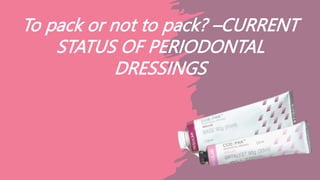
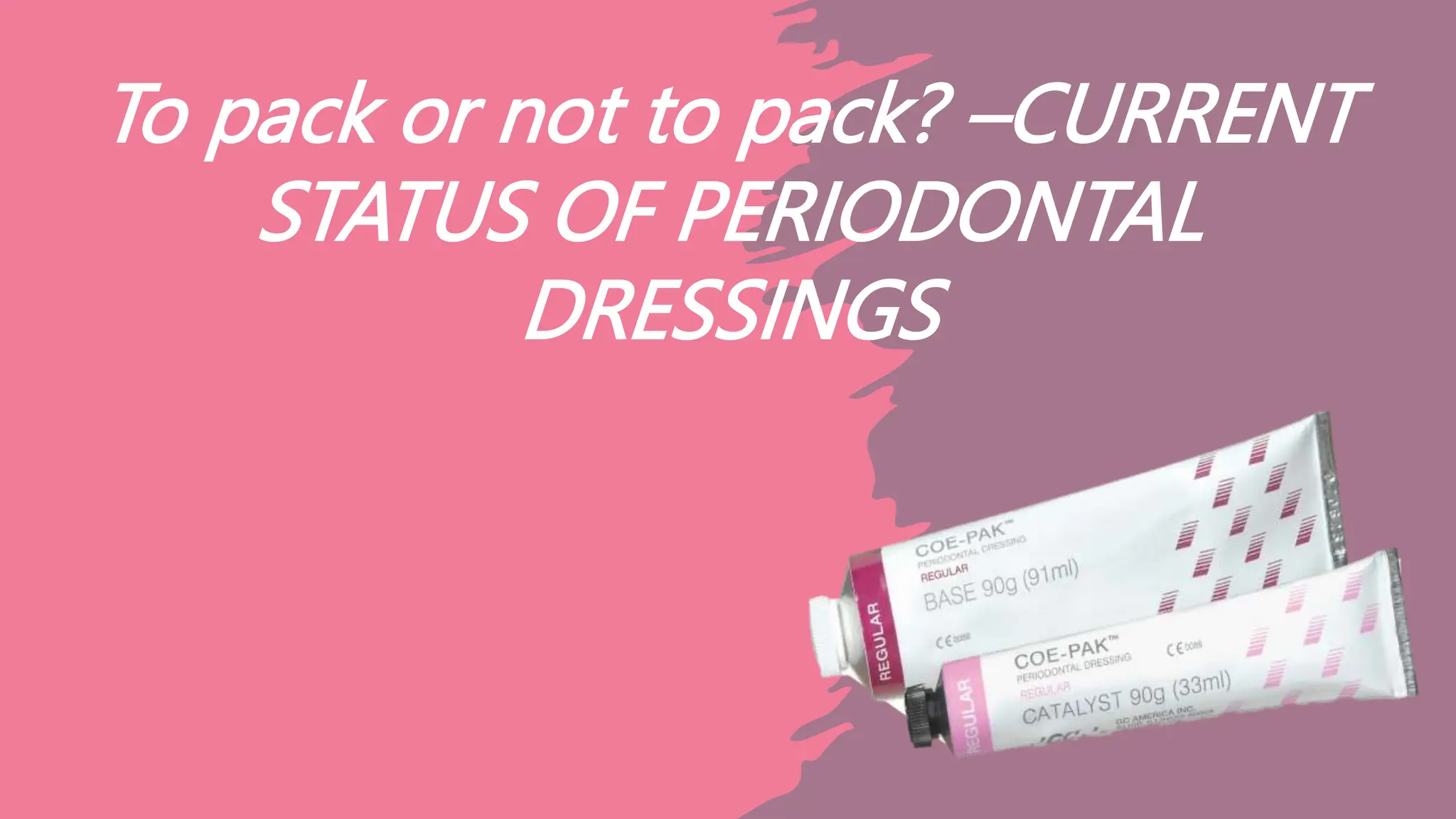
To pack or not to pack? –CURRENT
STATUS OF PERIODONTAL
DRESSINGS
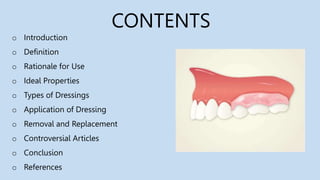
CONTENTS
o Introduction
o Definition
o Rationale for Use
o Ideal Properties
o Types of Dressings
o Application of Dressing
o Removal and Replacement
o Controversial Articles
o Conclusion
o References
o The main objectives following periodontal surgery, are to obtain optimal healing
and to ensure minimum amount of discomfort to the patient.
o Periodontal dressings are being used to aid in these objectives since the early
1920s.
o Since the introduction of first practical periodontal dressing by Dr. A.W Ward in
1923, numerous investigations on all aspects of the effects have been carried out.
INTRODUCTION
Periodontal dressing is defined as a surgical dressing applied over
and protecting the surgical wound produced by periodontal
surgical procedures.
DEFINITION
- American Academy
of Periodontology
1986
RATIONALE FOR USE
o Maintenance of debris free area.
o Protection of newly exposed root surfaces from temperature changes and
protection of sutures.
o Protection of the wound area.
o Enhancement of patient comfort.
o Control of bleeding.
o Prevent salivary contamination.
o Prevent coronal displacement of an apically positioned flap. Bernier & Kaplan 1947
IDEAL PROPERTIES…
1. The dressing should be soft, but still have enough plasticity and flexibility to
facilitate its placement in operated area and to allow proper adaptation.
2. Should harden within a reasonable period of time.
3. After setting the dressing should be sufficiently rigid to prevent fracture and
dislocation.
4. The dressing should have a smooth surface after setting to prevent irritation to
cheeks and lips.
5. It should not interfere with healing.
Jan Lindhe; 1995
…IDEAL PROPERTIES
6. The dressing should preferably have bactericidal properties to prevent excessive
plaque formation.
7. The dressing should have dimensional stability to prevent salivary contamination.
8. It should not induce possible allergic reactions.
9. It should have an acceptable taste.
10. It should be economical and easily available.
11. The material should have a good shelf life.
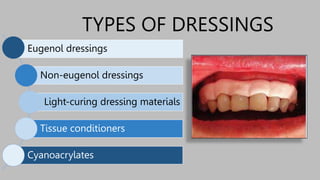
TYPES OF DRESSINGS
Eugenol dressings
Non-eugenol dressings
Light-curing dressing materials
Tissue conditioners
Cyanoacrylates
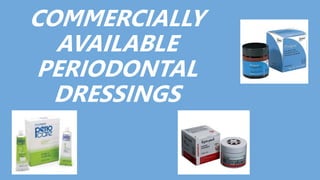
COMMERCIALLY
AVAILABLE
PERIODONTAL
DRESSINGS
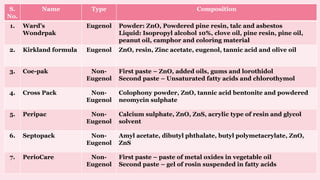
S.
No.
Name Type Composition
1. Ward’s
Wondrpak
Eugenol Powder: ZnO, Powdered pine resin, talc and asbestos
Liquid: Isopropyl alcohol 10%, clove oil, pine resin, pine oil,
peanut oil, camphor and coloring material
2. Kirkland formula Eugenol ZnO, resin, Zinc acetate, eugenol, tannic acid and olive oil
3. Coe-pak Non-
Eugenol
First paste – ZnO, added oils, gums and lorothidol
Second paste – Unsaturated fatty acids and chlorothymol
4. Cross Pack Non-
Eugenol
Colophony powder, ZnO, tannic acid bentonite and powdered
neomycin sulphate
5. Peripac Non-
Eugenol
Calcium sulphate, ZnO, ZnS, acrylic type of resin and glycol
solvent
6. Septopack Non-
Eugenol
Amyl acetate, dibutyl phthalate, butyl polymetacrylate, ZnO,
ZnS
7. PerioCare Non-
Eugenol
First paste – paste of metal oxides in vegetable oil
Second paste – gel of rosin suspended in fatty acids
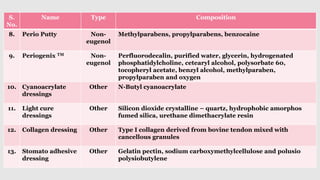
S.
No.
Name Type Composition
8. Perio Putty Non-
eugenol
Methylparabens, propylparabens, benzocaine
9. Periogenix TM Non-
eugenol
Perfluorodecalin, purified water, glycerin, hydrogenated
phosphatidylcholine, cetearyl alcohol, polysorbate 60,
tocopheryl acetate, benzyl alcohol, methylparaben,
propylparaben and oxygen
10. Cyanoacrylate
dressings
Other N-Butyl cyanoacrylate
11. Light cure
dressings
Other Silicon dioxide crystalline – quartz, hydrophobic amorphos
fumed silica, urethane dimethacrylate resin
12. Collagen dressing Other Type I collagen derived from bovine tendon mixed with
cancellous granules
13. Stomato adhesive
dressing
Other Gelatin pectin, sodium carboxymethylcellulose and polusio
polysiobutylene
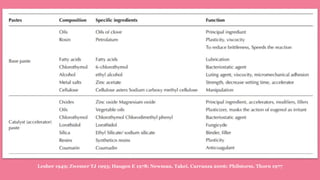
COMPOSITION
AND
INGREDIENTS OF
COE-PAK AND
THEIR
FUNCTIONS
Lesher 1949; Zwemer TJ 1993; Haugen E 1978; Newman, Takei, Carranza 2006; Philstorm, Thorn 1977
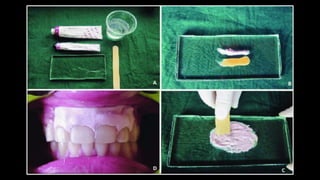
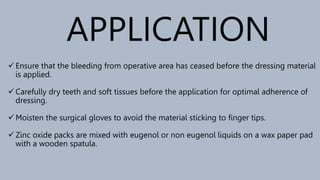
 Ensure that the bleeding from operative area has ceased before the dressing material
is applied.
 Carefully dry teeth and soft tissues before the application for optimal adherence of
dressing.
 Moisten the surgical gloves to avoid the material sticking to finger tips.
 Zinc oxide packs are mixed with eugenol or non eugenol liquids on a wax paper pad
with a wooden spatula.
APPLICATION
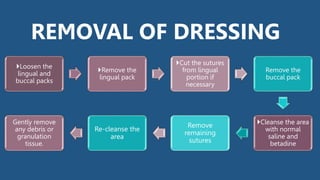
Loosen the
lingual and
buccal packs
Remove the
lingual pack
Cut the sutures
from lingual
portion if
necessary
Remove the
buccal pack
Cleanse the area
with normal
saline and
betadine
Remove
remaining
sutures
Re-cleanse the
area
Gently remove
any debris or
granulation
tissue.
REMOVAL OF DRESSING
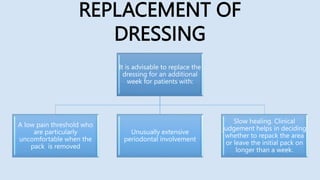
REPLACEMENT OF
DRESSING
It is advisable to replace the
dressing for an additional
week for patients with:
A low pain threshold who
are particularly
uncomfortable when the
pack is removed
Unusually extensive
periodontal involvement
Slow healing. Clinical
judgement helps in deciding
whether to repack the area
or leave the initial pack on
longer than a week.
Clinical trials
supporting the
use of
periodontal
dressings
Increasing the Amount of Attached Gingiva Using
a Modified Apically Repositioned Flap
• Year of Publication: 1957
• Name of the Journal: The Journal of Periodontology
• Results:
They supported the use of a periodontal pack incorporated with Terramycin
(or any brand of tetracycline Hydrochloride) 125 mg to 6 drops of liquid)
• Reason:
Protection of wound from mechanical trauma, and stability of the surgical
site during healing process.
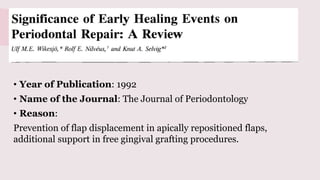
Significance of early healing events on
periodontal repair: a review
• Year of Publication: 1992
• Name of the Journal: The Journal of Periodontology
• Reason:
Prevention of flap displacement in apically repositioned flaps,
additional support in free gingival grafting procedures.
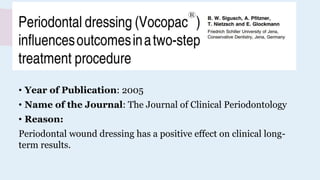
Periodontal dressing (Vocopac) influences
outcomes in a two-step treatment procedure
• Year of Publication: 2005
• Name of the Journal: The Journal of Clinical Periodontology
• Reason:
Periodontal wound dressing has a positive effect on clinical long-
term results.
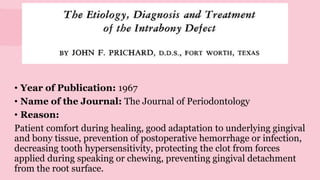
The etiology, diagnosis and treatment of the
intrabony defect.
• Year of Publication: 1967
• Name of the Journal: The Journal of Periodontology
• Reason:
Patient comfort during healing, good adaptation to underlying gingival
and bony tissue, prevention of postoperative hemorrhage or infection,
decreasing tooth hypersensitivity, protecting the clot from forces
applied during speaking or chewing, preventing gingival detachment
from the root surface.
Clinical trials NOT IN
FAVOR OF the use of
periodontal dressings
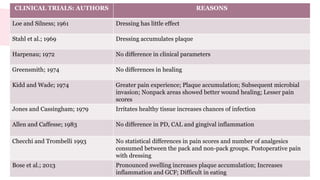
CLINICAL TRIALS: AUTHORS REASONS
Loe and Silness; 1961 Dressing has little effect
Stahl et al.; 1969 Dressing accumulates plaque
Harpenau; 1972 No difference in clinical parameters
Greensmith; 1974 No differences in healing
Kidd and Wade; 1974 Greater pain experience; Plaque accumulation; Subsequent microbial
invasion; Nonpack areas showed better wound healing; Lesser pain
scores
Jones and Cassingham; 1979 Irritates healthy tissue increases chances of infection
Allen and Caffesse; 1983 No difference in PD, CAL and gingival inflammation
Checchi and Trombelli 1993 No statistical differences in pain scores and number of analgesics
consumed between the pack and non-pack groups. Postoperative pain
with dressing
Bose et al.; 2013 Pronounced swelling increases plaque accumulation; Increases
inflammation and GCF; Difficult in eating
STUDIES ASSESSING
ANTIBACTERIAL PROPERTIES
OF PERIODONTAL DRESSING
AGAINST MICROORGANISMS
FOUND AT THE SURGICAL
SITES
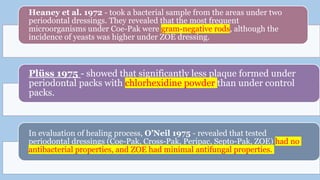
Heaney et al. 1972 - took a bacterial sample from the areas under two
periodontal dressings. They revealed that the most frequent
microorganisms under Coe-Pak were gram-negative rods, although the
incidence of yeasts was higher under ZOE dressing.
Plüss 1975 - showed that significantly less plaque formed under
periodontal packs with chlorhexidine powder than under control
packs.
In evaluation of healing process, O’Neil 1975 - revealed that tested
periodontal dressings (Coe-Pak, Cross-Pak, Peripac, Septo-Pak, ZOE) had no
antibacterial properties, and ZOE had minimal antifungal properties.
Haugen and Gjermo 1978 - revealed that the tested
periodontal dressings (Wondrpak, Coe-Pak and Peripac) had
antibacterial effects on salivary microorganisms.
The effect of chlorhexidine supplementation on periodontal dressing was
assessed by Othman et al 1989. They showed that the durability of
chlorhexidine efficacy in periodontal dressing depends on its
concentration.
Volozhin et al 2004 showed that the frequency of aggressive
microorganisms in periodontal pockets of patients with generalized chronic
periodontitis reduced when the periodontal dressing consisting of collagen
and Lactobacillus casei 37 cell suspension was used.
STUDIES ASSESSING
PERIODONTAL DRESSING
CYTOTOXICITY
An in vitro cell culture technique suggested that the solubility of the
leachable toxic substances in cell culture medium is an important
factor responsible for various behaviors of dressings. – Haugen;
1978
Haugen et al 1978 - introduced Wondrpak as the most
irritating product, followed by Coe-Pak and Peripac.
Haugen et al 1979 - Under laboratory conditions, fresh samples of Coe-
Pak and Wondrpak cause more hemolysis than other products, and the
cytotoxicity of Coe-Pak increases with time.
Smeekens et al 1992 in an animal study, suggested that the products that
contain eugenol trigger greater inflammatory reactions, although this
increase was not significant in other studies.
By using scanning electron microscopy and L-929 cell media, the
cytotoxicity of some periodontal dressings was assessed. They showed that
all of the materials had an insignificant toxic effect on L-929 cell lines, and
Coe-Pak dressings were smoother than ZOE. – Baer et al. 1961
Baer and Wertheimer 1961, Haugen and Mjör 1979 and Saito et al. 2008 in their
studies showed that periodontal dressings can cause greater inflammatory infiltration on
the bone and the inflammatory reaction is greater when the dressing is directly placed on
the bone compared with the time when it is placed on the periosteum.
CONCLUSION
• The question of whether we need to use a dressing for
all surgical procedures still remains open !!!
• According to patients’ preference and comfort point-of-
view:
1. Many patients experienced discomfort when a periodontal
dressing was used and preferred to use a mouth rinse.
2. Conversely, some patients exhibited a psychological feeling of
protection and well-being when a periodontal dressing was put in
place.
THE CHOICE OF USE OF A PERIODONTAL DRESSING
IS A MATTER OF INDIVIDUAL PREFERENCE AND
THE JUDGMENT OF THE OPERATOR.
• However, it is prudent to use a dressing for stabilization of free gingival grafts
and protection of donor site, retention of an apically positioned flap, protection
of the denuded bone from further injury, protection of the graft site in
periodontal regeneration and to facilitate retention of drugs delivered locally in
the sub-gingival sites.
There appears to be no consensus regarding the
absolute indication for the use of periodontal dressings
after a surgical procedure. However, the literature does
elaborate on the benefits of application of a dressing
postsurgically.
REFERENCES
o To Pack or Not to Pack: The Current Status of Periodontal Dressings – Dr. Rahul Kathariya, Hansa Jain and Tanya Jadhav (Journal of
Applied Biomaterials and Functional Biomaterials)
o Antibacterial properties of periodontal dressings – T. C . A . O 'NEIL
o Periodontal Dressing: A Review Article – Zahra Baghani and Mahdi Kadkhodazadeh
o Sigusch BW, Pfitzner A, Nietzsch T, Glockmann E. Periodontal dressing (Vocopac®) influences outcomes in a two‐step treatment
procedure. Journal of clinical periodontology. 2005 Apr;32(4):401-5.
o Wikesjö UM, Nilvéus RE, Selvig KA. Significance of early healing events on periodontal repair: a review. Journal of
periodontology. 1992 Mar;63(3):158-65.
o Genovesi AM, Ricci M, Marchisio O, Covani U. Periodontal dressing may influence the clinical outcome of non‐surgical
periodontal treatment: a split‐mouth study. International journal of dental hygiene. 2012 Nov;10(4):284-9.
o Soheilifar S, Bidgoli M, Faradmal J, Soheilifar S. Effect of periodontal dressing on wound healing and patient satisfaction
following periodontal flap surgery. Journal of Dentistry (Tehran, Iran). 2015 Feb;12(2):151.
o Sachs HA, Famoush A, Checchi L, Joseph CE. Current status of periodontal dressings. Journal of periodontology. 1984
Dec;55(12):689-96.
o Bose S, Gundannavar G, Chatterjee A, Mohan RR, Viswanath RA, Shetty S. Comparison Of The Early Wound Healing Following
Periodontal Flap Surgery In Periodontitis Patients With And Without Periodontal Dressing. Indian Journal of Dental Sciences.
2013 Mar 1;5(1).
o Nezwek RA, Caffesse RG, Bergenholtz A, Nasjleti CE. Connective tissue response to periodontal dressings. Journal of
periodontology. 1980 Sep;51(9):521-9.
o Kumar MV, Narayanan V, Jalaluddin M, Almalki SA, Dey SM, Sathe S. Assessment of clinical efficacy of different periodontal
dressing materials on wound healing: A comparative study. J Contemp Dent Pract. 2019 Aug 1;20(8):896-900.
PERIODONTAL DRESSING perio pack - JC.pptx

PERIODONTAL DRESSING perio pack - JC.pptx

  • 1.
    To pack ornot to pack? –CURRENT STATUS OF PERIODONTAL DRESSINGS
  • 2.
    CONTENTS o Introduction o Definition oRationale for Use o Ideal Properties o Types of Dressings o Application of Dressing o Removal and Replacement o Controversial Articles o Conclusion o References
  • 3.
    o The mainobjectives following periodontal surgery, are to obtain optimal healing and to ensure minimum amount of discomfort to the patient. o Periodontal dressings are being used to aid in these objectives since the early 1920s. o Since the introduction of first practical periodontal dressing by Dr. A.W Ward in 1923, numerous investigations on all aspects of the effects have been carried out. INTRODUCTION
  • 4.
    Periodontal dressing isdefined as a surgical dressing applied over and protecting the surgical wound produced by periodontal surgical procedures. DEFINITION - American Academy of Periodontology 1986
  • 5.
    RATIONALE FOR USE oMaintenance of debris free area. o Protection of newly exposed root surfaces from temperature changes and protection of sutures. o Protection of the wound area. o Enhancement of patient comfort. o Control of bleeding. o Prevent salivary contamination. o Prevent coronal displacement of an apically positioned flap. Bernier & Kaplan 1947
  • 6.
    IDEAL PROPERTIES… 1. Thedressing should be soft, but still have enough plasticity and flexibility to facilitate its placement in operated area and to allow proper adaptation. 2. Should harden within a reasonable period of time. 3. After setting the dressing should be sufficiently rigid to prevent fracture and dislocation. 4. The dressing should have a smooth surface after setting to prevent irritation to cheeks and lips. 5. It should not interfere with healing. Jan Lindhe; 1995
  • 7.
    …IDEAL PROPERTIES 6. Thedressing should preferably have bactericidal properties to prevent excessive plaque formation. 7. The dressing should have dimensional stability to prevent salivary contamination. 8. It should not induce possible allergic reactions. 9. It should have an acceptable taste. 10. It should be economical and easily available. 11. The material should have a good shelf life.
  • 8.
    TYPES OF DRESSINGS Eugenoldressings Non-eugenol dressings Light-curing dressing materials Tissue conditioners Cyanoacrylates
  • 9.
  • 10.
    S. No. Name Type Composition 1.Ward’s Wondrpak Eugenol Powder: ZnO, Powdered pine resin, talc and asbestos Liquid: Isopropyl alcohol 10%, clove oil, pine resin, pine oil, peanut oil, camphor and coloring material 2. Kirkland formula Eugenol ZnO, resin, Zinc acetate, eugenol, tannic acid and olive oil 3. Coe-pak Non- Eugenol First paste – ZnO, added oils, gums and lorothidol Second paste – Unsaturated fatty acids and chlorothymol 4. Cross Pack Non- Eugenol Colophony powder, ZnO, tannic acid bentonite and powdered neomycin sulphate 5. Peripac Non- Eugenol Calcium sulphate, ZnO, ZnS, acrylic type of resin and glycol solvent 6. Septopack Non- Eugenol Amyl acetate, dibutyl phthalate, butyl polymetacrylate, ZnO, ZnS 7. PerioCare Non- Eugenol First paste – paste of metal oxides in vegetable oil Second paste – gel of rosin suspended in fatty acids
  • 11.
    S. No. Name Type Composition 8.Perio Putty Non- eugenol Methylparabens, propylparabens, benzocaine 9. Periogenix TM Non- eugenol Perfluorodecalin, purified water, glycerin, hydrogenated phosphatidylcholine, cetearyl alcohol, polysorbate 60, tocopheryl acetate, benzyl alcohol, methylparaben, propylparaben and oxygen 10. Cyanoacrylate dressings Other N-Butyl cyanoacrylate 11. Light cure dressings Other Silicon dioxide crystalline – quartz, hydrophobic amorphos fumed silica, urethane dimethacrylate resin 12. Collagen dressing Other Type I collagen derived from bovine tendon mixed with cancellous granules 13. Stomato adhesive dressing Other Gelatin pectin, sodium carboxymethylcellulose and polusio polysiobutylene
  • 12.
  • 13.
    Lesher 1949; ZwemerTJ 1993; Haugen E 1978; Newman, Takei, Carranza 2006; Philstorm, Thorn 1977
  • 15.
     Ensure thatthe bleeding from operative area has ceased before the dressing material is applied.  Carefully dry teeth and soft tissues before the application for optimal adherence of dressing.  Moisten the surgical gloves to avoid the material sticking to finger tips.  Zinc oxide packs are mixed with eugenol or non eugenol liquids on a wax paper pad with a wooden spatula. APPLICATION
  • 16.
    Loosen the lingual and buccalpacks Remove the lingual pack Cut the sutures from lingual portion if necessary Remove the buccal pack Cleanse the area with normal saline and betadine Remove remaining sutures Re-cleanse the area Gently remove any debris or granulation tissue. REMOVAL OF DRESSING
  • 17.
    REPLACEMENT OF DRESSING It isadvisable to replace the dressing for an additional week for patients with: A low pain threshold who are particularly uncomfortable when the pack is removed Unusually extensive periodontal involvement Slow healing. Clinical judgement helps in deciding whether to repack the area or leave the initial pack on longer than a week.
  • 18.
    Clinical trials supporting the useof periodontal dressings
  • 19.
    Increasing the Amountof Attached Gingiva Using a Modified Apically Repositioned Flap • Year of Publication: 1957 • Name of the Journal: The Journal of Periodontology • Results: They supported the use of a periodontal pack incorporated with Terramycin (or any brand of tetracycline Hydrochloride) 125 mg to 6 drops of liquid) • Reason: Protection of wound from mechanical trauma, and stability of the surgical site during healing process.
  • 20.
    Significance of earlyhealing events on periodontal repair: a review • Year of Publication: 1992 • Name of the Journal: The Journal of Periodontology • Reason: Prevention of flap displacement in apically repositioned flaps, additional support in free gingival grafting procedures.
  • 21.
    Periodontal dressing (Vocopac)influences outcomes in a two-step treatment procedure • Year of Publication: 2005 • Name of the Journal: The Journal of Clinical Periodontology • Reason: Periodontal wound dressing has a positive effect on clinical long- term results.
  • 22.
    The etiology, diagnosisand treatment of the intrabony defect. • Year of Publication: 1967 • Name of the Journal: The Journal of Periodontology • Reason: Patient comfort during healing, good adaptation to underlying gingival and bony tissue, prevention of postoperative hemorrhage or infection, decreasing tooth hypersensitivity, protecting the clot from forces applied during speaking or chewing, preventing gingival detachment from the root surface.
  • 23.
    Clinical trials NOTIN FAVOR OF the use of periodontal dressings
  • 24.
    CLINICAL TRIALS: AUTHORSREASONS Loe and Silness; 1961 Dressing has little effect Stahl et al.; 1969 Dressing accumulates plaque Harpenau; 1972 No difference in clinical parameters Greensmith; 1974 No differences in healing Kidd and Wade; 1974 Greater pain experience; Plaque accumulation; Subsequent microbial invasion; Nonpack areas showed better wound healing; Lesser pain scores Jones and Cassingham; 1979 Irritates healthy tissue increases chances of infection Allen and Caffesse; 1983 No difference in PD, CAL and gingival inflammation Checchi and Trombelli 1993 No statistical differences in pain scores and number of analgesics consumed between the pack and non-pack groups. Postoperative pain with dressing Bose et al.; 2013 Pronounced swelling increases plaque accumulation; Increases inflammation and GCF; Difficult in eating
  • 25.
    STUDIES ASSESSING ANTIBACTERIAL PROPERTIES OFPERIODONTAL DRESSING AGAINST MICROORGANISMS FOUND AT THE SURGICAL SITES
  • 26.
    Heaney et al.1972 - took a bacterial sample from the areas under two periodontal dressings. They revealed that the most frequent microorganisms under Coe-Pak were gram-negative rods, although the incidence of yeasts was higher under ZOE dressing. Plüss 1975 - showed that significantly less plaque formed under periodontal packs with chlorhexidine powder than under control packs. In evaluation of healing process, O’Neil 1975 - revealed that tested periodontal dressings (Coe-Pak, Cross-Pak, Peripac, Septo-Pak, ZOE) had no antibacterial properties, and ZOE had minimal antifungal properties.
  • 27.
    Haugen and Gjermo1978 - revealed that the tested periodontal dressings (Wondrpak, Coe-Pak and Peripac) had antibacterial effects on salivary microorganisms. The effect of chlorhexidine supplementation on periodontal dressing was assessed by Othman et al 1989. They showed that the durability of chlorhexidine efficacy in periodontal dressing depends on its concentration. Volozhin et al 2004 showed that the frequency of aggressive microorganisms in periodontal pockets of patients with generalized chronic periodontitis reduced when the periodontal dressing consisting of collagen and Lactobacillus casei 37 cell suspension was used.
  • 28.
  • 29.
    An in vitrocell culture technique suggested that the solubility of the leachable toxic substances in cell culture medium is an important factor responsible for various behaviors of dressings. – Haugen; 1978 Haugen et al 1978 - introduced Wondrpak as the most irritating product, followed by Coe-Pak and Peripac. Haugen et al 1979 - Under laboratory conditions, fresh samples of Coe- Pak and Wondrpak cause more hemolysis than other products, and the cytotoxicity of Coe-Pak increases with time.
  • 30.
    Smeekens et al1992 in an animal study, suggested that the products that contain eugenol trigger greater inflammatory reactions, although this increase was not significant in other studies. By using scanning electron microscopy and L-929 cell media, the cytotoxicity of some periodontal dressings was assessed. They showed that all of the materials had an insignificant toxic effect on L-929 cell lines, and Coe-Pak dressings were smoother than ZOE. – Baer et al. 1961 Baer and Wertheimer 1961, Haugen and Mjör 1979 and Saito et al. 2008 in their studies showed that periodontal dressings can cause greater inflammatory infiltration on the bone and the inflammatory reaction is greater when the dressing is directly placed on the bone compared with the time when it is placed on the periosteum.
  • 31.
    CONCLUSION • The questionof whether we need to use a dressing for all surgical procedures still remains open !!! • According to patients’ preference and comfort point-of- view: 1. Many patients experienced discomfort when a periodontal dressing was used and preferred to use a mouth rinse. 2. Conversely, some patients exhibited a psychological feeling of protection and well-being when a periodontal dressing was put in place.
  • 32.
    THE CHOICE OFUSE OF A PERIODONTAL DRESSING IS A MATTER OF INDIVIDUAL PREFERENCE AND THE JUDGMENT OF THE OPERATOR. • However, it is prudent to use a dressing for stabilization of free gingival grafts and protection of donor site, retention of an apically positioned flap, protection of the denuded bone from further injury, protection of the graft site in periodontal regeneration and to facilitate retention of drugs delivered locally in the sub-gingival sites. There appears to be no consensus regarding the absolute indication for the use of periodontal dressings after a surgical procedure. However, the literature does elaborate on the benefits of application of a dressing postsurgically.
  • 33.
    REFERENCES o To Packor Not to Pack: The Current Status of Periodontal Dressings – Dr. Rahul Kathariya, Hansa Jain and Tanya Jadhav (Journal of Applied Biomaterials and Functional Biomaterials) o Antibacterial properties of periodontal dressings – T. C . A . O 'NEIL o Periodontal Dressing: A Review Article – Zahra Baghani and Mahdi Kadkhodazadeh o Sigusch BW, Pfitzner A, Nietzsch T, Glockmann E. Periodontal dressing (Vocopac®) influences outcomes in a two‐step treatment procedure. Journal of clinical periodontology. 2005 Apr;32(4):401-5. o Wikesjö UM, Nilvéus RE, Selvig KA. Significance of early healing events on periodontal repair: a review. Journal of periodontology. 1992 Mar;63(3):158-65. o Genovesi AM, Ricci M, Marchisio O, Covani U. Periodontal dressing may influence the clinical outcome of non‐surgical periodontal treatment: a split‐mouth study. International journal of dental hygiene. 2012 Nov;10(4):284-9. o Soheilifar S, Bidgoli M, Faradmal J, Soheilifar S. Effect of periodontal dressing on wound healing and patient satisfaction following periodontal flap surgery. Journal of Dentistry (Tehran, Iran). 2015 Feb;12(2):151. o Sachs HA, Famoush A, Checchi L, Joseph CE. Current status of periodontal dressings. Journal of periodontology. 1984 Dec;55(12):689-96. o Bose S, Gundannavar G, Chatterjee A, Mohan RR, Viswanath RA, Shetty S. Comparison Of The Early Wound Healing Following Periodontal Flap Surgery In Periodontitis Patients With And Without Periodontal Dressing. Indian Journal of Dental Sciences. 2013 Mar 1;5(1). o Nezwek RA, Caffesse RG, Bergenholtz A, Nasjleti CE. Connective tissue response to periodontal dressings. Journal of periodontology. 1980 Sep;51(9):521-9. o Kumar MV, Narayanan V, Jalaluddin M, Almalki SA, Dey SM, Sathe S. Assessment of clinical efficacy of different periodontal dressing materials on wound healing: A comparative study. J Contemp Dent Pract. 2019 Aug 1;20(8):896-900.