Healing of
extraction socket
-Dr Aayushi Aggarwal
(Junior Resident)
Public Health Dentistry
Seminar
Content
● Introduction
● Factors affecting healing of extraction wound
● Pathological stages of healing of extraction
socket
● Sequence of healing of extraction socket
● Complications in healing of extraction socket
● Guidelines for uneventful healing
● Clinical implications
● Conclusion
● References
2
Introduction
●Exodontia is a painless removal of a tooth or tooth root from its
socket with minimal injury to the bone and surrounding structure
so that postoperative healing is uneventful.
● Healing of extraction socket is a specialized example of healing by
secondary intention.
● It is described as an “average” sequence of events.
●A thorough understanding of the phenomenon of healing
of extraction wounds is imperative for the dentist, since
vast numbers of teeth are extracted because of pulp and
periapical infection as well as various forms of periodontal disease,
and there is an ever-present possibility of complications in the
healing process.
3
4
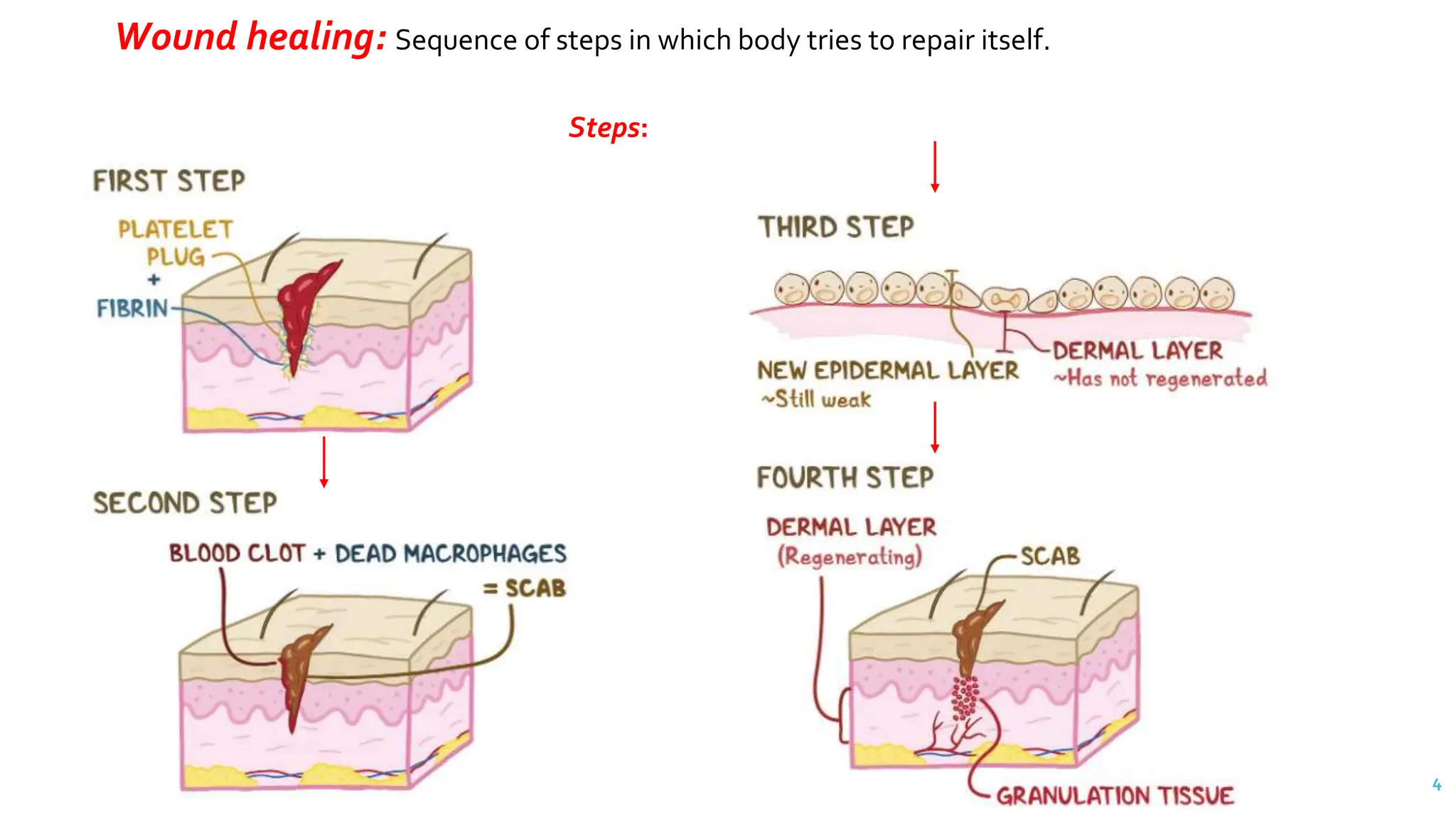
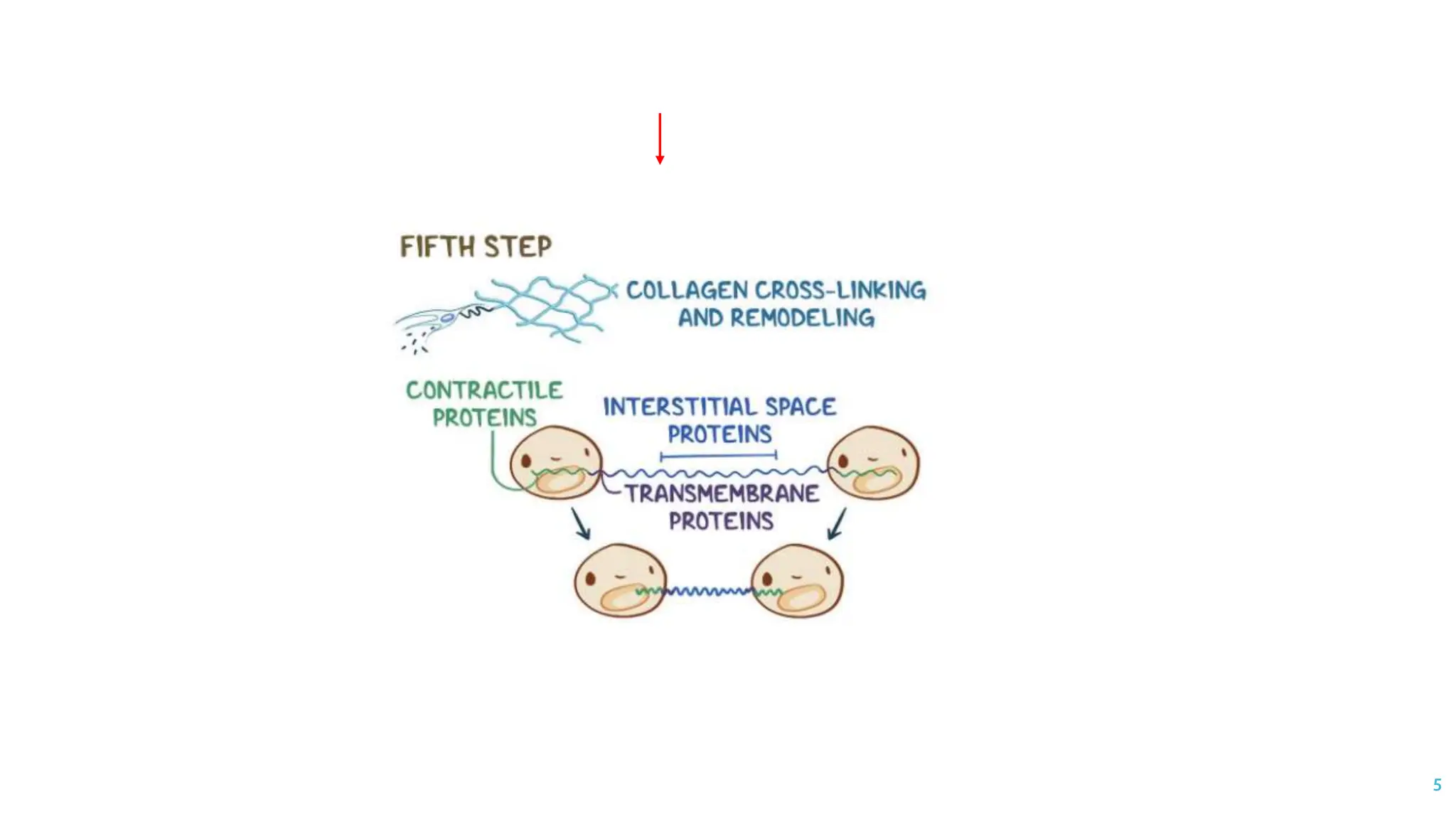
Wound healing: Sequence of steps in which body tries to repair itself.
Steps:
5
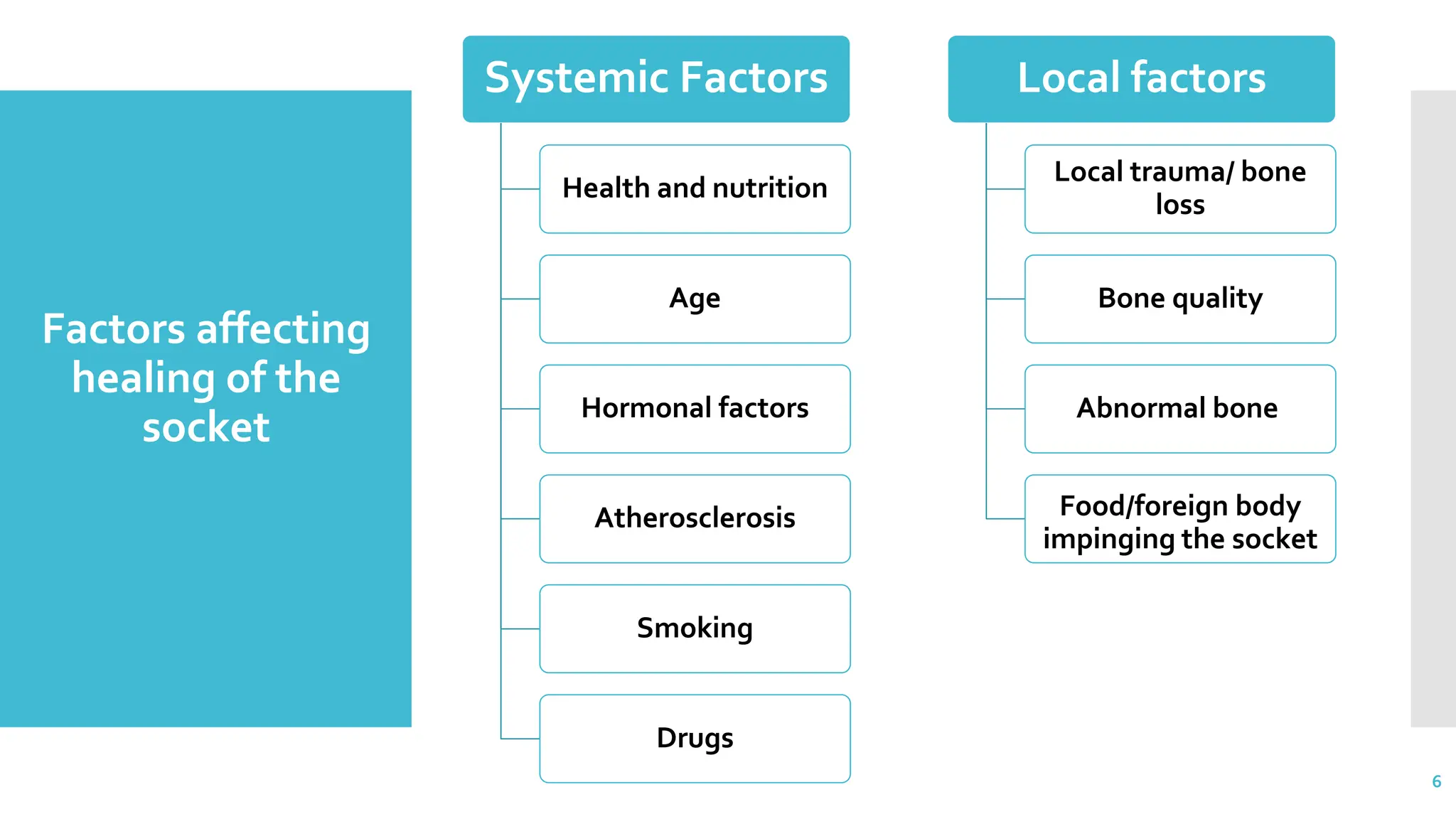
Factors affecting
healing of the
socket
Systemic Factors
Health and nutrition
Age
Hormonal factors
Atherosclerosis
Smoking
Drugs
Local factors
Local trauma/ bone
loss
Bone quality
Abnormal bone
Food/foreign body
impinging the socket
6
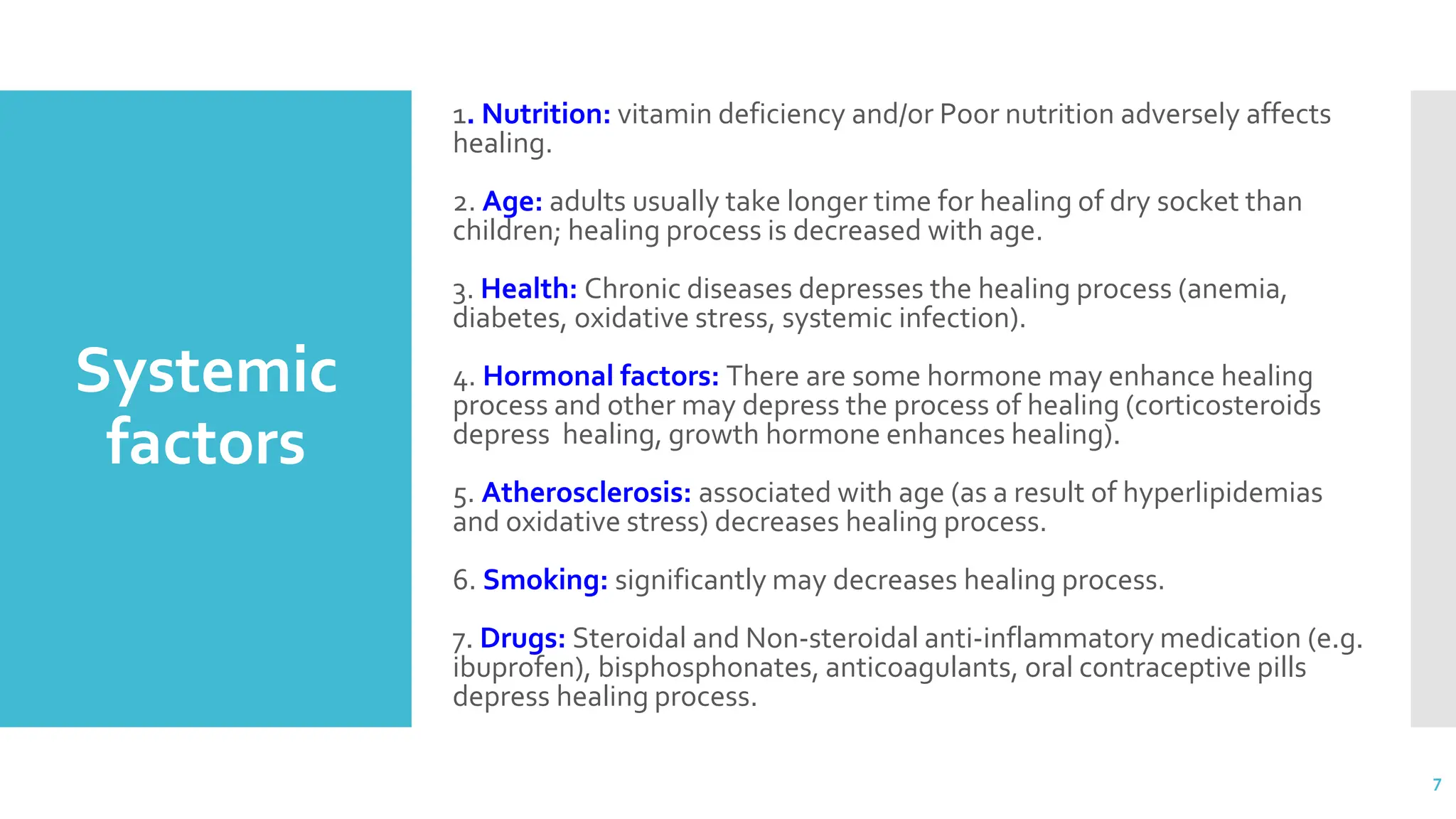
Systemic
factors
7
1. Nutrition: vitamin deficiency and/or Poor nutrition adversely affects
healing.
2. Age: adults usually take longer time for healing of dry socket than
children; healing process is decreased with age.
3. Health: Chronic diseases depresses the healing process (anemia,
diabetes, oxidative stress, systemic infection).
4. Hormonal factors: There are some hormone may enhance healing
process and other may depress the process of healing (corticosteroids
depress healing, growth hormone enhances healing).
5. Atherosclerosis: associated with age (as a result of hyperlipidemias
and oxidative stress) decreases healing process.
6. Smoking: significantly may decreases healing process.
7. Drugs: Steroidal and Non-steroidal anti-inflammatory medication (e.g.
ibuprofen), bisphosphonates, anticoagulants, oral contraceptive pills
depress healing process.
8
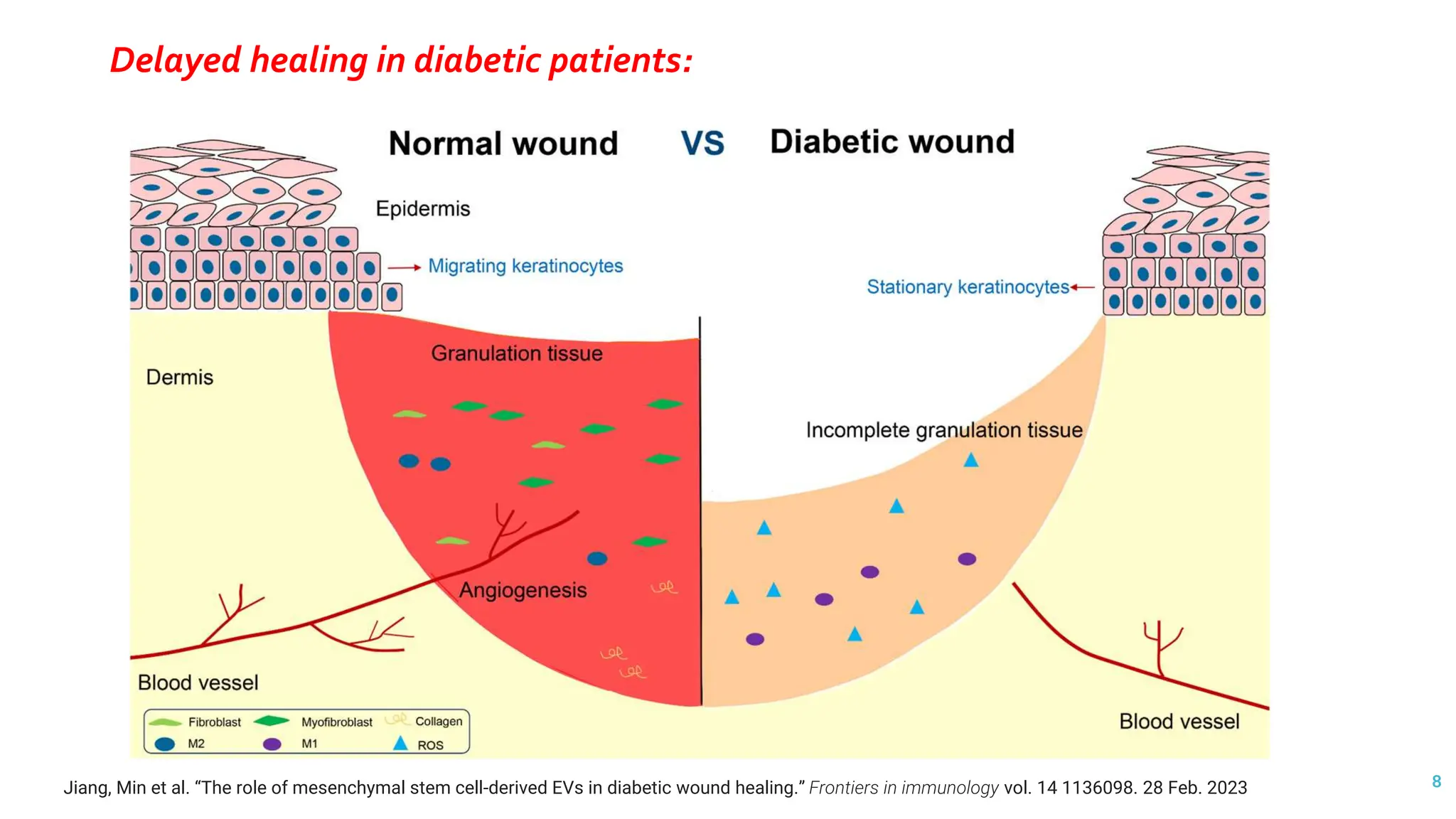
Jiang, Min et al. “The role of mesenchymal stem cell-derived EVs in diabetic wound healing.” Frontiers in immunology vol. 14 1136098. 28 Feb. 2023
Delayed healing in diabetic patients:
Local factors
1. Degree of local trauma/bone loss: A comminuted fracture with
more soft tissue injury is slower to heal.
2. Area of bone affected and bone quality.
3. Abnormal bone (infection, tumour, irradiated).
4. Food/ foreign body impinging at the socket site delays healing.
9
Stages of post
extraction healing
10
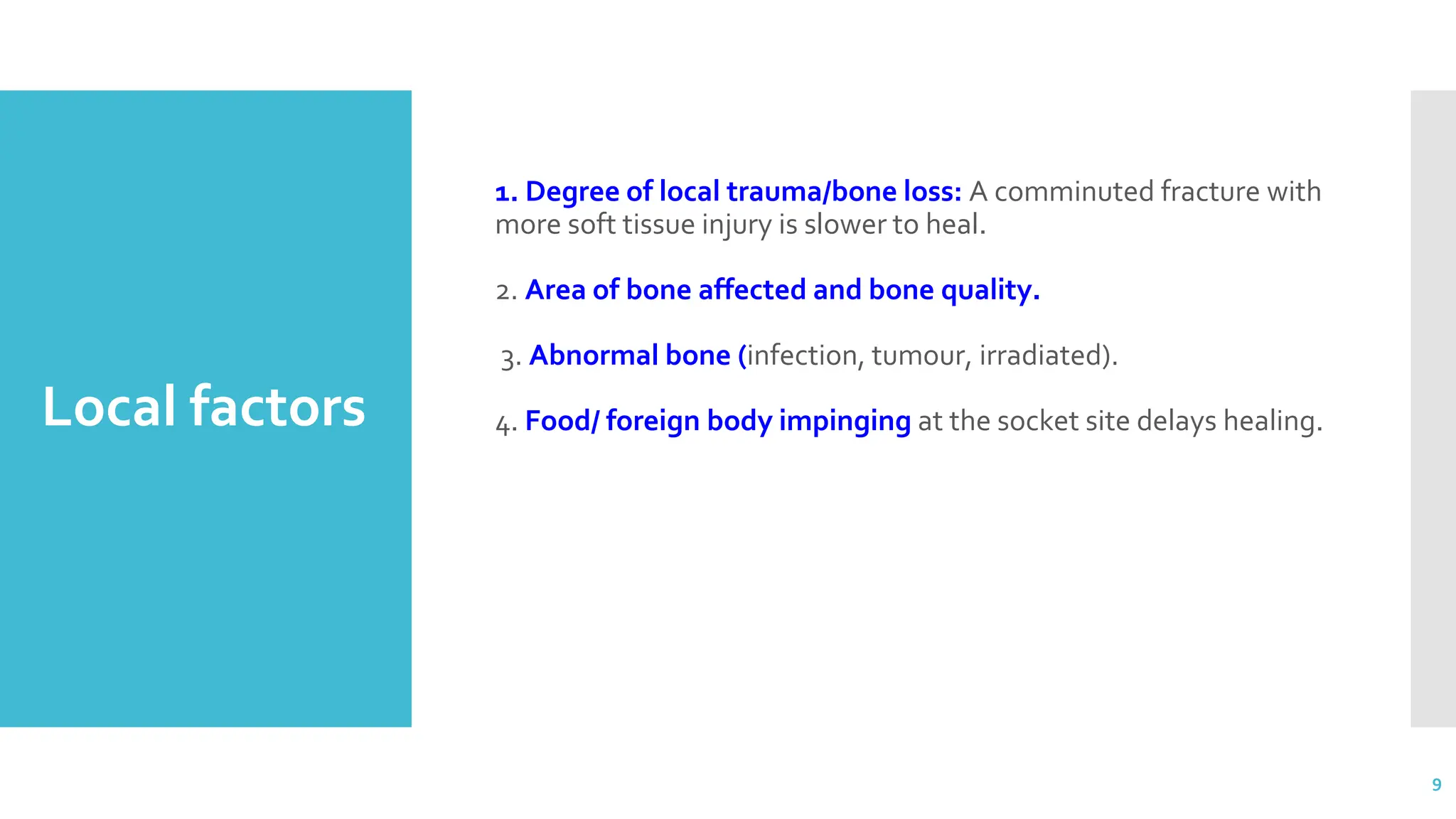
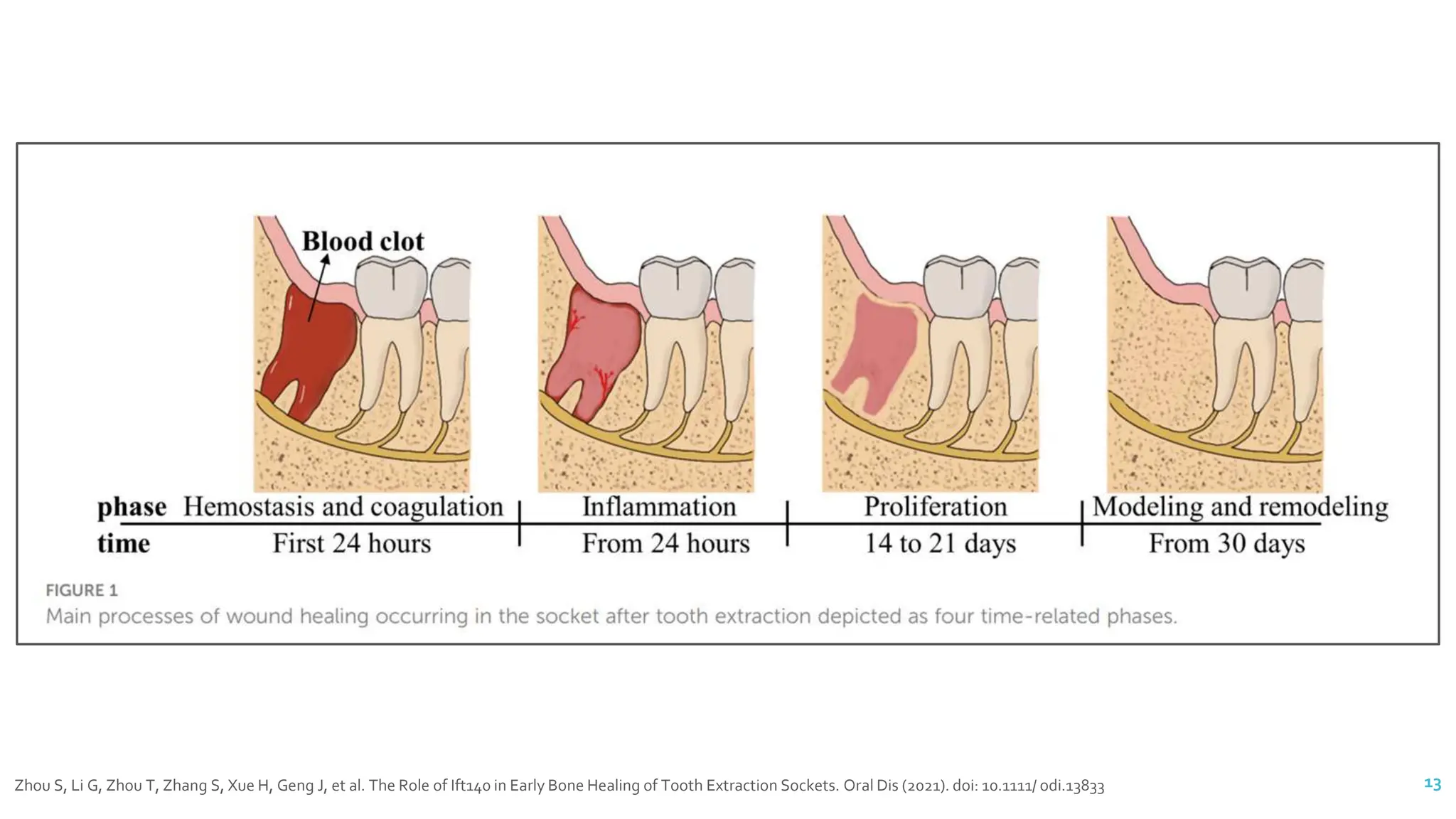
Hemostasis:immediately after the tooth extraction, a blood clot
forms in the socket. The blood clot helps control bleeding and serve as a
foundation of healing process.
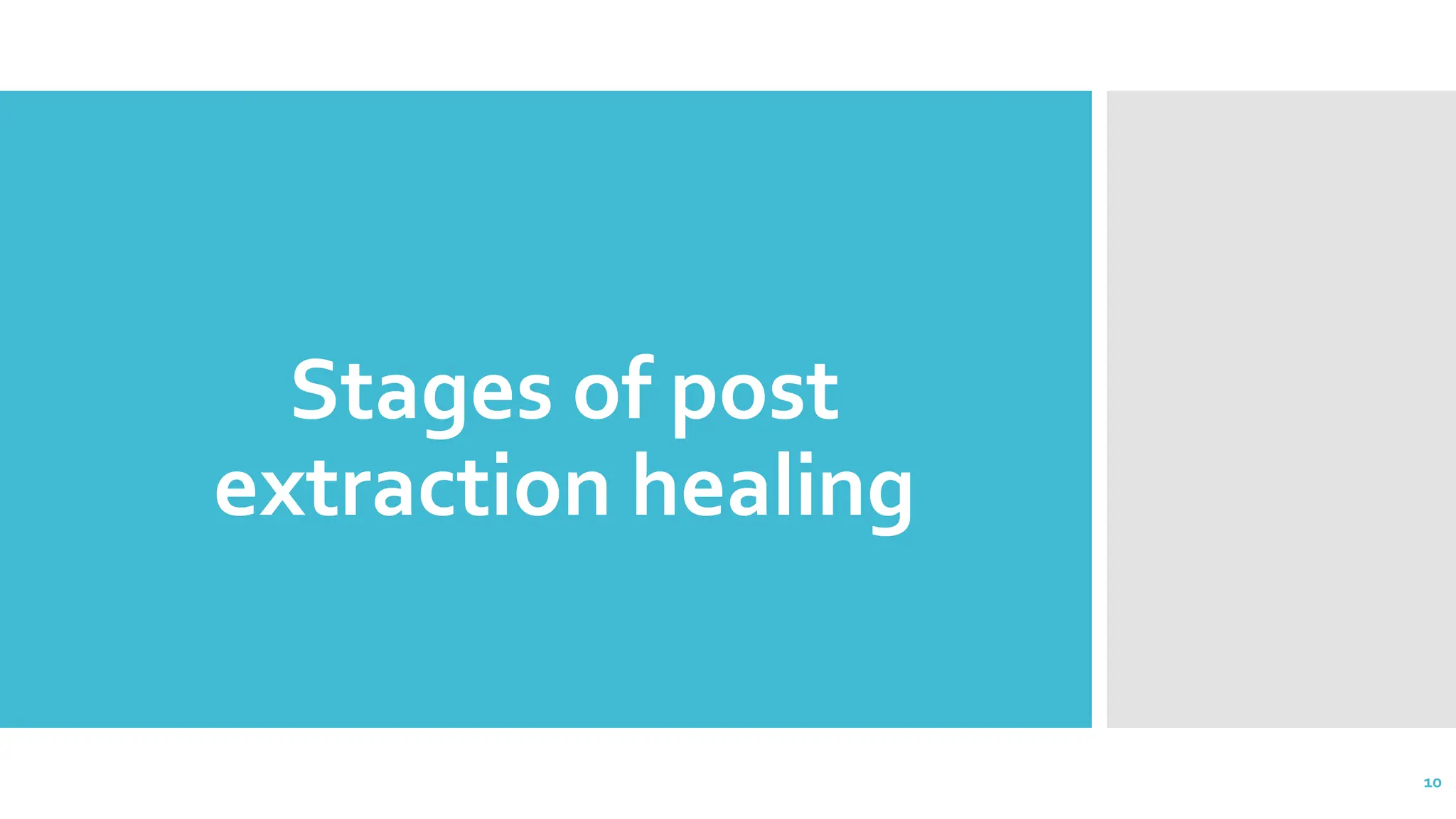
Inflammation: In the first few days following extraction,
inflammation occurs. The area around the socket may appear swollen,
and one may experience some pain or discomfort. The body’s immune
response is triggered, sending white blood cells to the area to fight off
infection and initiate the healing process.
11
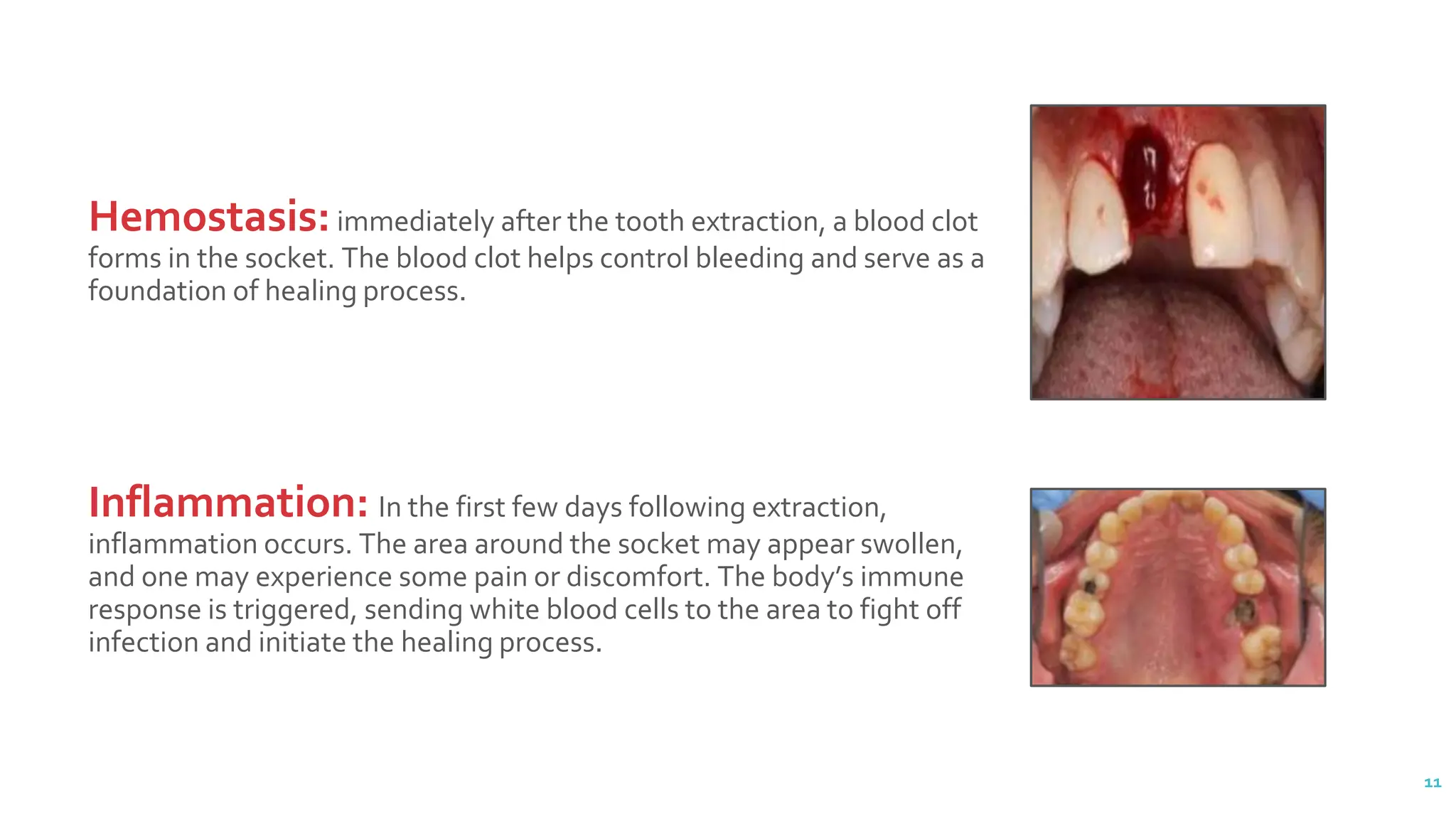
Granulation tissue formation:within a week or so,
granulation tissue begins to develop at the base of the socket. This
tissue contains new blood vessels and connective tissue, which is
crucial for subsequent stages of healing.
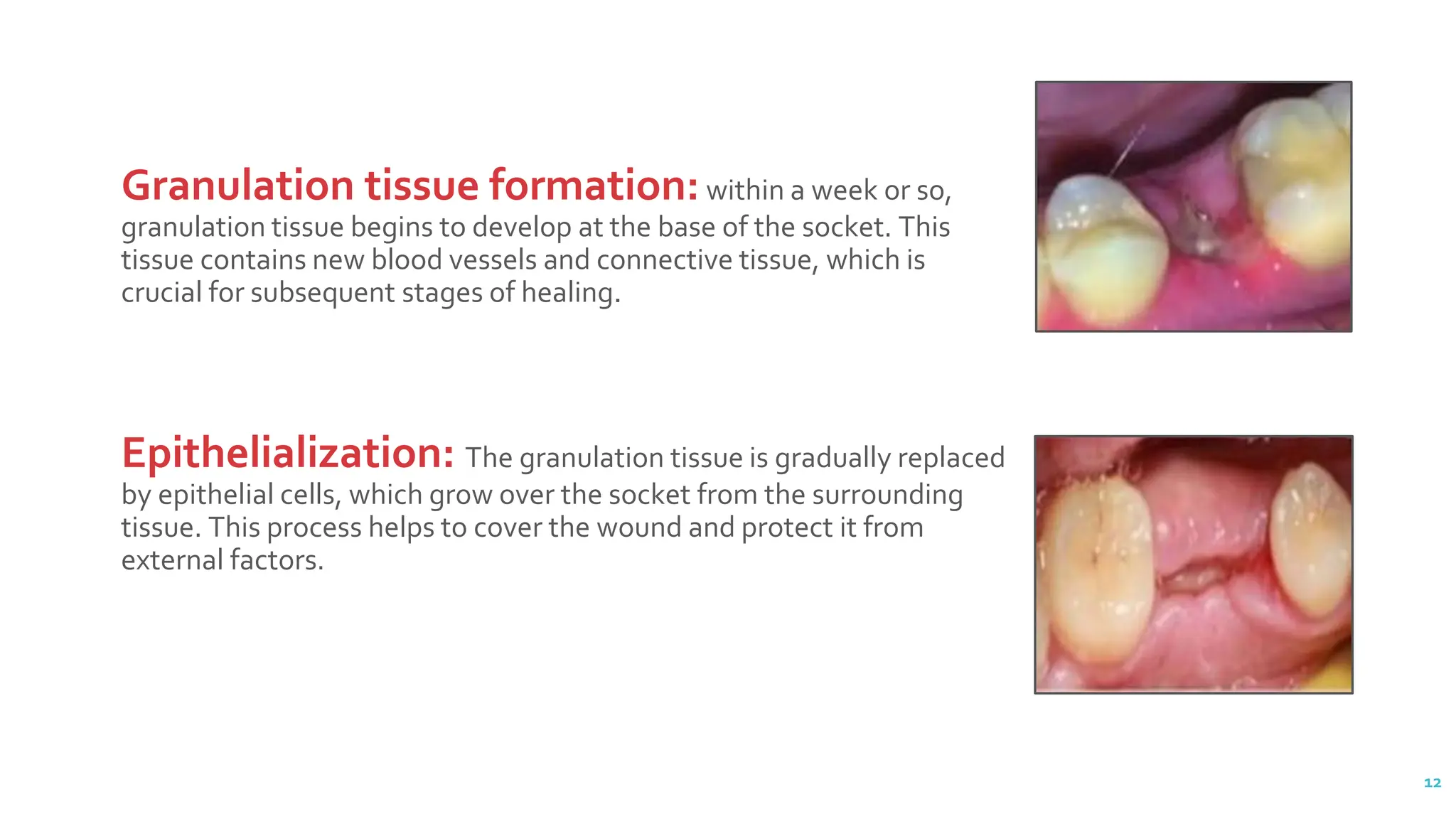
Epithelialization: The granulation tissue is gradually replaced
by epithelial cells, which grow over the socket from the surrounding
tissue. This process helps to cover the wound and protect it from
external factors.
12
13
Zhou S, Li G, Zhou T, Zhang S, Xue H, Geng J, et al. The Role of Ift140 in Early Bone Healing of Tooth Extraction Sockets. Oral Dis (2021). doi: 10.1111/ odi.13833
Sequence of reactions
during healing of
socket
Immediate
reaction
following
extraction
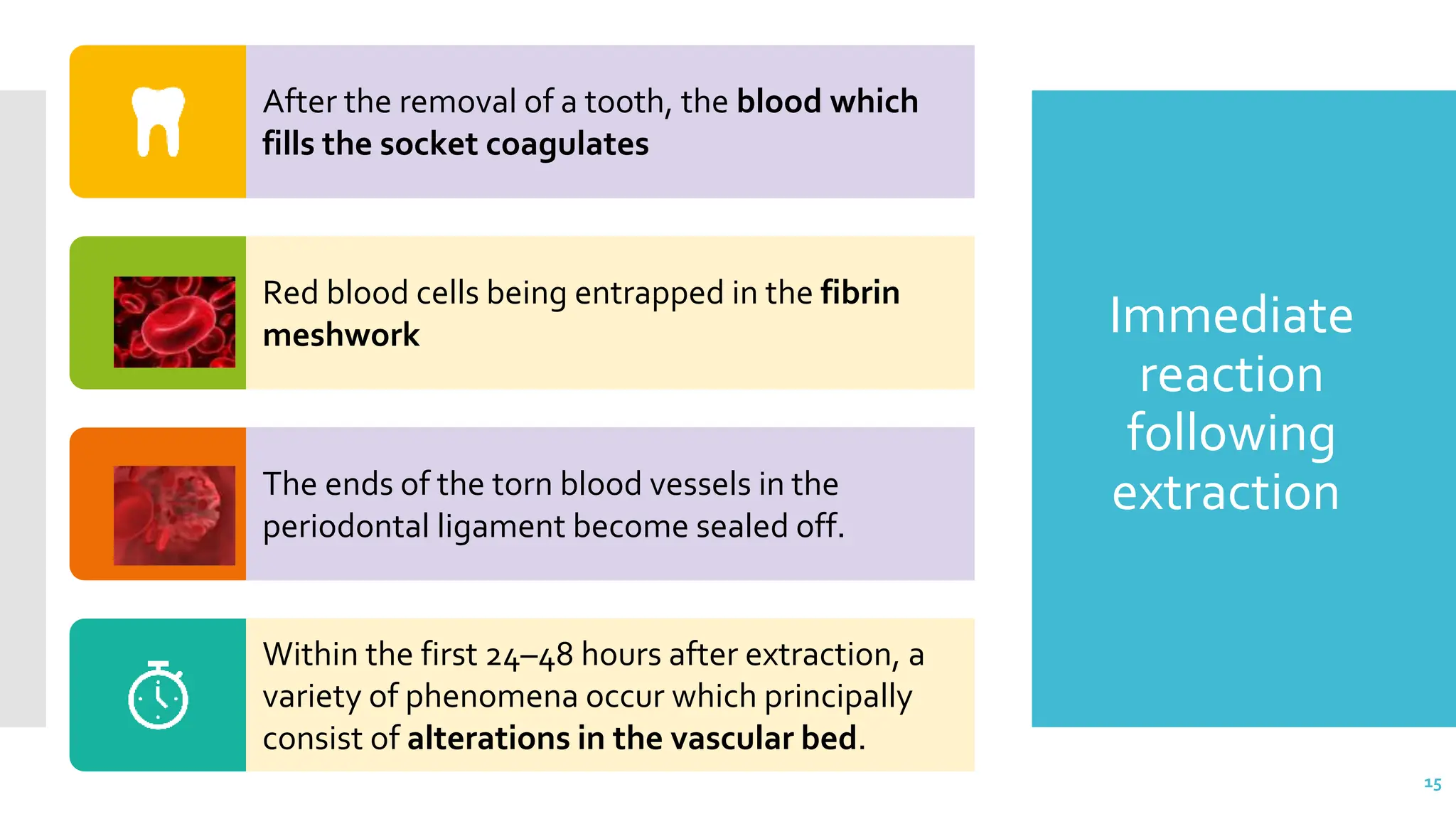
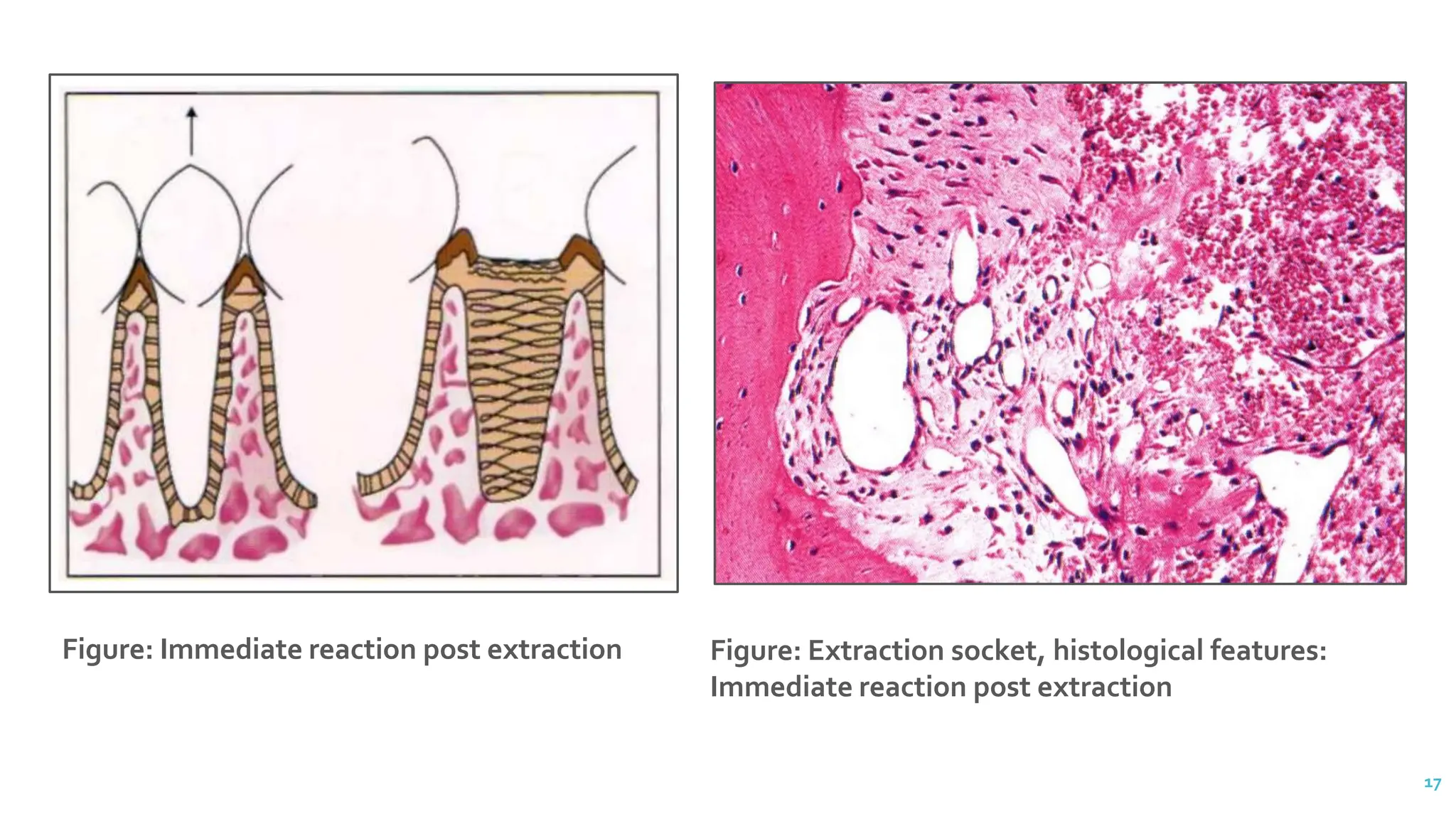
After the removal of a tooth, the blood which
fills the socket coagulates
Red blood cells being entrapped in the fibrin
meshwork
The ends of the torn blood vessels in the
periodontal ligament become sealed off.
Within the first 24–48 hours after extraction, a
variety of phenomena occur which principally
consist of alterations in the vascular bed.
15
Immediate
reaction
following
extraction
There are vasodilatation and engorgement of the blood vessels
in the remnants of the periodontal ligament and the mobilization
of leukocytes to the immediate area around the clot
The surface of the blood clot is covered by a thick layer of
fibrin, but at this early period, leukocytes are not
particularly prominent.
The clot itself shows areas of contraction.
16
17
Figure: Immediate reaction post extraction Figure: Extraction socket, histological features:
Immediate reaction post extraction
1st week
wound
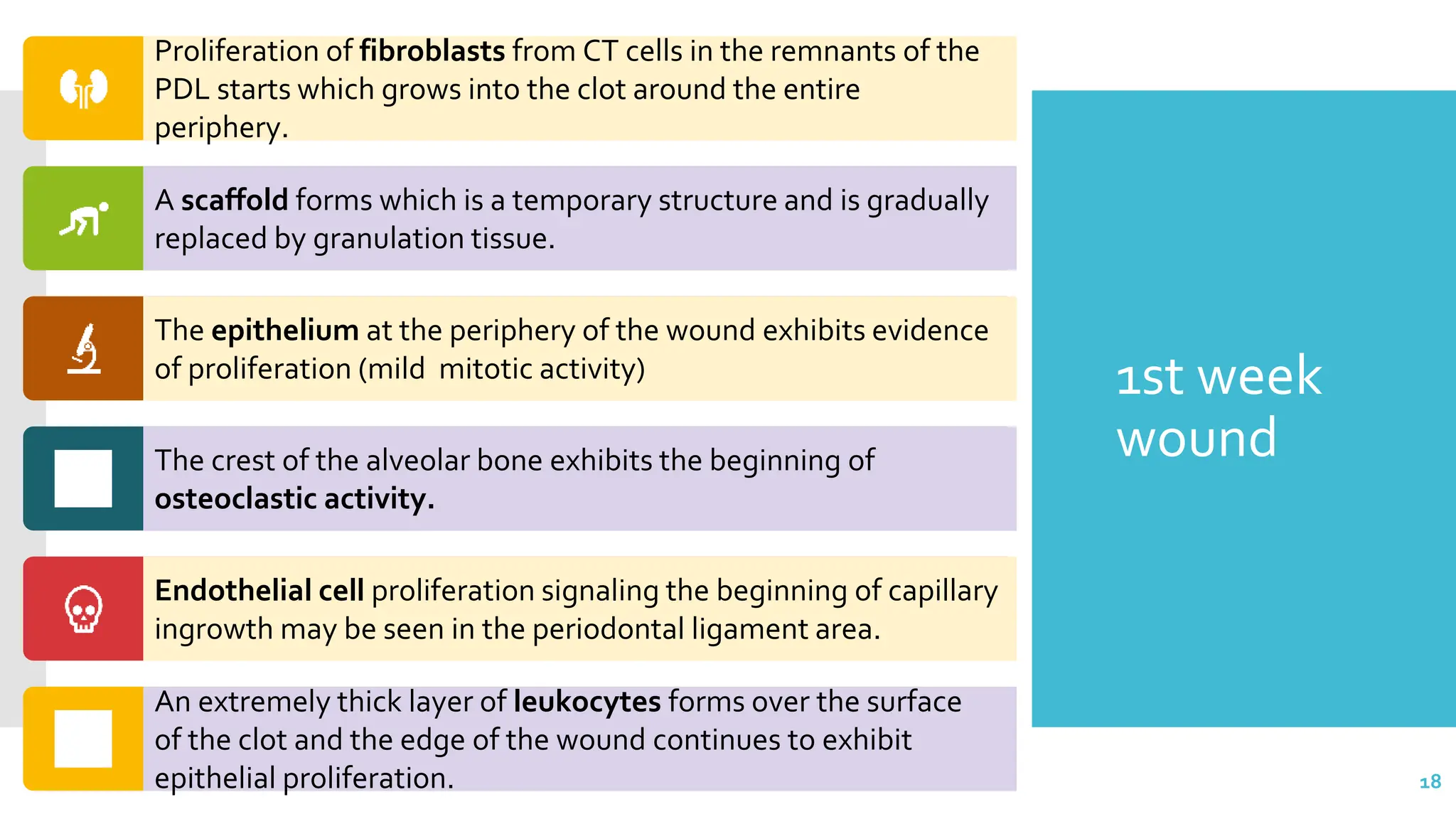
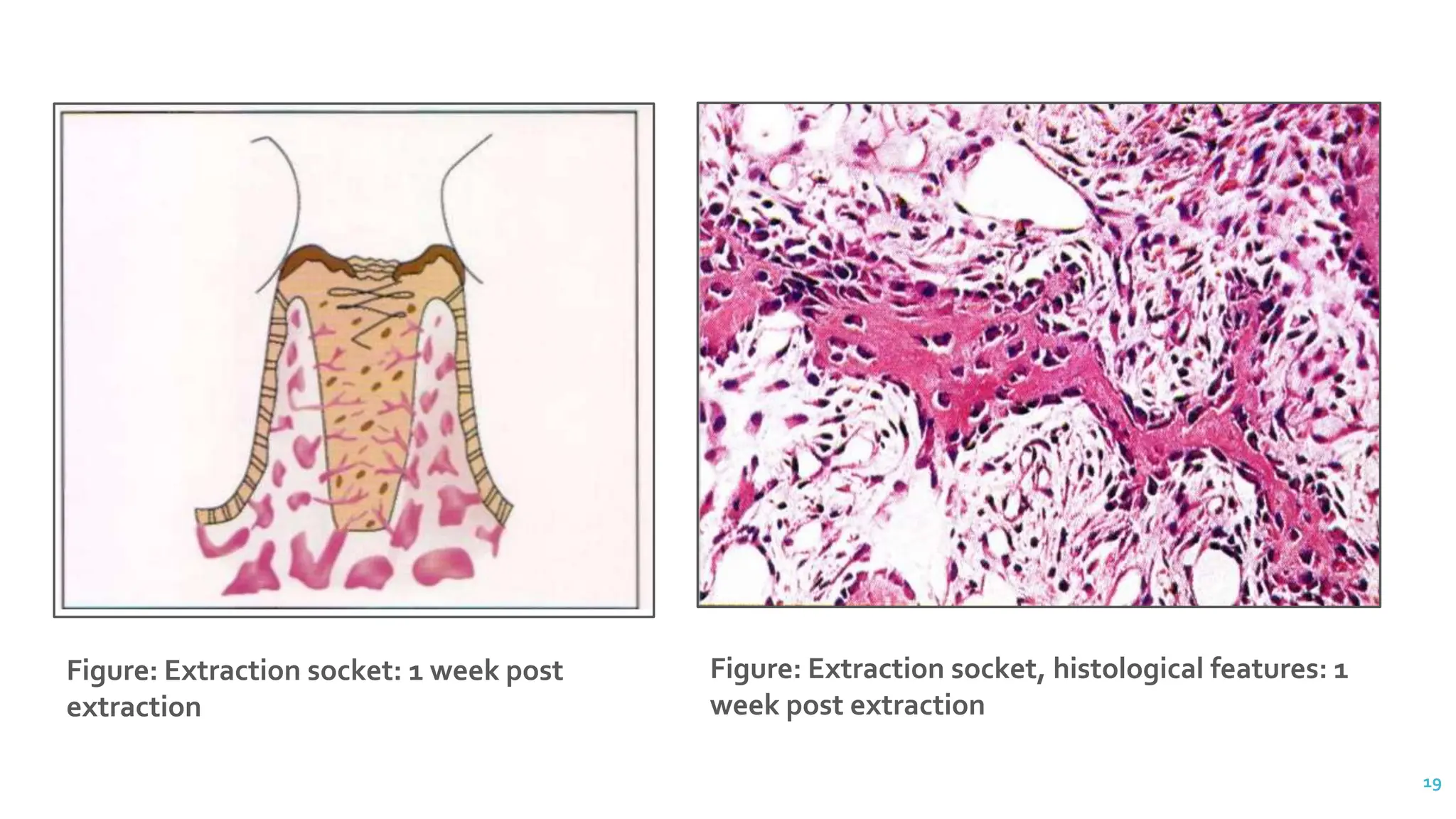
Proliferation of fibroblasts from CT cells in the remnants of the
PDL starts which grows into the clot around the entire
periphery.
A scaffold forms which is a temporary structure and is gradually
replaced by granulation tissue.
The epithelium at the periphery of the wound exhibits evidence
of proliferation (mild mitotic activity)
The crest of the alveolar bone exhibits the beginning of
osteoclastic activity.
Endothelial cell proliferation signaling the beginning of capillary
ingrowth may be seen in the periodontal ligament area.
An extremely thick layer of leukocytes forms over the surface
of the clot and the edge of the wound continues to exhibit
epithelial proliferation. 18
19
Figure: Extraction socket, histological features: 1
week post extraction
Figure: Extraction socket: 1 week post
extraction
2nd week
wound
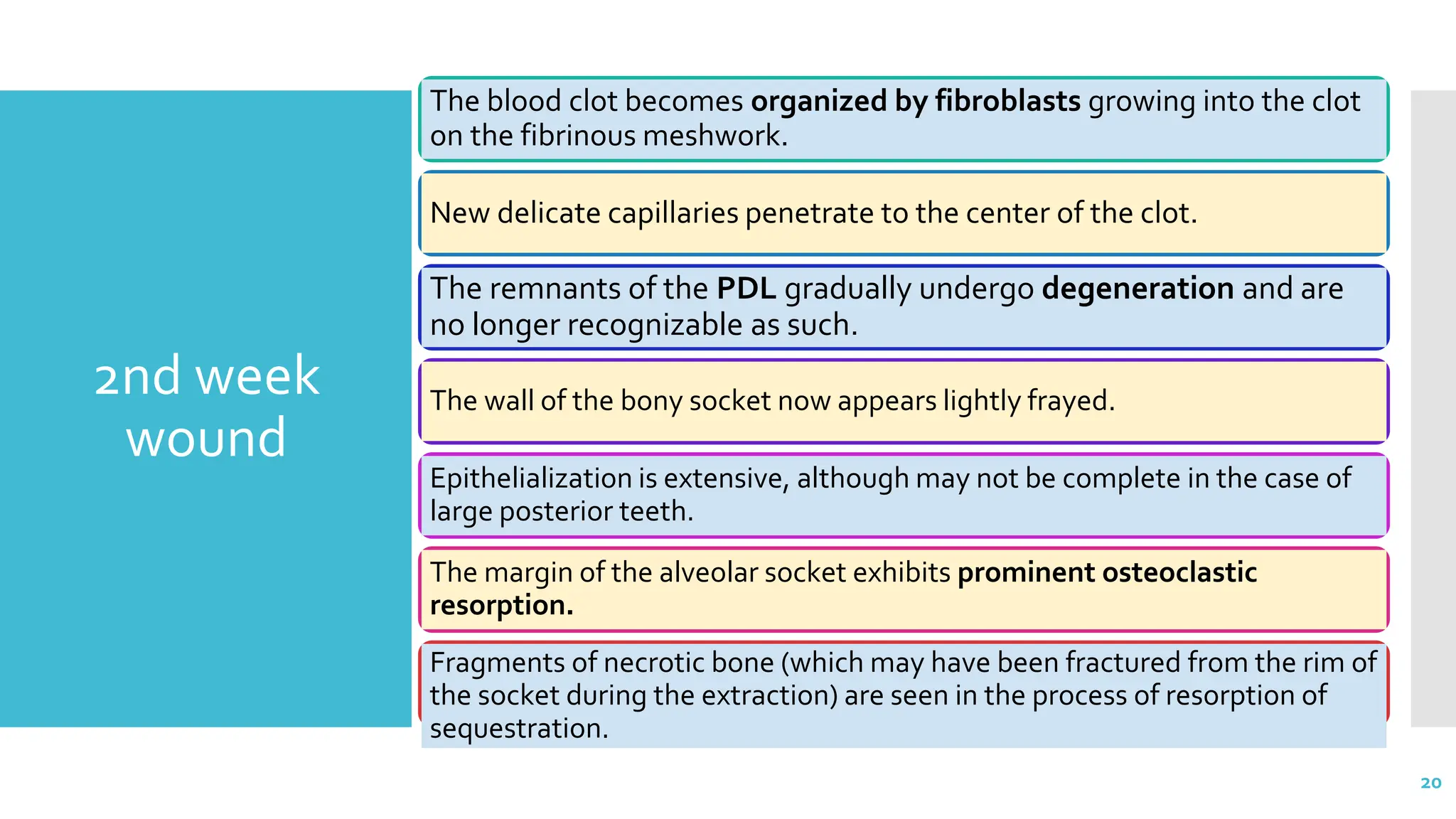
The blood clot becomes organized by fibroblasts growing into the clot
on the fibrinous meshwork.
New delicate capillaries penetrate to the center of the clot.
The remnants of the PDL gradually undergo degeneration and are
no longer recognizable as such.
The wall of the bony socket now appears lightly frayed.
Epithelialization is extensive, although may not be complete in the case of
large posterior teeth.
The margin of the alveolar socket exhibits prominent osteoclastic
resorption.
Fragments of necrotic bone (which may have been fractured from the rim of
the socket during the extraction) are seen in the process of resorption of
sequestration.
20
3rd week
wound
The original clot appears almost completely organized by
maturing granulation tissue.
Very young trabeculae of osteoid or uncalcified bone form
around the entire periphery of the wound from the socket
wall.
This early bone is formed by osteoblasts derived from
pluripotent cells of the original periodontal ligament which
assumes an osteogenic function.
The original cortical bone of the alveolar socket
undergoes remodeling so that it no longer consists of such
a dense layer.
The crest of the alveolar bone is rounded off by
osteoclastic resorption.
By this time, the surface of the wound may have become
completely epithelialized.
21
22
Figure: Extraction socket: 3 weeks post
extraction
4th week
wound
There is continued deposition and remodeling resorption of
the bone filling the alveolar socket.
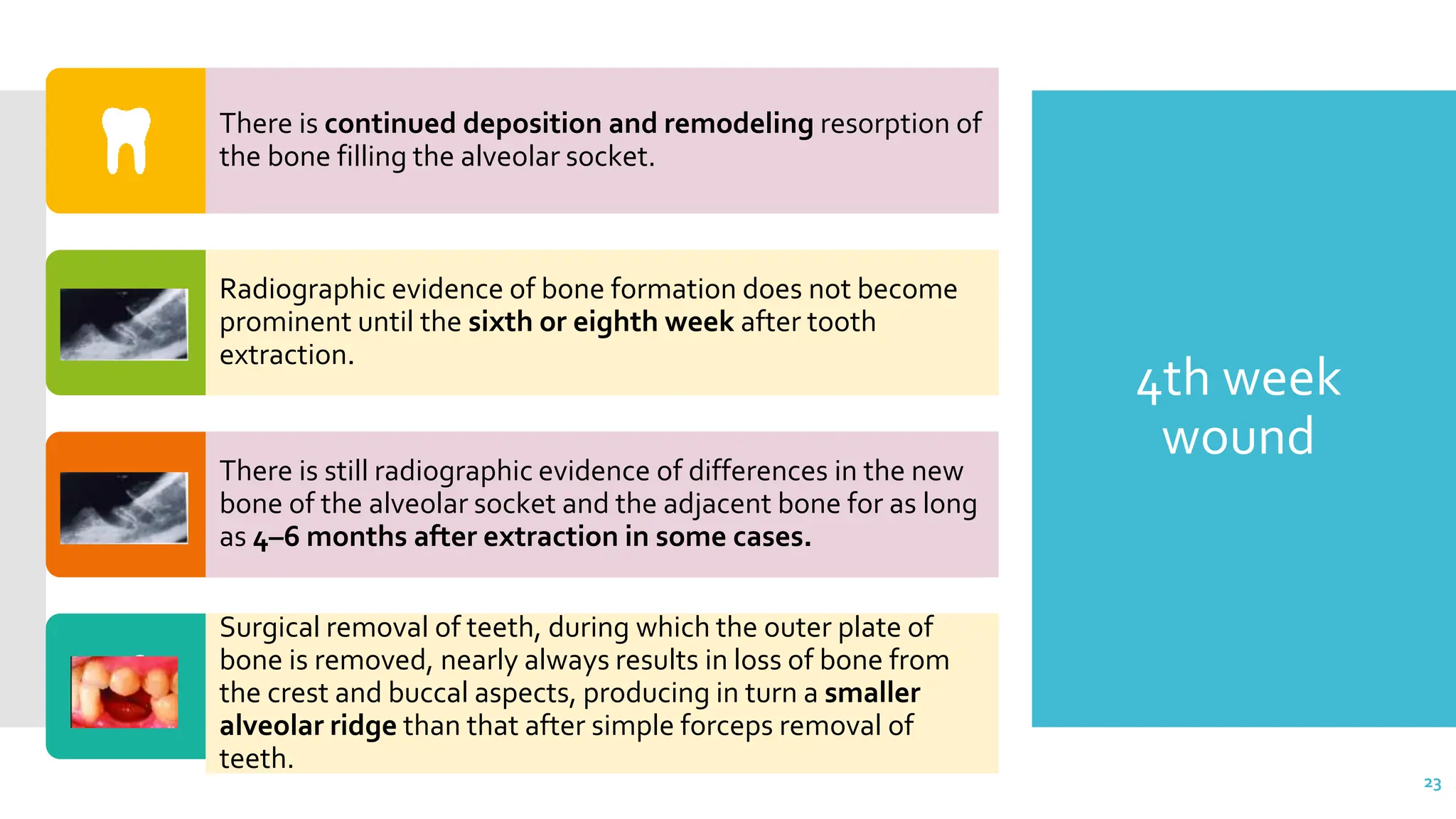
Radiographic evidence of bone formation does not become
prominent until the sixth or eighth week after tooth
extraction.
There is still radiographic evidence of differences in the new
bone of the alveolar socket and the adjacent bone for as long
as 4–6 months after extraction in some cases.
Surgical removal of teeth, during which the outer plate of
bone is removed, nearly always results in loss of bone from
the crest and buccal aspects, producing in turn a smaller
alveolar ridge than that after simple forceps removal of
teeth.
23
24
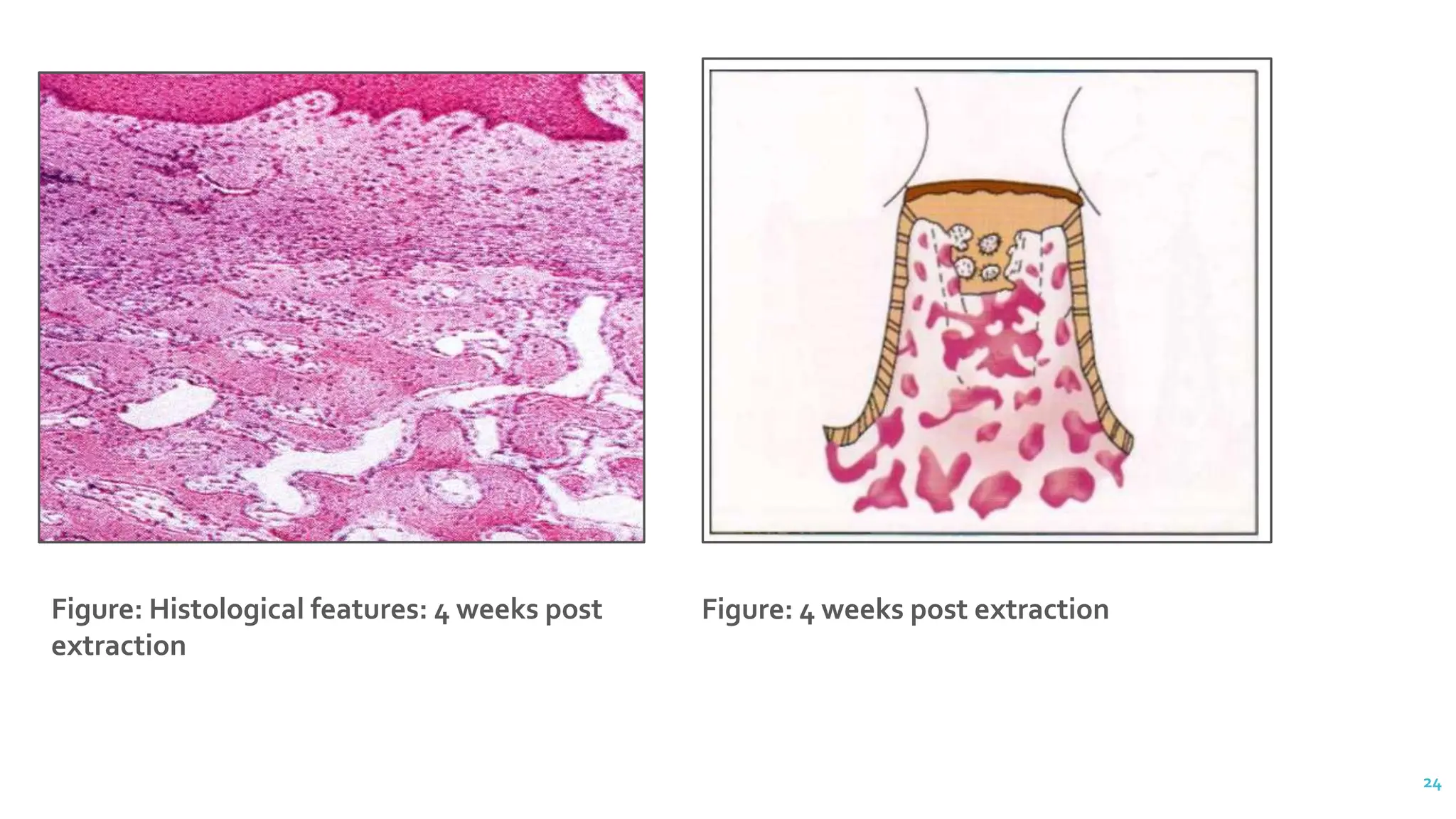
Figure: Histological features: 4 weeks post
extraction
Figure: 4 weeks post extraction
25
Figure: Histological features; 4 months post
extraction
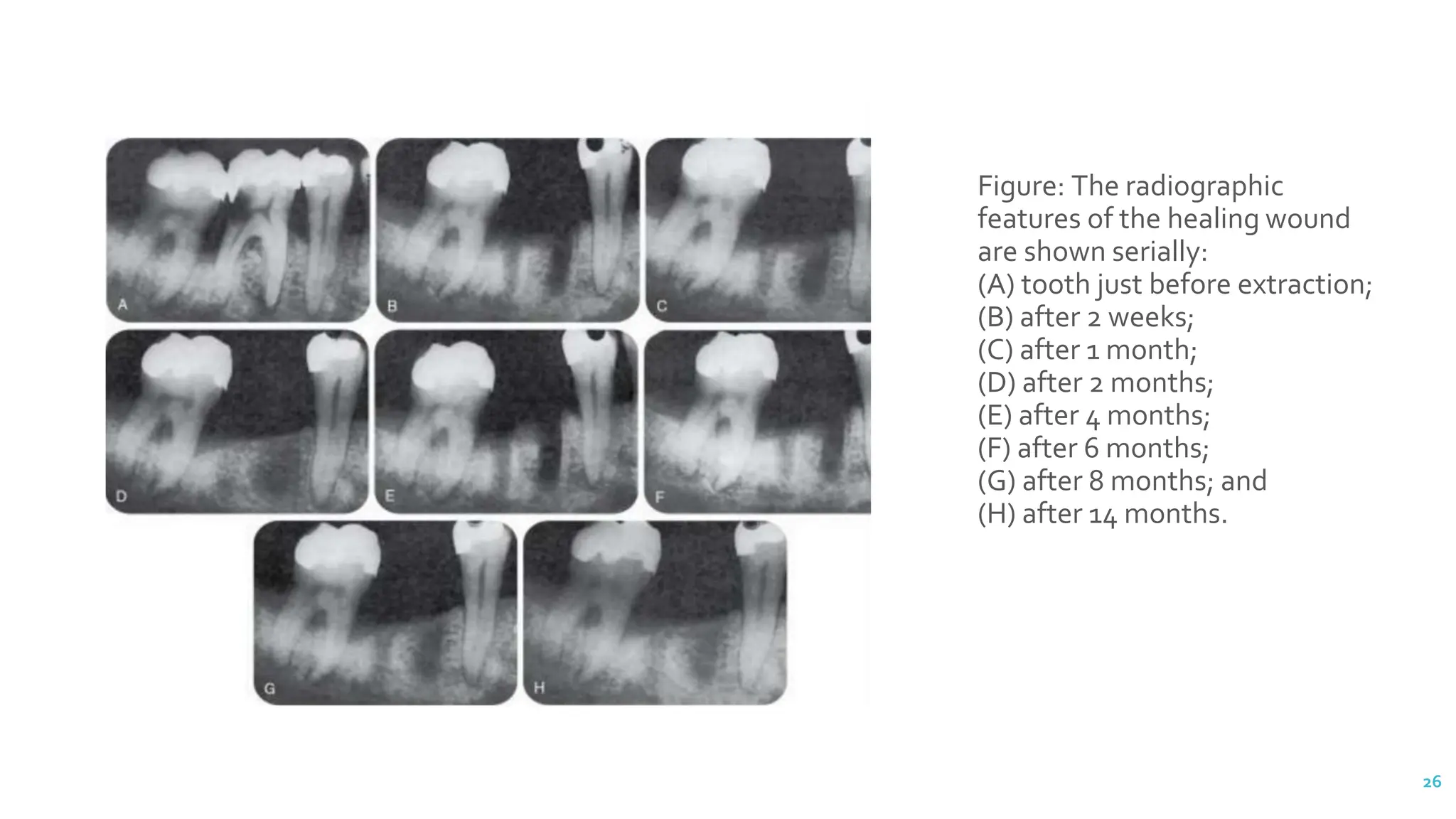
Figure: The radiographic
features of the healing wound
are shown serially:
(A) tooth just before extraction;
(B) after 2 weeks;
(C) after 1 month;
(D) after 2 months;
(E) after 4 months;
(F) after 6 months;
(G) after 8 months; and
(H) after 14 months.
26
Complication in healing
of extraction wounds
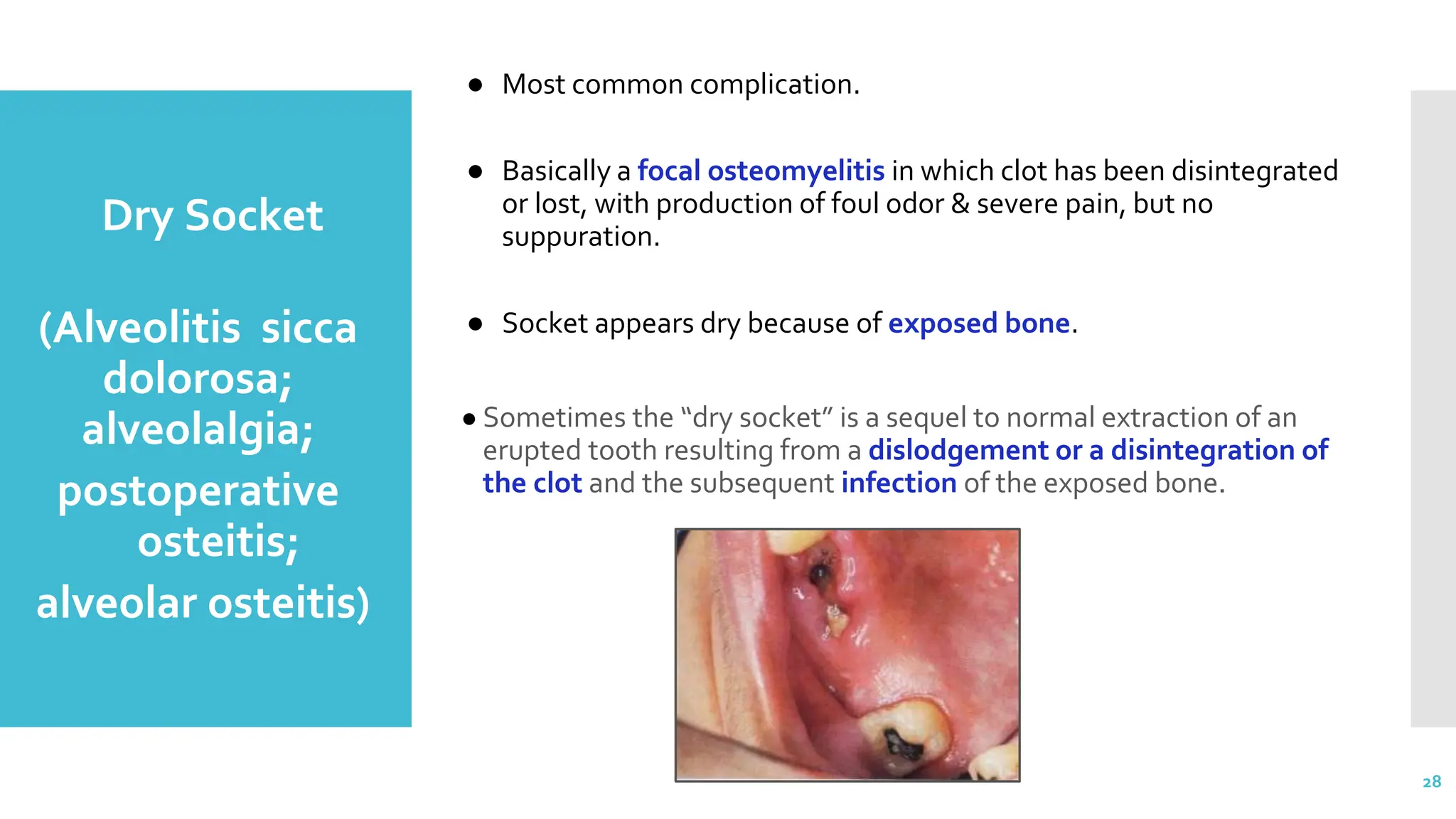
● Most common complication.
● Basically a focal osteomyelitis in which clot has been disintegrated
or lost, with production of foul odor & severe pain, but no
suppuration.
● Socket appears dry because of exposed bone.
● Sometimes the “dry socket” is a sequel to normal extraction of an
erupted tooth resulting from a dislodgement or a disintegration of
the clot and the subsequent infection of the exposed bone.
28
Dry Socket
(Alveolitis sicca
dolorosa;
alveolalgia;
postoperative
osteitis;
alveolar osteitis)
Clinical features
of
dry socket
● The “dry socket” usually starts by the second or third
postoperative day and lasts for 7–10 days and is extremely
painful.
● The pain may radiate to the ear and neck.
● Sometimes, the dry socket may be associated with low-grade
fever and ipsilateral lymphadenopathy.
● The socket may contain decomposed food debris which gives the
foul smell and taste.
● The exposed bone is necrotic, and sequestration of fragments is
common.
29
Prevalence :
● 1–4% in all extracted sockets.
● Common in 40–45 years old age.
● Mandible is affected more commonly than maxilla.
● This condition is more common in women and tobacco users
Conditions in which can cause dry socket:
● Smoke during the first 48 hours after the extraction
● Contraceptive pills
● Grind and clench their teeth
● Mouth wash during the first 48 hours after the extraction
● Poor oral hygiene
● Previously infected tooth
● Age it is more common in old patient
● Paget’s disease
● Patients undergoing oral contraceptives therapy
● Patients undergoing radiotherapy
30
The loss of blood clot from the extraction socket is
probably the most accepted factor because of various
reasons which lead to dry socket.
➔ According to Brin's hypothesis:
The fibrin is lysed by plasmin which is an enzyme, acting
at neutral pH.
A proenzyme plasminogen is converted to plasmin by the
action of activators or kinases like bradykinin and
kininogens, released from traumatized mucosa,
periosteum, bone marrow, and concentrate in the
endothelial cells of blood vessel.
Thus this plasmin breaks down the fibrin network of clot,
making the socket dry.
The recent study has shown that the oral anaerobic
bacteria 'Treponema denticola' which is a normal habitant
of oral cavity has fibrinolytic activity.
31
Pathogenesis of dry socket:
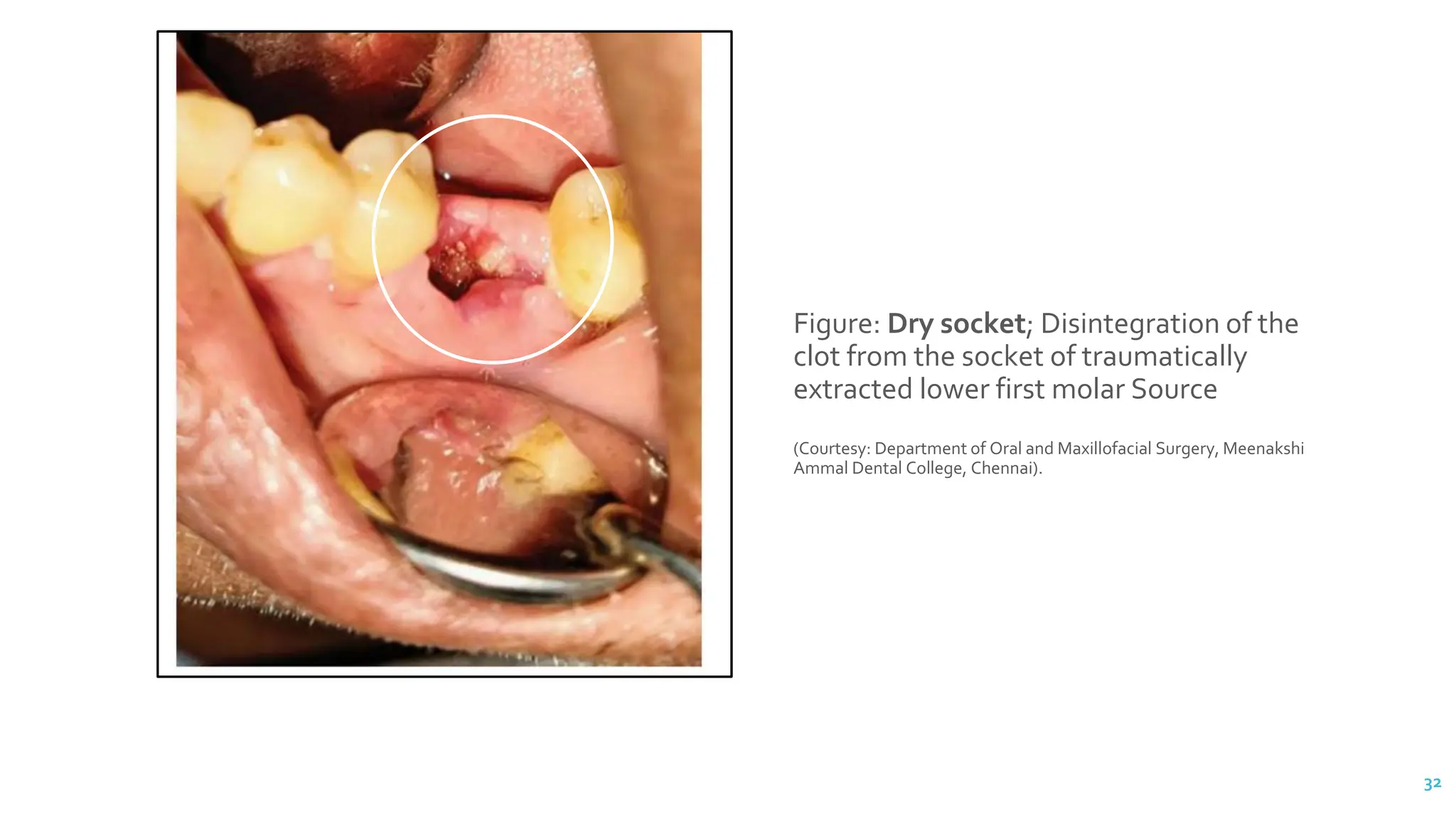
Figure: Dry socket; Disintegration of the
clot from the socket of traumatically
extracted lower first molar Source
(Courtesy: Department of Oral and Maxillofacial Surgery, Meenakshi
Ammal Dental College, Chennai).
32
33
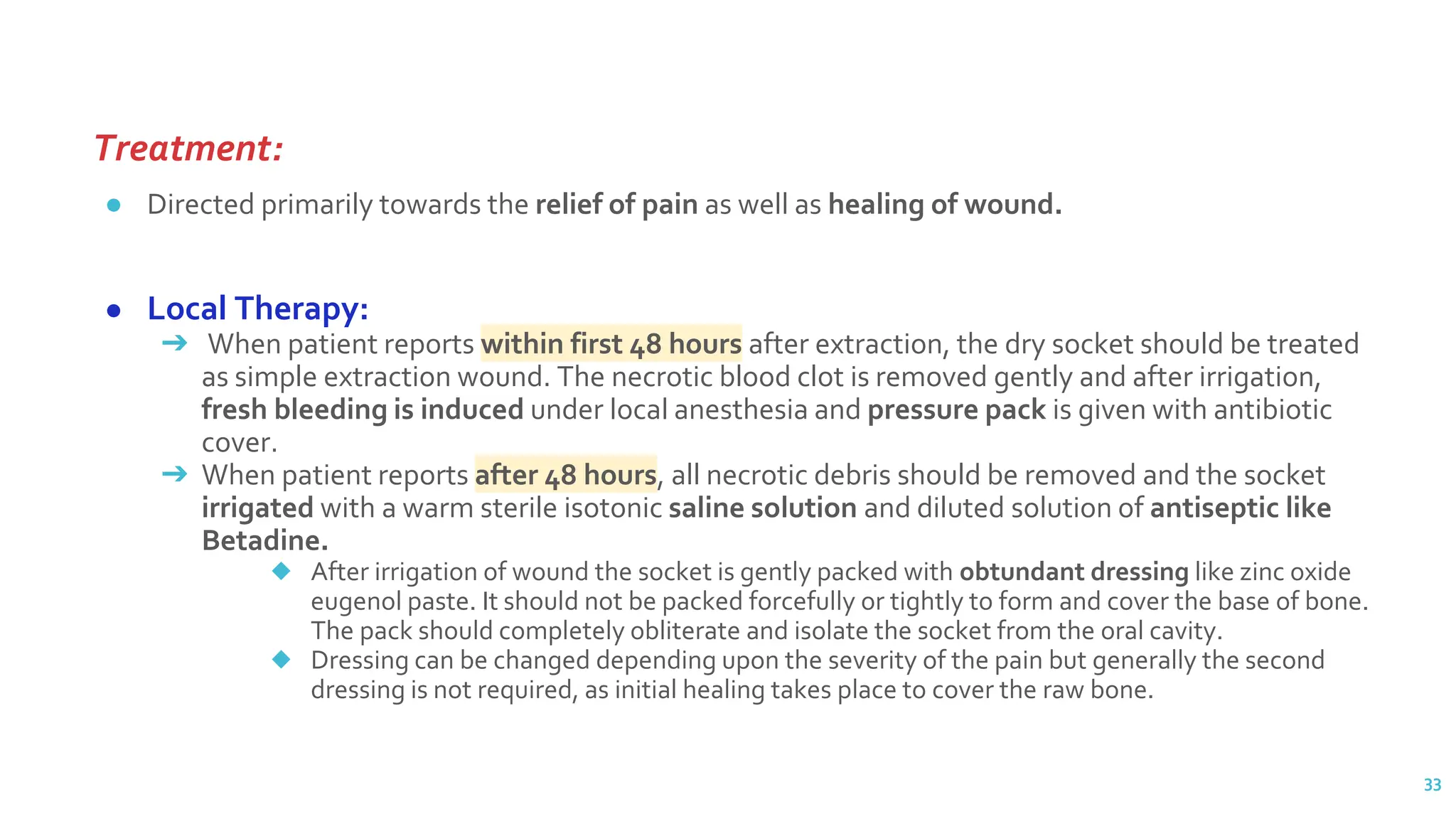
Treatment:
● Directed primarily towards the relief of pain as well as healing of wound.
● Local Therapy:
➔ When patient reports within first 48 hours after extraction, the dry socket should be treated
as simple extraction wound. The necrotic blood clot is removed gently and after irrigation,
fresh bleeding is induced under local anesthesia and pressure pack is given with antibiotic
cover.
➔ When patient reports after 48 hours, all necrotic debris should be removed and the socket
irrigated with a warm sterile isotonic saline solution and diluted solution of antiseptic like
Betadine.
◆ After irrigation of wound the socket is gently packed with obtundant dressing like zinc oxide
eugenol paste. It should not be packed forcefully or tightly to form and cover the base of bone.
The pack should completely obliterate and isolate the socket from the oral cavity.
◆ Dressing can be changed depending upon the severity of the pain but generally the second
dressing is not required, as initial healing takes place to cover the raw bone.
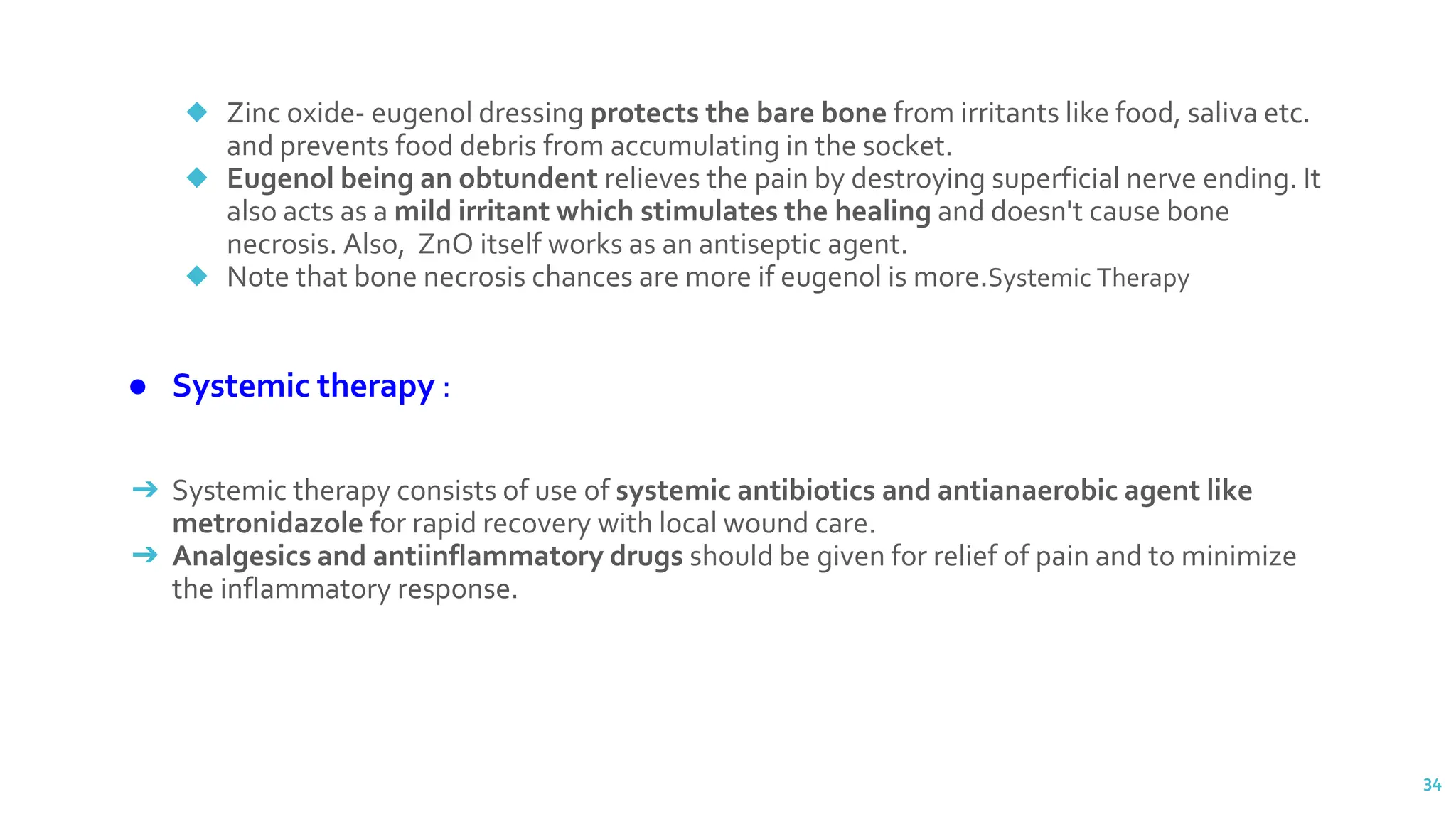
◆ Zinc oxide- eugenol dressing protects the bare bone from irritants like food, saliva etc.
and prevents food debris from accumulating in the socket.
◆ Eugenol being an obtundent relieves the pain by destroying superficial nerve ending. It
also acts as a mild irritant which stimulates the healing and doesn't cause bone
necrosis. Also, ZnO itself works as an antiseptic agent.
◆ Note that bone necrosis chances are more if eugenol is more.Systemic Therapy
● Systemic therapy :
➔ Systemic therapy consists of use of systemic antibiotics and antianaerobic agent like
metronidazole for rapid recovery with local wound care.
➔ Analgesics and antiinflammatory drugs should be given for relief of pain and to minimize
the inflammatory response.
34
Treatment
35
Materials required for treatment of dry socket:
Fibrous
healing of
extraction
wound
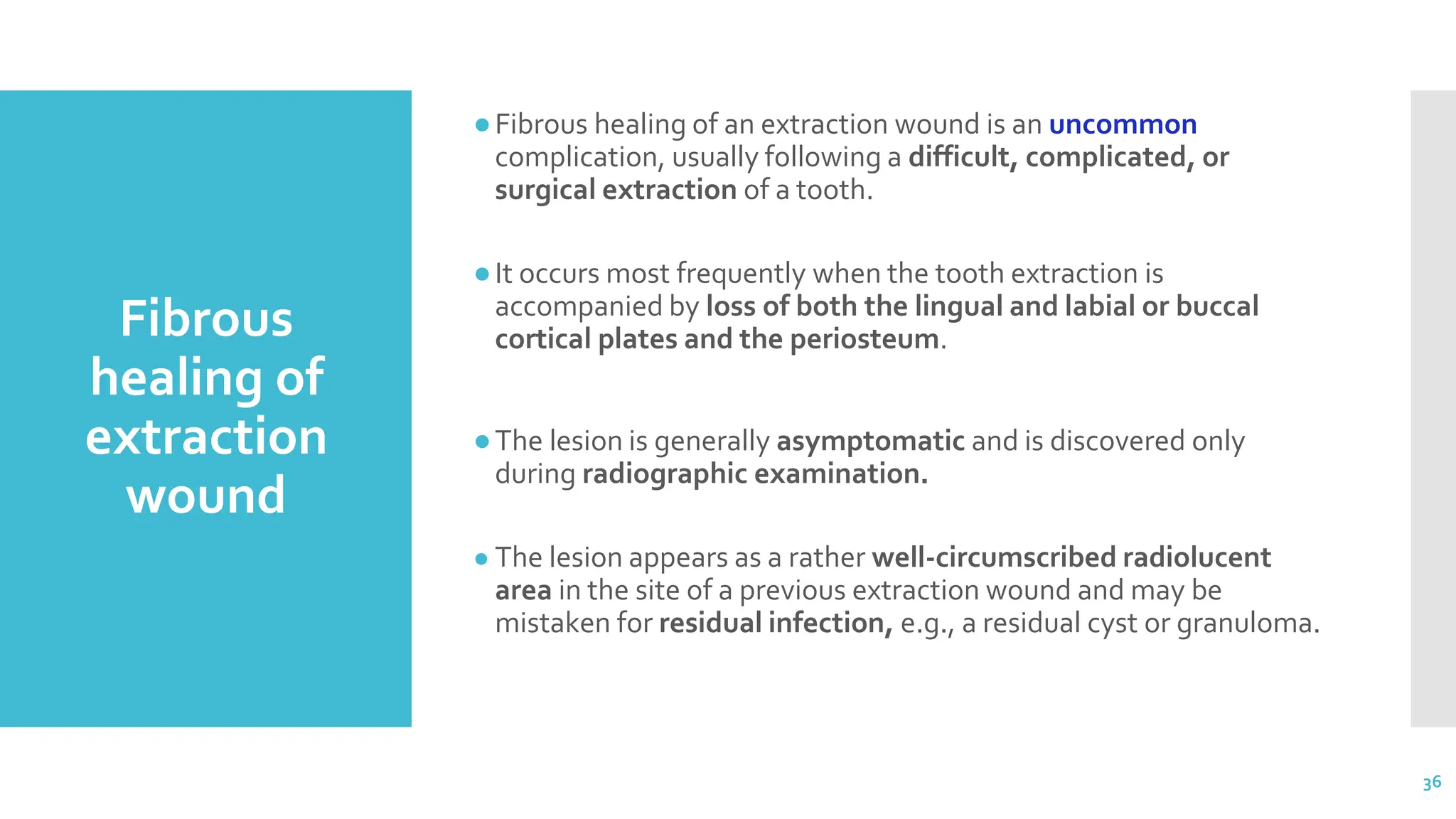
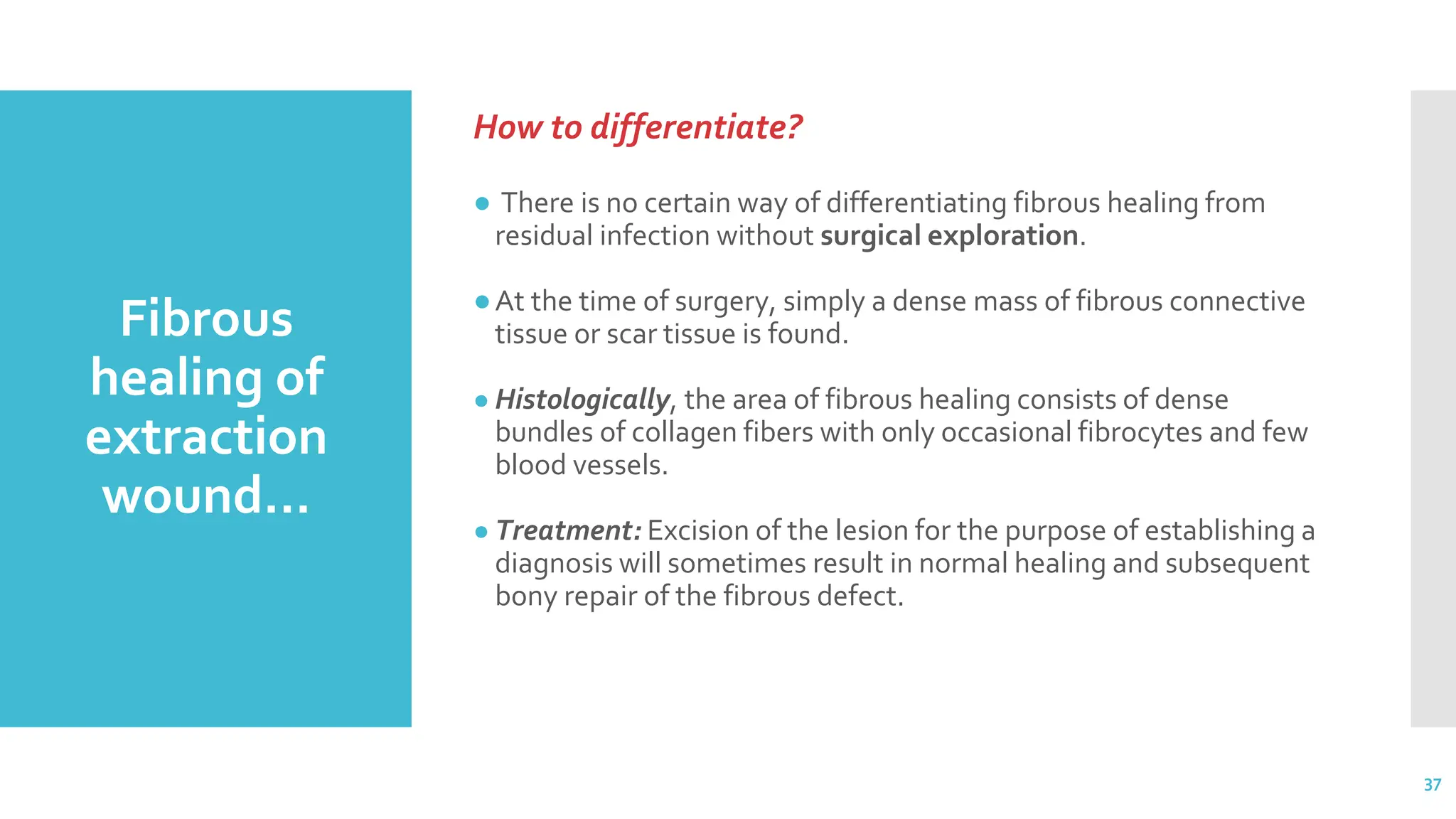
●Fibrous healing of an extraction wound is an uncommon
complication, usually following a difficult, complicated, or
surgical extraction of a tooth.
●It occurs most frequently when the tooth extraction is
accompanied by loss of both the lingual and labial or buccal
cortical plates and the periosteum.
●The lesion is generally asymptomatic and is discovered only
during radiographic examination.
● The lesion appears as a rather well-circumscribed radiolucent
area in the site of a previous extraction wound and may be
mistaken for residual infection, e.g., a residual cyst or granuloma.
36
How to differentiate?
● There is no certain way of differentiating fibrous healing from
residual infection without surgical exploration.
●At the time of surgery, simply a dense mass of fibrous connective
tissue or scar tissue is found.
● Histologically, the area of fibrous healing consists of dense
bundles of collagen fibers with only occasional fibrocytes and few
blood vessels.
● Treatment: Excision of the lesion for the purpose of establishing a
diagnosis will sometimes result in normal healing and subsequent
bony repair of the fibrous defect.
37
Fibrous
healing of
extraction
wound…
Figure: Fibrous healing of
extraction wound.
(A) Persistent radiolucency at
the extraction site and
(B) presence of dense bundle
of collagen fibers with few
fibrocytes and blood vessels.
38
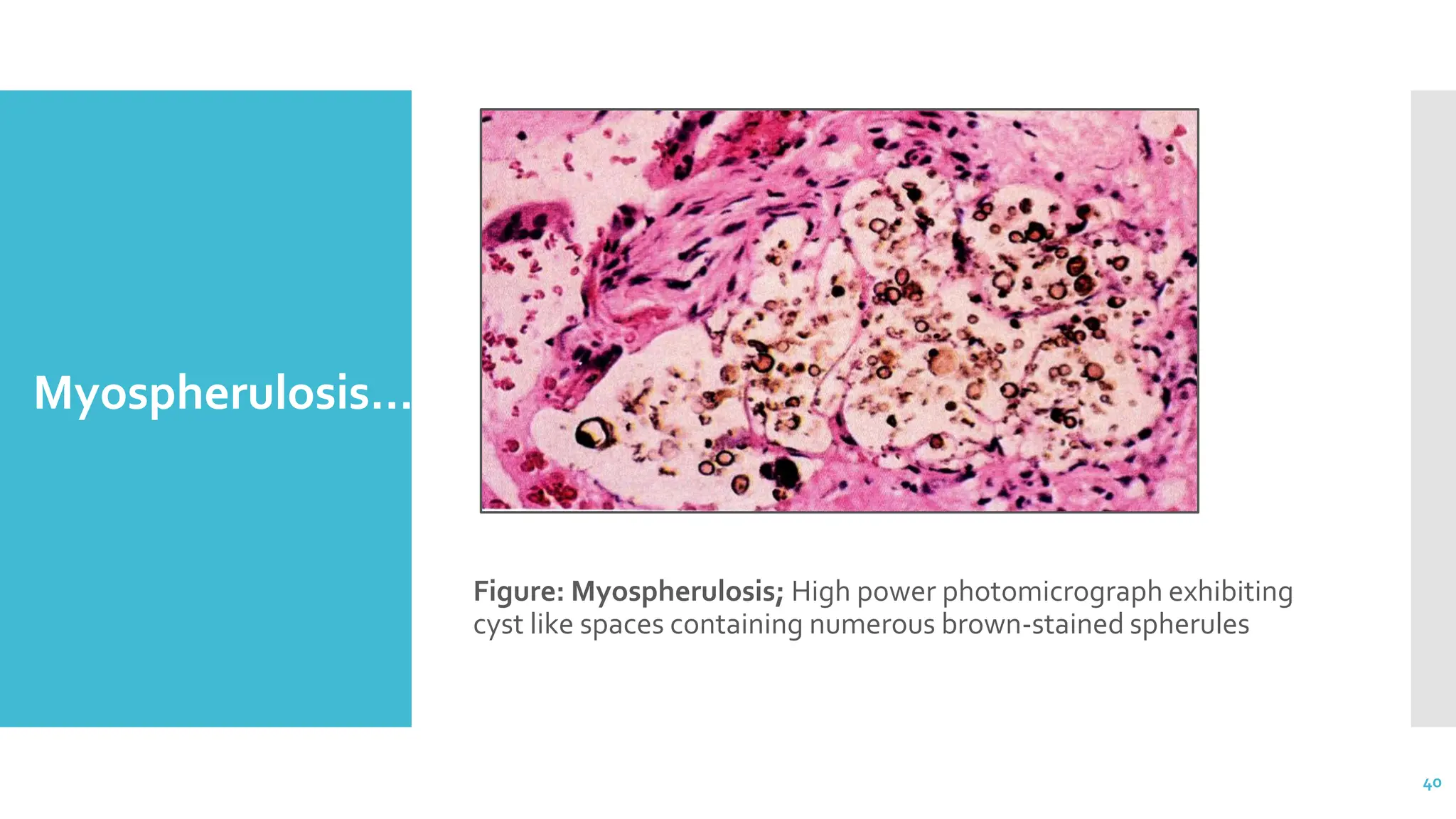
● Myospherulosis is foreign body reaction that typically follows
tooth extraction and use of antibiotic ointment with a lipid base
(eg., petroleum jelly).
● This treatment results in the formation of clear space within the
area of healing and the presence of altered erythrocytes which
assume the appearance of solitary or clusters of spherules have
been mistaken for large microorganisms.
39
Myospherulosis
Figure: Myospherulosis; High power photomicrograph exhibiting
cyst like spaces containing numerous brown-stained spherules
40
Myospherulosis…
41
Daly BJ, Sharif MO, Jones K, Worthington HV, Beattie A. Local interventions for the management of alveolar osteitis (dry socket). Cochrane Database Syst
Rev. 2022 Sep 26;9(9):CD006968
42
Daly BJ, Sharif MO, Jones K, Worthington HV, Beattie A. Local interventions for the management of alveolar osteitis (dry socket). Cochrane Database Syst
Rev. 2022 Sep 26;9(9):CD006968
43
Daly BJ, Sharif MO, Jones K, Worthington HV, Beattie A. Local interventions for the management of alveolar osteitis (dry socket). Cochrane Database Syst
Rev. 2022 Sep 26;9(9):CD006968
Guidelines for
uneventful
healing
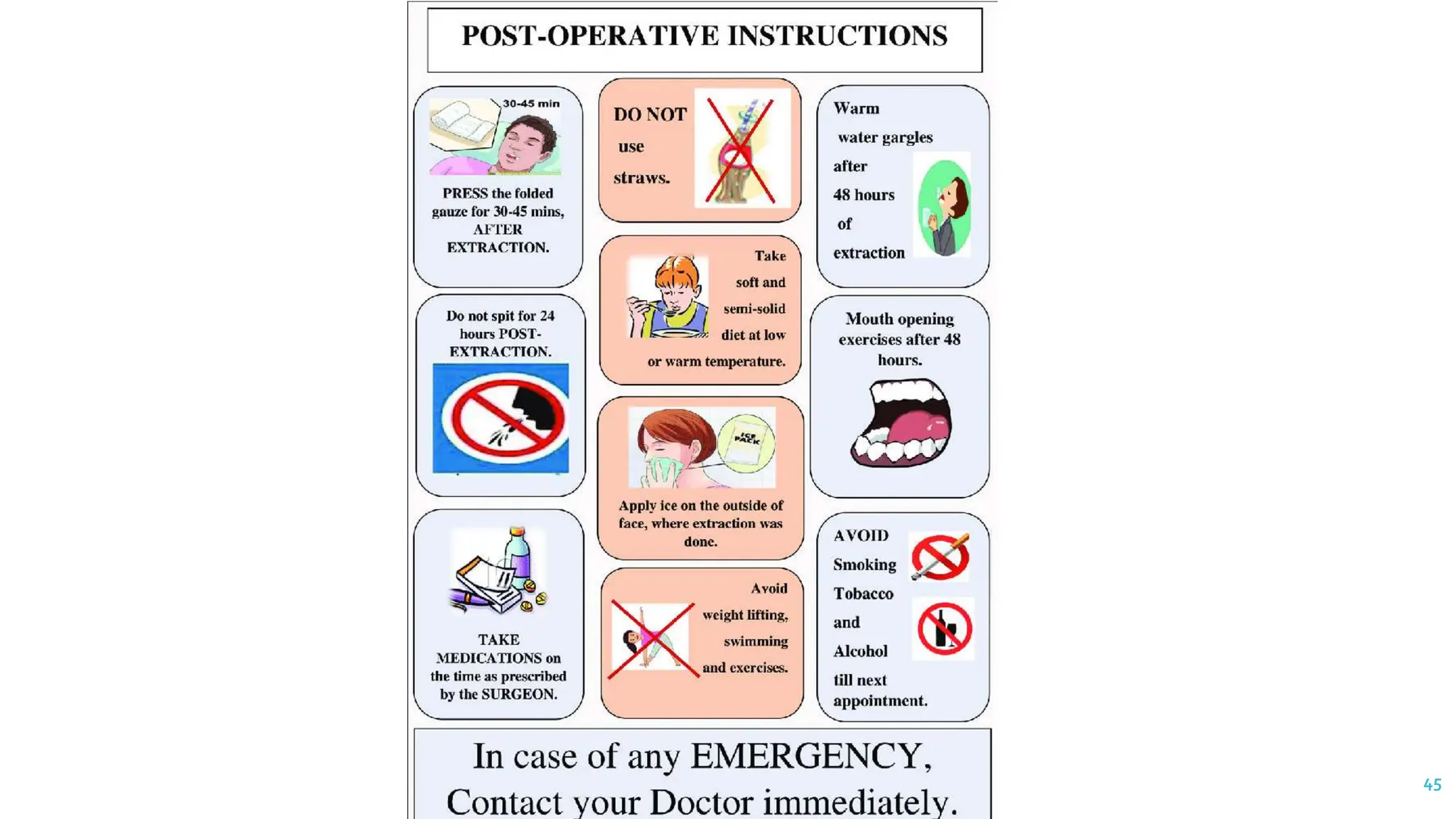
Asepsis: Failure to follow aspectic technique is a frequent reason for
the introduction of virulent microorganisms into the wound.
Minimal trauma: Transformation of contaminated wounds into
infected wounds is also facilitated by excessive trauma, remnant
necrotic tissue, foreign bodies, or compromised host defenses.
Meticulous surgical technique: The most important facctor in
minimizing the risk of infection is meticulous surgical technique,
including thorough debridement, adequate hemostasis.
Proper postoperative care: Technique must be augmented by
proper postoperative care, with an emphasis on keeping wound site
clean and protecting it from trauma, activities which create negative
pressure inside the oral cavity, inadvertent and forceful spitting,
refrainment from smoking.
44
45
Clinical
implications
● In the absence of healing, a definitive prosthesis cannot be
fabricated.
● Ideally, a waiting period of 4-6 months is advisable after extraction
since there is increased resorption immediately followinng extraction.
● Cases of abused issue, hyperplastic tissue and an abnormally
contoured ridge can compromise the success of replacement
dentures.
● Alveolar ridge following tooth extraction undergoes progressive
irreversible resorption.
● This may be of considerable significance in construction of dentures.
46
Socket
preservation
techniques
Socket preservation technique: refers to alveolar ridge preservation
within the bone envelope remaining after tooth extraction with the
purpose of reducing bone resorption in order to perform a correct
implant-supported prosthesis, or proper fitted dentures or fixed prosthesis.
Techniques of socket preservation:
● Ridge preservation with bone grafting:
This involves placing a bone graft material into the socket after the
tooth extraction into the socket after the tooth extraction. The graft
material can be synthetic or derived from patient’s own bone or from
a donor source. This helps to maintain the volume and contour of the
alveolar ridge.
47
Socket
preservation
techniques…
● Guided Bone Regeneration (GBR):
GBR involves a barrier membrane to cover the socket and promote
bone regeneration. The membrane prevents soft tissue ingrowth
while allowing the bone to grow into the socket.
● Socket seal:
After the tooth extraction, the socket is covered with a resorbable or
non-resorbable membrane or collagen plug to create a seal. This
helps to protect the socket from bacterial invasion and promotes
blood clot formation, which is crucial for proper healing.
● Platelet-rich fibrin (PRF):
PRF is a technique that involves collecting and processing the
patient’s own blood to obtain a concentrated solution of platelets
and growth factors. This solution is then placed in the socket after
extraction to enhance healing and promote bone regeneration.
48
Conclusion
Probably the most important single factor in the prevention of
extraction complications is gentleness in handling living tissues.
One should strive to produce as little trauma as possible,
consistent with the successful completion of the operation. As
clinicians, it is imperative to understand the psychology of the
patient with utmost empathy and try to be as gentle as possible
without compromising with the clinical expertise while extraction
in order to avoid the potential complications.
49
References
● Shafer’s Book of Oral Pathology, 7th edition
● Essential Pathology for Dental Students by Harsh Mohan, 5th edition
● Exodontia Practice by Abhay N Datarkar, 1st edition
● Textbook of Oral and Maxillofacial Surgery by Neelima Malik, 2nd
edition
● Patel S ,et al.,Mechanistic insight into diabetic wounds. Biomedicine &
Pharmacotherapy 2019 , 112,0753-3322
● Jiang, Min et al. “The role of mesenchymal stem cell-derived EVs in
diabetic wound healing.” Frontiers in immunology vol. 14 1136098. 28
Feb. 2023, doi:10.3389/fimmu.2023.1136098
● Bowe DC, Rogers S, Stassen LFA. The management of dry socket/
alveolar osteitis. J Ir Dent Assoc. 2011 ; 57:305-10.
50
Thankyou.
51

healing of extraction socket power point presentation

  • 1.
    Healing of extraction socket -DrAayushi Aggarwal (Junior Resident) Public Health Dentistry Seminar
  • 2.
    Content ● Introduction ● Factorsaffecting healing of extraction wound ● Pathological stages of healing of extraction socket ● Sequence of healing of extraction socket ● Complications in healing of extraction socket ● Guidelines for uneventful healing ● Clinical implications ● Conclusion ● References 2
  • 3.
    Introduction ●Exodontia is apainless removal of a tooth or tooth root from its socket with minimal injury to the bone and surrounding structure so that postoperative healing is uneventful. ● Healing of extraction socket is a specialized example of healing by secondary intention. ● It is described as an “average” sequence of events. ●A thorough understanding of the phenomenon of healing of extraction wounds is imperative for the dentist, since vast numbers of teeth are extracted because of pulp and periapical infection as well as various forms of periodontal disease, and there is an ever-present possibility of complications in the healing process. 3
  • 4.
    4 Wound healing: Sequenceof steps in which body tries to repair itself. Steps:
  • 5.
  • 6.
    Factors affecting healing ofthe socket Systemic Factors Health and nutrition Age Hormonal factors Atherosclerosis Smoking Drugs Local factors Local trauma/ bone loss Bone quality Abnormal bone Food/foreign body impinging the socket 6
  • 7.
    Systemic factors 7 1. Nutrition: vitamindeficiency and/or Poor nutrition adversely affects healing. 2. Age: adults usually take longer time for healing of dry socket than children; healing process is decreased with age. 3. Health: Chronic diseases depresses the healing process (anemia, diabetes, oxidative stress, systemic infection). 4. Hormonal factors: There are some hormone may enhance healing process and other may depress the process of healing (corticosteroids depress healing, growth hormone enhances healing). 5. Atherosclerosis: associated with age (as a result of hyperlipidemias and oxidative stress) decreases healing process. 6. Smoking: significantly may decreases healing process. 7. Drugs: Steroidal and Non-steroidal anti-inflammatory medication (e.g. ibuprofen), bisphosphonates, anticoagulants, oral contraceptive pills depress healing process.
  • 8.
    8 Jiang, Min etal. “The role of mesenchymal stem cell-derived EVs in diabetic wound healing.” Frontiers in immunology vol. 14 1136098. 28 Feb. 2023 Delayed healing in diabetic patients:
  • 9.
    Local factors 1. Degreeof local trauma/bone loss: A comminuted fracture with more soft tissue injury is slower to heal. 2. Area of bone affected and bone quality. 3. Abnormal bone (infection, tumour, irradiated). 4. Food/ foreign body impinging at the socket site delays healing. 9
  • 10.
  • 11.
    Hemostasis:immediately after thetooth extraction, a blood clot forms in the socket. The blood clot helps control bleeding and serve as a foundation of healing process. Inflammation: In the first few days following extraction, inflammation occurs. The area around the socket may appear swollen, and one may experience some pain or discomfort. The body’s immune response is triggered, sending white blood cells to the area to fight off infection and initiate the healing process. 11
  • 12.
    Granulation tissue formation:withina week or so, granulation tissue begins to develop at the base of the socket. This tissue contains new blood vessels and connective tissue, which is crucial for subsequent stages of healing. Epithelialization: The granulation tissue is gradually replaced by epithelial cells, which grow over the socket from the surrounding tissue. This process helps to cover the wound and protect it from external factors. 12
  • 13.
    13 Zhou S, LiG, Zhou T, Zhang S, Xue H, Geng J, et al. The Role of Ift140 in Early Bone Healing of Tooth Extraction Sockets. Oral Dis (2021). doi: 10.1111/ odi.13833
  • 14.
  • 15.
    Immediate reaction following extraction After the removalof a tooth, the blood which fills the socket coagulates Red blood cells being entrapped in the fibrin meshwork The ends of the torn blood vessels in the periodontal ligament become sealed off. Within the first 24–48 hours after extraction, a variety of phenomena occur which principally consist of alterations in the vascular bed. 15
  • 16.
    Immediate reaction following extraction There are vasodilatationand engorgement of the blood vessels in the remnants of the periodontal ligament and the mobilization of leukocytes to the immediate area around the clot The surface of the blood clot is covered by a thick layer of fibrin, but at this early period, leukocytes are not particularly prominent. The clot itself shows areas of contraction. 16
  • 17.
    17 Figure: Immediate reactionpost extraction Figure: Extraction socket, histological features: Immediate reaction post extraction
  • 18.
    1st week wound Proliferation offibroblasts from CT cells in the remnants of the PDL starts which grows into the clot around the entire periphery. A scaffold forms which is a temporary structure and is gradually replaced by granulation tissue. The epithelium at the periphery of the wound exhibits evidence of proliferation (mild mitotic activity) The crest of the alveolar bone exhibits the beginning of osteoclastic activity. Endothelial cell proliferation signaling the beginning of capillary ingrowth may be seen in the periodontal ligament area. An extremely thick layer of leukocytes forms over the surface of the clot and the edge of the wound continues to exhibit epithelial proliferation. 18
  • 19.
    19 Figure: Extraction socket,histological features: 1 week post extraction Figure: Extraction socket: 1 week post extraction
  • 20.
    2nd week wound The bloodclot becomes organized by fibroblasts growing into the clot on the fibrinous meshwork. New delicate capillaries penetrate to the center of the clot. The remnants of the PDL gradually undergo degeneration and are no longer recognizable as such. The wall of the bony socket now appears lightly frayed. Epithelialization is extensive, although may not be complete in the case of large posterior teeth. The margin of the alveolar socket exhibits prominent osteoclastic resorption. Fragments of necrotic bone (which may have been fractured from the rim of the socket during the extraction) are seen in the process of resorption of sequestration. 20
  • 21.
    3rd week wound The originalclot appears almost completely organized by maturing granulation tissue. Very young trabeculae of osteoid or uncalcified bone form around the entire periphery of the wound from the socket wall. This early bone is formed by osteoblasts derived from pluripotent cells of the original periodontal ligament which assumes an osteogenic function. The original cortical bone of the alveolar socket undergoes remodeling so that it no longer consists of such a dense layer. The crest of the alveolar bone is rounded off by osteoclastic resorption. By this time, the surface of the wound may have become completely epithelialized. 21
  • 22.
    22 Figure: Extraction socket:3 weeks post extraction
  • 23.
    4th week wound There iscontinued deposition and remodeling resorption of the bone filling the alveolar socket. Radiographic evidence of bone formation does not become prominent until the sixth or eighth week after tooth extraction. There is still radiographic evidence of differences in the new bone of the alveolar socket and the adjacent bone for as long as 4–6 months after extraction in some cases. Surgical removal of teeth, during which the outer plate of bone is removed, nearly always results in loss of bone from the crest and buccal aspects, producing in turn a smaller alveolar ridge than that after simple forceps removal of teeth. 23
  • 24.
    24 Figure: Histological features:4 weeks post extraction Figure: 4 weeks post extraction
  • 25.
    25 Figure: Histological features;4 months post extraction
  • 26.
    Figure: The radiographic featuresof the healing wound are shown serially: (A) tooth just before extraction; (B) after 2 weeks; (C) after 1 month; (D) after 2 months; (E) after 4 months; (F) after 6 months; (G) after 8 months; and (H) after 14 months. 26
  • 27.
    Complication in healing ofextraction wounds
  • 28.
    ● Most commoncomplication. ● Basically a focal osteomyelitis in which clot has been disintegrated or lost, with production of foul odor & severe pain, but no suppuration. ● Socket appears dry because of exposed bone. ● Sometimes the “dry socket” is a sequel to normal extraction of an erupted tooth resulting from a dislodgement or a disintegration of the clot and the subsequent infection of the exposed bone. 28 Dry Socket (Alveolitis sicca dolorosa; alveolalgia; postoperative osteitis; alveolar osteitis)
  • 29.
    Clinical features of dry socket ●The “dry socket” usually starts by the second or third postoperative day and lasts for 7–10 days and is extremely painful. ● The pain may radiate to the ear and neck. ● Sometimes, the dry socket may be associated with low-grade fever and ipsilateral lymphadenopathy. ● The socket may contain decomposed food debris which gives the foul smell and taste. ● The exposed bone is necrotic, and sequestration of fragments is common. 29
  • 30.
    Prevalence : ● 1–4%in all extracted sockets. ● Common in 40–45 years old age. ● Mandible is affected more commonly than maxilla. ● This condition is more common in women and tobacco users Conditions in which can cause dry socket: ● Smoke during the first 48 hours after the extraction ● Contraceptive pills ● Grind and clench their teeth ● Mouth wash during the first 48 hours after the extraction ● Poor oral hygiene ● Previously infected tooth ● Age it is more common in old patient ● Paget’s disease ● Patients undergoing oral contraceptives therapy ● Patients undergoing radiotherapy 30
  • 31.
    The loss ofblood clot from the extraction socket is probably the most accepted factor because of various reasons which lead to dry socket. ➔ According to Brin's hypothesis: The fibrin is lysed by plasmin which is an enzyme, acting at neutral pH. A proenzyme plasminogen is converted to plasmin by the action of activators or kinases like bradykinin and kininogens, released from traumatized mucosa, periosteum, bone marrow, and concentrate in the endothelial cells of blood vessel. Thus this plasmin breaks down the fibrin network of clot, making the socket dry. The recent study has shown that the oral anaerobic bacteria 'Treponema denticola' which is a normal habitant of oral cavity has fibrinolytic activity. 31 Pathogenesis of dry socket:
  • 32.
    Figure: Dry socket;Disintegration of the clot from the socket of traumatically extracted lower first molar Source (Courtesy: Department of Oral and Maxillofacial Surgery, Meenakshi Ammal Dental College, Chennai). 32
  • 33.
    33 Treatment: ● Directed primarilytowards the relief of pain as well as healing of wound. ● Local Therapy: ➔ When patient reports within first 48 hours after extraction, the dry socket should be treated as simple extraction wound. The necrotic blood clot is removed gently and after irrigation, fresh bleeding is induced under local anesthesia and pressure pack is given with antibiotic cover. ➔ When patient reports after 48 hours, all necrotic debris should be removed and the socket irrigated with a warm sterile isotonic saline solution and diluted solution of antiseptic like Betadine. ◆ After irrigation of wound the socket is gently packed with obtundant dressing like zinc oxide eugenol paste. It should not be packed forcefully or tightly to form and cover the base of bone. The pack should completely obliterate and isolate the socket from the oral cavity. ◆ Dressing can be changed depending upon the severity of the pain but generally the second dressing is not required, as initial healing takes place to cover the raw bone.
  • 34.
    ◆ Zinc oxide-eugenol dressing protects the bare bone from irritants like food, saliva etc. and prevents food debris from accumulating in the socket. ◆ Eugenol being an obtundent relieves the pain by destroying superficial nerve ending. It also acts as a mild irritant which stimulates the healing and doesn't cause bone necrosis. Also, ZnO itself works as an antiseptic agent. ◆ Note that bone necrosis chances are more if eugenol is more.Systemic Therapy ● Systemic therapy : ➔ Systemic therapy consists of use of systemic antibiotics and antianaerobic agent like metronidazole for rapid recovery with local wound care. ➔ Analgesics and antiinflammatory drugs should be given for relief of pain and to minimize the inflammatory response. 34
  • 35.
    Treatment 35 Materials required fortreatment of dry socket:
  • 36.
    Fibrous healing of extraction wound ●Fibrous healingof an extraction wound is an uncommon complication, usually following a difficult, complicated, or surgical extraction of a tooth. ●It occurs most frequently when the tooth extraction is accompanied by loss of both the lingual and labial or buccal cortical plates and the periosteum. ●The lesion is generally asymptomatic and is discovered only during radiographic examination. ● The lesion appears as a rather well-circumscribed radiolucent area in the site of a previous extraction wound and may be mistaken for residual infection, e.g., a residual cyst or granuloma. 36
  • 37.
    How to differentiate? ●There is no certain way of differentiating fibrous healing from residual infection without surgical exploration. ●At the time of surgery, simply a dense mass of fibrous connective tissue or scar tissue is found. ● Histologically, the area of fibrous healing consists of dense bundles of collagen fibers with only occasional fibrocytes and few blood vessels. ● Treatment: Excision of the lesion for the purpose of establishing a diagnosis will sometimes result in normal healing and subsequent bony repair of the fibrous defect. 37 Fibrous healing of extraction wound…
  • 38.
    Figure: Fibrous healingof extraction wound. (A) Persistent radiolucency at the extraction site and (B) presence of dense bundle of collagen fibers with few fibrocytes and blood vessels. 38
  • 39.
    ● Myospherulosis isforeign body reaction that typically follows tooth extraction and use of antibiotic ointment with a lipid base (eg., petroleum jelly). ● This treatment results in the formation of clear space within the area of healing and the presence of altered erythrocytes which assume the appearance of solitary or clusters of spherules have been mistaken for large microorganisms. 39 Myospherulosis
  • 40.
    Figure: Myospherulosis; Highpower photomicrograph exhibiting cyst like spaces containing numerous brown-stained spherules 40 Myospherulosis…
  • 41.
    41 Daly BJ, SharifMO, Jones K, Worthington HV, Beattie A. Local interventions for the management of alveolar osteitis (dry socket). Cochrane Database Syst Rev. 2022 Sep 26;9(9):CD006968
  • 42.
    42 Daly BJ, SharifMO, Jones K, Worthington HV, Beattie A. Local interventions for the management of alveolar osteitis (dry socket). Cochrane Database Syst Rev. 2022 Sep 26;9(9):CD006968
  • 43.
    43 Daly BJ, SharifMO, Jones K, Worthington HV, Beattie A. Local interventions for the management of alveolar osteitis (dry socket). Cochrane Database Syst Rev. 2022 Sep 26;9(9):CD006968
  • 44.
    Guidelines for uneventful healing Asepsis: Failureto follow aspectic technique is a frequent reason for the introduction of virulent microorganisms into the wound. Minimal trauma: Transformation of contaminated wounds into infected wounds is also facilitated by excessive trauma, remnant necrotic tissue, foreign bodies, or compromised host defenses. Meticulous surgical technique: The most important facctor in minimizing the risk of infection is meticulous surgical technique, including thorough debridement, adequate hemostasis. Proper postoperative care: Technique must be augmented by proper postoperative care, with an emphasis on keeping wound site clean and protecting it from trauma, activities which create negative pressure inside the oral cavity, inadvertent and forceful spitting, refrainment from smoking. 44
  • 45.
  • 46.
    Clinical implications ● In theabsence of healing, a definitive prosthesis cannot be fabricated. ● Ideally, a waiting period of 4-6 months is advisable after extraction since there is increased resorption immediately followinng extraction. ● Cases of abused issue, hyperplastic tissue and an abnormally contoured ridge can compromise the success of replacement dentures. ● Alveolar ridge following tooth extraction undergoes progressive irreversible resorption. ● This may be of considerable significance in construction of dentures. 46
  • 47.
    Socket preservation techniques Socket preservation technique:refers to alveolar ridge preservation within the bone envelope remaining after tooth extraction with the purpose of reducing bone resorption in order to perform a correct implant-supported prosthesis, or proper fitted dentures or fixed prosthesis. Techniques of socket preservation: ● Ridge preservation with bone grafting: This involves placing a bone graft material into the socket after the tooth extraction into the socket after the tooth extraction. The graft material can be synthetic or derived from patient’s own bone or from a donor source. This helps to maintain the volume and contour of the alveolar ridge. 47
  • 48.
    Socket preservation techniques… ● Guided BoneRegeneration (GBR): GBR involves a barrier membrane to cover the socket and promote bone regeneration. The membrane prevents soft tissue ingrowth while allowing the bone to grow into the socket. ● Socket seal: After the tooth extraction, the socket is covered with a resorbable or non-resorbable membrane or collagen plug to create a seal. This helps to protect the socket from bacterial invasion and promotes blood clot formation, which is crucial for proper healing. ● Platelet-rich fibrin (PRF): PRF is a technique that involves collecting and processing the patient’s own blood to obtain a concentrated solution of platelets and growth factors. This solution is then placed in the socket after extraction to enhance healing and promote bone regeneration. 48
  • 49.
    Conclusion Probably the mostimportant single factor in the prevention of extraction complications is gentleness in handling living tissues. One should strive to produce as little trauma as possible, consistent with the successful completion of the operation. As clinicians, it is imperative to understand the psychology of the patient with utmost empathy and try to be as gentle as possible without compromising with the clinical expertise while extraction in order to avoid the potential complications. 49
  • 50.
    References ● Shafer’s Bookof Oral Pathology, 7th edition ● Essential Pathology for Dental Students by Harsh Mohan, 5th edition ● Exodontia Practice by Abhay N Datarkar, 1st edition ● Textbook of Oral and Maxillofacial Surgery by Neelima Malik, 2nd edition ● Patel S ,et al.,Mechanistic insight into diabetic wounds. Biomedicine & Pharmacotherapy 2019 , 112,0753-3322 ● Jiang, Min et al. “The role of mesenchymal stem cell-derived EVs in diabetic wound healing.” Frontiers in immunology vol. 14 1136098. 28 Feb. 2023, doi:10.3389/fimmu.2023.1136098 ● Bowe DC, Rogers S, Stassen LFA. The management of dry socket/ alveolar osteitis. J Ir Dent Assoc. 2011 ; 57:305-10. 50
  • 51.