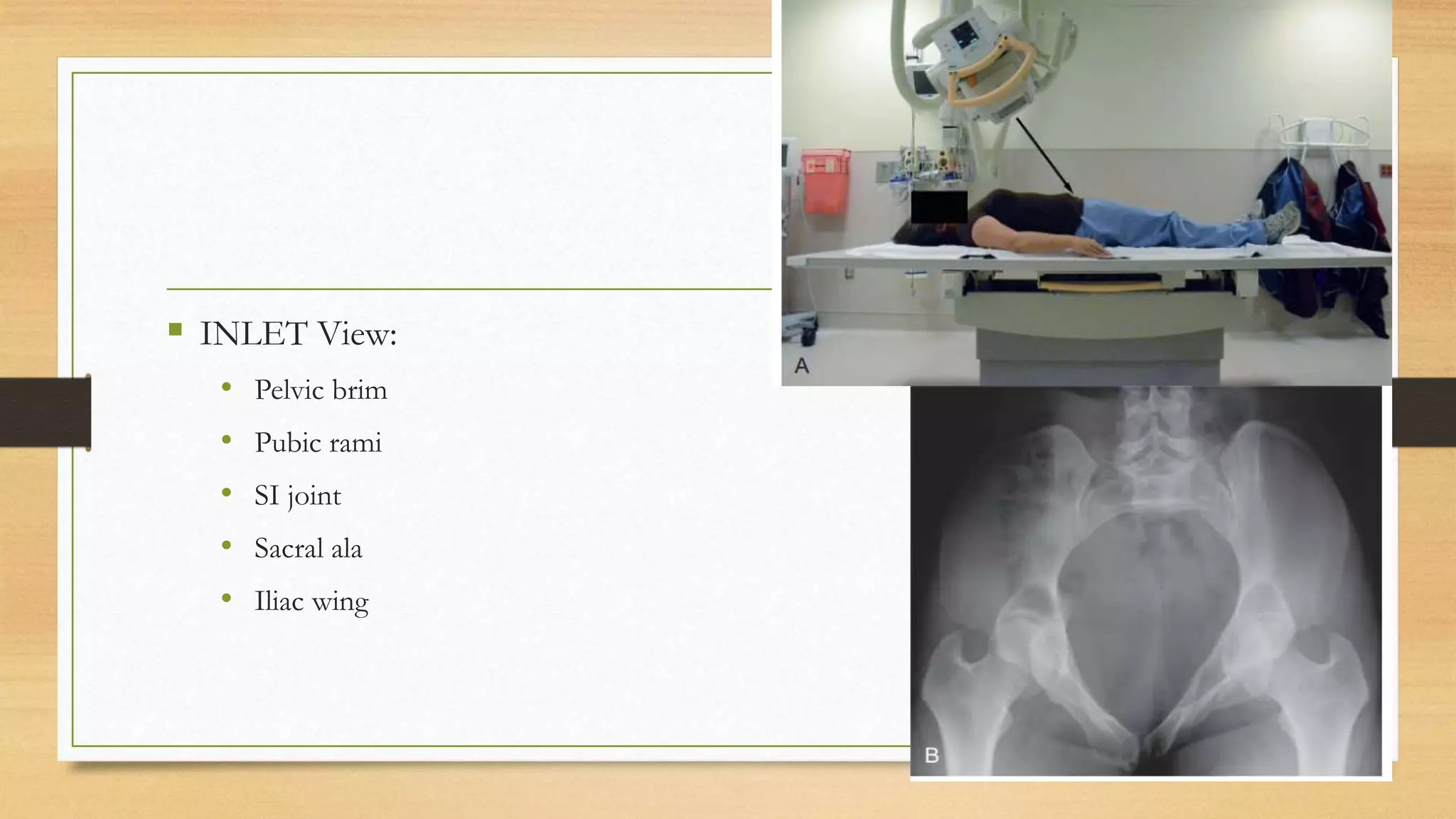
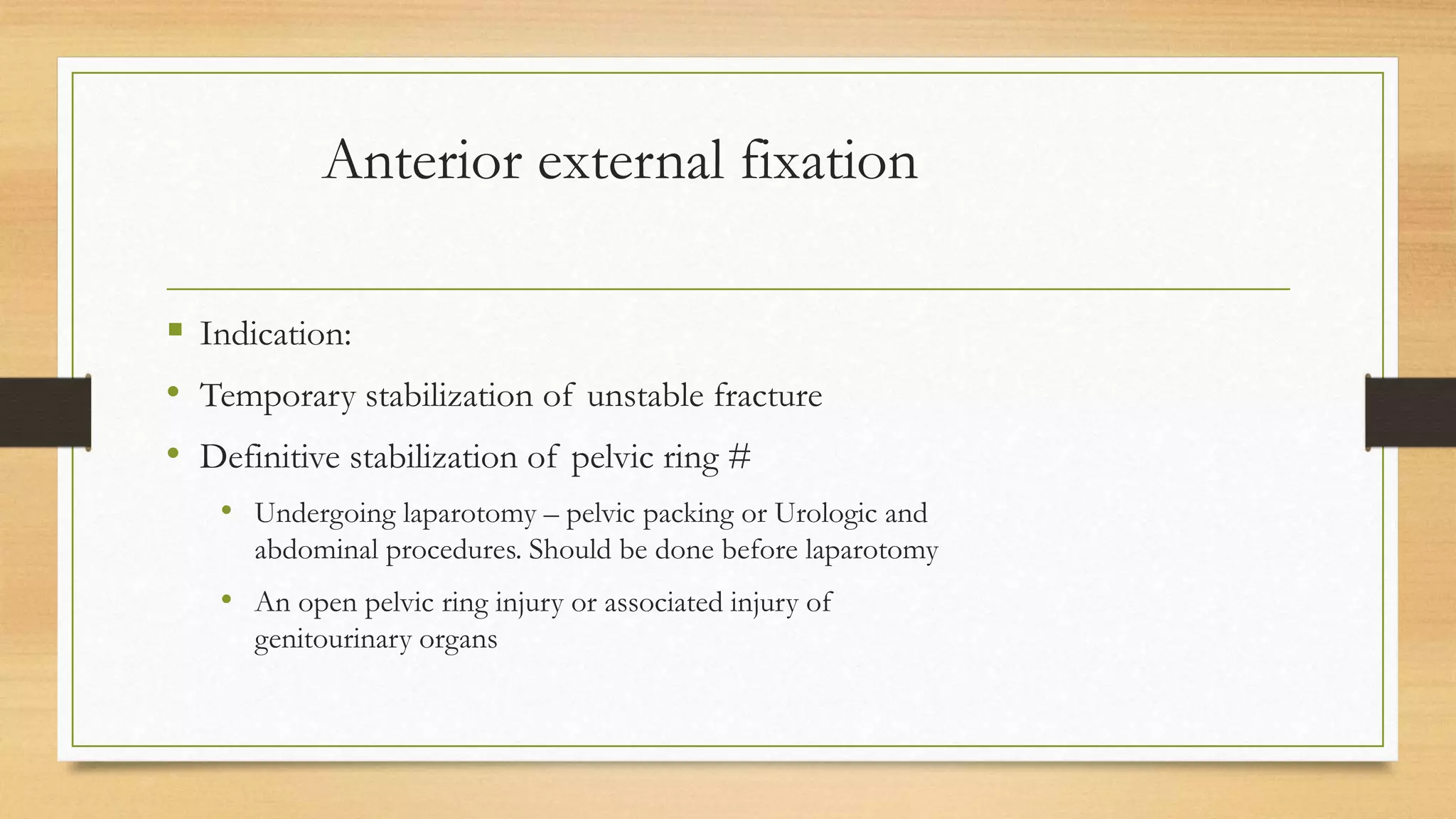
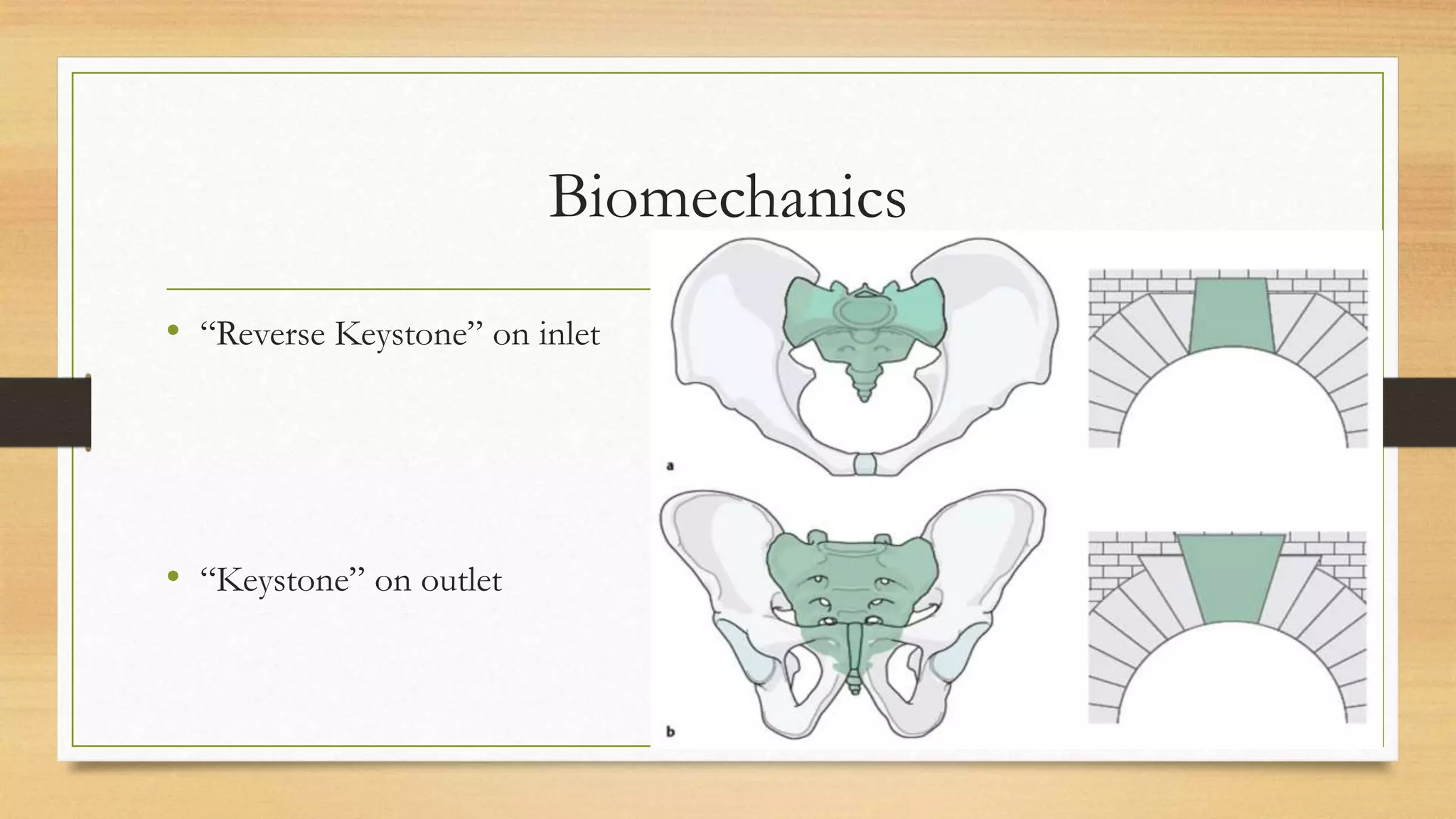
Pelvic ring injuries can be complex with implications for stability and associated injuries. Classification systems evaluate fracture pattern, stability, and mechanism of injury to guide management. Imaging with radiographs, CT, and MRI is important for evaluation. Initial management focuses on resuscitation, stabilization with pelvic binder or external fixation, and treatment of associated injuries. Definitive treatment depends on fracture pattern and stability, and may include closed reduction, skeletal traction, internal fixation with plates or screws, or angiographic embolization for bleeding. Long term implications can include urinary, sexual, or obstetrical complications. Close coordination between orthopedic and other specialties is important for optimal care.












![Management
IPBR:
• Exploratory laparotomy + bladder repair + Foley or suprapubic catheter
• Anterior fixation or ex-fix in same setting
EPBR:
• Non-OP [Foley catheter + Antibiotics] - strong consideration for ex-fix as definitive
management
• If ORIF anterior pelvis necessary – bladder repair can be done in same setting](https://image.slidesharecdn.com/pelvicringinjuryseminar1-230926210930-206e6285/75/pelvic-ring-injury-seminar-1-pptx-33-2048.jpg)