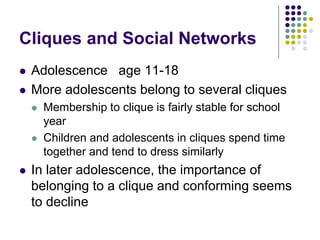
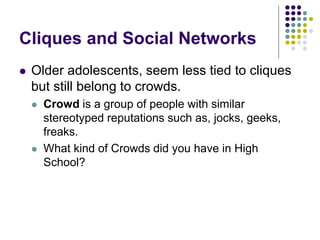
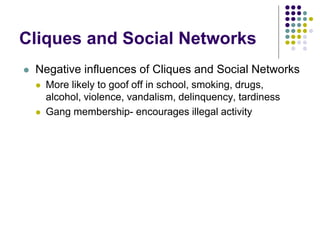
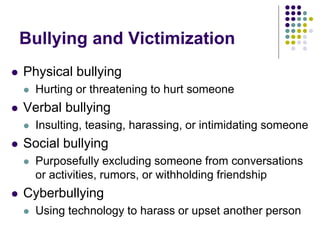
This document discusses peer relationships in childhood development. It covers several key points:
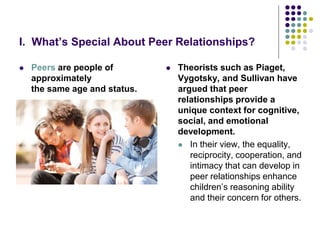
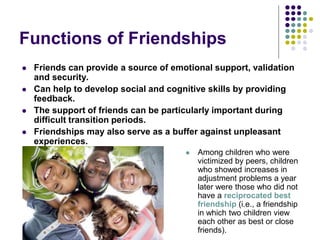
- Peer relationships provide a unique context for cognitive, social, and emotional development through equality, reciprocity, cooperation and intimacy.
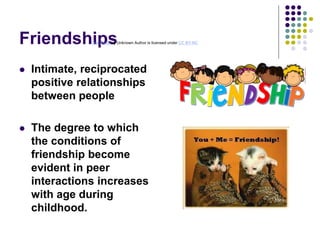
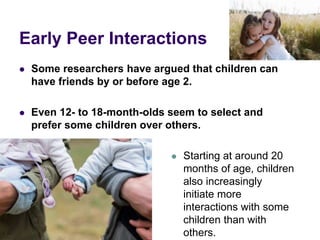
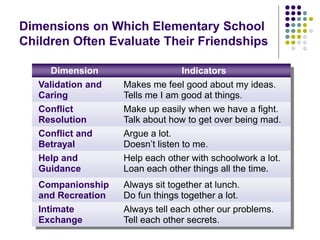
- Friendships become more evident with age and are defined by mutual liking, closeness and loyalty from early childhood through adolescence.
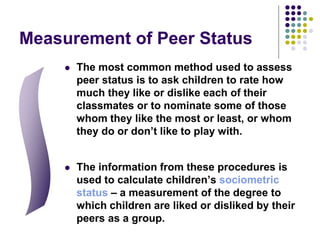
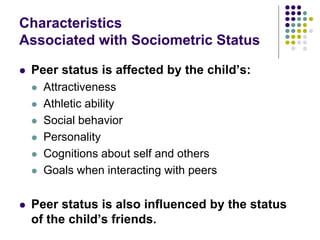
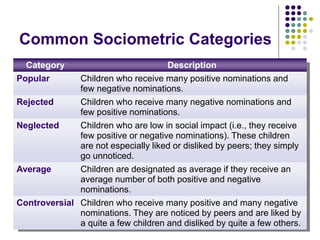
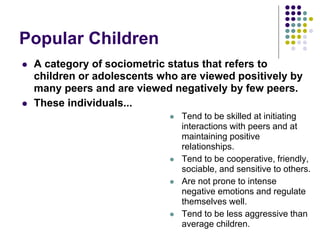
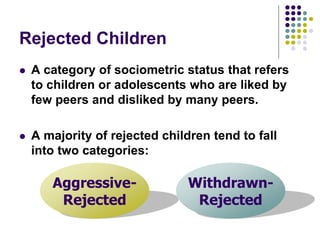
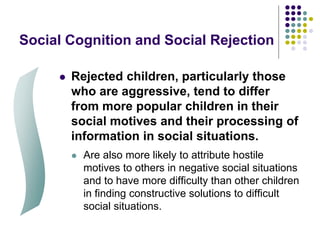
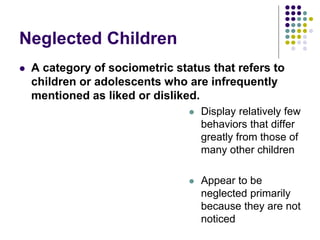
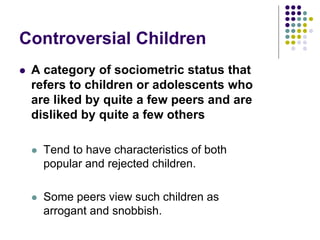
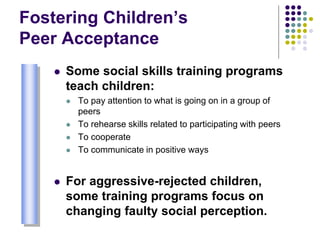
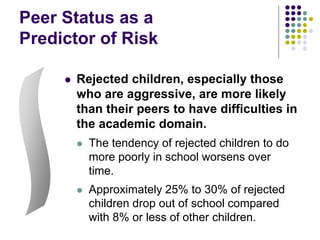
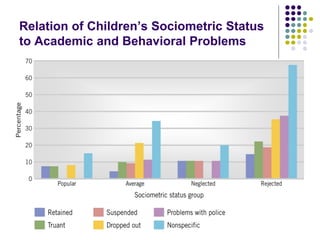
- Peer status and sociometric categories like popular, rejected, neglected and controversial are influenced by attributes like attractiveness, behavior and friend networks.
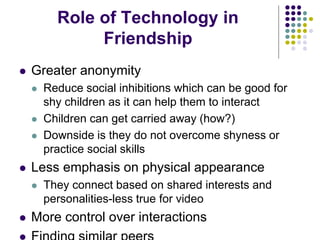
- Technology plays a role in modern friendships by enabling connection based on shared interests while also potentially interfering with in-person social skills and sleep.








![ONFH[AVN HIP] -TRIPLE REGIME -A NOVAL SURGICAL CONCEPT .pptx](https://cdn.slidesharecdn.com/ss_thumbnails/onfhavnhip2026koaconcalicutdrgokuldevdrmashraf-260210064517-213ec005-thumbnail.jpg?width=640&height=640&fit=bounds)


