Pediatric Sleep Disorders
Marwa Elhady
lecturer of pediatrics
Al-Azhar univerisity
2015
Objectives
• Understand normal sleep in children
• Review common pediatric sleep disorders
• Discuss proper treatment options for
childhood sleep disorders
The Sleep Cycle
The Sleep Cycle
• Each sleep cycle 90 – 120 minutes
• First REM period is shortest
• Most NREM deep sleep occurs early
• Most REM occurs late
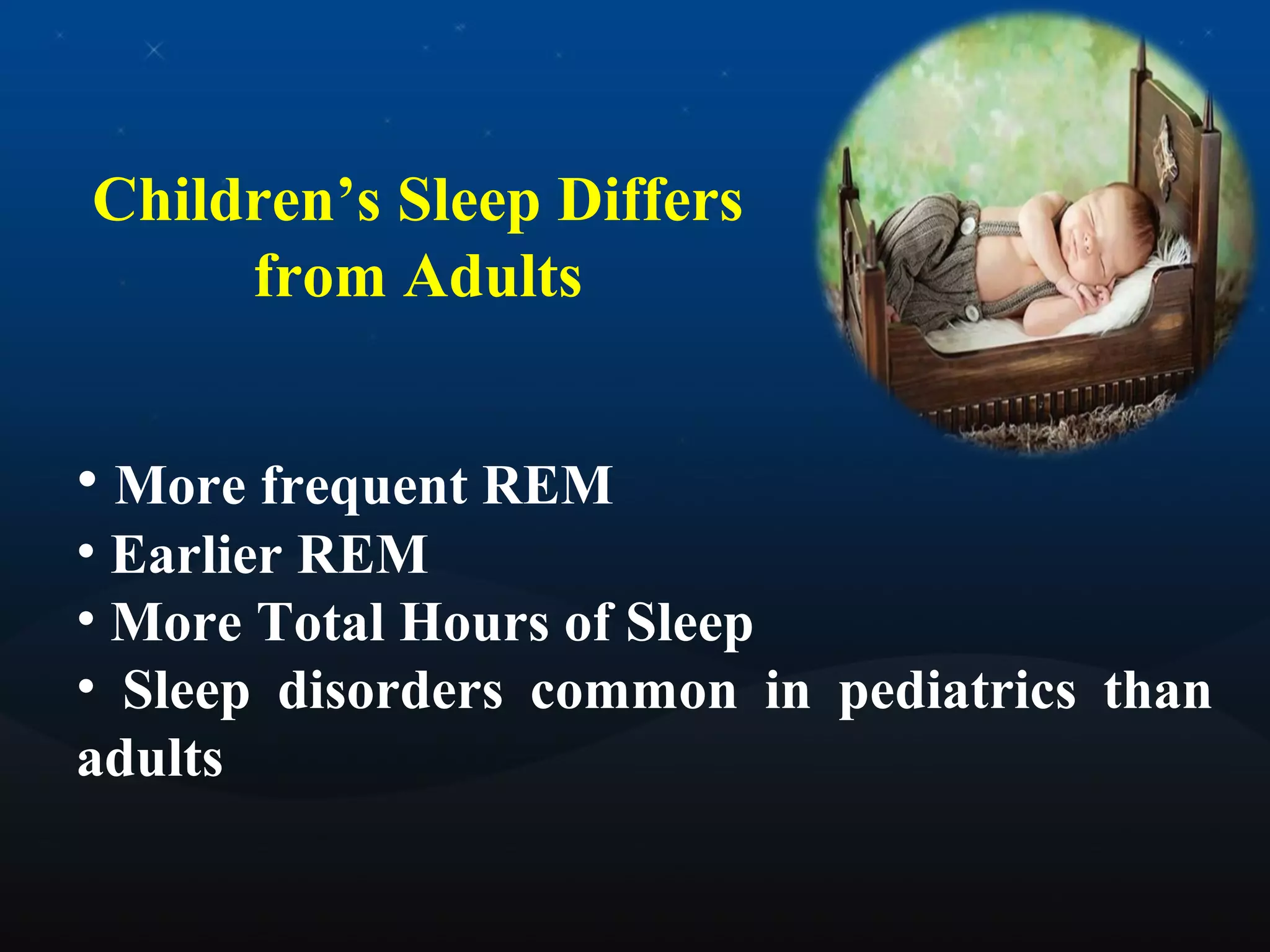
Children’s Sleep Differs
from Adults
• More frequent REM
• Earlier REM
• More Total Hours of Sleep
• Sleep disorders common in pediatrics than
adults
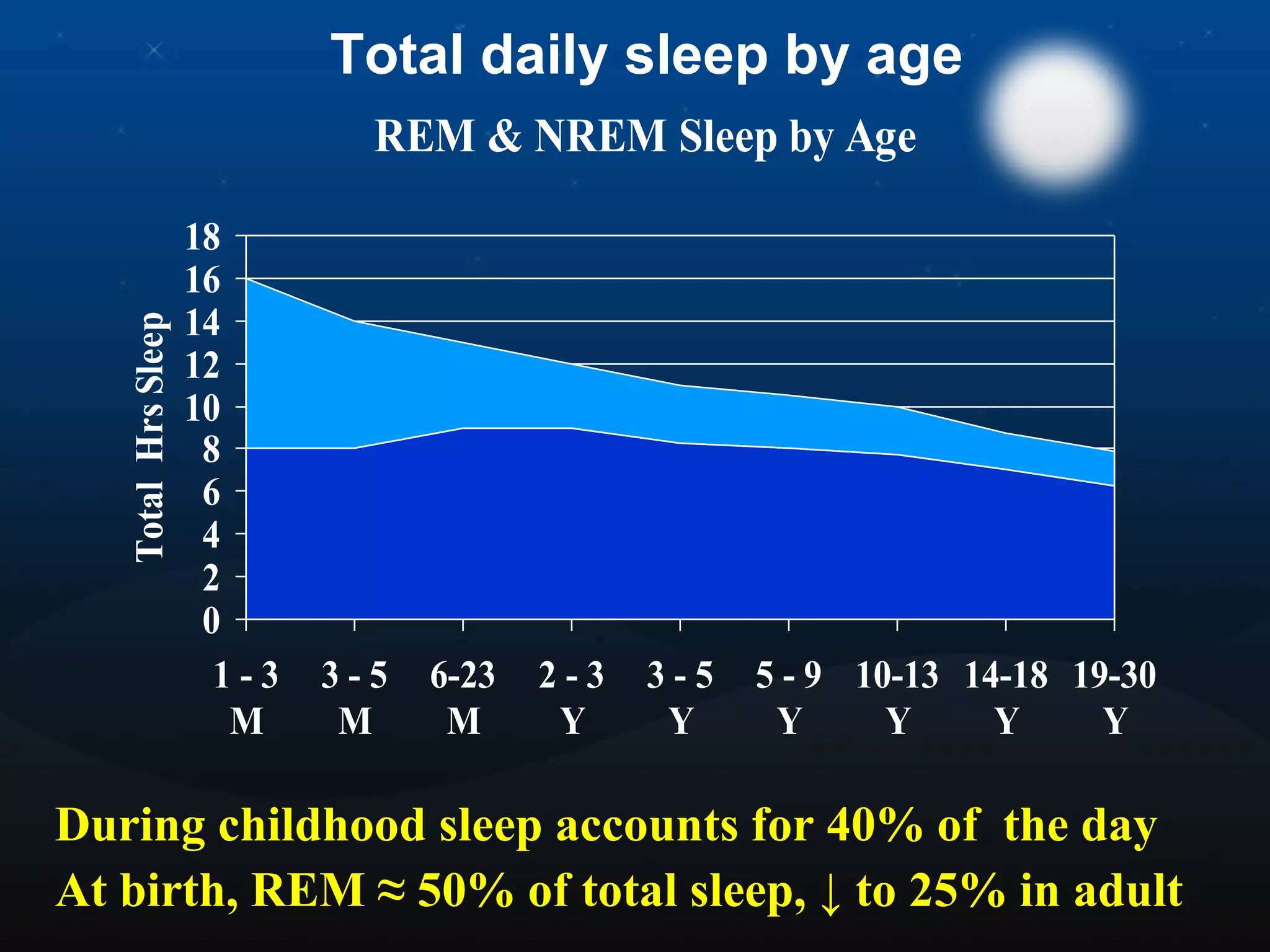
REM & NREM Sleep by Age
0
2
4
6
8
10
12
14
16
18
1 - 3
M
3 - 5
M
6-23
M
2 - 3
Y
3 - 5
Y
5 - 9
Y
10-13
Y
14-18
Y
19-30
Y
TotalHrsSleep
Total daily sleep by age
During childhood sleep accounts for 40% of the day
At birth, REM ≈ 50% of total sleep, ↓ to 25% in adult
 prevalence ≈25% - 43%of children ages 1-5
years
 interfere with daily patient and family
functioning.
 sleep problems cause significant emotional,
behavioral, and cognitive dysfunction.
 common among children with
neurodevelopmental, medical and
psychiatric disorders.
Lehmkuhl et al.,2008
Owens, 2011
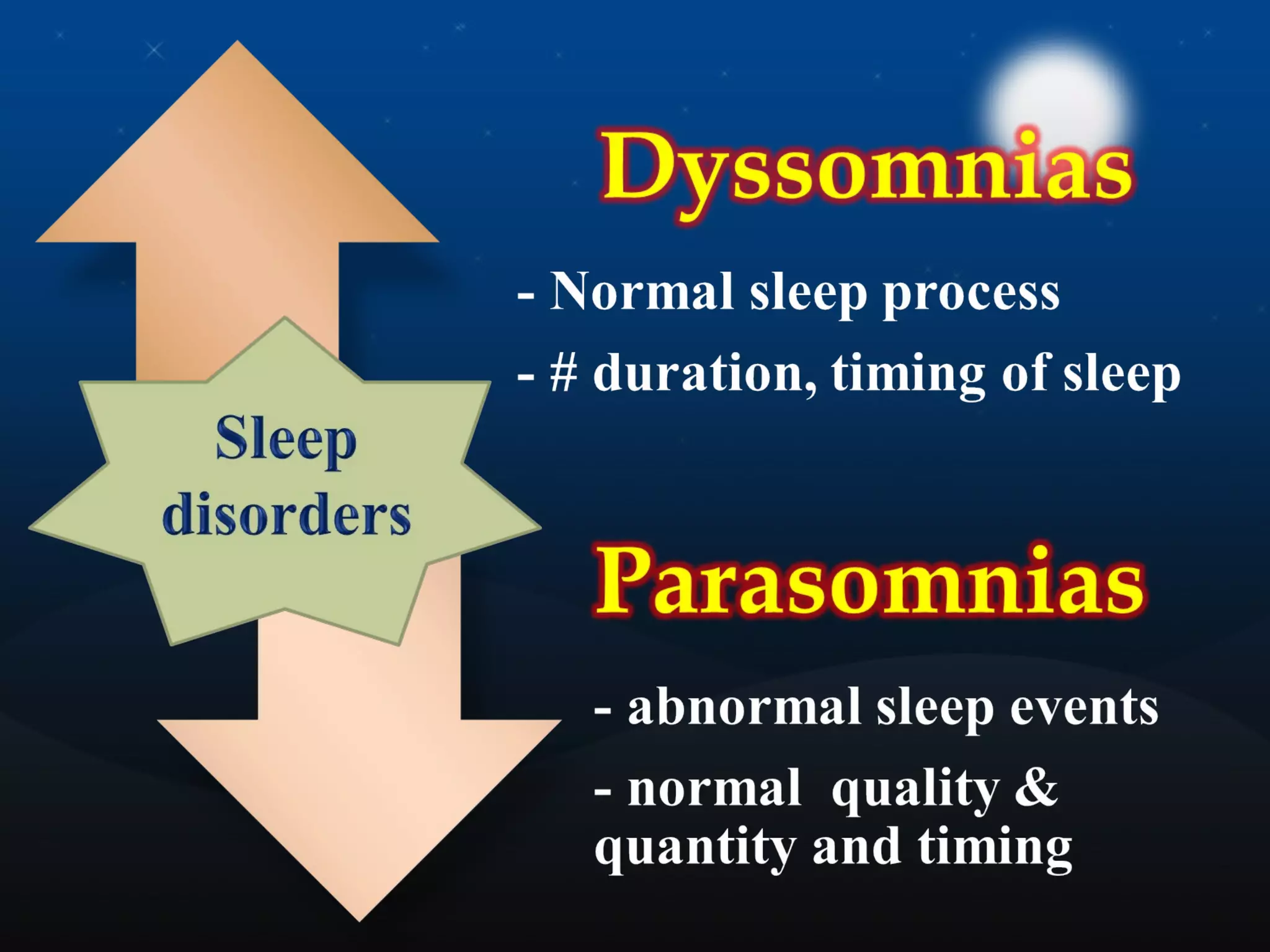
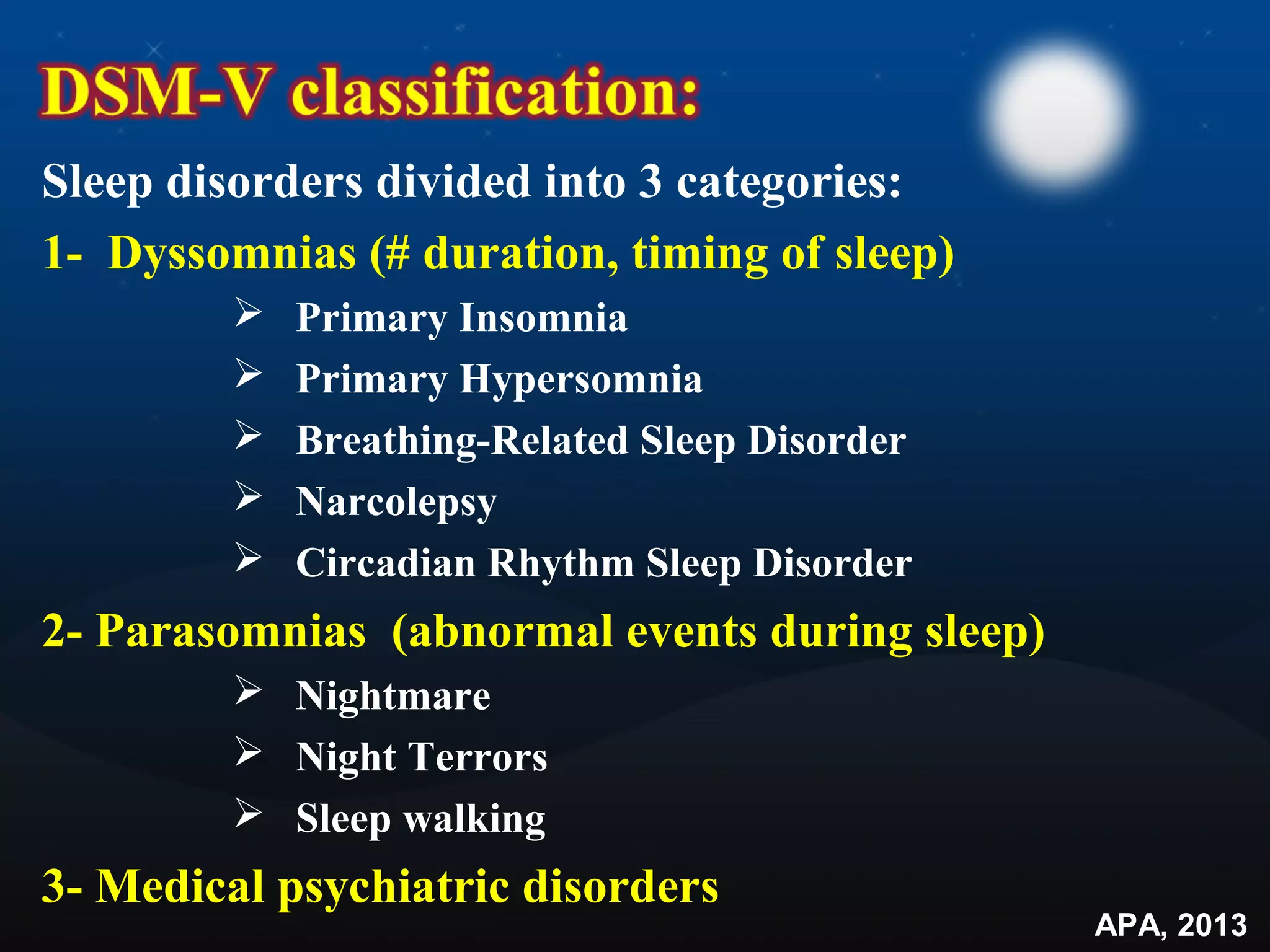
Sleep disorders divided into 3 categories:
1- Dyssomnias (# duration, timing of sleep)
 Primary Insomnia
 Primary Hypersomnia
 Breathing-Related Sleep Disorder
 Narcolepsy
 Circadian Rhythm Sleep Disorder
2- Parasomnias (abnormal events during sleep)
 Nightmare
 Night Terrors
 Sleep walking
3- Medical psychiatric disorders
APA, 2013
 The clinical evaluation involves:
obtaining a careful medical history
assess for medical cause of sleep disturbance
Current sleep patterns, including sleep duration,
sleep-wake schedule, sleep habits, Nocturnal
symptoms
 Polysomnogram (PSG) record: EEG, EMG, EOG,
Vital Signs and Other Physiologic ParametersOwens, 2011
 Difficult initiate or maintain sleep or early
morning awake with difficult return to sleep
 Occur 3 nights/week, for at least 3 months,
despite sufficient time for sleep.
 Not due to the effects of a substance
 Not explained by mental/medical illness
 Prevalence 1 – 6 % in pediatrics but higher in
children with chronic med/psych conditions
Czeisler et al., 201
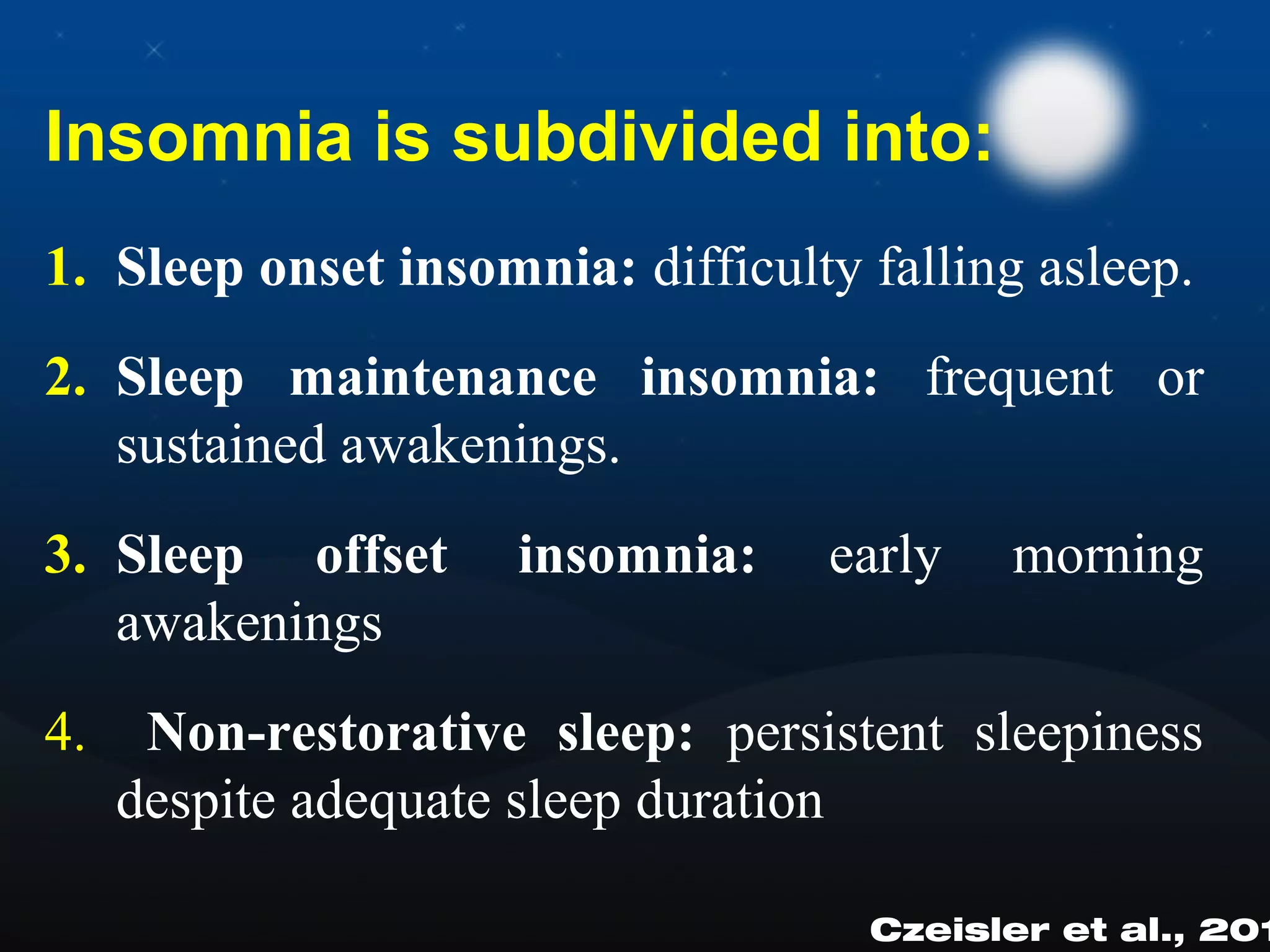
Insomnia is subdivided into:
1. Sleep onset insomnia: difficulty falling asleep.
2. Sleep maintenance insomnia: frequent or
sustained awakenings.
3. Sleep offset insomnia: early morning
awakenings
4. Non-restorative sleep: persistent sleepiness
despite adequate sleep duration
Czeisler et al., 201
• Mainly treated with behavioral interventions
• Media removal from bedroom
• Avoid caffeine
• Consistent bedtime routine and positive
reinforcement from parents/caregivers
• Correct the underlying med/psycho factors
Treatment of insomnia
Owens, 2011
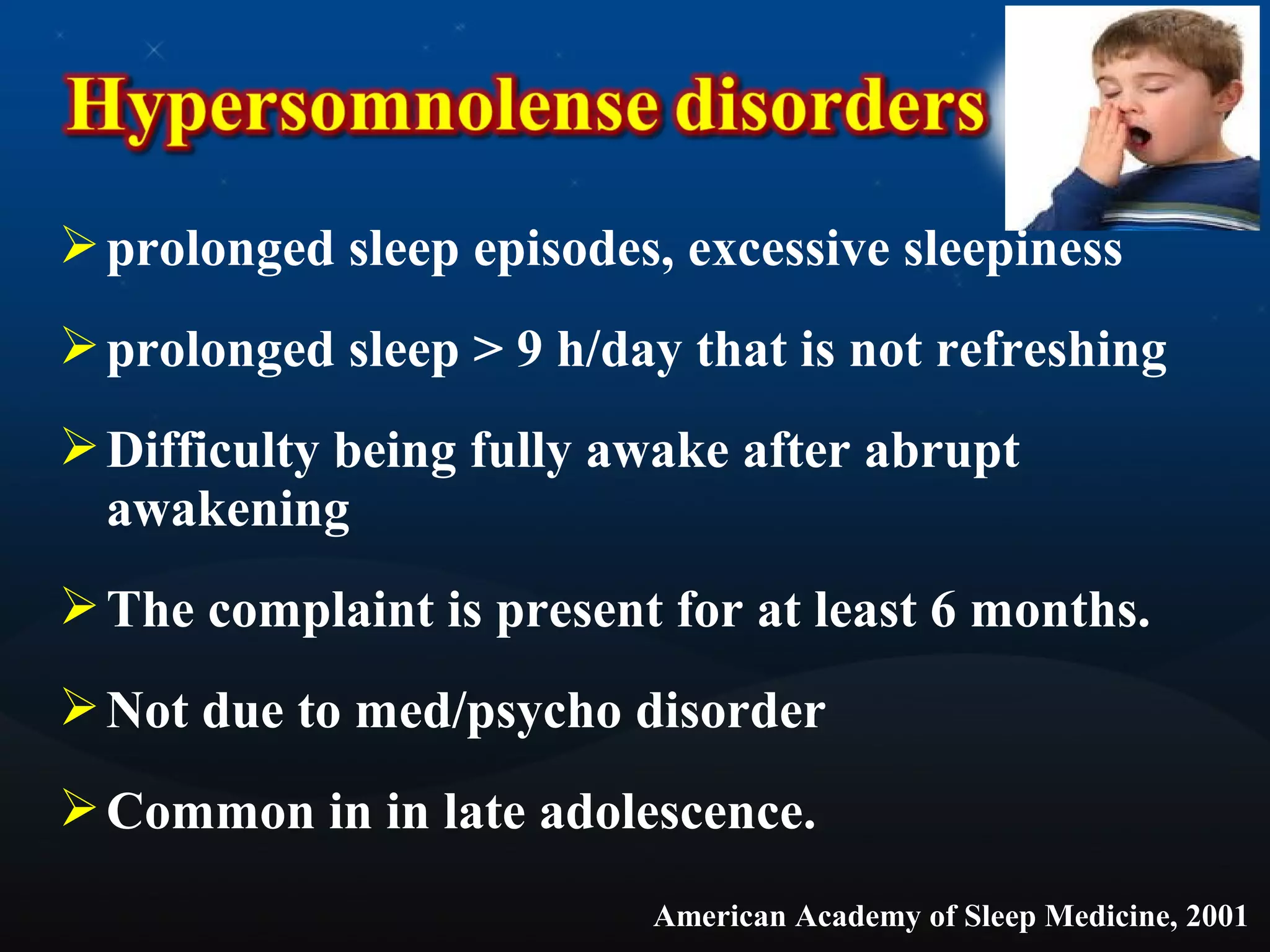
prolonged sleep episodes, excessive sleepiness
prolonged sleep > 9 h/day that is not refreshing
Difficulty being fully awake after abrupt
awakening
The complaint is present for at least 6 months.
Not due to med/psycho disorder
Common in in late adolescence.
American Academy of Sleep Medicine, 2001
 Obstructive Sleep Apnea (1 – 4 %)
Results in blood oxygen desaturations
 Upper Airway Resistance Syndrome
Similar to OSA but not result in desaturations
 Primary Snoring (7 – 12%)
regular snoring without changes in sleep
architecture, alveolar ventilation or oxygenation
APA, 2013
• Periodic apneas due to sleep-related airway
obstruction
- ↓ patency (obstruction and/or ↓diameter)
- ↑ collapsibility (↓ pharyngeal muscle tone)
-↓ drive to breath (↓ central ventilatory drive)
•Not all snorers have OSA
Bradley and Floras,2009
Sequelae of OSA
• Disrupt ventilation and sleep patterns
• intermittent hypoxia and multiple arousals cause
significant metabolic, CVS, neurocog/behavioral
and academic morbidity
• Daytime Sleepiness, Enuresis as short-term squeal
• Pulmonary hypertension and right heart failure,
FFT as long term sequel
Treatment of Sleep Apnea
• Weight loss
• Positional (sleep on one side or prone)
• CPAP prevents obstruction by soft-tissue and
keeps airway open
• Surgical intervention (e.g., tonsiloadenectomy)
• Avoid sedatives (which prevent reawakening to
breath)
 uncontrollable excessive daytime sleep attacks
interfere with normal daily functioning
 Person goes directly into REM sleep
 Common in adolescence & early adulthood
 Genetic defect in hypothalamic orexin/hypocretin
neurotransmitter
 prevalence is 3-16/10,000
Owens, 2011
Symptoms associated with
narcolepsy
Symptoms associated with
narcolepsy
Cataplexy (pathognomonic for narcolepsy)
Abrupt bilateral partial or complete loss of m. tone.
triggered by intense positive emotion (e.g., laught)
last for seconds to minutes with complete recovery
Hallucinations (visual, auditory, tactile)
occur during transitions bet. sleep and wakefulness
At sleep onset → hypnogogic
At sleep offset → hypnopompic
Sleep paralysis: inability to move or speak for sec-
min at sleep onset or offset; accompanies hallucination
Owens, 2011
DD Potential causes of EDS:
Extrinsic: 2ry to insufficient/fragmented sleep
Intrinsic: CNS disorder with ↑ need for sleep.
Treatment include:
Education, good sleep hygiene, behavioral
changes (eg. Scheduled naps).
Medications as:
• psychostimulants and modafinil to control EDS.
• TAD and SSRI to control REM-associated
phenomena, such as cataplexy
Owens, 2011
Circadian Rhythm Sleep Disorder caused byCircadian Rhythm Sleep Disorder caused by
mismatch between sleep-wake schedulemismatch between sleep-wake schedule
required by a person’s environment andrequired by a person’s environment and
his/her circadian sleep-wake pattern (e.g.,his/her circadian sleep-wake pattern (e.g.,
shift work).shift work).
 It is a circadian rhythm disorder
 significant, persistent, intractable phase shift in sleep
wake schedule (later sleep onset and wake time)
 Patients has inability to get to sleep until the early
morning, but little difficulty sleeping once asleep
 Interfere with school, work and lifestyle demands.
 Common in adolescents and young adults (7-16%)
Owens, 2011
Treatment
Treatment is primarily behavioral
•Shifting the sleep-wake schedule to an earlier time
•Maintaining the new schedule.
→ Gradual shifting bedtime/wake time earlier by 15-
30 min increments
→ Exposure to light in morning and avoidance of
evening light exposure
Oral melatonin supplementation in the afternoon or
early evening is effective in advancing the sleep phase.
 Uncomfortable sensations in the LL accompanied by
irresistible urge to move legs →Disturbs sleep
 Severe leg pain is main symptom, missed as
‘growing pains’.
 partially relieved by movement (walking, stretching,
rubbing) but only as long as the motion continues.
 Diagnosis of RLS is a clinical.
 Prevalence in children is 1-6 %
Khatwa and Kothare, 2010
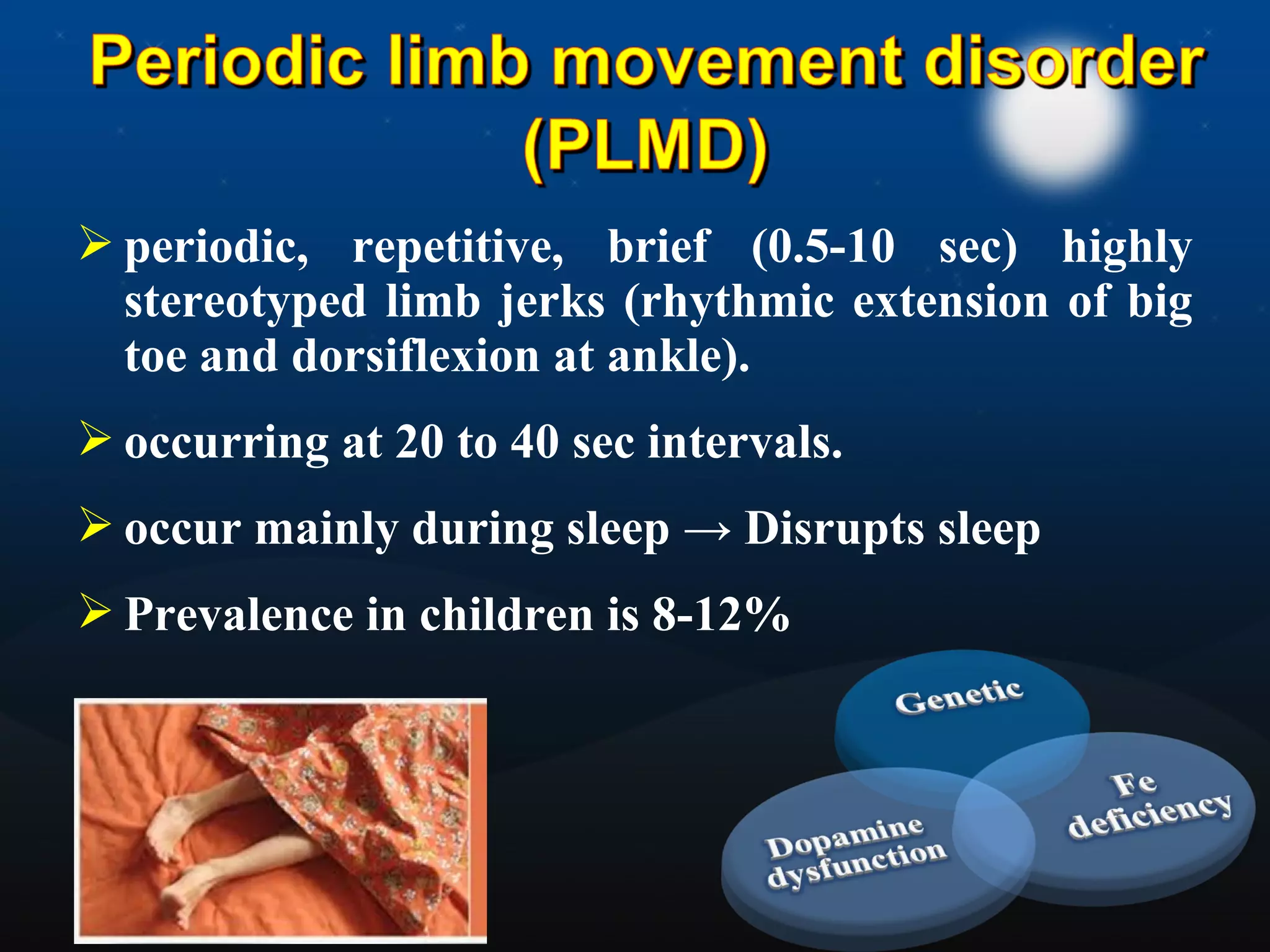
 periodic, repetitive, brief (0.5-10 sec) highly
stereotyped limb jerks (rhythmic extension of big
toe and dorsiflexion at ankle).
 occurring at 20 to 40 sec intervals.
 occur mainly during sleep → Disrupts sleep
 Prevalence in children is 8-12%
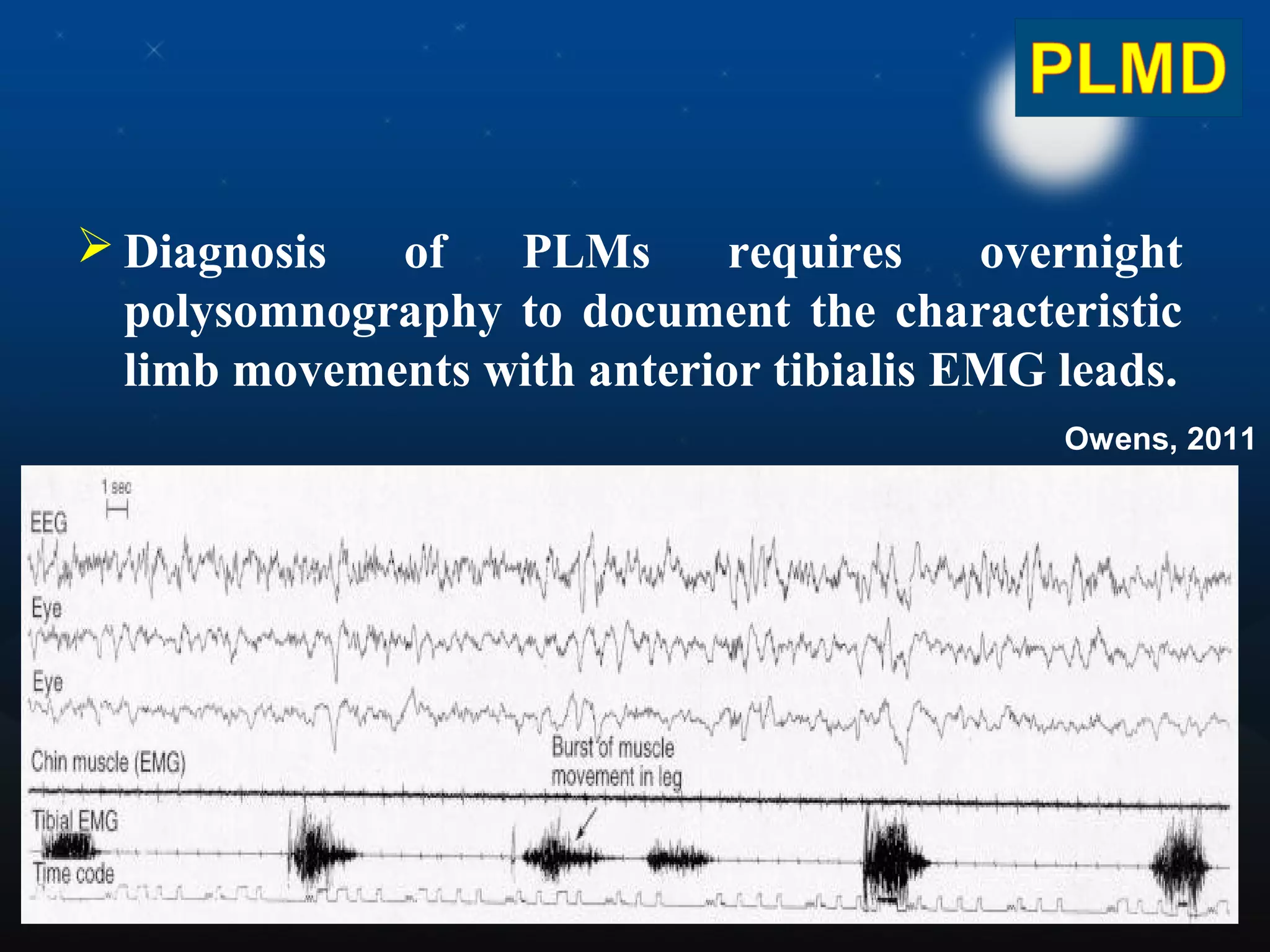
 Diagnosis of PLMs requires overnight
polysomnography to document the characteristic
limb movements with anterior tibialis EMG leads.
Owens, 2011
Treatment according to:
severity (intensity, frequency, periodicity)
degree of sleep disturbance
daytime sequelae
•an index (PLMs per hr) < 5 → no treatment
•index > 5 → promote good sleep hygiene
→ iron supplements if ferritin <50
•Medications that ↑ dopamine in CNS are effective in
adults but limited data in children.
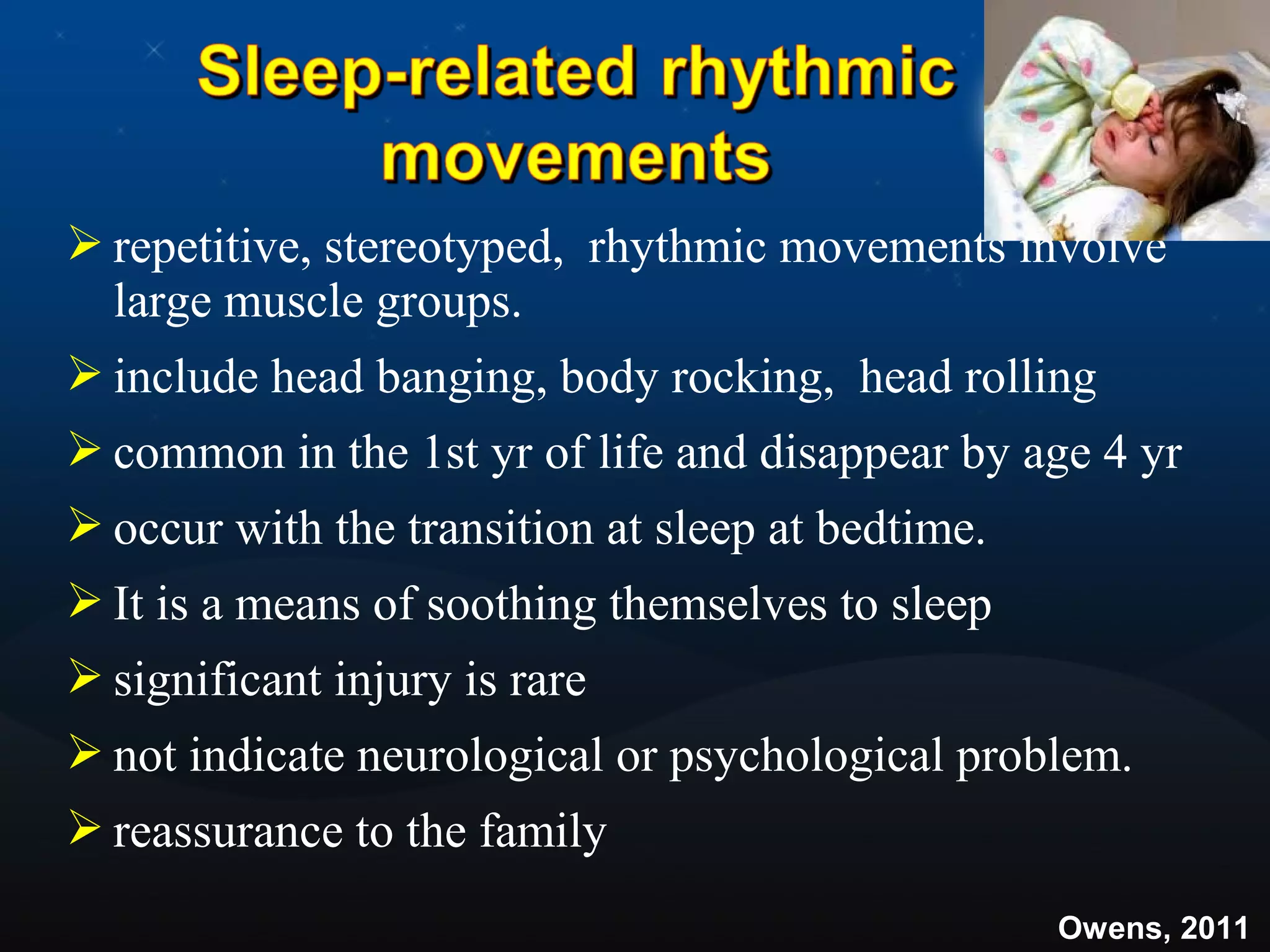
 repetitive, stereotyped, rhythmic movements involve
large muscle groups.
 include head banging, body rocking, head rolling
 common in the 1st yr of life and disappear by age 4 yr
 occur with the transition at sleep at bedtime.
 It is a means of soothing themselves to sleep
 significant injury is rare
 not indicate neurological or psychological problem.
 reassurance to the family
Owens, 2011
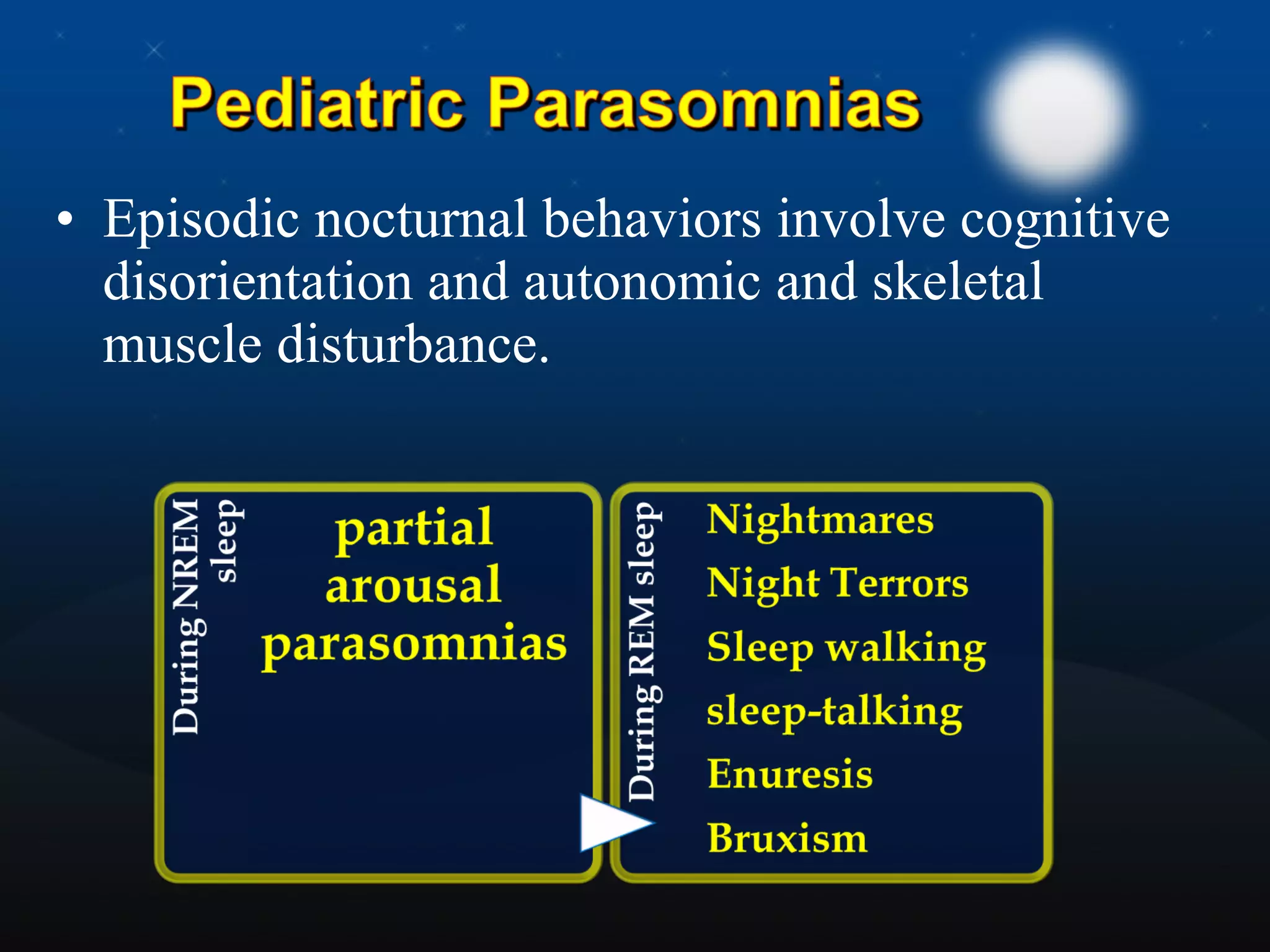
• Episodic nocturnal behaviors involve cognitive
disorientation and autonomic and skeletal
muscle disturbance.
0%
10%
20%
30%
40%
50%
60%
70%
80%
A
nySleepw
alking
SleeptalkingN
ightTerrorsRestlessLegs
Enuresis
Bruxism
0% 5% 10% 15% 20% 25% 30%
Sleepwalking
Bruxism
Sleep Terrors
Enuresis
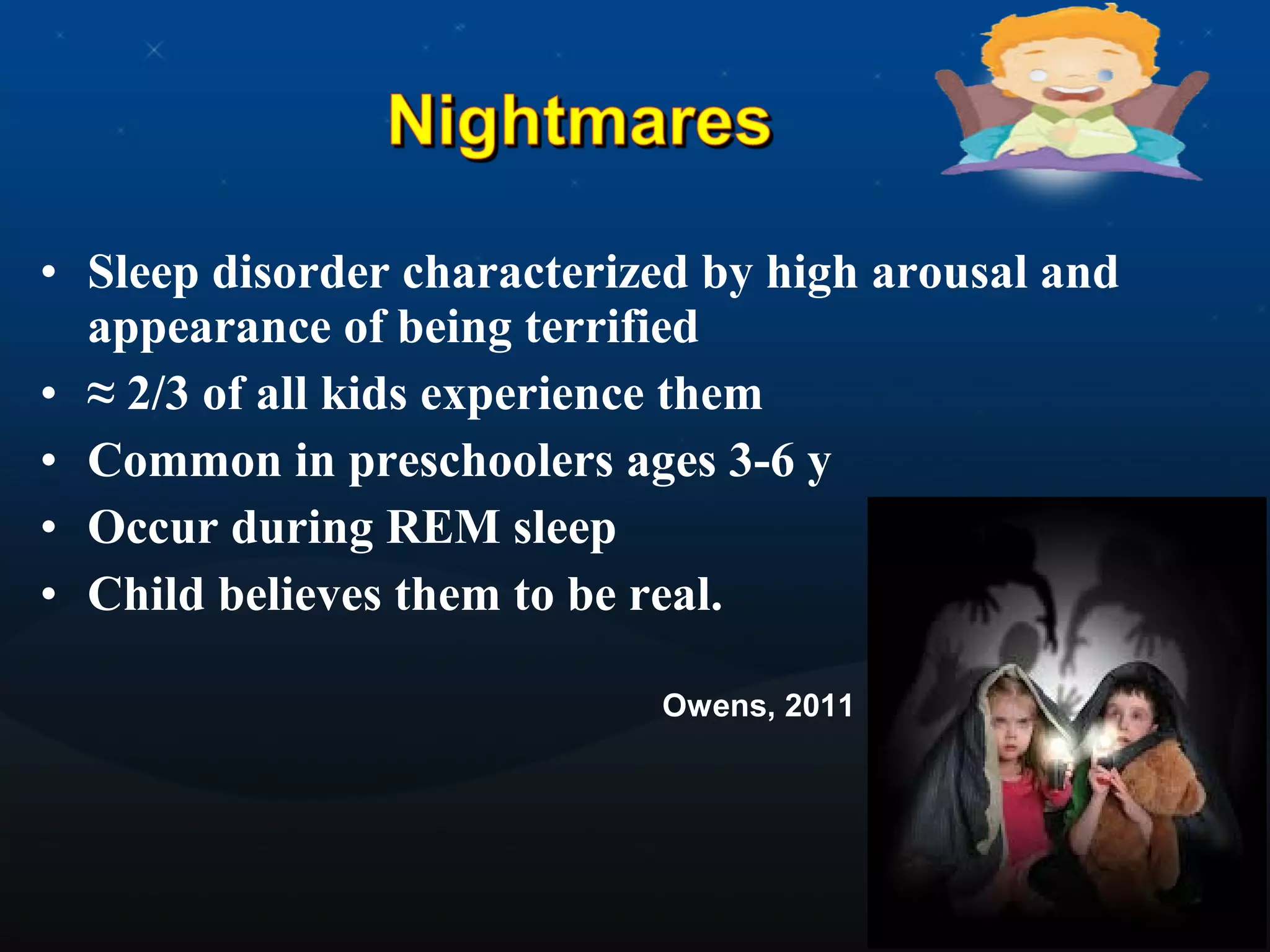
• Sleep disorder characterized by high arousal and
appearance of being terrified
• ≈ 2/3 of all kids experience them
• Common in preschoolers ages 3-6 y
• Occur during REM sleep
• Child believes them to be real.
Owens, 2011
 repeated abrupt awakenings from sleep characterized
by intense fear, panicky screams, autonomic
symptoms (tachycardia, rapid breathing, sweating),
absence of detailed dream recall, amnesia for the
episode, and relative unresponsiveness to attempts to
comfort the person.
 Lasts ~ 10 min then returns to undisturbed sleep.
 During Stage 3-4 of NREM sleep (1st third of night)
 Prevalence is 3–6.5% in children.
 can occur at any age.
 Common in male
 resolves spontaneously
 Nocturnal administration of benzodiazepines has
been reported to be beneficial
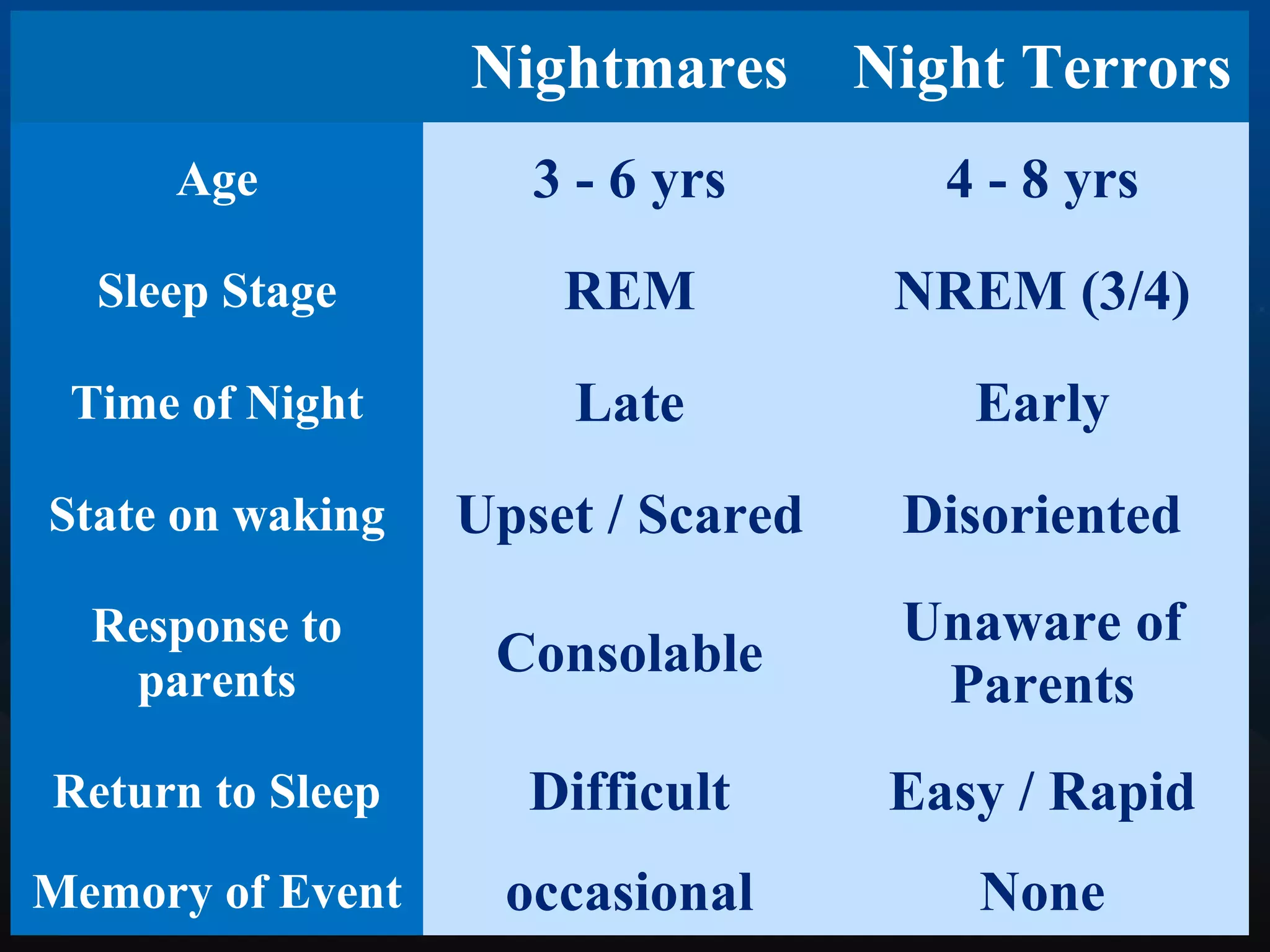
Nightmares Night Terrors
Age 3 - 6 yrs 4 - 8 yrs
Sleep Stage REM NREM (3/4)
Time of Night Late Early
State on waking Upset / Scared Disoriented
Response to
parents
Consolable
Unaware of
Parents
Return to Sleep Difficult Easy / Rapid
Memory of Event occasional None
 involuntary, forceful grinding of teeth during sleep
 Up to 88% of children; 20 % of adults
 Any stage of sleep
 May result in damage to the teeth
 Periodicity of 20 to 30 seconds.
 May represent symptom different disorders
 Patient is usually unaware of the problem
 In severe cases, rubber tooth guard is necessary.
Stress management or biofeedback.
Begins during school age
During NREM and REM sleep
No treatment just reassurance
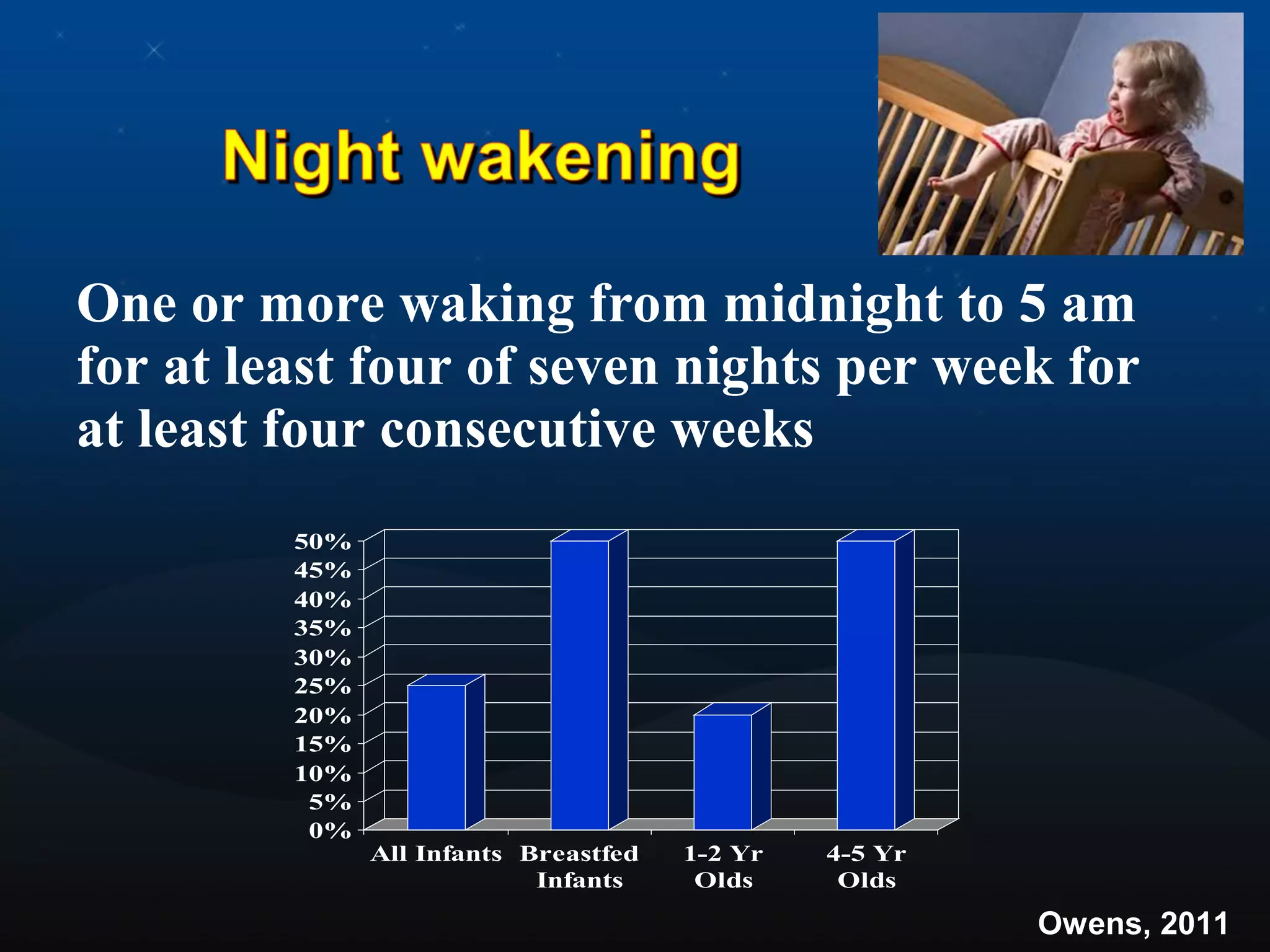
One or more waking from midnight to 5 am
for at least four of seven nights per week for
at least four consecutive weeks
0%
5%
10%
15%
20%
25%
30%
35%
40%
45%
50%
All Infants Breastfed
Infants
1-2 Yr
Olds
4-5 Yr
Olds
Owens, 2011
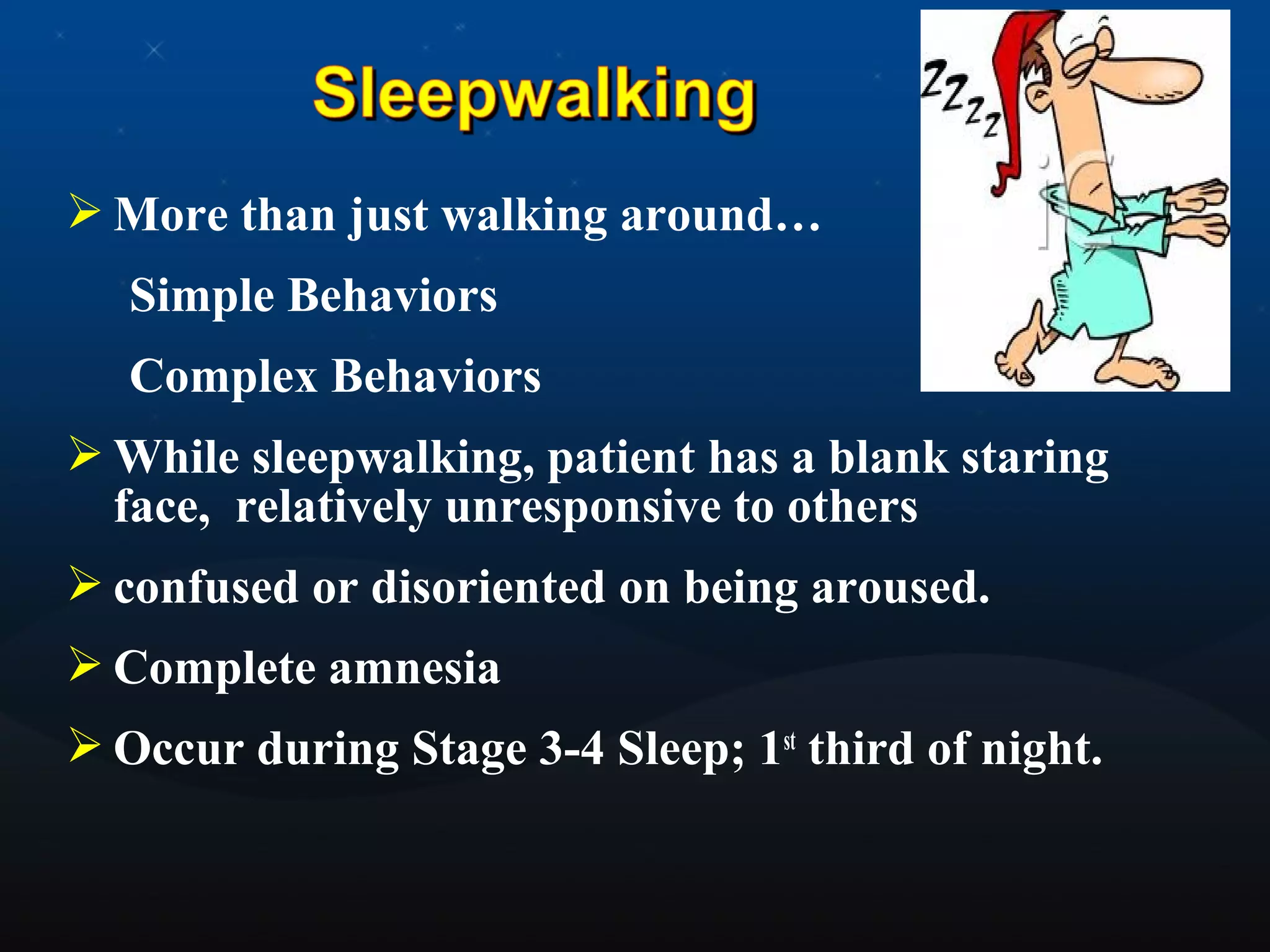
 More than just walking around…
Simple Behaviors
Complex Behaviors
 While sleepwalking, patient has a blank staring
face, relatively unresponsive to others
 confused or disoriented on being aroused.
 Complete amnesia
 Occur during Stage 3-4 Sleep; 1st
third of night.
 Begins in ages 4-8 yrs
 17% in children (4% of adults)
 sleep-walking most likely to persist
 it is important to institute safety precautions (use
of gates, locking doors and windows, and bedroom
door alarms).
 No treatment is established, but may respond to
benzodiazepines or sedating antidepressants at
bedtime.
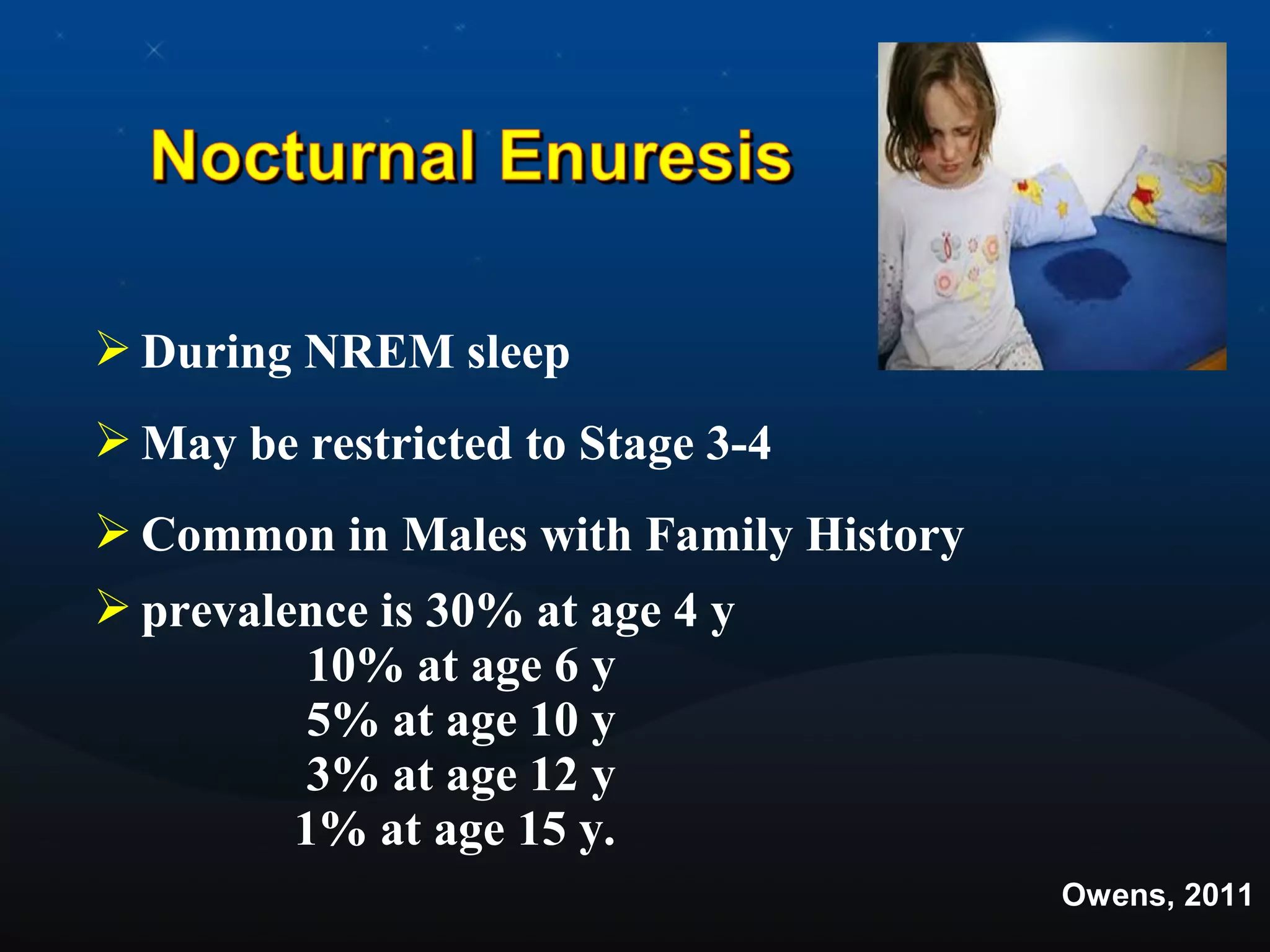
 During NREM sleep
 May be restricted to Stage 3-4
 Common in Males with Family History
 prevalence is 30% at age 4 y
10% at age 6 y
5% at age 10 y
3% at age 12 y
1% at age 15 y.
Owens, 2011
 Usually during first 1/3 of night
 Usually only one event/night
 Common in Toddler and school-aged kids.
 prevalence rates 15% in children ages 3-13 yr.
 co-occur with sleepwalking and sleep terrors
 Usually resolve with time
 Not tired the next day
 No stereotypic motor movements
 Last 5-30 minutes
Stores, 2009
 parent education and reassurance
 good sleep hygiene
 avoidance of exacerbating factors such as sleep
deprivation and caffeine.
 Scheduled awakenings, parent wake the child 15 to
30 min before the time of first parasomnia episode.
 Pharmacotherapy is rarely necessary, include
benzodiazepines and tricyclic antidepressants.
Stores, 2009
• Have a set bedtime and bedtime routine
• Bedtime and wake-up time should be the
same time on school & non-school nights.
• No more than 1hour difference from one
day to another.
• Make the hour before sleep quiet time.
• Avoid high-energy activities before bed.
Owens, 2011
• Don't go to bed hungry, but avoid Heavy
meals.
• Avoid caffeine products before bedtime.
• spend time outside every day and involve
in regular exercise.
• Keep bedroom quiet and dark with
comfortable temperature
• Don't use bedroom for punishment.
Owens, 2011
• Naps should be short (no > 1hr) and
scheduled in the early to midafternoon.
• Keep TV out of child's bedroom.
• Use bed for sleeping only. Don't study,
read, watch TV on bed.
• Relaxing, calm, enjoyable activities help
you to get to sleep.
• Smoking disturbs sleep.
• Don't use sleeping pills
Owens, 2011
Foods That Helps You Sleep BetterFoods That Helps You Sleep Better
tryptophan in it convert to serotonin & melatonin which induces sleep, Ca, Mg helps
m. relaxation
Cherries rich source
of melatonin
rich in Vit. B6 for
melatonin production
Kale
source of sleep inducing agents (K, Ca,
Mg, Vit.B6)
salmon & tunaOat
All Sleep
Phenomenon could
be a Seizure…
 Anything that is recurrent, stereotyped, and
inappropriate may be manifestation of a seizure
 Some forms of epilepsy occur more commonly
during sleep than during wakefulness
 Most often confused with sleep terrors,
 More common in the first 2 hours of sleep, or
around 4-6 am.
 More common in kids than adults.
Nocturnal seizuresNocturnal seizures
REFERENCES
• Gerd Lehmkuhl, Alfred Wiater, Alexander Mitschke, Leonie
Fricke-Oerkermann (2008): Sleep Disorders in Children
Beginning School: Their Causes and Effects. Dtsch Arztebl Int;
105(47): 809–14
• Judith A. Owens (2011): sleep disorders in Nelson text book of
pediatrics. Chapter17.
• Bradley TD, Floras JS: Obstructive sleep apnoea and its
cardiovascular consequences. Lancet 2009; 373:82-90.
• Khatwa U, Kothare SV: Restless legs syndrome and periodic
limb movements disorder in the pediatric population. Curr
Opin Pulm Med 2010; 16:559-567.
• Stores G: Aspects of parasomnias in children and adolescence.
Arch Dis Child 2009; 94:63-69.
pediatric Sleep disorders

pediatric Sleep disorders

  • 1.
    Pediatric Sleep Disorders MarwaElhady lecturer of pediatrics Al-Azhar univerisity 2015
  • 2.
    Objectives • Understand normalsleep in children • Review common pediatric sleep disorders • Discuss proper treatment options for childhood sleep disorders
  • 3.
  • 4.
    The Sleep Cycle •Each sleep cycle 90 – 120 minutes • First REM period is shortest • Most NREM deep sleep occurs early • Most REM occurs late
  • 5.
    Children’s Sleep Differs fromAdults • More frequent REM • Earlier REM • More Total Hours of Sleep • Sleep disorders common in pediatrics than adults
  • 6.
    REM & NREMSleep by Age 0 2 4 6 8 10 12 14 16 18 1 - 3 M 3 - 5 M 6-23 M 2 - 3 Y 3 - 5 Y 5 - 9 Y 10-13 Y 14-18 Y 19-30 Y TotalHrsSleep Total daily sleep by age During childhood sleep accounts for 40% of the day At birth, REM ≈ 50% of total sleep, ↓ to 25% in adult
  • 7.
     prevalence ≈25%- 43%of children ages 1-5 years  interfere with daily patient and family functioning.  sleep problems cause significant emotional, behavioral, and cognitive dysfunction.  common among children with neurodevelopmental, medical and psychiatric disorders. Lehmkuhl et al.,2008
  • 9.
  • 11.
    Sleep disorders dividedinto 3 categories: 1- Dyssomnias (# duration, timing of sleep)  Primary Insomnia  Primary Hypersomnia  Breathing-Related Sleep Disorder  Narcolepsy  Circadian Rhythm Sleep Disorder 2- Parasomnias (abnormal events during sleep)  Nightmare  Night Terrors  Sleep walking 3- Medical psychiatric disorders APA, 2013
  • 12.
     The clinicalevaluation involves: obtaining a careful medical history assess for medical cause of sleep disturbance Current sleep patterns, including sleep duration, sleep-wake schedule, sleep habits, Nocturnal symptoms  Polysomnogram (PSG) record: EEG, EMG, EOG, Vital Signs and Other Physiologic ParametersOwens, 2011
  • 15.
     Difficult initiateor maintain sleep or early morning awake with difficult return to sleep  Occur 3 nights/week, for at least 3 months, despite sufficient time for sleep.  Not due to the effects of a substance  Not explained by mental/medical illness  Prevalence 1 – 6 % in pediatrics but higher in children with chronic med/psych conditions Czeisler et al., 201
  • 16.
    Insomnia is subdividedinto: 1. Sleep onset insomnia: difficulty falling asleep. 2. Sleep maintenance insomnia: frequent or sustained awakenings. 3. Sleep offset insomnia: early morning awakenings 4. Non-restorative sleep: persistent sleepiness despite adequate sleep duration Czeisler et al., 201
  • 17.
    • Mainly treatedwith behavioral interventions • Media removal from bedroom • Avoid caffeine • Consistent bedtime routine and positive reinforcement from parents/caregivers • Correct the underlying med/psycho factors Treatment of insomnia Owens, 2011
  • 18.
    prolonged sleep episodes,excessive sleepiness prolonged sleep > 9 h/day that is not refreshing Difficulty being fully awake after abrupt awakening The complaint is present for at least 6 months. Not due to med/psycho disorder Common in in late adolescence. American Academy of Sleep Medicine, 2001
  • 19.
     Obstructive SleepApnea (1 – 4 %) Results in blood oxygen desaturations  Upper Airway Resistance Syndrome Similar to OSA but not result in desaturations  Primary Snoring (7 – 12%) regular snoring without changes in sleep architecture, alveolar ventilation or oxygenation APA, 2013
  • 20.
    • Periodic apneasdue to sleep-related airway obstruction - ↓ patency (obstruction and/or ↓diameter) - ↑ collapsibility (↓ pharyngeal muscle tone) -↓ drive to breath (↓ central ventilatory drive) •Not all snorers have OSA Bradley and Floras,2009
  • 21.
    Sequelae of OSA •Disrupt ventilation and sleep patterns • intermittent hypoxia and multiple arousals cause significant metabolic, CVS, neurocog/behavioral and academic morbidity • Daytime Sleepiness, Enuresis as short-term squeal • Pulmonary hypertension and right heart failure, FFT as long term sequel
  • 22.
    Treatment of SleepApnea • Weight loss • Positional (sleep on one side or prone) • CPAP prevents obstruction by soft-tissue and keeps airway open • Surgical intervention (e.g., tonsiloadenectomy) • Avoid sedatives (which prevent reawakening to breath)
  • 23.
     uncontrollable excessivedaytime sleep attacks interfere with normal daily functioning  Person goes directly into REM sleep  Common in adolescence & early adulthood  Genetic defect in hypothalamic orexin/hypocretin neurotransmitter  prevalence is 3-16/10,000 Owens, 2011
  • 24.
  • 25.
    Cataplexy (pathognomonic fornarcolepsy) Abrupt bilateral partial or complete loss of m. tone. triggered by intense positive emotion (e.g., laught) last for seconds to minutes with complete recovery Hallucinations (visual, auditory, tactile) occur during transitions bet. sleep and wakefulness At sleep onset → hypnogogic At sleep offset → hypnopompic Sleep paralysis: inability to move or speak for sec- min at sleep onset or offset; accompanies hallucination Owens, 2011
  • 26.
    DD Potential causesof EDS: Extrinsic: 2ry to insufficient/fragmented sleep Intrinsic: CNS disorder with ↑ need for sleep. Treatment include: Education, good sleep hygiene, behavioral changes (eg. Scheduled naps). Medications as: • psychostimulants and modafinil to control EDS. • TAD and SSRI to control REM-associated phenomena, such as cataplexy Owens, 2011
  • 27.
    Circadian Rhythm SleepDisorder caused byCircadian Rhythm Sleep Disorder caused by mismatch between sleep-wake schedulemismatch between sleep-wake schedule required by a person’s environment andrequired by a person’s environment and his/her circadian sleep-wake pattern (e.g.,his/her circadian sleep-wake pattern (e.g., shift work).shift work).
  • 28.
     It isa circadian rhythm disorder  significant, persistent, intractable phase shift in sleep wake schedule (later sleep onset and wake time)  Patients has inability to get to sleep until the early morning, but little difficulty sleeping once asleep  Interfere with school, work and lifestyle demands.  Common in adolescents and young adults (7-16%) Owens, 2011
  • 29.
    Treatment Treatment is primarilybehavioral •Shifting the sleep-wake schedule to an earlier time •Maintaining the new schedule. → Gradual shifting bedtime/wake time earlier by 15- 30 min increments → Exposure to light in morning and avoidance of evening light exposure Oral melatonin supplementation in the afternoon or early evening is effective in advancing the sleep phase.
  • 31.
     Uncomfortable sensationsin the LL accompanied by irresistible urge to move legs →Disturbs sleep  Severe leg pain is main symptom, missed as ‘growing pains’.  partially relieved by movement (walking, stretching, rubbing) but only as long as the motion continues.  Diagnosis of RLS is a clinical.  Prevalence in children is 1-6 % Khatwa and Kothare, 2010
  • 32.
     periodic, repetitive,brief (0.5-10 sec) highly stereotyped limb jerks (rhythmic extension of big toe and dorsiflexion at ankle).  occurring at 20 to 40 sec intervals.  occur mainly during sleep → Disrupts sleep  Prevalence in children is 8-12%
  • 33.
     Diagnosis ofPLMs requires overnight polysomnography to document the characteristic limb movements with anterior tibialis EMG leads. Owens, 2011
  • 34.
    Treatment according to: severity(intensity, frequency, periodicity) degree of sleep disturbance daytime sequelae •an index (PLMs per hr) < 5 → no treatment •index > 5 → promote good sleep hygiene → iron supplements if ferritin <50 •Medications that ↑ dopamine in CNS are effective in adults but limited data in children.
  • 35.
     repetitive, stereotyped,rhythmic movements involve large muscle groups.  include head banging, body rocking, head rolling  common in the 1st yr of life and disappear by age 4 yr  occur with the transition at sleep at bedtime.  It is a means of soothing themselves to sleep  significant injury is rare  not indicate neurological or psychological problem.  reassurance to the family Owens, 2011
  • 36.
    • Episodic nocturnalbehaviors involve cognitive disorientation and autonomic and skeletal muscle disturbance.
  • 37.
  • 38.
    0% 5% 10%15% 20% 25% 30% Sleepwalking Bruxism Sleep Terrors Enuresis
  • 39.
    • Sleep disordercharacterized by high arousal and appearance of being terrified • ≈ 2/3 of all kids experience them • Common in preschoolers ages 3-6 y • Occur during REM sleep • Child believes them to be real. Owens, 2011
  • 40.
     repeated abruptawakenings from sleep characterized by intense fear, panicky screams, autonomic symptoms (tachycardia, rapid breathing, sweating), absence of detailed dream recall, amnesia for the episode, and relative unresponsiveness to attempts to comfort the person.  Lasts ~ 10 min then returns to undisturbed sleep.
  • 41.
     During Stage3-4 of NREM sleep (1st third of night)  Prevalence is 3–6.5% in children.  can occur at any age.  Common in male  resolves spontaneously  Nocturnal administration of benzodiazepines has been reported to be beneficial
  • 42.
    Nightmares Night Terrors Age3 - 6 yrs 4 - 8 yrs Sleep Stage REM NREM (3/4) Time of Night Late Early State on waking Upset / Scared Disoriented Response to parents Consolable Unaware of Parents Return to Sleep Difficult Easy / Rapid Memory of Event occasional None
  • 43.
     involuntary, forcefulgrinding of teeth during sleep  Up to 88% of children; 20 % of adults  Any stage of sleep  May result in damage to the teeth  Periodicity of 20 to 30 seconds.  May represent symptom different disorders  Patient is usually unaware of the problem  In severe cases, rubber tooth guard is necessary. Stress management or biofeedback.
  • 44.
    Begins during schoolage During NREM and REM sleep No treatment just reassurance
  • 45.
    One or morewaking from midnight to 5 am for at least four of seven nights per week for at least four consecutive weeks 0% 5% 10% 15% 20% 25% 30% 35% 40% 45% 50% All Infants Breastfed Infants 1-2 Yr Olds 4-5 Yr Olds Owens, 2011
  • 46.
     More thanjust walking around… Simple Behaviors Complex Behaviors  While sleepwalking, patient has a blank staring face, relatively unresponsive to others  confused or disoriented on being aroused.  Complete amnesia  Occur during Stage 3-4 Sleep; 1st third of night.
  • 47.
     Begins inages 4-8 yrs  17% in children (4% of adults)  sleep-walking most likely to persist  it is important to institute safety precautions (use of gates, locking doors and windows, and bedroom door alarms).  No treatment is established, but may respond to benzodiazepines or sedating antidepressants at bedtime.
  • 48.
     During NREMsleep  May be restricted to Stage 3-4  Common in Males with Family History  prevalence is 30% at age 4 y 10% at age 6 y 5% at age 10 y 3% at age 12 y 1% at age 15 y. Owens, 2011
  • 49.
     Usually duringfirst 1/3 of night  Usually only one event/night  Common in Toddler and school-aged kids.  prevalence rates 15% in children ages 3-13 yr.  co-occur with sleepwalking and sleep terrors  Usually resolve with time  Not tired the next day  No stereotypic motor movements  Last 5-30 minutes Stores, 2009
  • 50.
     parent educationand reassurance  good sleep hygiene  avoidance of exacerbating factors such as sleep deprivation and caffeine.  Scheduled awakenings, parent wake the child 15 to 30 min before the time of first parasomnia episode.  Pharmacotherapy is rarely necessary, include benzodiazepines and tricyclic antidepressants. Stores, 2009
  • 51.
    • Have aset bedtime and bedtime routine • Bedtime and wake-up time should be the same time on school & non-school nights. • No more than 1hour difference from one day to another. • Make the hour before sleep quiet time. • Avoid high-energy activities before bed. Owens, 2011
  • 52.
    • Don't goto bed hungry, but avoid Heavy meals. • Avoid caffeine products before bedtime. • spend time outside every day and involve in regular exercise. • Keep bedroom quiet and dark with comfortable temperature • Don't use bedroom for punishment. Owens, 2011
  • 53.
    • Naps shouldbe short (no > 1hr) and scheduled in the early to midafternoon. • Keep TV out of child's bedroom. • Use bed for sleeping only. Don't study, read, watch TV on bed. • Relaxing, calm, enjoyable activities help you to get to sleep. • Smoking disturbs sleep. • Don't use sleeping pills Owens, 2011
  • 54.
    Foods That HelpsYou Sleep BetterFoods That Helps You Sleep Better tryptophan in it convert to serotonin & melatonin which induces sleep, Ca, Mg helps m. relaxation Cherries rich source of melatonin rich in Vit. B6 for melatonin production Kale source of sleep inducing agents (K, Ca, Mg, Vit.B6) salmon & tunaOat
  • 55.
  • 56.
     Anything thatis recurrent, stereotyped, and inappropriate may be manifestation of a seizure  Some forms of epilepsy occur more commonly during sleep than during wakefulness  Most often confused with sleep terrors,  More common in the first 2 hours of sleep, or around 4-6 am.  More common in kids than adults. Nocturnal seizuresNocturnal seizures
  • 57.
    REFERENCES • Gerd Lehmkuhl,Alfred Wiater, Alexander Mitschke, Leonie Fricke-Oerkermann (2008): Sleep Disorders in Children Beginning School: Their Causes and Effects. Dtsch Arztebl Int; 105(47): 809–14 • Judith A. Owens (2011): sleep disorders in Nelson text book of pediatrics. Chapter17. • Bradley TD, Floras JS: Obstructive sleep apnoea and its cardiovascular consequences. Lancet 2009; 373:82-90. • Khatwa U, Kothare SV: Restless legs syndrome and periodic limb movements disorder in the pediatric population. Curr Opin Pulm Med 2010; 16:559-567. • Stores G: Aspects of parasomnias in children and adolescence. Arch Dis Child 2009; 94:63-69.

Editor's Notes

  • #6 During sleep: Decrease in minute ventilation In children, respiratory rate (RR) decreases during sleep; in adults RR remains constant Functional residual capacity (FRC) decreases Upper airway resistance doubles
  • #7 Between ages 2 and 5, children spend equal amounts of time asleep and awake
  • #12 American psychological association,
  • #16 Difficulty initiating sleep means that the subjective sleep latency is greater than 20-30 minutes. Difficulty maintaining sleep is the subjective time awake after sleep onset is longer than 20-30 minutes. There is no standard definition of early morning awakening, but it usually requires awakening 30 minutes before the scheduled time or before total sleep time reaches 6.5 hours.
  • #17 Behavioral insomnia (sleep onset association insomnia): the child learns to fall asleep only under certain conditions or associations which typically require parental presence, such as being rocked or fed, and does not develop the ability to self-soothe. During the night, when the child experiences the type of brief arousal that normally occurs at the end of a sleep cycle (every 60-90 minutes in infants) or awakens for other reasons, he is not able to get back to sleep without those same conditions being present , resulting in insufficient sleep (for both child and parent). Bedtime problems, including stalling and refusing to go to bed, are more common in preschool-aged and older children. In some cases the child&amp;apos;s resistance at bedtime is due to an underlying problem in falling asleep that is caused by other factors (medical conditions, such as asthma or medication use; a sleep disorder, such as restless legs syndrome; or anxiety) or a mismatch between the child&amp;apos;s intrinsic circadian rhythm (“night owl”) and parental expectations.
  • #19 American Academy of Sleep Medicine Viral infections have preceded or accompanied hypersomnolence in 10% of cases, sometimes several months after the infection. Head trauma can result in hypersomnolence within 6-18 months after injury. An autosomal dominant mode of inheritance occurs in a subset of familial cases
  • #30 (difference between current sleep onset and desired bedtime) may require “chronotherapy,” which involves delaying bedtime and wake time by 2-3 hr daily to every other day.
  • #32 a neurologic sensory disorder, characterized by
  • #33 Genetic Dopaminergic dysfunction Iron deficiency
  • #37              Clinical Manifestations   The partial arousal parasomnias have several features in common. Because they typically occur at the transition out of “deep” or SWS, partial arousal parasomnias have clinical features of both the awake (ambulation, vocalizations) and the sleeping (high arousal threshold, unresponsiveness to the environment) states; there is usually amnesia for the events. The typical timing of partial arousal parasomnias during the first few hours of sleep is related to the predominance of SWS in the first third of the night; the duration is typically a few minutes (sleep terrors) to an hour (confusional arousals). Sleep terrors are sudden in onset and characteristically involve a high degree of autonomic arousal (i.e., tachycardia, dilated pupils), while confusional arousals typically arise more gradually from sleep, may involve thrashing around but usually not displacement from bed, and are often accompanied by slow mentation on arousal from sleep (“sleep inertia”). Sleepwalking may be associated with safety concerns (e.g., falling out of windows, wandering outside). Avoidance of, or increased agitation with, comforting by parents or attempts at awakening are also common features of all partial arousal parasomnias.  
  • #38 Sleeptalking (boys) Restless Legs (girls) Sleep Bruxism (boys) These 3 still common @ age 13 while other parasomnias decrease during childhood Slow-wave sleep (SWS)
  • #41 Characteristics: (1)Abrupt awakening from sleep, usually beginning with a panicky scream or cry. (2)Intense fear and signs of autonomic arousal (3)Unresponsive to efforts from other to calm client (4)No detailed dream recalled (5)Amnesia for episode This disorder is defined as repeated abrupt awakenings from sleep characterized by intense fear, panicky screams, autonomic arousal (tachycardia, rapid breathing, and sweating), absence of detailed dream recall, amnesia for the episode, and relative unresponsiveness to attempts to comfort the person. [87] [88] Because sleep terrors occur primarily during delta sleep, they usually take place during the first third of the night. These episodes may cause distress or impairment, especially for caretakers who witness the event. Sleep terrors may also be called night terrors, pavor nocturnus, or incubus. The prevalence of the disorder is estimated to be about 1% to 6% in children and less than 1% adults. In children, it usually begins between the ages of 4 and 12 years and resolves spontaneously during adolescence. It is more common in boys than in girls. It does not appear to be associated with psychiatric illness in children. In adults, it usually begins between 20 and 30 years of age, has a chronic undulating course, is equally common in men and women, and may be associated with psychiatric disorders, such as posttraumatic stress disorder, generalized anxiety disorder, borderline personality disorder, and others. An increased frequency of enuresis and somnambulism has been reported in the first-degree relatives of patients with night terrors. Treatment Nocturnal administration of benzodiazepines has been reported to be beneficial, perhaps because these drugs suppress delta sleep, the stage of sleep during which sleep terrors typically occur. 1% of adults
  • #44 The force of nocturnal bruxism actually may exceed what is possible with conscious clenching reminiscent of periodic limb movements during sleep bruxism actually may represent the symptom of a number of different disorders, including orofacial dyskinesia, mandibular dystonia, and tremor.
  • #45 Bilingual sleeptalking kids talk in their dominant language
  • #47 the prevalence of children who regularly sleepwalk is approximately 17%, and 3-4% have frequent episodes. Sleepwalking may persist into adulthood, with the prevalence in adults of about 4%. The prevalence is approximately 10 times greater in children with a family history of sleepwalking. This disorder is characterized by repeated episodes of motor behavior initiated in sleep, usually during delta sleep in the first third of the night. While sleepwalking, the patient has a blank staring face, is relatively unresponsive to others, and may be confused or disoriented initially on being aroused from the episode. Although the person may be alert after several minutes of awakening, complete amnesia for the episode is common the next day. Sleepwalking may cause considerable distress, for example, if a child cannot sleep away from home or go to camp because of it. By DSM-IV definition, pure sleepwalking is excluded if it occurs as a result of a medication or substance or is due to a medical disorder. However, sleepwalking may be an idiosyncratic reaction to specific drugs, including tranquilizers and sleeping pills. Most behaviors during sleepwalking are routine and of low-level intensity, such as sitting up, picking the sheets, or walking around the bedroom. More complicated behaviors may also occur, however, such as urinating in a closet, leaving the house, running, eating, talking, driving, or even committing murder. A real danger is that the individual will be injured by going through a window or falling from a height. Can cause distress (ie. Can’t go to camp or to sleepover) sitting up, picking the sheets, walking around bedroom. More complicated ones: urinating in closet, leaving the house, eating, talking, driving, committing murder. Falls are a concern. At age 11 years, 81% percent of sleepwalkers talked in their sleep, while 16% of somniloquists also walked during their sleep Whereas about 10% to 30% of children have at least one sleepwalking episode, only about 1% to 5% have repeated episodes. The disorder most commonly begins between the ages of 4 and 8 years and usually resolves spontaneously during adolescence. Genetic factors may be involved, because sleepwalkers are reported to have a higher than expected frequency of first-degree relatives with either sleepwalking or sleep terrors. [91] Sleepwalking may be precipitated in affected patients by gently sitting them up during sleep, by fever, or by sleep deprivation. Adult onset of sleepwalking should prompt the search for possible medical, neurological, psychiatric, pharmacological, or other underlying causes, such as nocturnal epilepsy. Treatment The major concern should be the safety of the sleepwalker, who may injure herself or himself or someone else during an episode
  • #57 Some forms of epilepsy occur more commonly during sleep than during wakefulness and may be associated with parasomnia disorders. Nocturnal seizures may at times be confused with sleep terror, REM sleep behavior disorder, paroxysmal hypnogenic dystonia, or nocturnal panic attacks. [95] They may take the form of generalized convulsions or may be partial seizures with complex symptoms. Nocturnal seizures are most common at two times: the first 2 hours of sleep, or around 4 to 6 AM. They are more common in children than in adults. The chief complaint may be only disturbed sleep, torn up bedsheets and blankets, morning drowsiness (a postictal state), and muscle aches. Some patients never realize they suffer from nocturnal epilepsy until they share a bedroom or bed with someone who observes a convulsion. Nocturnal Paroxysmal Dystonia, nocturnal laryngospasm, etc.