Pediatric
Pancreatitis
W. P. Rivindu H. Wickramanayake
Group no. 04a
6th Year 1st Semester – 2020 April
Tbilisi State Medical University, Georgia
Introduction
● An inflammatory condition of the pancreas
● Acute pancreatitis is a reversible process,
● whereas Chronic pancreatitis (CP) is irreversible
● Differences between pancreatitis in children and adults,
- particularly in
- Presentation,
- Etiology,
- Prognosis, and
- Nature of acute recurrent pancreatitis (ARP).
Epidemiology
● Occurs in all age groups, even in infants.
● approaches to adults (greater awareness)
● Worldwide, the incidence of acute pancreatitis ranges between 5
and 80 per 100,000 population, with the highest incidence recorded
in the United States and Finland.
Acute Pancreatitis
in Pediatrics
Pathophysiology
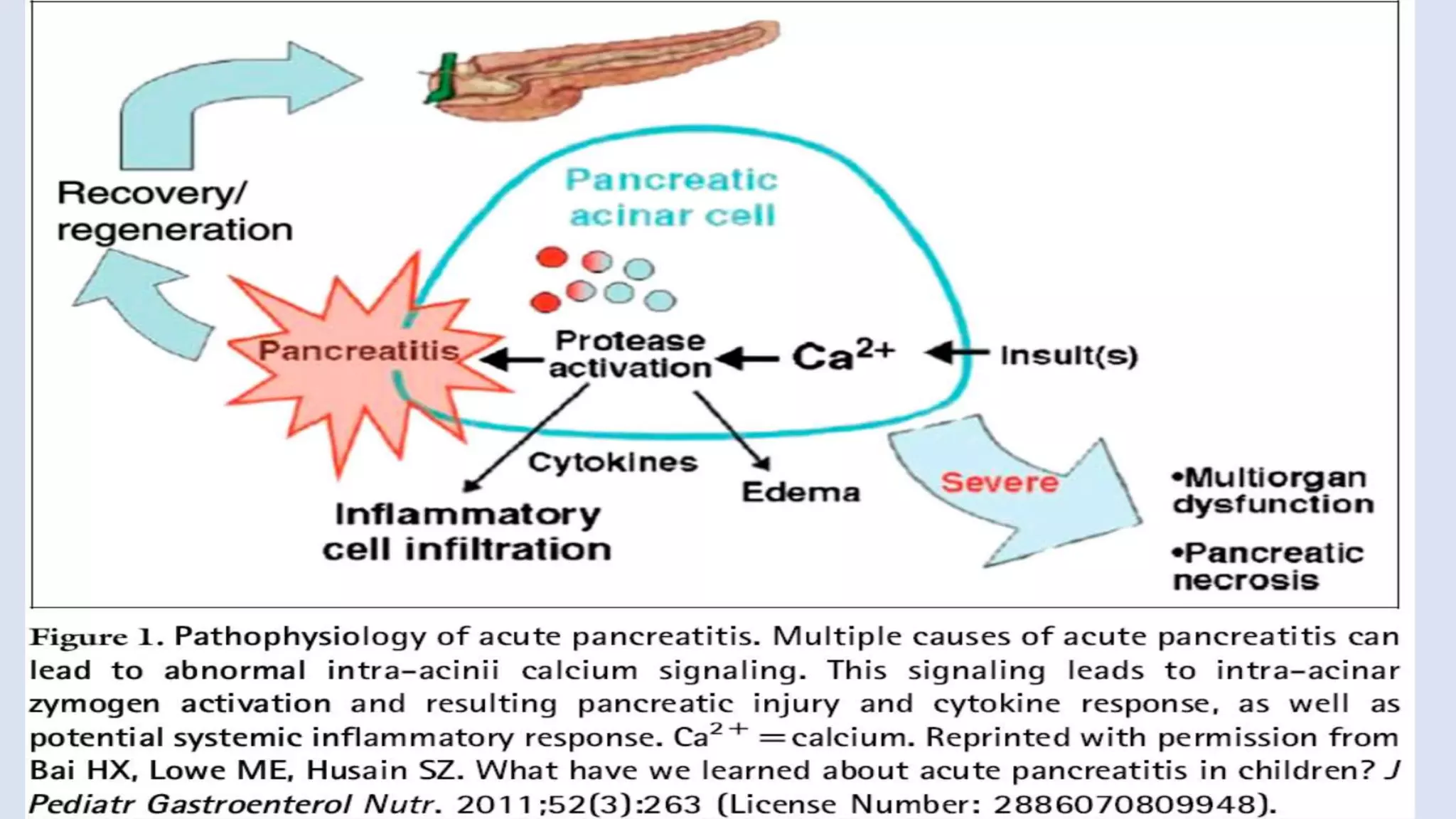
● Acinar Cell Injury
1. Initiate the premature intracellular activation of trypsinogen
to trypsin. Trypsin, in turn, activates other digestive proenzymes.
The activated digestive enzymes then mediate acinar cell injury.
2. An aberrant unfolded protein response and the resultant
endoplasmic reticulum stress may initiate apoptotic pathways and
inflammatory signals.
1. Biliary disorders
- Gallstone pancreatitis is a more common cause than
previously believed
2. Systemic conditions
- >20% of reported cases
- Multifactorial
- Sepsis
- Shock
- Hemolytic Uremic Syndrome(++)
- Systemic Lupus Erythematosus
- Viruses such as Mumps virus and so on
Causes of Acute Pancreatitis in Children
3. Medications
- L-asparaginase
- Valproic acid
- Azathioprine
- Mercaptopurine
- Mesalamine
4. Trauma
- Not as high as previously thought
- Unintentional blunt trauma
- Child abuse
5. Idiopathic
6. Infections
- Treatment can prevent recurrent episodes.
7. Metabolic disorders
- Disorders that cause hypercalcemia, hypertriglyceridemia,
and inborn errors
8. Genetic / Hereditary diseases
9. Autoimmune Pancreatitis
- Type 1: may elevated IgG4, diffuse or segmental
enlargement of the pancreas, strictures of the pancreatic duct.
- Type 2: more common in children, association with
inflammatory bowel disease and other autoimmune diseases
→respond to corticosteroid therapy.
12. Anatomic Pancreaticobiliary Abnormalities
- Pancreas divisum( 15%), related to SPINK-1 or CFTR gene
Choledochal cysts Annular pancreas
Pancreas divisum
Diagnosis
● ≥ two of three criteria:
(1) Abdominal pain - suggestive of or compatible with acute
pancreatitis (ie, abdominal pain of acute onset, especially in the
epigastric region)
(2) Serum amylase or lipase > 3 times than the upper limit of
normal
(3) Imaging findings compatible with acute pancreatitis.
● Mild: >90%, limited to the pancreas and the peripancreatic fat
● Severe: pancreatic necrosis, involvement of other organs,
cardiovascular collapse, infection, or fluid collections.
 Abdominal Pain
- 80% to 95% in pediatric patients who have acute pancreatitis.
- Epigastric: 62% to 89%
- Diffusely: 12% ~ 20%
- Radiating to the back: 1.6%~5.6%
• Nonverbal or encephalopathy-> irritability
 Amylase & Lipase
Rise time - Amylase: 2~12 hours
- Lipase: 4 ~ 8 hours
Pediatric Conditions with Elevation of Amylase or Lipase
Utility of Radiographic Imaging
for Diagnosis of Pancreatitis
Management
● Pancreatic Rest
- Fluid support: 1.5 times maintenance IVF in first 24 hours
- Nutrition: priming since 24~48hrs if mild
( Regular meal. No low fat. 10% pain. Continue even elevated
enzyme. Total Parenteral Nutrition for prolonged ileus, pancreatic
fistulae, or complicating abdominal compartment syndrome)
- Antiemetics and analgesia: opioid( morphine)
- Treat reversible cause( antibiotic is not routine)
- Monitoring for complications.
Complications
• Pancreatic fluid collections are the most common
Pseudocyst
Outcomes
● Better than in adults and are not correlated with initial
amylase and lipase levels.
● No existing scoring systems like APACHE (Acute
Physiology and Chronic Health Evaluation) or the
Ranson system used pediatrics.
Acute
Recurrent Pancreatitis
(ARP)
● ≥2 episodes of acute pancreatitis per year, or
● >3 episodes over a lifetime,
● in a patient without CP or a pancreatic pseudocyst
● 10% to 35% of patients will have recurrence
Etiology
Genetic Mutation
 PRSS-1: cationic trypsinogen
• Several mutations in the PRSS-1 gene that encodes cationic
trypsinogen cause hereditary pancreatitis.
• Autosomal dominant with an 80% penetrance.
• The lifetime risk of pancreatic cancer is 40% or greater in these
patients.
• SPINK-1: serine protease inhibitor Kazal type 1
• Produced in acinar cells and acts as a defense for premature
trypsinogen activation.
• But most people who have these mutations, even when homozygous,
do not develop pancreatitis.
• Thought to be related to decreased ability to inactivate trypsin. But
toxicity from misfolded protein, remain possible
 CFTR: cystic fibrosis transmembrane conductance regulator
• Disease modifiers
• Lack other clinical features of cystic fibrosis or have mild
disease in other organs and are pancreatic-sufficient at
presentation, although some will develop pancreatic
insufficiency over time.
• The effect of many changes in the gene sequence on protein
function is unknown.
 CTRC: chymotrypsin C gene
• Encodes for the digestive enzyme chymotrypsin C
• Disease modifiers.
• Can inactivate trypsin in vitro
Duplication Cysts - Duodenum or Stomach
- Secondary to pancreaticobiliary obstruction
- Difficult to detect
Management
● Genetic screening for PRSS-1 and SPINK-1 mutations
- Sweat test-> indeterminate or low positive zone-> gene
sequencing for CFTR
● MRCP: anatomy
- Pancreas divisum-> ERCP: sphincterotomy and stenting of the
minor papilla
- Endoscopy for mass lesion which obstruct the ampulla
- Autoimmune pancreatitis: if MRCP suspect- IgG4
- Systemic inflammatory disease, especially for Crohn disease
● Ultrasonography or CT scan- to identify duplication cysts
Chronic Pancreatitis
● A process leading to irreversible destruction of the pancreatic
parenchyma and ducts and loss of exocrine function.
● Classic cystic fibrosis is the most common cause in children
● Incidence and prevalence in childhood are not known.
● Causes are the same as those of ARP
● Results from the sequelae of long-standing destructive inflammation
● Fibrosis
Diagnosis
● Clinical and based on a combination of symptoms, imaging
studies, and functional insufficiency
● Diagnosis often is delayed
● With advanced disease, amylase and lipase levels will not be
elevated, even in the presence of disabling pain.
Clinical Features
● Pain : - mild to intense,
- usually epigastric,
- constant or intermittent,
- deep and penetrating,
- radiation to the back,
- episodic.
- obstruction of pancreatic ducts by fibrosis or stone
- inflammation of the parenchyma
- perineural inflammation
- pain imprinting in the peripheral or central nervous system
● Malabsorption: - weight loss,
- fatty stools, or diarrhea
● Jaundice from extrahepatic biliary obstruction
- caused by pancreatic fibrosis or a pseudocyst
● Upper gastrointestinal hemorrhage
- from venous thrombosis
● Diabetes
Pancreatic Function Testing
● Identify pancreatic insufficiency:
- Duodenal intubation with secretin-cholecystokinin stimulation:
- standard for diagnostic testing
- Pancreatic secretions collected at upper endoscopy: underestimates
- Fecal elastase: poor sensitivity
● Trypsin output <50 U/kg/h - as the reference standard
● Elastase, a kind of proteinase
- Breaks down elastin, an elastic fibre that, together with collagen,
determines the mechanical properties of connective tissues.
Complications
● The pain may vacillate in intensity and frequency, but
it will not resolve with time
● Diabetes may take 2 or 3 decades to become
clinically significant
● In hereditary pancreatitis, pancreatic cancer appears
first in the fourth decade (incidence of 0.5%)
● Depression
Management
● Pain : acetaminophen; narcotics/ nerve ablation/ surgery
● Pancreatic enzyme supplement
● Endoscopic treatment for ductal strictures or pancreatic duct
stones
● Surgical intervention: partial resection; Total pancreatectomy
with islet cell auto-transplant (Harvesting functioning islets
from the patient's own diseased pancreas and then infusing them into
the portal vein, where they migrate to the liver.)
● Diabetes: insulin
Summary
● Increasing prevalence in pediatrics
● Different etiologic:
- Gallstone; Trauma; Genetic; Idiopathic
● Diagnosis:
- Symptoms, Lab, Image
● Feeding:
- Early, Non-low fat
● Chronic  irreversible
Questions
1. All of the following may be used as part of criteria to make a diagnosis of Acute Pancreatitis
in a child EXCEPT:
a. Epigastric pain x 2 days
b. Amylase level 3 times upper limits of normal
c. Lipase level 2 times upper limits of normal
d. Ultrasound demonstrating pancreatic and peri‐pancreatic edema
e. Computer tomography scan demonstrating diffuse pancreatic swelling
2. All of the following genes have been implicated in ARP and/ or CP EXCEPT:
a. CFTR
b. SPINK1
c. PRSS1
d. SBDS
e. CTRC
3. Your patient follows‐up in the clinic after her discharge and wants to discuss how to
prevent further episodes of pancreatitis. You recommend all the following as options
EXCEPT:
a. Antioxidants/micronutrients
b. Low‐fat diet
c. Pancreatic enzymes
d. Antibiotics
4. Potential complications of chronic, recurrent pancreatitis includes chronic pain
syndrome. Patients presenting with chronic, recurrent pancreatitis and chronic pain need
to be particularly screened for:
a. Eating disorders
b. Depression
c. Obesity
d. Learning disability
5. A 14 year old female has had her second episode of acute pancreatitis. Her evaluation
to date has shown a normal abdominal ultrasound, normal triglyceride and calcium, a
negative sweat chloride test and no evidence for infectious, metabolic or drug induced
pancreatitis. You have decided to perform further imaging as part of the evaluation. The
best option in this setting would be:
a. Repeat abdominal Ultrasound
b. MRCP
c. ERCP
d. Endoscopic Ultrasound
Pediatric Pancreatitis - Rivin

Pediatric Pancreatitis - Rivin

  • 1.
    Pediatric Pancreatitis W. P. RivinduH. Wickramanayake Group no. 04a 6th Year 1st Semester – 2020 April Tbilisi State Medical University, Georgia
  • 2.
    Introduction ● An inflammatorycondition of the pancreas ● Acute pancreatitis is a reversible process, ● whereas Chronic pancreatitis (CP) is irreversible ● Differences between pancreatitis in children and adults, - particularly in - Presentation, - Etiology, - Prognosis, and - Nature of acute recurrent pancreatitis (ARP).
  • 3.
    Epidemiology ● Occurs inall age groups, even in infants. ● approaches to adults (greater awareness) ● Worldwide, the incidence of acute pancreatitis ranges between 5 and 80 per 100,000 population, with the highest incidence recorded in the United States and Finland. Acute Pancreatitis in Pediatrics
  • 4.
    Pathophysiology ● Acinar CellInjury 1. Initiate the premature intracellular activation of trypsinogen to trypsin. Trypsin, in turn, activates other digestive proenzymes. The activated digestive enzymes then mediate acinar cell injury. 2. An aberrant unfolded protein response and the resultant endoplasmic reticulum stress may initiate apoptotic pathways and inflammatory signals.
  • 6.
    1. Biliary disorders -Gallstone pancreatitis is a more common cause than previously believed 2. Systemic conditions - >20% of reported cases - Multifactorial - Sepsis - Shock - Hemolytic Uremic Syndrome(++) - Systemic Lupus Erythematosus - Viruses such as Mumps virus and so on Causes of Acute Pancreatitis in Children
  • 7.
    3. Medications - L-asparaginase -Valproic acid - Azathioprine - Mercaptopurine - Mesalamine 4. Trauma - Not as high as previously thought - Unintentional blunt trauma - Child abuse 5. Idiopathic 6. Infections - Treatment can prevent recurrent episodes.
  • 8.
    7. Metabolic disorders -Disorders that cause hypercalcemia, hypertriglyceridemia, and inborn errors 8. Genetic / Hereditary diseases 9. Autoimmune Pancreatitis - Type 1: may elevated IgG4, diffuse or segmental enlargement of the pancreas, strictures of the pancreatic duct. - Type 2: more common in children, association with inflammatory bowel disease and other autoimmune diseases →respond to corticosteroid therapy.
  • 9.
    12. Anatomic PancreaticobiliaryAbnormalities - Pancreas divisum( 15%), related to SPINK-1 or CFTR gene Choledochal cysts Annular pancreas
  • 10.
  • 11.
    Diagnosis ● ≥ twoof three criteria: (1) Abdominal pain - suggestive of or compatible with acute pancreatitis (ie, abdominal pain of acute onset, especially in the epigastric region) (2) Serum amylase or lipase > 3 times than the upper limit of normal (3) Imaging findings compatible with acute pancreatitis. ● Mild: >90%, limited to the pancreas and the peripancreatic fat ● Severe: pancreatic necrosis, involvement of other organs, cardiovascular collapse, infection, or fluid collections.
  • 12.
     Abdominal Pain -80% to 95% in pediatric patients who have acute pancreatitis. - Epigastric: 62% to 89% - Diffusely: 12% ~ 20% - Radiating to the back: 1.6%~5.6% • Nonverbal or encephalopathy-> irritability  Amylase & Lipase Rise time - Amylase: 2~12 hours - Lipase: 4 ~ 8 hours
  • 13.
    Pediatric Conditions withElevation of Amylase or Lipase
  • 14.
    Utility of RadiographicImaging for Diagnosis of Pancreatitis
  • 17.
    Management ● Pancreatic Rest -Fluid support: 1.5 times maintenance IVF in first 24 hours - Nutrition: priming since 24~48hrs if mild ( Regular meal. No low fat. 10% pain. Continue even elevated enzyme. Total Parenteral Nutrition for prolonged ileus, pancreatic fistulae, or complicating abdominal compartment syndrome) - Antiemetics and analgesia: opioid( morphine) - Treat reversible cause( antibiotic is not routine) - Monitoring for complications.
  • 18.
    Complications • Pancreatic fluidcollections are the most common
  • 19.
  • 20.
    Outcomes ● Better thanin adults and are not correlated with initial amylase and lipase levels. ● No existing scoring systems like APACHE (Acute Physiology and Chronic Health Evaluation) or the Ranson system used pediatrics.
  • 21.
    Acute Recurrent Pancreatitis (ARP) ● ≥2episodes of acute pancreatitis per year, or ● >3 episodes over a lifetime, ● in a patient without CP or a pancreatic pseudocyst ● 10% to 35% of patients will have recurrence
  • 22.
  • 23.
    Genetic Mutation  PRSS-1:cationic trypsinogen • Several mutations in the PRSS-1 gene that encodes cationic trypsinogen cause hereditary pancreatitis. • Autosomal dominant with an 80% penetrance. • The lifetime risk of pancreatic cancer is 40% or greater in these patients. • SPINK-1: serine protease inhibitor Kazal type 1 • Produced in acinar cells and acts as a defense for premature trypsinogen activation. • But most people who have these mutations, even when homozygous, do not develop pancreatitis. • Thought to be related to decreased ability to inactivate trypsin. But toxicity from misfolded protein, remain possible
  • 24.
     CFTR: cysticfibrosis transmembrane conductance regulator • Disease modifiers • Lack other clinical features of cystic fibrosis or have mild disease in other organs and are pancreatic-sufficient at presentation, although some will develop pancreatic insufficiency over time. • The effect of many changes in the gene sequence on protein function is unknown.  CTRC: chymotrypsin C gene • Encodes for the digestive enzyme chymotrypsin C • Disease modifiers. • Can inactivate trypsin in vitro
  • 25.
    Duplication Cysts -Duodenum or Stomach - Secondary to pancreaticobiliary obstruction - Difficult to detect
  • 26.
    Management ● Genetic screeningfor PRSS-1 and SPINK-1 mutations - Sweat test-> indeterminate or low positive zone-> gene sequencing for CFTR ● MRCP: anatomy - Pancreas divisum-> ERCP: sphincterotomy and stenting of the minor papilla - Endoscopy for mass lesion which obstruct the ampulla - Autoimmune pancreatitis: if MRCP suspect- IgG4 - Systemic inflammatory disease, especially for Crohn disease ● Ultrasonography or CT scan- to identify duplication cysts
  • 27.
    Chronic Pancreatitis ● Aprocess leading to irreversible destruction of the pancreatic parenchyma and ducts and loss of exocrine function. ● Classic cystic fibrosis is the most common cause in children ● Incidence and prevalence in childhood are not known. ● Causes are the same as those of ARP ● Results from the sequelae of long-standing destructive inflammation ● Fibrosis
  • 28.
    Diagnosis ● Clinical andbased on a combination of symptoms, imaging studies, and functional insufficiency ● Diagnosis often is delayed ● With advanced disease, amylase and lipase levels will not be elevated, even in the presence of disabling pain.
  • 29.
    Clinical Features ● Pain: - mild to intense, - usually epigastric, - constant or intermittent, - deep and penetrating, - radiation to the back, - episodic. - obstruction of pancreatic ducts by fibrosis or stone - inflammation of the parenchyma - perineural inflammation - pain imprinting in the peripheral or central nervous system
  • 30.
    ● Malabsorption: -weight loss, - fatty stools, or diarrhea ● Jaundice from extrahepatic biliary obstruction - caused by pancreatic fibrosis or a pseudocyst ● Upper gastrointestinal hemorrhage - from venous thrombosis ● Diabetes
  • 31.
    Pancreatic Function Testing ●Identify pancreatic insufficiency: - Duodenal intubation with secretin-cholecystokinin stimulation: - standard for diagnostic testing - Pancreatic secretions collected at upper endoscopy: underestimates - Fecal elastase: poor sensitivity ● Trypsin output <50 U/kg/h - as the reference standard ● Elastase, a kind of proteinase - Breaks down elastin, an elastic fibre that, together with collagen, determines the mechanical properties of connective tissues.
  • 32.
    Complications ● The painmay vacillate in intensity and frequency, but it will not resolve with time ● Diabetes may take 2 or 3 decades to become clinically significant ● In hereditary pancreatitis, pancreatic cancer appears first in the fourth decade (incidence of 0.5%) ● Depression
  • 33.
    Management ● Pain :acetaminophen; narcotics/ nerve ablation/ surgery ● Pancreatic enzyme supplement ● Endoscopic treatment for ductal strictures or pancreatic duct stones ● Surgical intervention: partial resection; Total pancreatectomy with islet cell auto-transplant (Harvesting functioning islets from the patient's own diseased pancreas and then infusing them into the portal vein, where they migrate to the liver.) ● Diabetes: insulin
  • 34.
    Summary ● Increasing prevalencein pediatrics ● Different etiologic: - Gallstone; Trauma; Genetic; Idiopathic ● Diagnosis: - Symptoms, Lab, Image ● Feeding: - Early, Non-low fat ● Chronic  irreversible
  • 35.
    Questions 1. All ofthe following may be used as part of criteria to make a diagnosis of Acute Pancreatitis in a child EXCEPT: a. Epigastric pain x 2 days b. Amylase level 3 times upper limits of normal c. Lipase level 2 times upper limits of normal d. Ultrasound demonstrating pancreatic and peri‐pancreatic edema e. Computer tomography scan demonstrating diffuse pancreatic swelling 2. All of the following genes have been implicated in ARP and/ or CP EXCEPT: a. CFTR b. SPINK1 c. PRSS1 d. SBDS e. CTRC
  • 36.
    3. Your patientfollows‐up in the clinic after her discharge and wants to discuss how to prevent further episodes of pancreatitis. You recommend all the following as options EXCEPT: a. Antioxidants/micronutrients b. Low‐fat diet c. Pancreatic enzymes d. Antibiotics 4. Potential complications of chronic, recurrent pancreatitis includes chronic pain syndrome. Patients presenting with chronic, recurrent pancreatitis and chronic pain need to be particularly screened for: a. Eating disorders b. Depression c. Obesity d. Learning disability
  • 37.
    5. A 14year old female has had her second episode of acute pancreatitis. Her evaluation to date has shown a normal abdominal ultrasound, normal triglyceride and calcium, a negative sweat chloride test and no evidence for infectious, metabolic or drug induced pancreatitis. You have decided to perform further imaging as part of the evaluation. The best option in this setting would be: a. Repeat abdominal Ultrasound b. MRCP c. ERCP d. Endoscopic Ultrasound

Editor's Notes

  • #34 only medical center west of the Mississippi UCSF