PEDIATRIC CARDIAC
ARREST PROTOCOL
Dr Dayang Rafidah binti Awang Habeni
Emergency Physician
Outline
◦ Pediatric Cardiac arrest
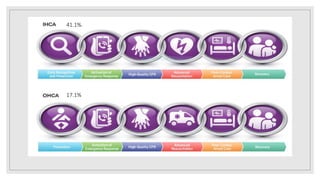
◦ Chain of survival
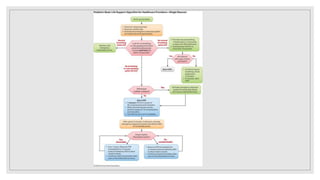
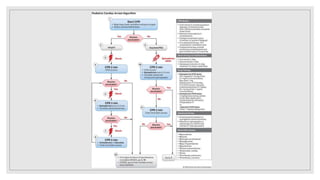
◦ Cardiac arrest algorithm
◦ Highlights on the latest AHA 2020 guidelines on CPR
◦ Pediatric Resuscitation and COVID-19 Pandemic
Introduction
◦ Pediatric cardiac arrests are, potentially, some of the most challenging patients for an emergency
physician to care for.
◦ Pediatric out-of-hospital cardiac arrest (OHCA) is a rare event with severe sequelae. Only 17% of OHCA
survivors. Associated with poor neurological outcome
◦ IHCA – occur in 2-6% patients admitted to pediatric ICU, survival rate 40%
◦ Prompt initiation of CPR directly impacts survival and outcomes after pediatric cardiac arrest
Causes of cardiac arrest
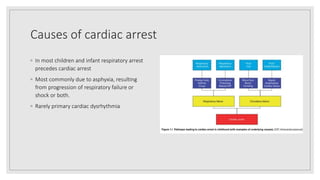
◦ In most children and infant respiratory arrest
precedes cardiac arrest
◦ Most commonly due to asphyxia, resulting
from progression of respiratory failure or
shock or both.
◦ Rarely primary cardiac dysrhythmia
17.1%
41.1%.
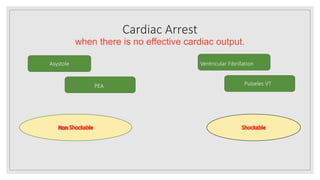
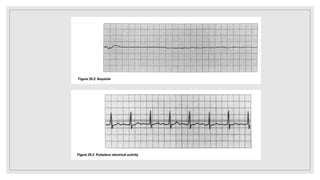
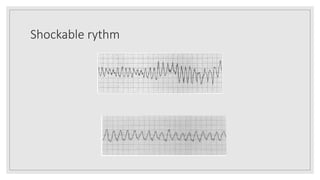
Cardiac Arrest
when there is no effective cardiac output.
Asystole
PEA
Ventricular Fibrillation
Pulseles VT
Shockable rythm
Defibrillator
◦ When using AED on infant or children <8 years old, use of pediatric attenuator is recommended
◦ Manual defibrillator / AED may also be uded
Major and New Updated Recommendation in AHA
2020 CPR Guidelines
◦ 2020 (Updated): (PBLS) For infants and children with a pulse but absent or inadequate respiratory effort, it is reasonable to give
1 breath every 2 to 3 seconds (20-30 breaths/min)
◦ 2020 (Updated): (PALS) When performing CPR in infants and children with an advanced airway, it may be reasonable to target a
respiratory rate range of 1 breath every 2 to 3 seconds (20-30/min), accounting for age and clinical condition. Rates exceeding
these recommendations may compromise hemodynamics.
Changes to the Assisted Ventilation Rate: Rescue Breathing
Changes to the Assisted Ventilation Rate: Ventilation Rate During CPR With an Advanced Airway
Why: New data show that higher ventilation rates (at least 30/min in infants [younger than 1 year] and at
least 25/min in children) are associated with improved rates of ROSC and survival in pediatric IHCA
◦ 2020 (Updated): It is reasonable to choose cuffed ETTs over uncuffed ETTs for intubating infants and children. When a cuffed
ETT is used, attention should be paid to ETT size, position, and cuff inflation pressure (usually <20-25 cm H2O)
Cuffed ETTs
Why: Several studies and systematic reviews support the safety of cuffed ETTs and demonstrate decreased
need for tube changes and reintubation. Cuffed tubes may decrease the risk of aspiration. Subglottic stenosis is
rare when cuffed ETTs are used in children and careful technique is followed.
◦ 2020 (Updated): Routine use of cricoid pressure is not recommended during endotracheal intubation of pediatric
patients.
Cricoid Pressure During Intubation
Why: New studies have shown that routine use of cricoid pressure reduces intubation success rates and
does not reduce the rate of regurgitation.
◦ 2020 (Updated): For pediatric patients in any setting, it is reasonable to admin-ister the initial dose of epinephrine within 5
minutes from the start of chest compressions
Emphasis on Early Epinephrine Administration
Why: A study of children with IHCA who received epinephrine for an initial nonshockable rhythm (asystole and
pulseless electrical activity) demon-strated that, for every minute of delay in administration of epinephrine, there
was a significant decrease in ROSC, survival at 24 hours, survival to dis-charge, and survival with favorable
neurological outcome.
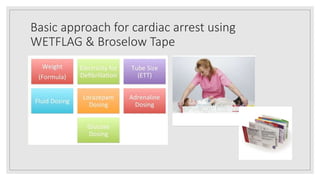
Basic approach for cardiac arrest using
WETFLAG & Broselow Tape
Resuscitation in COVID-19
◦ The majority of arrests in children are due to hypoxia, hypotension and acidosis
◦ Children are more likely to arrest from usual causes than COVID-19
◦ Children appear to be less commonly and less severely affected by COVID-19 than adults
◦ The most common dysrhythmias are severe bradycardia and asystole
◦ Children need early attention to airway and breathing. To avoid delays in providing resuscitation, initial CPR may be provided by
a staff member wearing a surgical mask. Additional staff should wear airborne precautions PPE and take over as soon as
possible to continued advanced resuscitation
◦ Aerosolising procedures that should be managed with airborne precautions as soon as possible include:
 Bag valve mask
 Suctioning using an open system including Yankauer suction tube
 Intubation
 Laryngeal mask airway (LMA) insertion
 Cardiac compressions
References
◦ Advance Paediatric Life Support 6th Edition
◦ Pediatric Basic and Advanced Life Support: 2020 American Heart Association Guidelines for Cardiopulmonary Resuscitation and
Emergency Cardiovascular Care

Pediatric cardiac arrest dayang

  • 1.
    PEDIATRIC CARDIAC ARREST PROTOCOL DrDayang Rafidah binti Awang Habeni Emergency Physician
  • 3.
    Outline ◦ Pediatric Cardiacarrest ◦ Chain of survival ◦ Cardiac arrest algorithm ◦ Highlights on the latest AHA 2020 guidelines on CPR ◦ Pediatric Resuscitation and COVID-19 Pandemic
  • 4.
    Introduction ◦ Pediatric cardiacarrests are, potentially, some of the most challenging patients for an emergency physician to care for. ◦ Pediatric out-of-hospital cardiac arrest (OHCA) is a rare event with severe sequelae. Only 17% of OHCA survivors. Associated with poor neurological outcome ◦ IHCA – occur in 2-6% patients admitted to pediatric ICU, survival rate 40% ◦ Prompt initiation of CPR directly impacts survival and outcomes after pediatric cardiac arrest
  • 5.
    Causes of cardiacarrest ◦ In most children and infant respiratory arrest precedes cardiac arrest ◦ Most commonly due to asphyxia, resulting from progression of respiratory failure or shock or both. ◦ Rarely primary cardiac dysrhythmia
  • 6.
  • 7.
    Cardiac Arrest when thereis no effective cardiac output. Asystole PEA Ventricular Fibrillation Pulseles VT
  • 11.
  • 13.
    Defibrillator ◦ When usingAED on infant or children <8 years old, use of pediatric attenuator is recommended ◦ Manual defibrillator / AED may also be uded
  • 14.
    Major and NewUpdated Recommendation in AHA 2020 CPR Guidelines ◦ 2020 (Updated): (PBLS) For infants and children with a pulse but absent or inadequate respiratory effort, it is reasonable to give 1 breath every 2 to 3 seconds (20-30 breaths/min) ◦ 2020 (Updated): (PALS) When performing CPR in infants and children with an advanced airway, it may be reasonable to target a respiratory rate range of 1 breath every 2 to 3 seconds (20-30/min), accounting for age and clinical condition. Rates exceeding these recommendations may compromise hemodynamics. Changes to the Assisted Ventilation Rate: Rescue Breathing Changes to the Assisted Ventilation Rate: Ventilation Rate During CPR With an Advanced Airway Why: New data show that higher ventilation rates (at least 30/min in infants [younger than 1 year] and at least 25/min in children) are associated with improved rates of ROSC and survival in pediatric IHCA
  • 15.
    ◦ 2020 (Updated):It is reasonable to choose cuffed ETTs over uncuffed ETTs for intubating infants and children. When a cuffed ETT is used, attention should be paid to ETT size, position, and cuff inflation pressure (usually <20-25 cm H2O) Cuffed ETTs Why: Several studies and systematic reviews support the safety of cuffed ETTs and demonstrate decreased need for tube changes and reintubation. Cuffed tubes may decrease the risk of aspiration. Subglottic stenosis is rare when cuffed ETTs are used in children and careful technique is followed.
  • 16.
    ◦ 2020 (Updated):Routine use of cricoid pressure is not recommended during endotracheal intubation of pediatric patients. Cricoid Pressure During Intubation Why: New studies have shown that routine use of cricoid pressure reduces intubation success rates and does not reduce the rate of regurgitation.
  • 17.
    ◦ 2020 (Updated):For pediatric patients in any setting, it is reasonable to admin-ister the initial dose of epinephrine within 5 minutes from the start of chest compressions Emphasis on Early Epinephrine Administration Why: A study of children with IHCA who received epinephrine for an initial nonshockable rhythm (asystole and pulseless electrical activity) demon-strated that, for every minute of delay in administration of epinephrine, there was a significant decrease in ROSC, survival at 24 hours, survival to dis-charge, and survival with favorable neurological outcome.
  • 18.
    Basic approach forcardiac arrest using WETFLAG & Broselow Tape
  • 20.
    Resuscitation in COVID-19 ◦The majority of arrests in children are due to hypoxia, hypotension and acidosis ◦ Children are more likely to arrest from usual causes than COVID-19 ◦ Children appear to be less commonly and less severely affected by COVID-19 than adults ◦ The most common dysrhythmias are severe bradycardia and asystole ◦ Children need early attention to airway and breathing. To avoid delays in providing resuscitation, initial CPR may be provided by a staff member wearing a surgical mask. Additional staff should wear airborne precautions PPE and take over as soon as possible to continued advanced resuscitation ◦ Aerosolising procedures that should be managed with airborne precautions as soon as possible include:  Bag valve mask  Suctioning using an open system including Yankauer suction tube  Intubation  Laryngeal mask airway (LMA) insertion  Cardiac compressions
  • 22.
    References ◦ Advance PaediatricLife Support 6th Edition ◦ Pediatric Basic and Advanced Life Support: 2020 American Heart Association Guidelines for Cardiopulmonary Resuscitation and Emergency Cardiovascular Care