Facility Design
The Aseptic Manufacturing Plant
 GMP Requirements:


 o 21 CFR Part 211
211.42 Design and Construction
Features for Aseptic Areas
 Floors, walls & ceilings of smooth, hard and
 cleanable surface materials
 Temperature and humidity controls
 Air supply filtered through HEPA filters under
 positive pressure
 Environmental monitoring program
 Cleaning and disinfecting program
 Equipment maintenance program
Walls, Floors and Ceiling
Surfaces
 Smooth, cleanable finish that is impervious
 to water, cleaning and sanitizing solutions
 Constructed of materials that resist
 chipping, flaking, oxidizing or other
 deterioration
  o epoxy terrazzo, Mipolam
  o cement plaster
  o plastics
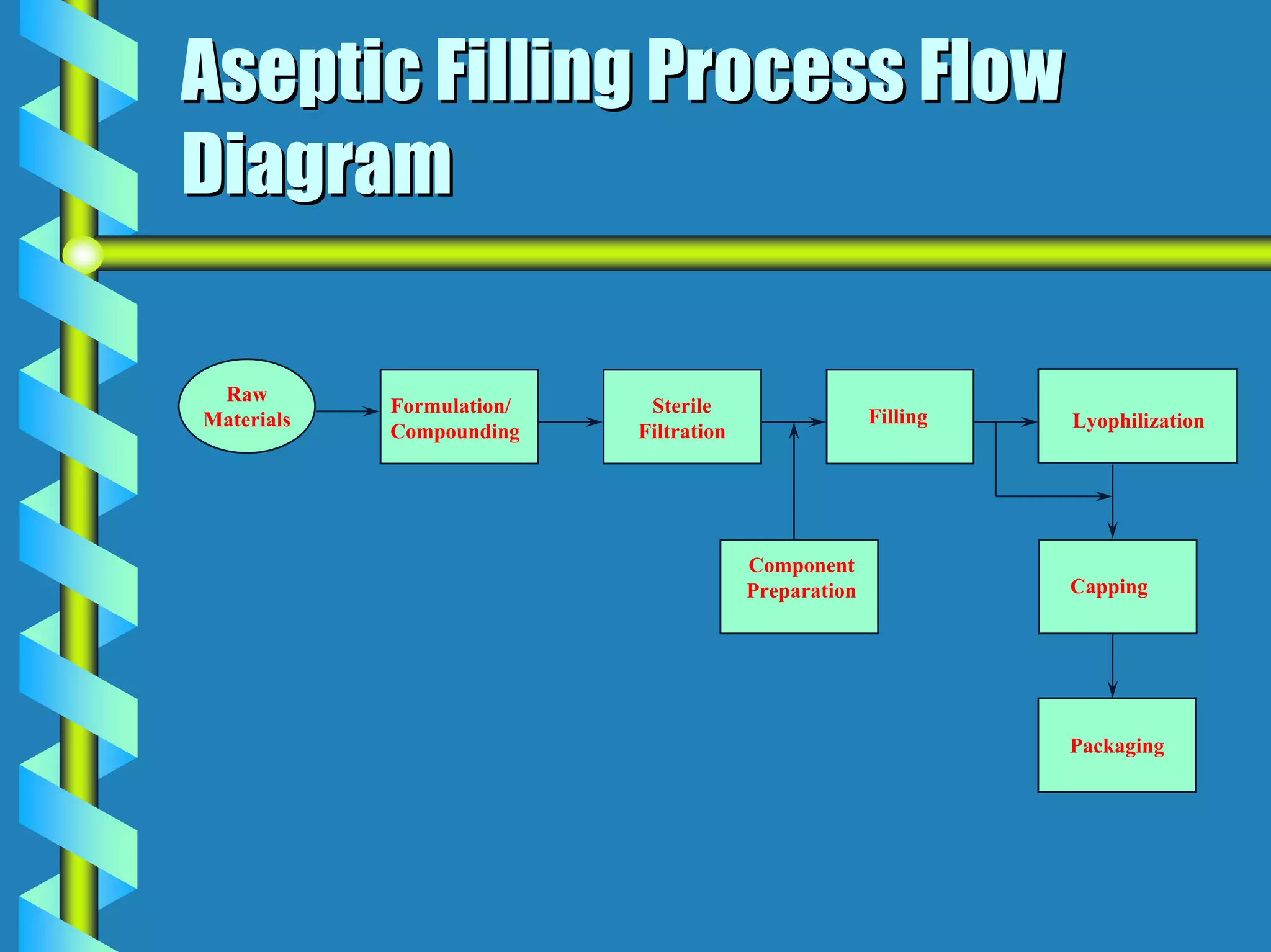
Aseptic Filling Process Flow
Diagram

 Raw
            Formulation/    Sterile
Materials                                             Filling   Lyophilization
            Compounding    Filtration


                                        Component
                                        Preparation             Capping


                                                                Packaging
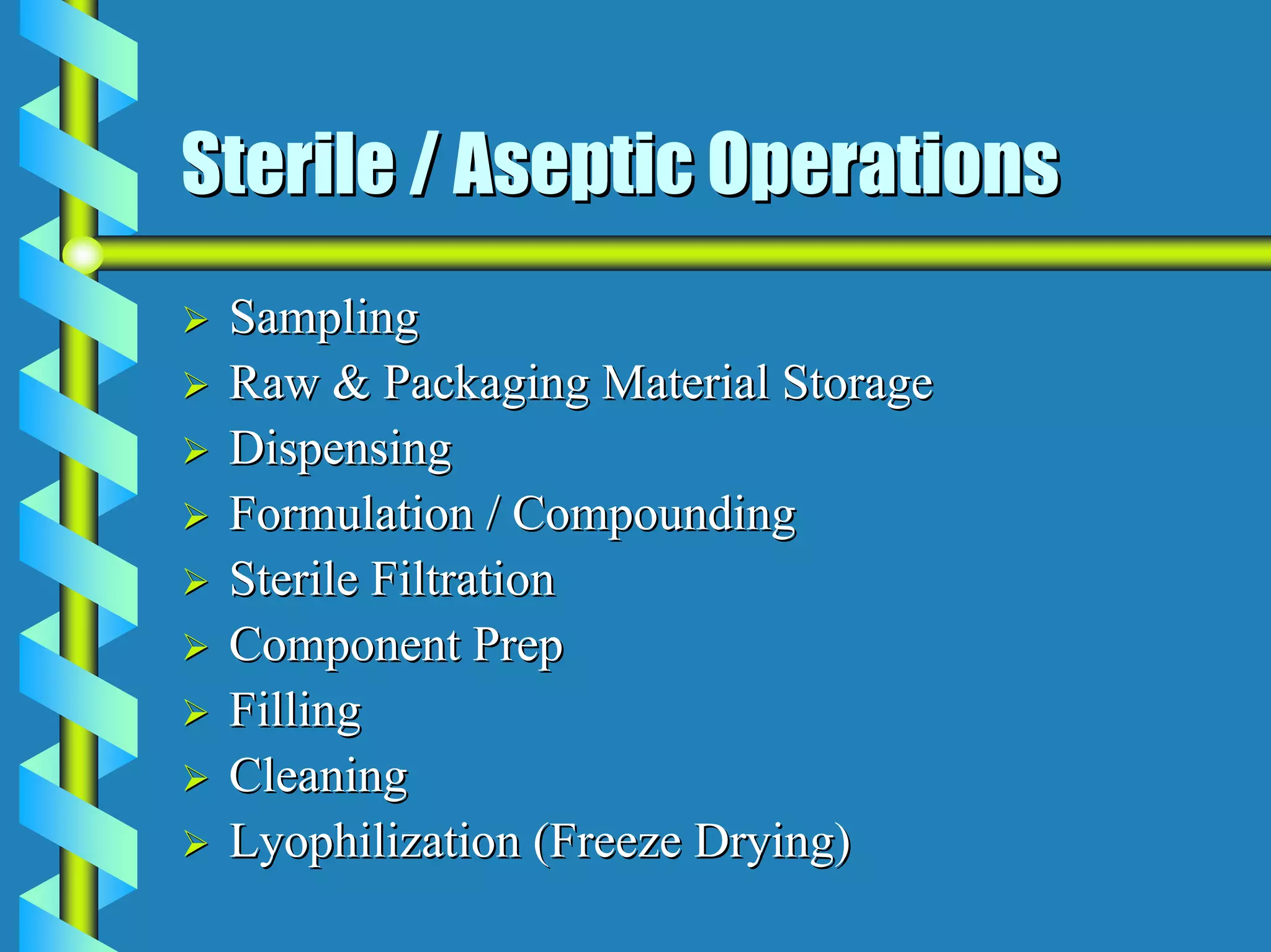
Sterile / Aseptic Operations
 Sampling
 Raw & Packaging Material Storage
 Dispensing
 Formulation / Compounding
 Sterile Filtration
 Component Prep
 Filling
 Cleaning
 Lyophilization (Freeze Drying)
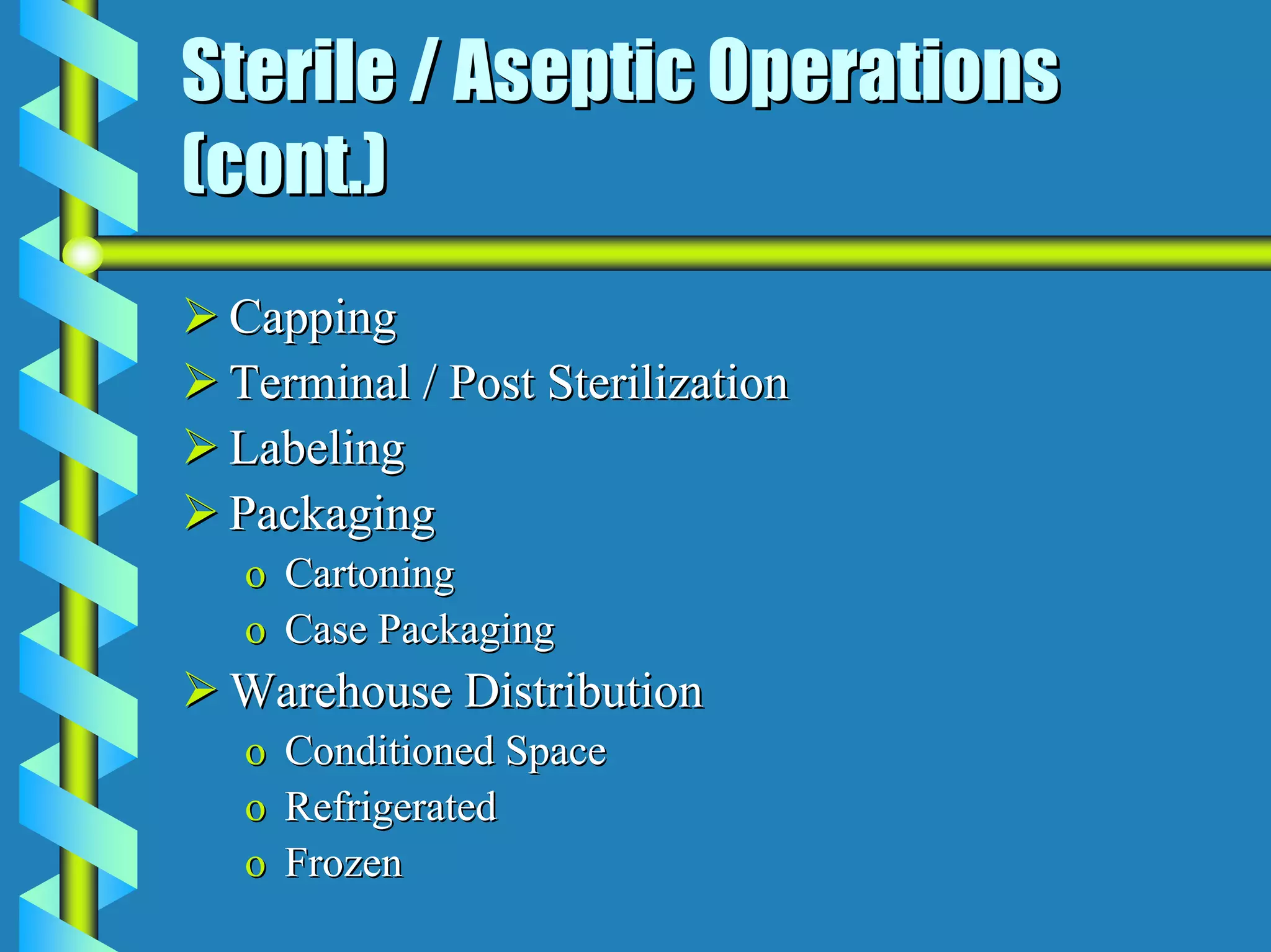
Sterile / Aseptic Operations
(cont.)
 Capping
 Terminal / Post Sterilization
 Labeling
 Packaging
  o   Cartoning
  o   Case Packaging
 Warehouse Distribution
  o   Conditioned Space
  o   Refrigerated
  o   Frozen
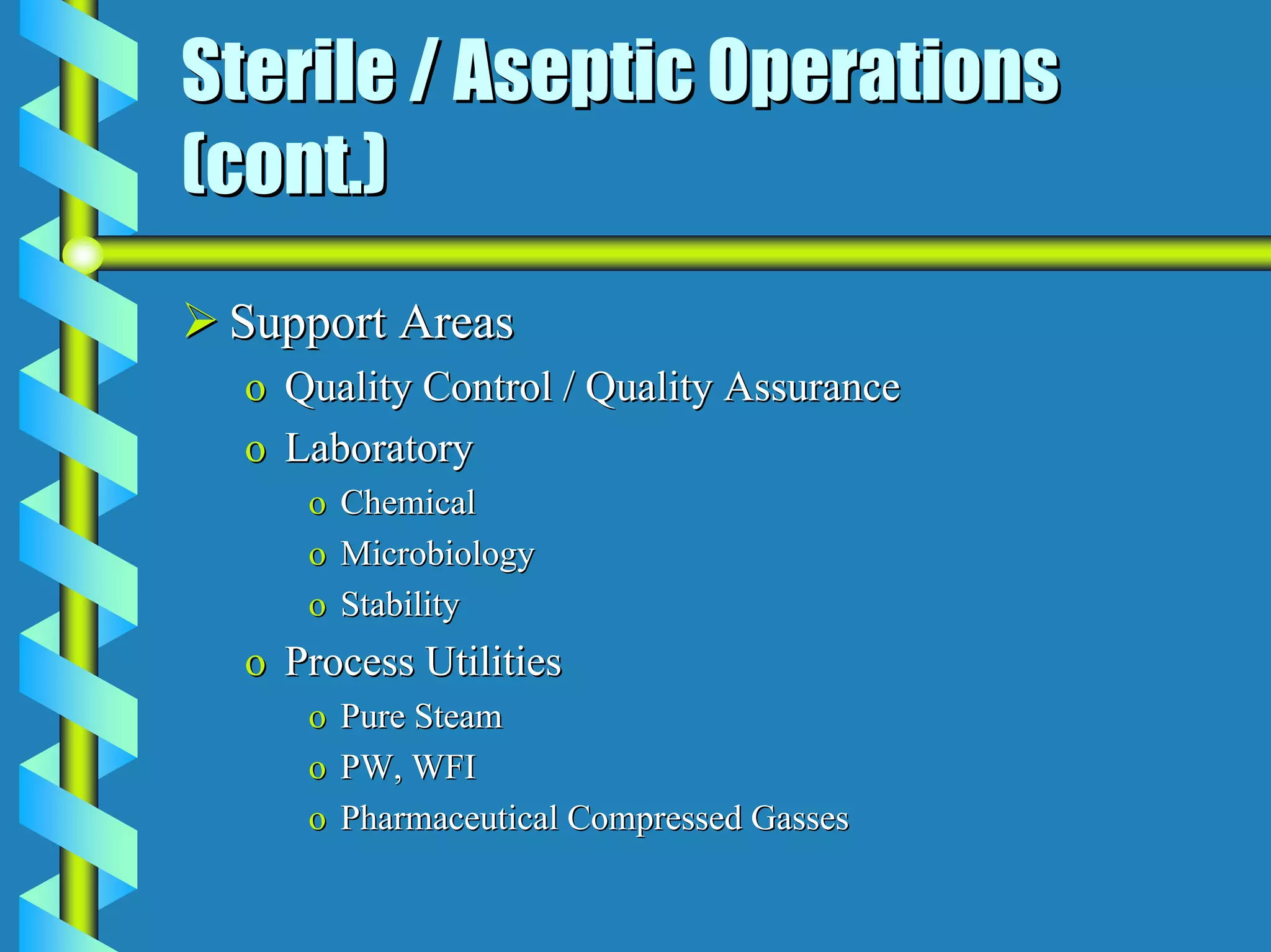
Sterile / Aseptic Operations
(cont.)
 Support Areas
  o Quality Control / Quality Assurance
  o Laboratory
     o   Chemical
     o   Microbiology
     o   Stability
  o Process Utilities
     o   Pure Steam
     o   PW, WFI
     o   Pharmaceutical Compressed Gasses
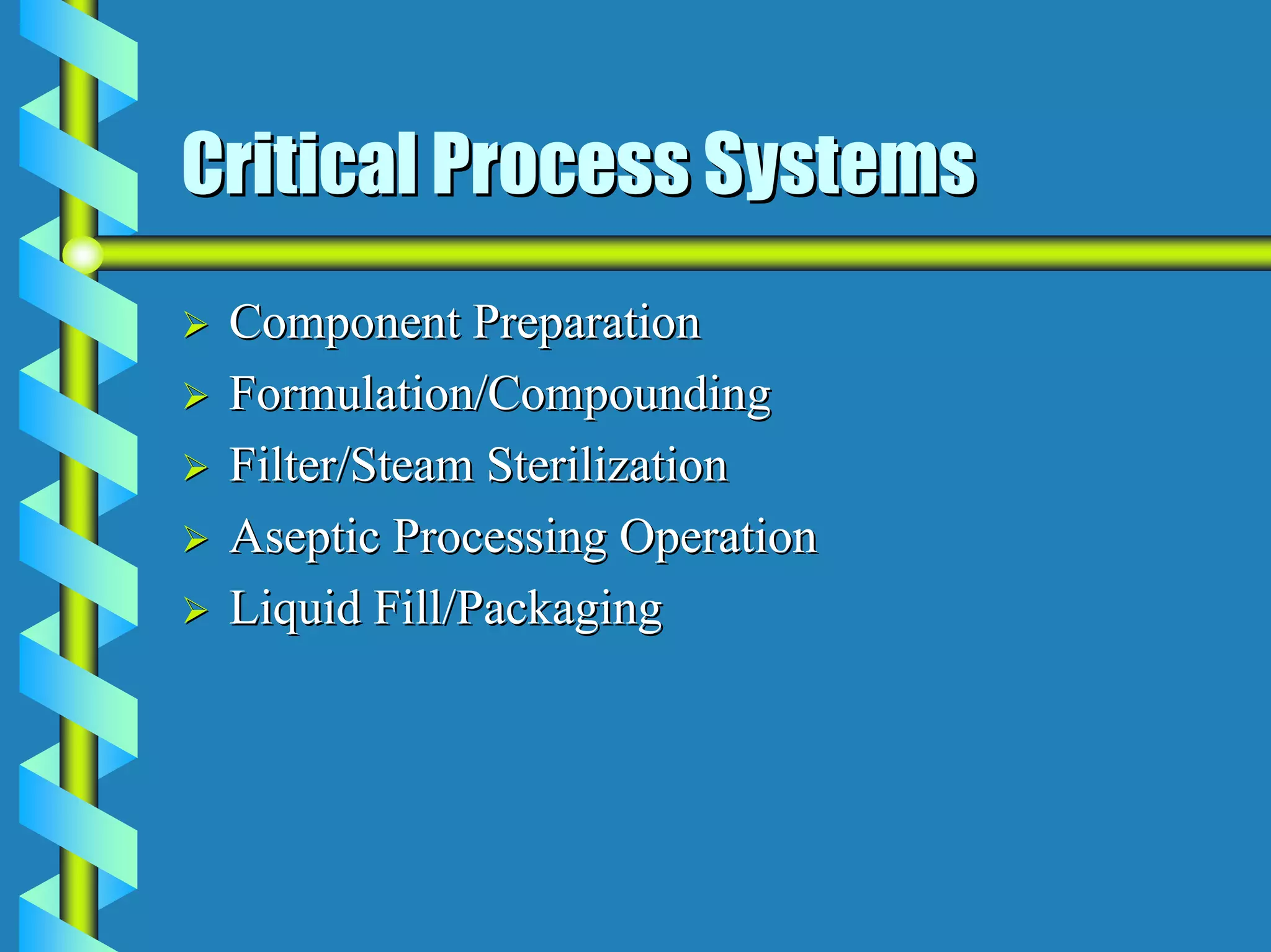
Critical Process Systems
 Component Preparation
 Formulation/Compounding
 Filter/Steam Sterilization
 Aseptic Processing Operation
 Liquid Fill/Packaging
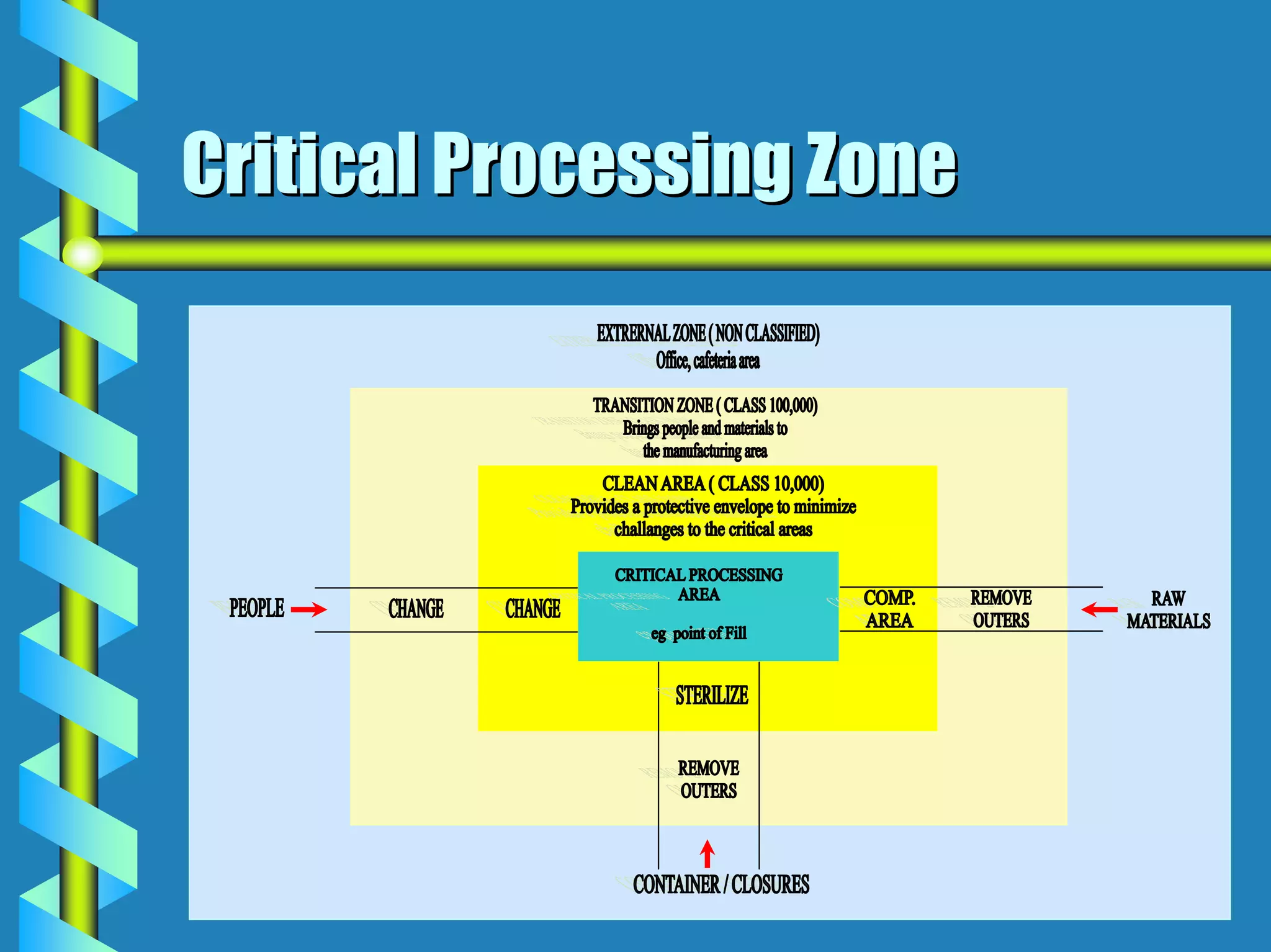
Critical Processing Zone
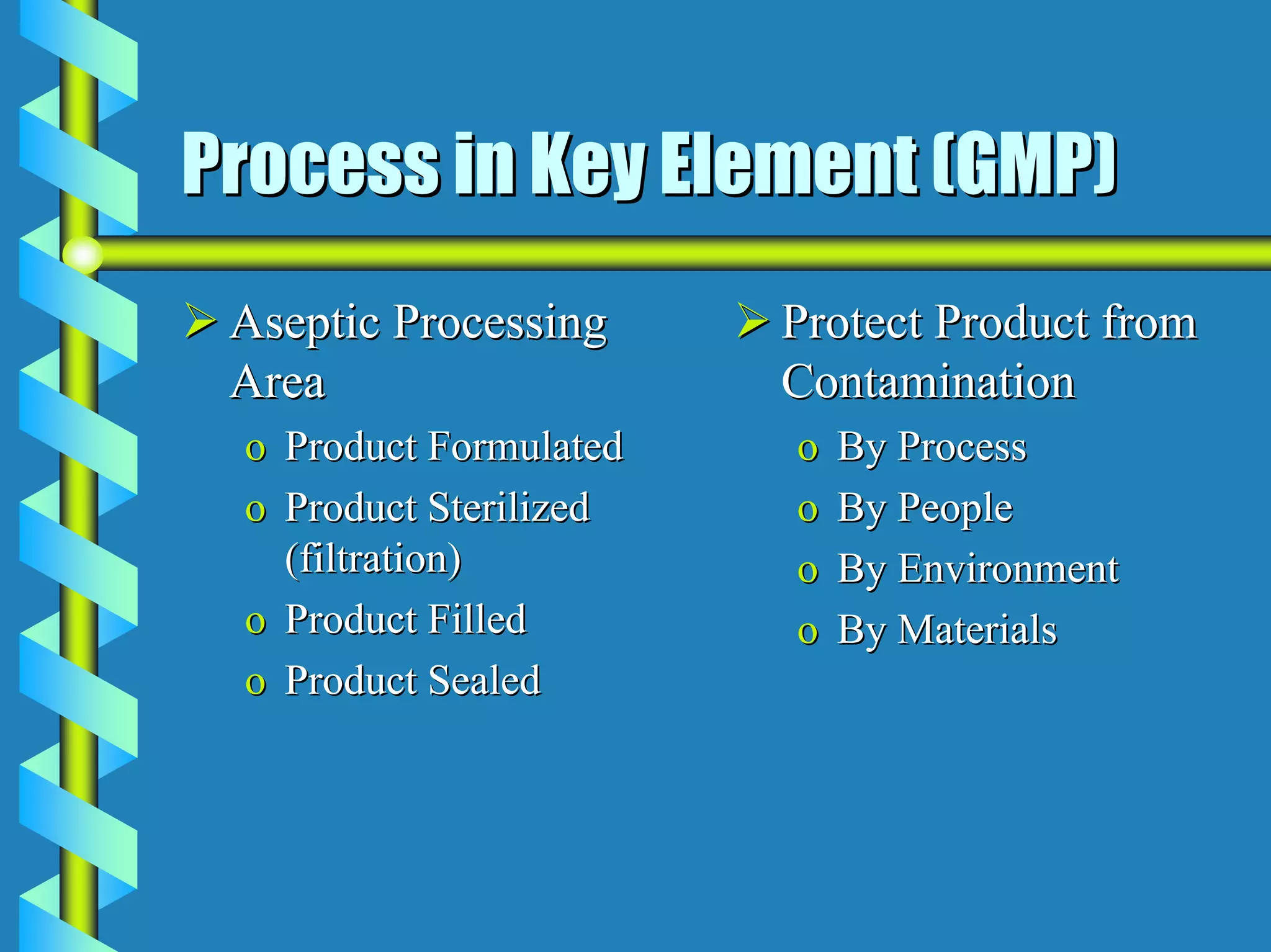
Process in Key Element (GMP)
 Aseptic Processing     Protect Product from
 Area                   Contamination
 o Product Formulated   o   By Process
 o Product Sterilized   o   By People
   (filtration)         o   By Environment
 o Product Filled       o   By Materials
 o Product Sealed
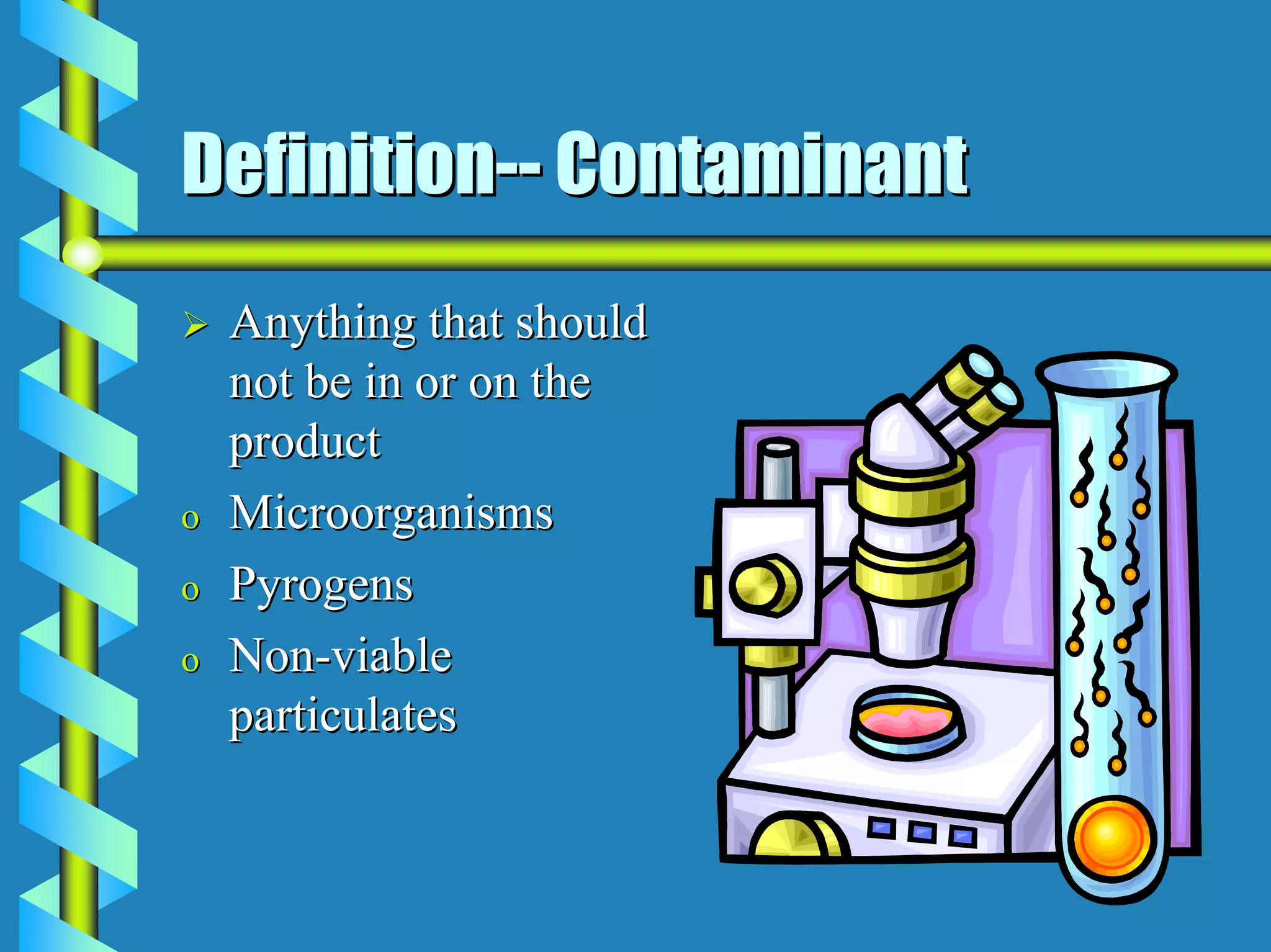
Definition-- Contaminant
    Anything that should
    not be in or on the
    product
o   Microorganisms
o   Pyrogens
o   Non-viable
    particulates
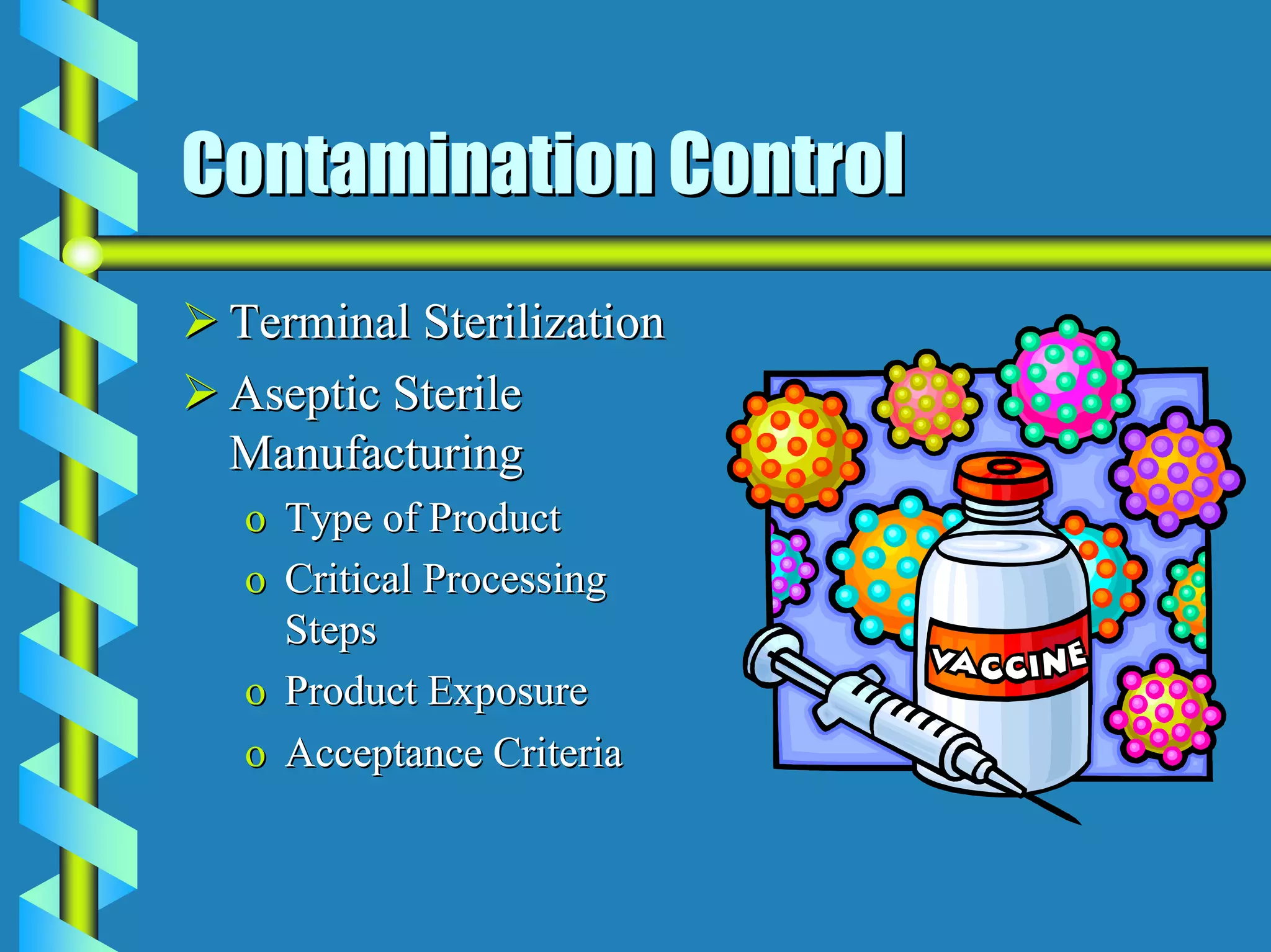
Contamination Control
 Terminal Sterilization
 Aseptic Sterile
 Manufacturing
 o Type of Product
 o Critical Processing
   Steps
 o Product Exposure
 o Acceptance Criteria
Contamination Control
Personnel Gowning
Personnel     Aseptic Gowning
Design Considerations
 Closed Systems That do not Expose Products
 Where Product Can be Exposed, Conduct
 Operations in Clean Rooms
 Design Equipment and Piping for Sterile
 Operation
 Use Pyrogen Free Water for process and Final
 Rinses of Equipment
 Sterile Filter Product Solutions
 Low temperature Processing
Key Design Issues
 Vessel Mixing - Agitator Design
 Sanitary Piping Design
 CIP Circuit Design
 Temperature Control
 Equipment Design
 Process Controls - Interlocks
 Equipment Arrangement - Facility Layouts
Key Facility Issues
 Layout That
  o Support the Process
  o Facilitate Operations
  o Provide Appropriate Space
  o Provide Proper Flow of Materials,
    People & Waste
  o Prevent Mix - up
  o Prevent Contamination
 Material and Design Details that
  o Do not Contaminate
  o Provide Ease of Cleaning & Maintenance
Key Facility Issues (cont.)
 Internal Environments
 That
  o Provide suitable Conditions
    of Temperature, Humidity
    & Particulate Control
  o Room Pressurization &
    Directional Airflows Which
    Prevent Contamination
  o Prevent Bacterial Growth or
    Infestation
  o Segregate Hazardous Area
Utility Requirements
 Clean Utilities
 o   Water-for-Injection (WFI)
 o   Clean Steam
 o   USP Purified Water
 o   Clean-in-Place (CIP)
 General Utilities
 o Plant Steam
 o Chilled Glycol and Water
 o Compressed Gasses
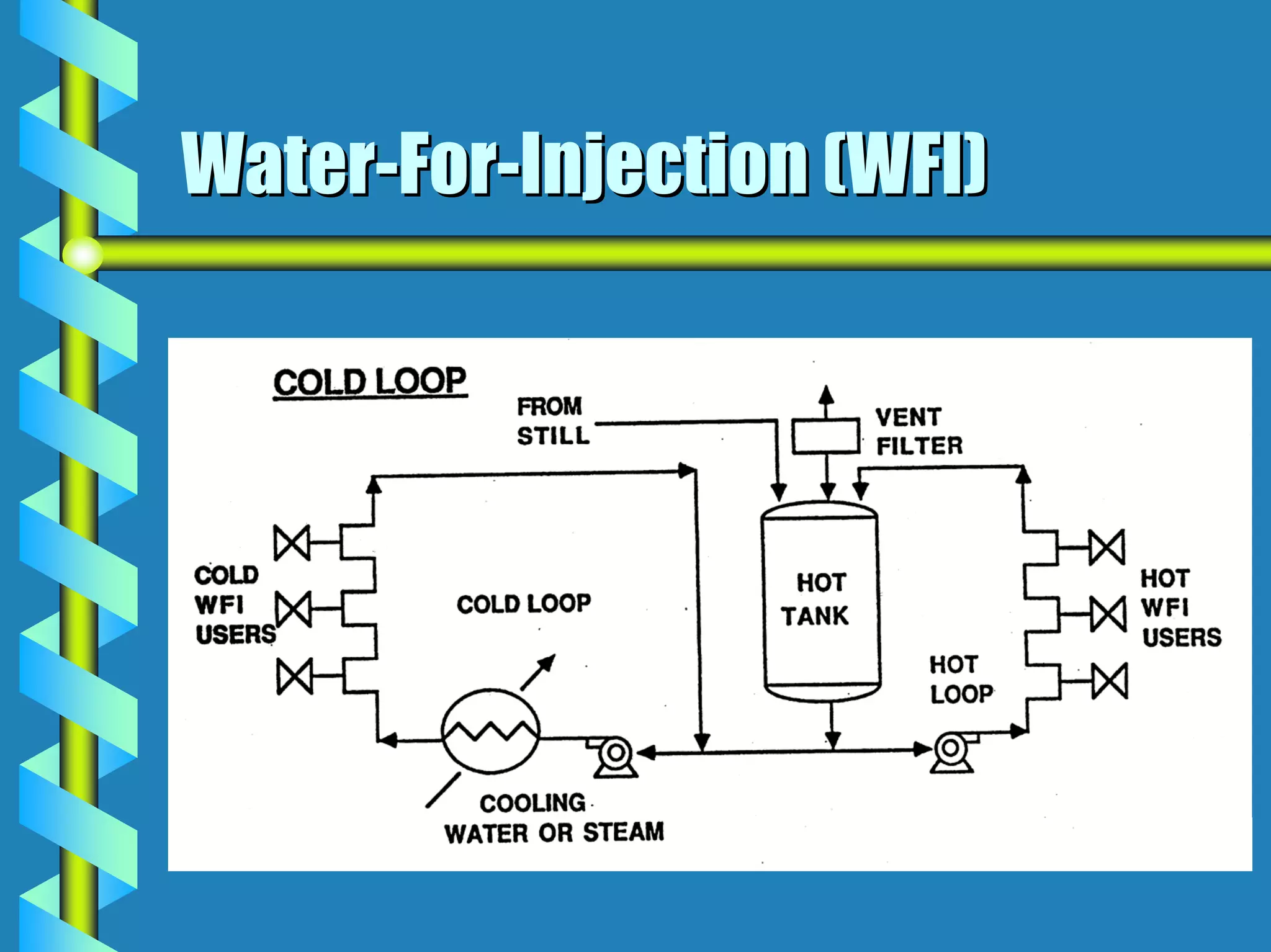
Water-For-Injection (WFI)
WFI System Components
 Feed Water Pretreatment
 WFI Production
 WFI Storage & Distribution
 WFI Cooling For Use
Water-For-Injection (WFI)
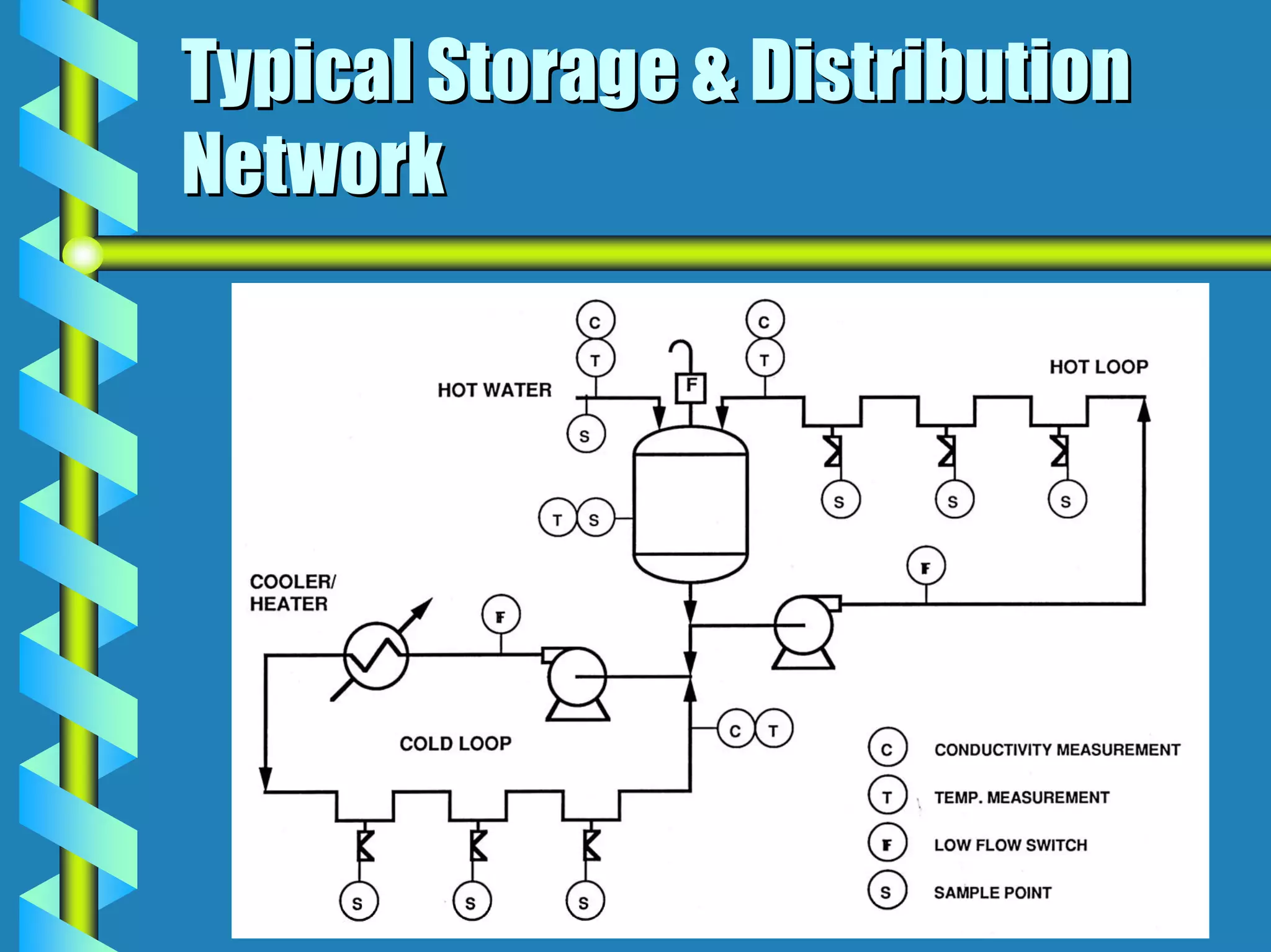
Typical Storage & Distribution
Network
Key Definitions For Successful
System
 Minimum Distance
 Sloped Piping
 Drainability
 Valve Combinations
 Component Selection
 Access For Operation
 Access For Maintenance
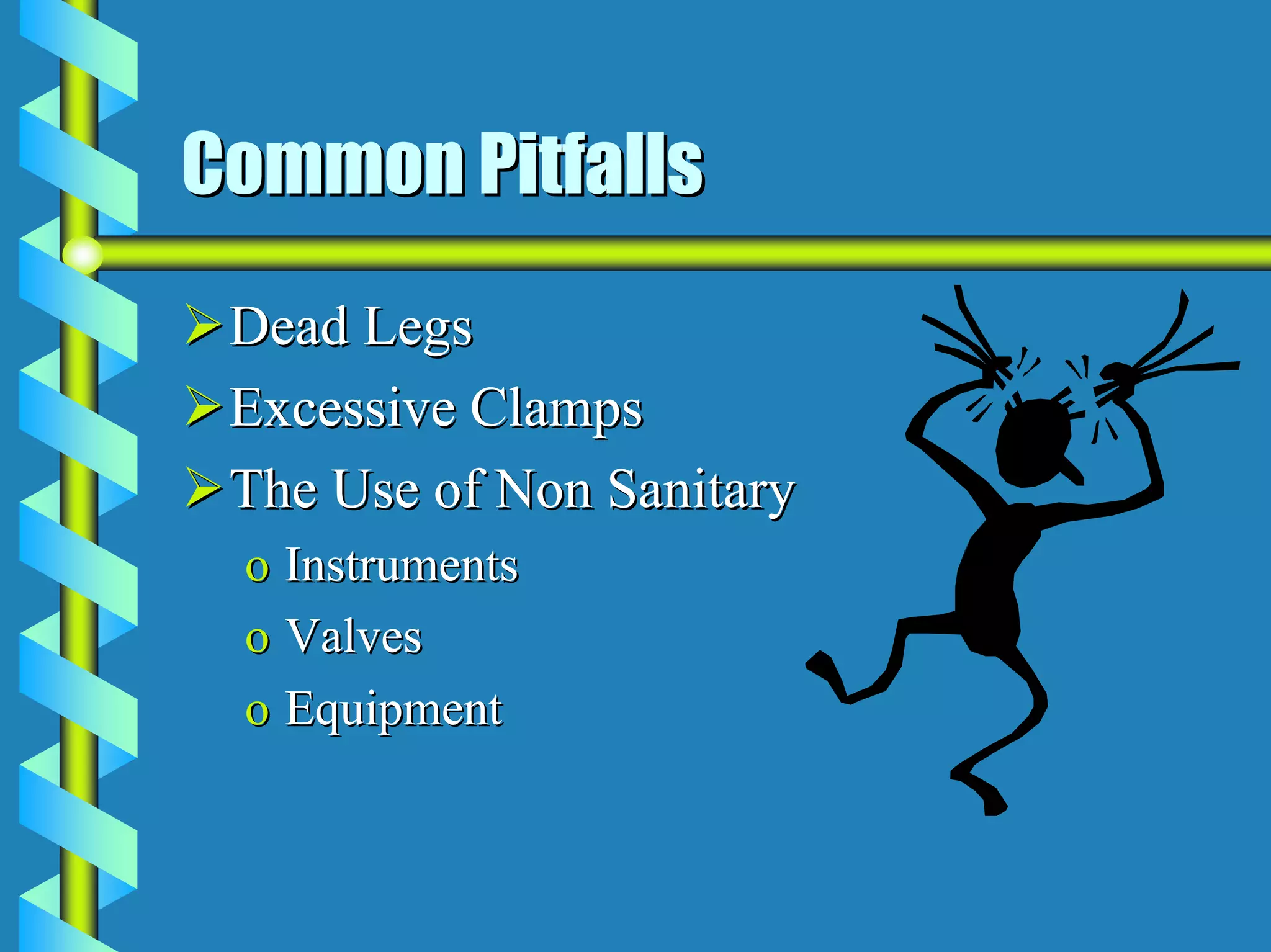
Common Pitfalls
 Dead Legs
 Excessive Clamps
 The Use of Non Sanitary
 o Instruments
 o Valves
 o Equipment
Clean In Place (CIP)
Cleaning Is Mandated By cGMP
21 CFR 211.67

“ Equipment and utensils shall be cleaned,
  maintained, and sanitized at appropriate intervals
  to prevent malfunctions or contamination that
  would alter the safety, identity, strength, quality,
  or purity of the drug product beyond the official or
  other established requirements. “
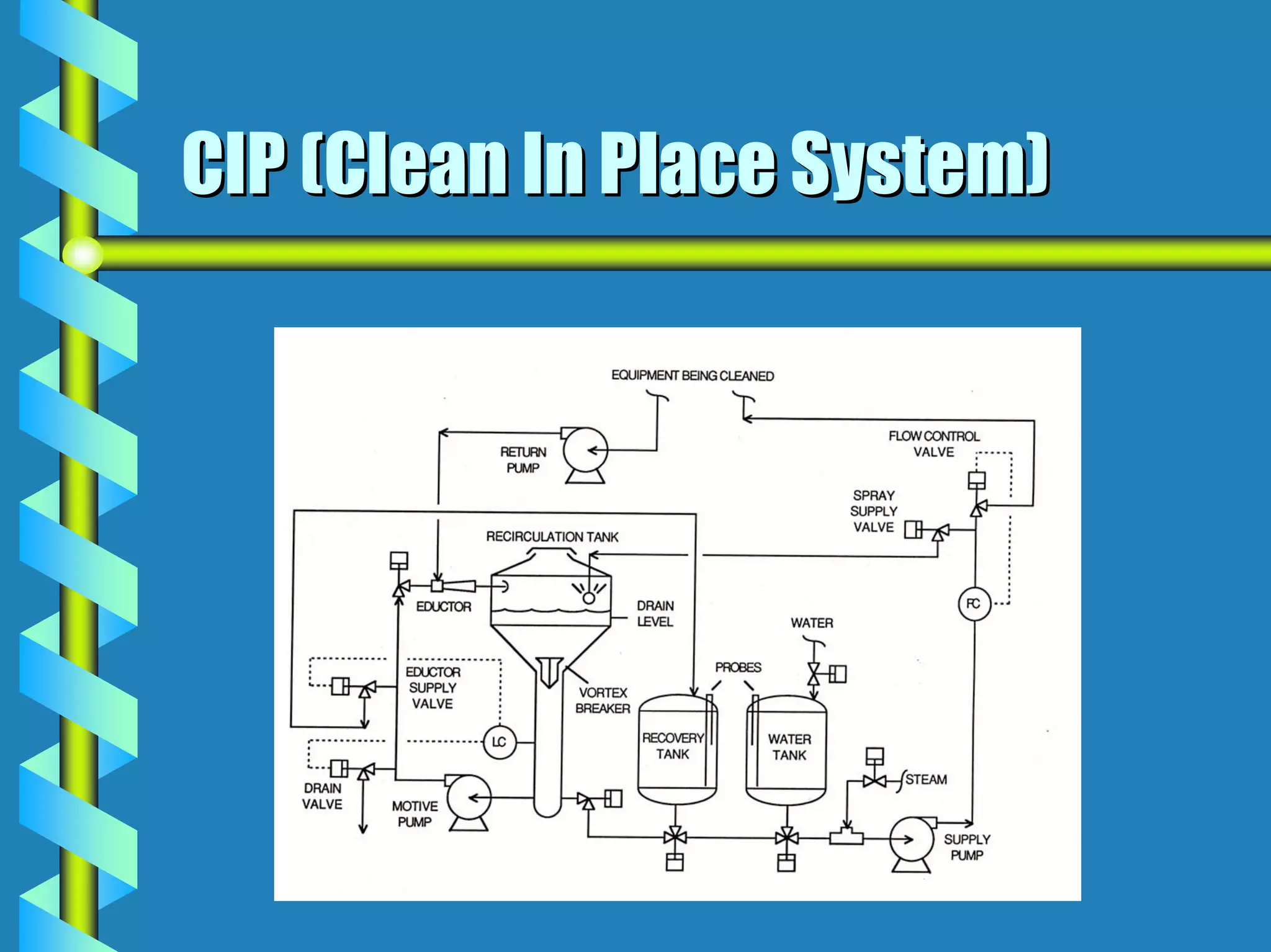
CIP (Clean In Place System)
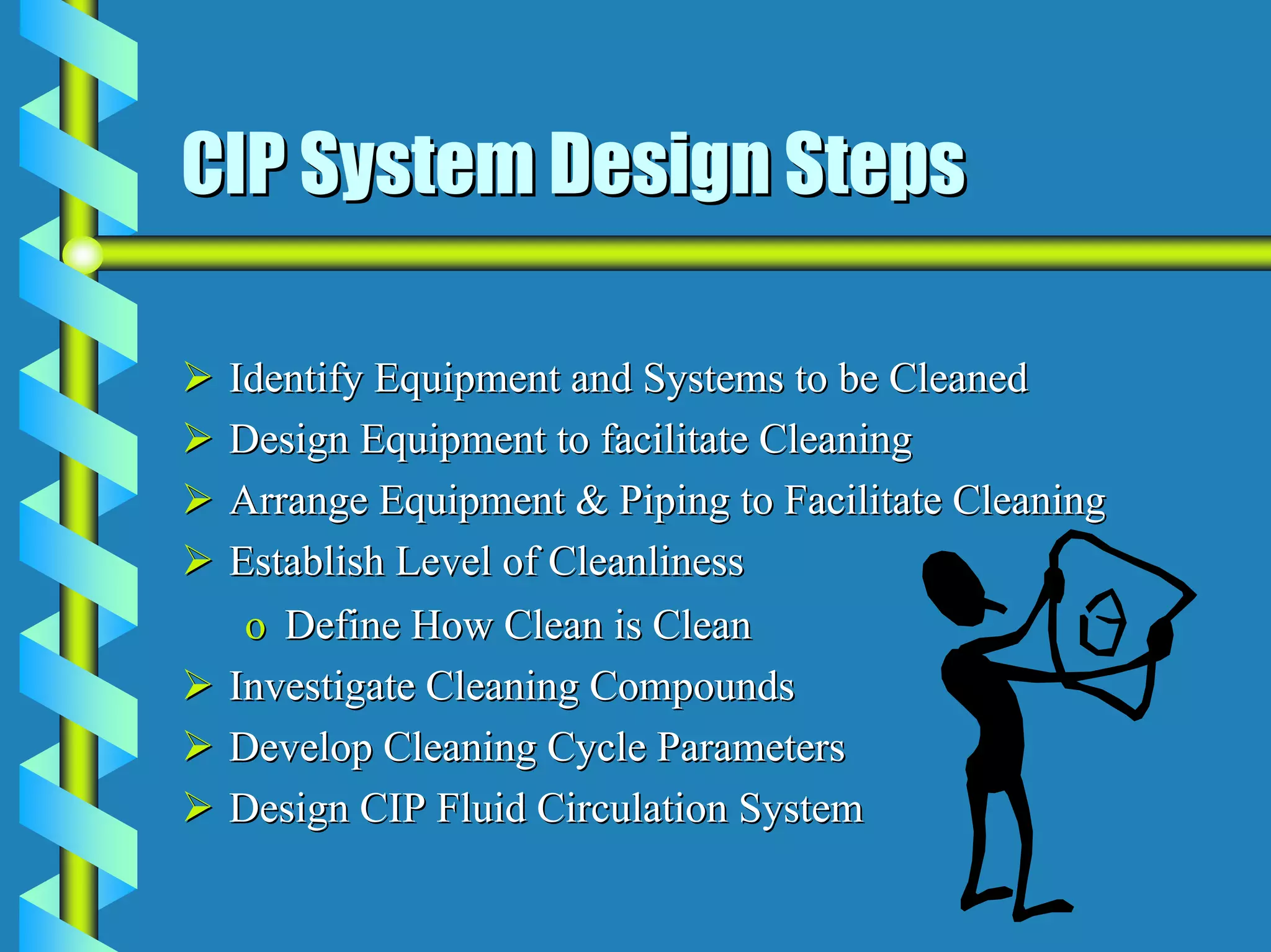
CIP System Design Steps

 Identify Equipment and Systems to be Cleaned
 Design Equipment to facilitate Cleaning
 Arrange Equipment & Piping to Facilitate Cleaning
 Establish Level of Cleanliness
  o Define How Clean is Clean
 Investigate Cleaning Compounds
 Develop Cleaning Cycle Parameters
 Design CIP Fluid Circulation System
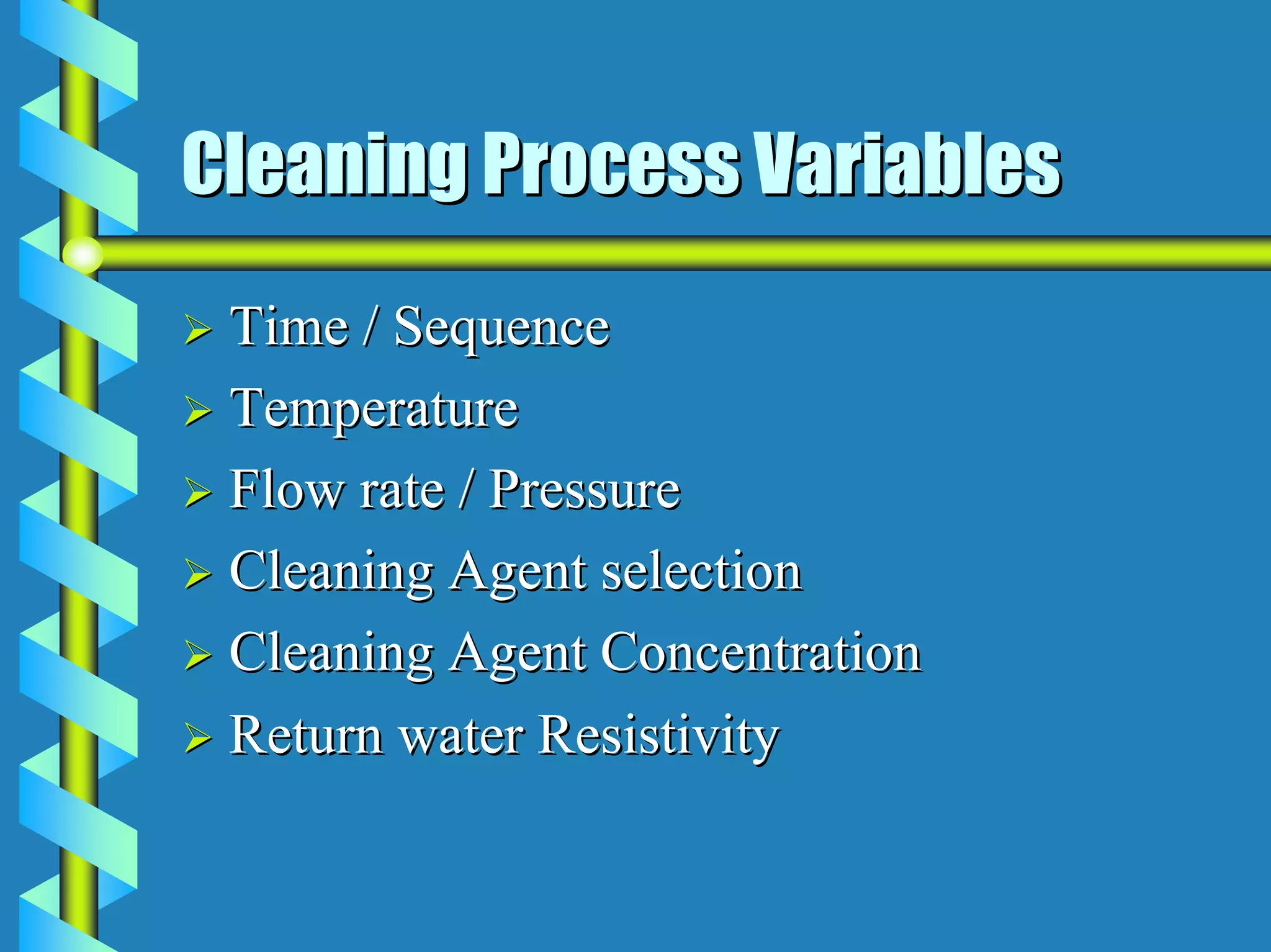
Cleaning Process Variables
 Time / Sequence
 Temperature
 Flow rate / Pressure
 Cleaning Agent selection
 Cleaning Agent Concentration
 Return water Resistivity
Clean Steam System
Clean Steam Application
 Autoclave Operation
 Equipment Sterilization (SIP)
 HVAC Humidification
SIP Advantages
 Only Technique for Large Equipment
 Obviates the Need for Large Autoclaves
 Reduces Clean Room Operation Activity
 Enhanced System Integrity
 o Reduction of Aseptic Connections
 o Reduction of Flexible Hoses
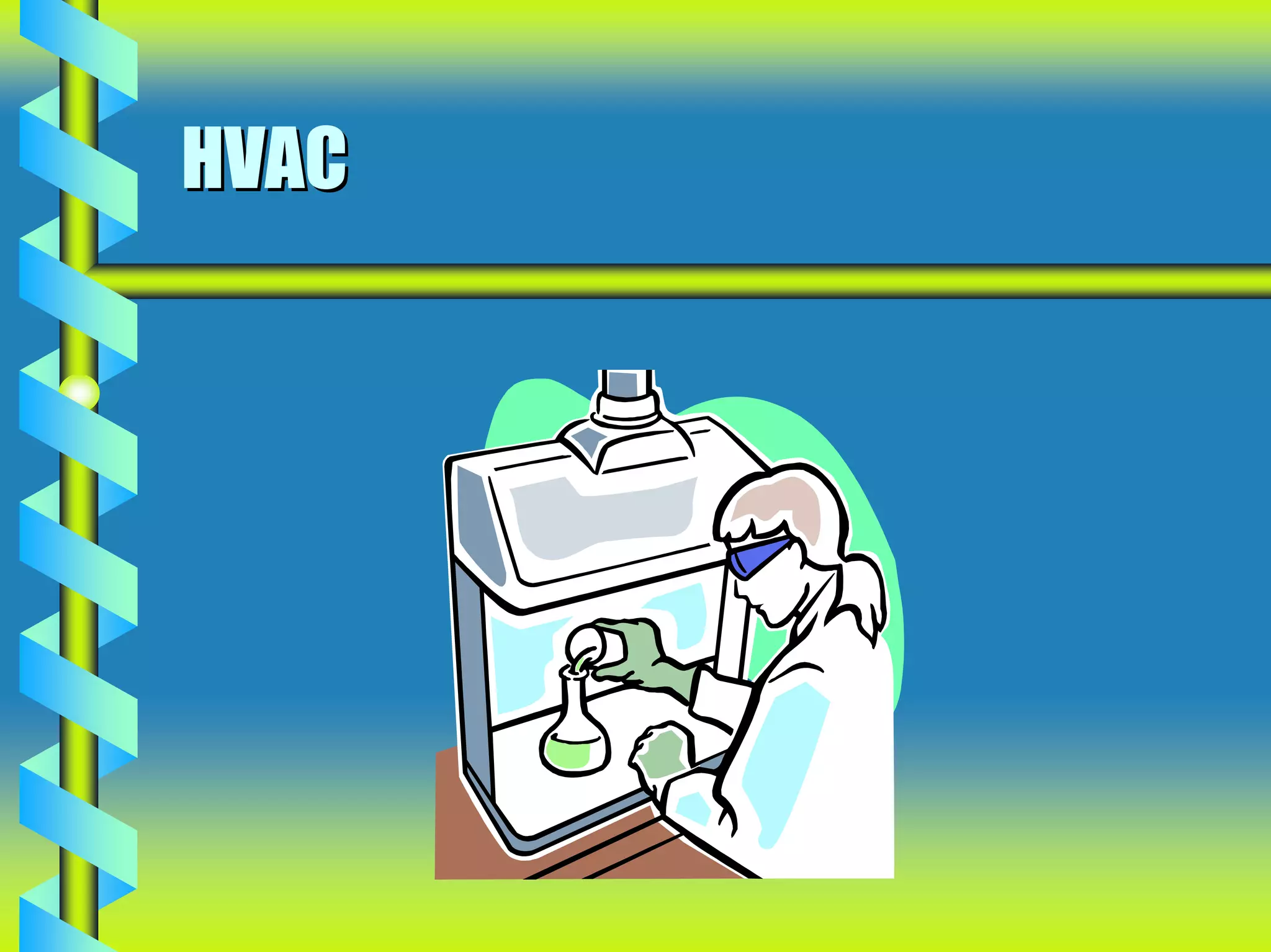
HVAC
Key HVAC Issues
 Design to Eliminate Airborne Contamination
 o   Terminal HEPA Filters in Air Supply Duct
 o   Return Air Taken From Low Points
 o   Laminar Air Flow Over Exposed Product
 o   High Air Change Rate
 o   Higher Pressure in Cleaner Areas
 Suppress Microbial Growth
 o Relative Humidity 30 to 50 percent
 o Temperature Control
Definitions--Cleanroom
 A room in which the air supply, air distribution,
 filtration of air supply, materials of construction,
 and operating procedures are regulated to control
 airborne particle concentrations so that appropriate
 air cleanliness levels can be met.
Definitions--Unidirectional
airflow cleanroom (Laminar)
 A cleanroom in which the filtered air entering the
 room makes a single pass through the work area in
 a parallel-flow pattern, with a minimum of
 turbulent-flow areas. Unidirectional airflow rooms
 typically have HEPA or ULPA filter coverage of
 80% or more of the ceiling (vertical flow) or one
 wall (horizontal flow).
Definitions--Non-unidirectional
airflow cleanroom
 A cleanroom in which the filtered air entering the
 room or passing through the work zone is
 characterized by non-uniform velocity or turbulent
 flow. Such rooms exhibit non-uniform, random
 airflow patterns throughout the enclosure.
Definitions--Uniform airflow
 An unidirectional airflow pattern in which the
 point-to-point readings are within +20% of the
 average airflow velocity for the total area of the
 unidirectional flow work zone.
Definitions--HEPA Filter
 High Efficiency Particulate Air filter--An
 extended-medium, dry-type filter in a rigid frame
 having a minimum particle-collection efficiency
 of 99.97% for 0.3µm, near-monodisperse dioctyl
 phthalate (DOP) particles (or equivalent substitute
 such as poly-alpha olefin, PAO).
Definitions--ULPA Filter
 Ultra-low Penetration Air filter--An extended-
 medium, dry-type filter in a rigid frame having a
 minimum particle-collection efficiency of
 99.999% for particles 0.12µm and larger.
cGMPs Impact on HVAC Systems
 AHU Systems

 HVAC System Components

 Building Automation Systems

 Testing, Balancing, and Cleaning

 Validation
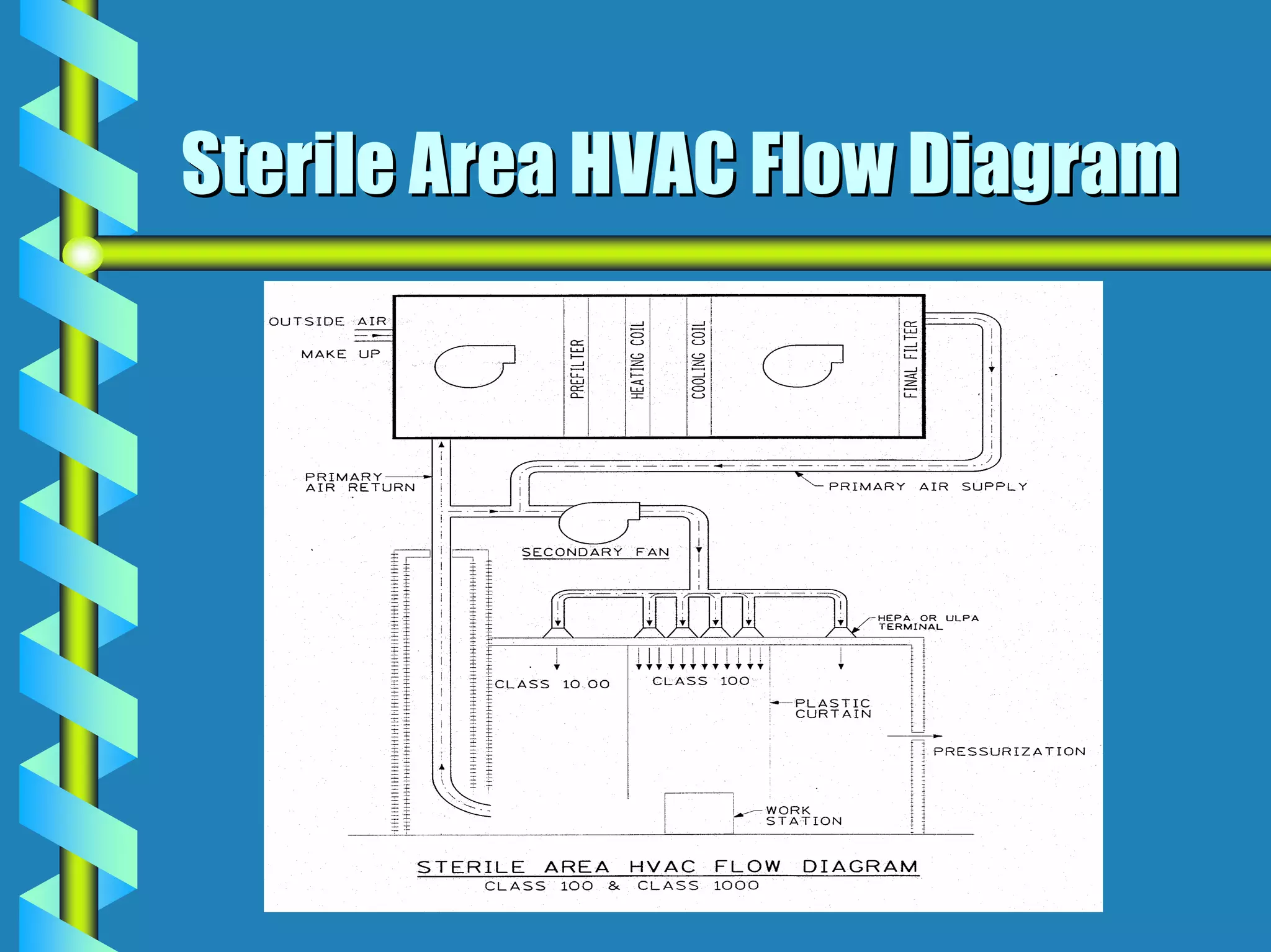
Sterile Area HVAC Flow Diagram
HVAC Control
 Temperature and Humidity
 Air Pressure
 Air Filtration
  o Pre-filters
  o HEPA Filters
  o ULPA Filters
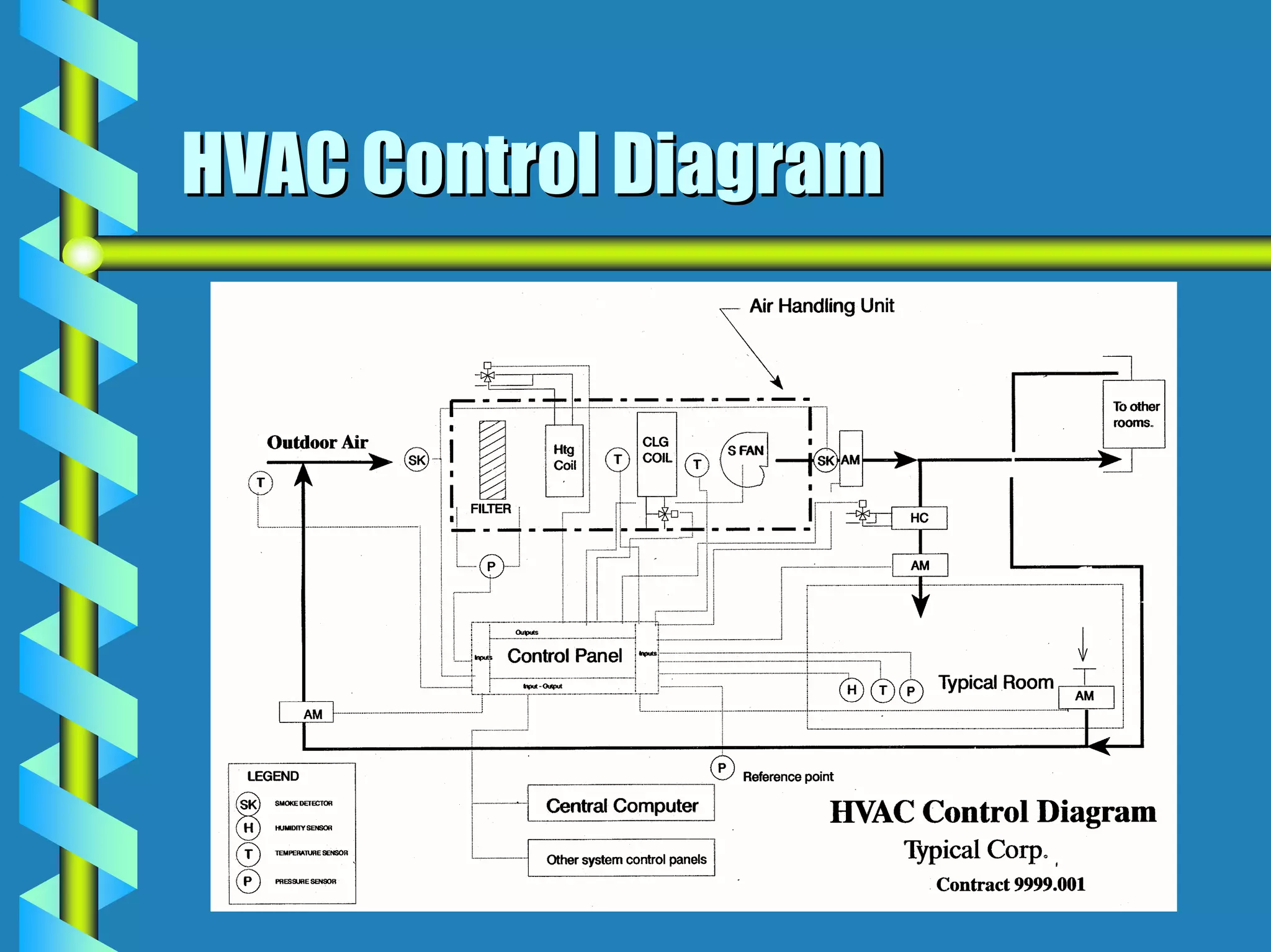
HVAC Control Diagram
Federal Standard 209E
 Class 100 is not more than 100 0.5µm or greater
 particles per cubic foot of air when at least two
 sample locations are tested and a statistical
 analysis of the test data is performed at a 95%
 confidence limit.
 Class 10,000 is the same with not more than
 10,000 0.5µm or greater particles …
 Class 100,000 is …100,000 0.5µm or greater
 particles...
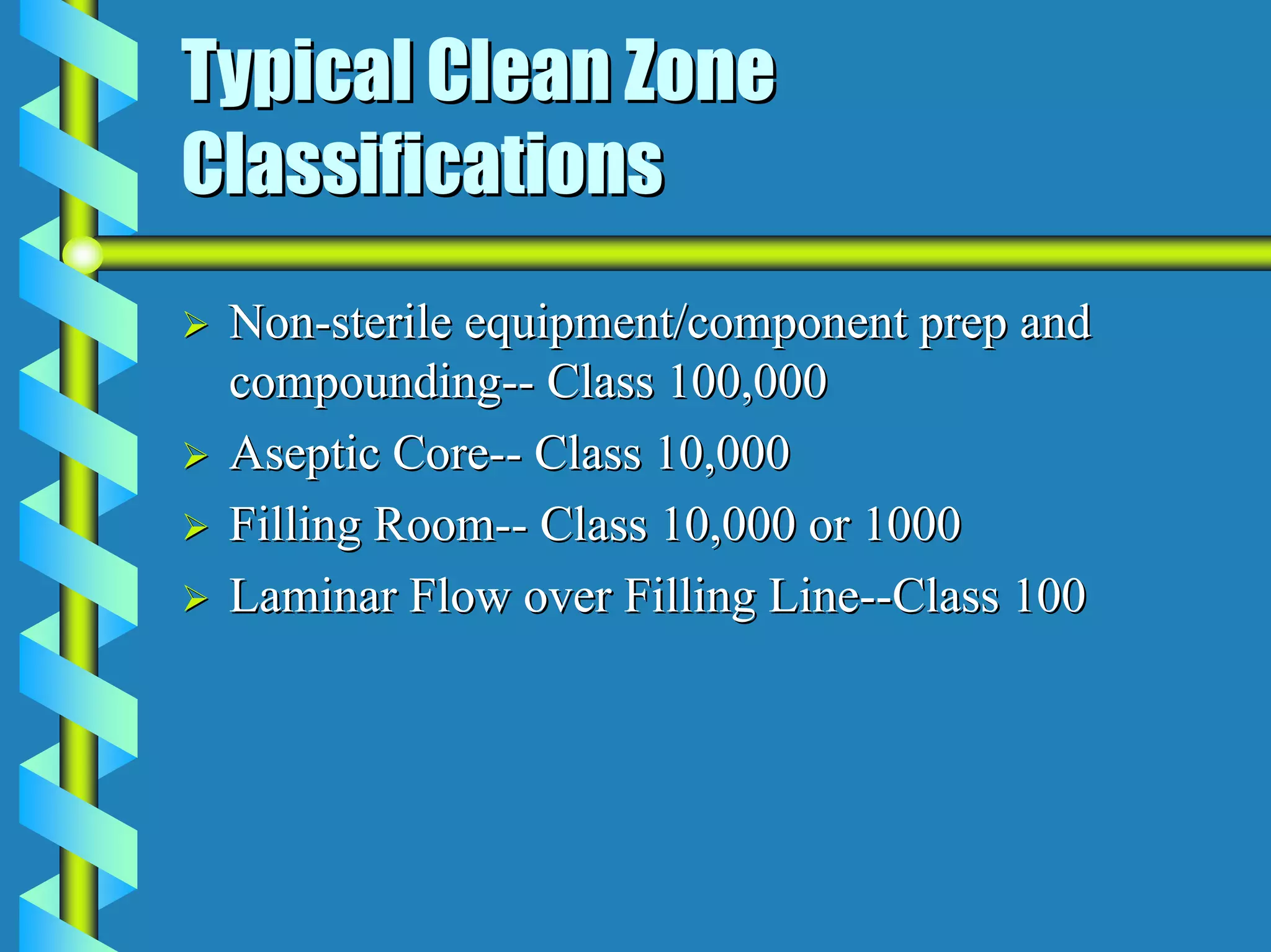
Typical Clean Zone
Classifications
 Non-sterile equipment/component prep and
 compounding-- Class 100,000
 Aseptic Core-- Class 10,000
 Filling Room-- Class 10,000 or 1000
 Laminar Flow over Filling Line--Class 100
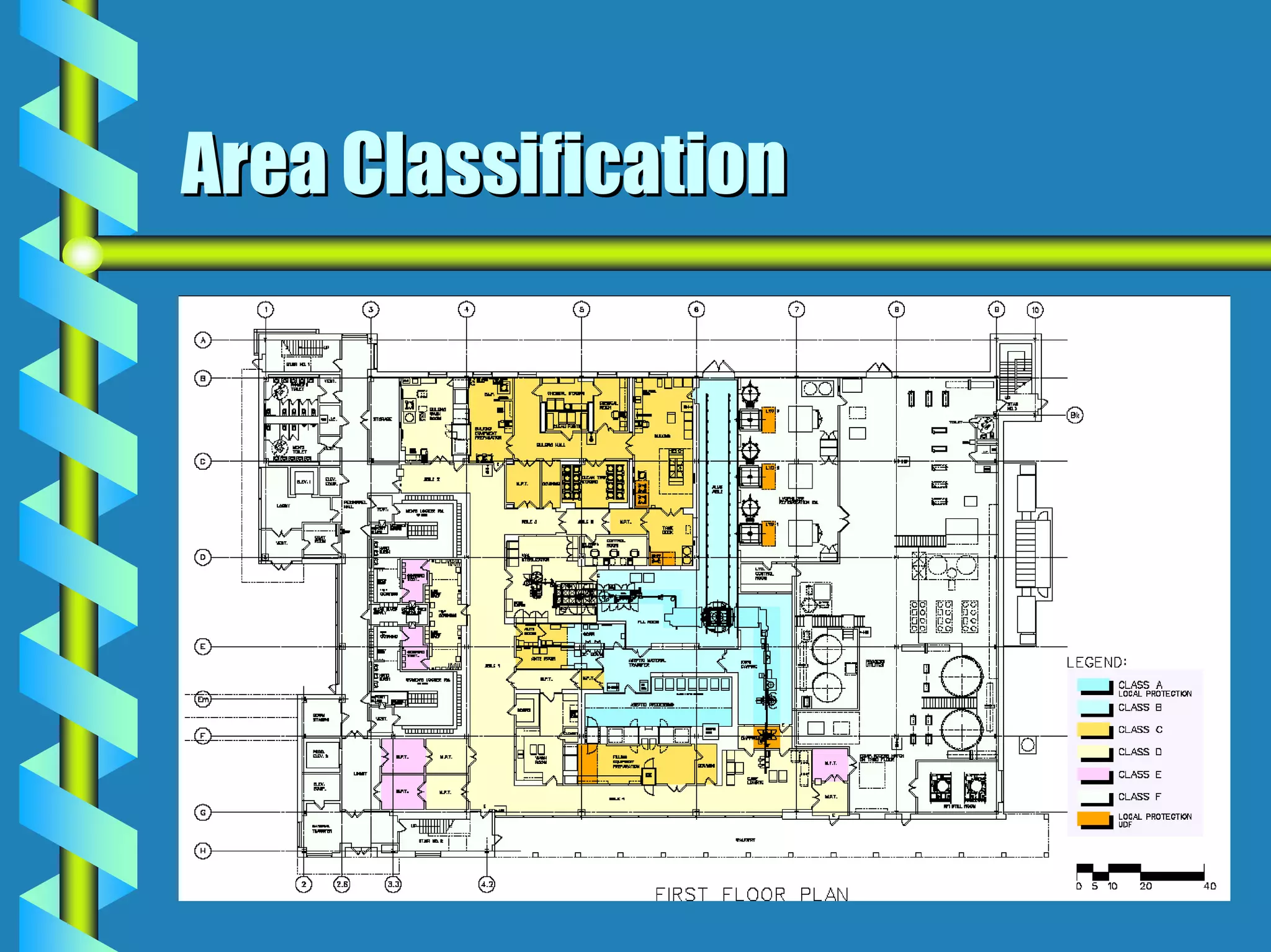
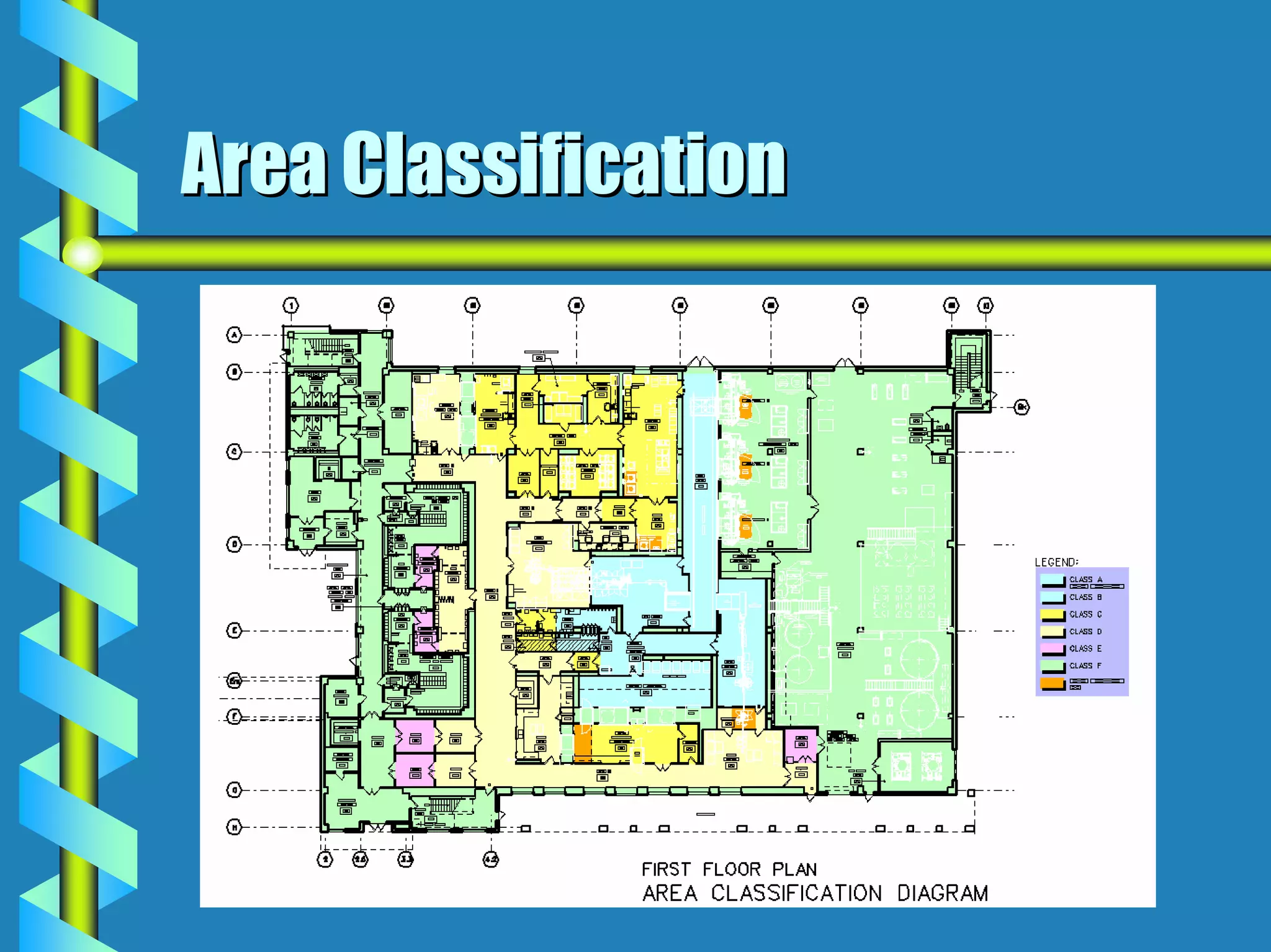
Area Classification
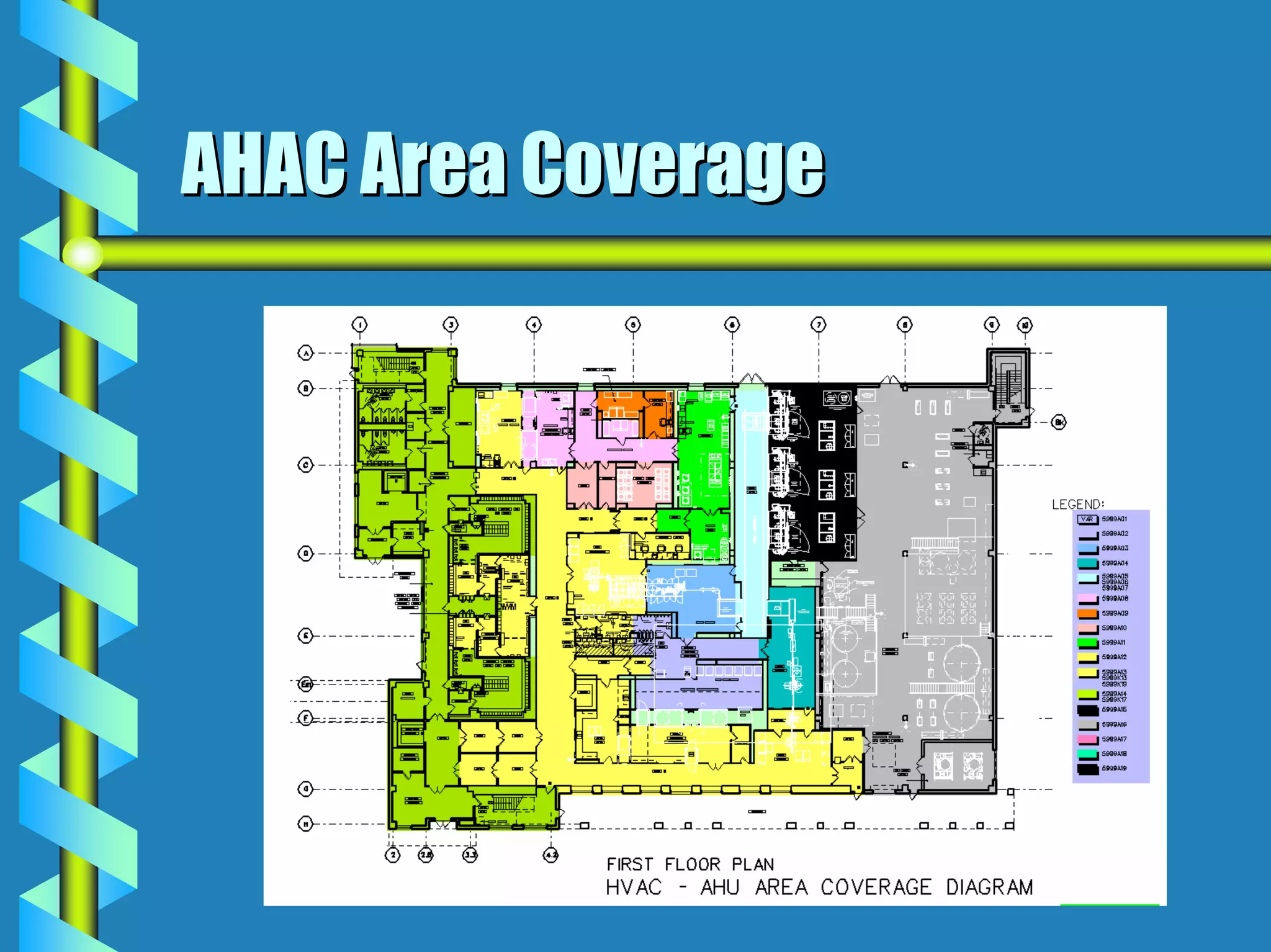
AHAC Area Coverage
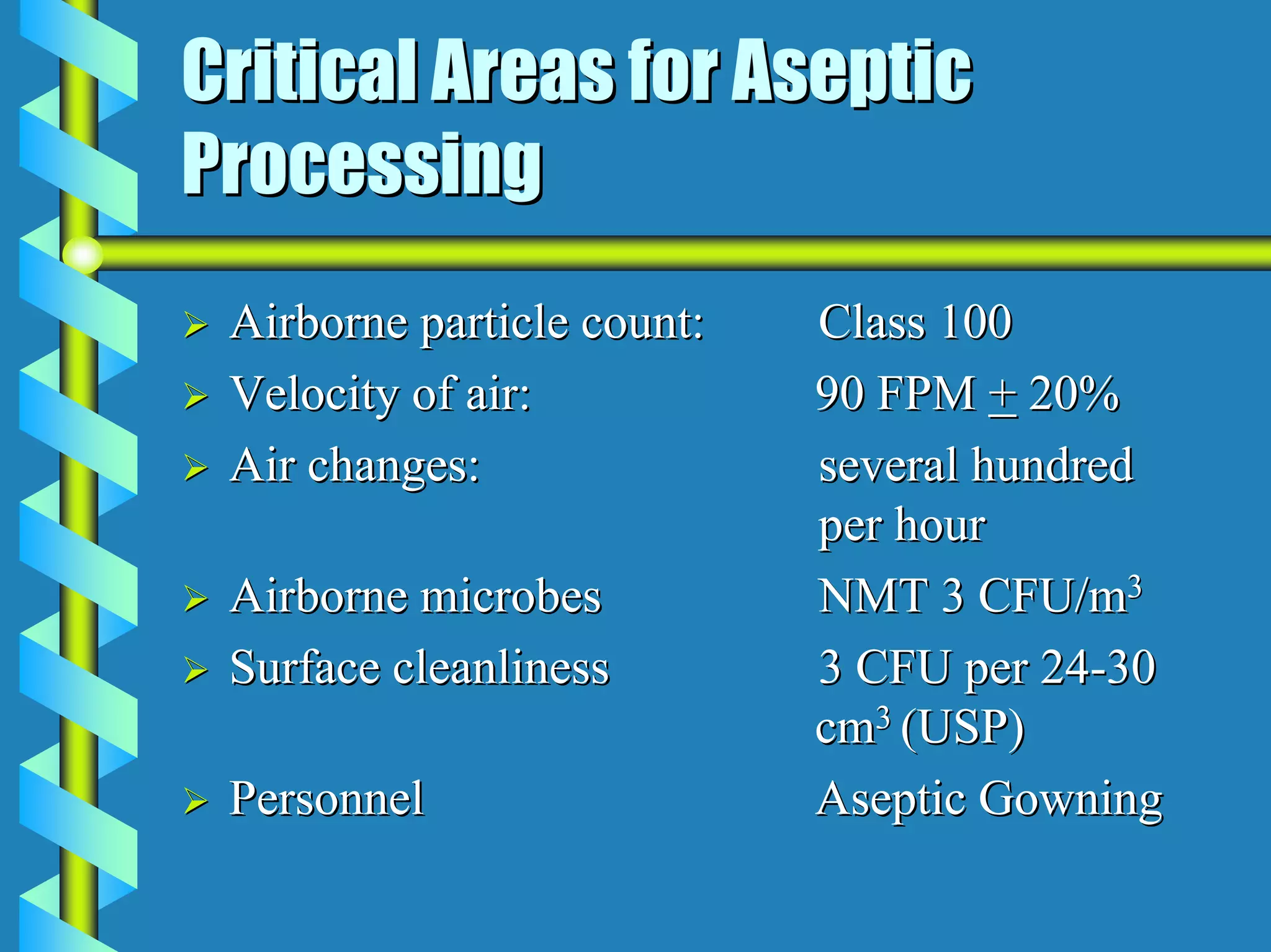
Critical Areas for Aseptic
Processing
 Airborne particle count:   Class 100
 Velocity of air:           90 FPM + 20%
 Air changes:               several hundred
                            per hour
 Airborne microbes          NMT 3 CFU/m3
 Surface cleanliness        3 CFU per 24-30
                            cm3 (USP)
 Personnel                  Aseptic Gowning
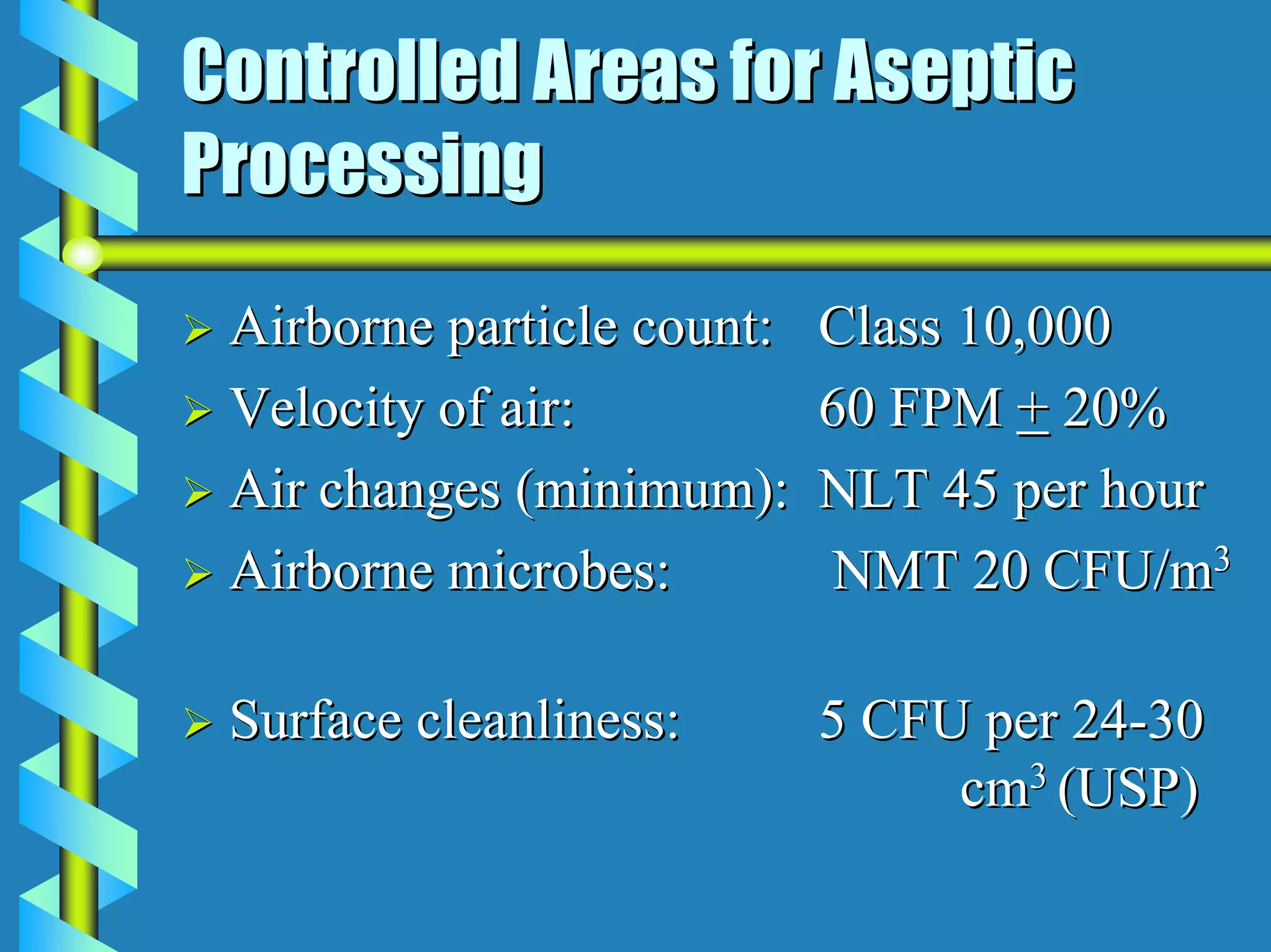
Controlled Areas for Aseptic
Processing
 Airborne particle count:   Class 10,000
 Velocity of air:           60 FPM + 20%
 Air changes (minimum):     NLT 45 per hour
 Airborne microbes:         NMT 20 CFU/m3

 Surface cleanliness:       5 CFU per 24-30
                                 cm3 (USP)
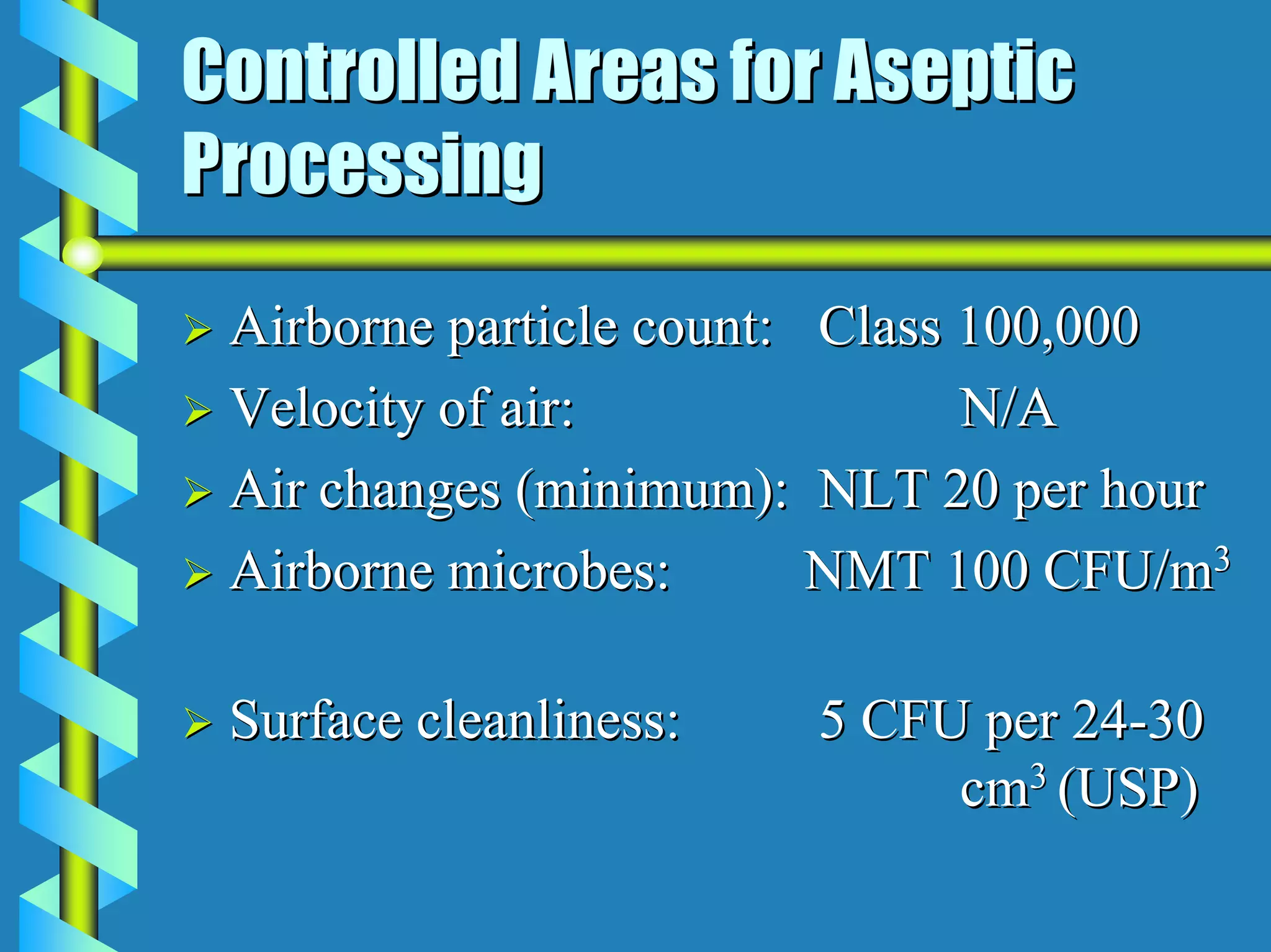
Controlled Areas for Aseptic
Processing
 Airborne particle count: Class 100,000
 Velocity of air:               N/A
 Air changes (minimum): NLT 20 per hour
 Airborne microbes:       NMT 100 CFU/m3

 Surface cleanliness:   5 CFU per 24-30
                             cm3 (USP)
ISO/TC209


International Organization for
Standardization, Technical Committee 209
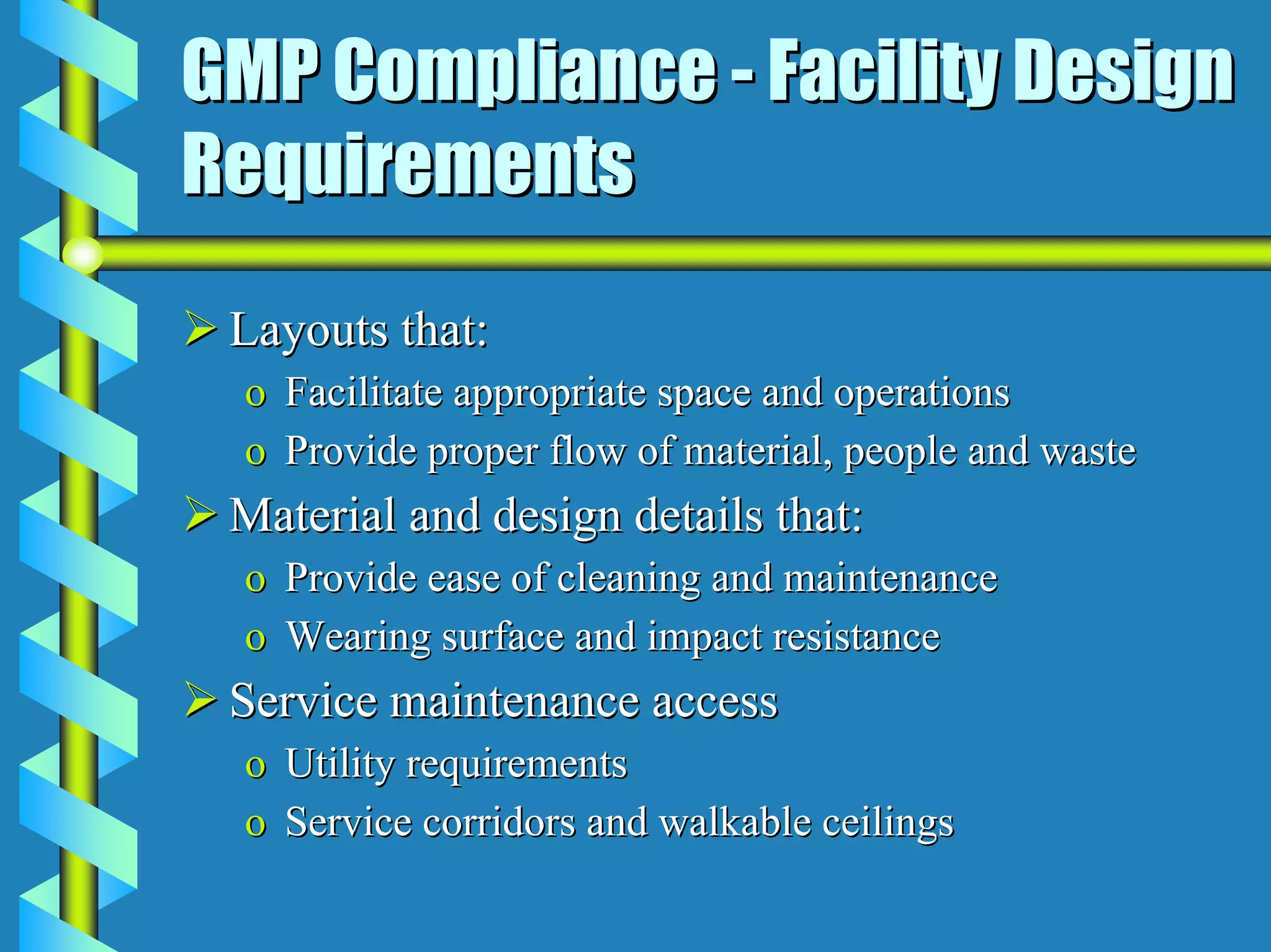
GMP Compliance - Facility Design
Requirements
 Layouts that:
 o Facilitate appropriate space and operations
 o Provide proper flow of material, people and waste
 Material and design details that:
 o Provide ease of cleaning and maintenance
 o Wearing surface and impact resistance
 Service maintenance access
 o Utility requirements
 o Service corridors and walkable ceilings
GMP Compliance - Facility Design
Requirements (Cont.)

 Operational Adjacency and Process
 Flow
 o Personnel, Material, Product,
   Equipment, Waste
 Modular Design
 Process Utilities and Building
 Systems Integration/Access
 Code Compliance
 o Egress, ADA/Accessibility, Fire
   Resistance, Safety
Area Classification
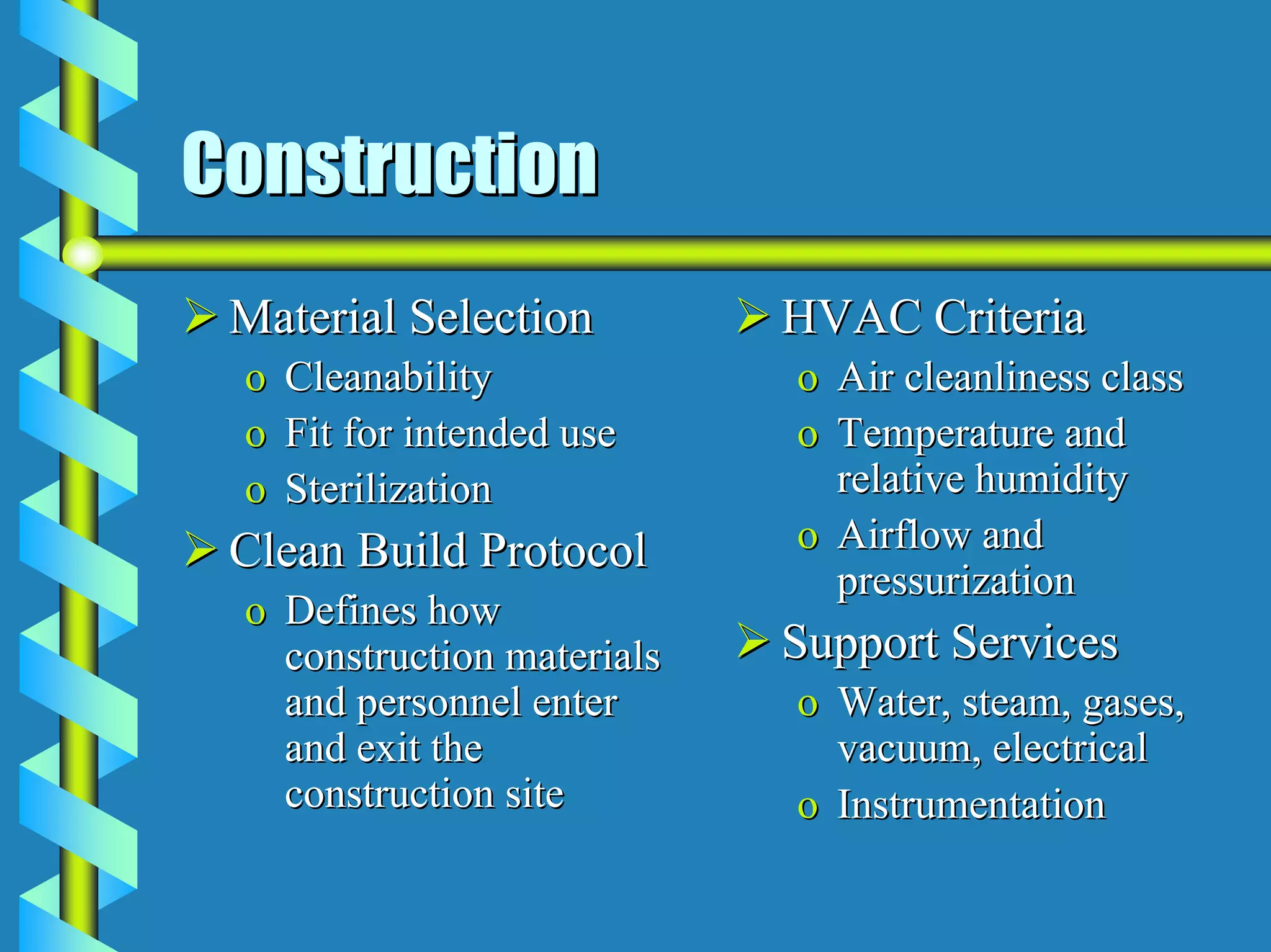
Construction
 Material Selection         HVAC Criteria
 o   Cleanability           o Air cleanliness class
 o   Fit for intended use   o Temperature and
 o   Sterilization            relative humidity
 Clean Build Protocol       o Airflow and
                              pressurization
 o Defines how
   construction materials   Support Services
   and personnel enter      o Water, steam, gases,
   and exit the               vacuum, electrical
   construction site        o Instrumentation
Documentation & Validation
 Quality MUST be involved from the project
 beginning
 Must keep accurate records
 Prove that the facility & equipment are built to the
 design criteria
 Tested and certified
 Officially commissioned for use

PDA COURSE - Facility Design

  • 1.
  • 2.
    The Aseptic ManufacturingPlant GMP Requirements: o 21 CFR Part 211
  • 3.
    211.42 Design andConstruction Features for Aseptic Areas Floors, walls & ceilings of smooth, hard and cleanable surface materials Temperature and humidity controls Air supply filtered through HEPA filters under positive pressure Environmental monitoring program Cleaning and disinfecting program Equipment maintenance program
  • 4.
    Walls, Floors andCeiling Surfaces Smooth, cleanable finish that is impervious to water, cleaning and sanitizing solutions Constructed of materials that resist chipping, flaking, oxidizing or other deterioration o epoxy terrazzo, Mipolam o cement plaster o plastics
  • 5.
    Aseptic Filling ProcessFlow Diagram Raw Formulation/ Sterile Materials Filling Lyophilization Compounding Filtration Component Preparation Capping Packaging
  • 6.
    Sterile / AsepticOperations Sampling Raw & Packaging Material Storage Dispensing Formulation / Compounding Sterile Filtration Component Prep Filling Cleaning Lyophilization (Freeze Drying)
  • 7.
    Sterile / AsepticOperations (cont.) Capping Terminal / Post Sterilization Labeling Packaging o Cartoning o Case Packaging Warehouse Distribution o Conditioned Space o Refrigerated o Frozen
  • 8.
    Sterile / AsepticOperations (cont.) Support Areas o Quality Control / Quality Assurance o Laboratory o Chemical o Microbiology o Stability o Process Utilities o Pure Steam o PW, WFI o Pharmaceutical Compressed Gasses
  • 9.
    Critical Process Systems Component Preparation Formulation/Compounding Filter/Steam Sterilization Aseptic Processing Operation Liquid Fill/Packaging
  • 10.
  • 11.
    Process in KeyElement (GMP) Aseptic Processing Protect Product from Area Contamination o Product Formulated o By Process o Product Sterilized o By People (filtration) o By Environment o Product Filled o By Materials o Product Sealed
  • 12.
    Definition-- Contaminant Anything that should not be in or on the product o Microorganisms o Pyrogens o Non-viable particulates
  • 13.
    Contamination Control TerminalSterilization Aseptic Sterile Manufacturing o Type of Product o Critical Processing Steps o Product Exposure o Acceptance Criteria
  • 14.
  • 15.
    Design Considerations ClosedSystems That do not Expose Products Where Product Can be Exposed, Conduct Operations in Clean Rooms Design Equipment and Piping for Sterile Operation Use Pyrogen Free Water for process and Final Rinses of Equipment Sterile Filter Product Solutions Low temperature Processing
  • 16.
    Key Design Issues Vessel Mixing - Agitator Design Sanitary Piping Design CIP Circuit Design Temperature Control Equipment Design Process Controls - Interlocks Equipment Arrangement - Facility Layouts
  • 17.
    Key Facility Issues Layout That o Support the Process o Facilitate Operations o Provide Appropriate Space o Provide Proper Flow of Materials, People & Waste o Prevent Mix - up o Prevent Contamination Material and Design Details that o Do not Contaminate o Provide Ease of Cleaning & Maintenance
  • 18.
    Key Facility Issues(cont.) Internal Environments That o Provide suitable Conditions of Temperature, Humidity & Particulate Control o Room Pressurization & Directional Airflows Which Prevent Contamination o Prevent Bacterial Growth or Infestation o Segregate Hazardous Area
  • 19.
    Utility Requirements CleanUtilities o Water-for-Injection (WFI) o Clean Steam o USP Purified Water o Clean-in-Place (CIP) General Utilities o Plant Steam o Chilled Glycol and Water o Compressed Gasses
  • 20.
  • 21.
    WFI System Components Feed Water Pretreatment WFI Production WFI Storage & Distribution WFI Cooling For Use
  • 22.
  • 23.
    Typical Storage &Distribution Network
  • 24.
    Key Definitions ForSuccessful System Minimum Distance Sloped Piping Drainability Valve Combinations Component Selection Access For Operation Access For Maintenance
  • 25.
    Common Pitfalls DeadLegs Excessive Clamps The Use of Non Sanitary o Instruments o Valves o Equipment
  • 26.
  • 27.
    Cleaning Is MandatedBy cGMP 21 CFR 211.67 “ Equipment and utensils shall be cleaned, maintained, and sanitized at appropriate intervals to prevent malfunctions or contamination that would alter the safety, identity, strength, quality, or purity of the drug product beyond the official or other established requirements. “
  • 28.
    CIP (Clean InPlace System)
  • 29.
    CIP System DesignSteps Identify Equipment and Systems to be Cleaned Design Equipment to facilitate Cleaning Arrange Equipment & Piping to Facilitate Cleaning Establish Level of Cleanliness o Define How Clean is Clean Investigate Cleaning Compounds Develop Cleaning Cycle Parameters Design CIP Fluid Circulation System
  • 30.
    Cleaning Process Variables Time / Sequence Temperature Flow rate / Pressure Cleaning Agent selection Cleaning Agent Concentration Return water Resistivity
  • 31.
  • 32.
    Clean Steam Application Autoclave Operation Equipment Sterilization (SIP) HVAC Humidification
  • 33.
    SIP Advantages OnlyTechnique for Large Equipment Obviates the Need for Large Autoclaves Reduces Clean Room Operation Activity Enhanced System Integrity o Reduction of Aseptic Connections o Reduction of Flexible Hoses
  • 34.
  • 35.
    Key HVAC Issues Design to Eliminate Airborne Contamination o Terminal HEPA Filters in Air Supply Duct o Return Air Taken From Low Points o Laminar Air Flow Over Exposed Product o High Air Change Rate o Higher Pressure in Cleaner Areas Suppress Microbial Growth o Relative Humidity 30 to 50 percent o Temperature Control
  • 36.
    Definitions--Cleanroom A roomin which the air supply, air distribution, filtration of air supply, materials of construction, and operating procedures are regulated to control airborne particle concentrations so that appropriate air cleanliness levels can be met.
  • 37.
    Definitions--Unidirectional airflow cleanroom (Laminar) A cleanroom in which the filtered air entering the room makes a single pass through the work area in a parallel-flow pattern, with a minimum of turbulent-flow areas. Unidirectional airflow rooms typically have HEPA or ULPA filter coverage of 80% or more of the ceiling (vertical flow) or one wall (horizontal flow).
  • 38.
    Definitions--Non-unidirectional airflow cleanroom Acleanroom in which the filtered air entering the room or passing through the work zone is characterized by non-uniform velocity or turbulent flow. Such rooms exhibit non-uniform, random airflow patterns throughout the enclosure.
  • 39.
    Definitions--Uniform airflow Anunidirectional airflow pattern in which the point-to-point readings are within +20% of the average airflow velocity for the total area of the unidirectional flow work zone.
  • 40.
    Definitions--HEPA Filter HighEfficiency Particulate Air filter--An extended-medium, dry-type filter in a rigid frame having a minimum particle-collection efficiency of 99.97% for 0.3µm, near-monodisperse dioctyl phthalate (DOP) particles (or equivalent substitute such as poly-alpha olefin, PAO).
  • 41.
    Definitions--ULPA Filter Ultra-lowPenetration Air filter--An extended- medium, dry-type filter in a rigid frame having a minimum particle-collection efficiency of 99.999% for particles 0.12µm and larger.
  • 42.
    cGMPs Impact onHVAC Systems AHU Systems HVAC System Components Building Automation Systems Testing, Balancing, and Cleaning Validation
  • 43.
    Sterile Area HVACFlow Diagram
  • 44.
    HVAC Control Temperatureand Humidity Air Pressure Air Filtration o Pre-filters o HEPA Filters o ULPA Filters
  • 45.
  • 46.
    Federal Standard 209E Class 100 is not more than 100 0.5µm or greater particles per cubic foot of air when at least two sample locations are tested and a statistical analysis of the test data is performed at a 95% confidence limit. Class 10,000 is the same with not more than 10,000 0.5µm or greater particles … Class 100,000 is …100,000 0.5µm or greater particles...
  • 47.
    Typical Clean Zone Classifications Non-sterile equipment/component prep and compounding-- Class 100,000 Aseptic Core-- Class 10,000 Filling Room-- Class 10,000 or 1000 Laminar Flow over Filling Line--Class 100
  • 48.
  • 49.
  • 50.
    Critical Areas forAseptic Processing Airborne particle count: Class 100 Velocity of air: 90 FPM + 20% Air changes: several hundred per hour Airborne microbes NMT 3 CFU/m3 Surface cleanliness 3 CFU per 24-30 cm3 (USP) Personnel Aseptic Gowning
  • 51.
    Controlled Areas forAseptic Processing Airborne particle count: Class 10,000 Velocity of air: 60 FPM + 20% Air changes (minimum): NLT 45 per hour Airborne microbes: NMT 20 CFU/m3 Surface cleanliness: 5 CFU per 24-30 cm3 (USP)
  • 52.
    Controlled Areas forAseptic Processing Airborne particle count: Class 100,000 Velocity of air: N/A Air changes (minimum): NLT 20 per hour Airborne microbes: NMT 100 CFU/m3 Surface cleanliness: 5 CFU per 24-30 cm3 (USP)
  • 53.
  • 54.
    GMP Compliance -Facility Design Requirements Layouts that: o Facilitate appropriate space and operations o Provide proper flow of material, people and waste Material and design details that: o Provide ease of cleaning and maintenance o Wearing surface and impact resistance Service maintenance access o Utility requirements o Service corridors and walkable ceilings
  • 55.
    GMP Compliance -Facility Design Requirements (Cont.) Operational Adjacency and Process Flow o Personnel, Material, Product, Equipment, Waste Modular Design Process Utilities and Building Systems Integration/Access Code Compliance o Egress, ADA/Accessibility, Fire Resistance, Safety
  • 56.
  • 57.
    Construction Material Selection HVAC Criteria o Cleanability o Air cleanliness class o Fit for intended use o Temperature and o Sterilization relative humidity Clean Build Protocol o Airflow and pressurization o Defines how construction materials Support Services and personnel enter o Water, steam, gases, and exit the vacuum, electrical construction site o Instrumentation
  • 58.
    Documentation & Validation Quality MUST be involved from the project beginning Must keep accurate records Prove that the facility & equipment are built to the design criteria Tested and certified Officially commissioned for use