Revisited
Dr. Lisa Gonzales, ACSA Vice President
@techietwinmom lgonzales@acsa.org
http://bit.ly/2016R7PD
Outcomes
● Learn strategies on how to sustain quality professional
learning - examples of what others are doing in CA
● Discuss the advantages of building Personal Learning
Networks (PLN’s)
● Explore options to personalize learning for all staff
● Share with colleagues what you are doing and what we
can further learn from each other
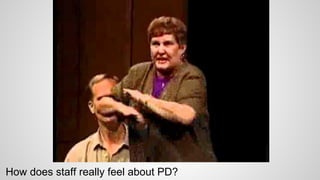
How does staff really feel about PD?
Effective Schools Maximize Time...and People!
● Ensure systematic collaboration by identifying teachers with similar goals
and interests
● Encourage experimentation to determine best practices
● Expand the learning of teams to full faculty through multiple and open
methods of communication and dialogue
● Create a shared vision, educational strategy, goals and benchmarks
among the teams
● Identify and make available team members, the people, research and
materials necessary to inform group learning and decision making
● Use data to open communication and problem solving, while avoiding
blame
“Effective Schools.” Childs-Bowen, Deborah. (2007). NSDC. Oxford, OH.
Developing The PD Calendar
● Does is reflect staff interests and needs?
● Does is support the strategic plan?
● Does it convey long term planning?
● Does it highlight milestones?
● Does it make sense when mapped backward from the targeted end?
● Does it note what quarterly formative assessments will be collected?
● Does it convey flexibility?
● Does it show how staff learns in different ways and learns during the work day?
● Does it build staff ownership?
● Does it show when specific evaluation tasks must be completed?
● Does it emphasize commitment to significant follow up?
● Is it part of the ongoing program planning and evaluation?
“10 Questions to Help Reshape the PD Calendar.” Champion, Bobby. (2004). NSDC. Oxford, OH.
Summer Focused Institutes
● Power-up Technology Institute
● Next Tech Institute
● Equity Institute
● New Teacher Orientation
Institute
● Writer’s Workshop-Columbia
Teacher’s College Institute
● Hybrid Learning Institute
Keeping the Learning Going:
● one day institute
● ongoing follow-up sessions and
workshops during the course of
the year
● use of TOSA’s
● after school workshops
● site collaboration
Partnering with local universities: Constructive Classroom Conversation -
watch videos, read articles, peer feedback on articles, work in teams, no
grade from instructorcertificate of accomplishment
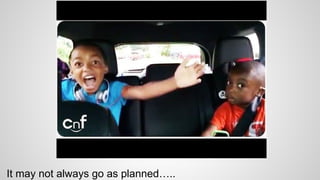
It may not always go as planned…..
PVSD Tech Institute - Day One
Google Suite - Intermediate Level
● AM - Deep dive with Google,
especially docs, sites, forms, and
presentations
● AM - Also organizing yourself
and your own work / email in
Google
● PM - Updated to Sites and
Forms
Google Suite - Advanced Level
● AM - Teacher Dashboard and
work with students
● AM - Opportunity to review Docs
and Blogger
● PM - Project Development -
create a new or revised for CCS
project to include Google Docs
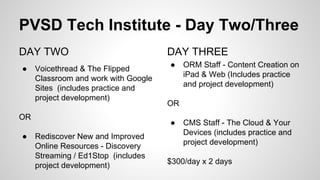
PVSD Tech Institute - Day Two/Three
DAY TWO
● Voicethread & The Flipped
Classroom and work with Google
Sites (includes practice and
project development)
OR
● Rediscover New and Improved
Online Resources - Discovery
Streaming / Ed1Stop (includes
project development)
DAY THREE
● ORM Staff - Content Creation on
iPad & Web (Includes practice
and project development)
OR
● CMS Staff - The Cloud & Your
Devices (includes practice and
project development)
$300/day x 2 days
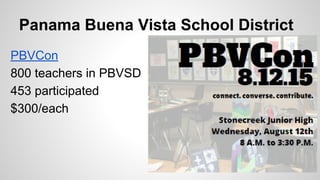
Panama Buena Vista School District
PBVCon
800 teachers in PBVSD
453 participated
$300/each
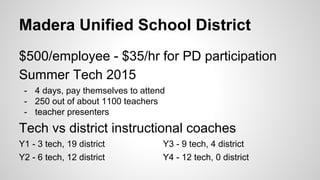
Madera Unified School District
$500/employee - $35/hr for PD participation
Summer Tech 2015
- 4 days, pay themselves to attend
- 250 out of about 1100 teachers
- teacher presenters
Tech vs district instructional coaches
Y1 - 3 tech, 19 district Y3 - 9 tech, 4 district
Y2 - 6 tech, 12 district Y4 - 12 tech, 0 district
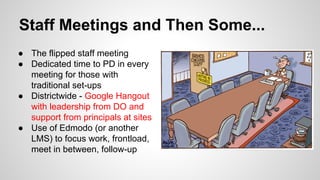
Staff Meetings and Then Some...
● The flipped staff meeting
● Dedicated time to PD in every
meeting for those with
traditional set-ups
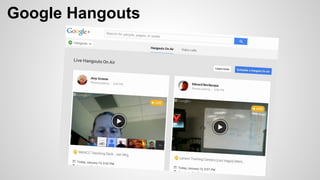
● Districtwide - Google Hangout
with leadership from DO and
support from principals at sites
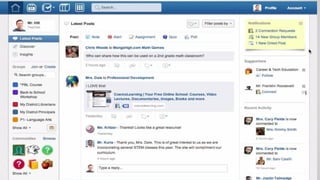
● Use of Edmodo (or another
LMS) to focus work, frontload,
meet in between, follow-up
Google Hangouts
Learning Management Systems
Merced Union High School District
Merced High School District
Teacher created modules, 24/7 on time demand,
LCAP funded, bargained.
Topics:
- Google apps
- how to embed videos
- how to use social media as a teaching tool
- how to use social media with parents
- how to use Remind 101
- articles that reinforce district initiatives (Project Based Learning, Design
Thinking)
- journal articles around a specific theme
Merced High School District
But what else?
Administrator topics:
- teacher evaluations
- LCAP presentations
Classified topics:
- how to run Aries reports (clerk typist)
- how to run an attendance report (new staff)
- how to put in School Dude tickets for facilities
PLN’s can help those who are dragging or need a refresh...
Why Twitter?
- learn from a community of experts worldwide
- meet people who have been/are where you are
- contribute to conversations
- follow live trainings if you cannot be there in person
- talk with experts you can’t meet in the real
world
- follow only conversations relevant to you
- share resources easily and quickly
- Twitter chats
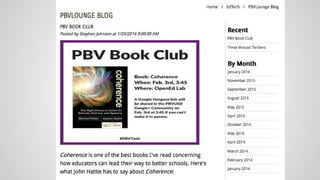
Finding Common Ground - Blogging
● Relationship building
● Focused conversations
● Formal/informal - eliminates the rules
● Can safely address teachable moments in
the classroom
● Becomes a teachable moment outside
the classroom - worldwide consumption (or not)
● Find yourself...and your voice
Entry by Middle School Principal
My most recent visit before winter break and your last two posts fit
together so well, especially within the context of discussions we’ve started to
have about vocabulary and grammar in our new world of common core. I appreciate
your growth perspective for the students and use of the data to guide your
instruction and intervention.
I think we are poised to have deeper conversations together amongst the
language arts and 4th and 5th grade teachers about the essential vocabulary and
grammar we want for our students to learn. We briefly started it last year after the
CLMS conference in Monterey and I think we were just not ready to go much
deeper at the time because we didn’t know what the full transition to common core
was really going to look like at the time. Now, however, we in a better position to
come back together as a group and articulate what students need to know to a
much fuller and deeper extent. I look forward to continuing those conversations with
you and the group as a whole.
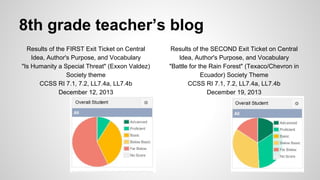
8th grade teacher’s blog
Results of the FIRST Exit Ticket on Central
Idea, Author's Purpose, and Vocabulary
"Is Humanity a Special Threat" (Exxon Valdez)
Society theme
CCSS RI 7.1, 7.2, LL7.4a, LL7.4b
December 12, 2013
Results of the SECOND Exit Ticket on Central
Idea, Author's Purpose, and Vocabulary
"Battle for the Rain Forest" (Texaco/Chevron in
Ecuador) Society Theme
CCSS RI 7.1, 7.2, LL7.4a, LL7.4b
December 19, 2013
Her Reflections & Conversations
“Adding new visuals on how to view the data I am
collecting. We continue to focus on central idea, theme,
and author's purpose. The exit tickets are also providing
valuable discussions as we go over the answers.
Reading Success: They are not just glossing over
words they do not understand. Many are first looking at
context and then raising their hand with a vocabulary
question - FINALLY. I have been emphasizing this all
year, and, apparently, it has SUNK in! Hopefully, it will
last.”
Blogging - What Teachers Said
● Blogging was a “positive experience”
● Use of the technology was “easy” after the initial period
to “overcome their discomfort”
● Helped reflect on practice
● Assisted with data collection and analysis
● Helped monitor work by colleagues/supervisors
Mills, G.E. (2003). Action research: A guide for the teacher researcher. Upper Saddle River, NJ: Merrill/Prentice Hall.
Cavanaugh, T., Cavanaugh, C. (2005). Blogging as a Professional Tool. Paper presented at eLearn Conference 2005 in
Vancouver, CA.
West, R. E., Wright, G. A., Graham, C. R. (2005). Blogs, Wikis, and Aggregators: A New Vocabulary for Promoting Reflection and
Collaboration in a Preservice Technology Integration Course. Paper presented at SITE conference 2005 in Phoenix, AZ.
Getting unstuck…..sowhatdoyoudonow?
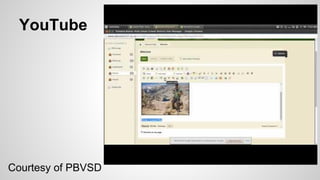
YouTube
Courtesy of PBVSD
What Can You Add…?
You can do this!

PD Revisited - Region 7

  • 1.
    Revisited Dr. Lisa Gonzales,ACSA Vice President @techietwinmom lgonzales@acsa.org http://bit.ly/2016R7PD
  • 2.
    Outcomes ● Learn strategieson how to sustain quality professional learning - examples of what others are doing in CA ● Discuss the advantages of building Personal Learning Networks (PLN’s) ● Explore options to personalize learning for all staff ● Share with colleagues what you are doing and what we can further learn from each other
  • 3.
    How does staffreally feel about PD?
  • 4.
    Effective Schools MaximizeTime...and People! ● Ensure systematic collaboration by identifying teachers with similar goals and interests ● Encourage experimentation to determine best practices ● Expand the learning of teams to full faculty through multiple and open methods of communication and dialogue ● Create a shared vision, educational strategy, goals and benchmarks among the teams ● Identify and make available team members, the people, research and materials necessary to inform group learning and decision making ● Use data to open communication and problem solving, while avoiding blame “Effective Schools.” Childs-Bowen, Deborah. (2007). NSDC. Oxford, OH.
  • 5.
    Developing The PDCalendar ● Does is reflect staff interests and needs? ● Does is support the strategic plan? ● Does it convey long term planning? ● Does it highlight milestones? ● Does it make sense when mapped backward from the targeted end? ● Does it note what quarterly formative assessments will be collected? ● Does it convey flexibility? ● Does it show how staff learns in different ways and learns during the work day? ● Does it build staff ownership? ● Does it show when specific evaluation tasks must be completed? ● Does it emphasize commitment to significant follow up? ● Is it part of the ongoing program planning and evaluation? “10 Questions to Help Reshape the PD Calendar.” Champion, Bobby. (2004). NSDC. Oxford, OH.
  • 6.
    Summer Focused Institutes ●Power-up Technology Institute ● Next Tech Institute ● Equity Institute ● New Teacher Orientation Institute ● Writer’s Workshop-Columbia Teacher’s College Institute ● Hybrid Learning Institute Keeping the Learning Going: ● one day institute ● ongoing follow-up sessions and workshops during the course of the year ● use of TOSA’s ● after school workshops ● site collaboration Partnering with local universities: Constructive Classroom Conversation - watch videos, read articles, peer feedback on articles, work in teams, no grade from instructorcertificate of accomplishment
  • 7.
    It may notalways go as planned…..
  • 8.
    PVSD Tech Institute- Day One Google Suite - Intermediate Level ● AM - Deep dive with Google, especially docs, sites, forms, and presentations ● AM - Also organizing yourself and your own work / email in Google ● PM - Updated to Sites and Forms Google Suite - Advanced Level ● AM - Teacher Dashboard and work with students ● AM - Opportunity to review Docs and Blogger ● PM - Project Development - create a new or revised for CCS project to include Google Docs
  • 9.
    PVSD Tech Institute- Day Two/Three DAY TWO ● Voicethread & The Flipped Classroom and work with Google Sites (includes practice and project development) OR ● Rediscover New and Improved Online Resources - Discovery Streaming / Ed1Stop (includes project development) DAY THREE ● ORM Staff - Content Creation on iPad & Web (Includes practice and project development) OR ● CMS Staff - The Cloud & Your Devices (includes practice and project development) $300/day x 2 days
  • 10.
    Panama Buena VistaSchool District PBVCon 800 teachers in PBVSD 453 participated $300/each
  • 11.
    Madera Unified SchoolDistrict $500/employee - $35/hr for PD participation Summer Tech 2015 - 4 days, pay themselves to attend - 250 out of about 1100 teachers - teacher presenters Tech vs district instructional coaches Y1 - 3 tech, 19 district Y3 - 9 tech, 4 district Y2 - 6 tech, 12 district Y4 - 12 tech, 0 district
  • 13.
    Staff Meetings andThen Some... ● The flipped staff meeting ● Dedicated time to PD in every meeting for those with traditional set-ups ● Districtwide - Google Hangout with leadership from DO and support from principals at sites ● Use of Edmodo (or another LMS) to focus work, frontload, meet in between, follow-up
  • 14.
  • 15.
  • 17.
    Merced Union HighSchool District
  • 18.
    Merced High SchoolDistrict Teacher created modules, 24/7 on time demand, LCAP funded, bargained. Topics: - Google apps - how to embed videos - how to use social media as a teaching tool - how to use social media with parents - how to use Remind 101 - articles that reinforce district initiatives (Project Based Learning, Design Thinking) - journal articles around a specific theme
  • 19.
    Merced High SchoolDistrict But what else? Administrator topics: - teacher evaluations - LCAP presentations Classified topics: - how to run Aries reports (clerk typist) - how to run an attendance report (new staff) - how to put in School Dude tickets for facilities
  • 20.
    PLN’s can helpthose who are dragging or need a refresh...
  • 23.
    Why Twitter? - learnfrom a community of experts worldwide - meet people who have been/are where you are - contribute to conversations - follow live trainings if you cannot be there in person - talk with experts you can’t meet in the real world - follow only conversations relevant to you - share resources easily and quickly - Twitter chats
  • 25.
    Finding Common Ground- Blogging ● Relationship building ● Focused conversations ● Formal/informal - eliminates the rules ● Can safely address teachable moments in the classroom ● Becomes a teachable moment outside the classroom - worldwide consumption (or not) ● Find yourself...and your voice
  • 27.
    Entry by MiddleSchool Principal My most recent visit before winter break and your last two posts fit together so well, especially within the context of discussions we’ve started to have about vocabulary and grammar in our new world of common core. I appreciate your growth perspective for the students and use of the data to guide your instruction and intervention. I think we are poised to have deeper conversations together amongst the language arts and 4th and 5th grade teachers about the essential vocabulary and grammar we want for our students to learn. We briefly started it last year after the CLMS conference in Monterey and I think we were just not ready to go much deeper at the time because we didn’t know what the full transition to common core was really going to look like at the time. Now, however, we in a better position to come back together as a group and articulate what students need to know to a much fuller and deeper extent. I look forward to continuing those conversations with you and the group as a whole.
  • 28.
    8th grade teacher’sblog Results of the FIRST Exit Ticket on Central Idea, Author's Purpose, and Vocabulary "Is Humanity a Special Threat" (Exxon Valdez) Society theme CCSS RI 7.1, 7.2, LL7.4a, LL7.4b December 12, 2013 Results of the SECOND Exit Ticket on Central Idea, Author's Purpose, and Vocabulary "Battle for the Rain Forest" (Texaco/Chevron in Ecuador) Society Theme CCSS RI 7.1, 7.2, LL7.4a, LL7.4b December 19, 2013
  • 29.
    Her Reflections &Conversations “Adding new visuals on how to view the data I am collecting. We continue to focus on central idea, theme, and author's purpose. The exit tickets are also providing valuable discussions as we go over the answers. Reading Success: They are not just glossing over words they do not understand. Many are first looking at context and then raising their hand with a vocabulary question - FINALLY. I have been emphasizing this all year, and, apparently, it has SUNK in! Hopefully, it will last.”
  • 30.
    Blogging - WhatTeachers Said ● Blogging was a “positive experience” ● Use of the technology was “easy” after the initial period to “overcome their discomfort” ● Helped reflect on practice ● Assisted with data collection and analysis ● Helped monitor work by colleagues/supervisors Mills, G.E. (2003). Action research: A guide for the teacher researcher. Upper Saddle River, NJ: Merrill/Prentice Hall. Cavanaugh, T., Cavanaugh, C. (2005). Blogging as a Professional Tool. Paper presented at eLearn Conference 2005 in Vancouver, CA. West, R. E., Wright, G. A., Graham, C. R. (2005). Blogs, Wikis, and Aggregators: A New Vocabulary for Promoting Reflection and Collaboration in a Preservice Technology Integration Course. Paper presented at SITE conference 2005 in Phoenix, AZ.
  • 31.
  • 32.
  • 33.
    What Can YouAdd…?
  • 34.