Polymerase chain
Reaction (PCR)
Mai Masri
Faculty of Science
Department of Zoology
Polymerase Chain Reaction
(PCR)
 One of the most powerful
tools in molecular biology
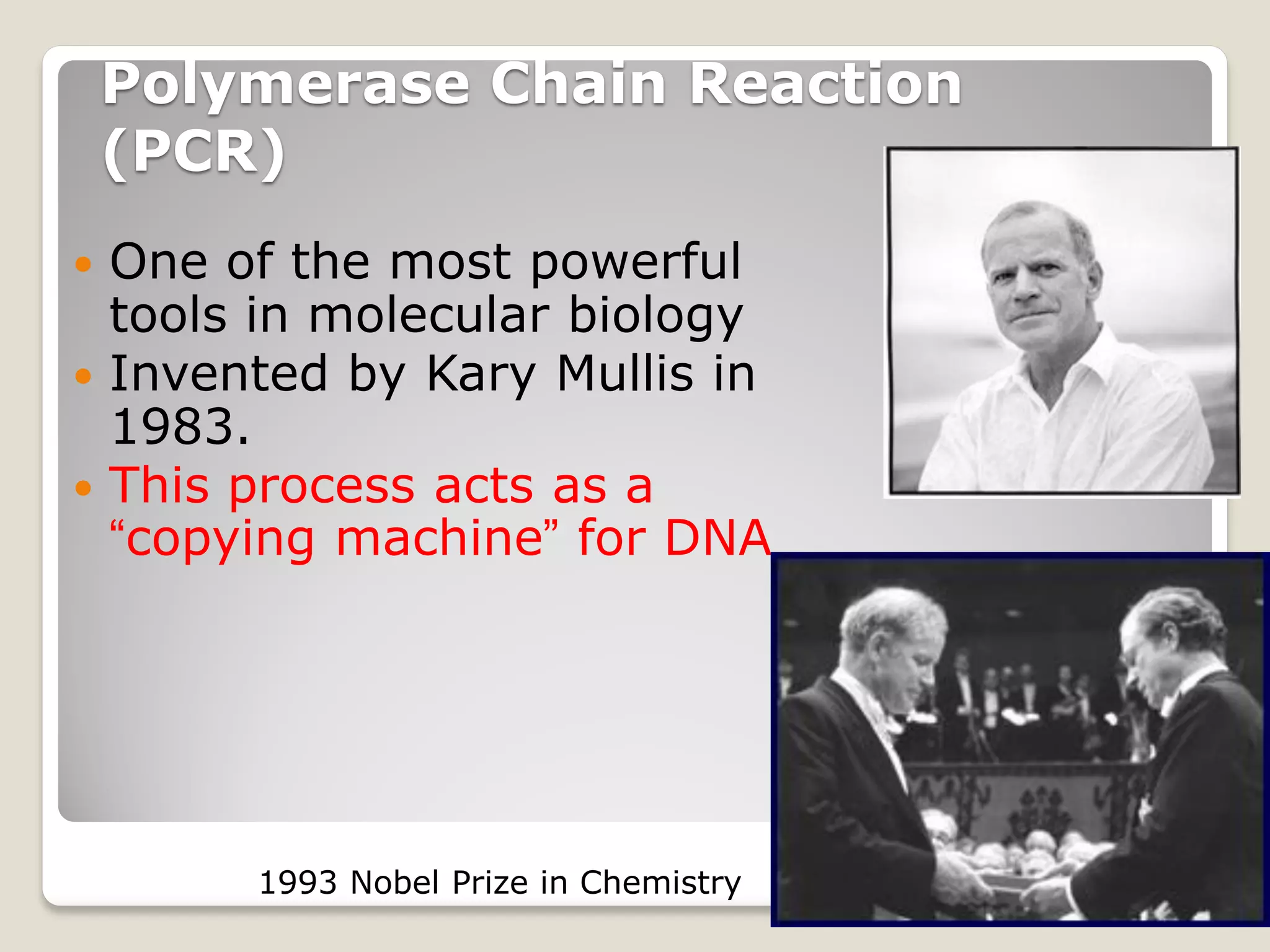
 Invented by Kary Mullis in
1983.
 This process acts as a
“copying machine” for DNA
1993 Nobel Prize in Chemistry
What is PCR
An in vitro (cloning) method for the
enzymatic synthesis of specific DNA
sequences.
Selective amplification of target DNA from
a heterogeneous, complex DNC/cDNA
population
Why PCR (amplify ) DNA?
1. Simple
2. Powerful
A. Sensitive
B. Specific
C. Reliable , fidelity
3. Fast
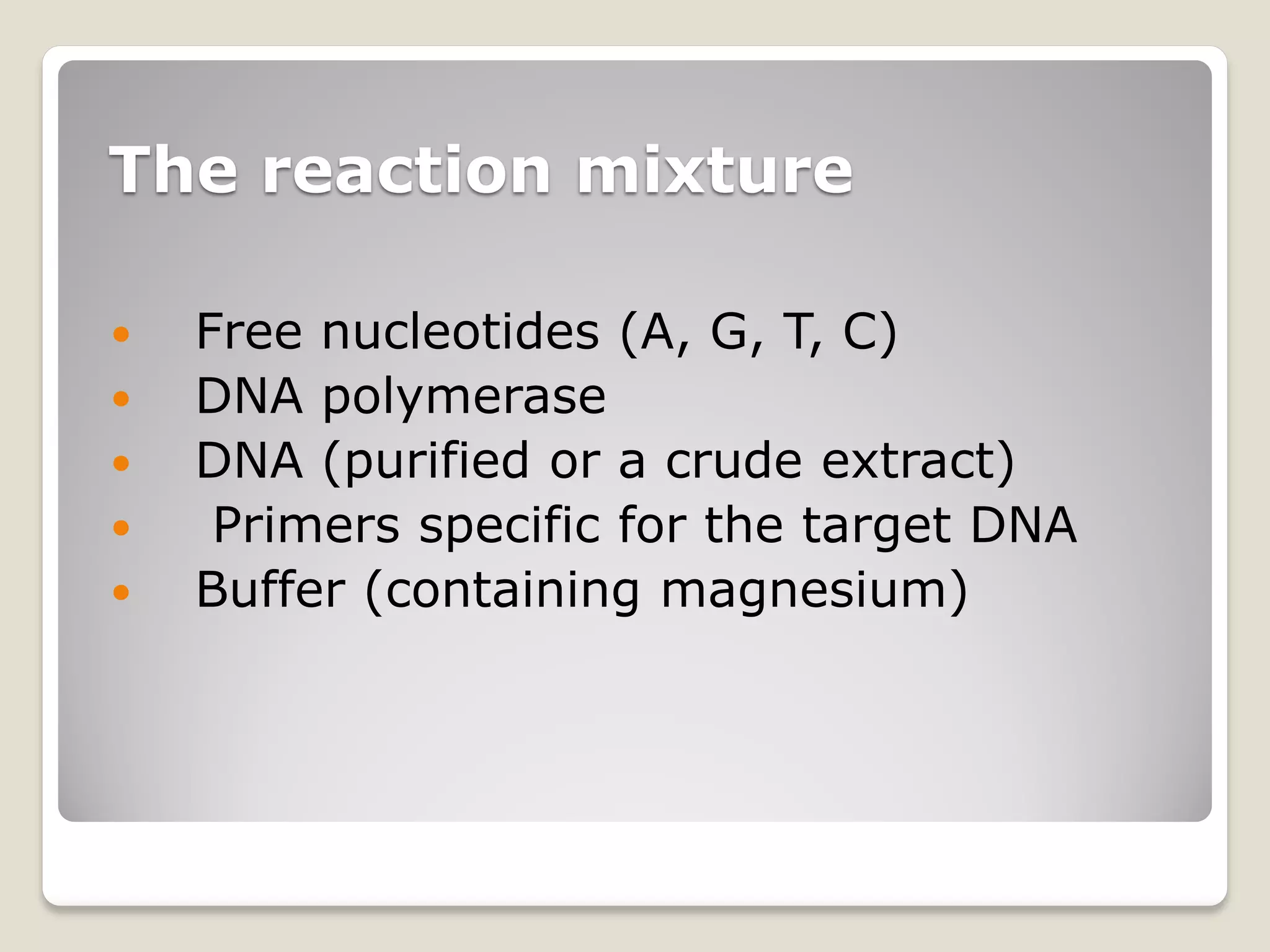
The reaction mixture
 Free nucleotides (A, G, T, C)
 DNA polymerase
 DNA (purified or a crude extract)
 Primers specific for the target DNA
 Buffer (containing magnesium)
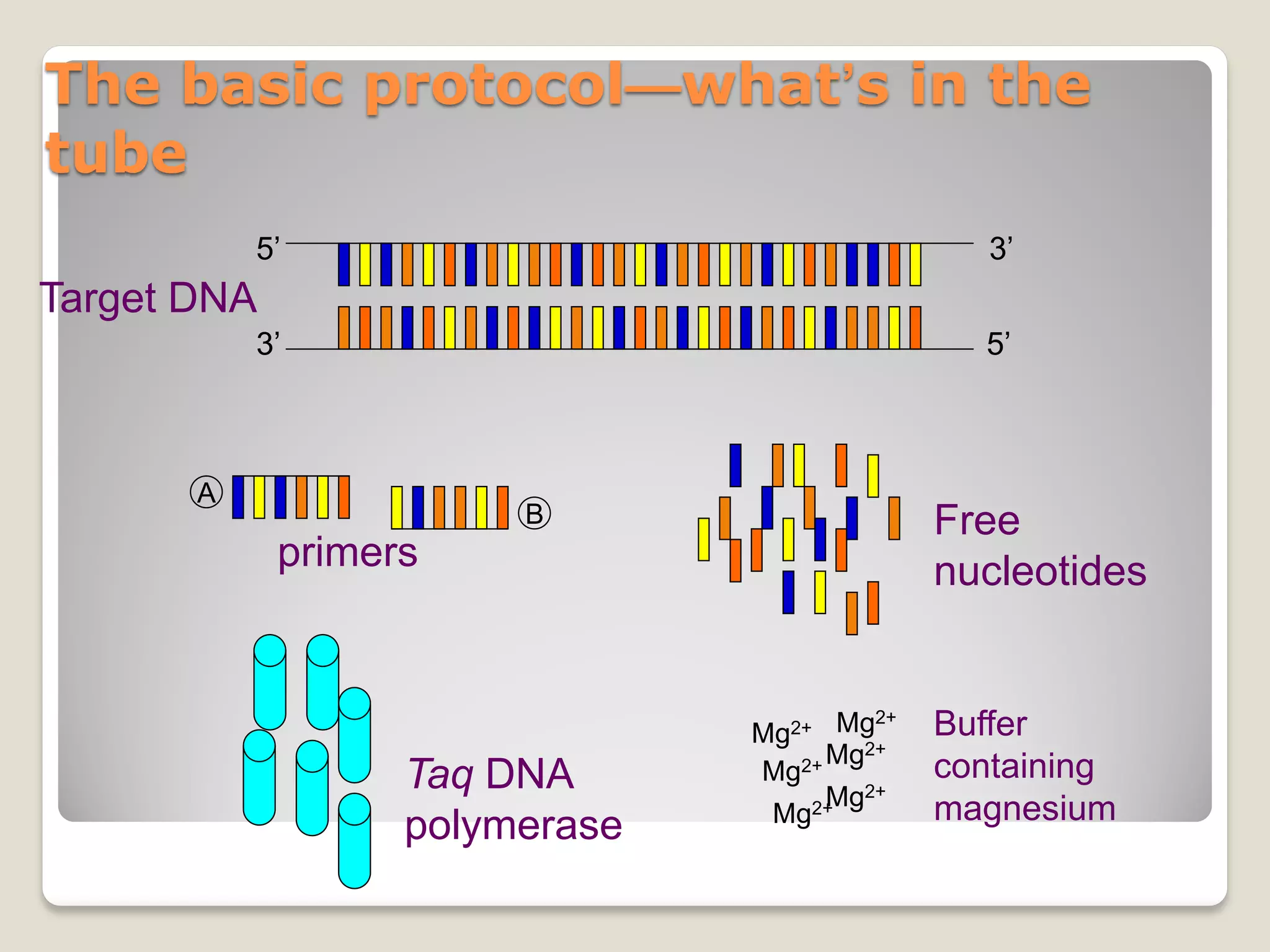
The basic protocol—what’s in the
tube
Target DNA
5’ 3’
3’ 5’
primers
A
B Free
nucleotides
Taq DNA
polymerase
Mg2+
Mg2+
Mg2+
Mg2+
Mg2+
Mg2+
Buffer
containing
magnesium
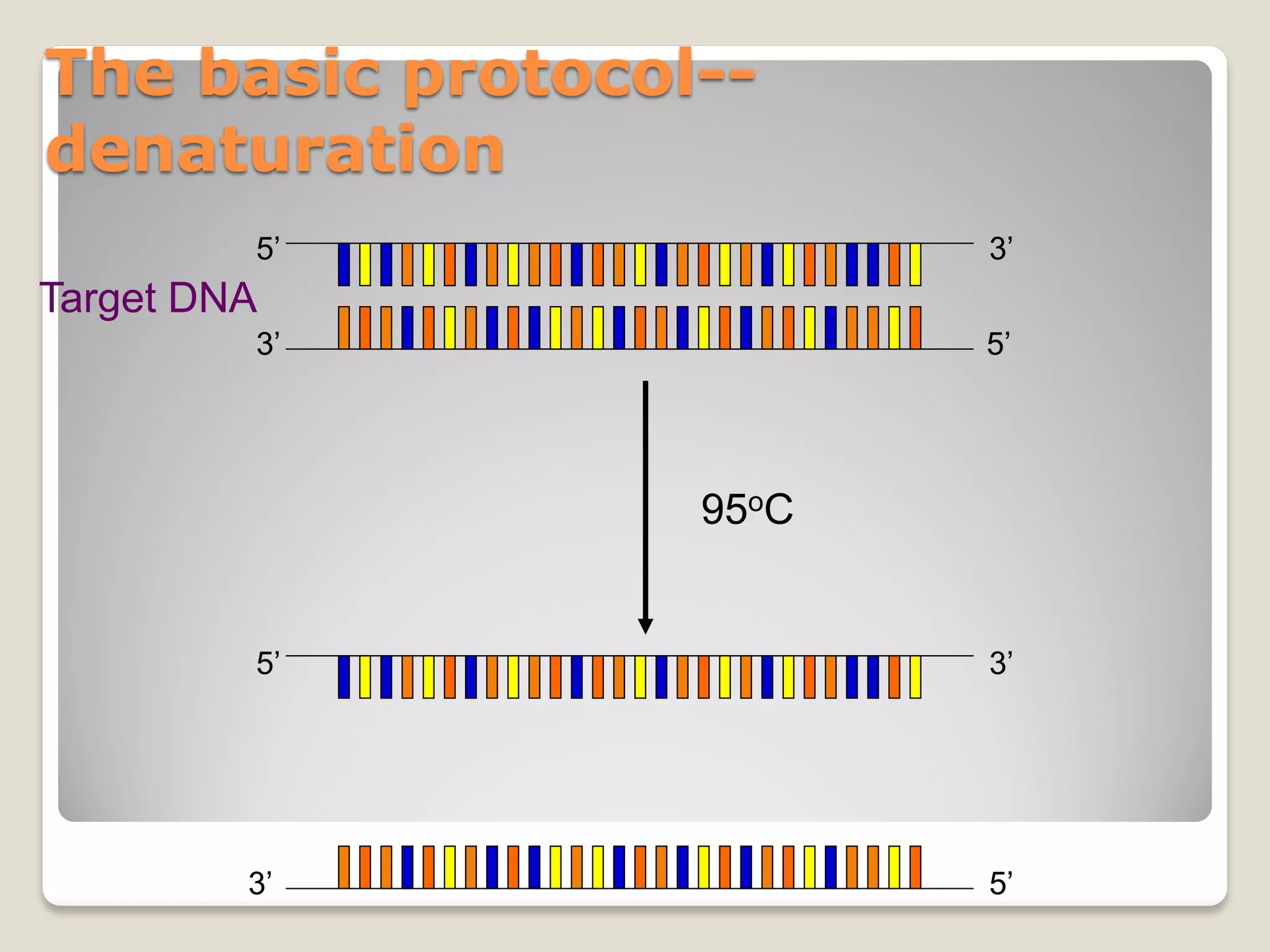
The basic protocol--
denaturation
Target DNA
95oC
5’ 3’
3’ 5’
5’ 3’
3’ 5’
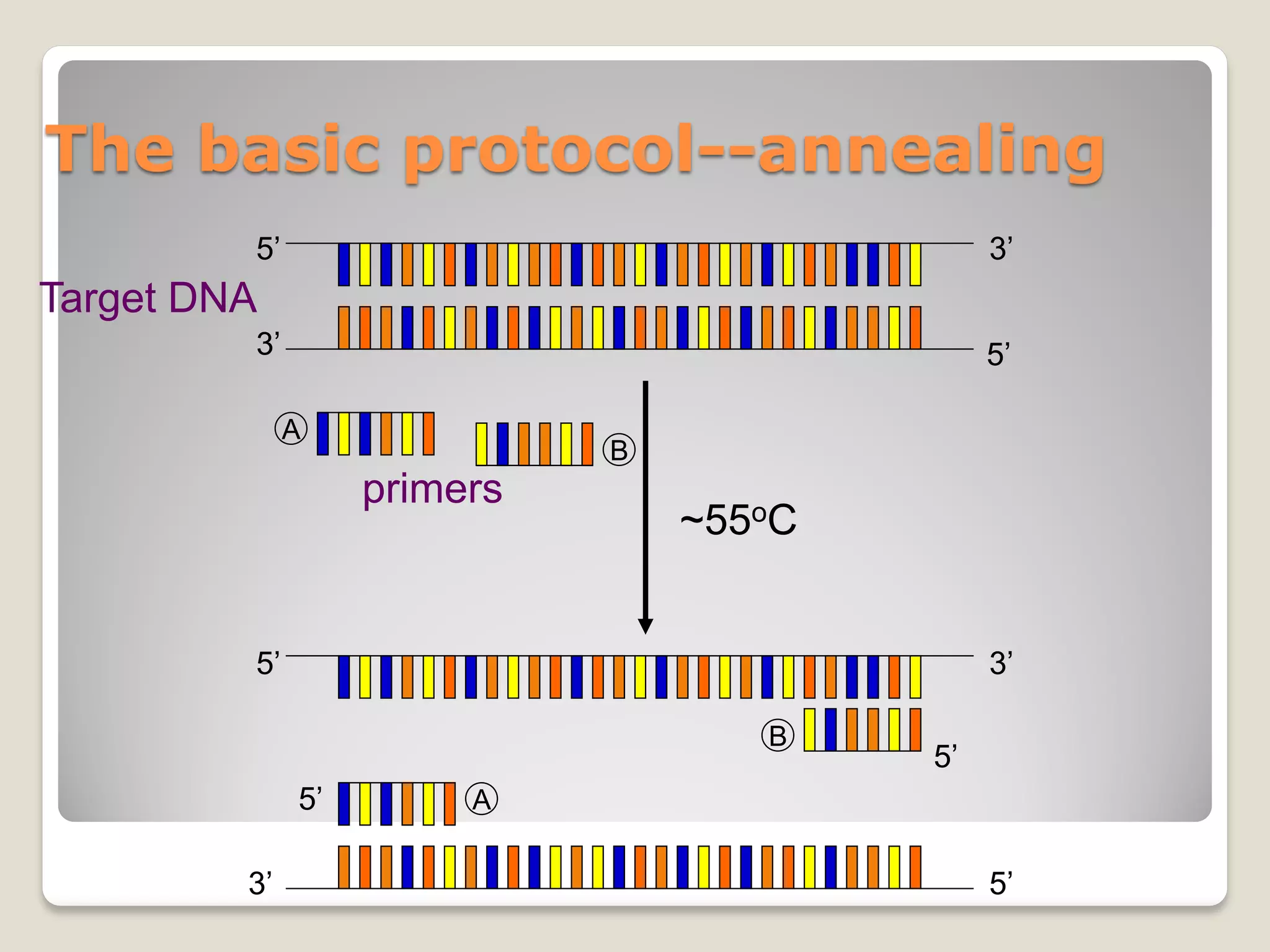
The basic protocol--annealing
~55oC
5’ 3’
3’ 5’
5’ 3’
3’ 5’
5’
5’
Target DNA
A
B
primers
A
B
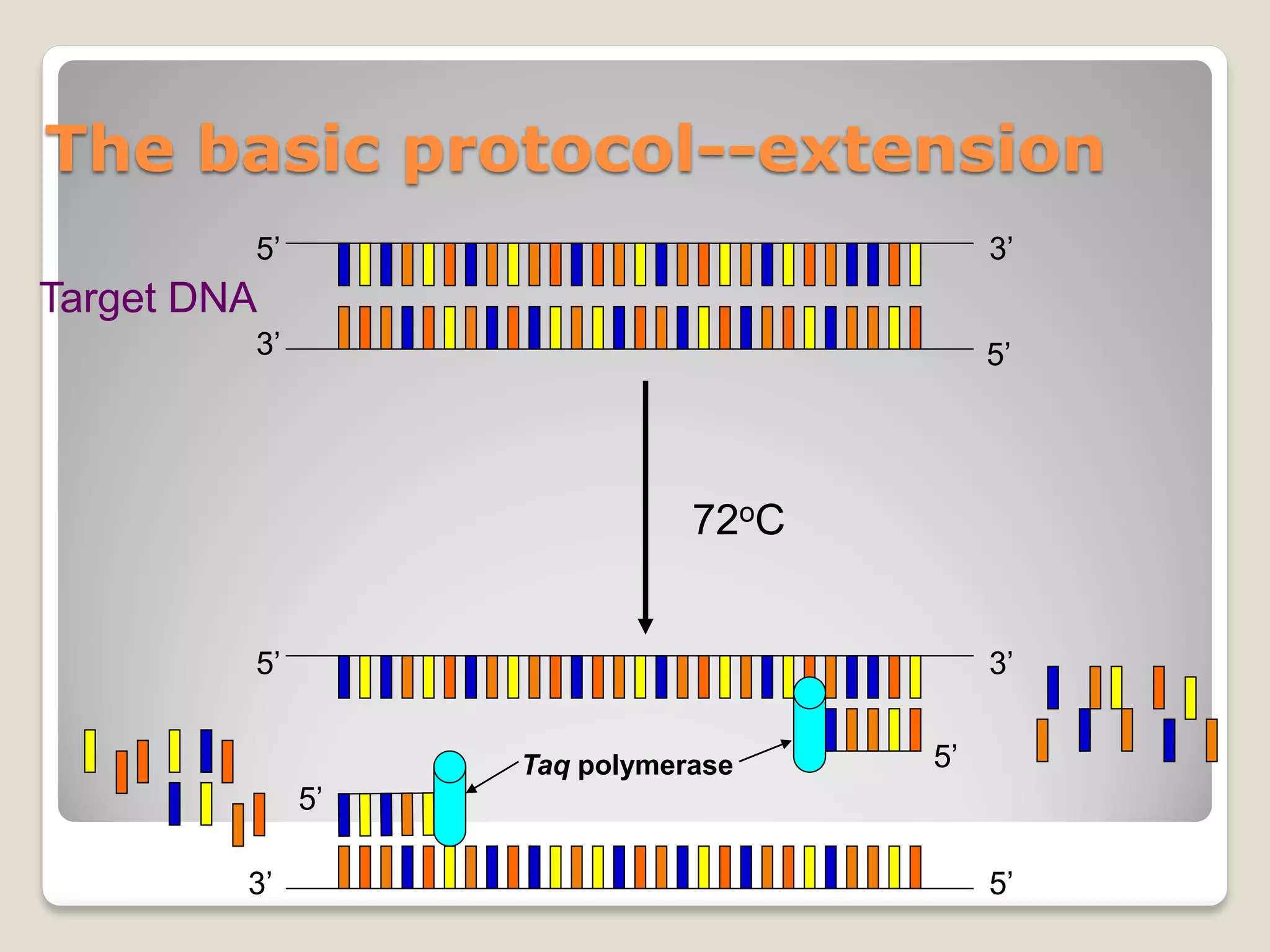
The basic protocol--extension
72oC
5’ 3’
3’ 5’
5’ 3’
3’ 5’
5’
5’
Target DNA
Taq polymerase
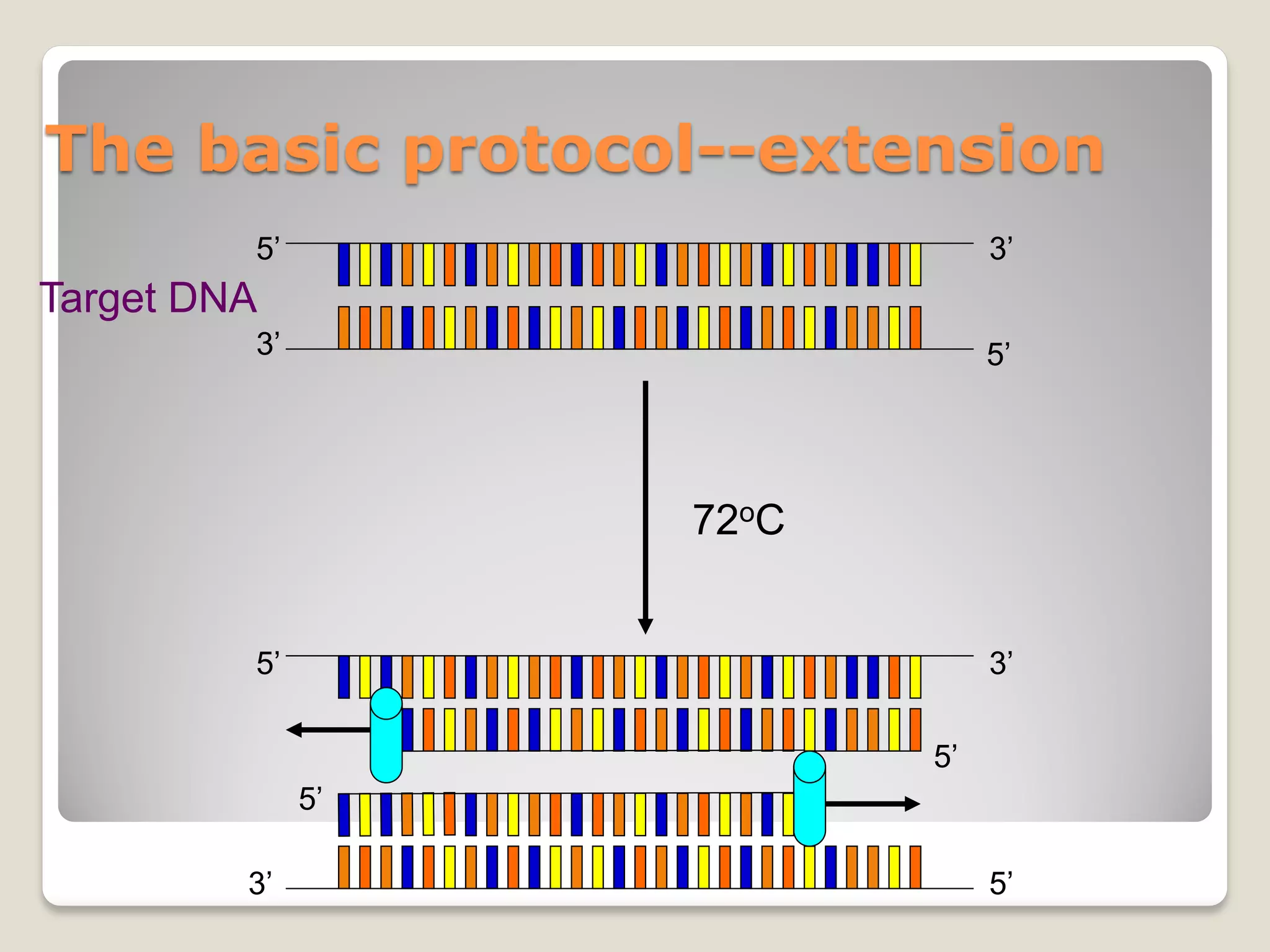
The basic protocol--extension
72oC
5’ 3’
3’ 5’
5’ 3’
3’ 5’
5’
5’
Target DNA
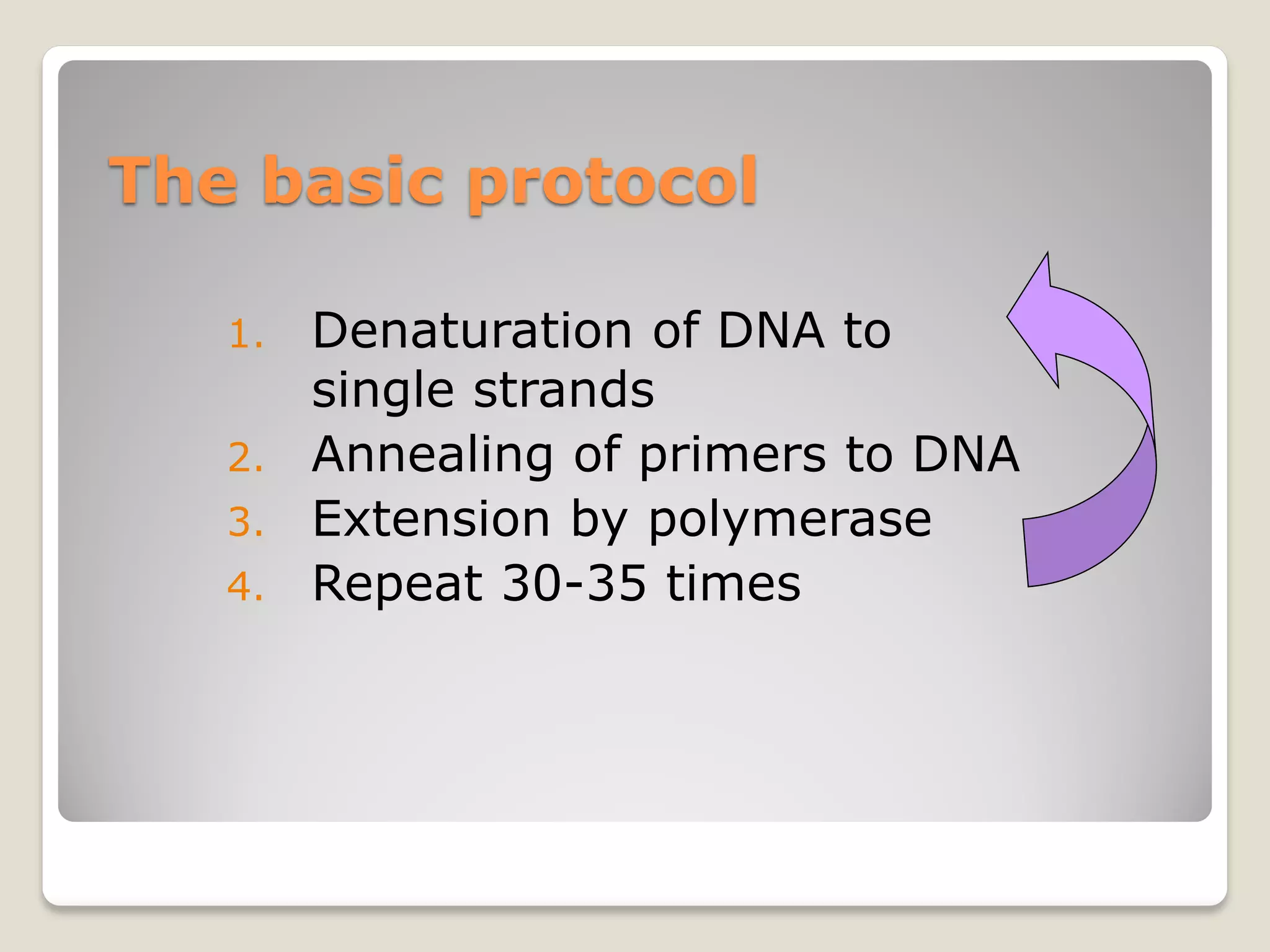
The basic protocol
1. Denaturation of DNA to
single strands
2. Annealing of primers to DNA
3. Extension by polymerase
4. Repeat 30-35 times
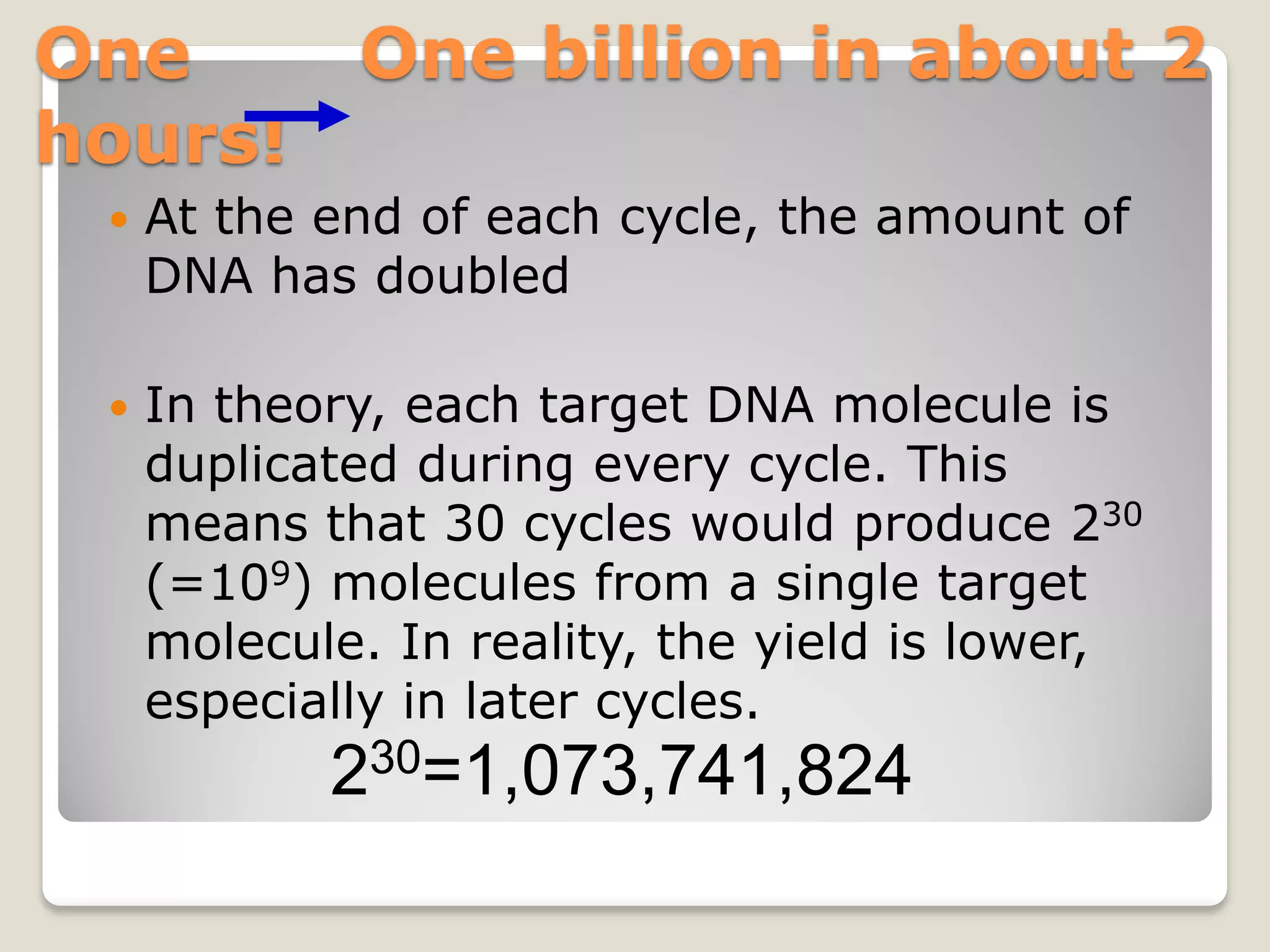
One One billion in about 2
hours!
 At the end of each cycle, the amount of
DNA has doubled
 In theory, each target DNA molecule is
duplicated during every cycle. This
means that 30 cycles would produce 230
(=109) molecules from a single target
molecule. In reality, the yield is lower,
especially in later cycles.
230=1,073,741,824
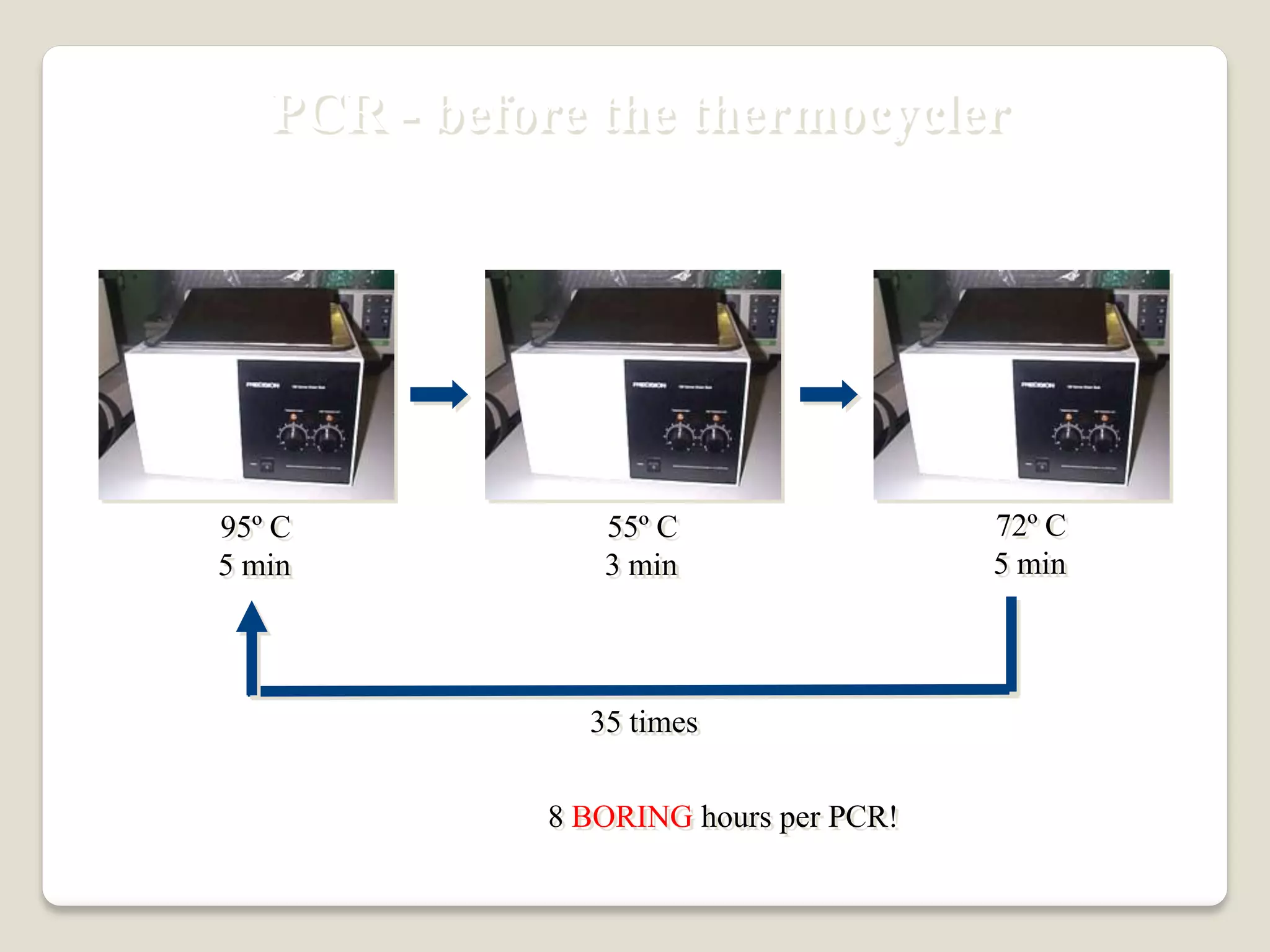
PCR - before the thermocycler
8 BORING hours per PCR!
95º C
5 min
35 times
55º C
3 min
72º C
5 min
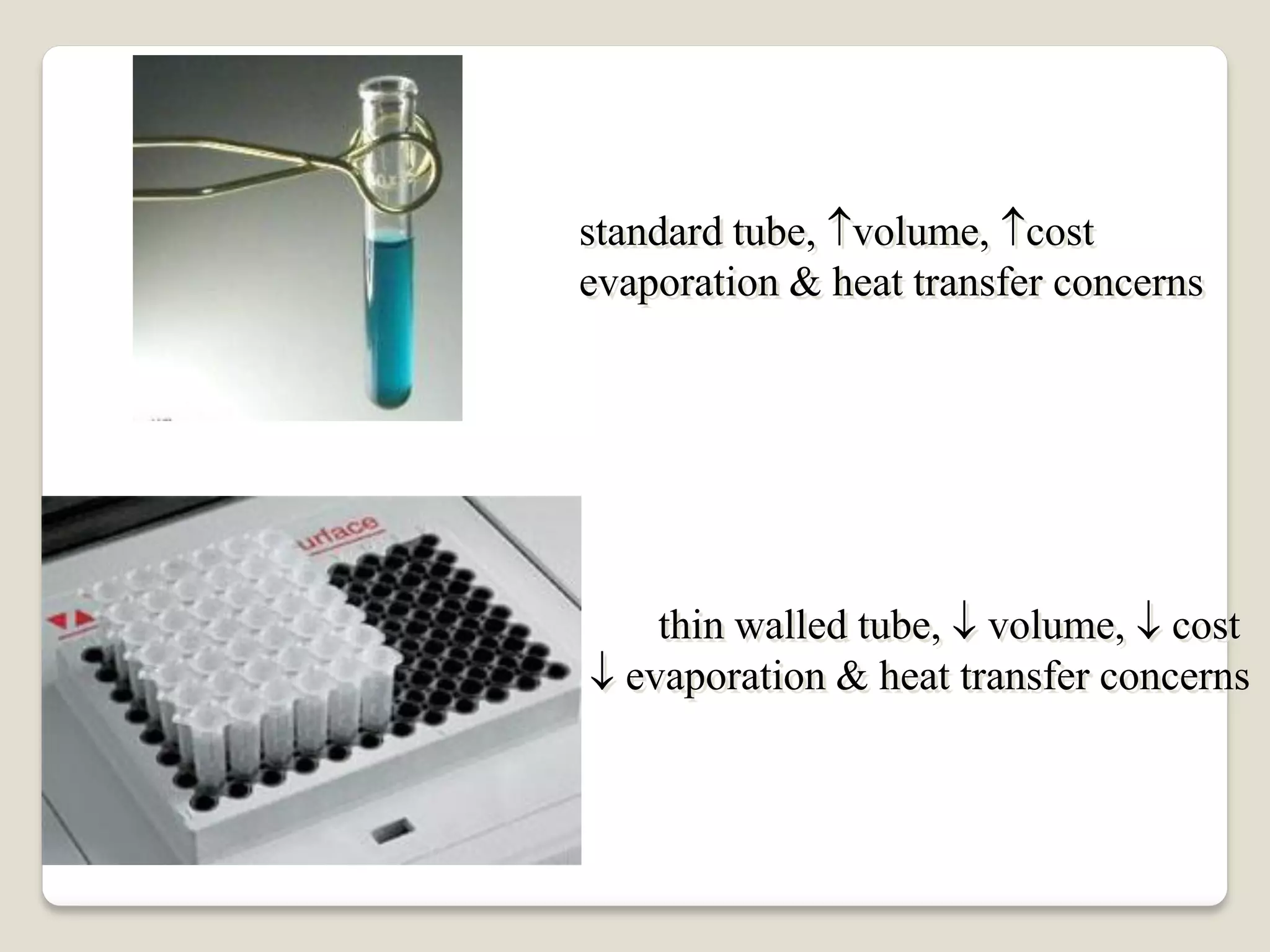
standard tube, volume, cost
evaporation & heat transfer concerns
thin walled tube,  volume,  cost
 evaporation & heat transfer concerns
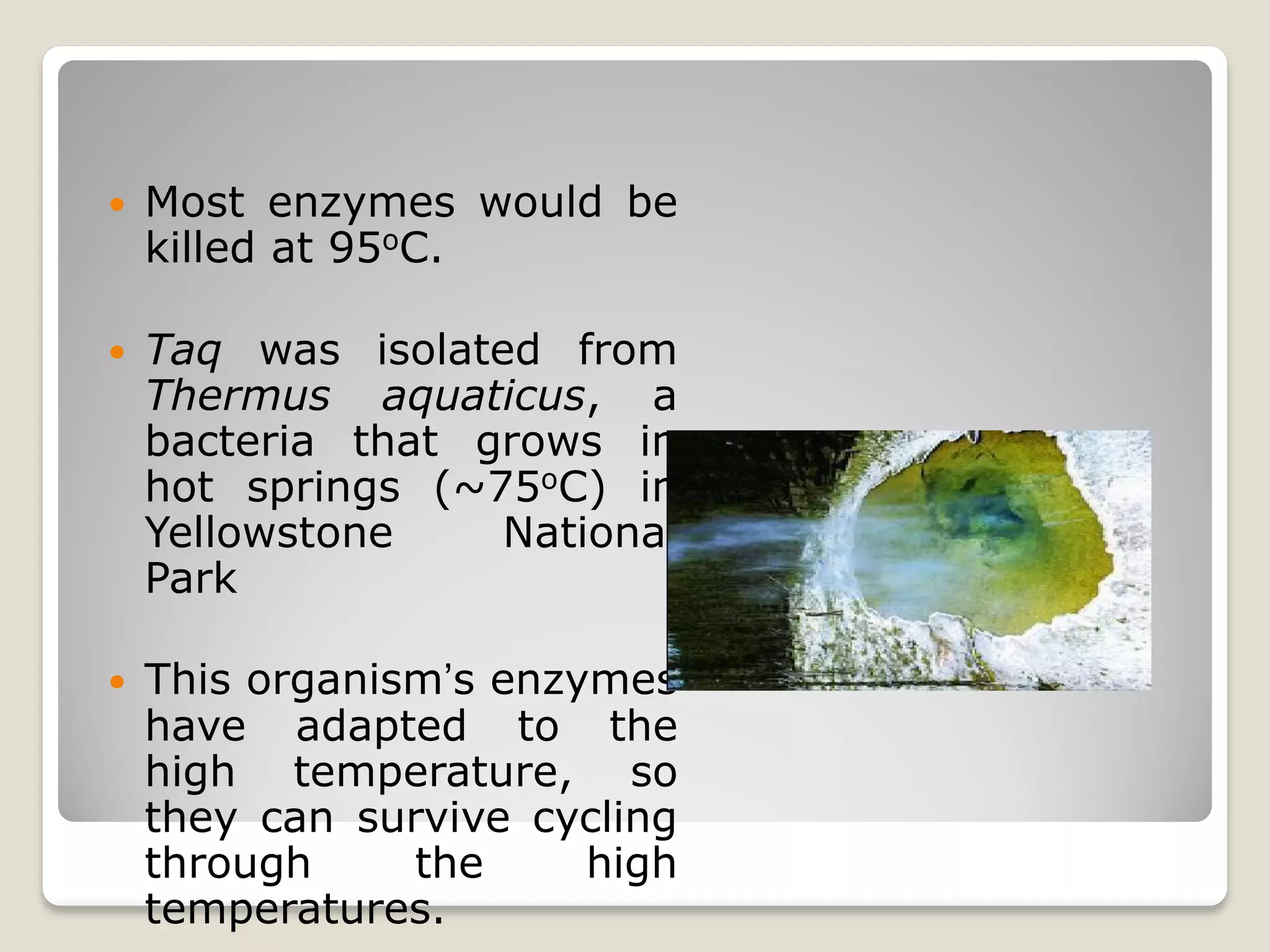
 Most enzymes would be
killed at 95oC.
 Taq was isolated from
Thermus aquaticus, a
bacteria that grows in
hot springs (~75oC) in
Yellowstone National
Park
 This organism’s enzymes
have adapted to the
high temperature, so
they can survive cycling
through the high
temperatures.
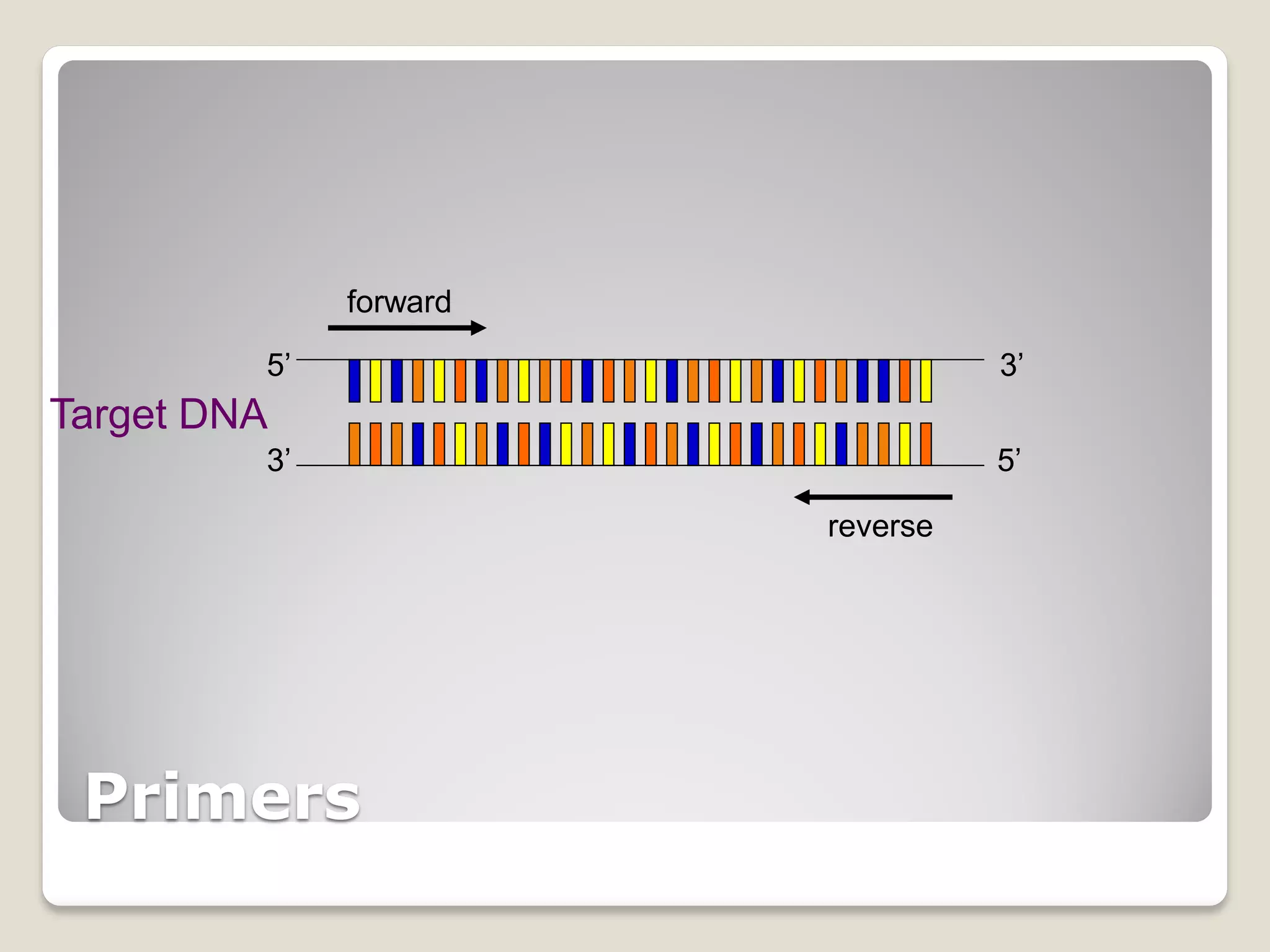
Primers
Target DNA
5’ 3’
3’ 5’
forward
reverse
Primers
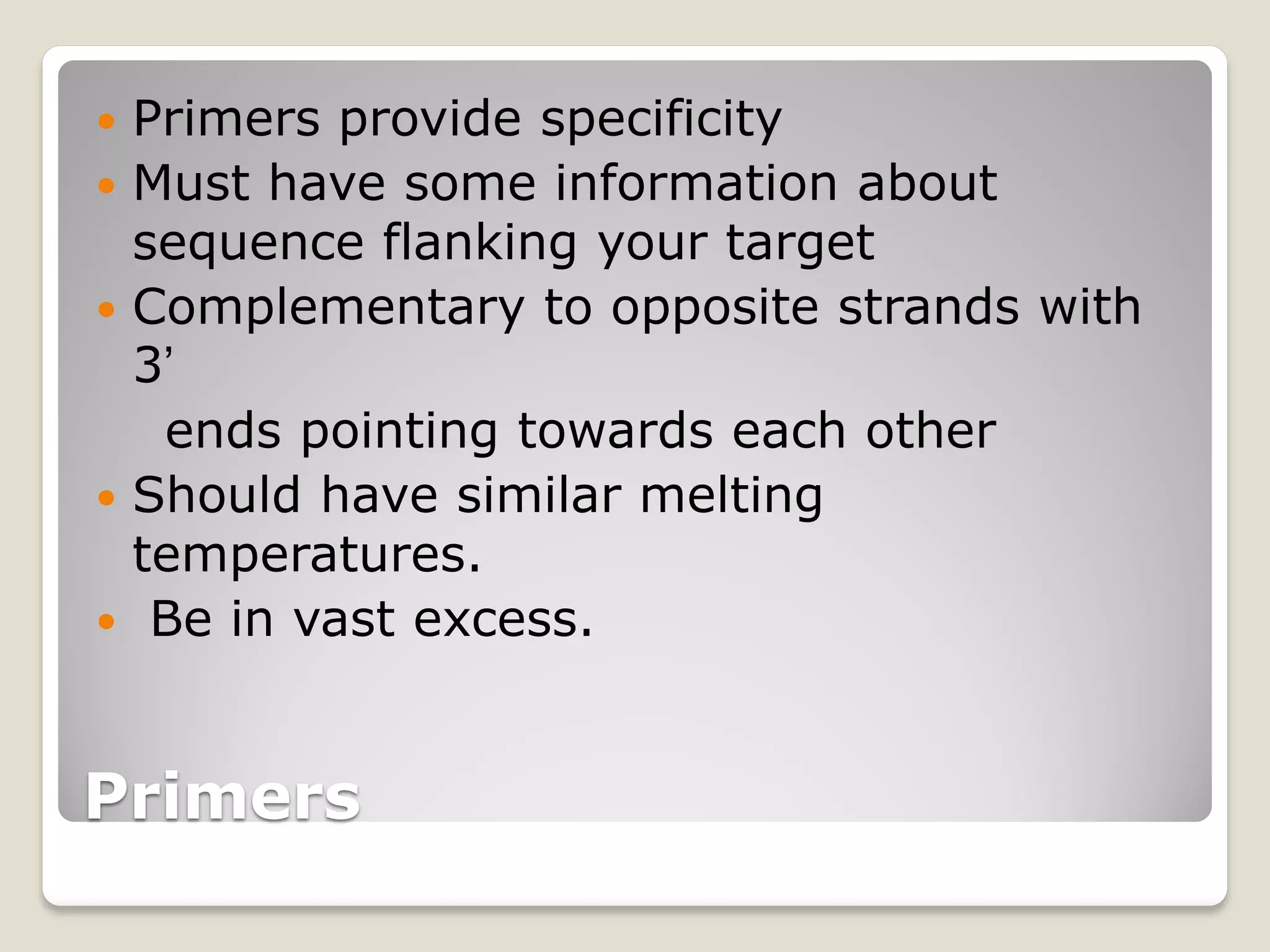
 Primers provide specificity
 Must have some information about
sequence flanking your target
 Complementary to opposite strands with
3’
ends pointing towards each other
 Should have similar melting
temperatures.
 Be in vast excess.
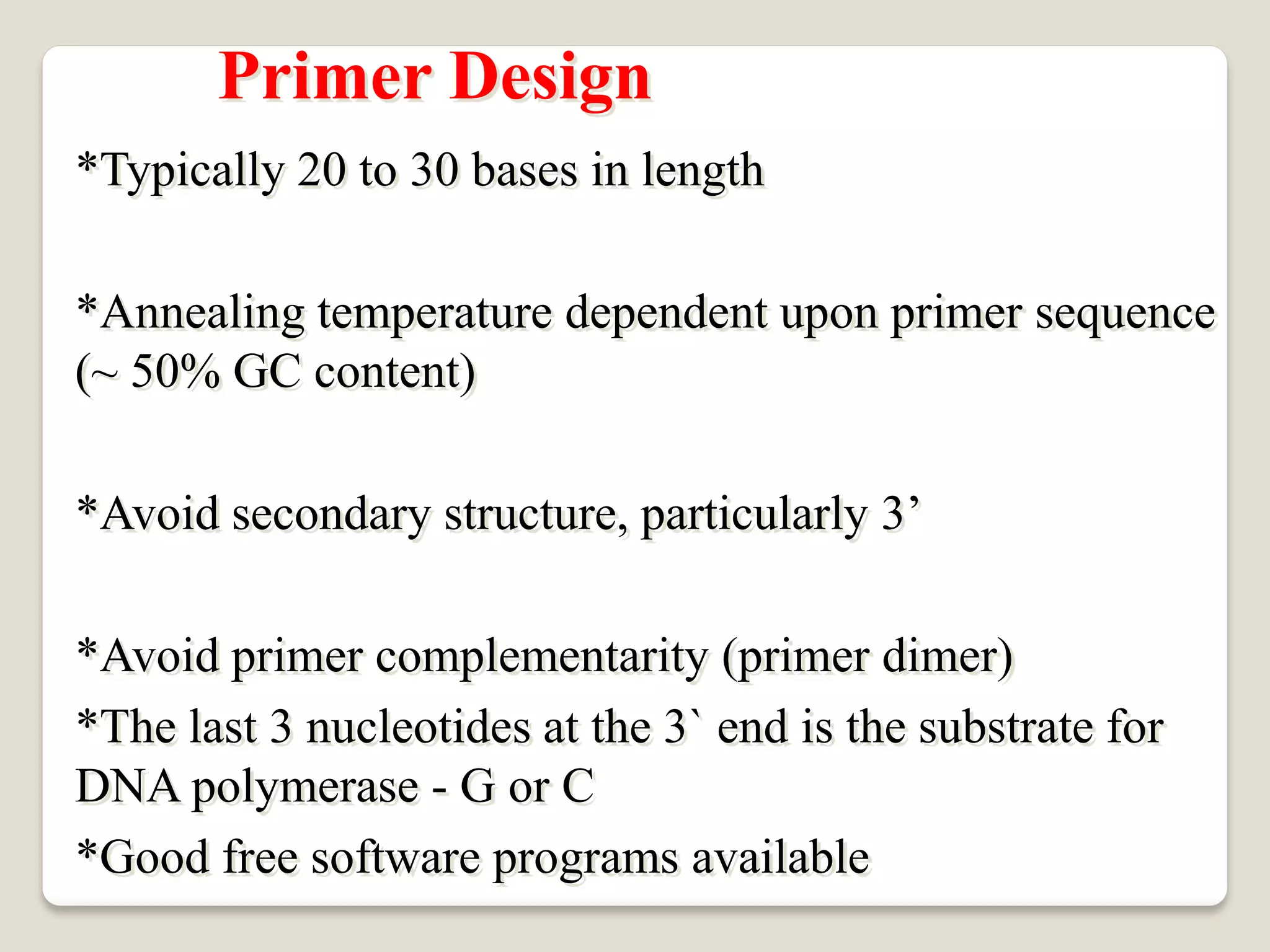
Primer Design
*Typically 20 to 30 bases in length
*Annealing temperature dependent upon primer sequence
(~ 50% GC content)
*Avoid secondary structure, particularly 3’
*Avoid primer complementarity (primer dimer)
*The last 3 nucleotides at the 3` end is the substrate for
DNA polymerase - G or C
*Good free software programs available
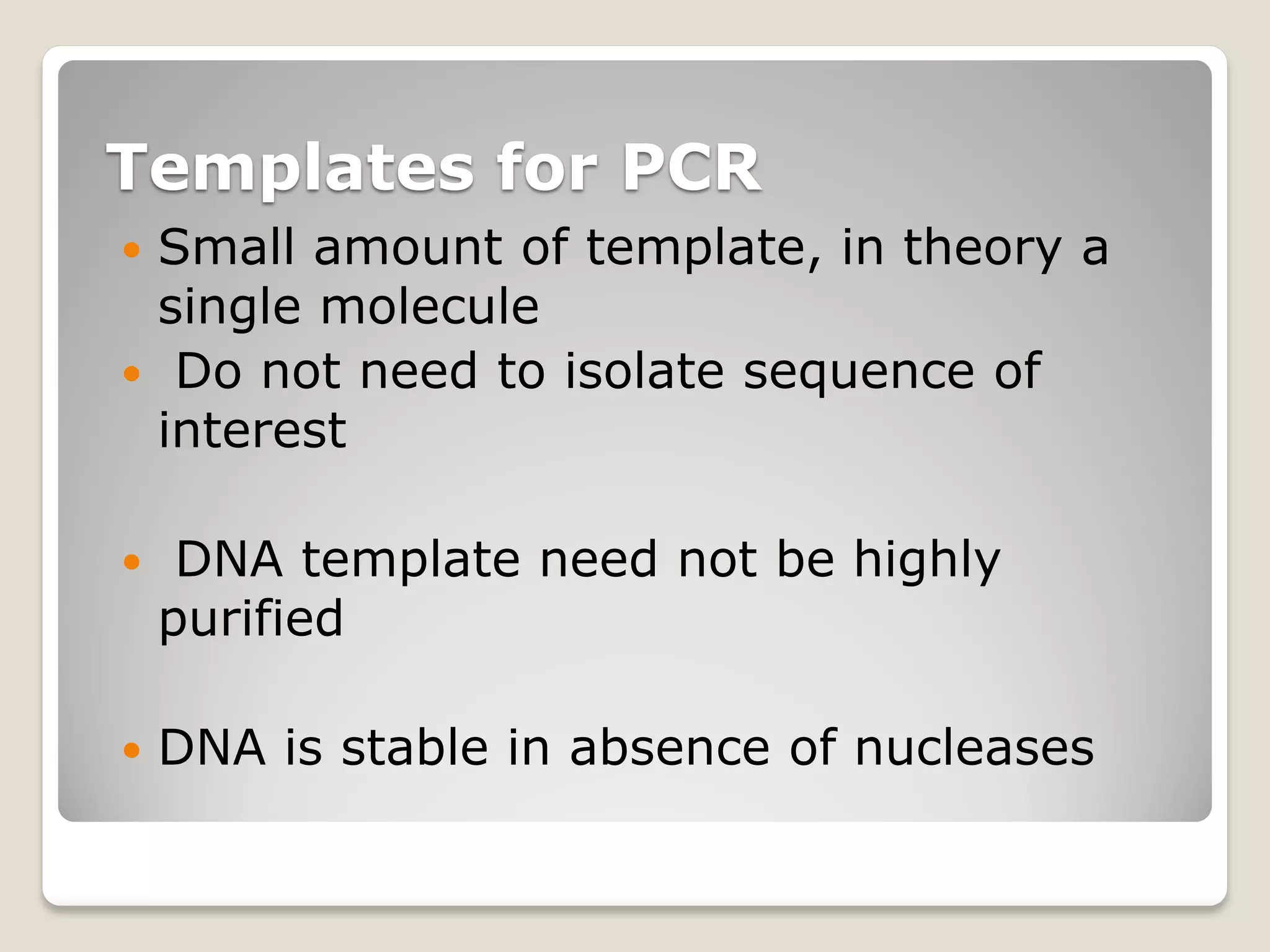
Templates for PCR
 Small amount of template, in theory a
single molecule
 Do not need to isolate sequence of
interest
 DNA template need not be highly
purified
 DNA is stable in absence of nucleases
Templates
 Dried blood
 Semen stains
 Vaginal swabs
 Single hair
 Fingernail scrapings
 Insects in Amber
 Egyptian mummies
 Buccal Swab
 Toothbrushes
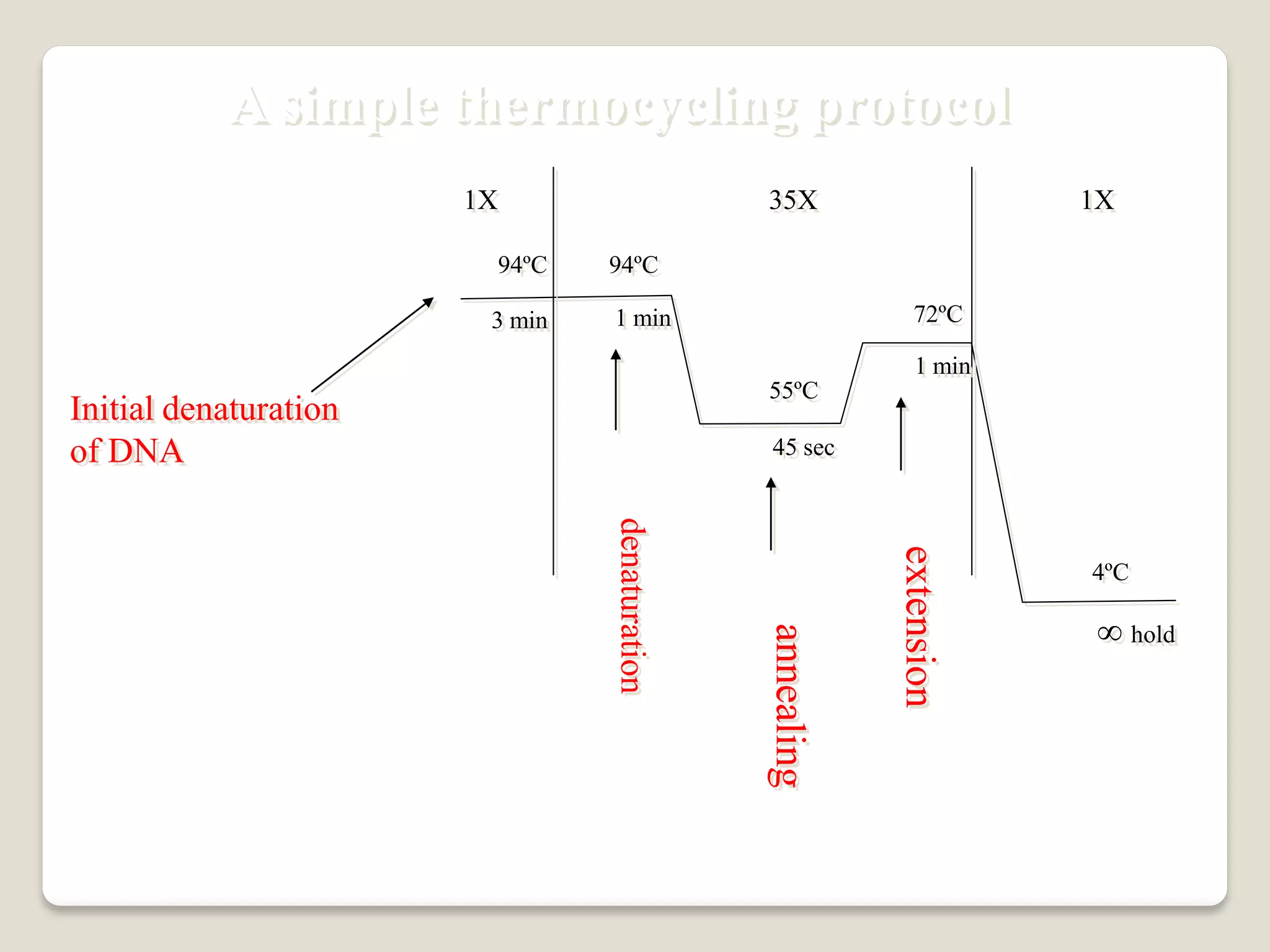
A simple thermocycling protocol
annealing
94ºC 94ºC
55ºC
72ºC
4ºC
3 min 1 min
45 sec
1 min
∞ hold
Initial denaturation
of DNA
1X 35X 1X
extension
denaturation
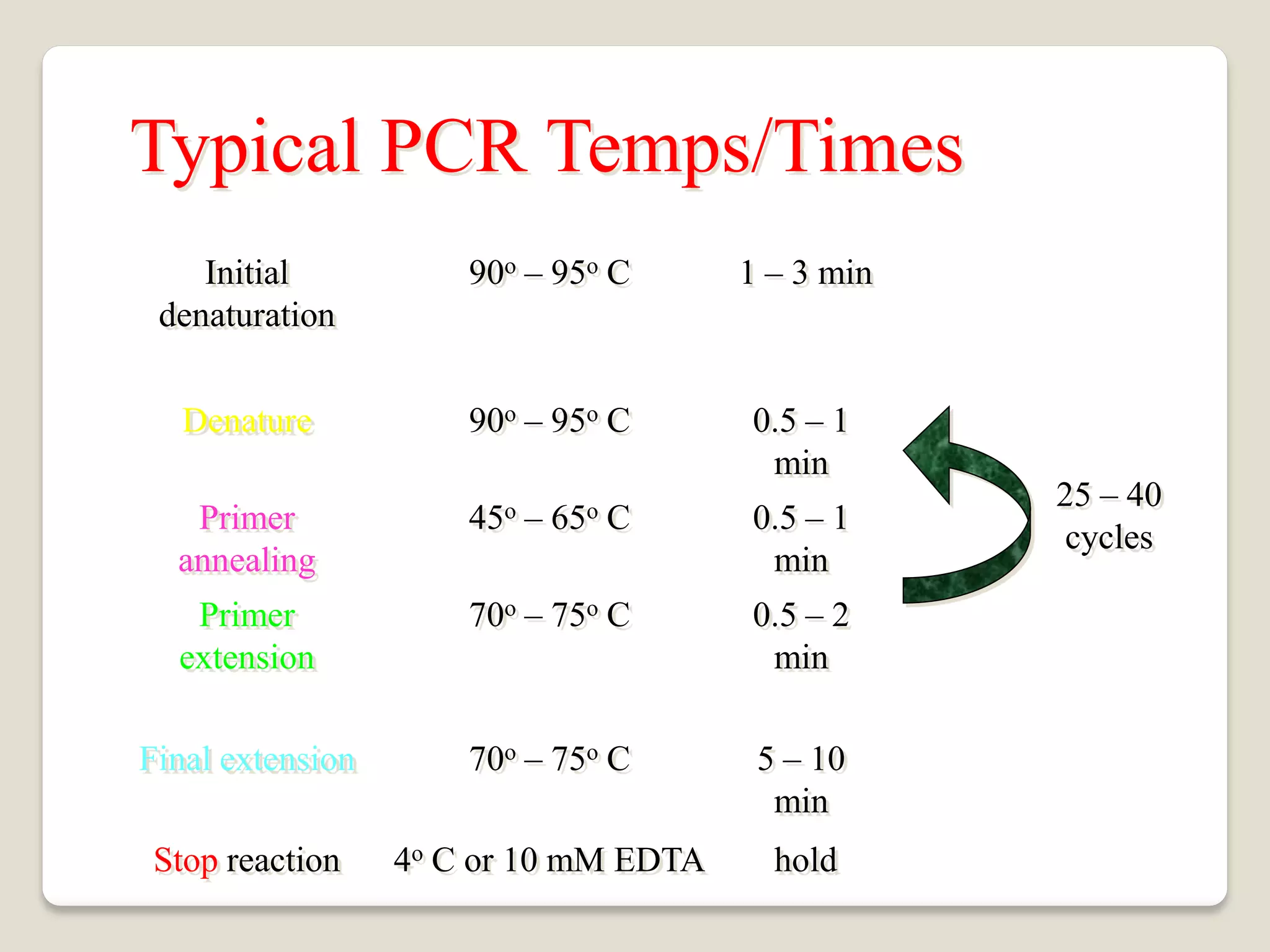
Typical PCR Temps/Times
hold
4o C or 10 mM EDTA
Stop reaction
5 – 10
min
70o – 75o C
Final extension
0.5 – 2
min
70o – 75o C
Primer
extension
0.5 – 1
min
45o – 65o C
Primer
annealing
0.5 – 1
min
90o – 95o C
Denature
1 – 3 min
90o – 95o C
Initial
denaturation
25 – 40
cycles
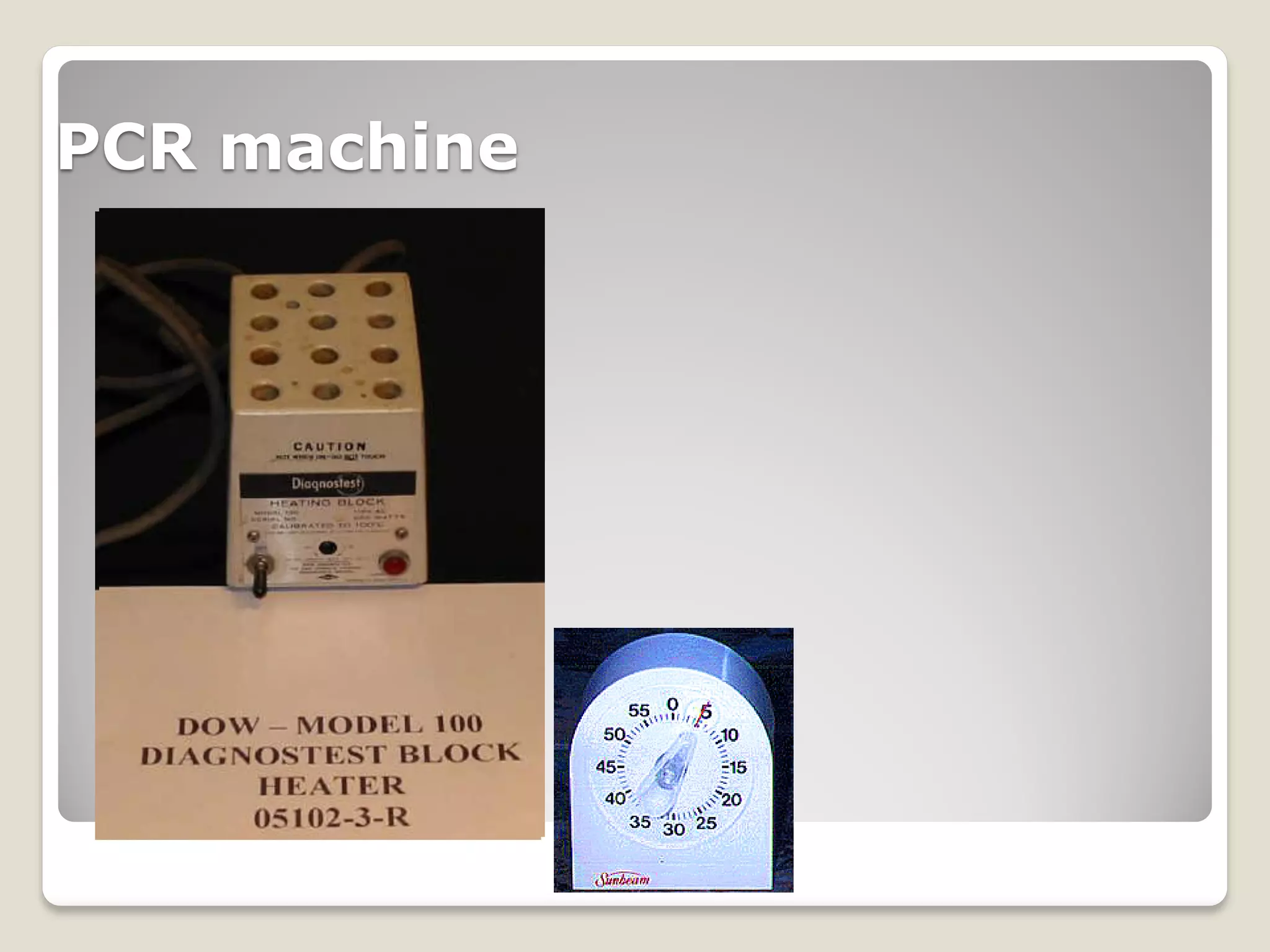
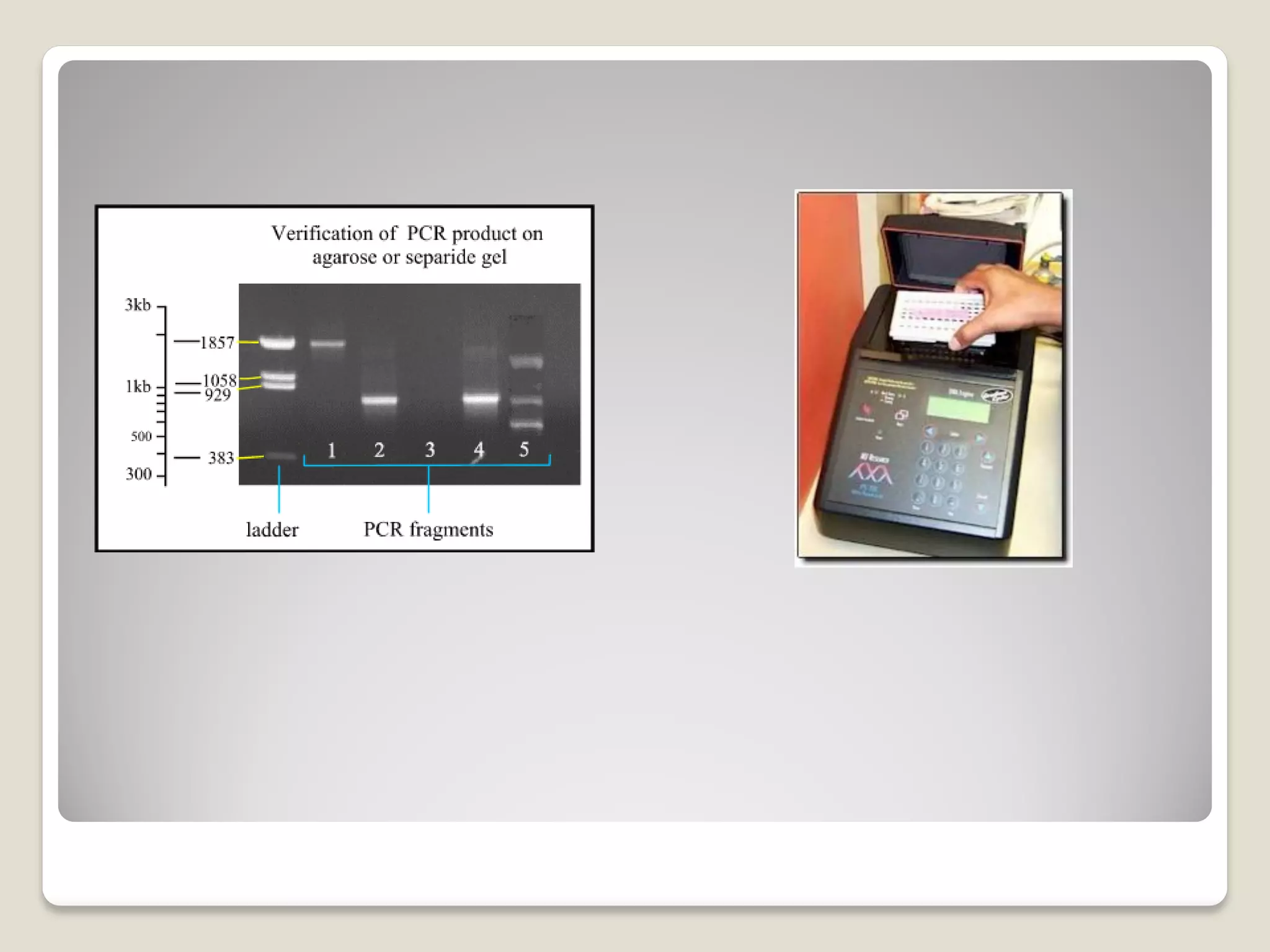
PCR machine
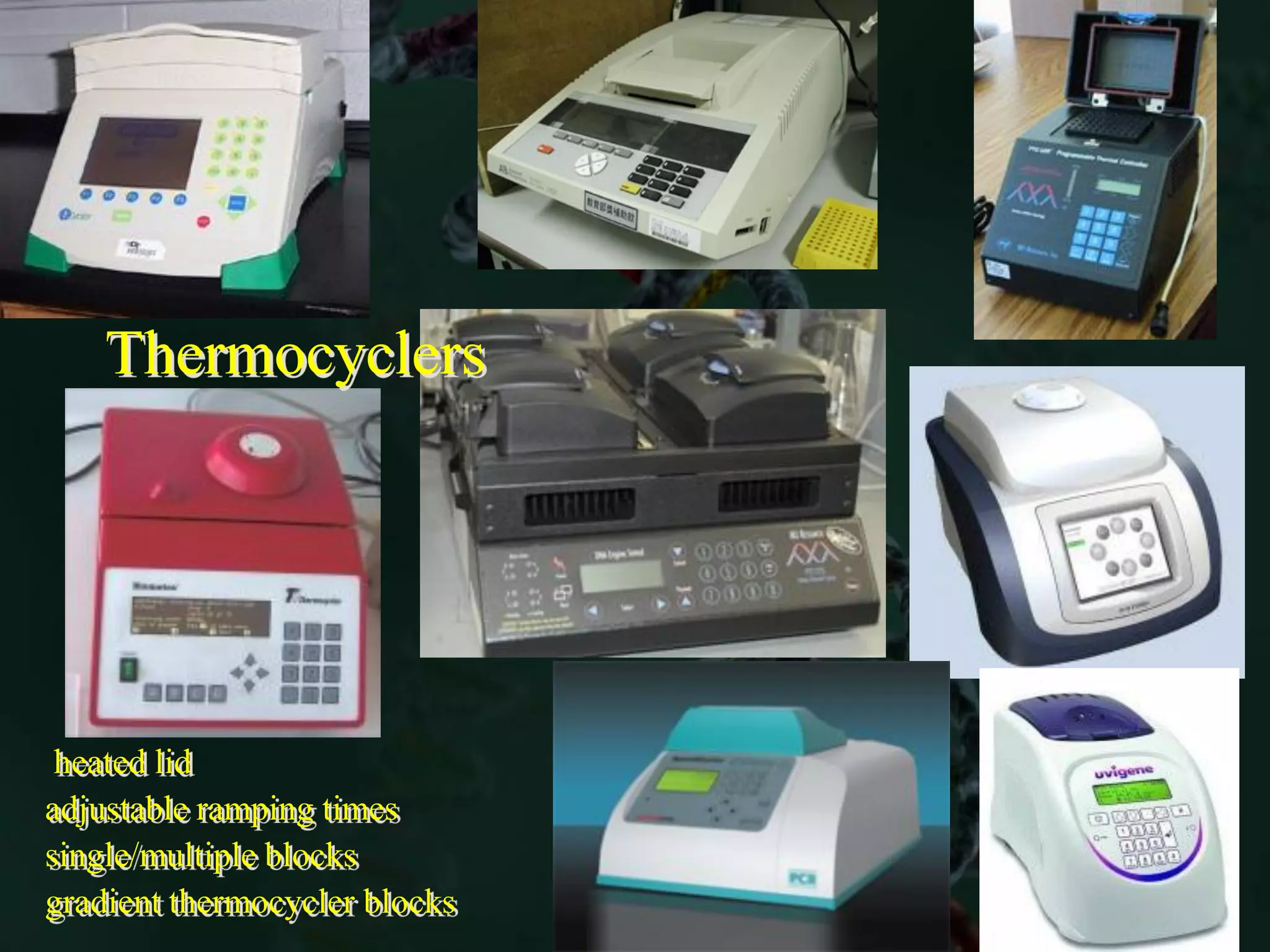
The PCR machine
 Very rapidly changes
the temperature
between the various
stages of the PCR
process
 Programmable for
use with many
different cycling
parameters
heated lid
adjustable ramping times
single/multiple blocks
gradient thermocycler blocks
Thermocyclers
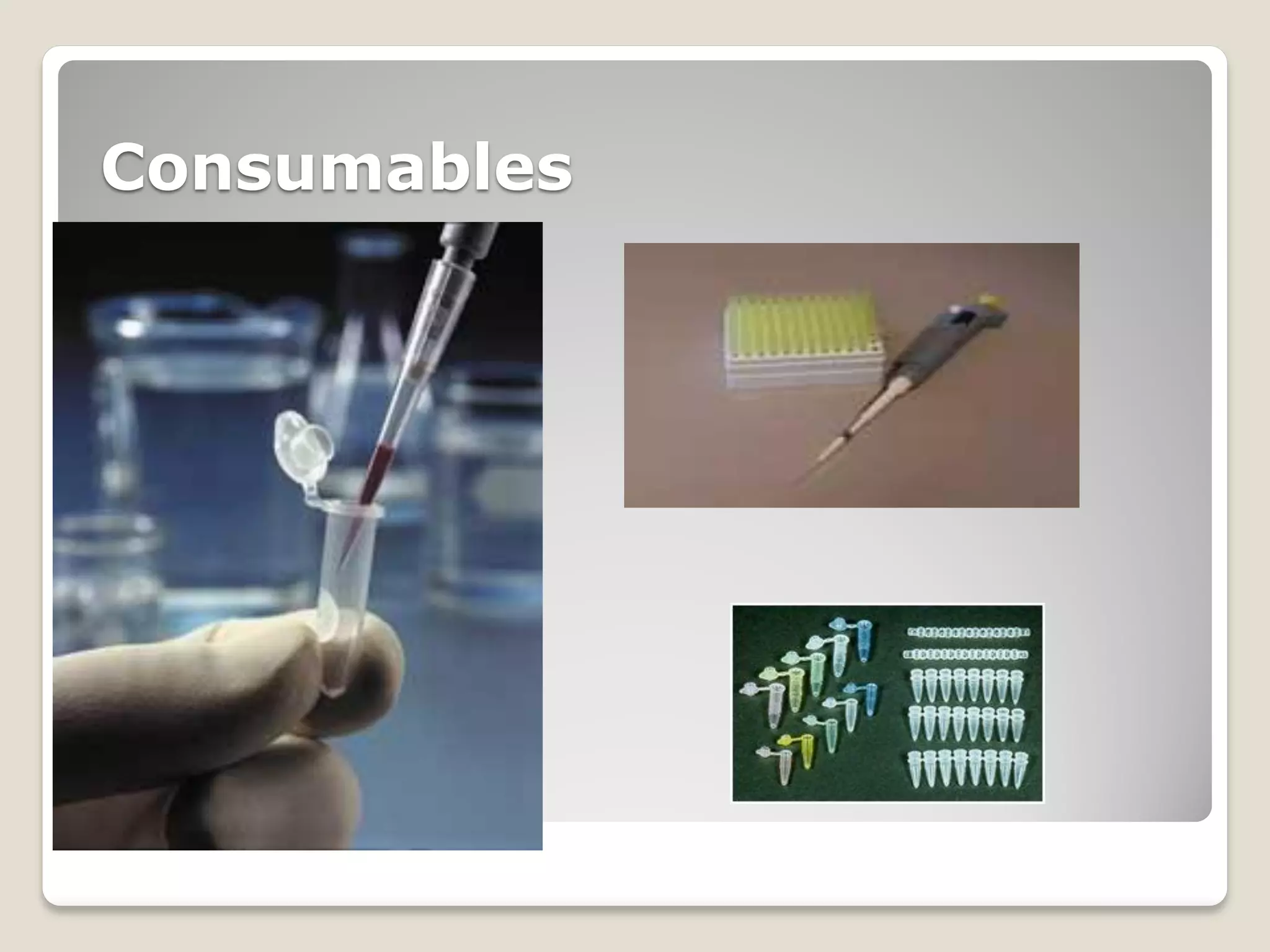
Consumables
Advances due to PCR
 Generate very large quantities of
specific DNA sequences, aiding
in cloning
 Genomic sequencing
 DNA “fingerprinting”--forensic
science
 Disease diagnosis
 Paternity determination
 Mutation detection
 Taxonomy
 Many more to come….
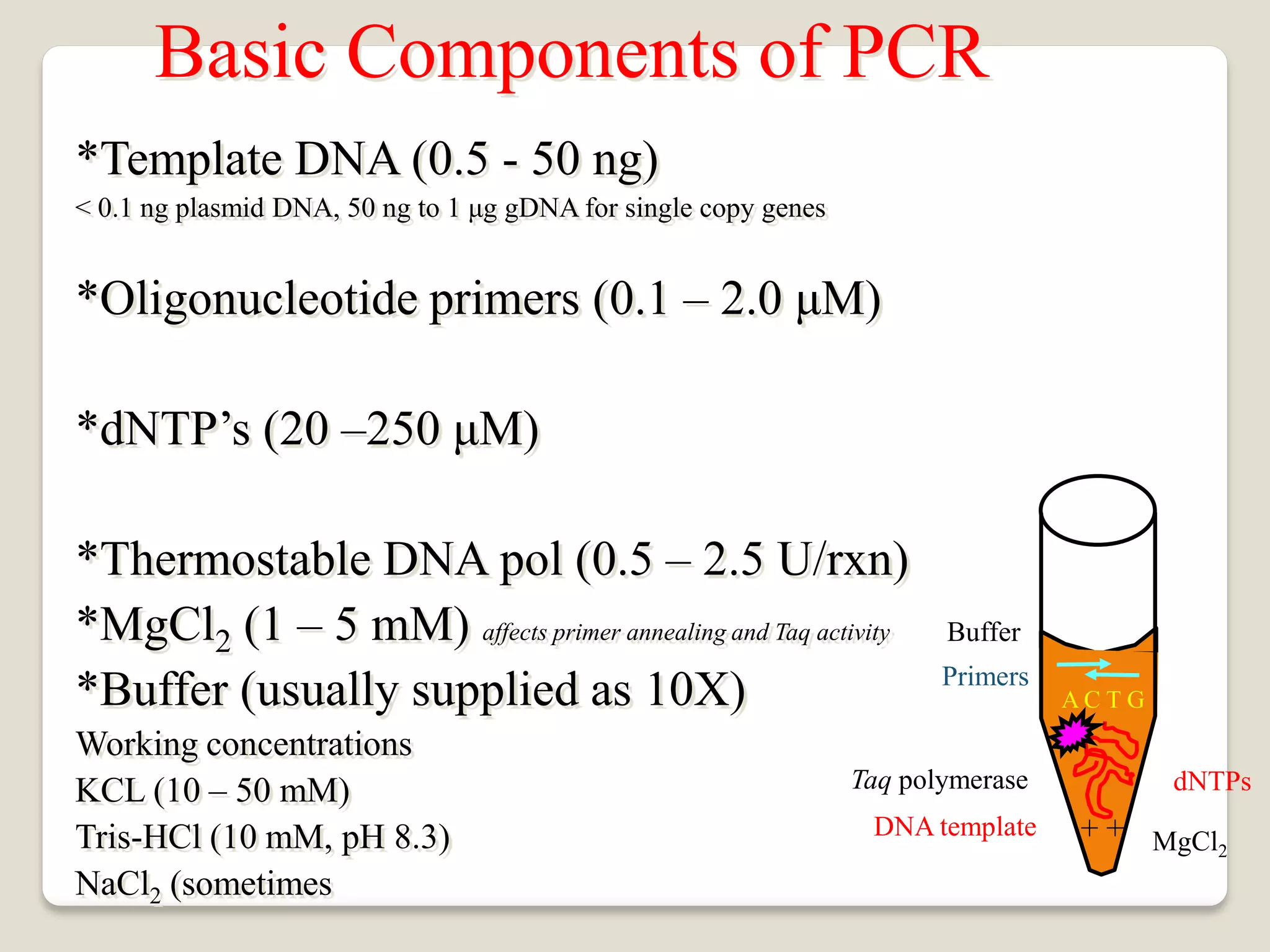
Basic Components of PCR
*Template DNA (0.5 - 50 ng)
< 0.1 ng plasmid DNA, 50 ng to 1 μg gDNA for single copy genes
*Oligonucleotide primers (0.1 – 2.0 μM)
*dNTP’s (20 –250 μM)
*Thermostable DNA pol (0.5 – 2.5 U/rxn)
*MgCl2 (1 – 5 mM) affects primer annealing and Taq activity
*Buffer (usually supplied as 10X)
Working concentrations
KCL (10 – 50 mM)
Tris-HCl (10 mM, pH 8.3)
NaCl2 (sometimes
dNTPs
Taq polymerase
Primers
DNA template
Buffer
+ +
A C T G
MgCl2
Common PCR additives
BSA (usually at 0.1 to 0.8 µg/µL final concentration)
Stabilize Taq polymerase & overcome PCR inhibitors
DMSO (usually at 2-5% v/v, inhibitory at ≤ 10% v/v)
Denaturant - good at keeping GC rich template/primer strands from forming
secondary structures.
Glycerol (usually at 5-10% v/v)
Increases apparent concentration of primer/template mix, and often
increases PCR efficiency at high temperatures.
Stringency enhancers (Formamide, Betaine, TMAC)
Concentrations used vary by type Enhances yield and reduces non-specific
priming
Non-ionic detergents (Triton X, Tween 20 or Nonidet P-40) (0.1–1%)
% of normal)
10
activity to ~
Taq
% SDS cuts
01
.
0
SDS (
NOT
Stabilize Taq polymerase & suppress formation of 2º structure
Rules of thumb for PCR conditions
Add an extra 3-5 minute (longer for Hot-start Taq) to your cycle
profile to ensure everything is denatured prior to starting the PCR
reaction
Approximate melting temperature (Tm) = [(2 x (A+T)) +(4 x
(G+C))]ºC
If GC content is < 50% start 5ºC beneath Tm for annealing temperature
If GC content ≥ 50% start at Tm for annealing temperature
Extension @ 72ºC: rule of thumb is ~500 nucleotide per minute.
Use 3 minutes as an upper limit without special enzymes
“Special” PCR cycling protocols
Touchdown PCR
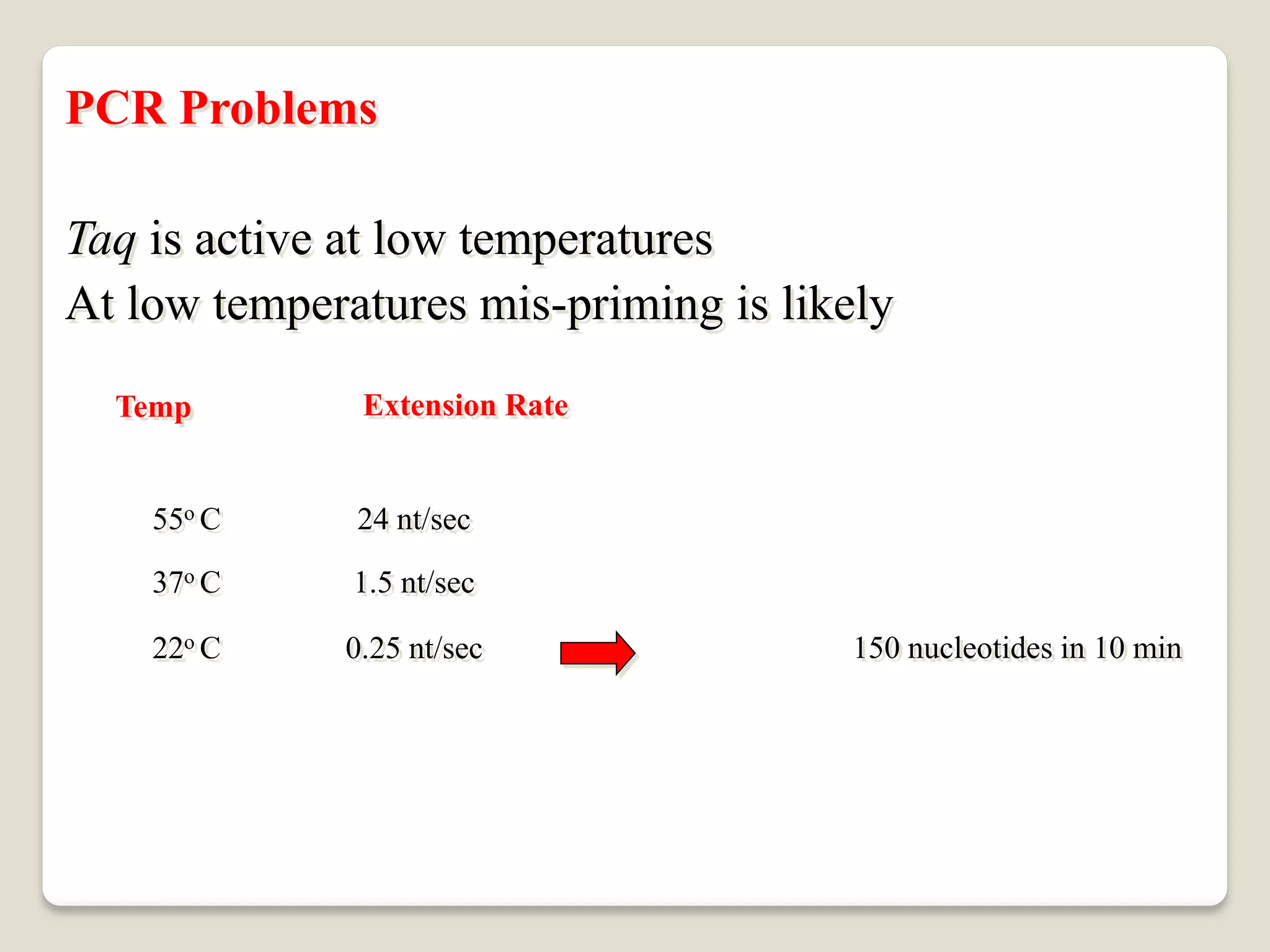
PCR Problems
Taq is active at low temperatures
At low temperatures mis-priming is likely
Extension Rate
Temp
0.25 nt/sec
22o C
1.5 nt/sec
37o C
24 nt/sec
55o C
150 nucleotides in 10 min
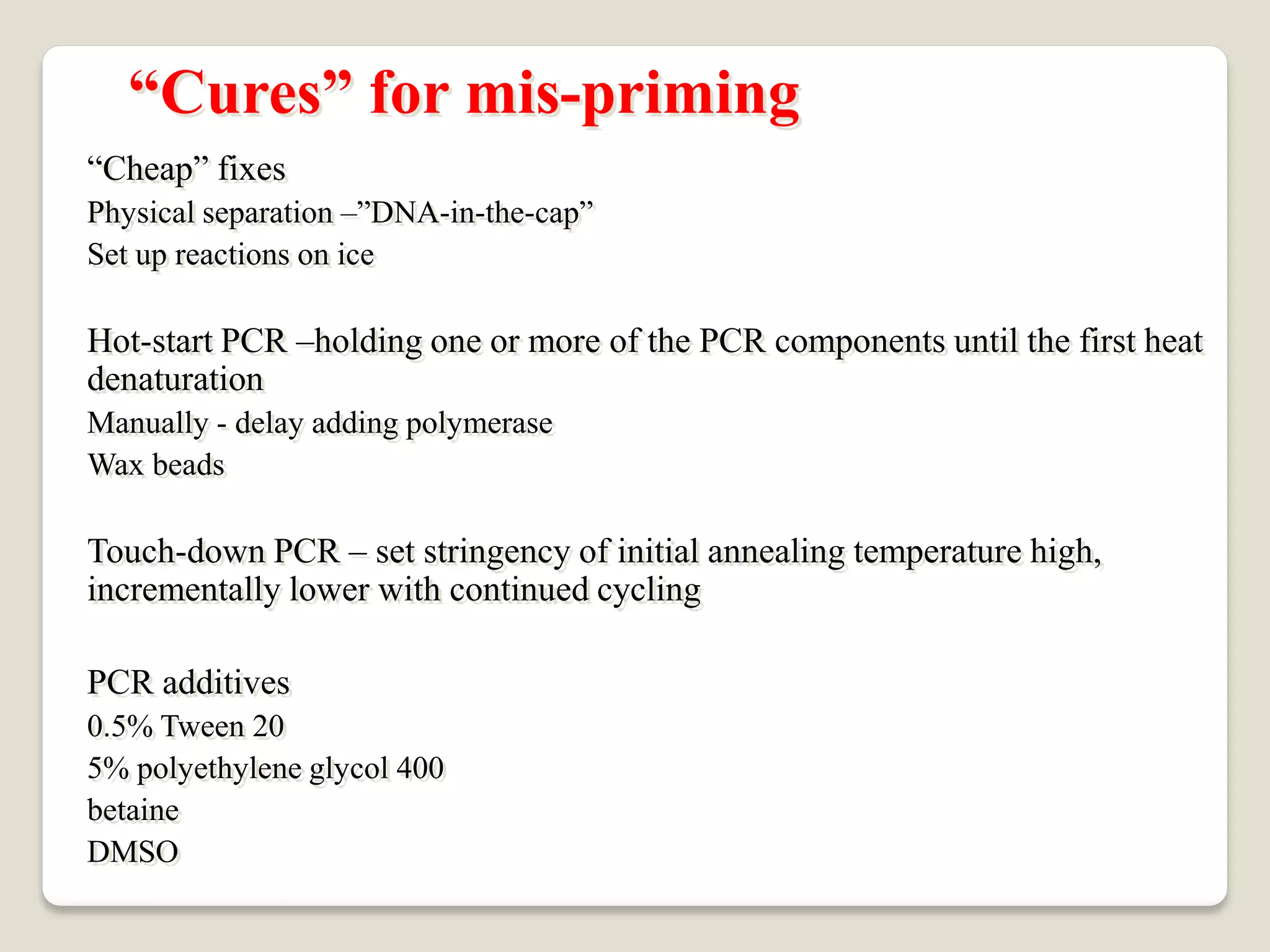
“Cheap” fixes
Physical separation –”DNA-in-the-cap”
Set up reactions on ice
Hot-start PCR –holding one or more of the PCR components until the first heat
denaturation
Manually - delay adding polymerase
Wax beads
Touch-down PCR – set stringency of initial annealing temperature high,
incrementally lower with continued cycling
PCR additives
0.5% Tween 20
5% polyethylene glycol 400
betaine
DMSO
“Cures” for mis-priming

مي....PCR.pdf

  • 1.
    Polymerase chain Reaction (PCR) MaiMasri Faculty of Science Department of Zoology
  • 2.
    Polymerase Chain Reaction (PCR) One of the most powerful tools in molecular biology  Invented by Kary Mullis in 1983.  This process acts as a “copying machine” for DNA 1993 Nobel Prize in Chemistry
  • 3.
    What is PCR Anin vitro (cloning) method for the enzymatic synthesis of specific DNA sequences. Selective amplification of target DNA from a heterogeneous, complex DNC/cDNA population
  • 4.
    Why PCR (amplify) DNA? 1. Simple 2. Powerful A. Sensitive B. Specific C. Reliable , fidelity 3. Fast
  • 5.
    The reaction mixture Free nucleotides (A, G, T, C)  DNA polymerase  DNA (purified or a crude extract)  Primers specific for the target DNA  Buffer (containing magnesium)
  • 6.
    The basic protocol—what’sin the tube Target DNA 5’ 3’ 3’ 5’ primers A B Free nucleotides Taq DNA polymerase Mg2+ Mg2+ Mg2+ Mg2+ Mg2+ Mg2+ Buffer containing magnesium
  • 7.
    The basic protocol-- denaturation TargetDNA 95oC 5’ 3’ 3’ 5’ 5’ 3’ 3’ 5’
  • 8.
    The basic protocol--annealing ~55oC 5’3’ 3’ 5’ 5’ 3’ 3’ 5’ 5’ 5’ Target DNA A B primers A B
  • 9.
    The basic protocol--extension 72oC 5’3’ 3’ 5’ 5’ 3’ 3’ 5’ 5’ 5’ Target DNA Taq polymerase
  • 10.
    The basic protocol--extension 72oC 5’3’ 3’ 5’ 5’ 3’ 3’ 5’ 5’ 5’ Target DNA
  • 11.
    The basic protocol 1.Denaturation of DNA to single strands 2. Annealing of primers to DNA 3. Extension by polymerase 4. Repeat 30-35 times
  • 12.
    One One billionin about 2 hours!  At the end of each cycle, the amount of DNA has doubled  In theory, each target DNA molecule is duplicated during every cycle. This means that 30 cycles would produce 230 (=109) molecules from a single target molecule. In reality, the yield is lower, especially in later cycles. 230=1,073,741,824
  • 13.
    PCR - beforethe thermocycler 8 BORING hours per PCR! 95º C 5 min 35 times 55º C 3 min 72º C 5 min
  • 14.
    standard tube, volume,cost evaporation & heat transfer concerns thin walled tube,  volume,  cost  evaporation & heat transfer concerns
  • 15.
     Most enzymeswould be killed at 95oC.  Taq was isolated from Thermus aquaticus, a bacteria that grows in hot springs (~75oC) in Yellowstone National Park  This organism’s enzymes have adapted to the high temperature, so they can survive cycling through the high temperatures.
  • 16.
  • 17.
    Primers  Primers providespecificity  Must have some information about sequence flanking your target  Complementary to opposite strands with 3’ ends pointing towards each other  Should have similar melting temperatures.  Be in vast excess.
  • 18.
    Primer Design *Typically 20to 30 bases in length *Annealing temperature dependent upon primer sequence (~ 50% GC content) *Avoid secondary structure, particularly 3’ *Avoid primer complementarity (primer dimer) *The last 3 nucleotides at the 3` end is the substrate for DNA polymerase - G or C *Good free software programs available
  • 19.
    Templates for PCR Small amount of template, in theory a single molecule  Do not need to isolate sequence of interest  DNA template need not be highly purified  DNA is stable in absence of nucleases
  • 20.
    Templates  Dried blood Semen stains  Vaginal swabs  Single hair  Fingernail scrapings  Insects in Amber  Egyptian mummies  Buccal Swab  Toothbrushes
  • 21.
    A simple thermocyclingprotocol annealing 94ºC 94ºC 55ºC 72ºC 4ºC 3 min 1 min 45 sec 1 min ∞ hold Initial denaturation of DNA 1X 35X 1X extension denaturation
  • 22.
    Typical PCR Temps/Times hold 4oC or 10 mM EDTA Stop reaction 5 – 10 min 70o – 75o C Final extension 0.5 – 2 min 70o – 75o C Primer extension 0.5 – 1 min 45o – 65o C Primer annealing 0.5 – 1 min 90o – 95o C Denature 1 – 3 min 90o – 95o C Initial denaturation 25 – 40 cycles
  • 23.
  • 24.
    The PCR machine Very rapidly changes the temperature between the various stages of the PCR process  Programmable for use with many different cycling parameters
  • 25.
    heated lid adjustable rampingtimes single/multiple blocks gradient thermocycler blocks Thermocyclers
  • 26.
  • 28.
    Advances due toPCR  Generate very large quantities of specific DNA sequences, aiding in cloning  Genomic sequencing  DNA “fingerprinting”--forensic science  Disease diagnosis  Paternity determination  Mutation detection  Taxonomy  Many more to come….
  • 29.
    Basic Components ofPCR *Template DNA (0.5 - 50 ng) < 0.1 ng plasmid DNA, 50 ng to 1 μg gDNA for single copy genes *Oligonucleotide primers (0.1 – 2.0 μM) *dNTP’s (20 –250 μM) *Thermostable DNA pol (0.5 – 2.5 U/rxn) *MgCl2 (1 – 5 mM) affects primer annealing and Taq activity *Buffer (usually supplied as 10X) Working concentrations KCL (10 – 50 mM) Tris-HCl (10 mM, pH 8.3) NaCl2 (sometimes dNTPs Taq polymerase Primers DNA template Buffer + + A C T G MgCl2
  • 30.
    Common PCR additives BSA(usually at 0.1 to 0.8 µg/µL final concentration) Stabilize Taq polymerase & overcome PCR inhibitors DMSO (usually at 2-5% v/v, inhibitory at ≤ 10% v/v) Denaturant - good at keeping GC rich template/primer strands from forming secondary structures. Glycerol (usually at 5-10% v/v) Increases apparent concentration of primer/template mix, and often increases PCR efficiency at high temperatures. Stringency enhancers (Formamide, Betaine, TMAC) Concentrations used vary by type Enhances yield and reduces non-specific priming Non-ionic detergents (Triton X, Tween 20 or Nonidet P-40) (0.1–1%) % of normal) 10 activity to ~ Taq % SDS cuts 01 . 0 SDS ( NOT Stabilize Taq polymerase & suppress formation of 2º structure
  • 31.
    Rules of thumbfor PCR conditions Add an extra 3-5 minute (longer for Hot-start Taq) to your cycle profile to ensure everything is denatured prior to starting the PCR reaction Approximate melting temperature (Tm) = [(2 x (A+T)) +(4 x (G+C))]ºC If GC content is < 50% start 5ºC beneath Tm for annealing temperature If GC content ≥ 50% start at Tm for annealing temperature Extension @ 72ºC: rule of thumb is ~500 nucleotide per minute. Use 3 minutes as an upper limit without special enzymes “Special” PCR cycling protocols Touchdown PCR
  • 32.
    PCR Problems Taq isactive at low temperatures At low temperatures mis-priming is likely Extension Rate Temp 0.25 nt/sec 22o C 1.5 nt/sec 37o C 24 nt/sec 55o C 150 nucleotides in 10 min
  • 33.
    “Cheap” fixes Physical separation–”DNA-in-the-cap” Set up reactions on ice Hot-start PCR –holding one or more of the PCR components until the first heat denaturation Manually - delay adding polymerase Wax beads Touch-down PCR – set stringency of initial annealing temperature high, incrementally lower with continued cycling PCR additives 0.5% Tween 20 5% polyethylene glycol 400 betaine DMSO “Cures” for mis-priming