Project Based Learning: Virtually AuthenticDr. Kerry Rice, Boise State UniversityBarbara Frey, Connections Academy
AgendaIntroductionsThe “Teacher” in Online TeachingConstructivist practices in a digital ageLCP’s + PBL = Best PracticeLesson Development
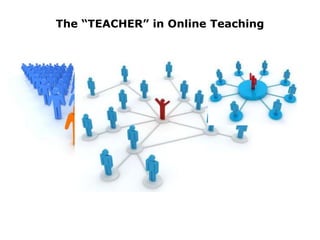
The “TEACHER” in Online Teaching
How are constructivist practices translated to the online environment?

From Theory to Practice
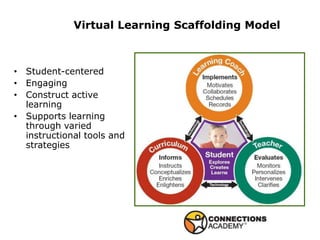
Learner Autonomy  Virtual Learning Scaffolding ModelLearner AutonomyLearner AutonomyStudent-centeredEngagingConstruct active learningSupports learning through varied instructional tools and strategies
Technology
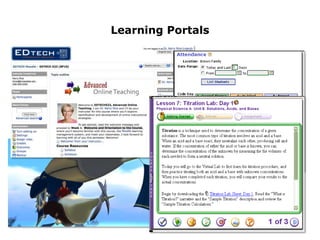
Learning Portals
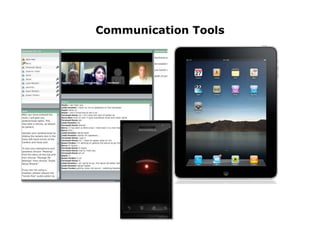
Communication Tools
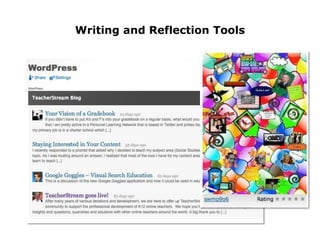
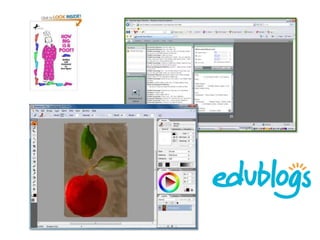
Writing and Reflection Tools
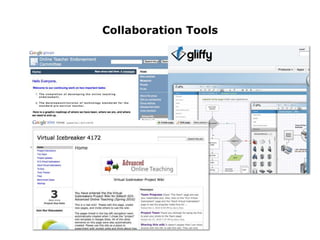
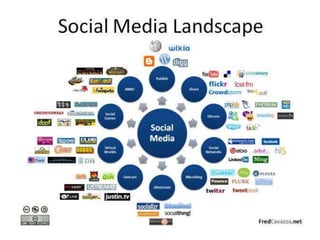
Collaboration Tools
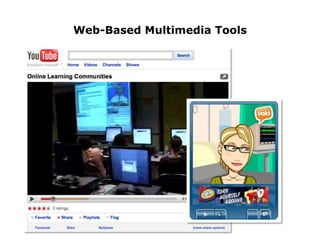
Web-Based Multimedia Tools
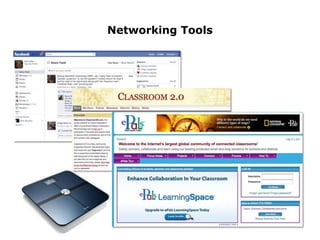
Networking Tools
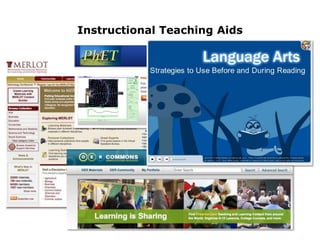
Instructional Teaching Aids
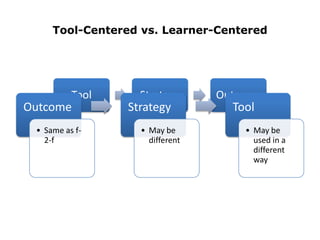
Tool-Centered vs. Learner-Centered
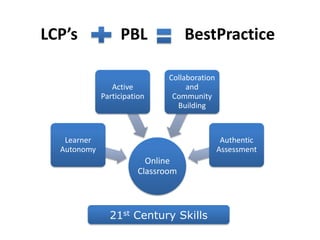
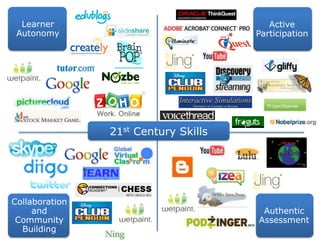
LCP’sPBLBestPractice21st Century Skills
Active ParticipationCollaboration and Community BuildingLearner AutonomyAuthentic Assessment21st Century Skills
The ability and motivation to take responsibilityfor one's own learning.Learner AutonomySupported through:Scaffolding and careful guidance Instructional learning aids Modeling and promptingCoaching strategiesReflective thinking and problem solving
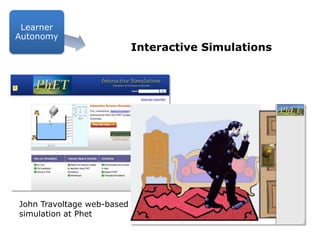
Learner AutonomyInteractive SimulationsLearner AutonomyJohn Travoltage web-based simulation at Phet
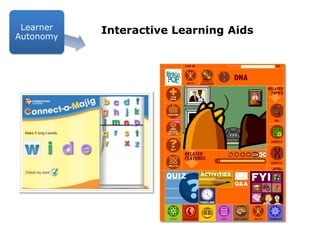
Interactive Learning AidsLearner Autonomy
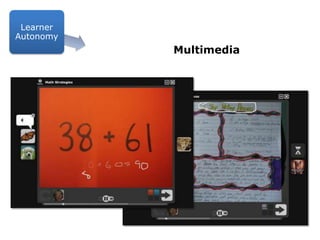
Learner AutonomyMultimediaLearner Autonomy
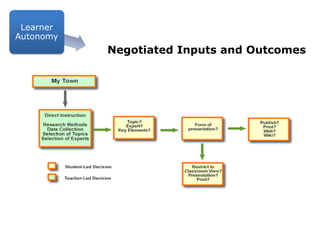
Learner AutonomyNegotiated Inputs and OutcomesLearner Autonomy
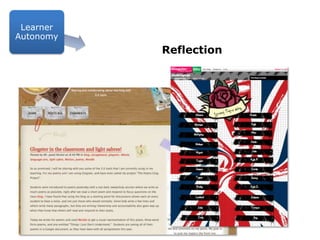
Learner AutonomyReflectionLearner Autonomy
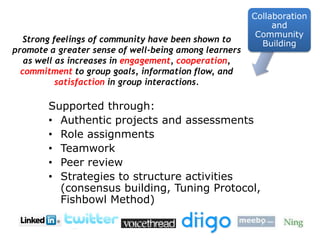
Collaboration and Community BuildingStrong feelings of community have been shown to promote a greater sense of well-being among learners as well as increases in engagement, cooperation, commitment to group goals, information flow, and satisfaction in group interactions.Supported through:Authentic projects and assessmentsRole assignmentsTeamworkPeer reviewStrategies to structure activities (consensus building, Tuning Protocol, Fishbowl Method)
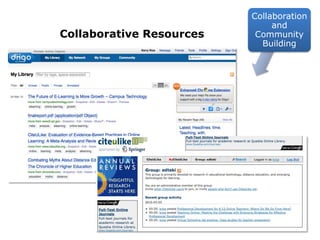
Collaboration and Community BuildingCollaborative Resources
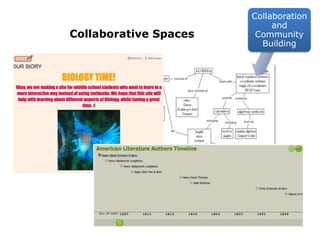
Collaboration and Community BuildingCollaborative Spaces
Collaboration and Community BuildingOnline Instructional SpacesRole PlayThink-Pair-Share by assigning email pals or “web-buddies”Modify fishbowl by dividing the class into 2 groups, allowing group 1 to contribute the first half of the week and group 2 to contribute the second half. Writing Roulette – each learner adds to expanding class storyClass voting and pollingDebateConsensus buildingStudent generated discussion questionsPeer review
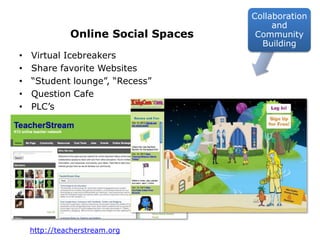
Collaboration and Community BuildingOnline Social SpacesVirtual IcebreakersShare favorite Websites“Student lounge”, “Recess”Question Cafe PLC’shttp://teacherstream.org
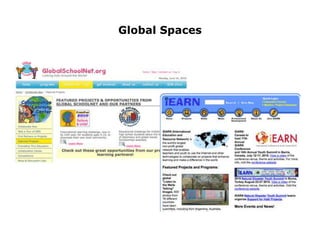
Global Spaces
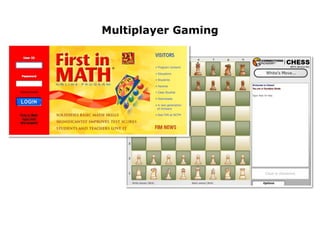
Multiplayer Gaming
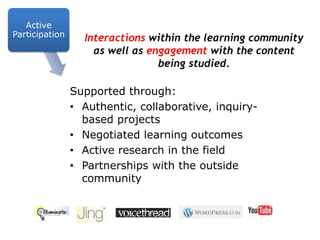
Active ParticipationInteractions within the learning community as well as engagement with the content being studied.Supported through:Authentic, collaborative, inquiry-based projectsNegotiated learning outcomes Active research in the fieldPartnerships with the outside community
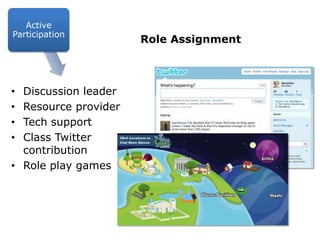
Active ParticipationRole AssignmentDiscussion leaderResource providerTech supportClass Twitter contributionRole play games
Active ParticipationChoice
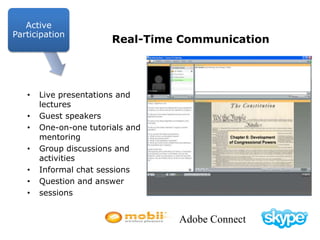
Active ParticipationReal-Time CommunicationLive presentations and lecturesGuest speakersOne-on-one tutorials and mentoringGroup discussions and activitiesInformal chat sessionsQuestion and answer sessionsAdobe Connect
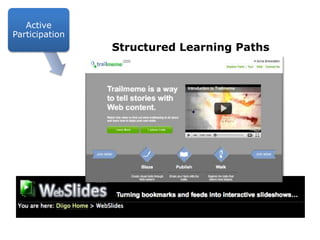
Active ParticipationStructured Learning Paths
Instructional environments that promote a process rather than an end product necessitate the development of assessments that are progressive rather than summative. Authentic AssessmentSupported through:Timely and consistent instructor and peer feedbackReflectionAuthentic purposeDissemination to “real-world” audiences
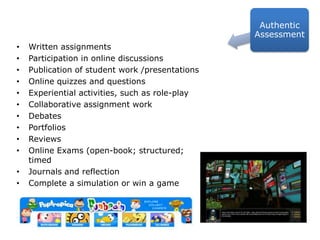
Written assignments Participation in online discussionsPublication of student work /presentationsOnline quizzes and questionsExperiential activities, such as role-playCollaborative assignment work DebatesPortfoliosReviewsOnline Exams (open-book; structured; timedJournals and reflectionComplete a simulation or win a gameAuthentic Assessment
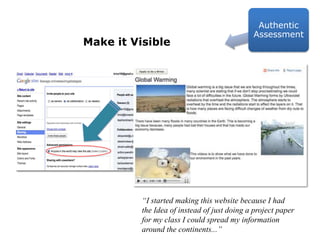
Make it VisibleAuthentic Assessment“I started making this website because I had the Idea of instead of just doing a project paper for my class I could spread my information around the continents...”
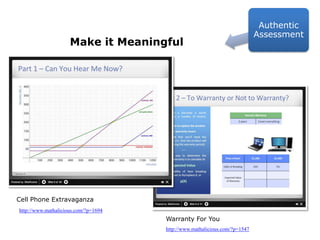
Make it MeaningfulAuthentic AssessmentCell Phone Extravaganzahttp://www.mathalicious.com/?p=1694Warranty For Youhttp://www.mathalicious.com/?p=1547
21st Century SkillsA major challenge facing educators in the 21st century "is how to design our educational system... in order to produce graduates who are better prepared to take up jobs in a knowledge-based environment characterized by a pervasive use of information communications technology" (Bodomo 2006, ¶1)Communication and collaboration
Flexibility and adaptability
Initiative and self-direction
Leadership and responsibility
Productivity and accountabilityGlobal awarenessDigital, information, media and social literacyFinancial, business and economical literacyCreativityCritical thinking and problem solving
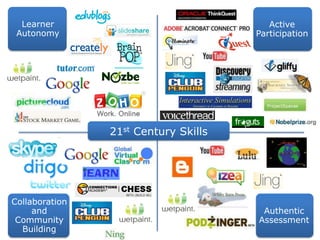
Active ParticipationCollaboration and Community BuildingLearner AutonomyAuthentic Assessment21st Century Skills
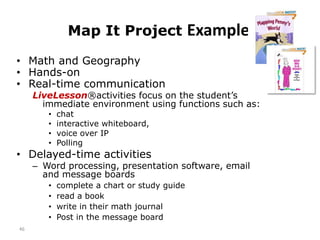
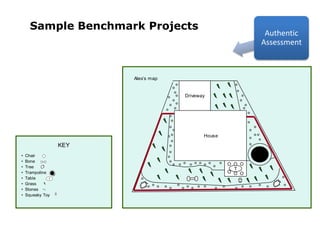
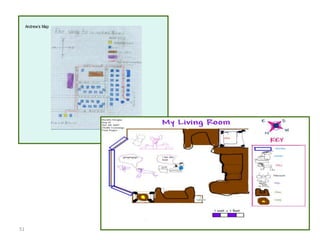
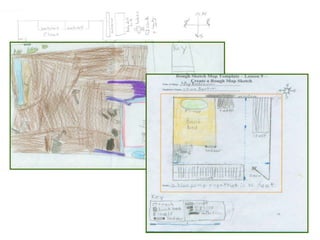
Map It Project ExampleMath and GeographyHands-onReal-time communicationLiveLesson®activities focus on the student’s immediate environment using functions such as: chat interactive whiteboard, voice over IPPollingDelayed-time activitiesWord processing, presentation software, email and message boards complete a chart or study guideread a book write in their math journalPost in the message board46
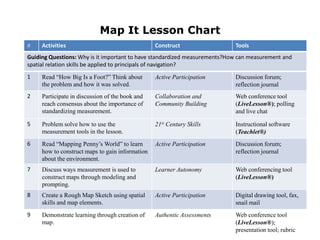
Map It Lesson Chart
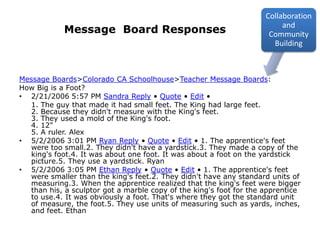
Collaboration and Community Building  Message  Board ResponsesMessage Boards > Colorado CA Schoolhouse > Teacher Message Boards:How Big is a Foot?2/21/2006 5:57 PM Sandra Reply • Quote • Edit • 	1. The guy that made it had small feet. The King had large feet. 2. Because they didn't measure with the King's feet.3. They used a mold of the King's foot.4. 12"5. A ruler. Alex 5/2/2006 3:01 PM Ryan Reply • Quote • Edit • 1. The apprentice's feet were too small.2. They didn't have a yardstick.3. They made a copy of the king's foot.4. It was about one foot. It was about a foot on the yardstick picture.5. They use a yardstick. Ryan5/2/2006 3:05 PM Ethan Reply • Quote • Edit • 1. The apprentice's feet were smaller than the king's feet.2. They didn't have any standard units of measuring.3. When the apprentice realized that the king's feet were bigger than his, a sculptor got a marble copy of the king's foot for the apprentice to use.4. It was obviously a foot. That's where they got the standard unit of measure, the foot.5. They use units of measuring such as yards, inches, and feet. Ethan
Sample Benchmark ProjectsAuthentic Assessment
51
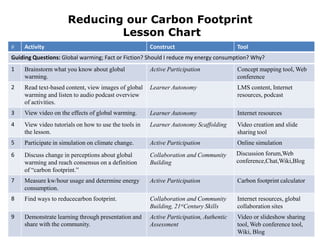
Reducing our Carbon Footprint Lesson Chart

VSS 2010 PBL Virtually Authentic

  • 1.
    Project Based Learning:Virtually AuthenticDr. Kerry Rice, Boise State UniversityBarbara Frey, Connections Academy
  • 2.
    AgendaIntroductionsThe “Teacher” inOnline TeachingConstructivist practices in a digital ageLCP’s + PBL = Best PracticeLesson Development
  • 3.
    The “TEACHER” inOnline Teaching
  • 4.
    How are constructivistpractices translated to the online environment?
  • 5.
  • 6.
    Learner Autonomy Virtual Learning Scaffolding ModelLearner AutonomyLearner AutonomyStudent-centeredEngagingConstruct active learningSupports learning through varied instructional tools and strategies
  • 7.
  • 8.
  • 9.
  • 10.
  • 11.
  • 12.
  • 13.
  • 14.
  • 18.
  • 19.
  • 20.
    Active ParticipationCollaboration andCommunity BuildingLearner AutonomyAuthentic Assessment21st Century Skills
  • 21.
    The ability andmotivation to take responsibilityfor one's own learning.Learner AutonomySupported through:Scaffolding and careful guidance Instructional learning aids Modeling and promptingCoaching strategiesReflective thinking and problem solving
  • 22.
    Learner AutonomyInteractive SimulationsLearnerAutonomyJohn Travoltage web-based simulation at Phet
  • 23.
  • 24.
  • 25.
    Learner AutonomyNegotiated Inputsand OutcomesLearner Autonomy
  • 26.
  • 27.
    Collaboration and CommunityBuildingStrong feelings of community have been shown to promote a greater sense of well-being among learners as well as increases in engagement, cooperation, commitment to group goals, information flow, and satisfaction in group interactions.Supported through:Authentic projects and assessmentsRole assignmentsTeamworkPeer reviewStrategies to structure activities (consensus building, Tuning Protocol, Fishbowl Method)
  • 29.
    Collaboration and CommunityBuildingCollaborative Resources
  • 30.
    Collaboration and CommunityBuildingCollaborative Spaces
  • 31.
    Collaboration and CommunityBuildingOnline Instructional SpacesRole PlayThink-Pair-Share by assigning email pals or “web-buddies”Modify fishbowl by dividing the class into 2 groups, allowing group 1 to contribute the first half of the week and group 2 to contribute the second half. Writing Roulette – each learner adds to expanding class storyClass voting and pollingDebateConsensus buildingStudent generated discussion questionsPeer review
  • 32.
    Collaboration and CommunityBuildingOnline Social SpacesVirtual IcebreakersShare favorite Websites“Student lounge”, “Recess”Question Cafe PLC’shttp://teacherstream.org
  • 33.
  • 34.
  • 35.
    Active ParticipationInteractions withinthe learning community as well as engagement with the content being studied.Supported through:Authentic, collaborative, inquiry-based projectsNegotiated learning outcomes Active research in the fieldPartnerships with the outside community
  • 36.
    Active ParticipationRole AssignmentDiscussionleaderResource providerTech supportClass Twitter contributionRole play games
  • 37.
  • 38.
    Active ParticipationReal-Time CommunicationLivepresentations and lecturesGuest speakersOne-on-one tutorials and mentoringGroup discussions and activitiesInformal chat sessionsQuestion and answer sessionsAdobe Connect
  • 39.
  • 40.
    Instructional environments thatpromote a process rather than an end product necessitate the development of assessments that are progressive rather than summative. Authentic AssessmentSupported through:Timely and consistent instructor and peer feedbackReflectionAuthentic purposeDissemination to “real-world” audiences
  • 41.
    Written assignments Participationin online discussionsPublication of student work /presentationsOnline quizzes and questionsExperiential activities, such as role-playCollaborative assignment work DebatesPortfoliosReviewsOnline Exams (open-book; structured; timedJournals and reflectionComplete a simulation or win a gameAuthentic Assessment
  • 42.
    Make it VisibleAuthenticAssessment“I started making this website because I had the Idea of instead of just doing a project paper for my class I could spread my information around the continents...”
  • 43.
    Make it MeaningfulAuthenticAssessmentCell Phone Extravaganzahttp://www.mathalicious.com/?p=1694Warranty For Youhttp://www.mathalicious.com/?p=1547
  • 44.
    21st Century SkillsAmajor challenge facing educators in the 21st century "is how to design our educational system... in order to produce graduates who are better prepared to take up jobs in a knowledge-based environment characterized by a pervasive use of information communications technology" (Bodomo 2006, ¶1)Communication and collaboration
  • 45.
  • 46.
  • 47.
  • 48.
    Productivity and accountabilityGlobalawarenessDigital, information, media and social literacyFinancial, business and economical literacyCreativityCritical thinking and problem solving
  • 49.
    Active ParticipationCollaboration andCommunity BuildingLearner AutonomyAuthentic Assessment21st Century Skills
  • 50.
    Map It ProjectExampleMath and GeographyHands-onReal-time communicationLiveLesson®activities focus on the student’s immediate environment using functions such as: chat interactive whiteboard, voice over IPPollingDelayed-time activitiesWord processing, presentation software, email and message boards complete a chart or study guideread a book write in their math journalPost in the message board46
  • 51.
  • 53.
    Collaboration and CommunityBuilding Message Board ResponsesMessage Boards > Colorado CA Schoolhouse > Teacher Message Boards:How Big is a Foot?2/21/2006 5:57 PM Sandra Reply • Quote • Edit • 1. The guy that made it had small feet. The King had large feet. 2. Because they didn't measure with the King's feet.3. They used a mold of the King's foot.4. 12"5. A ruler. Alex 5/2/2006 3:01 PM Ryan Reply • Quote • Edit • 1. The apprentice's feet were too small.2. They didn't have a yardstick.3. They made a copy of the king's foot.4. It was about one foot. It was about a foot on the yardstick picture.5. They use a yardstick. Ryan5/2/2006 3:05 PM Ethan Reply • Quote • Edit • 1. The apprentice's feet were smaller than the king's feet.2. They didn't have any standard units of measuring.3. When the apprentice realized that the king's feet were bigger than his, a sculptor got a marble copy of the king's foot for the apprentice to use.4. It was obviously a foot. That's where they got the standard unit of measure, the foot.5. They use units of measuring such as yards, inches, and feet. Ethan
  • 54.
  • 55.
  • 57.
    Reducing our CarbonFootprint Lesson Chart