Introductions
Going Virtual! 2010The Status of Professional Development and Unique Needs of K-12 Online TeachersLisa Dawley, Ph.D.Professor and ChairKerry Rice, Ed.D.Assistant Professor and Associate Chairhttp://ow.ly/3aHwu
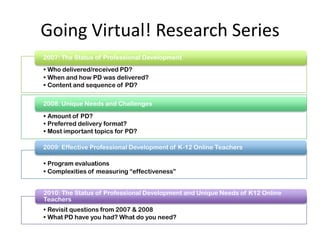
Going Virtual! Research Series
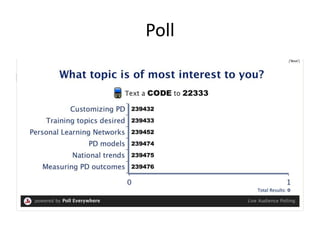
Poll
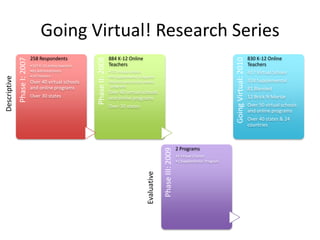
Going Virtual! Research SeriesDescriptiveEvaluative
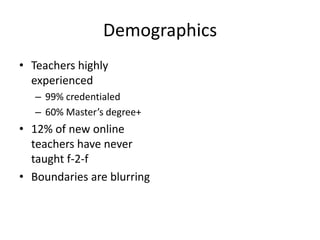
DemographicsTeachers highly experienced99% credentialed60% Master’s degree+12% of new online teachers have never taught f-2-fBoundaries are blurring
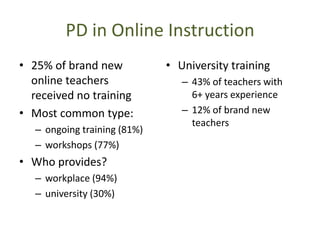
PD in Online Instruction25% of brand new online teachers received no trainingMost common type:ongoing training (81%)workshops (77%)Who provides?workplace (94%)university (30%)University training43% of teachers with 6+ years experience12% of brand new teachers
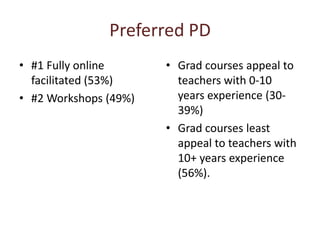
Preferred PD#1 Fully online facilitated (53%)#2 Workshops (49%)Grad courses appeal to teachers with 0-10 years experience (30-39%)Grad courses least appeal to teachers with 10+ years experience (56%).
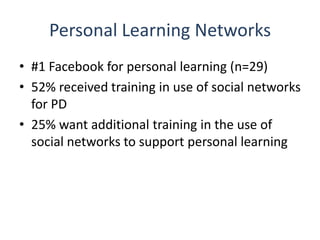
Personal Learning Networks#1 Facebook for personal learning (n=29)52% received training in use of social networks for PD25% want additional training in the use of social networks to support personal learning
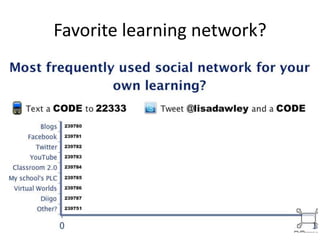
Favorite learning network?
Comments?
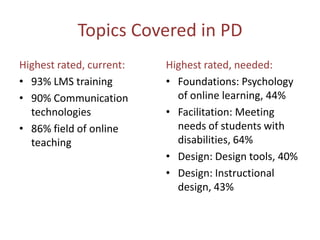
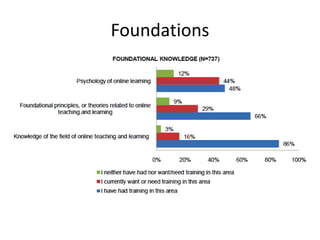
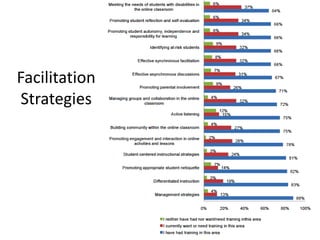
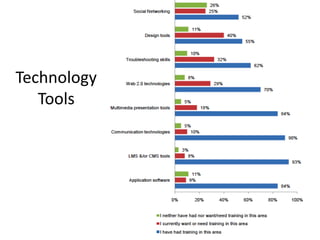
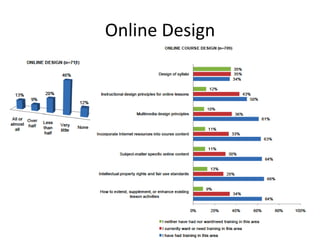
Topics Covered in PDHighest rated, current:93% LMS training90% Communication technologies86% field of online teachingHighest rated, needed:Foundations: Psychology of online learning, 44%Facilitation: Meeting needs of students with disabilities, 64%Design: Design tools, 40%Design: Instructional design, 43%
Foundations
Facilitation Strategies
TechnologyTools
Online Design
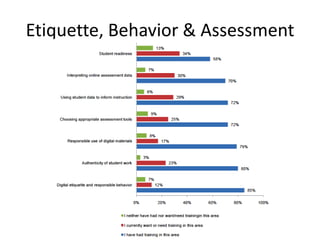
Etiquette, Behavior & Assessment
Comments on training topics?
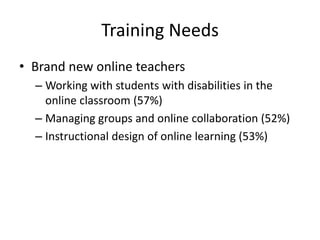
Training NeedsBrand new online teachersWorking with students with disabilities in the online classroom (57%) Managing groups and online collaboration (52%)Instructional design of online learning (53%)
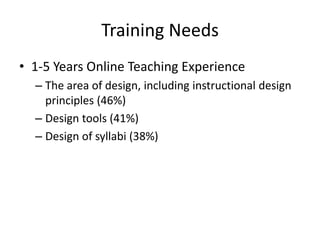
Training Needs1-5 Years Online Teaching ExperienceThe area of design, including instructional design principles (46%) Design tools (41%) Design of syllabi (38%)
Training Needs6+ Years of Online Teaching ExperiencePsychology of online learning (41%) Promoting student autonomy (35%) Student readiness (34%)
Research IssuesPerceived researcher conflict of interest – scoping out market opportunities“This survey was annoying--long, unnecessarily vague, complicated and obviously self-serving.”Online teachers are tired of being surveyed?Using data mining to support effectiveness measures
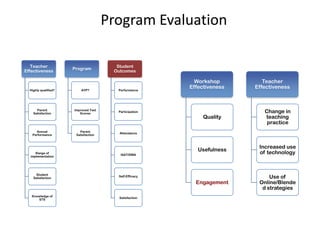
Program Evaluation
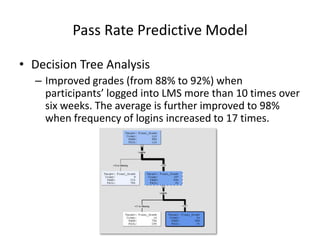
Pass Rate Predictive ModelDecision Tree AnalysisImproved grades (from 88% to 92%) when participants’ logged into LMS more than 10 times over six weeks. The average is further improved to 98% when frequency of logins increased to 17 times.
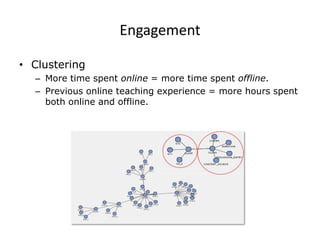
EngagementClustering
More time spent online = more time spent offline.
Previous online teaching experience = more hours spent both online and offline.  TeacherStream

Going Virtual! 2010

  • 1.
  • 2.
    Going Virtual! 2010TheStatus of Professional Development and Unique Needs of K-12 Online TeachersLisa Dawley, Ph.D.Professor and ChairKerry Rice, Ed.D.Assistant Professor and Associate Chairhttp://ow.ly/3aHwu
  • 3.
  • 4.
  • 5.
    Going Virtual! ResearchSeriesDescriptiveEvaluative
  • 6.
    DemographicsTeachers highly experienced99%credentialed60% Master’s degree+12% of new online teachers have never taught f-2-fBoundaries are blurring
  • 7.
    PD in OnlineInstruction25% of brand new online teachers received no trainingMost common type:ongoing training (81%)workshops (77%)Who provides?workplace (94%)university (30%)University training43% of teachers with 6+ years experience12% of brand new teachers
  • 8.
    Preferred PD#1 Fullyonline facilitated (53%)#2 Workshops (49%)Grad courses appeal to teachers with 0-10 years experience (30-39%)Grad courses least appeal to teachers with 10+ years experience (56%).
  • 9.
    Personal Learning Networks#1Facebook for personal learning (n=29)52% received training in use of social networks for PD25% want additional training in the use of social networks to support personal learning
  • 10.
  • 11.
  • 12.
    Topics Covered inPDHighest rated, current:93% LMS training90% Communication technologies86% field of online teachingHighest rated, needed:Foundations: Psychology of online learning, 44%Facilitation: Meeting needs of students with disabilities, 64%Design: Design tools, 40%Design: Instructional design, 43%
  • 13.
  • 14.
  • 15.
  • 16.
  • 17.
  • 18.
  • 19.
    Training NeedsBrand newonline teachersWorking with students with disabilities in the online classroom (57%) Managing groups and online collaboration (52%)Instructional design of online learning (53%)
  • 20.
    Training Needs1-5 YearsOnline Teaching ExperienceThe area of design, including instructional design principles (46%) Design tools (41%) Design of syllabi (38%)
  • 21.
    Training Needs6+ Yearsof Online Teaching ExperiencePsychology of online learning (41%) Promoting student autonomy (35%) Student readiness (34%)
  • 22.
    Research IssuesPerceived researcherconflict of interest – scoping out market opportunities“This survey was annoying--long, unnecessarily vague, complicated and obviously self-serving.”Online teachers are tired of being surveyed?Using data mining to support effectiveness measures
  • 23.
  • 24.
    Pass Rate PredictiveModelDecision Tree AnalysisImproved grades (from 88% to 92%) when participants’ logged into LMS more than 10 times over six weeks. The average is further improved to 98% when frequency of logins increased to 17 times.
  • 25.
  • 26.
    More time spentonline = more time spent offline.
  • 27.
    Previous online teachingexperience = more hours spent both online and offline. TeacherStream