Taibah University
College of Medicine
“Advising Scheme in the New MBBS Program”
Workshop: The New MBBS Program (Adapted Manchester PBL Curriculum):
Structure and Delivery
December 2, 2014
Dr. Muhammad Ausama Mohyuddin
Senior Academic Advisor
Overview
- The nature of the Taibah MBBS Program and
the need for Academic Advising
- Implementation of Academic Advising Program
and Advising Scheme
- Question & Answer
The New Taibah MBBS Program
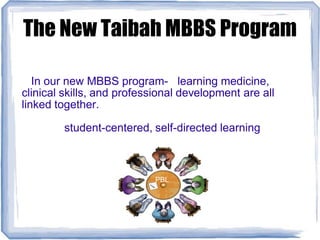
In our new MBBS program- learning medicine,
clinical skills, and professional development are all
linked together.
student-centered, self-directed learning
PBL
OUR OBJECTIVES
To train our medical students with the International
Standards of Good Medical Practice to develop the best
ATTITUDE, KNOWLEDGE, & SKILLS
To make them the top physicians and scientists in our
time...
With Allah's Permission!
The need for an advising scheme
Starting medical studies can be very exciting,
challenging, and stressful all at the same time.
All members of the academic and
administrative team are keen that this phase
is as smooth as possible.
The need for an advising scheme
- Getting adjusted to PBL Curriculum is a lot to
learn.
- Getting adjusted to the load of medical studies
and the demands of professional behaviors.
- Making the most of available resources
- Career and Professional Development
We aim to make available the best
resources to our students to make
the most of their valuable time and
efforts here at Taibah University.
HOW?
• We can make a difference in the quality of
students' education by placing them with
specially trained advisors who can guide
them throughout their career.
• An advisor is a caring heart, a watchful eye,
and a coach, to help students achieve their
goals and become the best medical
professionals.
• It is also a must to monitor the development
of the students- in academics, in
professionalism, and in their own wellness.
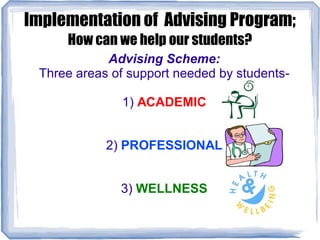
Implementation of Advising Program;
How can we help our students?
Advising Scheme:
Three areas of support needed by students-
1) ACADEMIC
2) PROFESSIONAL
3) WELLNESS
ACADEMIC
ACADEMIC ADVISING
PBL TUTOR
Hold regular meetings (two times per Course-
meaning four times per semester) with individual
students to give feedback on academic progress
and role in group, recorded on provided forms.
Assess the progress of the group and of the
individuals in the group
Be the first port of call for academic problems
PBL TUTOR/ADVISOR ROLE
Check progress on PBL- Learning
Ask student to consider the following:
How have you been settling in?
What do you think of PBL so far?
What has gone well?
What, perhaps, has gone less well?
Have you got any particular problems that you think your tutor, or the
School, should be aware of?
Other issues to probe: study skills, professional skills, group skills,
development of learning, etc.
FEEDBACK AND ACTION PLAN- to address
issues raised and ask or help the student to define potential
strategies and solutions to remedy problems identified.
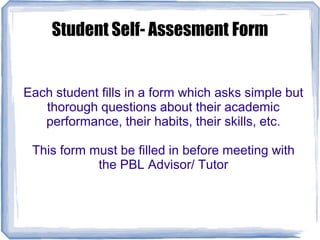
Student Self- Assesment Form
Each student fills in a form which asks simple but
thorough questions about their academic
performance, their habits, their skills, etc.
This form must be filled in before meeting with
the PBL Advisor/ Tutor
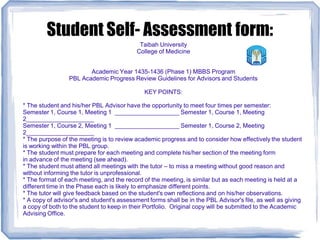
Student Self- Assessment form:
Taibah University
College of Medicine
Academic Year 1435-1436 (Phase 1) MBBS Program
PBL Academic Progress Review Guidelines for Advisors and Students
KEY POINTS:
* The student and his/her PBL Advisor have the opportunity to meet four times per semester:
Semester 1, Course 1, Meeting 1 ___________________ Semester 1, Course 1, Meeting
2____________________
Semester 1, Course 2, Meeting 1 ___________________ Semester 1, Course 2, Meeting
2____________________
* The purpose of the meeting is to review academic progress and to consider how effectively the student
is working within the PBL group.
* The student must prepare for each meeting and complete his/her section of the meeting form
in advance of the meeting (see ahead).
* The student must attend all meetings with the tutor – to miss a meeting without good reason and
without informing the tutor is unprofessional.
* The format of each meeting, and the record of the meeting, is similar but as each meeting is held at a
different time in the Phase each is likely to emphasize different points.
* The tutor will give feedback based on the student's own reflections and on his/her observations.
* A copy of advisor's and student's assessment forms shall be in the PBL Advisor's file, as well as giving
a copy of both to the student to keep in their Portfolio. Original copy will be submitted to the Academic
Advising Office.
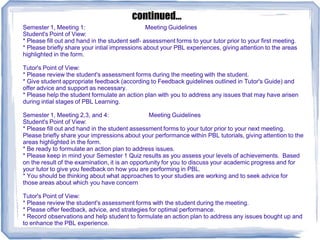
Semester 1, Meeting 1: Meeting Guidelines
Student's Point of View:
* Please fill out and hand in the student self- assessment forms to your tutor prior to your first meeting.
* Please briefly share your intial impressions about your PBL experiences, giving attention to the areas
highlighted in the form.
Tutor's Point of View:
* Please review the student's assessment forms during the meeting with the student.
* Give student appropriate feedback (according to Feedback guidelines outlined in Tutor's Guide) and
offer advice and support as necessary.
* Please help the student formulate an action plan with you to address any issues that may have arisen
during intial stages of PBL Learning.
Semester 1, Meeting 2,3, and 4: Meeting Guidelines
Student's Point of View:
* Please fill out and hand in the student assessment forms to your tutor prior to your next meeting.
Please briefly share your impressions about your performance within PBL tutorials, giving attention to the
areas highlighted in the form.
* Be ready to formulate an action plan to address issues.
* Please keep in mind your Semester 1 Quiz results as you assess your levels of achievements. Based
on the result of the examination, it is an opportunity for you to discuss your academic progress and for
your tutor to give you feedback on how you are performing in PBL.
* You should be thinking about what approaches to your studies are working and to seek advice for
those areas about which you have concern
Tutor's Point of View:
* Please review the student's assessment forms with the student during the meeting.
* Please offer feedback, advice, and strategies for optimal performance.
* Record observations and help student to formulate an action plan to address any issues bought up and
to enhance the PBL experience.
continued...
Date:
Taibah University
College of Medicine
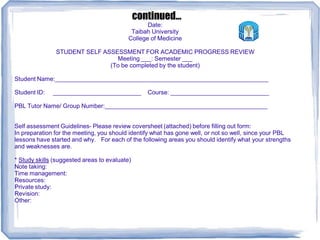
STUDENT SELF ASSESSMENT FOR ACADEMIC PROGRESS REVIEW
Meeting ___: Semester ___
(To be completed by the student)
Student Name:_______________________________________________________________
Student ID: __________________________ Course: _____________________________
PBL Tutor Name/ Group Number:________________________________________________
Self assessment Guidelines- Please review coversheet (attached) before filling out form:
In preparation for the meeting, you should identify what has gone well, or not so well, since your PBL
lessons have started and why. For each of the following areas you should identify what your strengths
and weaknesses are.
* Study skills (suggested areas to evaluate)
Note taking:
Time management:
Resources:
Private study:
Revision:
Other:
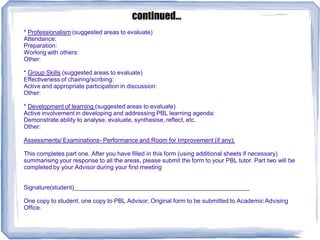
continued...
* Professionalism (suggested areas to evaluate)
Attendance:
Preparation:
Working with others:
Other:
* Group Skills (suggested areas to evaluate)
Effectiveness of chairing/scribing:
Active and appropriate participation in discussion:
Other:
* Development of learning (suggested areas to evaluate)
Active involvement in developing and addressing PBL learning agenda:
Demonstrate ability to analyse, evaluate, synthesise, reflect, etc.
Other:
Assessments/ Examinations- Performance and Room for Improvement (if any):
This completes part one. After you have filled in this form (using additional sheets if necessary)
summarising your response to all the areas, please submit the form to your PBL tutor. Part two will be
completed by your Advisor during your first meeting
Signature(student)____________________________________________________
One copy to student, one copy to PBL Advisor, Original form to be submitted to Academic Advising
Office.
continued...
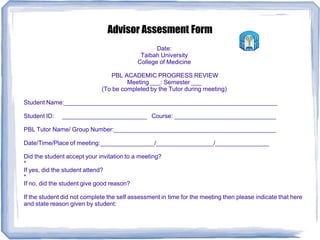
Advisor Assessment Form
We have an Academic Progress Review form
that the PBL Tutor/ Advisor fills out at the time of
his or her appointment with the student.
Please have a look at this form:
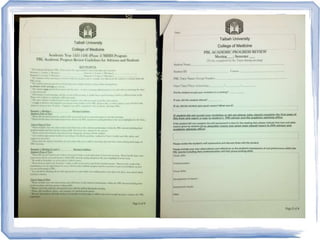
Advisor Assesment Form
Date:
Taibah University
College of Medicine
PBL ACADEMIC PROGRESS REVIEW
Meeting ___: Semester ___
(To be completed by the Tutor during meeting)
Student Name:_______________________________________________________________
Student ID: _________________________ Course: ______________________________
PBL Tutor Name/ Group Number:________________________________________________
Date/Time/Place of meeting:________________/_________________/________________
Did the student accept your invitation to a meeting?
*
If yes, did the student attend?
*
If no, did the student give good reason?
If the student did not complete the self assessment in time for the meeting then please indicate that here
and state reason given by student:
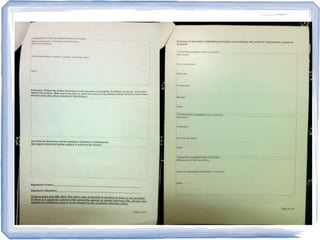
continued...
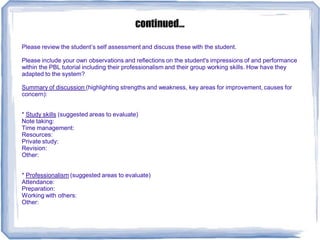
Please review the student’s self assessment and discuss these with the student.
Please include your own observations and reflections on the student's impressions of and performance
within the PBL tutorial including their professionalism and their group working skills. How have they
adapted to the system?
Summary of discussion (highlighting strengths and weakness, key areas for improvement, causes for
concern):
* Study skills (suggested areas to evaluate)
Note taking:
Time management:
Resources:
Private study:
Revision:
Other:
* Professionalism (suggested areas to evaluate)
Attendance:
Preparation:
Working with others:
Other:
continued...
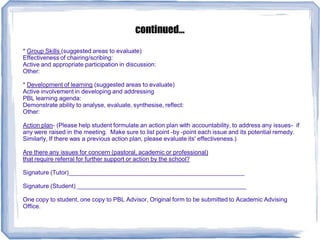
* Group Skills (suggested areas to evaluate)
Effectiveness of chairing/scribing:
Active and appropriate participation in discussion:
Other:
* Development of learning (suggested areas to evaluate)
Active involvement in developing and addressing
PBL learning agenda:
Demonstrate ability to analyse, evaluate, synthesise, reflect:
Other:
Action plan- (Please help student formulate an action plan with accountability, to address any issues- if
any were raised in the meeting. Make sure to list point -by -point each issue and its potential remedy.
Similarly, If there was a previous action plan, please evaluate its' effectiveness.)
Are there any issues for concern (pastoral, academic or professional)
that require referral for further support or action by the school?
Signature (Tutor)____________________________________________________
Signature (Student) __________________________________________________
One copy to student, one copy to PBL Advisor, Original form to be submitted to Academic Advising
Office.
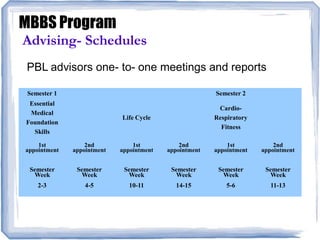
MBBS Program
Advising- Schedules
PBL advisors one- to- one meetings and reports
Semester 1 Semester 2
Essential
Medical
Foundation
Skills
Life Cycle
Cardio-
Respiratory
Fitness
1st
appointment
2nd
appointment
1st
appointment
2nd
appointment
1st
appointment
2nd
appointment
Semester
Week
2-3
Semester
Week
4-5
Semester
Week
10-11
Semester
Week
14-15
Semester
Week
5-6
Semester
Week
11-13
PROFESSIONAL
PROFESSIONAL ADVISING
PPD ADVISOR:
Support personal and professional development in group
sessions (each group has two sessions per semester).
Accustom students to maintaining their portfolio record of
academic, professional and personal development.
Introduce students to reflective learning and recording
critical thinking.
Provide written feedback on portfolios and reflective writing;
available for one-to-one support for students on portfolio
matters.
Review student portfolios twice per semester with individual
students.
Meeting with PPD Advisor/ Tutor
• The PPD Advisor/ Tutor has forms similar to
the ones used by the PBL Advisor except
that it deals with Professional Progress
Review rather than just purely academic.
• The PPD Advisor has a form that he or she
fills out during the appointment with the
student.
WELLNESS
WELLNESS ADVISING
HEALTH AND CONDUCT COMMITTEE:
To oversee:
Health- routine check- ups, vaccinations, etc.
Follow up on problem situations for example
attendence issues, behavioral, psychological,
personal, etc.
Help students during illness/ sickness
COORDINATORS
COURSE COORDINATORS: MALE/ FEMALE
EMFS: Dr Yasser Bastawisy/ Dr Amal
LC: Dr Yasir Elhasan/ Dr Amal
PPD: Dr Moustafa Ezz/ Dr Sarah
PEP: TBA
SEMESTER COORDINATORS: M/ F
Dr Yasir Elhasan/ Dr Tayseer
SENIOR ACADEMIC ADVISOR: M/F
Dr. Muhammad Mohyuddin/ Dr. Hala Soliman
PROGRAM GENERAL COORDINATOR
Dr. Ehab Saoud
VICE DEAN FOR ACADEMIC AFFAIRS: M/F
Dr. Moutasem Aboonq/ Dr. Zakeya Bukhary
SENIOR ACADEMIC ADVISOR
Coordinates with Vice Dean for Academic Affairs to
oversee smooth operation of Advising Scheme
Help, counsel, and guide the students and faculty as
problems as arise
Report to Vice Dean of Academic Affairs about students
and staff
Keep records of all Advising- related activities
VICE DEAN FOR ACADEMIC AFFAIRS
Is responsible for the overall content and co-
ordination of the different activities of the MBBS
program.
The Vice Dean for Academic Affairs is the one
that directs the program and oversees it.
If the students do not know exactly who can
help them, the Office of the Vice Dean for
Academic Affairs is the place to ask direction
from. The Vice Dean may help with the problem
or can direct to the staff who will help.
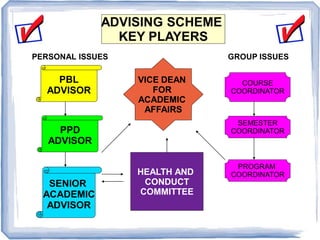
SO, THE KEY PLAYERS ARE:
PBL ADVISORS
PPD ADVISORS
COURSE COORDINATOR
SEMESTER COORDINATOR
PROGRAM COORDINATOR
HEALTH AND CONDUCT COMMITTEE
SENIOR ACADEMIC ADVISOR
VICE DEAN FOR ACADEMIC AFFAIRS
Examples of Problems or Issues
• Group Issues
• Lectures
• Practicals
• Schedules
• Registration
• PBL Classes
• Reviewing
• Connecting with Field
Experts,
• Etc.
• Personal Issues
• Difficulties in studying
• Time management
• Results in exam
• Problems in
attendance
• Health or Social issues
• Special difficulties
• Etc.
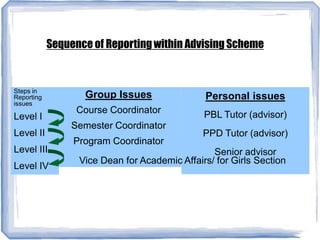
Steps in
Reporting
issues
Level I
Level II
Level III
Level IV
Group Issues
Course Coordinator
Semester Coordinator
Program Coordinator
Personal issues
PBL Tutor (advisor)
PPD Tutor (advisor)
Senior advisor
Vice Dean for Academic Affairs/ for Girls Section
Sequence of Reportingwithin Advising Scheme
SENIOR
ACADEMIC
ADVISOR
VICE DEAN
FOR
ACADEMIC
AFFAIRS
ADVISING SCHEME
KEY PLAYERS
SEMESTER
COORDINATOR
COURSE
COORDINATOR
PBL
ADVISOR
HEALTH AND
CONDUCT
COMMITTEE
PROGRAM
COORDINATOR
GROUP ISSUES
PPD
ADVISOR
PERSONAL ISSUES
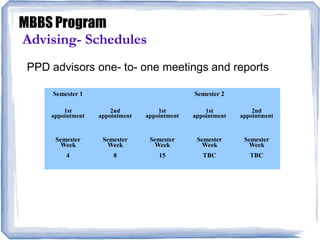
MBBS Program
Advising- Schedules
PPD advisors one- to- one meetings and reports
Semester 1 Semester 2
1st
appointment
2nd
appointment
1st
appointment
1st
appointment
2nd
appointment
Semester
Week
4
Semester
Week
8
Semester
Week
15
Semester
Week
TBC
Semester
Week
TBC
More to come with Allah's Will
as we grow:
Student Success Center
Financial Support
etc.
Thank you very much for your time!
For any suggestions, feedback, or
comments:
phys.taibah.mohyuddin@gmail.com

PBL - Academic Advising and Support

  • 2.
    Taibah University College ofMedicine “Advising Scheme in the New MBBS Program” Workshop: The New MBBS Program (Adapted Manchester PBL Curriculum): Structure and Delivery December 2, 2014 Dr. Muhammad Ausama Mohyuddin Senior Academic Advisor
  • 3.
    Overview - The natureof the Taibah MBBS Program and the need for Academic Advising - Implementation of Academic Advising Program and Advising Scheme - Question & Answer
  • 4.
    The New TaibahMBBS Program In our new MBBS program- learning medicine, clinical skills, and professional development are all linked together. student-centered, self-directed learning PBL
  • 5.
    OUR OBJECTIVES To trainour medical students with the International Standards of Good Medical Practice to develop the best ATTITUDE, KNOWLEDGE, & SKILLS To make them the top physicians and scientists in our time... With Allah's Permission!
  • 6.
    The need foran advising scheme Starting medical studies can be very exciting, challenging, and stressful all at the same time. All members of the academic and administrative team are keen that this phase is as smooth as possible.
  • 7.
    The need foran advising scheme - Getting adjusted to PBL Curriculum is a lot to learn. - Getting adjusted to the load of medical studies and the demands of professional behaviors. - Making the most of available resources - Career and Professional Development
  • 8.
    We aim tomake available the best resources to our students to make the most of their valuable time and efforts here at Taibah University.
  • 9.
  • 10.
    • We canmake a difference in the quality of students' education by placing them with specially trained advisors who can guide them throughout their career. • An advisor is a caring heart, a watchful eye, and a coach, to help students achieve their goals and become the best medical professionals. • It is also a must to monitor the development of the students- in academics, in professionalism, and in their own wellness.
  • 11.
    Implementation of AdvisingProgram; How can we help our students? Advising Scheme: Three areas of support needed by students- 1) ACADEMIC 2) PROFESSIONAL 3) WELLNESS
  • 12.
  • 13.
    ACADEMIC ADVISING PBL TUTOR Holdregular meetings (two times per Course- meaning four times per semester) with individual students to give feedback on academic progress and role in group, recorded on provided forms. Assess the progress of the group and of the individuals in the group Be the first port of call for academic problems
  • 14.
    PBL TUTOR/ADVISOR ROLE Checkprogress on PBL- Learning Ask student to consider the following: How have you been settling in? What do you think of PBL so far? What has gone well? What, perhaps, has gone less well? Have you got any particular problems that you think your tutor, or the School, should be aware of? Other issues to probe: study skills, professional skills, group skills, development of learning, etc. FEEDBACK AND ACTION PLAN- to address issues raised and ask or help the student to define potential strategies and solutions to remedy problems identified.
  • 15.
    Student Self- AssesmentForm Each student fills in a form which asks simple but thorough questions about their academic performance, their habits, their skills, etc. This form must be filled in before meeting with the PBL Advisor/ Tutor
  • 16.
    Student Self- Assessmentform: Taibah University College of Medicine Academic Year 1435-1436 (Phase 1) MBBS Program PBL Academic Progress Review Guidelines for Advisors and Students KEY POINTS: * The student and his/her PBL Advisor have the opportunity to meet four times per semester: Semester 1, Course 1, Meeting 1 ___________________ Semester 1, Course 1, Meeting 2____________________ Semester 1, Course 2, Meeting 1 ___________________ Semester 1, Course 2, Meeting 2____________________ * The purpose of the meeting is to review academic progress and to consider how effectively the student is working within the PBL group. * The student must prepare for each meeting and complete his/her section of the meeting form in advance of the meeting (see ahead). * The student must attend all meetings with the tutor – to miss a meeting without good reason and without informing the tutor is unprofessional. * The format of each meeting, and the record of the meeting, is similar but as each meeting is held at a different time in the Phase each is likely to emphasize different points. * The tutor will give feedback based on the student's own reflections and on his/her observations. * A copy of advisor's and student's assessment forms shall be in the PBL Advisor's file, as well as giving a copy of both to the student to keep in their Portfolio. Original copy will be submitted to the Academic Advising Office.
  • 17.
    Semester 1, Meeting1: Meeting Guidelines Student's Point of View: * Please fill out and hand in the student self- assessment forms to your tutor prior to your first meeting. * Please briefly share your intial impressions about your PBL experiences, giving attention to the areas highlighted in the form. Tutor's Point of View: * Please review the student's assessment forms during the meeting with the student. * Give student appropriate feedback (according to Feedback guidelines outlined in Tutor's Guide) and offer advice and support as necessary. * Please help the student formulate an action plan with you to address any issues that may have arisen during intial stages of PBL Learning. Semester 1, Meeting 2,3, and 4: Meeting Guidelines Student's Point of View: * Please fill out and hand in the student assessment forms to your tutor prior to your next meeting. Please briefly share your impressions about your performance within PBL tutorials, giving attention to the areas highlighted in the form. * Be ready to formulate an action plan to address issues. * Please keep in mind your Semester 1 Quiz results as you assess your levels of achievements. Based on the result of the examination, it is an opportunity for you to discuss your academic progress and for your tutor to give you feedback on how you are performing in PBL. * You should be thinking about what approaches to your studies are working and to seek advice for those areas about which you have concern Tutor's Point of View: * Please review the student's assessment forms with the student during the meeting. * Please offer feedback, advice, and strategies for optimal performance. * Record observations and help student to formulate an action plan to address any issues bought up and to enhance the PBL experience. continued...
  • 18.
    Date: Taibah University College ofMedicine STUDENT SELF ASSESSMENT FOR ACADEMIC PROGRESS REVIEW Meeting ___: Semester ___ (To be completed by the student) Student Name:_______________________________________________________________ Student ID: __________________________ Course: _____________________________ PBL Tutor Name/ Group Number:________________________________________________ Self assessment Guidelines- Please review coversheet (attached) before filling out form: In preparation for the meeting, you should identify what has gone well, or not so well, since your PBL lessons have started and why. For each of the following areas you should identify what your strengths and weaknesses are. * Study skills (suggested areas to evaluate) Note taking: Time management: Resources: Private study: Revision: Other: continued...
  • 19.
    * Professionalism (suggestedareas to evaluate) Attendance: Preparation: Working with others: Other: * Group Skills (suggested areas to evaluate) Effectiveness of chairing/scribing: Active and appropriate participation in discussion: Other: * Development of learning (suggested areas to evaluate) Active involvement in developing and addressing PBL learning agenda: Demonstrate ability to analyse, evaluate, synthesise, reflect, etc. Other: Assessments/ Examinations- Performance and Room for Improvement (if any): This completes part one. After you have filled in this form (using additional sheets if necessary) summarising your response to all the areas, please submit the form to your PBL tutor. Part two will be completed by your Advisor during your first meeting Signature(student)____________________________________________________ One copy to student, one copy to PBL Advisor, Original form to be submitted to Academic Advising Office. continued...
  • 20.
    Advisor Assessment Form Wehave an Academic Progress Review form that the PBL Tutor/ Advisor fills out at the time of his or her appointment with the student. Please have a look at this form:
  • 23.
    Advisor Assesment Form Date: TaibahUniversity College of Medicine PBL ACADEMIC PROGRESS REVIEW Meeting ___: Semester ___ (To be completed by the Tutor during meeting) Student Name:_______________________________________________________________ Student ID: _________________________ Course: ______________________________ PBL Tutor Name/ Group Number:________________________________________________ Date/Time/Place of meeting:________________/_________________/________________ Did the student accept your invitation to a meeting? * If yes, did the student attend? * If no, did the student give good reason? If the student did not complete the self assessment in time for the meeting then please indicate that here and state reason given by student:
  • 24.
    continued... Please review thestudent’s self assessment and discuss these with the student. Please include your own observations and reflections on the student's impressions of and performance within the PBL tutorial including their professionalism and their group working skills. How have they adapted to the system? Summary of discussion (highlighting strengths and weakness, key areas for improvement, causes for concern): * Study skills (suggested areas to evaluate) Note taking: Time management: Resources: Private study: Revision: Other: * Professionalism (suggested areas to evaluate) Attendance: Preparation: Working with others: Other:
  • 25.
    continued... * Group Skills(suggested areas to evaluate) Effectiveness of chairing/scribing: Active and appropriate participation in discussion: Other: * Development of learning (suggested areas to evaluate) Active involvement in developing and addressing PBL learning agenda: Demonstrate ability to analyse, evaluate, synthesise, reflect: Other: Action plan- (Please help student formulate an action plan with accountability, to address any issues- if any were raised in the meeting. Make sure to list point -by -point each issue and its potential remedy. Similarly, If there was a previous action plan, please evaluate its' effectiveness.) Are there any issues for concern (pastoral, academic or professional) that require referral for further support or action by the school? Signature (Tutor)____________________________________________________ Signature (Student) __________________________________________________ One copy to student, one copy to PBL Advisor, Original form to be submitted to Academic Advising Office.
  • 26.
    MBBS Program Advising- Schedules PBLadvisors one- to- one meetings and reports Semester 1 Semester 2 Essential Medical Foundation Skills Life Cycle Cardio- Respiratory Fitness 1st appointment 2nd appointment 1st appointment 2nd appointment 1st appointment 2nd appointment Semester Week 2-3 Semester Week 4-5 Semester Week 10-11 Semester Week 14-15 Semester Week 5-6 Semester Week 11-13
  • 27.
  • 28.
    PROFESSIONAL ADVISING PPD ADVISOR: Supportpersonal and professional development in group sessions (each group has two sessions per semester). Accustom students to maintaining their portfolio record of academic, professional and personal development. Introduce students to reflective learning and recording critical thinking. Provide written feedback on portfolios and reflective writing; available for one-to-one support for students on portfolio matters. Review student portfolios twice per semester with individual students.
  • 29.
    Meeting with PPDAdvisor/ Tutor • The PPD Advisor/ Tutor has forms similar to the ones used by the PBL Advisor except that it deals with Professional Progress Review rather than just purely academic. • The PPD Advisor has a form that he or she fills out during the appointment with the student.
  • 30.
  • 31.
    WELLNESS ADVISING HEALTH ANDCONDUCT COMMITTEE: To oversee: Health- routine check- ups, vaccinations, etc. Follow up on problem situations for example attendence issues, behavioral, psychological, personal, etc. Help students during illness/ sickness
  • 32.
    COORDINATORS COURSE COORDINATORS: MALE/FEMALE EMFS: Dr Yasser Bastawisy/ Dr Amal LC: Dr Yasir Elhasan/ Dr Amal PPD: Dr Moustafa Ezz/ Dr Sarah PEP: TBA SEMESTER COORDINATORS: M/ F Dr Yasir Elhasan/ Dr Tayseer SENIOR ACADEMIC ADVISOR: M/F Dr. Muhammad Mohyuddin/ Dr. Hala Soliman PROGRAM GENERAL COORDINATOR Dr. Ehab Saoud VICE DEAN FOR ACADEMIC AFFAIRS: M/F Dr. Moutasem Aboonq/ Dr. Zakeya Bukhary
  • 33.
    SENIOR ACADEMIC ADVISOR Coordinateswith Vice Dean for Academic Affairs to oversee smooth operation of Advising Scheme Help, counsel, and guide the students and faculty as problems as arise Report to Vice Dean of Academic Affairs about students and staff Keep records of all Advising- related activities
  • 34.
    VICE DEAN FORACADEMIC AFFAIRS Is responsible for the overall content and co- ordination of the different activities of the MBBS program. The Vice Dean for Academic Affairs is the one that directs the program and oversees it. If the students do not know exactly who can help them, the Office of the Vice Dean for Academic Affairs is the place to ask direction from. The Vice Dean may help with the problem or can direct to the staff who will help.
  • 35.
    SO, THE KEYPLAYERS ARE: PBL ADVISORS PPD ADVISORS COURSE COORDINATOR SEMESTER COORDINATOR PROGRAM COORDINATOR HEALTH AND CONDUCT COMMITTEE SENIOR ACADEMIC ADVISOR VICE DEAN FOR ACADEMIC AFFAIRS
  • 36.
    Examples of Problemsor Issues • Group Issues • Lectures • Practicals • Schedules • Registration • PBL Classes • Reviewing • Connecting with Field Experts, • Etc. • Personal Issues • Difficulties in studying • Time management • Results in exam • Problems in attendance • Health or Social issues • Special difficulties • Etc.
  • 37.
    Steps in Reporting issues Level I LevelII Level III Level IV Group Issues Course Coordinator Semester Coordinator Program Coordinator Personal issues PBL Tutor (advisor) PPD Tutor (advisor) Senior advisor Vice Dean for Academic Affairs/ for Girls Section Sequence of Reportingwithin Advising Scheme
  • 38.
    SENIOR ACADEMIC ADVISOR VICE DEAN FOR ACADEMIC AFFAIRS ADVISING SCHEME KEYPLAYERS SEMESTER COORDINATOR COURSE COORDINATOR PBL ADVISOR HEALTH AND CONDUCT COMMITTEE PROGRAM COORDINATOR GROUP ISSUES PPD ADVISOR PERSONAL ISSUES
  • 39.
    MBBS Program Advising- Schedules PPDadvisors one- to- one meetings and reports Semester 1 Semester 2 1st appointment 2nd appointment 1st appointment 1st appointment 2nd appointment Semester Week 4 Semester Week 8 Semester Week 15 Semester Week TBC Semester Week TBC
  • 40.
    More to comewith Allah's Will as we grow: Student Success Center Financial Support etc.
  • 41.
    Thank you verymuch for your time! For any suggestions, feedback, or comments: phys.taibah.mohyuddin@gmail.com