Submitted to- Prof. shreya bhargav
Submitted by- Navneet yadav
 Introduction.
 Background.
 Funding.
 Security & safety.
 Service offered.
 Paytm banks.
 Swot analysis.
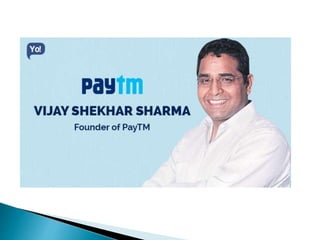
 He was born on 8 July (1978) in Aligarh.
 Vijay Shekhar Sharma is an Indian billionaire
businessman as well as entrepreneur.
 He is the founder & CEO of financial technology
company Paytm.
 Sharma was ranked as Indian youngest billionaire in
2017 by Forbes with a net worth of $2.1 billion.
 He was incorporated his parent company in 2010
named one97communication ltd in the form of online
mobile recharge website.
 But in present scenario Paytm became a payment
Bank.
 Paytm or (pay through mobile) is India's largest mobile
payments and commerce platform. It is used for
transferring the money instantly to anyone at zero cost
using the Paytm wallet. Since prime minister of india
Narendra modi announced the demonetization of the
Rs. 500 and 1000 note Paytm an other mobile wallets
have enjoyed tremendous growth.
 Paytm money can be used to pay seamlessly at
several places like taxi and autos, grocery shop,
restaurants, coffee shops, multiplexes parking,
hospital etc.
 You could also use it to pay for online recharges, utility
bills payments, book movie tickets, travel ticket, DTH
recharges and other online transactions.
 In 2014 the company launched Paytm wallet.
 Which became India's largest payment service platform
with over 150 million wallets 75 million android based
app download as of November 2016
 Paytm acts as a virtual wallet where you can store
money online and can be used instead of debit/credit or
net banking.
 However to transfer the amount to the wallet you may
need any of them.
 In march 2015, Indian industrialist “Ratan Tata” made
personal investment in the firm.
 In march 2015, the company $75 million investment from
alibaba group of china
 Payment borrowed 300 crore from ICICI bank in march a
working capital
Paytm was given fully security in your account.
It was provided in fully secure.
In recharging times, your mobile , DTH, other bills it was
given OTP in your register mobile no.
The OTP enter after process was completed your
recharging or other online payments.
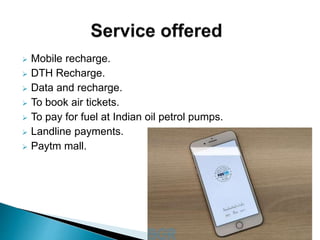
 Mobile recharge.
 DTH Recharge.
 Data and recharge.
 To book air tickets.
 To pay for fuel at Indian oil petrol pumps.
 Landline payments.
 Paytm mall.
 In 2015 Paytm received license from Reserve bank of
India for starting India's first payment bank.
 The banks intends to use Paytm existing user base for
including new services like debit cards, saving account,
online banking and transfer to enable the cashless
economy.
 Paytm is also approved as on operating unit of BHARAT
bills payments systems as a result of which users can
pay their bills anytime and anywhere.
Strength
 First mover advantages.
 Comfort alternatives.
 Offers.
Weakness.
 Requirement for IT framework.
 Cashless fear.
 Poor client care.
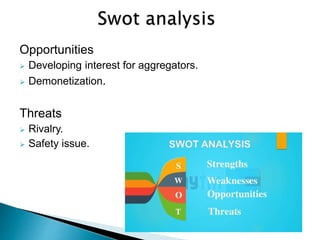
Opportunities
 Developing interest for aggregators.
 Demonetization.
Threats
 Rivalry.
 Safety issue.
Paytm persentation

Paytm persentation

  • 1.
    Submitted to- Prof.shreya bhargav Submitted by- Navneet yadav
  • 3.
     Introduction.  Background. Funding.  Security & safety.  Service offered.  Paytm banks.  Swot analysis.
  • 4.
     He wasborn on 8 July (1978) in Aligarh.  Vijay Shekhar Sharma is an Indian billionaire businessman as well as entrepreneur.  He is the founder & CEO of financial technology company Paytm.  Sharma was ranked as Indian youngest billionaire in 2017 by Forbes with a net worth of $2.1 billion.  He was incorporated his parent company in 2010 named one97communication ltd in the form of online mobile recharge website.  But in present scenario Paytm became a payment Bank.
  • 5.
     Paytm or(pay through mobile) is India's largest mobile payments and commerce platform. It is used for transferring the money instantly to anyone at zero cost using the Paytm wallet. Since prime minister of india Narendra modi announced the demonetization of the Rs. 500 and 1000 note Paytm an other mobile wallets have enjoyed tremendous growth.  Paytm money can be used to pay seamlessly at several places like taxi and autos, grocery shop, restaurants, coffee shops, multiplexes parking, hospital etc.  You could also use it to pay for online recharges, utility bills payments, book movie tickets, travel ticket, DTH recharges and other online transactions.
  • 6.
     In 2014the company launched Paytm wallet.  Which became India's largest payment service platform with over 150 million wallets 75 million android based app download as of November 2016  Paytm acts as a virtual wallet where you can store money online and can be used instead of debit/credit or net banking.  However to transfer the amount to the wallet you may need any of them.
  • 7.
     In march2015, Indian industrialist “Ratan Tata” made personal investment in the firm.  In march 2015, the company $75 million investment from alibaba group of china  Payment borrowed 300 crore from ICICI bank in march a working capital
  • 8.
    Paytm was givenfully security in your account. It was provided in fully secure. In recharging times, your mobile , DTH, other bills it was given OTP in your register mobile no. The OTP enter after process was completed your recharging or other online payments.
  • 9.
     Mobile recharge. DTH Recharge.  Data and recharge.  To book air tickets.  To pay for fuel at Indian oil petrol pumps.  Landline payments.  Paytm mall.
  • 10.
     In 2015Paytm received license from Reserve bank of India for starting India's first payment bank.  The banks intends to use Paytm existing user base for including new services like debit cards, saving account, online banking and transfer to enable the cashless economy.  Paytm is also approved as on operating unit of BHARAT bills payments systems as a result of which users can pay their bills anytime and anywhere.
  • 11.
    Strength  First moveradvantages.  Comfort alternatives.  Offers. Weakness.  Requirement for IT framework.  Cashless fear.  Poor client care.
  • 12.
    Opportunities  Developing interestfor aggregators.  Demonetization. Threats  Rivalry.  Safety issue.