Hematology
Components of Blood
• Blood
 Connective tissue
• Plasma
 Liquid component of blood
 55%
• Buffy Coat
 Platelets
 Leukocytes
• Hematocrit
 The ratio of the volume of red blood cells to the total
volume of blood
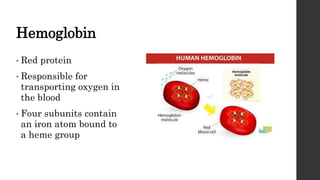
Hemoglobin
• Red protein
• Responsible for
transporting oxygen in
the blood
• Four subunits contain
an iron atom bound to
a heme group
Blood Therapies
• Whole Blood
 Severe anemia
• Artificial Erythropoietin
 Stimulates red blood cell production
• Bone Marrow Transplants
 Cancers, immune deficiencies, or blood cell disease
Anemia
• General Signs
 Fatigue, pale face, dyspnea, or tachycardia
 Can lead to angina or congestive heart failure
• Causes
 Hemoglobin deficiency leading to a reduction in oxygen transport
 Nutrient deficiency and impaired bone marrow
 Blood loss or excessive destruction of red blood cells
• Types
 Pernicious
 Aplastic
 Hemolytic
 Sickle Cell
 Thalassemia
 Polycythemia
Anemia
• Pernicious Anemia
 Large, immature, and nucleated RBC
 Large, red, sore, shiny tongue
• Aplastic Anemia
 Temporary or permanent impairment or failure of bone marrow
 Bone marrow cells are replaced by fat
 Cause must be identified for prompt treatment
 Can be life-threatening
• Hemolytic Anemia
 Excessive destruction of RBC
 Many causes
Anemia
• Sickle Cell Anemia
 Abnormal hemoglobin due to a generic condition common in African ancestry
 Sickle cell crisis occurs when there are low oxygen levels
 De-oxygenated HbS is unstable and crystallizes to form the sickle shape
• Thalassemia
 Most common blood disorder in the world
 Abnormal hemoglobin due to missing genes
• Polycythemia
 Primary due to increased rate of RBC production
 Secondary is due to increased rate of RBC production due to prolonged hypoxia
 Sluggish blood flow, increased blood pressure, and hypertrophied heart
Blood Clotting Disorders
• Indications
 Persistent bleeding in gums and nose bleeds
 Bleeding into joints
 Coughing up or vomiting blood
 Blood in feces
• Causes
 Defective platelet function
 Long term use of warfarin
Types of Blood Clotting Disorders
• Hemophilia A
 90% of cases with varying severity
 Deficit of clotting factor III
• Hemophilia B
 Deficit of clotting factor IV
• Hemophilia C
 Milder form
 Deficit of clotting factor XI
• Disseminated Intravascular Coagulation
 Excessive clotting and bleeding in circulation
 Clotting factors are reduced to a dangerous level
 Widespread uncontrollable bleeding leads to a high fatality rate
Leukemia
• Acute
 High proportion of immature, non-functional cells in bone marrow and
circulation with abrupt onset
 Signs: frequent uncontrolled infections, bone pain, weight loss, fatigue,
drowsiness, and vomiting
• Chronic
 Higher proportion of mature cells in bone marrow and circulation with
insidious onset
 Milder signs and better prognosis
• Diagnosis
 Peripheral blood smears and bone marrow biopsy
• Treatment
 Chemotherapy, biologic therapy

Pathophysiology: Hematology

  • 1.
  • 2.
    Components of Blood •Blood  Connective tissue • Plasma  Liquid component of blood  55% • Buffy Coat  Platelets  Leukocytes • Hematocrit  The ratio of the volume of red blood cells to the total volume of blood
  • 3.
    Hemoglobin • Red protein •Responsible for transporting oxygen in the blood • Four subunits contain an iron atom bound to a heme group
  • 4.
    Blood Therapies • WholeBlood  Severe anemia • Artificial Erythropoietin  Stimulates red blood cell production • Bone Marrow Transplants  Cancers, immune deficiencies, or blood cell disease
  • 5.
    Anemia • General Signs Fatigue, pale face, dyspnea, or tachycardia  Can lead to angina or congestive heart failure • Causes  Hemoglobin deficiency leading to a reduction in oxygen transport  Nutrient deficiency and impaired bone marrow  Blood loss or excessive destruction of red blood cells • Types  Pernicious  Aplastic  Hemolytic  Sickle Cell  Thalassemia  Polycythemia
  • 6.
    Anemia • Pernicious Anemia Large, immature, and nucleated RBC  Large, red, sore, shiny tongue • Aplastic Anemia  Temporary or permanent impairment or failure of bone marrow  Bone marrow cells are replaced by fat  Cause must be identified for prompt treatment  Can be life-threatening • Hemolytic Anemia  Excessive destruction of RBC  Many causes
  • 7.
    Anemia • Sickle CellAnemia  Abnormal hemoglobin due to a generic condition common in African ancestry  Sickle cell crisis occurs when there are low oxygen levels  De-oxygenated HbS is unstable and crystallizes to form the sickle shape • Thalassemia  Most common blood disorder in the world  Abnormal hemoglobin due to missing genes • Polycythemia  Primary due to increased rate of RBC production  Secondary is due to increased rate of RBC production due to prolonged hypoxia  Sluggish blood flow, increased blood pressure, and hypertrophied heart
  • 8.
    Blood Clotting Disorders •Indications  Persistent bleeding in gums and nose bleeds  Bleeding into joints  Coughing up or vomiting blood  Blood in feces • Causes  Defective platelet function  Long term use of warfarin
  • 9.
    Types of BloodClotting Disorders • Hemophilia A  90% of cases with varying severity  Deficit of clotting factor III • Hemophilia B  Deficit of clotting factor IV • Hemophilia C  Milder form  Deficit of clotting factor XI • Disseminated Intravascular Coagulation  Excessive clotting and bleeding in circulation  Clotting factors are reduced to a dangerous level  Widespread uncontrollable bleeding leads to a high fatality rate
  • 10.
    Leukemia • Acute  Highproportion of immature, non-functional cells in bone marrow and circulation with abrupt onset  Signs: frequent uncontrolled infections, bone pain, weight loss, fatigue, drowsiness, and vomiting • Chronic  Higher proportion of mature cells in bone marrow and circulation with insidious onset  Milder signs and better prognosis • Diagnosis  Peripheral blood smears and bone marrow biopsy • Treatment  Chemotherapy, biologic therapy