By – Annu Maurya
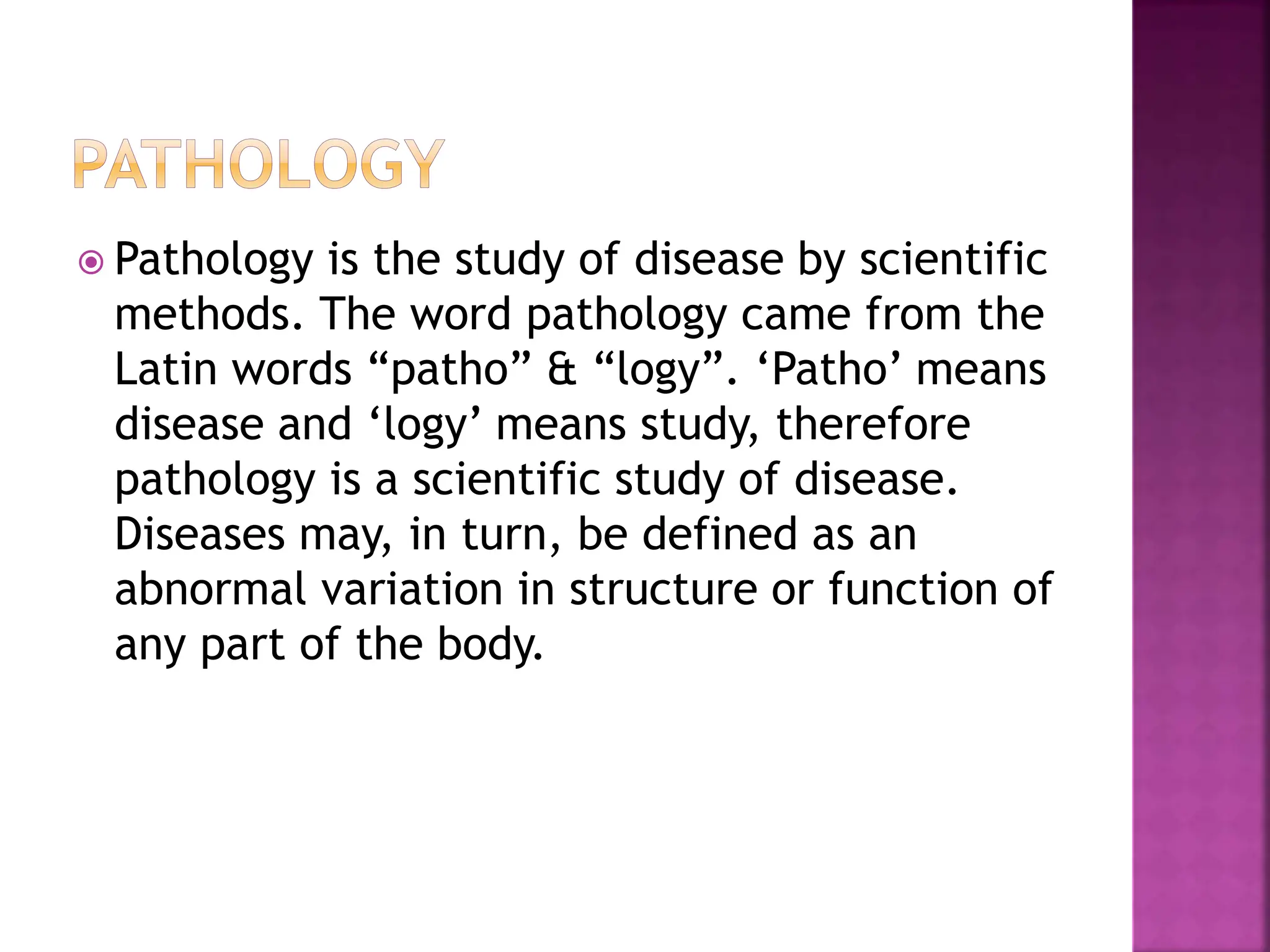
 Pathology is the study of disease by scientific
methods. The word pathology came from the
Latin words “patho” & “logy”. ‘Patho’ means
disease and ‘logy’ means study, therefore
pathology is a scientific study of disease.
Diseases may, in turn, be defined as an
abnormal variation in structure or function of
any part of the body.
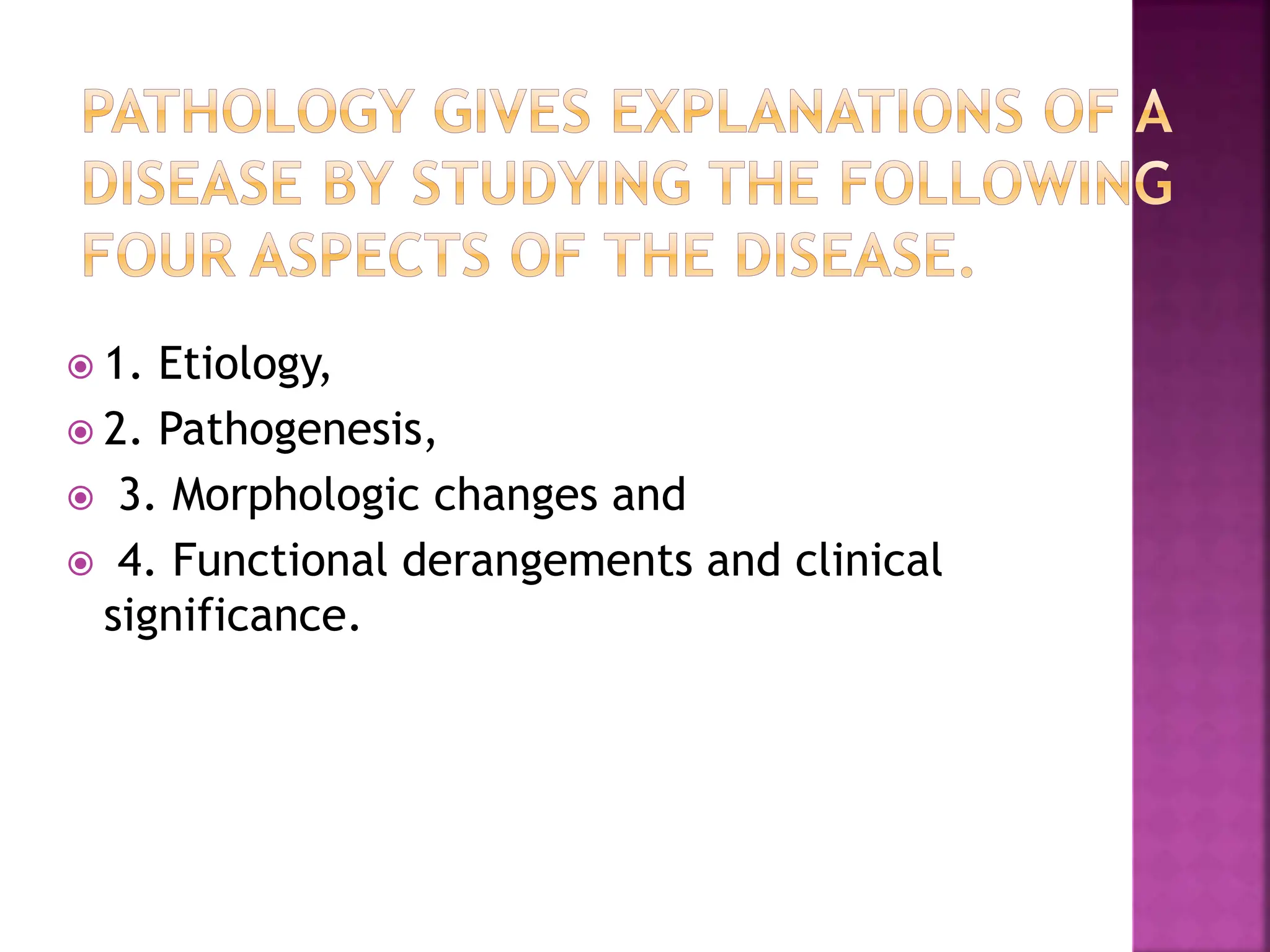
 1. Etiology,
 2. Pathogenesis,
 3. Morphologic changes and
 4. Functional derangements and clinical
significance.
 Etiology of a disease means the cause of the
disease. If the cause of a disease is known it
is called primary etiology. If the cause of the
disease is unknown it is called idiopathic.
 genetic
 acquired
 Pathogenesis means the mechanism through
which the cause operates to produce the
pathological and clinical manifestations. The
pathogenetic mechanisms could take place in
the latent or incubation period. Pathogenesis
leads to morphologic changes.
 The morphologic changes refer to the
structural alterations in cells or tissues that
occur following the pathogenetic
mechanisms. The structural changes in the
organ can be seen with the naked eye or
they may only be seen under the microscope.
Those changes that can be seen with the
naked eye are called gross morphologic
changes & those that are seen under the
microscope are called microscopic changes.
Both the gross & the microscopic
morphologic changes may only be seen in
that disease
 The morphologic changes in the organ
influence the normal function of the organ
 Etiology - Pathogenesis -Morphologic changes
-Clinical features & Prognosis of all diseases.
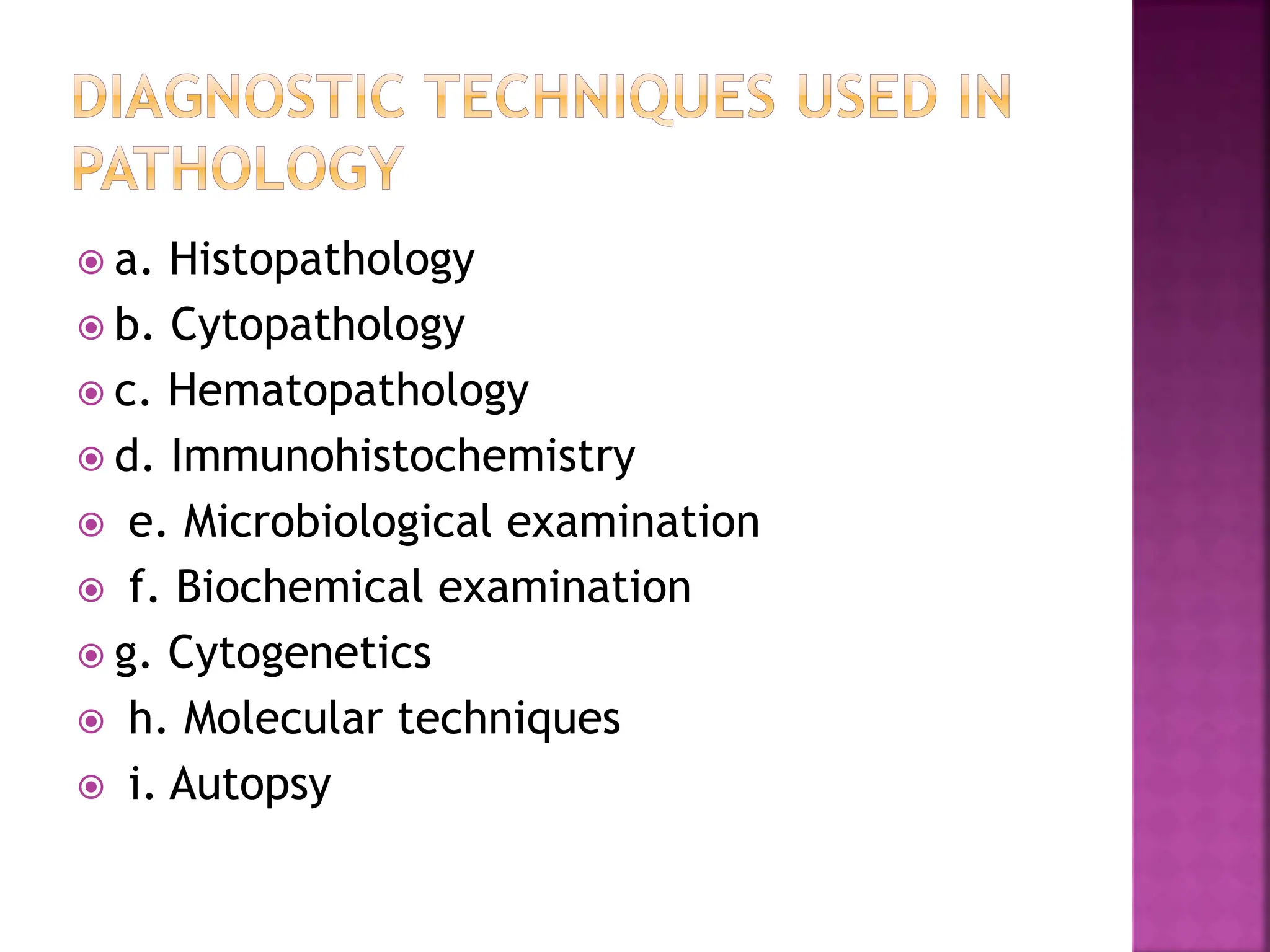
 a. Histopathology
 b. Cytopathology
 c. Hematopathology
 d. Immunohistochemistry
 e. Microbiological examination
 f. Biochemical examination
 g. Cytogenetics
 h. Molecular techniques
 i. Autopsy
 Histopathological examination studies tissues
under the microscope. During this study, the
pathologist looks for abnormal structures in
the tissue. Tissues for histopathological
examination are obtained by biopsy. Biopsy is
a tissue sample from a living person to
identify the disease. Biopsy can be either
incisional or excisional.
 Cytopathology is the study of cells from various
body sites to determine the cause or nature of
disease. Applications of cytopathology:
 The main applications of cytology include the
following:
 1. Screening for the early detection of
asymptomatic cancer For example, the
examination of scrapings from cervix for early
detection and prevention of cervical cancer.
 2. Diagnosis of symptomatic cancer
Cytopathology may be used alone or in
conjunction with other modalities to diagnose
tumors revealed by physical or radiological
examination
 3. Surveillance of patients treated for cancer For
some types of cancers, cytology is the most feasible
method of surveillance to detect recurrence. The
best example is periodic urine cytology to monitor
the recurrence of cancer of the urinary tract.
 This is a method by which abnormalities of
the cells of the blood and their precursors in
the bone marrow are investigated to
diagnose the different kinds of anemia &
leukemia.
 This is a method is used to detect a specific
antigen in the tissue in order to identify the
type of disease.
 This is a method by which body fluids,
excised tissue, etc. are examined by
microscopical, cultural and serological
techniques to identify micro-organisms
responsible for many diseases.
 This is a method by which the metabolic
disturbances of disease are investigated by
assay of various normal and abnormal
compounds in the blood, urine, etc.
 This is a method in which inherited
chromosomal abnormalities in the germ cells
or acquired chromosomal abnormalities in
somatic cells are investigated using the
techniques of molecular biology.
 Different molecular techniques such as
fluorescent in situ hybridization, Southern
blot, etc... can be used to detect genetic
diseases.
 Autopsy is examination of the dead body to
identify the cause of death. This can be for
forensic or clinical purposes.

pathology notes in deteil such as defintion types

  • 1.
  • 2.
     Pathology isthe study of disease by scientific methods. The word pathology came from the Latin words “patho” & “logy”. ‘Patho’ means disease and ‘logy’ means study, therefore pathology is a scientific study of disease. Diseases may, in turn, be defined as an abnormal variation in structure or function of any part of the body.
  • 3.
     1. Etiology, 2. Pathogenesis,  3. Morphologic changes and  4. Functional derangements and clinical significance.
  • 4.
     Etiology ofa disease means the cause of the disease. If the cause of a disease is known it is called primary etiology. If the cause of the disease is unknown it is called idiopathic.
  • 5.
  • 6.
     Pathogenesis meansthe mechanism through which the cause operates to produce the pathological and clinical manifestations. The pathogenetic mechanisms could take place in the latent or incubation period. Pathogenesis leads to morphologic changes.
  • 7.
     The morphologicchanges refer to the structural alterations in cells or tissues that occur following the pathogenetic mechanisms. The structural changes in the organ can be seen with the naked eye or they may only be seen under the microscope. Those changes that can be seen with the naked eye are called gross morphologic changes & those that are seen under the microscope are called microscopic changes. Both the gross & the microscopic morphologic changes may only be seen in that disease
  • 8.
     The morphologicchanges in the organ influence the normal function of the organ  Etiology - Pathogenesis -Morphologic changes -Clinical features & Prognosis of all diseases.
  • 9.
     a. Histopathology b. Cytopathology  c. Hematopathology  d. Immunohistochemistry  e. Microbiological examination  f. Biochemical examination  g. Cytogenetics  h. Molecular techniques  i. Autopsy
  • 10.
     Histopathological examinationstudies tissues under the microscope. During this study, the pathologist looks for abnormal structures in the tissue. Tissues for histopathological examination are obtained by biopsy. Biopsy is a tissue sample from a living person to identify the disease. Biopsy can be either incisional or excisional.
  • 11.
     Cytopathology isthe study of cells from various body sites to determine the cause or nature of disease. Applications of cytopathology:  The main applications of cytology include the following:  1. Screening for the early detection of asymptomatic cancer For example, the examination of scrapings from cervix for early detection and prevention of cervical cancer.  2. Diagnosis of symptomatic cancer Cytopathology may be used alone or in conjunction with other modalities to diagnose tumors revealed by physical or radiological examination
  • 12.
     3. Surveillanceof patients treated for cancer For some types of cancers, cytology is the most feasible method of surveillance to detect recurrence. The best example is periodic urine cytology to monitor the recurrence of cancer of the urinary tract.
  • 13.
     This isa method by which abnormalities of the cells of the blood and their precursors in the bone marrow are investigated to diagnose the different kinds of anemia & leukemia.
  • 14.
     This isa method is used to detect a specific antigen in the tissue in order to identify the type of disease.
  • 15.
     This isa method by which body fluids, excised tissue, etc. are examined by microscopical, cultural and serological techniques to identify micro-organisms responsible for many diseases.
  • 16.
     This isa method by which the metabolic disturbances of disease are investigated by assay of various normal and abnormal compounds in the blood, urine, etc.
  • 17.
     This isa method in which inherited chromosomal abnormalities in the germ cells or acquired chromosomal abnormalities in somatic cells are investigated using the techniques of molecular biology.
  • 18.
     Different moleculartechniques such as fluorescent in situ hybridization, Southern blot, etc... can be used to detect genetic diseases.
  • 19.
     Autopsy isexamination of the dead body to identify the cause of death. This can be for forensic or clinical purposes.