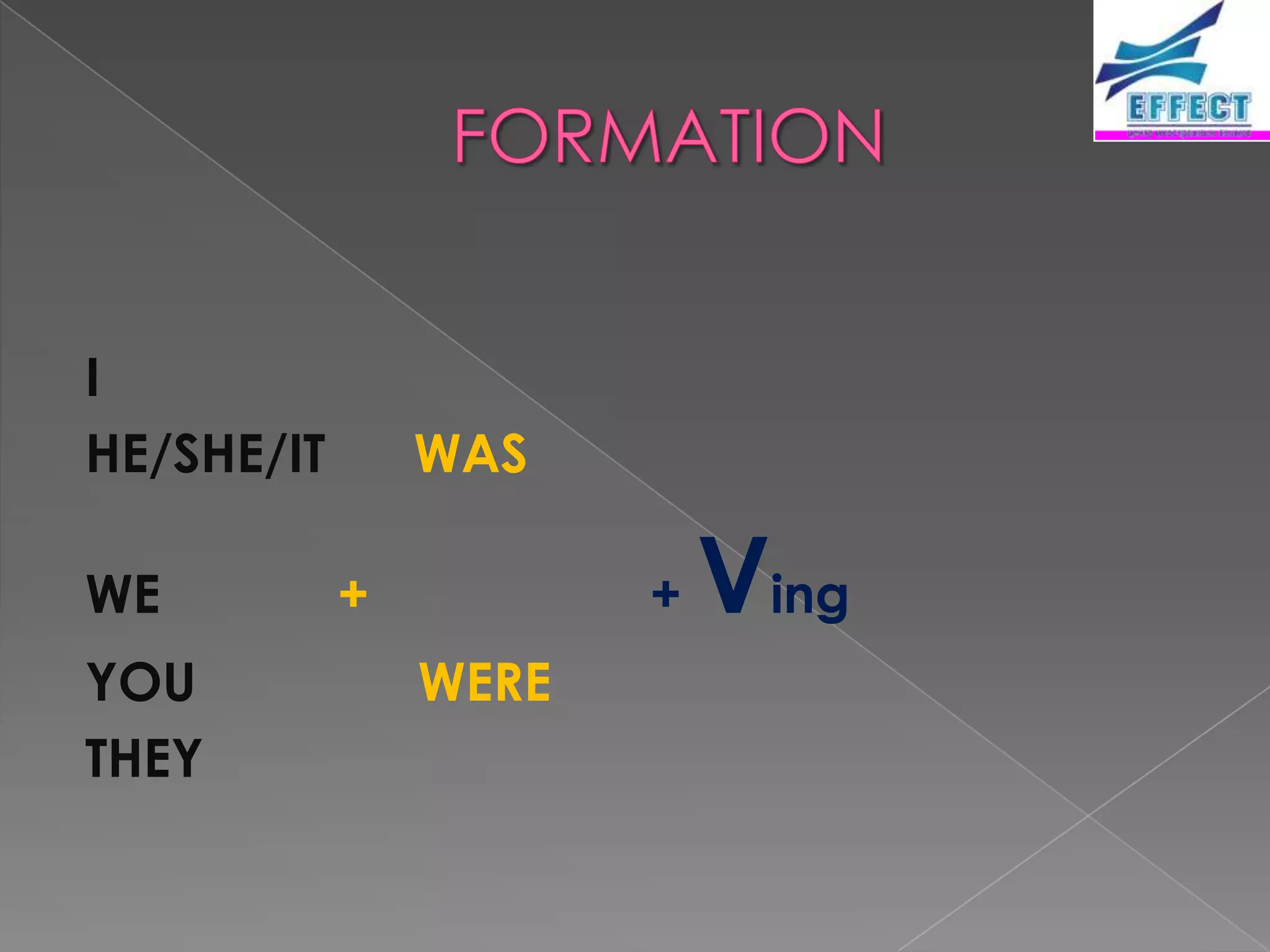
I
HE/SHE/IT       WAS

WE          +          +   Ving
YOU             WERE
THEY
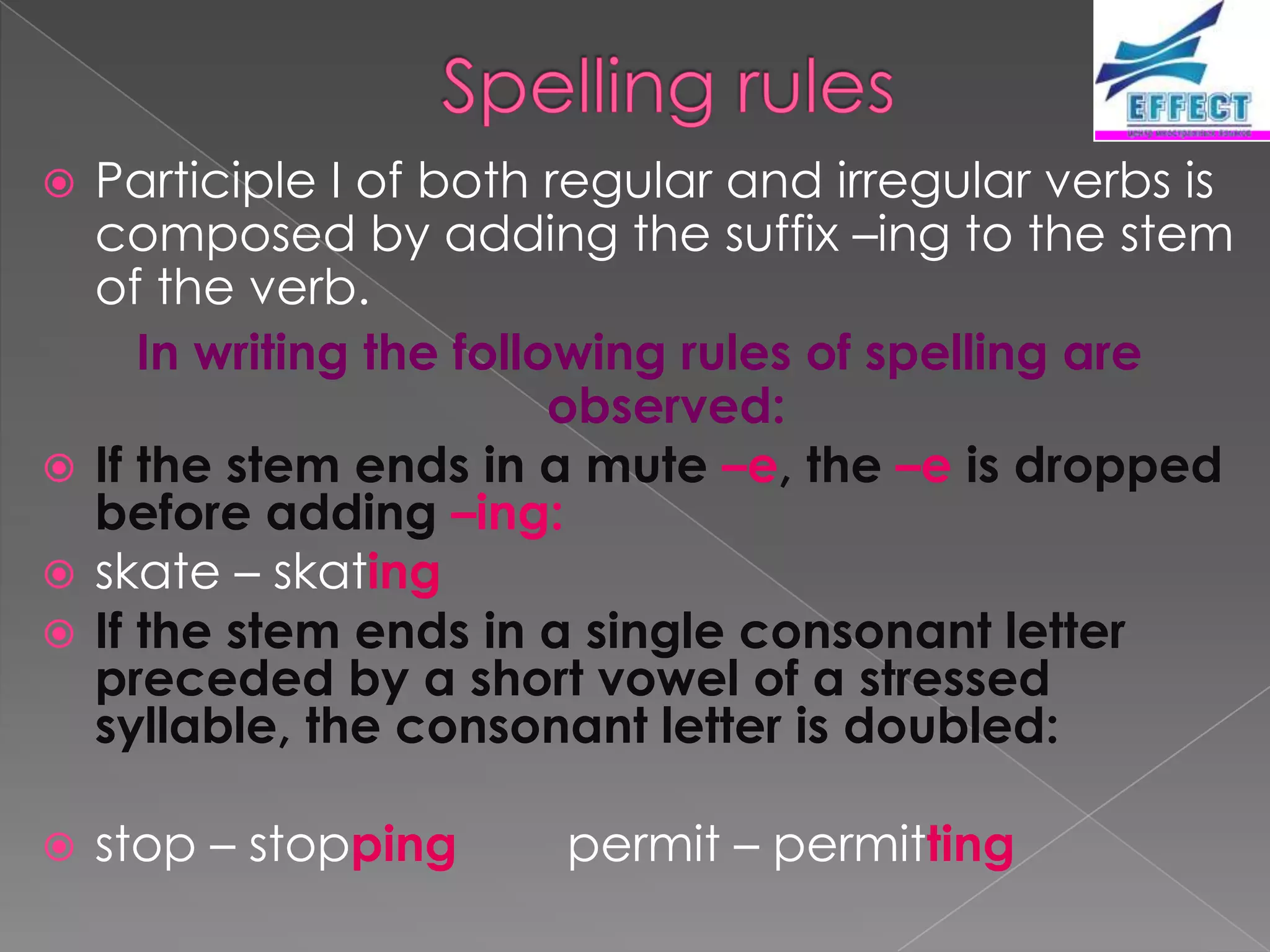
 Participle I of both regular and irregular verbs is
  composed by adding the suffix –ing to the stem
  of the verb.
     In writing the following rules of spelling are
                         observed:
 If the stem ends in a mute –e, the –e is dropped
  before adding –ing:
 skate – skating
 If the stem ends in a single consonant letter
  preceded by a short vowel of a stressed
  syllable, the consonant letter is doubled:

   stop – stopping    permit – permitting
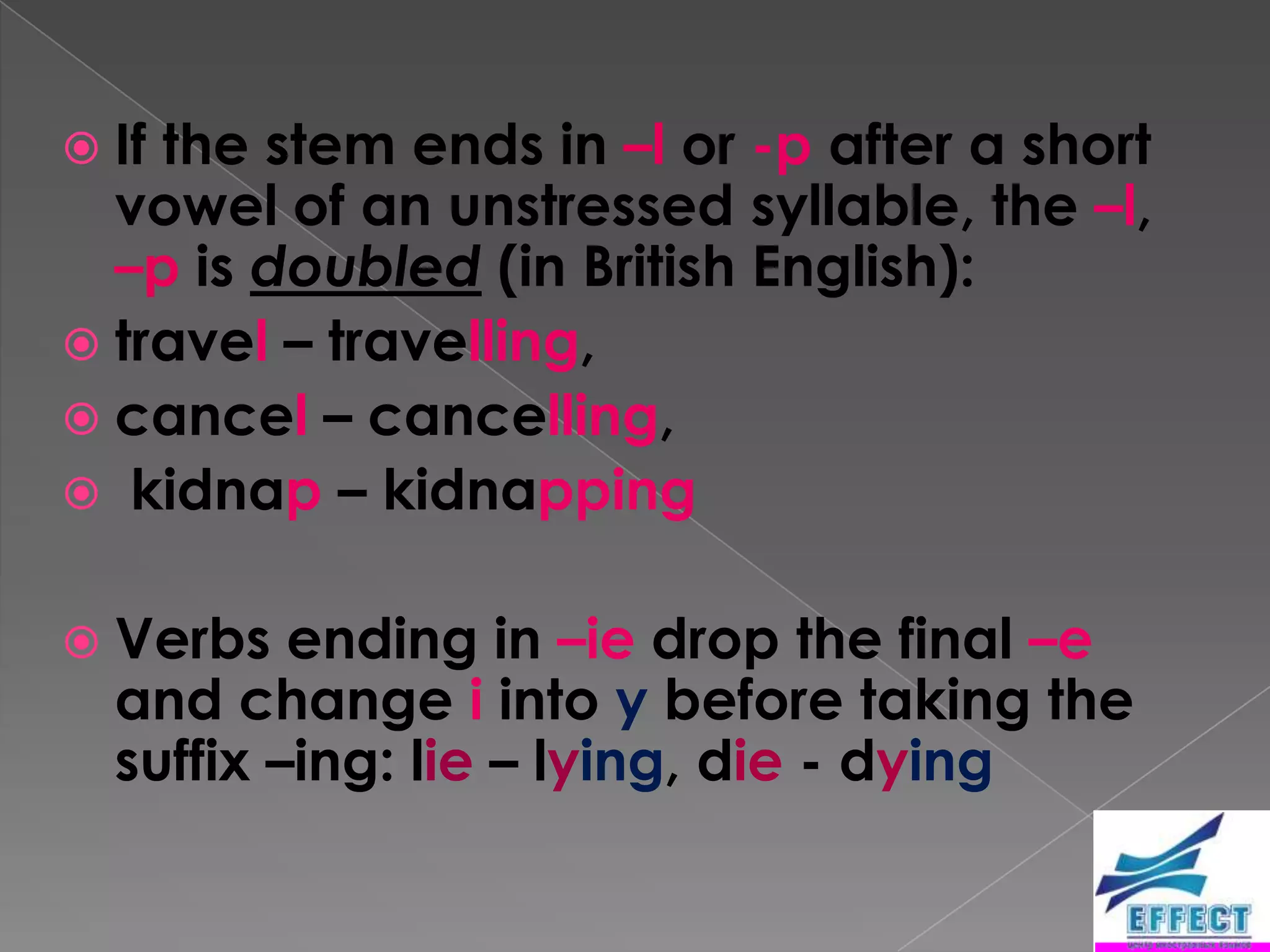
 Ifthe stem ends in –l or -p after a short
  vowel of an unstressed syllable, the –l,
  –p is doubled (in British English):
 travel – travelling,
 cancel – cancelling,
 kidnap – kidnapping


 Verbs   ending in –ie drop the final –e
  and change i into y before taking the
  suffix –ing: lie – lying, die - dying
 We use the Past Continuous Tense:
 A) for an action which was in progress at a stated
  time in the past. We may not mention when the
  action started or finished.

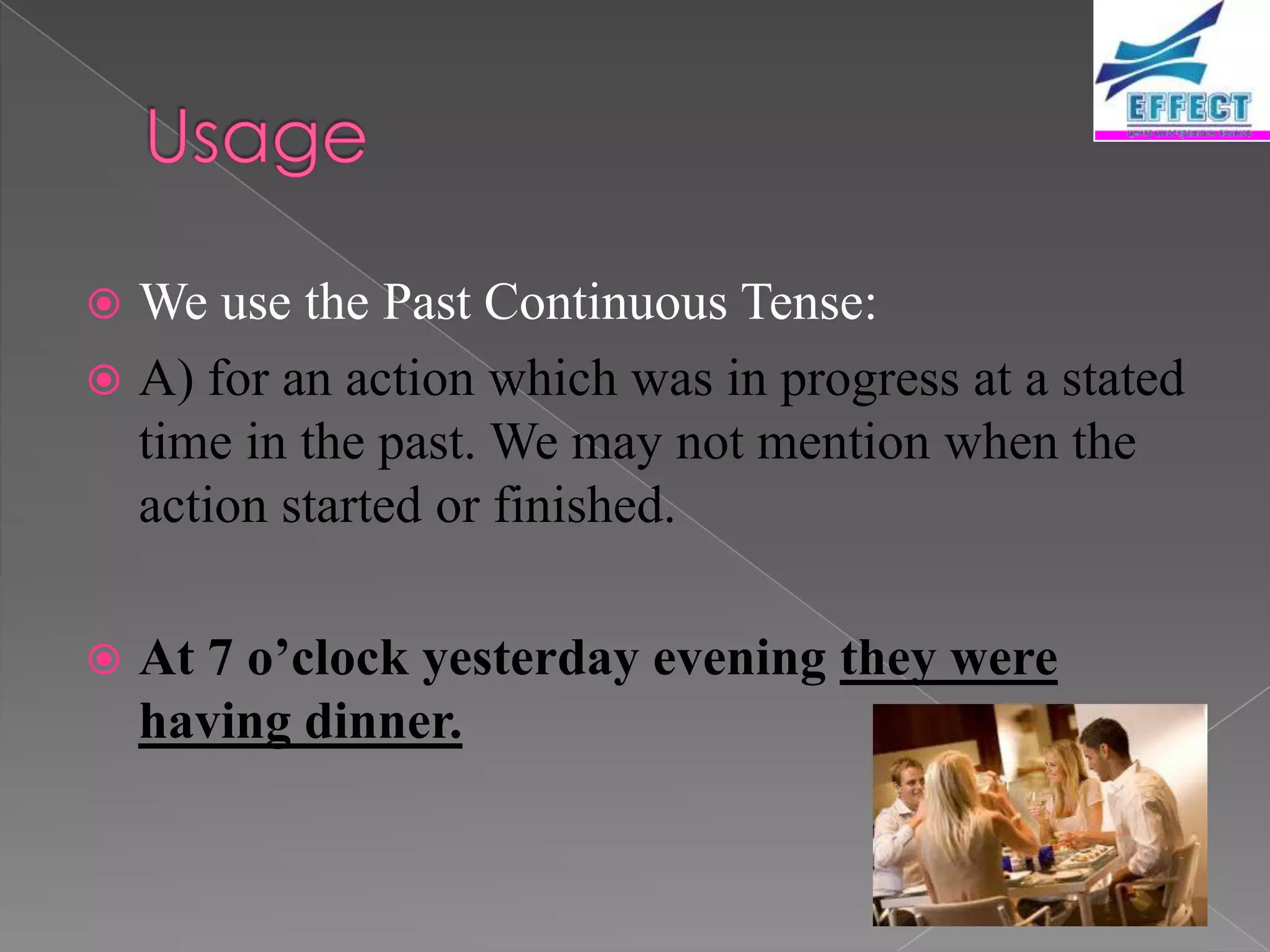
   At 7 o’clock yesterday evening they were
    having dinner.
   B) for an action which was in progress when
    another action interrupted it. We use the Past
    Continuous Tense for the action in progress and
    the Past Simple Tense for the action which
    interrupted it.

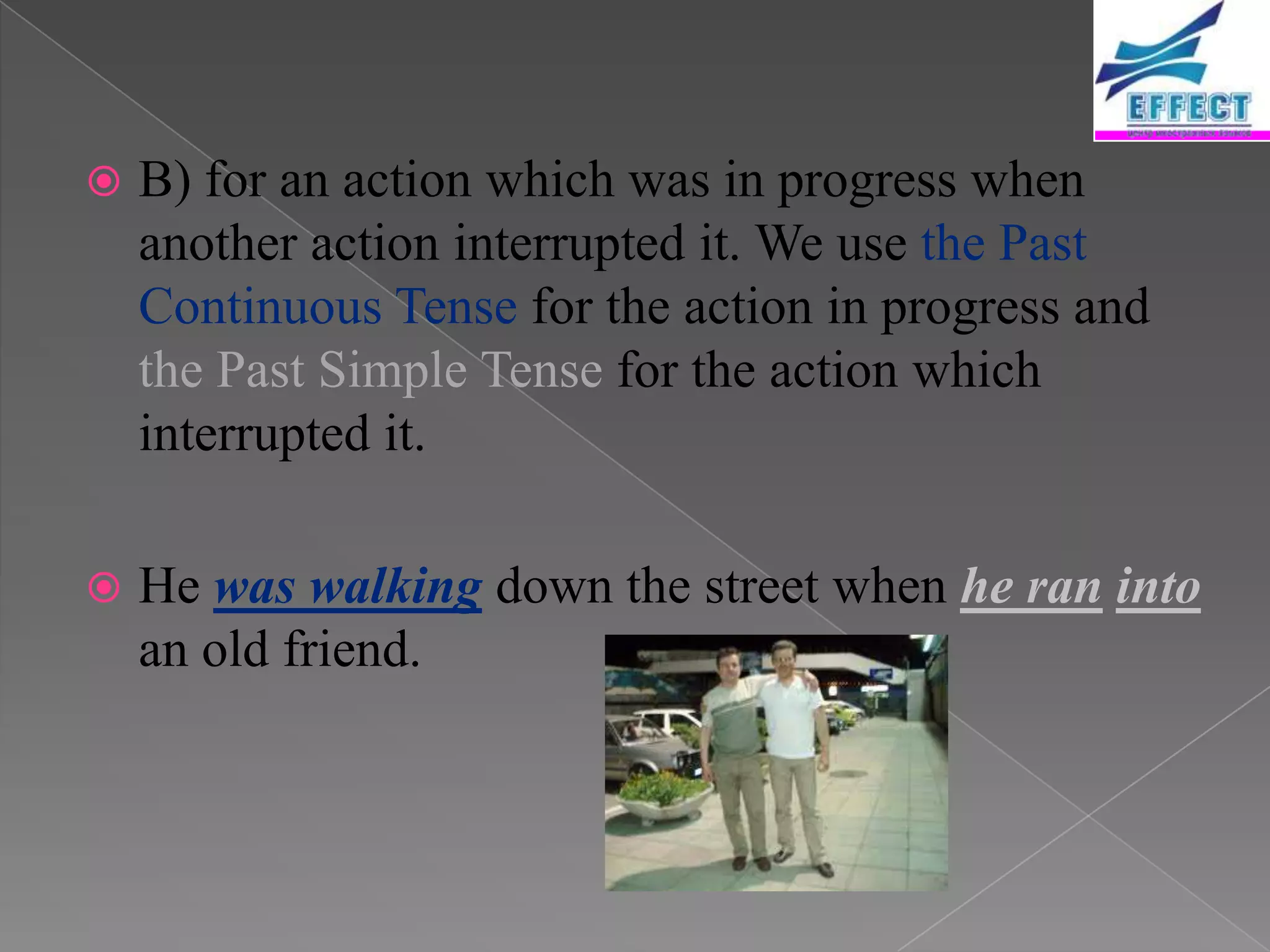
   He was walking down the street when he ran into
    an old friend.
   C) for two or more simultaneous past actions.

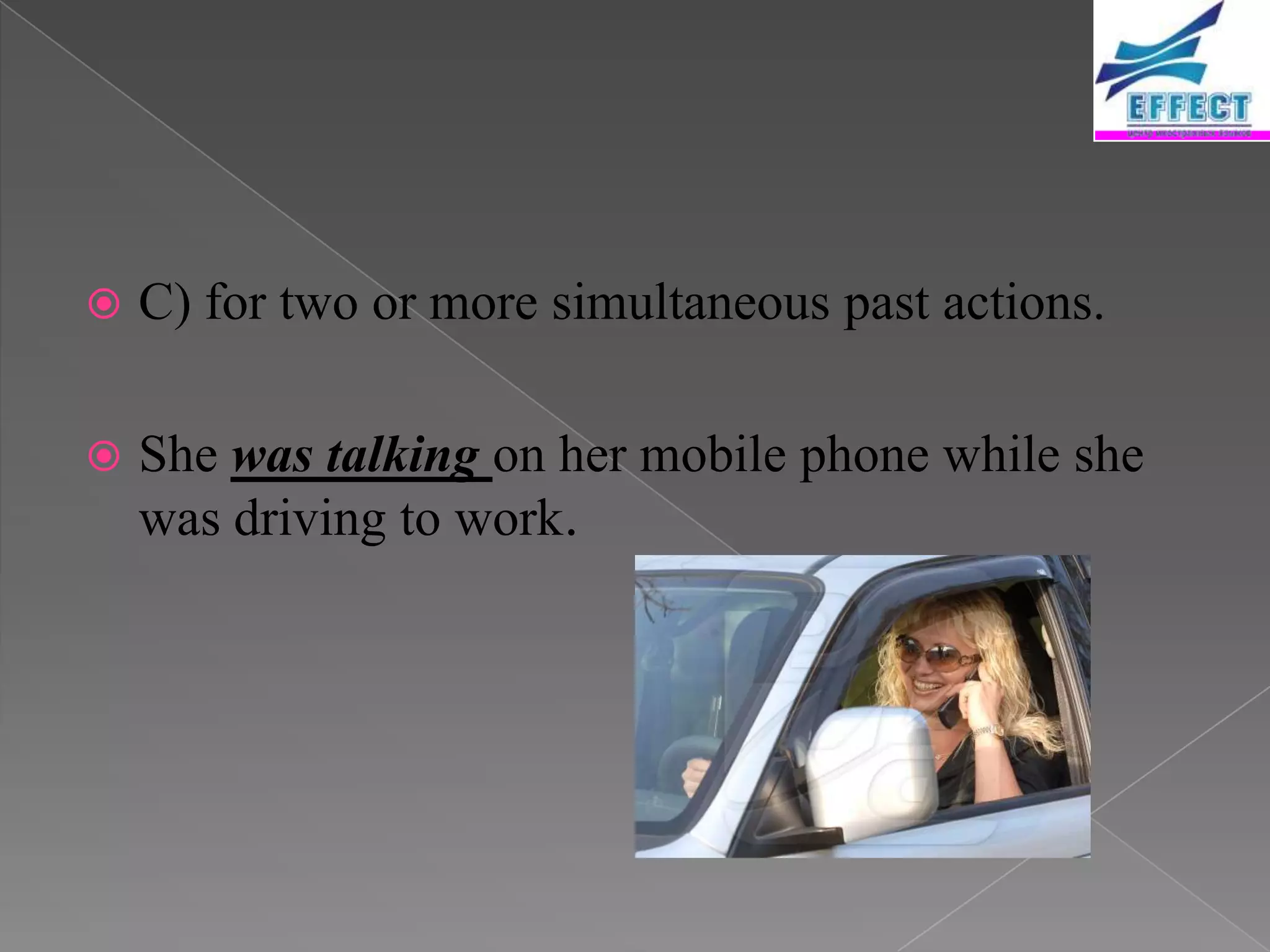
   She was talking on her mobile phone while she
    was driving to work.
   D) to describe an atmosphere, setting, etc. in the
    introduction to a story before we describe main
    events.

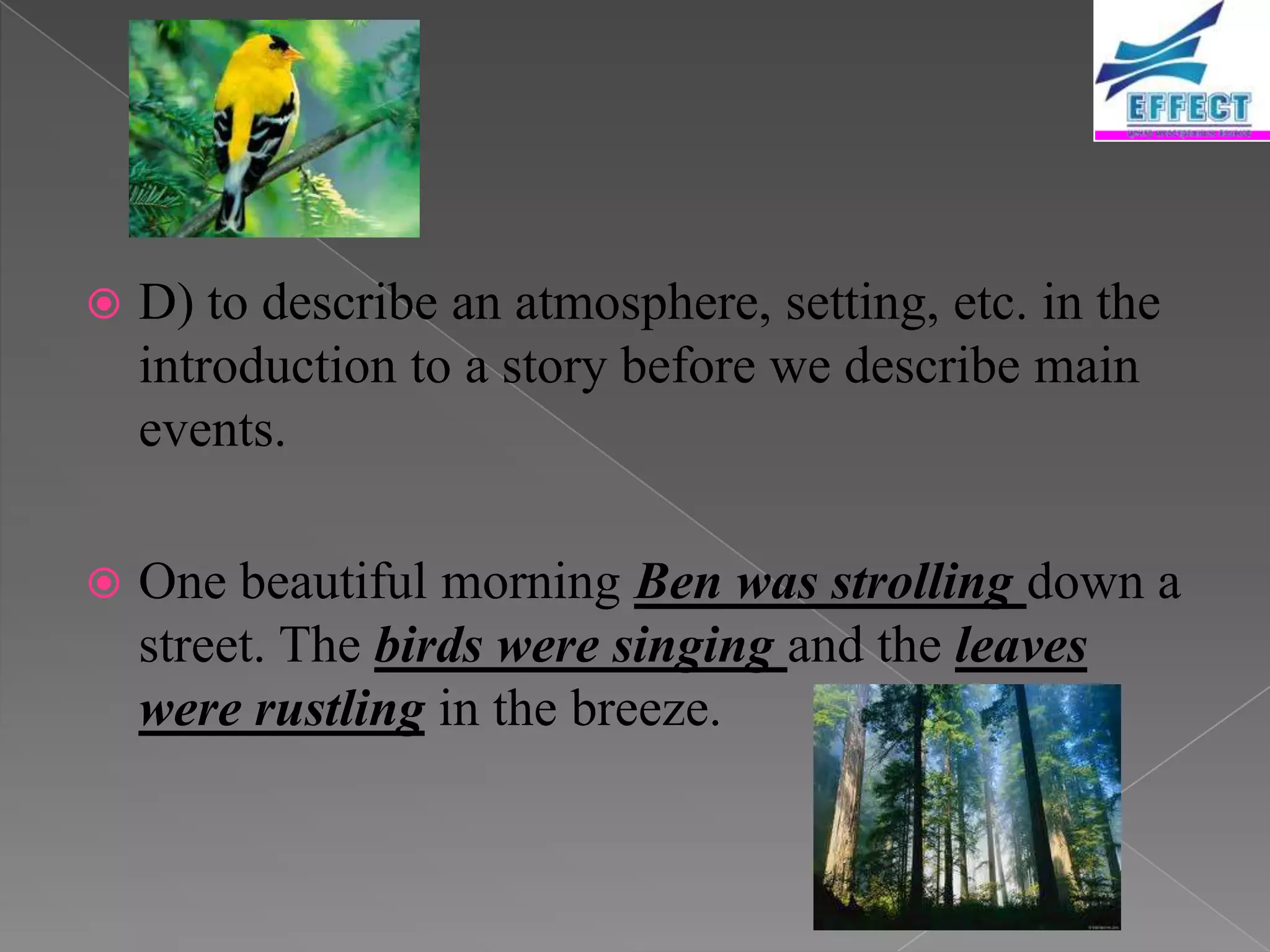
   One beautiful morning Ben was strolling down a
    street. The birds were singing and the leaves
    were rustling in the breeze.
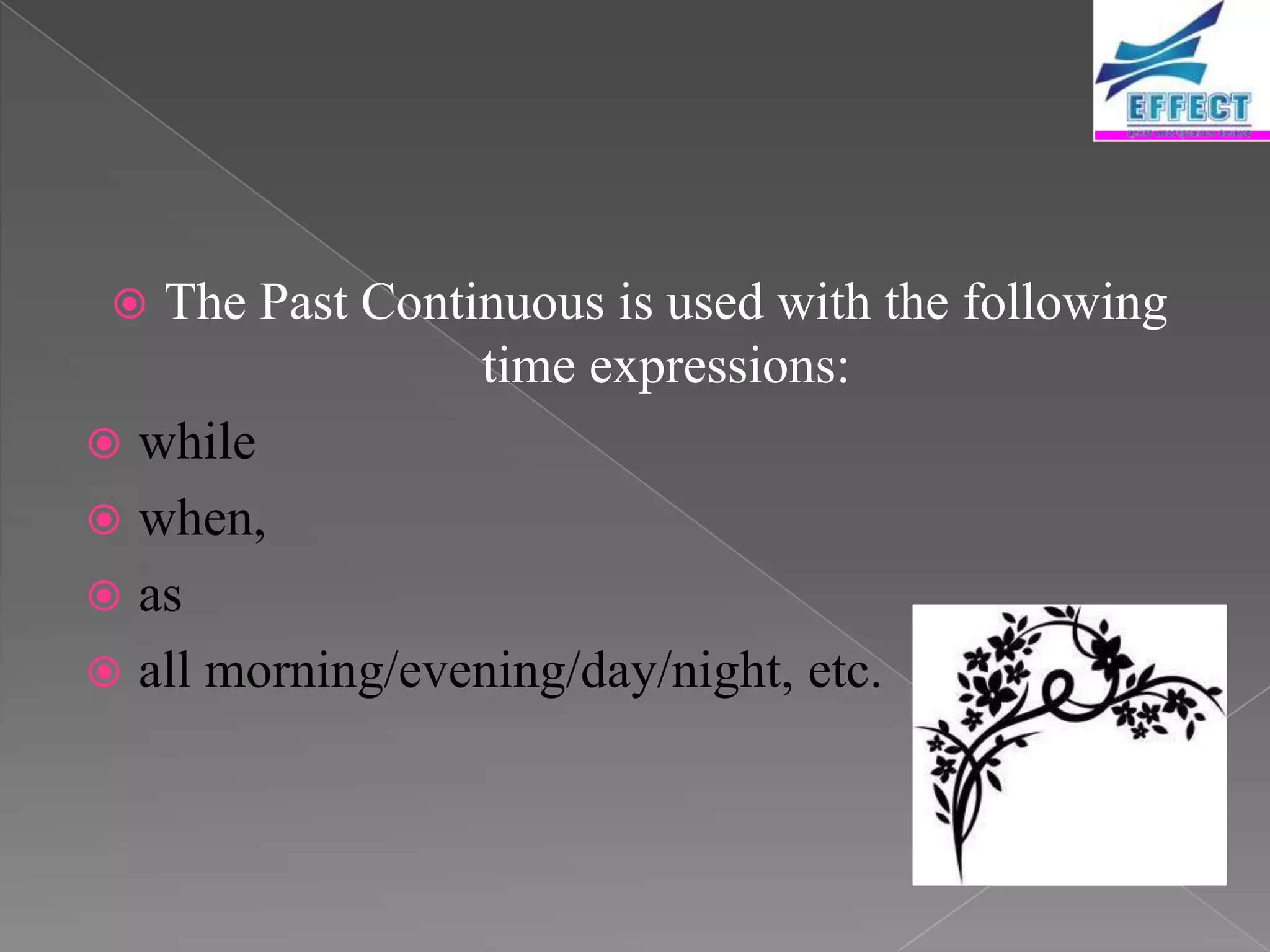
 The Past Continuous is used with the following
                 time expressions:
 while
 when,
 as
 all morning/evening/day/night, etc.
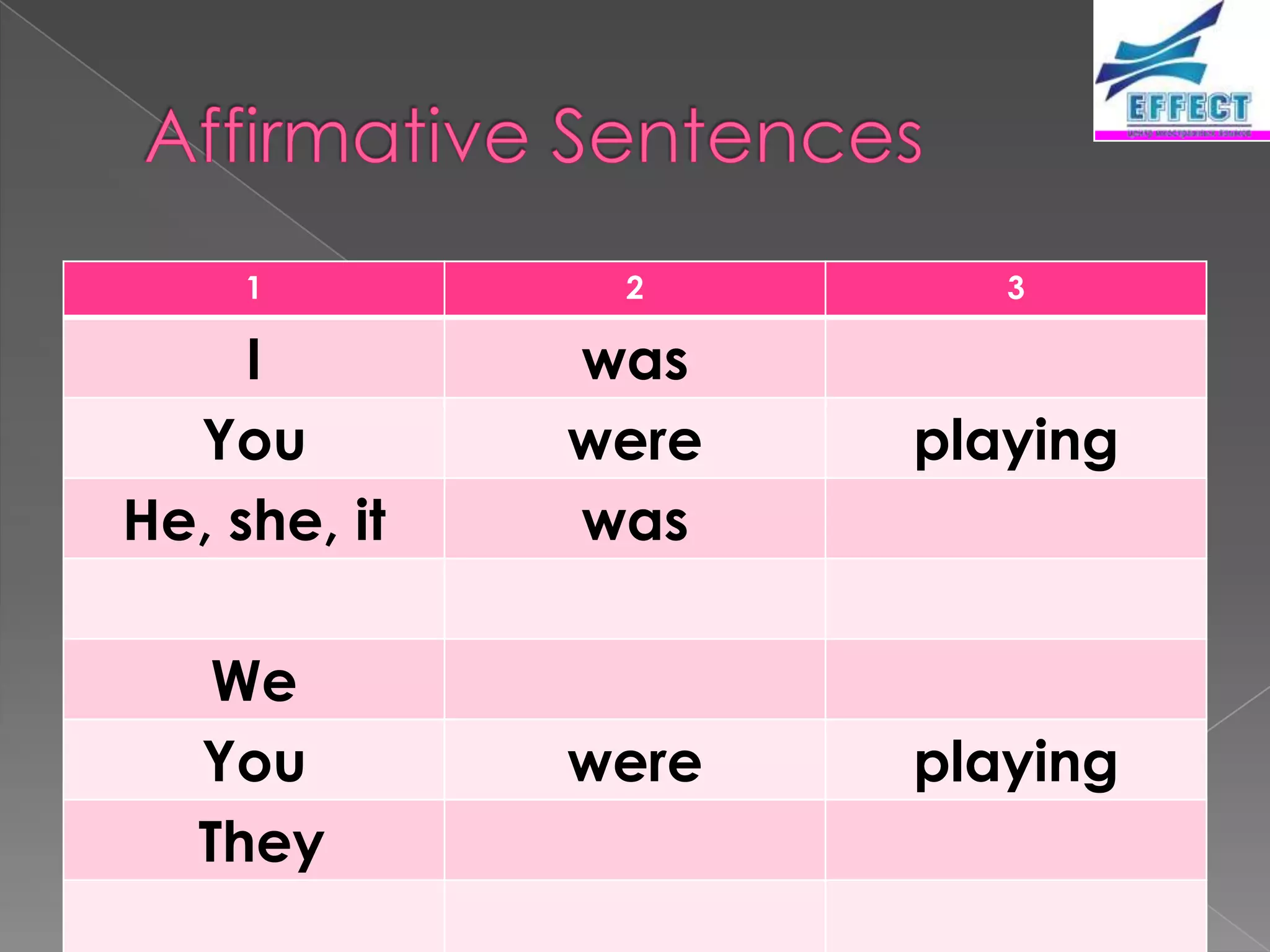
1         2        3

     I        was
  You         were   playing
He, she, it   was

    We
   You        were   playing
   They
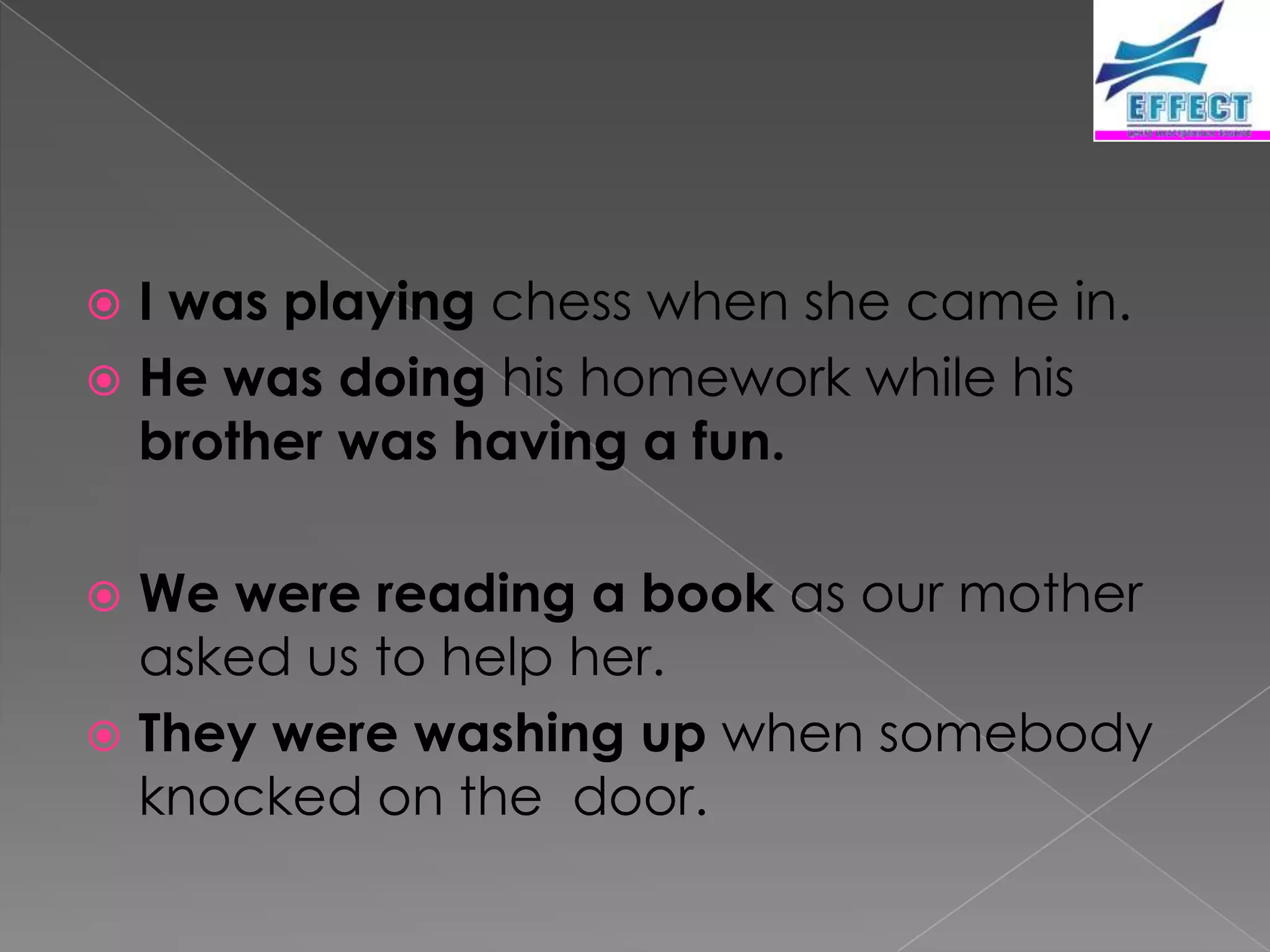
 I was playing chess when she came in.
 He was doing his homework while his
  brother was having a fun.

 We were reading a book as our mother
  asked us to help her.
 They were washing up when somebody
  knocked on the door.
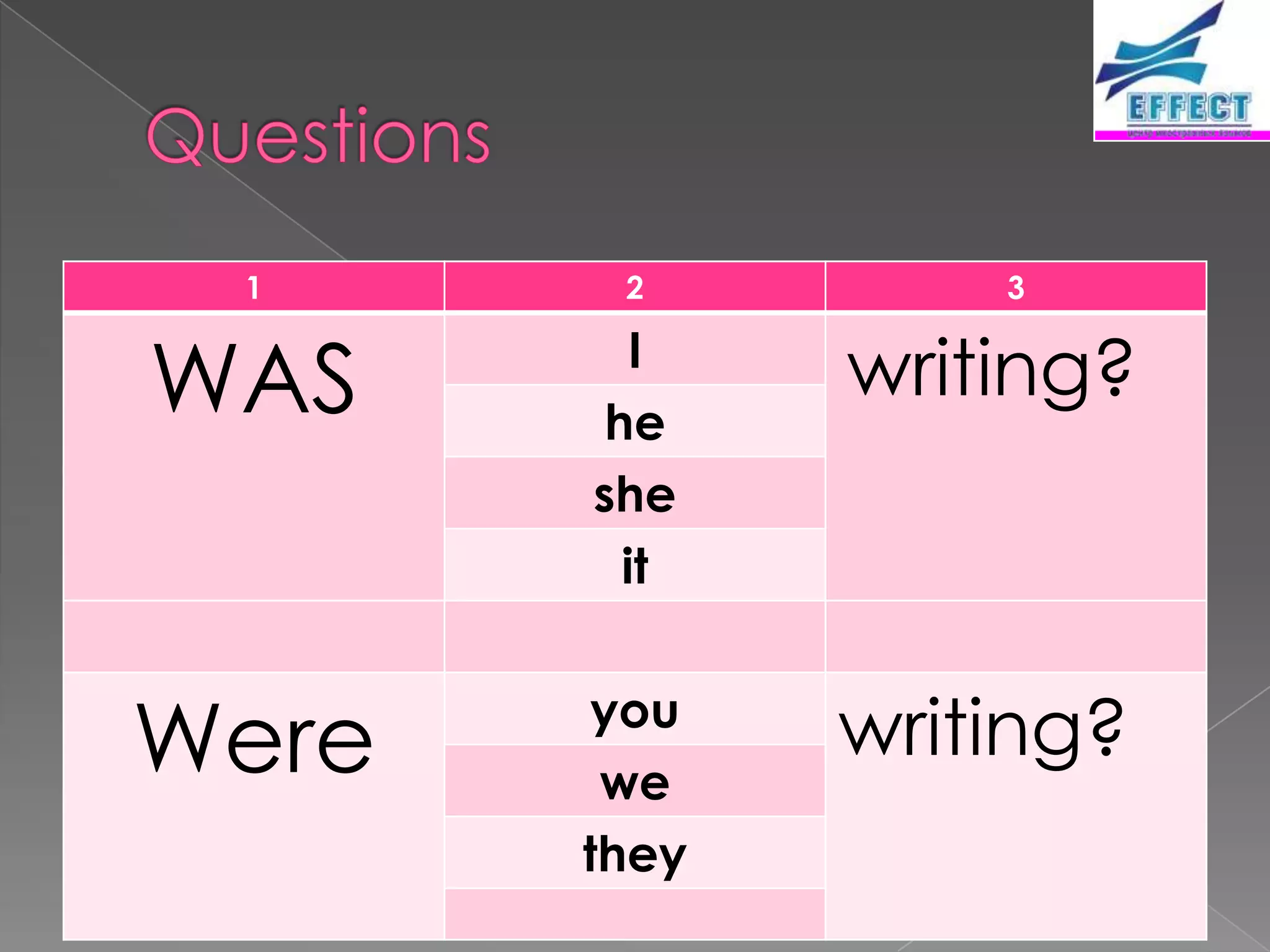
1      2         3


WAS     he
          I
              writing?
       she
         it


Were    you
        we
              writing?
       they
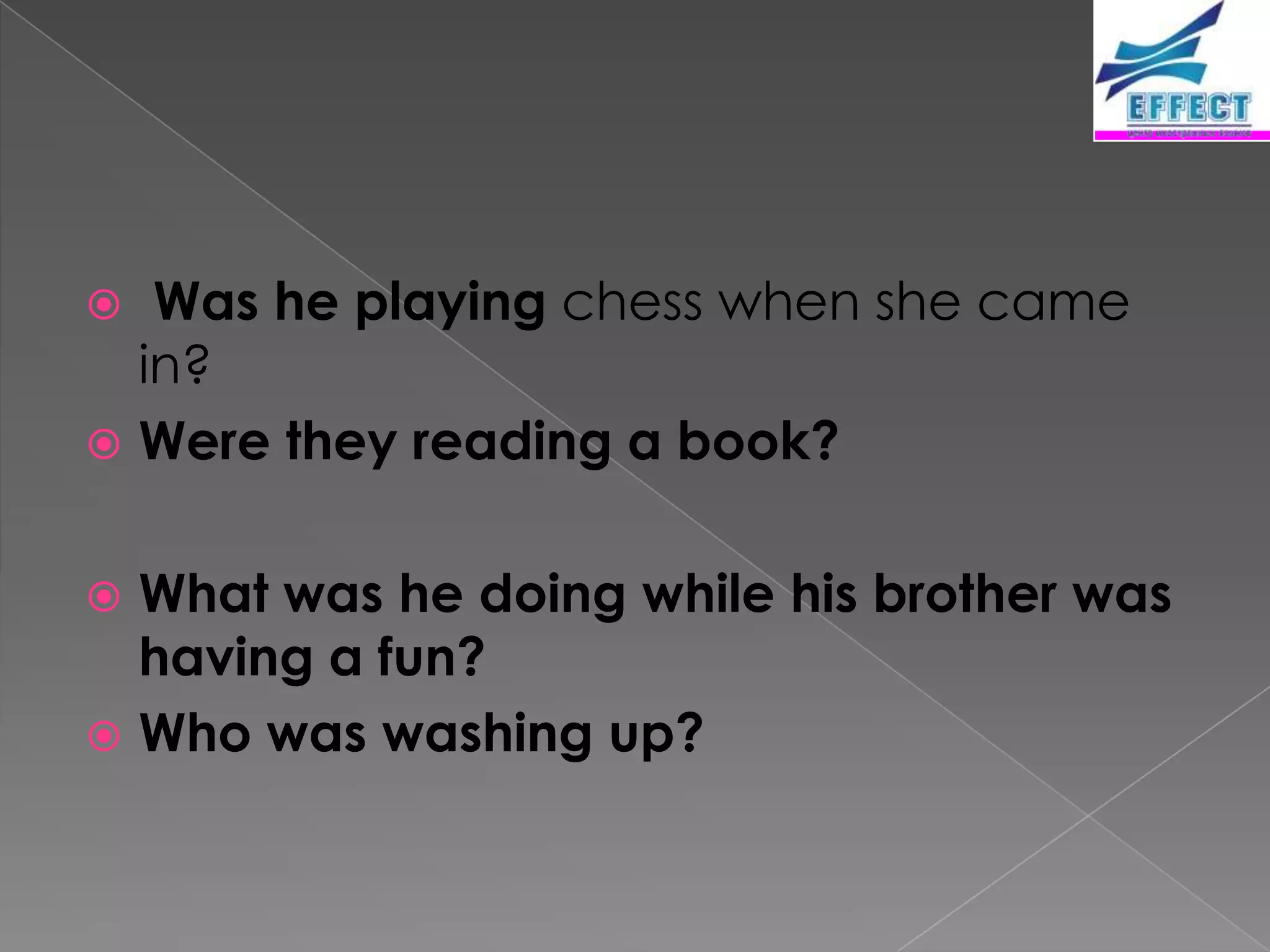
  Was he playing chess when she came
  in?
 Were they reading a book?


 What was he doing while his brother was
  having a fun?
 Who was washing up?
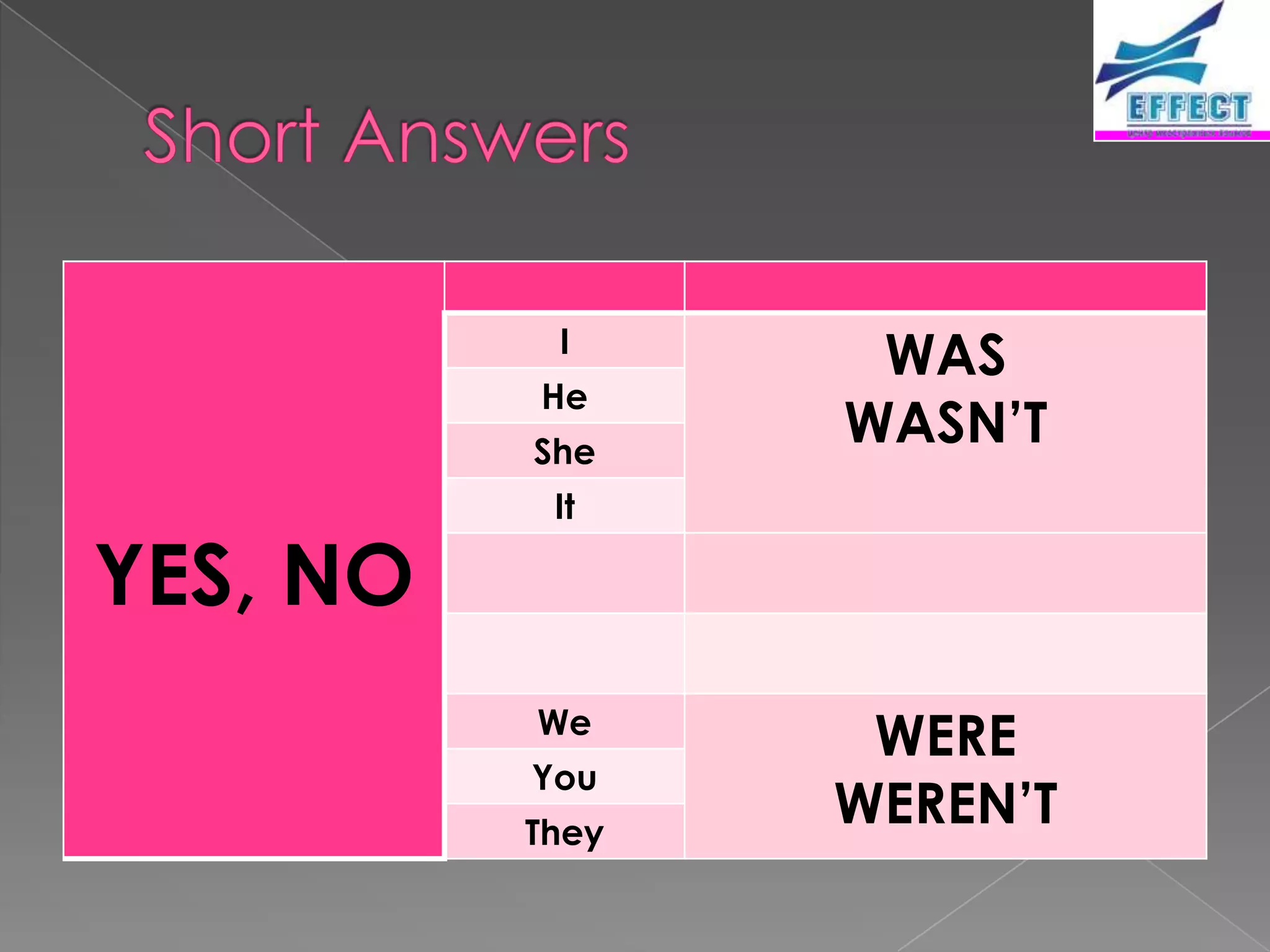
I
                  WAS
          He
          She
                 WASN’T
           It

YES, NO
          We
                  WERE
          You
          They
                 WEREN’T
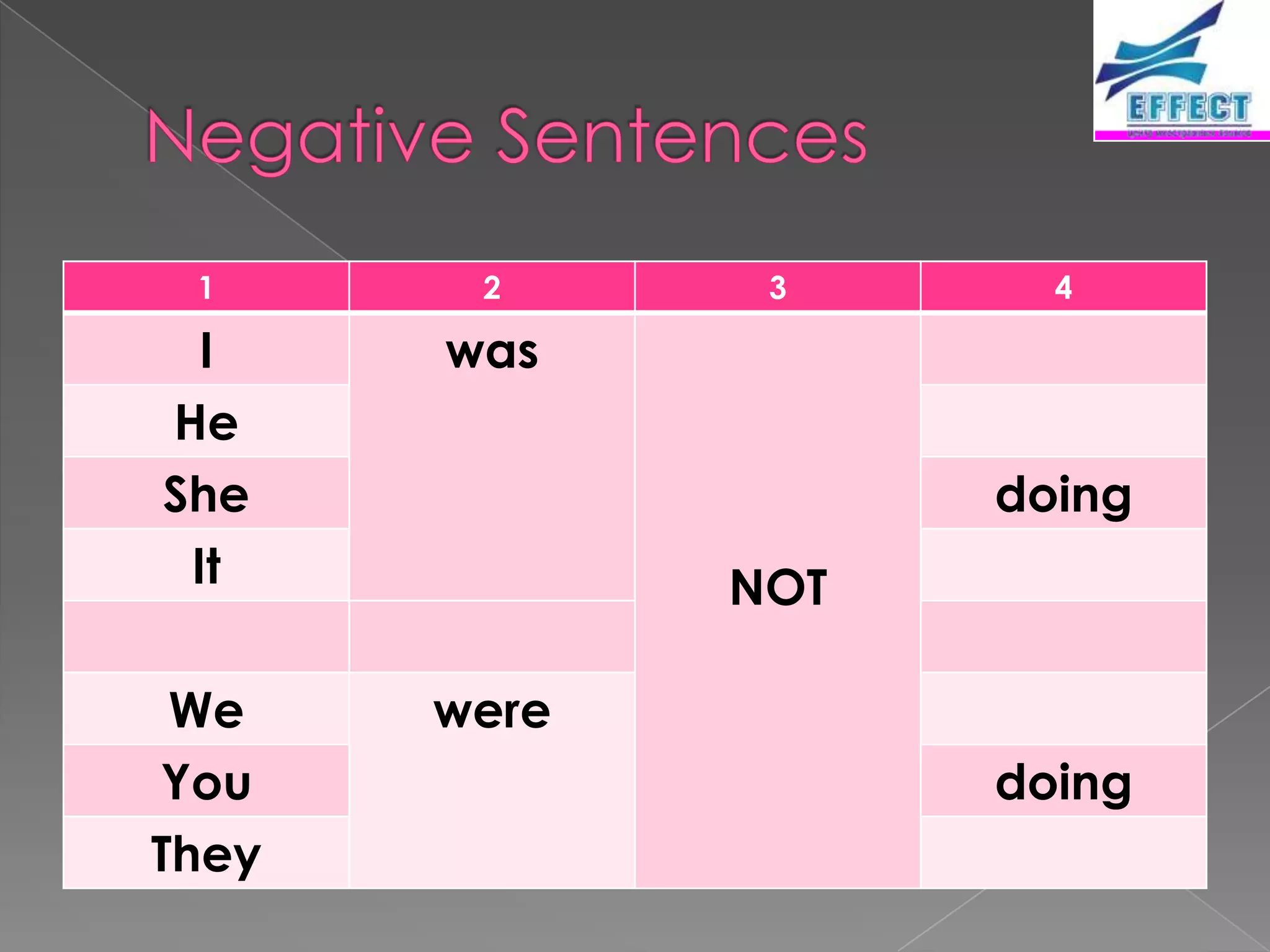
1      2      3      4

  I    was
He
She                 doing
 It           NOT

 We    were
You                 doing
They
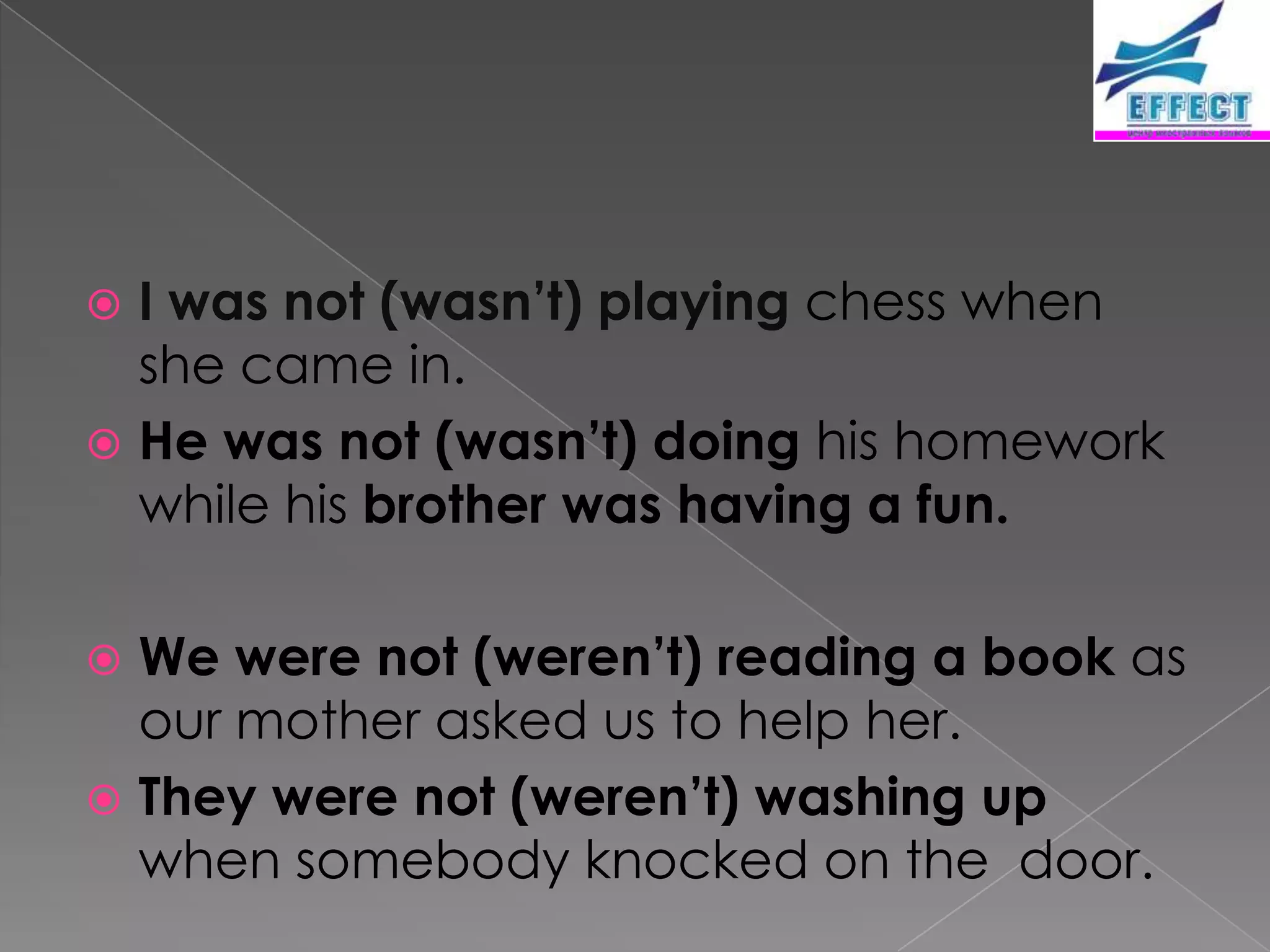
 I was not (wasn’t) playing chess when
  she came in.
 He was not (wasn’t) doing his homework
  while his brother was having a fun.

 We were not (weren’t) reading a book as
  our mother asked us to help her.
 They were not (weren’t) washing up
  when somebody knocked on the door.

Past continuous

  • 2.
    I HE/SHE/IT WAS WE + + Ving YOU WERE THEY
  • 3.
     Participle Iof both regular and irregular verbs is composed by adding the suffix –ing to the stem of the verb. In writing the following rules of spelling are observed:  If the stem ends in a mute –e, the –e is dropped before adding –ing:  skate – skating  If the stem ends in a single consonant letter preceded by a short vowel of a stressed syllable, the consonant letter is doubled:  stop – stopping permit – permitting
  • 4.
     Ifthe stemends in –l or -p after a short vowel of an unstressed syllable, the –l, –p is doubled (in British English):  travel – travelling,  cancel – cancelling,  kidnap – kidnapping  Verbs ending in –ie drop the final –e and change i into y before taking the suffix –ing: lie – lying, die - dying
  • 5.
     We usethe Past Continuous Tense:  A) for an action which was in progress at a stated time in the past. We may not mention when the action started or finished.  At 7 o’clock yesterday evening they were having dinner.
  • 6.
    B) for an action which was in progress when another action interrupted it. We use the Past Continuous Tense for the action in progress and the Past Simple Tense for the action which interrupted it.  He was walking down the street when he ran into an old friend.
  • 7.
    C) for two or more simultaneous past actions.  She was talking on her mobile phone while she was driving to work.
  • 8.
    D) to describe an atmosphere, setting, etc. in the introduction to a story before we describe main events.  One beautiful morning Ben was strolling down a street. The birds were singing and the leaves were rustling in the breeze.
  • 9.
     The PastContinuous is used with the following time expressions:  while  when,  as  all morning/evening/day/night, etc.
  • 10.
    1 2 3 I was You were playing He, she, it was We You were playing They
  • 11.
     I wasplaying chess when she came in.  He was doing his homework while his brother was having a fun.  We were reading a book as our mother asked us to help her.  They were washing up when somebody knocked on the door.
  • 12.
    1 2 3 WAS he I writing? she it Were you we writing? they
  • 13.
     Washe playing chess when she came in?  Were they reading a book?  What was he doing while his brother was having a fun?  Who was washing up?
  • 14.
    I WAS He She WASN’T It YES, NO We WERE You They WEREN’T
  • 15.
    1 2 3 4 I was He She doing It NOT We were You doing They
  • 16.
     I wasnot (wasn’t) playing chess when she came in.  He was not (wasn’t) doing his homework while his brother was having a fun.  We were not (weren’t) reading a book as our mother asked us to help her.  They were not (weren’t) washing up when somebody knocked on the door.