PASSIVE SOLAR
BUILDINGS
BY: ARUN KUMAR D
SRN:R15CV811
REVA UNIVERSITY
B TECH CIVIL ENGG
REVA UNIVERSITY 1
 INTRODUCTION
 WHAT ARE PASSIVE SOLAR BUILDINGS?
 HOW DOES IT WORKS?
 CATEGORIES OF PASSIVE SOLAR ENERGY/SYSTEM.
 USAGE AMONG THE COUNTRIES.
 ADVANTAGES OF PASSIVE SOLAR BUILDINGS.
 SOME OF THE PASSIVE SOLAR BUILDINGS.
 BENEFITS.
 CONCLUSION.
CONTENTS
REVA UNIVERSITY 2
 IT AS AN INTRODUCTION TO PRINCIPLES AND
CONCEPT OF UNDERLYING OF BUILDINGS TO
PASSIVELY UTILIZE SOLAR ENERGY FOR HEATING.
 35 TO 40% OF OUR ENERGY IS CONSUMED BY
BUILDINGS AND 85% OF THAT IS NEEDED FOR
HEATING.
 THIS IS AN INTRODUCTION TO THE PASSIVE SOLAR
TECHNOLOGY THAT MAY BE USED TO HEAT
BUILDINGS.
INTRODUCTION
REVA UNIVERSITY 3
“In PASSIVE SOLAR BUILDINGS ,windows,
walls, and floors are made to collect, store
and distribute ‘SOLAR ENERGY’ in the form
heat in the winter and reject solar heat in
the summer.
WHAT ARE PASSIVE SOLAR BUILDINGS?
REVA UNIVERSITY 4
Passive solar buildings are designed to let heat into the
buildings during the winter months and block out the
sun during hot summer days. This can be achieved by
passive solar design elements such as shading ,
implementing large south facing windows ,and building
materials that absorb and slowly release the sun’s heat
HOW DOES IT WORK?
REVA UNIVERSITY 5
THERE ARE THREE TYPES OF SYSTEMS/CATEGORIES
ARE AS FOLLOWS:
 DIRECT GAIN SYSTEM.
 INDIRECT GAIN SYSTEM.
 ISOLATED GAIN SYSTEM.
CATEGORIES OF PASSIVE SOLAR ENERGY
/SYSTEMS
REVA UNIVERSITY 6
DIRECT GAIN SYSTEM
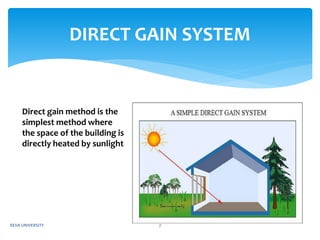
Direct gain method is the
simplest method where
the space of the building is
directly heated by sunlight
REVA UNIVERSITY 7
INDIRECT GAIN SYSTEM
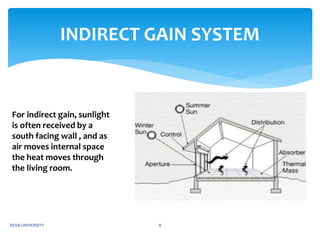
For indirect gain, sunlight
is often received by a
south facing wall , and as
air moves internal space
the heat moves through
the living room.
REVA UNIVERSITY 8
ISOLATED GAIN SYSTEM
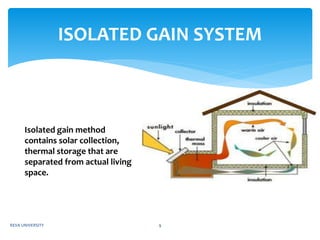
Isolated gain method
contains solar collection,
thermal storage that are
separated from actual living
space.
REVA UNIVERSITY 9
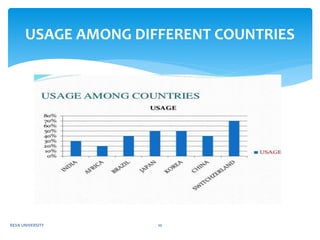
USAGE AMONG DIFFERENT COUNTRIES
REVA UNIVERSITY 10
 Mainly it provide perfect temperature and it is
renewable energy resource.
 It’s cost of installation is lower than active solar
energy resources.
 Less or zero usage of conventional equipment.
 Harness the power of sunlight.
 No bills and many more……
ADVANTAGES OF PASSIVE SOLAR
BUILDINGS
REVA UNIVERSITY 11
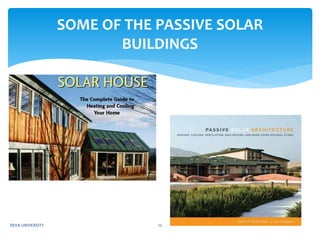
SOME OF THE PASSIVE SOLAR
BUILDINGS
REVA UNIVERSITY 12
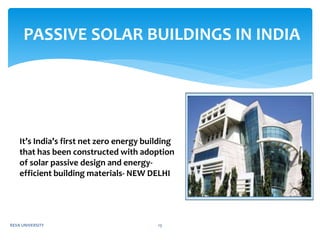
PASSIVE SOLAR BUILDINGS IN INDIA
It’s India’s first net zero energy building
that has been constructed with adoption
of solar passive design and energy-
efficient building materials- NEW DELHI
REVA UNIVERSITY 13
 Bright interiors and transmits visible light.
 Cooler and comfortable in summer.
 Warmer in winter.
 Blocks ultraviolet energy.
 Saves the money rather than wasting for cooling and
heating bills.
BENEFITS OF PASSIVE SOLAR BUILDINGS
REVA UNIVERSITY 14
They can perform effortlessly and quietly with out
mechanical or electrical assistance.
Reduction can be made to heating bills by as much as
40% annually, and also improve the comfort of living
spaces.
Simple techniques can make a huge difference in the
comfort and energy consumption through year.
CONCLUSION
REVA UNIVERSITY 15
END
REVA UNIVERSITY 16

Passive solar buildings.pptx arun

  • 1.
    PASSIVE SOLAR BUILDINGS BY: ARUNKUMAR D SRN:R15CV811 REVA UNIVERSITY B TECH CIVIL ENGG REVA UNIVERSITY 1
  • 2.
     INTRODUCTION  WHATARE PASSIVE SOLAR BUILDINGS?  HOW DOES IT WORKS?  CATEGORIES OF PASSIVE SOLAR ENERGY/SYSTEM.  USAGE AMONG THE COUNTRIES.  ADVANTAGES OF PASSIVE SOLAR BUILDINGS.  SOME OF THE PASSIVE SOLAR BUILDINGS.  BENEFITS.  CONCLUSION. CONTENTS REVA UNIVERSITY 2
  • 3.
     IT ASAN INTRODUCTION TO PRINCIPLES AND CONCEPT OF UNDERLYING OF BUILDINGS TO PASSIVELY UTILIZE SOLAR ENERGY FOR HEATING.  35 TO 40% OF OUR ENERGY IS CONSUMED BY BUILDINGS AND 85% OF THAT IS NEEDED FOR HEATING.  THIS IS AN INTRODUCTION TO THE PASSIVE SOLAR TECHNOLOGY THAT MAY BE USED TO HEAT BUILDINGS. INTRODUCTION REVA UNIVERSITY 3
  • 4.
    “In PASSIVE SOLARBUILDINGS ,windows, walls, and floors are made to collect, store and distribute ‘SOLAR ENERGY’ in the form heat in the winter and reject solar heat in the summer. WHAT ARE PASSIVE SOLAR BUILDINGS? REVA UNIVERSITY 4
  • 5.
    Passive solar buildingsare designed to let heat into the buildings during the winter months and block out the sun during hot summer days. This can be achieved by passive solar design elements such as shading , implementing large south facing windows ,and building materials that absorb and slowly release the sun’s heat HOW DOES IT WORK? REVA UNIVERSITY 5
  • 6.
    THERE ARE THREETYPES OF SYSTEMS/CATEGORIES ARE AS FOLLOWS:  DIRECT GAIN SYSTEM.  INDIRECT GAIN SYSTEM.  ISOLATED GAIN SYSTEM. CATEGORIES OF PASSIVE SOLAR ENERGY /SYSTEMS REVA UNIVERSITY 6
  • 7.
    DIRECT GAIN SYSTEM Directgain method is the simplest method where the space of the building is directly heated by sunlight REVA UNIVERSITY 7
  • 8.
    INDIRECT GAIN SYSTEM Forindirect gain, sunlight is often received by a south facing wall , and as air moves internal space the heat moves through the living room. REVA UNIVERSITY 8
  • 9.
    ISOLATED GAIN SYSTEM Isolatedgain method contains solar collection, thermal storage that are separated from actual living space. REVA UNIVERSITY 9
  • 10.
    USAGE AMONG DIFFERENTCOUNTRIES REVA UNIVERSITY 10
  • 11.
     Mainly itprovide perfect temperature and it is renewable energy resource.  It’s cost of installation is lower than active solar energy resources.  Less or zero usage of conventional equipment.  Harness the power of sunlight.  No bills and many more…… ADVANTAGES OF PASSIVE SOLAR BUILDINGS REVA UNIVERSITY 11
  • 12.
    SOME OF THEPASSIVE SOLAR BUILDINGS REVA UNIVERSITY 12
  • 13.
    PASSIVE SOLAR BUILDINGSIN INDIA It’s India’s first net zero energy building that has been constructed with adoption of solar passive design and energy- efficient building materials- NEW DELHI REVA UNIVERSITY 13
  • 14.
     Bright interiorsand transmits visible light.  Cooler and comfortable in summer.  Warmer in winter.  Blocks ultraviolet energy.  Saves the money rather than wasting for cooling and heating bills. BENEFITS OF PASSIVE SOLAR BUILDINGS REVA UNIVERSITY 14
  • 15.
    They can performeffortlessly and quietly with out mechanical or electrical assistance. Reduction can be made to heating bills by as much as 40% annually, and also improve the comfort of living spaces. Simple techniques can make a huge difference in the comfort and energy consumption through year. CONCLUSION REVA UNIVERSITY 15
  • 16.