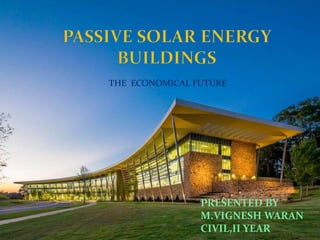
THE ECONOMICAL FUTURE
PRESENTED BY
M.VIGNESH WARAN
CIVIL,II YEAR
ABSTRACT
• Passive solar energy is an excellent idea to heat,cool and
lightning the living room based on the structure of our
buildings.
• Passive solar energy is used to distribute heat or cool through
wise selection of building materials.
• Passive solar energy will provide inexpensive sustainable
alternatives for heating and cooling of home.
INTRODUCTION
 Passive solar system is used to “collect, store and distribute
thermal energy”-by means of conduction, convection and
radiation.
 Decrease the amount of money that we spend on energy.
 The exploitation and misuse of natural resources rapidly
depleting the Non-renewable energy resources.
 Passive solar energy buildings considerably reduces the usage
of Non-renewable energy resources.
WIDE RANGE OF AVAILABILITY
 Solar energy can be utilized in various ways-to provide
electricity, mechanical power, heat and lightning.
 Solar benefits are utilized through windows and pumps,
and fans.
 Renewable energy resource and it meets future obstacles
for scarcity of electricity.
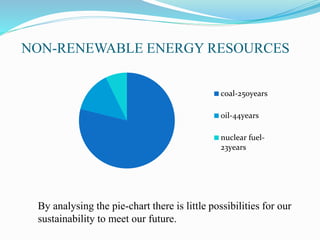
NON-RENEWABLE ENERGY RESOURCES
coal-250years
oil-44years
nuclear fuel-
23years
By analysing the pie-chart there is little possibilities for our
sustainability to meet our future.
WHY PASSIVE?
 Passive meets the minimum requirements.
 Active produce the green house gases such as (CO2).
 Active solar energy is expensive and more equipments are
need for installation.
PASSIVE SOLAR HEATING
 Passive solar heating happens when sunlight strikes an
object and that object absorbs the heat.
 Effective when the windows are oriented correctly,
 Perfect orientation is south.
 By installing high performance windows with insulated
frames, multiple glazing, low-e-coatings we may reduce
the heat loss by 50 to 75 percent.
PASSIVE COOLING
 Buildings are designed to retain cooling and drew the heat
air away.
 The shading device is fixed and this was achieved by
natural vegetation and using special glazing in windows.
 The shading device can reduce solar gains up to 90%.
MATERIALS REQUIRED
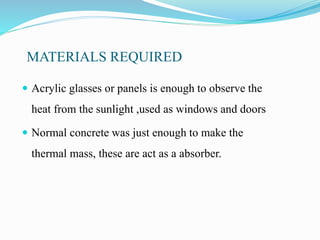
 Acrylic glasses or panels is enough to observe the
heat from the sunlight ,used as windows and doors
 Normal concrete was just enough to make the
thermal mass, these are act as a absorber.
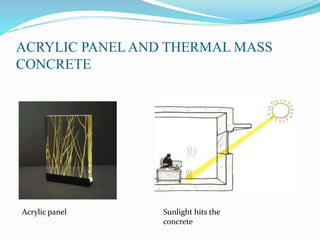
ACRYLIC PANELAND THERMAL MASS
CONCRETE
Acrylic panel Sunlight hits the
concrete
CATEGORIES OF PASSIVE SOLAR ENERGY
 Direct gain method
 Indirect gain method
 Isolated gain method
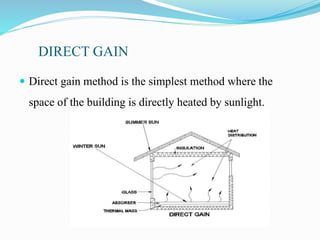
DIRECT GAIN
 Direct gain method is the simplest method where the
space of the building is directly heated by sunlight.
INDIRECT GAIN
 For indirect gain,sunlight is often received by a south
facing wall,and as air moves internal space the heat moves
through the living room.
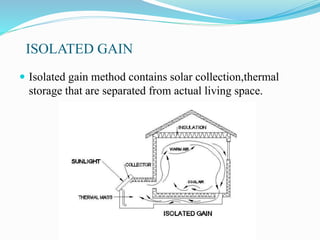
ISOLATED GAIN
 Isolated gain method contains solar collection,thermal
storage that are separated from actual living space.
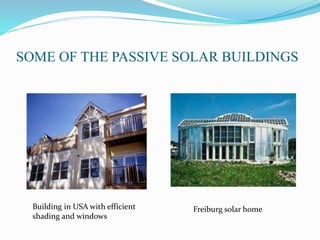
SOME OF THE PASSIVE SOLAR BUILDINGS
Building in USA with efficient
shading and windows
Freiburg solar home
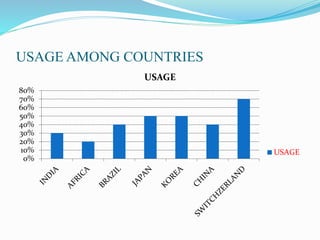
USAGE AMONG COUNTRIES
0%
10%
20%
30%
40%
50%
60%
70%
80%
USAGE
USAGE
ADVANTAGES
 Mainly it provide perfect temperature and it is renewable
energy resource.
 It’s cost of installation is lower than active solar energy
resources.
 And it is eco friendly due to the eradication of green house
effect.
 Less or zero usage of conventional equipments.
FUTURE TRENDS
 The design of passive solar buildings based on the
materials are available today and will consistent for next
several decades.
 Many obstacles due to over exploitation of non- renewable
resources may be eradicated by using this energy.
CONCLUSION
 Solar energy has been used for centuries and has only
improved with time, as scientists and researchers made it
into effective way of uses.
 Passive solar energy is a very cost efficient way to take
steps towards sustainability.
The best creator next to god is a civil engineer
THANK YOU

Passive solar energy buildings

  • 1.
    THE ECONOMICAL FUTURE PRESENTEDBY M.VIGNESH WARAN CIVIL,II YEAR
  • 2.
    ABSTRACT • Passive solarenergy is an excellent idea to heat,cool and lightning the living room based on the structure of our buildings. • Passive solar energy is used to distribute heat or cool through wise selection of building materials. • Passive solar energy will provide inexpensive sustainable alternatives for heating and cooling of home.
  • 3.
    INTRODUCTION  Passive solarsystem is used to “collect, store and distribute thermal energy”-by means of conduction, convection and radiation.  Decrease the amount of money that we spend on energy.  The exploitation and misuse of natural resources rapidly depleting the Non-renewable energy resources.  Passive solar energy buildings considerably reduces the usage of Non-renewable energy resources.
  • 4.
    WIDE RANGE OFAVAILABILITY  Solar energy can be utilized in various ways-to provide electricity, mechanical power, heat and lightning.  Solar benefits are utilized through windows and pumps, and fans.  Renewable energy resource and it meets future obstacles for scarcity of electricity.
  • 5.
    NON-RENEWABLE ENERGY RESOURCES coal-250years oil-44years nuclearfuel- 23years By analysing the pie-chart there is little possibilities for our sustainability to meet our future.
  • 6.
    WHY PASSIVE?  Passivemeets the minimum requirements.  Active produce the green house gases such as (CO2).  Active solar energy is expensive and more equipments are need for installation.
  • 7.
    PASSIVE SOLAR HEATING Passive solar heating happens when sunlight strikes an object and that object absorbs the heat.  Effective when the windows are oriented correctly,  Perfect orientation is south.  By installing high performance windows with insulated frames, multiple glazing, low-e-coatings we may reduce the heat loss by 50 to 75 percent.
  • 8.
    PASSIVE COOLING  Buildingsare designed to retain cooling and drew the heat air away.  The shading device is fixed and this was achieved by natural vegetation and using special glazing in windows.  The shading device can reduce solar gains up to 90%.
  • 9.
    MATERIALS REQUIRED  Acrylicglasses or panels is enough to observe the heat from the sunlight ,used as windows and doors  Normal concrete was just enough to make the thermal mass, these are act as a absorber.
  • 10.
    ACRYLIC PANELAND THERMALMASS CONCRETE Acrylic panel Sunlight hits the concrete
  • 11.
    CATEGORIES OF PASSIVESOLAR ENERGY  Direct gain method  Indirect gain method  Isolated gain method
  • 12.
    DIRECT GAIN  Directgain method is the simplest method where the space of the building is directly heated by sunlight.
  • 13.
    INDIRECT GAIN  Forindirect gain,sunlight is often received by a south facing wall,and as air moves internal space the heat moves through the living room.
  • 14.
    ISOLATED GAIN  Isolatedgain method contains solar collection,thermal storage that are separated from actual living space.
  • 15.
    SOME OF THEPASSIVE SOLAR BUILDINGS Building in USA with efficient shading and windows Freiburg solar home
  • 16.
  • 17.
    ADVANTAGES  Mainly itprovide perfect temperature and it is renewable energy resource.  It’s cost of installation is lower than active solar energy resources.  And it is eco friendly due to the eradication of green house effect.  Less or zero usage of conventional equipments.
  • 18.
    FUTURE TRENDS  Thedesign of passive solar buildings based on the materials are available today and will consistent for next several decades.  Many obstacles due to over exploitation of non- renewable resources may be eradicated by using this energy.
  • 19.
    CONCLUSION  Solar energyhas been used for centuries and has only improved with time, as scientists and researchers made it into effective way of uses.  Passive solar energy is a very cost efficient way to take steps towards sustainability.
  • 20.
    The best creatornext to god is a civil engineer THANK YOU