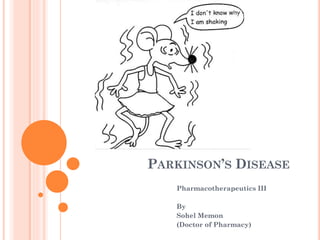
PARKINSON’S DISEASE
Pharmacotherapeutics III
By
Sohel Memon
(Doctor of Pharmacy)
TOPICS TO BE DISCUSSED
1.

Definition

2.

Epidemiology

3.

Etiology

4.

Risk factor

5.

Types

6.

Signs and Symptoms

7.

Pathophysiology

8.

Staging

9.

Complications

10.

Diagnosis

11.

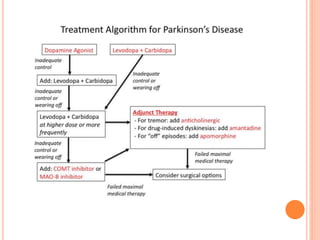
Pharmacotherapy
DEFINITION
Parkinson’s disease (PD) is a slow, progressive,
neurodegenerative disease of the extrapyramidal
motor system.
 Dopamineneurons in the substantia nigra are
primarily affected, and degeneration of these
neurons causes a disruption in the ability to
generate body movements.

EPIDEMIOLOGY






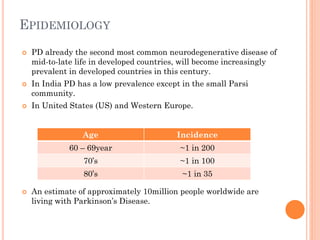
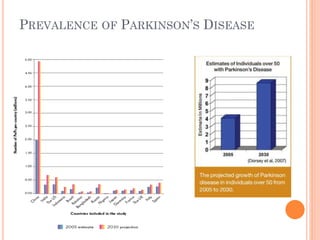
PD already the second most common neurodegenerative disease of
mid-to-late life in developed countries, will become increasingly
prevalent in developed countries in this century.
In India PD has a low prevalence except in the small Parsi
community.
In United States (US) and Western Europe.
Age

60 – 69year

~1 in 200

70’s

~1 in 100

80’s


Incidence

~1 in 35

An estimate of approximately 10million people worldwide are
living with Parkinson’s Disease.
PREVALENCE OF PARKINSON’S DISEASE
ETIOLOGY
1. Age – more than 60years.
2. Positive family history and Race.
3. Environmental Exposure: Herbicide and pesticide exposure, metals(
manganese,iron) and steel alloy industries.
4. Exposure to MPTP (1- methyl-4-phenyl-1,2,3,6 tetrahydropyridine),
a potent neurotoxin.
5. Environmental factors such as rural living,drinking well water.
6. Life experiences (trauma,emotional stress).
7. An INVERSE correlation between cigarette smoking and caffeine
intake in case-control studies.
RISK FACTOR







Age. Young adults rarely experience Parkinson's
disease. It ordinarily begins in middle or late life, and
the risk increases with age. People usually develop
the disease around age 60 or older.
Heredity. Having a close relative with Parkinson's
disease increases the chances that you'll develop the
disease. However, your risks are still small unless you
have many relatives in your family with Parkinson's
disease.
Sex. Men are more likely to develop Parkinson's
disease than are women.
Exposure to toxins. Ongoing exposure to herbicides
and pesticides may put you at a slightly increased
risk of Parkinson's disease.
TYPES
1.

Primary or Idiopathic Parkinsonism



The cause of the disease is unknown.



Predominantly affecting the individuals over 60years of age.



Over the years the dopaminergic neurons degenrate due to
H2O2 and free radicals such as O2-(superoxide) and OONO-

(Peroxynrite).
2.
•

Secondary or Drug Induced Parkinsonism
There is no degeneration as seen in above case, but the

decrease ion dopamine is drug induced.
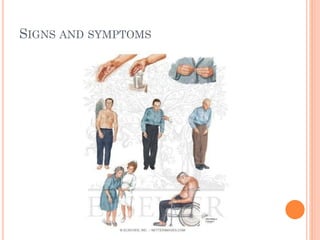
SIGNS AND SYMPTOMS
SIGNS AND SYMPTOMS (SSS)

1.

2.

3.

4.

5.

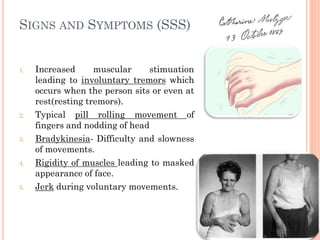
Increased
muscular
stimuation
leading to involuntary tremors which
occurs when the person sits or even at
rest(resting tremors).
Typical pill rolling movement of
fingers and nodding of head
Bradykinesia- Difficulty and slowness
of movements.
Rigidity of muscles leading to masked
appearance of face.
Jerk during voluntary movements.
6.

Aphonia- loss of volunatry control of muscles of
mouth and larynx leadint to loss of speech.

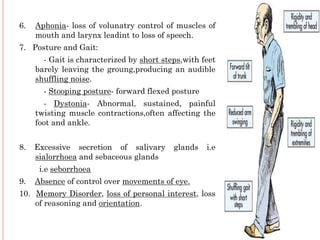
7. Posture and Gait:
- Gait is characterized by short steps,with feet
barely leaving the groung,producing an audible
shuffling noise.
- Stooping posture- forward flexed posture
- Dystonia- Abnormal, sustained, painful
twisting muscle contractions,often affecting the
foot and ankle.
8.

Excessive secretion of salivary
sialorrhoea and sebaceous glands

glands

i.e

i.e seborrhoea

9.

Absence of control over movements of eye.

10. Memory Disorder, loss of personal interest, loss
of reasoning and orientation.
PATHOPHYSIOLOGY









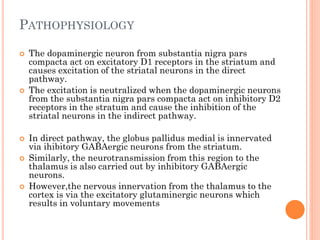
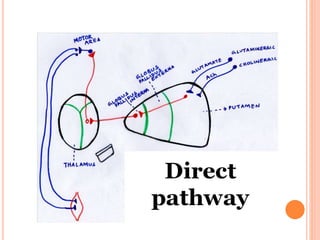
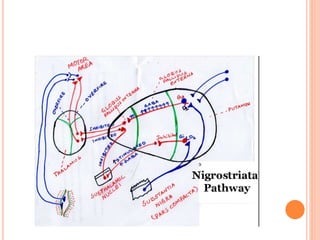
The dopaminergic neuron from substantia nigra pars
compacta act on excitatory D1 receptors in the striatum and
causes excitation of the striatal neurons in the direct
pathway.
The excitation is neutralized when the dopaminergic neurons
from the substantia nigra pars compacta act on inhibitory D2
receptors in the stratum and cause the inhibition of the
striatal neurons in the indirect pathway.
In direct pathway, the globus pallidus medial is innervated
via ihibitory GABAergic neurons from the striatum.
Similarly, the neurotransmission from this region to the
thalamus is also carried out by inhibitory GABAergic
neurons.
However,the nervous innervation from the thalamus to the
cortex is via the excitatory glutaminergic neurons which
results in voluntary movements








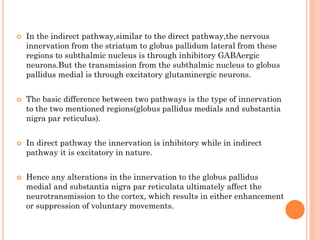
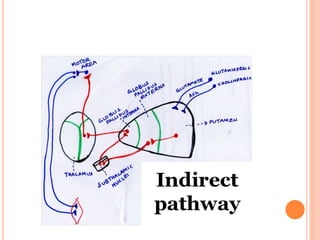
In the indirect pathway,similar to the direct pathway,the nervous
innervation from the striatum to globus pallidum lateral from these
regions to subthalmic nucleus is through inhibitory GABAergic
neurons.But the transmission from the subthalmic nucleus to globus
pallidus medial is through excitatory glutaminergic neurons.
The basic difference between two pathways is the type of innervation
to the two mentioned regions(globus pallidus medials and substantia
nigra par reticulus).
In direct pathway the innervation is inhibitory while in indirect
pathway it is excitatory in nature.
Hence any alterations in the innervation to the globus pallidus
medial and substantia nigra par reticulata ultimately affect the
neurotransmission to the cortex, which results in either enhancement
or suppression of voluntary movements.






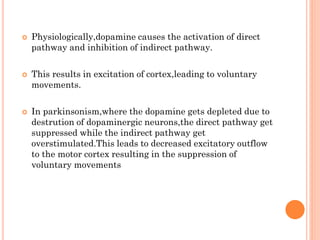
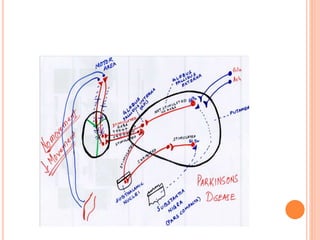
Physiologically,dopamine causes the activation of direct
pathway and inhibition of indirect pathway.

This results in excitation of cortex,leading to voluntary
movements.
In parkinsonism,where the dopamine gets depleted due to
destrution of dopaminergic neurons,the direct pathway get
suppressed while the indirect pathway get
overstimulated.This leads to decreased excitatory outflow
to the motor cortex resulting in the suppression of
voluntary movements


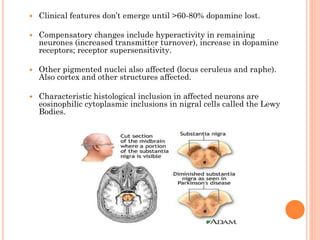
Clinical features don’t emerge until >60-80% dopamine lost.



Compensatory changes include hyperactivity in remaining
neurones (increased transmitter turnover), increase in dopamine
receptors; receptor supersensitivity.



Other pigmented nuclei also affected (locus ceruleus and raphe).
Also cortex and other structures affected.



Characteristic histological inclusion in affected neurons are
eosinophilic cytoplasmic inclusions in nigral cells called the Lewy
Bodies.
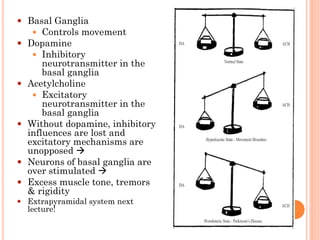
 Basal Ganglia
 Controls movement

 Dopamine
 Inhibitory








neurotransmitter in the
basal ganglia
Acetylcholine
 Excitatory
neurotransmitter in the
basal ganglia
Without dopamine, inhibitory
influences are lost and
excitatory mechanisms are
unopposed 
Neurons of basal ganglia are
over stimulated 
Excess muscle tone, tremors
& rigidity

 Extrapyramidal system next
lecture!
HOEHN AND YAHR STAGING OF PARKINSON'S
DISEASE
1.

Stage 1: Mild signs and symptoms on one side only, not disabling but
friends notice.

2.

Stage 2: Symptoms are bilateral, minimal disability, posture and gait
affected

3.

Stage 3: Significant slowing, dysfunction that is moderately severe

4.

Stage 4: Severe symptoms, walking limited, rigidity, bradykinesia,
unable to live alone

5.

Stage 5: Cachectic, complete invalidism, unable to stand, walk, require
nursing care
COMPLICATIONS







Thinking difficulties.
Depression and emotional changes..
Swallowing problems. .
Sleep problems and sleep disorders.
Bladder problems
Constipation

You may also experience:
 Blood pressure changes.
 Smell dysfunction.
 Fatigue
 Pain.
 Sexual dysfunction
DIAGNOSIS
1.

Neurological History

2.

Response to levodopa

3.

Imaging and Laboratory examination

4.

Physical Examination
DIAGNOSIS
There are no standard diagnostic tests for Parkinson’s.
1. Neurological History










The doctor looks to see if your expression is animated.
Your arms are observed for tremor, which is present either when they are
at rest, or extended.
Is there stiffness in your limbs or neck?
Can you rise from a chair easily?
Do you walk normally or with short steps, and do your arms swing
symmetrically? The doctor will pull you backwards.
How quickly are you able to regain your balance?

2. Response to levodopa


A person’s good response to levodopa (which temporarily
restores dopamine action in the brain) may support the diagnosis.
The main role of any additional testing is to exclude other diseases that
imitate Parkinson’s disease, such as stroke or hydrocephalus.

3. Imaging and Laboratory examination
a. Blood test - usually to rule out any other condition, such as abnormal thyroid
hormone levels or liver damage.
b. MRI or CT scan - to check for signs of a stroke or brain tumor. If there is/was
no stroke or brain tumor, most MRI or CT scans of people with Parkinson’s
disease will appear normal.

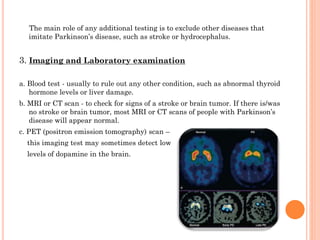
c. PET (positron emission tomography) scan –
this imaging test may sometimes detect low
levels of dopamine in the brain.
4. Physical Examination:





Two of the four main symptoms must be present - for a
neurologist to consider a Parkinson’s disease diagnosis, the
patient must have two of the four main symptoms.
They must be present over a specific period.
The four main symptoms are:
 Tremor or shaking
 Bradykinesia - slowness of movement
 Rigidity (stiffness) of the arms, legs or trunk
 Postural instability - balance problems and possible falls
MANAGEMENT
1.
2.
3.

Pharmacotherapy
Non-Pharmacotherapy
Surgery
ANTI-PARKINSONS DRUG
1.Dopaminergic drugs
a. Dopamine precursor
b. Peripheral Decarboxylase Inhibitors
c. Dopamine agonist
i). Ergot derivatives
ii). Non- ergot derivatives

d. MAO-B Inhibitors
e. Dopamine facilitator
f. COMT iInhibitors

2.Anticholinergic Drugs
a. Anti-cholinergics
b. Anti-histamines
1. Dopaminergic drugs
a. Dopamine preacursor
- Levodopa

b. Peripheral Decarboxylase Inhibitors
- Carbidopa
- Benserazide

c. Dopamine agonist
i). Ergot derivatives
- Bromocriptine

- Pergolide
- Lisuride
- Carbergolin
ii). Non- ergot derivatives

- Piribedil
- Ropinirole
- Pramipexole Apomorphine
- Rotigotine
d. MAO-B Inhibitors
- Seleginine
- Rasagiline

e. Dopamine facilitator
- Amantadine

f. COMT Inhibitors
- Entacapone
- Tolcapone
2.Anticholinergic Drugs
a. Anti-cholinergics
- Trihexyphenidyl
- Benztropine
- Procyclidine
- Biperiden

b. Anti-histamines
-

- Diphenhydramine
- Orphenadrine
- Promethazine
LEVODOPA




Well absorbed from gut, but > 90% is decarboxylated to
dopamine peripherally in GIT& blood vessels & only a small
proportion reaches the brain (dopamine does not readily cross
BBB). Therefore combined with peripheral decarboxylase
inhibitor that does not cross the blood-brain barrier along with
L-DOPA.
Peripheral decarboxylase inhibitors, carbidopa & benserazide,
are available as combination preparations with levodopa, as
Sinemet & Madopar, respectively.
CARBIDOPA










Is a structural analogue of L-dopa.
Inhibits the conversion of L-dopa to dopamine in peripheral
tissue
Carbidopa is highly ionized at physiological pH and does
not cross the blood-brain barrier, so it does not inhibit the
formation of dopamine in CNS
It reduces GI and cardiovascular side effects of L-dopa and
enables about 75% reduction in dosage of L-dopa
L-dopa-carbidopa sustained release combination designed
to reduce “wearing off” effect
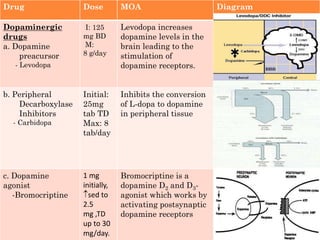
Drug

Dose

MOA

Dopaminergic
drugs
a. Dopamine
preacursor

I: 125
mg BD
M:
8 g/day

Levodopa increases
dopamine levels in the
brain leading to the
stimulation of
dopamine receptors.

Initial:
25mg
tab TD
Max: 8
tab/day

Inhibits the conversion
of L-dopa to dopamine
in peripheral tissue

1 mg
initially,
sed to
2.5
mg ,TD
up to 30
mg/day.

Bromocriptine is a
dopamine D2 and D3agonist which works by
activating postsynaptic
dopamine receptors

- Levodopa

b. Peripheral
Decarboxylase
Inhibitors
- Carbidopa

c. Dopamine
agonist
-Bromocriptine

Diagram
Drug

Dose

MOA

MAO-B
Inhibitors

10 mg/day
in single or
divided
doses

Selegiline increases
dopaminergic activity
by intervening with the
re-uptake of dopamine
at the synapse. It also
irreversibly inhibits the
MAO-B which is
involved in the
metabolism of
dopamine.

100
mg/day, up
to 100 mg
twice daily
Max: 400
mg/day.

Amantadine is a weak
dopamine agonist
possessing
antimuscarinic
properties. It alters
dopamine release and
re-uptake. It also
noncompetitively
antagonises N-methylD-aspartate.

- Seleginine

Dopamine
facilitator
- Amantadine

Diagram
Drug

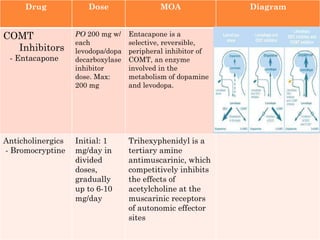
COMT
Inhibitors
- Entacapone

Anticholinergics
- Bromocryptine

Dose

MOA

PO 200 mg w/
each
levodopa/dopa
decarboxylase
inhibitor
dose. Max:
200 mg

Entacapone is a
selective, reversible,
peripheral inhibitor of
COMT, an enzyme
involved in the
metabolism of dopamine
and levodopa.

Initial: 1
mg/day in
divided
doses,
gradually
up to 6-10
mg/day

Trihexyphenidyl is a
tertiary amine
antimuscarinic, which
competitively inhibits
the effects of
acetylcholine at the
muscarinic receptors
of autonomic effector
sites

Diagram
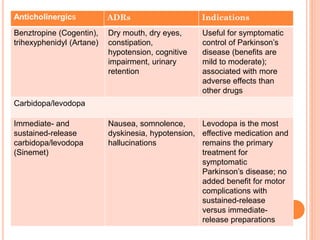
Anticholinergics

ADRs

Indications

Benztropine (Cogentin),
trihexyphenidyl (Artane)

Dry mouth, dry eyes,
constipation,
hypotension, cognitive
impairment, urinary
retention

Useful for symptomatic
control of Parkinson’s
disease (benefits are
mild to moderate);
associated with more
adverse effects than
other drugs

Carbidopa/levodopa
Immediate- and
sustained-release
carbidopa/levodopa
(Sinemet)

Nausea, somnolence,
Levodopa is the most
dyskinesia, hypotension, effective medication and
hallucinations
remains the primary
treatment for
symptomatic
Parkinson’s disease; no
added benefit for motor
complications with
sustained-release
versus immediaterelease preparations
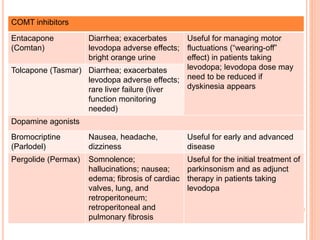
COMT inhibitors
Entacapone
(Comtan)

Diarrhea; exacerbates
Useful for managing motor
levodopa adverse effects; fluctuations (“wearing-off”
bright orange urine
effect) in patients taking
levodopa; levodopa dose may
Tolcapone (Tasmar) Diarrhea; exacerbates
levodopa adverse effects; need to be reduced if
dyskinesia appears
rare liver failure (liver
function monitoring
needed)
Dopamine agonists
Bromocriptine
(Parlodel)

Nausea, headache,
dizziness

Useful for early and advanced
disease

Pergolide (Permax)

Somnolence;
hallucinations; nausea;
edema; fibrosis of cardiac
valves, lung, and
retroperitoneum;
retroperitoneal and
pulmonary fibrosis

Useful for the initial treatment of
parkinsonism and as adjunct
therapy in patients taking
levodopa
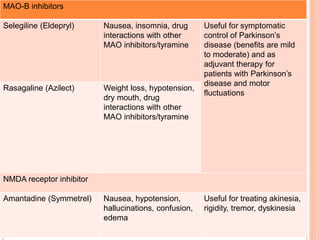
MAO-B inhibitors
Selegiline (Eldepryl)

Nausea, insomnia, drug
interactions with other
MAO inhibitors/tyramine

Rasagaline (Azilect)

Weight loss, hypotension,
dry mouth, drug
interactions with other
MAO inhibitors/tyramine

Useful for symptomatic
control of Parkinson’s
disease (benefits are mild
to moderate) and as
adjuvant therapy for
patients with Parkinson’s
disease and motor
fluctuations

NMDA receptor inhibitor
Amantadine (Symmetrel)

Nausea, hypotension,
hallucinations, confusion,
edema

Useful for treating akinesia,
rigidity, tremor, dyskinesia
SURGERY
1.

Deep brain stimulation

2.

Pallidotomy

3.

Thalamotomy


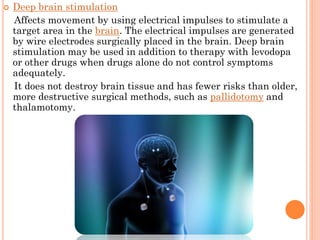
Deep brain stimulation
Affects movement by using electrical impulses to stimulate a
target area in the brain. The electrical impulses are generated
by wire electrodes surgically placed in the brain. Deep brain
stimulation may be used in addition to therapy with levodopa
or other drugs when drugs alone do not control symptoms
adequately.
It does not destroy brain tissue and has fewer risks than older,
more destructive surgical methods, such as pallidotomy and
thalamotomy.




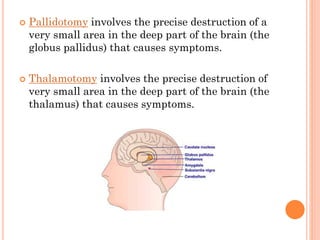
Pallidotomy involves the precise destruction of a
very small area in the deep part of the brain (the
globus pallidus) that causes symptoms.
Thalamotomy involves the precise destruction of
very small area in the deep part of the brain (the
thalamus) that causes symptoms.
NON- PHARMACOLOGICAL TREATMENT
Healthy eating




Eat a nutritionally balanced diet that contains plenty of fruits,
vegetables and whole grains. Eating foods high in fiber and drinking
an adequate amount of fluids can help prevent constipation that is
common in Parkinson's disease.
A balanced diet also provides nutrients, such as omega-3 fatty acids,
that may be beneficial for people with Parkinson's disease.

Exercise








.

Exercising may increase your muscle strength, flexibility and balance.
Exercise can also improve your well-being and reduce depression or
anxiety.
Try not to move too quickly.
Aim for your heel to strike the floor first when you're walking.
If you notice yourself shuffling, stop and check your posture.
It's best to stand up straight.
Look in front of you, not directly down, while walking.
Avoiding falls








In the later stages of the disease, you may fall more easily.
The following suggestions may help:
Make a U-turn instead of pivoting your body over your feet.
Keep your center of gravity over your feet without leaning or
reaching.
Avoid carrying things while you walk.
Avoid walking backward.

Daily living activities


Daily living activities — such as dressing, eating, bathing and
writing — can be difficult for people with Parkinson's disease.
An occupational therapist can show you techniques that make
daily life easier
THANK YOU!!!

Parkinsons disease V Pharm.D

  • 1.
  • 2.
    TOPICS TO BEDISCUSSED 1. Definition 2. Epidemiology 3. Etiology 4. Risk factor 5. Types 6. Signs and Symptoms 7. Pathophysiology 8. Staging 9. Complications 10. Diagnosis 11. Pharmacotherapy
  • 3.
    DEFINITION Parkinson’s disease (PD)is a slow, progressive, neurodegenerative disease of the extrapyramidal motor system.  Dopamineneurons in the substantia nigra are primarily affected, and degeneration of these neurons causes a disruption in the ability to generate body movements. 
  • 4.
    EPIDEMIOLOGY    PD already thesecond most common neurodegenerative disease of mid-to-late life in developed countries, will become increasingly prevalent in developed countries in this century. In India PD has a low prevalence except in the small Parsi community. In United States (US) and Western Europe. Age 60 – 69year ~1 in 200 70’s ~1 in 100 80’s  Incidence ~1 in 35 An estimate of approximately 10million people worldwide are living with Parkinson’s Disease.
  • 5.
  • 7.
    ETIOLOGY 1. Age –more than 60years. 2. Positive family history and Race. 3. Environmental Exposure: Herbicide and pesticide exposure, metals( manganese,iron) and steel alloy industries. 4. Exposure to MPTP (1- methyl-4-phenyl-1,2,3,6 tetrahydropyridine), a potent neurotoxin. 5. Environmental factors such as rural living,drinking well water. 6. Life experiences (trauma,emotional stress). 7. An INVERSE correlation between cigarette smoking and caffeine intake in case-control studies.
  • 8.
    RISK FACTOR     Age. Youngadults rarely experience Parkinson's disease. It ordinarily begins in middle or late life, and the risk increases with age. People usually develop the disease around age 60 or older. Heredity. Having a close relative with Parkinson's disease increases the chances that you'll develop the disease. However, your risks are still small unless you have many relatives in your family with Parkinson's disease. Sex. Men are more likely to develop Parkinson's disease than are women. Exposure to toxins. Ongoing exposure to herbicides and pesticides may put you at a slightly increased risk of Parkinson's disease.
  • 9.
    TYPES 1. Primary or IdiopathicParkinsonism  The cause of the disease is unknown.  Predominantly affecting the individuals over 60years of age.  Over the years the dopaminergic neurons degenrate due to H2O2 and free radicals such as O2-(superoxide) and OONO- (Peroxynrite). 2. • Secondary or Drug Induced Parkinsonism There is no degeneration as seen in above case, but the decrease ion dopamine is drug induced.
  • 10.
  • 11.
    SIGNS AND SYMPTOMS(SSS) 1. 2. 3. 4. 5. Increased muscular stimuation leading to involuntary tremors which occurs when the person sits or even at rest(resting tremors). Typical pill rolling movement of fingers and nodding of head Bradykinesia- Difficulty and slowness of movements. Rigidity of muscles leading to masked appearance of face. Jerk during voluntary movements.
  • 12.
    6. Aphonia- loss ofvolunatry control of muscles of mouth and larynx leadint to loss of speech. 7. Posture and Gait: - Gait is characterized by short steps,with feet barely leaving the groung,producing an audible shuffling noise. - Stooping posture- forward flexed posture - Dystonia- Abnormal, sustained, painful twisting muscle contractions,often affecting the foot and ankle. 8. Excessive secretion of salivary sialorrhoea and sebaceous glands glands i.e i.e seborrhoea 9. Absence of control over movements of eye. 10. Memory Disorder, loss of personal interest, loss of reasoning and orientation.
  • 13.
    PATHOPHYSIOLOGY      The dopaminergic neuronfrom substantia nigra pars compacta act on excitatory D1 receptors in the striatum and causes excitation of the striatal neurons in the direct pathway. The excitation is neutralized when the dopaminergic neurons from the substantia nigra pars compacta act on inhibitory D2 receptors in the stratum and cause the inhibition of the striatal neurons in the indirect pathway. In direct pathway, the globus pallidus medial is innervated via ihibitory GABAergic neurons from the striatum. Similarly, the neurotransmission from this region to the thalamus is also carried out by inhibitory GABAergic neurons. However,the nervous innervation from the thalamus to the cortex is via the excitatory glutaminergic neurons which results in voluntary movements
  • 14.
        In the indirectpathway,similar to the direct pathway,the nervous innervation from the striatum to globus pallidum lateral from these regions to subthalmic nucleus is through inhibitory GABAergic neurons.But the transmission from the subthalmic nucleus to globus pallidus medial is through excitatory glutaminergic neurons. The basic difference between two pathways is the type of innervation to the two mentioned regions(globus pallidus medials and substantia nigra par reticulus). In direct pathway the innervation is inhibitory while in indirect pathway it is excitatory in nature. Hence any alterations in the innervation to the globus pallidus medial and substantia nigra par reticulata ultimately affect the neurotransmission to the cortex, which results in either enhancement or suppression of voluntary movements.
  • 15.
       Physiologically,dopamine causes theactivation of direct pathway and inhibition of indirect pathway. This results in excitation of cortex,leading to voluntary movements. In parkinsonism,where the dopamine gets depleted due to destrution of dopaminergic neurons,the direct pathway get suppressed while the indirect pathway get overstimulated.This leads to decreased excitatory outflow to the motor cortex resulting in the suppression of voluntary movements
  • 20.
     Clinical features don’temerge until >60-80% dopamine lost.  Compensatory changes include hyperactivity in remaining neurones (increased transmitter turnover), increase in dopamine receptors; receptor supersensitivity.  Other pigmented nuclei also affected (locus ceruleus and raphe). Also cortex and other structures affected.  Characteristic histological inclusion in affected neurons are eosinophilic cytoplasmic inclusions in nigral cells called the Lewy Bodies.
  • 21.
     Basal Ganglia Controls movement  Dopamine  Inhibitory     neurotransmitter in the basal ganglia Acetylcholine  Excitatory neurotransmitter in the basal ganglia Without dopamine, inhibitory influences are lost and excitatory mechanisms are unopposed  Neurons of basal ganglia are over stimulated  Excess muscle tone, tremors & rigidity  Extrapyramidal system next lecture!
  • 22.
    HOEHN AND YAHRSTAGING OF PARKINSON'S DISEASE 1. Stage 1: Mild signs and symptoms on one side only, not disabling but friends notice. 2. Stage 2: Symptoms are bilateral, minimal disability, posture and gait affected 3. Stage 3: Significant slowing, dysfunction that is moderately severe 4. Stage 4: Severe symptoms, walking limited, rigidity, bradykinesia, unable to live alone 5. Stage 5: Cachectic, complete invalidism, unable to stand, walk, require nursing care
  • 23.
    COMPLICATIONS       Thinking difficulties. Depression andemotional changes.. Swallowing problems. . Sleep problems and sleep disorders. Bladder problems Constipation You may also experience:  Blood pressure changes.  Smell dysfunction.  Fatigue  Pain.  Sexual dysfunction
  • 24.
    DIAGNOSIS 1. Neurological History 2. Response tolevodopa 3. Imaging and Laboratory examination 4. Physical Examination
  • 25.
    DIAGNOSIS There are nostandard diagnostic tests for Parkinson’s. 1. Neurological History       The doctor looks to see if your expression is animated. Your arms are observed for tremor, which is present either when they are at rest, or extended. Is there stiffness in your limbs or neck? Can you rise from a chair easily? Do you walk normally or with short steps, and do your arms swing symmetrically? The doctor will pull you backwards. How quickly are you able to regain your balance? 2. Response to levodopa  A person’s good response to levodopa (which temporarily restores dopamine action in the brain) may support the diagnosis.
  • 26.
    The main roleof any additional testing is to exclude other diseases that imitate Parkinson’s disease, such as stroke or hydrocephalus. 3. Imaging and Laboratory examination a. Blood test - usually to rule out any other condition, such as abnormal thyroid hormone levels or liver damage. b. MRI or CT scan - to check for signs of a stroke or brain tumor. If there is/was no stroke or brain tumor, most MRI or CT scans of people with Parkinson’s disease will appear normal. c. PET (positron emission tomography) scan – this imaging test may sometimes detect low levels of dopamine in the brain.
  • 27.
    4. Physical Examination:    Twoof the four main symptoms must be present - for a neurologist to consider a Parkinson’s disease diagnosis, the patient must have two of the four main symptoms. They must be present over a specific period. The four main symptoms are:  Tremor or shaking  Bradykinesia - slowness of movement  Rigidity (stiffness) of the arms, legs or trunk  Postural instability - balance problems and possible falls
  • 28.
  • 29.
    ANTI-PARKINSONS DRUG 1.Dopaminergic drugs a.Dopamine precursor b. Peripheral Decarboxylase Inhibitors c. Dopamine agonist i). Ergot derivatives ii). Non- ergot derivatives d. MAO-B Inhibitors e. Dopamine facilitator f. COMT iInhibitors 2.Anticholinergic Drugs a. Anti-cholinergics b. Anti-histamines
  • 30.
    1. Dopaminergic drugs a.Dopamine preacursor - Levodopa b. Peripheral Decarboxylase Inhibitors - Carbidopa - Benserazide c. Dopamine agonist i). Ergot derivatives - Bromocriptine - Pergolide - Lisuride - Carbergolin ii). Non- ergot derivatives - Piribedil - Ropinirole - Pramipexole Apomorphine - Rotigotine
  • 31.
    d. MAO-B Inhibitors -Seleginine - Rasagiline e. Dopamine facilitator - Amantadine f. COMT Inhibitors - Entacapone - Tolcapone
  • 32.
    2.Anticholinergic Drugs a. Anti-cholinergics -Trihexyphenidyl - Benztropine - Procyclidine - Biperiden b. Anti-histamines - - Diphenhydramine - Orphenadrine - Promethazine
  • 34.
    LEVODOPA   Well absorbed fromgut, but > 90% is decarboxylated to dopamine peripherally in GIT& blood vessels & only a small proportion reaches the brain (dopamine does not readily cross BBB). Therefore combined with peripheral decarboxylase inhibitor that does not cross the blood-brain barrier along with L-DOPA. Peripheral decarboxylase inhibitors, carbidopa & benserazide, are available as combination preparations with levodopa, as Sinemet & Madopar, respectively.
  • 35.
    CARBIDOPA      Is a structuralanalogue of L-dopa. Inhibits the conversion of L-dopa to dopamine in peripheral tissue Carbidopa is highly ionized at physiological pH and does not cross the blood-brain barrier, so it does not inhibit the formation of dopamine in CNS It reduces GI and cardiovascular side effects of L-dopa and enables about 75% reduction in dosage of L-dopa L-dopa-carbidopa sustained release combination designed to reduce “wearing off” effect
  • 37.
    Drug Dose MOA Dopaminergic drugs a. Dopamine preacursor I: 125 mgBD M: 8 g/day Levodopa increases dopamine levels in the brain leading to the stimulation of dopamine receptors. Initial: 25mg tab TD Max: 8 tab/day Inhibits the conversion of L-dopa to dopamine in peripheral tissue 1 mg initially, sed to 2.5 mg ,TD up to 30 mg/day. Bromocriptine is a dopamine D2 and D3agonist which works by activating postsynaptic dopamine receptors - Levodopa b. Peripheral Decarboxylase Inhibitors - Carbidopa c. Dopamine agonist -Bromocriptine Diagram
  • 38.
    Drug Dose MOA MAO-B Inhibitors 10 mg/day in singleor divided doses Selegiline increases dopaminergic activity by intervening with the re-uptake of dopamine at the synapse. It also irreversibly inhibits the MAO-B which is involved in the metabolism of dopamine. 100 mg/day, up to 100 mg twice daily Max: 400 mg/day. Amantadine is a weak dopamine agonist possessing antimuscarinic properties. It alters dopamine release and re-uptake. It also noncompetitively antagonises N-methylD-aspartate. - Seleginine Dopamine facilitator - Amantadine Diagram
  • 39.
    Drug COMT Inhibitors - Entacapone Anticholinergics - Bromocryptine Dose MOA PO200 mg w/ each levodopa/dopa decarboxylase inhibitor dose. Max: 200 mg Entacapone is a selective, reversible, peripheral inhibitor of COMT, an enzyme involved in the metabolism of dopamine and levodopa. Initial: 1 mg/day in divided doses, gradually up to 6-10 mg/day Trihexyphenidyl is a tertiary amine antimuscarinic, which competitively inhibits the effects of acetylcholine at the muscarinic receptors of autonomic effector sites Diagram
  • 40.
    Anticholinergics ADRs Indications Benztropine (Cogentin), trihexyphenidyl (Artane) Drymouth, dry eyes, constipation, hypotension, cognitive impairment, urinary retention Useful for symptomatic control of Parkinson’s disease (benefits are mild to moderate); associated with more adverse effects than other drugs Carbidopa/levodopa Immediate- and sustained-release carbidopa/levodopa (Sinemet) Nausea, somnolence, Levodopa is the most dyskinesia, hypotension, effective medication and hallucinations remains the primary treatment for symptomatic Parkinson’s disease; no added benefit for motor complications with sustained-release versus immediaterelease preparations
  • 41.
    COMT inhibitors Entacapone (Comtan) Diarrhea; exacerbates Usefulfor managing motor levodopa adverse effects; fluctuations (“wearing-off” bright orange urine effect) in patients taking levodopa; levodopa dose may Tolcapone (Tasmar) Diarrhea; exacerbates levodopa adverse effects; need to be reduced if dyskinesia appears rare liver failure (liver function monitoring needed) Dopamine agonists Bromocriptine (Parlodel) Nausea, headache, dizziness Useful for early and advanced disease Pergolide (Permax) Somnolence; hallucinations; nausea; edema; fibrosis of cardiac valves, lung, and retroperitoneum; retroperitoneal and pulmonary fibrosis Useful for the initial treatment of parkinsonism and as adjunct therapy in patients taking levodopa
  • 42.
    MAO-B inhibitors Selegiline (Eldepryl) Nausea,insomnia, drug interactions with other MAO inhibitors/tyramine Rasagaline (Azilect) Weight loss, hypotension, dry mouth, drug interactions with other MAO inhibitors/tyramine Useful for symptomatic control of Parkinson’s disease (benefits are mild to moderate) and as adjuvant therapy for patients with Parkinson’s disease and motor fluctuations NMDA receptor inhibitor Amantadine (Symmetrel) Nausea, hypotension, hallucinations, confusion, edema Useful for treating akinesia, rigidity, tremor, dyskinesia
  • 43.
  • 44.
     Deep brain stimulation Affectsmovement by using electrical impulses to stimulate a target area in the brain. The electrical impulses are generated by wire electrodes surgically placed in the brain. Deep brain stimulation may be used in addition to therapy with levodopa or other drugs when drugs alone do not control symptoms adequately. It does not destroy brain tissue and has fewer risks than older, more destructive surgical methods, such as pallidotomy and thalamotomy.
  • 45.
      Pallidotomy involves theprecise destruction of a very small area in the deep part of the brain (the globus pallidus) that causes symptoms. Thalamotomy involves the precise destruction of very small area in the deep part of the brain (the thalamus) that causes symptoms.
  • 46.
    NON- PHARMACOLOGICAL TREATMENT Healthyeating   Eat a nutritionally balanced diet that contains plenty of fruits, vegetables and whole grains. Eating foods high in fiber and drinking an adequate amount of fluids can help prevent constipation that is common in Parkinson's disease. A balanced diet also provides nutrients, such as omega-3 fatty acids, that may be beneficial for people with Parkinson's disease. Exercise       . Exercising may increase your muscle strength, flexibility and balance. Exercise can also improve your well-being and reduce depression or anxiety. Try not to move too quickly. Aim for your heel to strike the floor first when you're walking. If you notice yourself shuffling, stop and check your posture. It's best to stand up straight. Look in front of you, not directly down, while walking.
  • 47.
    Avoiding falls       In thelater stages of the disease, you may fall more easily. The following suggestions may help: Make a U-turn instead of pivoting your body over your feet. Keep your center of gravity over your feet without leaning or reaching. Avoid carrying things while you walk. Avoid walking backward. Daily living activities  Daily living activities — such as dressing, eating, bathing and writing — can be difficult for people with Parkinson's disease. An occupational therapist can show you techniques that make daily life easier
  • 48.