By:
SHARELLE LOPES
 A Relationship is a bond between individuals
who share commonalities through a state of
connection.
 We all expect certain outcomes from the
relationships we build.
 Developing positive relationships is fundamental
for many reasons.
 Parents, students and teachers should all build
positive relationships in order for excellence to
be achieved.
 To adopt a structure of unity
 Develop effective communication and self-
expression
 We learn about ourselves through others that we
interact with (i.e. strengths, weaknesses, likes,
dislikes etc…)
 Develop companionship and interpersonal skills
 Identify your role and purpose in the relationship
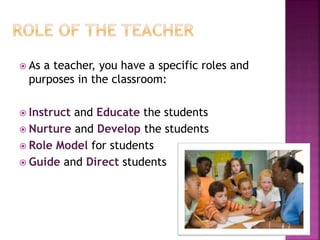
 As a teacher, you have a specific roles and
purposes in the classroom:
 Instruct and Educate the students
 Nurture and Develop the students
 Role Model for students
 Guide and Direct students
 Make sure your students have understood what
has been said and what is required of them.
• Make sure lessons are properly explained and all questions are
answered clearly.
 Communicate regularly with parents and ensure
positive feedback is given.
• Create a simple forum for parents & teachers to communicate
often.
 Talk with other teachers so that you are all on
the same agenda.
• Have weekly staff meetings to discuss syllabus etc..
 Set POSITIVE and REALISTIC expectations and goals
for your students so that they work to meet these
standards.
• Ask students what goals they would like to achieve
and what they expect from you as a teacher.
 Let their parents know what you expect of them and
their child and ensure they help maintain the
expectations you have set.
• Ask parents about their expectations of you and
their child in the classroom.
 Convey what you expect of other teachers so that
they know your viewpoint and can give feedback if
needed.
 Encourage your students to strive and let them
know you believe in them.
• Reward them when they perform well
 Motivate their parents to work with their children
to achieve excellence.
• Send home motivating activities they can do together
 Prompt other teachers to motivate their students
and encourage them to perform to the best of their
ability.
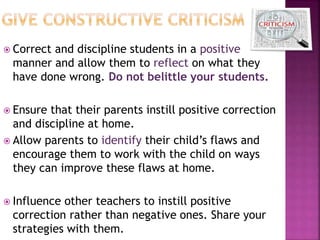
 Correct and discipline students in a positive
manner and allow them to reflect on what they
have done wrong. Do not belittle your students.
 Ensure that their parents instill positive correction
and discipline at home.
 Allow parents to identify their child’s flaws and
encourage them to work with the child on ways
they can improve these flaws at home.
 Influence other teachers to instill positive
correction rather than negative ones. Share your
strategies with them.
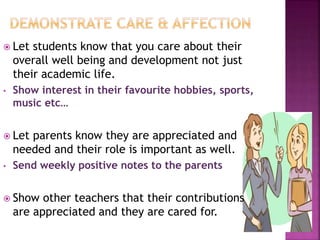
 Let students know that you care about their
overall well being and development not just
their academic life.
• Show interest in their favourite hobbies, sports,
music etc…
 Let parents know they are appreciated and
needed and their role is important as well.
• Send weekly positive notes to the parents
 Show other teachers that their contributions
are appreciated and they are cared for.
 Eliminate any factors that contribute to stress.
Create a comfortable learning environment.
• Modify your lesson plans
• Take your students for a walk
• Have discussions etc…
 Prevent parents from becoming frustrated and
overwhelmed with their child’s stress.
• Let them know they can express their concerns.
• Create an open forum for parent & teacher to vent issues.
 Avoid teacher confrontations. Let other teachers
know they can vent to you and receive positive
advice.
 Display a positive and enthusiastic attitude
towards your students. Let them know you
enjoy being their teacher.
 When communicating with parents, always
maintain a positive approach and aura.
 Show other teachers your positive outlook and
influence them to maintain this demeanor.
 Always show your students that you respect
their beliefs, ideas, thoughts and viewpoint.
 Show parents that they are respected and
that they do not think you are in a superiority
or authoritative position over them.
 Respect other teachers and their methods,
techniques, strategies etc...
 Exhibit humility towards your students so
that they do not feel “less than” or inferior
to you. Put students’ needs before your own.
 Show parents that you can be quite humble
and approachable.
 Show other teachers that you can be modest
and encourage them to display this with their
students as well
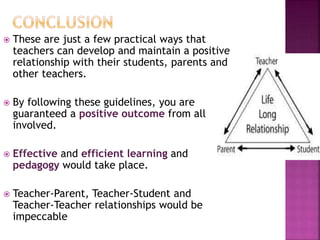
 These are just a few practical ways that
teachers can develop and maintain a positive
relationship with their students, parents and
other teachers.
 By following these guidelines, you are
guaranteed a positive outcome from all
involved.
 Effective and efficient learning and
pedagogy would take place.
 Teacher-Parent, Teacher-Student and
Teacher-Teacher relationships would be
impeccable
http://www.ascd.org/publications/books/1051
24/chapters/Developing_Positive_TeacherStu
dent_Relations.aspx
 Retrieved 17 June 2017
https://www.thoughtco.com/develop-positive-
relationships-with-students-3194339
 Retrieved 17 June 2017

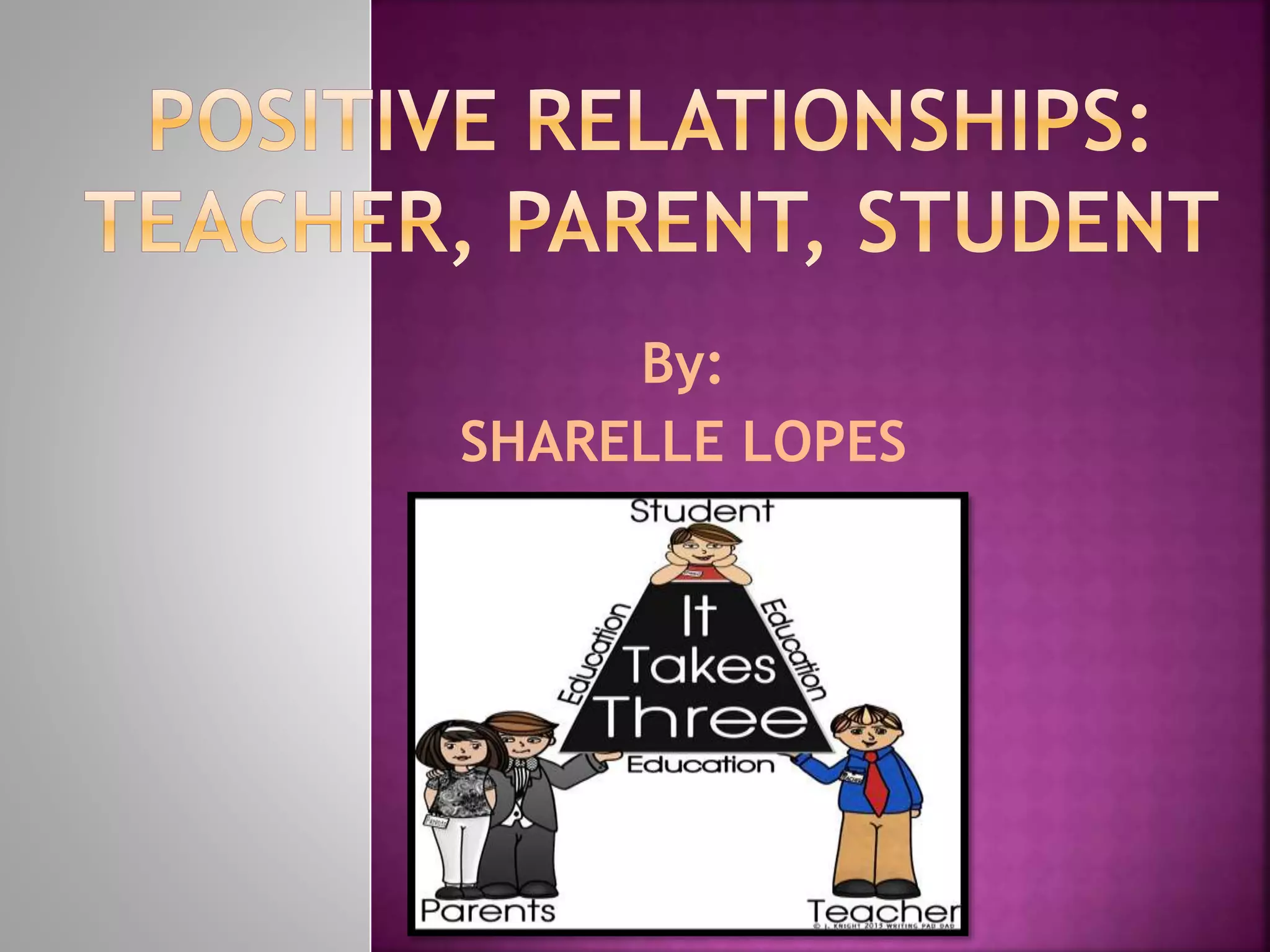
Positive relationships: Teacher, Parent, Student

  • 1.
  • 2.
     A Relationshipis a bond between individuals who share commonalities through a state of connection.  We all expect certain outcomes from the relationships we build.  Developing positive relationships is fundamental for many reasons.  Parents, students and teachers should all build positive relationships in order for excellence to be achieved.
  • 3.
     To adopta structure of unity  Develop effective communication and self- expression  We learn about ourselves through others that we interact with (i.e. strengths, weaknesses, likes, dislikes etc…)  Develop companionship and interpersonal skills  Identify your role and purpose in the relationship
  • 4.
     As ateacher, you have a specific roles and purposes in the classroom:  Instruct and Educate the students  Nurture and Develop the students  Role Model for students  Guide and Direct students
  • 6.
     Make sureyour students have understood what has been said and what is required of them. • Make sure lessons are properly explained and all questions are answered clearly.  Communicate regularly with parents and ensure positive feedback is given. • Create a simple forum for parents & teachers to communicate often.  Talk with other teachers so that you are all on the same agenda. • Have weekly staff meetings to discuss syllabus etc..
  • 7.
     Set POSITIVEand REALISTIC expectations and goals for your students so that they work to meet these standards. • Ask students what goals they would like to achieve and what they expect from you as a teacher.  Let their parents know what you expect of them and their child and ensure they help maintain the expectations you have set. • Ask parents about their expectations of you and their child in the classroom.  Convey what you expect of other teachers so that they know your viewpoint and can give feedback if needed.
  • 8.
     Encourage yourstudents to strive and let them know you believe in them. • Reward them when they perform well  Motivate their parents to work with their children to achieve excellence. • Send home motivating activities they can do together  Prompt other teachers to motivate their students and encourage them to perform to the best of their ability.
  • 9.
     Correct anddiscipline students in a positive manner and allow them to reflect on what they have done wrong. Do not belittle your students.  Ensure that their parents instill positive correction and discipline at home.  Allow parents to identify their child’s flaws and encourage them to work with the child on ways they can improve these flaws at home.  Influence other teachers to instill positive correction rather than negative ones. Share your strategies with them.
  • 10.
     Let studentsknow that you care about their overall well being and development not just their academic life. • Show interest in their favourite hobbies, sports, music etc…  Let parents know they are appreciated and needed and their role is important as well. • Send weekly positive notes to the parents  Show other teachers that their contributions are appreciated and they are cared for.
  • 11.
     Eliminate anyfactors that contribute to stress. Create a comfortable learning environment. • Modify your lesson plans • Take your students for a walk • Have discussions etc…  Prevent parents from becoming frustrated and overwhelmed with their child’s stress. • Let them know they can express their concerns. • Create an open forum for parent & teacher to vent issues.  Avoid teacher confrontations. Let other teachers know they can vent to you and receive positive advice.
  • 12.
     Display apositive and enthusiastic attitude towards your students. Let them know you enjoy being their teacher.  When communicating with parents, always maintain a positive approach and aura.  Show other teachers your positive outlook and influence them to maintain this demeanor.
  • 13.
     Always showyour students that you respect their beliefs, ideas, thoughts and viewpoint.  Show parents that they are respected and that they do not think you are in a superiority or authoritative position over them.  Respect other teachers and their methods, techniques, strategies etc...
  • 14.
     Exhibit humilitytowards your students so that they do not feel “less than” or inferior to you. Put students’ needs before your own.  Show parents that you can be quite humble and approachable.  Show other teachers that you can be modest and encourage them to display this with their students as well
  • 15.
     These arejust a few practical ways that teachers can develop and maintain a positive relationship with their students, parents and other teachers.  By following these guidelines, you are guaranteed a positive outcome from all involved.  Effective and efficient learning and pedagogy would take place.  Teacher-Parent, Teacher-Student and Teacher-Teacher relationships would be impeccable
  • 18.
    http://www.ascd.org/publications/books/1051 24/chapters/Developing_Positive_TeacherStu dent_Relations.aspx  Retrieved 17June 2017 https://www.thoughtco.com/develop-positive- relationships-with-students-3194339  Retrieved 17 June 2017