BY
E.Madhulika
III YEAR,Civil
SETHU INSTITUTE OF TECHNOLOGY
PAPERCRETE:
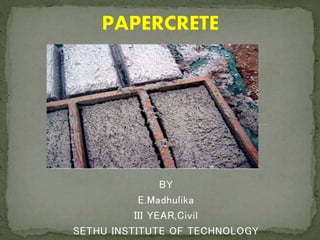
 Papercrete is a type of fibrous cement, made by
shredding paper (old newspapers...) into pulp in water
and adding Portland cement.
 The thick mix can then be poured into molds and cast
like concrete, creating blocks, panels and innumerable
other shapes.
 When cured and dried (above right), papercrete is
strong, lightweight, insulating and has many properties
which make it an ideal building material.
Preparation:
 Use volatile sources
– Water + waste paper + portland cement[binder]
 Add water upto 2/3rd height Tow mixture contents
sharp blade to chop paper and to mix.
 Collect waste papers.
 Put in tank paper + portland cement
 After running the tow mixture for four to five minutes
at moderate speed.
 Level it equally
 Wait for 20-30 minutes so that excess water can drain
out after 3-4 four sunny day
Properties of Papercrete:
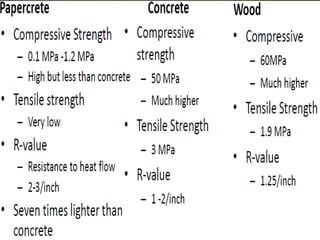
• Sound absorption properties.
• Papercrete blocks are lightweight, less than a
third of the weight of a comparably-sized adobe
brick.
• Mold Resistance.
• Flame retardant.
– does not catch fire easily but smoulders for hours.
• Fungus retardant.
• Lighter than concrete.
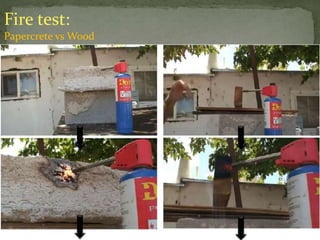
Fire test:
Papercrete vs Wood
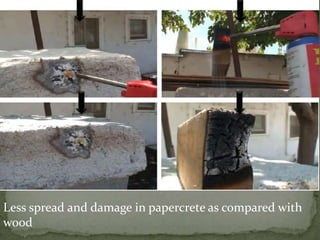
Less spread and damage in papercrete as compared with
wood
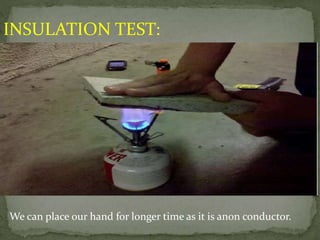
INSULATION TEST:
We can place our hand for longer time as it is anon conductor.
Applications:
• Large use in house building
• Used as sound and heat insulator
• Different shapes to decorate houses ,
flower pots
• Large number of shape which generate
large area of constructions.
• As it is lightweight it could be used in
various applications.
Advantages of papercrete:
• Environmentally friendly-one of the major component is
paper lading into the landfills. By using paper in buildings
we can significantly decrease the amount of paper landing
in the landfills.
• Everyone can make with little knowledge
• Lightweight but strong.
• Easy to use
• Insulating
• Low cost
Disadvantages of papercrete:
• As of 2007, papercrete lacks approval from the
International Code Council.
• Papercrete is not particularly ‘structural’, which means it
can’t be used over doors and windows without some
additional support – either wood or traditional concrete.
• Another disadvantage is that it absorbs water.so
we have to protect it from water in the rainy season.
• The cost of raw paper will increase as the number of
people using the papercrete will increase.
Future:
• Trying to reduce the amount of concrete required
to prepare the papercrete with same strength
and also ultimately reduce CO2 amount.
• Decrease in the carbon footprint of the house.
• Use of different materials at the place of cement
such as gypsum and lime.
• sustainable construction materials, decorating
materials and etc.
• Large market in Africa , India , China [because
people has less money]
Conclusions:
• Good choice to utilize waste paper.
• Big market India, China, Africa.
• Good choice for one story building.
• Inner walls of house can be made by
papercrete.
• No govt. approval-but can be used.
• Increase in demand may lead to
deforestation.
Papercrete

Papercrete

  • 1.
  • 2.
    PAPERCRETE:  Papercrete isa type of fibrous cement, made by shredding paper (old newspapers...) into pulp in water and adding Portland cement.  The thick mix can then be poured into molds and cast like concrete, creating blocks, panels and innumerable other shapes.  When cured and dried (above right), papercrete is strong, lightweight, insulating and has many properties which make it an ideal building material.
  • 3.
    Preparation:  Use volatilesources – Water + waste paper + portland cement[binder]  Add water upto 2/3rd height Tow mixture contents sharp blade to chop paper and to mix.  Collect waste papers.  Put in tank paper + portland cement  After running the tow mixture for four to five minutes at moderate speed.  Level it equally  Wait for 20-30 minutes so that excess water can drain out after 3-4 four sunny day
  • 5.
    Properties of Papercrete: •Sound absorption properties. • Papercrete blocks are lightweight, less than a third of the weight of a comparably-sized adobe brick. • Mold Resistance. • Flame retardant. – does not catch fire easily but smoulders for hours. • Fungus retardant. • Lighter than concrete.
  • 6.
  • 7.
    Less spread anddamage in papercrete as compared with wood
  • 8.
    INSULATION TEST: We canplace our hand for longer time as it is anon conductor.
  • 9.
    Applications: • Large usein house building • Used as sound and heat insulator • Different shapes to decorate houses , flower pots • Large number of shape which generate large area of constructions. • As it is lightweight it could be used in various applications.
  • 10.
    Advantages of papercrete: •Environmentally friendly-one of the major component is paper lading into the landfills. By using paper in buildings we can significantly decrease the amount of paper landing in the landfills. • Everyone can make with little knowledge • Lightweight but strong. • Easy to use • Insulating • Low cost
  • 11.
    Disadvantages of papercrete: •As of 2007, papercrete lacks approval from the International Code Council. • Papercrete is not particularly ‘structural’, which means it can’t be used over doors and windows without some additional support – either wood or traditional concrete. • Another disadvantage is that it absorbs water.so we have to protect it from water in the rainy season. • The cost of raw paper will increase as the number of people using the papercrete will increase.
  • 12.
    Future: • Trying toreduce the amount of concrete required to prepare the papercrete with same strength and also ultimately reduce CO2 amount. • Decrease in the carbon footprint of the house. • Use of different materials at the place of cement such as gypsum and lime. • sustainable construction materials, decorating materials and etc. • Large market in Africa , India , China [because people has less money]
  • 13.
    Conclusions: • Good choiceto utilize waste paper. • Big market India, China, Africa. • Good choice for one story building. • Inner walls of house can be made by papercrete. • No govt. approval-but can be used. • Increase in demand may lead to deforestation.