1
Paper Chromatography
+
Thin Layer Chromatography
Dr. Deepkumar Joshi
Assistant Professor
Chemistry Department
Sheth M. N. Science College, Patan
Classification of Chromatography
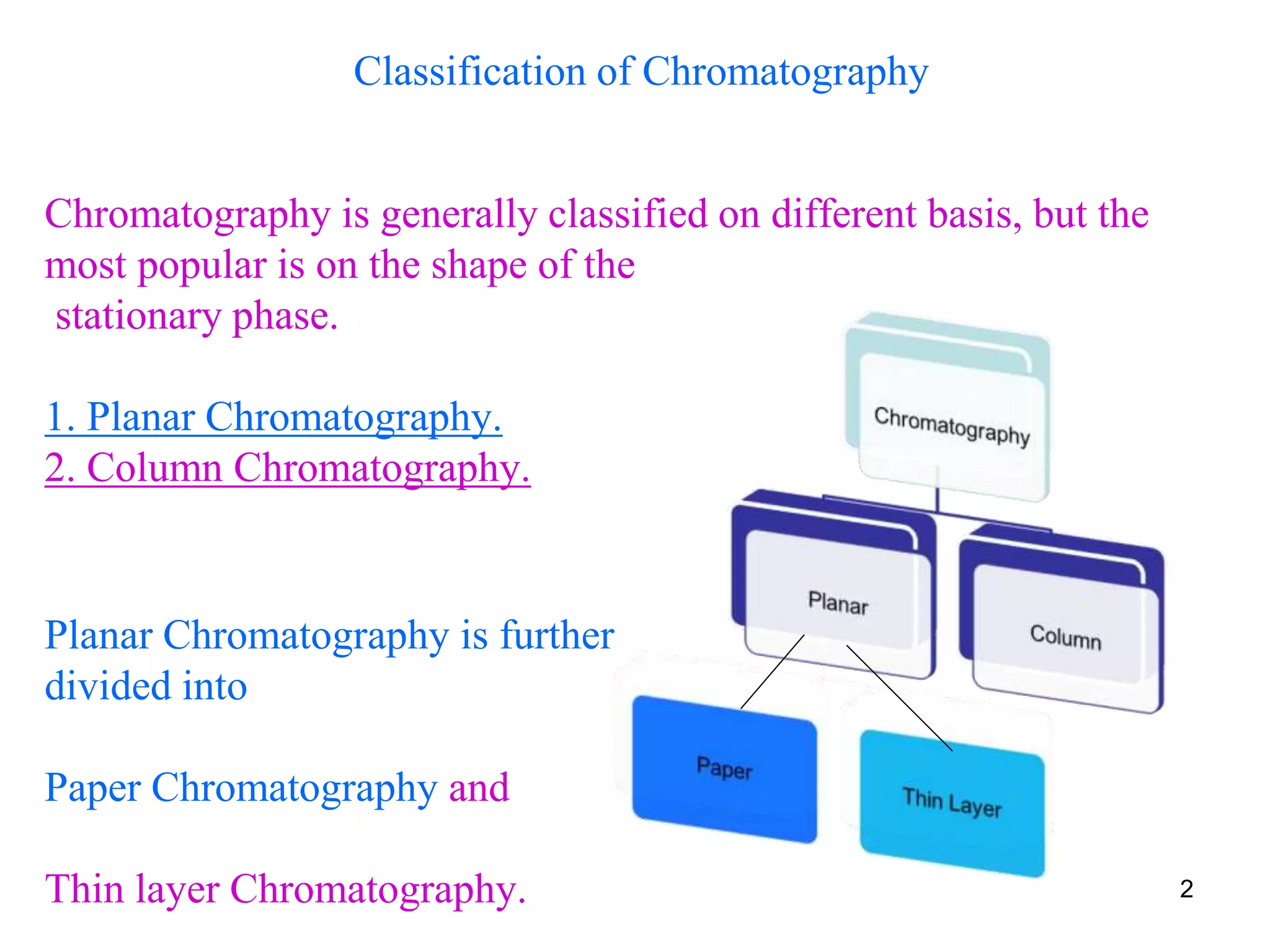
Chromatography is generally classified on different basis, but the
most popular is on the shape of the
stationary phase.
1. Planar Chromatography.
2. Column Chromatography.
Planar Chromatography is further
divided into
Paper Chromatography and
Thin layer Chromatography. 2
Planar Chromatography
Planar Chromatography is a technique in which stationary
phase is present on a plane; which can be paper or a glass of
variant size.
If the plane used is a paper i.e. Cellulose then it is called Paper
Chromatography, where as if glass is used then it is called Thin
Layer Chromatography, popularly TLC. In TLC the stationary
phase is generally Silica gel G.
G in silica gel G stands for Gypsum.
3
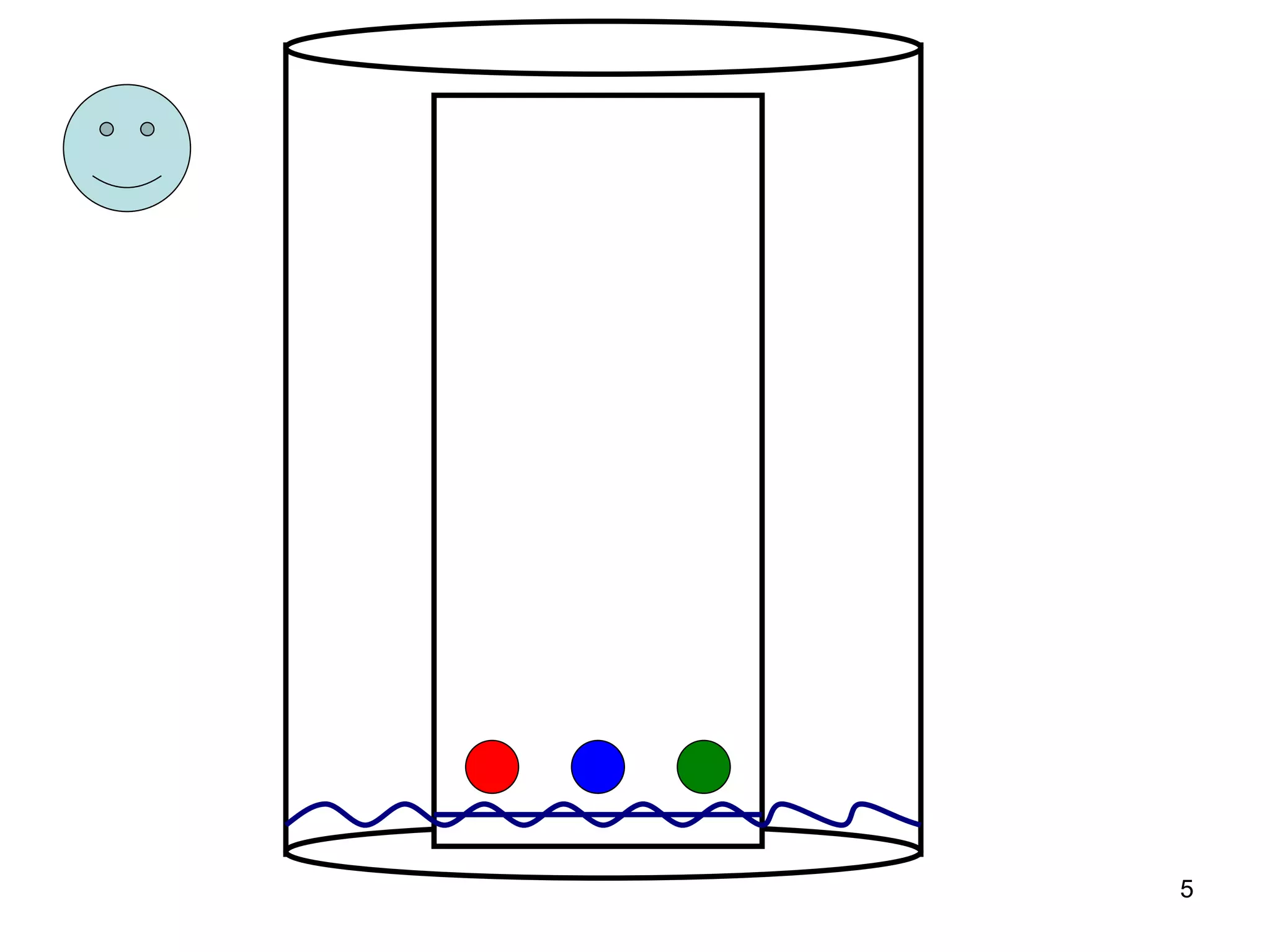
This Chromatography involves placing a small drop of sample
solution on a paper, the paper serves as a stationary phase.
The paper is placed in a jar containing
small layer of mobile phase at the bottom.
The mobile phase slowly travels along the
paper and carries the sample in the direction
and thus separates components
from the mixture.
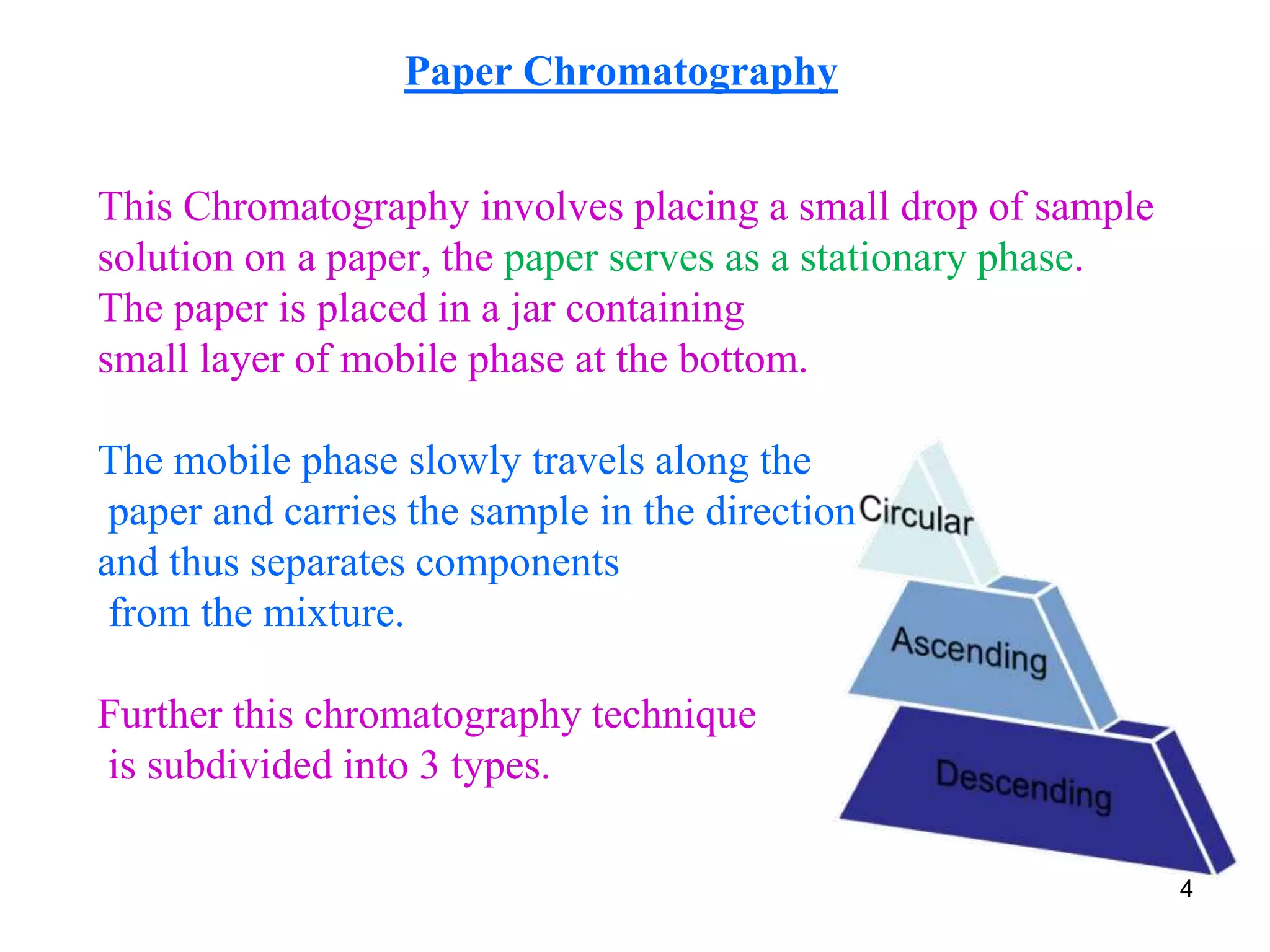
Further this chromatography technique
is subdivided into 3 types.
Paper Chromatography
4
5
This is a sub type of paper chromatography, where a paper in
a square shape is kept on a paltry dish filled with mobile phase
which travels through the paper from the centre to the
periphery of the circular paper.
A wick made from the same paper is used for the
displacement of mobile phase from
reservoir to paper.
Wick
Circular Chromatography
6
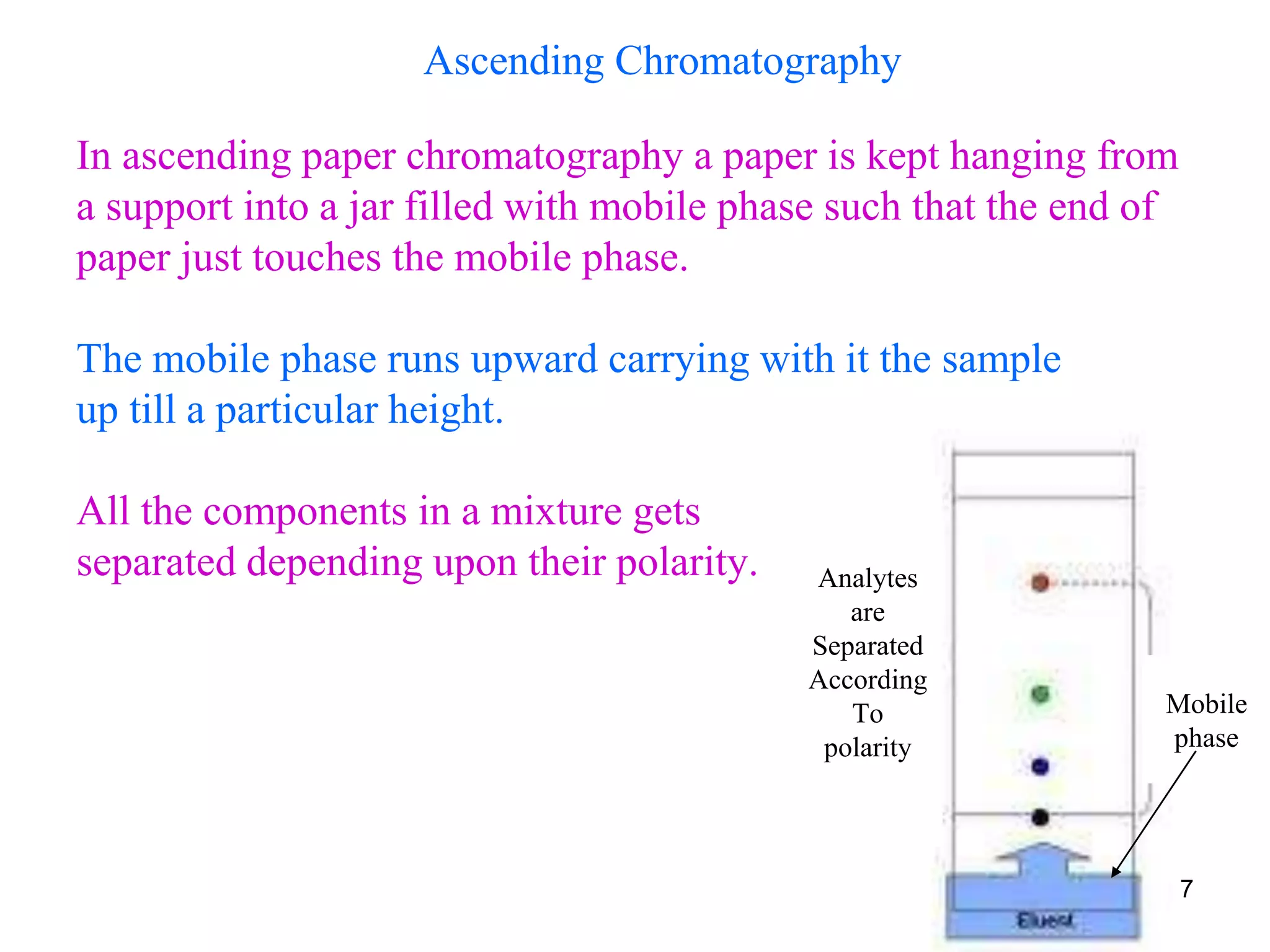
In ascending paper chromatography a paper is kept hanging from
a support into a jar filled with mobile phase such that the end of
paper just touches the mobile phase.
The mobile phase runs upward carrying with it the sample
up till a particular height.
All the components in a mixture gets
separated depending upon their polarity. Analytes
are
Separated
According
To
polarity
Mobile
phase
Ascending Chromatography
7
A process with same application as ascending
chromatography is demonstrated here only
with a change in flow direction of mobile
Phase.
Here the reservoir is placed at the top of the
jar and the mobile phase flows upside down.
The sample here gets separate at the bottom of the paper.
In all types of paper chromatography the sample that has
more attraction towards Cellulose takes more time to separate.
Descending Chromatography
8
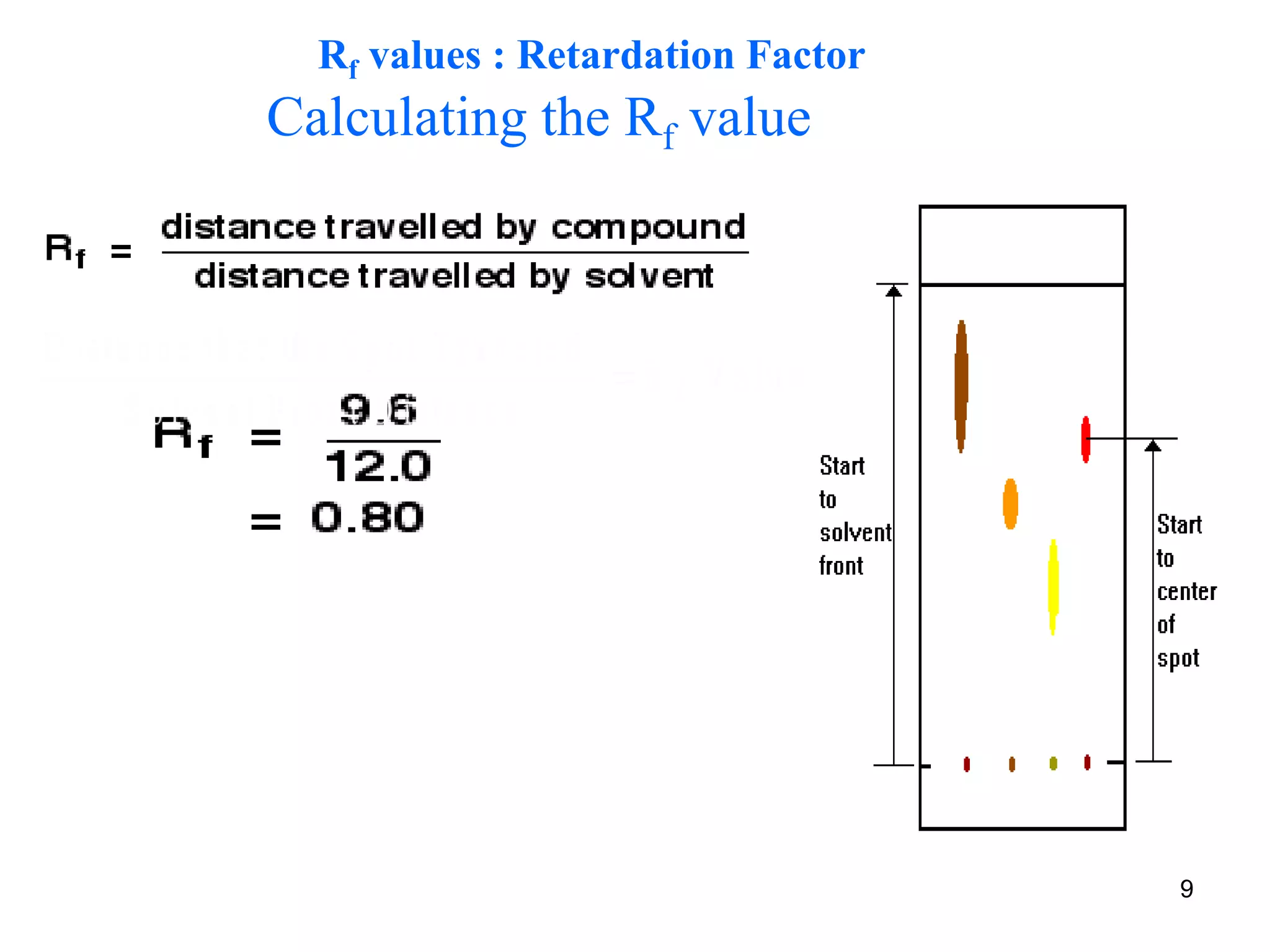
Rf values : Retardation Factor
Calculating the Rf value
9
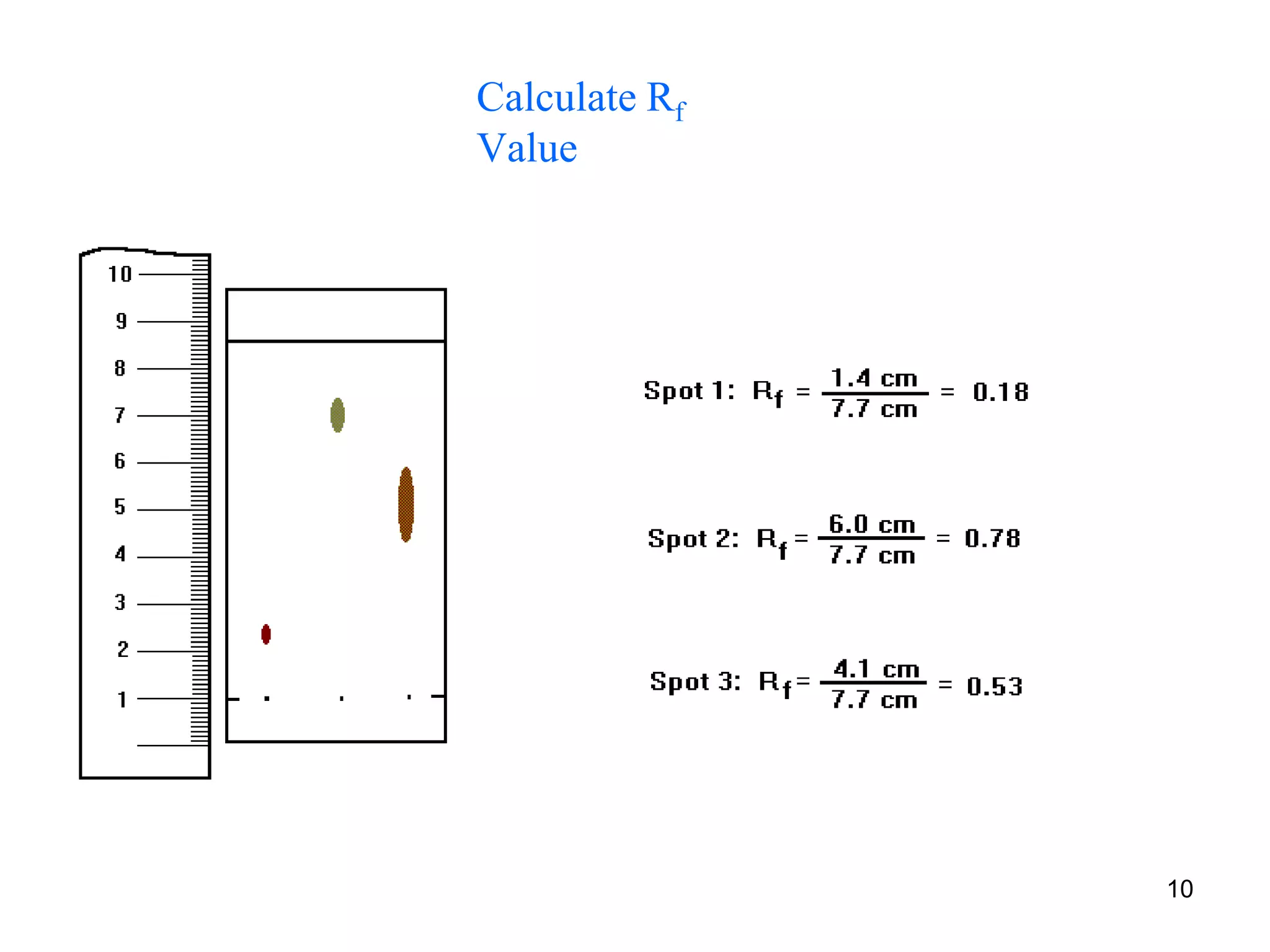
Calculate Rf
Value
10
– The Rf value needs to be between 0.0 and 1.0
• If the value is over 1.0 or less than 0.0, the
calculation is wrong
• If the Rf value is greater than 0.8 or lower
than 0.2 the values are hard to interpret,
thus creating a larger error
• The best Rf values are 0.3 to 0.6
Rf Value
11
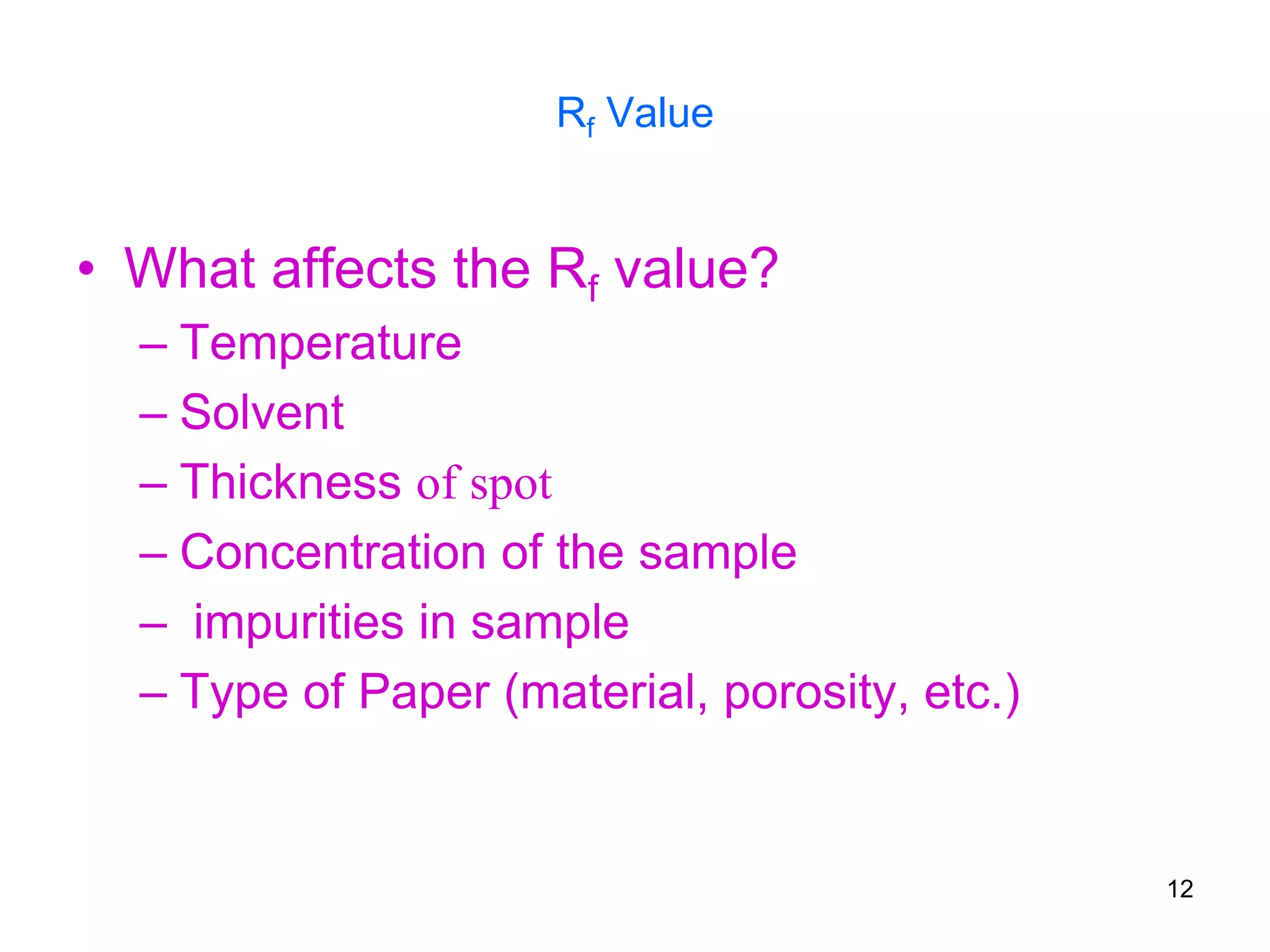
Rf Value
• What affects the Rf value?
– Temperature
– Solvent
– Thickness of spot
– Concentration of the sample
– impurities in sample
– Type of Paper (material, porosity, etc.)
12
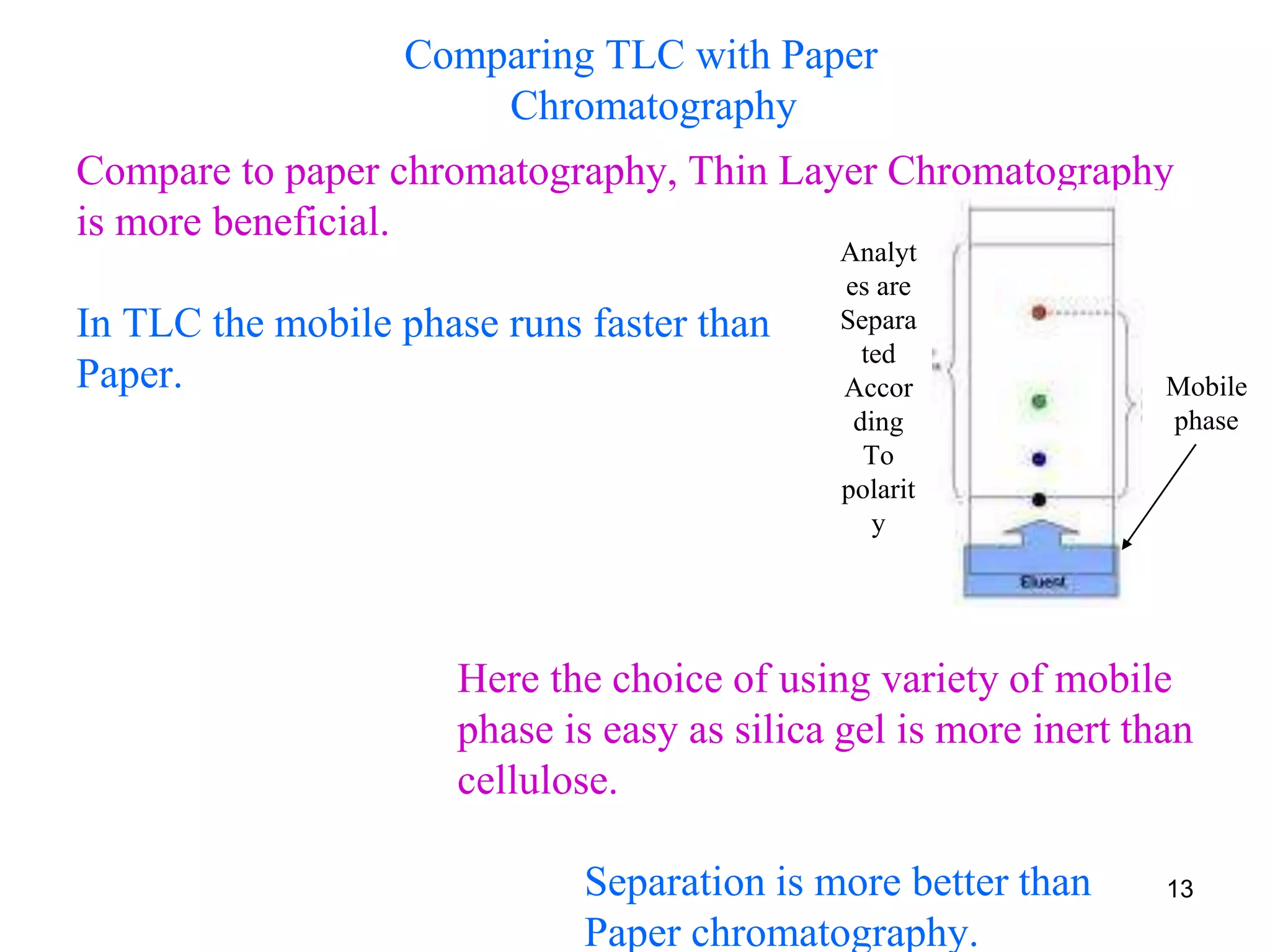
Compare to paper chromatography, Thin Layer Chromatography
is more beneficial.
In TLC the mobile phase runs faster than
Paper.
Here the choice of using variety of mobile
phase is easy as silica gel is more inert than
cellulose.
Separation is more better than
Paper chromatography.
Analyt
es are
Separa
ted
Accor
ding
To
polarit
y
Mobile
phase
Comparing TLC with Paper
Chromatography
13
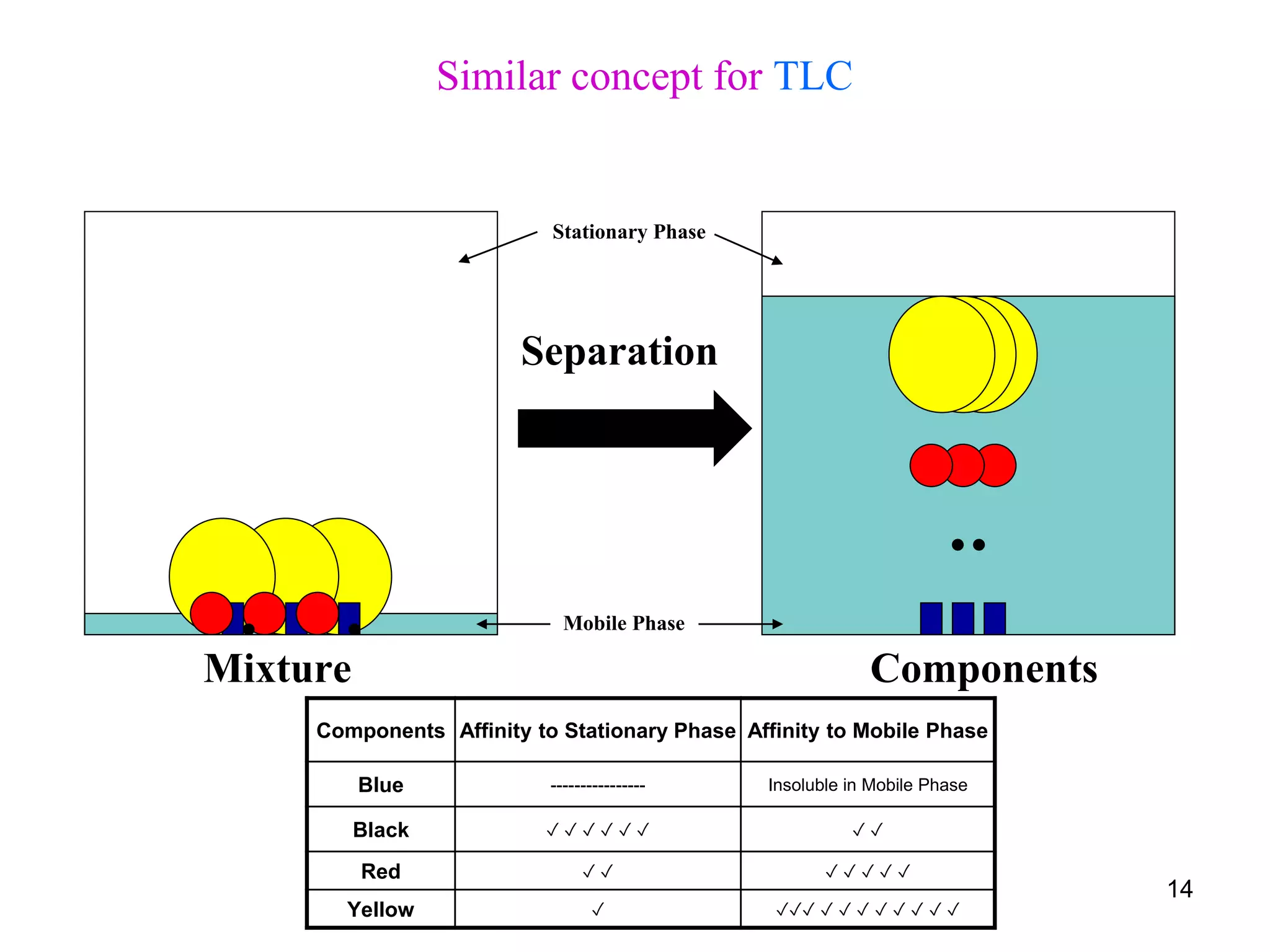
Components Affinity to Stationary Phase Affinity to Mobile Phase
Blue ---------------- Insoluble in Mobile Phase
Black ✓ ✓ ✓ ✓ ✓ ✓ ✓ ✓
Red ✓ ✓ ✓ ✓ ✓ ✓ ✓
Yellow ✓ ✓✓✓ ✓ ✓ ✓ ✓ ✓ ✓ ✓ ✓
Mixture Components
Separation
Stationary Phase
Mobile Phase
Similar concept for TLC
14
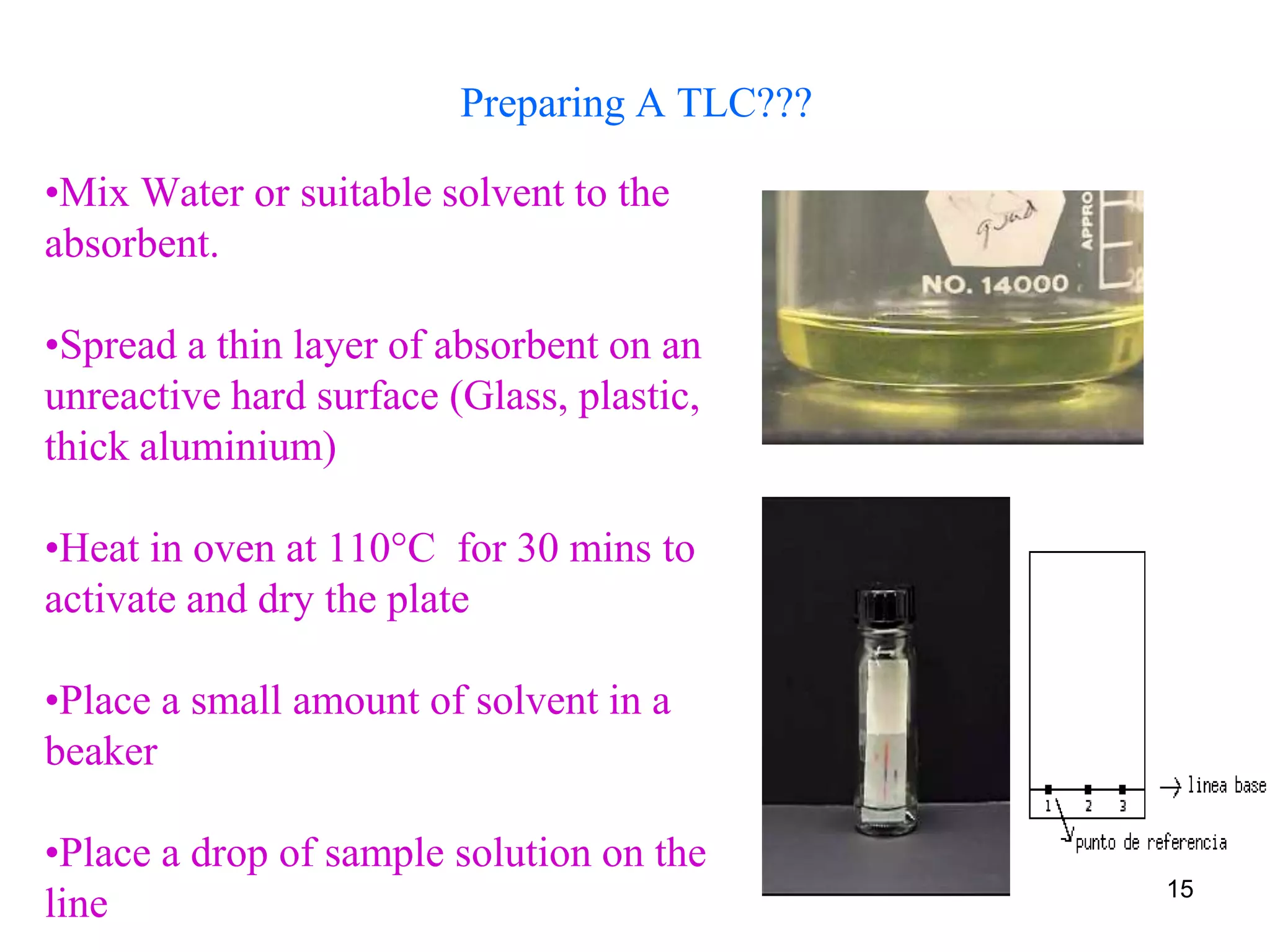
Preparing A TLC???
•Mix Water or suitable solvent to the
absorbent.
•Spread a thin layer of absorbent on an
unreactive hard surface (Glass, plastic,
thick aluminium)
•Heat in oven at 110°C for 30 mins to
activate and dry the plate
•Place a small amount of solvent in a
beaker
•Place a drop of sample solution on the
line 15
Solvents
• Choose a solvent depending on the
polarity of the compound
• Least Polar
• More polar
Petroleum ether
Cyclohexane
Toluene
Chloroform
Acetone
Ethanol
Methanol
16
Visualization
• Destructive visualization
– Spray plate with H2SO4, and then bake in the oven at
110ºC for 15-20 minutes. Compound is destroyed but all
spots will be visible
• Non-destructive visualization – because of the use
of a UV light the sample will not be destroyed.
Although, not all of the spots on the plate will be
visible.
– Long wave UV
– Short wave UV
– Semi-destructive visualization
17
Chromatography is an infinite techno……………………….
Column
Planar
Chromatogra
phy
HPLC
UPLC
Paper TLC
GC 18
Books for Chromatography
Introduction to modern liquid chromatography
by Llyod R Synder
Principles and Practice of Chromatography
by Raymond P. W. Scott,
Useful e-links
biopharminternational.findpharma.com/...Basics...Chromatography/..
www.youtube.com/watch?v=g3m2OgXmnYM
19
Experiment to Separate Silver, Mercury and mixture!!!
Take the solution containing the mixture of these
two metals in form of their corresponding compounds.
Drop a spot on the paper and keep into the mobile
phase and run the water for the given time.
Dry it and then spry with dichromate solution
to make the spots appear clearly.
The three spots will be observed corresponding to the metals….
Calculate the retardation factor value for each…….. 20

Paper & TLC Chromatography

  • 1.
    1 Paper Chromatography + Thin LayerChromatography Dr. Deepkumar Joshi Assistant Professor Chemistry Department Sheth M. N. Science College, Patan
  • 2.
    Classification of Chromatography Chromatographyis generally classified on different basis, but the most popular is on the shape of the stationary phase. 1. Planar Chromatography. 2. Column Chromatography. Planar Chromatography is further divided into Paper Chromatography and Thin layer Chromatography. 2
  • 3.
    Planar Chromatography Planar Chromatographyis a technique in which stationary phase is present on a plane; which can be paper or a glass of variant size. If the plane used is a paper i.e. Cellulose then it is called Paper Chromatography, where as if glass is used then it is called Thin Layer Chromatography, popularly TLC. In TLC the stationary phase is generally Silica gel G. G in silica gel G stands for Gypsum. 3
  • 4.
    This Chromatography involvesplacing a small drop of sample solution on a paper, the paper serves as a stationary phase. The paper is placed in a jar containing small layer of mobile phase at the bottom. The mobile phase slowly travels along the paper and carries the sample in the direction and thus separates components from the mixture. Further this chromatography technique is subdivided into 3 types. Paper Chromatography 4
  • 5.
  • 6.
    This is asub type of paper chromatography, where a paper in a square shape is kept on a paltry dish filled with mobile phase which travels through the paper from the centre to the periphery of the circular paper. A wick made from the same paper is used for the displacement of mobile phase from reservoir to paper. Wick Circular Chromatography 6
  • 7.
    In ascending paperchromatography a paper is kept hanging from a support into a jar filled with mobile phase such that the end of paper just touches the mobile phase. The mobile phase runs upward carrying with it the sample up till a particular height. All the components in a mixture gets separated depending upon their polarity. Analytes are Separated According To polarity Mobile phase Ascending Chromatography 7
  • 8.
    A process withsame application as ascending chromatography is demonstrated here only with a change in flow direction of mobile Phase. Here the reservoir is placed at the top of the jar and the mobile phase flows upside down. The sample here gets separate at the bottom of the paper. In all types of paper chromatography the sample that has more attraction towards Cellulose takes more time to separate. Descending Chromatography 8
  • 9.
    Rf values :Retardation Factor Calculating the Rf value 9
  • 10.
  • 11.
    – The Rfvalue needs to be between 0.0 and 1.0 • If the value is over 1.0 or less than 0.0, the calculation is wrong • If the Rf value is greater than 0.8 or lower than 0.2 the values are hard to interpret, thus creating a larger error • The best Rf values are 0.3 to 0.6 Rf Value 11
  • 12.
    Rf Value • Whataffects the Rf value? – Temperature – Solvent – Thickness of spot – Concentration of the sample – impurities in sample – Type of Paper (material, porosity, etc.) 12
  • 13.
    Compare to paperchromatography, Thin Layer Chromatography is more beneficial. In TLC the mobile phase runs faster than Paper. Here the choice of using variety of mobile phase is easy as silica gel is more inert than cellulose. Separation is more better than Paper chromatography. Analyt es are Separa ted Accor ding To polarit y Mobile phase Comparing TLC with Paper Chromatography 13
  • 14.
    Components Affinity toStationary Phase Affinity to Mobile Phase Blue ---------------- Insoluble in Mobile Phase Black ✓ ✓ ✓ ✓ ✓ ✓ ✓ ✓ Red ✓ ✓ ✓ ✓ ✓ ✓ ✓ Yellow ✓ ✓✓✓ ✓ ✓ ✓ ✓ ✓ ✓ ✓ ✓ Mixture Components Separation Stationary Phase Mobile Phase Similar concept for TLC 14
  • 15.
    Preparing A TLC??? •MixWater or suitable solvent to the absorbent. •Spread a thin layer of absorbent on an unreactive hard surface (Glass, plastic, thick aluminium) •Heat in oven at 110°C for 30 mins to activate and dry the plate •Place a small amount of solvent in a beaker •Place a drop of sample solution on the line 15
  • 16.
    Solvents • Choose asolvent depending on the polarity of the compound • Least Polar • More polar Petroleum ether Cyclohexane Toluene Chloroform Acetone Ethanol Methanol 16
  • 17.
    Visualization • Destructive visualization –Spray plate with H2SO4, and then bake in the oven at 110ºC for 15-20 minutes. Compound is destroyed but all spots will be visible • Non-destructive visualization – because of the use of a UV light the sample will not be destroyed. Although, not all of the spots on the plate will be visible. – Long wave UV – Short wave UV – Semi-destructive visualization 17
  • 18.
    Chromatography is aninfinite techno………………………. Column Planar Chromatogra phy HPLC UPLC Paper TLC GC 18
  • 19.
    Books for Chromatography Introductionto modern liquid chromatography by Llyod R Synder Principles and Practice of Chromatography by Raymond P. W. Scott, Useful e-links biopharminternational.findpharma.com/...Basics...Chromatography/.. www.youtube.com/watch?v=g3m2OgXmnYM 19
  • 20.
    Experiment to SeparateSilver, Mercury and mixture!!! Take the solution containing the mixture of these two metals in form of their corresponding compounds. Drop a spot on the paper and keep into the mobile phase and run the water for the given time. Dry it and then spry with dichromate solution to make the spots appear clearly. The three spots will be observed corresponding to the metals…. Calculate the retardation factor value for each…….. 20