Energy Conservation Project How  my  use of  paper  coffee cups  effects  the  environment by Bethany Waggoner
Questions  How  often do I buy coffee in a paper to go cup?  What resources go into making each cup?  How would using my refillable stainless steel mug every time I buy coffee change my ecological footprint?
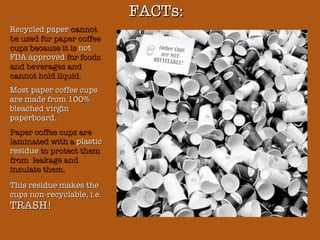
FACTs: Recycled paper  cannot be used for paper coffee cups because it is  not FDA approved  for foods and beverages and cannot hold liquid.  Most paper coffee cups are made from 100% bleached virgin paperboard. Paper coffee cups are laminated with a  plastic residue  to protect them from  leakage and insulate them. This residue makes the cups non-recyclable, i.e.  TRASH!
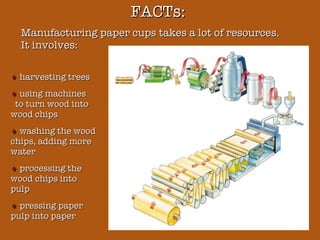
   harvesting trees    using machines  to turn wood into wood chips    washing the wood chips, adding more water    processing the wood chips into pulp    pressing paper pulp into paper FACTs: Manufacturing paper cups takes a lot of resources.  It involves:
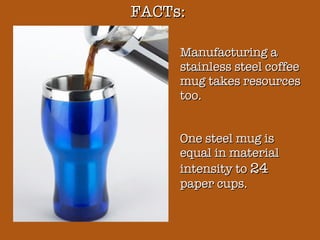
FACTs: Manufacturing a stainless steel coffee mug takes resources too. One steel mug is equal in material intensity to  24  paper cups.
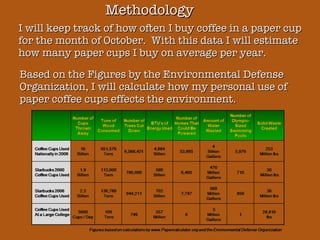
Based on the Figures by the Environmental Defense Organization, I will calculate how my personal use of paper coffee cups effects the environment. Methodology I will keep track of how often I buy coffee in a paper cup for the month of October.  With this data I will estimate how many paper cups I buy on average per year.
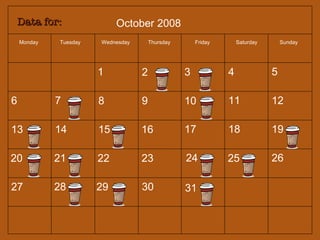
October 2008 Monday Tuesday Wednesday Thursday Friday Saturday Sunday 1 2 3 4 5 6 7 8 9 10 11 12 13 14 15 16 17 18 19 20 21 22 23 24 25 26 27 28 29 30 31 Data for:
I used 14 paper coffee cups in the month of October. 14 x 12 months = 168 At that rate, I use about 168 paper coffee cups per year. Analysis How does my use of paper coffee cups effect the environment?
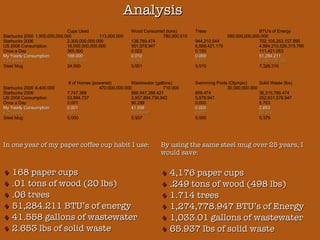
Cups Used Wood Consumed (tons) Trees BTU's of Energy Starbucks 2000 1,900,000,000.000 113,000.000 780,000.015 580,000,000,000.000 Starbucks 2006 2,300,000,000.000 136,789.474 944,210.544 702,105,263,157.895 US 2006 Consumption 16,000,000,000.000 951,578.947 6,568,421.179 4,884,210,526,315.790 Once a Day 365.000 0.022 0.150 111,421.053 My Yearly Consumption 168.000 0.010 0.069 51,284.211 x 25 years 4,200.000 0.250 1.724 1,282,105.263 Steel Mug 24.000 0.001 0.010 7,326.316   # of Homes (powered) Wastewater (gallons) Swimming Pools (Olympic) Solid Waste (lbs) Starbucks 2000 6,400.000  470,000,000.000 710.000 30,000,000.000 Starbucks 2006 7,747.368  568,947,368.421 859.474 36,315,789.474 US 2006 Consumption 53,894.737  3,957,894,736.842 5,978.947 252,631,578.947 Once a Day 0.001  90.289 0.000 5.763 My Yearly Consumption 0.001  41.558 0.000 2.653 x 25 years  0.014 1,038.947 0.002 66.316 Steel Mug 0.000 5.937 0.000 0.379 Analysis By using the same steel mug over 25 years, I would save:    4,176 paper cups    .249 tons of wood (498 lbs)    1.714 trees    1,274,778.947 BTU’s of Energy    1,033.01 gallons of wastewater    65.937 lbs of solid waste In one year of my paper coffee cup habit I use:    168 paper cups    .01 tons of wood (20 lbs)    .06 trees    51,284.211 BTU’s of energy    41.558 gallons of wastewater    2.653 lbs of solid waste
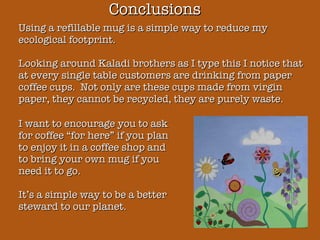
Conclusions Using a refillable mug is a simple way to reduce my ecological footprint.  Looking around Kaladi brothers as I type this I notice that at every single table customers are drinking from paper coffee cups.  Not only are these cups made from virgin paper, they cannot be recycled, they are purely waste.  I want to encourage you to ask for coffee “for here” if you plan to enjoy it in a coffee shop and to bring your own mug if you need it to go. It’s a simple way to be a better steward to our planet.
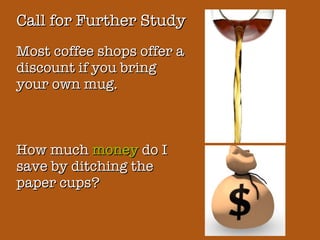
Call for Further Study Most coffee shops offer a discount if you bring your own mug. How much  money  do I save by ditching the paper cups?
References “ The Basic Problem with Coffee Cups.”  Sustainability is Sexy . University of  Washington. <http://sustainabilityissexy.com/facts.htm> October 15, 2008. More ideas for conserving energy Bartos, Lorene. “Energy Conservation Ideas.”  Lincoln Journal Star  Newspaper . February 2007. <http://lancaster.unl.edu/home/Articles/2006 /Top10Energy.shtml> November 10, 2008.

Paper Coffee Cups

  • 1.
    Energy Conservation ProjectHow my use of paper coffee cups effects the environment by Bethany Waggoner
  • 2.
    Questions  How often do I buy coffee in a paper to go cup?  What resources go into making each cup?  How would using my refillable stainless steel mug every time I buy coffee change my ecological footprint?
  • 3.
    FACTs: Recycled paper cannot be used for paper coffee cups because it is not FDA approved for foods and beverages and cannot hold liquid. Most paper coffee cups are made from 100% bleached virgin paperboard. Paper coffee cups are laminated with a plastic residue to protect them from leakage and insulate them. This residue makes the cups non-recyclable, i.e. TRASH!
  • 4.
    harvesting trees  using machines to turn wood into wood chips  washing the wood chips, adding more water  processing the wood chips into pulp  pressing paper pulp into paper FACTs: Manufacturing paper cups takes a lot of resources. It involves:
  • 5.
    FACTs: Manufacturing astainless steel coffee mug takes resources too. One steel mug is equal in material intensity to 24 paper cups.
  • 6.
    Based on theFigures by the Environmental Defense Organization, I will calculate how my personal use of paper coffee cups effects the environment. Methodology I will keep track of how often I buy coffee in a paper cup for the month of October. With this data I will estimate how many paper cups I buy on average per year.
  • 7.
    October 2008 MondayTuesday Wednesday Thursday Friday Saturday Sunday 1 2 3 4 5 6 7 8 9 10 11 12 13 14 15 16 17 18 19 20 21 22 23 24 25 26 27 28 29 30 31 Data for:
  • 8.
    I used 14paper coffee cups in the month of October. 14 x 12 months = 168 At that rate, I use about 168 paper coffee cups per year. Analysis How does my use of paper coffee cups effect the environment?
  • 9.
    Cups Used WoodConsumed (tons) Trees BTU's of Energy Starbucks 2000 1,900,000,000.000 113,000.000 780,000.015 580,000,000,000.000 Starbucks 2006 2,300,000,000.000 136,789.474 944,210.544 702,105,263,157.895 US 2006 Consumption 16,000,000,000.000 951,578.947 6,568,421.179 4,884,210,526,315.790 Once a Day 365.000 0.022 0.150 111,421.053 My Yearly Consumption 168.000 0.010 0.069 51,284.211 x 25 years 4,200.000 0.250 1.724 1,282,105.263 Steel Mug 24.000 0.001 0.010 7,326.316 # of Homes (powered) Wastewater (gallons) Swimming Pools (Olympic) Solid Waste (lbs) Starbucks 2000 6,400.000 470,000,000.000 710.000 30,000,000.000 Starbucks 2006 7,747.368 568,947,368.421 859.474 36,315,789.474 US 2006 Consumption 53,894.737 3,957,894,736.842 5,978.947 252,631,578.947 Once a Day 0.001 90.289 0.000 5.763 My Yearly Consumption 0.001 41.558 0.000 2.653 x 25 years 0.014 1,038.947 0.002 66.316 Steel Mug 0.000 5.937 0.000 0.379 Analysis By using the same steel mug over 25 years, I would save:  4,176 paper cups  .249 tons of wood (498 lbs)  1.714 trees  1,274,778.947 BTU’s of Energy  1,033.01 gallons of wastewater  65.937 lbs of solid waste In one year of my paper coffee cup habit I use:  168 paper cups  .01 tons of wood (20 lbs)  .06 trees  51,284.211 BTU’s of energy  41.558 gallons of wastewater  2.653 lbs of solid waste
  • 10.
    Conclusions Using arefillable mug is a simple way to reduce my ecological footprint. Looking around Kaladi brothers as I type this I notice that at every single table customers are drinking from paper coffee cups. Not only are these cups made from virgin paper, they cannot be recycled, they are purely waste. I want to encourage you to ask for coffee “for here” if you plan to enjoy it in a coffee shop and to bring your own mug if you need it to go. It’s a simple way to be a better steward to our planet.
  • 11.
    Call for FurtherStudy Most coffee shops offer a discount if you bring your own mug. How much money do I save by ditching the paper cups?
  • 12.
    References “ TheBasic Problem with Coffee Cups.” Sustainability is Sexy . University of Washington. <http://sustainabilityissexy.com/facts.htm> October 15, 2008. More ideas for conserving energy Bartos, Lorene. “Energy Conservation Ideas.” Lincoln Journal Star Newspaper . February 2007. <http://lancaster.unl.edu/home/Articles/2006 /Top10Energy.shtml> November 10, 2008.