MICRO BATTERIES
GUIDE: Miss.ASWATHY E J
ASST PROFESSOR
DONE BY
ANSHAD M
JLANEEE008
ABSTRACT
Lithium-ion batteries using flexible paper-based current collectors.
Current collectors are wooden microfibers coated with Carbon Nanotubes.
Flexibility, low cost, low material consumption, environmental friendly.
Power output can be desired voltage
INTRODUCTION
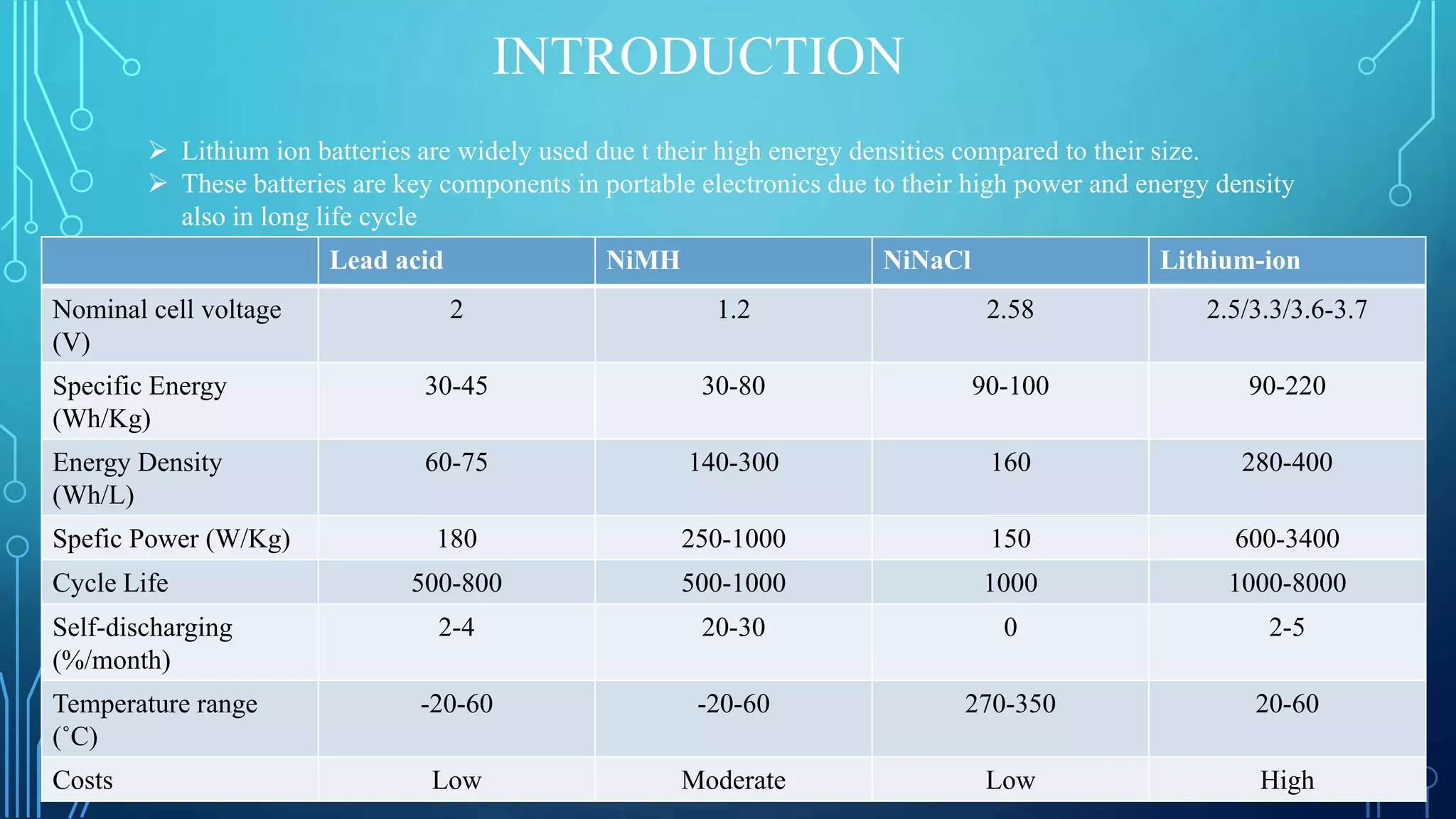
 Lithium ion batteries are widely used due t their high energy densities compared to their size.
 These batteries are key components in portable electronics due to their high power and energy density
also in long life cycle
Lead acid NiMH NiNaCl Lithium-ion
Nominal cell voltage
(V)
2 1.2 2.58 2.5/3.3/3.6-3.7
Specific Energy
(Wh/Kg)
30-45 30-80 90-100 90-220
Energy Density
(Wh/L)
60-75 140-300 160 280-400
Spefic Power (W/Kg) 180 250-1000 150 600-3400
Cycle Life 500-800 500-1000 1000 1000-8000
Self-discharging
(%/month)
2-4 20-30 0 2-5
Temperature range
(˚C)
-20-60 -20-60 270-350 20-60
Costs Low Moderate Low High
WHAT IS PAPER BATTERY?
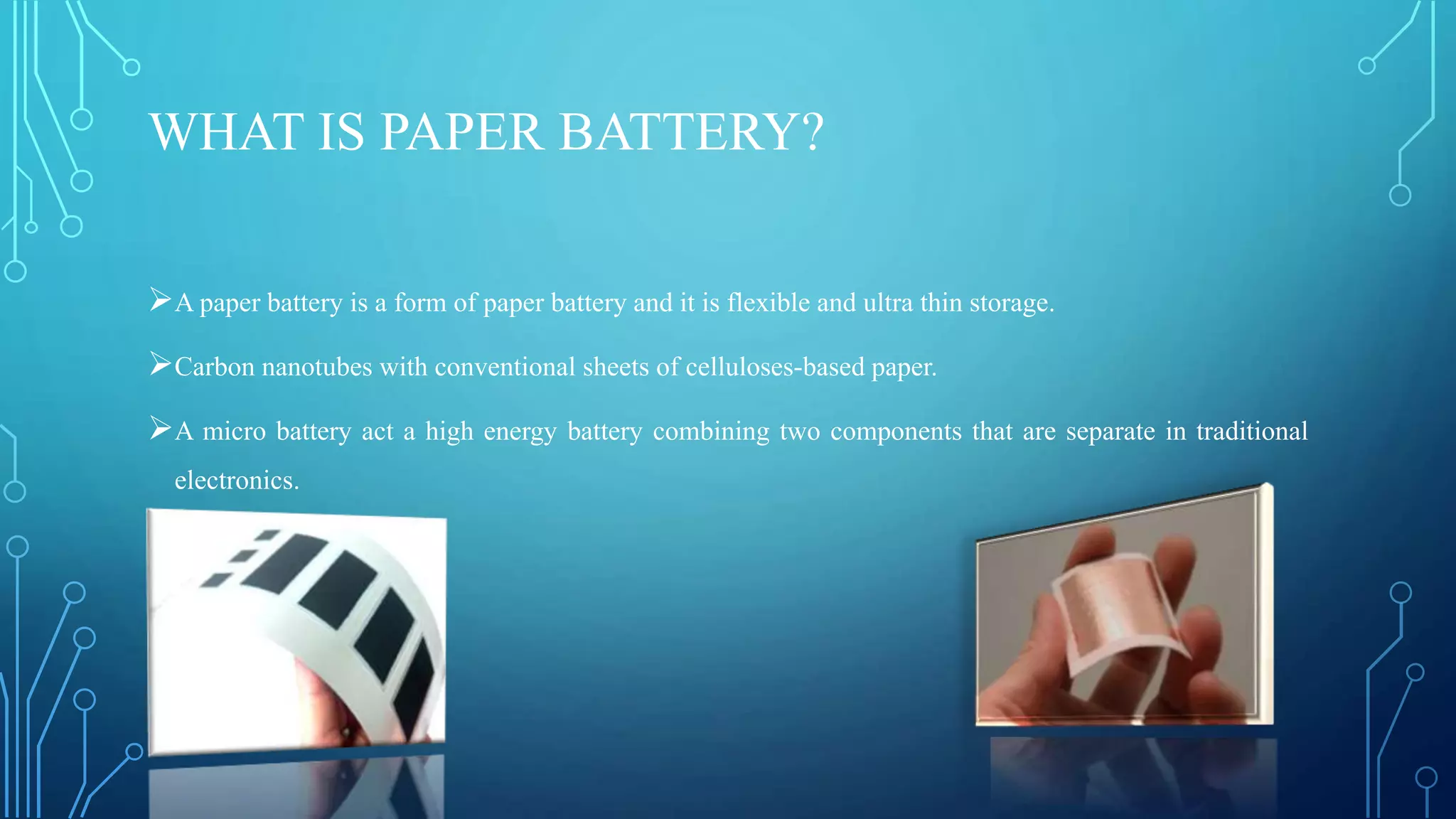
A paper battery is a form of paper battery and it is flexible and ultra thin storage.
Carbon nanotubes with conventional sheets of celluloses-based paper.
A micro battery act a high energy battery combining two components that are separate in traditional
electronics.
CARBON NANO TUBES
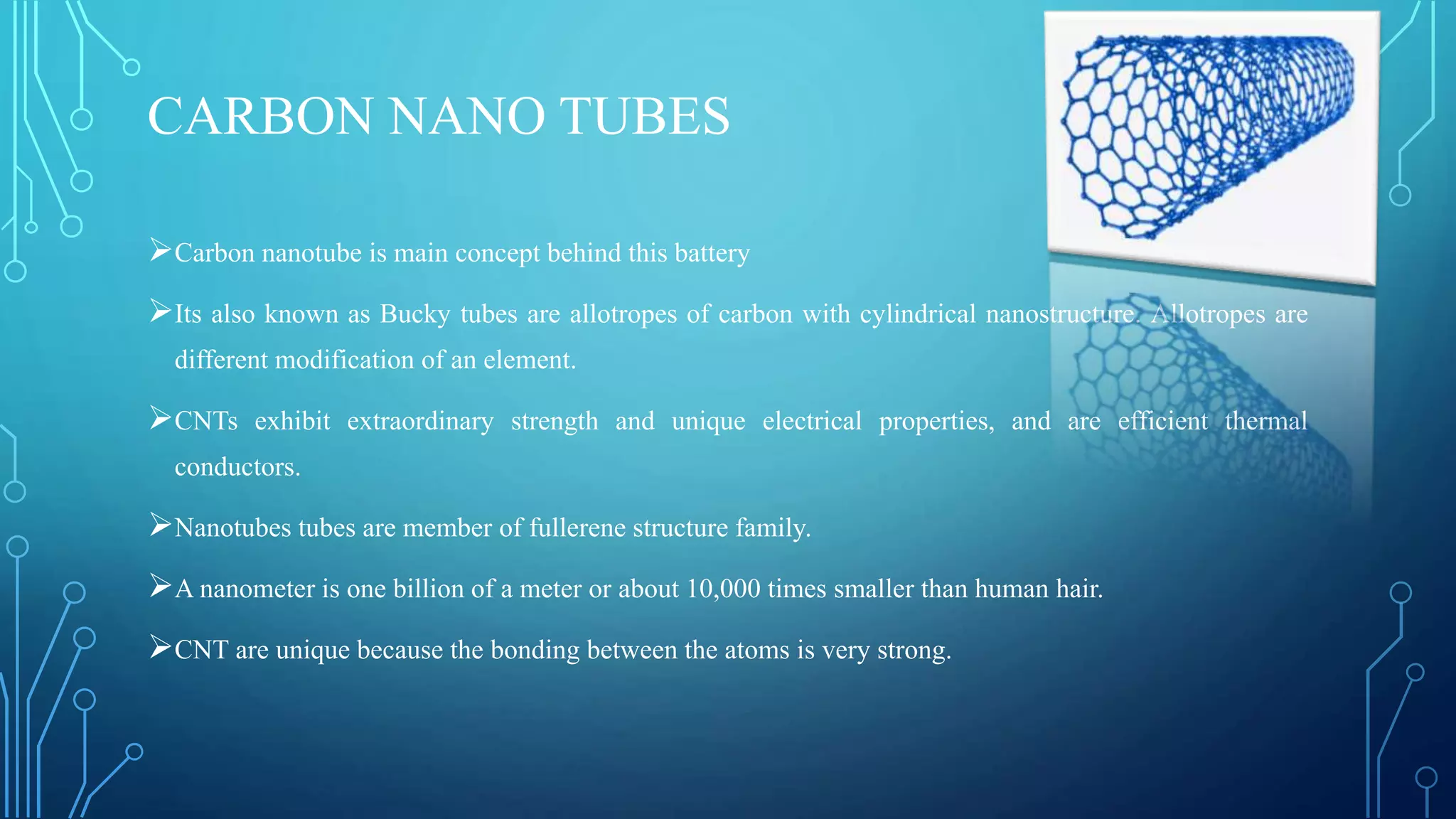
Carbon nanotube is main concept behind this battery
Its also known as Bucky tubes are allotropes of carbon with cylindrical nanostructure. Allotropes are
different modification of an element.
CNTs exhibit extraordinary strength and unique electrical properties, and are efficient thermal
conductors.
Nanotubes tubes are member of fullerene structure family.
A nanometer is one billion of a meter or about 10,000 times smaller than human hair.
CNT are unique because the bonding between the atoms is very strong.
PROBLEM REGARDING OTHER BATTERIES
Safety issues and explosive reaction.
Low capacity and conductivity.
High fabrication cost.
Battery flexibility, size and thickness.
Shorter life cycle.
Problem regarding the adherence of electrode materials to the surface.
FABRICATION OF CNT BATTERY
1) Layer by layer coating of wood microfibers with CNT:-
 The Kraft wood pulp was beaten, bleached and press dried for microfibers, (less than 1% lignin
& 99% cellulose).
 These hollow microfibers are 2-3mm in length and 35-50µm in diameter.
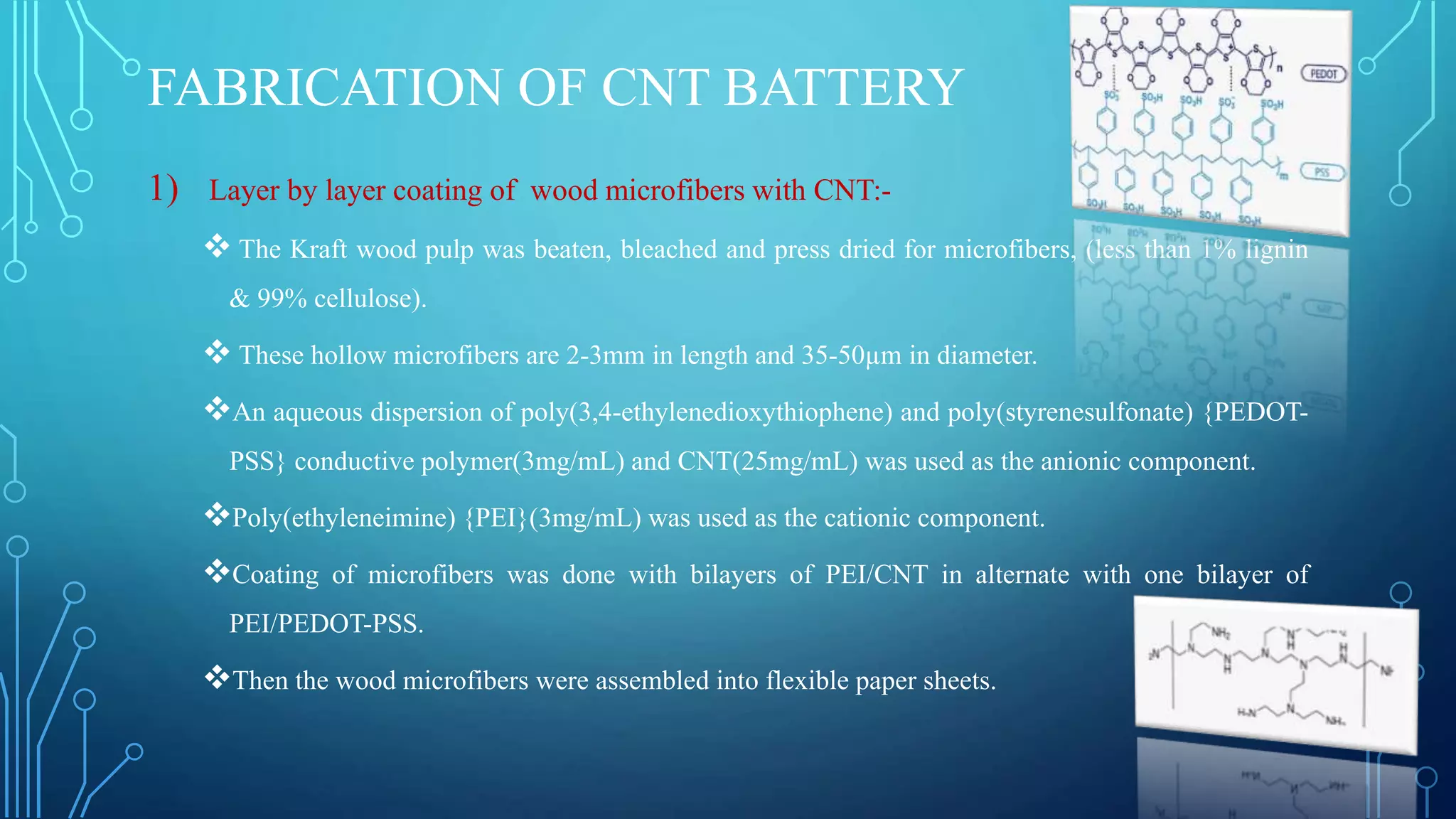
An aqueous dispersion of poly(3,4-ethylenedioxythiophene) and poly(styrenesulfonate) {PEDOT-
PSS} conductive polymer(3mg/mL) and CNT(25mg/mL) was used as the anionic component.
Poly(ethyleneimine) {PEI}(3mg/mL) was used as the cationic component.
Coating of microfibers was done with bilayers of PEI/CNT in alternate with one bilayer of
PEI/PEDOT-PSS.
Then the wood microfibers were assembled into flexible paper sheets.
2) Battery fabrication:-
 Paste of electrodes were prepared using:-
a. 85% (wt) of the active materials (Li4Ti5Ol 2 or LiCoO2)
b. 10% (wt) Super P lithium (obtained from Timcal, conductive material made from carbon
black of 40nm).
c. 5% (wt) Polyvinylidene fluoride (PVDF).
 The electrode materials were then coated on the current collectors by a spray coating method
followed by vacuum-drying for 12h
3) Assembly process
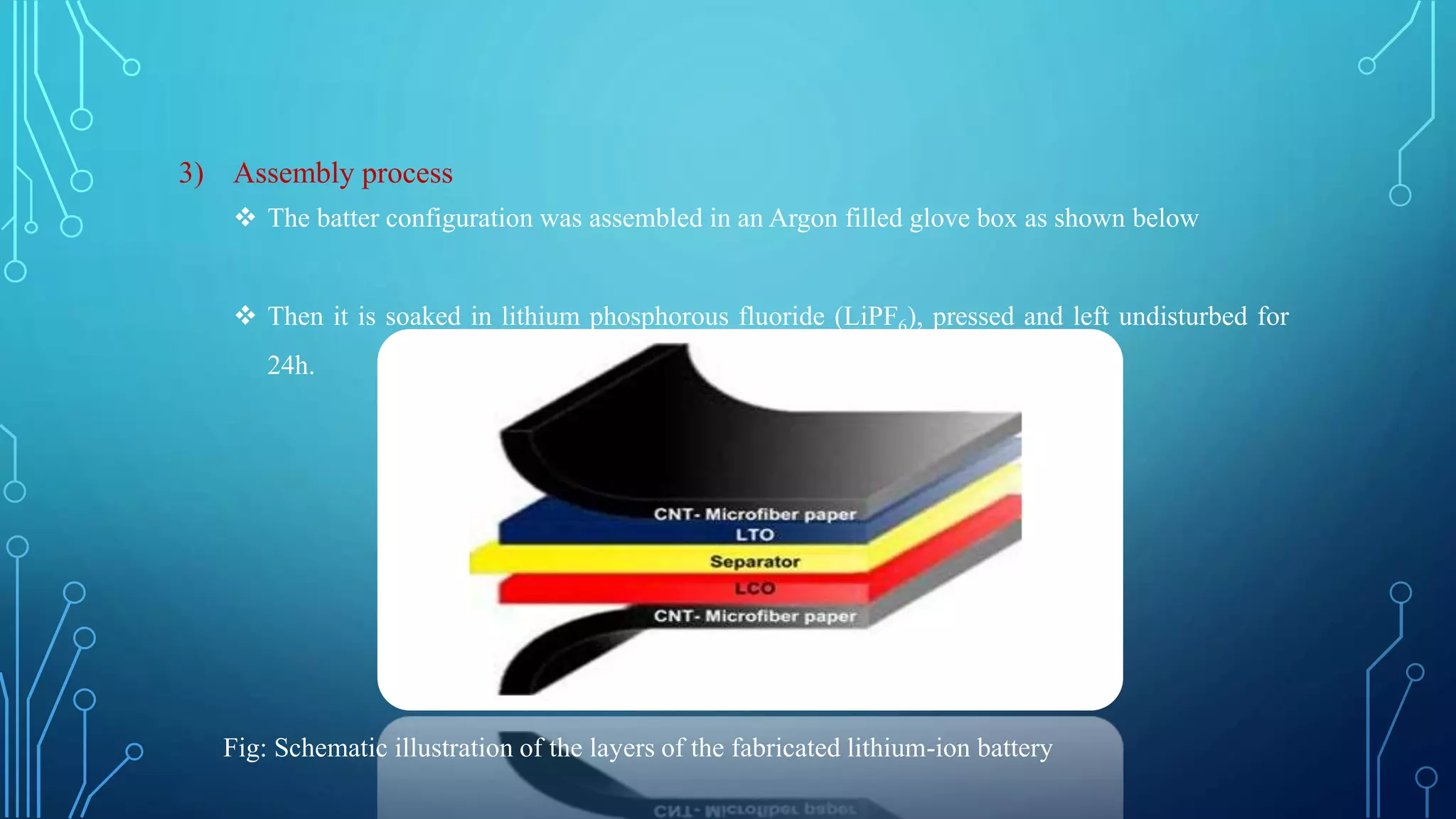
 The batter configuration was assembled in an Argon filled glove box as shown below
 Then it is soaked in lithium phosphorous fluoride (LiPF6), pressed and left undisturbed for
24h.
Fig: Schematic illustration of the layers of the fabricated lithium-ion battery
RESULT AND DISCUSION:-
These tests were carried out in Arbin BT2000 battery testing system:-
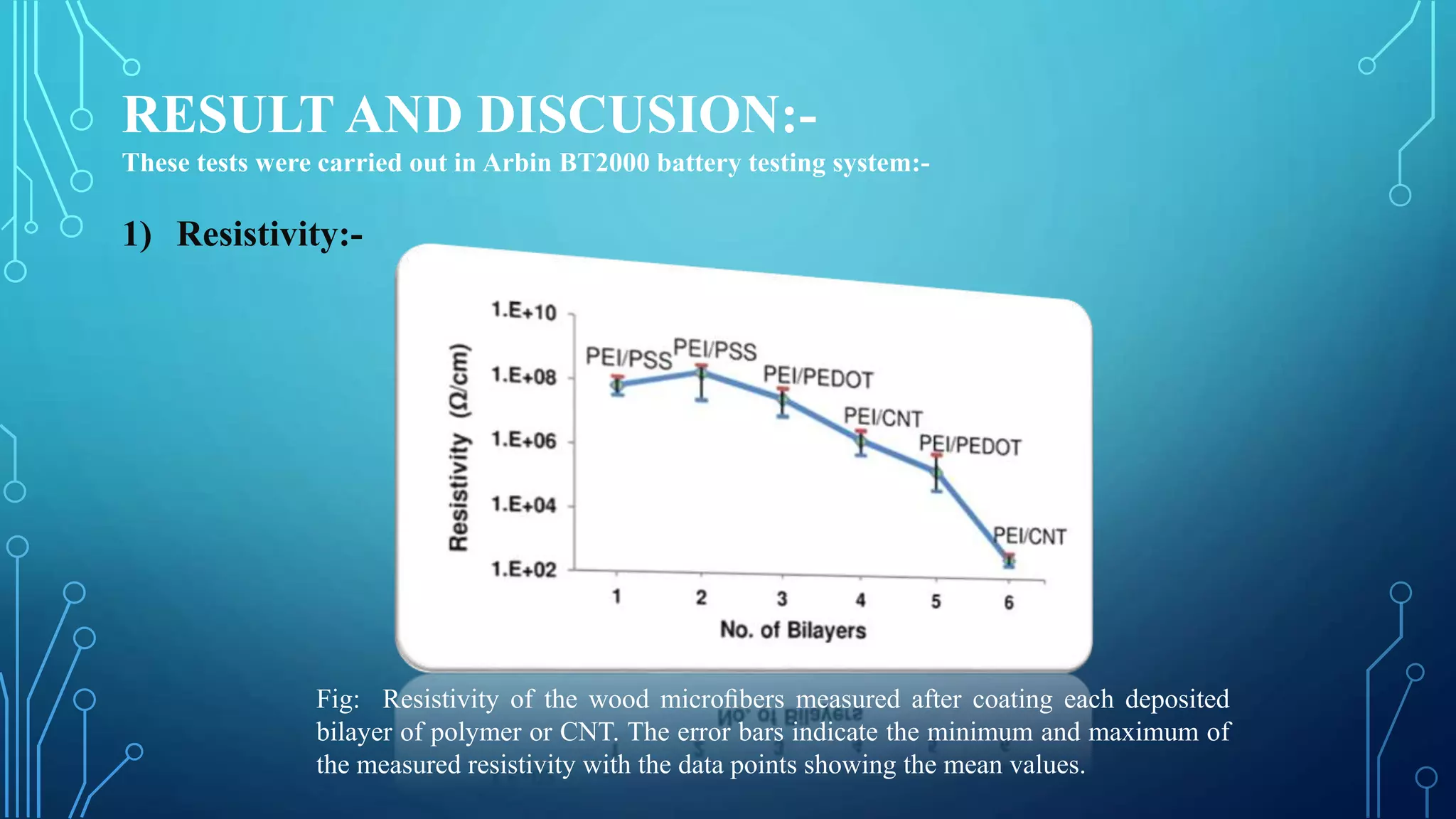
1) Resistivity:-
Fig: Resistivity of the wood microfibers measured after coating each deposited
bilayer of polymer or CNT. The error bars indicate the minimum and maximum of
the measured resistivity with the data points showing the mean values.
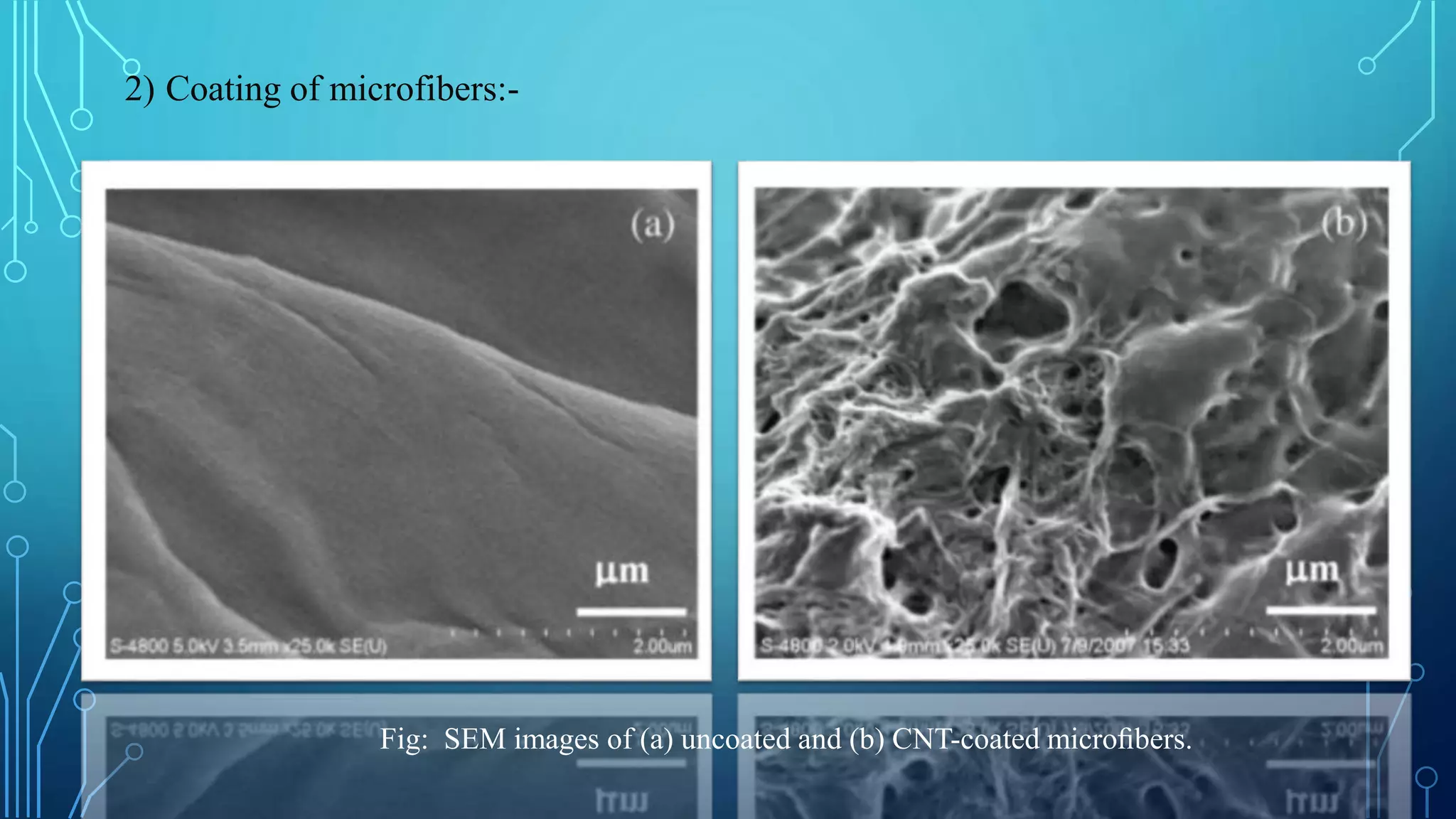
2) Coating of microfibers:-
Fig: SEM images of (a) uncoated and (b) CNT-coated microfibers.
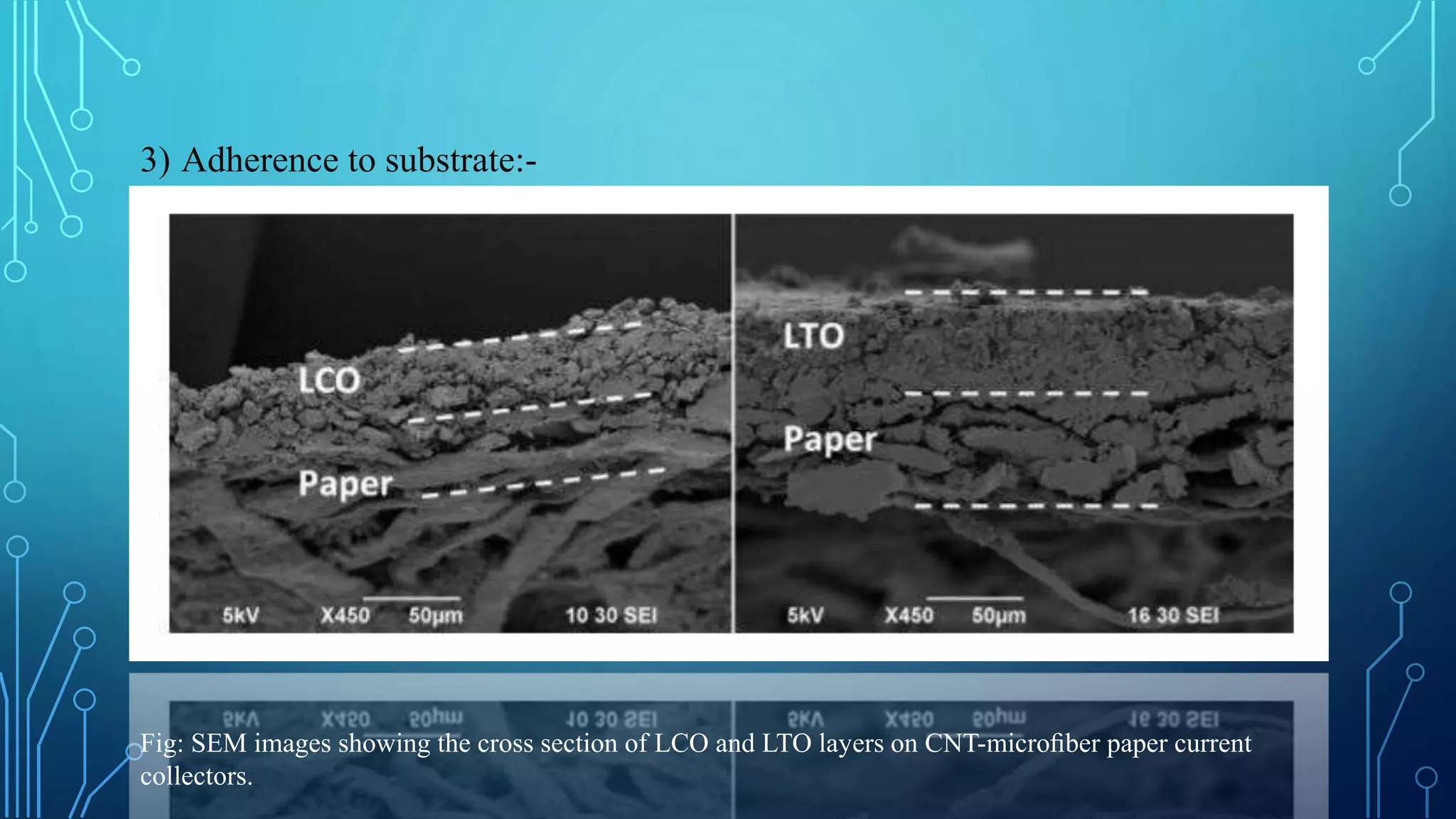
3) Adherence to substrate:-
Fig: SEM images showing the cross section of LCO and LTO layers on CNT-microfiber paper current
collectors.
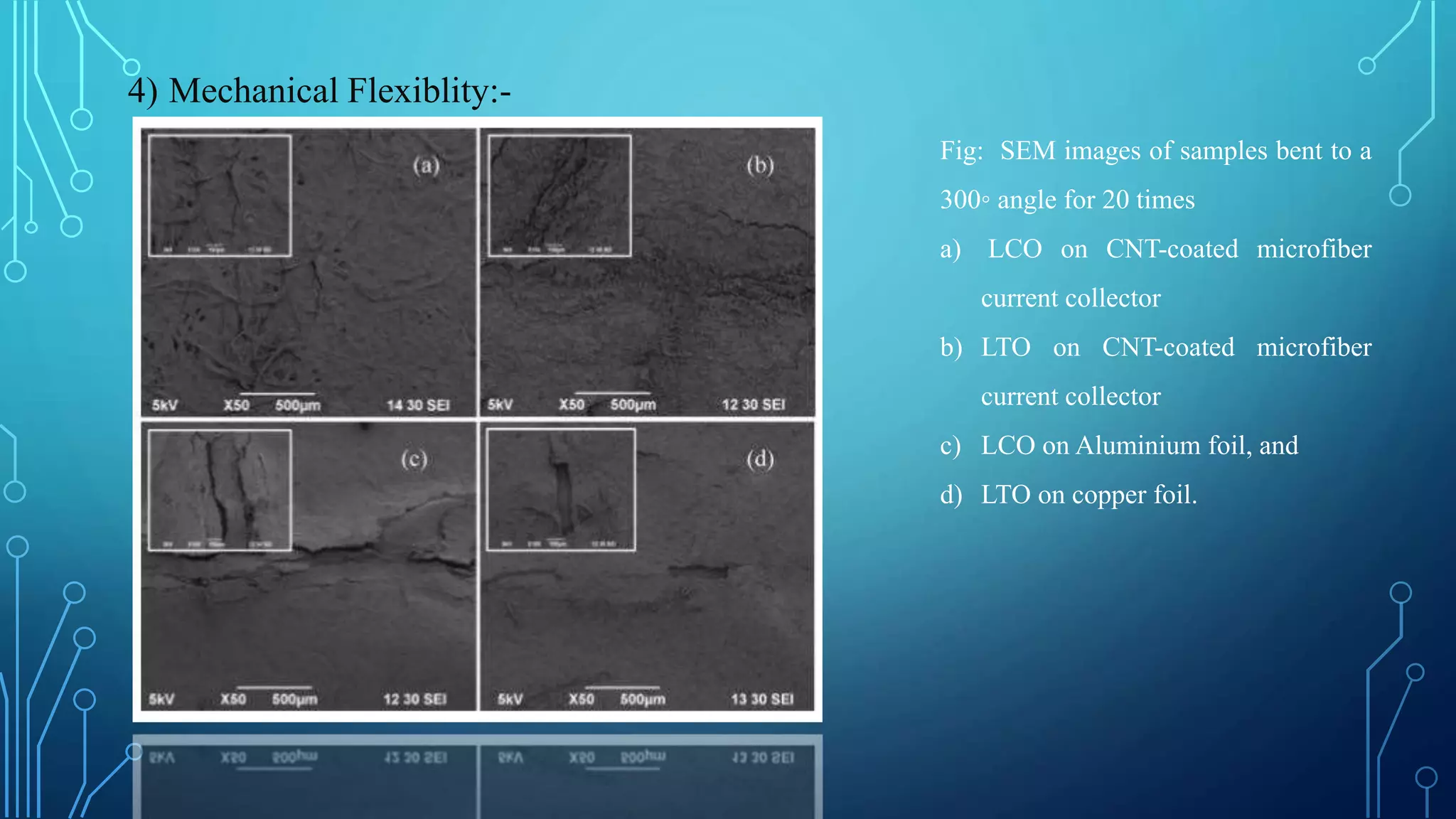
4) Mechanical Flexiblity:-
Fig: SEM images of samples bent to a
300◦ angle for 20 times
a) LCO on CNT-coated microfiber
current collector
b) LTO on CNT-coated microfiber
current collector
c) LCO on Aluminium foil, and
d) LTO on copper foil.
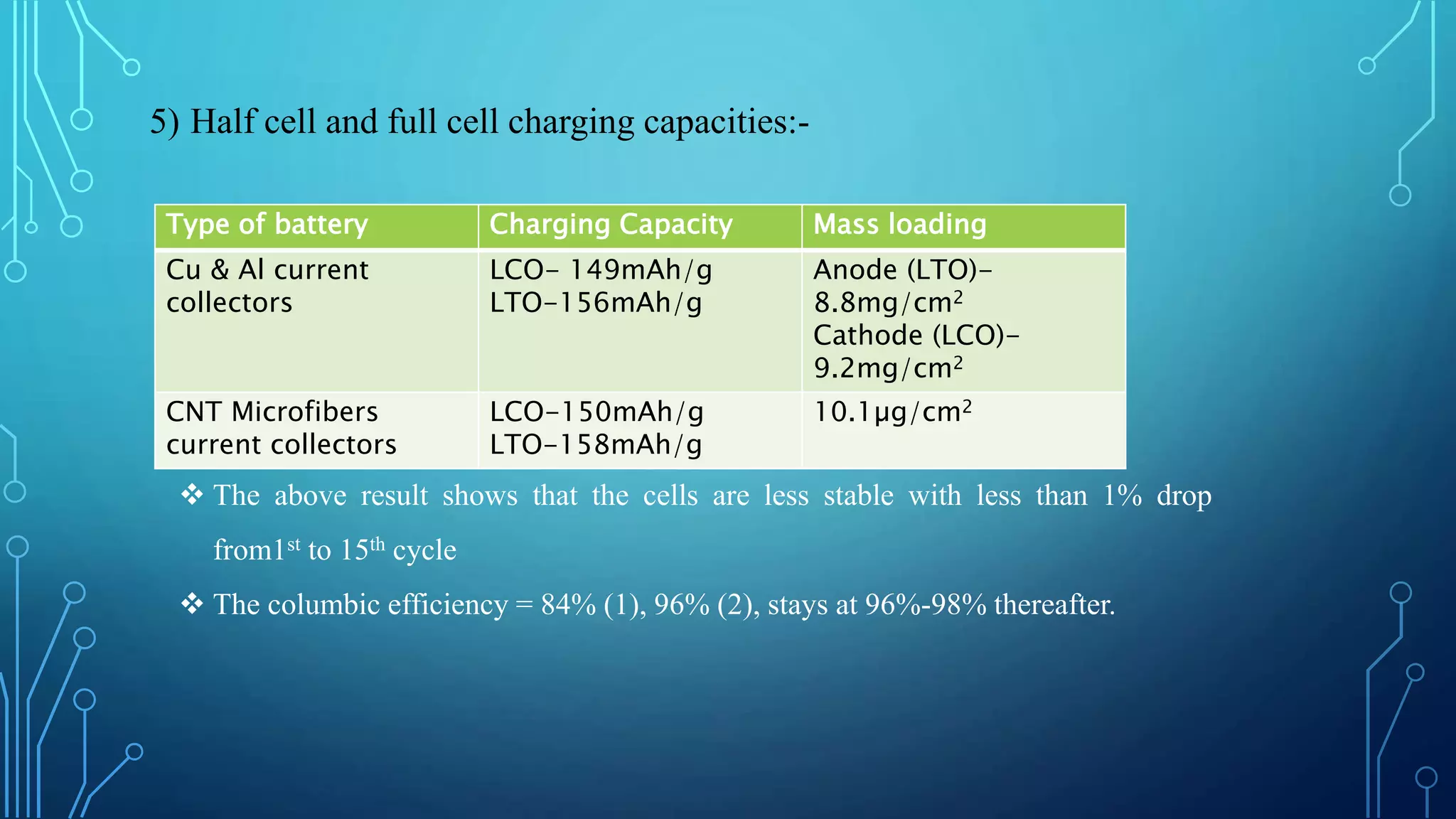
5) Half cell and full cell charging capacities:-
Type of battery Charging Capacity Mass loading
Cu & Al current
collectors
LCO- 149mAh/g
LTO-156mAh/g
Anode (LTO)-
8.8mg/cm2
Cathode (LCO)-
9.2mg/cm2
CNT Microfibers
current collectors
LCO-150mAh/g
LTO-158mAh/g
10.1µg/cm2
 The above result shows that the cells are less stable with less than 1% drop
from1st to 15th cycle
 The columbic efficiency = 84% (1), 96% (2), stays at 96%-98% thereafter.
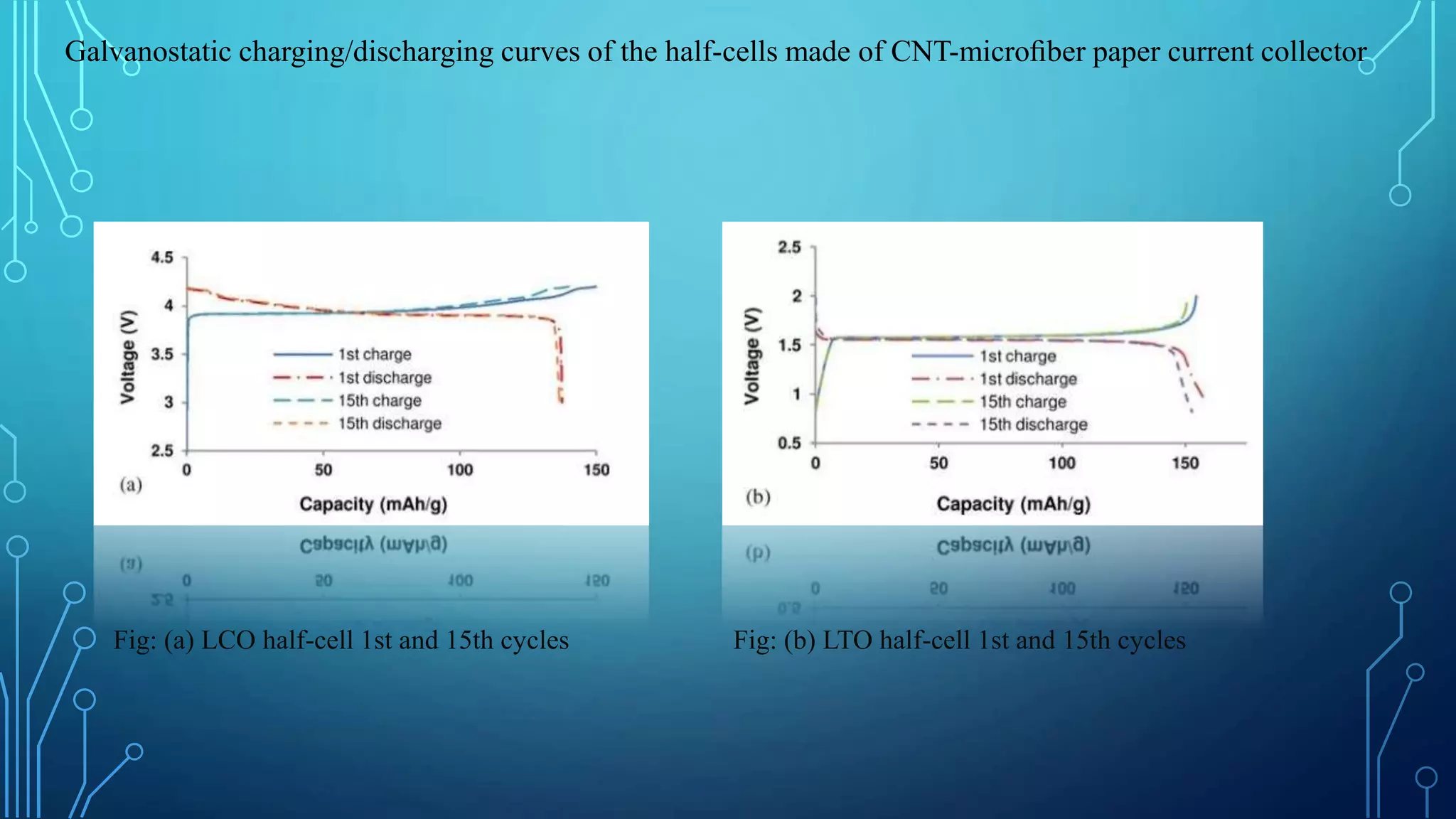
Galvanostatic charging/discharging curves of the half-cells made of CNT-microfiber paper current collector
Fig: (a) LCO half-cell 1st and 15th cycles Fig: (b) LTO half-cell 1st and 15th cycles
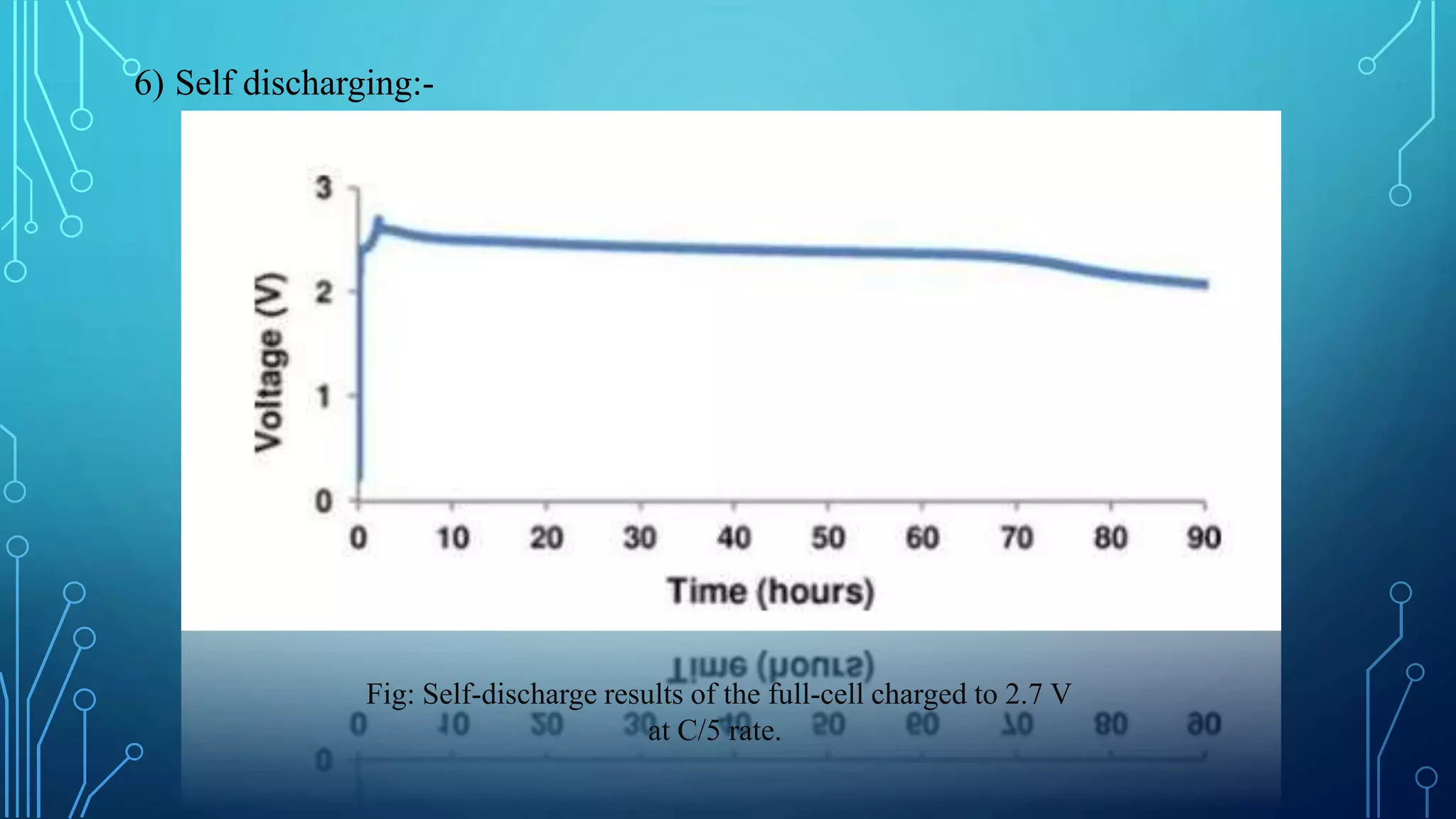
Fig: Self-discharge results of the full-cell charged to 2.7 V
at C/5 rate.
6) Self discharging:-
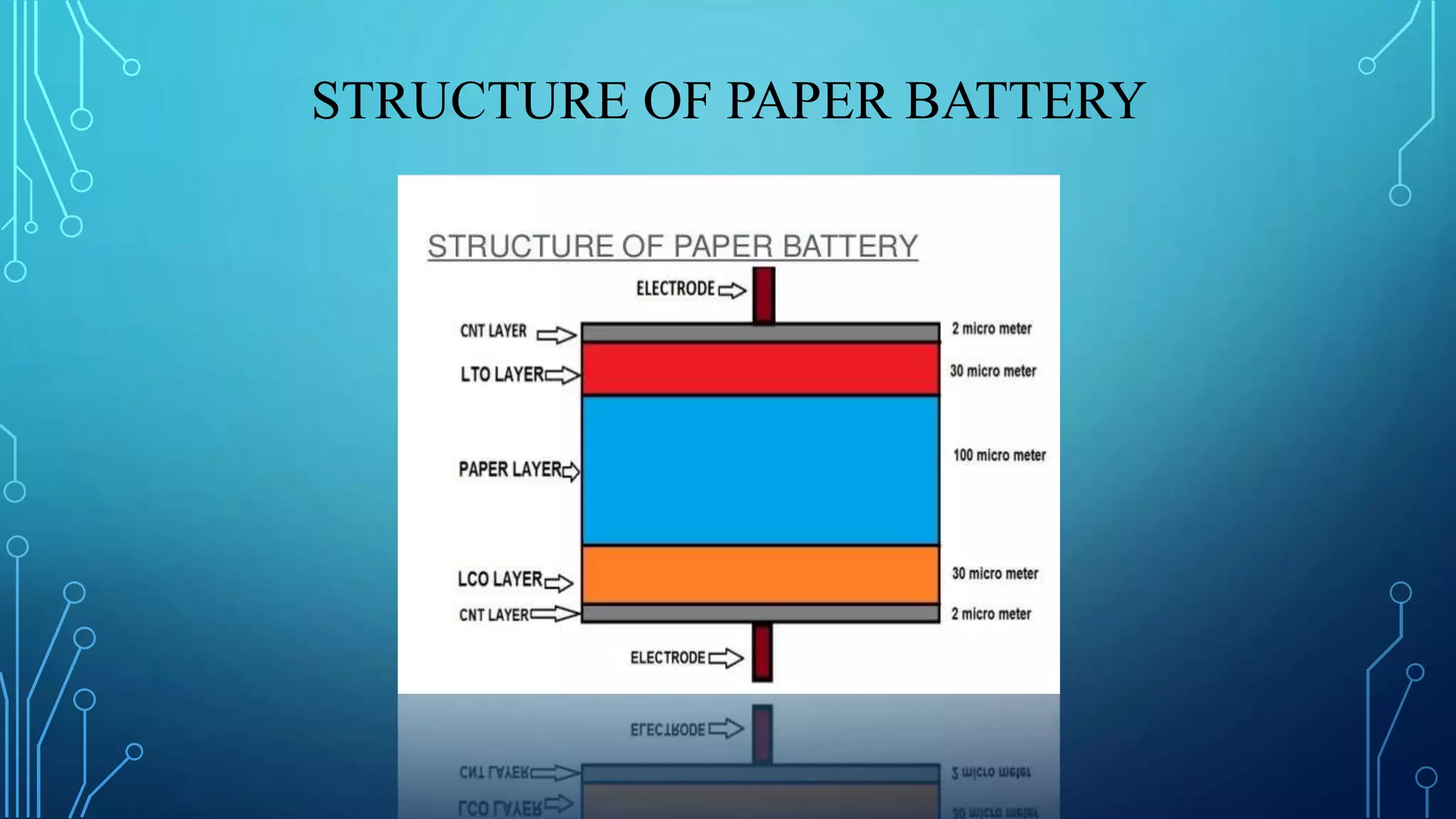
STRUCTURE OF PAPER BATTERY
ADVANTAGES
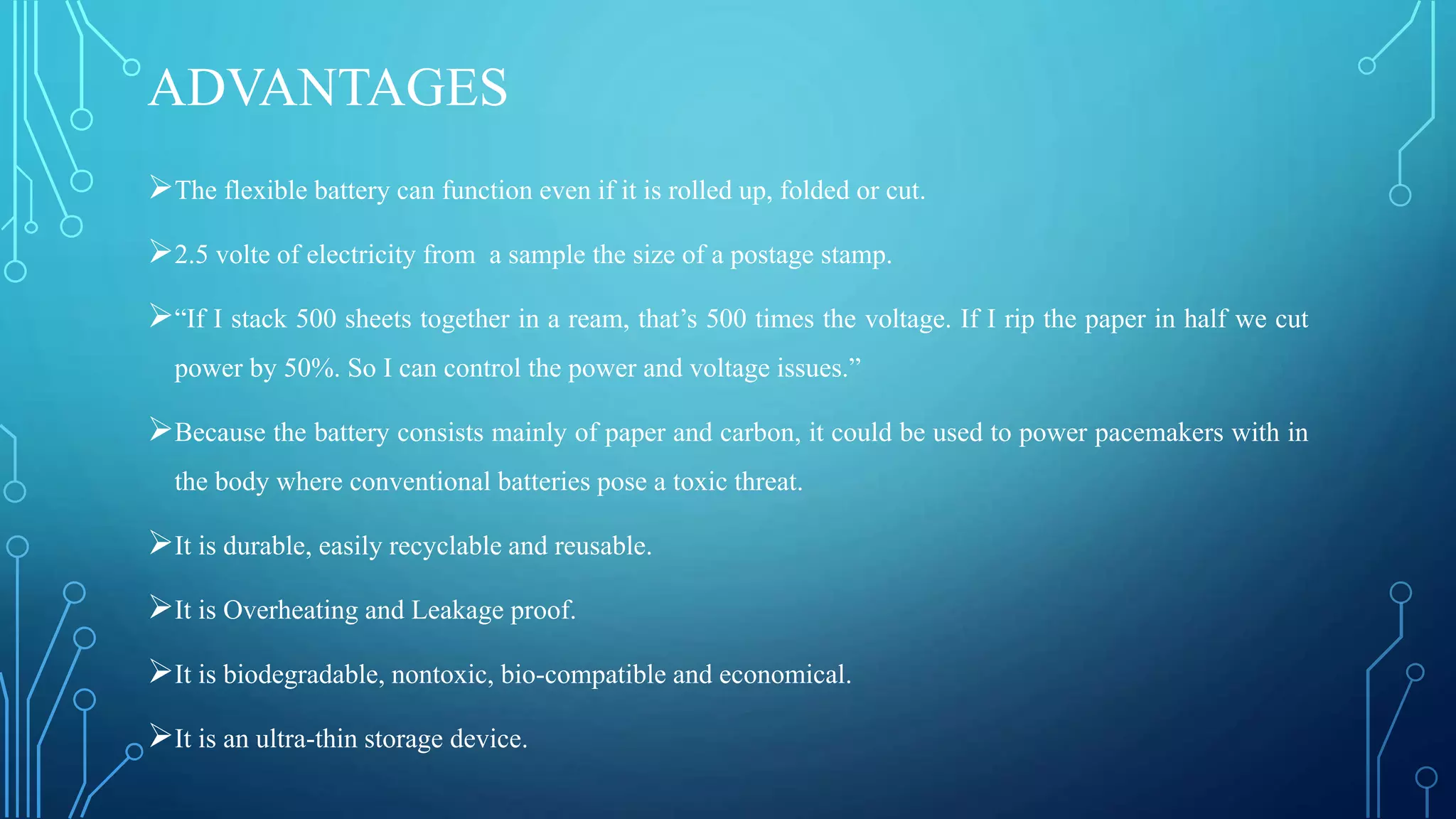
The flexible battery can function even if it is rolled up, folded or cut.
2.5 volte of electricity from a sample the size of a postage stamp.
“If I stack 500 sheets together in a ream, that’s 500 times the voltage. If I rip the paper in half we cut
power by 50%. So I can control the power and voltage issues.”
Because the battery consists mainly of paper and carbon, it could be used to power pacemakers with in
the body where conventional batteries pose a toxic threat.
It is durable, easily recyclable and reusable.
It is Overheating and Leakage proof.
It is biodegradable, nontoxic, bio-compatible and economical.
It is an ultra-thin storage device.
PAPER BATTER OFFERS FUTURE POWER
The black piece of paper can power a small light.
Flexible paper batteries could meet the energy demands of the next generation of gadgets.
The ambition is to produce reams of paper that could one day power a car.
The paper battery was a glimpse into the future of power.
These are the power source to next generation electronic devices, medical devices, pace
makers, hybrid vehicles, etc
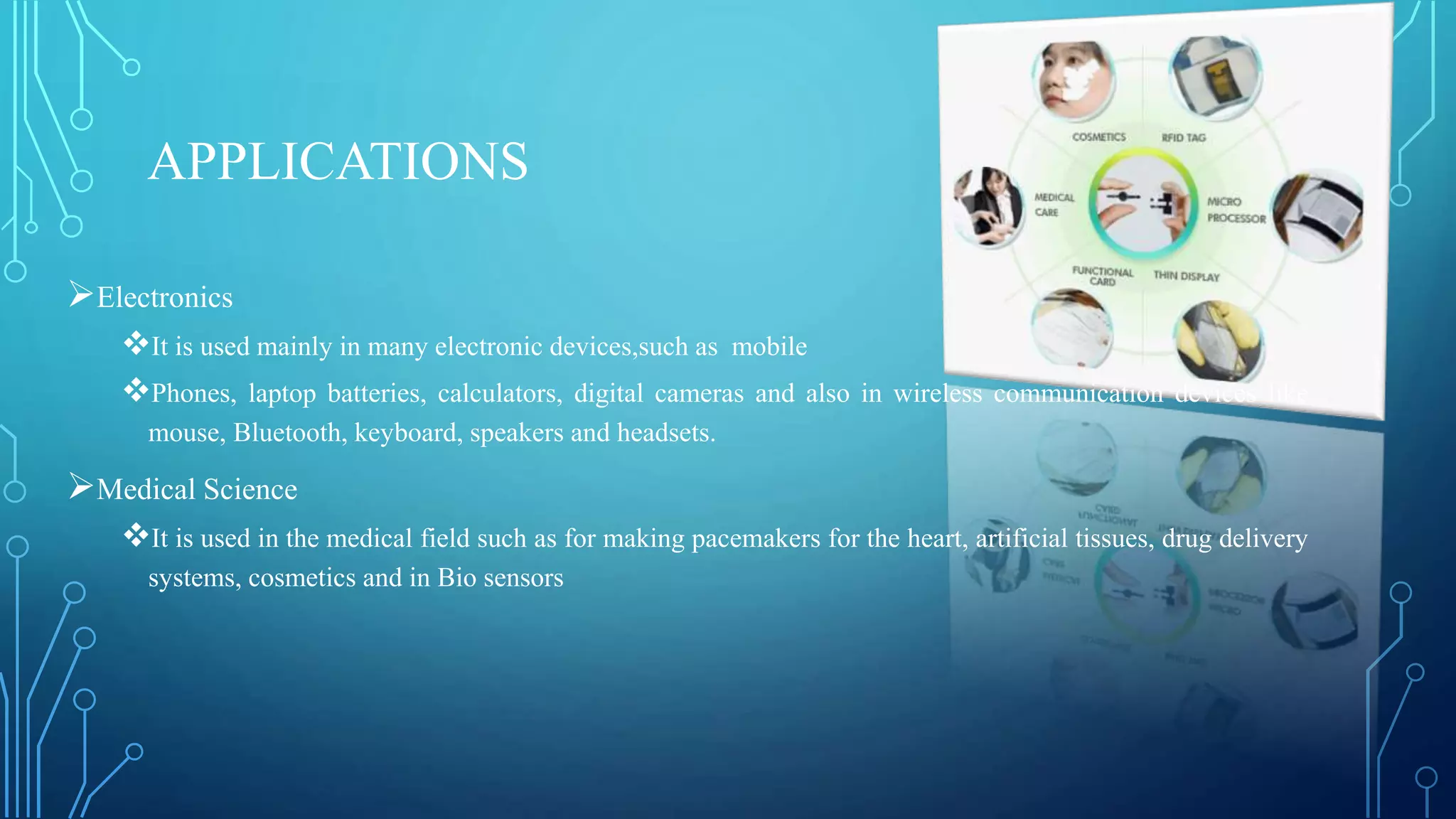
APPLICATIONS
Electronics
It is used mainly in many electronic devices,such as mobile
Phones, laptop batteries, calculators, digital cameras and also in wireless communication devices like
mouse, Bluetooth, keyboard, speakers and headsets.
Medical Science
It is used in the medical field such as for making pacemakers for the heart, artificial tissues, drug delivery
systems, cosmetics and in Bio sensors
 Automobiles and aircraft
 It is used in automobiles and aircraft such as in light weight, guided missiles,
hybrid car batteries, long air flights and in satellite programs for powering
electronic devices.
 This is all about the paper battery with its working principles and applications.
These batteries have the potential adaptability to power the next generation
electronic appliances, medical devices and hybrid vehicles. So, these batteries
could solve all the problems associated with conventional electrical energy
storage devices.
Continued:-
CONCLUSION
Lithium-ion batteries with CNT-microfiber paper-based current collectors have been developed.
The capacities are comparable with traditional batteries.
It has a wide range of electronics applications as they provide flexibility, lightweight, and high capacity
features.
REFERENCE
• [1] L. Hu, J. W. Choi, Y. Yang, S. Jeong, F. La Mantia, F. Cui, and Y. Cui, “Highly conductive paper for
energy-storage devices,” Proc. Nat. Academy Sci., vol. 106, pp. 21490–21494, 2009.
• [2] L.Hu,H.Wu,F. LaMantia,Y.Yang,andY.Cui,“Thin,flexiblesecondary Li-ion paper batteries,” ACS
Nano, vol. 4, pp. 5843–5848, 2010.
• [3]S.Stewart,P.Albertus,V.Srinivasan,I.Plitz,N.Pereira,G.Amatucci,and J.Newman,“Optimizing the
performance of lithium titanate spinel paired with activated carbon or iron phosphate,” J. Electrochem.
Soc., vol. 155, pp. A253–A261, 2008.
• [4] L. Hu, D. S. Hecht, and G. Gruner, “Percolation in transparent and conducting carbon nanotube
networks,” Nano Lett., vol. 4, pp. 2513–2517, 2004.
• [5] R. S. Morris, B. G. Dixon, T. Gennett, R. Raffaelle, and M. J. Heben, “High-energy, rechargeable
Li-ion battery based on carbon nanotube technology,” J. Power Sources, vol. 138, pp. 277–280, 2004.
[6] http://ieeexplore.ieee.org/document/6481448/
[7] https://www.scientificamerican.com/article/carbon-nanotubes-turn-off/
[8] https://electrosome.com/paper-battery/
[9] https://www.edgefx.in/paper-battery-working-and-construction/
[10] T. Takeuchi, T. Kyuna, H. Morimoto, and S. Tobishima, “Influence of surface modification of LiCoO2
by organic compounds on electrochemical and thermal properties of Li/LiCoO2 rechargeable cells,” J.
Power Sources, vol. 196, pp. 2790–2801, Nov. 2010.
THANK
YOU

Paper based Lithium-ion batteries using CNT coated wood microfibers

  • 1.
    MICRO BATTERIES GUIDE: Miss.ASWATHYE J ASST PROFESSOR DONE BY ANSHAD M JLANEEE008
  • 2.
    ABSTRACT Lithium-ion batteries usingflexible paper-based current collectors. Current collectors are wooden microfibers coated with Carbon Nanotubes. Flexibility, low cost, low material consumption, environmental friendly. Power output can be desired voltage
  • 3.
    INTRODUCTION  Lithium ionbatteries are widely used due t their high energy densities compared to their size.  These batteries are key components in portable electronics due to their high power and energy density also in long life cycle Lead acid NiMH NiNaCl Lithium-ion Nominal cell voltage (V) 2 1.2 2.58 2.5/3.3/3.6-3.7 Specific Energy (Wh/Kg) 30-45 30-80 90-100 90-220 Energy Density (Wh/L) 60-75 140-300 160 280-400 Spefic Power (W/Kg) 180 250-1000 150 600-3400 Cycle Life 500-800 500-1000 1000 1000-8000 Self-discharging (%/month) 2-4 20-30 0 2-5 Temperature range (˚C) -20-60 -20-60 270-350 20-60 Costs Low Moderate Low High
  • 4.
    WHAT IS PAPERBATTERY? A paper battery is a form of paper battery and it is flexible and ultra thin storage. Carbon nanotubes with conventional sheets of celluloses-based paper. A micro battery act a high energy battery combining two components that are separate in traditional electronics.
  • 5.
    CARBON NANO TUBES Carbonnanotube is main concept behind this battery Its also known as Bucky tubes are allotropes of carbon with cylindrical nanostructure. Allotropes are different modification of an element. CNTs exhibit extraordinary strength and unique electrical properties, and are efficient thermal conductors. Nanotubes tubes are member of fullerene structure family. A nanometer is one billion of a meter or about 10,000 times smaller than human hair. CNT are unique because the bonding between the atoms is very strong.
  • 6.
    PROBLEM REGARDING OTHERBATTERIES Safety issues and explosive reaction. Low capacity and conductivity. High fabrication cost. Battery flexibility, size and thickness. Shorter life cycle. Problem regarding the adherence of electrode materials to the surface.
  • 7.
    FABRICATION OF CNTBATTERY 1) Layer by layer coating of wood microfibers with CNT:-  The Kraft wood pulp was beaten, bleached and press dried for microfibers, (less than 1% lignin & 99% cellulose).  These hollow microfibers are 2-3mm in length and 35-50µm in diameter. An aqueous dispersion of poly(3,4-ethylenedioxythiophene) and poly(styrenesulfonate) {PEDOT- PSS} conductive polymer(3mg/mL) and CNT(25mg/mL) was used as the anionic component. Poly(ethyleneimine) {PEI}(3mg/mL) was used as the cationic component. Coating of microfibers was done with bilayers of PEI/CNT in alternate with one bilayer of PEI/PEDOT-PSS. Then the wood microfibers were assembled into flexible paper sheets.
  • 8.
    2) Battery fabrication:- Paste of electrodes were prepared using:- a. 85% (wt) of the active materials (Li4Ti5Ol 2 or LiCoO2) b. 10% (wt) Super P lithium (obtained from Timcal, conductive material made from carbon black of 40nm). c. 5% (wt) Polyvinylidene fluoride (PVDF).  The electrode materials were then coated on the current collectors by a spray coating method followed by vacuum-drying for 12h
  • 9.
    3) Assembly process The batter configuration was assembled in an Argon filled glove box as shown below  Then it is soaked in lithium phosphorous fluoride (LiPF6), pressed and left undisturbed for 24h. Fig: Schematic illustration of the layers of the fabricated lithium-ion battery
  • 10.
    RESULT AND DISCUSION:- Thesetests were carried out in Arbin BT2000 battery testing system:- 1) Resistivity:- Fig: Resistivity of the wood microfibers measured after coating each deposited bilayer of polymer or CNT. The error bars indicate the minimum and maximum of the measured resistivity with the data points showing the mean values.
  • 11.
    2) Coating ofmicrofibers:- Fig: SEM images of (a) uncoated and (b) CNT-coated microfibers.
  • 12.
    3) Adherence tosubstrate:- Fig: SEM images showing the cross section of LCO and LTO layers on CNT-microfiber paper current collectors.
  • 13.
    4) Mechanical Flexiblity:- Fig:SEM images of samples bent to a 300◦ angle for 20 times a) LCO on CNT-coated microfiber current collector b) LTO on CNT-coated microfiber current collector c) LCO on Aluminium foil, and d) LTO on copper foil.
  • 14.
    5) Half celland full cell charging capacities:- Type of battery Charging Capacity Mass loading Cu & Al current collectors LCO- 149mAh/g LTO-156mAh/g Anode (LTO)- 8.8mg/cm2 Cathode (LCO)- 9.2mg/cm2 CNT Microfibers current collectors LCO-150mAh/g LTO-158mAh/g 10.1µg/cm2  The above result shows that the cells are less stable with less than 1% drop from1st to 15th cycle  The columbic efficiency = 84% (1), 96% (2), stays at 96%-98% thereafter.
  • 15.
    Galvanostatic charging/discharging curvesof the half-cells made of CNT-microfiber paper current collector Fig: (a) LCO half-cell 1st and 15th cycles Fig: (b) LTO half-cell 1st and 15th cycles
  • 16.
    Fig: Self-discharge resultsof the full-cell charged to 2.7 V at C/5 rate. 6) Self discharging:-
  • 17.
  • 18.
    ADVANTAGES The flexible batterycan function even if it is rolled up, folded or cut. 2.5 volte of electricity from a sample the size of a postage stamp. “If I stack 500 sheets together in a ream, that’s 500 times the voltage. If I rip the paper in half we cut power by 50%. So I can control the power and voltage issues.” Because the battery consists mainly of paper and carbon, it could be used to power pacemakers with in the body where conventional batteries pose a toxic threat. It is durable, easily recyclable and reusable. It is Overheating and Leakage proof. It is biodegradable, nontoxic, bio-compatible and economical. It is an ultra-thin storage device.
  • 19.
    PAPER BATTER OFFERSFUTURE POWER The black piece of paper can power a small light. Flexible paper batteries could meet the energy demands of the next generation of gadgets. The ambition is to produce reams of paper that could one day power a car. The paper battery was a glimpse into the future of power. These are the power source to next generation electronic devices, medical devices, pace makers, hybrid vehicles, etc
  • 20.
    APPLICATIONS Electronics It is usedmainly in many electronic devices,such as mobile Phones, laptop batteries, calculators, digital cameras and also in wireless communication devices like mouse, Bluetooth, keyboard, speakers and headsets. Medical Science It is used in the medical field such as for making pacemakers for the heart, artificial tissues, drug delivery systems, cosmetics and in Bio sensors
  • 21.
     Automobiles andaircraft  It is used in automobiles and aircraft such as in light weight, guided missiles, hybrid car batteries, long air flights and in satellite programs for powering electronic devices.  This is all about the paper battery with its working principles and applications. These batteries have the potential adaptability to power the next generation electronic appliances, medical devices and hybrid vehicles. So, these batteries could solve all the problems associated with conventional electrical energy storage devices. Continued:-
  • 22.
    CONCLUSION Lithium-ion batteries withCNT-microfiber paper-based current collectors have been developed. The capacities are comparable with traditional batteries. It has a wide range of electronics applications as they provide flexibility, lightweight, and high capacity features.
  • 23.
    REFERENCE • [1] L.Hu, J. W. Choi, Y. Yang, S. Jeong, F. La Mantia, F. Cui, and Y. Cui, “Highly conductive paper for energy-storage devices,” Proc. Nat. Academy Sci., vol. 106, pp. 21490–21494, 2009. • [2] L.Hu,H.Wu,F. LaMantia,Y.Yang,andY.Cui,“Thin,flexiblesecondary Li-ion paper batteries,” ACS Nano, vol. 4, pp. 5843–5848, 2010. • [3]S.Stewart,P.Albertus,V.Srinivasan,I.Plitz,N.Pereira,G.Amatucci,and J.Newman,“Optimizing the performance of lithium titanate spinel paired with activated carbon or iron phosphate,” J. Electrochem. Soc., vol. 155, pp. A253–A261, 2008. • [4] L. Hu, D. S. Hecht, and G. Gruner, “Percolation in transparent and conducting carbon nanotube networks,” Nano Lett., vol. 4, pp. 2513–2517, 2004. • [5] R. S. Morris, B. G. Dixon, T. Gennett, R. Raffaelle, and M. J. Heben, “High-energy, rechargeable Li-ion battery based on carbon nanotube technology,” J. Power Sources, vol. 138, pp. 277–280, 2004.
  • 24.
    [6] http://ieeexplore.ieee.org/document/6481448/ [7] https://www.scientificamerican.com/article/carbon-nanotubes-turn-off/ [8]https://electrosome.com/paper-battery/ [9] https://www.edgefx.in/paper-battery-working-and-construction/ [10] T. Takeuchi, T. Kyuna, H. Morimoto, and S. Tobishima, “Influence of surface modification of LiCoO2 by organic compounds on electrochemical and thermal properties of Li/LiCoO2 rechargeable cells,” J. Power Sources, vol. 196, pp. 2790–2801, Nov. 2010.
  • 25.