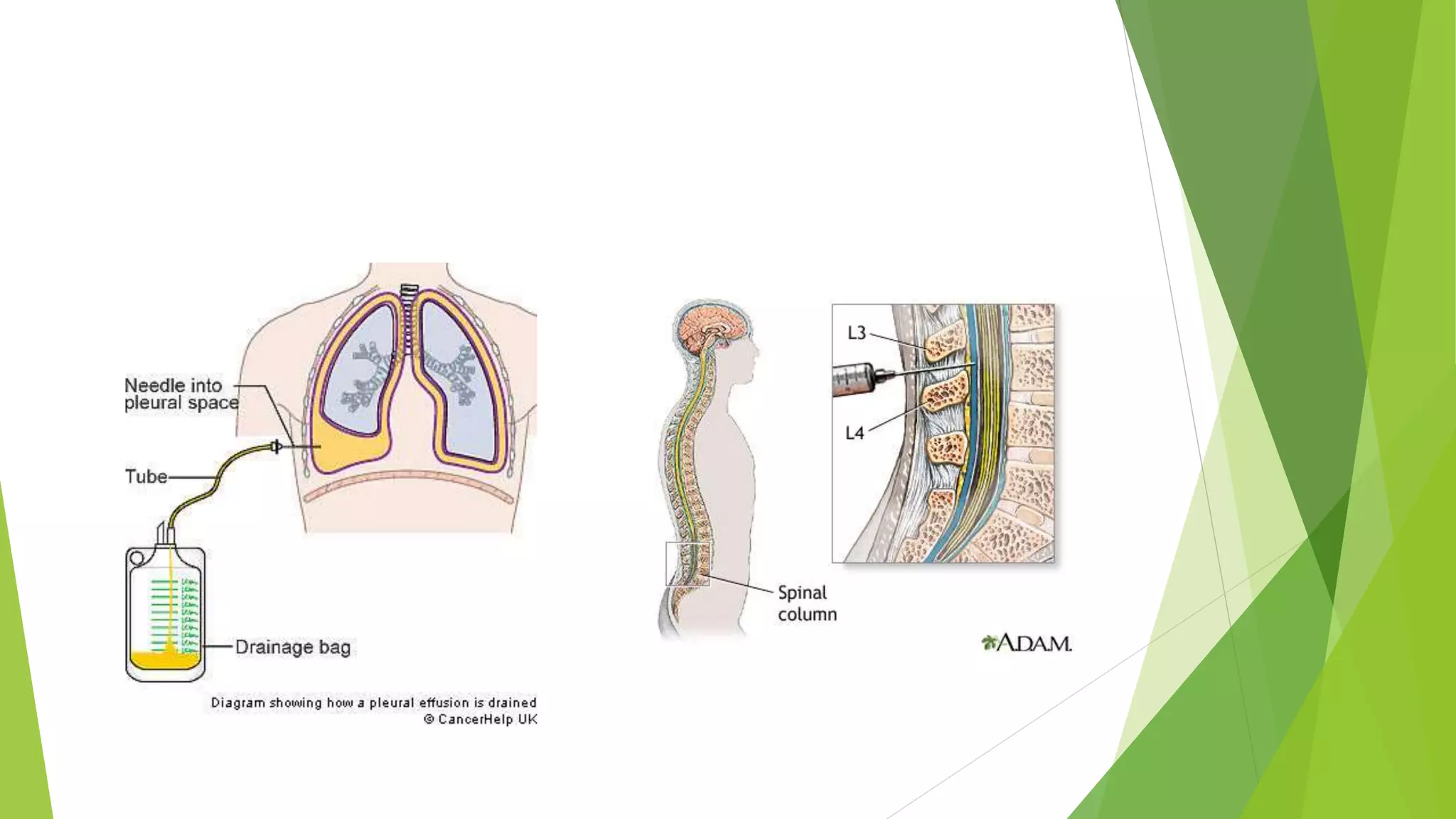
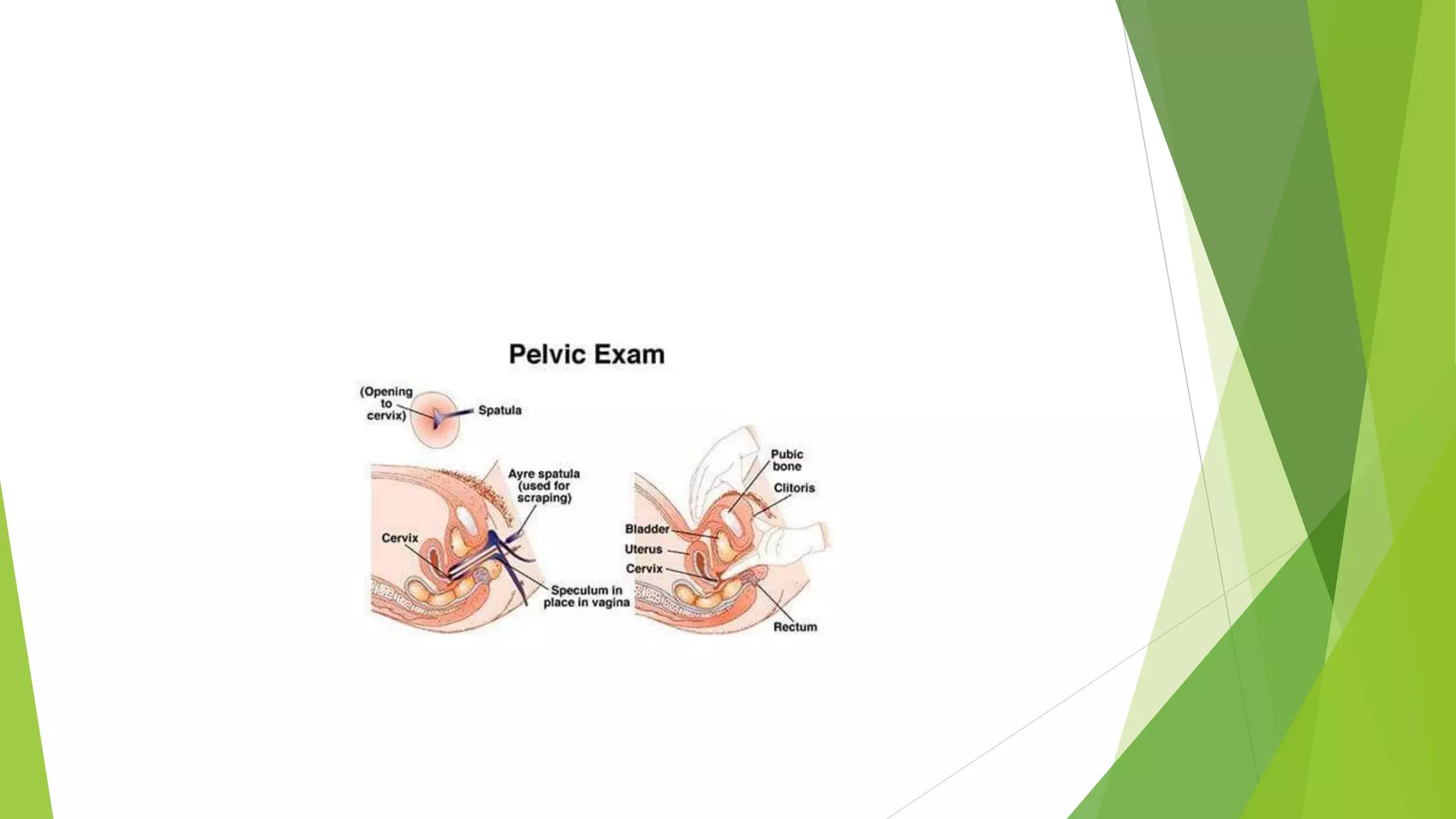
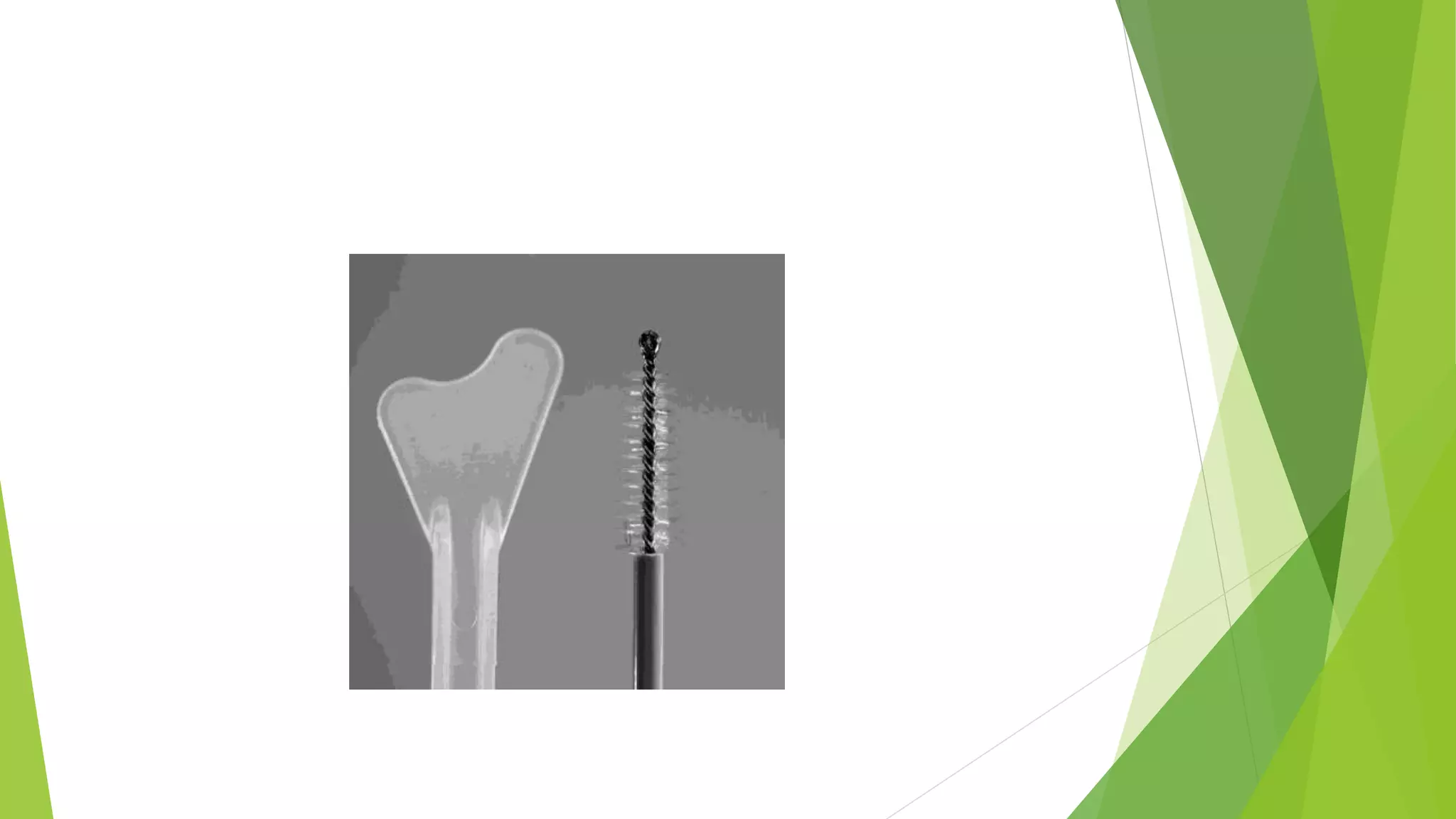
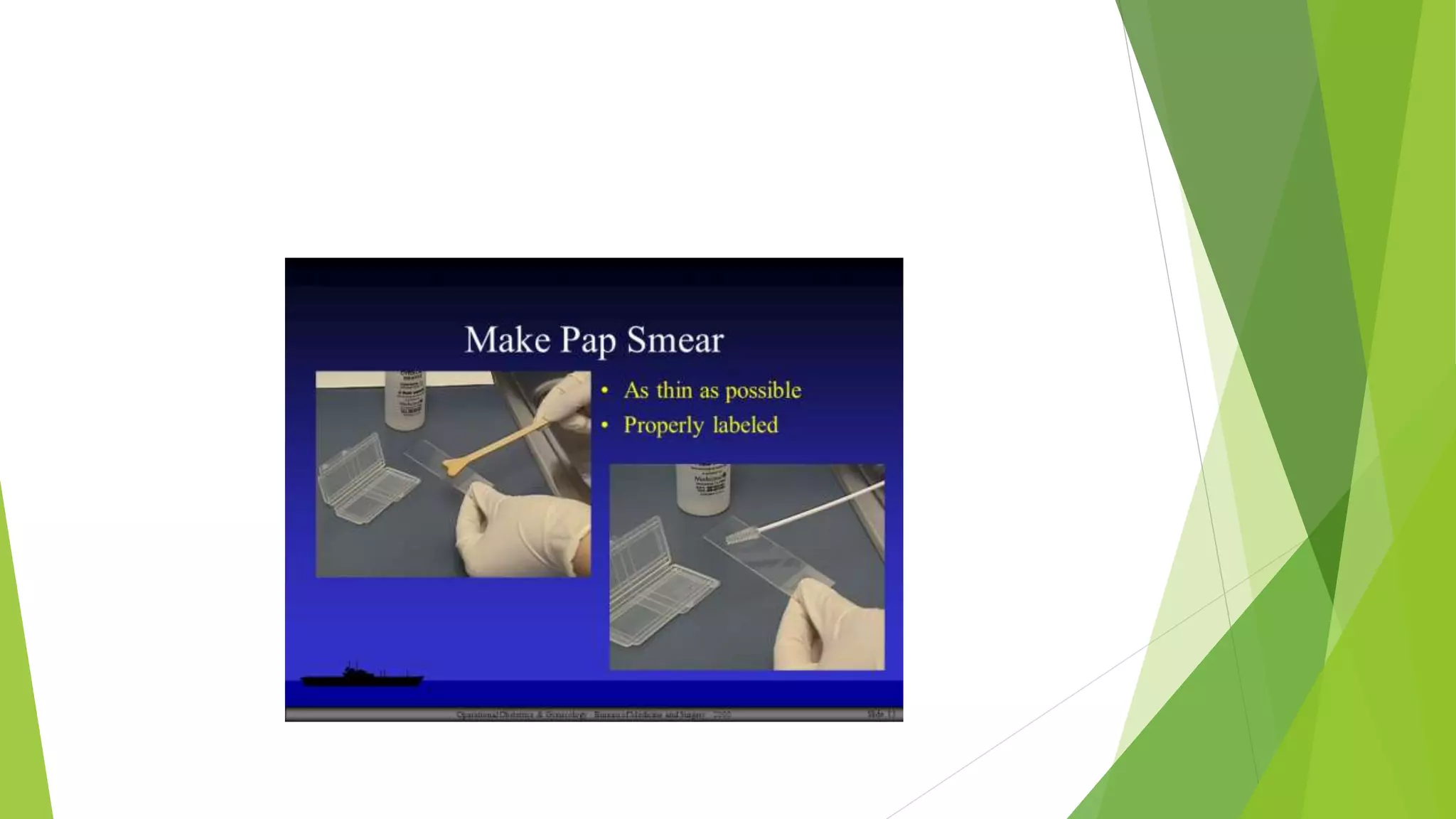
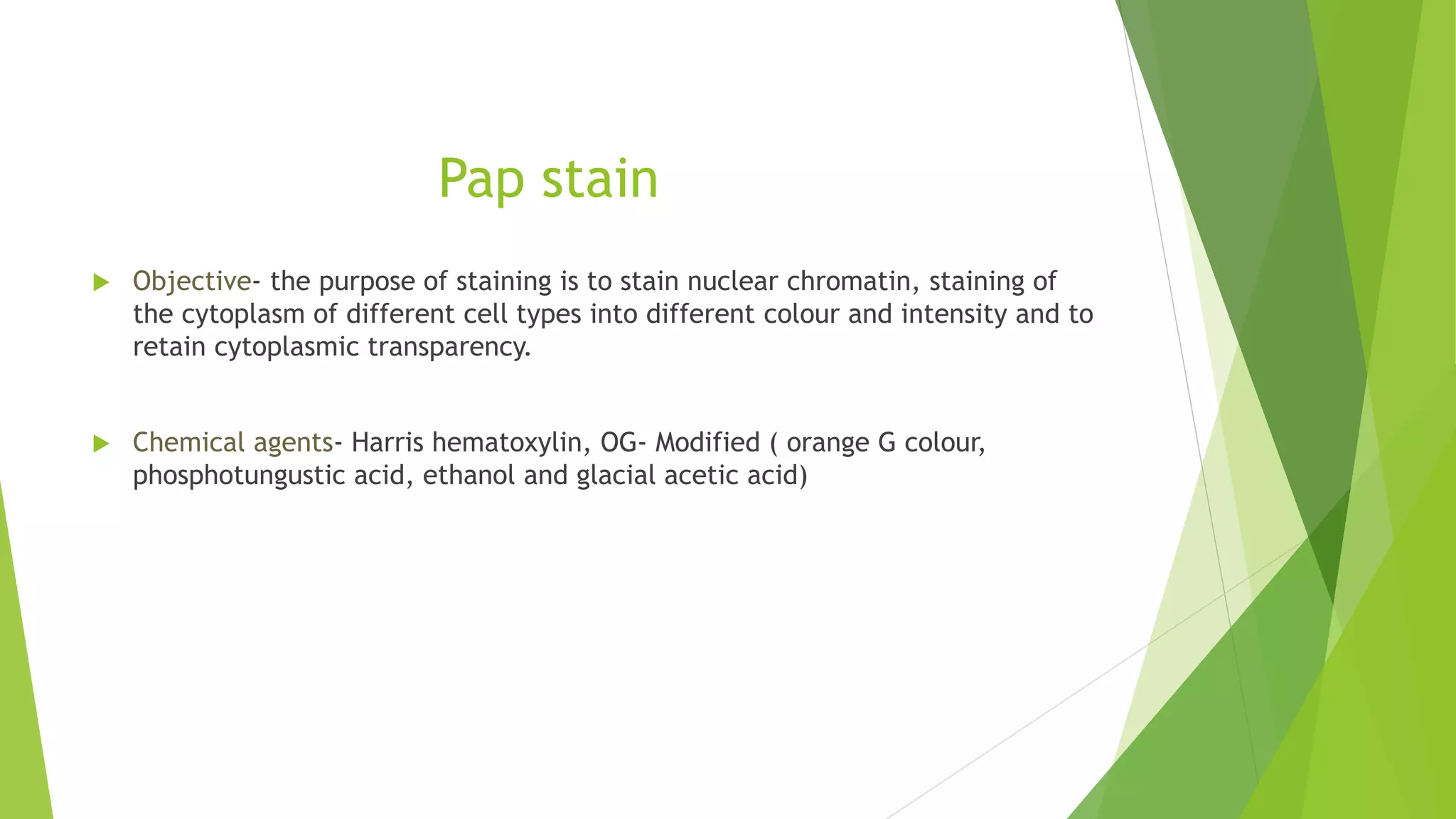
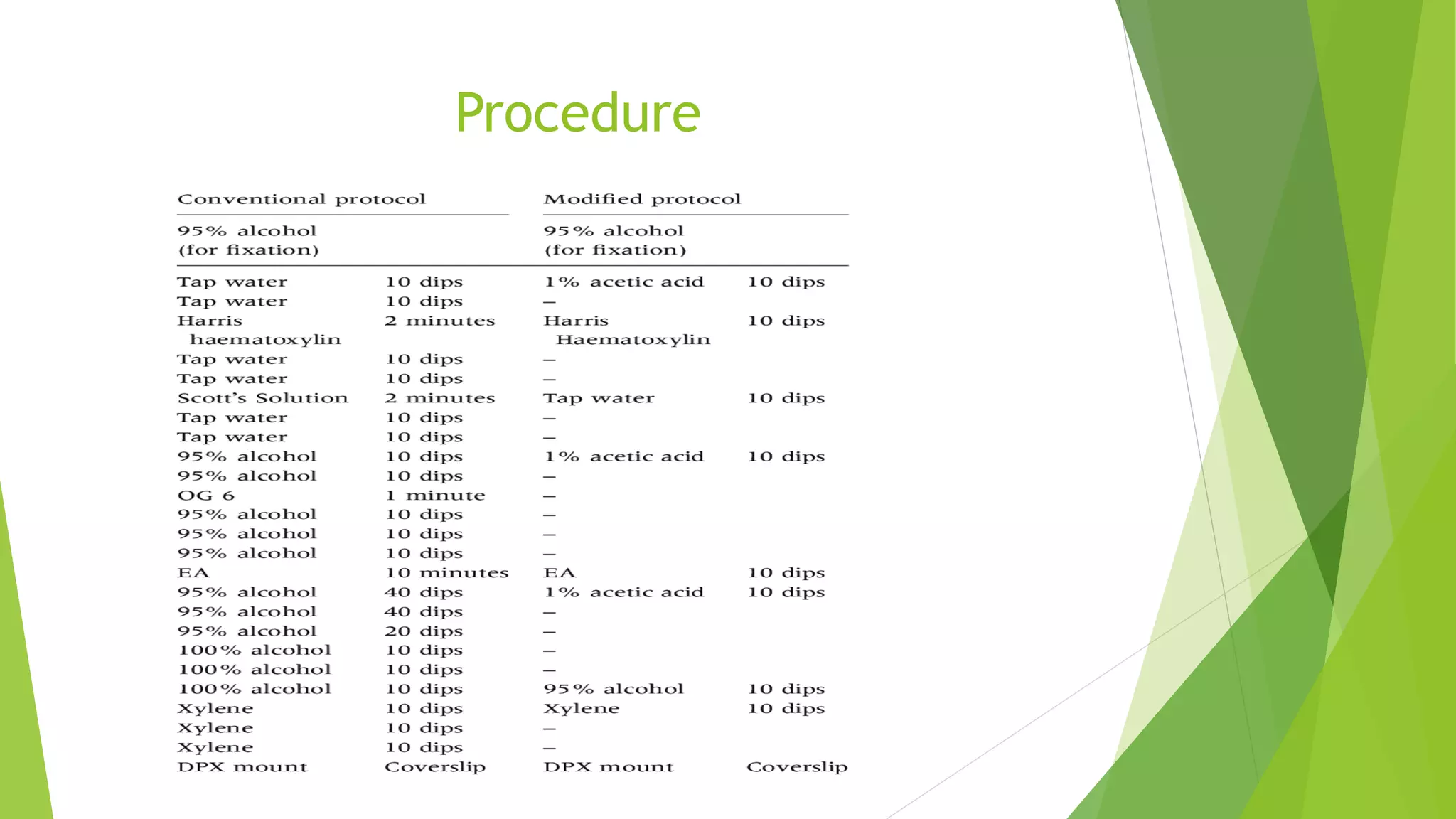
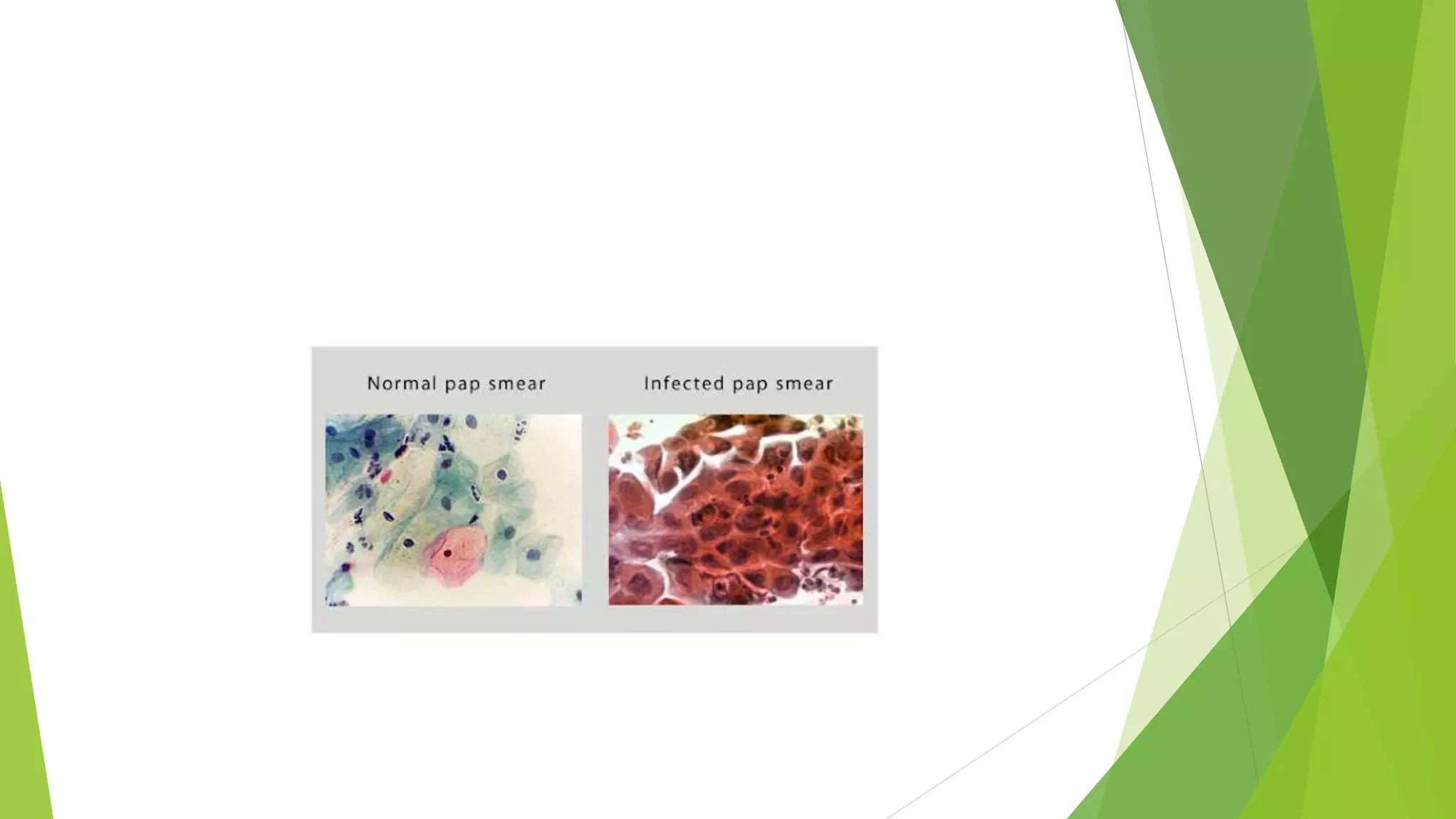
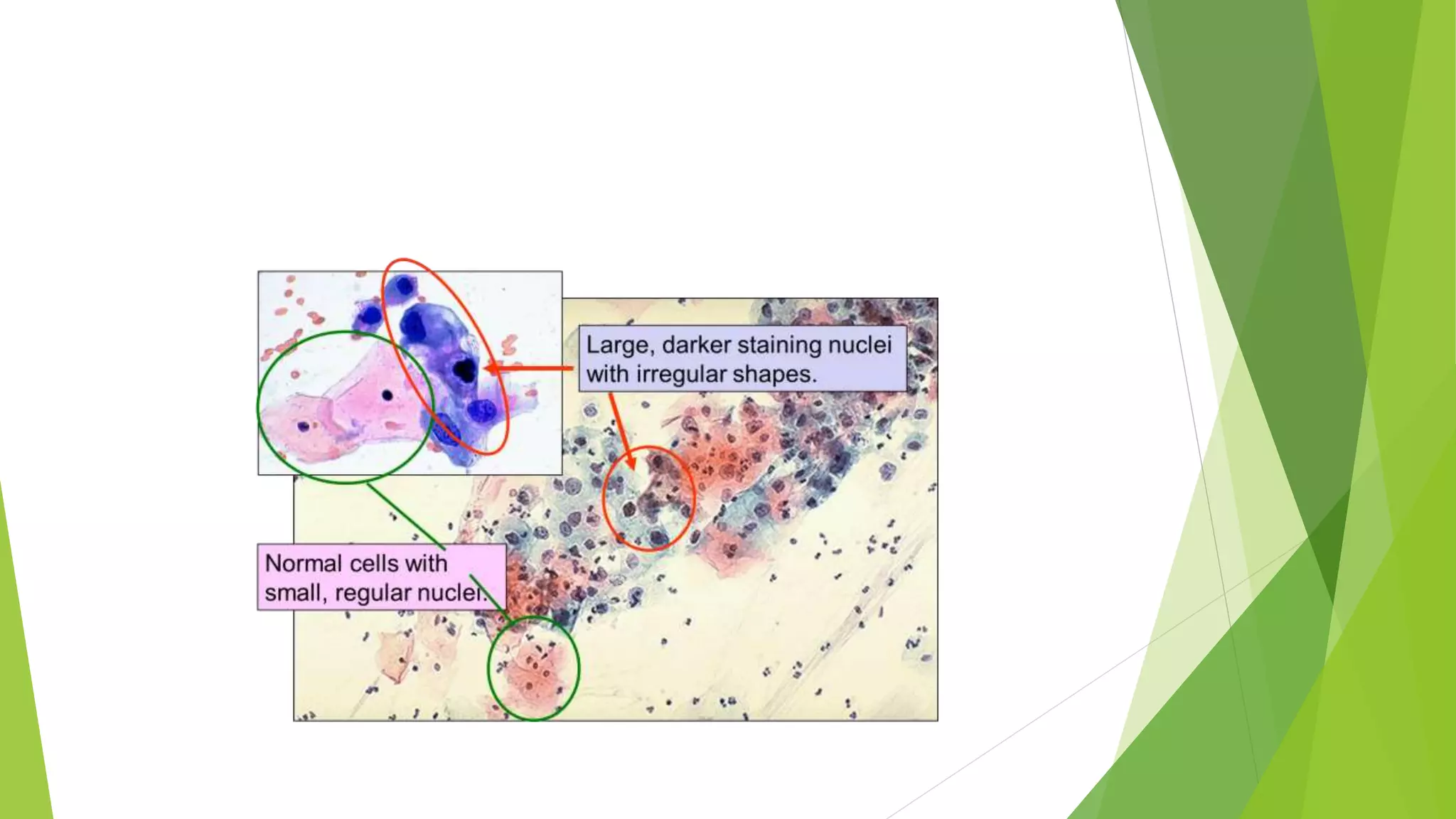
Exfoliative cytology examines cells that have been shed from epithelial surfaces under a microscope. It can detect malignant or precancerous lesions, assess female hormonal status and detect infections. Specimens include cervical smears, body fluids, nipple discharge, bronchial brushings, sputum, gastric lavage and urine. Proper collection and transport methods are outlined for various specimen types. Cervical cancer screening via cervical smear is important for early detection since most cases are diagnosed at late stages when treatment is difficult. Fixation and Pap staining procedures are described to preserve cell structure and differentiate cell types under the microscope.