 Respiratory obstruction
 Stridor
 Weak cry
 Dyspnea
 Tachypnea
 Aspiration
 Cyanosis
 Sudden death
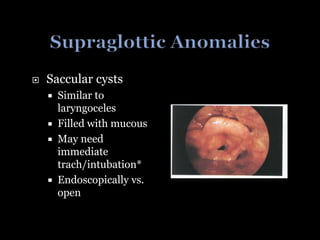
 Saccular cysts
 Similar to
laryngoceles
 Filled with mucous
 May need
immediate
trach/intubation*
 Endoscopically vs.
open
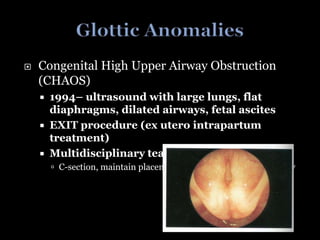
 Congenital High Upper Airway Obstruction
(CHAOS)
 1994– ultrasound with large lungs, flat
diaphragms, dilated airways, fetal ascites
 EXIT procedure (ex utero intrapartum
treatment)
 Multidisciplinary team
 C-section, maintain placental blood flow, quick tracheotomy
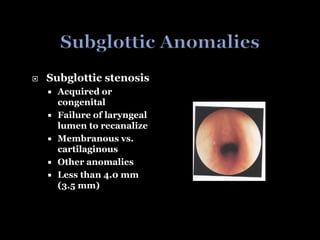
 Subglottic stenosis
 Acquired or
congenital
 Failure of laryngeal
lumen to recanalize
 Membranous vs.
cartilaginous
 Other anomalies
 Less than 4.0 mm
(3.5 mm)
 Subglottic stenosis
 Respiratory distress
at delivery to
recurrent croup
 Usually not at birth*
 History and PE
(biphasic stridor)
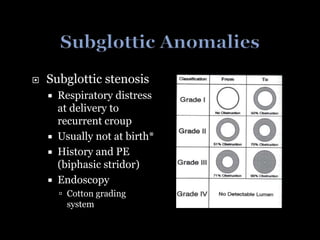
 Endoscopy
 Cotton grading
system
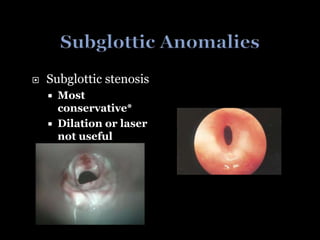
 Subglottic stenosis
 Most
conservative*
 Dilation or laser
not useful
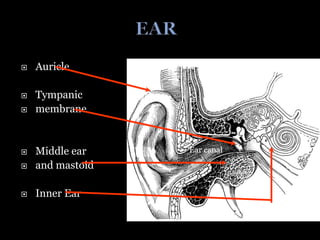
 Auricle
 Tympanic
 membrane
 Middle ear
 and mastoid
 Inner Ear
Ear canal
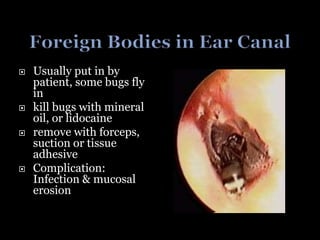
 Usually put in by
patient, some bugs fly
in
 kill bugs with mineral
oil, or lidocaine
 remove with forceps,
suction or tissue
adhesive
 Complication:
Infection & mucosal
erosion
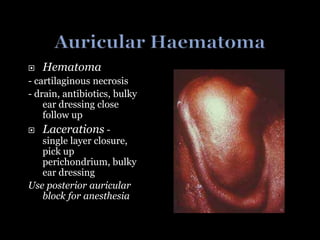
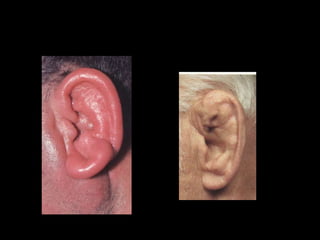
 Hematoma
- cartilaginous necrosis
- drain, antibiotics, bulky
ear dressing close
follow up
 Lacerations -
single layer closure,
pick up
perichondrium, bulky
ear dressing
Use posterior auricular
block for anesthesia
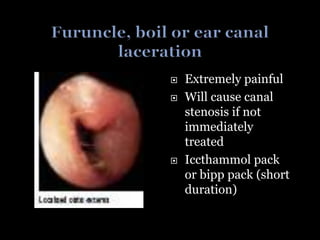
 Extremely painful
 Will cause canal
stenosis if not
immediately
treated
 Iccthammol pack
or bipp pack (short
duration)
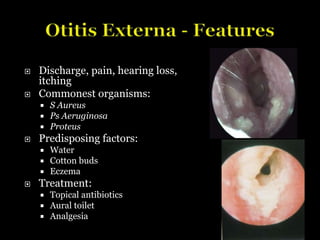
 Discharge, pain, hearing loss,
itching
 Commonest organisms:
 S Aureus
 Ps Aeruginosa
 Proteus
 Predisposing factors:
 Water
 Cotton buds
 Eczema
 Treatment:
 Topical antibiotics
 Aural toilet
 Analgesia
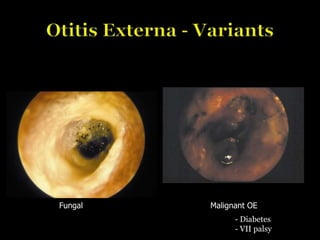
Fungal Malignant OE
- Diabetes
- VII palsy
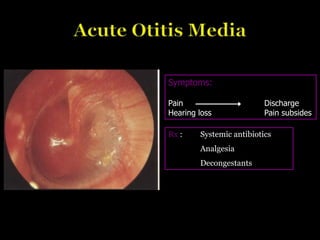
Rx : Systemic antibiotics
Analgesia
Decongestants
Symptoms:
Pain Discharge
Hearing loss Pain subsides
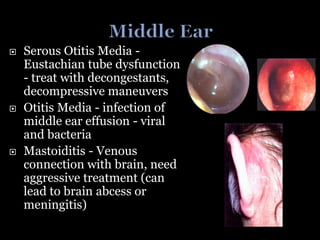
 Serous Otitis Media -
Eustachian tube dysfunction
- treat with decongestants,
decompressive maneuvers
 Otitis Media - infection of
middle ear effusion - viral
and bacteria
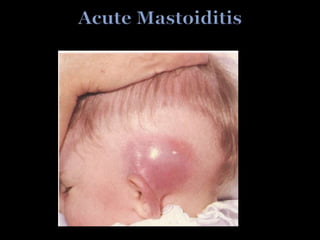
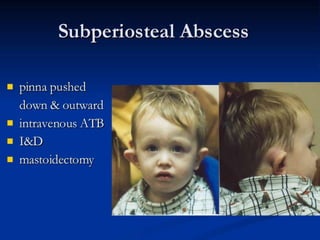
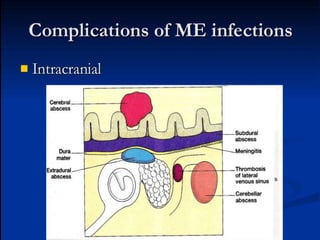
 Mastoiditis - Venous
connection with brain, need
aggressive treatment (can
lead to brain abcess or
meningitis)
Do not use forceps for round
objects
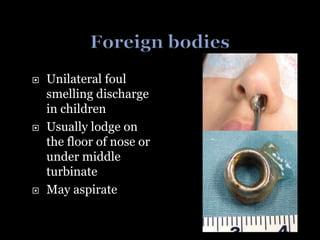
 Unilateral foul
smelling discharge
in children
 Usually lodge on
the floor of nose or
under middle
turbinate
 May aspirate
SeptumIT
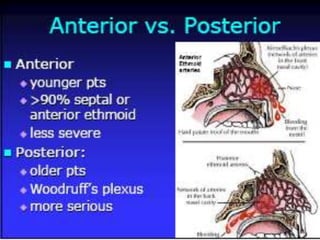
 90% (Little’s Area) Kisselbach’s plexus - usually
children, young adults
Etiologies
 Trauma, epistaxis digitorum
 Winter Syndrome, Allergies
 Irritants - cocaine, sprays
 Pregnancy
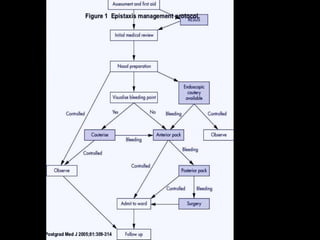
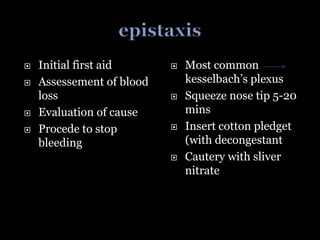
 Most common
kesselbach’s plexus
 Squeeze nose tip 5-20
mins
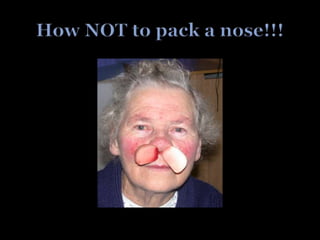
 Insert cotton pledget
(with decongestant
 Cautery with sliver
nitrate
 Initial first aid
 Assessement of blood
loss
 Evaluation of cause
 Procede to stop
bleeding
 severe bleeding
 hypoxia, hypercarbia
 sinusitis, otitis media
 necrosis of the columella or nasal ala
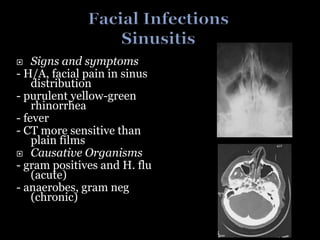
 Signs and symptoms
- H/A, facial pain in sinus
distribution
- purulent yellow-green
rhinorrhea
- fever
- CT more sensitive than
plain films
 Causative Organisms
- gram positives and H. flu
(acute)
- anaerobes, gram neg
(chronic)
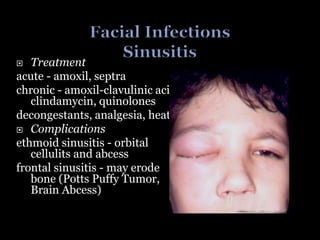
 Treatment
acute - amoxil, septra
chronic - amoxil-clavulinic acid,
clindamycin, quinolones
decongestants, analgesia, heat
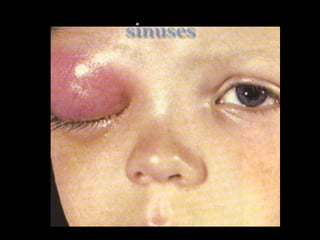
 Complications
ethmoid sinusitis - orbital
cellulits and abcess
frontal sinusitis - may erode
bone (Potts Puffy Tumor,
Brain Abcess)
 Most common
strept and staph,
 Rarely H.Flu
 Can progress
rapidly
 Admit broad
spectrum
antibiotics
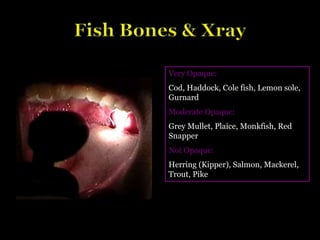
Very Opaque:
Cod, Haddock, Cole fish, Lemon sole,
Gurnard
Moderate Opaque:
Grey Mullet, Plaice, Monkfish, Red
Snapper
Not Opaque:
Herring (Kipper), Salmon, Mackerel,
Trout, Pike
 Irritants
-reflux, trauma, gases
 Viruses
- EBV, adenovirus
 Bacterial
-GABHS, mycoplasma, gonorrhea,
diptheria
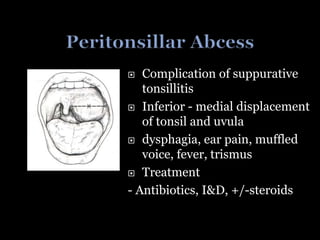
 Complication of suppurative
tonsillitis
 Inferior - medial displacement
of tonsil and uvula
 dysphagia, ear pain, muffled
voice, fever, trismus
 Treatment
- Antibiotics, I&D, +/-steroids
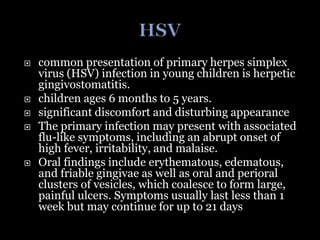
 common presentation of primary herpes simplex
virus (HSV) infection in young children is herpetic
gingivostomatitis.
 children ages 6 months to 5 years.
 significant discomfort and disturbing appearance
 The primary infection may present with associated
flu-like symptoms, including an abrupt onset of
high fever, irritability, and malaise.
 Oral findings include erythematous, edematous,
and friable gingivae as well as oral and perioral
clusters of vesicles, which coalesce to form large,
painful ulcers. Symptoms usually last less than 1
week but may continue for up to 21 days
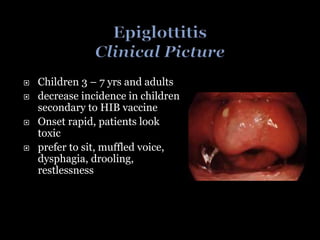
 Children 3 – 7 yrs and adults
 decrease incidence in children
secondary to HIB vaccine
 Onset rapid, patients look
toxic
 prefer to sit, muffled voice,
dysphagia, drooling,
restlessness
 Avoid agitation
 Direct visualization if patient allows
 soft tissue of neck
- thumb print, valecula sign
 Prepare for emergent airway, best achieved in a
controlled setting
 Unasyn, +/- steroids
Epiglottitis
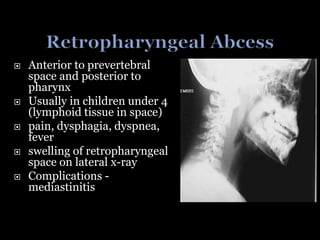
 Anterior to prevertebral
space and posterior to
pharynx
 Usually in children under 4
(lymphoid tissue in space)
 pain, dysphagia, dyspnea,
fever
 swelling of retropharyngeal
space on lateral x-ray
 Complications -
mediastinitis
 Aphonia - complete upper airway
 Stridor - incomplete upper airway
 Wheezing - incomplete lower airway
 Loss of breath sounds- complete lower airway
Paediatric ent emergencies

Paediatric ent emergencies

  • 2.
     Respiratory obstruction Stridor  Weak cry  Dyspnea  Tachypnea  Aspiration  Cyanosis  Sudden death
  • 4.
     Saccular cysts Similar to laryngoceles  Filled with mucous  May need immediate trach/intubation*  Endoscopically vs. open
  • 5.
     Congenital HighUpper Airway Obstruction (CHAOS)  1994– ultrasound with large lungs, flat diaphragms, dilated airways, fetal ascites  EXIT procedure (ex utero intrapartum treatment)  Multidisciplinary team  C-section, maintain placental blood flow, quick tracheotomy
  • 6.
     Subglottic stenosis Acquired or congenital  Failure of laryngeal lumen to recanalize  Membranous vs. cartilaginous  Other anomalies  Less than 4.0 mm (3.5 mm)
  • 7.
     Subglottic stenosis Respiratory distress at delivery to recurrent croup  Usually not at birth*  History and PE (biphasic stridor)  Endoscopy  Cotton grading system
  • 8.
     Subglottic stenosis Most conservative*  Dilation or laser not useful
  • 9.
     Auricle  Tympanic membrane  Middle ear  and mastoid  Inner Ear Ear canal
  • 10.
     Usually putin by patient, some bugs fly in  kill bugs with mineral oil, or lidocaine  remove with forceps, suction or tissue adhesive  Complication: Infection & mucosal erosion
  • 11.
     Hematoma - cartilaginousnecrosis - drain, antibiotics, bulky ear dressing close follow up  Lacerations - single layer closure, pick up perichondrium, bulky ear dressing Use posterior auricular block for anesthesia
  • 14.
     Extremely painful Will cause canal stenosis if not immediately treated  Iccthammol pack or bipp pack (short duration)
  • 15.
     Discharge, pain,hearing loss, itching  Commonest organisms:  S Aureus  Ps Aeruginosa  Proteus  Predisposing factors:  Water  Cotton buds  Eczema  Treatment:  Topical antibiotics  Aural toilet  Analgesia
  • 16.
    Fungal Malignant OE -Diabetes - VII palsy
  • 17.
    Rx : Systemicantibiotics Analgesia Decongestants Symptoms: Pain Discharge Hearing loss Pain subsides
  • 18.
     Serous OtitisMedia - Eustachian tube dysfunction - treat with decongestants, decompressive maneuvers  Otitis Media - infection of middle ear effusion - viral and bacteria  Mastoiditis - Venous connection with brain, need aggressive treatment (can lead to brain abcess or meningitis)
  • 23.
    Do not useforceps for round objects
  • 24.
     Unilateral foul smellingdischarge in children  Usually lodge on the floor of nose or under middle turbinate  May aspirate
  • 25.
  • 27.
     90% (Little’sArea) Kisselbach’s plexus - usually children, young adults Etiologies  Trauma, epistaxis digitorum  Winter Syndrome, Allergies  Irritants - cocaine, sprays  Pregnancy
  • 30.
     Most common kesselbach’splexus  Squeeze nose tip 5-20 mins  Insert cotton pledget (with decongestant  Cautery with sliver nitrate  Initial first aid  Assessement of blood loss  Evaluation of cause  Procede to stop bleeding
  • 32.
     severe bleeding hypoxia, hypercarbia  sinusitis, otitis media  necrosis of the columella or nasal ala
  • 35.
     Signs andsymptoms - H/A, facial pain in sinus distribution - purulent yellow-green rhinorrhea - fever - CT more sensitive than plain films  Causative Organisms - gram positives and H. flu (acute) - anaerobes, gram neg (chronic)
  • 36.
     Treatment acute -amoxil, septra chronic - amoxil-clavulinic acid, clindamycin, quinolones decongestants, analgesia, heat  Complications ethmoid sinusitis - orbital cellulits and abcess frontal sinusitis - may erode bone (Potts Puffy Tumor, Brain Abcess)
  • 38.
     Most common streptand staph,  Rarely H.Flu  Can progress rapidly  Admit broad spectrum antibiotics
  • 42.
    Very Opaque: Cod, Haddock,Cole fish, Lemon sole, Gurnard Moderate Opaque: Grey Mullet, Plaice, Monkfish, Red Snapper Not Opaque: Herring (Kipper), Salmon, Mackerel, Trout, Pike
  • 44.
     Irritants -reflux, trauma,gases  Viruses - EBV, adenovirus  Bacterial -GABHS, mycoplasma, gonorrhea, diptheria
  • 45.
     Complication ofsuppurative tonsillitis  Inferior - medial displacement of tonsil and uvula  dysphagia, ear pain, muffled voice, fever, trismus  Treatment - Antibiotics, I&D, +/-steroids
  • 46.
     common presentationof primary herpes simplex virus (HSV) infection in young children is herpetic gingivostomatitis.  children ages 6 months to 5 years.  significant discomfort and disturbing appearance  The primary infection may present with associated flu-like symptoms, including an abrupt onset of high fever, irritability, and malaise.  Oral findings include erythematous, edematous, and friable gingivae as well as oral and perioral clusters of vesicles, which coalesce to form large, painful ulcers. Symptoms usually last less than 1 week but may continue for up to 21 days
  • 47.
     Children 3– 7 yrs and adults  decrease incidence in children secondary to HIB vaccine  Onset rapid, patients look toxic  prefer to sit, muffled voice, dysphagia, drooling, restlessness
  • 48.
     Avoid agitation Direct visualization if patient allows  soft tissue of neck - thumb print, valecula sign  Prepare for emergent airway, best achieved in a controlled setting  Unasyn, +/- steroids
  • 49.
  • 50.
     Anterior toprevertebral space and posterior to pharynx  Usually in children under 4 (lymphoid tissue in space)  pain, dysphagia, dyspnea, fever  swelling of retropharyngeal space on lateral x-ray  Complications - mediastinitis
  • 51.
     Aphonia -complete upper airway  Stridor - incomplete upper airway  Wheezing - incomplete lower airway  Loss of breath sounds- complete lower airway