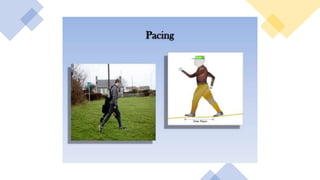
PACING
What is Pacing?
The method of measuring distance with the help of pace
length is known as pacing. This type of method is used
where approximate results are required.
The length of the pace (generally vary from person to
person) is multiplied by the number of paces to measure
the total distance.
How to use
pace count to
measure
ground
distance
A pace is equal to one natural step, about 30 inches long.
One way to measure ground distance is the pace count. A
pace is equal to one natural step, about 30 inches long. To
accurately use the pace count method, you must know how
many paces it takes you to walk 100 meters. To determine
this, you must walk an accurately measured course and
count the number of paces you take. A pace course can be
as short as 100 meters or as long as 600 meters. The pace
course, regardless of length, must be on similar terrain to
that you will be walking over. It does no good to walk a
course on flat terrain and then try to use that pace count on
hilly terrain. To determine your pace count on a 600-meter
course, count the paces it takes you to walk the 600 meters,
then divide the total paces by 6. The answer will give you
the average paces it takes you to walk 100 meters. It is
important that each person who navigates while
dismounted knows his pace count.
(1) There are many methods to keep track of the
distance traveled when using the pace count.
Some of these methods are: put a pebble in your
pocket every time you have walked 100 meters
according to your pace count; tie knots in a string;
or put marks in a notebook. Do not try to
remember the count; always use one of these
methods or design your own method.
(2) Certain conditions affect your pace count in the field, and you must allow for them by making adjustments.
(a) Slopes. Your pace lengthens on a downslope and shortens on an upgrade. Keeping this in mind, if it normally takes
you 120 paces to walk 100 meters, your pace count may increase to 130 or more when walking up a slope.
(b) Winds. A head wind shortens the pace and a tail wind increases it.
(c) Surfaces. Sand, gravel, mud, snow, and similar surface materials tend to shorten the pace.
(d) Elements. Falling snow, rain, or ice cause the pace to be reduced in length.
(e) Clothing. Excess clothing and boots with poor traction affect the pace length.
(f) Visibility. Poor visibility, such as in fog, rain, or darkness, will shorten your pace.
Example
Given: AB = 127 paces
BC = 214 paces
CD = 83 paces
Pace Factor (PF) = 0.75 m/pace
Required: To measure the Total Distance ABCD
Solution:
Total No. of Paces ABCD = 127 + 214 + 83
= 424 paces
Total Distance ABCD = 424 paces x 0.75 m/pace
= 318 m , Answer
EXAMPLE NOTEFORM
PACING
Pacing.pptx
Pacing.pptx

Pacing.pptx

  • 1.
  • 3.
    What is Pacing? Themethod of measuring distance with the help of pace length is known as pacing. This type of method is used where approximate results are required. The length of the pace (generally vary from person to person) is multiplied by the number of paces to measure the total distance.
  • 8.
    How to use pacecount to measure ground distance A pace is equal to one natural step, about 30 inches long. One way to measure ground distance is the pace count. A pace is equal to one natural step, about 30 inches long. To accurately use the pace count method, you must know how many paces it takes you to walk 100 meters. To determine this, you must walk an accurately measured course and count the number of paces you take. A pace course can be as short as 100 meters or as long as 600 meters. The pace course, regardless of length, must be on similar terrain to that you will be walking over. It does no good to walk a course on flat terrain and then try to use that pace count on hilly terrain. To determine your pace count on a 600-meter course, count the paces it takes you to walk the 600 meters, then divide the total paces by 6. The answer will give you the average paces it takes you to walk 100 meters. It is important that each person who navigates while dismounted knows his pace count.
  • 9.
    (1) There aremany methods to keep track of the distance traveled when using the pace count. Some of these methods are: put a pebble in your pocket every time you have walked 100 meters according to your pace count; tie knots in a string; or put marks in a notebook. Do not try to remember the count; always use one of these methods or design your own method.
  • 10.
    (2) Certain conditionsaffect your pace count in the field, and you must allow for them by making adjustments. (a) Slopes. Your pace lengthens on a downslope and shortens on an upgrade. Keeping this in mind, if it normally takes you 120 paces to walk 100 meters, your pace count may increase to 130 or more when walking up a slope. (b) Winds. A head wind shortens the pace and a tail wind increases it. (c) Surfaces. Sand, gravel, mud, snow, and similar surface materials tend to shorten the pace. (d) Elements. Falling snow, rain, or ice cause the pace to be reduced in length. (e) Clothing. Excess clothing and boots with poor traction affect the pace length. (f) Visibility. Poor visibility, such as in fog, rain, or darkness, will shorten your pace.
  • 26.
    Example Given: AB =127 paces BC = 214 paces CD = 83 paces Pace Factor (PF) = 0.75 m/pace Required: To measure the Total Distance ABCD Solution: Total No. of Paces ABCD = 127 + 214 + 83 = 424 paces Total Distance ABCD = 424 paces x 0.75 m/pace = 318 m , Answer
  • 27.