Wel-come and
good morning
INTRODUCTION to RESEARCH report, Project work and its
presentation
Field work, Project Work, Research
Report preparation
Prepared for grade 11 and 12 (For practical marks
of Population studies/Education; 20 marks)
Contents of this presentation
•Grade 11 and 12 project work; it is of 20 marks
only.
•Includes elements of research (Field Study)
•Example of cover page and other pages
•Example of preliminary parts
•Main body parts
•References
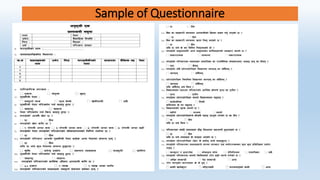
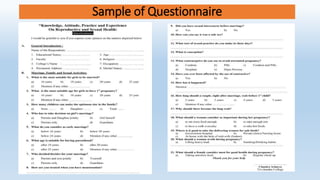
•Questionnaire
Preliminary Part
Title page
Inside cover page
Acknowledgement
Table of content
List of table
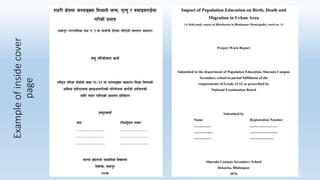
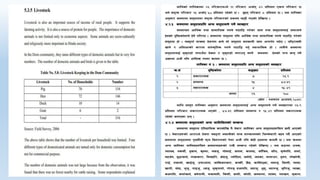
Exampleofcoverpage/Title
page
Exampleofinsidecover
page
ExampleofAcknowledgements
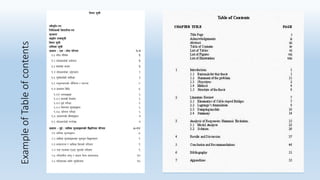
ExampleofTableofcontents
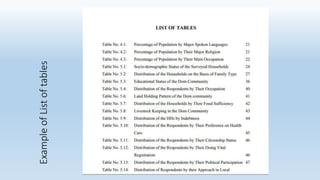
ExampleofListoftables
Main part
CHAPTER I
Introduction
1.1 Background of Study
1.2 Statement of Problem (Rationale of the Study)
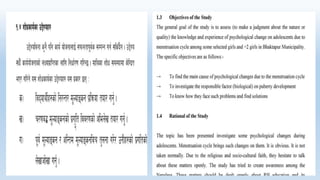
1.3 Objectives of Study
1.4 Significance of Study
1.5 Delimitation of Study
1.6 Definition of Key Term
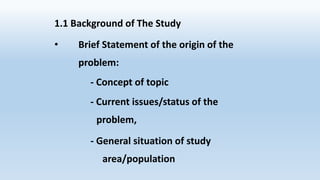
1.1 Background of The Study
• Brief Statement of the origin of the
problem:
- Concept of topic
- Current issues/status of the
problem,
- General situation of study
area/population
1.2 Statement of the Problem
•Problems related to the title,
•Population, study area etc.
•Identifying the main issues and problems in
existing situation
•Identifying the gap between theory &
practice
•Finding out unanswered questions
•To prove present study is necessary or
justification of the selection of the problem
• Declarative form of the topic
• 1.3 Objectives of the Study
• It directs/guides to the study.
• It helps in developing research tools.
• It should be specific, clear, measurable and
attainable (SMART) The objectives of the
study starts with the words such as :
• To determine
• To find out
• To identify
• To assess
• To ascertain
• To measure
Chapter II
• Review of the Literatures
• 2.1 Review of Theoretical Literature
• 2.2 Review of Empirical Literature
• 2.3 Implication of Review
Chapter III
• Methodology
• 3.1 Introduction and selection of study area
• 3.2 Design of Study
• 3.3 Population, sampling method and sample
• 3.4 Source of data
• 3.5 Tools of data collection
• 3.6 Data collection procedure
• 3.7 Data analysis procedure
Chapter IV
Analysis and Interpretation of Data
• 4.1 Data presentation and Analysis
• 4.2
• 4.3
• 4.4
• 4.5 Summary
•Chapter V
Conclusions and Recommendations
• 5.1 Conclusions
• 5.2 Recommendations
• 5.2.1 Policy Related
• 5.2.2 Practice Related
• 5.2.3 Further Study Related
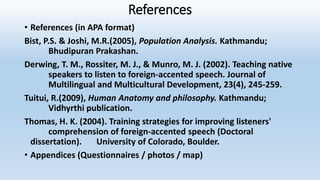
References
• References (in APA format)
Bist, P.S. & Joshi, M.R.(2005), Population Analysis. Kathmandu;
Bhudipuran Prakashan.
Derwing, T. M., Rossiter, M. J., & Munro, M. J. (2002). Teaching native
speakers to listen to foreign-accented speech. Journal of
Multilingual and Multicultural Development, 23(4), 245-259.
Tuitui, R.(2009), Human Anatomy and philosophy. Kathmandu;
Vidhyrthi publication.
Thomas, H. K. (2004). Training strategies for improving listeners'
comprehension of foreign-accented speech (Doctoral
dissertation). University of Colorado, Boulder.
• Appendices (Questionnaires / photos / map)
Sample of Questionnaire
What is a problem? (Research topic)
• A problem is a question or situation that presents
uncertainty, difficulty, obstacle, disagreement,
dissatisfaction or other abnormal characteristics.
• It is a question put forward for consideration, discussion
or solution.
• A research problem is a statement about an area of
concern, a condition to be improved, a difficulty to be
eliminated, or a troubling question that exists in scholarly
literature, in theory, or in practice that points to the need
for meaningful understanding and deliberate
investigation.
What to do for preparing a report?
• Choose a topic. It should be a subject he can understand and one that
interests him.
• Make a plan. Create a calendar together to map out the process.
• Check with the teacher. She/he should double-check the topic with her/his
teacher.
• Conduct research and take notes. She/He can use a range of resources
from books, periodicals, and the Internet to do this. Help him practice
taking notes without copying word-for-word to reduce the risk of
plagiarism.
• Outline the project. This will help her organize her notes and thoughts.
• Write the report. Use the outline as a road map.
• Edit and re-read the report. Checking and correcting mistakes are the
assurances of a good student.
Selection of Research Problems
Basic Steps:
1. Determine the broad field of research in
which a researcher is keen to do the research
work.
2. Develop mastery on the area of
specialization.
3. Review the researches conducted in the
related areas to know the recent trend and
studies.
Basic steps
4. Draw an insight in identifying a
problem.
Basic Steps
5. Consider the priority field of the study on the basis
of review.
6. Employ personal experience of the field in locating
the problem.
7. Take help of the supervisor or expert of the field.
8. Consult your friends, teachers, and others to know
about research work.
9. Read research related books and reports. View the
google to find different research reports.
Sources of Problem for the topic selection
1. Social phenomenon
2. Routine work
3. Current social issues
4. Curricular development
5. Inference from theory
6. Analysis of literature in an
areas or subject matter
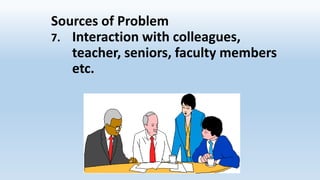
Sources of Problem
7. Interaction with colleagues,
teacher, seniors, faculty members
etc.
Sources of Problem
8. Text books, completed research
reports, articles, journals
9. Everyday problem faced by the students.
10. Social changes and educational innovations
11. Personal observation/experience
12. An area of special interest
13. Training, seminar, workshop
14. Controversial issues and unsolved problems
Thank you for
participation

P ptx Research Report Guidelines Grade 11 & 12 In Nepal

  • 1.
    Wel-come and good morning INTRODUCTIONto RESEARCH report, Project work and its presentation
  • 2.
    Field work, ProjectWork, Research Report preparation Prepared for grade 11 and 12 (For practical marks of Population studies/Education; 20 marks)
  • 3.
    Contents of thispresentation •Grade 11 and 12 project work; it is of 20 marks only. •Includes elements of research (Field Study) •Example of cover page and other pages •Example of preliminary parts •Main body parts •References •Questionnaire
  • 4.
    Preliminary Part Title page Insidecover page Acknowledgement Table of content List of table
  • 5.
  • 6.
  • 7.
  • 8.
  • 9.
  • 10.
    Main part CHAPTER I Introduction 1.1Background of Study 1.2 Statement of Problem (Rationale of the Study) 1.3 Objectives of Study 1.4 Significance of Study 1.5 Delimitation of Study 1.6 Definition of Key Term
  • 11.
    1.1 Background ofThe Study • Brief Statement of the origin of the problem: - Concept of topic - Current issues/status of the problem, - General situation of study area/population
  • 12.
    1.2 Statement ofthe Problem •Problems related to the title, •Population, study area etc. •Identifying the main issues and problems in existing situation •Identifying the gap between theory & practice •Finding out unanswered questions •To prove present study is necessary or justification of the selection of the problem • Declarative form of the topic
  • 13.
    • 1.3 Objectivesof the Study • It directs/guides to the study. • It helps in developing research tools. • It should be specific, clear, measurable and attainable (SMART) The objectives of the study starts with the words such as : • To determine • To find out • To identify • To assess • To ascertain • To measure
  • 15.
    Chapter II • Reviewof the Literatures • 2.1 Review of Theoretical Literature • 2.2 Review of Empirical Literature • 2.3 Implication of Review
  • 16.
    Chapter III • Methodology •3.1 Introduction and selection of study area • 3.2 Design of Study • 3.3 Population, sampling method and sample • 3.4 Source of data • 3.5 Tools of data collection • 3.6 Data collection procedure • 3.7 Data analysis procedure
  • 17.
    Chapter IV Analysis andInterpretation of Data • 4.1 Data presentation and Analysis • 4.2 • 4.3 • 4.4 • 4.5 Summary •Chapter V Conclusions and Recommendations • 5.1 Conclusions • 5.2 Recommendations • 5.2.1 Policy Related • 5.2.2 Practice Related • 5.2.3 Further Study Related
  • 19.
    References • References (inAPA format) Bist, P.S. & Joshi, M.R.(2005), Population Analysis. Kathmandu; Bhudipuran Prakashan. Derwing, T. M., Rossiter, M. J., & Munro, M. J. (2002). Teaching native speakers to listen to foreign-accented speech. Journal of Multilingual and Multicultural Development, 23(4), 245-259. Tuitui, R.(2009), Human Anatomy and philosophy. Kathmandu; Vidhyrthi publication. Thomas, H. K. (2004). Training strategies for improving listeners' comprehension of foreign-accented speech (Doctoral dissertation). University of Colorado, Boulder. • Appendices (Questionnaires / photos / map)
  • 21.
  • 22.
  • 23.
    What is aproblem? (Research topic) • A problem is a question or situation that presents uncertainty, difficulty, obstacle, disagreement, dissatisfaction or other abnormal characteristics. • It is a question put forward for consideration, discussion or solution. • A research problem is a statement about an area of concern, a condition to be improved, a difficulty to be eliminated, or a troubling question that exists in scholarly literature, in theory, or in practice that points to the need for meaningful understanding and deliberate investigation.
  • 24.
    What to dofor preparing a report? • Choose a topic. It should be a subject he can understand and one that interests him. • Make a plan. Create a calendar together to map out the process. • Check with the teacher. She/he should double-check the topic with her/his teacher. • Conduct research and take notes. She/He can use a range of resources from books, periodicals, and the Internet to do this. Help him practice taking notes without copying word-for-word to reduce the risk of plagiarism. • Outline the project. This will help her organize her notes and thoughts. • Write the report. Use the outline as a road map. • Edit and re-read the report. Checking and correcting mistakes are the assurances of a good student.
  • 25.
    Selection of ResearchProblems Basic Steps: 1. Determine the broad field of research in which a researcher is keen to do the research work. 2. Develop mastery on the area of specialization. 3. Review the researches conducted in the related areas to know the recent trend and studies.
  • 26.
    Basic steps 4. Drawan insight in identifying a problem.
  • 27.
    Basic Steps 5. Considerthe priority field of the study on the basis of review. 6. Employ personal experience of the field in locating the problem. 7. Take help of the supervisor or expert of the field. 8. Consult your friends, teachers, and others to know about research work. 9. Read research related books and reports. View the google to find different research reports.
  • 28.
    Sources of Problemfor the topic selection 1. Social phenomenon 2. Routine work 3. Current social issues 4. Curricular development 5. Inference from theory 6. Analysis of literature in an areas or subject matter
  • 29.
    Sources of Problem 7.Interaction with colleagues, teacher, seniors, faculty members etc.
  • 30.
    Sources of Problem 8.Text books, completed research reports, articles, journals 9. Everyday problem faced by the students. 10. Social changes and educational innovations 11. Personal observation/experience 12. An area of special interest 13. Training, seminar, workshop 14. Controversial issues and unsolved problems
  • 31.