Propsal writing workshop
waste mangement research group SWSO
By ;
Ghada M. Osman
&
Maram Ali
CONTENTS
DENINITION
PROPOSAL LAYOUT
TERMINOLOGIES OF THE PROPOSAL
Definition
• A proposal, often called a "Statement of Work,” is a
persuasive document.
• Its objectives are to:
1. Identify what work is to be done
2. Explain why this work needs to be done
3. Persuade the reader that the proposers (you) are
qualified for the work, have a plausible management
plan and technical approach, and have the resources
needed to complete the task within the stated time
and cost constraints.
Proposal Layout
• Title
• Literature review
• Statement of goals (General & specific objectives)
• Research plan (Methodology & time table)
• Expected outcomes & impact
• Budget
• References
• Information on qualifications of staff (for example,
resumes, CVs, or biographies)
Title
Your Title is a mini-Abstract
The words should reflect the focus of your proposal
Put the most important words first
Write the title last
Literature review
The ‘action’ of literature review: Reading
published literature to…
Understand what work has been done already that is
related to your research theme, topic or idea
Identify gaps, unknowns, controversies, unexplained
findings… opportunities!
Start developing or refining your research question or
hypothesis
Why literature review?
Research is not about collecting data
Research is about…
Knowing about published work in your field
Doing something new in the context of that work
Presenting your work keeping that context in mind (ie,
citations)
Convincing readers that your work adds to the body of
knowledge in your field
Research builds on past research
Not something done in isolation
Even the most innovative research questions must be
set in the context of past research and discoveries
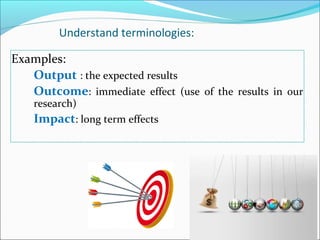
Understand terminologies:
Examples:
Output : the expected results
Outcome: immediate effect (use of the results in our
research)
Impact: long term effects
Doing ground work
• Review the literature on work related to yours. Be
prepared to cite it.
• Start developing a persuasive explanation of why the
proposed project is valuable.
• If your proposal will be for research, formulate one or
more well-defined, potentially productive hypotheses
or research questions. Beware of proposing a project
that is unrealistically large.
Goals and Objectives
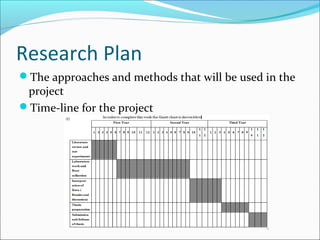
Research Plan
The approaches and methods that will be used in the
project
Time-line for the project
Outcome
The expected immediate effects of the research
project
Impact
• The expected long term effect of the research
project
Budget
•It is the financial statement of the project
(costs)
Present the budget as a table, with rows and
columns using MS Excel or other spreadsheet
software
•Label the rows and column headings clearly
the budget table should table be accurate &
clearly stated
References
References used : Books, websites, reviews,.....
Should include citation of past researches and
methods used in the project.
Free referencing software e.g Mendely, EndNote,...
Research Staff
Establish team qualification for the project and
specific skills and experiences relative to the research.
Lecture references
Grant Proposal writing online course, INASP
foundation
Research proposal lecture, Dr. Nashwa Eassa
Photos, google images
Thank you
This work is licensed under a Creative Commons
Attribution ShareAlike 4.0 International licence.

Proposal writing workshop

  • 1.
    Propsal writing workshop wastemangement research group SWSO By ; Ghada M. Osman & Maram Ali
  • 2.
  • 3.
    Definition • A proposal,often called a "Statement of Work,” is a persuasive document. • Its objectives are to: 1. Identify what work is to be done 2. Explain why this work needs to be done 3. Persuade the reader that the proposers (you) are qualified for the work, have a plausible management plan and technical approach, and have the resources needed to complete the task within the stated time and cost constraints.
  • 4.
    Proposal Layout • Title •Literature review • Statement of goals (General & specific objectives) • Research plan (Methodology & time table) • Expected outcomes & impact • Budget • References • Information on qualifications of staff (for example, resumes, CVs, or biographies)
  • 5.
    Title Your Title isa mini-Abstract The words should reflect the focus of your proposal Put the most important words first Write the title last
  • 6.
    Literature review The ‘action’of literature review: Reading published literature to… Understand what work has been done already that is related to your research theme, topic or idea Identify gaps, unknowns, controversies, unexplained findings… opportunities! Start developing or refining your research question or hypothesis
  • 7.
    Why literature review? Researchis not about collecting data Research is about… Knowing about published work in your field Doing something new in the context of that work Presenting your work keeping that context in mind (ie, citations) Convincing readers that your work adds to the body of knowledge in your field
  • 8.
    Research builds onpast research Not something done in isolation Even the most innovative research questions must be set in the context of past research and discoveries
  • 9.
    Understand terminologies: Examples: Output :the expected results Outcome: immediate effect (use of the results in our research) Impact: long term effects
  • 10.
    Doing ground work •Review the literature on work related to yours. Be prepared to cite it. • Start developing a persuasive explanation of why the proposed project is valuable. • If your proposal will be for research, formulate one or more well-defined, potentially productive hypotheses or research questions. Beware of proposing a project that is unrealistically large.
  • 11.
  • 12.
    Research Plan The approachesand methods that will be used in the project Time-line for the project
  • 13.
    Outcome The expected immediateeffects of the research project Impact • The expected long term effect of the research project
  • 14.
    Budget •It is thefinancial statement of the project (costs) Present the budget as a table, with rows and columns using MS Excel or other spreadsheet software •Label the rows and column headings clearly the budget table should table be accurate & clearly stated
  • 15.
    References References used :Books, websites, reviews,..... Should include citation of past researches and methods used in the project. Free referencing software e.g Mendely, EndNote,...
  • 16.
    Research Staff Establish teamqualification for the project and specific skills and experiences relative to the research.
  • 17.
    Lecture references Grant Proposalwriting online course, INASP foundation Research proposal lecture, Dr. Nashwa Eassa Photos, google images
  • 18.
    Thank you This workis licensed under a Creative Commons Attribution ShareAlike 4.0 International licence.