





“I have just registered for my Ph.D; what
should I do?”: REST and REQUEST framework
for effective Ph.D research progress
Dr. OMER MAHFOODH
omer@usm.my
omer197435@gmail.com
School of Languages, Literacies and Translation
Universiti Sains Malaysia
2020
1
How to start my PhD?
2
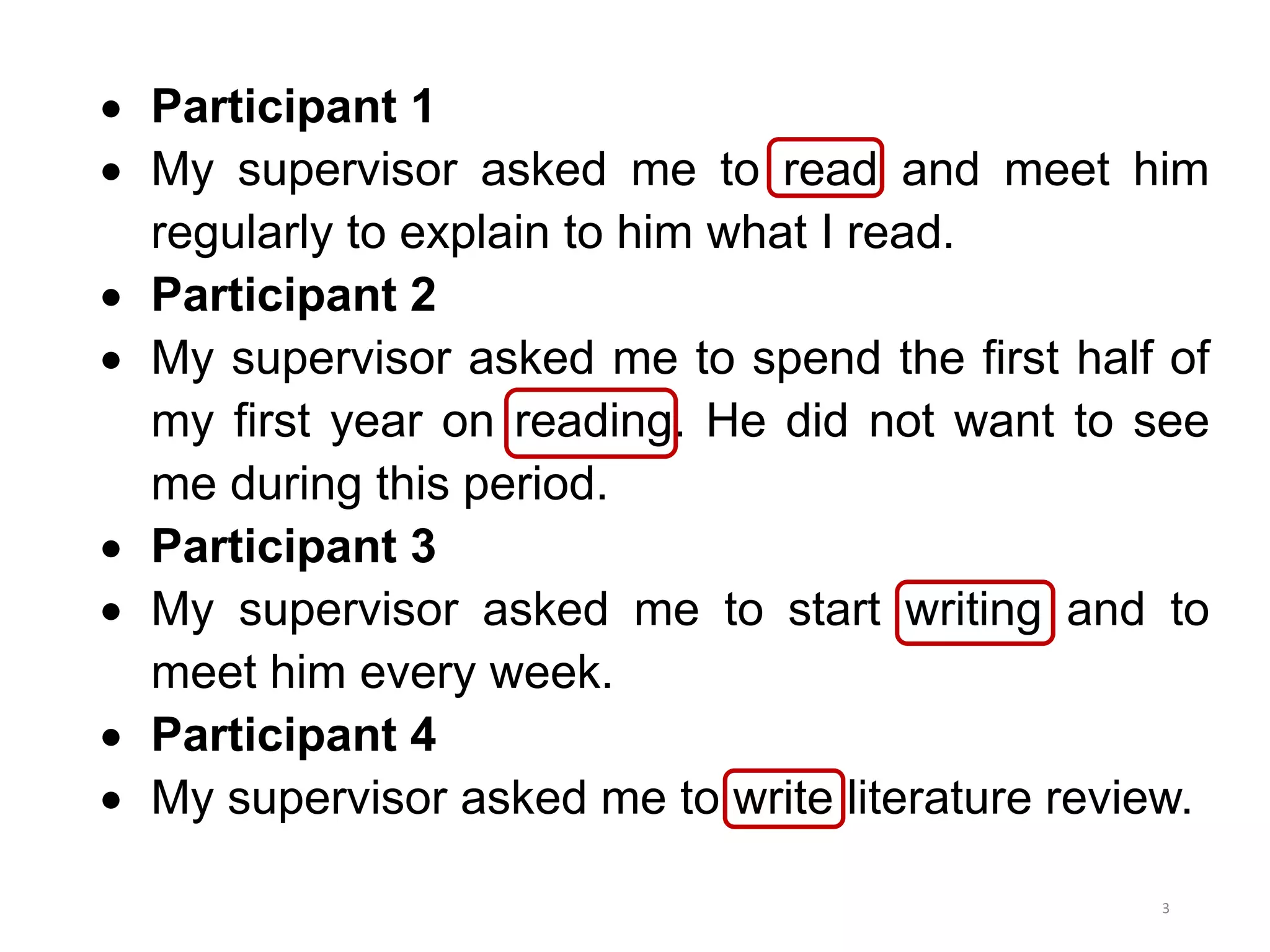
 Participant 1
 My supervisor asked me to read and meet him
regularly to explain to him what I read.
 Participant 2
 My supervisor asked me to spend the first half of
my first year on reading. He did not want to see
me during this period.
 Participant 3
 My supervisor asked me to start writing and to
meet him every week.
 Participant 4
 My supervisor asked me to write literature review.
3
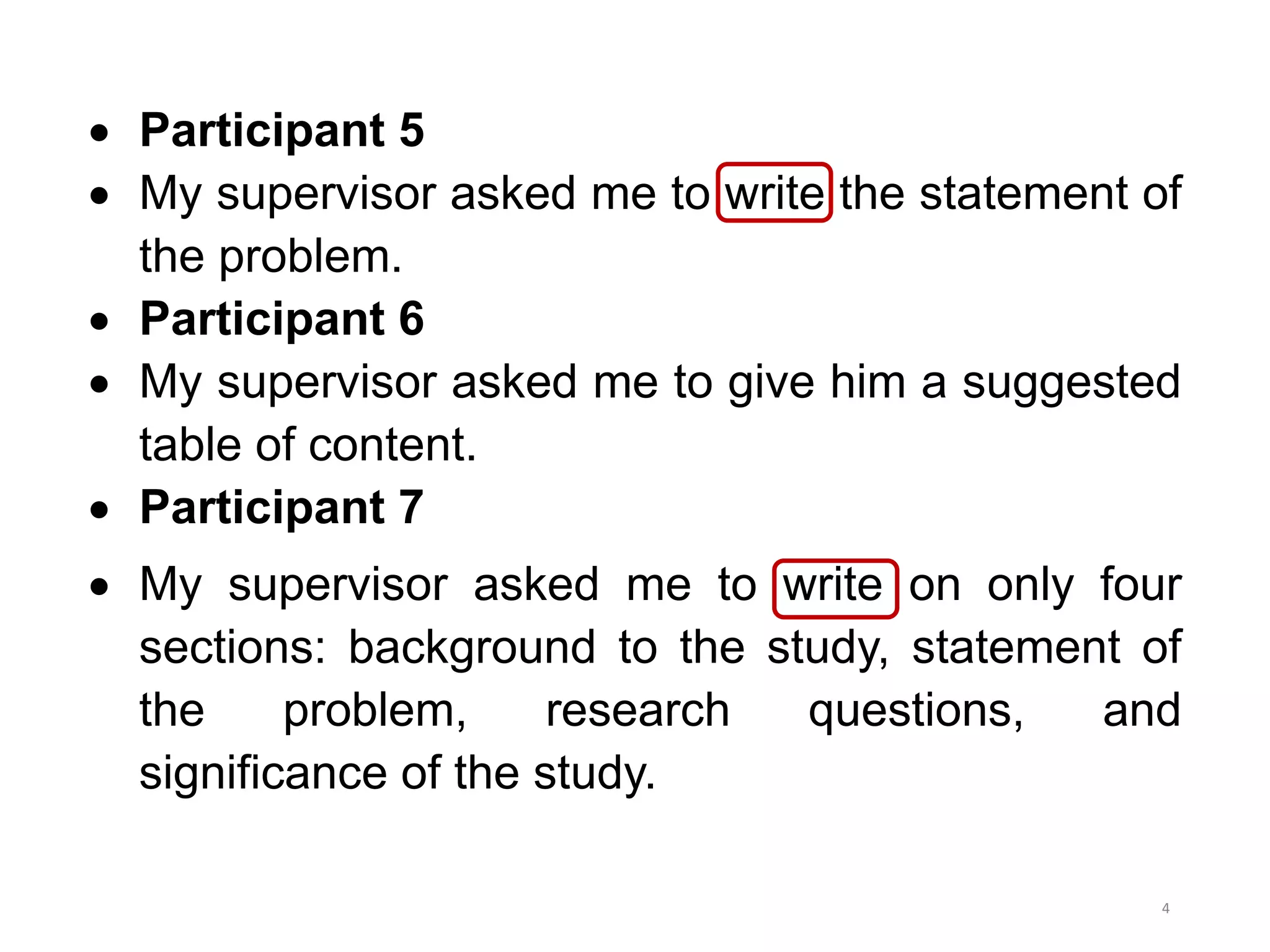
 Participant 5
 My supervisor asked me to write the statement of
the problem.
 Participant 6
 My supervisor asked me to give him a suggested
table of content.
 Participant 7
 My supervisor asked me to write on only four
sections: background to the study, statement of
the problem, research questions, and
significance of the study.
4
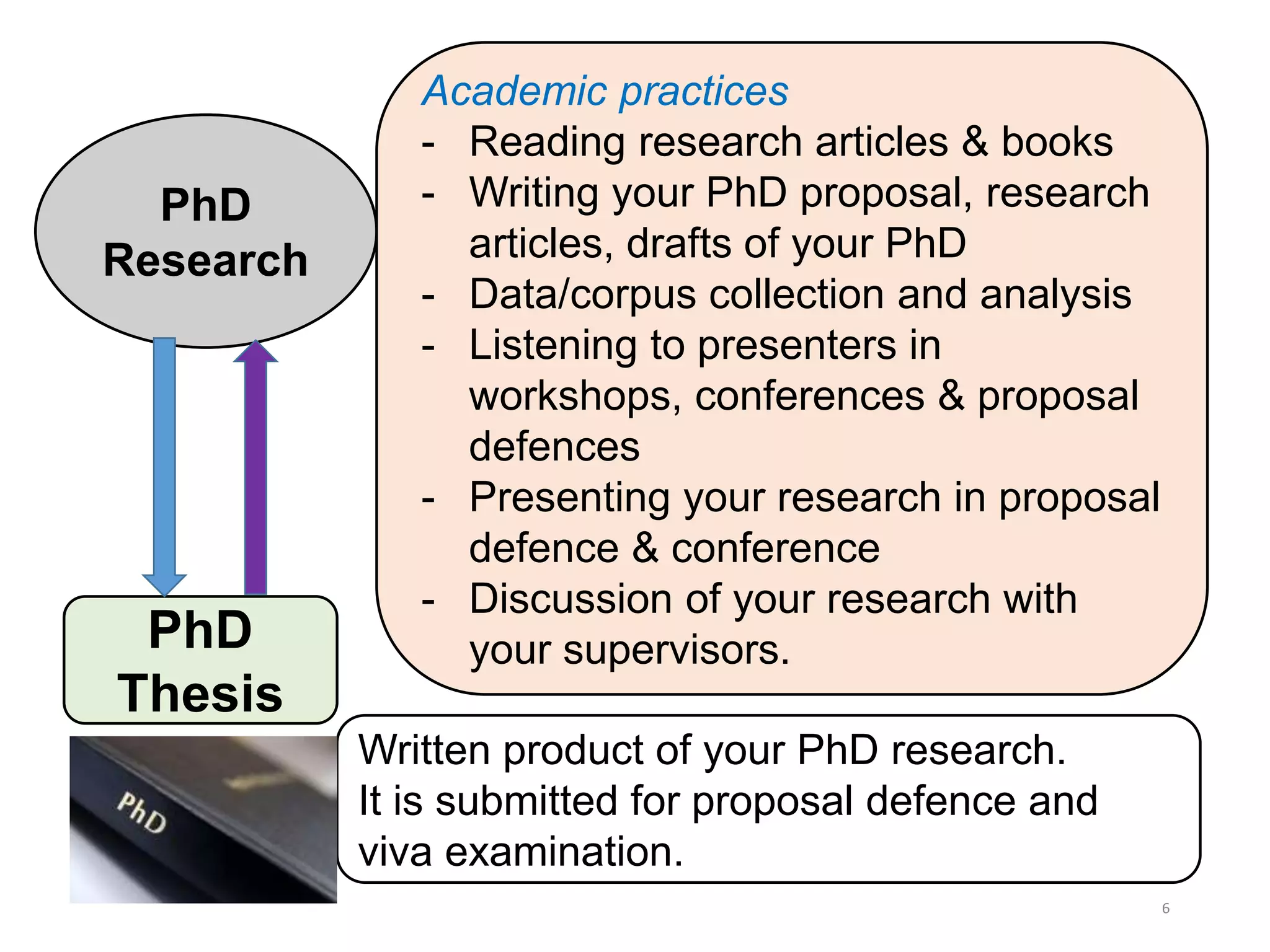
PhD Research
vs.
PhD Thesis
5
6
PhD
Research
PhD
Thesis
Written product of your PhD research.
It is submitted for proposal defence and
viva examination.
Academic practices
- Reading research articles & books
- Writing your PhD proposal, research
articles, drafts of your PhD
- Data/corpus collection and analysis
- Listening to presenters in
workshops, conferences & proposal
defences
- Presenting your research in proposal
defence & conference
- Discussion of your research with
your supervisors.
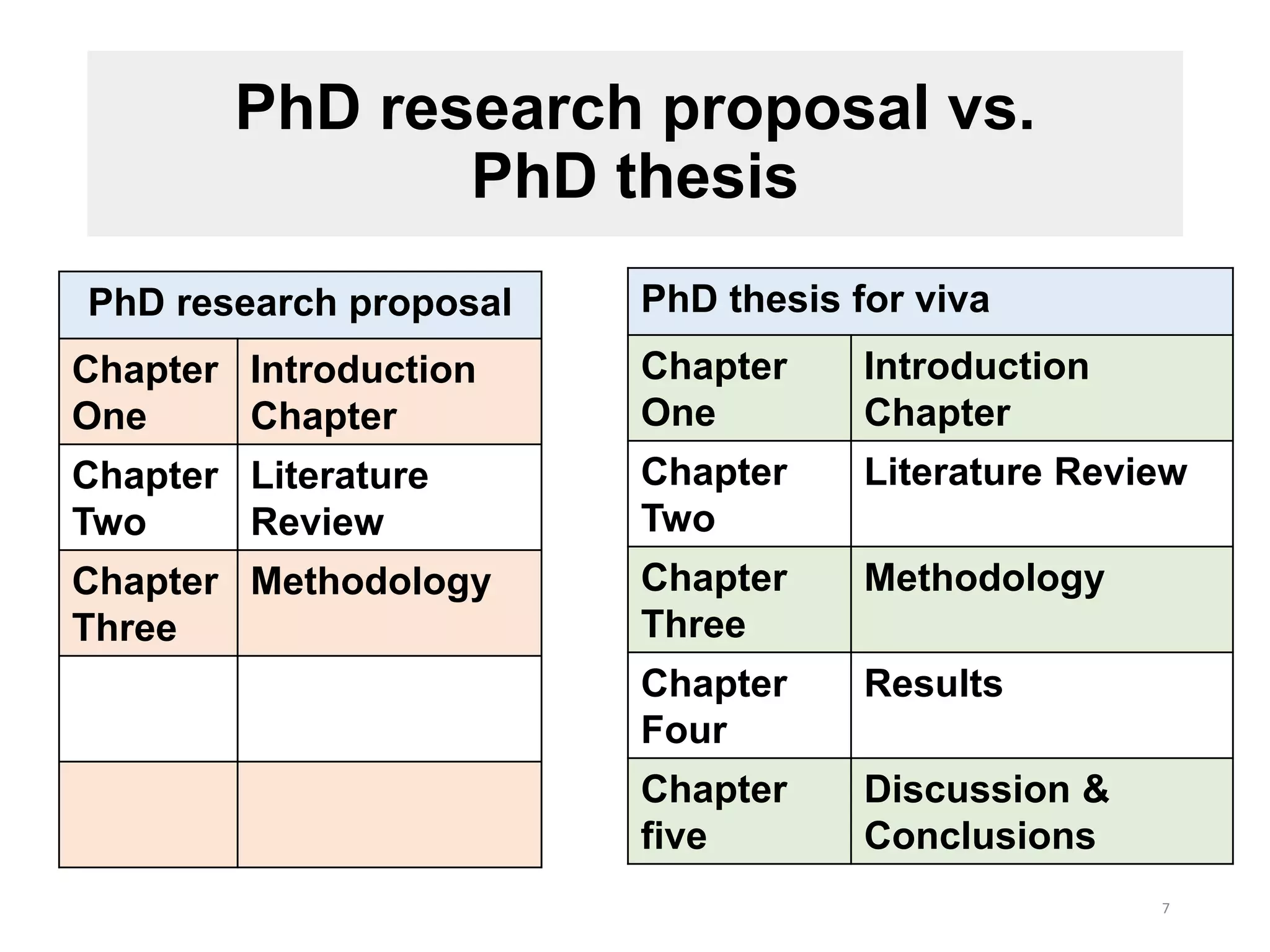
PhD research proposal vs.
PhD thesis
PhD research proposal
Chapter
One
Introduction
Chapter
Chapter
Two
Literature
Review
Chapter
Three
Methodology
7
PhD thesis for viva
Chapter
One
Introduction
Chapter
Chapter
Two
Literature Review
Chapter
Three
Methodology
Chapter
Four
Results
Chapter
five
Discussion &
Conclusions
PhD Research Proposal:
major phases
8
9
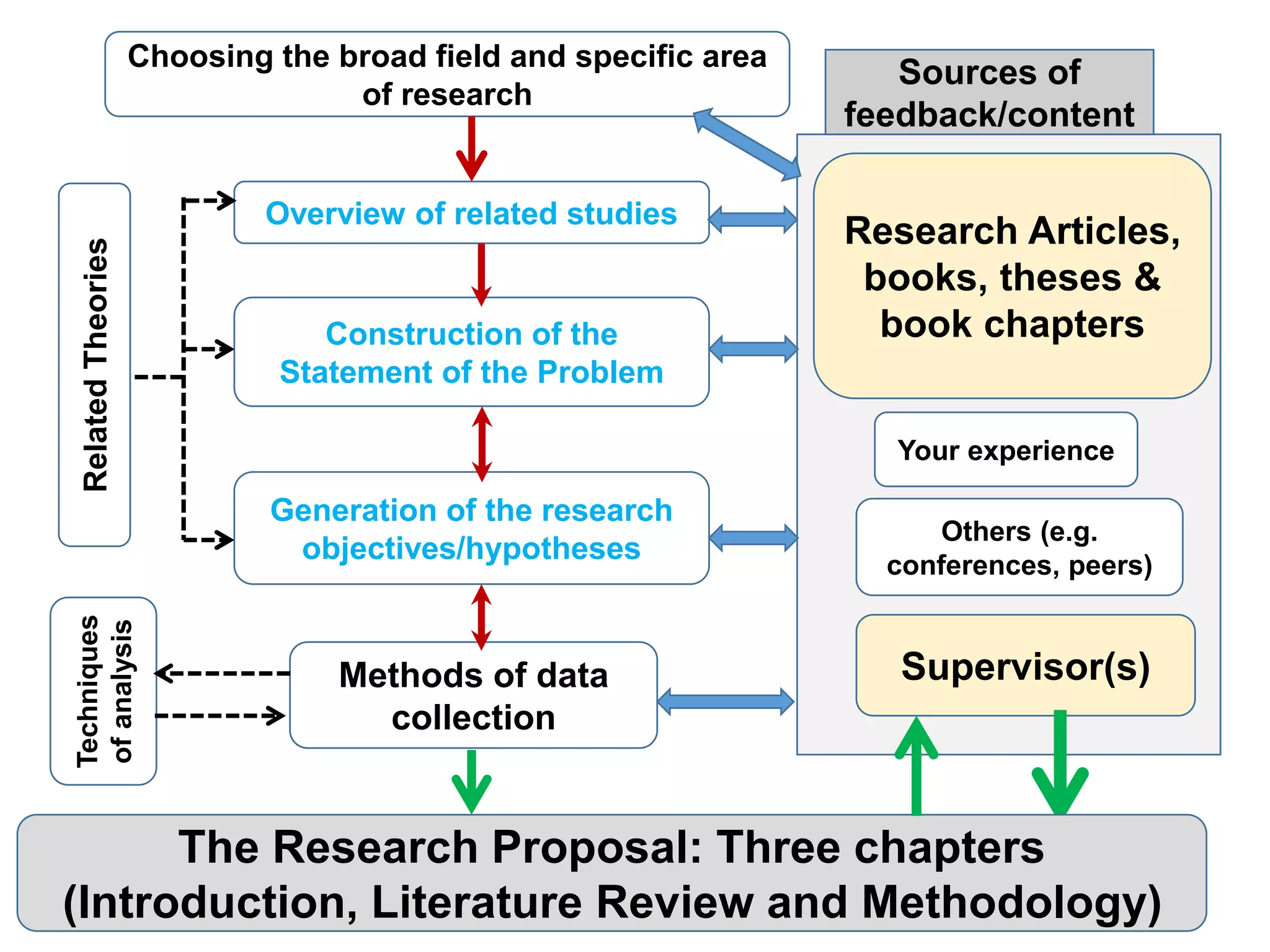
Research Articles,
books, theses &
book chapters
Choosing the broad field and specific area
of research
Construction of the
Statement of the Problem
Generation of the research
objectives/hypotheses
Supervisor(s)
Sources of
feedback/content
Others (e.g.
conferences, peers)
Your experience
Methods of data
collection
Overview of related studies
The Research Proposal: Three chapters
(Introduction, Literature Review and Methodology)
RelatedTheoriesTechniques
ofanalysis
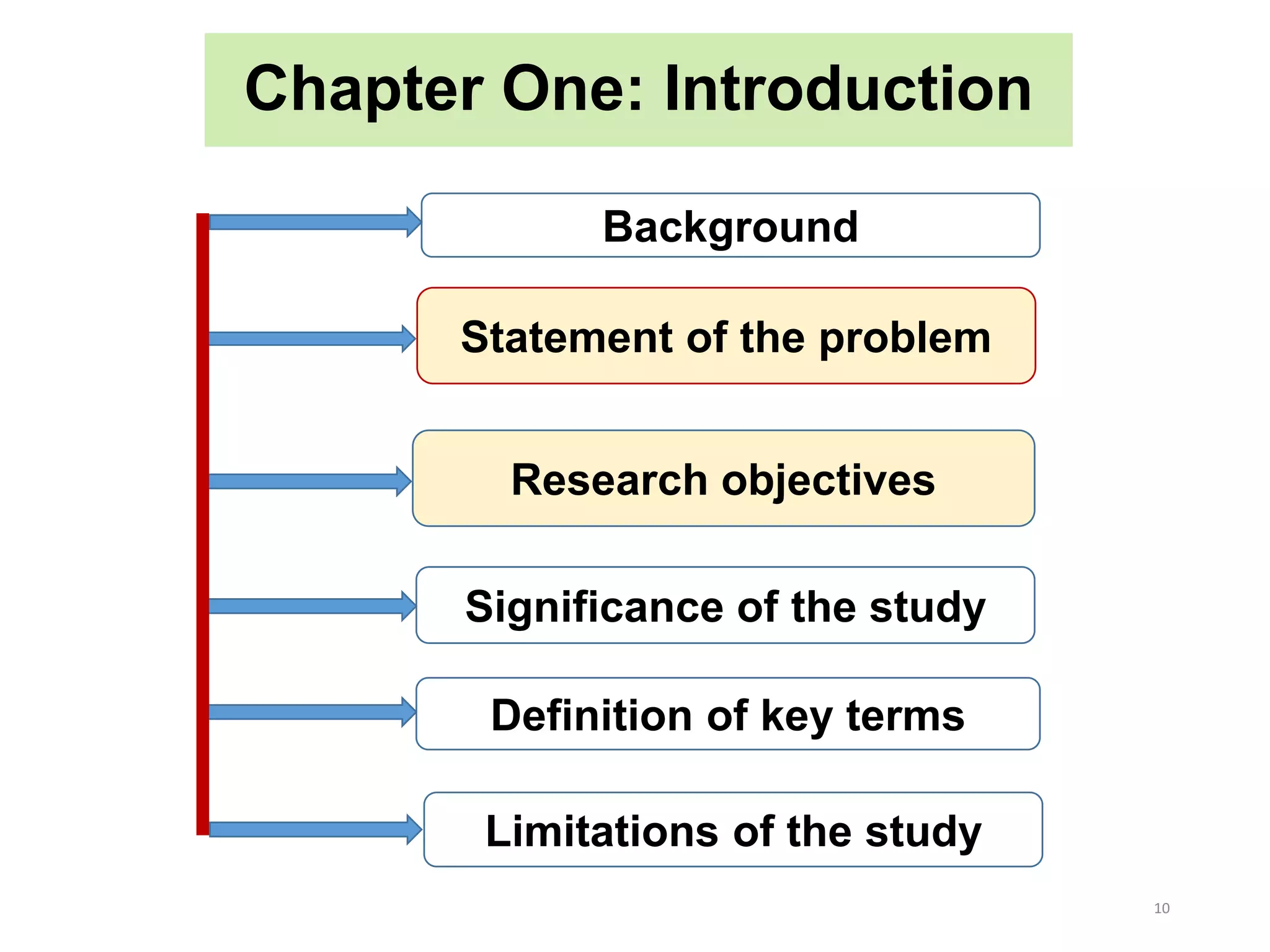
Chapter One: Introduction
10
Background
Statement of the problem
Research objectives
Limitations of the study
Significance of the study
Definition of key terms
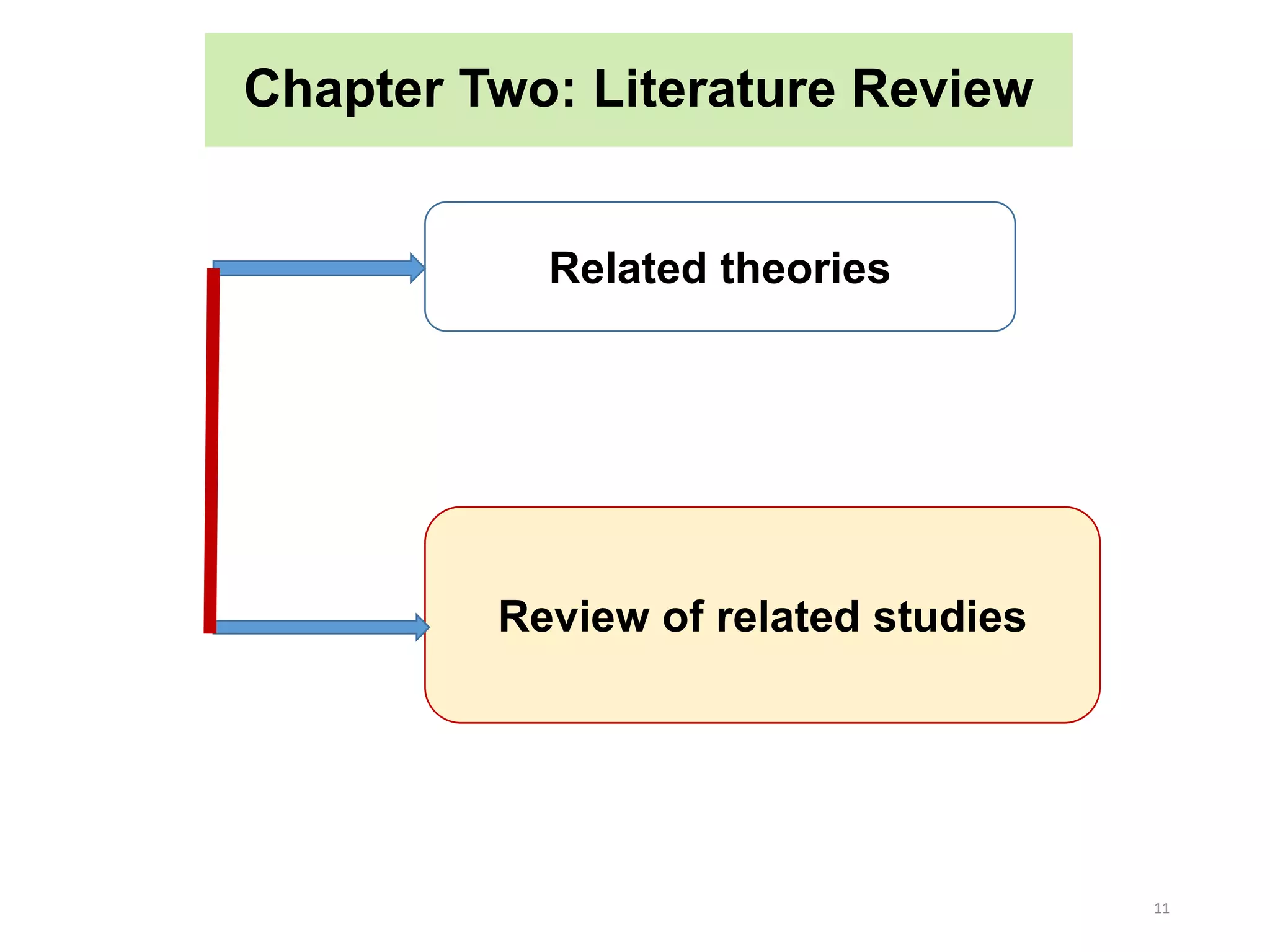
Chapter Two: Literature Review
11
Related theories
Review of related studies
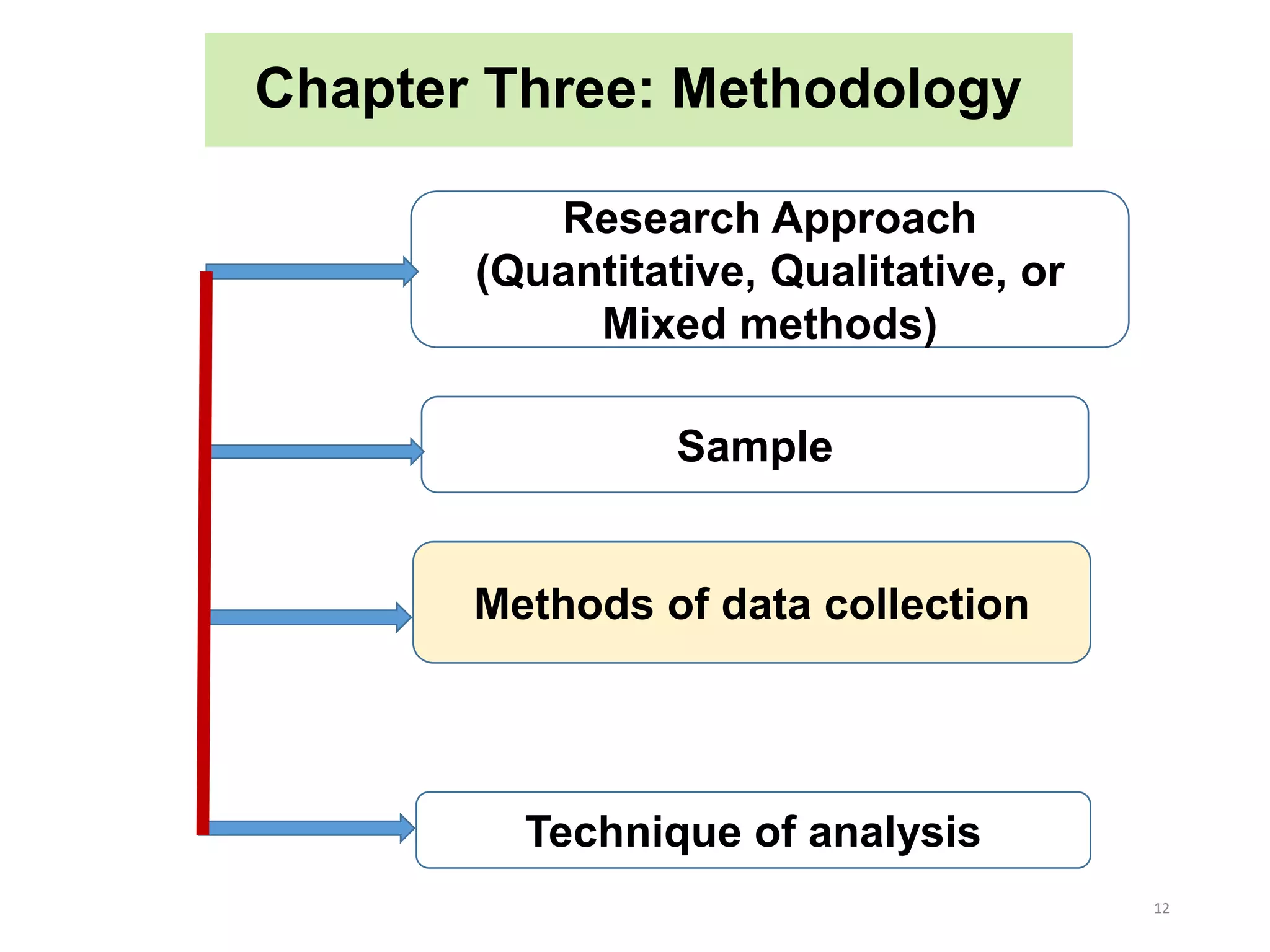
Chapter Three: Methodology
12
Research Approach
(Quantitative, Qualitative, or
Mixed methods)
Sample
Methods of data collection
Technique of analysis
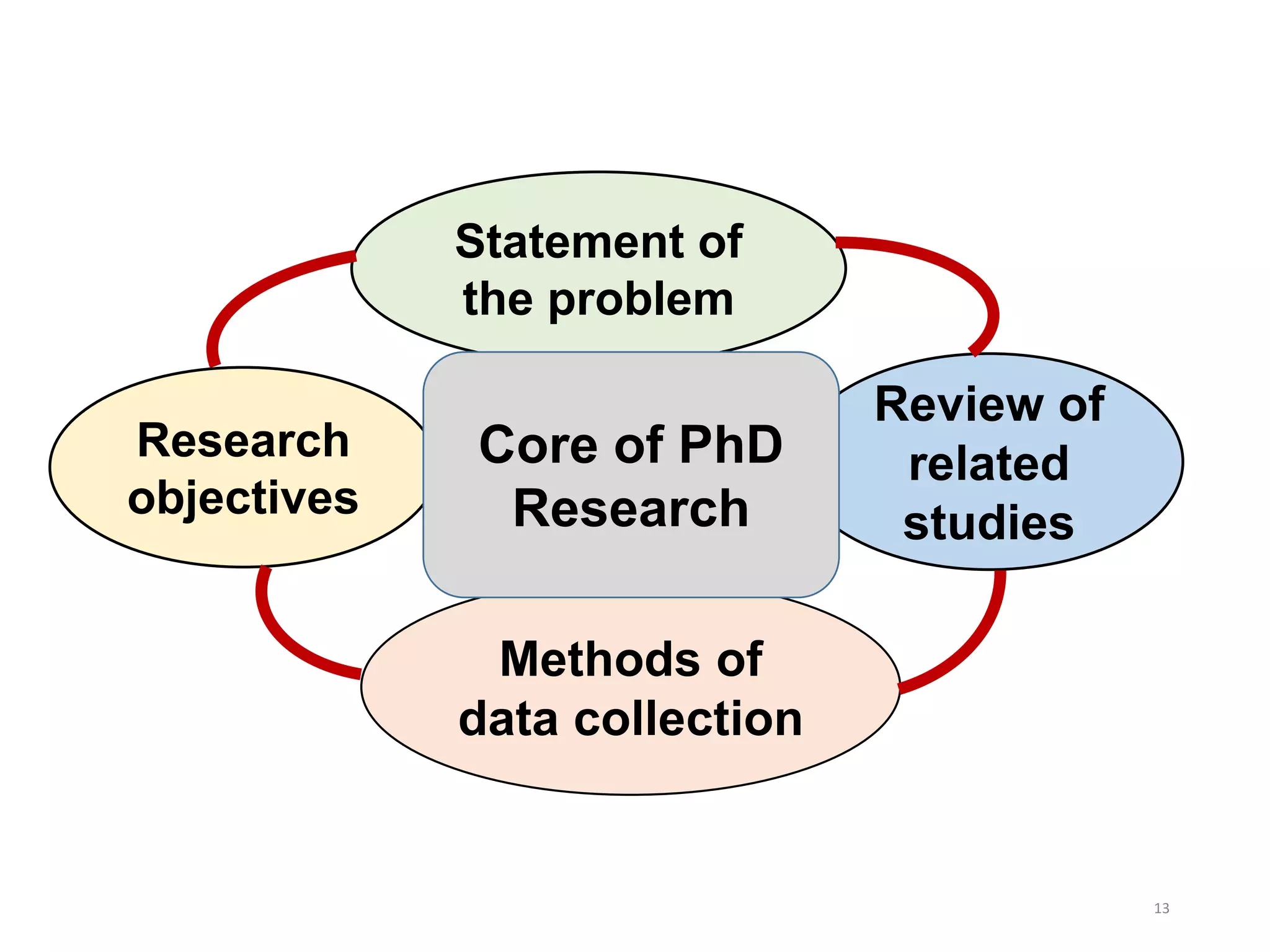
13
Statement of
the problem
Research
objectives
Methods of
data collection
Review of
related
studies
Core of PhD
Research
Begin your PhD research with a
review of related studies
14
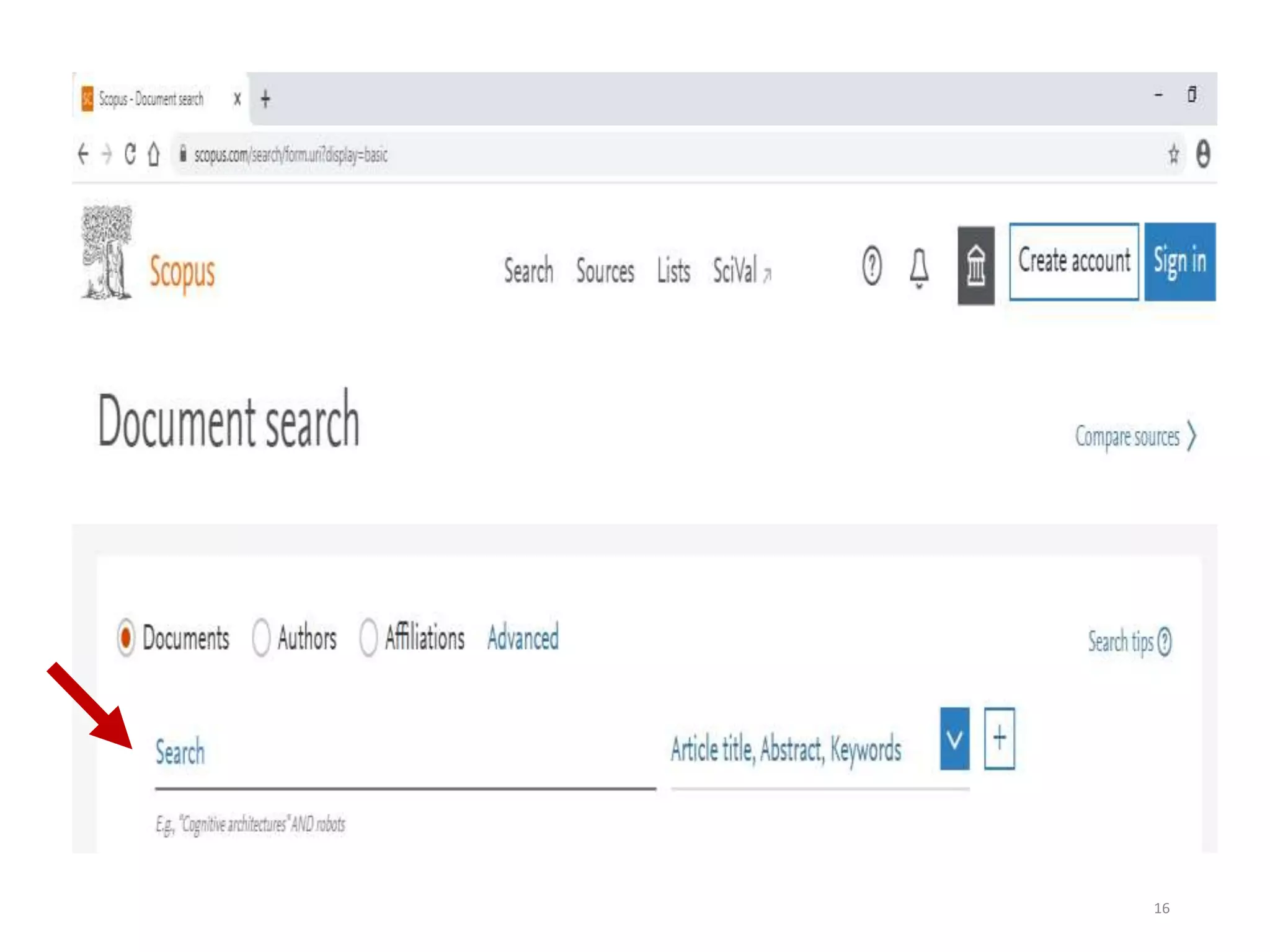
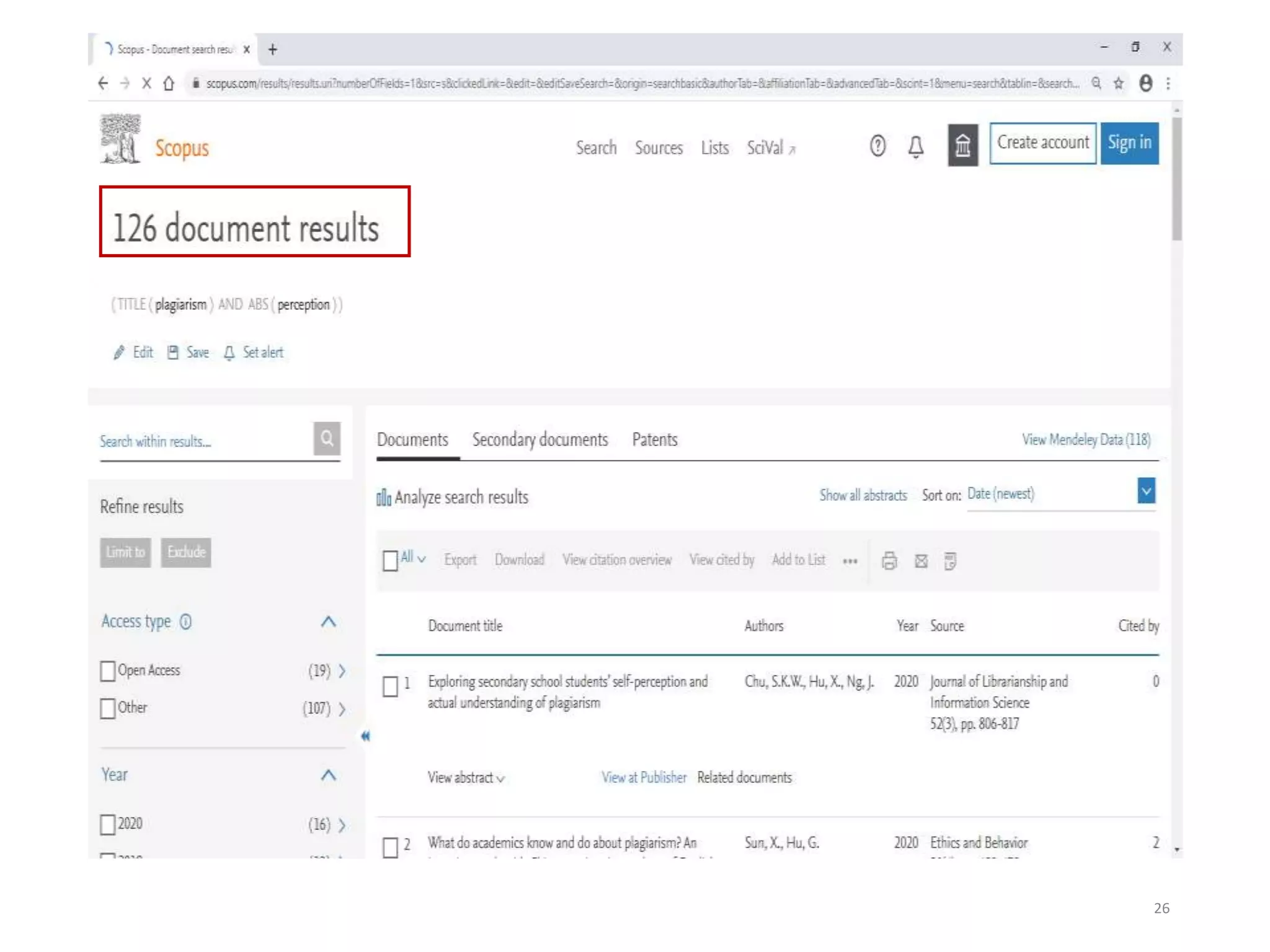
•Formulate the keywords.
•Find related studies through searching in:
•Scopus
https://www.scopus.com/search/form.uri?di
splay=basic
•Google Scholar https://scholar.google.com/
15
16
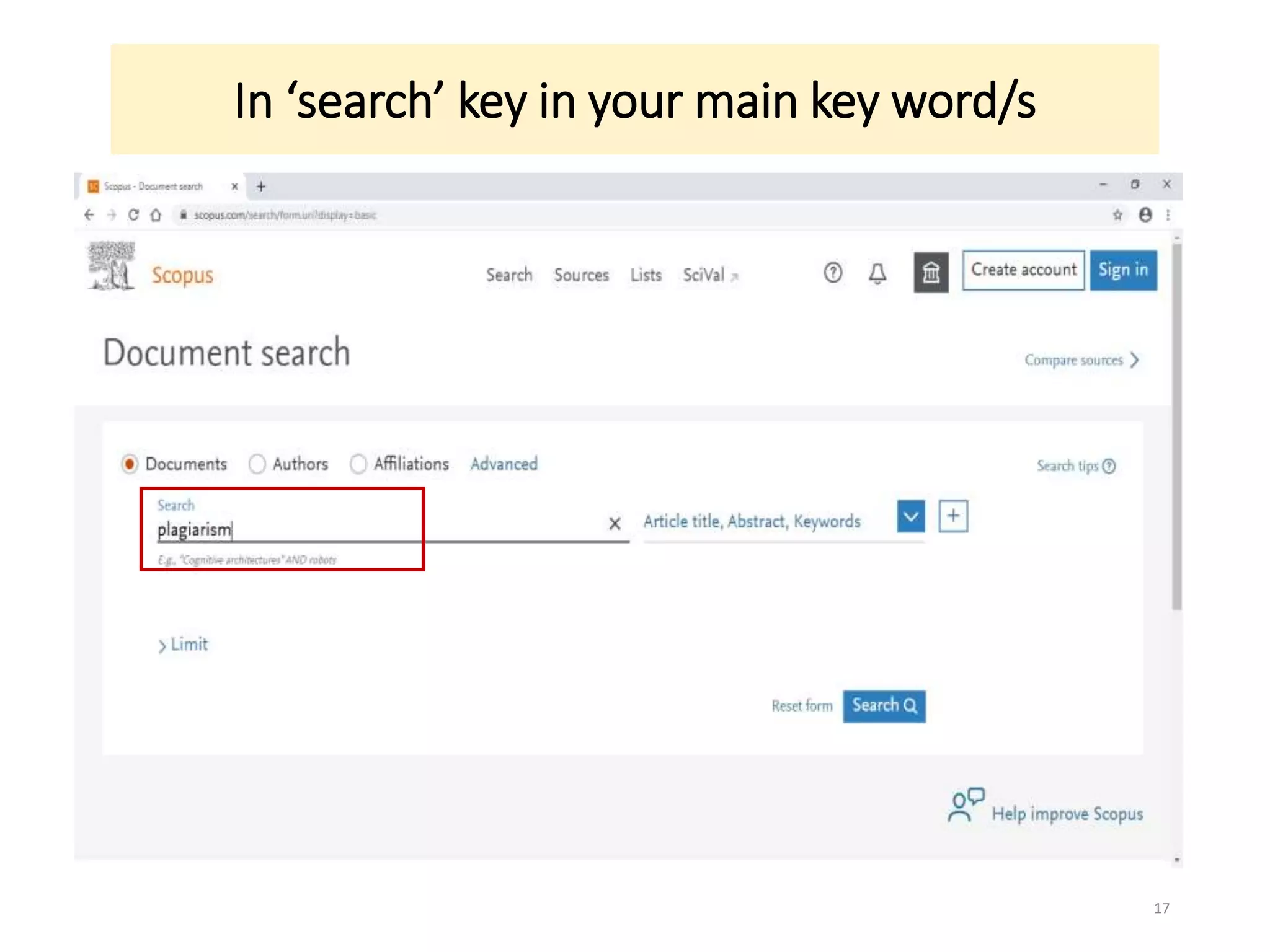
In ‘search’ key in your main key word/s
17
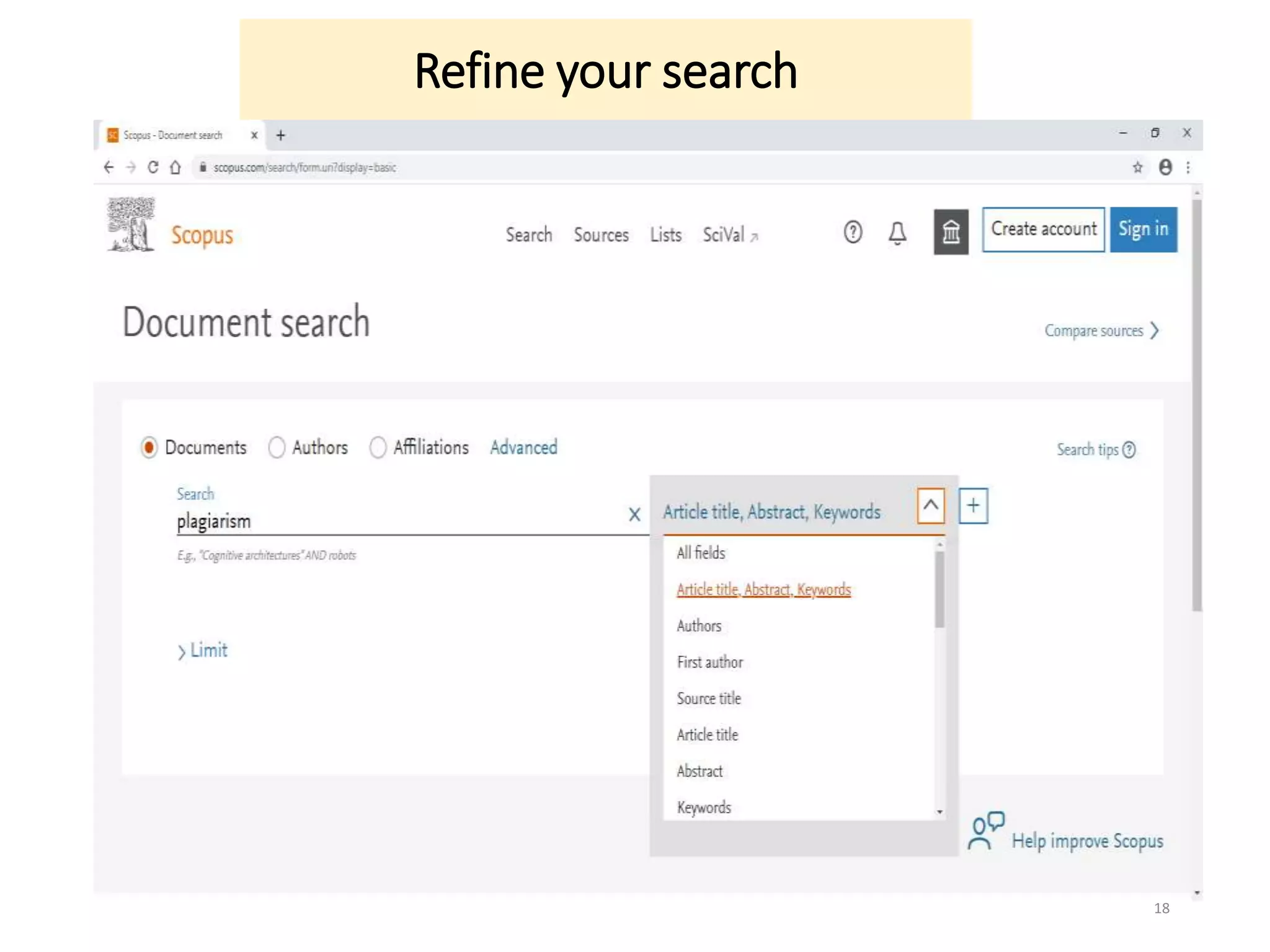
Refine your search
18
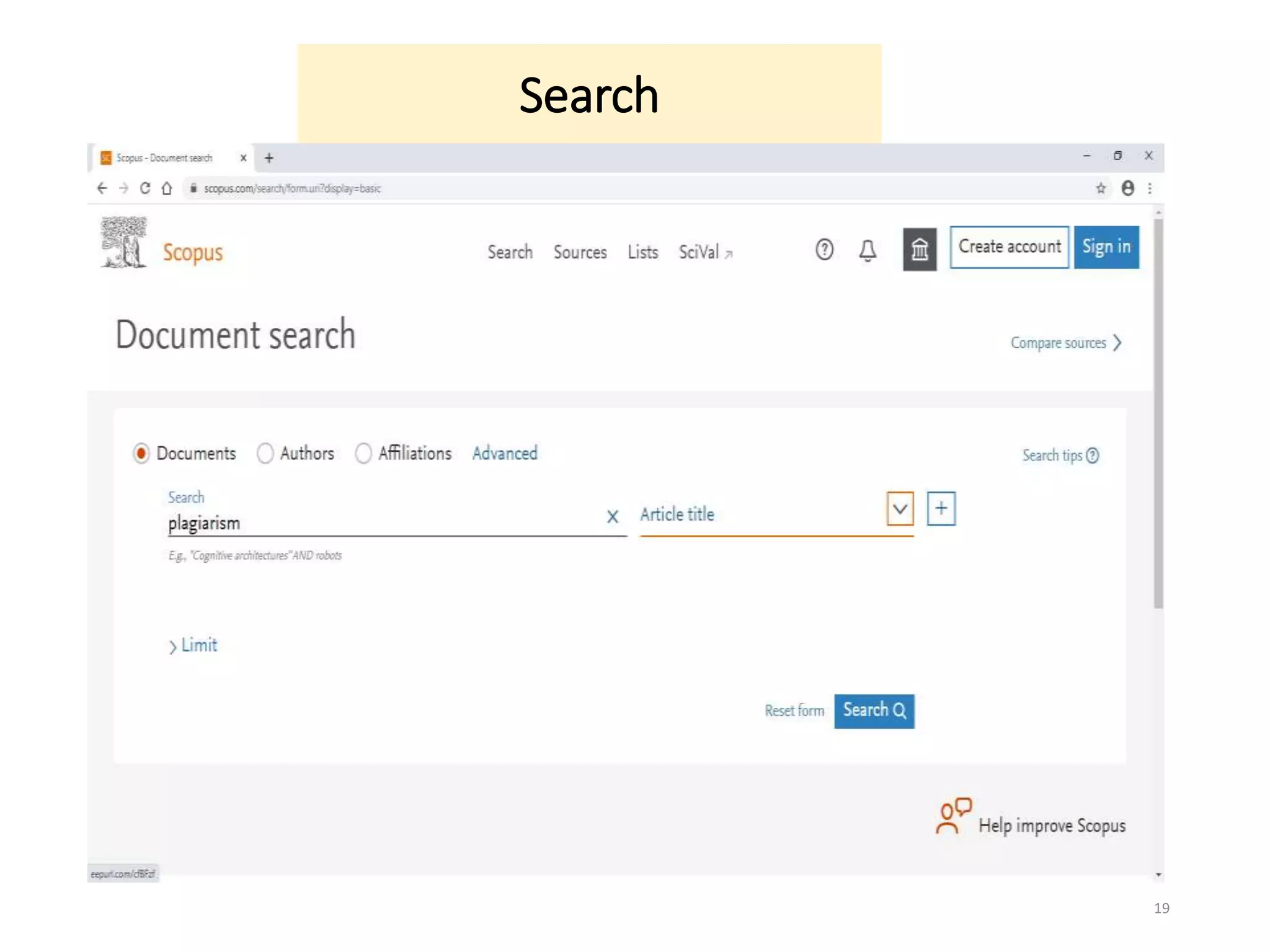
Search
19
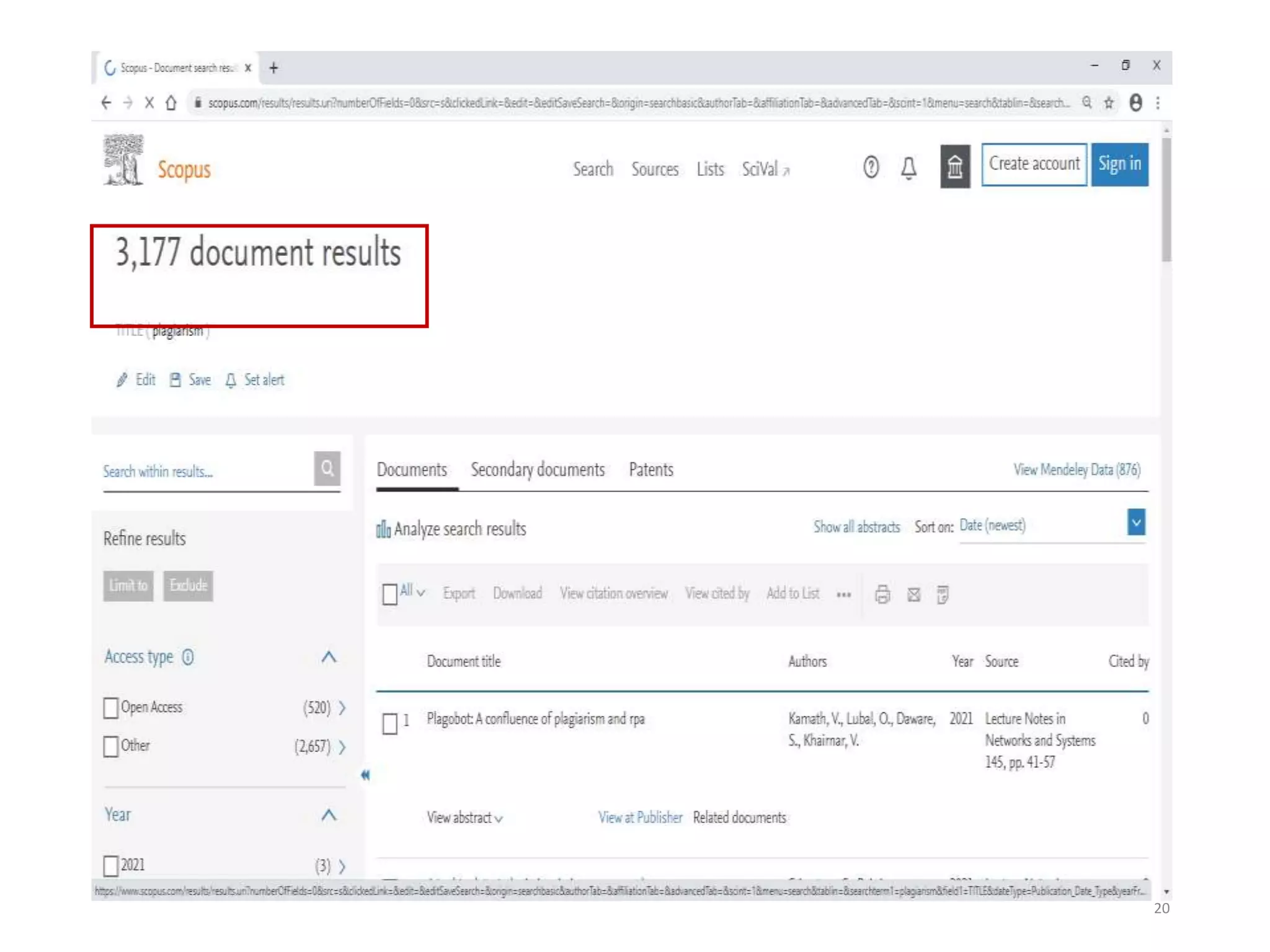
20
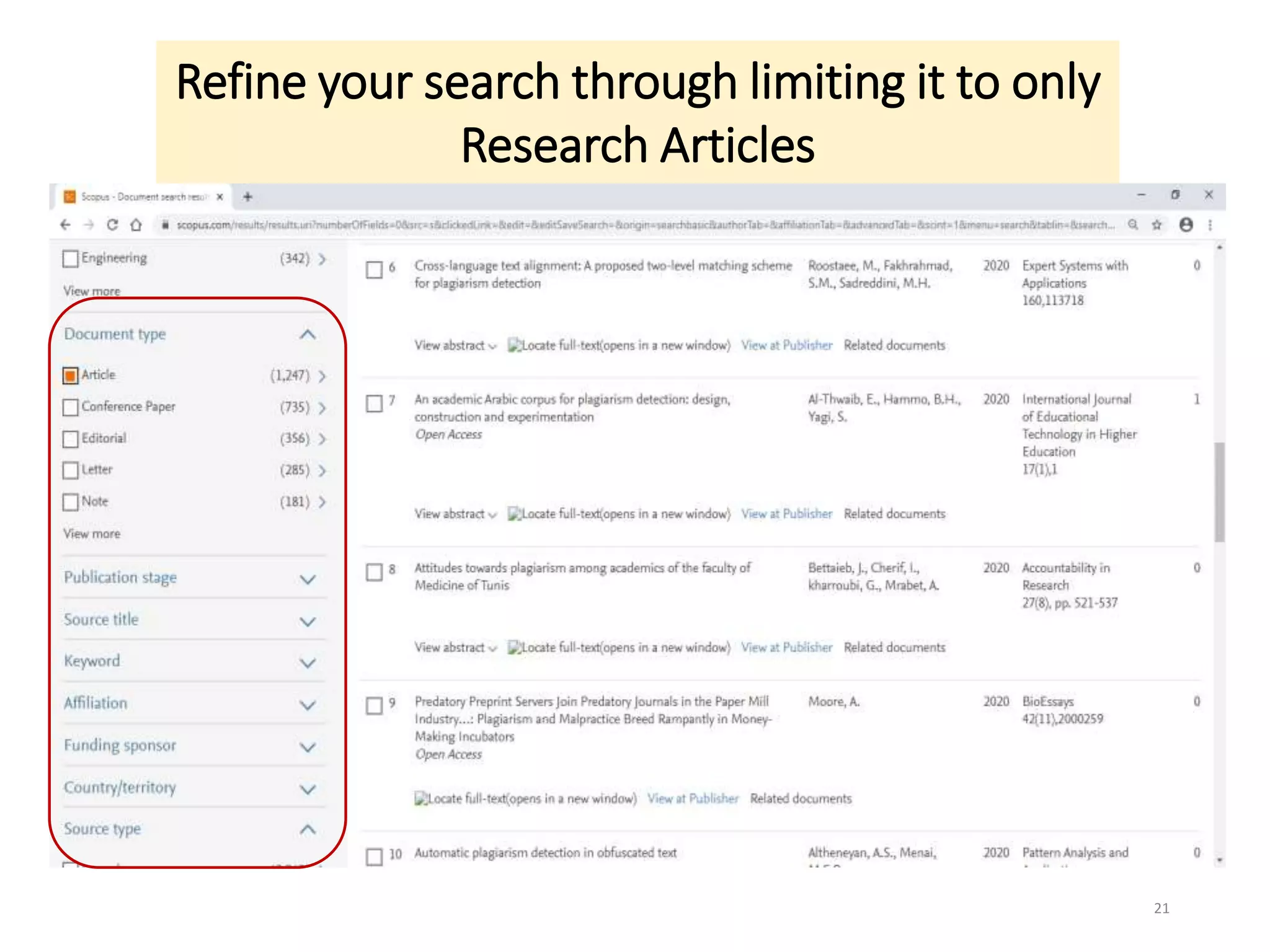
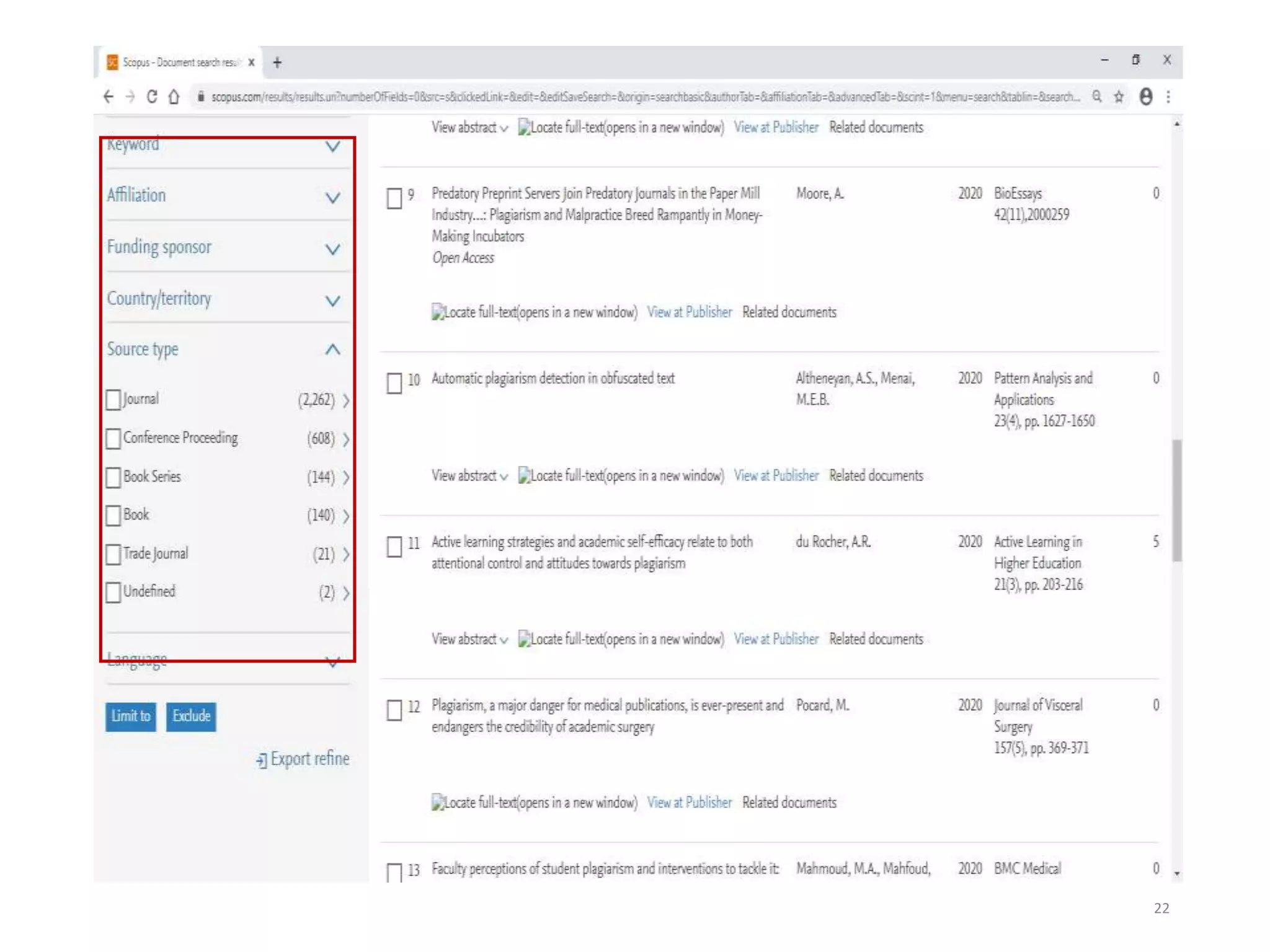
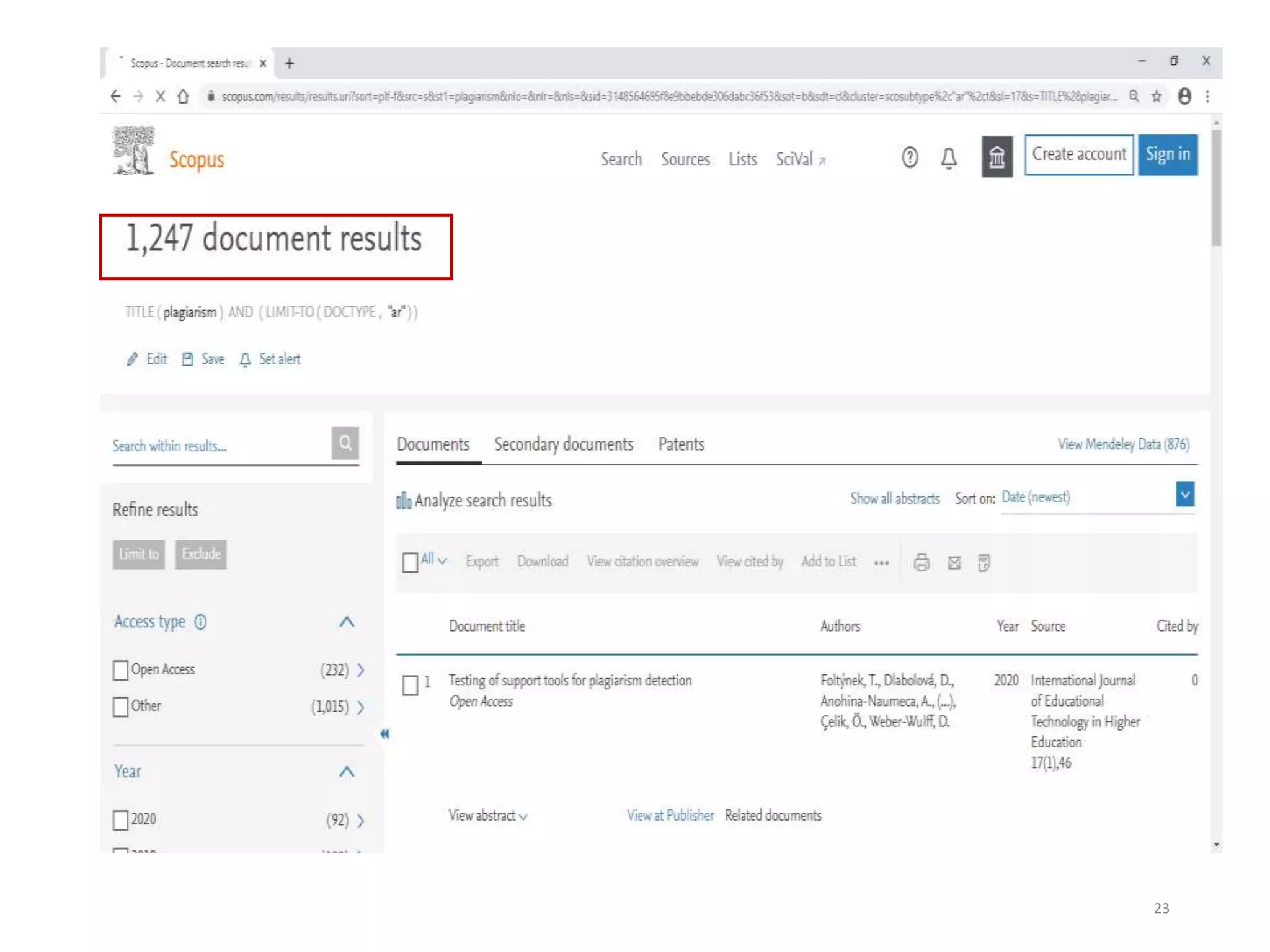
Refine your search through limiting it to only
Research Articles
21
22
23
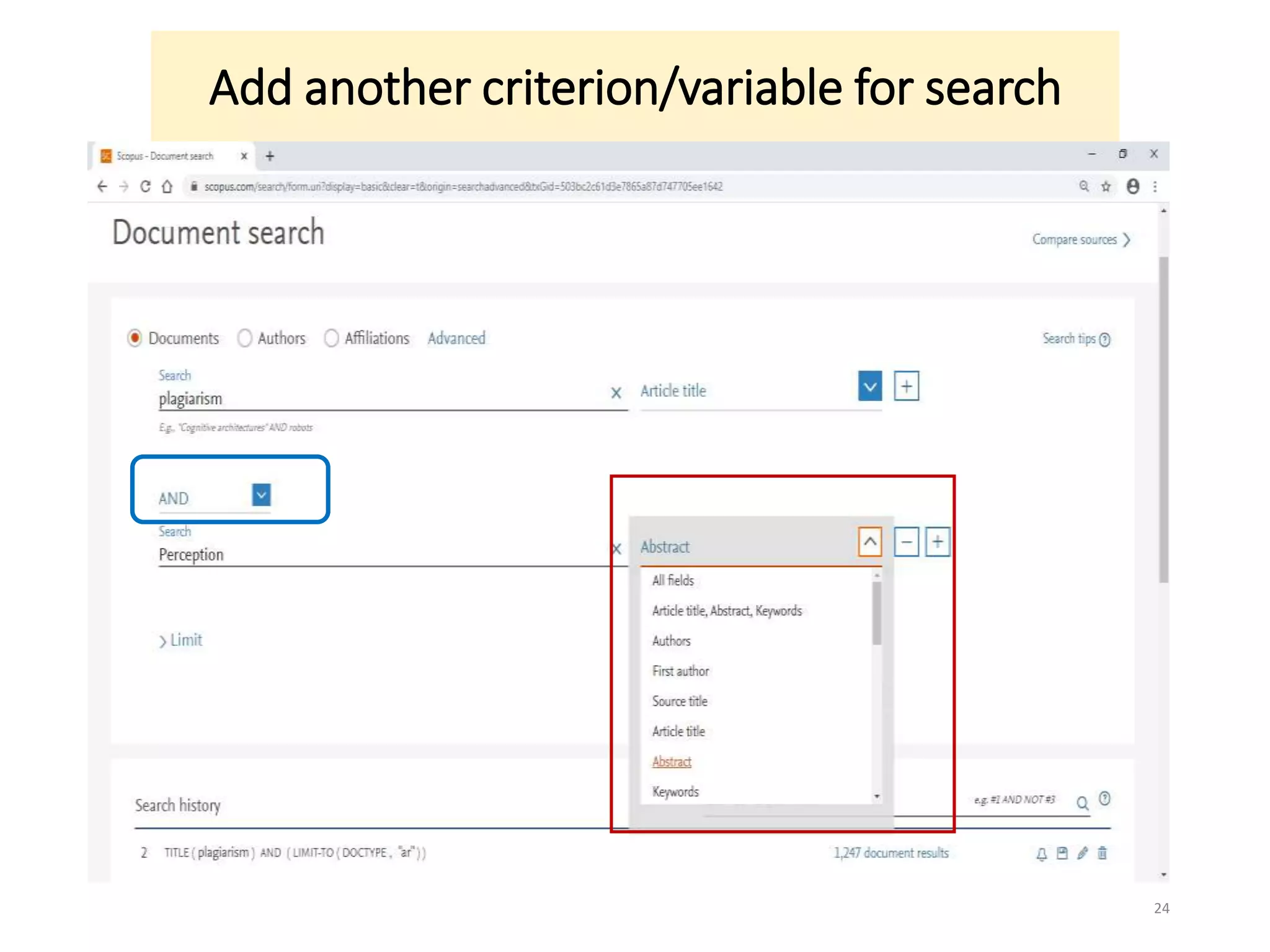
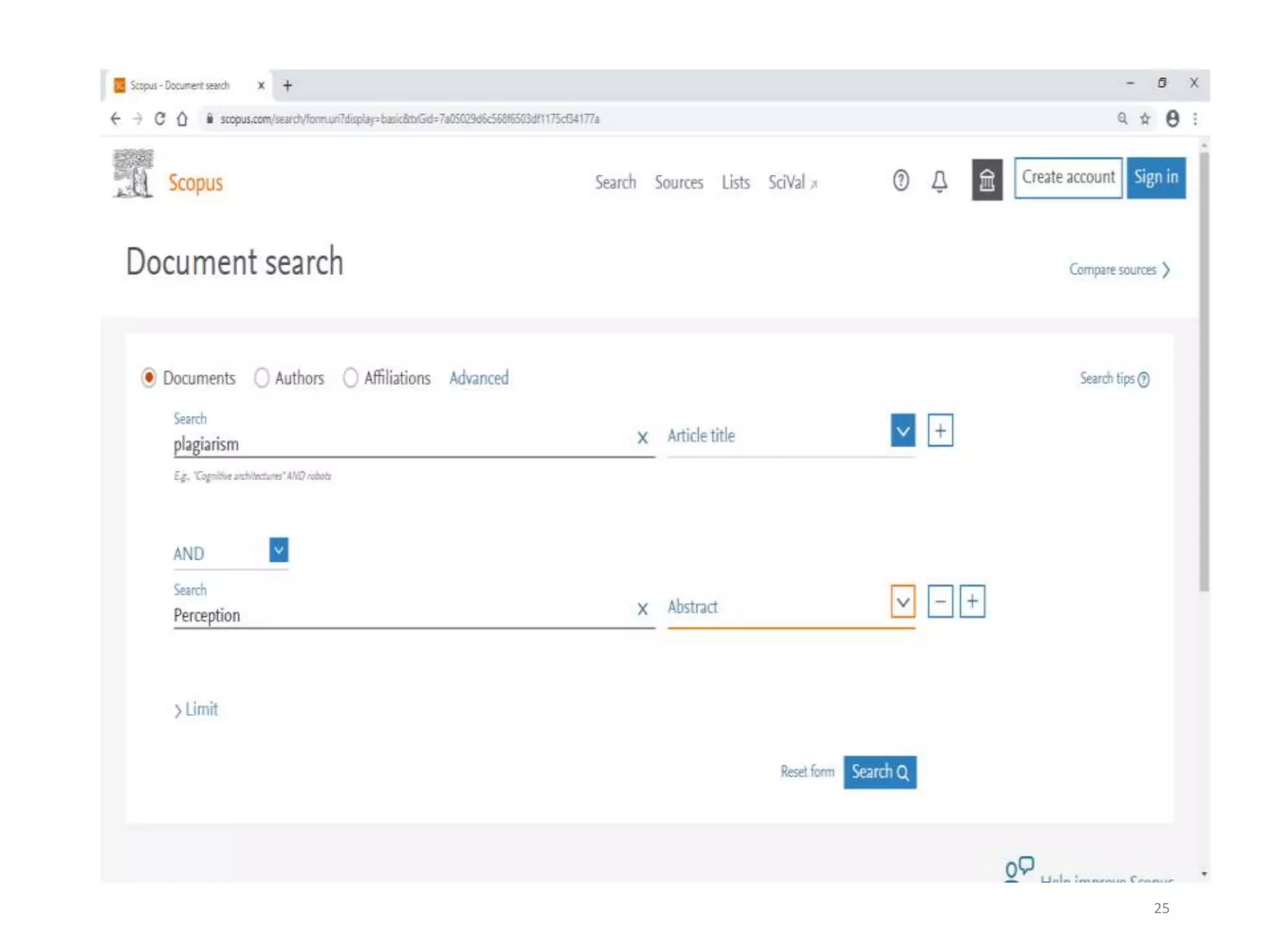
Add another criterion/variable for search
24
25
26
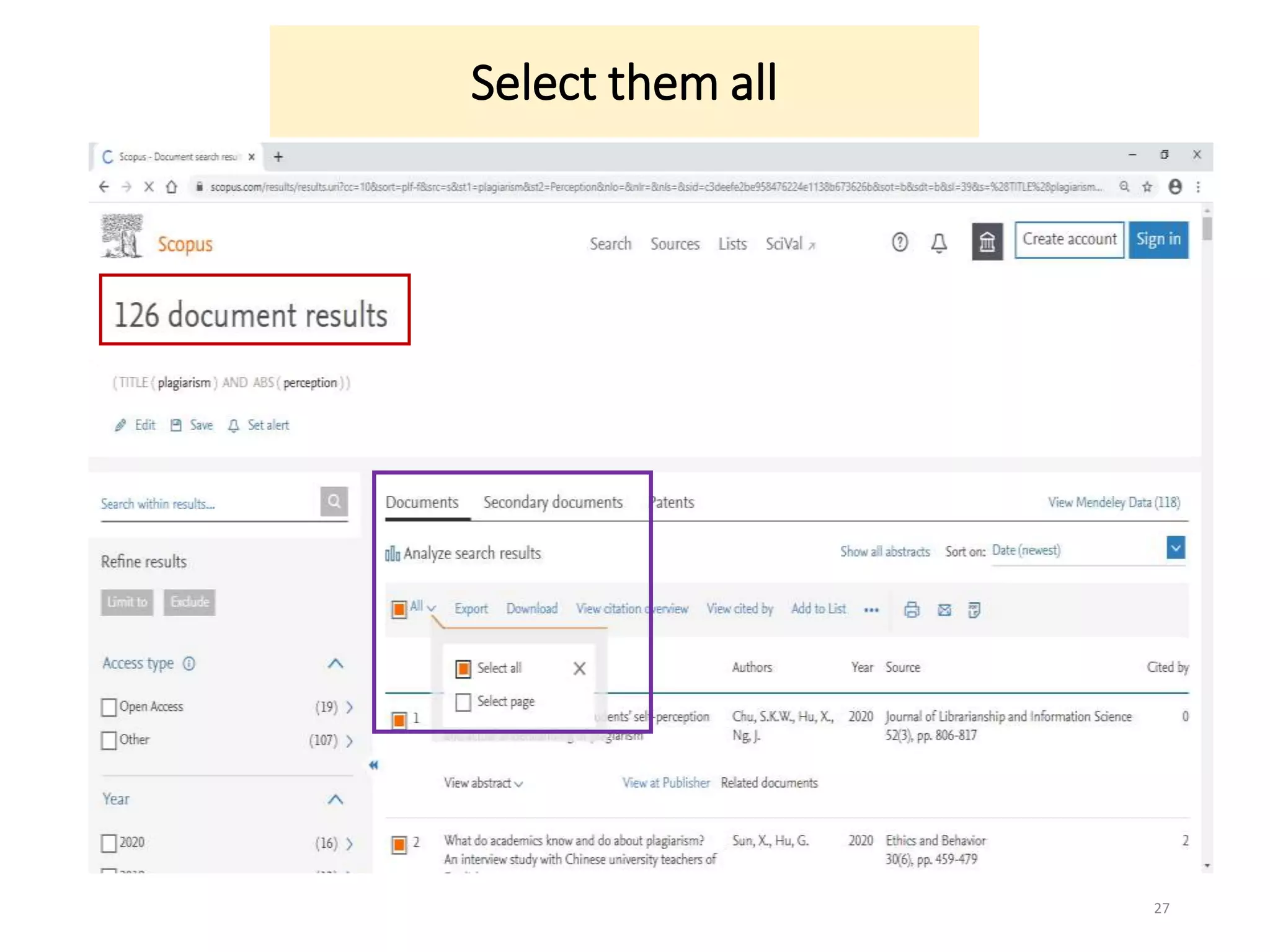
Select them all
27
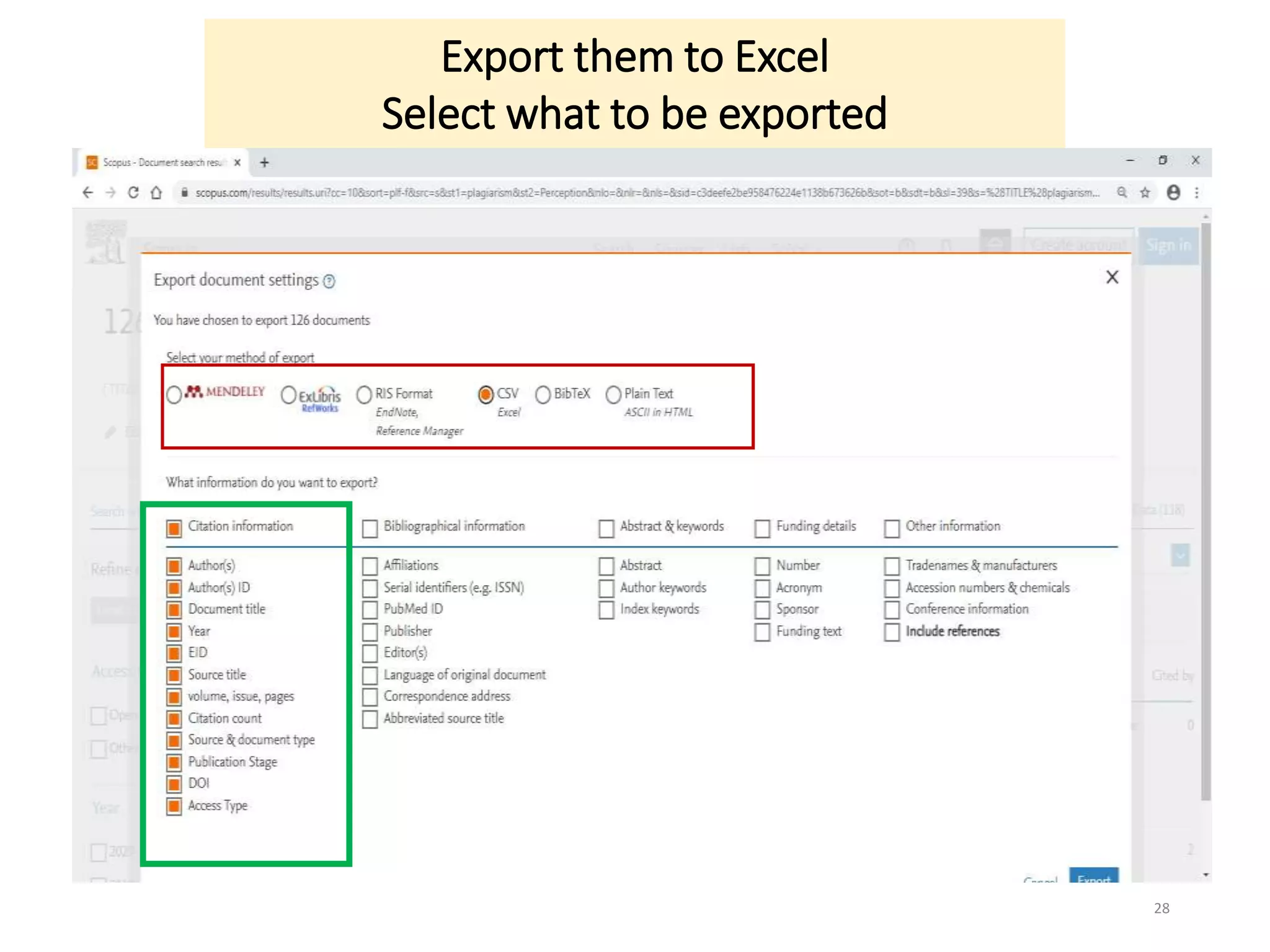
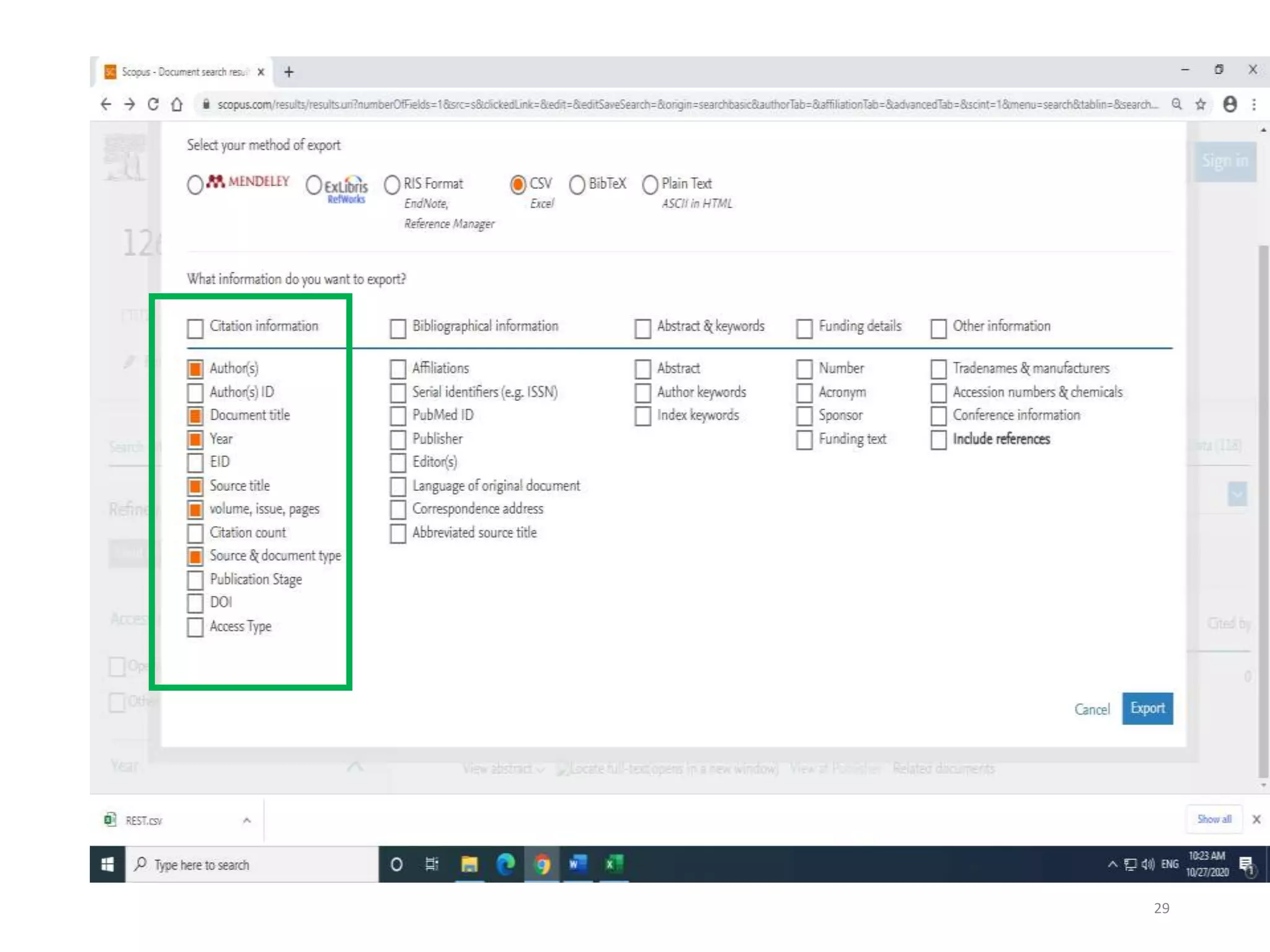
Export them to Excel
Select what to be exported
28
29
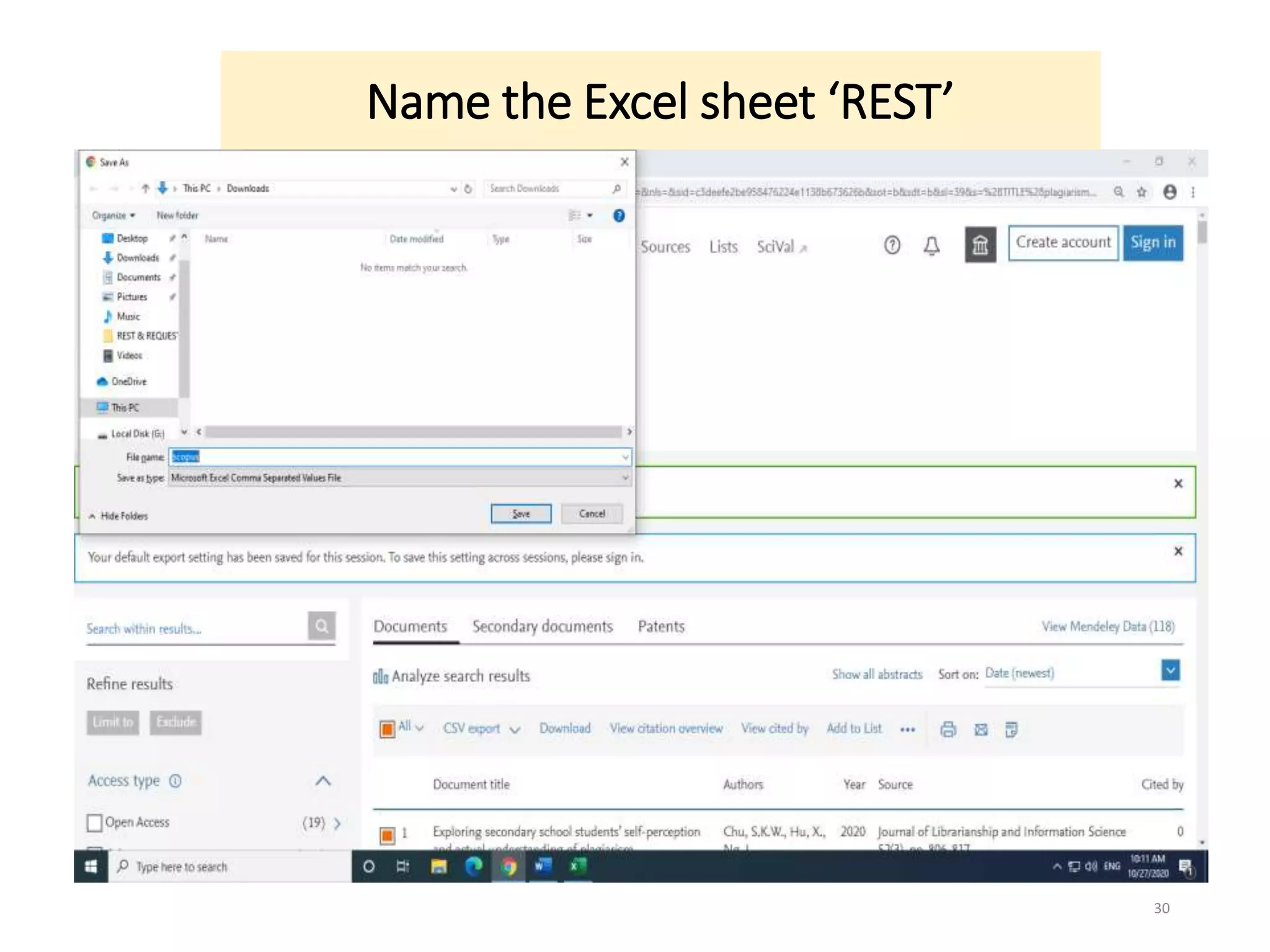
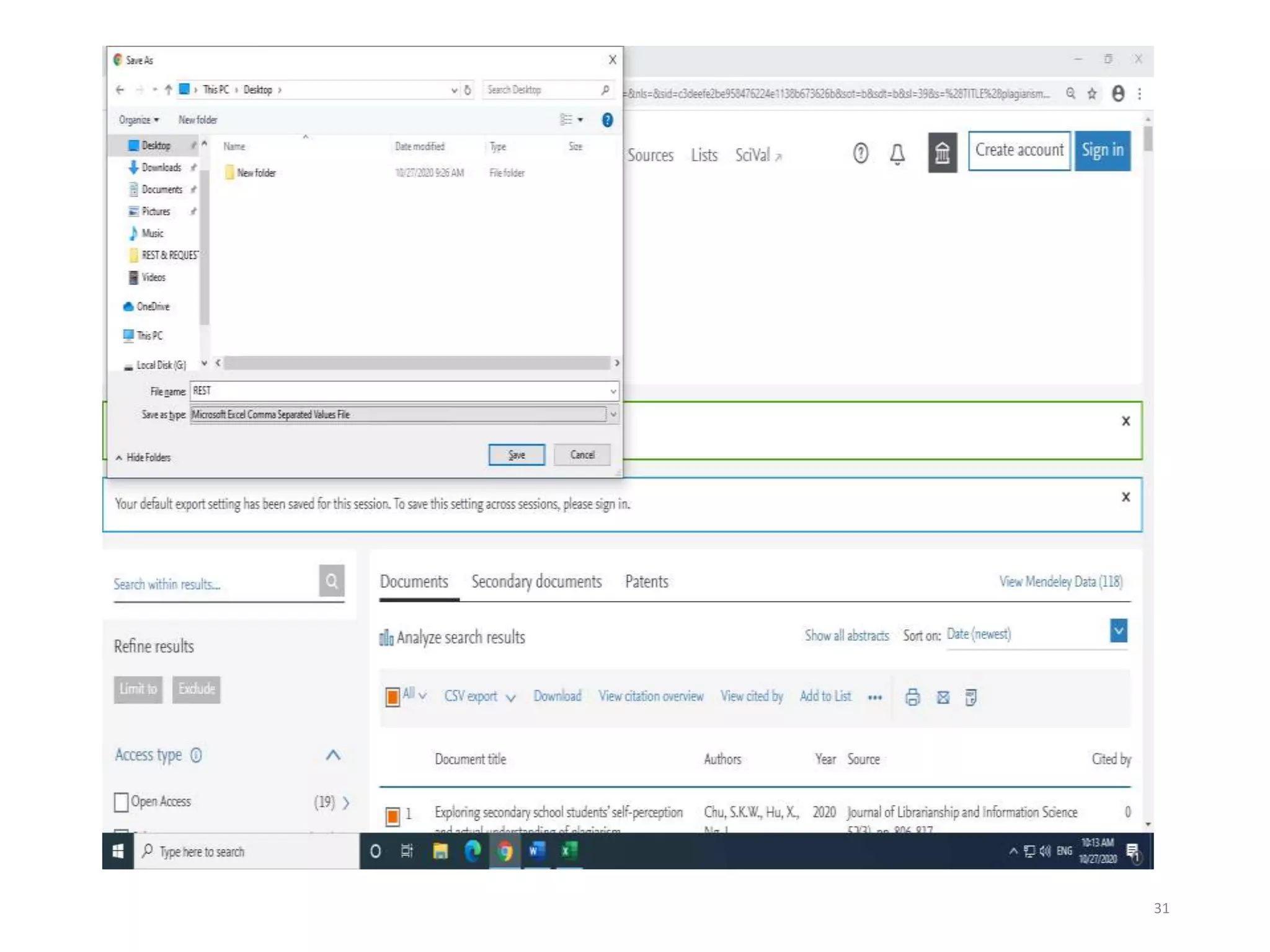
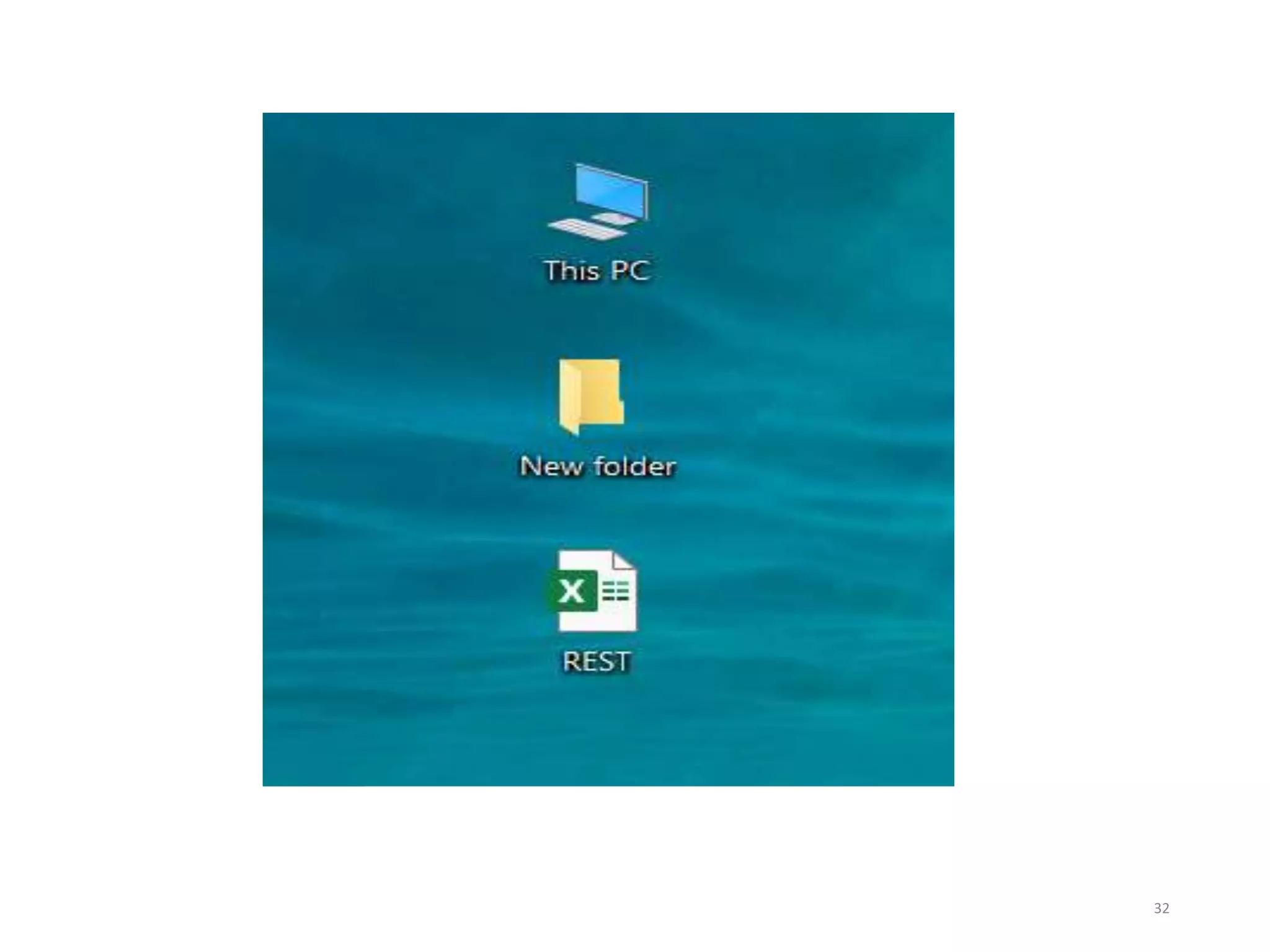
Name the Excel sheet ‘REST’
30
31
32
33
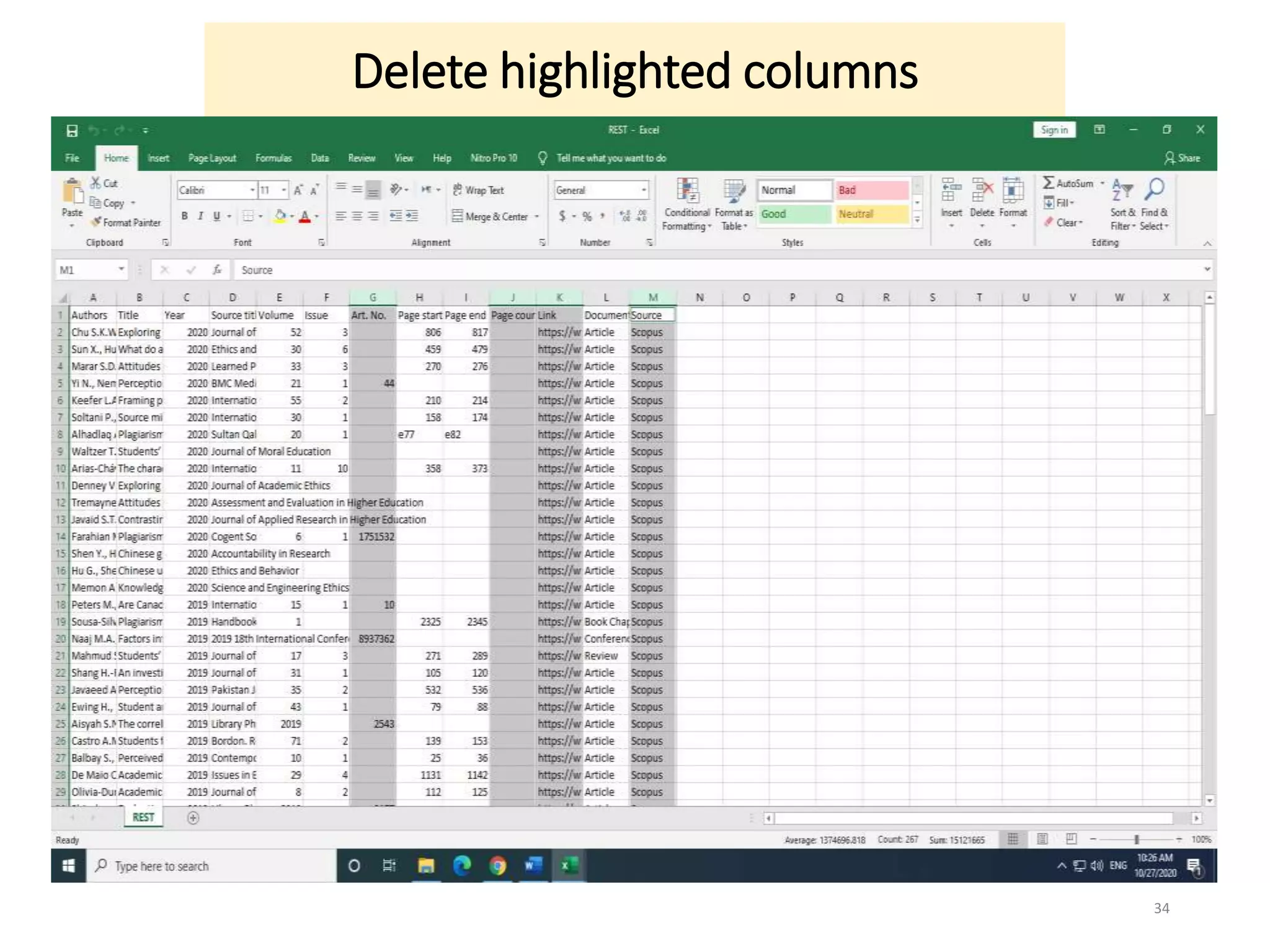
Delete highlighted columns
34
Filter the list of related studies based on the
type of publication
35
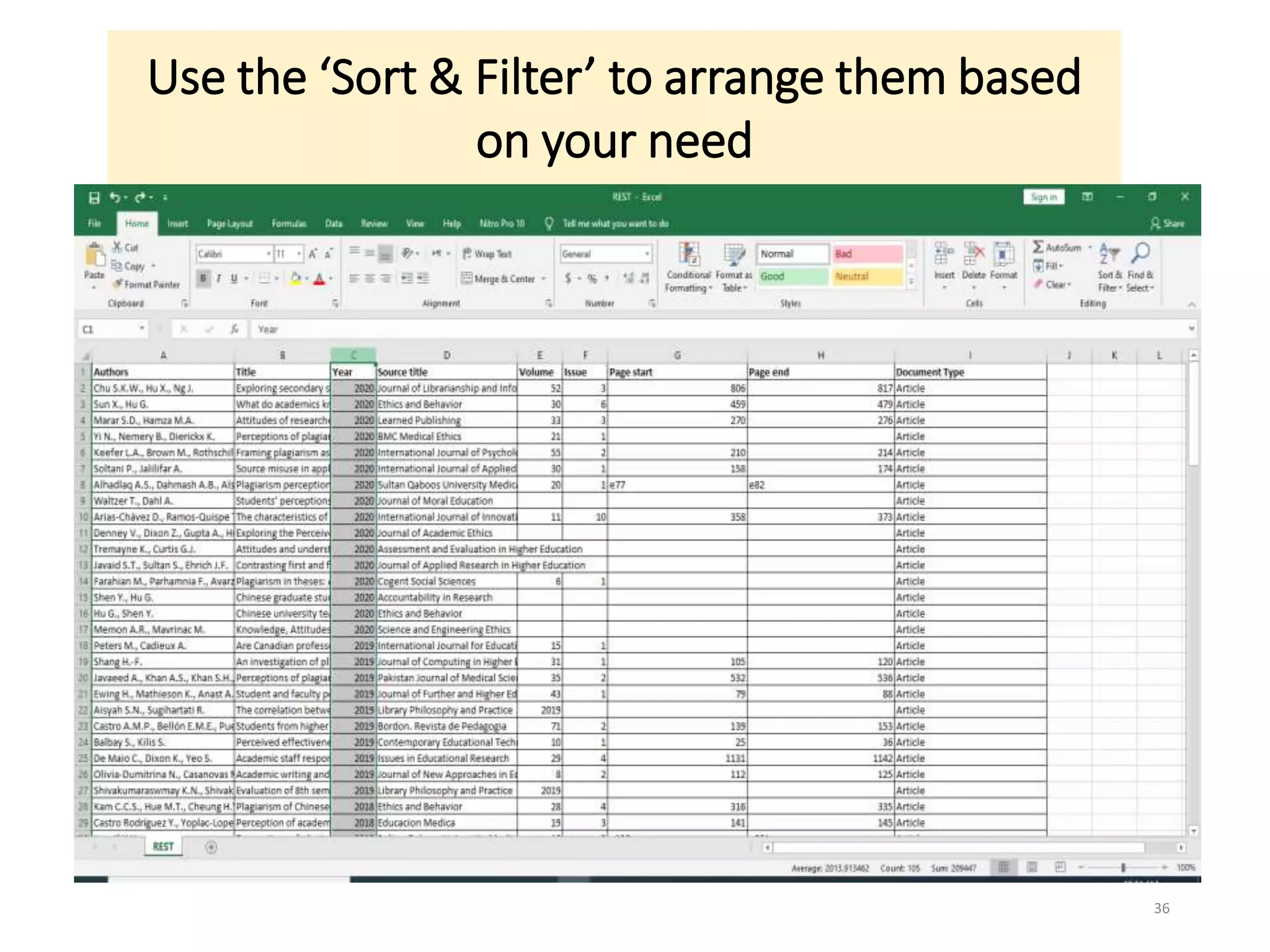
Use the ‘Sort & Filter’ to arrange them based
on your need
36
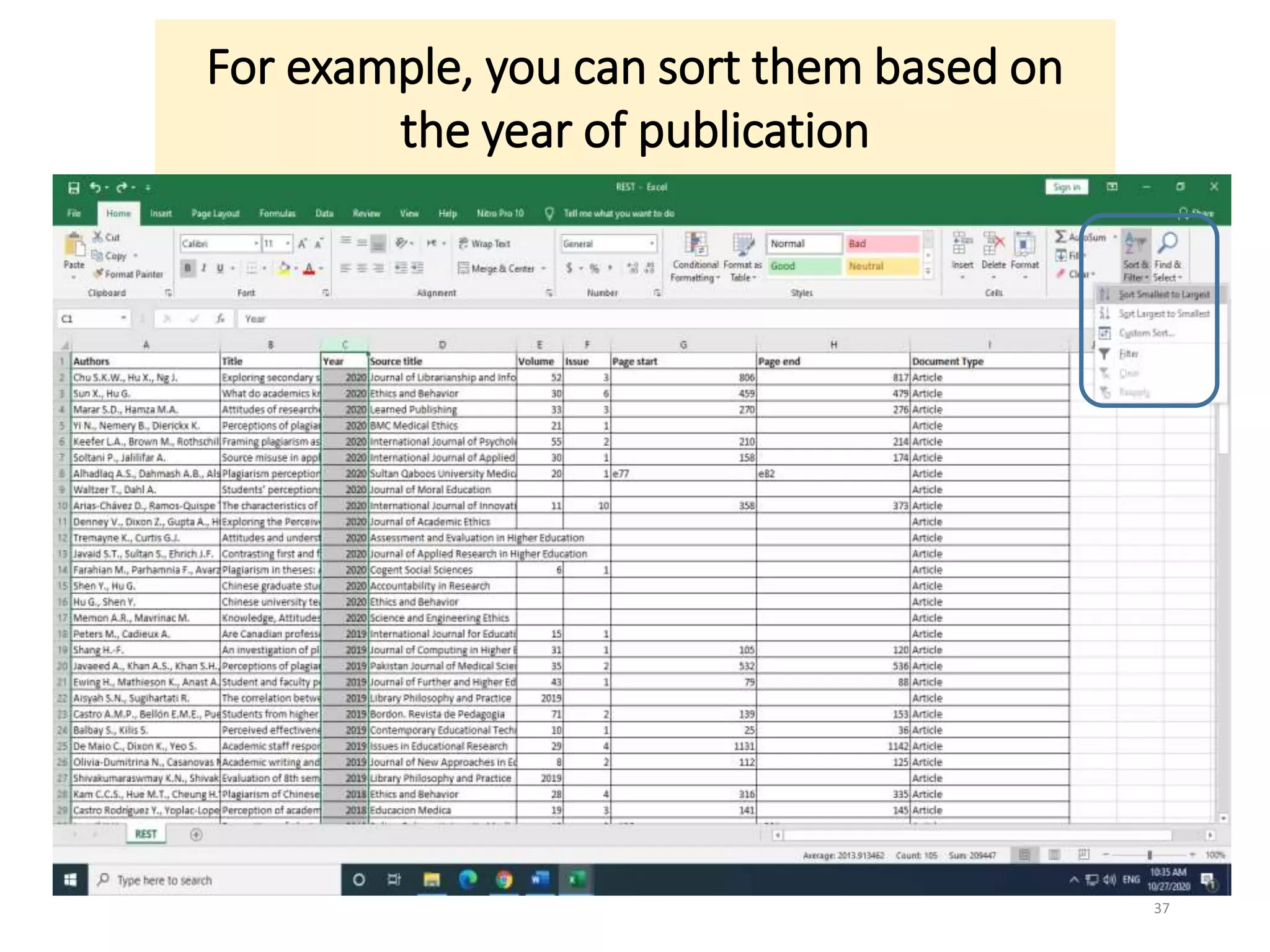
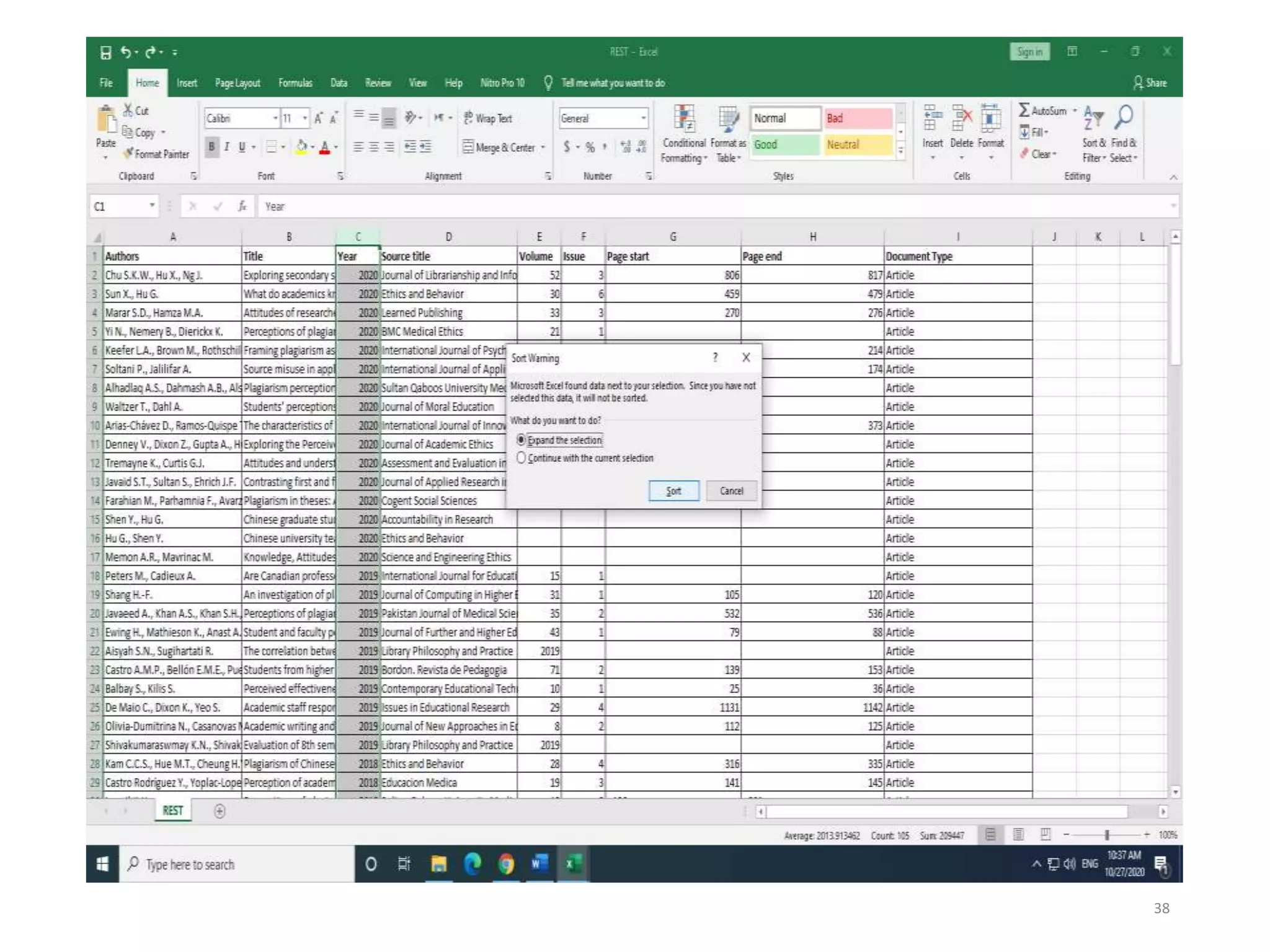
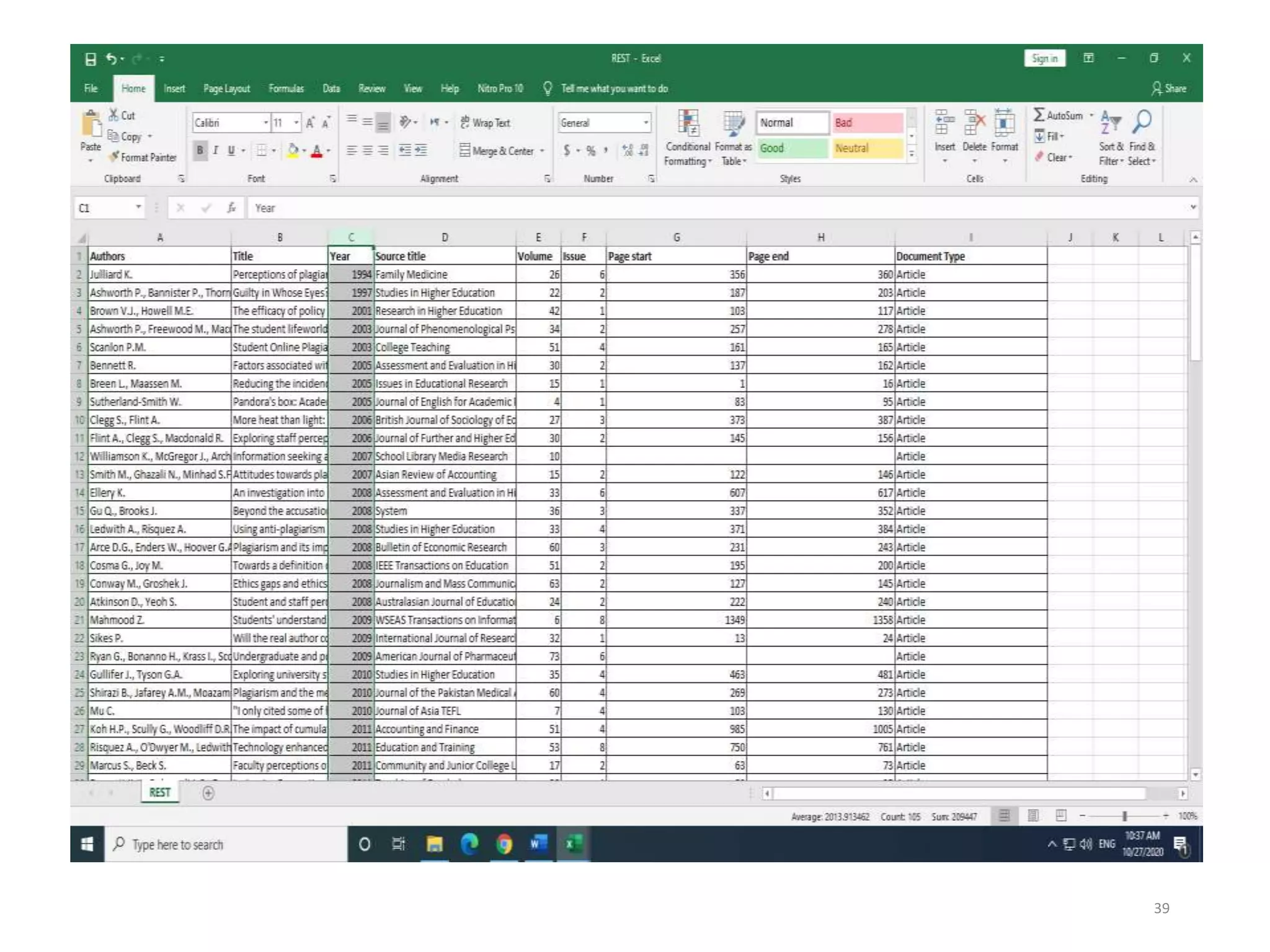
For example, you can sort them based on
the year of publication
37
38
39
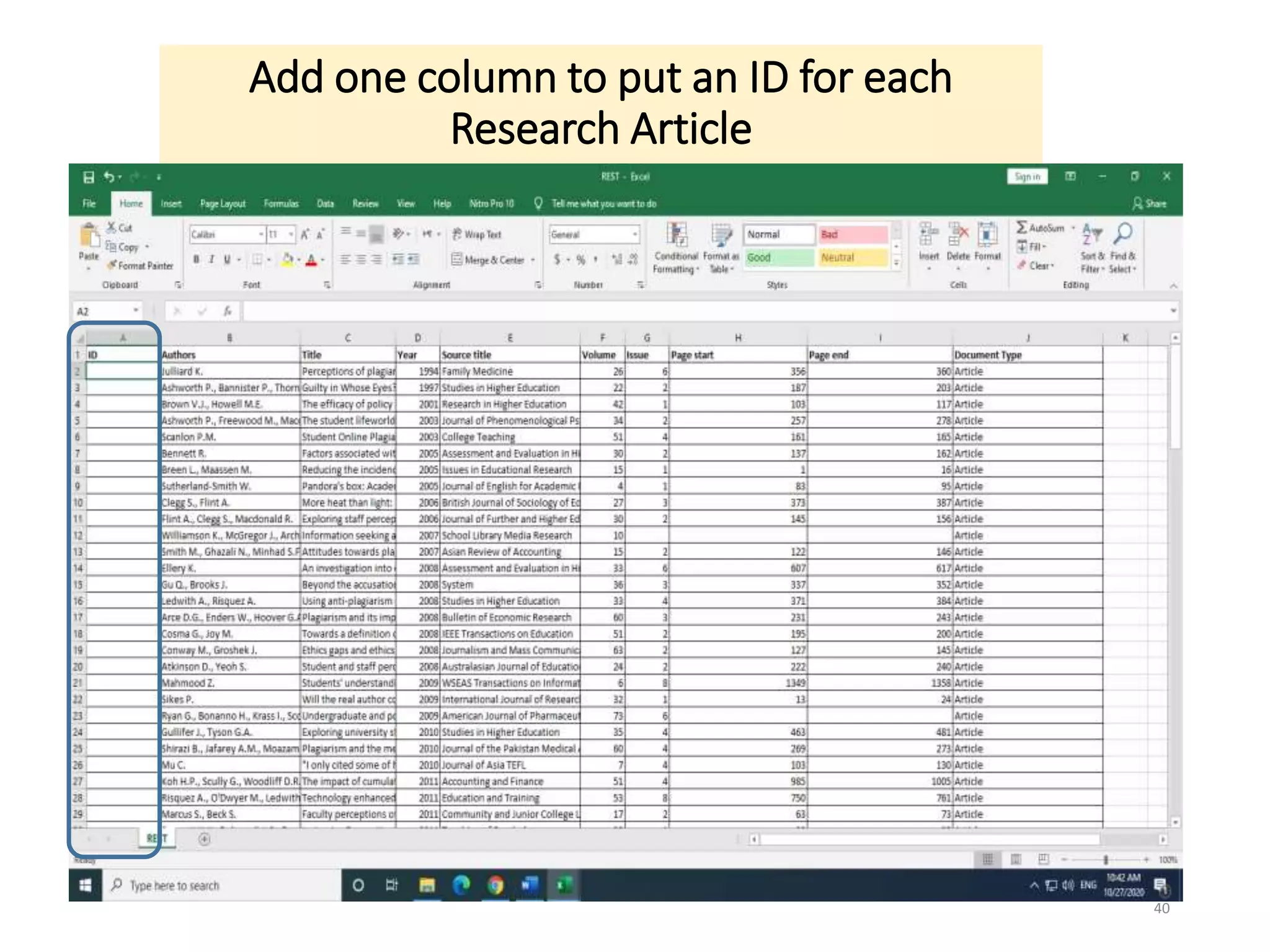
Add one column to put an ID for each
Research Article
40
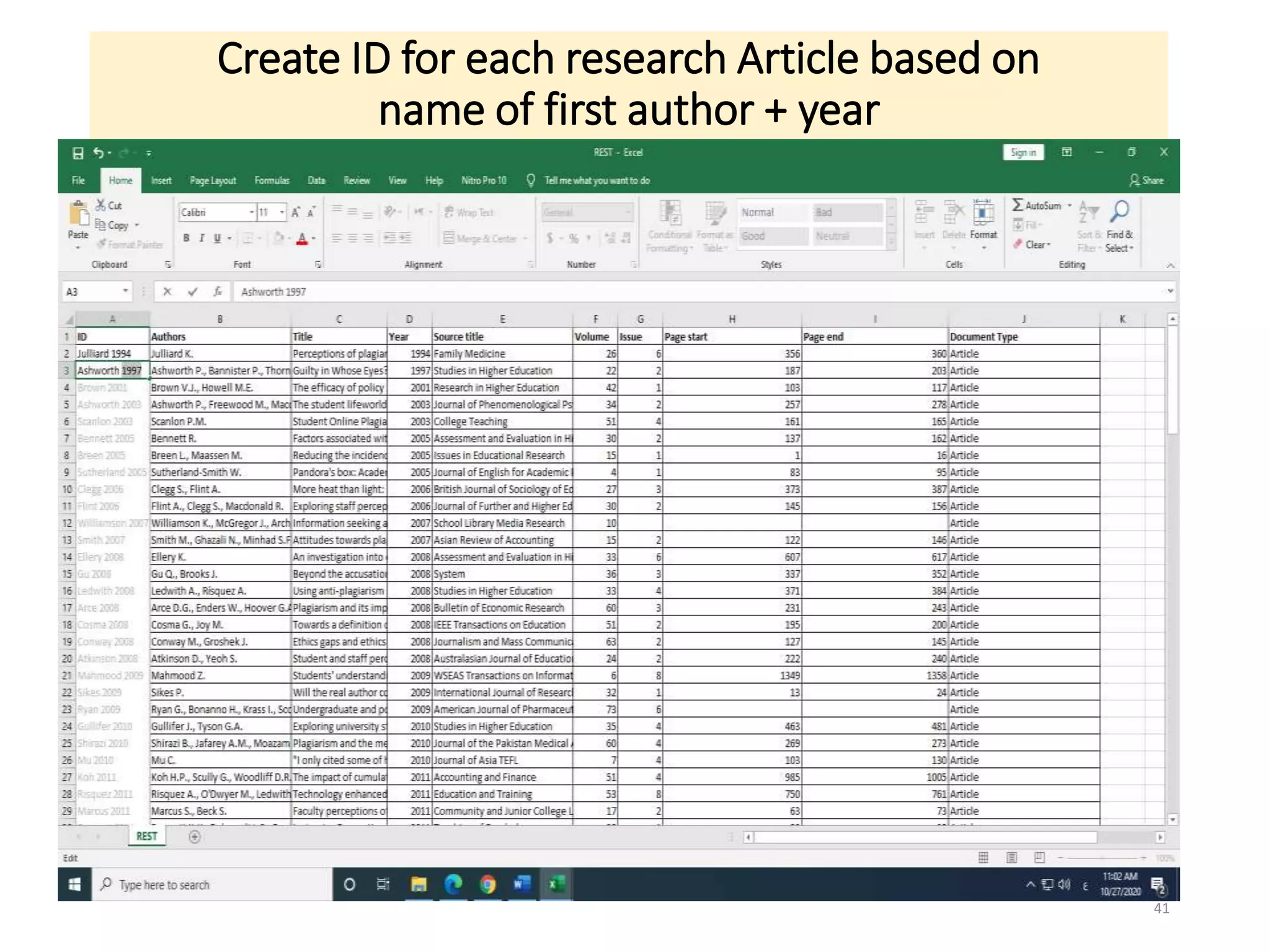
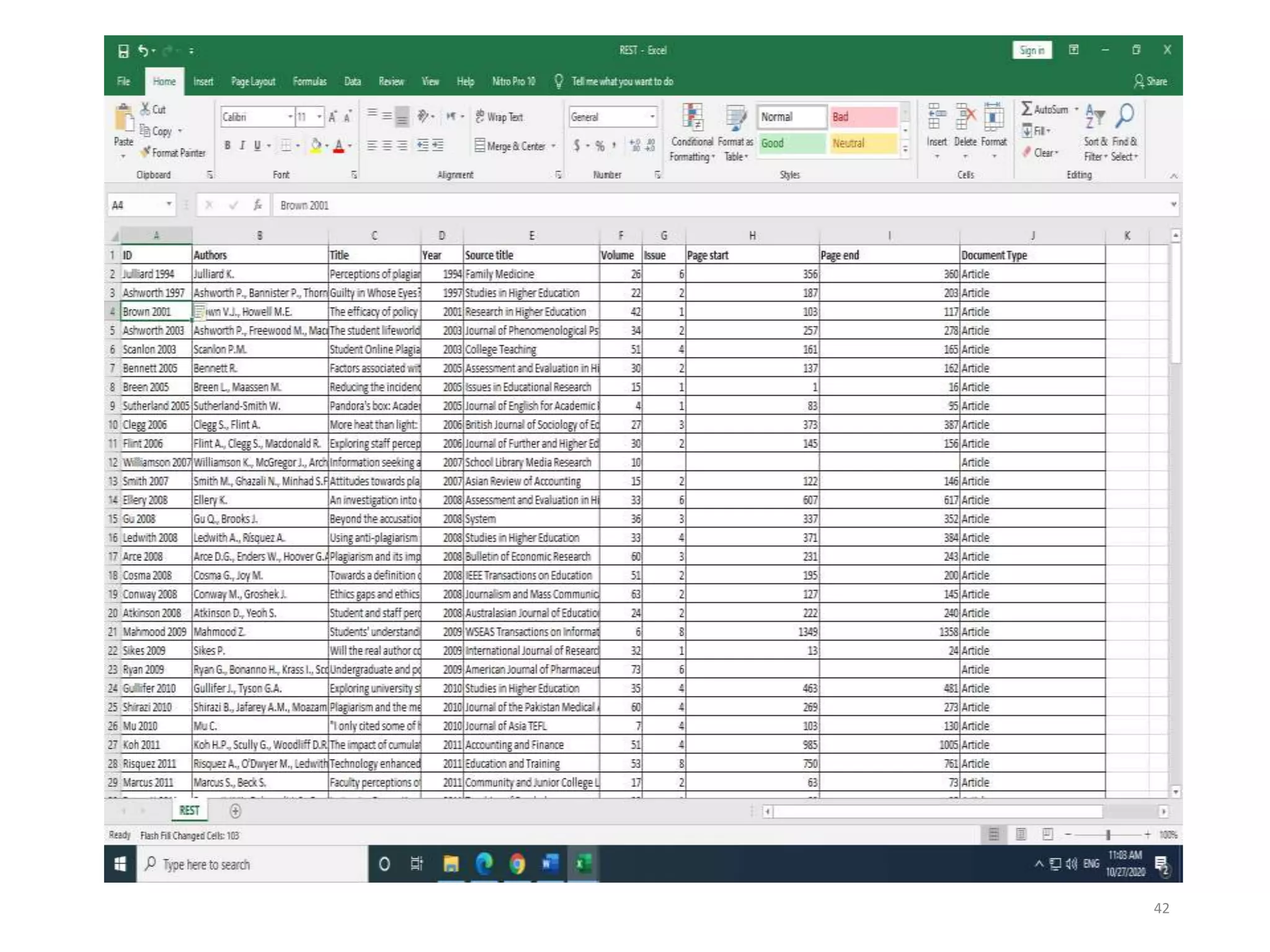
Create ID for each research Article based on
name of first author + year
41
42
43
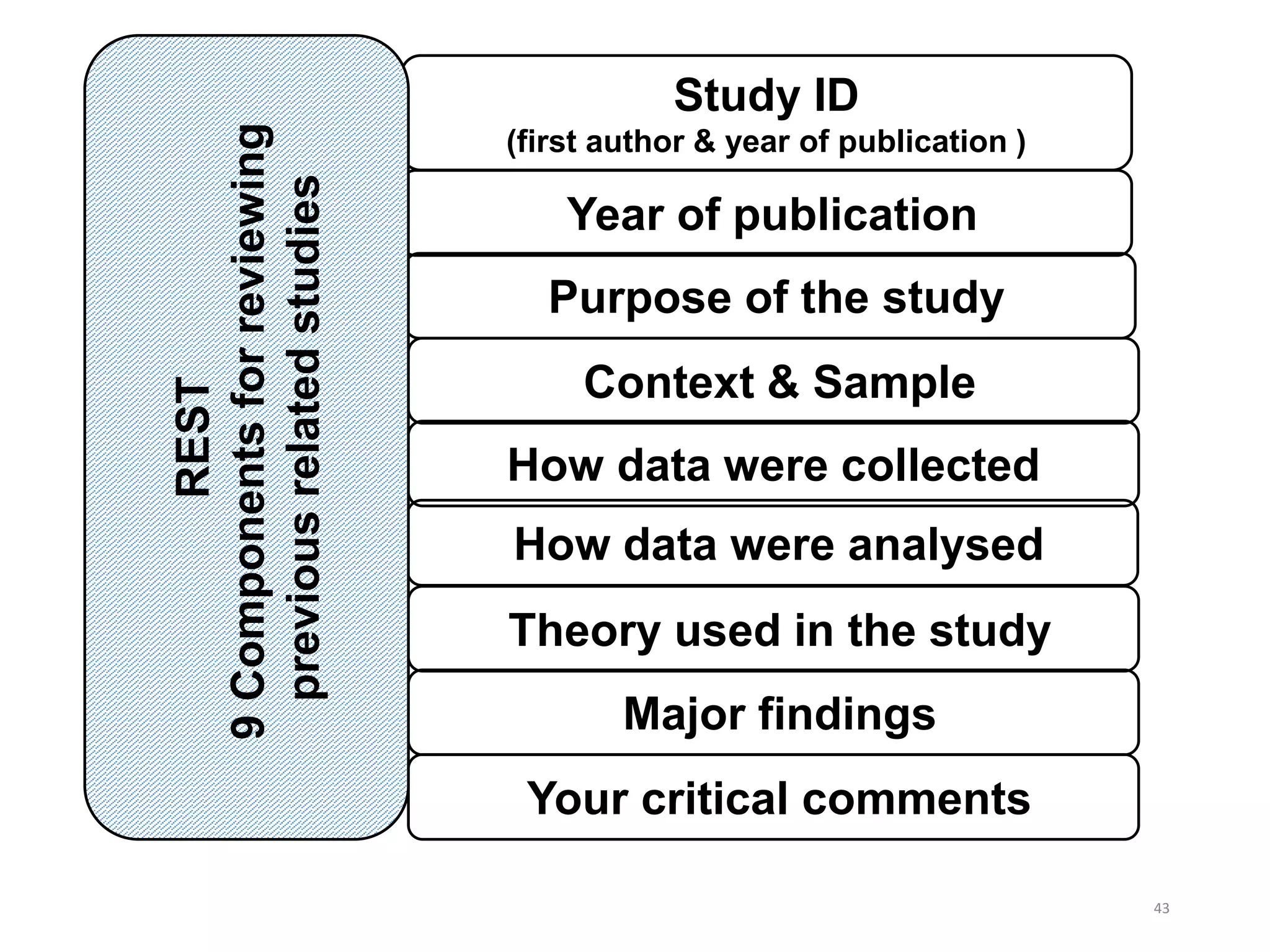
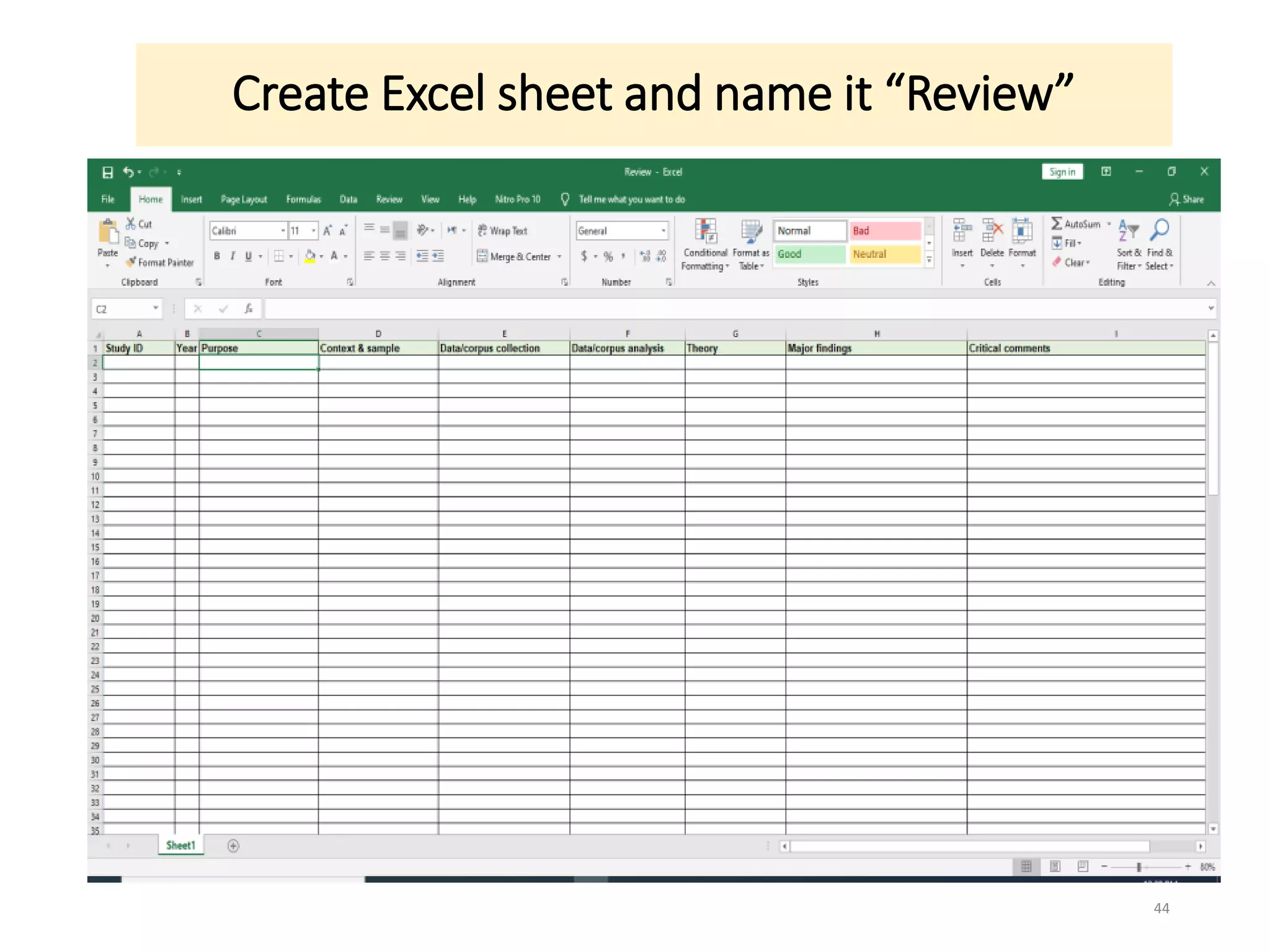
How data were analysed
Major findings
Your critical comments
Study ID
(first author & year of publication )
Year of publication
Purpose of the study
Context & Sample
How data were collected
REST
9Componentsforreviewing
previousrelatedstudies
Theory used in the study
Create Excel sheet and name it “Review”
44
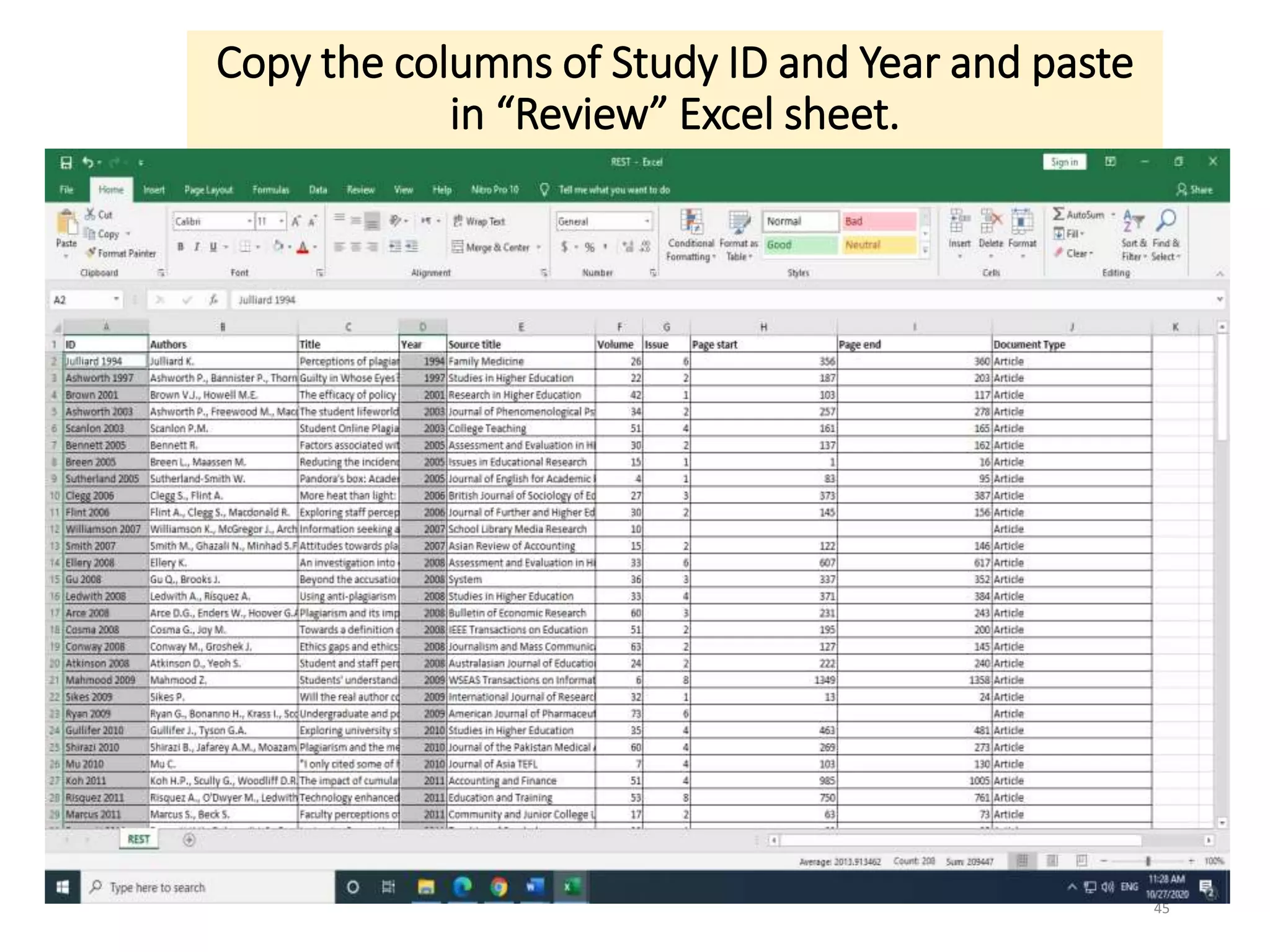
Copy the columns of Study ID and Year and paste
in “Review” Excel sheet.
45
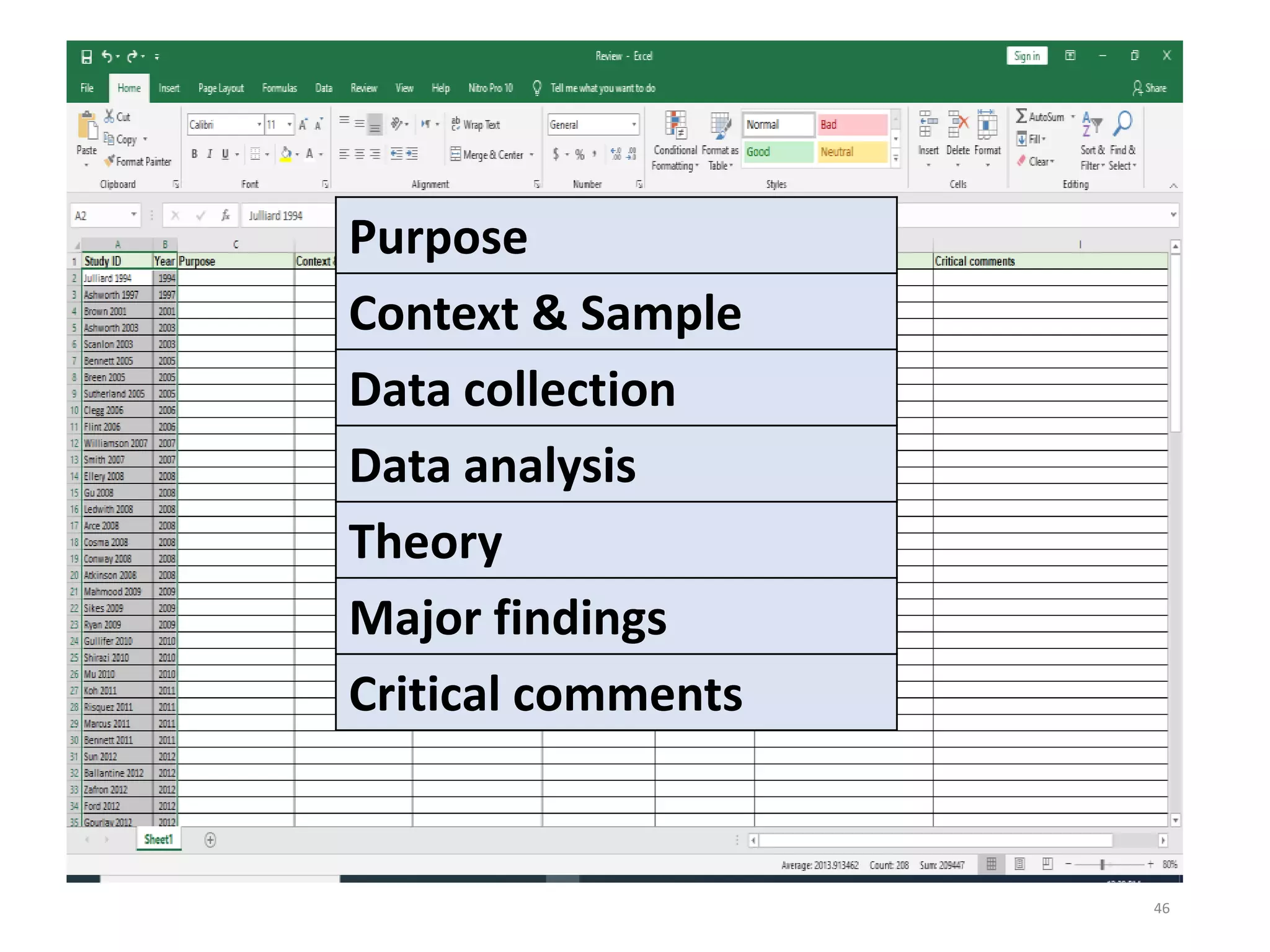
46
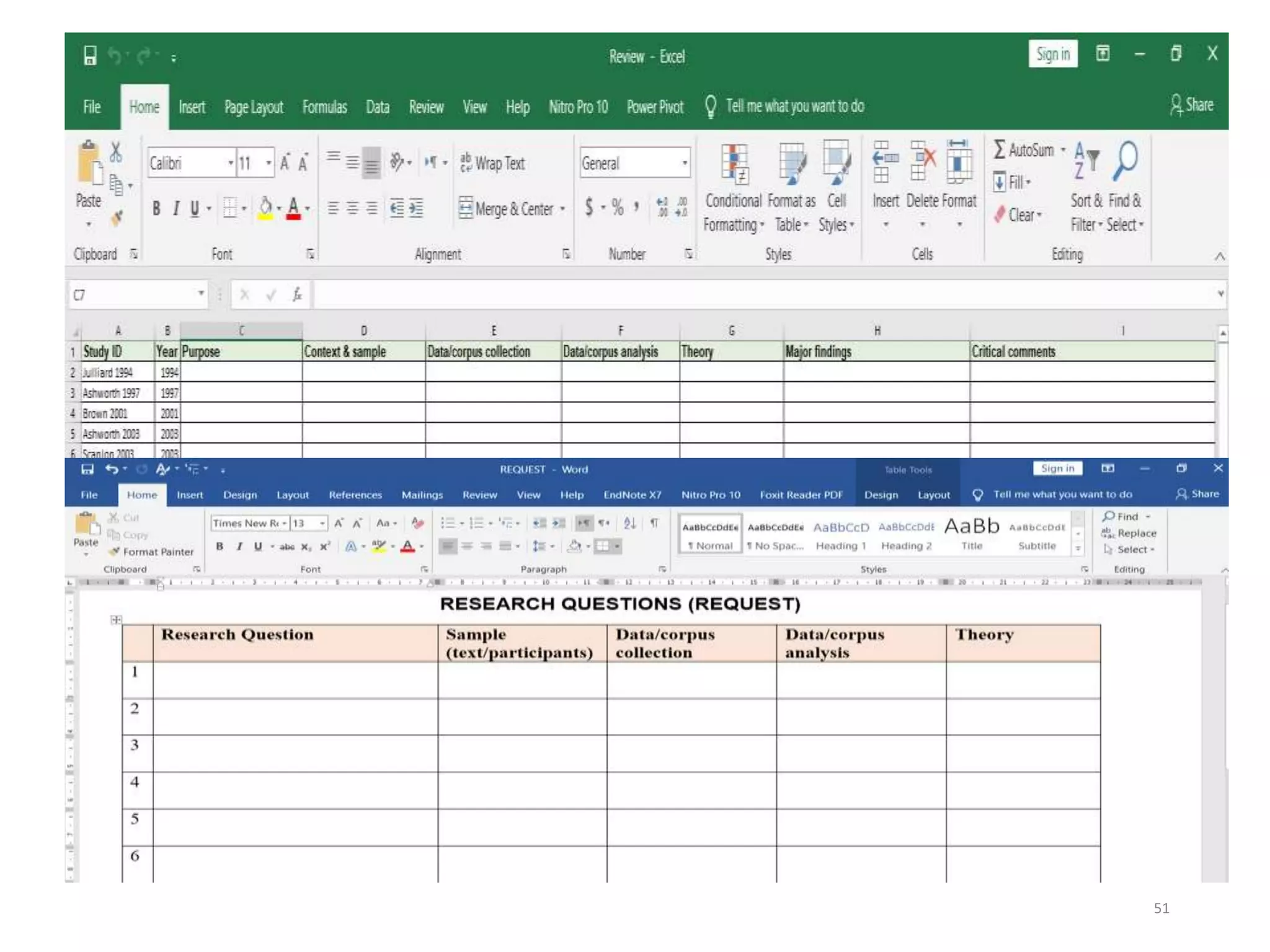
Purpose
Context & Sample
Data collection
Data analysis
Theory
Major findings
Critical comments
• Reading and reviewing
• Start reading the Research Articles you
downloaded while filling in REST table with
phrases/short sentences. Do not try to use
complete statements.
• Summarization
• When you finish this form, summarize each
study (Research Article) in 200-300 words.
• Compile the summaries of all Research Articles
you reviewed.
47
• Thematization of previous studies
• You can thematize the studies you reviewed and
summarized based on themes that are common
among some studies.
• GAPS in previous studies
• Identify issues that were not addressed by the
researchers or the problems they documented in
these studies.
• Write the statement of the problem
• https://www.slideshare.net/omer1974
48
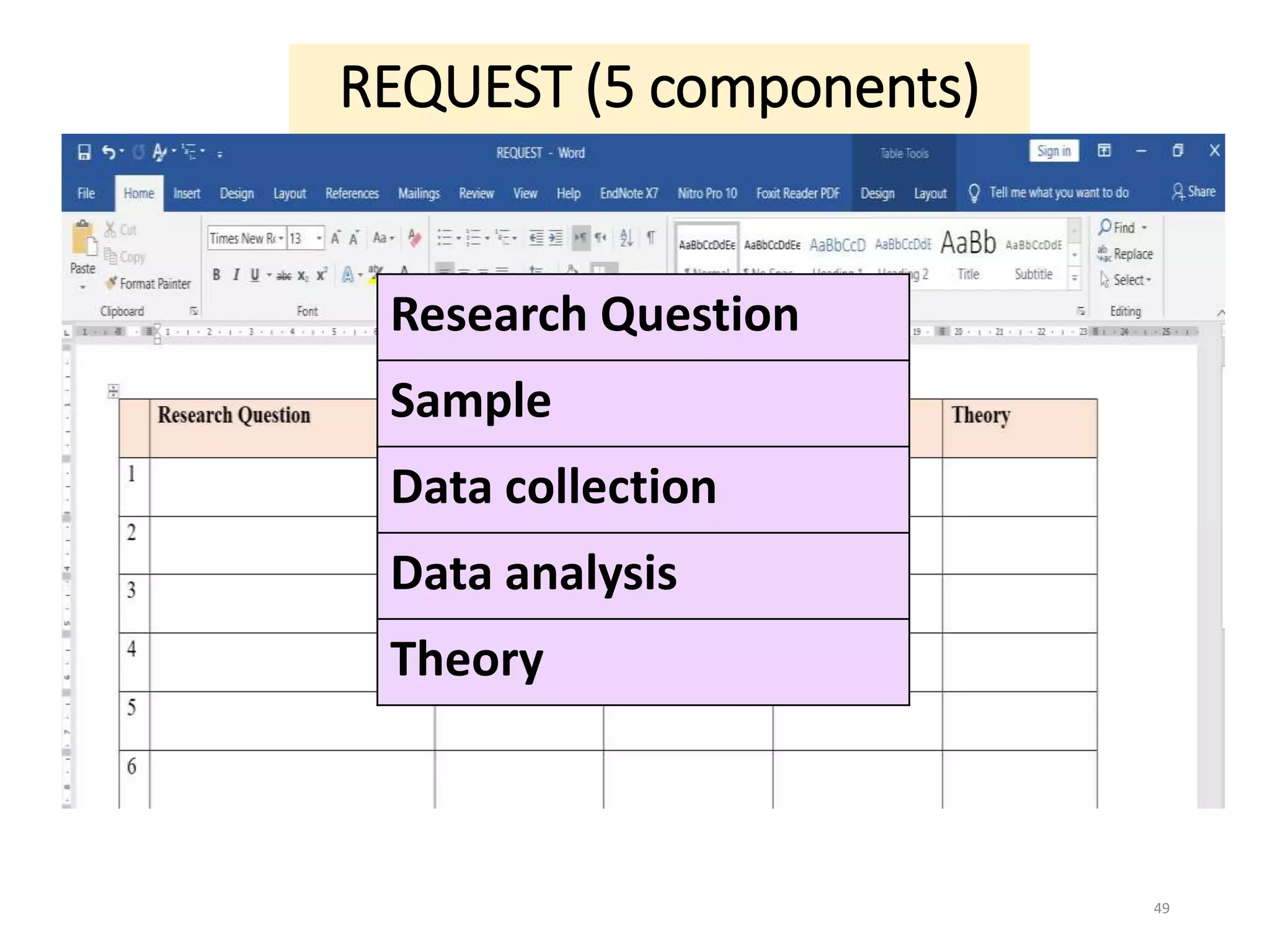
REQUEST (5 components)
49
Research Question
Sample
Data collection
Data analysis
Theory
50
51
Summary
52
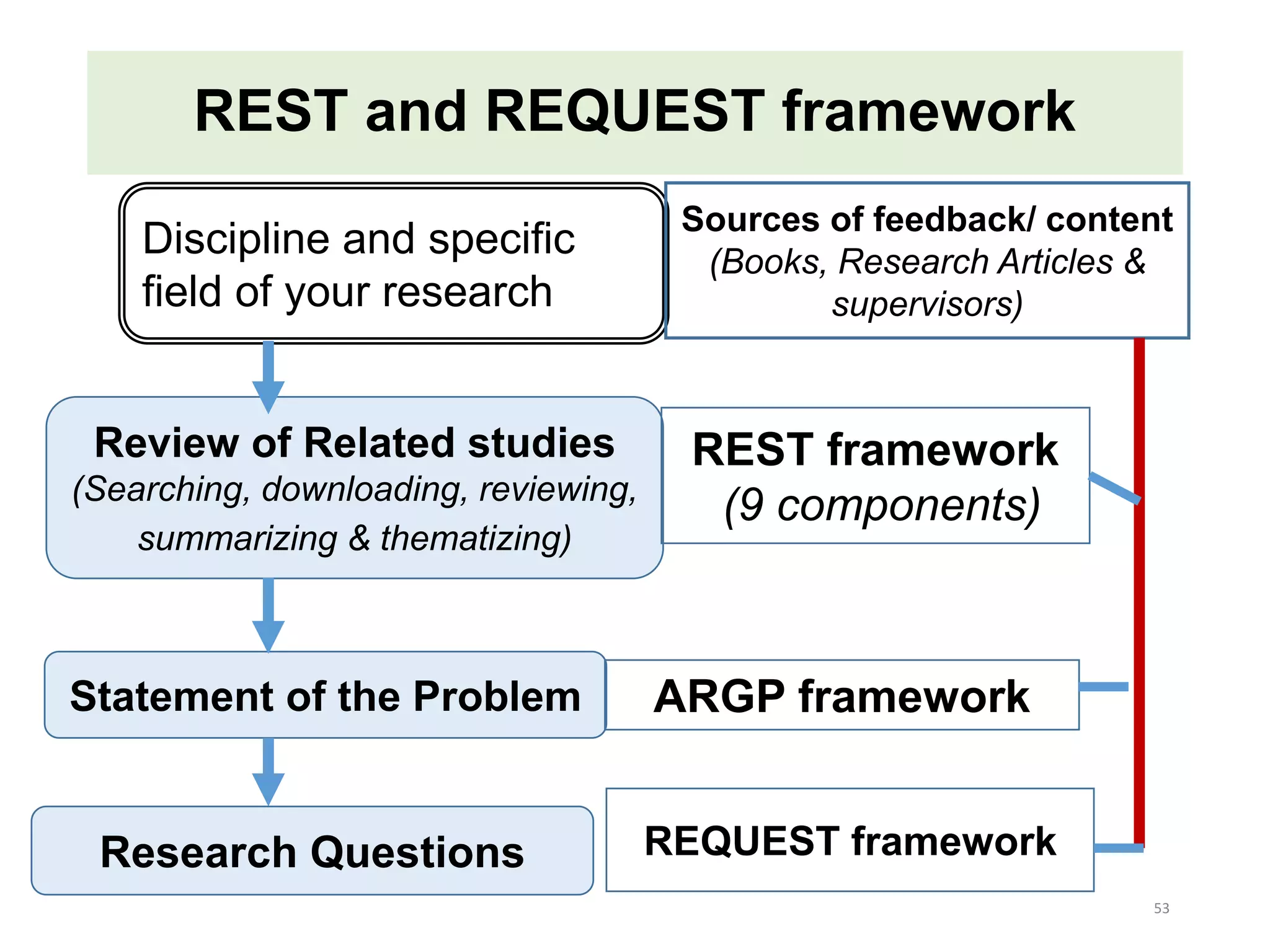
REST and REQUEST framework
53
Discipline and specific
field of your research
Review of Related studies
(Searching, downloading, reviewing,
summarizing & thematizing)
REST framework
(9 components)
Statement of the Problem ARGP framework
Research Questions REQUEST framework
Sources of feedback/ content
(Books, Research Articles &
supervisors)
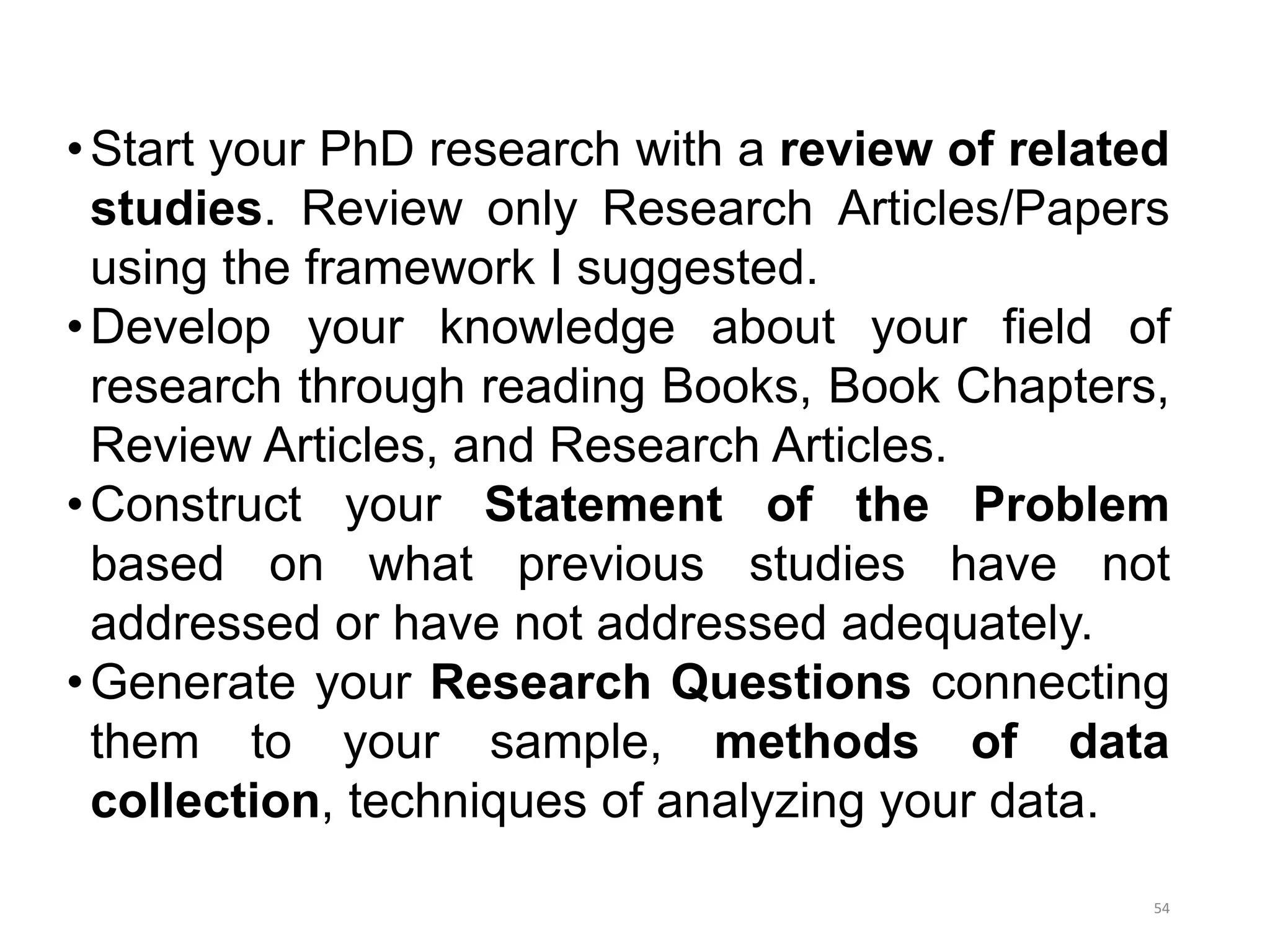
•Start your PhD research with a review of related
studies. Review only Research Articles/Papers
using the framework I suggested.
•Develop your knowledge about your field of
research through reading Books, Book Chapters,
Review Articles, and Research Articles.
•Construct your Statement of the Problem
based on what previous studies have not
addressed or have not addressed adequately.
•Generate your Research Questions connecting
them to your sample, methods of data
collection, techniques of analyzing your data.
54
THANK YOU
55
For questions
https://forms.gle/nwf8rNr8tWjf34ZV7

Effective PhD research Progress

  • 1.
    “I have justregistered for my Ph.D; what should I do?”: REST and REQUEST framework for effective Ph.D research progress Dr. OMER MAHFOODH omer@usm.my omer197435@gmail.com School of Languages, Literacies and Translation Universiti Sains Malaysia 2020 1
  • 2.
    How to startmy PhD? 2
  • 3.
     Participant 1 My supervisor asked me to read and meet him regularly to explain to him what I read.  Participant 2  My supervisor asked me to spend the first half of my first year on reading. He did not want to see me during this period.  Participant 3  My supervisor asked me to start writing and to meet him every week.  Participant 4  My supervisor asked me to write literature review. 3
  • 4.
     Participant 5 My supervisor asked me to write the statement of the problem.  Participant 6  My supervisor asked me to give him a suggested table of content.  Participant 7  My supervisor asked me to write on only four sections: background to the study, statement of the problem, research questions, and significance of the study. 4
  • 5.
  • 6.
    6 PhD Research PhD Thesis Written product ofyour PhD research. It is submitted for proposal defence and viva examination. Academic practices - Reading research articles & books - Writing your PhD proposal, research articles, drafts of your PhD - Data/corpus collection and analysis - Listening to presenters in workshops, conferences & proposal defences - Presenting your research in proposal defence & conference - Discussion of your research with your supervisors.
  • 7.
    PhD research proposalvs. PhD thesis PhD research proposal Chapter One Introduction Chapter Chapter Two Literature Review Chapter Three Methodology 7 PhD thesis for viva Chapter One Introduction Chapter Chapter Two Literature Review Chapter Three Methodology Chapter Four Results Chapter five Discussion & Conclusions
  • 8.
  • 9.
    9 Research Articles, books, theses& book chapters Choosing the broad field and specific area of research Construction of the Statement of the Problem Generation of the research objectives/hypotheses Supervisor(s) Sources of feedback/content Others (e.g. conferences, peers) Your experience Methods of data collection Overview of related studies The Research Proposal: Three chapters (Introduction, Literature Review and Methodology) RelatedTheoriesTechniques ofanalysis
  • 10.
    Chapter One: Introduction 10 Background Statementof the problem Research objectives Limitations of the study Significance of the study Definition of key terms
  • 11.
    Chapter Two: LiteratureReview 11 Related theories Review of related studies
  • 12.
    Chapter Three: Methodology 12 ResearchApproach (Quantitative, Qualitative, or Mixed methods) Sample Methods of data collection Technique of analysis
  • 13.
    13 Statement of the problem Research objectives Methodsof data collection Review of related studies Core of PhD Research
  • 14.
    Begin your PhDresearch with a review of related studies 14
  • 15.
    •Formulate the keywords. •Findrelated studies through searching in: •Scopus https://www.scopus.com/search/form.uri?di splay=basic •Google Scholar https://scholar.google.com/ 15
  • 16.
  • 17.
    In ‘search’ keyin your main key word/s 17
  • 18.
  • 19.
  • 20.
  • 21.
    Refine your searchthrough limiting it to only Research Articles 21
  • 22.
  • 23.
  • 24.
  • 25.
  • 26.
  • 27.
  • 28.
    Export them toExcel Select what to be exported 28
  • 29.
  • 30.
    Name the Excelsheet ‘REST’ 30
  • 31.
  • 32.
  • 33.
  • 34.
  • 35.
    Filter the listof related studies based on the type of publication 35
  • 36.
    Use the ‘Sort& Filter’ to arrange them based on your need 36
  • 37.
    For example, youcan sort them based on the year of publication 37
  • 38.
  • 39.
  • 40.
    Add one columnto put an ID for each Research Article 40
  • 41.
    Create ID foreach research Article based on name of first author + year 41
  • 42.
  • 43.
    43 How data wereanalysed Major findings Your critical comments Study ID (first author & year of publication ) Year of publication Purpose of the study Context & Sample How data were collected REST 9Componentsforreviewing previousrelatedstudies Theory used in the study
  • 44.
    Create Excel sheetand name it “Review” 44
  • 45.
    Copy the columnsof Study ID and Year and paste in “Review” Excel sheet. 45
  • 46.
    46 Purpose Context & Sample Datacollection Data analysis Theory Major findings Critical comments
  • 47.
    • Reading andreviewing • Start reading the Research Articles you downloaded while filling in REST table with phrases/short sentences. Do not try to use complete statements. • Summarization • When you finish this form, summarize each study (Research Article) in 200-300 words. • Compile the summaries of all Research Articles you reviewed. 47
  • 48.
    • Thematization ofprevious studies • You can thematize the studies you reviewed and summarized based on themes that are common among some studies. • GAPS in previous studies • Identify issues that were not addressed by the researchers or the problems they documented in these studies. • Write the statement of the problem • https://www.slideshare.net/omer1974 48
  • 49.
    REQUEST (5 components) 49 ResearchQuestion Sample Data collection Data analysis Theory
  • 50.
  • 51.
  • 52.
  • 53.
    REST and REQUESTframework 53 Discipline and specific field of your research Review of Related studies (Searching, downloading, reviewing, summarizing & thematizing) REST framework (9 components) Statement of the Problem ARGP framework Research Questions REQUEST framework Sources of feedback/ content (Books, Research Articles & supervisors)
  • 54.
    •Start your PhDresearch with a review of related studies. Review only Research Articles/Papers using the framework I suggested. •Develop your knowledge about your field of research through reading Books, Book Chapters, Review Articles, and Research Articles. •Construct your Statement of the Problem based on what previous studies have not addressed or have not addressed adequately. •Generate your Research Questions connecting them to your sample, methods of data collection, techniques of analyzing your data. 54
  • 55.