OXIDATION-REDUCTION
REACTION
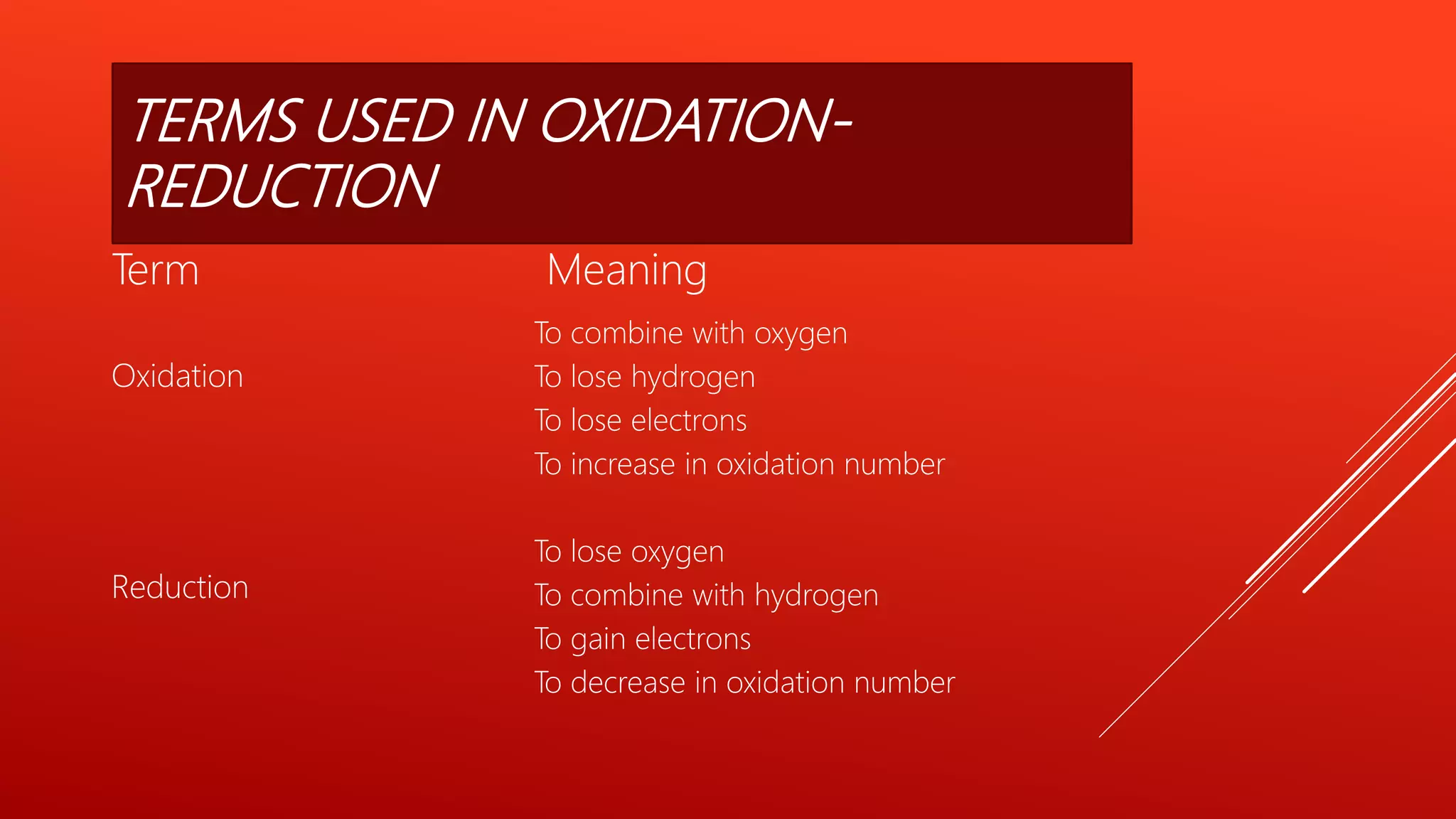
TERMS USED IN OXIDATION-
REDUCTION
Term
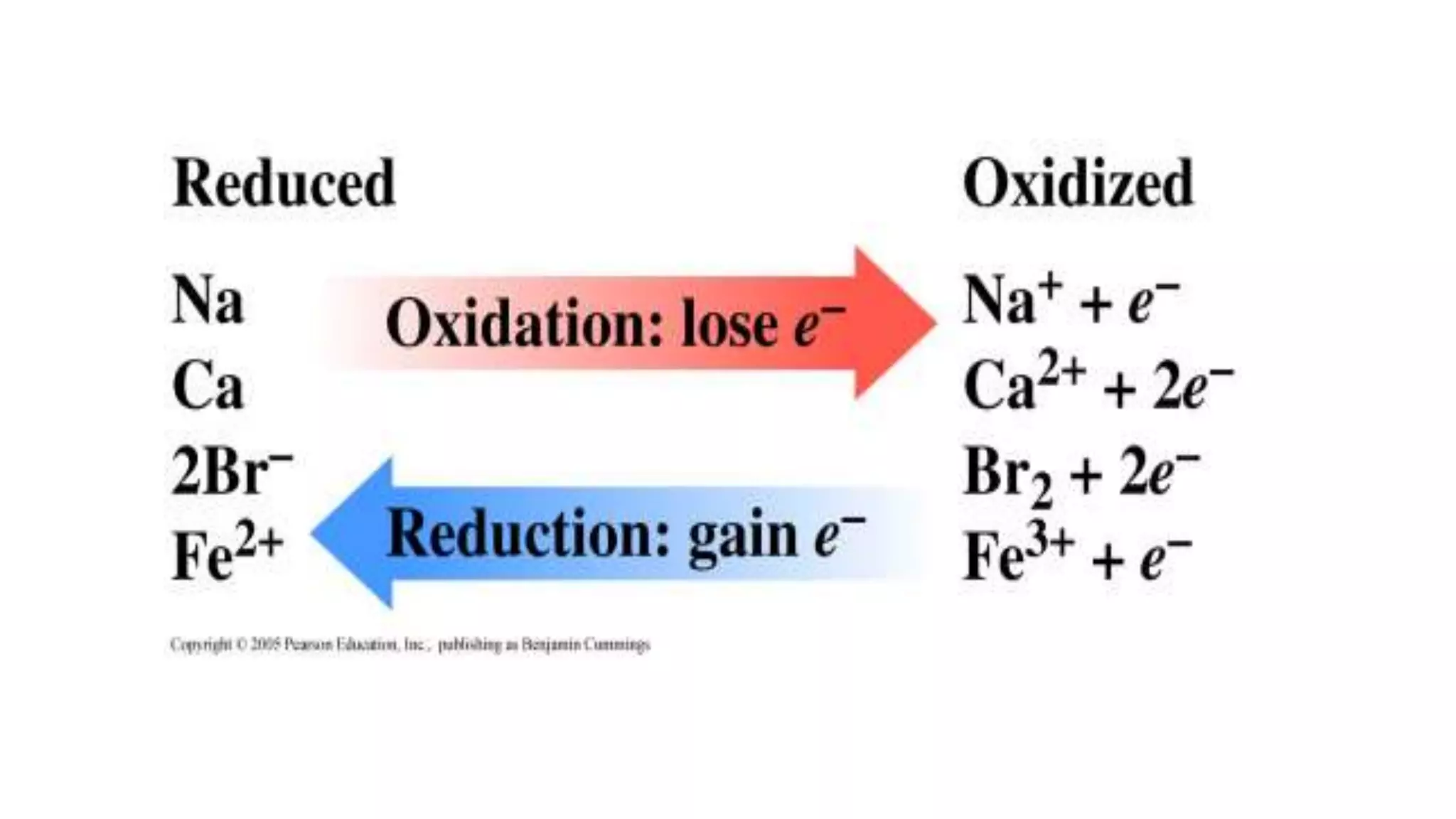
Oxidation
Reduction
Meaning
To combine with oxygen
To lose hydrogen
To lose electrons
To increase in oxidation number
To lose oxygen
To combine with hydrogen
To gain electrons
To decrease in oxidation number
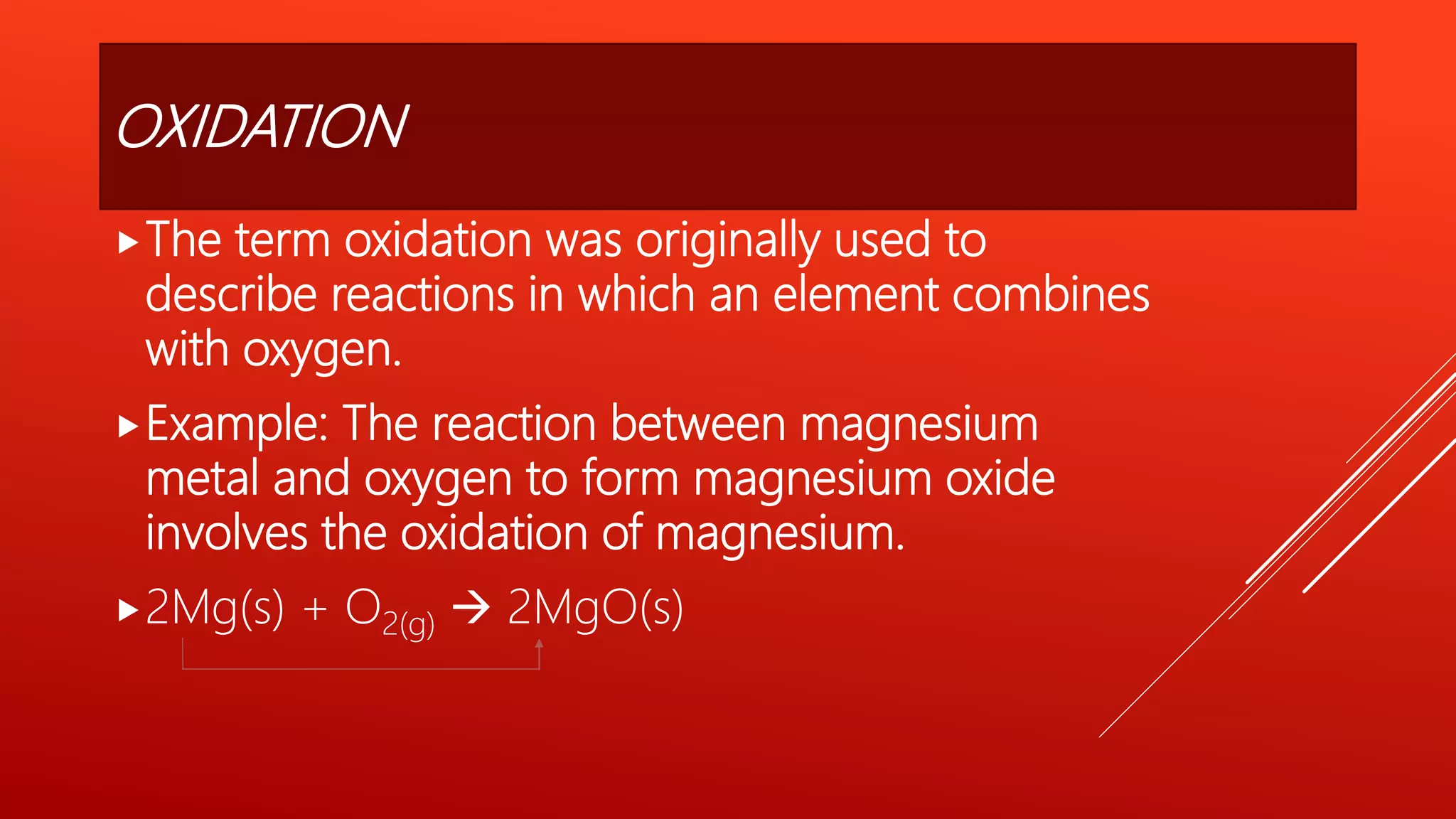
OXIDATION
The term oxidation was originally used to
describe reactions in which an element combines
with oxygen.
Example: The reaction between magnesium
metal and oxygen to form magnesium oxide
involves the oxidation of magnesium.
2Mg(s) + O2(g)  2MgO(s)
REDUCTION
The term reduction comes from the Latin
stem meaning "to lead back." Anything
that that leads back to magnesium metal
therefore involves reduction.
MgO(s) + C(s)  Mg(s) + CO(g)
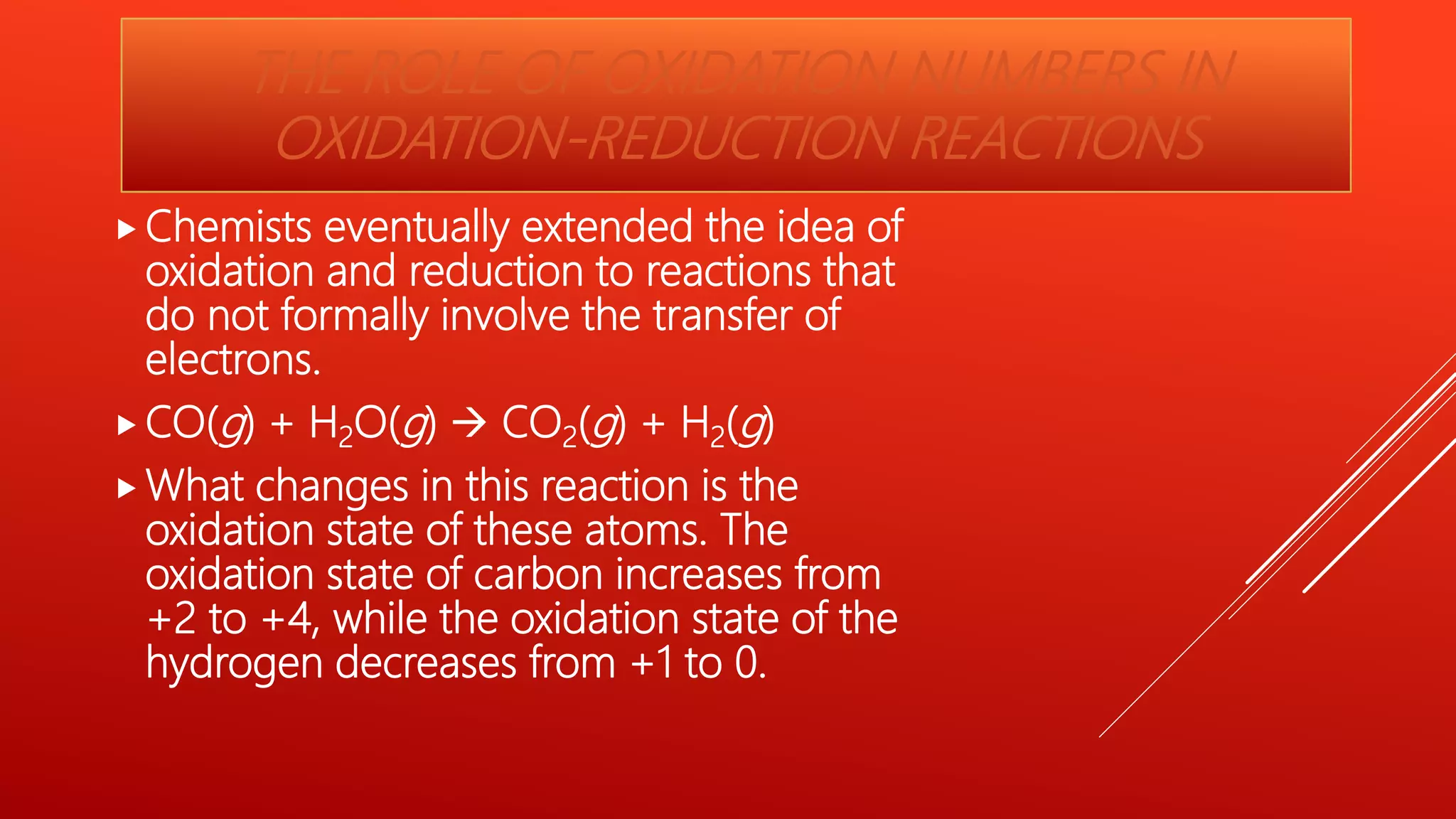
THE ROLE OF OXIDATION NUMBERS IN
OXIDATION-REDUCTION REACTIONS
 Chemists eventually extended the idea of
oxidation and reduction to reactions that
do not formally involve the transfer of
electrons.
 CO(g) + H2O(g)  CO2(g) + H2(g)
 What changes in this reaction is the
oxidation state of these atoms. The
oxidation state of carbon increases from
+2 to +4, while the oxidation state of the
hydrogen decreases from +1 to 0.
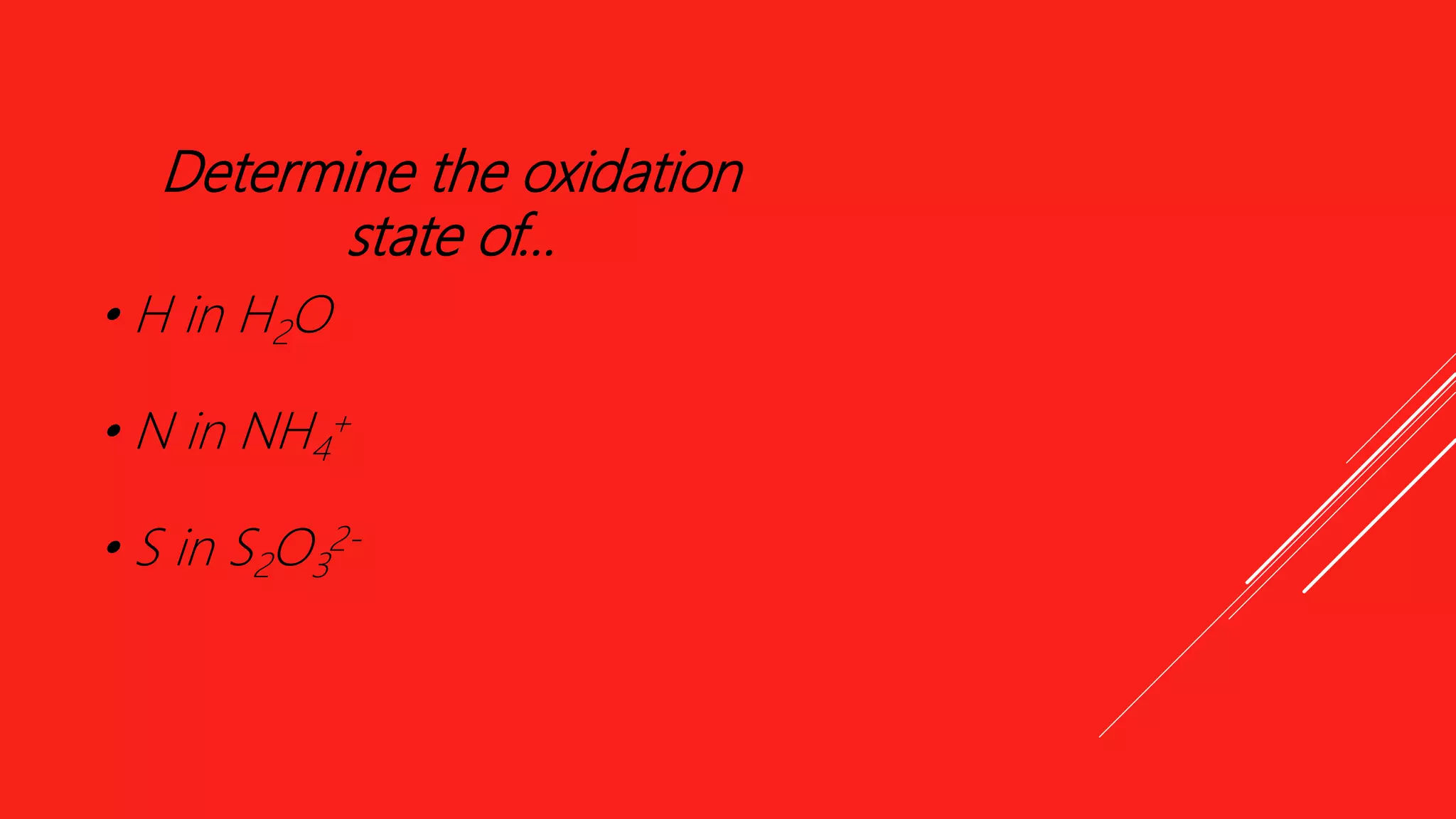
Determine the oxidation
state of…
• H in H2O
• N in NH4
+
• S in S2O3
2-
Determine the oxidation state of…
Sum of all oxidation states of all atoms = Overall
of molecule / ion / atom
• H in H2O Let the oxidation state of H be x.
Thus, in HO, 2x + (-2) = 0
x = 1
Sum of all oxidation states of all atoms = Overall
of molecule / ion / atom
• N in NH4+ Let the oxidation state of N be x.
Thus, in NH4+, x + 4(+1) = +1
x = -3
Sum of all oxidation states of all atoms = Overall
of molecule / ion / atom
• S in S2O3
2- Let the oxidation state of S be x.
Thus, in S2O3
2-, 2x + 3(-2) = -2
x = +2
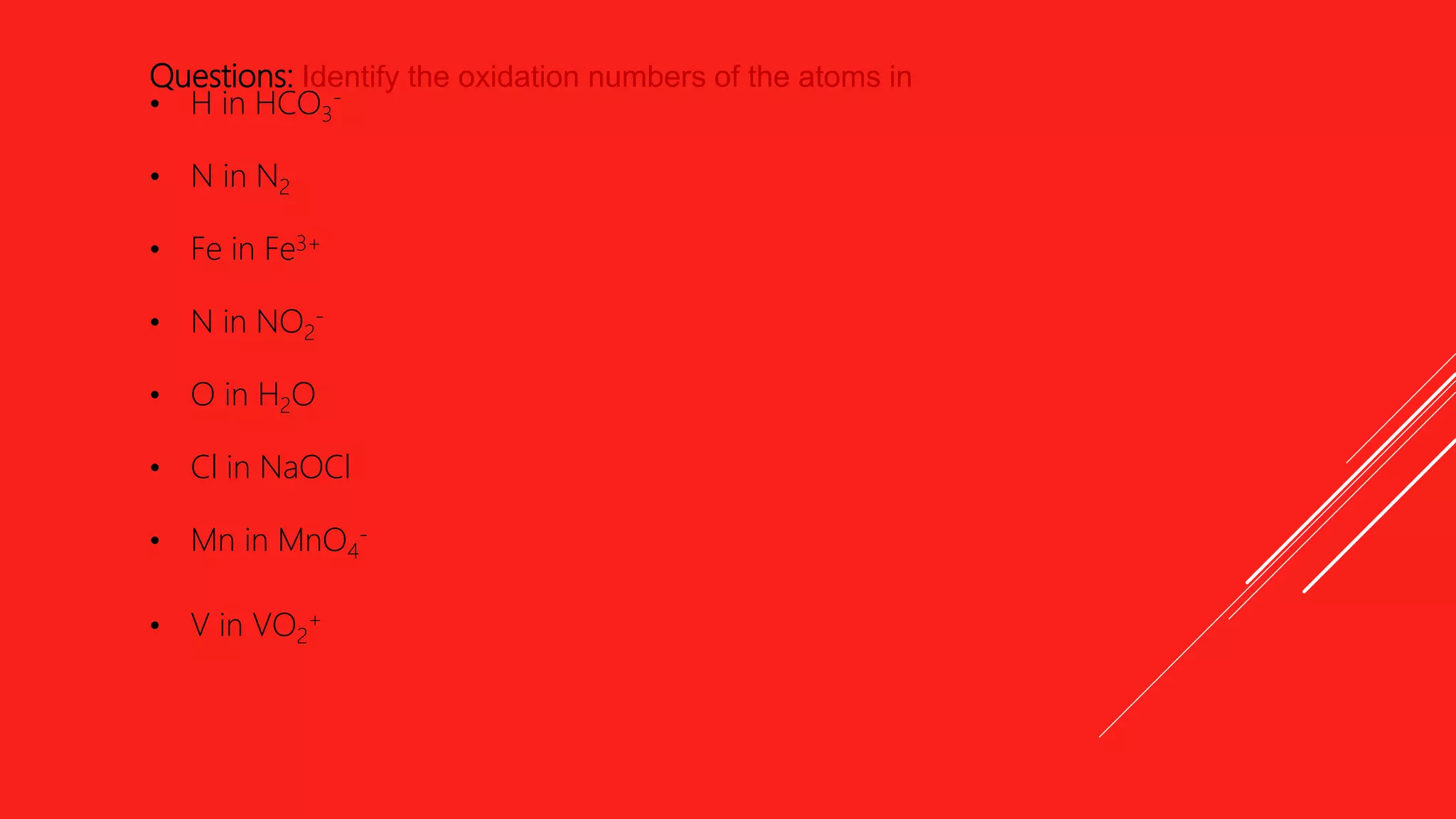
Questions: Identify the oxidation numbers of the atoms in
• H in HCO3
-
• N in N2
• Fe in Fe3+
• N in NO2
-
• O in H2O
• Cl in NaOCl
• Mn in MnO4
-
• V in VO2
+
PRACTICE QUESTIONS
 Calculate the oxidation number of Cu in
CuO(s) + H2(g)  Cu(s) + H2O()
 Calculate the oxidation number of C in
CaCO3(s)  CaO(s) + CO2(g)
 Calculate the oxidation number of S in
H2S + Cl2  2HCl + S
 Calculate the oxidation number of Mn in
MnO4
-(aq) + 5 Fe2+(aq) + 8 H+(aq)  Mn2+(aq) + 4 H2O() + 5 Fe3+(aq)
REMEMBER THIS PHRASE: LEO THE LION SAYS GER.
LEO = Loss of Electrons is Oxidation
GER = Gain of Electrons is Reduction
Another way is to simply remember that reduction is to
reduce the oxidation number.
Therefore, oxidation must increase the value.
Oxidizing Agent - that substance which oxidizes
somebody else. It is reduced in the process.
Reducing Agent - that substance which reduces
somebody else. It is oxidized in the process.
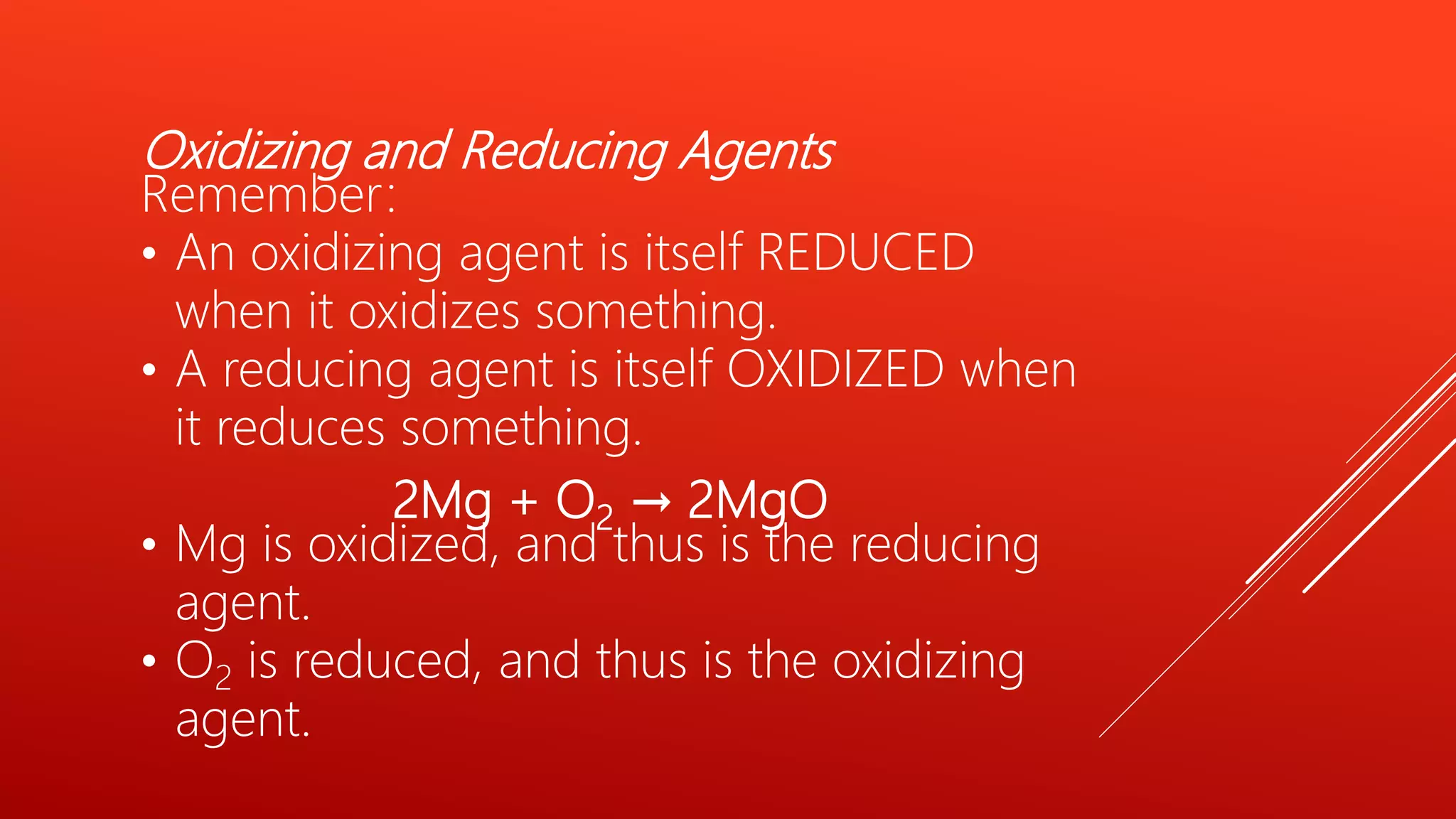
Oxidizing and Reducing Agents
Remember:
• An oxidizing agent is itself REDUCED
when it oxidizes something.
• A reducing agent is itself OXIDIZED when
it reduces something.
2Mg + O2 → 2MgO
• Mg is oxidized, and thus is the reducing
agent.
• O2 is reduced, and thus is the oxidizing
agent.
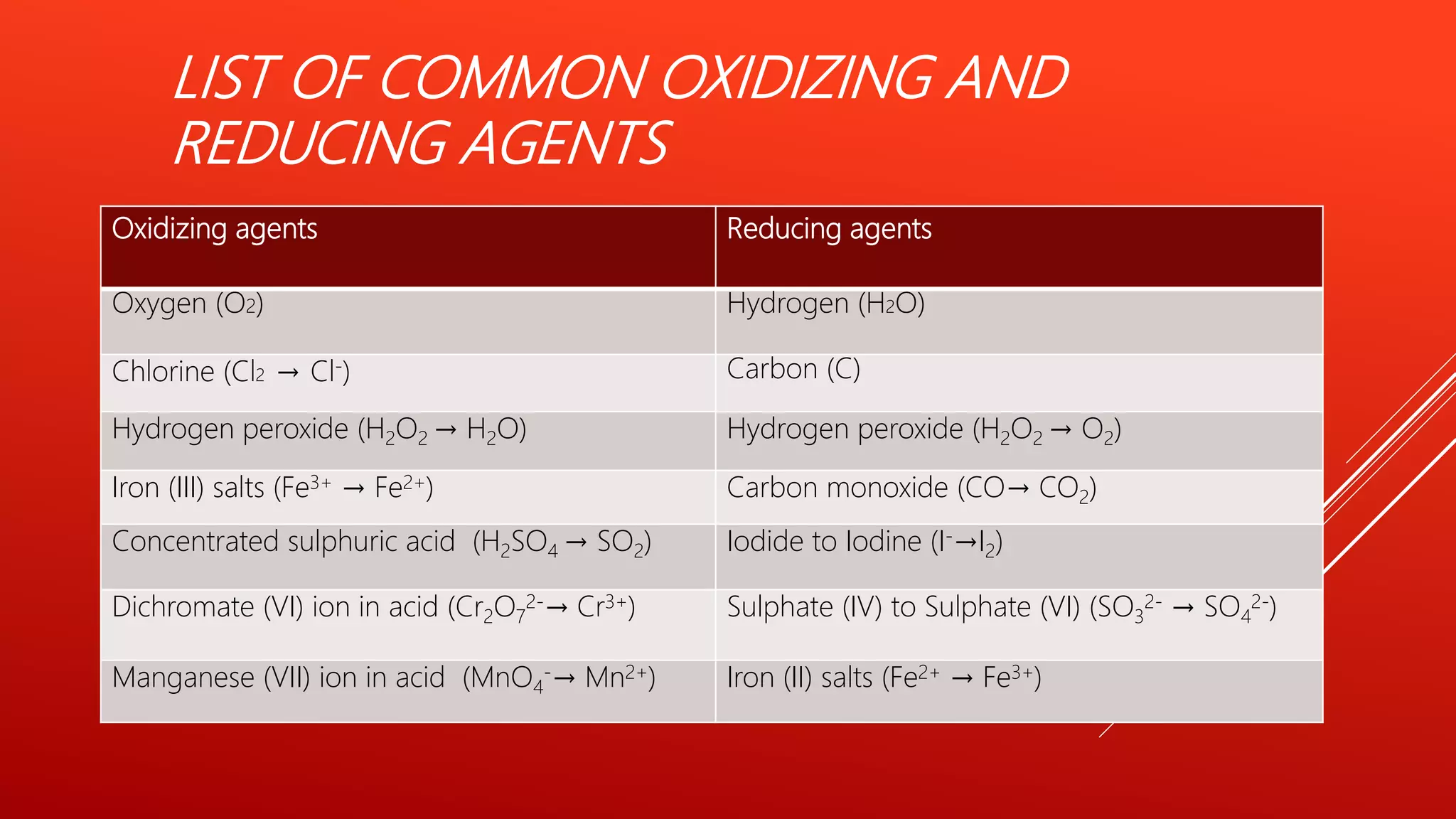
LIST OF COMMON OXIDIZING AND
REDUCING AGENTS
Oxidizing agents Reducing agents
Oxygen (O2) Hydrogen (H2O)
Chlorine (Cl2 → Cl-) Carbon (C)
Hydrogen peroxide (H2O2 → H2O) Hydrogen peroxide (H2O2 → O2)
Iron (III) salts (Fe3+ → Fe2+) Carbon monoxide (CO→ CO2)
Concentrated sulphuric acid (H2SO4 → SO2) Iodide to Iodine (I-→I2)
Dichromate (VI) ion in acid (Cr2O7
2-→ Cr3+) Sulphate (IV) to Sulphate (VI) (SO3
2- → SO4
2-)
Manganese (VII) ion in acid (MnO4
-→ Mn2+) Iron (II) salts (Fe2+ → Fe3+)
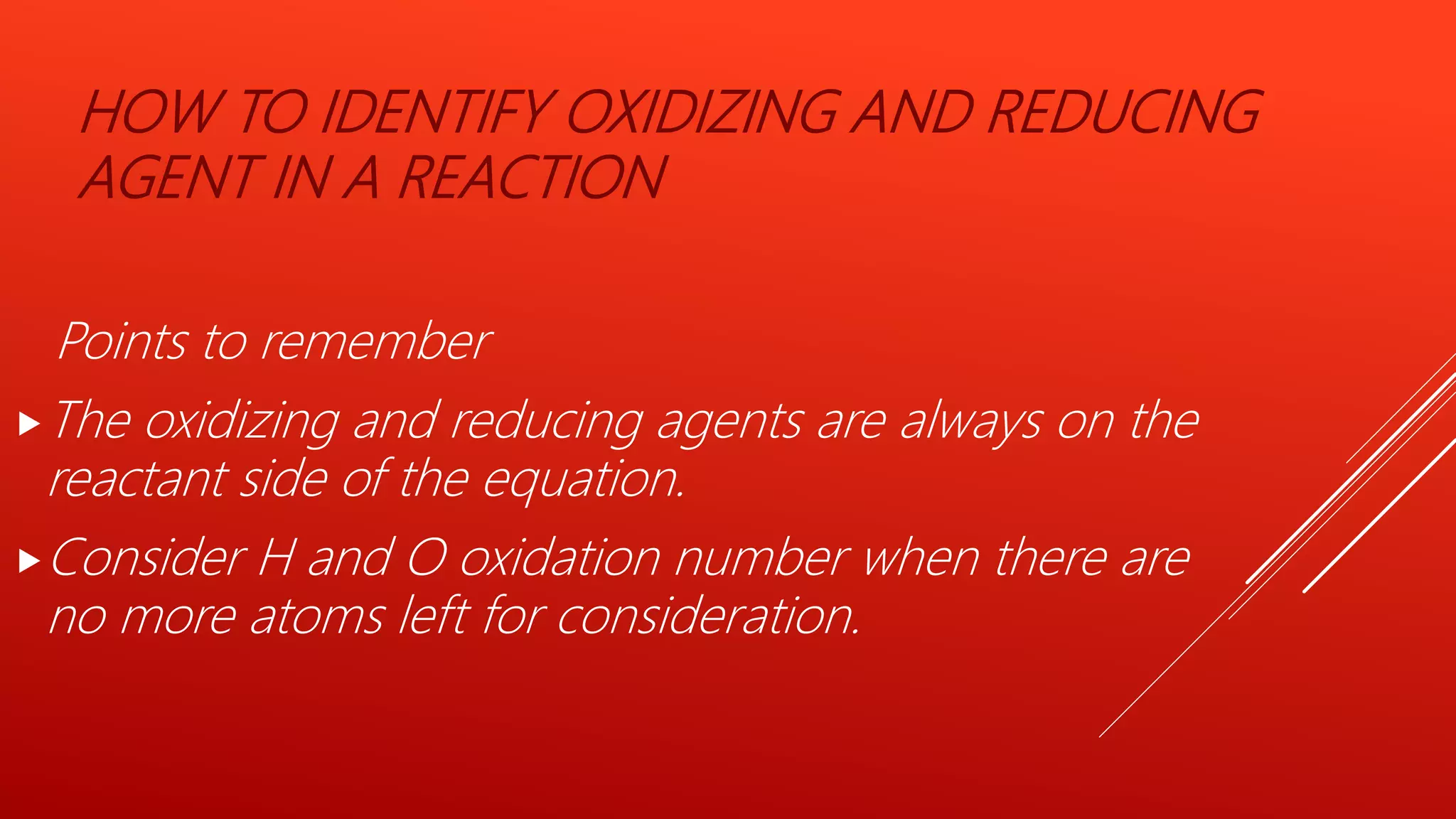
HOW TO IDENTIFY OXIDIZING AND REDUCING
AGENT IN A REACTION
Points to remember
The oxidizing and reducing agents are always on the
reactant side of the equation.
Consider H and O oxidation number when there are
no more atoms left for consideration.
Sample Question: Consider the redox reaction as represented by the following equation:
I2 + 2S2O3
2-  2I- + S4O6
2-
Which of the following is oxidized?
I2  I-
2I = 0 I = -1
I = 0 I = -1
0 to -1 (Decrease in oxidation number)
Therefore, I2 is the oxidizing agent. Therefore, reduced.
S2O3
2-  S4O6
2-
(2S) + (-6) = -2 (4S) + (-12) = -2
2S – 6 = -2 4S – 12 =-2
2S = 6 – 2 4S = 12 - 2
S = +2 S = +2.5
+2 to +2.5 (Increase in oxidation number)
Therefore, S2O3
2- is the reducing agent. Therefore, oxidized.
Sample Question: Consider the reaction represented by the following equation:
2Al + Fe2O3  Al2O3 + 2Fe
The oxidizing agent is?
Al  Al2O3
Al = 0 (2Al) + (-6) = 0
2Al – 6 = 0
2Al = 6
Al = 0 Al = +3
0 to +3 (Increase in oxidation number)
Al is the reducing agent.
Practice Questions
 Zn + 2Ag+  Zn2+ + 2Ag
Which substance in the reaction above is (i) Oxidized (ii) Reduced
 Zn + CuSO4  ZnSO4 + Cu
In the reaction above, identify the (i) Oxidizing agent (ii)
Reducing agent
Oxidation reduction reaction

Oxidation reduction reaction

  • 1.
  • 4.
    TERMS USED INOXIDATION- REDUCTION Term Oxidation Reduction Meaning To combine with oxygen To lose hydrogen To lose electrons To increase in oxidation number To lose oxygen To combine with hydrogen To gain electrons To decrease in oxidation number
  • 5.
    OXIDATION The term oxidationwas originally used to describe reactions in which an element combines with oxygen. Example: The reaction between magnesium metal and oxygen to form magnesium oxide involves the oxidation of magnesium. 2Mg(s) + O2(g)  2MgO(s)
  • 6.
    REDUCTION The term reductioncomes from the Latin stem meaning "to lead back." Anything that that leads back to magnesium metal therefore involves reduction. MgO(s) + C(s)  Mg(s) + CO(g)
  • 7.
    THE ROLE OFOXIDATION NUMBERS IN OXIDATION-REDUCTION REACTIONS  Chemists eventually extended the idea of oxidation and reduction to reactions that do not formally involve the transfer of electrons.  CO(g) + H2O(g)  CO2(g) + H2(g)  What changes in this reaction is the oxidation state of these atoms. The oxidation state of carbon increases from +2 to +4, while the oxidation state of the hydrogen decreases from +1 to 0.
  • 9.
    Determine the oxidation stateof… • H in H2O • N in NH4 + • S in S2O3 2-
  • 10.
    Determine the oxidationstate of… Sum of all oxidation states of all atoms = Overall of molecule / ion / atom • H in H2O Let the oxidation state of H be x. Thus, in HO, 2x + (-2) = 0 x = 1 Sum of all oxidation states of all atoms = Overall of molecule / ion / atom • N in NH4+ Let the oxidation state of N be x. Thus, in NH4+, x + 4(+1) = +1 x = -3 Sum of all oxidation states of all atoms = Overall of molecule / ion / atom • S in S2O3 2- Let the oxidation state of S be x. Thus, in S2O3 2-, 2x + 3(-2) = -2 x = +2
  • 11.
    Questions: Identify theoxidation numbers of the atoms in • H in HCO3 - • N in N2 • Fe in Fe3+ • N in NO2 - • O in H2O • Cl in NaOCl • Mn in MnO4 - • V in VO2 +
  • 12.
    PRACTICE QUESTIONS  Calculatethe oxidation number of Cu in CuO(s) + H2(g)  Cu(s) + H2O()  Calculate the oxidation number of C in CaCO3(s)  CaO(s) + CO2(g)  Calculate the oxidation number of S in H2S + Cl2  2HCl + S  Calculate the oxidation number of Mn in MnO4 -(aq) + 5 Fe2+(aq) + 8 H+(aq)  Mn2+(aq) + 4 H2O() + 5 Fe3+(aq)
  • 13.
    REMEMBER THIS PHRASE:LEO THE LION SAYS GER. LEO = Loss of Electrons is Oxidation GER = Gain of Electrons is Reduction Another way is to simply remember that reduction is to reduce the oxidation number. Therefore, oxidation must increase the value. Oxidizing Agent - that substance which oxidizes somebody else. It is reduced in the process. Reducing Agent - that substance which reduces somebody else. It is oxidized in the process.
  • 15.
    Oxidizing and ReducingAgents Remember: • An oxidizing agent is itself REDUCED when it oxidizes something. • A reducing agent is itself OXIDIZED when it reduces something. 2Mg + O2 → 2MgO • Mg is oxidized, and thus is the reducing agent. • O2 is reduced, and thus is the oxidizing agent.
  • 17.
    LIST OF COMMONOXIDIZING AND REDUCING AGENTS Oxidizing agents Reducing agents Oxygen (O2) Hydrogen (H2O) Chlorine (Cl2 → Cl-) Carbon (C) Hydrogen peroxide (H2O2 → H2O) Hydrogen peroxide (H2O2 → O2) Iron (III) salts (Fe3+ → Fe2+) Carbon monoxide (CO→ CO2) Concentrated sulphuric acid (H2SO4 → SO2) Iodide to Iodine (I-→I2) Dichromate (VI) ion in acid (Cr2O7 2-→ Cr3+) Sulphate (IV) to Sulphate (VI) (SO3 2- → SO4 2-) Manganese (VII) ion in acid (MnO4 -→ Mn2+) Iron (II) salts (Fe2+ → Fe3+)
  • 18.
    HOW TO IDENTIFYOXIDIZING AND REDUCING AGENT IN A REACTION Points to remember The oxidizing and reducing agents are always on the reactant side of the equation. Consider H and O oxidation number when there are no more atoms left for consideration.
  • 19.
    Sample Question: Considerthe redox reaction as represented by the following equation: I2 + 2S2O3 2-  2I- + S4O6 2- Which of the following is oxidized? I2  I- 2I = 0 I = -1 I = 0 I = -1 0 to -1 (Decrease in oxidation number) Therefore, I2 is the oxidizing agent. Therefore, reduced. S2O3 2-  S4O6 2- (2S) + (-6) = -2 (4S) + (-12) = -2 2S – 6 = -2 4S – 12 =-2 2S = 6 – 2 4S = 12 - 2 S = +2 S = +2.5 +2 to +2.5 (Increase in oxidation number) Therefore, S2O3 2- is the reducing agent. Therefore, oxidized.
  • 20.
    Sample Question: Considerthe reaction represented by the following equation: 2Al + Fe2O3  Al2O3 + 2Fe The oxidizing agent is? Al  Al2O3 Al = 0 (2Al) + (-6) = 0 2Al – 6 = 0 2Al = 6 Al = 0 Al = +3 0 to +3 (Increase in oxidation number) Al is the reducing agent.
  • 21.
    Practice Questions  Zn+ 2Ag+  Zn2+ + 2Ag Which substance in the reaction above is (i) Oxidized (ii) Reduced  Zn + CuSO4  ZnSO4 + Cu In the reaction above, identify the (i) Oxidizing agent (ii) Reducing agent