UNIT IV – OXIDATION AND REDUCTION
4.1.2 Oxidation of alcohols to aldehydes and ketones
SP | MSc – I | Oct 23rd
HYPERVALENT IODINE REAGENTS
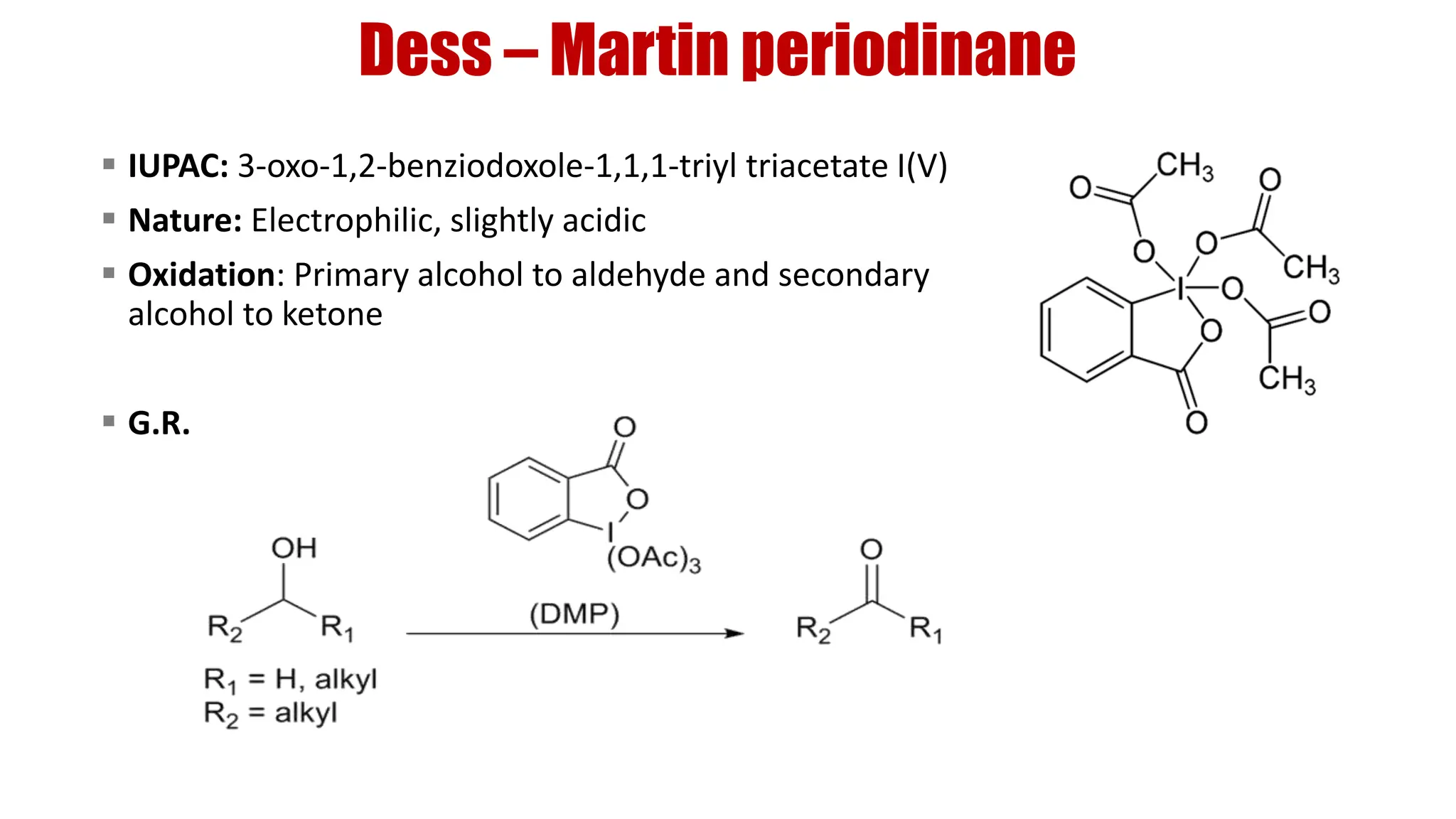
Dess – Martin periodinane
 IUPAC: 3-oxo-1,2-benziodoxole-1,1,1-triyl triacetate I(V)
 Nature: Electrophilic, slightly acidic
 Oxidation: Primary alcohol to aldehyde and secondary
alcohol to ketone
 G.R.
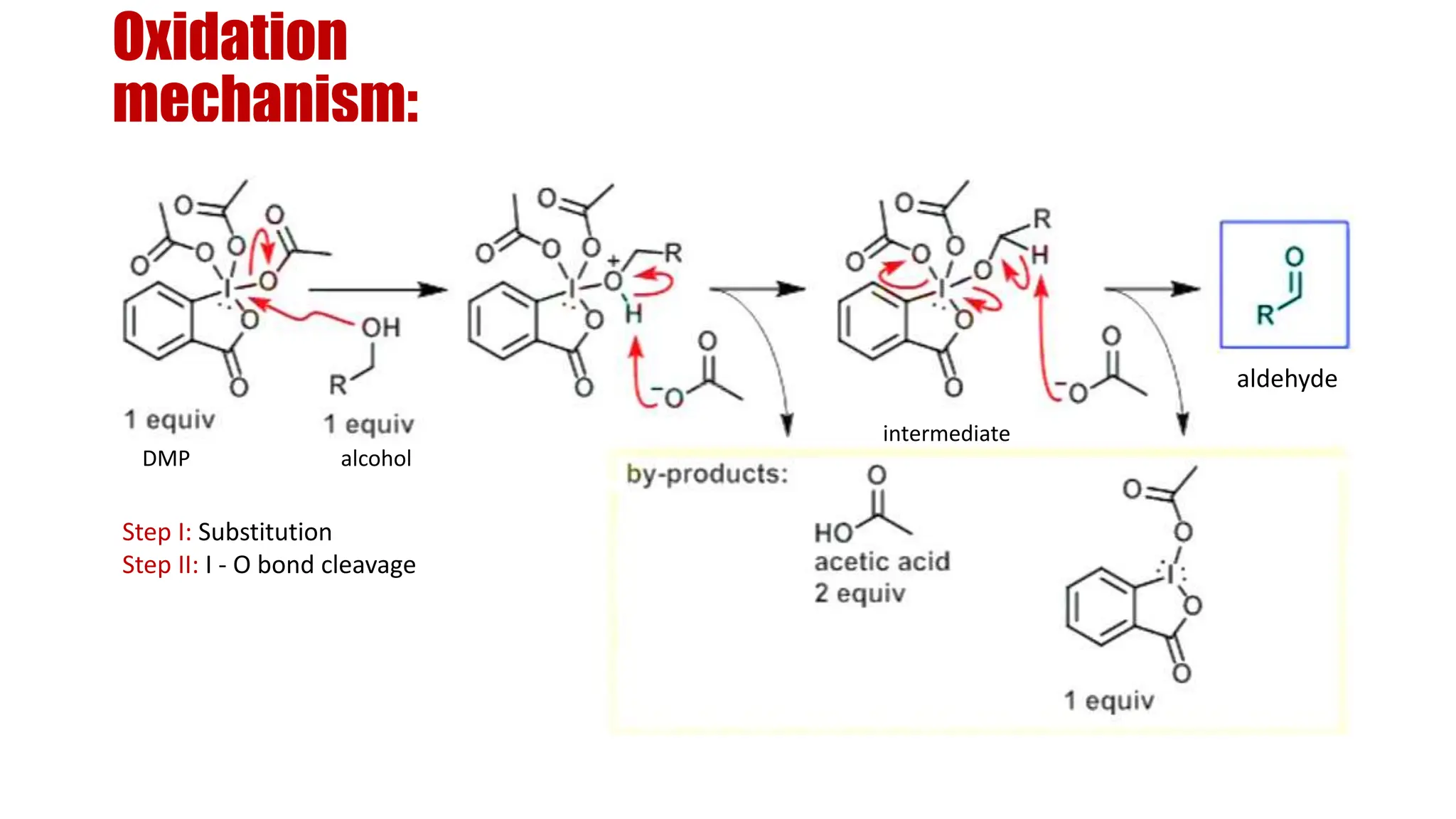
Oxidation
mechanism:
Step I: Substitution
Step II: I - O bond cleavage
aldehyde
intermediate
DMP alcohol
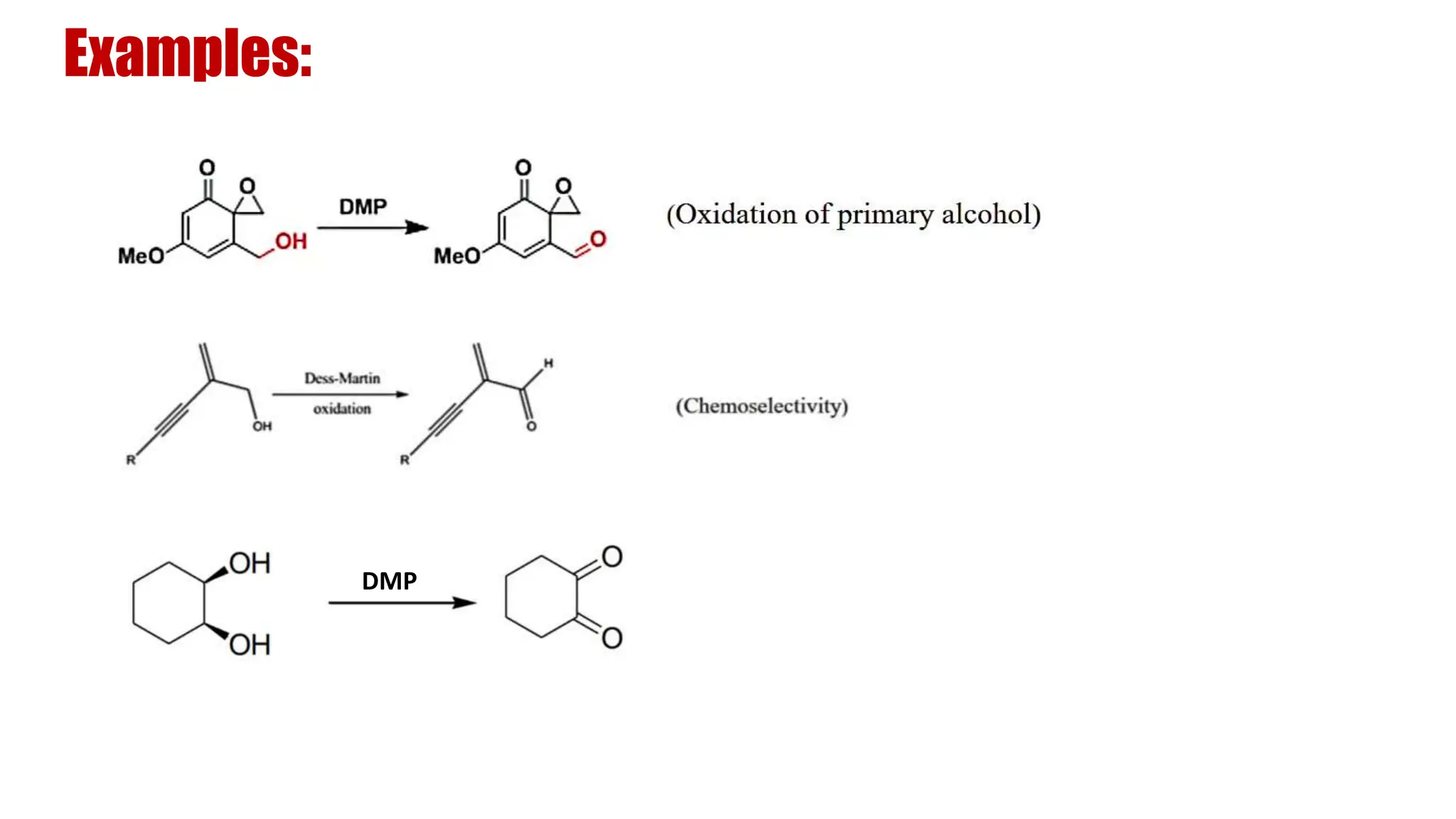
Examples:
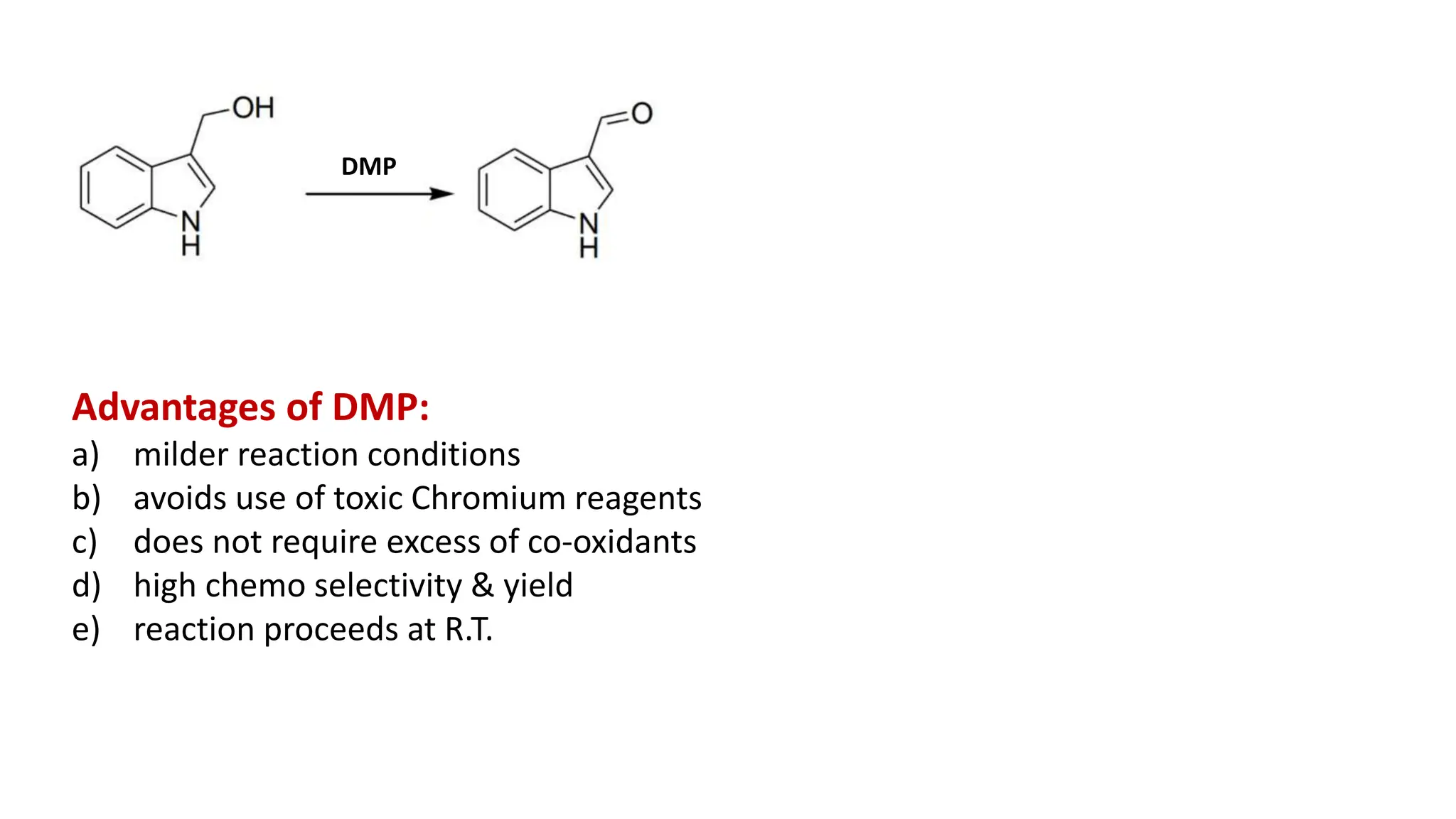
DMP
Advantages of DMP:
a) milder reaction conditions
b) avoids use of toxic Chromium reagents
c) does not require excess of co-oxidants
d) high chemo selectivity & yield
e) reaction proceeds at R.T.
DMP
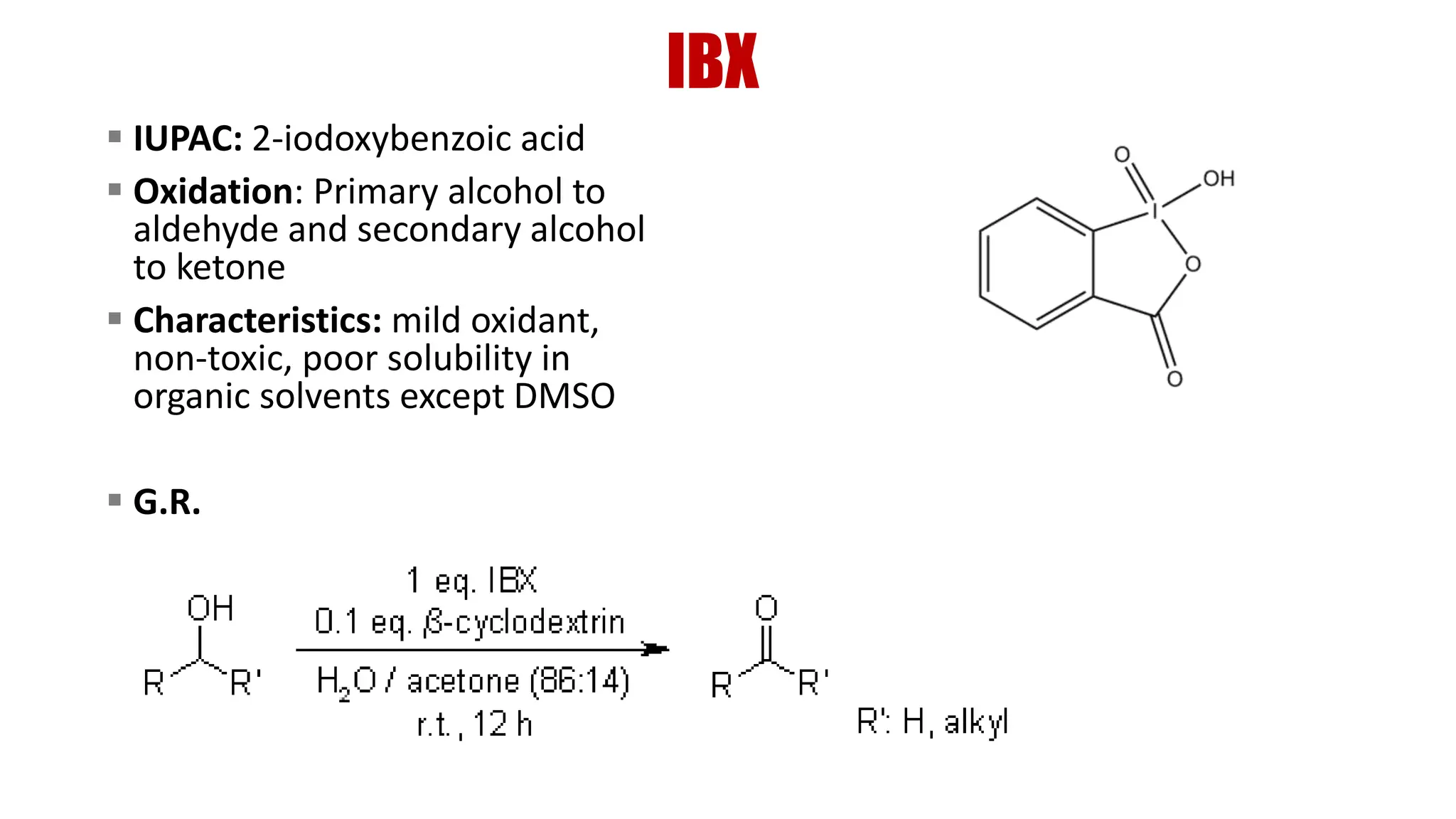
IBX
 IUPAC: 2-iodoxybenzoic acid
 Oxidation: Primary alcohol to
aldehyde and secondary alcohol
to ketone
 Characteristics: mild oxidant,
non-toxic, poor solubility in
organic solvents except DMSO
 G.R.
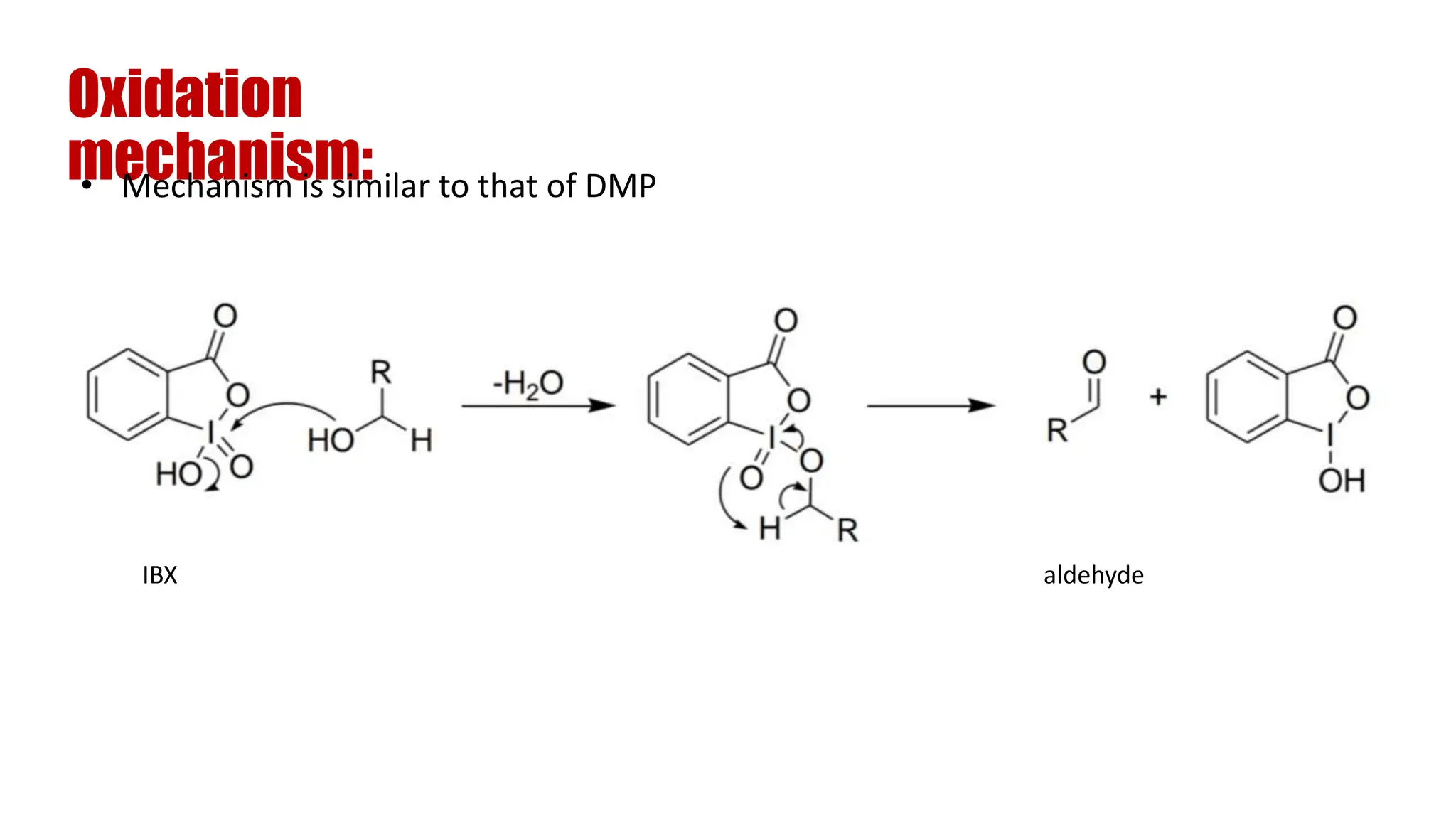
Oxidation
mechanism:
• Mechanism is similar to that of DMP
IBX aldehyde
Examples:
DMSO BASED REAGENTS
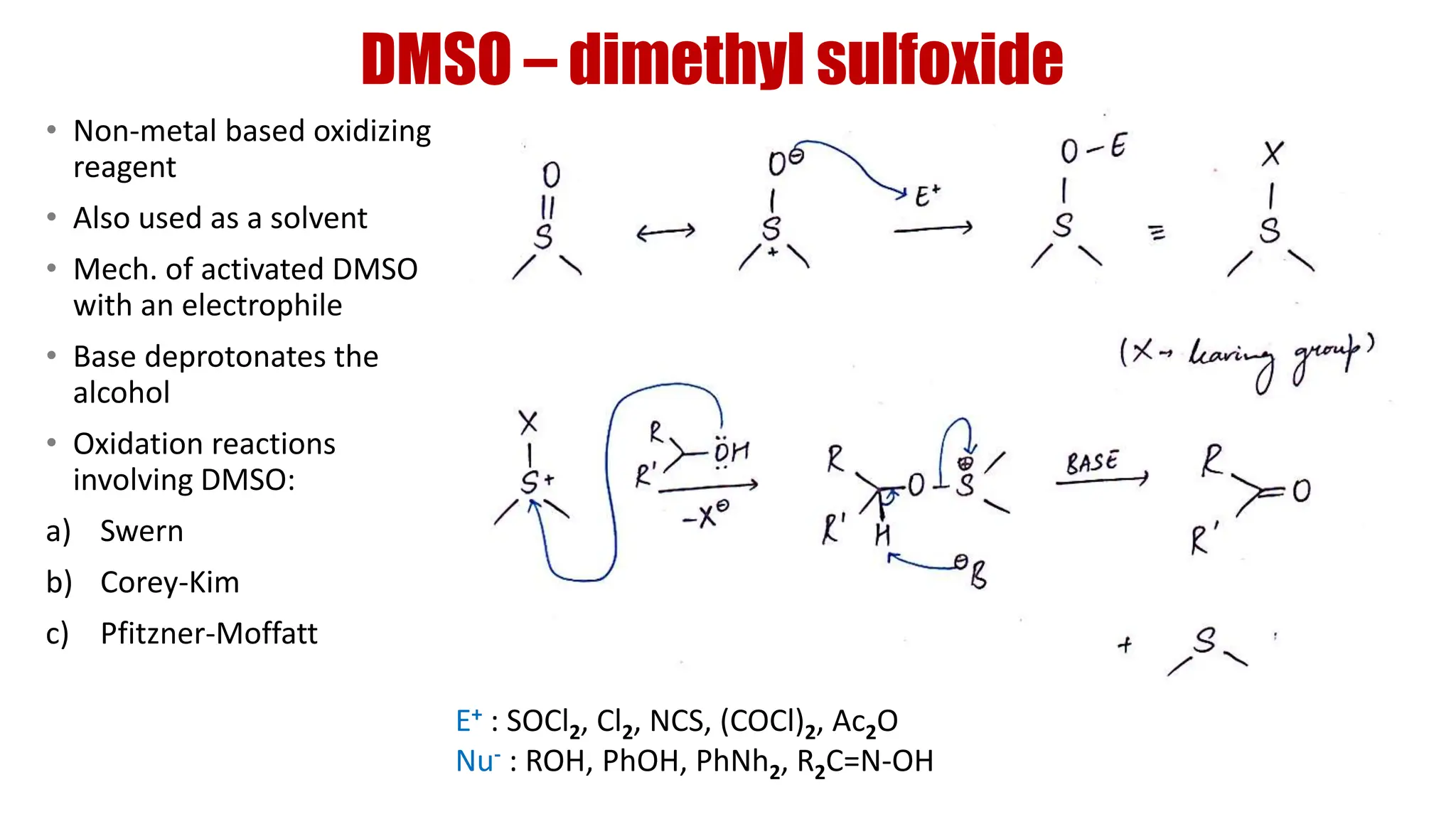
DMSO – dimethyl sulfoxide
• Non-metal based oxidizing
reagent
• Also used as a solvent
• Mech. of activated DMSO
with an electrophile
• Base deprotonates the
alcohol
• Oxidation reactions
involving DMSO:
a) Swern
b) Corey-Kim
c) Pfitzner-Moffatt
E+ : SOCl2, Cl2, NCS, (COCl)2, Ac2O
Nu- : ROH, PhOH, PhNh2, R2C=N-OH
Swern oxidation
 Reagents: Oxalyl chloride + DMSO + Triethylamine (base) +
dichloromethane (solvent)
 Oxidation: Primary alcohol to aldehyde and secondary alcohol to ketone
 Convenient method for the production of DMS-chlorine intermediate
without using dimethyl sulphide and chlorine
 G.R. (occurs at -78oC)
Oxidation
mechanism:
DMSO intermediate
intermediate
ketone
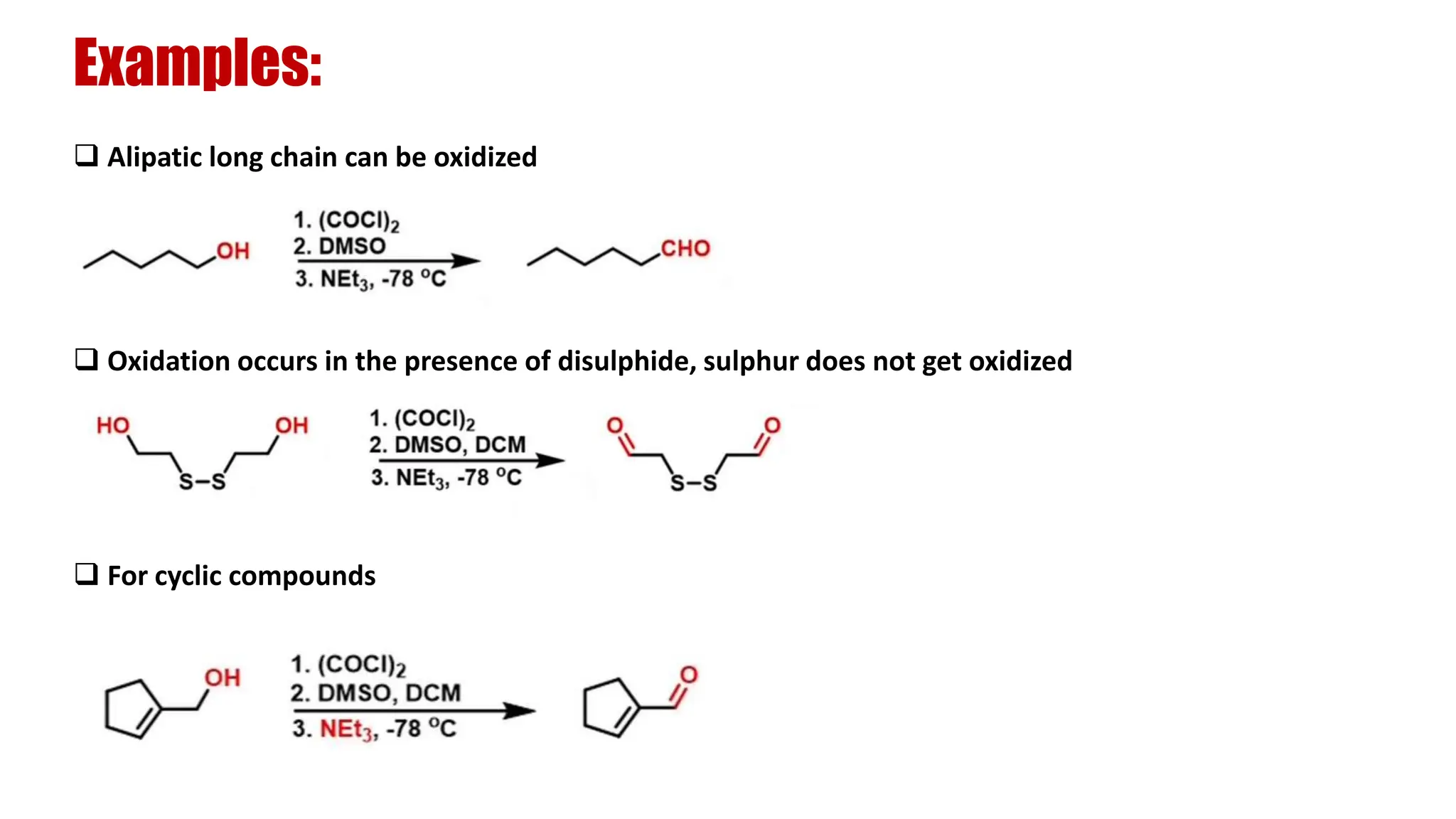
Examples:
 For cyclic compounds
 Oxidation occurs in the presence of disulphide, sulphur does not get oxidized
 Alipatic long chain can be oxidized
Importance of base:
• Cl- is a good nucleophile but a weak base
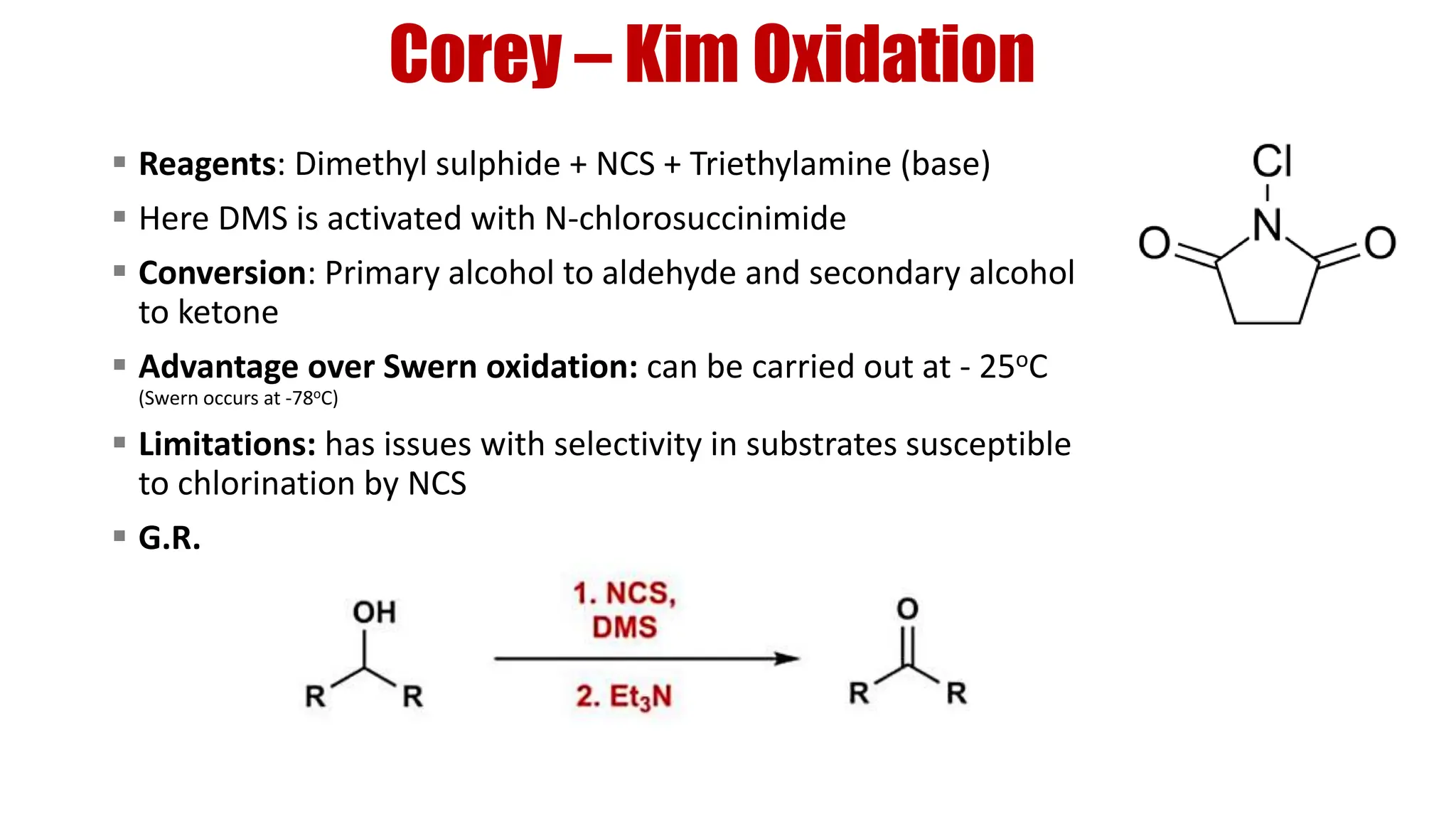
Corey – Kim Oxidation
 Reagents: Dimethyl sulphide + NCS + Triethylamine (base)
 Here DMS is activated with N-chlorosuccinimide
 Conversion: Primary alcohol to aldehyde and secondary alcohol
to ketone
 Advantage over Swern oxidation: can be carried out at - 25oC
(Swern occurs at -78oC)
 Limitations: has issues with selectivity in substrates susceptible
to chlorination by NCS
 G.R.
Oxidation
mechanism:
• Exception: In this mechanism, reactive oxidative species is not generated (which
occurs by rxn of DMSO with E+ )
• Without base: Chlorides are easily formed.
Examples:
”
”
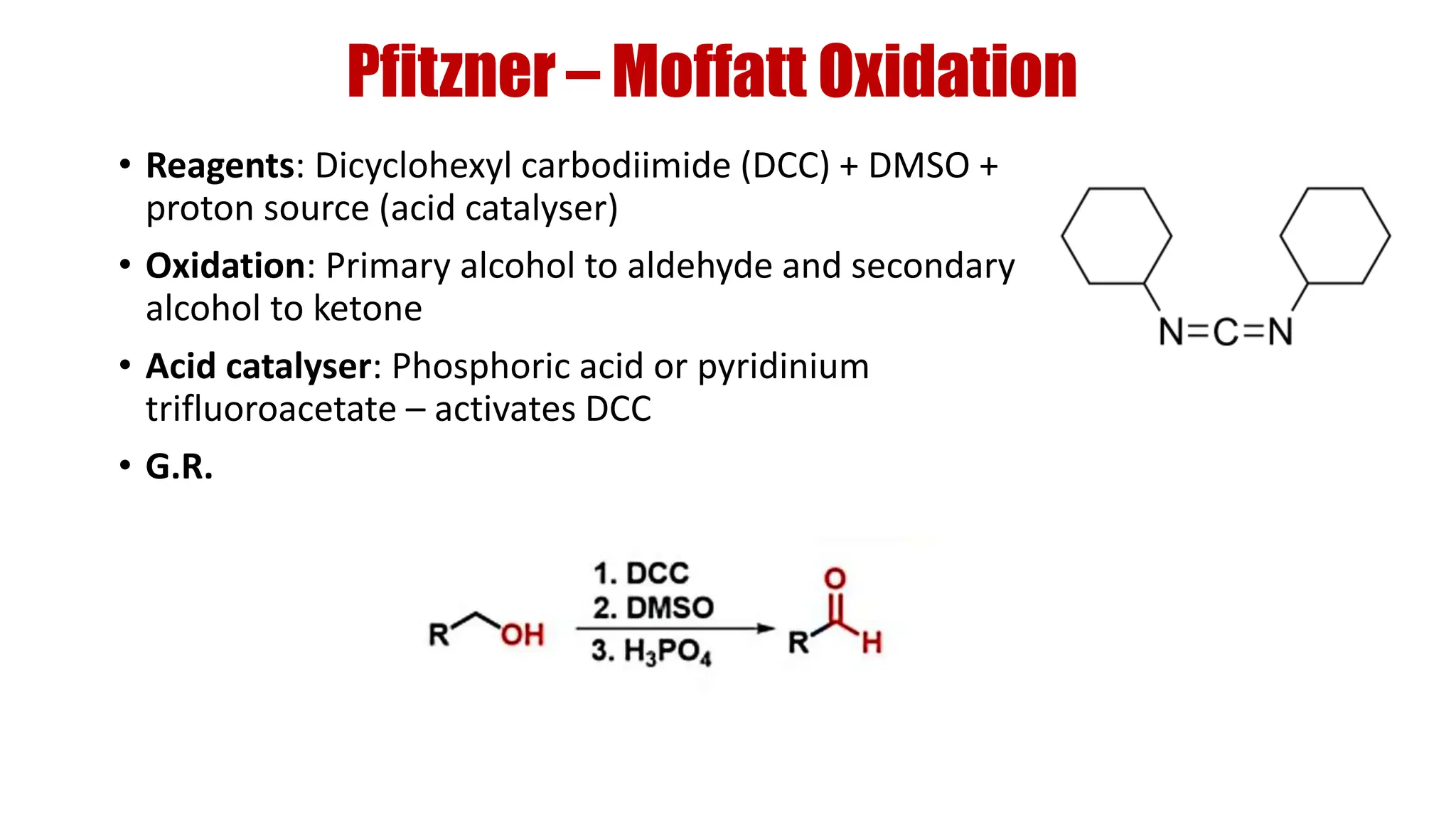
Pfitzner – Moffatt Oxidation
• Reagents: Dicyclohexyl carbodiimide (DCC) + DMSO +
proton source (acid catalyser)
• Oxidation: Primary alcohol to aldehyde and secondary
alcohol to ketone
• Acid catalyser: Phosphoric acid or pyridinium
trifluoroacetate – activates DCC
• G.R.
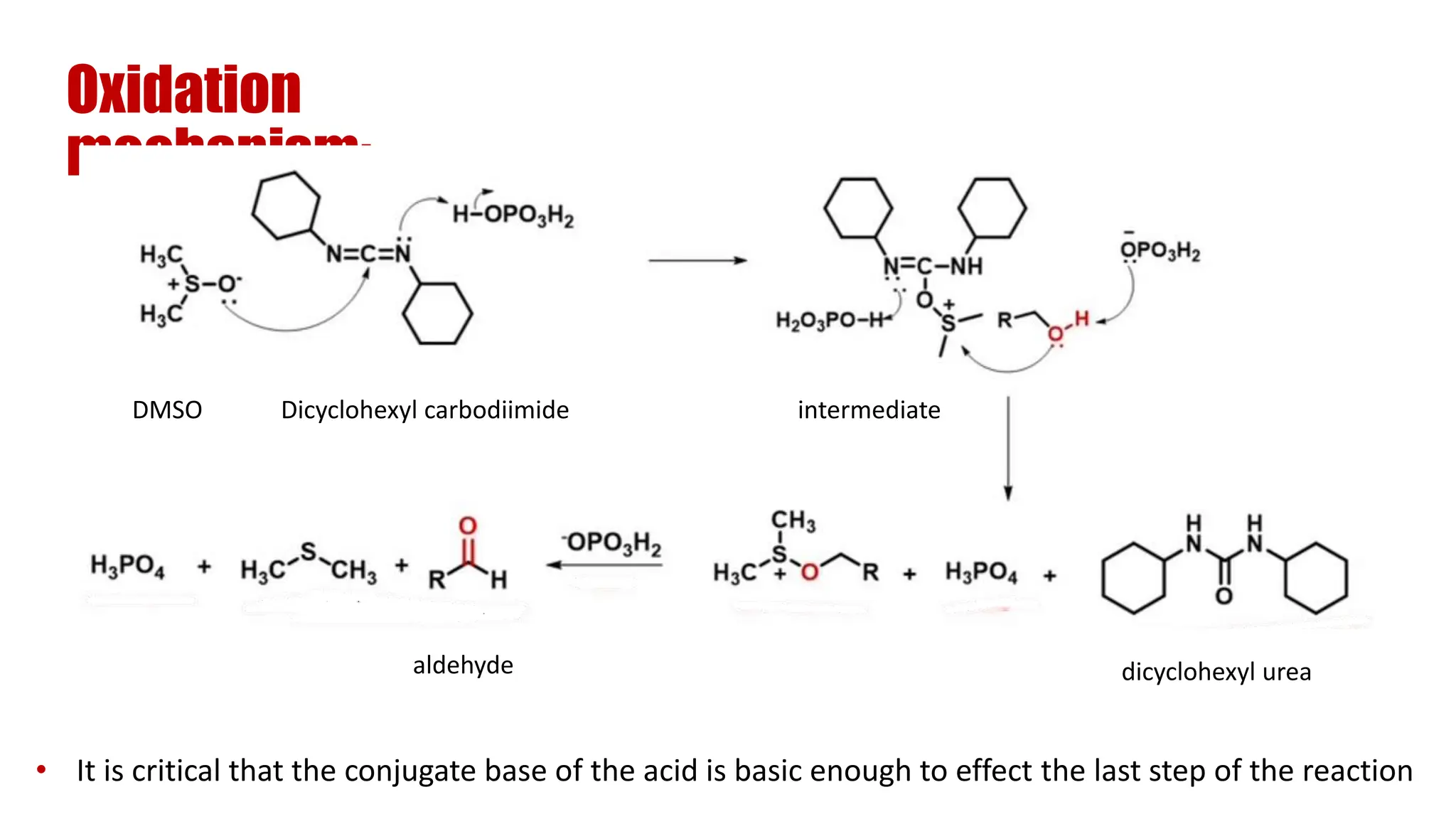
Oxidation
mechanism:
• It is critical that the conjugate base of the acid is basic enough to effect the last step of the reaction
Dicyclohexyl carbodiimide
DMSO intermediate
dicyclohexyl urea
aldehyde
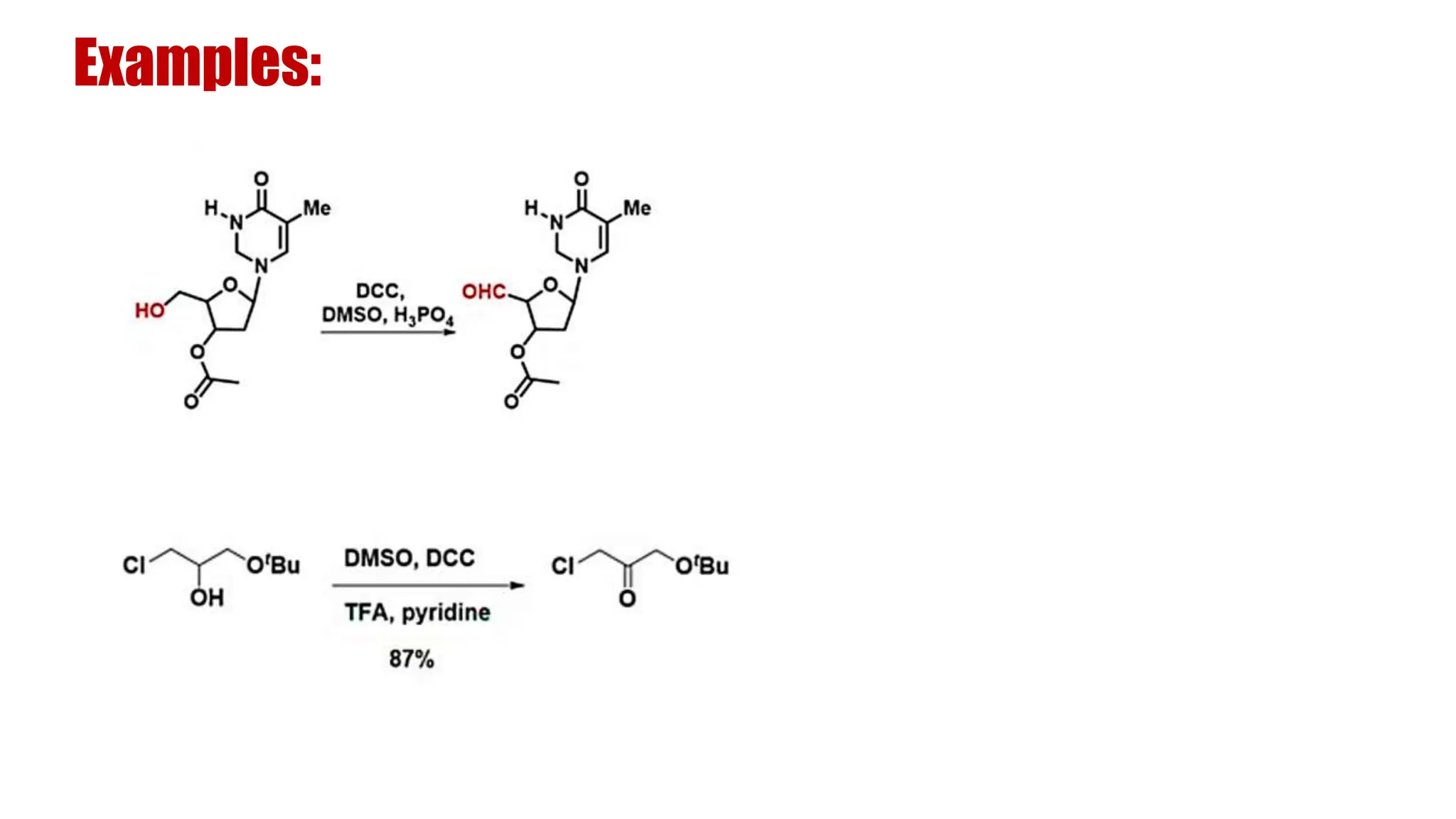
Examples:
Al BASED REAGENTS
Oppenauer Oxidation
 Reagents: Aluminium isopropoxide + Acetone
 Oxidation: Secondary alcohol to ketone in the presence of
acetone as they are oxidized much faster than primary
alcohols
• Acetone acts as a hydrogen acceptor
• Excess of acetone drives the reaction in forward direction
• Reaction generally done in benzene/acetone mixtures
 G.R.
Oxidation
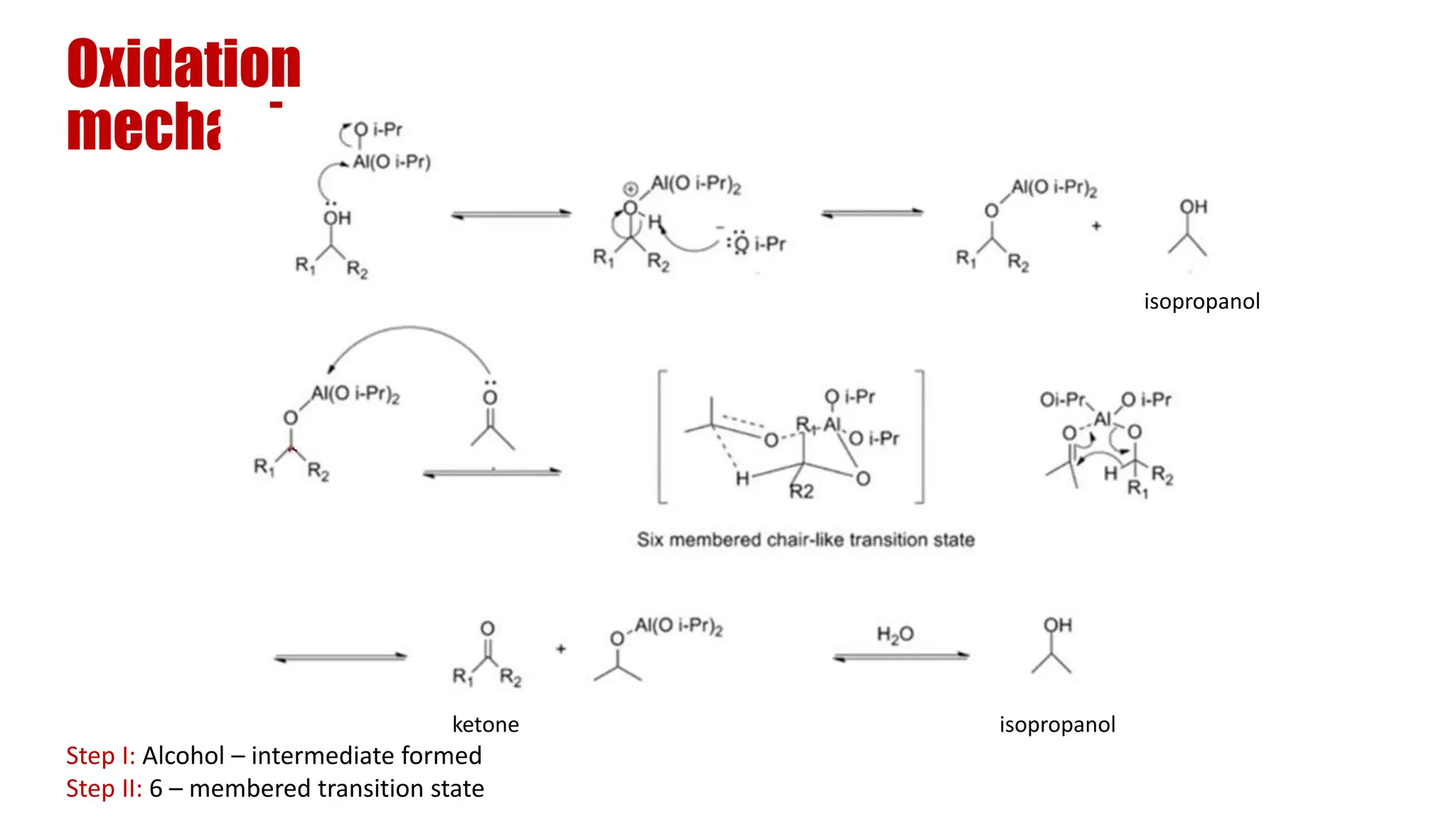
mechanism:
Step I: Alcohol – intermediate formed
Step II: 6 – membered transition state
isopropanol
ketone isopropanol

Oxidation of aldehyde & ketones - Iodine, DMSO, Aluminium based reagents.pptx

  • 1.
    UNIT IV –OXIDATION AND REDUCTION 4.1.2 Oxidation of alcohols to aldehydes and ketones SP | MSc – I | Oct 23rd
  • 2.
  • 3.
    Dess – Martinperiodinane  IUPAC: 3-oxo-1,2-benziodoxole-1,1,1-triyl triacetate I(V)  Nature: Electrophilic, slightly acidic  Oxidation: Primary alcohol to aldehyde and secondary alcohol to ketone  G.R.
  • 4.
    Oxidation mechanism: Step I: Substitution StepII: I - O bond cleavage aldehyde intermediate DMP alcohol
  • 5.
  • 6.
    Advantages of DMP: a)milder reaction conditions b) avoids use of toxic Chromium reagents c) does not require excess of co-oxidants d) high chemo selectivity & yield e) reaction proceeds at R.T. DMP
  • 7.
    IBX  IUPAC: 2-iodoxybenzoicacid  Oxidation: Primary alcohol to aldehyde and secondary alcohol to ketone  Characteristics: mild oxidant, non-toxic, poor solubility in organic solvents except DMSO  G.R.
  • 8.
    Oxidation mechanism: • Mechanism issimilar to that of DMP IBX aldehyde
  • 9.
  • 10.
  • 11.
    DMSO – dimethylsulfoxide • Non-metal based oxidizing reagent • Also used as a solvent • Mech. of activated DMSO with an electrophile • Base deprotonates the alcohol • Oxidation reactions involving DMSO: a) Swern b) Corey-Kim c) Pfitzner-Moffatt E+ : SOCl2, Cl2, NCS, (COCl)2, Ac2O Nu- : ROH, PhOH, PhNh2, R2C=N-OH
  • 12.
    Swern oxidation  Reagents:Oxalyl chloride + DMSO + Triethylamine (base) + dichloromethane (solvent)  Oxidation: Primary alcohol to aldehyde and secondary alcohol to ketone  Convenient method for the production of DMS-chlorine intermediate without using dimethyl sulphide and chlorine  G.R. (occurs at -78oC)
  • 13.
  • 14.
    Examples:  For cycliccompounds  Oxidation occurs in the presence of disulphide, sulphur does not get oxidized  Alipatic long chain can be oxidized
  • 15.
    Importance of base: •Cl- is a good nucleophile but a weak base
  • 16.
    Corey – KimOxidation  Reagents: Dimethyl sulphide + NCS + Triethylamine (base)  Here DMS is activated with N-chlorosuccinimide  Conversion: Primary alcohol to aldehyde and secondary alcohol to ketone  Advantage over Swern oxidation: can be carried out at - 25oC (Swern occurs at -78oC)  Limitations: has issues with selectivity in substrates susceptible to chlorination by NCS  G.R.
  • 17.
    Oxidation mechanism: • Exception: Inthis mechanism, reactive oxidative species is not generated (which occurs by rxn of DMSO with E+ ) • Without base: Chlorides are easily formed.
  • 18.
  • 19.
    Pfitzner – MoffattOxidation • Reagents: Dicyclohexyl carbodiimide (DCC) + DMSO + proton source (acid catalyser) • Oxidation: Primary alcohol to aldehyde and secondary alcohol to ketone • Acid catalyser: Phosphoric acid or pyridinium trifluoroacetate – activates DCC • G.R.
  • 20.
    Oxidation mechanism: • It iscritical that the conjugate base of the acid is basic enough to effect the last step of the reaction Dicyclohexyl carbodiimide DMSO intermediate dicyclohexyl urea aldehyde
  • 21.
  • 22.
  • 23.
    Oppenauer Oxidation  Reagents:Aluminium isopropoxide + Acetone  Oxidation: Secondary alcohol to ketone in the presence of acetone as they are oxidized much faster than primary alcohols • Acetone acts as a hydrogen acceptor • Excess of acetone drives the reaction in forward direction • Reaction generally done in benzene/acetone mixtures  G.R.
  • 24.
    Oxidation mechanism: Step I: Alcohol– intermediate formed Step II: 6 – membered transition state isopropanol ketone isopropanol

Editor's Notes

  • #4 DMP - E+, slightly acidic
  • #8 Acid catalyser acts as a proton source which in turn activates the DCC.
  • #12 Base activates H
  • #20 Acid catalyser acts as a proton source which in turn activates the DCC.