An Overview of Research in
Chemistry: Application to Biological
and Medical Sciences
Contents
Chemistry & Its Branches
Chemistry in Medicine & Health care
Chemistry in Food
Use of NMR & X-ray Crystallography in Structural Biology
Application of Nuclear Chemistry
Application of Inorganic Chemistry
Application of Nanotechnology
What is
chemistry?
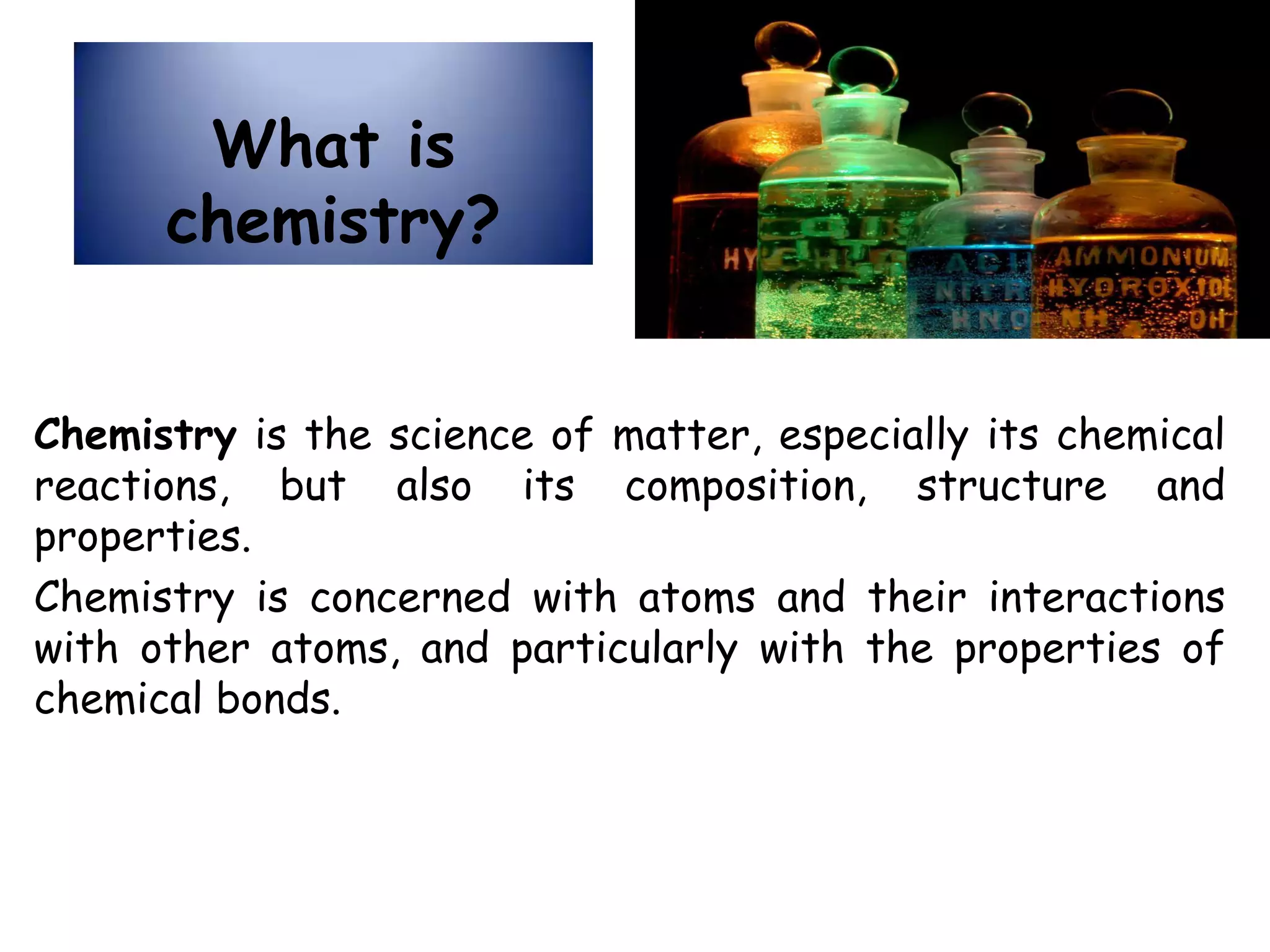
Chemistry is the science of matter, especially its chemical
reactions, but also its composition, structure and
properties.
Chemistry is concerned with atoms and their interactions
with other atoms, and particularly with the properties of
chemical bonds.
Subdisciplines of Chemistry
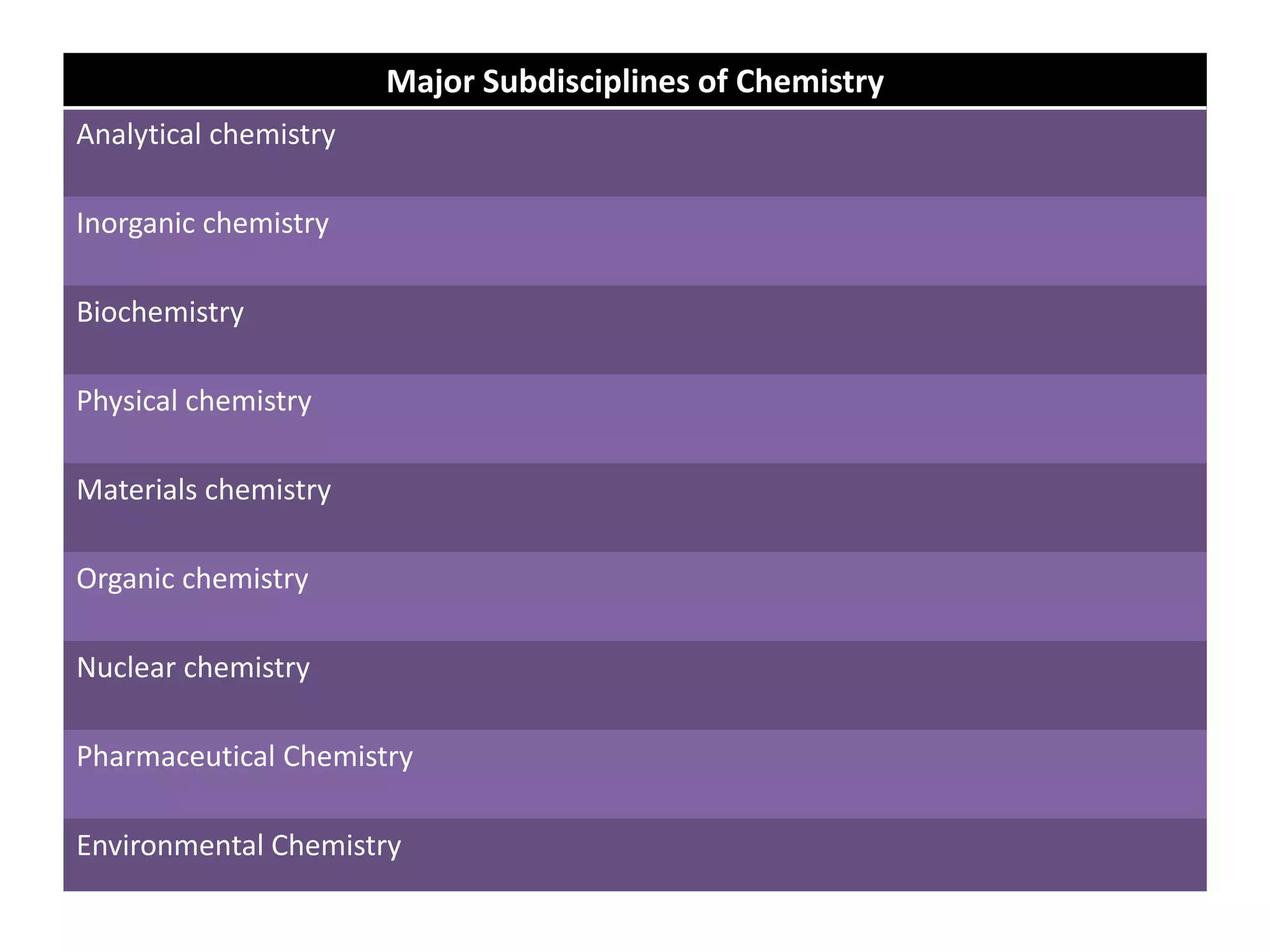
Major Subdisciplines of Chemistry
Analytical chemistry
Inorganic chemistry
Biochemistry
Physical chemistry
Materials chemistry
Organic chemistry
Nuclear chemistry
Pharmaceutical Chemistry
Environmental Chemistry
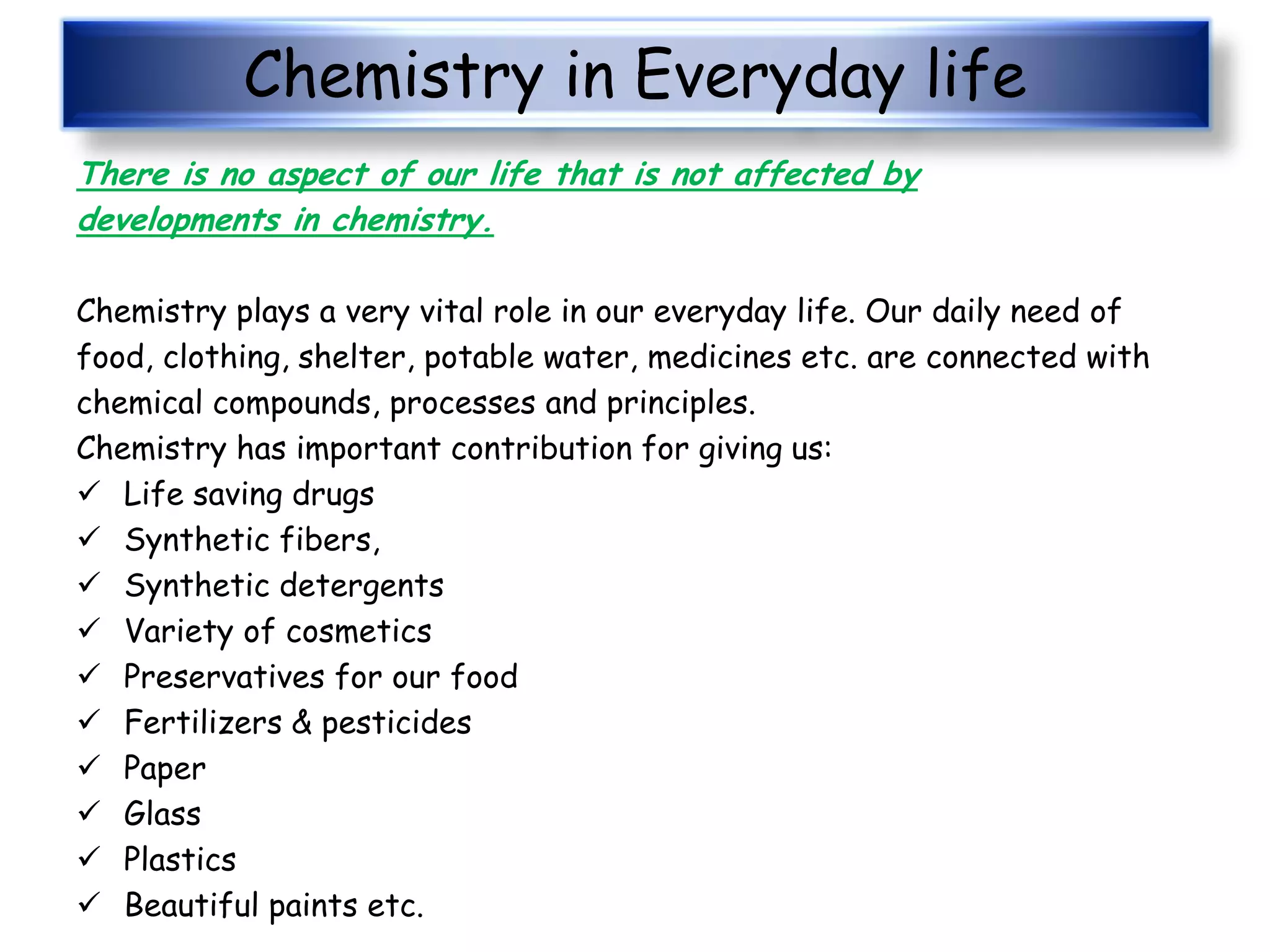
Chemistry in Everyday life
There is no aspect of our life that is not affected by
developments in chemistry.
Chemistry plays a very vital role in our everyday life. Our daily need of
food, clothing, shelter, potable water, medicines etc. are connected with
chemical compounds, processes and principles.
Chemistry has important contribution for giving us:
 Life saving drugs
 Synthetic fibers,
 Synthetic detergents
 Variety of cosmetics
 Preservatives for our food
 Fertilizers & pesticides
 Paper
 Glass
 Plastics
 Beautiful paints etc.
Application of Chemistry in
biological and Medical Sciences
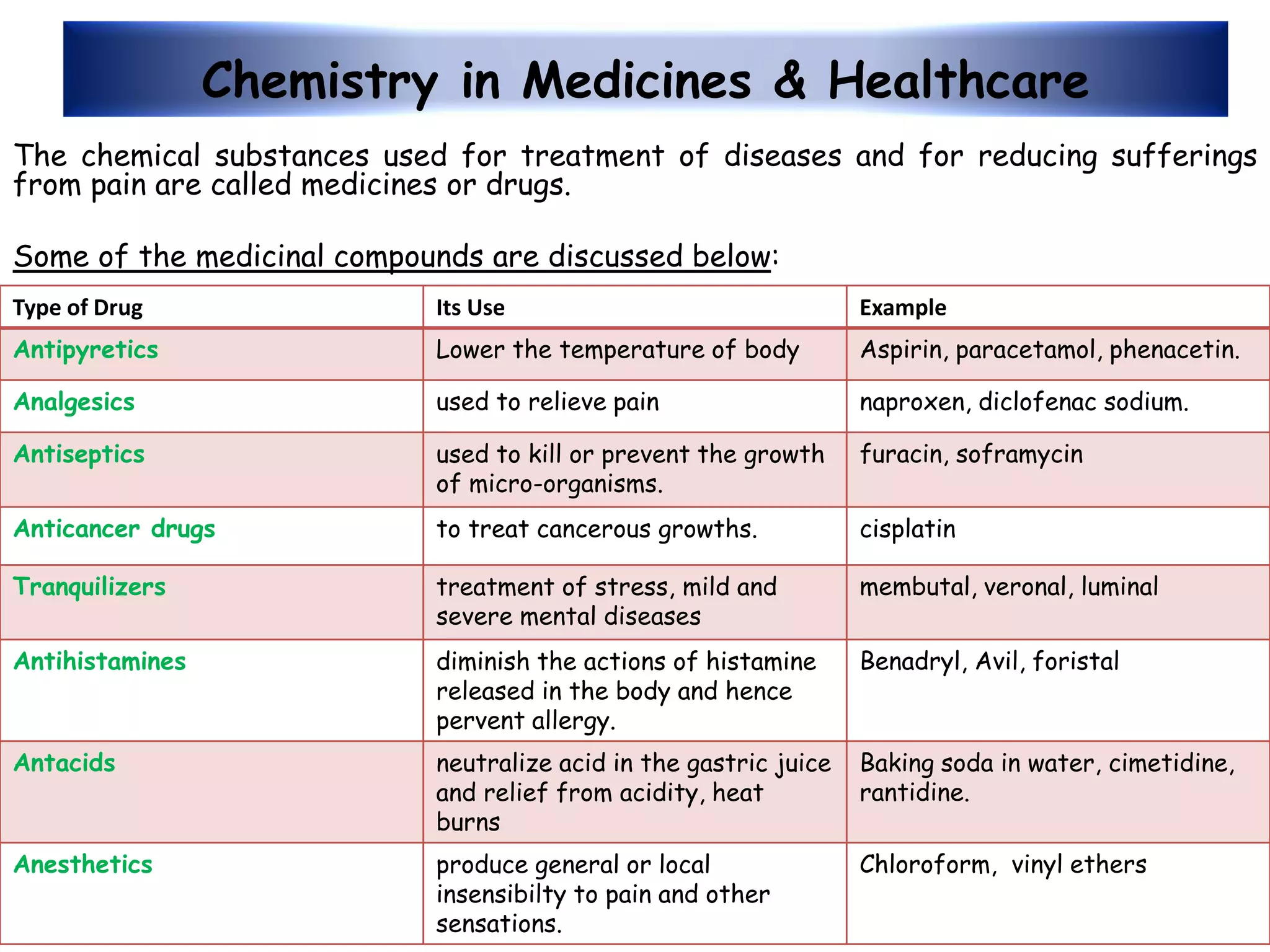
Chemistry in Medicines & Healthcare
Type of Drug Its Use Example
Antipyretics Lower the temperature of body Aspirin, paracetamol, phenacetin.
Analgesics used to relieve pain naproxen, diclofenac sodium.
Antiseptics used to kill or prevent the growth
of micro-organisms.
furacin, soframycin
Anticancer drugs to treat cancerous growths. cisplatin
Tranquilizers treatment of stress, mild and
severe mental diseases
membutal, veronal, luminal
Antihistamines diminish the actions of histamine
released in the body and hence
pervent allergy.
Benadryl, Avil, foristal
Antacids neutralize acid in the gastric juice
and relief from acidity, heat
burns
Baking soda in water, cimetidine,
rantidine.
Anesthetics produce general or local
insensibilty to pain and other
sensations.
Chloroform, vinyl ethers
The chemical substances used for treatment of diseases and for reducing sufferings
from pain are called medicines or drugs.
Some of the medicinal compounds are discussed below:
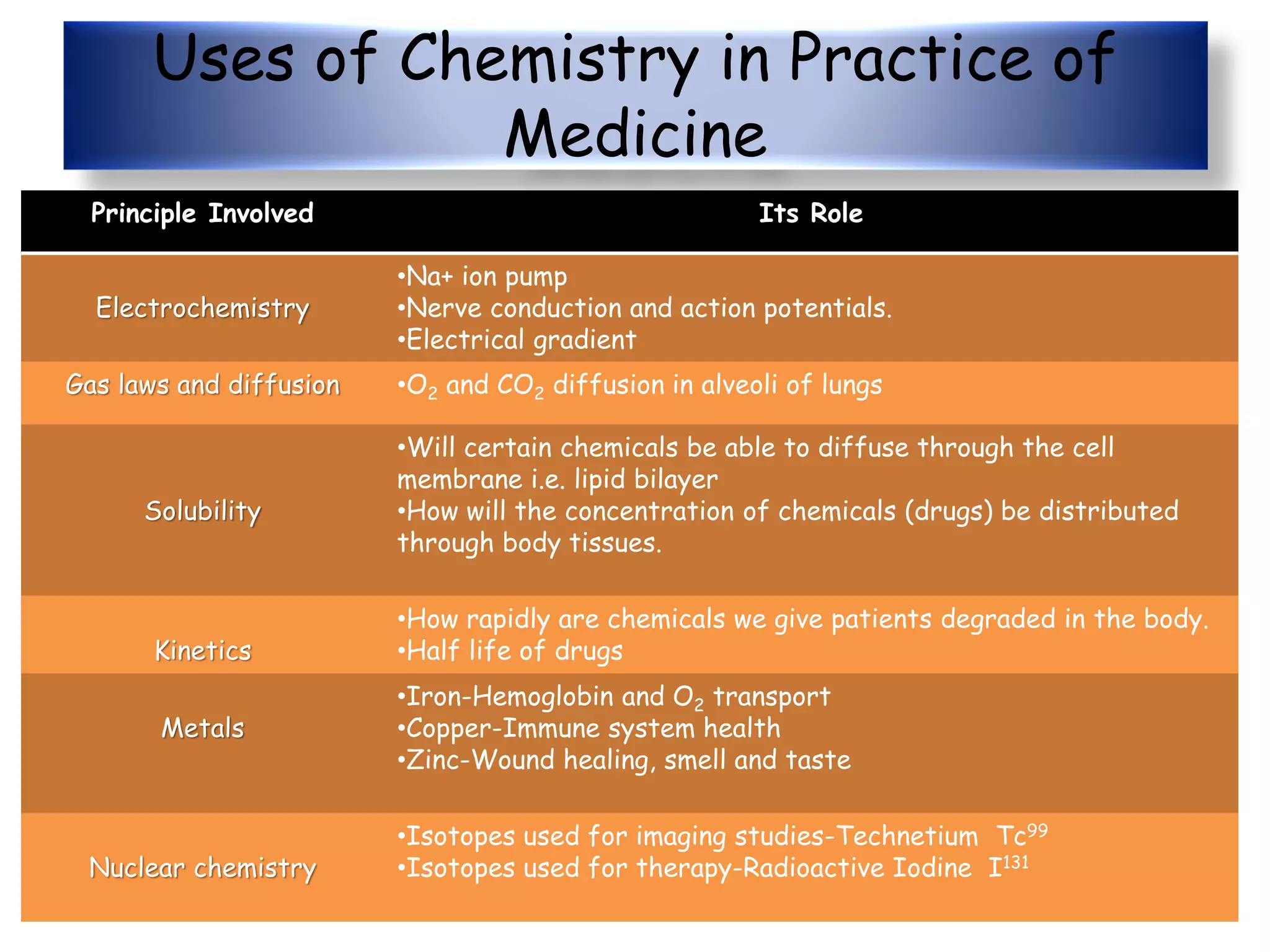
Uses of Chemistry in Practice of
Medicine
Principle Involved Its Role
Electrochemistry
•Na+ ion pump
•Nerve conduction and action potentials.
•Electrical gradient
Gas laws and diffusion •O2 and CO2 diffusion in alveoli of lungs
Solubility
•Will certain chemicals be able to diffuse through the cell
membrane i.e. lipid bilayer
•How will the concentration of chemicals (drugs) be distributed
through body tissues.
Kinetics
•How rapidly are chemicals we give patients degraded in the body.
•Half life of drugs
Metals
•Iron-Hemoglobin and O2 transport
•Copper-Immune system health
•Zinc-Wound healing, smell and taste
Nuclear chemistry
•Isotopes used for imaging studies-Technetium Tc99
•Isotopes used for therapy-Radioactive Iodine I131
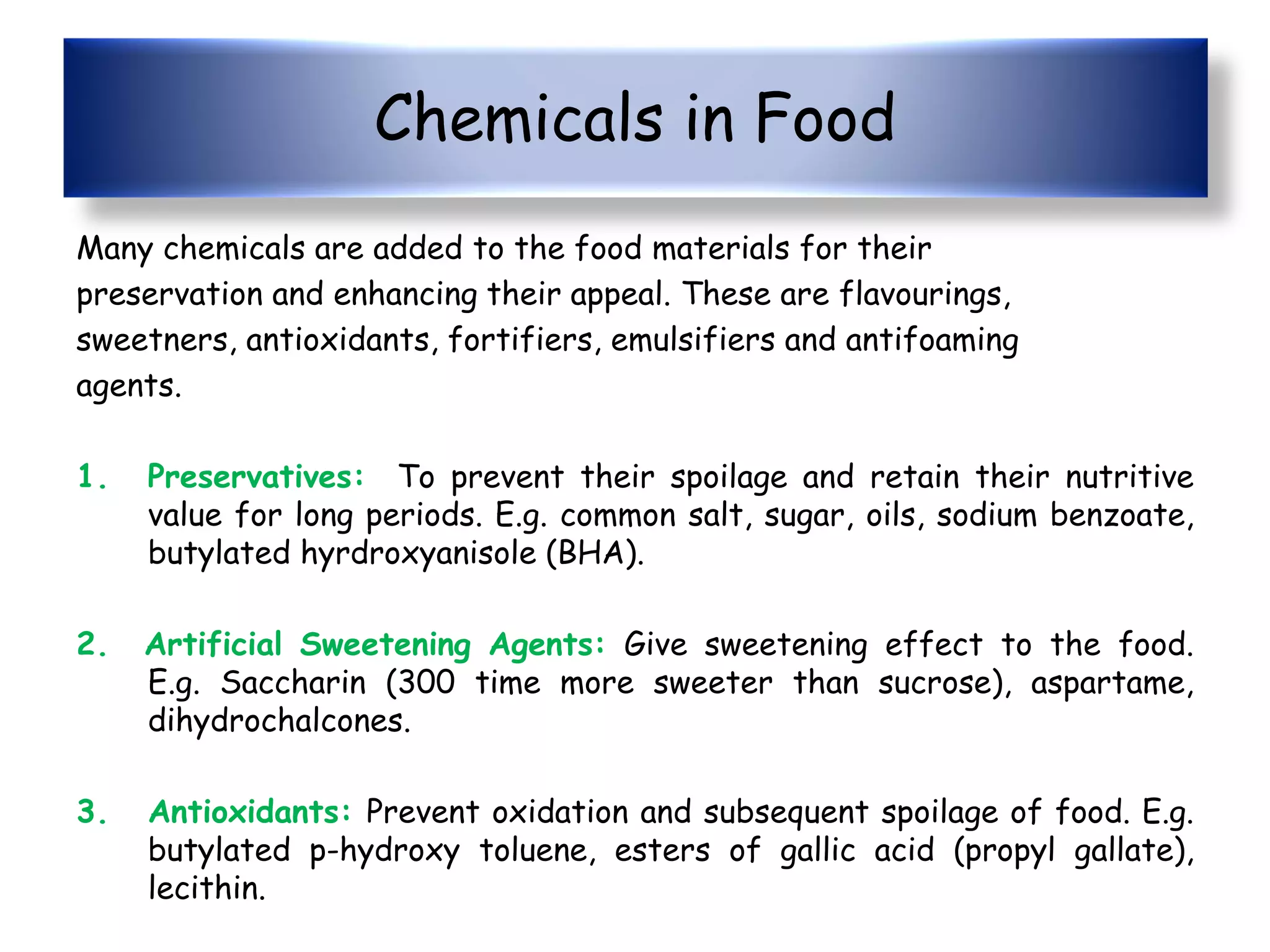
Chemicals in Food
Many chemicals are added to the food materials for their
preservation and enhancing their appeal. These are flavourings,
sweetners, antioxidants, fortifiers, emulsifiers and antifoaming
agents.
1. Preservatives: To prevent their spoilage and retain their nutritive
value for long periods. E.g. common salt, sugar, oils, sodium benzoate,
butylated hyrdroxyanisole (BHA).
2. Artificial Sweetening Agents: Give sweetening effect to the food.
E.g. Saccharin (300 time more sweeter than sucrose), aspartame,
dihydrochalcones.
3. Antioxidants: Prevent oxidation and subsequent spoilage of food. E.g.
butylated p-hydroxy toluene, esters of gallic acid (propyl gallate),
lecithin.
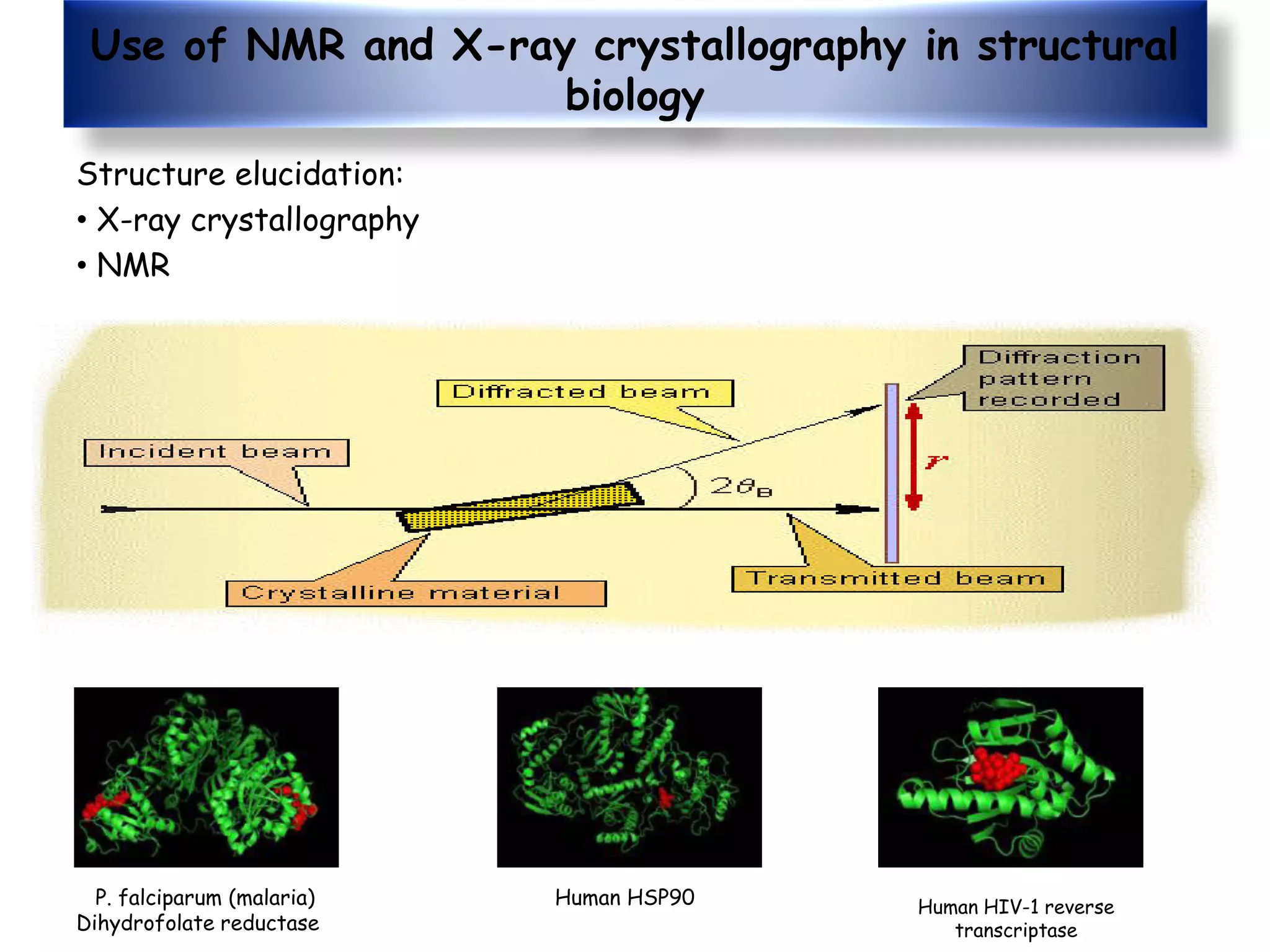
Use of NMR and X-ray crystallography in structural
biology
Structure elucidation:
• X-ray crystallography
• NMR
P. falciparum (malaria)
Dihydrofolate reductase
Human HSP90 Human HIV-1 reverse
transcriptase
Nuclear magnetic resonance spectroscopy of
proteins
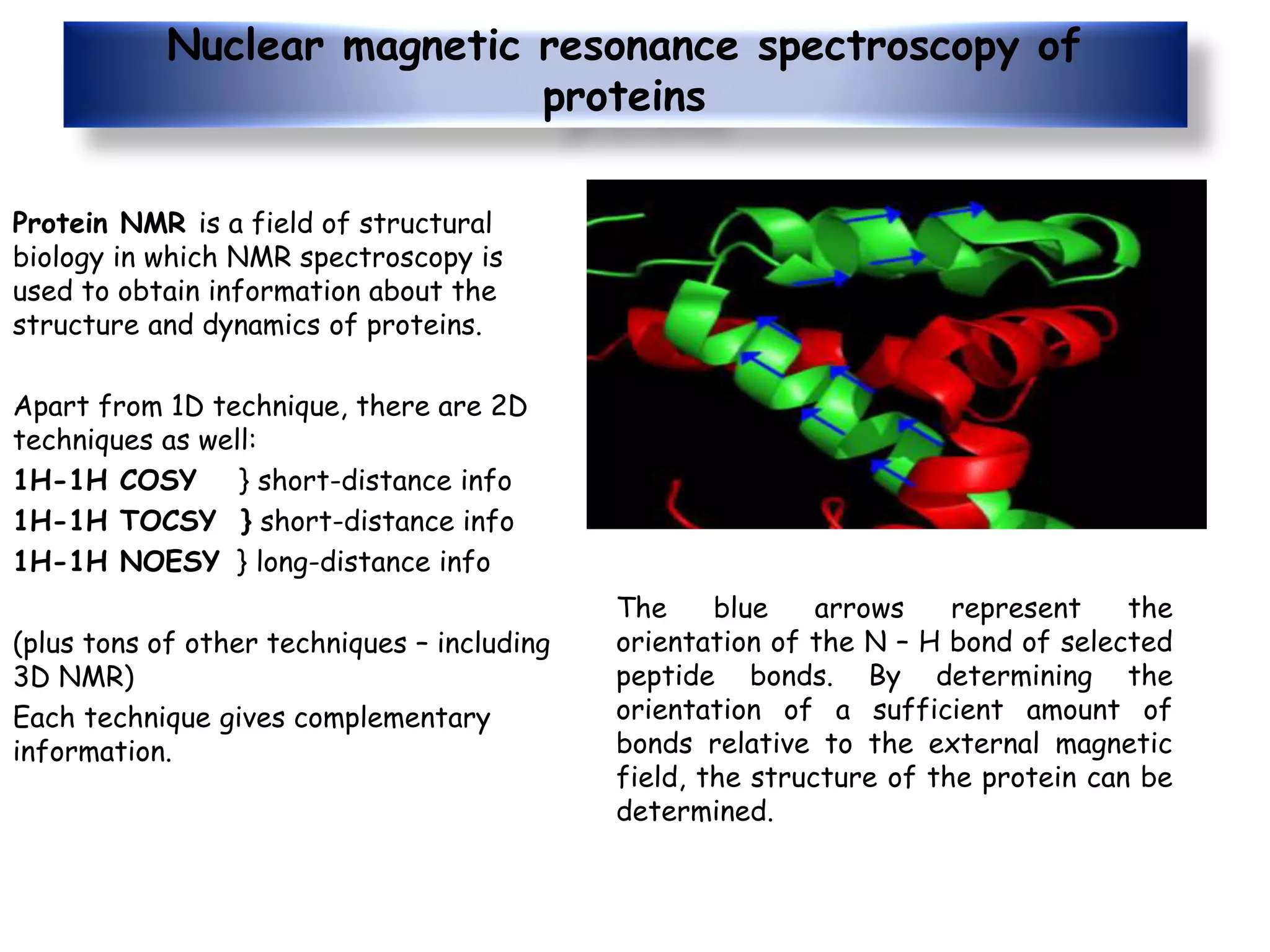
Protein NMR is a field of structural
biology in which NMR spectroscopy is
used to obtain information about the
structure and dynamics of proteins.
Apart from 1D technique, there are 2D
techniques as well:
1H-1H COSY } short-distance info
1H-1H TOCSY } short-distance info
1H-1H NOESY } long-distance info
(plus tons of other techniques – including
3D NMR)
Each technique gives complementary
information.
The blue arrows represent the
orientation of the N – H bond of selected
peptide bonds. By determining the
orientation of a sufficient amount of
bonds relative to the external magnetic
field, the structure of the protein can be
determined.
Application of Nuclear
Chemistry in Medical
Science
Brain tumour location:
o Brain tumours are difficult to locate.
o We label dye that are preferentially
adsorbed by cancerous cells with 131I
(diiodofluorescein or rose bengal) and scan
entire space around skull by special
counters.
Assessing the volume of Blood in pateint:
o Sometimes necessary for surgeon to know
amount of blood in patient of anemia,
severe haemorrhage in an accident.
o Isotope dilution method is used, and label
1ml of pateint ‘s blood with 24Na.
Application of Inorganic
Chemistry in Medical
Science
Metal complexes in medicine
Comparison to organic-based medicines,
metal complexes have more
• coordination numbers
• geometries and
• oxidation/reduction states.
Targets of metal-based medicines
include DNA, protein, and enzymes.
• Metal complexes targeting DNA
DNA has been the primary target of metal complexes
due to the ability of cationic metal interacting with
the anionic backbone of DNA.
 The anticancer chemotherapy drug cisplatin
covalently binds to DNA, which disrupts
transcription and leads to programmed cell death.
• Metal complexes targeting enzymes and proteins
Metal complexes can interact with the amino acids
with the highest reduction potential (histidine,
cysteine, and selenocysteine).
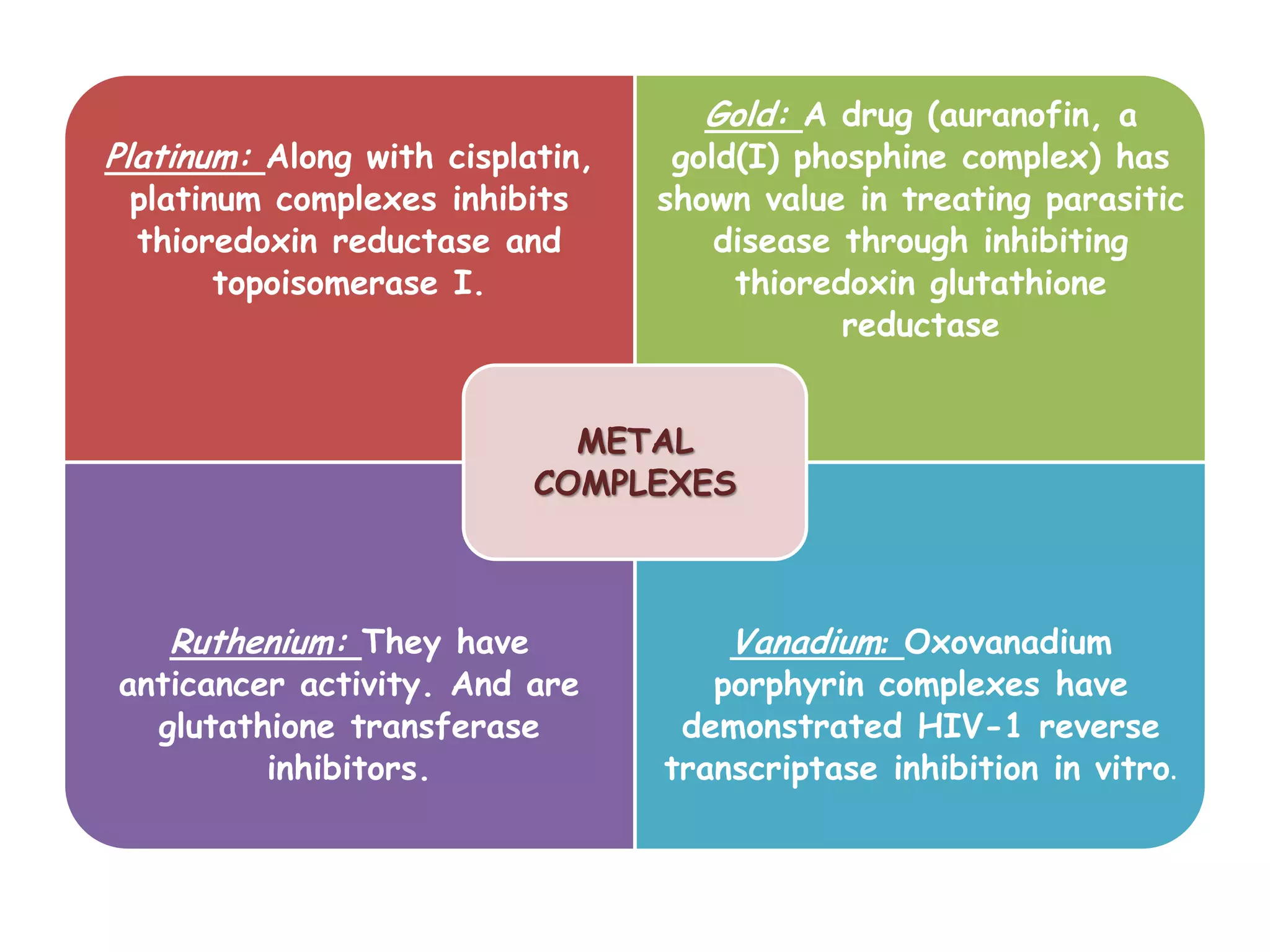
Platinum: Along with cisplatin,
platinum complexes inhibits
thioredoxin reductase and
topoisomerase I.
Gold: A drug (auranofin, a
gold(I) phosphine complex) has
shown value in treating parasitic
disease through inhibiting
thioredoxin glutathione
reductase
Ruthenium: They have
anticancer activity. And are
glutathione transferase
inhibitors.
Vanadium: Oxovanadium
porphyrin complexes have
demonstrated HIV-1 reverse
transcriptase inhibition in vitro.
METAL
COMPLEXES
Application of Nanotechnology to
Medical Sciences
• Drug Delivery
Nanoparticles are used to deliver drugs, heat, light or other
substances to specific types of cells (such as cancer cells).
Particles are engineered so that they are attracted to diseased
cells, which allows direct treatment of those cells.
 This technique reduces damage to healthy cells in the body and
allows for earlier detection of disease.
• Anti-Microbial Techniques
 Nanocrystalline silver which is as an antimicrobial agent for the
treatment of wounds.
 A nanoparticle cream has been shown to fight staph infections.
The nanoparticles contain nitric oxide gas, which is known to kill
bacteria.
• Therapy Techniques
 Buckyballs may be used to trap free radicals
generated during an allergic reaction and block the
inflammation that results from an allergic reaction.
 Nanoshells may be used to concentrate the heat
from infrared light to destroy cancer cells with
minimal damage to surrounding healthy cells.
 Nanoparticles, when activated by x-rays, that
generate electrons that cause the destruction of
cancer cells to which they have attached
themselves.
 Nanofibers can stimulate the production of
cartilage in damaged joints.
 Nanoparticles may be used, when inhaled, to
stimulate an immune response to fight respiratory
virsuses.
References
• Fundamentals of medicinal chemistry- Gareth
Thomas
• Modern abc of Chemistry- Class XII
• Essentials of Nuclear Chemistry- Arnicar
• portal.acs.org/portal/PublicWebSite/educatio
n/.../research/index.htm
• www.understandingnano.com/medicine.html
• en.wikipedia.org/wiki/Medicinal_chemistry
Thank You

Overview of research in chemistry

  • 1.
    An Overview ofResearch in Chemistry: Application to Biological and Medical Sciences
  • 2.
    Contents Chemistry & ItsBranches Chemistry in Medicine & Health care Chemistry in Food Use of NMR & X-ray Crystallography in Structural Biology Application of Nuclear Chemistry Application of Inorganic Chemistry Application of Nanotechnology
  • 3.
    What is chemistry? Chemistry isthe science of matter, especially its chemical reactions, but also its composition, structure and properties. Chemistry is concerned with atoms and their interactions with other atoms, and particularly with the properties of chemical bonds.
  • 4.
  • 5.
    Major Subdisciplines ofChemistry Analytical chemistry Inorganic chemistry Biochemistry Physical chemistry Materials chemistry Organic chemistry Nuclear chemistry Pharmaceutical Chemistry Environmental Chemistry
  • 6.
    Chemistry in Everydaylife There is no aspect of our life that is not affected by developments in chemistry. Chemistry plays a very vital role in our everyday life. Our daily need of food, clothing, shelter, potable water, medicines etc. are connected with chemical compounds, processes and principles. Chemistry has important contribution for giving us:  Life saving drugs  Synthetic fibers,  Synthetic detergents  Variety of cosmetics  Preservatives for our food  Fertilizers & pesticides  Paper  Glass  Plastics  Beautiful paints etc.
  • 7.
    Application of Chemistryin biological and Medical Sciences
  • 8.
    Chemistry in Medicines& Healthcare Type of Drug Its Use Example Antipyretics Lower the temperature of body Aspirin, paracetamol, phenacetin. Analgesics used to relieve pain naproxen, diclofenac sodium. Antiseptics used to kill or prevent the growth of micro-organisms. furacin, soframycin Anticancer drugs to treat cancerous growths. cisplatin Tranquilizers treatment of stress, mild and severe mental diseases membutal, veronal, luminal Antihistamines diminish the actions of histamine released in the body and hence pervent allergy. Benadryl, Avil, foristal Antacids neutralize acid in the gastric juice and relief from acidity, heat burns Baking soda in water, cimetidine, rantidine. Anesthetics produce general or local insensibilty to pain and other sensations. Chloroform, vinyl ethers The chemical substances used for treatment of diseases and for reducing sufferings from pain are called medicines or drugs. Some of the medicinal compounds are discussed below:
  • 9.
    Uses of Chemistryin Practice of Medicine Principle Involved Its Role Electrochemistry •Na+ ion pump •Nerve conduction and action potentials. •Electrical gradient Gas laws and diffusion •O2 and CO2 diffusion in alveoli of lungs Solubility •Will certain chemicals be able to diffuse through the cell membrane i.e. lipid bilayer •How will the concentration of chemicals (drugs) be distributed through body tissues. Kinetics •How rapidly are chemicals we give patients degraded in the body. •Half life of drugs Metals •Iron-Hemoglobin and O2 transport •Copper-Immune system health •Zinc-Wound healing, smell and taste Nuclear chemistry •Isotopes used for imaging studies-Technetium Tc99 •Isotopes used for therapy-Radioactive Iodine I131
  • 10.
    Chemicals in Food Manychemicals are added to the food materials for their preservation and enhancing their appeal. These are flavourings, sweetners, antioxidants, fortifiers, emulsifiers and antifoaming agents. 1. Preservatives: To prevent their spoilage and retain their nutritive value for long periods. E.g. common salt, sugar, oils, sodium benzoate, butylated hyrdroxyanisole (BHA). 2. Artificial Sweetening Agents: Give sweetening effect to the food. E.g. Saccharin (300 time more sweeter than sucrose), aspartame, dihydrochalcones. 3. Antioxidants: Prevent oxidation and subsequent spoilage of food. E.g. butylated p-hydroxy toluene, esters of gallic acid (propyl gallate), lecithin.
  • 11.
    Use of NMRand X-ray crystallography in structural biology Structure elucidation: • X-ray crystallography • NMR P. falciparum (malaria) Dihydrofolate reductase Human HSP90 Human HIV-1 reverse transcriptase
  • 12.
    Nuclear magnetic resonancespectroscopy of proteins Protein NMR is a field of structural biology in which NMR spectroscopy is used to obtain information about the structure and dynamics of proteins. Apart from 1D technique, there are 2D techniques as well: 1H-1H COSY } short-distance info 1H-1H TOCSY } short-distance info 1H-1H NOESY } long-distance info (plus tons of other techniques – including 3D NMR) Each technique gives complementary information. The blue arrows represent the orientation of the N – H bond of selected peptide bonds. By determining the orientation of a sufficient amount of bonds relative to the external magnetic field, the structure of the protein can be determined.
  • 13.
  • 14.
    Brain tumour location: oBrain tumours are difficult to locate. o We label dye that are preferentially adsorbed by cancerous cells with 131I (diiodofluorescein or rose bengal) and scan entire space around skull by special counters. Assessing the volume of Blood in pateint: o Sometimes necessary for surgeon to know amount of blood in patient of anemia, severe haemorrhage in an accident. o Isotope dilution method is used, and label 1ml of pateint ‘s blood with 24Na.
  • 15.
  • 16.
    Metal complexes inmedicine Comparison to organic-based medicines, metal complexes have more • coordination numbers • geometries and • oxidation/reduction states. Targets of metal-based medicines include DNA, protein, and enzymes.
  • 17.
    • Metal complexestargeting DNA DNA has been the primary target of metal complexes due to the ability of cationic metal interacting with the anionic backbone of DNA.  The anticancer chemotherapy drug cisplatin covalently binds to DNA, which disrupts transcription and leads to programmed cell death. • Metal complexes targeting enzymes and proteins Metal complexes can interact with the amino acids with the highest reduction potential (histidine, cysteine, and selenocysteine).
  • 18.
    Platinum: Along withcisplatin, platinum complexes inhibits thioredoxin reductase and topoisomerase I. Gold: A drug (auranofin, a gold(I) phosphine complex) has shown value in treating parasitic disease through inhibiting thioredoxin glutathione reductase Ruthenium: They have anticancer activity. And are glutathione transferase inhibitors. Vanadium: Oxovanadium porphyrin complexes have demonstrated HIV-1 reverse transcriptase inhibition in vitro. METAL COMPLEXES
  • 19.
    Application of Nanotechnologyto Medical Sciences
  • 20.
    • Drug Delivery Nanoparticlesare used to deliver drugs, heat, light or other substances to specific types of cells (such as cancer cells). Particles are engineered so that they are attracted to diseased cells, which allows direct treatment of those cells.  This technique reduces damage to healthy cells in the body and allows for earlier detection of disease. • Anti-Microbial Techniques  Nanocrystalline silver which is as an antimicrobial agent for the treatment of wounds.  A nanoparticle cream has been shown to fight staph infections. The nanoparticles contain nitric oxide gas, which is known to kill bacteria.
  • 21.
    • Therapy Techniques Buckyballs may be used to trap free radicals generated during an allergic reaction and block the inflammation that results from an allergic reaction.  Nanoshells may be used to concentrate the heat from infrared light to destroy cancer cells with minimal damage to surrounding healthy cells.  Nanoparticles, when activated by x-rays, that generate electrons that cause the destruction of cancer cells to which they have attached themselves.  Nanofibers can stimulate the production of cartilage in damaged joints.  Nanoparticles may be used, when inhaled, to stimulate an immune response to fight respiratory virsuses.
  • 22.
    References • Fundamentals ofmedicinal chemistry- Gareth Thomas • Modern abc of Chemistry- Class XII • Essentials of Nuclear Chemistry- Arnicar • portal.acs.org/portal/PublicWebSite/educatio n/.../research/index.htm • www.understandingnano.com/medicine.html • en.wikipedia.org/wiki/Medicinal_chemistry
  • 23.