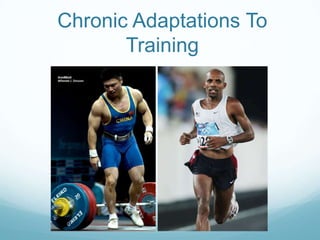
Chronic Adaptations To
       Training
VCAA Study Design
 Unit 4: Enhancing Performance
 Area of Study 1: Planning, implementing and evaluating a training program:
This area of study focuses on the components of fitness and assessment of
fitness from a physiological perspective. Students consider the manner in which
fitness can be improved by the application of appropriate training principles and
methods. Students conduct an activity analysis of an elite athlete to determine the
fitness requirements of a selected sport. They participate in fitness testing and an
individual training program and evaluate this from a theoretical perspective.

 Outcome 1 Key Knowledge:
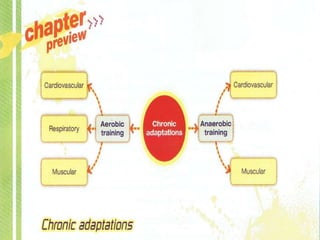
Chronic adaptations of the cardiovascular, respiratory and muscular systems to
training.
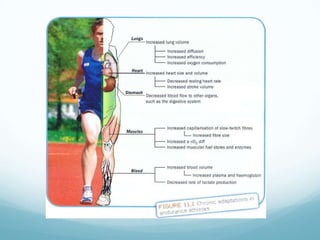
Chronic Adaptations
 Long term physiological changes in response to
  increased demands placed on the body through
  training.
        3 times per week for 6-8 weeks.

 Adaptations retained unless training ceases.
 Chronic adaptations are dependent upon:
        Type and method of training (aerobic vs anaerobic).
        Frequency, intensity and duration of training.
        Individual’s capacities and hereditary factors.
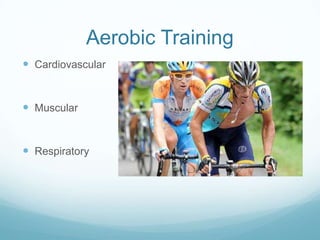
Aerobic Training
 Cardiovascular


 Muscular


 Respiratory
Cardiovascular Adaptations
   cardiac hypertrophy

    capillarisation of the heart

    stroke volume (SV)

    cardiac output (Q)

    resting heart rate

   blood pressure

    heart rate during sub-max workloads.

    arterio-venous oxygen difference (a-
    V02 diff)

    blood volume and haemoglobin levels

   Changes to blood cholesterol
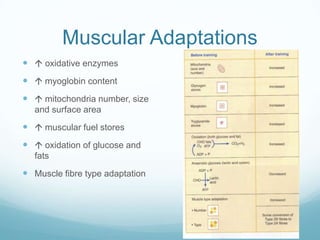
Muscular Adaptations
  oxidative enzymes
  myoglobin content
  mitochondria number, size
  and surface area
  muscular fuel stores
  oxidation of glucose and
  fats
 Muscle fibre type adaptation
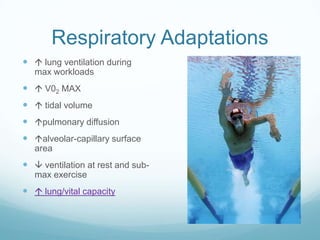
Respiratory Adaptations
  lung ventilation during
   max workloads
  V02 MAX
  tidal volume
 pulmonary diffusion
 alveolar-capillary surface
   area
  ventilation at rest and sub-
   max exercise
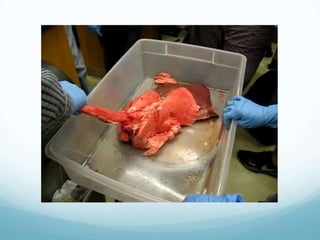
  lung/vital capacity
Measuring Vital Capacity with the
            Balloon Method
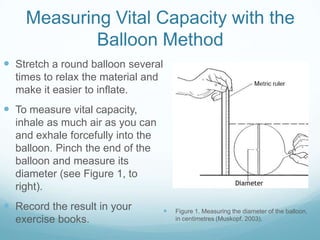
 Stretch a round balloon several
  times to relax the material and
  make it easier to inflate.
 To measure vital capacity,
  inhale as much air as you can
  and exhale forcefully into the
  balloon. Pinch the end of the
  balloon and measure its
  diameter (see Figure 1, to
  right).
 Record the result in your            Figure 1. Measuring the diameter of the balloon,
  exercise books.                       in centimetres (Muskopf, 2003).
Measuring Vital Capacity with the
            Balloon Method
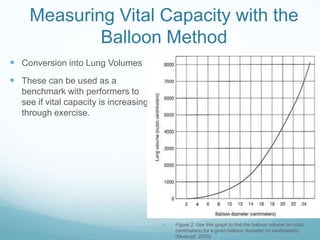
 Conversion into Lung Volumes
 These can be used as a
  benchmark with performers to
  see if vital capacity is increasing
  through exercise.


                                           Figure 2. Use this graph to find the balloon volume (in cubic
                                            centimeters) for a given balloon diameter (in centimeters)
                                            (Muskopf, 2003).
1. Describe V02 MAX. Would this increase or decrease
   with aerobic training?
2. Cadel Evans has a recorded V02 MAX of 86ml/kg/min.
   Name 5 other chronic adaptations he might have
   developed due to training.
3. Why does an athlete’s resting heart rate decrease with
   aerobic training?
4. How would you expect Cadel to perform on the “beep
   test”?
5. Which aerobic capacity test might better suit Cadel?
   Explain why.
Lance Armstrong
 “His heart is a third bigger than average, pumping blood to his
   muscles more efficiently; at rest his heart rate is 32 beats a minute,
   less than half the average. His blood is more saturated than
   normal, even for a top-level sportsman, with energy-producing
   oxygen; his VO2 Max rating, which measures how much oxygen
   the lungs can consume during exercise, is 85. An average healthy
   male might rate a 40.”
 “Armstrong can ride uphill generating about 500 watts of power for
   20 minutes, something a typical 25-year-old could do for only 30
   seconds.”
 Lance Armstrong: Marathon Man The Age, July 25, 2005.
 http://www.theage.com.au/news/sport/marathon-
   man/2005/07/22/1121539144887.html
Anaerobic Training
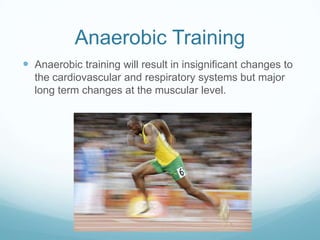
 Anaerobic training will result in insignificant changes to
  the cardiovascular and respiratory systems but major
  long term changes at the muscular level.
Adaptations
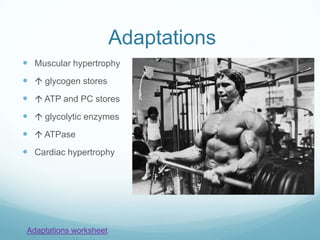
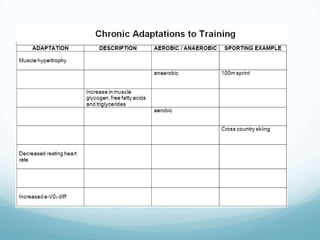
 Muscular hypertrophy
  glycogen stores
  ATP and PC stores
  glycolytic enzymes
  ATPase
 Cardiac hypertrophy


Adaptations worksheet
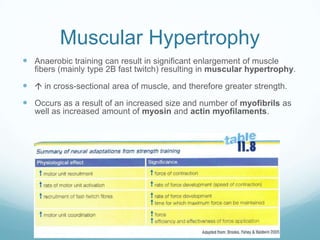
Muscular Hypertrophy
 Anaerobic training can result in significant enlargement of muscle
   fibers (mainly type 2B fast twitch) resulting in muscular hypertrophy.

  in cross-sectional area of muscle, and therefore greater strength.
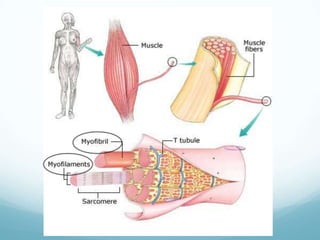
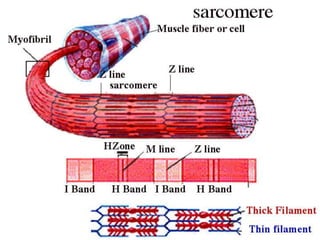
 Occurs as a result of an increased size and number of myofibrils as
   well as increased amount of myosin and actin myofilaments.
 Assessment: A written report that includes a plan and
  evaluation of a 6-week training program with reference
  to an activity analysis, fitness testing and training diary.
  AND a response which links chronic adaptations of the
  cardiovascular, respiratory and muscular systems to
  training methods and improved performance.

 Lab write up
Chronic adaptations

Chronic adaptations

  • 1.
  • 2.
    VCAA Study Design Unit 4: Enhancing Performance  Area of Study 1: Planning, implementing and evaluating a training program: This area of study focuses on the components of fitness and assessment of fitness from a physiological perspective. Students consider the manner in which fitness can be improved by the application of appropriate training principles and methods. Students conduct an activity analysis of an elite athlete to determine the fitness requirements of a selected sport. They participate in fitness testing and an individual training program and evaluate this from a theoretical perspective.  Outcome 1 Key Knowledge: Chronic adaptations of the cardiovascular, respiratory and muscular systems to training.
  • 4.
    Chronic Adaptations  Longterm physiological changes in response to increased demands placed on the body through training.  3 times per week for 6-8 weeks.  Adaptations retained unless training ceases.  Chronic adaptations are dependent upon:  Type and method of training (aerobic vs anaerobic).  Frequency, intensity and duration of training.  Individual’s capacities and hereditary factors.
  • 5.
  • 6.
    Cardiovascular Adaptations  cardiac hypertrophy   capillarisation of the heart   stroke volume (SV)   cardiac output (Q)   resting heart rate  blood pressure   heart rate during sub-max workloads.   arterio-venous oxygen difference (a- V02 diff)   blood volume and haemoglobin levels  Changes to blood cholesterol
  • 7.
    Muscular Adaptations  oxidative enzymes   myoglobin content   mitochondria number, size and surface area   muscular fuel stores   oxidation of glucose and fats  Muscle fibre type adaptation
  • 8.
    Respiratory Adaptations  lung ventilation during max workloads   V02 MAX   tidal volume  pulmonary diffusion  alveolar-capillary surface area   ventilation at rest and sub- max exercise   lung/vital capacity
  • 10.
    Measuring Vital Capacitywith the Balloon Method  Stretch a round balloon several times to relax the material and make it easier to inflate.  To measure vital capacity, inhale as much air as you can and exhale forcefully into the balloon. Pinch the end of the balloon and measure its diameter (see Figure 1, to right).  Record the result in your  Figure 1. Measuring the diameter of the balloon, exercise books. in centimetres (Muskopf, 2003).
  • 11.
    Measuring Vital Capacitywith the Balloon Method  Conversion into Lung Volumes  These can be used as a benchmark with performers to see if vital capacity is increasing through exercise.  Figure 2. Use this graph to find the balloon volume (in cubic centimeters) for a given balloon diameter (in centimeters) (Muskopf, 2003).
  • 14.
    1. Describe V02MAX. Would this increase or decrease with aerobic training? 2. Cadel Evans has a recorded V02 MAX of 86ml/kg/min. Name 5 other chronic adaptations he might have developed due to training. 3. Why does an athlete’s resting heart rate decrease with aerobic training? 4. How would you expect Cadel to perform on the “beep test”? 5. Which aerobic capacity test might better suit Cadel? Explain why.
  • 15.
    Lance Armstrong  “Hisheart is a third bigger than average, pumping blood to his muscles more efficiently; at rest his heart rate is 32 beats a minute, less than half the average. His blood is more saturated than normal, even for a top-level sportsman, with energy-producing oxygen; his VO2 Max rating, which measures how much oxygen the lungs can consume during exercise, is 85. An average healthy male might rate a 40.”  “Armstrong can ride uphill generating about 500 watts of power for 20 minutes, something a typical 25-year-old could do for only 30 seconds.”  Lance Armstrong: Marathon Man The Age, July 25, 2005.  http://www.theage.com.au/news/sport/marathon- man/2005/07/22/1121539144887.html
  • 16.
    Anaerobic Training  Anaerobictraining will result in insignificant changes to the cardiovascular and respiratory systems but major long term changes at the muscular level.
  • 17.
    Adaptations  Muscular hypertrophy  glycogen stores   ATP and PC stores   glycolytic enzymes   ATPase  Cardiac hypertrophy Adaptations worksheet
  • 19.
    Muscular Hypertrophy  Anaerobictraining can result in significant enlargement of muscle fibers (mainly type 2B fast twitch) resulting in muscular hypertrophy.   in cross-sectional area of muscle, and therefore greater strength.  Occurs as a result of an increased size and number of myofibrils as well as increased amount of myosin and actin myofilaments.
  • 22.
     Assessment: Awritten report that includes a plan and evaluation of a 6-week training program with reference to an activity analysis, fitness testing and training diary. AND a response which links chronic adaptations of the cardiovascular, respiratory and muscular systems to training methods and improved performance.  Lab write up