Page 1
Outage ManagementOutage Management
Roy Hoffman
29 Jan 2001
Page 2
OutlineOutline
 Outage Management Basics
 Some issues
 Standards for Distribution Management
Page 3
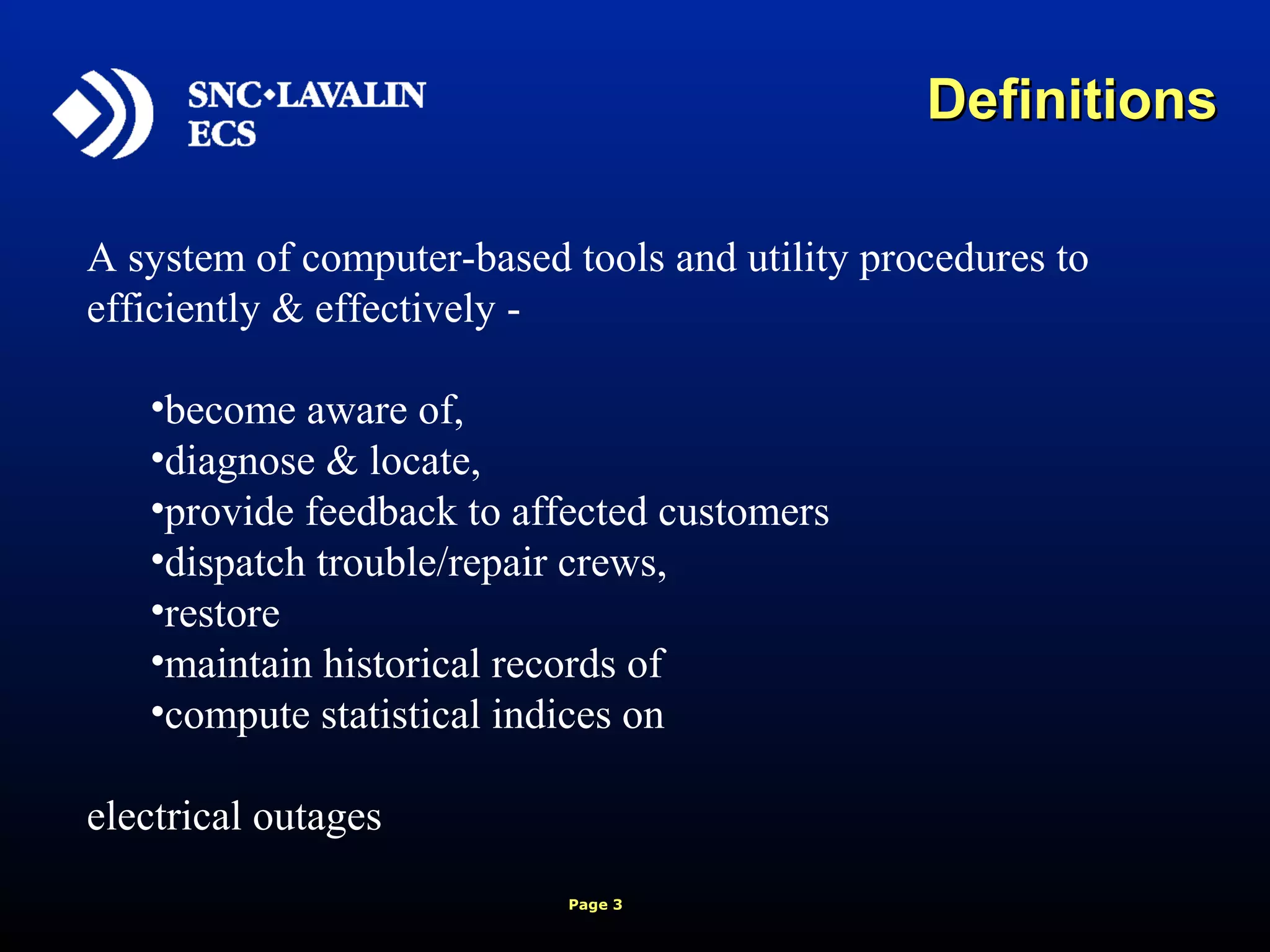
A system of computer-based tools and utility procedures to
efficiently & effectively -
•become aware of,
•diagnose & locate,
•provide feedback to affected customers
•dispatch trouble/repair crews,
•restore
•maintain historical records of
•compute statistical indices on
electrical outages
DefinitionsDefinitions
Page 4
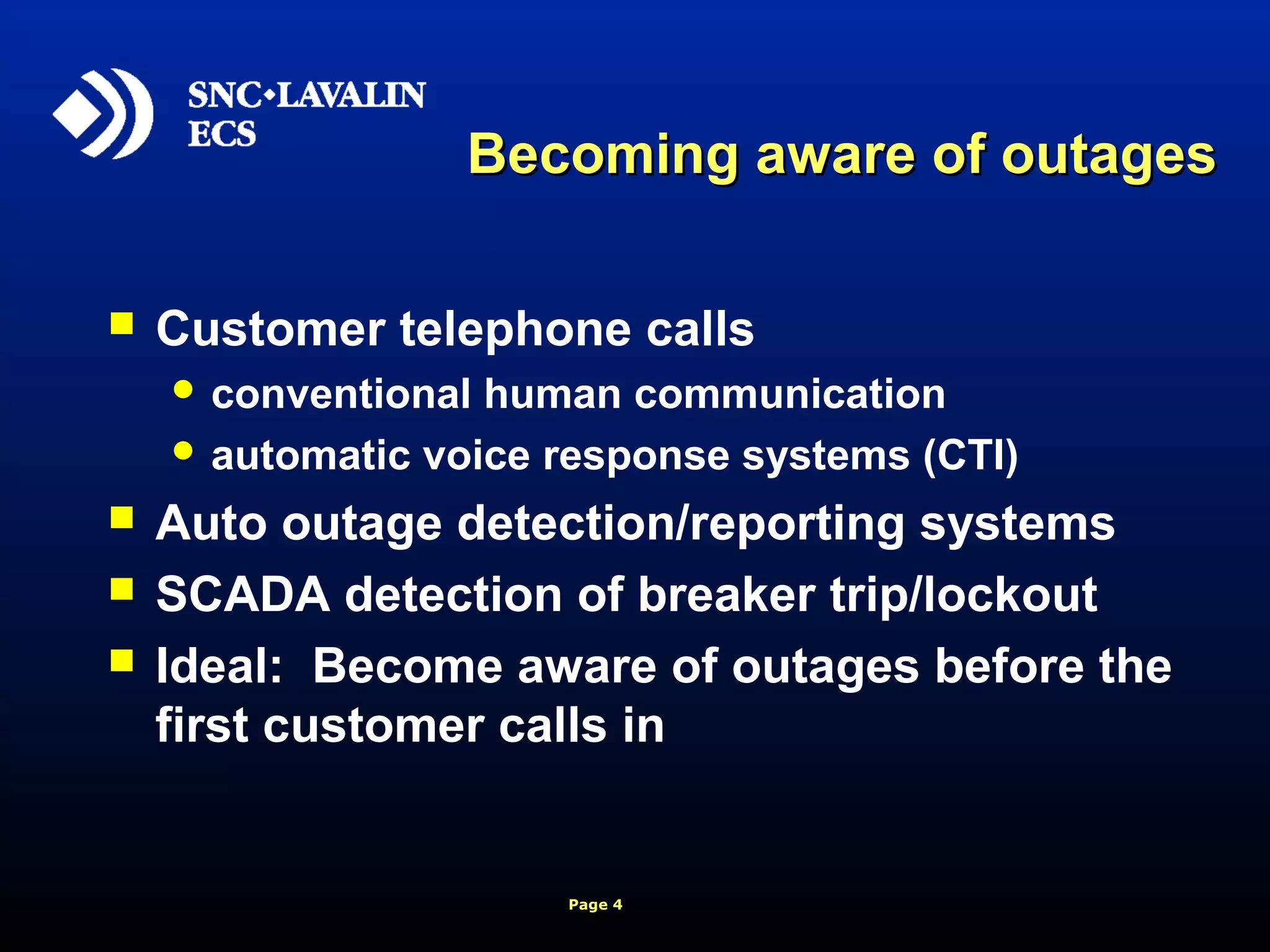
Becoming aware of outagesBecoming aware of outages
 Customer telephone calls
 conventional human communication
 automatic voice response systems (CTI)
 Auto outage detection/reporting systems
 SCADA detection of breaker trip/lockout
 Ideal: Become aware of outages before the
first customer calls in
Page 5
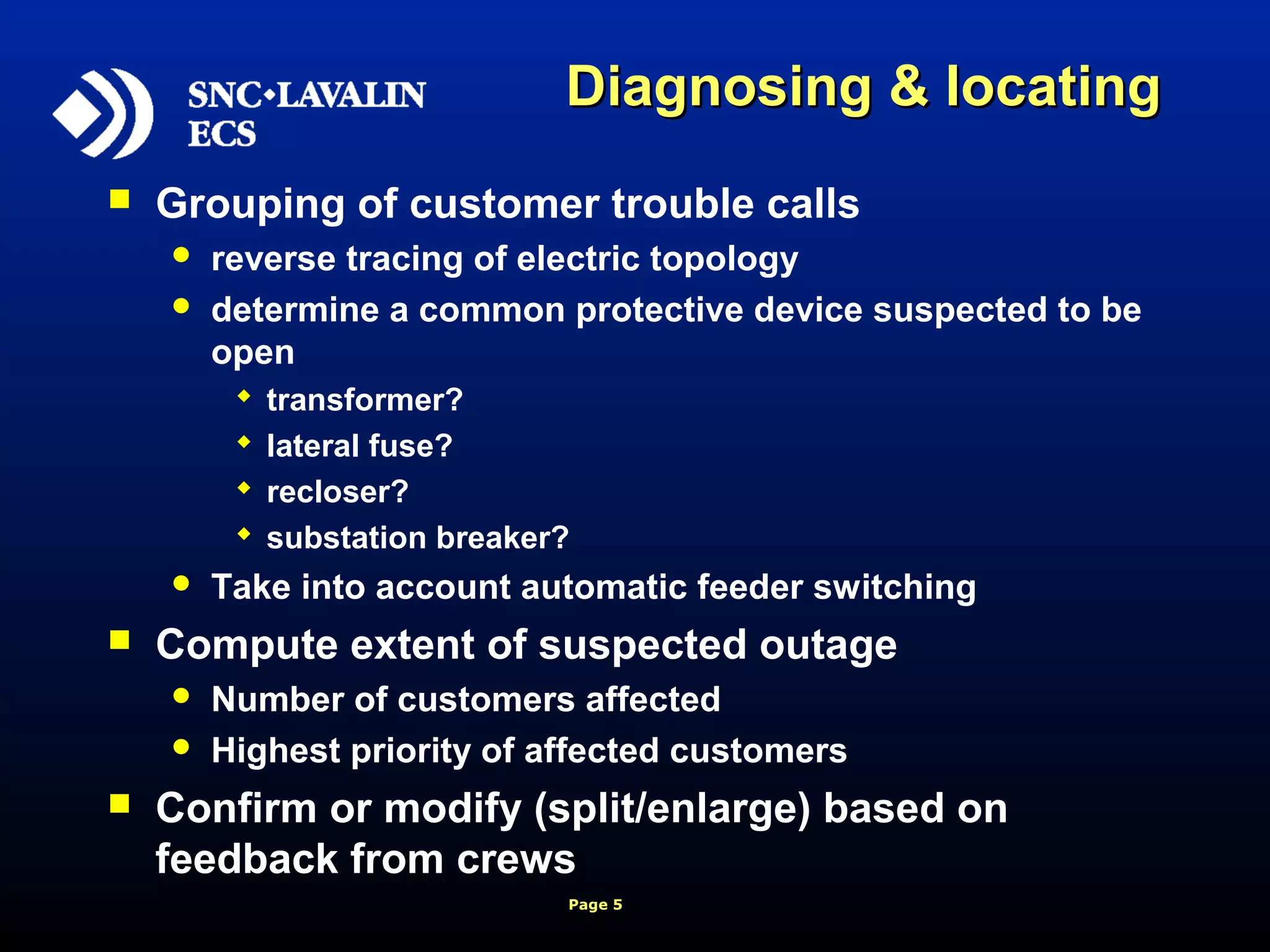
Diagnosing & locatingDiagnosing & locating
 Grouping of customer trouble calls
 reverse tracing of electric topology
 determine a common protective device suspected to be
open
 transformer?
 lateral fuse?
 recloser?
 substation breaker?
 Take into account automatic feeder switching
 Compute extent of suspected outage
 Number of customers affected
 Highest priority of affected customers
 Confirm or modify (split/enlarge) based on
feedback from crews
Page 6
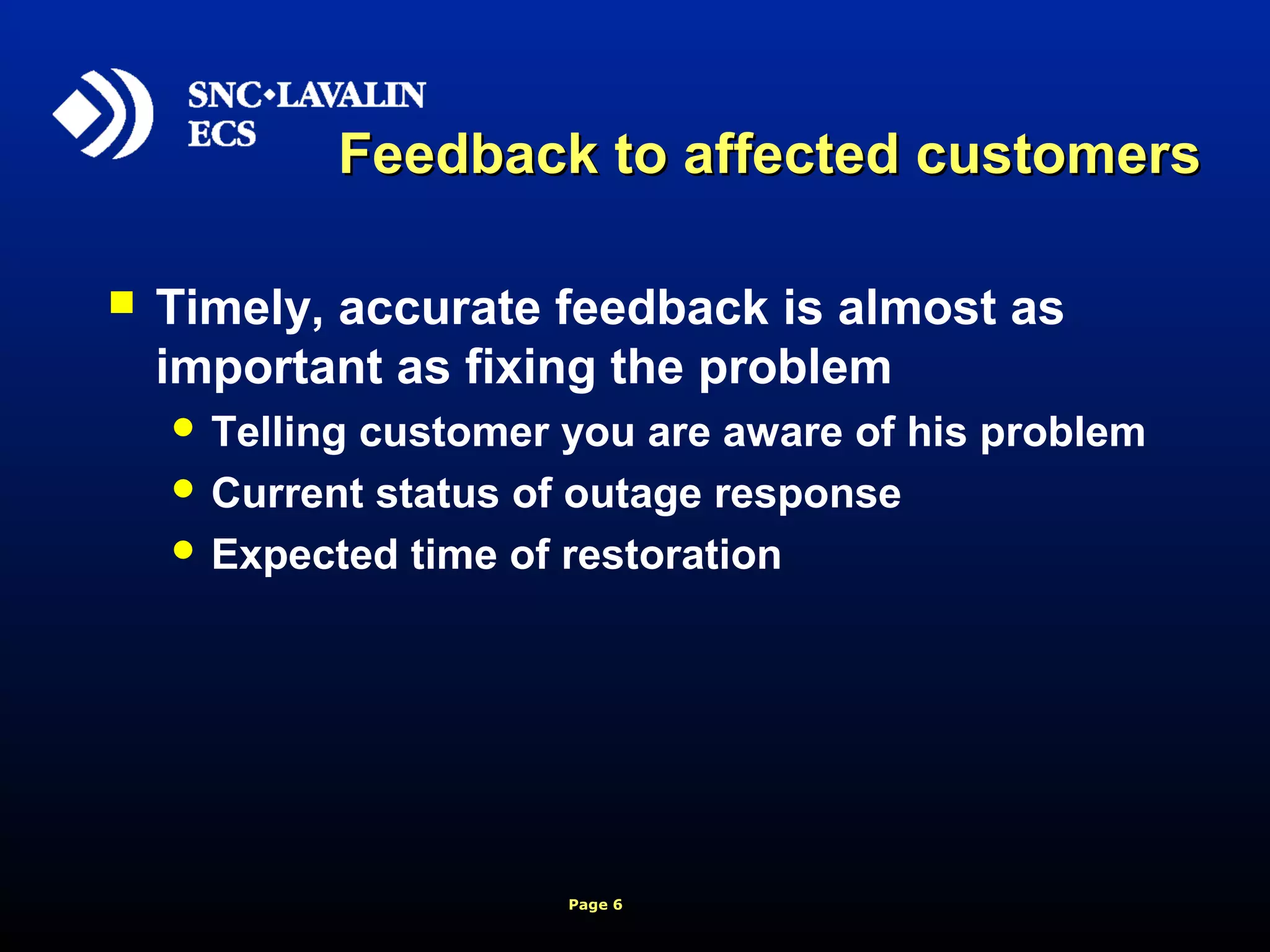
Feedback to affected customersFeedback to affected customers
 Timely, accurate feedback is almost as
important as fixing the problem
 Telling customer you are aware of his problem
 Current status of outage response
 Expected time of restoration
Page 7
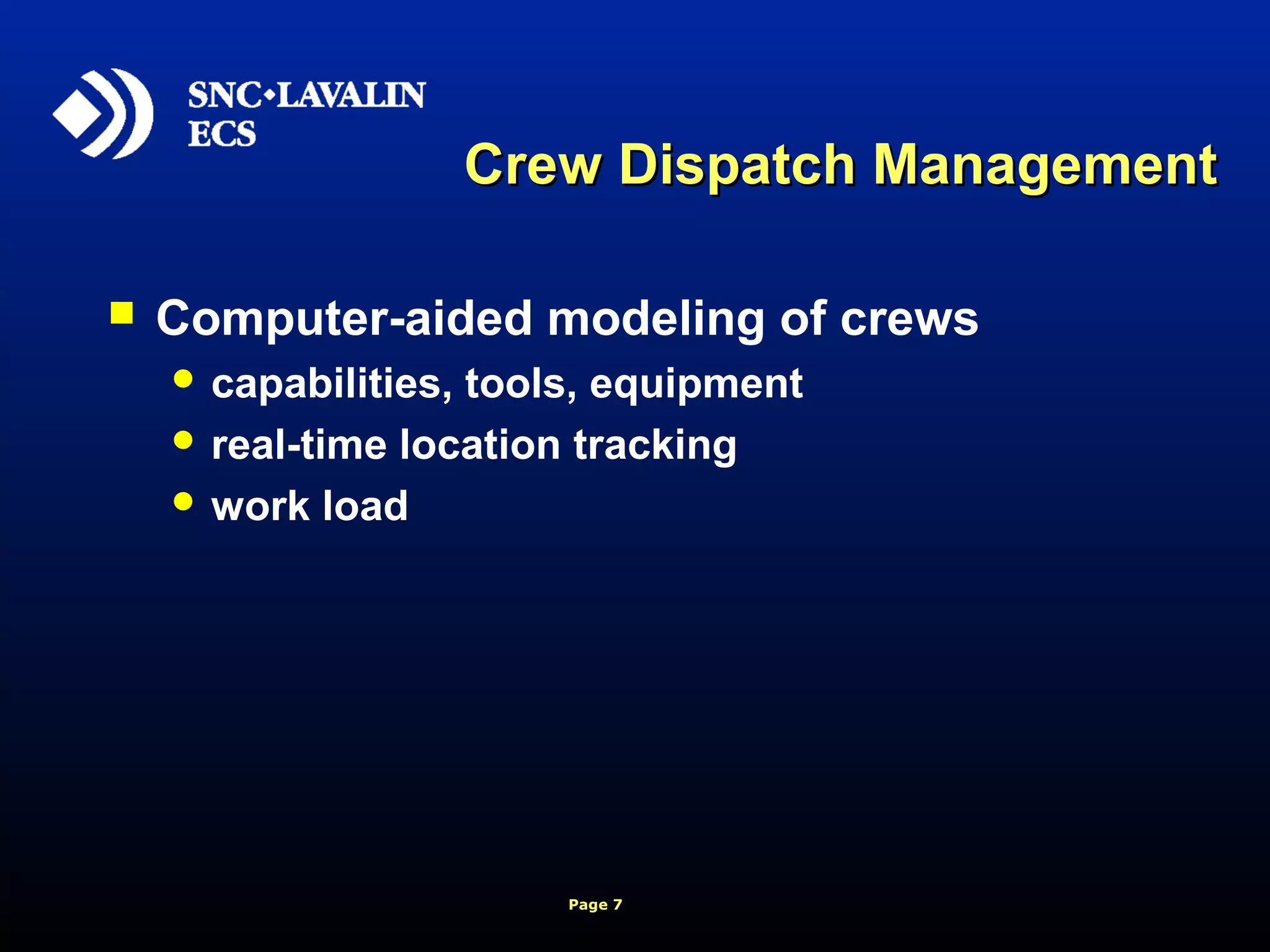
Crew Dispatch ManagementCrew Dispatch Management
 Computer-aided modeling of crews
 capabilities, tools, equipment
 real-time location tracking
 work load
Page 8
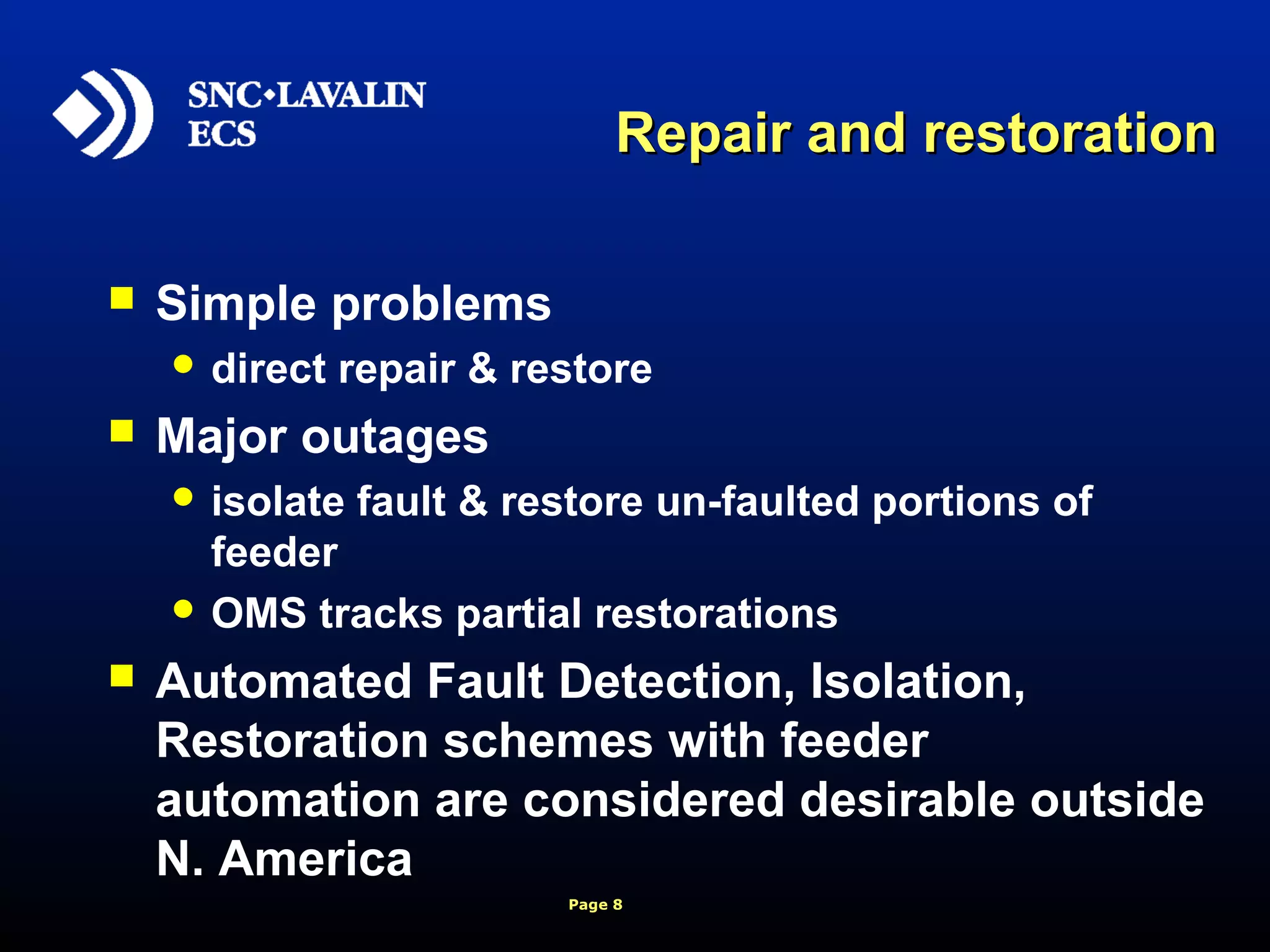
Repair and restorationRepair and restoration
 Simple problems
 direct repair & restore
 Major outages
 isolate fault & restore un-faulted portions of
feeder
 OMS tracks partial restorations
 Automated Fault Detection, Isolation,
Restoration schemes with feeder
automation are considered desirable outside
N. America
Page 9
Historical RecordsHistorical Records
 Keep track of all outages
 root cause, number of customers, duration
 Provides the data for
 Performance statistics SAIDI, SAIFI, CAIFI, etc
 Planning / budgeting maintenance activities
 Condition based maintenance
Page 10
OutlineOutline
 Outage Management Basics
 Some issues
 Standards for Distribution Management
Page 11
Drivers for current interest in OMSDrivers for current interest in OMS
 Customer expectations of reliability
 Momentary outages are also important
 The plague of electronic clocks!
 Performance-based rates
 More likely a penalty for poor performance than a
reward for good performance!
Page 12
Data requirementsData requirements
 Distribution Network Model
 getting an accurate electronic network model is generally a
mammoth under-taking
 Keeping it up-to-date with construction
 Real-time representation of switch positions
 Customer data
 Customer - premise occupancy (business data)
 critical customers
 outage history
 Premise connectivity to Network model (operations data)
 Timely, reliable feedback to affected customers
during an outage
Page 13
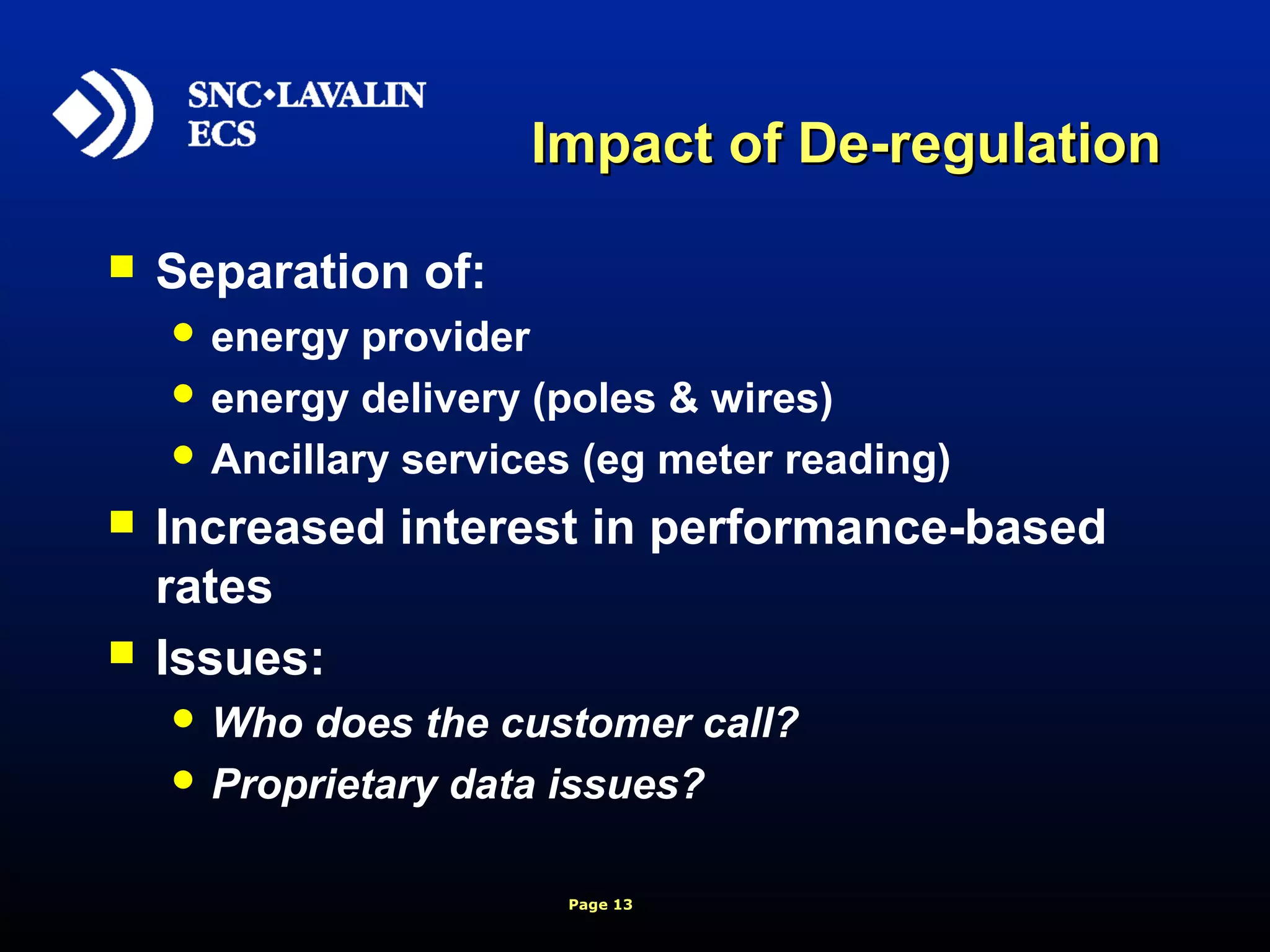
Impact of De-regulationImpact of De-regulation
 Separation of:
 energy provider
 energy delivery (poles & wires)
 Ancillary services (eg meter reading)
 Increased interest in performance-based
rates
 Issues:
 Who does the customer call?
 Proprietary data issues?
Page 14
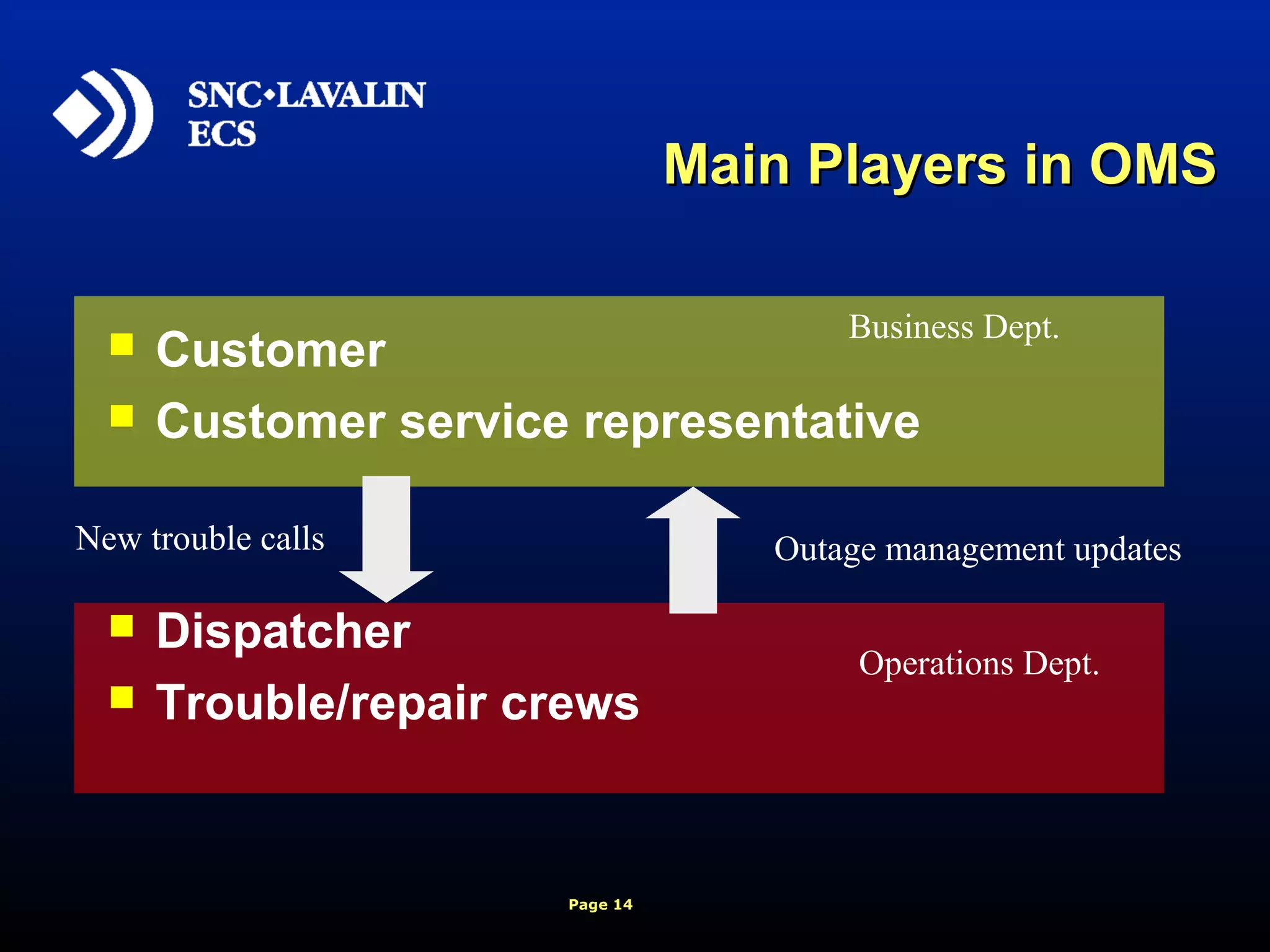
Main Players in OMSMain Players in OMS
 Customer
 Customer service representative
 Dispatcher
 Trouble/repair crews
New trouble calls Outage management updates
Business Dept.
Operations Dept.
Page 15
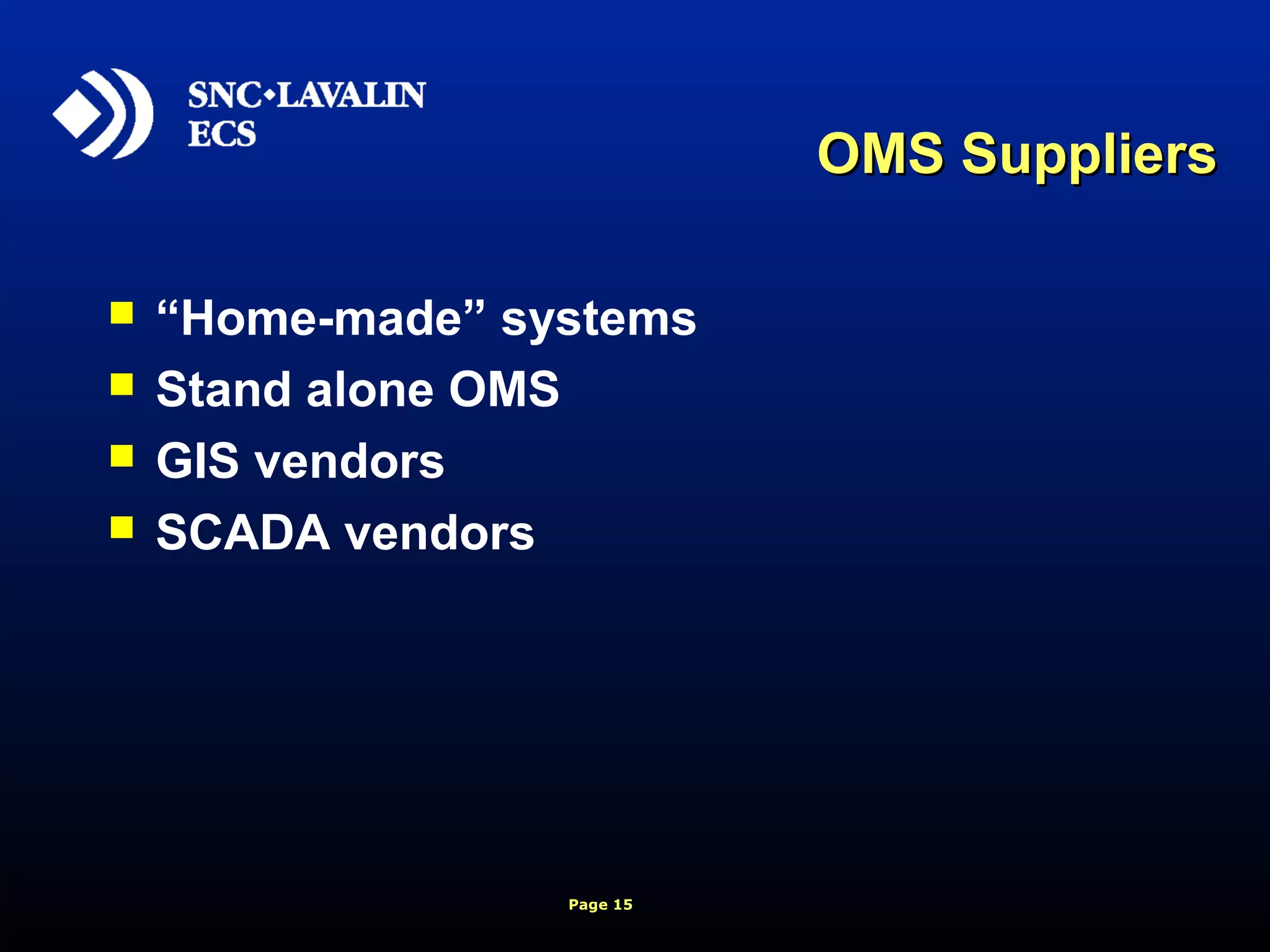
OMS SuppliersOMS Suppliers
 “Home-made” systems
 Stand alone OMS
 GIS vendors
 SCADA vendors

OUTAGE MANAGEMENT SYSTEM

  • 1.
    Page 1 Outage ManagementOutageManagement Roy Hoffman 29 Jan 2001
  • 2.
    Page 2 OutlineOutline  OutageManagement Basics  Some issues  Standards for Distribution Management
  • 3.
    Page 3 A systemof computer-based tools and utility procedures to efficiently & effectively - •become aware of, •diagnose & locate, •provide feedback to affected customers •dispatch trouble/repair crews, •restore •maintain historical records of •compute statistical indices on electrical outages DefinitionsDefinitions
  • 4.
    Page 4 Becoming awareof outagesBecoming aware of outages  Customer telephone calls  conventional human communication  automatic voice response systems (CTI)  Auto outage detection/reporting systems  SCADA detection of breaker trip/lockout  Ideal: Become aware of outages before the first customer calls in
  • 5.
    Page 5 Diagnosing &locatingDiagnosing & locating  Grouping of customer trouble calls  reverse tracing of electric topology  determine a common protective device suspected to be open  transformer?  lateral fuse?  recloser?  substation breaker?  Take into account automatic feeder switching  Compute extent of suspected outage  Number of customers affected  Highest priority of affected customers  Confirm or modify (split/enlarge) based on feedback from crews
  • 6.
    Page 6 Feedback toaffected customersFeedback to affected customers  Timely, accurate feedback is almost as important as fixing the problem  Telling customer you are aware of his problem  Current status of outage response  Expected time of restoration
  • 7.
    Page 7 Crew DispatchManagementCrew Dispatch Management  Computer-aided modeling of crews  capabilities, tools, equipment  real-time location tracking  work load
  • 8.
    Page 8 Repair andrestorationRepair and restoration  Simple problems  direct repair & restore  Major outages  isolate fault & restore un-faulted portions of feeder  OMS tracks partial restorations  Automated Fault Detection, Isolation, Restoration schemes with feeder automation are considered desirable outside N. America
  • 9.
    Page 9 Historical RecordsHistoricalRecords  Keep track of all outages  root cause, number of customers, duration  Provides the data for  Performance statistics SAIDI, SAIFI, CAIFI, etc  Planning / budgeting maintenance activities  Condition based maintenance
  • 10.
    Page 10 OutlineOutline  OutageManagement Basics  Some issues  Standards for Distribution Management
  • 11.
    Page 11 Drivers forcurrent interest in OMSDrivers for current interest in OMS  Customer expectations of reliability  Momentary outages are also important  The plague of electronic clocks!  Performance-based rates  More likely a penalty for poor performance than a reward for good performance!
  • 12.
    Page 12 Data requirementsDatarequirements  Distribution Network Model  getting an accurate electronic network model is generally a mammoth under-taking  Keeping it up-to-date with construction  Real-time representation of switch positions  Customer data  Customer - premise occupancy (business data)  critical customers  outage history  Premise connectivity to Network model (operations data)  Timely, reliable feedback to affected customers during an outage
  • 13.
    Page 13 Impact ofDe-regulationImpact of De-regulation  Separation of:  energy provider  energy delivery (poles & wires)  Ancillary services (eg meter reading)  Increased interest in performance-based rates  Issues:  Who does the customer call?  Proprietary data issues?
  • 14.
    Page 14 Main Playersin OMSMain Players in OMS  Customer  Customer service representative  Dispatcher  Trouble/repair crews New trouble calls Outage management updates Business Dept. Operations Dept.
  • 15.
    Page 15 OMS SuppliersOMSSuppliers  “Home-made” systems  Stand alone OMS  GIS vendors  SCADA vendors