NONPRESCRIPTION
MEDICATION
•Rx
•Over the counter (OTC)
•Behind the counter (BTC)
Self-care and nonprescription pharmacotherapy
• Self-care is the independent act of preventing, diagnosing, and
treating one’s illnesses without seeking professional advice.
• Self-medication is often the most first level of self-care. As self--
increased, so has the practice of self-medication with vitamins ,
products and nonprescription medications.
• Factors that help drive reliance on self-medication include (1)
aging population, (2) decreased availability of primary care
increased costs of health care, and (4) high proportion of
uninsured people.
• Easy accessibility, convenience, and cost-effectiveness of self--
products ensure their essential role in the health care system
Pharmacists’ Role in Nonprescription Drug Therapy
• Assess, by interview and observation, the patient’s physical complaint/symptoms and medical condition .
• Differentiate self-treatable conditions from those requiring referral to a primary care provider or emergency
department.
• Advise and counsel the patient on the proper course of action (i.e., no drug treatment, treatment with
nonprescription medications, or referral to another health care provider or emergency ).
• Advise the patient on the outcome of the selected course of action.
• Assure the patient that the desired therapeutic outcome can be achieved if the selected/recommended
nonprescription medications are taken as directed on the label and/or as directed by the primary care provider or
pharmacist.
• Reinforce the concept that the pharmacist and primary care provider are qualified to perform a follow-up
assessment of the treatment.
• If a nonprescription medication is in the best interest of the patient, pharmacists can help in the following ways:
- Assess patient risk factors (e.g., contraindications, warnings, precautions, age, and organ function).
- Assist in product selection.
- Counsel the patient about proper drug use (e.g., dosage, administration, monitoring parameters, and duration).
- Maintain an accurate patient drug profile that includes prescription, nonprescription, nutritional and dietary
supplement, and herbal products.
- Assess the potential of nonprescription medications to mask symptoms of a more serious condition. Educate the
patient on when to seek medical attention if the recommended nonprescription medication is ineffective or if
symptoms worsen.
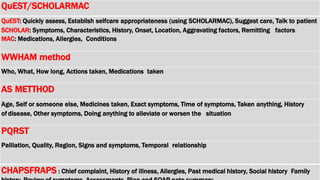
QuEST/SCHOLARMAC
QuEST: Quickly assess, Establish selfcare appropriateness (using SCHOLARMAC), Suggest care, Talk to patient
SCHOLAR: Symptoms, Characteristics, History, Onset, Location, Aggravating factors, Remitting factors
MAC: Medications, Allergies, Conditions
WWHAM method
Who, What, How long, Actions taken, Medications taken
AS METTHOD
Age, Self or someone else, Medicines taken, Exact symptoms, Time of symptoms, Taken anything, History
of disease, Other symptoms, Doing anything to alleviate or worsen the situation
PQRST
Palliation, Quality, Region, Signs and symptoms, Temporal relationship
CHAPSFRAPS : Chief complaint, History of illness, Allergies, Past medical history, Social history Family
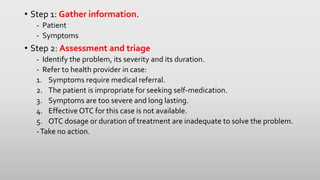
• Step 1: Gather information.
- Patient
- Symptoms
• Step 2: Assessment and triage
- Identify the problem, its severity and its duration.
- Refer to health provider in case:
1. Symptoms require medical referral.
2. The patient is impropriate for seeking self-medication.
3. Symptoms are too severe and long lasting.
4. Effective OTC for this case is not available.
5. OTC dosage or duration of treatment are inadequate to solve the problem.
-Take no action.
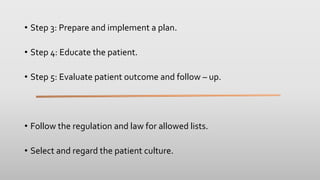
• Step 3: Prepare and implement a plan.
• Step 4: Educate the patient.
• Step 5: Evaluate patient outcome and follow – up.
• Follow the regulation and law for allowed lists.
• Select and regard the patient culture.
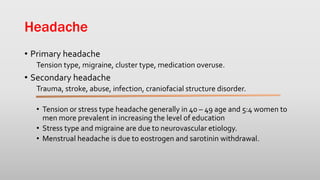
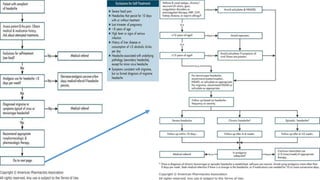
Headache
• Primary headache
Tension type, migraine, cluster type, medication overuse.
• Secondary headache
Trauma, stroke, abuse, infection, craniofacial structure disorder.
• Tension or stress type headache generally in 40 – 49 age and 5:4 women to
men more prevalent in increasing the level of education
• Stress type and migraine are due to neurovascular etiology.
• Menstrual headache is due to eostrogen and sarotinin withdrawal.
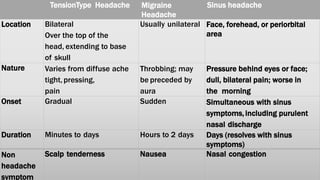
TensionType Headache Migraine
Headache
Sinus headache
Location Bilateral
Over the top of the
head, extending to base
of skull
Usually unilateral Face, forehead, or periorbital
area
Nature Varies from diffuse ache
tight, pressing,
pain
Throbbing; may
be preceded by
aura
Pressure behind eyes or face;
dull, bilateral pain; worse in
the morning
Onset Gradual Sudden Simultaneous with sinus
symptoms,including purulent
nasal discharge
Duration Minutes to days Hours to 2 days Days (resolves with sinus
symptoms)
Non
headache
symptom
Scalp tenderness Nausea Nasal congestion
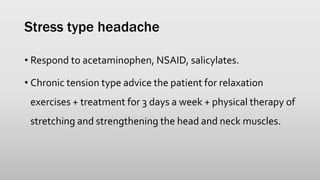
Stress type headache
• Respond to acetaminophen, NSAID, salicylates.
• Chronic tension type advice the patient for relaxation
exercises + treatment for 3 days a week + physical therapy of
stretching and strengthening the head and neck muscles.
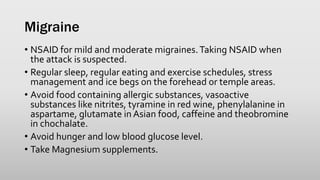
Migraine
• NSAID for mild and moderate migraines.Taking NSAID when
the attack is suspected.
• Regular sleep, regular eating and exercise schedules, stress
management and ice begs on the forehead or temple areas.
• Avoid food containing allergic substances, vasoactive
substances like nitrites, tyramine in red wine, phenylalanine in
aspartame, glutamate in Asian food, caffeine and theobromine
in chochalate.
• Avoid hunger and low blood glucose level.
• Take Magnesium supplements.
Sinus headache
• Due to blockage of the sinus.
• Treatment by pseudoephedrine or phenylephrine
• Acetaminophen.
Acetaminophen
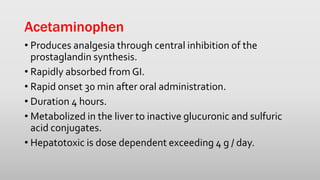
• Produces analgesia through central inhibition of the
prostaglandin synthesis.
• Rapidly absorbed from GI.
• Rapid onset 30 min after oral administration.
• Duration 4 hours.
• Metabolized in the liver to inactive glucuronic and sulfuric
acid conjugates.
• Hepatotoxic is dose dependent exceeding 4 g / day.
FDA doses for children
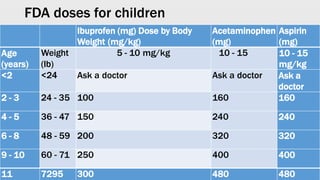
Ibuprofen (mg) Dose by Body
Weight (mg/kg)
Acetaminophen
(mg)
Aspirin
(mg)
Age
(years)
Weight
(lb)
5 - 10 mg/kg 10 - 15 10 - 15
mg/kg
<2 <24 Ask a doctor Ask a doctor Ask a
doctor
2 - 3 24 - 35 100 160 160
4 - 5 36 - 47 150 240 240
6 - 8 48 - 59 200 320 320
9 - 10 60 - 71 250 400 400
11 7295 300 480 480
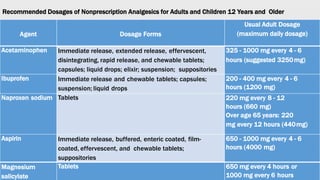
Recommended Dosages of Nonprescription Analgesics for Adults and Children 12 Years and Older
Agent Dosage Forms
Usual Adult Dosage
(maximum daily dosage)
Acetaminophen Immediate release, extended release, effervescent,
disintegrating, rapid release, and chewable tablets;
capsules; liquid drops; elixir; suspension; suppositories
325 - 1000 mg every 4 - 6
hours (suggested 3250mg)
Ibuprofen Immediate release and chewable tablets; capsules;
suspension; liquid drops
200 - 400 mg every 4 - 6
hours (1200 mg)
Naproxen sodium Tablets 220 mg every 8 - 12
hours (660 mg)
Over age 65 years: 220
mg every 12 hours (440mg)
Aspirin Immediate release, buffered, enteric coated, film-
coated, effervescent, and chewable tablets;
suppositories
650 - 1000 mg every 4 - 6
hours (4000 mg)
Magnesium
salicylate
Tablets 650 mg every 4 hours or
1000 mg every 6 hours
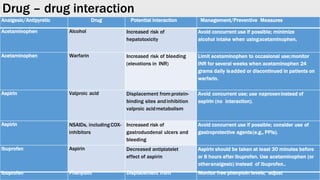
Drug – drug interaction
Analgesic/Antipyretic Drug Potential Interaction Management/Preventive Measures
Acetaminophen Alcohol Increased risk of
hepatotoxicity
Avoid concurrent use if possible; minimize
alcohol intake when usingacetaminophen.
Acetaminophen Warfarin Increased risk of bleeding
(elevations in INR)
Limit acetaminophen to occasional use;monitor
INR for several weeks when acetaminophen 24
grams daily isadded or discontinued in patients on
warfarin.
Aspirin Valproic acid Displacement fromprotein-
binding sites andinhibition
valproic acidmetabolism
Avoid concurrent use; use naproxeninstead of
aspirin (no interaction).
Aspirin NSAIDs, including COX-
inhibitors
Increased risk of
gastroduodenal ulcers and
bleeding
Avoid concurrent use if possible; consider use of
gastroprotective agents(e.g., PPIs).
Ibuprofen Aspirin Decreased antiplatelet
effect of aspirin
Aspirin should be taken at least 30 minutes before
or 8 hours after ibuprofen. Use acetaminophen (or
otheranalgesic) instead of ibuprofen..
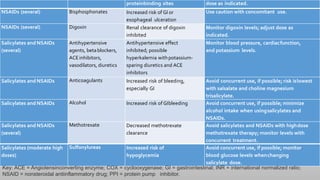
Ibuprofen Phenytoin Displacement from Monitor free phenytoin levels; adjust
proteinbinding sites dose as indicated.
NSAIDs (several) Bisphosphonates Increased risk of GI or
esophageal ulceration
Use caution with concomitant use.
NSAIDs (several) Digoxin Renal clearance of digoxin
inhibited
Monitor digoxin levels; adjust dose as
indicated.
Salicylates and NSAIDs
(several)
Antihypertensive
agents, betablockers,
ACEinhibitors,
vasodilators, diuretics
Antihypertensive effect
inhibited; possible
hyperkalemia withpotassium-
sparing diuretics and ACE
inhibitors
Monitor blood pressure, cardiacfunction,
and potassium levels.
Salicylates and NSAIDs Anticoagulants Increased risk of bleeding,
especially GI
Avoid concurrent use, if possible; risk islowest
with salsalate and choline magnesium
trisalicylate.
Salicylates and NSAIDs Alcohol Increased risk of GIbleeding Avoid concurrent use, if possible; minimize
alcohol intake when usingsalicylates and
NSAIDs.
Salicylates and NSAIDs
(several)
Methotrexate Decreased methotrexate
clearance
Avoid salicylates and NSAIDs with highdose
methotrexate therapy; monitor levels with
concurrent treatment.
Salicylates (moderate high
doses)
Sulfonylureas Increased risk of
hypoglycemia
Avoid concurrent use, if possible; monitor
blood glucose levels whenchanging
salicylate dose.
Key: ACE = Angiotensinconverting enzyme; COX = cyclooxygenase; GI = gastrointestinal; INR = international normalized ratio;
NSAID = nonsteroidal antiinflammatory drug; PPI = protein pump inhibitor.
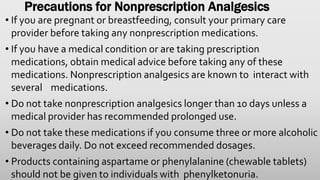
Precautions for Nonprescription Analgesics
• If you are pregnant or breastfeeding, consult your primary care
provider before taking any nonprescription medications.
• If you have a medical condition or are taking prescription
medications, obtain medical advice before taking any of these
medications. Nonprescription analgesics are known to interact with
several medications.
• Do not take nonprescription analgesics longer than 10 days unless a
medical provider has recommended prolonged use.
• Do not take these medications if you consume three or more alcoholic
beverages daily. Do not exceed recommended dosages.
• Products containing aspartame or phenylalanine (chewable tablets)
should not be given to individuals with phenylketonuria.
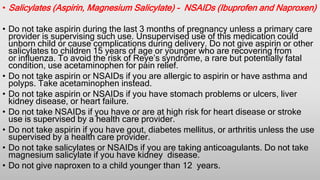
• Salicylates (Aspirin, Magnesium Salicylate) - NSAIDs (Ibuprofen and Naproxen)
• Do not take aspirin during the last 3 months of pregnancy unless a primary care
provider is supervising such use. Unsupervised use of this medication could
unborn child or cause complications during delivery. Do not give aspirin or other
salicylates to children 15 years of age or younger who are recovering from
or influenza. To avoid the risk of Reye’s syndrome, a rare but potentially fatal
condition, use acetaminophen for pain relief.
• Do not take aspirin or NSAIDs if you are allergic to aspirin or have asthma and
polyps. Take acetaminophen instead.
• Do not take aspirin or NSAIDs if you have stomach problems or ulcers, liver
kidney disease, or heart failure.
• Do not take NSAIDs if you have or are at high risk for heart disease or stroke
use is supervised by a health care provider.
• Do not take aspirin if you have gout, diabetes mellitus, or arthritis unless the use
supervised by a health care provider.
• Do not take salicylates or NSAIDs if you are taking anticoagulants. Do not take
magnesium salicylate if you have kidney disease.
• Do not give naproxen to a child younger than 12 years.
Fever
• Fever: temperature higher than 37.8°C.
• Hyperthermia: malfunction of normal thermoregulatory process at the
hypothalamus level caused by excessive heat exposure or production.
• Hyperpyrexia: body temperature greater than 41.1°C that typically
result in mental and physical sequences. It results from either fever or
hyperthermia.
• Body temperature is regulated by the hypothalamus in response to
pyrogen.
• Fever is a sign of an increase in the body's thermoregulatory set point.
• Normally hypothalamus maintain the body temperature between 36.4 –
37.2 °C. accepted core body temperature is 37 °C.
PYROGEN
• PYROGEN can be exogenous or endogenous, endogenous pyrogen are
products released in response or from damaged tissue such as
interlukins, interferon, and tumor necrosis factor.
• Prostaglandins E are produced as response to circulating pyrogen and
elevate the thermoregulatory point in the hypothalamus. Within one
hour the body temperature reaches the new set point then fever occur.
• Causes are, infection, malignancies, tissue damage, antigen-antibody
reaction, dehydration, heat stroke, CNS inflammation, metabolic
disorder and hyperthyroidism or gout.
Pharmacological therapy
• Antipyretic inhibits cyclooxygenase enzymeCOX which
inhibits PGE2 which decreases the feedback between the
thermoregulatory neurons and hypothalamus then by
reducing the hypothalamic set point during fever.
Temperature Measurement
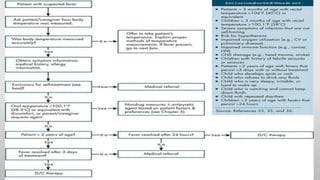
• Do not rely on feeling the body to detect fever.Take a temperature
reading with an appropriate thermometer. For children up to 3 months
of age, the rectal method of temperature measurement is preferred.
Use of a tympanic thermometer is not recommended in children
younger than 6 months because of the size and shape of the infant’s
ear canal.
• For children ages 6 months to 3 years, the rectal, oral, tympanic, or
temporal method may be used if proper technique is followed.
• For individuals older than 3 years, the oral, tympanic, or temporal
method is appropriate.
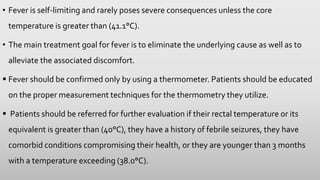
• Fever is self-limiting and rarely poses severe consequences unless the core
temperature is greater than (41.1°C).
• The main treatment goal for fever is to eliminate the underlying cause as well as to
alleviate the associated discomfort.
 Fever should be confirmed only by using a thermometer. Patients should be educated
on the proper measurement techniques for the thermometry they utilize.
 Patients should be referred for further evaluation if their rectal temperature or its
equivalent is greater than (40°C), they have a history of febrile seizures, they have
comorbid conditions compromising their health, or they are younger than 3 months
with a temperature exceeding (38.0°C).
Nondrug Measures
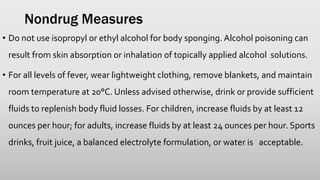
• Do not use isopropyl or ethyl alcohol for body sponging. Alcohol poisoning can
result from skin absorption or inhalation of topically applied alcohol solutions.
• For all levels of fever, wear lightweight clothing, remove blankets, and maintain
room temperature at 20°C. Unless advised otherwise, drink or provide sufficient
fluids to replenish body fluid losses. For children, increase fluids by at least 12
ounces per hour; for adults, increase fluids by at least 24 ounces per hour. Sports
drinks, fruit juice, a balanced electrolyte formulation, or water is acceptable.
Nonprescription Medications
• Analgesics/antipyretics help in alleviating discomfort associated with fever and reducing the
temperature.
• Nonprescription analgesics/antipyretics typically take 30 minutes to 1 hour to begin to
decrease temperature and discomfort.
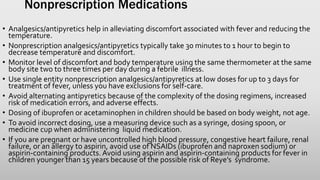
• Monitor level of discomfort and body temperature using the same thermometer at the same
body site two to three times per day during a febrile illness.
• Use single entity nonprescription analgesics/antipyretics at low doses for up to 3 days for
treatment of fever, unless you have exclusions for self-care.
• Avoid alternating antipyretics because of the complexity of the dosing regimens, increased
risk of medication errors, and adverse effects.
• Dosing of ibuprofen or acetaminophen in children should be based on body weight, not age.
• To avoid incorrect dosing, use a measuring device such as a syringe, dosing spoon, or
medicine cup when administering liquid medication.
• If you are pregnant or have uncontrolled high blood pressure, congestive heart failure, renal
failure, or an allergy to aspirin, avoid use of NSAIDs (ibuprofen and naproxen sodium) or
aspirin-containing products.Avoid using aspirin and aspirin-containing products for fever in
children younger than 15 years because of the possible risk of Reye’s syndrome.
Musculoskeletal Injuries and Disorder
INTRODUCYION:
Tendon ; bind muscle to bone.
Legament; bind bone to bone.
 Because of their tensile strength these are rarely rupture unless subjected to
intense forces.
Synovial bursae are fluid- filled sacs between the joint spaces providing
lubrication and cushioning.
Striated muscle composed of cells ( myocytes) which are actin and myosin
responsible for contraction and affected by calcium and potassium.
Pain receptors are located in the skeletal muscle and on the overlying
these receptors can be stimulated as a result of over-use, injury to the
the surroundings.
Sprain if pain is accompanied by limited joint function.
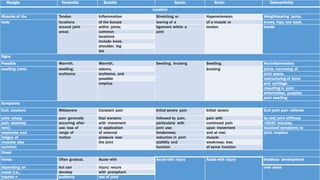
Myalgia Tendonitis Bursitis Sprain Strain Osteoarthritis
Location
Muscles of the Tendon Inflammation Stretching or Hyperextension Weightbearing joints,
body locations of the bursae tearing of a of a muscle or knees, hips, low back,
around joint within joints; ligament within a tendon hands
areas common joint
locations
include knee,
shoulder, big
toe
Signs
Possible Warmth, Warmth, Swelling, bruising Swelling, Noninflammatory
swelling (rare) swelling, edema, bruising joints, narrowing of
erythema erythema, and joint space,
possible restructuring of bone
crepitus and cartilage
(resulting in joint
deformities), possible
joint swelling
Symptoms
Dull, constant Mildsevere Constant pain Initial severe pain Initial severe Dull joint pain relieved
ache (sharp pain generally that worsens followed by pain, pain with by rest; joint stiffness
pain relatively occurring after with movement particularly with continued pain <2030 minutes;
rare); use; loss of or application joint use; upon movement localized symptoms to
weakness and range of of external tenderness; and at rest; joint; crepitus
fatigue of motion pressure over reduction in joint muscle
muscles also the joint stability and weakness; loss
common function of some function
Onset
Varies Often gradual, Acute with Acute with injury Acute with injury Insidious development
depending on but can injury; recurs over years
cause (i.e., develop with precipitant
trauma = suddenly use of joint
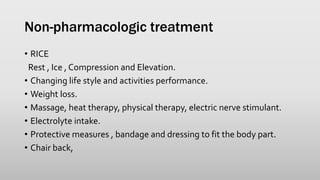
Non-pharmacologic treatment
• RICE
Rest , Ice , Compression and Elevation.
• Changing life style and activities performance.
• Weight loss.
• Massage, heat therapy, physical therapy, electric nerve stimulant.
• Electrolyte intake.
• Protective measures , bandage and dressing to fit the body part.
• Chair back,
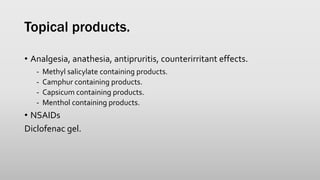
Topical products.
• Analgesia, anathesia, antipruritis, counterirritant effects.
- Methyl salicylate containing products.
- Camphur containing products.
- Capsicum containing products.
- Menthol containing products.
• NSAIDs
Diclofenac gel.
Colds & Allergy
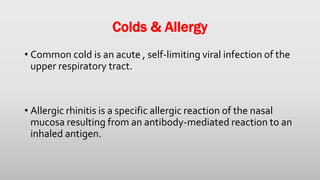
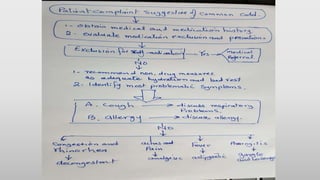
• Common cold is an acute , self-limiting viral infection of the
upper respiratory tract.
• Allergic rhinitis is a specific allergic reaction of the nasal
mucosa resulting from an antibody-mediated reaction to an
inhaled antigen.
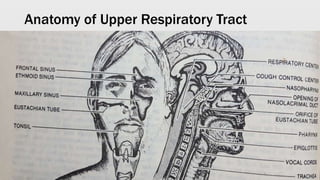
Anatomy of Upper Respiratory Tract
• Stimulation of sensory fibers by mechanical and thermal stimuli or
by mediators such as histamine and bradykinin results in sneezing.
Cholinergic and sympathetic nerves are involved in congestion
because they innervate glands and arteries that supply the glands.
Cholinergic stimulation dilates arterial blood flow, whereas
sympathetic stimulation constricts arterial blood flow.
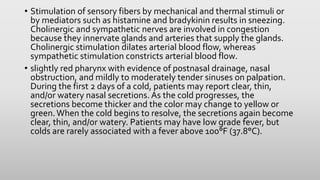
• slightly red pharynx with evidence of postnasal drainage, nasal
obstruction, and mildly to moderately tender sinuses on palpation.
During the first 2 days of a cold, patients may report clear, thin,
and/or watery nasal secretions. As the cold progresses, the
secretions become thicker and the color may change to yellow or
green.When the cold begins to resolve, the secretions again become
clear, thin, and/or watery. Patients may have low grade fever, but
colds are rarely associated with a fever above 100°F (37.8°C).
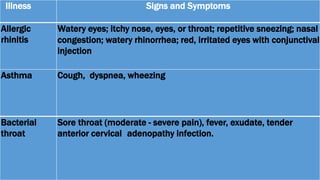
Illness Signs and Symptoms
Allergic
rhinitis
Watery eyes; itchy nose, eyes, or throat; repetitive sneezing; nasal
congestion; watery rhinorrhea; red, irritated eyes with conjunctival
injection
Asthma Cough, dyspnea, wheezing
Bacterial
throat
Sore throat (moderate - severe pain), fever, exudate, tender
anterior cervical adenopathy infection.
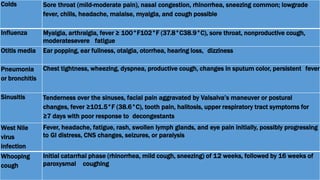
Colds Sore throat (mild-moderate pain), nasal congestion, rhinorrhea, sneezing common; lowgrade
fever, chills, headache, malaise, myalgia, and cough possible
Influenza Myalgia, arthralgia, fever ≥ 100°F102°F (37.8°C38.9°C), sore throat, nonproductive cough,
moderatesevere fatigue
Otitis media Ear popping, ear fullness, otalgia, otorrhea, hearing loss, dizziness
Pneumonia
or bronchitis
Chest tightness, wheezing, dyspnea, productive cough, changes in sputum color, persistent fever
Sinusitis Tenderness over the sinuses, facial pain aggravated by Valsalva’s maneuver or postural
changes, fever ≥101.5°F (38.6°C), tooth pain, halitosis, upper respiratory tract symptoms for
≥7 days with poor response to decongestants
West Nile
virus
infection
Fever, headache, fatigue, rash, swollen lymph glands, and eye pain initially, possibly progressing
to GI distress, CNS changes, seizures, or paralysis
Whooping
cough
Initial catarrhal phase (rhinorrhea, mild cough, sneezing) of 12 weeks, followed by 16 weeks of
paroxysmal coughing
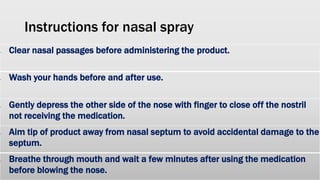
Instructions for nasal spray
• Clear nasal passages before administering the product.
• Wash your hands before and after use.
• Gently depress the other side of the nose with finger to close off the nostril
not receiving the medication.
• Aim tip of product away from nasal septum to avoid accidental damage to the
septum.
• Breathe through mouth and wait a few minutes after using the medication
before blowing the nose.
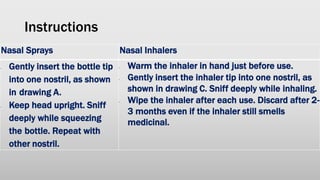
Instructions
Nasal Sprays Nasal Inhalers
• Gently insert the bottle tip
into one nostril, as shown
in drawing A.
• Keep head upright. Sniff
deeply while squeezing
the bottle. Repeat with
other nostril.
• Warm the inhaler in hand just before use.
• Gently insert the inhaler tip into one nostril, as
shown in drawing C. Sniff deeply while inhaling.
• Wipe the inhaler after each use. Discard after 2-
3 months even if the inhaler still smells
medicinal.
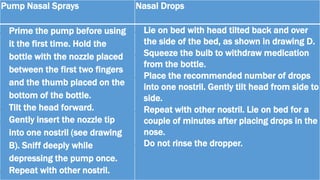
Pump Nasal Sprays Nasal Drops
• Prime the pump before using
it the first time. Hold the
bottle with the nozzle placed
between the first two fingers
and the thumb placed on the
bottom of the bottle.
• Tilt the head forward.
• Gently insert the nozzle tip
into one nostril (see drawing
B). Sniff deeply while
depressing the pump once.
• Repeat with other nostril.
• Lie on bed with head tilted back and over
the side of the bed, as shown in drawing D.
• Squeeze the bulb to withdraw medication
from the bottle.
• Place the recommended number of drops
into one nostril. Gently tilt head from side to
side.
• Repeat with other nostril. Lie on bed for a
couple of minutes after placing drops in the
nose.
• Do not rinse the dropper.
Non-pharmacologic therapy
• Increase fluid uptake.
• Rest
• Vaporizer & humidifier( vicks, camphor, water vapour)
• Tea with lemon and honey.
• Chicken soup.
• Aromatic oil
Pharmacologic therapy
• Decongestant
• Phenylepherine
• Pseudoephedrine
• Naphazoline.
• Acetaminophen, Asprin, Naproxin.
• Dextromethorphan
• Lozenges,
• Throat spray.
• Antihistamine.
• Antitussive, Antihistamine.a/ sedative, b/ nonsedative.
• Triamcinolone acetonide (Nasacort Allergy 24 HR) and fluticasone propionate (Flonase
Allergy Relief) are currently the only two INCS approved for nonprescription use for
allergic rhinitis.
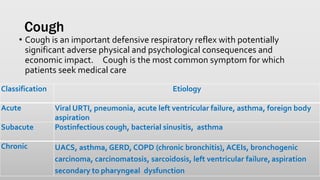
Cough
• Cough is an important defensive respiratory reflex with potentially
significant adverse physical and psychological consequences and
economic impact. Cough is the most common symptom for which
patients seek medical care
Classification Etiology
Acute Viral URTI, pneumonia, acute left ventricular failure, asthma, foreign body
aspiration
Subacute Postinfectious cough, bacterial sinusitis, asthma
Chronic UACS, asthma, GERD, COPD (chronic bronchitis), ACEIs, bronchogenic
carcinoma, carcinomatosis, sarcoidosis, left ventricular failure, aspiration
secondary to pharyngeal dysfunction
Antitussives
• Antitussives (cough suppressants) control or eliminate cough and are
the drugs of choice for nonproductive coughs. Antitussives should
not be used to treat productive cough unless the potential benefit
outweighs the risk (e.g., significant nocturnal cough). Suppression of
productive coughs may lead to retention of lower respiratory tract
secretions, increasing the risk of airway obstruction and secondary
bacterial infection. Protussives (expectorants) change the
consistency of mucus and increase the volume of expectorated
sputum and may provide some relief for coughs that expel thick,
tenacious secretions from the lungs with difficulty.
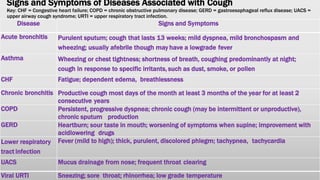
Signs and Symptoms of Diseases Associated with Cough
Key: CHF = Congestive heart failure; COPD = chronic obstructive pulmonary disease; GERD = gastroesophageal reflux disease; UACS =
upper airway cough syndrome; URTI = upper respiratory tract infection.
Disease Signs and Symptoms
Acute bronchitis Purulent sputum; cough that lasts 13 weeks; mild dyspnea, mild bronchospasm and
wheezing; usually afebrile though may have a lowgrade fever
Asthma Wheezing or chest tightness; shortness of breath, coughing predominantly at night;
cough in response to specific irritants, such as dust, smoke, or pollen
CHF Fatigue; dependent edema, breathlessness
Chronic bronchitis Productive cough most days of the month at least 3 months of the year for at least 2
consecutive years
COPD Persistent, progressive dyspnea; chronic cough (may be intermittent or unproductive),
chronic sputum production
GERD Heartburn; sour taste in mouth; worsening of symptoms when supine; improvement with
acidlowering drugs
Lower respiratory
tract infection
Fever (mild to high); thick, purulent, discolored phlegm; tachypnea, tachycardia
UACS Mucus drainage from nose; frequent throat clearing
Viral URTI Sneezing; sore throat; rhinorrhea; low grade temperature
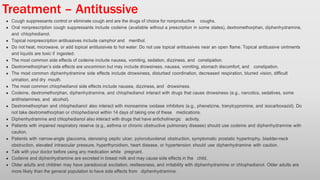
Treatment – Antitussive
Cough suppressants control or eliminate cough and are the drugs of choice for nonproductive coughs.
Oral nonprescription cough suppressants include codeine (available without a prescription in some states), dextromethorphan, diphenhydramine,
and chlophedianol.
Topical nonprescription antitussives include camphor and menthol.
Do not heat, microwave, or add topical antitussives to hot water. Do not use topical antitussives near an open flame. Topical antitussive ointments
and liquids are toxic if ingested.
The most common side effects of codeine include nausea, vomiting, sedation, dizziness, and constipation.
Dextromethorphan’s side effects are uncommon but may include drowsiness, nausea, vomiting, stomach discomfort, and constipation.
The most common diphenhydramine side effects include drowsiness, disturbed coordination, decreased respiration, blurred vision, difficult
urination, and dry mouth.
The most common chlophedianol side effects include nausea, dizziness, and drowsiness.
Codeine, dextromethorphan, diphenhydramine, and chlophedianol interact with drugs that cause drowsiness (e.g., narcotics, sedatives, some
antihistamines, and alcohol).
Dextromethorphan and chlophedianol also interact with monoamine oxidase inhibitors (e.g., phenelzine, tranylcypromine, and isocarboxazid). Do
not take dextromethorphan or chlophedianol within 14 days of taking one of these medications.
Diphenhydramine and chlophedianol also interact with drugs that have anticholinergic activity.
Patients with impaired respiratory reserve (e.g., asthma or chronic obstructive pulmonary disease) should use codeine and diphenhydramine with
caution.
Patients with narrow-angle glaucoma, stenosing peptic ulcer, pyloroduodenal obstruction, symptomatic prostatic hypertrophy, bladder-neck
obstruction, elevated intraocular pressure, hyperthyroidism, heart disease, or hypertension should use diphenhydramine with caution.
Talk with your doctor before using any medication while pregnant.
Codeine and diphenhydramine are excreted in breast milk and may cause side effects in the child.
Older adults and children may have paradoxical excitation, restlessness, and irritability with diphenhydramine or chlophedianol. Older adults are
more likely than the general population to have side effects from diphenhydramine.
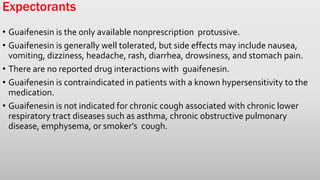
Expectorants
• Guaifenesin is the only available nonprescription protussive.
• Guaifenesin is generally well tolerated, but side effects may include nausea,
vomiting, dizziness, headache, rash, diarrhea, drowsiness, and stomach pain.
• There are no reported drug interactions with guaifenesin.
• Guaifenesin is contraindicated in patients with a known hypersensitivity to the
medication.
• Guaifenesin is not indicated for chronic cough associated with chronic lower
respiratory tract diseases such as asthma, chronic obstructive pulmonary
disease, emphysema, or smoker’s cough.
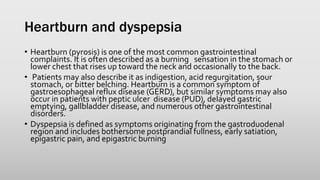
Heartburn and dyspepsia
• Heartburn (pyrosis) is one of the most common gastrointestinal
complaints. It is often described as a burning sensation in the stomach or
lower chest that rises up toward the neck and occasionally to the back.
• Patients may also describe it as indigestion, acid regurgitation, sour
stomach, or bitter belching. Heartburn is a common symptom of
gastroesophageal reflux disease (GERD), but similar symptoms may also
occur in patients with peptic ulcer disease (PUD), delayed gastric
emptying, gallbladder disease, and numerous other gastrointestinal
disorders.
• Dyspepsia is defined as symptoms originating from the gastroduodenal
region and includes bothersome postprandial fullness, early satiation,
epigastric pain, and epigastric burning
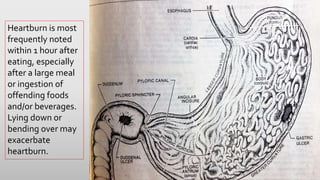
Heartburn is most
frequently noted
within 1 hour after
eating, especially
after a large meal
or ingestion of
offending foods
and/or beverages.
Lying down or
bending over may
exacerbate
heartburn.
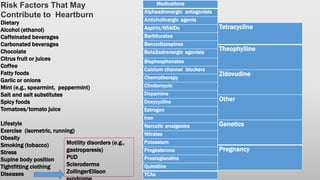
Medications
Alphaadrenergic antagonists
Anticholinergic agents
Aspirin/NSAIDs
Barbiturates
Benzodiazepines
Beta2adrenergic agonists
Bisphosphonates
Calcium channel blockers
Chemotherapy
Clindamycin
Dopamine
Doxycycline
Estrogen
Iron
Narcotic analgesics
Nitrates
Potassium
Progesterone
Prostaglandins
Quinidine
TCAs
Tetracycline
Theophylline
Zidovudine
Other
Genetics
Pregnancy
Risk Factors That May
Contribute to Heartburn
Dietary
Alcohol (ethanol)
Caffeinated beverages
Carbonated beverages
Chocolate
Citrus fruit or juices
Coffee
Fatty foods
Garlic or onions
Mint (e.g., spearmint, peppermint)
Salt and salt substitutes
Spicy foods
Tomatoes/tomato juice
Lifestyle
Exercise (isometric, running)
Obesity
Smoking (tobacco)
Stress
Supine body position
Tightfitting clothing
Diseases
Motility disorders (e.g.,
gastroparesis)
PUD
Scleroderma
ZollingerEllison
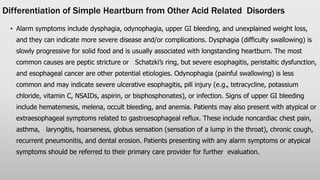
Differentiation of Simple Heartburn from Other Acid Related Disorders
• Alarm symptoms include dysphagia, odynophagia, upper GI bleeding, and unexplained weight loss,
and they can indicate more severe disease and/or complications. Dysphagia (difficulty swallowing) is
slowly progressive for solid food and is usually associated with longstanding heartburn. The most
common causes are peptic stricture or Schatzki’s ring, but severe esophagitis, peristaltic dysfunction,
and esophageal cancer are other potential etiologies. Odynophagia (painful swallowing) is less
common and may indicate severe ulcerative esophagitis, pill injury (e.g., tetracycline, potassium
chloride, vitamin C, NSAIDs, aspirin, or bisphosphonates), or infection. Signs of upper GI bleeding
include hematemesis, melena, occult bleeding, and anemia. Patients may also present with atypical or
extraesophageal symptoms related to gastroesophageal reflux. These include noncardiac chest pain,
asthma, laryngitis, hoarseness, globus sensation (sensation of a lump in the throat), chronic cough,
recurrent pneumonitis, and dental erosion. Patients presenting with any alarm symptoms or atypical
symptoms should be referred to their primary care provider for further evaluation.
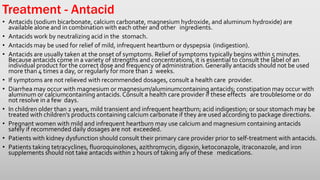
Treatment - Antacid
• Antacids (sodium bicarbonate, calcium carbonate, magnesium hydroxide, and aluminum hydroxide) are
available alone and in combination with each other and other ingredients.
• Antacids work by neutralizing acid in the stomach.
• Antacids may be used for relief of mild, infrequent heartburn or dyspepsia (indigestion).
• Antacids are usually taken at the onset of symptoms. Relief of symptoms typically begins within 5 minutes.
Because antacids come in a variety of strengths and concentrations, it is essential to consult the label of an
individual product for the correct dose and frequency of administration.Generally antacids should not be used
more than 4 times a day, or regularly for more than 2 weeks.
• If symptoms are not relieved with recommended dosages, consult a health care provider.
• Diarrhea may occur with magnesium or magnesium/aluminumcontaining antacids; constipation may occur with
aluminum or calciumcontaining antacids.Consult a health care provider if these effects are troublesome or do
not resolve in a few days.
• In children older than 2 years, mild transient and infrequent heartburn; acid indigestion; or sour stomach may be
treated with children’s products containing calcium carbonate if they are used according to package directions.
• Pregnant women with mild and infrequent heartburn may use calcium and magnesium containing antacids
safely if recommended daily dosages are not exceeded.
• Patients with kidney dysfunction should consult their primary care provider prior to self-treatment with antacids.
• Patients taking tetracyclines, fluoroquinolones, azithromycin, digoxin, ketoconazole, itraconazole, and iron
supplements should not take antacids within 2 hours of taking any of these medications.
• H2RAs (cimetidine, famotidine, and ranitidine) may be used to relieve symptoms of or prevent
heartburn and indigestion associated with meals.
• H2RAs work by decreasing acid production in the stomach.
• H2RAs are usually taken at the onset of symptoms or 30 minutes to 1 hour before symptoms are
expected. Relief of symptoms can be expected to begin within 30-45 minutes. A combination product
that contains both an antacid and an H2RA provides faster relief of symptoms.
• H2RAs generally relieve symptoms for 4-10 hours. H2RAs can be taken when needed up to twice daily
for 2 weeks.
• H2RAs should be used for relief of mild/moderate, infrequent, and episodic heartburn and indigestion
when a longer effect is needed. Use lower dosages for mild infrequent heartburn and higher dosages
for moderate infrequent symptoms.
• If symptoms are not relieved with recommended doses, worsen, or persist after 2 weeks of treatment,
consult a primary care provider.
• Side effects are uncommon. Consult a primary care provider if side effects are troublesome or do not
resolve within a few days.
• Cimetidine may interact with many medications. Consult your primary care provider if you are also
taking other medications, including a blood thinner such as warfarin or clopidogrel, an antifungal such
as ketoconazole, an anticonvulsant such as phenytoin, an antianxiety medication such as diazepam, or
theophylline and amiodarone.
Treatment – H2 receptor antagonist
Treatment – Proton Pump
• Nonprescription PPIs are indicated for mild/moderate frequent heartburn that occurs 2 or
more days a week.They are not intended for the relief of mild, occasional heartburn.
• PPIs (omeprazole, esomeprazole, and lansoprazole) work by decreasing acid production in
the stomach. PPIs should be taken with a glass of water every morning 30 minutes before
breakfast for 14 days. Make sure that you take the full 14day course of treatment.
• Do not take more than 1 tablet a day.
• Complete resolution of symptoms should be noted within 4 days of initiating treatment.
• If symptoms persist, worsen, are not adequately relieved after 2 weeks of treatment, or recur
before 4 months has elapsed since treatment, consult your primary care provider.
• Do not crush or chew tablets or capsules because this may decrease the effectiveness of the
PPI.
• Side effects are uncommon.Consult a health care provider if side effects are troublesome or
do not resolve within a few days.
• Consult a health care provider if you are also taking other medications, including a blood
thinner such as warfarin or clopidogrel, an antifungal such as ketoconazole, an anticonvulsant
such as phenytoin, an antianxiety medication such as diazepam, antiretroviral medications,
methotrexate, theophylline, tacrolimus, digoxin, or cilostazol
When to Seek Medical Attention
• Heartburn or dyspepsia (indigestion) for more than 3 months
• Heartburn or dyspepsia (indigestion) while taking recommended dosages of
nonprescription medications
• Heartburn or dyspepsia (indigestion) after 2 weeks of continuous treatment with
a nonprescription medication
• Heartburn that awakens you during the night.
• Difficulty or pain on swallowing foods.
• Lightheadedness, sweating, and dizziness accompanied by vomiting of blood or
black material or black tarry bowel movements.
• Chest pain or shoulder, arm, or neck pain, with shortness of breath. Chronic
hoarseness, cough, choking, or wheezing.
• Unexplained weight loss.
• Continuous nausea, vomiting, or diarrhea. Severe stomach pain.
Intestinal Gas
• Alpha-galactosidase and lactase replacement products are used to prevent the
onset of symptoms in patients unable to tolerate problematic foods. Patients
with gas symptoms who need immediate relief and patients who cannot
associate their symptoms with certain foods should use simethicone. Activated
charcoal may be an alternative to simethicone for patients with gas symptoms,
and also it may be beneficial for patients who experience malodorous gas
production. Because alphagalactosidase produces carbohydrates, patients with
galactosemia or diabetes mellitus should avoid this product and use
simethicone instead. Patients with lactase maldigestion who experience
symptoms of lactose intolerance should consider taking lactase replacement
products at the time of exposure to dairy products.
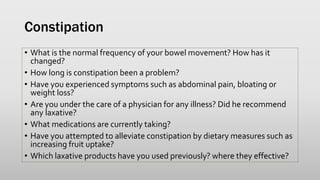
Constipation
• What is the normal frequency of your bowel movement? How has it
changed?
• How long is constipation been a problem?
• Have you experienced symptoms such as abdominal pain, bloating or
weight loss?
• Are you under the care of a physician for any illness? Did he recommend
any laxative?
• What medications are currently taking?
• Have you attempted to alleviate constipation by dietary measures such as
increasing fruit uptake?
• Which laxative products have you used previously? where they effective?
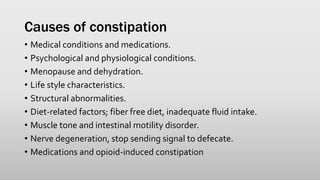
Causes of constipation
• Medical conditions and medications.
• Psychological and physiological conditions.
• Menopause and dehydration.
• Life style characteristics.
• Structural abnormalities.
• Diet-related factors; fiber free diet, inadequate fluid intake.
• Muscle tone and intestinal motility disorder.
• Nerve degeneration, stop sending signal to defecate.
• Medications and opioid-induced constipation
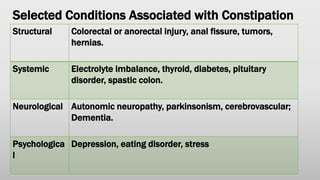
Selected Conditions Associated with Constipation
Structural Colorectal or anorectal injury, anal fissure, tumors,
hernias.
Systemic Electrolyte imbalance, thyroid, diabetes, pituitary
disorder, spastic colon.
Neurological Autonomic neuropathy, parkinsonism, cerebrovascular;
Dementia.
Psychologica
l
Depression, eating disorder, stress
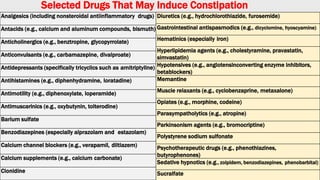
Analgesics (including nonsteroidal antiinflammatory drugs)
Antacids (e.g., calcium and aluminum compounds, bismuth)
Anticholinergics (e.g., benztropine, glycopyrrolate)
Anticonvulsants (e.g., carbamazepine, divalproate)
Antidepressants (specifically tricyclics such as amitriptyline)
Antihistamines (e.g., diphenhydramine, loratadine)
Antimotility (e.g., diphenoxylate, loperamide)
Antimuscarinics (e.g., oxybutynin, tolterodine)
Barium sulfate
Benzodiazepines (especially alprazolam and estazolam)
Calcium channel blockers (e.g., verapamil, diltiazem)
Calcium supplements (e.g., calcium carbonate)
Clonidine
Diuretics (e.g., hydrochlorothiazide, furosemide)
Gastrointestinal antispasmodics (e.g., dicyclomine, hyoscyamine)
Hematinics (especially iron)
Hyperlipidemia agents (e.g., cholestyramine, pravastatin,
simvastatin)
Hypotensives (e.g., angiotensinconverting enzyme inhibitors,
betablockers)
Memantine
Muscle relaxants (e.g., cyclobenzaprine, metaxalone)
Opiates (e.g., morphine, codeine)
Parasympatholytics (e.g., atropine)
Parkinsonism agents (e.g., bromocriptine)
Polystyrene sodium sulfonate
Psychotherapeutic drugs (e.g., phenothiazines,
butyrophenones)
Sedative hypnotics (e.g., zolpidem, benzodiazepines, phenobarbital)
Sucralfate
Selected Drugs That May Induce Constipation
Treatment
• Food high in fibers, fruits, vegetables.
• Exercise
• Fluid intake.
• Bulk forming ( methyl cellulose, polycarbophil, psyllium.
• Hyperosmotic agents, PEG, glycerin.
• Emollient agents, Ducusate sodium.
• Lubricant; mineral oils.
• Saline laxative, Mag.hydroxide, Mag.citrate.
• Stimulants, Senna, Biscodyl, dulcolax, Senkot, castor oil
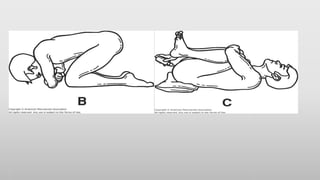
Enema or suppositories
Advice to the patient
• Laxatives if are not effective after 1 week , consult physician.
• Laxative products having 345 mg sodium or 975 mg potassium or 600
mg magnesium in the daily dose , should not be used if kidney
disease is present.
• Laxatives containing phenolphethaline should be discontinued if skin
rashes appear.
• Saline laxative should not be administered orally for children under 6
years or rectally to infants under 2.
• Cator oil should not be used in the treatment of constipation.
• Enemas and suppositories should be used properly to be effective.
Diarrhea
• Diarrhea is a symptom characterized by an abnormal increase in
stool frequency, liquidity, or weight. Although the normal frequency
of bowel movements varies with each individual, having more than 3
bowel movements per day is considered abnormal.
• Diarrhea may be acute, persistent, or chronic.
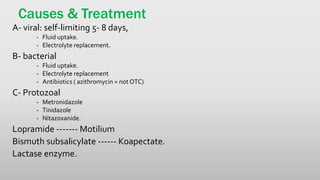
Causes & Treatment
A- viral: self-limiting 5- 8 days,
- Fluid uptake.
- Electrolyte replacement.
B- bacterial
- Fluid uptake.
- Electrolyte replacement
- Antibiotics ( azithromycin = not OTC)
C- Protozoal
- Metronidazole
- Tinidazole
- Nitazoxanide.
Lopramide ------- Motilium
Bismuth subsalicylate ------ Koapectate.
Lactase enzyme.
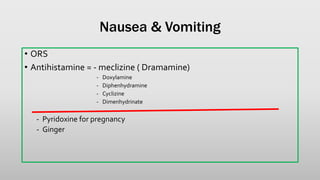
Nausea & Vomiting
• ORS
• Antihistamine = - meclizine ( Dramamine)
- Doxylamine
- Diphenhydramine
- Cyclizine
- Dimenhydrinate
- Pyridoxine for pregnancy
- Ginger
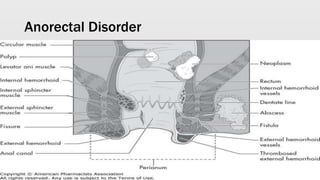
Anorectal Disorder
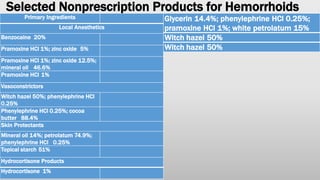
Selected Nonprescription Products for Hemorrhoids
Primary Ingredients
Local Anesthetics
Benzocaine 20%
Pramoxine HCl 1%; zinc oxide 5%
Pramoxine HCl 1%; zinc oxide 12.5%;
mineral oil 46.6%
Pramoxine HCl 1%
Vasoconstrictors
Witch hazel 50%; phenylephrine HCl
0.25%
Phenylephrine HCl 0.25%; cocoa
butter 88.4%
Skin Protectants
Mineral oil 14%; petrolatum 74.9%;
phenylephrine HCl 0.25%
Topical starch 51%
Hydrocortisone Products
Hydrocortisone 1%
Glycerin 14.4%; phenylephrine HCl 0.25%;
pramoxine HCl 1%; white petrolatum 15%
Witch hazel 50%
Witch hazel 50%
Key Points for Anorectal Disorders
• Limit selftreatment to burning, itching, discomfort, swelling, and irritation.
• Refer patients to their primary care provider when symptoms include anorectal seepage, bleeding,
thrombosis, severe pain, fevers, or a change in bowel patterns.
• Advise patients with selftreatable symptoms to contact their primary care provider if symptoms
worsen or do not improve after 7 days.
• Advise pregnant and breastfeeding women to use only products for external use (except for
protectants that do not contain glycerin, which can be used internally).
• Refer parents and caregivers of children younger than 12 years to seek medical attention from a
primary care provider.
• To minimize undesirable effects, advise patients to select an anorectal product containing the
fewest number of ingredients necessary to treat specific symptoms.
• Instruct patients on the proper use or application of specific anorectal products (Table 173).
• Counsel patients on nondrug measures (e.g., dietary measures and perianal hygiene) (see the box
Patient Education for Anorectal Disorders). Do not use vasoconstrictors in patients with conditions
such as diabetes, hypertension, and cardiac disease because of the possibility of systemic adverse
effects.
• Advise patients on the advantages and disadvantages of various anorectal dosage forms so the best
product can be selected for their needs.
Nondrug Measures
• Maintain hydration and a healthy diet. If experiencing hard stools,
straining, or constipation, increase amount of fiber and fluids in the
diet to reduce or prevent straining during bowel movements.
• Avoid medications that cause constipation
• Clean anorectal area after each bowel movement with a moistened,
unscented, white toilet tissue or wipe.
• Use a sitz bath, or soak in a bathtub two to four times a day, which
may help mild anal itching, burning, irritation, and discomfort. Avoid
use of soaps, salts, and oils.
When to Seek Medical Attention
• Stop using the anorectal product and contact a primary care provider
as soon as possible if insertion of a product into the anorectal area
causes pain.
• Contact a primary care provider if symptoms worsen, if new
symptoms (e.g., bleeding) develop, or if symptoms do not improve
after 7 days of self-treatment.
• Discontinue using product and contact a primary care provider at the
first occurrence of side effects (e.g., a rash; increased itching,
redness, burning, or swelling in the anorectal area).
• Discontinue product and contact a primary care provider
immediately if allergic or hypersensitivity reactions to the anorectal
product develop.
Pin Worm
• Symptoms include nocturnal pruritus ani.
• . Patients and parents need to be assured that pinworms are common and
curable and that no social stigma is attached to their occurrence.5
• Scratching to relieve itching from pinworm infection may lead to
secondary bacterial infection of the perianal and perineal regions.
• Helminthic infections in the genital tract may lead to endo-metritis,
salpingitis, tubo-ovarian abscess, pelvic inflammatory disease, vulvo-
vaginitis, and possibly infertility. Pinworms also may migrate into the
peritoneal cavity and form granulomas. Rarely, they may cause
appendicitis in children.
• Role out constipation and diaper dermatitis.
Treatment
• Educate the public in personal hygiene, particularly the need to wash hands before eating or preparing
food and after using the toilet. Encourage keeping fingernails short to prevent harboring of eggs and
autoinoculation (handto mouth reinfection); discourage biting nails and scratching anal area.
• Eggs are destroyed by sunlight and ultraviolet rays, so ensure blinds or curtains are open in the affected
room to enhance cleaning of the environment.
• Wash bed linens, underwear, bedclothes, and towels of the infected individual and the entire family in hot
water daily during treatment. Pinworm eggs are killed by exposure to temperatures of 131°F (55°C) for a
few seconds; therefore, the “hot” cycle should be used while washing and drying.
• Bathe daily in the morning; showers (standup baths) are preferred over tub baths.
• Change underwear, nightclothes, and bed sheets daily for several days after treatment.
• Clean and vacuum (do not sweep) house daily for several days after treatment of cases. Wet mopping
before or instead of vacuuming may limit spread of pinworm eggs into the air.
• Reduce overcrowding in living accommodations.
• Pyrantel Pamoate
Prescription products :
• Mebendazole
• Albendazole
Scaly Dermatoses
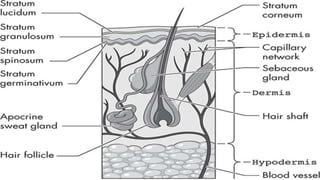
• Dandruff, seborrheic dermatitis, and psoriasis are chronic scaly
dermatoses.These disorders involve the uppermost layer of skin, the
epidermis.They all have scales as a primary manifestation. Dandruff
or seborrhea is a less inflammatory form of seborrheic dermatitis
with relatively fine scaling confined to the scalp. Seborrheic
dermatitis, which involves the scalp, face, and chest (usually the
sternum), has significant inflammation. Psoriasis is a highly
inflammatory skin condition with raised plaques and adherent thick
scales that can have profound physical, psychological, and economic
consequences.
• Dandruff is a hyper proliferative epidermal disorder, characterized by an
accelerated epidermal cell turnover (twice that of normal scalp) and an
irregular keratin breakup pattern, resulting in the shedding of large,
nonadherent white scales. With dandruff, crevices occur deep in the stratum
corneum, resulting in cracking, which generates relatively large scales. If the
large scales are broken down to smaller units, the dandruff becomes less
visible.The accelerated cell turnover rate is thought to be caused by the irritant
inflammatory effects of fatty acids and cytokines produced by Malassezia
species.
General measures of treatment
• Shampoo the hair with the medicated shampoo 3-7 times a week initially,
leaving the shampoo on the hair for 5 minutes. Work the shampoo into the
scalp and simultaneously apply the shampoo to the affected area of the face.
Rinse the scalp and face thoroughly after 5 minutes. Use a scalp scrubber to
ensure penetration to the scalp. Repeat this procedure.
• Use the shampoo for a minimum of 2 weeks to determine effectiveness; after
4 weeks of use, apply the shampoo once a week to control the condition.
• If used, apply a thin layer of the hydrocortisone cream no more than 2 times
daily.Wash the affected areas before use.
• With use of medication and proper nondrug therapy, noticeable improvement
could be observed within 7-14 days. Complete control of the condition is
possible with weekly use of the medicated shampoo. It is likely that
exacerbations may occasionally appear, especially during the winter months.
• Stinging or burning may occur if medicated shampoo enters the eyes.
Treatment
• Pyrithione zinc shampoo contact time 3- 5 min.
• Selenium sulfide
• Ketocanazole
• Hydrocortisone 2% for not more than 7 days in case of Seborrheic
Dermatitis
Diaper dermatitis and Prickly heat
• preventive therapy would be to change the
diaper immediately after the individual defecates
or urinates.
• Use of skin protectants.
• diaper rash.These medications are inappropriate
for use on infant skin and may cause harm.
• Powders for children or infants should be gently
poured into the hands and then rubbed onto the
skin, using a sufficient amount to cover the
affected area. Do not vigorously shake powders
near infants. Avoid infant inhalation of powders.
• Apply cream or ointment liberally, by hand or
with a disposable or washable spatula, to cover
the affected area.
• If using mineral oil, wash it off at every diaper
change to avoid clogging skin pores.
Protective Agents
Allantoin
Calamine
Cocoa butter
Cod liver oil (in combination)
Colloidal oatmeal
Dimethicone
Glycerin
Hard fat
Kaolin
Lanolin
Mineral oil
Petrolatum
Topical cornstarch
White petrolatum
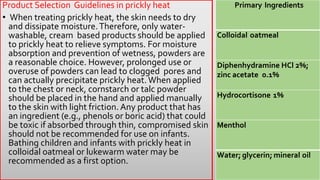
Product Selection Guidelines in prickly heat
• When treating prickly heat, the skin needs to dry
and dissipate moisture.Therefore, only water-
washable, cream based products should be applied
to prickly heat to relieve symptoms. For moisture
absorption and prevention of wetness, powders are
a reasonable choice. However, prolonged use or
overuse of powders can lead to clogged pores and
can actually precipitate prickly heat.When applied
to the chest or neck, cornstarch or talc powder
should be placed in the hand and applied manually
to the skin with light friction. Any product that has
an ingredient (e.g., phenols or boric acid) that could
be toxic if absorbed through thin, compromised skin
should not be recommended for use on infants.
Bathing children and infants with prickly heat in
colloidal oatmeal or lukewarm water may be
recommended as a first option.
Primary Ingredients
Colloidal oatmeal
Diphenhydramine HCl 2%;
zinc acetate 0.1%
Hydrocortisone 1%
Menthol
Water; glycerin; mineral oil
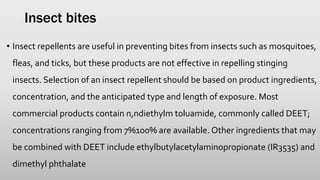
Insect bites
• Insect repellents are useful in preventing bites from insects such as mosquitoes,
fleas, and ticks, but these products are not effective in repelling stinging
insects. Selection of an insect repellent should be based on product ingredients,
concentration, and the anticipated type and length of exposure. Most
commercial products contain n,ndiethylm toluamide, commonly called DEET;
concentrations ranging from 7%100% are available. Other ingredients that may
be combined with DEET include ethylbutylacetylaminopropionate (IR3535) and
dimethyl phthalate
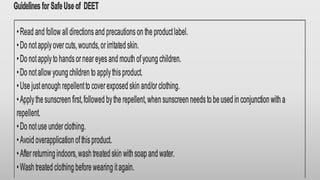
Guidelines for Safe Use of DEET
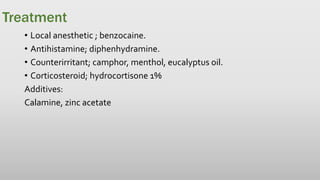
Treatment
• Local anesthetic ; benzocaine.
• Antihistamine; diphenhydramine.
• Counterirritant; camphor, menthol, eucalyptus oil.
• Corticosteroid; hydrocortisone 1%
Additives:
Calamine, zinc acetate
Pediculosis• Treatment of other family members should be determined on the basis of presence of lice or nits and
the family members’ level of contact with the infested individual; unnecessary treatment should be
avoided.Application steps for a pyrethrin shampoo include the following:
• Apply sufficient quantity to wet the dry hair and scalp. (Foams should also be applied to dry hair.) Allow
the treatment to remain for 10 minutes.
• Work the shampoo into a lather and then rinse thoroughly. (Remove foams with shampoo or soap and
water.)
• Use a nit comb to remove dead lice and eggs as described previously.
• Application steps for a permethrin cream rinse include the following: Shampoo with regular shampoo,
rinse, and towel dry hair.
• Apply sufficient cream rinse to wet hair and scalp.
• Allow the treatment to remain for 10 minutes; then rinse and towel dry. Use a nit comb as described
previously.
• Avoid contact of the pediculicide with eyes and mucous membranes.
• The pediculicide can cause temporary irritation, erythema, itching, swelling, and numbness of the
scalp; itching should be relieved in a few days.
• For pyrethrin products, repeat entire process in 7-10 days; permethrin products can be used again in 7-
10 days if lice or nits are detected. Because of treatment resistance, proper use of these products is
required and overuse must be avoided.
Acne
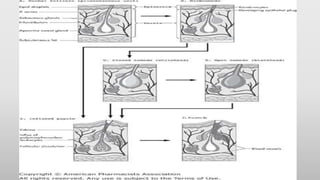
• Acne vulgaris (AV) is a common inflammatory skin disease of the pilosebaceous
glands resulting in lesions most commonly found on the face, but also located on
the neck, chest, upper back, and shoulders.
• Traditionally known as a disease affecting adolescents
• Patients with mild-moderate acne may self-treat with nonprescription topical
products.Topical antimicrobial products are just as efficacious as oral
antimicrobial agents in patients with moderate acne. Oral antibiotics should be
reserved for more severe cases of acne.
• Combining some nonprescription products with prescription acne drugs may
decrease a patient’s ability to tolerate prescribed topical drugs.
Non-pharmacologic treatment
• Wash with soap or cleanser , mild soap of pH 5.3 – 5.9.
• Difference of 2 units pH will irritate the skin.
• Eliminate high glycemic load food.
Physical treatment
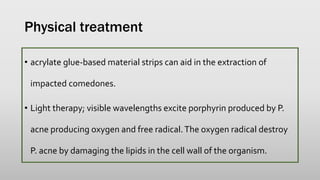
• acrylate glue-based material strips can aid in the extraction of
impacted comedones.
• Light therapy; visible wavelengths excite porphyrin produced by P.
acne producing oxygen and free radical.The oxygen radical destroy
P. acne by damaging the lipids in the cell wall of the organism.
Pharmacologic treatment
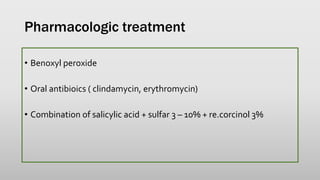
• Benoxyl peroxide
• Oral antibioics ( clindamycin, erythromycin)
• Combination of salicylic acid + sulfar 3 – 10% + re.corcinol 3%
Sun burns
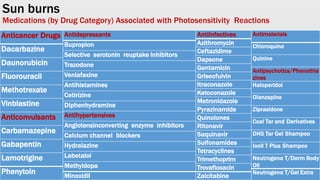
Medications (by Drug Category) Associated with Photosensitivity Reactions
Anticancer Drugs
Dacarbazine
Daunorubicin
Fluorouracil
Methotrexate
Vinblastine
Anticonvulsants
Carbamazepine
Gabapentin
Lamotrigine
Phenytoin
Antidepressants
Bupropion
Selective serotonin reuptake inhibitors
Trazodone
Venlafaxine
Antihistamines
Cetirizine
Diphenhydramine
Antihypertensives
Angiotensinconverting enzyme inhibitors
Calcium channel blockers
Hydralazine
Labetalol
Methyldopa
Minoxidil
AntiInfectives
Azithromycin
Ceftazidime
Dapsone
Gentamicin
Griseofulvin
Itraconazole
Ketoconazole
Metronidazole
Pyrazinamide
Quinolones
Ritonavir
Saquinavir
Sulfonamides
Tetracyclines
Trimethoprim
Trovafloxacin
Zalcitabine
Antimalarials
Chloroquine
Quinine
Antipsychotics/Phenothia
zines
Haloperidol
Olanzapine
Ziprasidone
Coal Tar and Derivatives
DHS Tar Gel Shampoo
Ionil T Plus Shampoo
Neutrogena T/Derm Body
Oil
Neutrogena T/Gel Extra
Diuretics
Acetazolamide
Amiloride
Furosemide
Metolazone
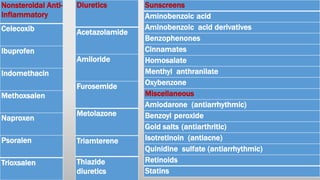
Nonsteroidal Anti-
Inflammatory
Celecoxib
Ibuprofen
Indomethacin
Methoxsalen
Naproxen
Psoralen
Trioxsalen
Triamterene
Thiazide
diuretics
Sunscreens
Aminobenzoic acid
Aminobenzoic acid derivatives
Benzophenones
Cinnamates
Homosalate
Menthyl anthranilate
Oxybenzone
Miscellaneous
Amiodarone (antiarrhythmic)
Benzoyl peroxide
Gold salts (antiarthritic)
Isotretinoin (antiacne)
Quinidine sulfate (antiarrhythmic)
Retinoids
Statins
Physical treatment
• Zinc Oxide
• Titanium Dioxide
Pharmacological Treatment
• Aminobenzoic acid and derivatives.
• Anthranilates
• Benzophenones
• Cinnamates
• Dibenzoylmethane derivatives.
• Salicylates
Pigmentation
• The first step in preventing and treating photoaged skin is for the
patient to commit to daily sun protection. Broad spectrum
sunscreens (UVA and UVB coverage) with a sun protection factor
(SPF) of 15 or greater can minimize further photodamage during
UVR exposure.
• Proper cleansing of the skin removes bacteria, dirt, desquamated
keratinocytes, cosmetics, sebum, and perspiration.
• However, excessive use of soap leads to xerosis, eczematous
dermatitis, and other skin conditions.34
Pharmacologic Therapy
• Creams and lotion for the normal skin.
• Gels and solutions for the oilier skin.
• Alpha and beta hydroxyl acid
• Retinol and retinaldehyde.
• Ascorbic acid
• Idebenzone co enzyme Q10.
• Hydroquinone with sun screen.
Burns & Wounds
• Burns are wounds caused by thermal, electrical, chemical,
or ultraviolet radiation (UVR) exposure.
• Thermal burns result from skin contact with flames,
scalding liquids, or hot objects (e.g., irons, oven broiler
pans, curling irons, or radiators) or from the inhalation of
hot vapors.
Stages of burn wounds
• Stage 1: self-care treatment.
• Stage 2: less than 2-3 % of body surface area, slef-treated.
• Stage 3 and stage 4 : hospitalization.
• Treatment should include a stepwise approach that involves cleansing the damaged area,
selectively using antiseptics and antibiotics, and closing or covering with an appropriate
dressing.
• Minor cuts, scrapes, and burns, require only basic supportive measures, including irrigation
with saline or water for removal of debris from the damaged area and use of a wound
dressing to keep the area moist and to prevent entry of bacteria into the affected area.
Topical nonprescription antibiotic and antiseptic preparations can also be useful in
preventing secondary infection, especially when debris or other foreign particulate matter
that increases the risk of infection is present.
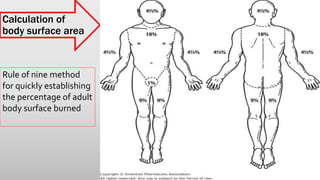
Calculation of
body surface area
Rule of nine method
for quickly establishing
the percentage of adult
body surface burned
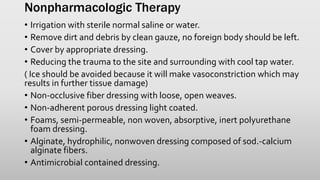
Nonpharmacologic Therapy
• Irrigation with sterile normal saline or water.
• Remove dirt and debris by clean gauze, no foreign body should be left.
• Cover by appropriate dressing.
• Reducing the trauma to the site and surrounding with cool tap water.
( Ice should be avoided because it will make vasoconstriction which may
results in further tissue damage)
• Non-occlusive fiber dressing with loose, open weaves.
• Non-adherent porous dressing light coated.
• Foams, semi-permeable, non woven, absorptive, inert polyurethane
foam dressing.
• Alginate, hydrophilic, nonwoven dressing composed of sod.-calcium
alginate fibers.
• Antimicrobial contained dressing.
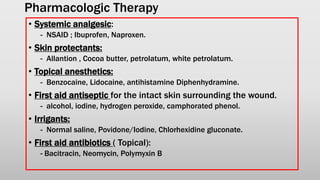
Pharmacologic Therapy
• Systemic analgesic:
- NSAID ; Ibuprofen, Naproxen.
• Skin protectants:
- Allantion , Cocoa butter, petrolatum, white petrolatum.
• Topical anesthetics:
- Benzocaine, Lidocaine, antihistamine Diphenhydramine.
• First aid antiseptic for the intact skin surrounding the wound.
- alcohol, iodine, hydrogen peroxide, camphorated phenol.
• Irrigants:
- Normal saline, Povidone/Iodine, Chlorhexidine gluconate.
• First aid antibiotics ( Topical):
- Bacitracin, Neomycin, Polymyxin B
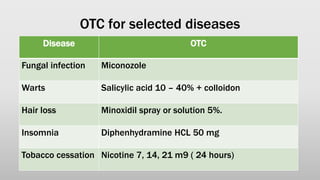
OTC for selected diseases
Disease OTC
Fungal infection Miconozole
Warts Salicylic acid 10 – 40% + colloidon
Hair loss Minoxidil spray or solution 5%.
Insomnia Diphenhydramine HCL 50 mg
Tobacco cessation Nicotine 7, 14, 21 m9 ( 24 hours)
Vaginal and Vulvovaginal Disorders
• BacterialVaginosis
• Vulvovaginal candidiasis
• Trichomoniasis
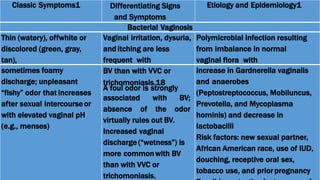
Classic Symptoms1 Differentiating Signs
and Symptoms
Etiology and Epidemiology1
Bacterial Vaginosis
Thin (watery), offwhite or
discolored (green, gray,
tan),
Vaginal irritation, dysuria,
and itching are less
frequent with
Polymicrobial infection resulting
from imbalance in normal
vaginal flora with
sometimes foamy
discharge; unpleasant
“fishy” odor that increases
after sexual intercourseor
with elevated vaginal pH
(e.g., menses)
BV than with VVC or
trichomoniasis.18
A foul odor is strongly
associated with BV;
absence of the odor
virtually rules out BV.
Increased vaginal
discharge (“wetness”) is
more commonwith BV
than with VVC or
trichomoniasis.
increase in Gardnerella vaginalis
and anaerobes
(Peptostreptococcus, Mobiluncus,
Prevotella, and Mycoplasma
hominis) and decrease in
lactobacilli
Risk factors: new sexual partner,
African American race, use of IUD,
douching, receptive oral sex,
tobacco use, and priorpregnancy
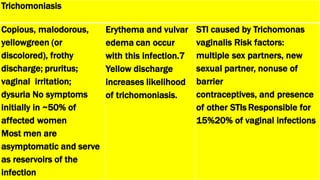
Trichomoniasis
Copious, malodorous,
yellowgreen (or
discolored), frothy
discharge; pruritus;
vaginal irritation;
dysuria No symptoms
initially in ~50% of
affected women
Most men are
asymptomatic and serve
as reservoirs of the
infection
Erythema and vulvar
edema can occur
with this infection.7
Yellow discharge
increases likelihood
of trichomoniasis.
STI caused by Trichomonas
vaginalis Risk factors:
multiple sex partners, new
sexual partner, nonuse of
barrier
contraceptives, and presence
of other STIs Responsible for
15%20% of vaginal infections
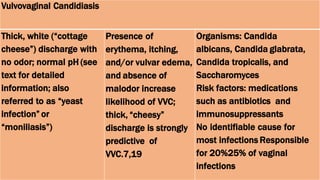
Vulvovaginal Candidiasis
Thick, white (“cottage
cheese”) discharge with
no odor; normal pH (see
text for detailed
information; also
referred to as “yeast
infection” or
“moniliasis”)
Presence of
erythema, itching,
and/or vulvar edema,
and absence of
malodor increase
likelihood of VVC;
thick, “cheesy”
discharge is strongly
predictive of
VVC.7,19
Organisms: Candida
albicans, Candida glabrata,
Candida tropicalis, and
Saccharomyces
Risk factors: medications
such as antibiotics and
immunosuppressants
No identifiable cause for
most infections Responsible
for 20%25% of vaginal
infections
Candidiasis
• Avoid non-absorbable inner clothes.
• Avoid sucrose and active carbohydrate food.
• UseYogurt
• Imidazole
• Butocanazole, clotramizole, miconazole, tiocanazole. Crams,
pessaries, or tablets.
• Treat vaginal itching and irritation by benzocaine, 1%
hydrocortisone, povine iodine.
Atropic vaginitis
• Vaginal douching
- sodium bicarbonate.
- Povidone
- K-Y Jelly
Disorders Related to Menstruation
• Duration: 3 – 7 days.
• Blood : 10 – 84 ml,
• Cycle : 24 -38 days for adult, 20 – 45 for adolescents.
 Primary dysmenorrhea.
Premenstrual Syndrome
Dysmenorrhea treatment -Nonpharmacologic Measures
• If effective, apply topical heat to the abdomen, lower back, or other
painful area.
• Stop smoking cigarettes and avoid secondhand smoke.
• Consider eating more fish high in omega3 fatty acids or taking a fish
oil supplement.
• Participate in regular exercise if it lessens the symptoms.
• Sleep
Dysmenorrhea - OTC
• Ibuprofen and naproxen sodium and mefenamic acid for primary dysmenorrhea.The
medications stop or prevent strong uterine contractions.
• Start taking the medication when the menstrual period begins or when menstrual pain
or other symptoms begin.Then take the medication at regular intervals following the
product instructions, rather than just when the symptoms are present.
• Take the NSAID with food to limit upset stomach and heartburn.
• Do not take NSAIDs if you are allergic to aspirin or any NSAID, or if you have peptic
ulcer disease, gastroesophageal reflux disease, colitis, or any bleeding disorder.
• If you have hypertension, asthma, or heart failure, watch for early symptoms that the
NSAID is causing fluid retention.
• Do not take a nonsalicylate NSAID if you are also taking anticoagulants or lithium.
• If abdominal pain occurs at times other than just before or during the first few days of
menses, seek medical attention.
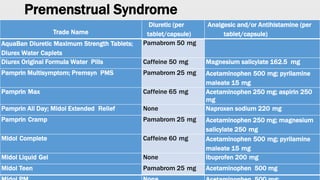
Premenstrual Syndrome
Trade Name
Diuretic (per
tablet/capsule)
Analgesic and/or Antihistamine (per
tablet/capsule)
AquaBan Diuretic Maximum Strength Tablets;
Diurex Water Caplets
Pamabrom 50 mg
Diurex Original Formula Water Pills Caffeine 50 mg Magnesium salicylate 162.5 mg
Pamprin Multisymptom; Premsyn PMS Pamabrom 25 mg Acetaminophen 500 mg; pyrilamine
maleate 15 mg
Pamprin Max Caffeine 65 mg Acetaminophen 250 mg; aspirin 250
mg
Pamprin All Day; Midol Extended Relief None Naproxen sodium 220 mg
Pamprin Cramp Pamabrom 25 mg Acetaminophen 250 mg; magnesium
salicylate 250 mg
Midol Complete Caffeine 60 mg Acetaminophen 500 mg; pyrilamine
maleate 15 mg
Midol Liquid Gel None Ibuprofen 200 mg
Midol Teen Pamabrom 25 mg Acetaminophen 500 mg
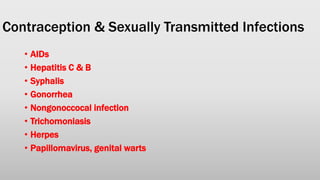
Contraception & Sexually Transmitted Infections
• AIDs
• Hepatitis C & B
• Syphalis
• Gonorrhea
• Nongonoccocal infection
• Trichomoniasis
• Herpes
• Papillomavirus, genital warts
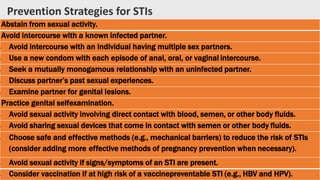
Abstain from sexual activity.
Avoid intercourse with a known infected partner.
• Avoid intercourse with an individual having multiple sex partners.
• Use a new condom with each episode of anal, oral, or vaginal intercourse.
• Seek a mutually monogamous relationship with an uninfected partner.
• Discuss partner’s past sexual experiences.
• Examine partner for genital lesions.
Practice genital selfexamination.
• Avoid sexual activity involving direct contact with blood, semen, or other body fluids.
• Avoid sharing sexual devices that come in contact with semen or other body fluids.
• Choose safe and effective methods (e.g., mechanical barriers) to reduce the risk of STIs
(consider adding more effective methods of pregnancy prevention when necessary).
• Avoid sexual activity if signs/symptoms of an STI are present.
• Consider vaccination if at high risk of a vaccinepreventable STI (e.g., HBV and HPV).
Prevention Strategies for STIs
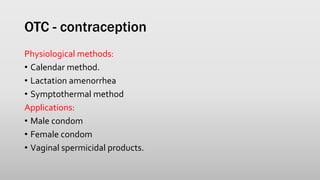
OTC - contraception
Physiological methods:
• Calendar method.
• Lactation amenorrhea
• Symptothermal method
Applications:
• Male condom
• Female condom
• Vaginal spermicidal products.
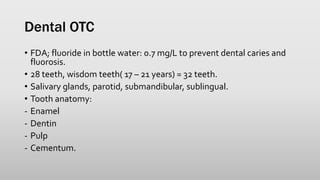
Dental OTC
• FDA; fluoride in bottle water: 0.7 mg/L to prevent dental caries and
fluorosis.
• 28 teeth, wisdom teeth( 17 – 21 years) = 32 teeth.
• Salivary glands, parotid, submandibular, sublingual.
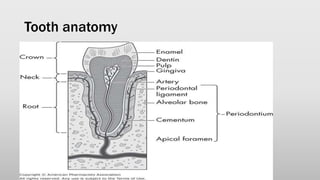
• Tooth anatomy:
- Enamel
- Dentin
- Pulp
- Cementum.
Tooth anatomy
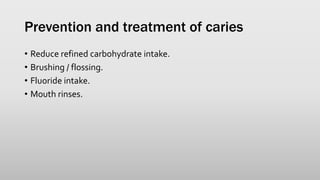
Prevention and treatment of caries
• Reduce refined carbohydrate intake.
• Brushing / flossing.
• Fluoride intake.
• Mouth rinses.
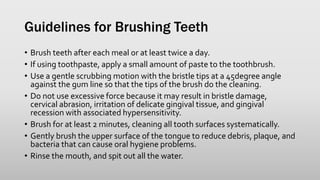
Guidelines for Brushing Teeth
• Brush teeth after each meal or at least twice a day.
• If using toothpaste, apply a small amount of paste to the toothbrush.
• Use a gentle scrubbing motion with the bristle tips at a 45degree angle
against the gum line so that the tips of the brush do the cleaning.
• Do not use excessive force because it may result in bristle damage,
cervical abrasion, irritation of delicate gingival tissue, and gingival
recession with associated hypersensitivity.
• Brush for at least 2 minutes, cleaning all tooth surfaces systematically.
• Gently brush the upper surface of the tongue to reduce debris, plaque, and
bacteria that can cause oral hygiene problems.
• Rinse the mouth, and spit out all the water.
Flossing
• Pull out approximately 18 inches of floss, and wrap most of it around the
middle finger.
• Wrap the remaining floss around the same finger of the opposite hand.
About an inch of floss should be held between the thumbs and forefingers.
• Do not snap the floss between the teeth; instead, use a gentle, sawing
motion to guide the floss to the gum line.
• When the gum line is reached, curve the floss into a C- shape against one
tooth, and gently slide the floss into the space between the gum and tooth
until you feel resistance.
• Hold the floss tightly against the tooth, and gently scrape the side of the
tooth with an up and down motion.
• Curve the floss around the adjoining tooth, and repeat the procedure.
Treatment - topical fluoride
• Use topical fluoride treatments no more than once a day.
• Brush teeth with a fluoride dentifrice before using a fluoride treatment.
• If using a fluoride rinse, measure the recommended dose (most commonly 10 mL),
and vigorously swish it between the teeth for 1 minute.
• If using a fluoride gel, brush the gel on the teeth.Allow the gel to remain for 1
minute.
• After 1 minute, spit out the fluoride product. Do not swallow it.
• Do not eat or drink for 30 minutes after the treatment.
• Supervise children as necessary until they can use the product without supervision.
• Instruct children younger than 12 years in good rinsing habits to minimize
swallowing of the product.
• Consult a dentist or primary care provider before using fluoride products in children
younger than 6 years.
Dentifrices – tooth pastes
• Fluoride tooth paste ( Aquafresh, Colgate, Crest)
• Sodium lauryl sulfate – free tooth paste ( Sensodyne)
• Whitening / Antistain dentifrices:
- Carbamide peroxide.
- Peroxide strips.
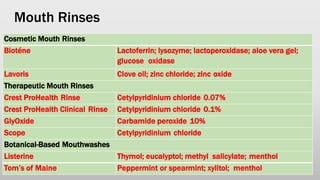
Mouth Rinses
Cosmetic Mouth Rinses
Bioténe Lactoferrin; lysozyme; lactoperoxidase; aloe vera gel;
glucose oxidase
Lavoris Clove oil; zinc chloride; zinc oxide
Therapeutic Mouth Rinses
Crest ProHealth Rinse Cetylpyridinium chloride 0.07%
Crest ProHealth Clinical Rinse Cetylpyridinium chloride 0.1%
GlyOxide Carbamide peroxide 10%
Scope Cetylpyridinium chloride
Botanical-Based Mouthwashes
Listerine Thymol; eucalyptol; methyl salicylate; menthol
Tom’s of Maine Peppermint or spearmint; xylitol; menthol
• Removing plaque and modifying the diet are the main goals of self-care to
prevent caries, gingivitis, and halitosis.
• Mechanical removal of plaque by brushing and flossing is essential for
good oral health.
• Mouth rinses may augment brushing and flossing procedures and may be
used to freshen breath and/or as antiplaque/ anti-gingivitis adjuncts.
• Topical fluorides may be used in individuals with high caries activity.
• Parents must supervise children younger than 12 years as necessary until
they can use the products without supervision.
• Denture cleaners may be used to remove debris physically and to prevent
bacterial and/or fungal infections. If individuals have specific problems
related to the purpose or use of these products, consultation with a dentist
should be recommended.
Oral Pain & Discomfort
• Tooth ache – Anaglesics ; NSAID, ACETAMINOPHEN
• Hypersensitivity
OTC for hypersensitivity
Trade Name Primary Ingredients
Colgate Sensitive Multiprotection Potassium nitrate 5%; sodium fluoride 0.24%
Colgate Sensitive ProRelief Original Potassium nitrate 5%; sodium fluoride 0.24%
Colgate Sensitive ProRelief Enamel
Repair
Potassium nitrate 5%; sodium monofluorophosphate
1.14%
Colgate Sensitive ProRelief
Whitening
Potassium nitrate 5%; sodium fluoride 0.24%
Colgate Total Zx ProShield Plus
Sensitivity
Potassium nitrate 0.24%; sodium monofluoride
0.055%; zinc citrate trihydrate 0.096%
Crest Sensitivity: Clinical Sensitivity
Relief Extra Whitening
Potassium nitrate 5%; sodium fluoride 0.243%
Crest Sensitivity Whitening Plus
Scope
Potassium nitrate 5%; sodium fluoride 0.243%
Sensodyne Maximum Strength with
Fluoride
Potassium nitrate 5%; sodium fluoride 0.15%
Sensodyne Pronamel Potassium nitrate 5%; sodium fluoride 0.15%
Teething discomfort
• Teething plastic products.
• Systemic acetaminophen
• Topical anesthetic is not recommended.
OTC – OTIC DISORDER
Excessive Cerumen ( Impaction)
• Non-pharmacologic prevention and treatment:
• Earwax should be removed only when it has migrated to the
outermost portion of the EAC.The only recommended
nonpharmacologic method of removing cerumen is to use a wet,
wrungout washcloth draped over a finger. Making this procedure
part of daily aural hygiene can prevent impacted cerumen if
physiologic abnormalities or physical devices are not the cause of the
impaction.This method is not effective once cerumen becomes
impacted.
Cerumen – pharmacologic treatment
• Carbamide peroxide 6.5% in anhydrous glycerin is currently the only
FDA approved nonprescription cerumen softening agent. Other
agents such as mineral oil, olive oil (sweet oil), docusate sodium,
glycerin, sodium bicarbonate, and dilute hydrogen peroxide have
been used by primary care providers and patients as inexpensive
home remedies to soften cerumen. However, no data support these
remedies as being more effective than carbamide peroxide in
anhydrous glycerin.
• Guidelines for Administering Eardrops
1. Wash your hands with soap and warm water; then dry them thoroughly.
2. Wash and dry the outside of the ear with a damp washcloth, taking care not to get water in the ear canal. Then dry.
3. Warm eardrops to body temperature by holding the container in the palm of your hand for a few minutes. Do not warm
the container in hot water or microwave. Using hot eardrops can cause ear pain, nausea, or dizziness.
4. If the label indicates, gently shake the container to mix contents.
5. Tilt your head to the side, Or lie down with the affected ear up, Use gentle restraint, if necessary, for an infant.
6. Open the container carefully. Position the dropper tip near, but not inside, the ear canal opening. Do not allow the
dropper to touch the ear. Eardrop bottles must be kept clean.
7. Pull your ear backward and upward to open the ear canal . For children, pull the ear backward and downward.
8. Place the proper dose or number of drops into the ear canal. Replace the cap on the container.
9. Gently press the tragus over the ear canal opening to force out air bubbles and push the drops down the ear canal.
10. Stay in the same position for the time indicated in the product instructions. If the patient is a child who cannot stay
still, the primary care provider may tell you to place a clean piece of cotton gently into the child’s ear to prevent the
medication from draining out. Use a piece large enough to remove easily, and do not leave it in the ear longer than an
hour.
11. Repeat the procedure for the other ear, if needed.
12. Gently wipe excess medication off the outside of the ear, using caution to avoid getting moisture in the ear canal.
The use of ceruminolytics and irrigation together may improve overall removal of impacted cerumen. The ceruminolytic
agent is administered first. Then follow the irrigation technique as described below, paying special attention to cautionary
instructions.
1. Prepare a warm solution of plain water or other solution as directed by your primary care provider. Eight ounces of
solution should be sufficient to clean out the ear canal.
2. To catch the returning solution, hold a container under the ear being cleaned. An emesis basin is ideal because it fits
the contour of the neck. Tilt the head down slightly on the side where the ear is being cleaned.
3. Gently pull the earlobe down and back to expose the ear canal.
4. Place the open end of the syringe into the ear canal with the tip pointed slightly upward toward the side of the ear
canal Do not aim the syringe into the back of the ear canal. Use caution and make sure the syringe does not obstruct
the outflow of solution.
5. Squeeze the bulb gently—not forcefully—to introduce the solution into the ear canal and to avoid rupturing the
eardrum. (Note: Only health professionals trained in aural hygiene should use forced water sprays [e.g., Water Pik] to
remove cerumen.)
6. Do not let the returning solution come into contact with the eyes.
7. If pain or dizziness occurs, remove the syringe and do not resume irrigation until a health care provider is consulted.
8. Make sure all water is drained from the ear to avoid predisposing to infection from waterclogged ears.
9. Rinse the syringe thoroughly before and after each use, and let it dry.
10. Store the syringe in a cool, dry place (preferably, in its original container) away from hot surfaces and sharp
instruments
11. If cerumen still remains, consult a provider.
 Docusate Sodium
 Hydrogen peroxide 3%
 Olive oil
Water clogged ear
• Drying techniques:
• FDA has approved only isopropyl alcohol 95% in anhydrous glycerin
5% as a safe and effective “ear drying aid. In addition, a 50:50
mixture of acetic acid 5% (white household vinegar) and isopropyl
alcohol 95% has commonly been recommended to help dry water-
clogged ears
• Tilt the affected ear down, and gently manipulate it to help drain
water from the ear. Immediately after swimming or bathing, use a
blow dryer on a low heat and speed setting to help dry the ear canal.
Do not blow air directly into the ear canal.
OTIC disorder
• Limit the self-treatment of otic disorders to minor symptoms such as a sense of
fullness, pressure, or wetness in the ears. Refer for further evaluation patients younger
than 12 years, as well as those with signs and symptoms of ear infection, bleeding or
signs of trauma, tympanostomy tubes, ruptured tympanic membrane, or ear surgery
within the past 6 weeks. Instruct patients on how to use specific otic products that
have been proven safe and effective .
• Advise patients with self-treatable symptoms to contact a primary care provider if
symptoms worsen or do not improve after 4 days.
• Advise patients about proper ear hygiene and the importance of cerumen to prevent
further problems.
Ophthalmic – Ocular Disorder
• Self-treatable ophthalmic disorders occur primarily on the eyelids;
however, a few disorders of the eye surface may be responsive to
self-treatment.
• This include dry eyes, allergic conjunctivitis, diagnosed corneal
edema, presence of loose foreign debris, minor ocular irritation, and
the cleaning or lubricating of artificial eyes.
• Careful assessment is important, especially with ongoing symptoms,
symptoms, to rule out more complicated manifestations that may
require referral to an eye care specialist.
Anatomy of the Eye
The bulbar conjunctiva is contiguous
with the palpebral conjunctiva at the
junction between the eyelid and the
ocular surface (the fornix).The
episcleral and bulbar conjunctival
layers (which contain the vascular and
lymphatic systems of the anterior eye
surface) are the sources of visible eye
redness in ocular irritation or
inflammation.
Treatment of Dry eye
Mild
Education, environmental
modifications
Elimination of offending topical or
systemic medications
Aqueous enhancement using
artificial tear substitutes,
gels/ointments
Eyelid therapy (warm compresses
and eyelid hygiene)
Treatment of contributing ocular
factors such as blepharitis or
meibomianitis
Moderate
Same treatments listed for mild disease plus the following treatments:
Antiinflammatory agents (topical cyclosporine and corticosteroids,
systemic omega3 fatty acid supplements)
Punctal plugs
Spectacle side shields and moisture chambers
Severe
Same treatments listed for mild and moderate disease plus the following
treatments:
Systemic cholinergic agonists
Systemic antiinflammatory agents
Mucolytic agents
Autologous serum tears
Contact lenses
Correction of eyelid abnormalities
Permanent punctal occlusion
Nonpharmacologic Therapy
• The primary nondrug measure is avoiding environments that
increase evaporation of the tear film. If possible, patients should
avoid dry or dusty places. Using humidifiers or repositioning
workstations away from heating and air
• conditioning vents may help alleviate dry eyes. In addition,
prolonged use of computer screens and wearing eye protection
sunglasses or goggles) in windy, outdoor environments may
help alleviate dry eye problems.
• PharmacologicTherapy
• Non-medicated ointments are commonly used in
treating minor ophthalmic disorders, including dry eye.
• Because ointments can cause blurred vision (resulting
in severe vision limitations), combination therapy using
artificial tears and non-medicated ointments is usually
recommended.
• Gels offer some advantage to patients because they
disturb vision less compared to ointments and are
tolerated better.
• The effectiveness of retinol solutions for treating dry
eye remains speculative.
• Natural tears
Conjunctivitis
Antihistamine/Decongestant Eyedrop Products
Naphcon A Pheniramine maleate 0.3%; naphazoline HCl 0.025%; BAK 0.01%
Opcon A Pheniramine maleate 0.315%; naphazoline HCl 0.02675%;
hydroxypropyl methylcellulose 0.5%; BAK 0.01%
Vasocon A Antazoline phosphate 0.5%; naphazoline HCl 0.05%; BAK 0.01%
VisineA Pheniramine maleate 0.3%; naphazoline HCl 0.025%; BAK 0.01%
Treatment of Corneal Edema
• Hyperosmotics
• Hyperosmotic agents increase the tonicity of the tear film,
promoting movement of fluid from the cornea to the more highly
osmotic tear film. Normal tear flow mechanisms then eliminate the
excessive fluid. Many patients with mild moderate corneal epithelial
edema may experience improved subjective comfort and vision after
appropriate use of these medications.
• Usually, the patient instills 1 or 2 drops of the solution every 3-4
hours
Foreign substance
• Ocular Irrigants
• An ocular irrigant is used to cleanse ocular tissues while maintaining
their moisture; these solutions must be physiologically balanced with
respect to pH and osmolality. Because the tissues that the irrigant
contacts obtain nutrients elsewhere, the role of irrigants is primarily
to clear away unwanted materials or debris from the ocular surface.
To reduce risk of contamination, patients should use ocular irrigants
only on a shortterm basis, and they should be sure that no other
ocular pathology is being missed. All ophthalmic irrigating solutions
are available without a prescription
• Treatment of Minor Eye Irritation
• Minor irritation often responds well to artificial tear solutions or
medicated ointments
• Zinc sulfate, a mild astringent, may be recommended for
relief of minor ocular irritation. The dosage is 1= 2 drops up to 4
daily.
General consideration
• Patients with narrow anterior chamber angles or narrow- angle
glaucoma should not use topical ocular decongestants because of
the risk of angle-closure glaucoma.
• Drug administration should be conservative in patients with
hyperemic conjunctiva because of the potential for increased
systemic drug absorption and the risk of adverse effects
‫هللا‬ ‫شاء‬ ‫ان‬ ‫بالتوفيق‬

OTC lectures

  • 1.
  • 2.
    •Rx •Over the counter(OTC) •Behind the counter (BTC)
  • 3.
    Self-care and nonprescriptionpharmacotherapy • Self-care is the independent act of preventing, diagnosing, and treating one’s illnesses without seeking professional advice. • Self-medication is often the most first level of self-care. As self-- increased, so has the practice of self-medication with vitamins , products and nonprescription medications. • Factors that help drive reliance on self-medication include (1) aging population, (2) decreased availability of primary care increased costs of health care, and (4) high proportion of uninsured people. • Easy accessibility, convenience, and cost-effectiveness of self-- products ensure their essential role in the health care system
  • 4.
    Pharmacists’ Role inNonprescription Drug Therapy • Assess, by interview and observation, the patient’s physical complaint/symptoms and medical condition . • Differentiate self-treatable conditions from those requiring referral to a primary care provider or emergency department. • Advise and counsel the patient on the proper course of action (i.e., no drug treatment, treatment with nonprescription medications, or referral to another health care provider or emergency ). • Advise the patient on the outcome of the selected course of action. • Assure the patient that the desired therapeutic outcome can be achieved if the selected/recommended nonprescription medications are taken as directed on the label and/or as directed by the primary care provider or pharmacist. • Reinforce the concept that the pharmacist and primary care provider are qualified to perform a follow-up assessment of the treatment. • If a nonprescription medication is in the best interest of the patient, pharmacists can help in the following ways: - Assess patient risk factors (e.g., contraindications, warnings, precautions, age, and organ function). - Assist in product selection. - Counsel the patient about proper drug use (e.g., dosage, administration, monitoring parameters, and duration). - Maintain an accurate patient drug profile that includes prescription, nonprescription, nutritional and dietary supplement, and herbal products. - Assess the potential of nonprescription medications to mask symptoms of a more serious condition. Educate the patient on when to seek medical attention if the recommended nonprescription medication is ineffective or if symptoms worsen.
  • 5.
    QuEST/SCHOLARMAC QuEST: Quickly assess,Establish selfcare appropriateness (using SCHOLARMAC), Suggest care, Talk to patient SCHOLAR: Symptoms, Characteristics, History, Onset, Location, Aggravating factors, Remitting factors MAC: Medications, Allergies, Conditions WWHAM method Who, What, How long, Actions taken, Medications taken AS METTHOD Age, Self or someone else, Medicines taken, Exact symptoms, Time of symptoms, Taken anything, History of disease, Other symptoms, Doing anything to alleviate or worsen the situation PQRST Palliation, Quality, Region, Signs and symptoms, Temporal relationship CHAPSFRAPS : Chief complaint, History of illness, Allergies, Past medical history, Social history Family
  • 6.
    • Step 1:Gather information. - Patient - Symptoms • Step 2: Assessment and triage - Identify the problem, its severity and its duration. - Refer to health provider in case: 1. Symptoms require medical referral. 2. The patient is impropriate for seeking self-medication. 3. Symptoms are too severe and long lasting. 4. Effective OTC for this case is not available. 5. OTC dosage or duration of treatment are inadequate to solve the problem. -Take no action.
  • 7.
    • Step 3:Prepare and implement a plan. • Step 4: Educate the patient. • Step 5: Evaluate patient outcome and follow – up. • Follow the regulation and law for allowed lists. • Select and regard the patient culture.
  • 8.
    Headache • Primary headache Tensiontype, migraine, cluster type, medication overuse. • Secondary headache Trauma, stroke, abuse, infection, craniofacial structure disorder. • Tension or stress type headache generally in 40 – 49 age and 5:4 women to men more prevalent in increasing the level of education • Stress type and migraine are due to neurovascular etiology. • Menstrual headache is due to eostrogen and sarotinin withdrawal.
  • 9.
    TensionType Headache Migraine Headache Sinusheadache Location Bilateral Over the top of the head, extending to base of skull Usually unilateral Face, forehead, or periorbital area Nature Varies from diffuse ache tight, pressing, pain Throbbing; may be preceded by aura Pressure behind eyes or face; dull, bilateral pain; worse in the morning Onset Gradual Sudden Simultaneous with sinus symptoms,including purulent nasal discharge Duration Minutes to days Hours to 2 days Days (resolves with sinus symptoms) Non headache symptom Scalp tenderness Nausea Nasal congestion
  • 11.
    Stress type headache •Respond to acetaminophen, NSAID, salicylates. • Chronic tension type advice the patient for relaxation exercises + treatment for 3 days a week + physical therapy of stretching and strengthening the head and neck muscles.
  • 12.
    Migraine • NSAID formild and moderate migraines.Taking NSAID when the attack is suspected. • Regular sleep, regular eating and exercise schedules, stress management and ice begs on the forehead or temple areas. • Avoid food containing allergic substances, vasoactive substances like nitrites, tyramine in red wine, phenylalanine in aspartame, glutamate in Asian food, caffeine and theobromine in chochalate. • Avoid hunger and low blood glucose level. • Take Magnesium supplements.
  • 13.
    Sinus headache • Dueto blockage of the sinus. • Treatment by pseudoephedrine or phenylephrine • Acetaminophen.
  • 14.
    Acetaminophen • Produces analgesiathrough central inhibition of the prostaglandin synthesis. • Rapidly absorbed from GI. • Rapid onset 30 min after oral administration. • Duration 4 hours. • Metabolized in the liver to inactive glucuronic and sulfuric acid conjugates. • Hepatotoxic is dose dependent exceeding 4 g / day.
  • 15.
    FDA doses forchildren Ibuprofen (mg) Dose by Body Weight (mg/kg) Acetaminophen (mg) Aspirin (mg) Age (years) Weight (lb) 5 - 10 mg/kg 10 - 15 10 - 15 mg/kg <2 <24 Ask a doctor Ask a doctor Ask a doctor 2 - 3 24 - 35 100 160 160 4 - 5 36 - 47 150 240 240 6 - 8 48 - 59 200 320 320 9 - 10 60 - 71 250 400 400 11 7295 300 480 480
  • 16.
    Recommended Dosages ofNonprescription Analgesics for Adults and Children 12 Years and Older Agent Dosage Forms Usual Adult Dosage (maximum daily dosage) Acetaminophen Immediate release, extended release, effervescent, disintegrating, rapid release, and chewable tablets; capsules; liquid drops; elixir; suspension; suppositories 325 - 1000 mg every 4 - 6 hours (suggested 3250mg) Ibuprofen Immediate release and chewable tablets; capsules; suspension; liquid drops 200 - 400 mg every 4 - 6 hours (1200 mg) Naproxen sodium Tablets 220 mg every 8 - 12 hours (660 mg) Over age 65 years: 220 mg every 12 hours (440mg) Aspirin Immediate release, buffered, enteric coated, film- coated, effervescent, and chewable tablets; suppositories 650 - 1000 mg every 4 - 6 hours (4000 mg) Magnesium salicylate Tablets 650 mg every 4 hours or 1000 mg every 6 hours
  • 17.
    Drug – druginteraction Analgesic/Antipyretic Drug Potential Interaction Management/Preventive Measures Acetaminophen Alcohol Increased risk of hepatotoxicity Avoid concurrent use if possible; minimize alcohol intake when usingacetaminophen. Acetaminophen Warfarin Increased risk of bleeding (elevations in INR) Limit acetaminophen to occasional use;monitor INR for several weeks when acetaminophen 24 grams daily isadded or discontinued in patients on warfarin. Aspirin Valproic acid Displacement fromprotein- binding sites andinhibition valproic acidmetabolism Avoid concurrent use; use naproxeninstead of aspirin (no interaction). Aspirin NSAIDs, including COX- inhibitors Increased risk of gastroduodenal ulcers and bleeding Avoid concurrent use if possible; consider use of gastroprotective agents(e.g., PPIs). Ibuprofen Aspirin Decreased antiplatelet effect of aspirin Aspirin should be taken at least 30 minutes before or 8 hours after ibuprofen. Use acetaminophen (or otheranalgesic) instead of ibuprofen.. Ibuprofen Phenytoin Displacement from Monitor free phenytoin levels; adjust
  • 18.
    proteinbinding sites doseas indicated. NSAIDs (several) Bisphosphonates Increased risk of GI or esophageal ulceration Use caution with concomitant use. NSAIDs (several) Digoxin Renal clearance of digoxin inhibited Monitor digoxin levels; adjust dose as indicated. Salicylates and NSAIDs (several) Antihypertensive agents, betablockers, ACEinhibitors, vasodilators, diuretics Antihypertensive effect inhibited; possible hyperkalemia withpotassium- sparing diuretics and ACE inhibitors Monitor blood pressure, cardiacfunction, and potassium levels. Salicylates and NSAIDs Anticoagulants Increased risk of bleeding, especially GI Avoid concurrent use, if possible; risk islowest with salsalate and choline magnesium trisalicylate. Salicylates and NSAIDs Alcohol Increased risk of GIbleeding Avoid concurrent use, if possible; minimize alcohol intake when usingsalicylates and NSAIDs. Salicylates and NSAIDs (several) Methotrexate Decreased methotrexate clearance Avoid salicylates and NSAIDs with highdose methotrexate therapy; monitor levels with concurrent treatment. Salicylates (moderate high doses) Sulfonylureas Increased risk of hypoglycemia Avoid concurrent use, if possible; monitor blood glucose levels whenchanging salicylate dose. Key: ACE = Angiotensinconverting enzyme; COX = cyclooxygenase; GI = gastrointestinal; INR = international normalized ratio; NSAID = nonsteroidal antiinflammatory drug; PPI = protein pump inhibitor.
  • 19.
    Precautions for NonprescriptionAnalgesics • If you are pregnant or breastfeeding, consult your primary care provider before taking any nonprescription medications. • If you have a medical condition or are taking prescription medications, obtain medical advice before taking any of these medications. Nonprescription analgesics are known to interact with several medications. • Do not take nonprescription analgesics longer than 10 days unless a medical provider has recommended prolonged use. • Do not take these medications if you consume three or more alcoholic beverages daily. Do not exceed recommended dosages. • Products containing aspartame or phenylalanine (chewable tablets) should not be given to individuals with phenylketonuria.
  • 20.
    • Salicylates (Aspirin,Magnesium Salicylate) - NSAIDs (Ibuprofen and Naproxen) • Do not take aspirin during the last 3 months of pregnancy unless a primary care provider is supervising such use. Unsupervised use of this medication could unborn child or cause complications during delivery. Do not give aspirin or other salicylates to children 15 years of age or younger who are recovering from or influenza. To avoid the risk of Reye’s syndrome, a rare but potentially fatal condition, use acetaminophen for pain relief. • Do not take aspirin or NSAIDs if you are allergic to aspirin or have asthma and polyps. Take acetaminophen instead. • Do not take aspirin or NSAIDs if you have stomach problems or ulcers, liver kidney disease, or heart failure. • Do not take NSAIDs if you have or are at high risk for heart disease or stroke use is supervised by a health care provider. • Do not take aspirin if you have gout, diabetes mellitus, or arthritis unless the use supervised by a health care provider. • Do not take salicylates or NSAIDs if you are taking anticoagulants. Do not take magnesium salicylate if you have kidney disease. • Do not give naproxen to a child younger than 12 years.
  • 21.
    Fever • Fever: temperaturehigher than 37.8°C. • Hyperthermia: malfunction of normal thermoregulatory process at the hypothalamus level caused by excessive heat exposure or production. • Hyperpyrexia: body temperature greater than 41.1°C that typically result in mental and physical sequences. It results from either fever or hyperthermia. • Body temperature is regulated by the hypothalamus in response to pyrogen. • Fever is a sign of an increase in the body's thermoregulatory set point. • Normally hypothalamus maintain the body temperature between 36.4 – 37.2 °C. accepted core body temperature is 37 °C.
  • 22.
    PYROGEN • PYROGEN canbe exogenous or endogenous, endogenous pyrogen are products released in response or from damaged tissue such as interlukins, interferon, and tumor necrosis factor. • Prostaglandins E are produced as response to circulating pyrogen and elevate the thermoregulatory point in the hypothalamus. Within one hour the body temperature reaches the new set point then fever occur. • Causes are, infection, malignancies, tissue damage, antigen-antibody reaction, dehydration, heat stroke, CNS inflammation, metabolic disorder and hyperthyroidism or gout.
  • 23.
    Pharmacological therapy • Antipyreticinhibits cyclooxygenase enzymeCOX which inhibits PGE2 which decreases the feedback between the thermoregulatory neurons and hypothalamus then by reducing the hypothalamic set point during fever.
  • 24.
    Temperature Measurement • Donot rely on feeling the body to detect fever.Take a temperature reading with an appropriate thermometer. For children up to 3 months of age, the rectal method of temperature measurement is preferred. Use of a tympanic thermometer is not recommended in children younger than 6 months because of the size and shape of the infant’s ear canal. • For children ages 6 months to 3 years, the rectal, oral, tympanic, or temporal method may be used if proper technique is followed. • For individuals older than 3 years, the oral, tympanic, or temporal method is appropriate.
  • 26.
    • Fever isself-limiting and rarely poses severe consequences unless the core temperature is greater than (41.1°C). • The main treatment goal for fever is to eliminate the underlying cause as well as to alleviate the associated discomfort.  Fever should be confirmed only by using a thermometer. Patients should be educated on the proper measurement techniques for the thermometry they utilize.  Patients should be referred for further evaluation if their rectal temperature or its equivalent is greater than (40°C), they have a history of febrile seizures, they have comorbid conditions compromising their health, or they are younger than 3 months with a temperature exceeding (38.0°C).
  • 27.
    Nondrug Measures • Donot use isopropyl or ethyl alcohol for body sponging. Alcohol poisoning can result from skin absorption or inhalation of topically applied alcohol solutions. • For all levels of fever, wear lightweight clothing, remove blankets, and maintain room temperature at 20°C. Unless advised otherwise, drink or provide sufficient fluids to replenish body fluid losses. For children, increase fluids by at least 12 ounces per hour; for adults, increase fluids by at least 24 ounces per hour. Sports drinks, fruit juice, a balanced electrolyte formulation, or water is acceptable.
  • 28.
    Nonprescription Medications • Analgesics/antipyreticshelp in alleviating discomfort associated with fever and reducing the temperature. • Nonprescription analgesics/antipyretics typically take 30 minutes to 1 hour to begin to decrease temperature and discomfort. • Monitor level of discomfort and body temperature using the same thermometer at the same body site two to three times per day during a febrile illness. • Use single entity nonprescription analgesics/antipyretics at low doses for up to 3 days for treatment of fever, unless you have exclusions for self-care. • Avoid alternating antipyretics because of the complexity of the dosing regimens, increased risk of medication errors, and adverse effects. • Dosing of ibuprofen or acetaminophen in children should be based on body weight, not age. • To avoid incorrect dosing, use a measuring device such as a syringe, dosing spoon, or medicine cup when administering liquid medication. • If you are pregnant or have uncontrolled high blood pressure, congestive heart failure, renal failure, or an allergy to aspirin, avoid use of NSAIDs (ibuprofen and naproxen sodium) or aspirin-containing products.Avoid using aspirin and aspirin-containing products for fever in children younger than 15 years because of the possible risk of Reye’s syndrome.
  • 29.
    Musculoskeletal Injuries andDisorder INTRODUCYION: Tendon ; bind muscle to bone. Legament; bind bone to bone.  Because of their tensile strength these are rarely rupture unless subjected to intense forces. Synovial bursae are fluid- filled sacs between the joint spaces providing lubrication and cushioning. Striated muscle composed of cells ( myocytes) which are actin and myosin responsible for contraction and affected by calcium and potassium. Pain receptors are located in the skeletal muscle and on the overlying these receptors can be stimulated as a result of over-use, injury to the the surroundings. Sprain if pain is accompanied by limited joint function.
  • 30.
    Myalgia Tendonitis BursitisSprain Strain Osteoarthritis Location Muscles of the Tendon Inflammation Stretching or Hyperextension Weightbearing joints, body locations of the bursae tearing of a of a muscle or knees, hips, low back, around joint within joints; ligament within a tendon hands areas common joint locations include knee, shoulder, big toe Signs Possible Warmth, Warmth, Swelling, bruising Swelling, Noninflammatory swelling (rare) swelling, edema, bruising joints, narrowing of erythema erythema, and joint space, possible restructuring of bone crepitus and cartilage (resulting in joint deformities), possible joint swelling Symptoms Dull, constant Mildsevere Constant pain Initial severe pain Initial severe Dull joint pain relieved ache (sharp pain generally that worsens followed by pain, pain with by rest; joint stiffness pain relatively occurring after with movement particularly with continued pain <2030 minutes; rare); use; loss of or application joint use; upon movement localized symptoms to weakness and range of of external tenderness; and at rest; joint; crepitus fatigue of motion pressure over reduction in joint muscle muscles also the joint stability and weakness; loss common function of some function Onset Varies Often gradual, Acute with Acute with injury Acute with injury Insidious development depending on but can injury; recurs over years cause (i.e., develop with precipitant trauma = suddenly use of joint
  • 31.
    Non-pharmacologic treatment • RICE Rest, Ice , Compression and Elevation. • Changing life style and activities performance. • Weight loss. • Massage, heat therapy, physical therapy, electric nerve stimulant. • Electrolyte intake. • Protective measures , bandage and dressing to fit the body part. • Chair back,
  • 32.
    Topical products. • Analgesia,anathesia, antipruritis, counterirritant effects. - Methyl salicylate containing products. - Camphur containing products. - Capsicum containing products. - Menthol containing products. • NSAIDs Diclofenac gel.
  • 35.
    Colds & Allergy •Common cold is an acute , self-limiting viral infection of the upper respiratory tract. • Allergic rhinitis is a specific allergic reaction of the nasal mucosa resulting from an antibody-mediated reaction to an inhaled antigen.
  • 36.
    Anatomy of UpperRespiratory Tract
  • 37.
    • Stimulation ofsensory fibers by mechanical and thermal stimuli or by mediators such as histamine and bradykinin results in sneezing. Cholinergic and sympathetic nerves are involved in congestion because they innervate glands and arteries that supply the glands. Cholinergic stimulation dilates arterial blood flow, whereas sympathetic stimulation constricts arterial blood flow. • slightly red pharynx with evidence of postnasal drainage, nasal obstruction, and mildly to moderately tender sinuses on palpation. During the first 2 days of a cold, patients may report clear, thin, and/or watery nasal secretions. As the cold progresses, the secretions become thicker and the color may change to yellow or green.When the cold begins to resolve, the secretions again become clear, thin, and/or watery. Patients may have low grade fever, but colds are rarely associated with a fever above 100°F (37.8°C).
  • 38.
    Illness Signs andSymptoms Allergic rhinitis Watery eyes; itchy nose, eyes, or throat; repetitive sneezing; nasal congestion; watery rhinorrhea; red, irritated eyes with conjunctival injection Asthma Cough, dyspnea, wheezing Bacterial throat Sore throat (moderate - severe pain), fever, exudate, tender anterior cervical adenopathy infection.
  • 39.
    Colds Sore throat(mild-moderate pain), nasal congestion, rhinorrhea, sneezing common; lowgrade fever, chills, headache, malaise, myalgia, and cough possible Influenza Myalgia, arthralgia, fever ≥ 100°F102°F (37.8°C38.9°C), sore throat, nonproductive cough, moderatesevere fatigue Otitis media Ear popping, ear fullness, otalgia, otorrhea, hearing loss, dizziness Pneumonia or bronchitis Chest tightness, wheezing, dyspnea, productive cough, changes in sputum color, persistent fever Sinusitis Tenderness over the sinuses, facial pain aggravated by Valsalva’s maneuver or postural changes, fever ≥101.5°F (38.6°C), tooth pain, halitosis, upper respiratory tract symptoms for ≥7 days with poor response to decongestants West Nile virus infection Fever, headache, fatigue, rash, swollen lymph glands, and eye pain initially, possibly progressing to GI distress, CNS changes, seizures, or paralysis Whooping cough Initial catarrhal phase (rhinorrhea, mild cough, sneezing) of 12 weeks, followed by 16 weeks of paroxysmal coughing
  • 41.
    Instructions for nasalspray • Clear nasal passages before administering the product. • Wash your hands before and after use. • Gently depress the other side of the nose with finger to close off the nostril not receiving the medication. • Aim tip of product away from nasal septum to avoid accidental damage to the septum. • Breathe through mouth and wait a few minutes after using the medication before blowing the nose.
  • 42.
    Instructions Nasal Sprays NasalInhalers • Gently insert the bottle tip into one nostril, as shown in drawing A. • Keep head upright. Sniff deeply while squeezing the bottle. Repeat with other nostril. • Warm the inhaler in hand just before use. • Gently insert the inhaler tip into one nostril, as shown in drawing C. Sniff deeply while inhaling. • Wipe the inhaler after each use. Discard after 2- 3 months even if the inhaler still smells medicinal.
  • 43.
    Pump Nasal SpraysNasal Drops • Prime the pump before using it the first time. Hold the bottle with the nozzle placed between the first two fingers and the thumb placed on the bottom of the bottle. • Tilt the head forward. • Gently insert the nozzle tip into one nostril (see drawing B). Sniff deeply while depressing the pump once. • Repeat with other nostril. • Lie on bed with head tilted back and over the side of the bed, as shown in drawing D. • Squeeze the bulb to withdraw medication from the bottle. • Place the recommended number of drops into one nostril. Gently tilt head from side to side. • Repeat with other nostril. Lie on bed for a couple of minutes after placing drops in the nose. • Do not rinse the dropper.
  • 44.
    Non-pharmacologic therapy • Increasefluid uptake. • Rest • Vaporizer & humidifier( vicks, camphor, water vapour) • Tea with lemon and honey. • Chicken soup. • Aromatic oil
  • 45.
    Pharmacologic therapy • Decongestant •Phenylepherine • Pseudoephedrine • Naphazoline. • Acetaminophen, Asprin, Naproxin. • Dextromethorphan • Lozenges, • Throat spray. • Antihistamine. • Antitussive, Antihistamine.a/ sedative, b/ nonsedative. • Triamcinolone acetonide (Nasacort Allergy 24 HR) and fluticasone propionate (Flonase Allergy Relief) are currently the only two INCS approved for nonprescription use for allergic rhinitis.
  • 46.
    Cough • Cough isan important defensive respiratory reflex with potentially significant adverse physical and psychological consequences and economic impact. Cough is the most common symptom for which patients seek medical care Classification Etiology Acute Viral URTI, pneumonia, acute left ventricular failure, asthma, foreign body aspiration Subacute Postinfectious cough, bacterial sinusitis, asthma Chronic UACS, asthma, GERD, COPD (chronic bronchitis), ACEIs, bronchogenic carcinoma, carcinomatosis, sarcoidosis, left ventricular failure, aspiration secondary to pharyngeal dysfunction
  • 47.
    Antitussives • Antitussives (coughsuppressants) control or eliminate cough and are the drugs of choice for nonproductive coughs. Antitussives should not be used to treat productive cough unless the potential benefit outweighs the risk (e.g., significant nocturnal cough). Suppression of productive coughs may lead to retention of lower respiratory tract secretions, increasing the risk of airway obstruction and secondary bacterial infection. Protussives (expectorants) change the consistency of mucus and increase the volume of expectorated sputum and may provide some relief for coughs that expel thick, tenacious secretions from the lungs with difficulty.
  • 48.
    Signs and Symptomsof Diseases Associated with Cough Key: CHF = Congestive heart failure; COPD = chronic obstructive pulmonary disease; GERD = gastroesophageal reflux disease; UACS = upper airway cough syndrome; URTI = upper respiratory tract infection. Disease Signs and Symptoms Acute bronchitis Purulent sputum; cough that lasts 13 weeks; mild dyspnea, mild bronchospasm and wheezing; usually afebrile though may have a lowgrade fever Asthma Wheezing or chest tightness; shortness of breath, coughing predominantly at night; cough in response to specific irritants, such as dust, smoke, or pollen CHF Fatigue; dependent edema, breathlessness Chronic bronchitis Productive cough most days of the month at least 3 months of the year for at least 2 consecutive years COPD Persistent, progressive dyspnea; chronic cough (may be intermittent or unproductive), chronic sputum production GERD Heartburn; sour taste in mouth; worsening of symptoms when supine; improvement with acidlowering drugs Lower respiratory tract infection Fever (mild to high); thick, purulent, discolored phlegm; tachypnea, tachycardia UACS Mucus drainage from nose; frequent throat clearing Viral URTI Sneezing; sore throat; rhinorrhea; low grade temperature
  • 49.
    Treatment – Antitussive Coughsuppressants control or eliminate cough and are the drugs of choice for nonproductive coughs. Oral nonprescription cough suppressants include codeine (available without a prescription in some states), dextromethorphan, diphenhydramine, and chlophedianol. Topical nonprescription antitussives include camphor and menthol. Do not heat, microwave, or add topical antitussives to hot water. Do not use topical antitussives near an open flame. Topical antitussive ointments and liquids are toxic if ingested. The most common side effects of codeine include nausea, vomiting, sedation, dizziness, and constipation. Dextromethorphan’s side effects are uncommon but may include drowsiness, nausea, vomiting, stomach discomfort, and constipation. The most common diphenhydramine side effects include drowsiness, disturbed coordination, decreased respiration, blurred vision, difficult urination, and dry mouth. The most common chlophedianol side effects include nausea, dizziness, and drowsiness. Codeine, dextromethorphan, diphenhydramine, and chlophedianol interact with drugs that cause drowsiness (e.g., narcotics, sedatives, some antihistamines, and alcohol). Dextromethorphan and chlophedianol also interact with monoamine oxidase inhibitors (e.g., phenelzine, tranylcypromine, and isocarboxazid). Do not take dextromethorphan or chlophedianol within 14 days of taking one of these medications. Diphenhydramine and chlophedianol also interact with drugs that have anticholinergic activity. Patients with impaired respiratory reserve (e.g., asthma or chronic obstructive pulmonary disease) should use codeine and diphenhydramine with caution. Patients with narrow-angle glaucoma, stenosing peptic ulcer, pyloroduodenal obstruction, symptomatic prostatic hypertrophy, bladder-neck obstruction, elevated intraocular pressure, hyperthyroidism, heart disease, or hypertension should use diphenhydramine with caution. Talk with your doctor before using any medication while pregnant. Codeine and diphenhydramine are excreted in breast milk and may cause side effects in the child. Older adults and children may have paradoxical excitation, restlessness, and irritability with diphenhydramine or chlophedianol. Older adults are more likely than the general population to have side effects from diphenhydramine.
  • 50.
    Expectorants • Guaifenesin isthe only available nonprescription protussive. • Guaifenesin is generally well tolerated, but side effects may include nausea, vomiting, dizziness, headache, rash, diarrhea, drowsiness, and stomach pain. • There are no reported drug interactions with guaifenesin. • Guaifenesin is contraindicated in patients with a known hypersensitivity to the medication. • Guaifenesin is not indicated for chronic cough associated with chronic lower respiratory tract diseases such as asthma, chronic obstructive pulmonary disease, emphysema, or smoker’s cough.
  • 51.
    Heartburn and dyspepsia •Heartburn (pyrosis) is one of the most common gastrointestinal complaints. It is often described as a burning sensation in the stomach or lower chest that rises up toward the neck and occasionally to the back. • Patients may also describe it as indigestion, acid regurgitation, sour stomach, or bitter belching. Heartburn is a common symptom of gastroesophageal reflux disease (GERD), but similar symptoms may also occur in patients with peptic ulcer disease (PUD), delayed gastric emptying, gallbladder disease, and numerous other gastrointestinal disorders. • Dyspepsia is defined as symptoms originating from the gastroduodenal region and includes bothersome postprandial fullness, early satiation, epigastric pain, and epigastric burning
  • 52.
    Heartburn is most frequentlynoted within 1 hour after eating, especially after a large meal or ingestion of offending foods and/or beverages. Lying down or bending over may exacerbate heartburn.
  • 53.
    Medications Alphaadrenergic antagonists Anticholinergic agents Aspirin/NSAIDs Barbiturates Benzodiazepines Beta2adrenergicagonists Bisphosphonates Calcium channel blockers Chemotherapy Clindamycin Dopamine Doxycycline Estrogen Iron Narcotic analgesics Nitrates Potassium Progesterone Prostaglandins Quinidine TCAs Tetracycline Theophylline Zidovudine Other Genetics Pregnancy Risk Factors That May Contribute to Heartburn Dietary Alcohol (ethanol) Caffeinated beverages Carbonated beverages Chocolate Citrus fruit or juices Coffee Fatty foods Garlic or onions Mint (e.g., spearmint, peppermint) Salt and salt substitutes Spicy foods Tomatoes/tomato juice Lifestyle Exercise (isometric, running) Obesity Smoking (tobacco) Stress Supine body position Tightfitting clothing Diseases Motility disorders (e.g., gastroparesis) PUD Scleroderma ZollingerEllison
  • 54.
    Differentiation of SimpleHeartburn from Other Acid Related Disorders • Alarm symptoms include dysphagia, odynophagia, upper GI bleeding, and unexplained weight loss, and they can indicate more severe disease and/or complications. Dysphagia (difficulty swallowing) is slowly progressive for solid food and is usually associated with longstanding heartburn. The most common causes are peptic stricture or Schatzki’s ring, but severe esophagitis, peristaltic dysfunction, and esophageal cancer are other potential etiologies. Odynophagia (painful swallowing) is less common and may indicate severe ulcerative esophagitis, pill injury (e.g., tetracycline, potassium chloride, vitamin C, NSAIDs, aspirin, or bisphosphonates), or infection. Signs of upper GI bleeding include hematemesis, melena, occult bleeding, and anemia. Patients may also present with atypical or extraesophageal symptoms related to gastroesophageal reflux. These include noncardiac chest pain, asthma, laryngitis, hoarseness, globus sensation (sensation of a lump in the throat), chronic cough, recurrent pneumonitis, and dental erosion. Patients presenting with any alarm symptoms or atypical symptoms should be referred to their primary care provider for further evaluation.
  • 55.
    Treatment - Antacid •Antacids (sodium bicarbonate, calcium carbonate, magnesium hydroxide, and aluminum hydroxide) are available alone and in combination with each other and other ingredients. • Antacids work by neutralizing acid in the stomach. • Antacids may be used for relief of mild, infrequent heartburn or dyspepsia (indigestion). • Antacids are usually taken at the onset of symptoms. Relief of symptoms typically begins within 5 minutes. Because antacids come in a variety of strengths and concentrations, it is essential to consult the label of an individual product for the correct dose and frequency of administration.Generally antacids should not be used more than 4 times a day, or regularly for more than 2 weeks. • If symptoms are not relieved with recommended dosages, consult a health care provider. • Diarrhea may occur with magnesium or magnesium/aluminumcontaining antacids; constipation may occur with aluminum or calciumcontaining antacids.Consult a health care provider if these effects are troublesome or do not resolve in a few days. • In children older than 2 years, mild transient and infrequent heartburn; acid indigestion; or sour stomach may be treated with children’s products containing calcium carbonate if they are used according to package directions. • Pregnant women with mild and infrequent heartburn may use calcium and magnesium containing antacids safely if recommended daily dosages are not exceeded. • Patients with kidney dysfunction should consult their primary care provider prior to self-treatment with antacids. • Patients taking tetracyclines, fluoroquinolones, azithromycin, digoxin, ketoconazole, itraconazole, and iron supplements should not take antacids within 2 hours of taking any of these medications.
  • 56.
    • H2RAs (cimetidine,famotidine, and ranitidine) may be used to relieve symptoms of or prevent heartburn and indigestion associated with meals. • H2RAs work by decreasing acid production in the stomach. • H2RAs are usually taken at the onset of symptoms or 30 minutes to 1 hour before symptoms are expected. Relief of symptoms can be expected to begin within 30-45 minutes. A combination product that contains both an antacid and an H2RA provides faster relief of symptoms. • H2RAs generally relieve symptoms for 4-10 hours. H2RAs can be taken when needed up to twice daily for 2 weeks. • H2RAs should be used for relief of mild/moderate, infrequent, and episodic heartburn and indigestion when a longer effect is needed. Use lower dosages for mild infrequent heartburn and higher dosages for moderate infrequent symptoms. • If symptoms are not relieved with recommended doses, worsen, or persist after 2 weeks of treatment, consult a primary care provider. • Side effects are uncommon. Consult a primary care provider if side effects are troublesome or do not resolve within a few days. • Cimetidine may interact with many medications. Consult your primary care provider if you are also taking other medications, including a blood thinner such as warfarin or clopidogrel, an antifungal such as ketoconazole, an anticonvulsant such as phenytoin, an antianxiety medication such as diazepam, or theophylline and amiodarone. Treatment – H2 receptor antagonist
  • 57.
    Treatment – ProtonPump • Nonprescription PPIs are indicated for mild/moderate frequent heartburn that occurs 2 or more days a week.They are not intended for the relief of mild, occasional heartburn. • PPIs (omeprazole, esomeprazole, and lansoprazole) work by decreasing acid production in the stomach. PPIs should be taken with a glass of water every morning 30 minutes before breakfast for 14 days. Make sure that you take the full 14day course of treatment. • Do not take more than 1 tablet a day. • Complete resolution of symptoms should be noted within 4 days of initiating treatment. • If symptoms persist, worsen, are not adequately relieved after 2 weeks of treatment, or recur before 4 months has elapsed since treatment, consult your primary care provider. • Do not crush or chew tablets or capsules because this may decrease the effectiveness of the PPI. • Side effects are uncommon.Consult a health care provider if side effects are troublesome or do not resolve within a few days. • Consult a health care provider if you are also taking other medications, including a blood thinner such as warfarin or clopidogrel, an antifungal such as ketoconazole, an anticonvulsant such as phenytoin, an antianxiety medication such as diazepam, antiretroviral medications, methotrexate, theophylline, tacrolimus, digoxin, or cilostazol
  • 58.
    When to SeekMedical Attention • Heartburn or dyspepsia (indigestion) for more than 3 months • Heartburn or dyspepsia (indigestion) while taking recommended dosages of nonprescription medications • Heartburn or dyspepsia (indigestion) after 2 weeks of continuous treatment with a nonprescription medication • Heartburn that awakens you during the night. • Difficulty or pain on swallowing foods. • Lightheadedness, sweating, and dizziness accompanied by vomiting of blood or black material or black tarry bowel movements. • Chest pain or shoulder, arm, or neck pain, with shortness of breath. Chronic hoarseness, cough, choking, or wheezing. • Unexplained weight loss. • Continuous nausea, vomiting, or diarrhea. Severe stomach pain.
  • 59.
    Intestinal Gas • Alpha-galactosidaseand lactase replacement products are used to prevent the onset of symptoms in patients unable to tolerate problematic foods. Patients with gas symptoms who need immediate relief and patients who cannot associate their symptoms with certain foods should use simethicone. Activated charcoal may be an alternative to simethicone for patients with gas symptoms, and also it may be beneficial for patients who experience malodorous gas production. Because alphagalactosidase produces carbohydrates, patients with galactosemia or diabetes mellitus should avoid this product and use simethicone instead. Patients with lactase maldigestion who experience symptoms of lactose intolerance should consider taking lactase replacement products at the time of exposure to dairy products.
  • 60.
    Constipation • What isthe normal frequency of your bowel movement? How has it changed? • How long is constipation been a problem? • Have you experienced symptoms such as abdominal pain, bloating or weight loss? • Are you under the care of a physician for any illness? Did he recommend any laxative? • What medications are currently taking? • Have you attempted to alleviate constipation by dietary measures such as increasing fruit uptake? • Which laxative products have you used previously? where they effective?
  • 61.
    Causes of constipation •Medical conditions and medications. • Psychological and physiological conditions. • Menopause and dehydration. • Life style characteristics. • Structural abnormalities. • Diet-related factors; fiber free diet, inadequate fluid intake. • Muscle tone and intestinal motility disorder. • Nerve degeneration, stop sending signal to defecate. • Medications and opioid-induced constipation
  • 62.
    Selected Conditions Associatedwith Constipation Structural Colorectal or anorectal injury, anal fissure, tumors, hernias. Systemic Electrolyte imbalance, thyroid, diabetes, pituitary disorder, spastic colon. Neurological Autonomic neuropathy, parkinsonism, cerebrovascular; Dementia. Psychologica l Depression, eating disorder, stress
  • 63.
    Analgesics (including nonsteroidalantiinflammatory drugs) Antacids (e.g., calcium and aluminum compounds, bismuth) Anticholinergics (e.g., benztropine, glycopyrrolate) Anticonvulsants (e.g., carbamazepine, divalproate) Antidepressants (specifically tricyclics such as amitriptyline) Antihistamines (e.g., diphenhydramine, loratadine) Antimotility (e.g., diphenoxylate, loperamide) Antimuscarinics (e.g., oxybutynin, tolterodine) Barium sulfate Benzodiazepines (especially alprazolam and estazolam) Calcium channel blockers (e.g., verapamil, diltiazem) Calcium supplements (e.g., calcium carbonate) Clonidine Diuretics (e.g., hydrochlorothiazide, furosemide) Gastrointestinal antispasmodics (e.g., dicyclomine, hyoscyamine) Hematinics (especially iron) Hyperlipidemia agents (e.g., cholestyramine, pravastatin, simvastatin) Hypotensives (e.g., angiotensinconverting enzyme inhibitors, betablockers) Memantine Muscle relaxants (e.g., cyclobenzaprine, metaxalone) Opiates (e.g., morphine, codeine) Parasympatholytics (e.g., atropine) Parkinsonism agents (e.g., bromocriptine) Polystyrene sodium sulfonate Psychotherapeutic drugs (e.g., phenothiazines, butyrophenones) Sedative hypnotics (e.g., zolpidem, benzodiazepines, phenobarbital) Sucralfate Selected Drugs That May Induce Constipation
  • 64.
    Treatment • Food highin fibers, fruits, vegetables. • Exercise • Fluid intake. • Bulk forming ( methyl cellulose, polycarbophil, psyllium. • Hyperosmotic agents, PEG, glycerin. • Emollient agents, Ducusate sodium. • Lubricant; mineral oils. • Saline laxative, Mag.hydroxide, Mag.citrate. • Stimulants, Senna, Biscodyl, dulcolax, Senkot, castor oil Enema or suppositories
  • 65.
    Advice to thepatient • Laxatives if are not effective after 1 week , consult physician. • Laxative products having 345 mg sodium or 975 mg potassium or 600 mg magnesium in the daily dose , should not be used if kidney disease is present. • Laxatives containing phenolphethaline should be discontinued if skin rashes appear. • Saline laxative should not be administered orally for children under 6 years or rectally to infants under 2. • Cator oil should not be used in the treatment of constipation. • Enemas and suppositories should be used properly to be effective.
  • 67.
    Diarrhea • Diarrhea isa symptom characterized by an abnormal increase in stool frequency, liquidity, or weight. Although the normal frequency of bowel movements varies with each individual, having more than 3 bowel movements per day is considered abnormal. • Diarrhea may be acute, persistent, or chronic.
  • 68.
    Causes & Treatment A-viral: self-limiting 5- 8 days, - Fluid uptake. - Electrolyte replacement. B- bacterial - Fluid uptake. - Electrolyte replacement - Antibiotics ( azithromycin = not OTC) C- Protozoal - Metronidazole - Tinidazole - Nitazoxanide. Lopramide ------- Motilium Bismuth subsalicylate ------ Koapectate. Lactase enzyme.
  • 69.
    Nausea & Vomiting •ORS • Antihistamine = - meclizine ( Dramamine) - Doxylamine - Diphenhydramine - Cyclizine - Dimenhydrinate - Pyridoxine for pregnancy - Ginger
  • 70.
  • 71.
    Selected Nonprescription Productsfor Hemorrhoids Primary Ingredients Local Anesthetics Benzocaine 20% Pramoxine HCl 1%; zinc oxide 5% Pramoxine HCl 1%; zinc oxide 12.5%; mineral oil 46.6% Pramoxine HCl 1% Vasoconstrictors Witch hazel 50%; phenylephrine HCl 0.25% Phenylephrine HCl 0.25%; cocoa butter 88.4% Skin Protectants Mineral oil 14%; petrolatum 74.9%; phenylephrine HCl 0.25% Topical starch 51% Hydrocortisone Products Hydrocortisone 1% Glycerin 14.4%; phenylephrine HCl 0.25%; pramoxine HCl 1%; white petrolatum 15% Witch hazel 50% Witch hazel 50%
  • 72.
    Key Points forAnorectal Disorders • Limit selftreatment to burning, itching, discomfort, swelling, and irritation. • Refer patients to their primary care provider when symptoms include anorectal seepage, bleeding, thrombosis, severe pain, fevers, or a change in bowel patterns. • Advise patients with selftreatable symptoms to contact their primary care provider if symptoms worsen or do not improve after 7 days. • Advise pregnant and breastfeeding women to use only products for external use (except for protectants that do not contain glycerin, which can be used internally). • Refer parents and caregivers of children younger than 12 years to seek medical attention from a primary care provider. • To minimize undesirable effects, advise patients to select an anorectal product containing the fewest number of ingredients necessary to treat specific symptoms. • Instruct patients on the proper use or application of specific anorectal products (Table 173). • Counsel patients on nondrug measures (e.g., dietary measures and perianal hygiene) (see the box Patient Education for Anorectal Disorders). Do not use vasoconstrictors in patients with conditions such as diabetes, hypertension, and cardiac disease because of the possibility of systemic adverse effects. • Advise patients on the advantages and disadvantages of various anorectal dosage forms so the best product can be selected for their needs.
  • 73.
    Nondrug Measures • Maintainhydration and a healthy diet. If experiencing hard stools, straining, or constipation, increase amount of fiber and fluids in the diet to reduce or prevent straining during bowel movements. • Avoid medications that cause constipation • Clean anorectal area after each bowel movement with a moistened, unscented, white toilet tissue or wipe. • Use a sitz bath, or soak in a bathtub two to four times a day, which may help mild anal itching, burning, irritation, and discomfort. Avoid use of soaps, salts, and oils.
  • 74.
    When to SeekMedical Attention • Stop using the anorectal product and contact a primary care provider as soon as possible if insertion of a product into the anorectal area causes pain. • Contact a primary care provider if symptoms worsen, if new symptoms (e.g., bleeding) develop, or if symptoms do not improve after 7 days of self-treatment. • Discontinue using product and contact a primary care provider at the first occurrence of side effects (e.g., a rash; increased itching, redness, burning, or swelling in the anorectal area). • Discontinue product and contact a primary care provider immediately if allergic or hypersensitivity reactions to the anorectal product develop.
  • 75.
    Pin Worm • Symptomsinclude nocturnal pruritus ani. • . Patients and parents need to be assured that pinworms are common and curable and that no social stigma is attached to their occurrence.5 • Scratching to relieve itching from pinworm infection may lead to secondary bacterial infection of the perianal and perineal regions. • Helminthic infections in the genital tract may lead to endo-metritis, salpingitis, tubo-ovarian abscess, pelvic inflammatory disease, vulvo- vaginitis, and possibly infertility. Pinworms also may migrate into the peritoneal cavity and form granulomas. Rarely, they may cause appendicitis in children. • Role out constipation and diaper dermatitis.
  • 76.
    Treatment • Educate thepublic in personal hygiene, particularly the need to wash hands before eating or preparing food and after using the toilet. Encourage keeping fingernails short to prevent harboring of eggs and autoinoculation (handto mouth reinfection); discourage biting nails and scratching anal area. • Eggs are destroyed by sunlight and ultraviolet rays, so ensure blinds or curtains are open in the affected room to enhance cleaning of the environment. • Wash bed linens, underwear, bedclothes, and towels of the infected individual and the entire family in hot water daily during treatment. Pinworm eggs are killed by exposure to temperatures of 131°F (55°C) for a few seconds; therefore, the “hot” cycle should be used while washing and drying. • Bathe daily in the morning; showers (standup baths) are preferred over tub baths. • Change underwear, nightclothes, and bed sheets daily for several days after treatment. • Clean and vacuum (do not sweep) house daily for several days after treatment of cases. Wet mopping before or instead of vacuuming may limit spread of pinworm eggs into the air. • Reduce overcrowding in living accommodations.
  • 77.
    • Pyrantel Pamoate Prescriptionproducts : • Mebendazole • Albendazole
  • 78.
    Scaly Dermatoses • Dandruff,seborrheic dermatitis, and psoriasis are chronic scaly dermatoses.These disorders involve the uppermost layer of skin, the epidermis.They all have scales as a primary manifestation. Dandruff or seborrhea is a less inflammatory form of seborrheic dermatitis with relatively fine scaling confined to the scalp. Seborrheic dermatitis, which involves the scalp, face, and chest (usually the sternum), has significant inflammation. Psoriasis is a highly inflammatory skin condition with raised plaques and adherent thick scales that can have profound physical, psychological, and economic consequences.
  • 79.
    • Dandruff isa hyper proliferative epidermal disorder, characterized by an accelerated epidermal cell turnover (twice that of normal scalp) and an irregular keratin breakup pattern, resulting in the shedding of large, nonadherent white scales. With dandruff, crevices occur deep in the stratum corneum, resulting in cracking, which generates relatively large scales. If the large scales are broken down to smaller units, the dandruff becomes less visible.The accelerated cell turnover rate is thought to be caused by the irritant inflammatory effects of fatty acids and cytokines produced by Malassezia species.
  • 81.
    General measures oftreatment • Shampoo the hair with the medicated shampoo 3-7 times a week initially, leaving the shampoo on the hair for 5 minutes. Work the shampoo into the scalp and simultaneously apply the shampoo to the affected area of the face. Rinse the scalp and face thoroughly after 5 minutes. Use a scalp scrubber to ensure penetration to the scalp. Repeat this procedure. • Use the shampoo for a minimum of 2 weeks to determine effectiveness; after 4 weeks of use, apply the shampoo once a week to control the condition. • If used, apply a thin layer of the hydrocortisone cream no more than 2 times daily.Wash the affected areas before use. • With use of medication and proper nondrug therapy, noticeable improvement could be observed within 7-14 days. Complete control of the condition is possible with weekly use of the medicated shampoo. It is likely that exacerbations may occasionally appear, especially during the winter months. • Stinging or burning may occur if medicated shampoo enters the eyes.
  • 82.
    Treatment • Pyrithione zincshampoo contact time 3- 5 min. • Selenium sulfide • Ketocanazole • Hydrocortisone 2% for not more than 7 days in case of Seborrheic Dermatitis
  • 83.
    Diaper dermatitis andPrickly heat • preventive therapy would be to change the diaper immediately after the individual defecates or urinates. • Use of skin protectants. • diaper rash.These medications are inappropriate for use on infant skin and may cause harm. • Powders for children or infants should be gently poured into the hands and then rubbed onto the skin, using a sufficient amount to cover the affected area. Do not vigorously shake powders near infants. Avoid infant inhalation of powders. • Apply cream or ointment liberally, by hand or with a disposable or washable spatula, to cover the affected area. • If using mineral oil, wash it off at every diaper change to avoid clogging skin pores. Protective Agents Allantoin Calamine Cocoa butter Cod liver oil (in combination) Colloidal oatmeal Dimethicone Glycerin Hard fat Kaolin Lanolin Mineral oil Petrolatum Topical cornstarch White petrolatum
  • 84.
    Product Selection Guidelinesin prickly heat • When treating prickly heat, the skin needs to dry and dissipate moisture.Therefore, only water- washable, cream based products should be applied to prickly heat to relieve symptoms. For moisture absorption and prevention of wetness, powders are a reasonable choice. However, prolonged use or overuse of powders can lead to clogged pores and can actually precipitate prickly heat.When applied to the chest or neck, cornstarch or talc powder should be placed in the hand and applied manually to the skin with light friction. Any product that has an ingredient (e.g., phenols or boric acid) that could be toxic if absorbed through thin, compromised skin should not be recommended for use on infants. Bathing children and infants with prickly heat in colloidal oatmeal or lukewarm water may be recommended as a first option. Primary Ingredients Colloidal oatmeal Diphenhydramine HCl 2%; zinc acetate 0.1% Hydrocortisone 1% Menthol Water; glycerin; mineral oil
  • 85.
    Insect bites • Insectrepellents are useful in preventing bites from insects such as mosquitoes, fleas, and ticks, but these products are not effective in repelling stinging insects. Selection of an insect repellent should be based on product ingredients, concentration, and the anticipated type and length of exposure. Most commercial products contain n,ndiethylm toluamide, commonly called DEET; concentrations ranging from 7%100% are available. Other ingredients that may be combined with DEET include ethylbutylacetylaminopropionate (IR3535) and dimethyl phthalate
  • 86.
  • 87.
    Treatment • Local anesthetic; benzocaine. • Antihistamine; diphenhydramine. • Counterirritant; camphor, menthol, eucalyptus oil. • Corticosteroid; hydrocortisone 1% Additives: Calamine, zinc acetate
  • 88.
    Pediculosis• Treatment ofother family members should be determined on the basis of presence of lice or nits and the family members’ level of contact with the infested individual; unnecessary treatment should be avoided.Application steps for a pyrethrin shampoo include the following: • Apply sufficient quantity to wet the dry hair and scalp. (Foams should also be applied to dry hair.) Allow the treatment to remain for 10 minutes. • Work the shampoo into a lather and then rinse thoroughly. (Remove foams with shampoo or soap and water.) • Use a nit comb to remove dead lice and eggs as described previously. • Application steps for a permethrin cream rinse include the following: Shampoo with regular shampoo, rinse, and towel dry hair. • Apply sufficient cream rinse to wet hair and scalp. • Allow the treatment to remain for 10 minutes; then rinse and towel dry. Use a nit comb as described previously. • Avoid contact of the pediculicide with eyes and mucous membranes. • The pediculicide can cause temporary irritation, erythema, itching, swelling, and numbness of the scalp; itching should be relieved in a few days. • For pyrethrin products, repeat entire process in 7-10 days; permethrin products can be used again in 7- 10 days if lice or nits are detected. Because of treatment resistance, proper use of these products is required and overuse must be avoided.
  • 89.
    Acne • Acne vulgaris(AV) is a common inflammatory skin disease of the pilosebaceous glands resulting in lesions most commonly found on the face, but also located on the neck, chest, upper back, and shoulders. • Traditionally known as a disease affecting adolescents • Patients with mild-moderate acne may self-treat with nonprescription topical products.Topical antimicrobial products are just as efficacious as oral antimicrobial agents in patients with moderate acne. Oral antibiotics should be reserved for more severe cases of acne. • Combining some nonprescription products with prescription acne drugs may decrease a patient’s ability to tolerate prescribed topical drugs.
  • 91.
    Non-pharmacologic treatment • Washwith soap or cleanser , mild soap of pH 5.3 – 5.9. • Difference of 2 units pH will irritate the skin. • Eliminate high glycemic load food.
  • 92.
    Physical treatment • acrylateglue-based material strips can aid in the extraction of impacted comedones. • Light therapy; visible wavelengths excite porphyrin produced by P. acne producing oxygen and free radical.The oxygen radical destroy P. acne by damaging the lipids in the cell wall of the organism.
  • 93.
    Pharmacologic treatment • Benoxylperoxide • Oral antibioics ( clindamycin, erythromycin) • Combination of salicylic acid + sulfar 3 – 10% + re.corcinol 3%
  • 94.
    Sun burns Medications (byDrug Category) Associated with Photosensitivity Reactions Anticancer Drugs Dacarbazine Daunorubicin Fluorouracil Methotrexate Vinblastine Anticonvulsants Carbamazepine Gabapentin Lamotrigine Phenytoin Antidepressants Bupropion Selective serotonin reuptake inhibitors Trazodone Venlafaxine Antihistamines Cetirizine Diphenhydramine Antihypertensives Angiotensinconverting enzyme inhibitors Calcium channel blockers Hydralazine Labetalol Methyldopa Minoxidil AntiInfectives Azithromycin Ceftazidime Dapsone Gentamicin Griseofulvin Itraconazole Ketoconazole Metronidazole Pyrazinamide Quinolones Ritonavir Saquinavir Sulfonamides Tetracyclines Trimethoprim Trovafloxacin Zalcitabine Antimalarials Chloroquine Quinine Antipsychotics/Phenothia zines Haloperidol Olanzapine Ziprasidone Coal Tar and Derivatives DHS Tar Gel Shampoo Ionil T Plus Shampoo Neutrogena T/Derm Body Oil Neutrogena T/Gel Extra
  • 95.
    Diuretics Acetazolamide Amiloride Furosemide Metolazone Nonsteroidal Anti- Inflammatory Celecoxib Ibuprofen Indomethacin Methoxsalen Naproxen Psoralen Trioxsalen Triamterene Thiazide diuretics Sunscreens Aminobenzoic acid Aminobenzoicacid derivatives Benzophenones Cinnamates Homosalate Menthyl anthranilate Oxybenzone Miscellaneous Amiodarone (antiarrhythmic) Benzoyl peroxide Gold salts (antiarthritic) Isotretinoin (antiacne) Quinidine sulfate (antiarrhythmic) Retinoids Statins
  • 96.
    Physical treatment • ZincOxide • Titanium Dioxide
  • 97.
    Pharmacological Treatment • Aminobenzoicacid and derivatives. • Anthranilates • Benzophenones • Cinnamates • Dibenzoylmethane derivatives. • Salicylates
  • 98.
    Pigmentation • The firststep in preventing and treating photoaged skin is for the patient to commit to daily sun protection. Broad spectrum sunscreens (UVA and UVB coverage) with a sun protection factor (SPF) of 15 or greater can minimize further photodamage during UVR exposure. • Proper cleansing of the skin removes bacteria, dirt, desquamated keratinocytes, cosmetics, sebum, and perspiration. • However, excessive use of soap leads to xerosis, eczematous dermatitis, and other skin conditions.34
  • 99.
    Pharmacologic Therapy • Creamsand lotion for the normal skin. • Gels and solutions for the oilier skin. • Alpha and beta hydroxyl acid • Retinol and retinaldehyde. • Ascorbic acid • Idebenzone co enzyme Q10. • Hydroquinone with sun screen.
  • 100.
    Burns & Wounds •Burns are wounds caused by thermal, electrical, chemical, or ultraviolet radiation (UVR) exposure. • Thermal burns result from skin contact with flames, scalding liquids, or hot objects (e.g., irons, oven broiler pans, curling irons, or radiators) or from the inhalation of hot vapors.
  • 101.
  • 102.
    • Stage 1:self-care treatment. • Stage 2: less than 2-3 % of body surface area, slef-treated. • Stage 3 and stage 4 : hospitalization. • Treatment should include a stepwise approach that involves cleansing the damaged area, selectively using antiseptics and antibiotics, and closing or covering with an appropriate dressing. • Minor cuts, scrapes, and burns, require only basic supportive measures, including irrigation with saline or water for removal of debris from the damaged area and use of a wound dressing to keep the area moist and to prevent entry of bacteria into the affected area. Topical nonprescription antibiotic and antiseptic preparations can also be useful in preventing secondary infection, especially when debris or other foreign particulate matter that increases the risk of infection is present.
  • 103.
    Calculation of body surfacearea Rule of nine method for quickly establishing the percentage of adult body surface burned
  • 104.
    Nonpharmacologic Therapy • Irrigationwith sterile normal saline or water. • Remove dirt and debris by clean gauze, no foreign body should be left. • Cover by appropriate dressing. • Reducing the trauma to the site and surrounding with cool tap water. ( Ice should be avoided because it will make vasoconstriction which may results in further tissue damage) • Non-occlusive fiber dressing with loose, open weaves. • Non-adherent porous dressing light coated. • Foams, semi-permeable, non woven, absorptive, inert polyurethane foam dressing. • Alginate, hydrophilic, nonwoven dressing composed of sod.-calcium alginate fibers. • Antimicrobial contained dressing.
  • 105.
    Pharmacologic Therapy • Systemicanalgesic: - NSAID ; Ibuprofen, Naproxen. • Skin protectants: - Allantion , Cocoa butter, petrolatum, white petrolatum. • Topical anesthetics: - Benzocaine, Lidocaine, antihistamine Diphenhydramine. • First aid antiseptic for the intact skin surrounding the wound. - alcohol, iodine, hydrogen peroxide, camphorated phenol. • Irrigants: - Normal saline, Povidone/Iodine, Chlorhexidine gluconate. • First aid antibiotics ( Topical): - Bacitracin, Neomycin, Polymyxin B
  • 106.
    OTC for selecteddiseases Disease OTC Fungal infection Miconozole Warts Salicylic acid 10 – 40% + colloidon Hair loss Minoxidil spray or solution 5%. Insomnia Diphenhydramine HCL 50 mg Tobacco cessation Nicotine 7, 14, 21 m9 ( 24 hours)
  • 107.
    Vaginal and VulvovaginalDisorders • BacterialVaginosis • Vulvovaginal candidiasis • Trichomoniasis
  • 108.
    Classic Symptoms1 DifferentiatingSigns and Symptoms Etiology and Epidemiology1 Bacterial Vaginosis Thin (watery), offwhite or discolored (green, gray, tan), Vaginal irritation, dysuria, and itching are less frequent with Polymicrobial infection resulting from imbalance in normal vaginal flora with sometimes foamy discharge; unpleasant “fishy” odor that increases after sexual intercourseor with elevated vaginal pH (e.g., menses) BV than with VVC or trichomoniasis.18 A foul odor is strongly associated with BV; absence of the odor virtually rules out BV. Increased vaginal discharge (“wetness”) is more commonwith BV than with VVC or trichomoniasis. increase in Gardnerella vaginalis and anaerobes (Peptostreptococcus, Mobiluncus, Prevotella, and Mycoplasma hominis) and decrease in lactobacilli Risk factors: new sexual partner, African American race, use of IUD, douching, receptive oral sex, tobacco use, and priorpregnancy
  • 109.
    Trichomoniasis Copious, malodorous, yellowgreen (or discolored),frothy discharge; pruritus; vaginal irritation; dysuria No symptoms initially in ~50% of affected women Most men are asymptomatic and serve as reservoirs of the infection Erythema and vulvar edema can occur with this infection.7 Yellow discharge increases likelihood of trichomoniasis. STI caused by Trichomonas vaginalis Risk factors: multiple sex partners, new sexual partner, nonuse of barrier contraceptives, and presence of other STIs Responsible for 15%20% of vaginal infections
  • 110.
    Vulvovaginal Candidiasis Thick, white(“cottage cheese”) discharge with no odor; normal pH (see text for detailed information; also referred to as “yeast infection” or “moniliasis”) Presence of erythema, itching, and/or vulvar edema, and absence of malodor increase likelihood of VVC; thick, “cheesy” discharge is strongly predictive of VVC.7,19 Organisms: Candida albicans, Candida glabrata, Candida tropicalis, and Saccharomyces Risk factors: medications such as antibiotics and immunosuppressants No identifiable cause for most infections Responsible for 20%25% of vaginal infections
  • 111.
    Candidiasis • Avoid non-absorbableinner clothes. • Avoid sucrose and active carbohydrate food. • UseYogurt • Imidazole • Butocanazole, clotramizole, miconazole, tiocanazole. Crams, pessaries, or tablets. • Treat vaginal itching and irritation by benzocaine, 1% hydrocortisone, povine iodine.
  • 112.
    Atropic vaginitis • Vaginaldouching - sodium bicarbonate. - Povidone - K-Y Jelly
  • 113.
    Disorders Related toMenstruation • Duration: 3 – 7 days. • Blood : 10 – 84 ml, • Cycle : 24 -38 days for adult, 20 – 45 for adolescents.  Primary dysmenorrhea. Premenstrual Syndrome
  • 114.
    Dysmenorrhea treatment -NonpharmacologicMeasures • If effective, apply topical heat to the abdomen, lower back, or other painful area. • Stop smoking cigarettes and avoid secondhand smoke. • Consider eating more fish high in omega3 fatty acids or taking a fish oil supplement. • Participate in regular exercise if it lessens the symptoms. • Sleep
  • 115.
    Dysmenorrhea - OTC •Ibuprofen and naproxen sodium and mefenamic acid for primary dysmenorrhea.The medications stop or prevent strong uterine contractions. • Start taking the medication when the menstrual period begins or when menstrual pain or other symptoms begin.Then take the medication at regular intervals following the product instructions, rather than just when the symptoms are present. • Take the NSAID with food to limit upset stomach and heartburn. • Do not take NSAIDs if you are allergic to aspirin or any NSAID, or if you have peptic ulcer disease, gastroesophageal reflux disease, colitis, or any bleeding disorder. • If you have hypertension, asthma, or heart failure, watch for early symptoms that the NSAID is causing fluid retention. • Do not take a nonsalicylate NSAID if you are also taking anticoagulants or lithium. • If abdominal pain occurs at times other than just before or during the first few days of menses, seek medical attention.
  • 116.
    Premenstrual Syndrome Trade Name Diuretic(per tablet/capsule) Analgesic and/or Antihistamine (per tablet/capsule) AquaBan Diuretic Maximum Strength Tablets; Diurex Water Caplets Pamabrom 50 mg Diurex Original Formula Water Pills Caffeine 50 mg Magnesium salicylate 162.5 mg Pamprin Multisymptom; Premsyn PMS Pamabrom 25 mg Acetaminophen 500 mg; pyrilamine maleate 15 mg Pamprin Max Caffeine 65 mg Acetaminophen 250 mg; aspirin 250 mg Pamprin All Day; Midol Extended Relief None Naproxen sodium 220 mg Pamprin Cramp Pamabrom 25 mg Acetaminophen 250 mg; magnesium salicylate 250 mg Midol Complete Caffeine 60 mg Acetaminophen 500 mg; pyrilamine maleate 15 mg Midol Liquid Gel None Ibuprofen 200 mg Midol Teen Pamabrom 25 mg Acetaminophen 500 mg
  • 117.
    Contraception & SexuallyTransmitted Infections • AIDs • Hepatitis C & B • Syphalis • Gonorrhea • Nongonoccocal infection • Trichomoniasis • Herpes • Papillomavirus, genital warts
  • 118.
    Abstain from sexualactivity. Avoid intercourse with a known infected partner. • Avoid intercourse with an individual having multiple sex partners. • Use a new condom with each episode of anal, oral, or vaginal intercourse. • Seek a mutually monogamous relationship with an uninfected partner. • Discuss partner’s past sexual experiences. • Examine partner for genital lesions. Practice genital selfexamination. • Avoid sexual activity involving direct contact with blood, semen, or other body fluids. • Avoid sharing sexual devices that come in contact with semen or other body fluids. • Choose safe and effective methods (e.g., mechanical barriers) to reduce the risk of STIs (consider adding more effective methods of pregnancy prevention when necessary). • Avoid sexual activity if signs/symptoms of an STI are present. • Consider vaccination if at high risk of a vaccinepreventable STI (e.g., HBV and HPV). Prevention Strategies for STIs
  • 119.
    OTC - contraception Physiologicalmethods: • Calendar method. • Lactation amenorrhea • Symptothermal method Applications: • Male condom • Female condom • Vaginal spermicidal products.
  • 120.
    Dental OTC • FDA;fluoride in bottle water: 0.7 mg/L to prevent dental caries and fluorosis. • 28 teeth, wisdom teeth( 17 – 21 years) = 32 teeth. • Salivary glands, parotid, submandibular, sublingual. • Tooth anatomy: - Enamel - Dentin - Pulp - Cementum.
  • 121.
  • 122.
    Prevention and treatmentof caries • Reduce refined carbohydrate intake. • Brushing / flossing. • Fluoride intake. • Mouth rinses.
  • 123.
    Guidelines for BrushingTeeth • Brush teeth after each meal or at least twice a day. • If using toothpaste, apply a small amount of paste to the toothbrush. • Use a gentle scrubbing motion with the bristle tips at a 45degree angle against the gum line so that the tips of the brush do the cleaning. • Do not use excessive force because it may result in bristle damage, cervical abrasion, irritation of delicate gingival tissue, and gingival recession with associated hypersensitivity. • Brush for at least 2 minutes, cleaning all tooth surfaces systematically. • Gently brush the upper surface of the tongue to reduce debris, plaque, and bacteria that can cause oral hygiene problems. • Rinse the mouth, and spit out all the water.
  • 124.
    Flossing • Pull outapproximately 18 inches of floss, and wrap most of it around the middle finger. • Wrap the remaining floss around the same finger of the opposite hand. About an inch of floss should be held between the thumbs and forefingers. • Do not snap the floss between the teeth; instead, use a gentle, sawing motion to guide the floss to the gum line. • When the gum line is reached, curve the floss into a C- shape against one tooth, and gently slide the floss into the space between the gum and tooth until you feel resistance. • Hold the floss tightly against the tooth, and gently scrape the side of the tooth with an up and down motion. • Curve the floss around the adjoining tooth, and repeat the procedure.
  • 125.
    Treatment - topicalfluoride • Use topical fluoride treatments no more than once a day. • Brush teeth with a fluoride dentifrice before using a fluoride treatment. • If using a fluoride rinse, measure the recommended dose (most commonly 10 mL), and vigorously swish it between the teeth for 1 minute. • If using a fluoride gel, brush the gel on the teeth.Allow the gel to remain for 1 minute. • After 1 minute, spit out the fluoride product. Do not swallow it. • Do not eat or drink for 30 minutes after the treatment. • Supervise children as necessary until they can use the product without supervision. • Instruct children younger than 12 years in good rinsing habits to minimize swallowing of the product. • Consult a dentist or primary care provider before using fluoride products in children younger than 6 years.
  • 126.
    Dentifrices – toothpastes • Fluoride tooth paste ( Aquafresh, Colgate, Crest) • Sodium lauryl sulfate – free tooth paste ( Sensodyne) • Whitening / Antistain dentifrices: - Carbamide peroxide. - Peroxide strips.
  • 127.
    Mouth Rinses Cosmetic MouthRinses Bioténe Lactoferrin; lysozyme; lactoperoxidase; aloe vera gel; glucose oxidase Lavoris Clove oil; zinc chloride; zinc oxide Therapeutic Mouth Rinses Crest ProHealth Rinse Cetylpyridinium chloride 0.07% Crest ProHealth Clinical Rinse Cetylpyridinium chloride 0.1% GlyOxide Carbamide peroxide 10% Scope Cetylpyridinium chloride Botanical-Based Mouthwashes Listerine Thymol; eucalyptol; methyl salicylate; menthol Tom’s of Maine Peppermint or spearmint; xylitol; menthol
  • 128.
    • Removing plaqueand modifying the diet are the main goals of self-care to prevent caries, gingivitis, and halitosis. • Mechanical removal of plaque by brushing and flossing is essential for good oral health. • Mouth rinses may augment brushing and flossing procedures and may be used to freshen breath and/or as antiplaque/ anti-gingivitis adjuncts. • Topical fluorides may be used in individuals with high caries activity. • Parents must supervise children younger than 12 years as necessary until they can use the products without supervision. • Denture cleaners may be used to remove debris physically and to prevent bacterial and/or fungal infections. If individuals have specific problems related to the purpose or use of these products, consultation with a dentist should be recommended.
  • 129.
    Oral Pain &Discomfort • Tooth ache – Anaglesics ; NSAID, ACETAMINOPHEN • Hypersensitivity
  • 130.
    OTC for hypersensitivity TradeName Primary Ingredients Colgate Sensitive Multiprotection Potassium nitrate 5%; sodium fluoride 0.24% Colgate Sensitive ProRelief Original Potassium nitrate 5%; sodium fluoride 0.24% Colgate Sensitive ProRelief Enamel Repair Potassium nitrate 5%; sodium monofluorophosphate 1.14% Colgate Sensitive ProRelief Whitening Potassium nitrate 5%; sodium fluoride 0.24% Colgate Total Zx ProShield Plus Sensitivity Potassium nitrate 0.24%; sodium monofluoride 0.055%; zinc citrate trihydrate 0.096% Crest Sensitivity: Clinical Sensitivity Relief Extra Whitening Potassium nitrate 5%; sodium fluoride 0.243% Crest Sensitivity Whitening Plus Scope Potassium nitrate 5%; sodium fluoride 0.243% Sensodyne Maximum Strength with Fluoride Potassium nitrate 5%; sodium fluoride 0.15% Sensodyne Pronamel Potassium nitrate 5%; sodium fluoride 0.15%
  • 131.
    Teething discomfort • Teethingplastic products. • Systemic acetaminophen • Topical anesthetic is not recommended.
  • 132.
    OTC – OTICDISORDER
  • 133.
    Excessive Cerumen (Impaction) • Non-pharmacologic prevention and treatment: • Earwax should be removed only when it has migrated to the outermost portion of the EAC.The only recommended nonpharmacologic method of removing cerumen is to use a wet, wrungout washcloth draped over a finger. Making this procedure part of daily aural hygiene can prevent impacted cerumen if physiologic abnormalities or physical devices are not the cause of the impaction.This method is not effective once cerumen becomes impacted.
  • 134.
    Cerumen – pharmacologictreatment • Carbamide peroxide 6.5% in anhydrous glycerin is currently the only FDA approved nonprescription cerumen softening agent. Other agents such as mineral oil, olive oil (sweet oil), docusate sodium, glycerin, sodium bicarbonate, and dilute hydrogen peroxide have been used by primary care providers and patients as inexpensive home remedies to soften cerumen. However, no data support these remedies as being more effective than carbamide peroxide in anhydrous glycerin.
  • 135.
    • Guidelines forAdministering Eardrops 1. Wash your hands with soap and warm water; then dry them thoroughly. 2. Wash and dry the outside of the ear with a damp washcloth, taking care not to get water in the ear canal. Then dry. 3. Warm eardrops to body temperature by holding the container in the palm of your hand for a few minutes. Do not warm the container in hot water or microwave. Using hot eardrops can cause ear pain, nausea, or dizziness. 4. If the label indicates, gently shake the container to mix contents. 5. Tilt your head to the side, Or lie down with the affected ear up, Use gentle restraint, if necessary, for an infant. 6. Open the container carefully. Position the dropper tip near, but not inside, the ear canal opening. Do not allow the dropper to touch the ear. Eardrop bottles must be kept clean. 7. Pull your ear backward and upward to open the ear canal . For children, pull the ear backward and downward. 8. Place the proper dose or number of drops into the ear canal. Replace the cap on the container. 9. Gently press the tragus over the ear canal opening to force out air bubbles and push the drops down the ear canal. 10. Stay in the same position for the time indicated in the product instructions. If the patient is a child who cannot stay still, the primary care provider may tell you to place a clean piece of cotton gently into the child’s ear to prevent the medication from draining out. Use a piece large enough to remove easily, and do not leave it in the ear longer than an hour. 11. Repeat the procedure for the other ear, if needed. 12. Gently wipe excess medication off the outside of the ear, using caution to avoid getting moisture in the ear canal.
  • 137.
    The use ofceruminolytics and irrigation together may improve overall removal of impacted cerumen. The ceruminolytic agent is administered first. Then follow the irrigation technique as described below, paying special attention to cautionary instructions. 1. Prepare a warm solution of plain water or other solution as directed by your primary care provider. Eight ounces of solution should be sufficient to clean out the ear canal. 2. To catch the returning solution, hold a container under the ear being cleaned. An emesis basin is ideal because it fits the contour of the neck. Tilt the head down slightly on the side where the ear is being cleaned. 3. Gently pull the earlobe down and back to expose the ear canal. 4. Place the open end of the syringe into the ear canal with the tip pointed slightly upward toward the side of the ear canal Do not aim the syringe into the back of the ear canal. Use caution and make sure the syringe does not obstruct the outflow of solution. 5. Squeeze the bulb gently—not forcefully—to introduce the solution into the ear canal and to avoid rupturing the eardrum. (Note: Only health professionals trained in aural hygiene should use forced water sprays [e.g., Water Pik] to remove cerumen.) 6. Do not let the returning solution come into contact with the eyes. 7. If pain or dizziness occurs, remove the syringe and do not resume irrigation until a health care provider is consulted. 8. Make sure all water is drained from the ear to avoid predisposing to infection from waterclogged ears. 9. Rinse the syringe thoroughly before and after each use, and let it dry. 10. Store the syringe in a cool, dry place (preferably, in its original container) away from hot surfaces and sharp instruments 11. If cerumen still remains, consult a provider.
  • 138.
     Docusate Sodium Hydrogen peroxide 3%  Olive oil
  • 139.
    Water clogged ear •Drying techniques: • FDA has approved only isopropyl alcohol 95% in anhydrous glycerin 5% as a safe and effective “ear drying aid. In addition, a 50:50 mixture of acetic acid 5% (white household vinegar) and isopropyl alcohol 95% has commonly been recommended to help dry water- clogged ears • Tilt the affected ear down, and gently manipulate it to help drain water from the ear. Immediately after swimming or bathing, use a blow dryer on a low heat and speed setting to help dry the ear canal. Do not blow air directly into the ear canal.
  • 140.
    OTIC disorder • Limitthe self-treatment of otic disorders to minor symptoms such as a sense of fullness, pressure, or wetness in the ears. Refer for further evaluation patients younger than 12 years, as well as those with signs and symptoms of ear infection, bleeding or signs of trauma, tympanostomy tubes, ruptured tympanic membrane, or ear surgery within the past 6 weeks. Instruct patients on how to use specific otic products that have been proven safe and effective . • Advise patients with self-treatable symptoms to contact a primary care provider if symptoms worsen or do not improve after 4 days. • Advise patients about proper ear hygiene and the importance of cerumen to prevent further problems.
  • 141.
    Ophthalmic – OcularDisorder • Self-treatable ophthalmic disorders occur primarily on the eyelids; however, a few disorders of the eye surface may be responsive to self-treatment. • This include dry eyes, allergic conjunctivitis, diagnosed corneal edema, presence of loose foreign debris, minor ocular irritation, and the cleaning or lubricating of artificial eyes. • Careful assessment is important, especially with ongoing symptoms, symptoms, to rule out more complicated manifestations that may require referral to an eye care specialist.
  • 142.
    Anatomy of theEye The bulbar conjunctiva is contiguous with the palpebral conjunctiva at the junction between the eyelid and the ocular surface (the fornix).The episcleral and bulbar conjunctival layers (which contain the vascular and lymphatic systems of the anterior eye surface) are the sources of visible eye redness in ocular irritation or inflammation.
  • 143.
    Treatment of Dryeye Mild Education, environmental modifications Elimination of offending topical or systemic medications Aqueous enhancement using artificial tear substitutes, gels/ointments Eyelid therapy (warm compresses and eyelid hygiene) Treatment of contributing ocular factors such as blepharitis or meibomianitis Moderate Same treatments listed for mild disease plus the following treatments: Antiinflammatory agents (topical cyclosporine and corticosteroids, systemic omega3 fatty acid supplements) Punctal plugs Spectacle side shields and moisture chambers Severe Same treatments listed for mild and moderate disease plus the following treatments: Systemic cholinergic agonists Systemic antiinflammatory agents Mucolytic agents Autologous serum tears Contact lenses Correction of eyelid abnormalities Permanent punctal occlusion
  • 144.
    Nonpharmacologic Therapy • Theprimary nondrug measure is avoiding environments that increase evaporation of the tear film. If possible, patients should avoid dry or dusty places. Using humidifiers or repositioning workstations away from heating and air • conditioning vents may help alleviate dry eyes. In addition, prolonged use of computer screens and wearing eye protection sunglasses or goggles) in windy, outdoor environments may help alleviate dry eye problems.
  • 145.
    • PharmacologicTherapy • Non-medicatedointments are commonly used in treating minor ophthalmic disorders, including dry eye. • Because ointments can cause blurred vision (resulting in severe vision limitations), combination therapy using artificial tears and non-medicated ointments is usually recommended. • Gels offer some advantage to patients because they disturb vision less compared to ointments and are tolerated better. • The effectiveness of retinol solutions for treating dry eye remains speculative. • Natural tears
  • 146.
    Conjunctivitis Antihistamine/Decongestant Eyedrop Products NaphconA Pheniramine maleate 0.3%; naphazoline HCl 0.025%; BAK 0.01% Opcon A Pheniramine maleate 0.315%; naphazoline HCl 0.02675%; hydroxypropyl methylcellulose 0.5%; BAK 0.01% Vasocon A Antazoline phosphate 0.5%; naphazoline HCl 0.05%; BAK 0.01% VisineA Pheniramine maleate 0.3%; naphazoline HCl 0.025%; BAK 0.01%
  • 147.
    Treatment of CornealEdema • Hyperosmotics • Hyperosmotic agents increase the tonicity of the tear film, promoting movement of fluid from the cornea to the more highly osmotic tear film. Normal tear flow mechanisms then eliminate the excessive fluid. Many patients with mild moderate corneal epithelial edema may experience improved subjective comfort and vision after appropriate use of these medications. • Usually, the patient instills 1 or 2 drops of the solution every 3-4 hours
  • 148.
    Foreign substance • OcularIrrigants • An ocular irrigant is used to cleanse ocular tissues while maintaining their moisture; these solutions must be physiologically balanced with respect to pH and osmolality. Because the tissues that the irrigant contacts obtain nutrients elsewhere, the role of irrigants is primarily to clear away unwanted materials or debris from the ocular surface. To reduce risk of contamination, patients should use ocular irrigants only on a shortterm basis, and they should be sure that no other ocular pathology is being missed. All ophthalmic irrigating solutions are available without a prescription
  • 149.
    • Treatment ofMinor Eye Irritation • Minor irritation often responds well to artificial tear solutions or medicated ointments • Zinc sulfate, a mild astringent, may be recommended for relief of minor ocular irritation. The dosage is 1= 2 drops up to 4 daily.
  • 150.
    General consideration • Patientswith narrow anterior chamber angles or narrow- angle glaucoma should not use topical ocular decongestants because of the risk of angle-closure glaucoma. • Drug administration should be conservative in patients with hyperemic conjunctiva because of the potential for increased systemic drug absorption and the risk of adverse effects ‫هللا‬ ‫شاء‬ ‫ان‬ ‫بالتوفيق‬