OSTEOMALACIA AND OSTEOPOROSIS
By:
Mohammed Talal Musslem
Student ID: 1945349
Supervised By:
Prof. Dr. Taher M. Farid
BACKGROUND
Bone is a specialized form of connective tissue which performs a structural function: mechanical support, mobility,
and protection, and is also a mineral reservoir function.
The strength and structure of bone result from the deposition of calcium phosphate salts (hydroxyapatites). Bone is
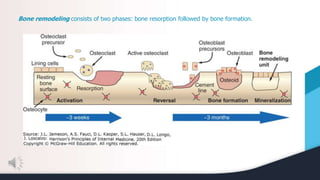
not a static tissue but it constantly undergoing remodeling by sequential demineralization and mineralization. In
other world, Old bone is constantly being resorbed and new bone formed, the cells responsible for bone formation
are osteoblasts and the cells responsible for bone resorption are osteoclasts.
Bone remodeling consists of two phases: bone resorption followed by bone formation.
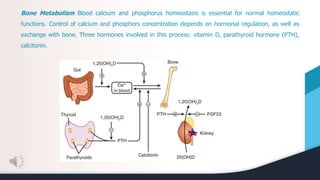
Bone Metabolism Blood calcium and phosphorus homeostasis is essential for normal homeostatic
functions. Control of calcium and phosphors concentration depends on hormonal regulation, as well as
exchange with bone. Three hormones involved in this process: vitamin D, parathyroid hormone (PTH),
calcitonin.
OSTEOMALACIA
Osteomalacia is a metabolic bone disease characterized by inadequate mineralization of the bone in adults.
The most common cause of osteomalacia is vitamin D deficiency its produces osteomalacia in two stages. Initially,
decreased vitamin D leads to decreased intestinal calcium absorption and secondary hyperparathyroidism.
Vitamin D deficiency is caused by insufficient sun exposure, decreased intestinal absorption, insufficient intake,
renal or liver failure, and numerous genetic disorders with defects in vitamin D processing, receptors, or binding
proteins.
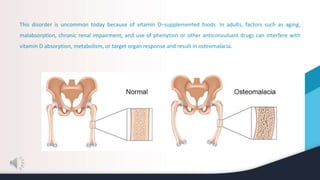
This disorder is uncommon today because of vitamin D–supplemented foods. In adults, factors such as aging,
malabsorption, chronic renal impairment, and use of phenytoin or other anticonvulsant drugs can interfere with
vitamin D absorption, metabolism, or target organ response and result in osteomalacia.
OSTEOPOROSIS
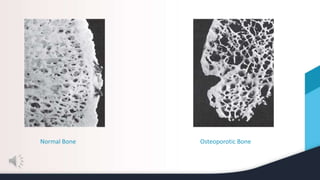
Osteoporosis is a disease characterized by a gradual reduction in bone mass that weakens bones and leads to the
occurrence of fractures with minimal trauma.
Osteoporosis can occur as part of the aging process or secondarily due to nutritional deficiency, metabolic
disorders, or medication side effects.
Risk factors for osteoporosis includes nonmodifiable factors such as: female gender, advanced age, white race,
dementia, and modifiable factors such as: poor nutrition especially low calcium and vitamin D intake, alcoholism,
recurrent falls, inadequate physical activity.
Normal Bone Osteoporotic Bone
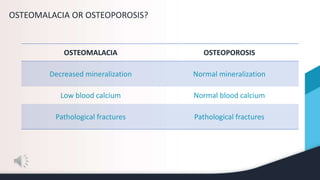
OSTEOMALACIA OR OSTEOPOROSIS?
OSTEOMALACIA OSTEOPOROSIS
Decreased mineralization Normal mineralization
Low blood calcium Normal blood calcium
Pathological fractures Pathological fractures
REFERENCES
• Rinaldo F, Gisela R, Estela S, Manuel J (2015) Biology of bone tissue: Structure, function, and
factors that influence bone cells. Biomed Res Int 1: 17.
• Fitzgerald PA. Osteoporosis. In: Papadakis MA, McPhee SJ, Rabow MW. eds. Current Medical
Diagnosis and Treatment 2020 New York, NY: McGraw-Hill;.
• Osteoporosis and Osteomalacia. In: Jameson J, Fauci AS, Kasper DL, Hauser SL, Longo DL,
Loscalzo J. eds. Harrison's Manual of Medicine, 20e New York, NY: McGraw-Hill; .
• Nix, S., 2017. Williams' Basic Nutrition And Diet Therapy. 15th ed. St. Louis (Missouri):
Elsevier.
THANK YOU ALL !

Osteomalacia and Osteoporosis

  • 1.
    OSTEOMALACIA AND OSTEOPOROSIS By: MohammedTalal Musslem Student ID: 1945349 Supervised By: Prof. Dr. Taher M. Farid
  • 2.
    BACKGROUND Bone is aspecialized form of connective tissue which performs a structural function: mechanical support, mobility, and protection, and is also a mineral reservoir function. The strength and structure of bone result from the deposition of calcium phosphate salts (hydroxyapatites). Bone is not a static tissue but it constantly undergoing remodeling by sequential demineralization and mineralization. In other world, Old bone is constantly being resorbed and new bone formed, the cells responsible for bone formation are osteoblasts and the cells responsible for bone resorption are osteoclasts.
  • 3.
    Bone remodeling consistsof two phases: bone resorption followed by bone formation.
  • 4.
    Bone Metabolism Bloodcalcium and phosphorus homeostasis is essential for normal homeostatic functions. Control of calcium and phosphors concentration depends on hormonal regulation, as well as exchange with bone. Three hormones involved in this process: vitamin D, parathyroid hormone (PTH), calcitonin.
  • 5.
    OSTEOMALACIA Osteomalacia is ametabolic bone disease characterized by inadequate mineralization of the bone in adults. The most common cause of osteomalacia is vitamin D deficiency its produces osteomalacia in two stages. Initially, decreased vitamin D leads to decreased intestinal calcium absorption and secondary hyperparathyroidism. Vitamin D deficiency is caused by insufficient sun exposure, decreased intestinal absorption, insufficient intake, renal or liver failure, and numerous genetic disorders with defects in vitamin D processing, receptors, or binding proteins.
  • 6.
    This disorder isuncommon today because of vitamin D–supplemented foods. In adults, factors such as aging, malabsorption, chronic renal impairment, and use of phenytoin or other anticonvulsant drugs can interfere with vitamin D absorption, metabolism, or target organ response and result in osteomalacia.
  • 7.
    OSTEOPOROSIS Osteoporosis is adisease characterized by a gradual reduction in bone mass that weakens bones and leads to the occurrence of fractures with minimal trauma. Osteoporosis can occur as part of the aging process or secondarily due to nutritional deficiency, metabolic disorders, or medication side effects. Risk factors for osteoporosis includes nonmodifiable factors such as: female gender, advanced age, white race, dementia, and modifiable factors such as: poor nutrition especially low calcium and vitamin D intake, alcoholism, recurrent falls, inadequate physical activity.
  • 8.
  • 9.
    OSTEOMALACIA OR OSTEOPOROSIS? OSTEOMALACIAOSTEOPOROSIS Decreased mineralization Normal mineralization Low blood calcium Normal blood calcium Pathological fractures Pathological fractures
  • 10.
    REFERENCES • Rinaldo F,Gisela R, Estela S, Manuel J (2015) Biology of bone tissue: Structure, function, and factors that influence bone cells. Biomed Res Int 1: 17. • Fitzgerald PA. Osteoporosis. In: Papadakis MA, McPhee SJ, Rabow MW. eds. Current Medical Diagnosis and Treatment 2020 New York, NY: McGraw-Hill;. • Osteoporosis and Osteomalacia. In: Jameson J, Fauci AS, Kasper DL, Hauser SL, Longo DL, Loscalzo J. eds. Harrison's Manual of Medicine, 20e New York, NY: McGraw-Hill; . • Nix, S., 2017. Williams' Basic Nutrition And Diet Therapy. 15th ed. St. Louis (Missouri): Elsevier.
  • 11.