OSCILLATIONS
SIMPLE HARMONIC MOTION
CONTENT
• Periodic motion
• Oscillatory motion
• Simple harmonic motion (SHM)
• SHM and Circular motion
• Velocity and acceleration in SHM
• Energy in SHM
• Some systems executing SHM
1.Oscillations due to spring
2. Simple Pendulum
• Damped Oscillations
• Forced and Resonance oscillations
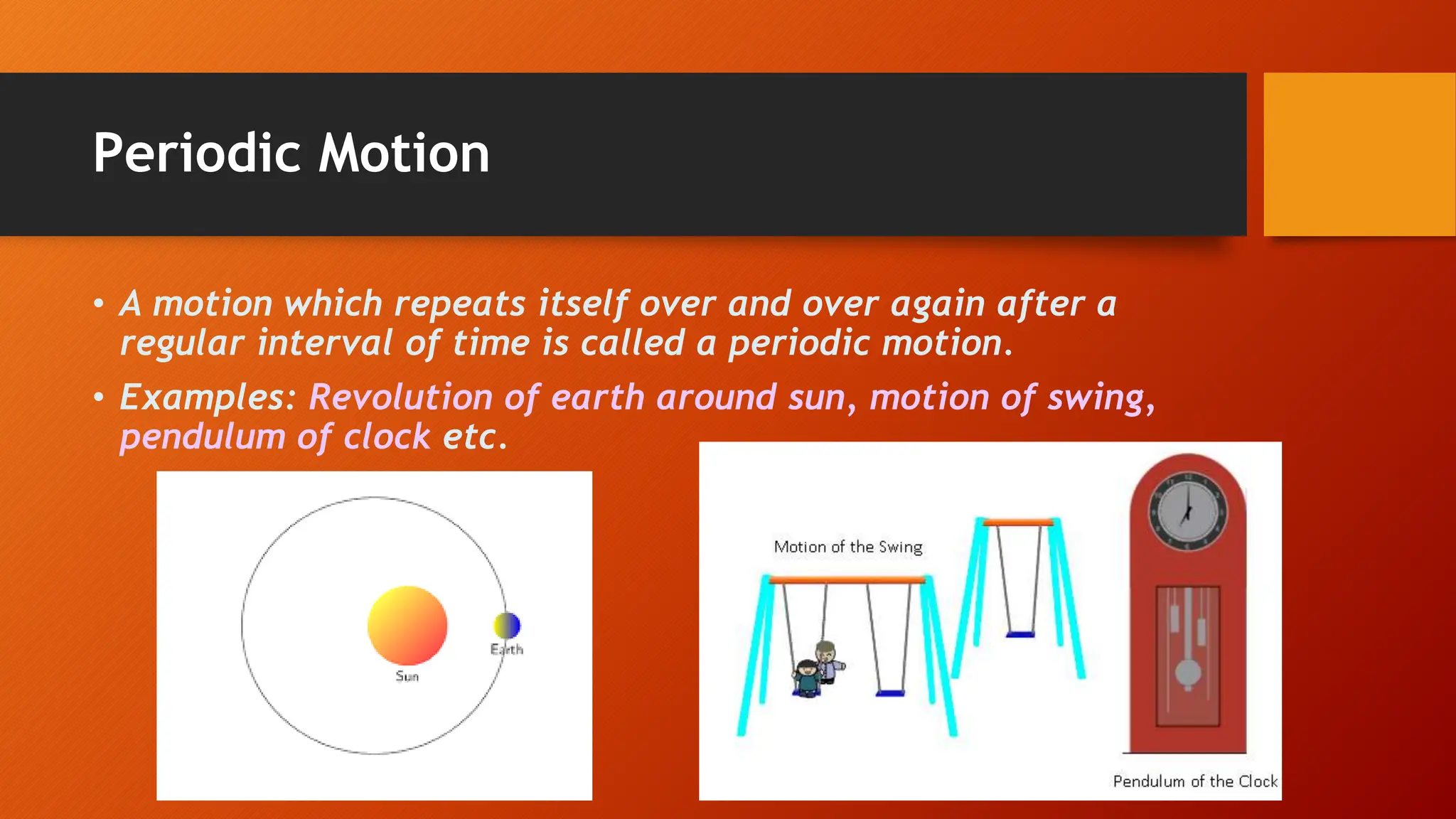
Periodic Motion
• A motion which repeats itself over and over again after a
regular interval of time is called a periodic motion.
• Examples: Revolution of earth around sun, motion of swing,
pendulum of clock etc.
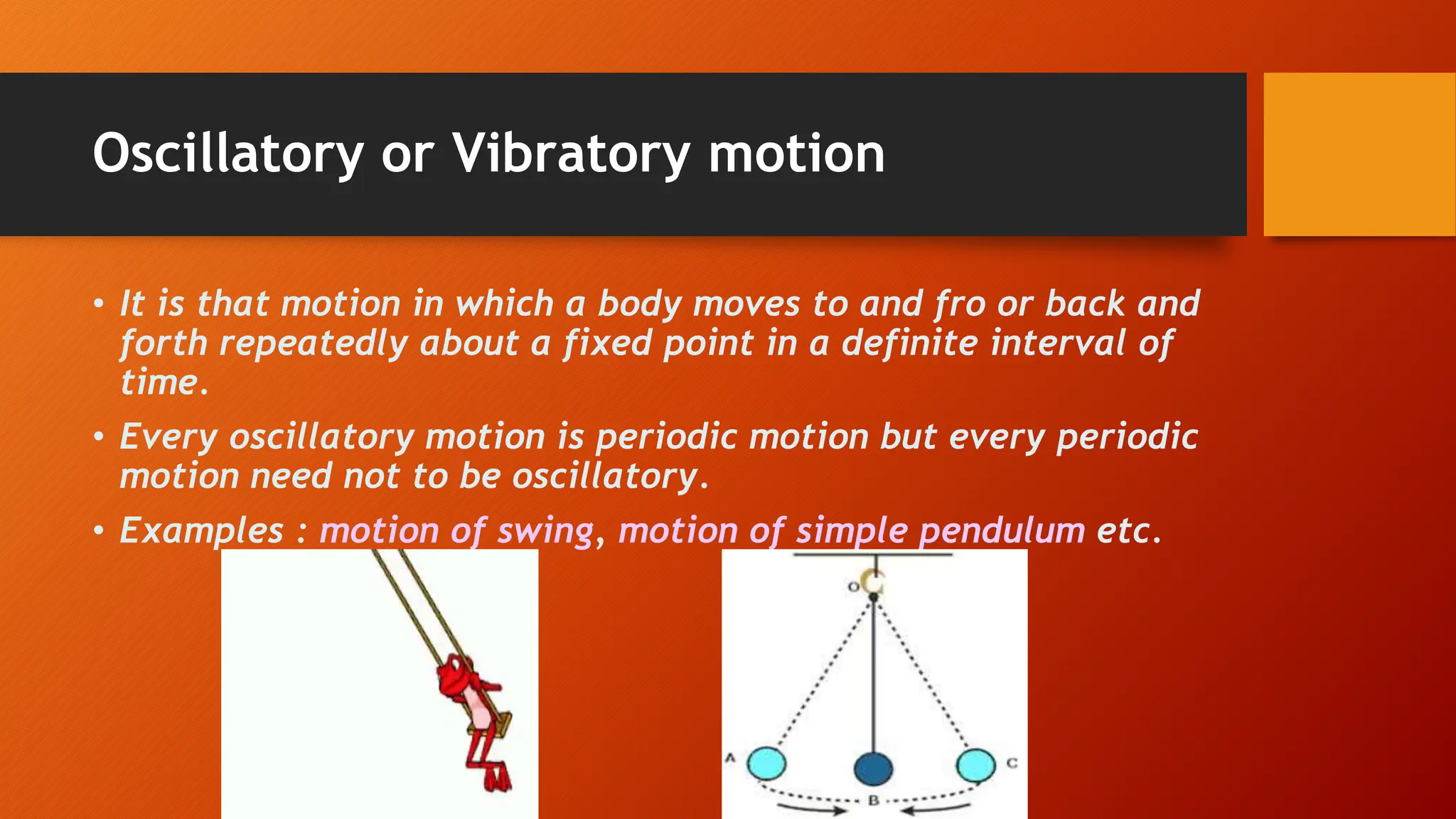
Oscillatory or Vibratory motion
• It is that motion in which a body moves to and fro or back and
forth repeatedly about a fixed point in a definite interval of
time.
• Every oscillatory motion is periodic motion but every periodic
motion need not to be oscillatory.
• Examples : motion of swing, motion of simple pendulum etc.
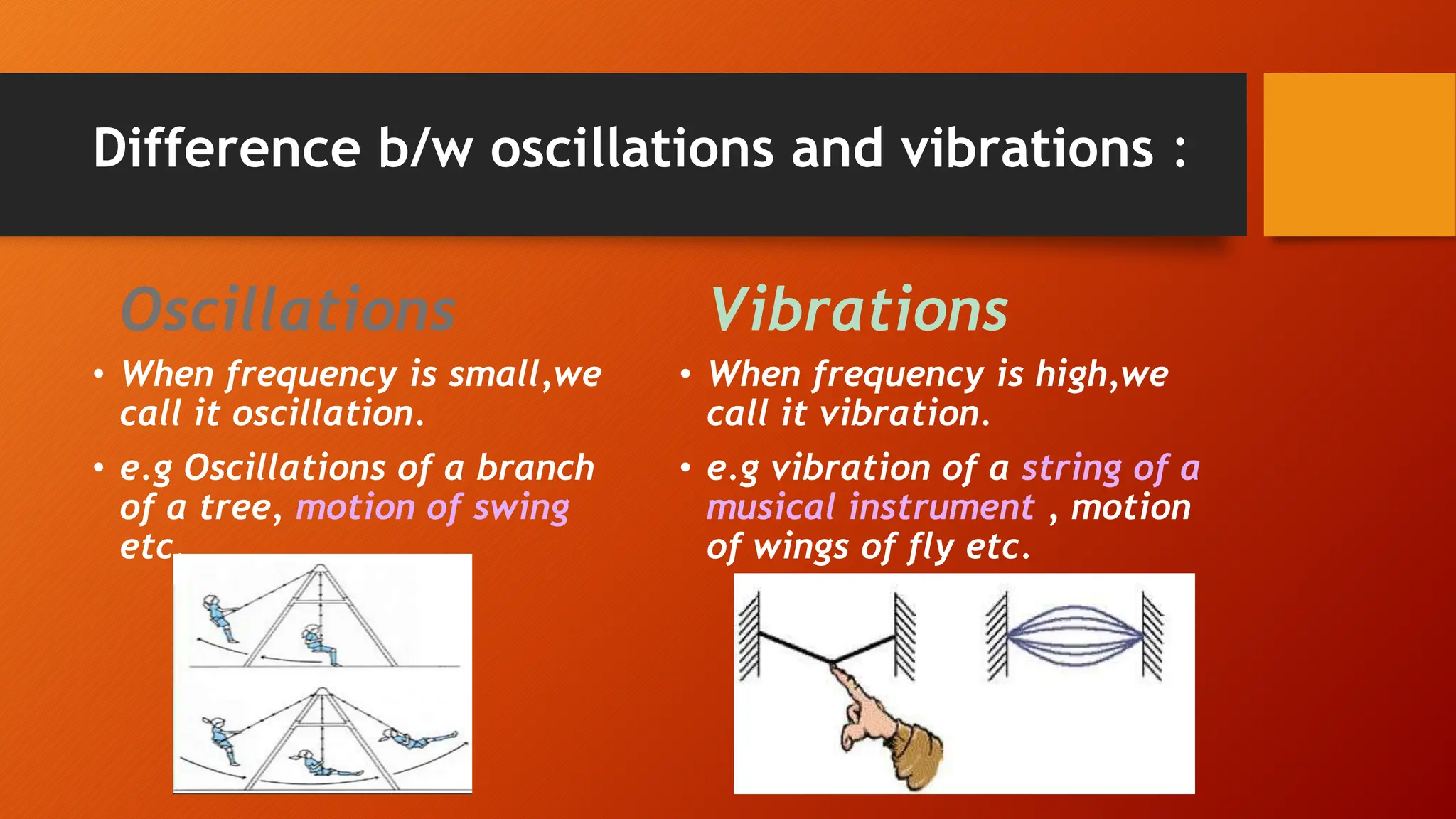
Difference b/w oscillations and vibrations :
Oscillations
• When frequency is small,we
call it oscillation.
• e.g Oscillations of a branch
of a tree, motion of swing
etc.
Vibrations
• When frequency is high,we
call it vibration.
• e.g vibration of a string of a
musical instrument , motion
of wings of fly etc.
Some Important terms:
oAmplitude: The amplitude of particle executing SHM is its maximum
displacement on either side of the mean position.
oTime Period : Time period of a particle executing SHM is the time taken to
complete one cycle and is denoted by T. Its S.I. unit is second.
oFrequency : The frequency of a particle executing SHM is equal to the number
of oscillations completed in one second. It is reciprocal of time period.
oPhase: The phase of particle executing SHM at any instant is its state as
regard to its position and direction of motion at that instant. it is measured as
argument (angle) of sine in the equation of SHM. It is represented by Ф.
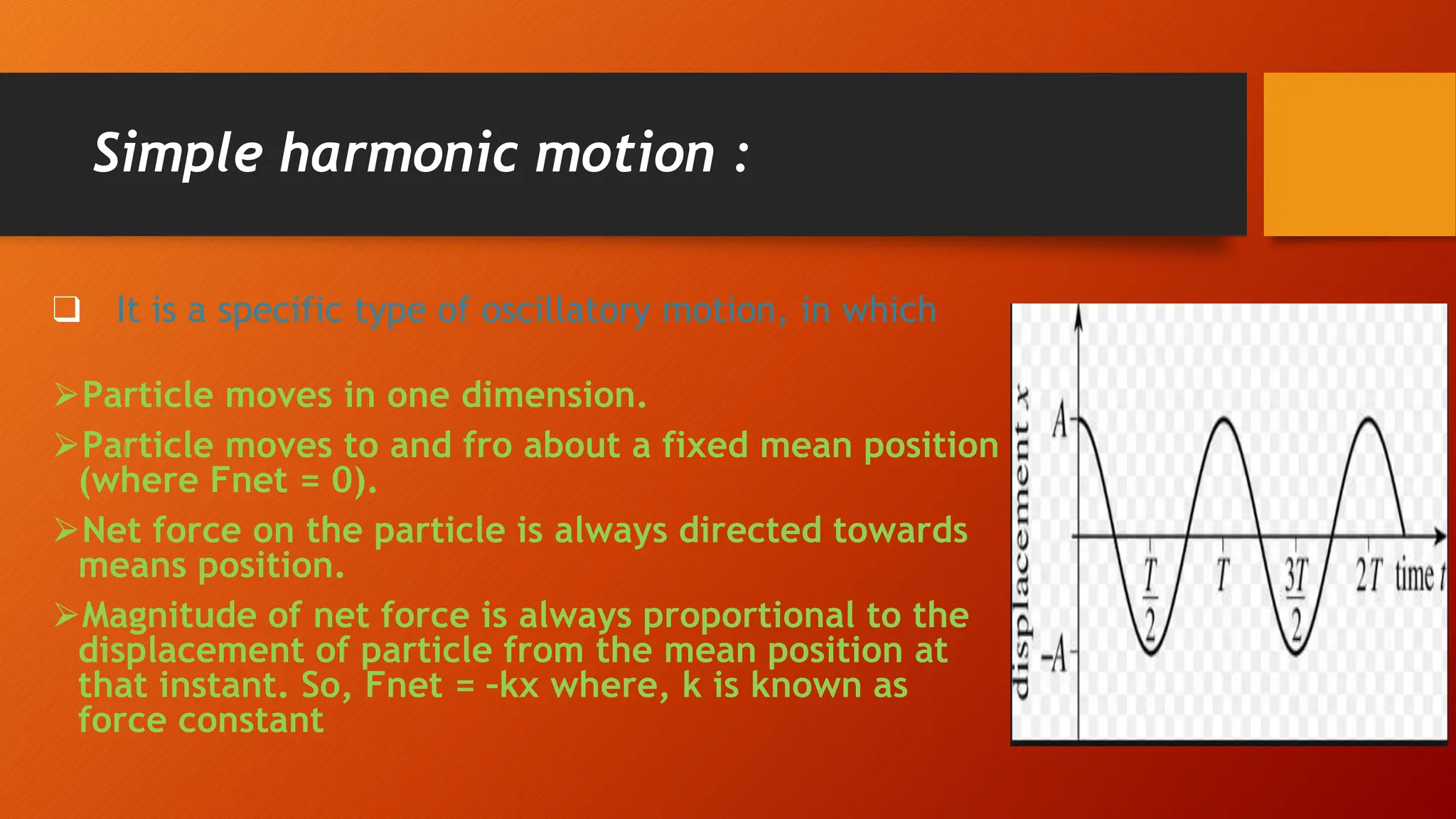
Simple harmonic motion :
❑ It is a specific type of oscillatory motion, in which
⮚Particle moves in one dimension.
⮚Particle moves to and fro about a fixed mean position
(where Fnet = 0).
⮚Net force on the particle is always directed towards
means position.
⮚Magnitude of net force is always proportional to the
displacement of particle from the mean position at
that instant. So, Fnet = –kx where, k is known as
force constant
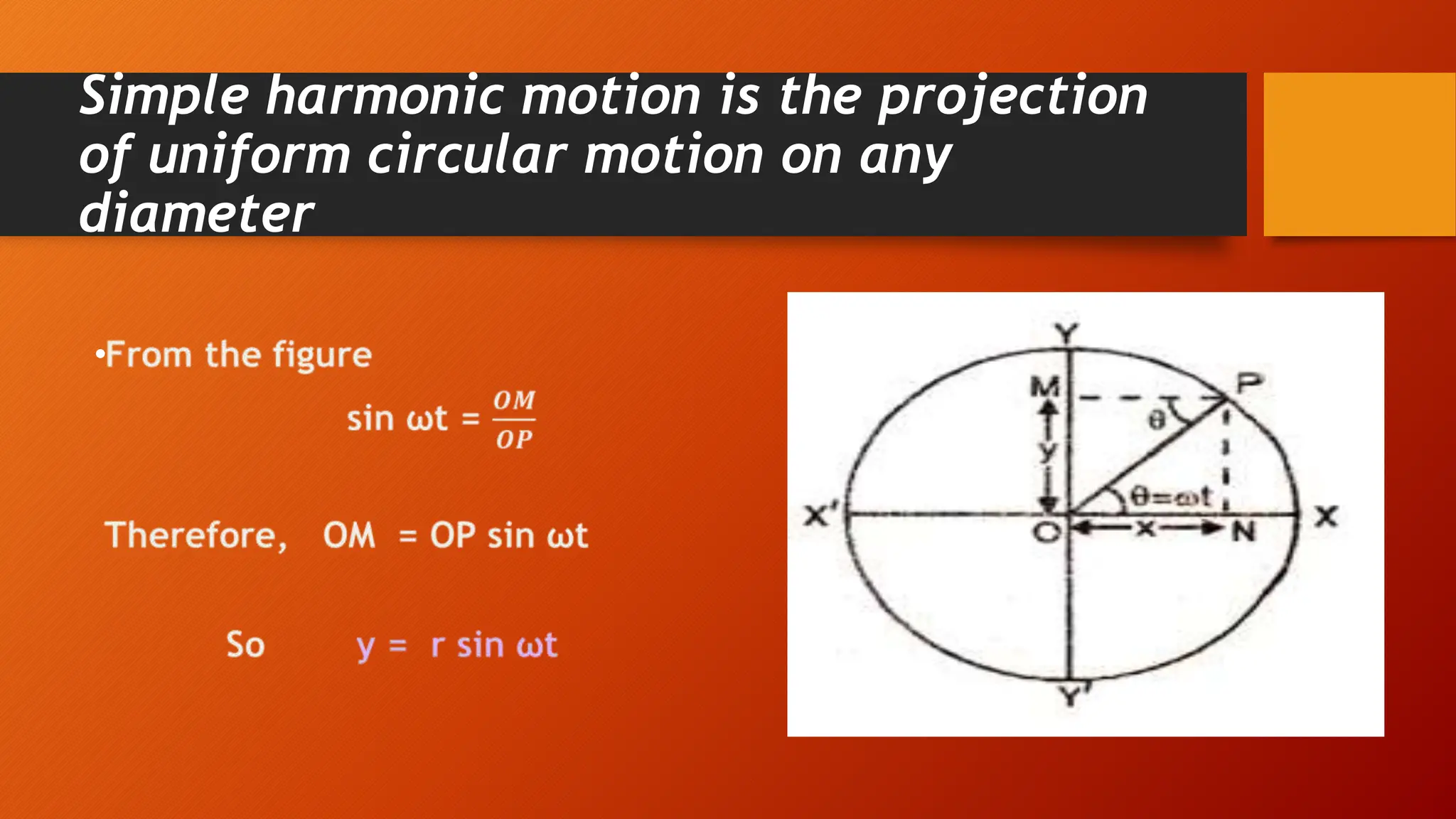
Simple harmonic motion is the projection
of uniform circular motion on any
diameter
•
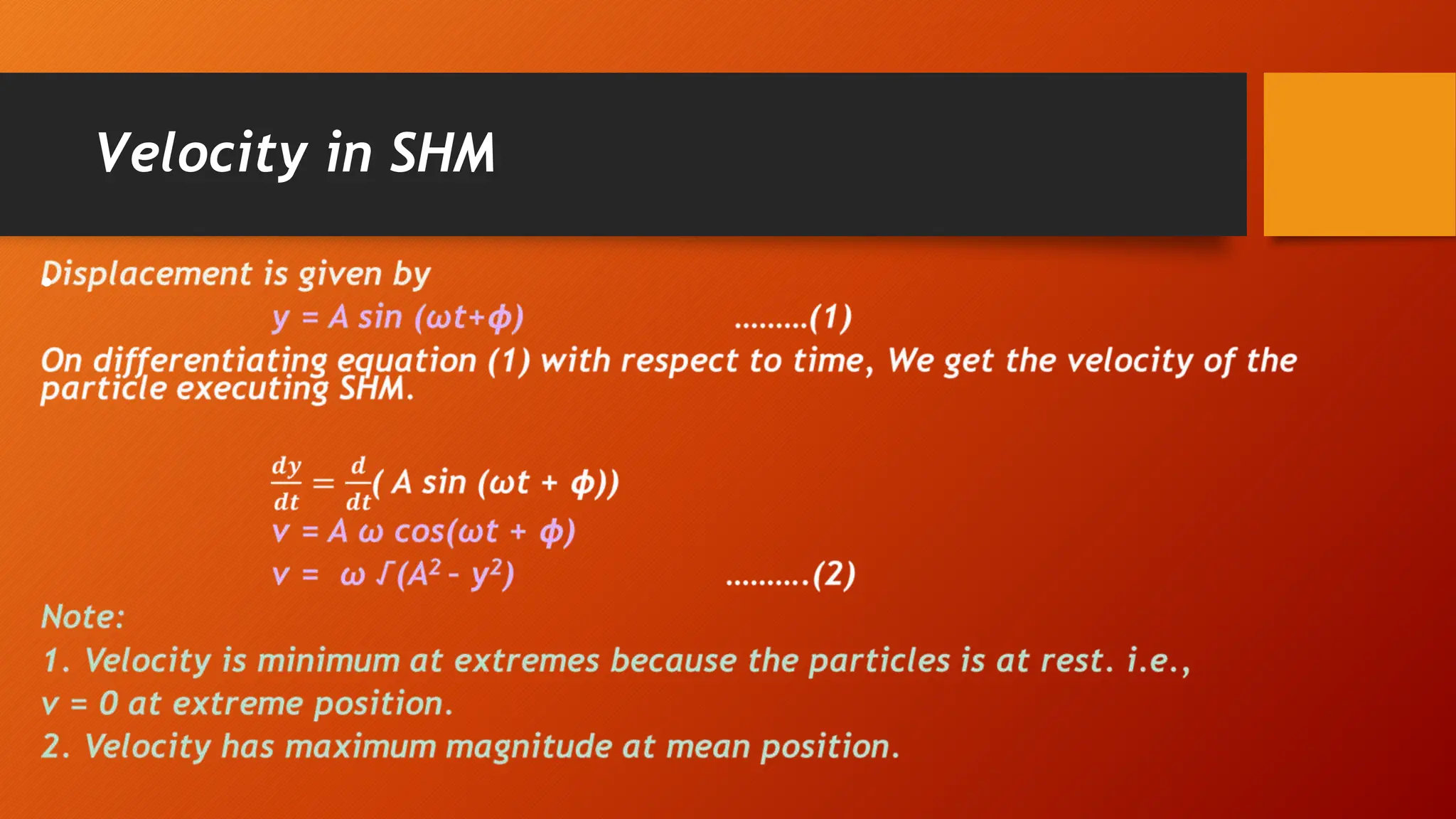
Velocity in SHM
•
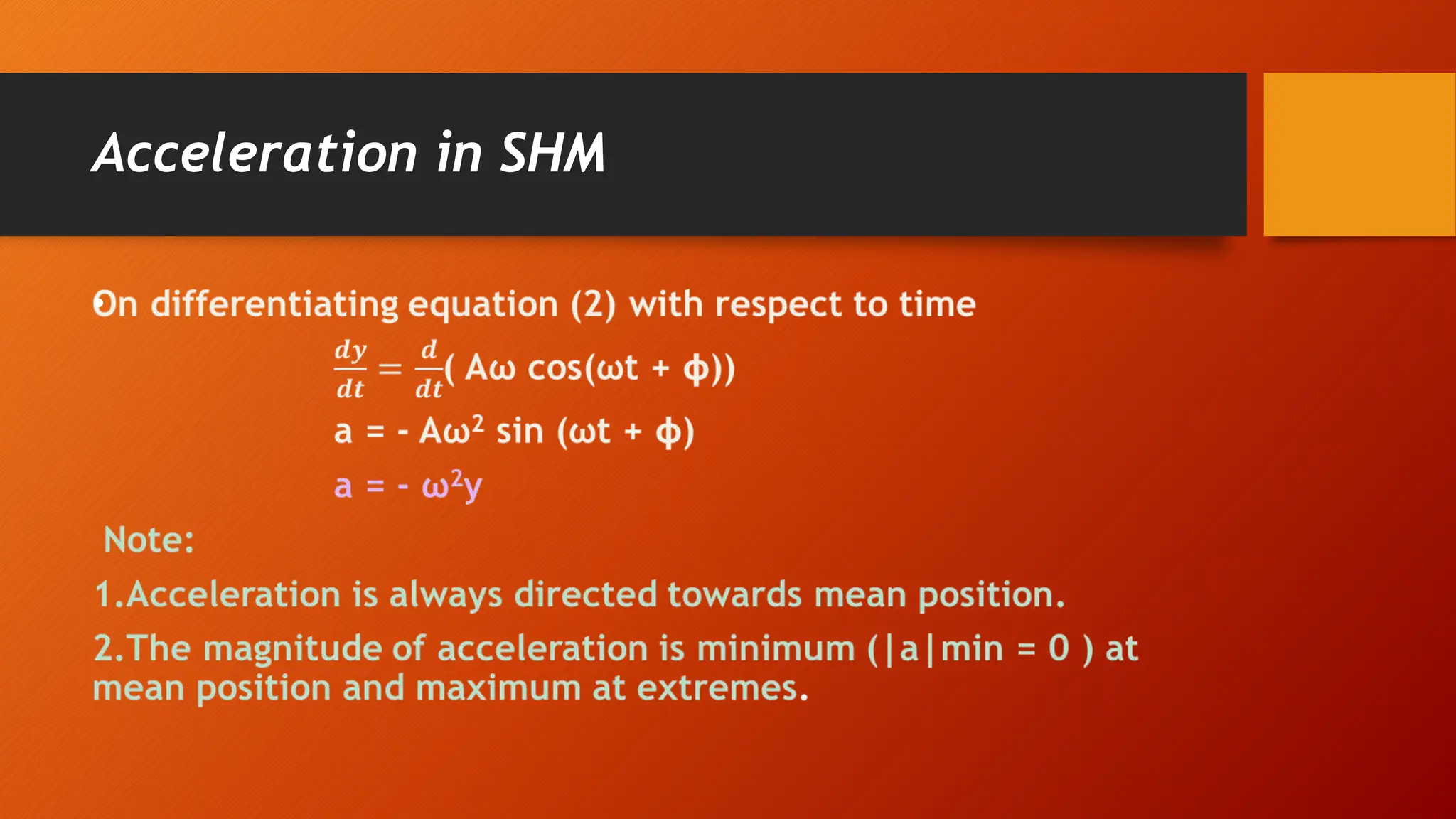
Acceleration in SHM
•
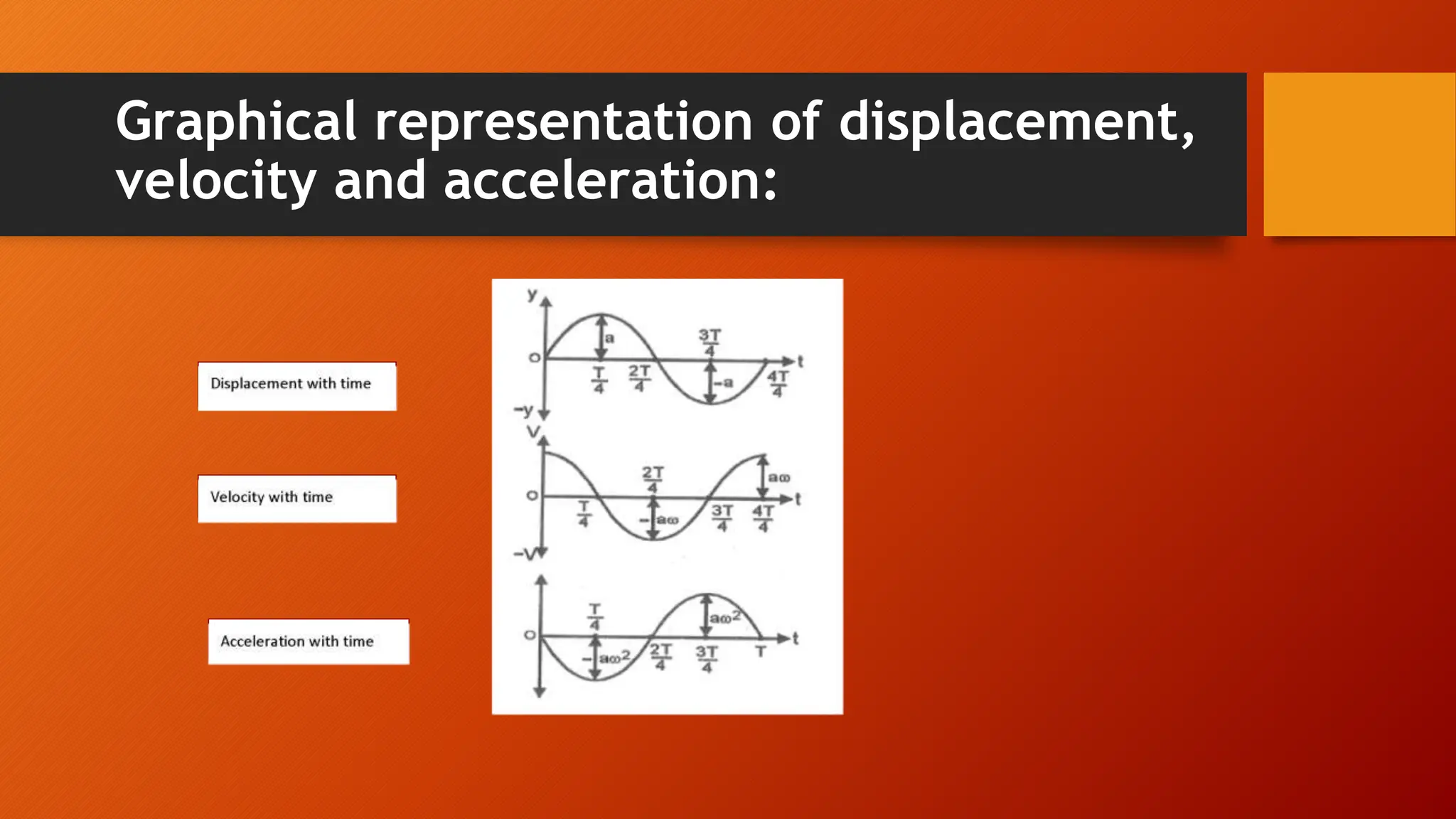
Graphical representation of displacement,
velocity and acceleration:
Displacement with time
Velocity with time
Acceleration with time
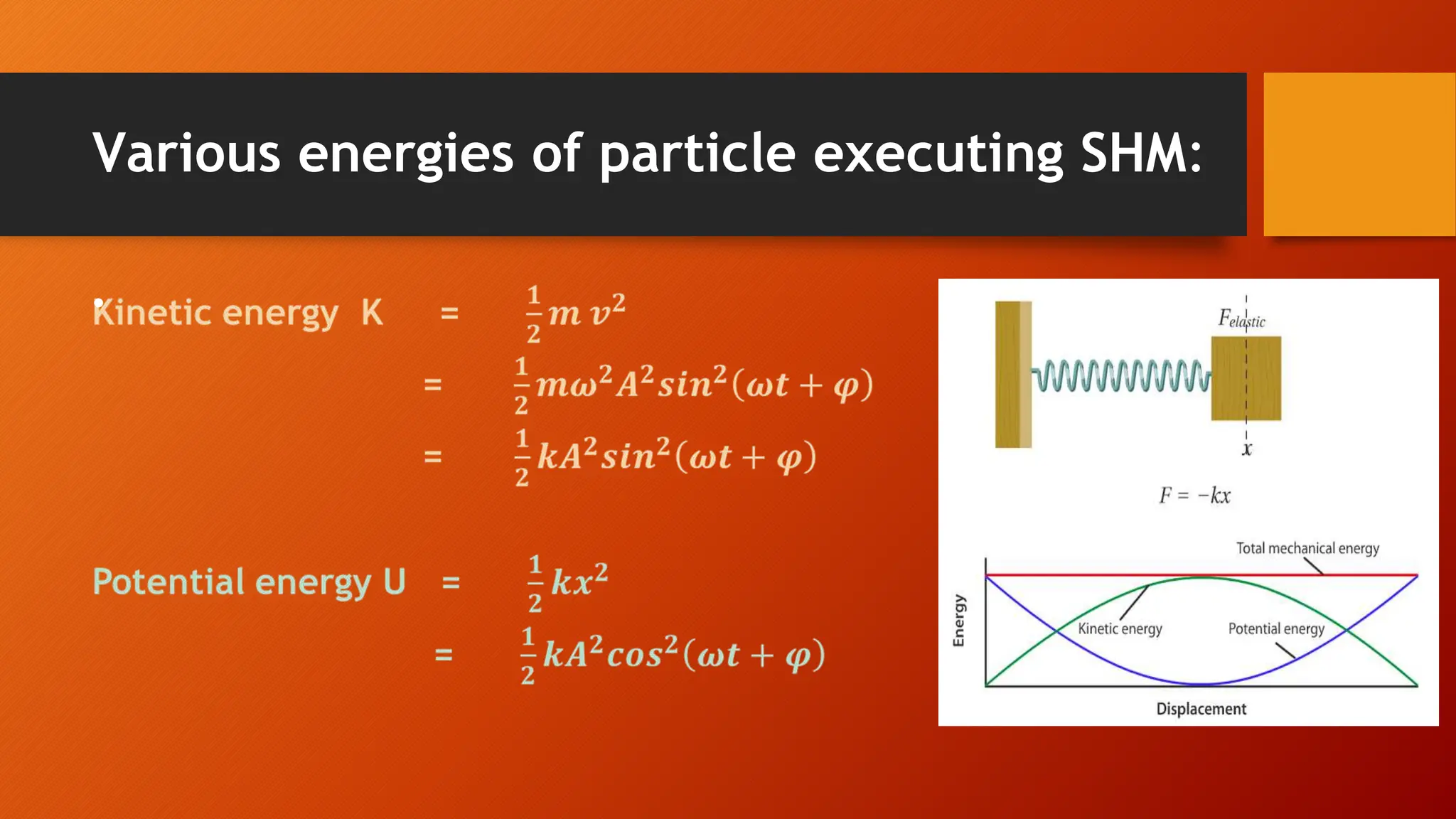
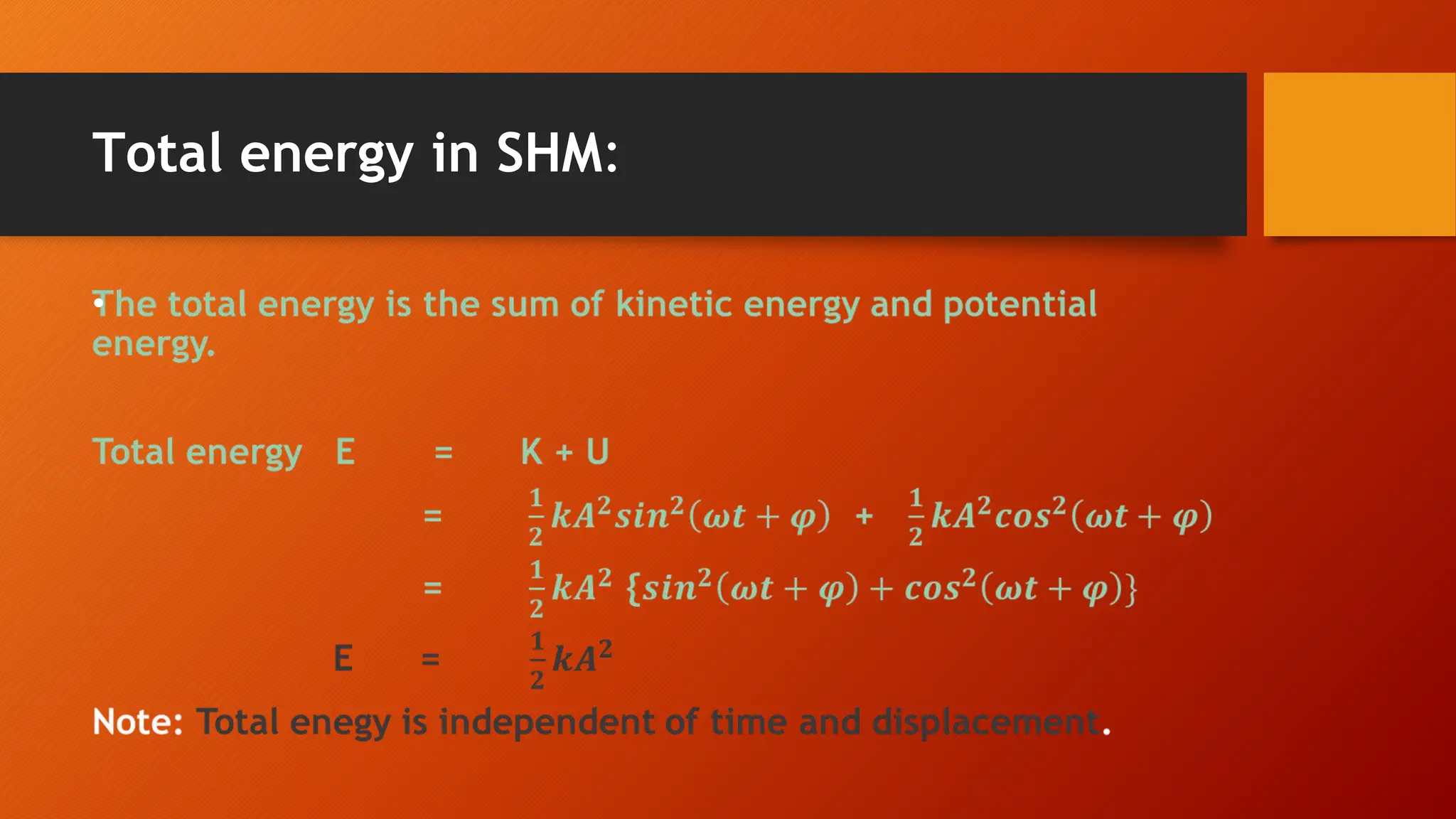
Various energies of particle executing SHM:
•
Total energy in SHM:
•
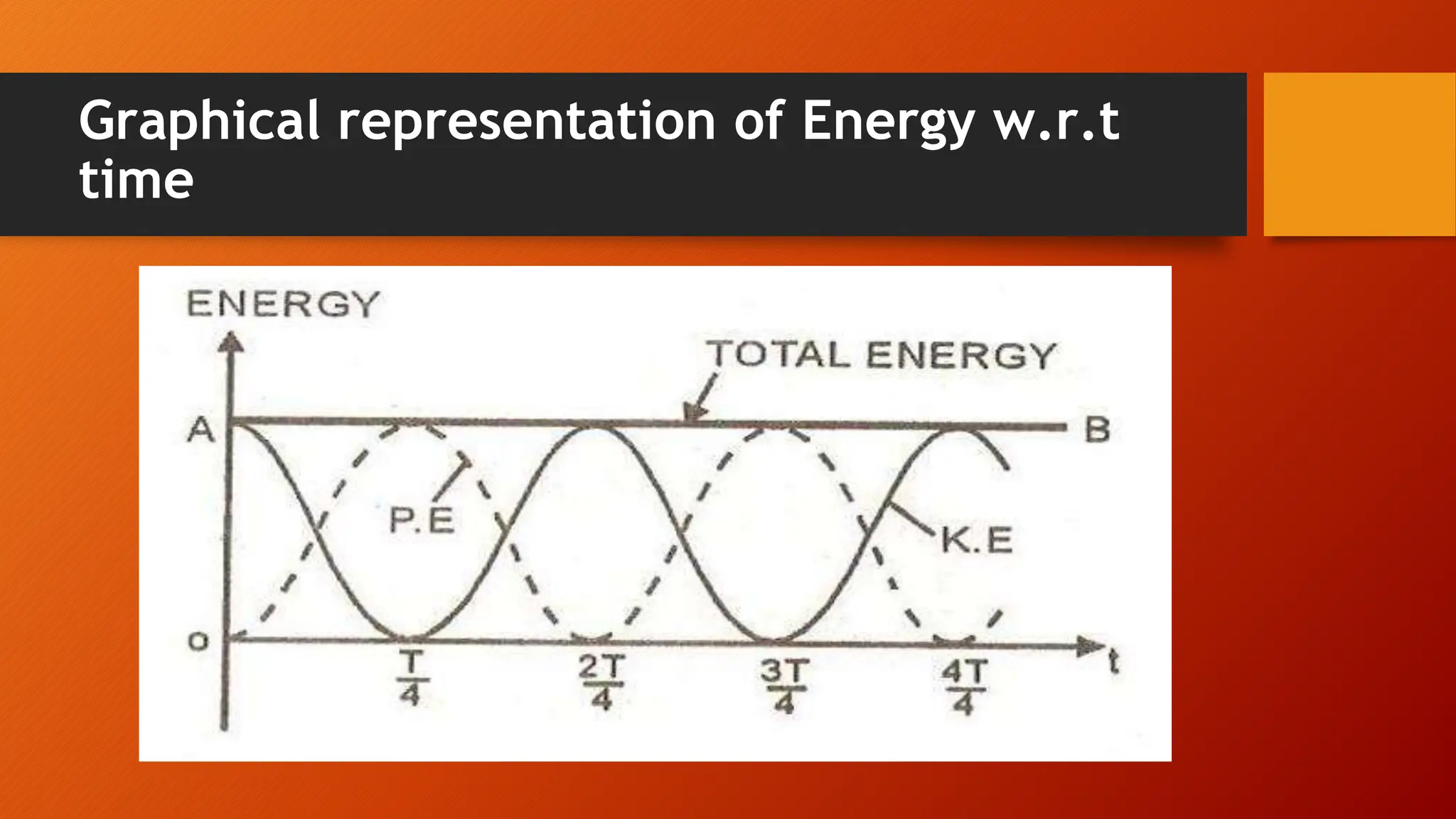
Graphical representation of Energy w.r.t
time
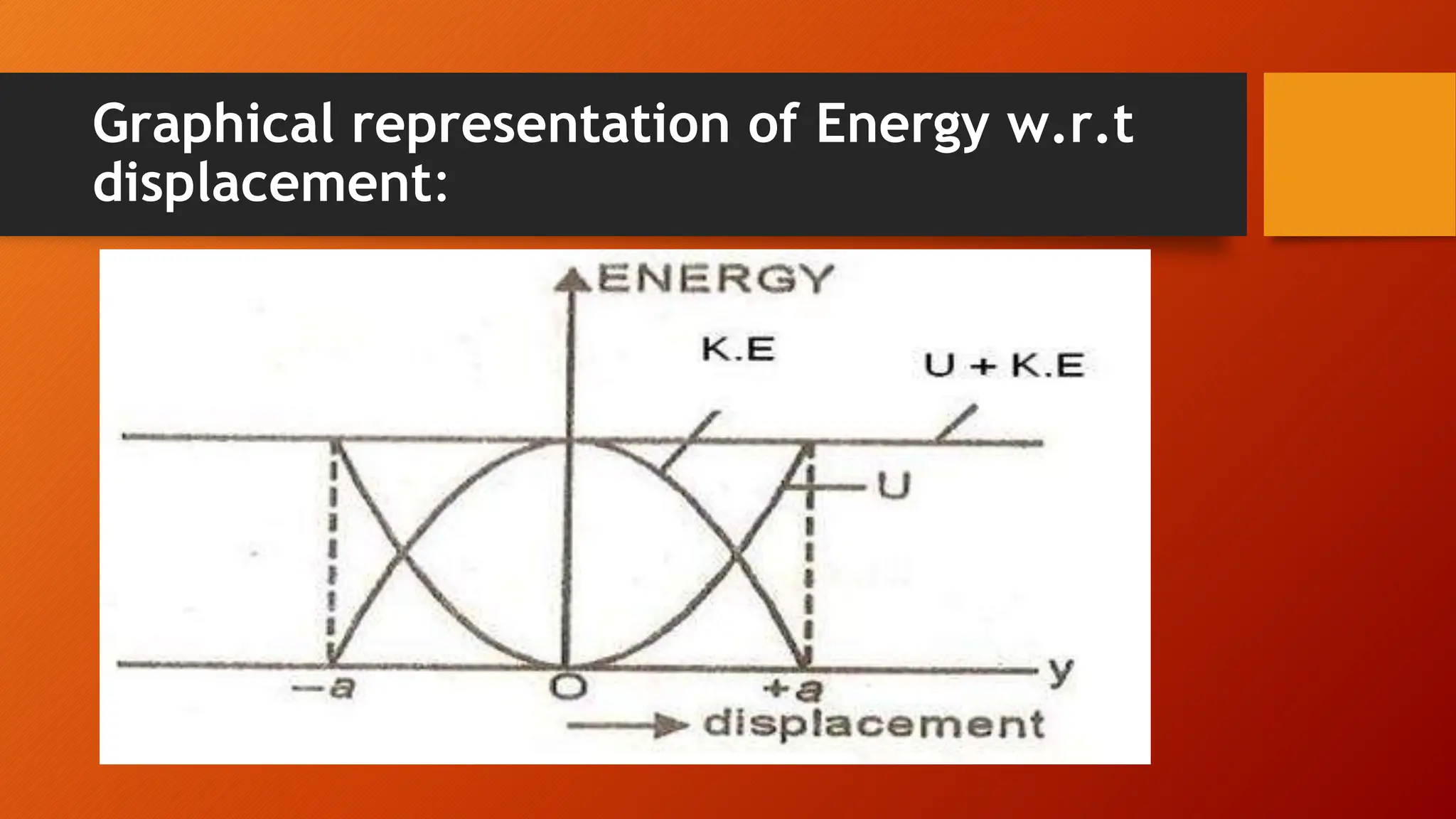
Graphical representation of Energy w.r.t
displacement:
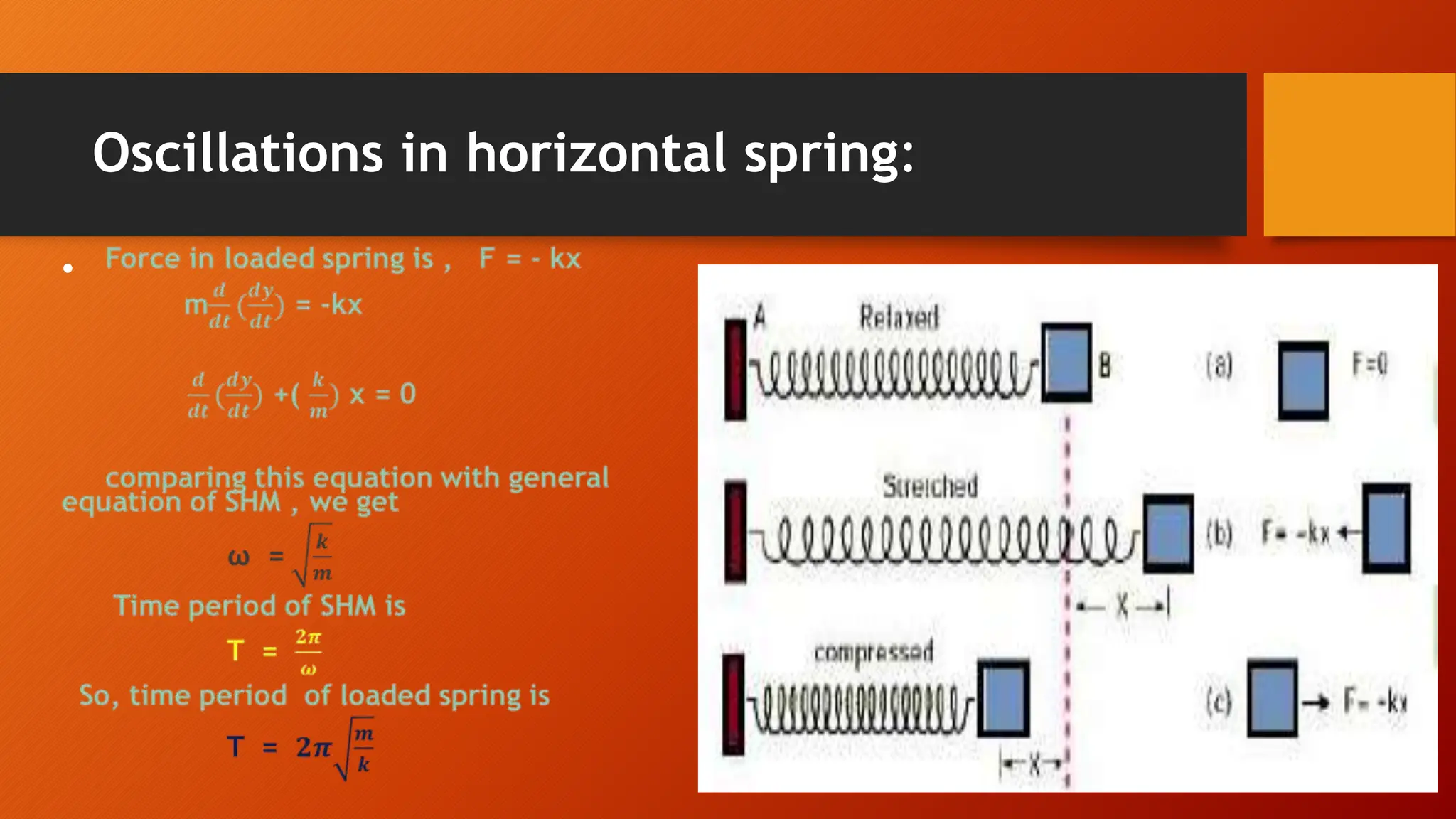
Oscillations in horizontal spring:
•
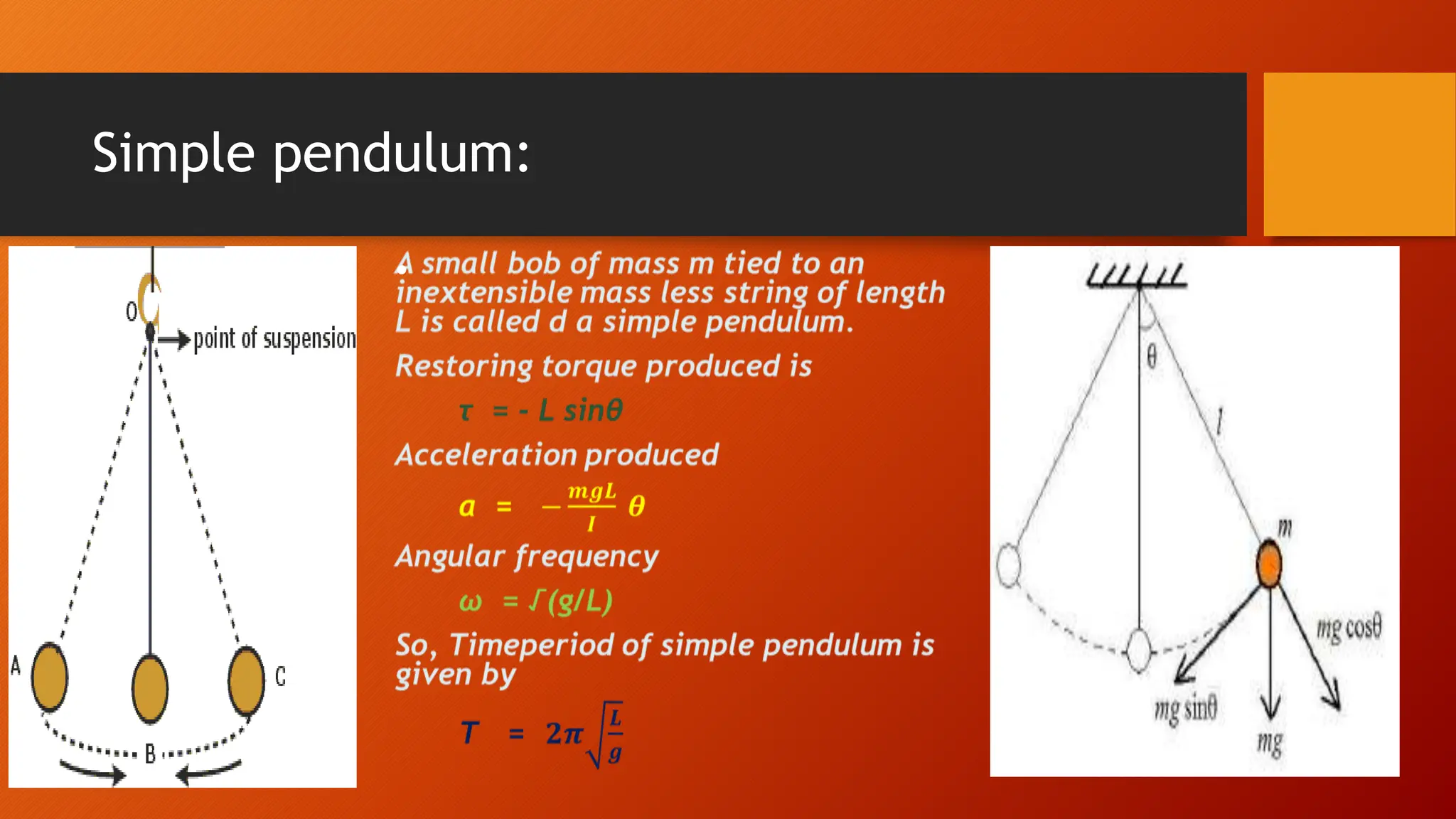
Simple pendulum:
•
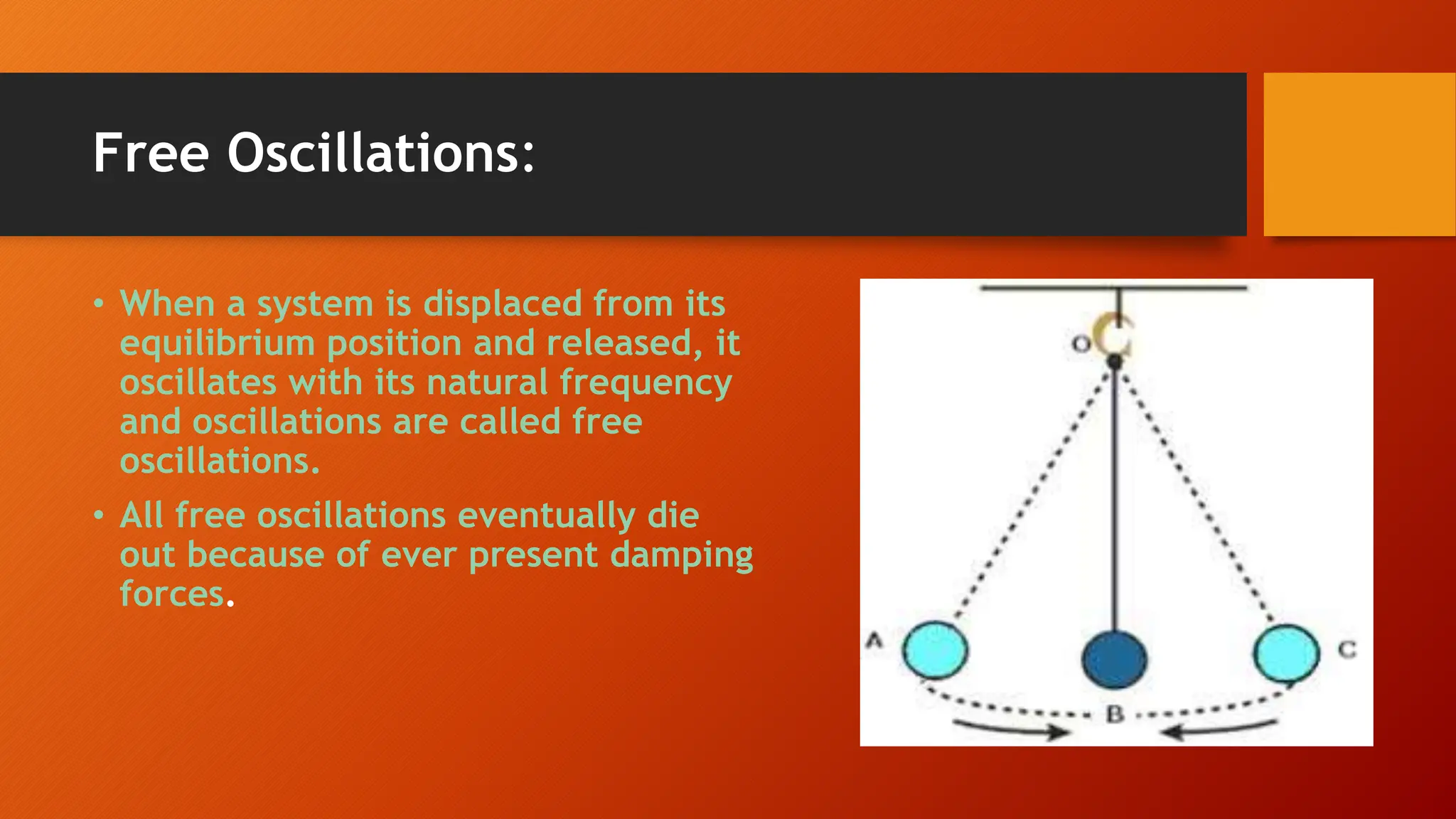
Free Oscillations:
• When a system is displaced from its
equilibrium position and released, it
oscillates with its natural frequency
and oscillations are called free
oscillations.
• All free oscillations eventually die
out because of ever present damping
forces.
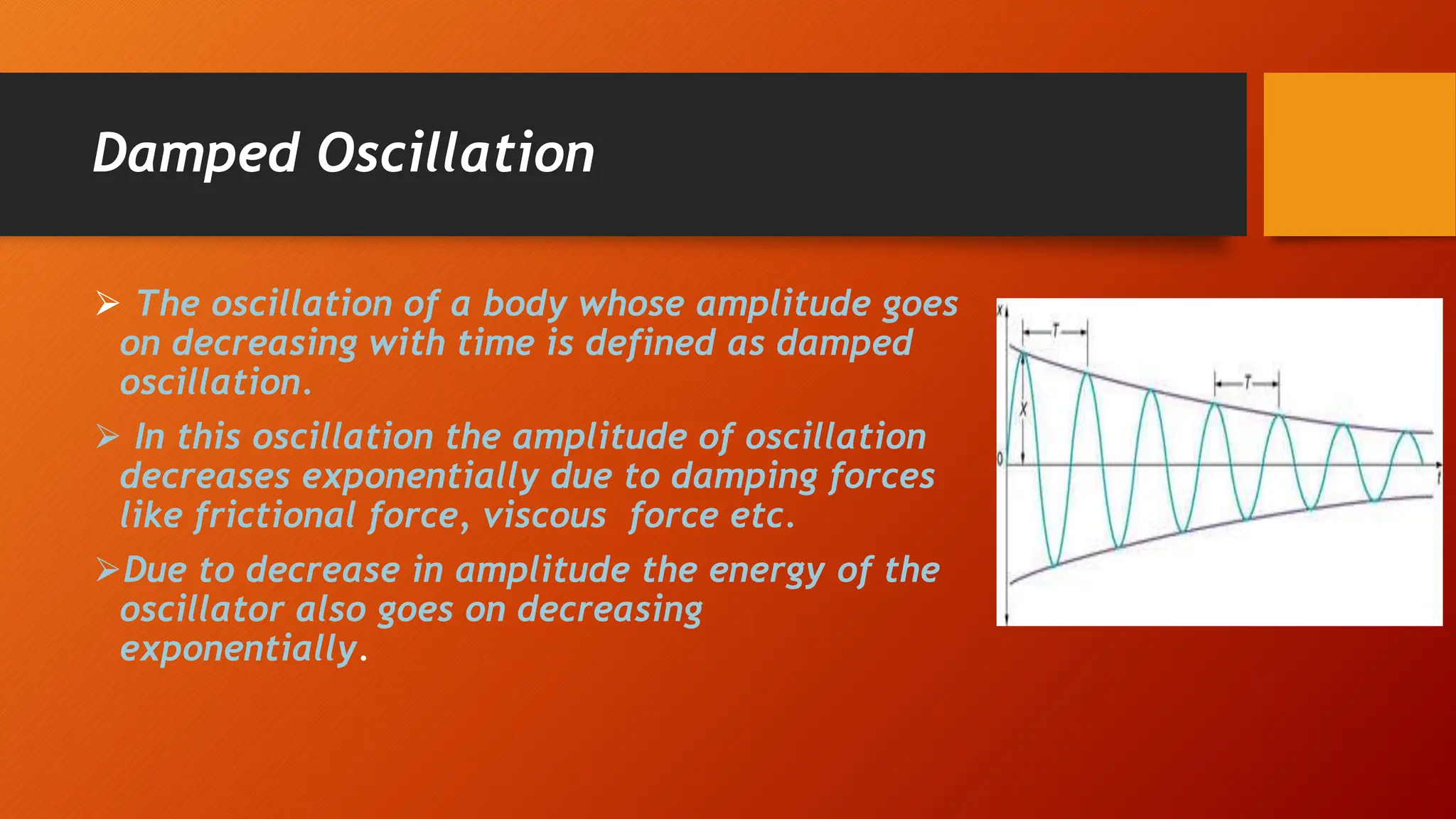
Damped Oscillation
⮚ The oscillation of a body whose amplitude goes
on decreasing with time is defined as damped
oscillation.
⮚ In this oscillation the amplitude of oscillation
decreases exponentially due to damping forces
like frictional force, viscous force etc.
⮚Due to decrease in amplitude the energy of the
oscillator also goes on decreasing
exponentially.
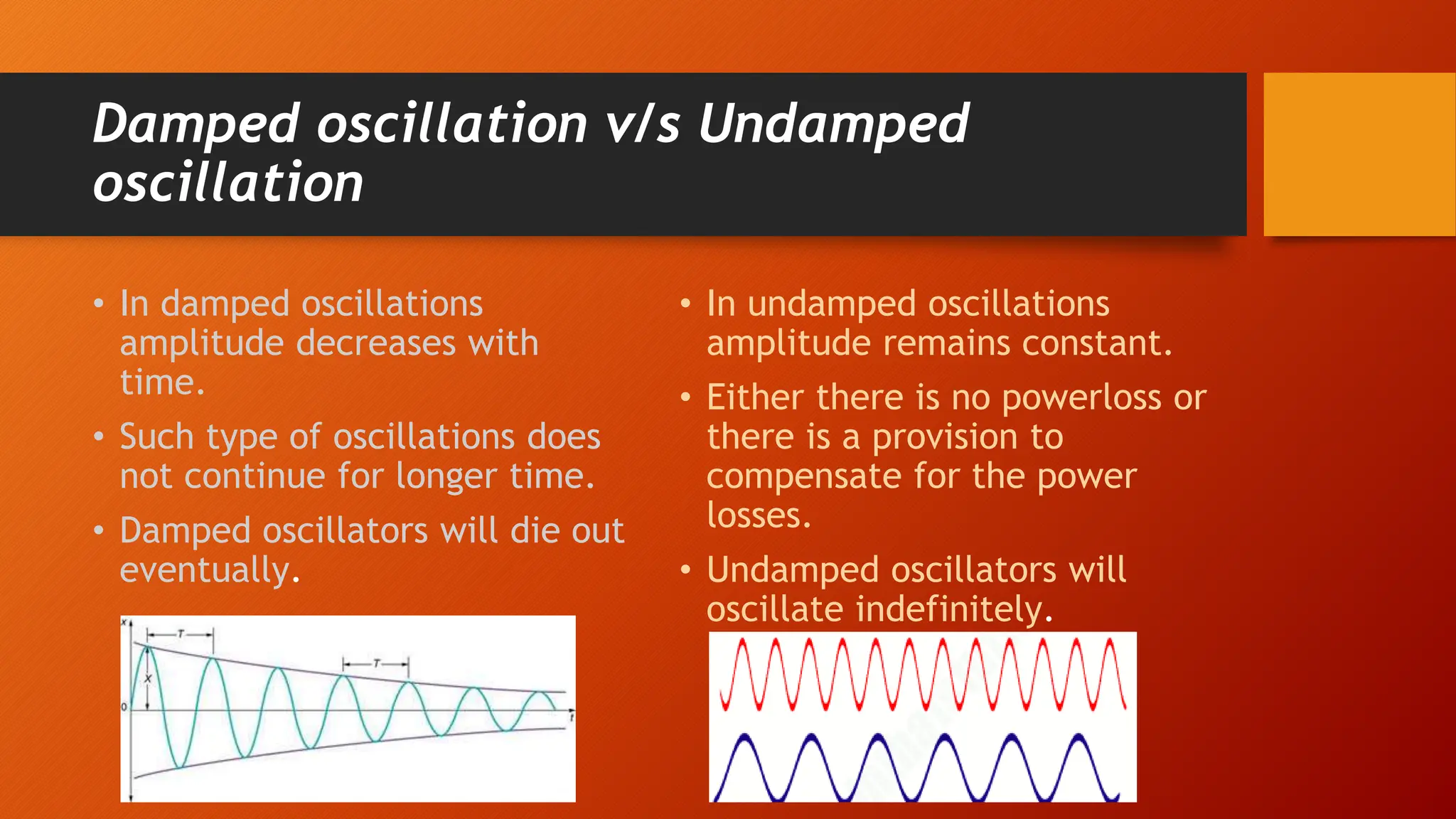
Damped oscillation v/s Undamped
oscillation
• In damped oscillations
amplitude decreases with
time.
• Such type of oscillations does
not continue for longer time.
• Damped oscillators will die out
eventually.
• In undamped oscillations
amplitude remains constant.
• Either there is no powerloss or
there is a provision to
compensate for the power
losses.
• Undamped oscillators will
oscillate indefinitely.
Forced Oscillation :
• The oscillation in which a body oscillates under the
influence of an external periodic force are known as
forced oscillation.
• System oscillates with frequency of external agency
not with natural frequency.
• Energy of the body is maintained constant by
external periodic force.
• These are also known as derived oscillations.
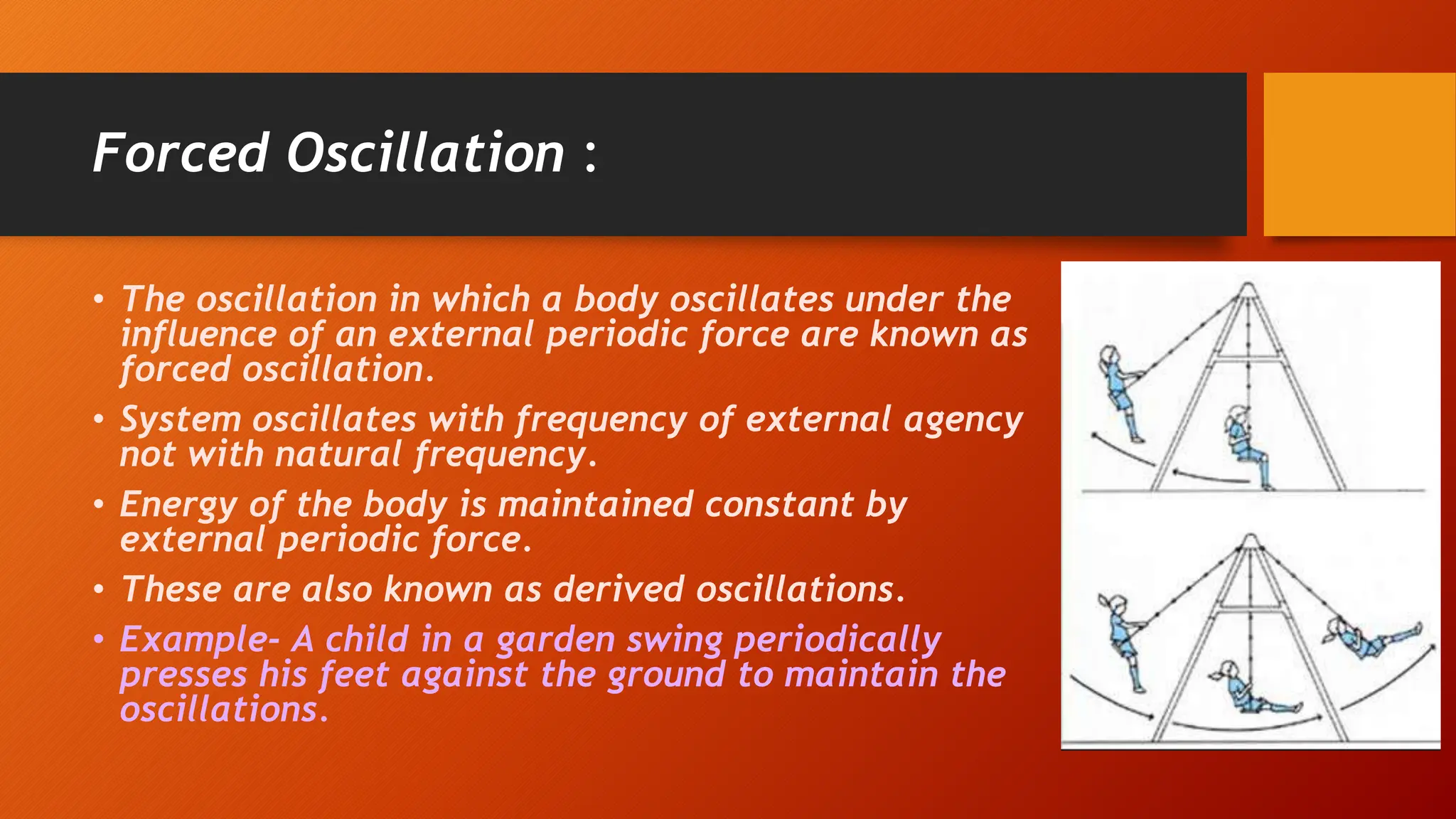
• Example- A child in a garden swing periodically
presses his feet against the ground to maintain the
oscillations.
Resonance :
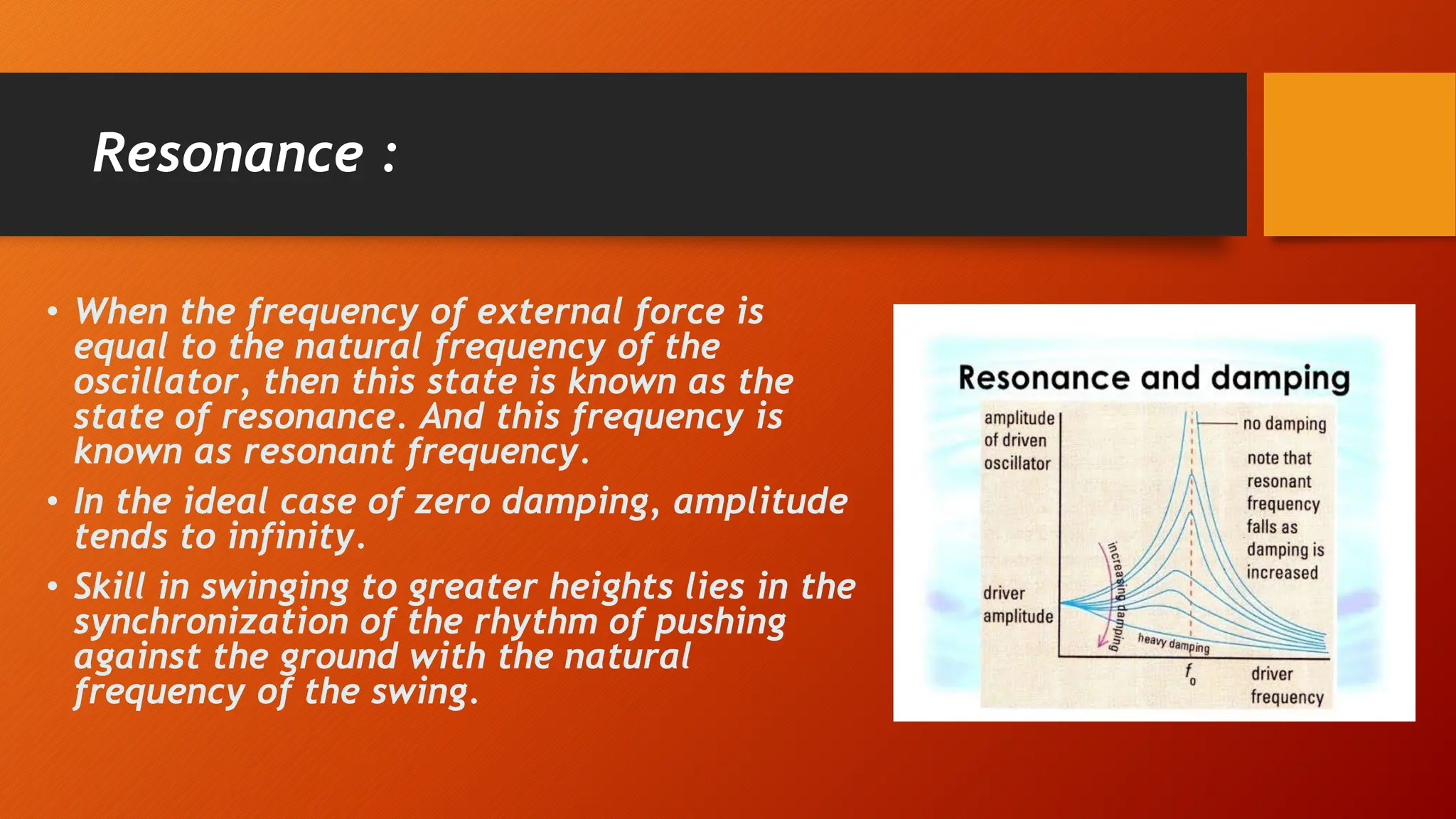
• When the frequency of external force is
equal to the natural frequency of the
oscillator, then this state is known as the
state of resonance. And this frequency is
known as resonant frequency.
• In the ideal case of zero damping, amplitude
tends to infinity.
• Skill in swinging to greater heights lies in the
synchronization of the rhythm of pushing
against the ground with the natural
frequency of the swing.
THANK YOU
Created by B LAL (PGT Physics), JNV MEHSANA

OSCILLATIONS and waves chapter 13 class

  • 1.
  • 2.
    CONTENT • Periodic motion •Oscillatory motion • Simple harmonic motion (SHM) • SHM and Circular motion • Velocity and acceleration in SHM • Energy in SHM • Some systems executing SHM 1.Oscillations due to spring 2. Simple Pendulum • Damped Oscillations • Forced and Resonance oscillations
  • 3.
    Periodic Motion • Amotion which repeats itself over and over again after a regular interval of time is called a periodic motion. • Examples: Revolution of earth around sun, motion of swing, pendulum of clock etc.
  • 4.
    Oscillatory or Vibratorymotion • It is that motion in which a body moves to and fro or back and forth repeatedly about a fixed point in a definite interval of time. • Every oscillatory motion is periodic motion but every periodic motion need not to be oscillatory. • Examples : motion of swing, motion of simple pendulum etc.
  • 5.
    Difference b/w oscillationsand vibrations : Oscillations • When frequency is small,we call it oscillation. • e.g Oscillations of a branch of a tree, motion of swing etc. Vibrations • When frequency is high,we call it vibration. • e.g vibration of a string of a musical instrument , motion of wings of fly etc.
  • 6.
    Some Important terms: oAmplitude:The amplitude of particle executing SHM is its maximum displacement on either side of the mean position. oTime Period : Time period of a particle executing SHM is the time taken to complete one cycle and is denoted by T. Its S.I. unit is second. oFrequency : The frequency of a particle executing SHM is equal to the number of oscillations completed in one second. It is reciprocal of time period. oPhase: The phase of particle executing SHM at any instant is its state as regard to its position and direction of motion at that instant. it is measured as argument (angle) of sine in the equation of SHM. It is represented by Ф.
  • 7.
    Simple harmonic motion: ❑ It is a specific type of oscillatory motion, in which ⮚Particle moves in one dimension. ⮚Particle moves to and fro about a fixed mean position (where Fnet = 0). ⮚Net force on the particle is always directed towards means position. ⮚Magnitude of net force is always proportional to the displacement of particle from the mean position at that instant. So, Fnet = –kx where, k is known as force constant
  • 8.
    Simple harmonic motionis the projection of uniform circular motion on any diameter •
  • 9.
  • 10.
  • 11.
    Graphical representation ofdisplacement, velocity and acceleration: Displacement with time Velocity with time Acceleration with time
  • 12.
    Various energies ofparticle executing SHM: •
  • 13.
  • 14.
    Graphical representation ofEnergy w.r.t time
  • 15.
    Graphical representation ofEnergy w.r.t displacement:
  • 16.
  • 17.
  • 18.
    Free Oscillations: • Whena system is displaced from its equilibrium position and released, it oscillates with its natural frequency and oscillations are called free oscillations. • All free oscillations eventually die out because of ever present damping forces.
  • 19.
    Damped Oscillation ⮚ Theoscillation of a body whose amplitude goes on decreasing with time is defined as damped oscillation. ⮚ In this oscillation the amplitude of oscillation decreases exponentially due to damping forces like frictional force, viscous force etc. ⮚Due to decrease in amplitude the energy of the oscillator also goes on decreasing exponentially.
  • 20.
    Damped oscillation v/sUndamped oscillation • In damped oscillations amplitude decreases with time. • Such type of oscillations does not continue for longer time. • Damped oscillators will die out eventually. • In undamped oscillations amplitude remains constant. • Either there is no powerloss or there is a provision to compensate for the power losses. • Undamped oscillators will oscillate indefinitely.
  • 21.
    Forced Oscillation : •The oscillation in which a body oscillates under the influence of an external periodic force are known as forced oscillation. • System oscillates with frequency of external agency not with natural frequency. • Energy of the body is maintained constant by external periodic force. • These are also known as derived oscillations. • Example- A child in a garden swing periodically presses his feet against the ground to maintain the oscillations.
  • 22.
    Resonance : • Whenthe frequency of external force is equal to the natural frequency of the oscillator, then this state is known as the state of resonance. And this frequency is known as resonant frequency. • In the ideal case of zero damping, amplitude tends to infinity. • Skill in swinging to greater heights lies in the synchronization of the rhythm of pushing against the ground with the natural frequency of the swing.
  • 23.
    THANK YOU Created byB LAL (PGT Physics), JNV MEHSANA