The Industrial Age
1. Organized Labor:
a. Unionism was legalized in 1842
b. Philosophy: a group is more powerful than an individual
c. 3 Goals --->To improve worker’s:
i. Wages ($$$)
ii. Hours
iii. Working conditions
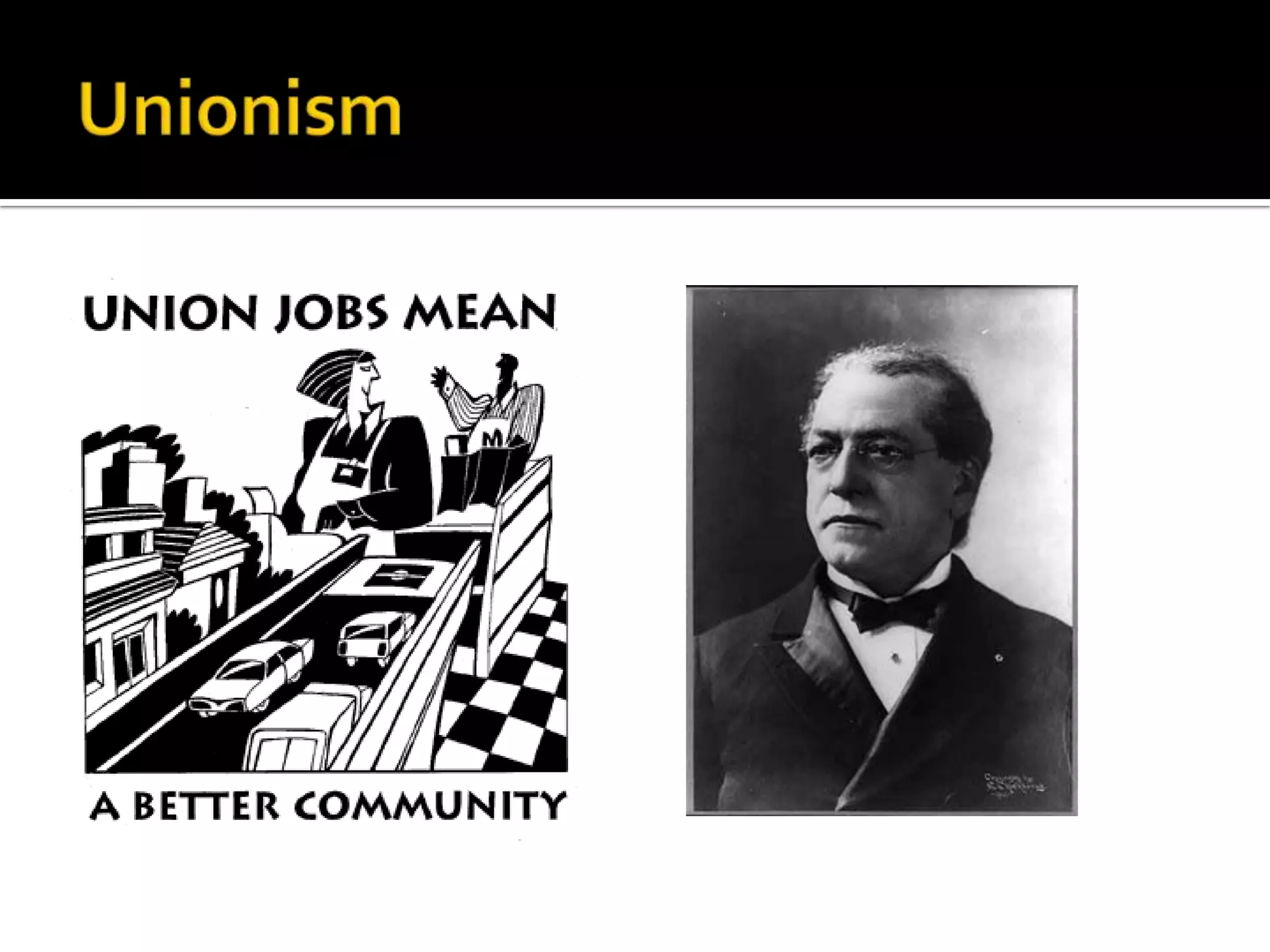
d. Father of Unionism in America was Samuel Gompers (Est. the AFL in 1886)
2. Tactics
a. Ideally collective bargaining (negotiating) will help settle a contract dispute
b. UnionTactics
i. Slow-down: work slower or produce fewer goods
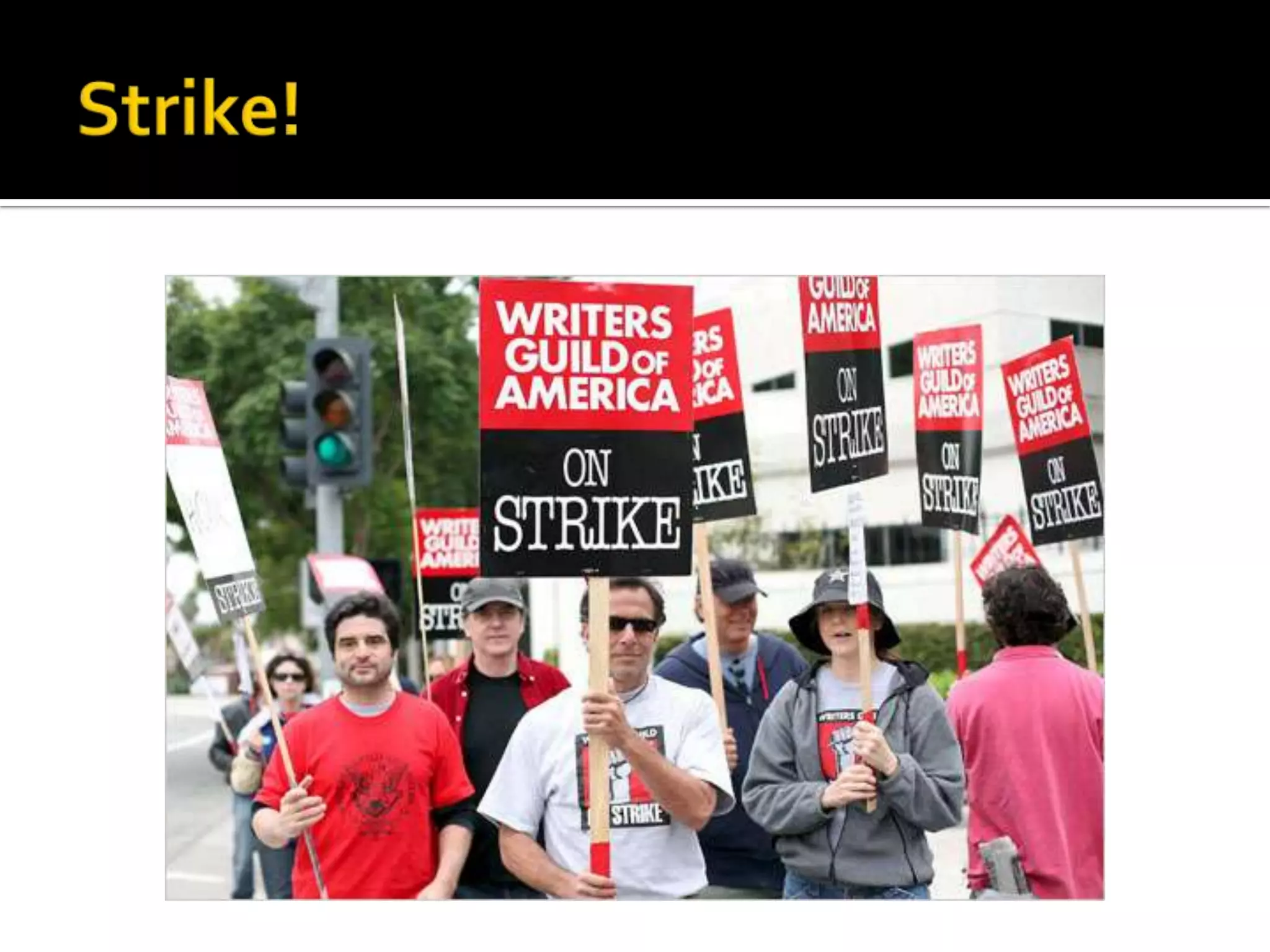
ii. Strike (walk-out): workers leave place of work together
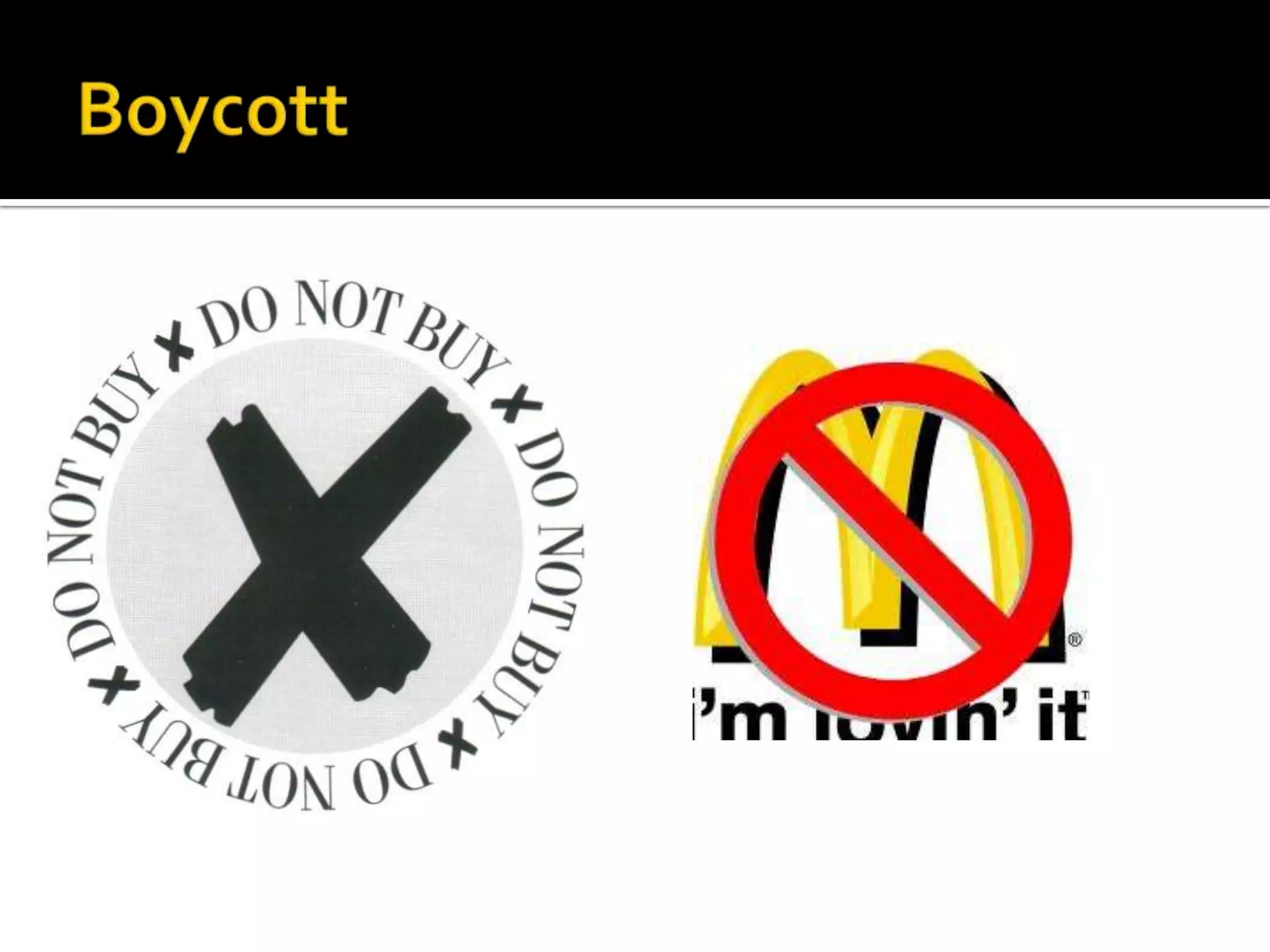
iii. Boycott (used by consumers): refusal to buy goods from specific
company
iv. Sit-down strike: sit down on the job and refuse to work (illegal)
c. ManagementTactics
i. Speed-Up: force workers to increase output
ii. Lock-out: lock out workers so they cannot work and cannot get paid
iii. Hire scabs or replacement workers (often the “new immigrants”)
iv. Blacklist: circulate names to other business with intent to not hire
(illegal)
v. Yellow-dog contract: Contract stating you cannot join a union
(illegal)
3. Mediation & Arbitration
a. Mediation: a 3rd party suggests
b. Arbitration: a 3rd party decides
c. Injunction: Court order
d. These three tactics usually worked in favor of management during IndustrialAge
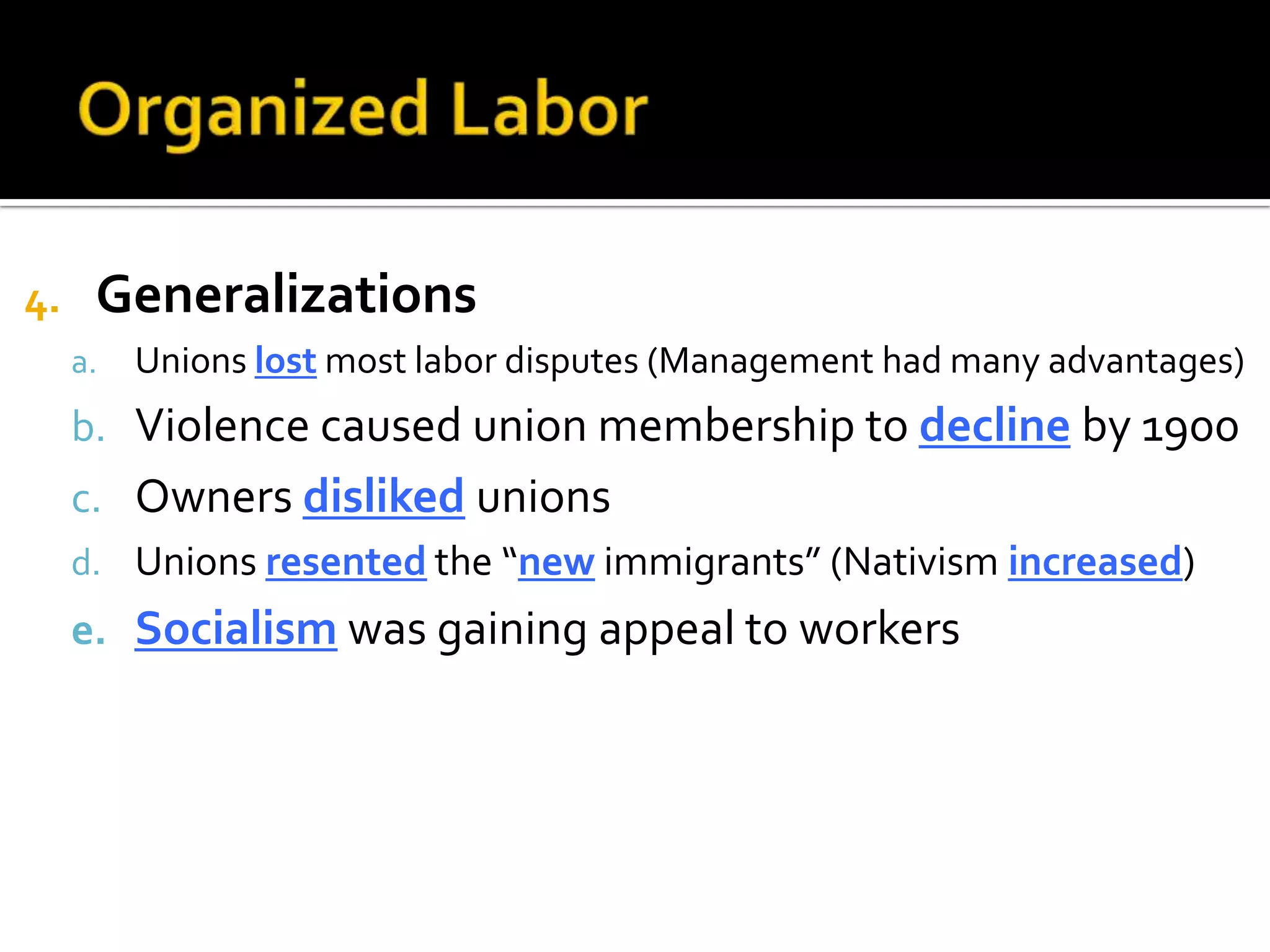
4. Generalizations
a. Unions lost most labor disputes (Management had many advantages)
b. Violence caused union membership to decline by 1900
c. Owners disliked unions
d. Unions resented the “new immigrants” (Nativism increased)
e. Socialism was gaining appeal to workers

Organized labor notes

  • 1.
  • 2.
    1. Organized Labor: a.Unionism was legalized in 1842 b. Philosophy: a group is more powerful than an individual c. 3 Goals --->To improve worker’s: i. Wages ($$$) ii. Hours iii. Working conditions d. Father of Unionism in America was Samuel Gompers (Est. the AFL in 1886)
  • 4.
    2. Tactics a. Ideallycollective bargaining (negotiating) will help settle a contract dispute b. UnionTactics i. Slow-down: work slower or produce fewer goods ii. Strike (walk-out): workers leave place of work together iii. Boycott (used by consumers): refusal to buy goods from specific company iv. Sit-down strike: sit down on the job and refuse to work (illegal)
  • 7.
    c. ManagementTactics i. Speed-Up:force workers to increase output ii. Lock-out: lock out workers so they cannot work and cannot get paid iii. Hire scabs or replacement workers (often the “new immigrants”) iv. Blacklist: circulate names to other business with intent to not hire (illegal) v. Yellow-dog contract: Contract stating you cannot join a union (illegal)
  • 8.
    3. Mediation &Arbitration a. Mediation: a 3rd party suggests b. Arbitration: a 3rd party decides c. Injunction: Court order d. These three tactics usually worked in favor of management during IndustrialAge
  • 9.
    4. Generalizations a. Unionslost most labor disputes (Management had many advantages) b. Violence caused union membership to decline by 1900 c. Owners disliked unions d. Unions resented the “new immigrants” (Nativism increased) e. Socialism was gaining appeal to workers