Organizational Culture And Ethical
Behavior
Dr. G C Mohanta, BE, MSc(Engg), MBA, PhD(Mgt)
Professor
Organizational Culture
 The shared values, principles, traditions and ways of
doing things that influence the way organizational
members act.
 The shared values, ways of thinking, attitudes and
guiding beliefs relevant to and supportive of the
organization and its goals.
 The characteristic set of values and ways of behaving that
employees in an organization share.
 A common perception held by the organization’s
members
Patterns of Behavior, Values
and Beliefs
 Patterns of Behavior
 Ceremonial events, written and spoken
comments, and actual behaviors of an
organization’s members.
 Values and Beliefs
 Guiding standards of an organization that
affirm what should be practiced, as distinct from
what is practiced.
Components of Organizational Culture
 Signs and Symbols
 Practices and actions that create and sustain a
company’s culture.
 Stories
 The repeated tales and anecdotes that contribute
to a company’s culture by illustrating and
reinforcing important company values.
 Rites and Ceremonies
 Traditional culture-building events or activities
that symbolize the firm’s values and help convert
employees to these values.
Organizational Rites & Their Social
Consequences
Type of Rite Example Social Consequences
Passage
Army induction and
basic training
Commencement
Greek Pledge Period
Facilitate transition of person
into new social roles and
statuses
Enhancement Annual awards night
Enhance social identities and
increase status of members
Renewal
Organizational
Development activities
Refurbish social structures and
improve organization functioning
Integration
Office holiday party
School Picnic
Homecoming
Encourage and revive common
feelings that bind members
together and commit them to the
organization
Purpose of Culture
 To help integrate organizational
members so that they know how to relate
and work together effectively.
 To help the organization to best adapt to
its mission and to its environment.
Effects of Culture
 Determines how people communicate
 How people interact
 How people relate to one another
 What is appropriate behavior
 How power and status are allocated
 Guides day-to-day working relationships
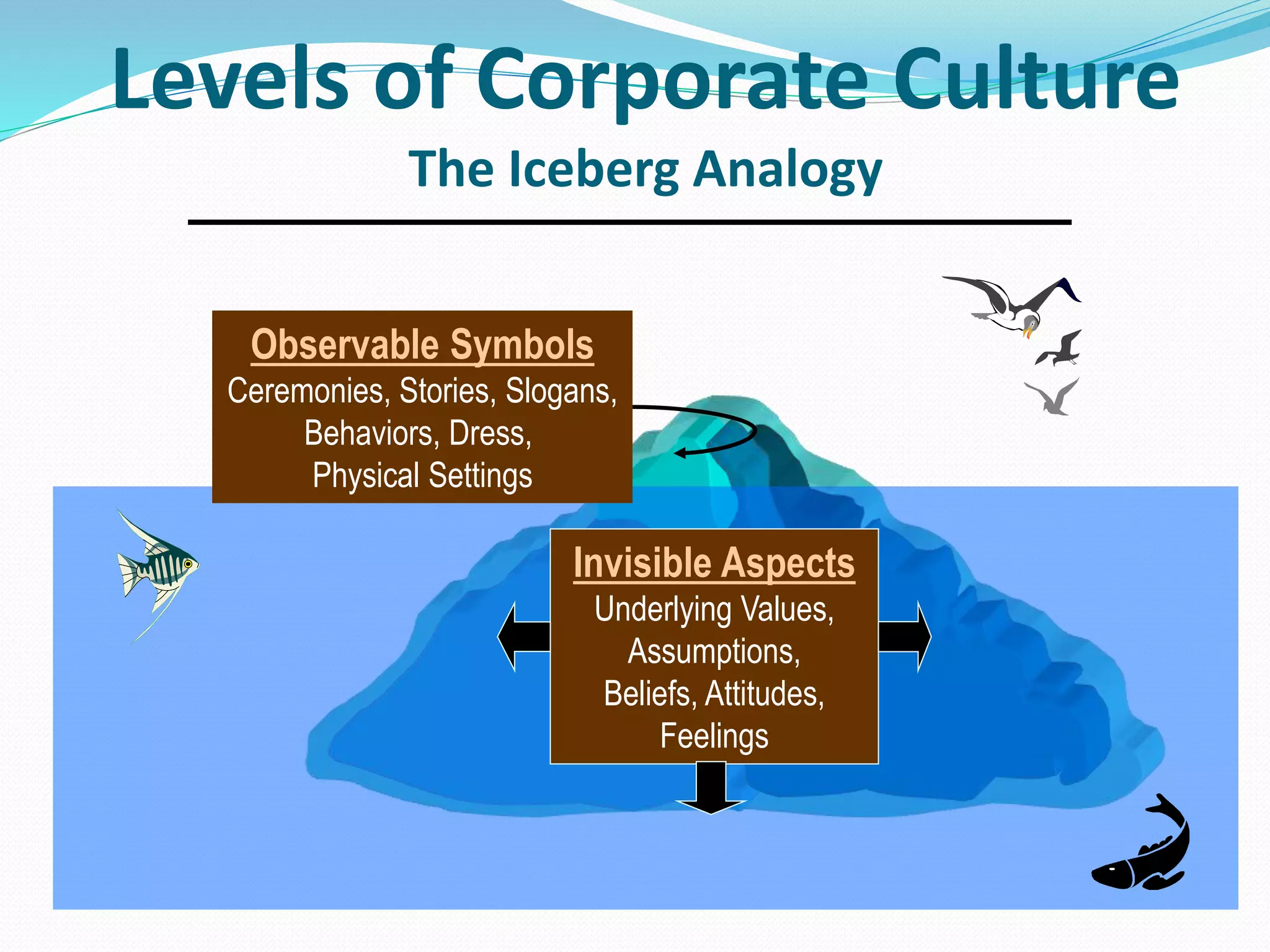
Levels of Corporate Culture
The Iceberg Analogy
Observable Symbols
Ceremonies, Stories, Slogans,
Behaviors, Dress,
Physical Settings
Invisible Aspects
Underlying Values,
Assumptions,
Beliefs, Attitudes,
Feelings
Stories, Symbols, & Language
 They reinforce existing culture, but they
don’t create culture by themselves.
 Employees learn more from observed
behavior.
 Slogans, stories and symbols are useful in
reinforcing desired behaviors.
 The really important thing is for managers
to display the desired values and beliefs in
their day-to-day behaviors.
How Leaders Shape Culture
 By what they do
 The examples they set
 The types of people they hire
 By what they say
 Formal policies, codes of ethics, etc.
 By what the organization does
 Ethical training, ethics committees
VALUE-BASED LEADERSHIP
What Do Cultures Do?
 Culture’s Functions
1. Defines the boundary between one organization and
others
2. Conveys a sense of identity for its members
3. Facilitates the generation of commitment to
something larger than self-interest
4. Enhances the stability of the social system
5. Serves as a sense-making and control mechanism for
fitting employees in the organization
How Culture Begins
 Stems from the actions of the founders:
 Founders hire and keep only employees who
think and feel the same way they do.
 Founders indoctrinate and socialize these
employees to their way of thinking and feeling.
 The founders’ own behavior acts as a role model
that encourages employees to identify with
them and thereby internalize their beliefs,
values, and assumptions.
Keeping Culture Alive
 Selection
 Concerned with how well the candidates will fit into the
organization
 Provides information to candidates about the
organization
 Top Management
 Senior executives help establish behavioral norms that
are adopted by the organization
 Socialization
 The process that helps new employees adapt to the
organization’s culture
How Employees Learn Culture
 Stories
 Anchor the present into the past and provide
explanations and legitimacy for current practices
 Rituals
 Repetitive sequences of activities that express and
reinforce the key values of the organization
 Material Symbols
 Acceptable attire, office size, opulence of the
office furnishings, and executive perks that
convey to employees who is important in the
organization
 Language
 Jargon and special ways of expressing one’s self to
indicate membership in the organization
Ethical Values
Ethics
 Ethics refer to the code of moral principles
and values that govern the behaviors of a
person or group with respect to what is
right or wrong
Managerial Ethics
 Ethical decisions go far beyond behaviors
governed by law
 Managerial ethics guide the decisions and
behaviors of managers
How Managers Shape Culture
and Ethics
Value-Based Leadership
Formal Structure and Systems
 Structure
 Disclosure Mechanisms
 Code of Ethics
 Training Programs
Managers play key role in providing
leadership & examples of ethical behavior
What Influences Ethical
Behavior At Work?
Ethical Work
Behaviors
Individual
Factors
Organizational
Factors
Top
Management
Ethics Policies
and Codes
How to Foster Ethics at Work
 Emphasize top management’s commitment.
 Publish an ethics code.
 Establish compliance mechanisms. Involve
personnel at all levels.
 Train employees.
 Measure results.

Organizational culture and ethical behavior

  • 1.
    Organizational Culture AndEthical Behavior Dr. G C Mohanta, BE, MSc(Engg), MBA, PhD(Mgt) Professor
  • 2.
    Organizational Culture  Theshared values, principles, traditions and ways of doing things that influence the way organizational members act.  The shared values, ways of thinking, attitudes and guiding beliefs relevant to and supportive of the organization and its goals.  The characteristic set of values and ways of behaving that employees in an organization share.  A common perception held by the organization’s members
  • 3.
    Patterns of Behavior,Values and Beliefs  Patterns of Behavior  Ceremonial events, written and spoken comments, and actual behaviors of an organization’s members.  Values and Beliefs  Guiding standards of an organization that affirm what should be practiced, as distinct from what is practiced.
  • 4.
    Components of OrganizationalCulture  Signs and Symbols  Practices and actions that create and sustain a company’s culture.  Stories  The repeated tales and anecdotes that contribute to a company’s culture by illustrating and reinforcing important company values.  Rites and Ceremonies  Traditional culture-building events or activities that symbolize the firm’s values and help convert employees to these values.
  • 5.
    Organizational Rites &Their Social Consequences Type of Rite Example Social Consequences Passage Army induction and basic training Commencement Greek Pledge Period Facilitate transition of person into new social roles and statuses Enhancement Annual awards night Enhance social identities and increase status of members Renewal Organizational Development activities Refurbish social structures and improve organization functioning Integration Office holiday party School Picnic Homecoming Encourage and revive common feelings that bind members together and commit them to the organization
  • 6.
    Purpose of Culture To help integrate organizational members so that they know how to relate and work together effectively.  To help the organization to best adapt to its mission and to its environment.
  • 7.
    Effects of Culture Determines how people communicate  How people interact  How people relate to one another  What is appropriate behavior  How power and status are allocated  Guides day-to-day working relationships
  • 8.
    Levels of CorporateCulture The Iceberg Analogy Observable Symbols Ceremonies, Stories, Slogans, Behaviors, Dress, Physical Settings Invisible Aspects Underlying Values, Assumptions, Beliefs, Attitudes, Feelings
  • 9.
    Stories, Symbols, &Language  They reinforce existing culture, but they don’t create culture by themselves.  Employees learn more from observed behavior.  Slogans, stories and symbols are useful in reinforcing desired behaviors.  The really important thing is for managers to display the desired values and beliefs in their day-to-day behaviors.
  • 10.
    How Leaders ShapeCulture  By what they do  The examples they set  The types of people they hire  By what they say  Formal policies, codes of ethics, etc.  By what the organization does  Ethical training, ethics committees VALUE-BASED LEADERSHIP
  • 11.
    What Do CulturesDo?  Culture’s Functions 1. Defines the boundary between one organization and others 2. Conveys a sense of identity for its members 3. Facilitates the generation of commitment to something larger than self-interest 4. Enhances the stability of the social system 5. Serves as a sense-making and control mechanism for fitting employees in the organization
  • 12.
    How Culture Begins Stems from the actions of the founders:  Founders hire and keep only employees who think and feel the same way they do.  Founders indoctrinate and socialize these employees to their way of thinking and feeling.  The founders’ own behavior acts as a role model that encourages employees to identify with them and thereby internalize their beliefs, values, and assumptions.
  • 13.
    Keeping Culture Alive Selection  Concerned with how well the candidates will fit into the organization  Provides information to candidates about the organization  Top Management  Senior executives help establish behavioral norms that are adopted by the organization  Socialization  The process that helps new employees adapt to the organization’s culture
  • 14.
    How Employees LearnCulture  Stories  Anchor the present into the past and provide explanations and legitimacy for current practices  Rituals  Repetitive sequences of activities that express and reinforce the key values of the organization  Material Symbols  Acceptable attire, office size, opulence of the office furnishings, and executive perks that convey to employees who is important in the organization  Language  Jargon and special ways of expressing one’s self to indicate membership in the organization
  • 15.
    Ethical Values Ethics  Ethicsrefer to the code of moral principles and values that govern the behaviors of a person or group with respect to what is right or wrong Managerial Ethics  Ethical decisions go far beyond behaviors governed by law  Managerial ethics guide the decisions and behaviors of managers
  • 16.
    How Managers ShapeCulture and Ethics Value-Based Leadership Formal Structure and Systems  Structure  Disclosure Mechanisms  Code of Ethics  Training Programs Managers play key role in providing leadership & examples of ethical behavior
  • 17.
    What Influences Ethical BehaviorAt Work? Ethical Work Behaviors Individual Factors Organizational Factors Top Management Ethics Policies and Codes
  • 18.
    How to FosterEthics at Work  Emphasize top management’s commitment.  Publish an ethics code.  Establish compliance mechanisms. Involve personnel at all levels.  Train employees.  Measure results.