ORGANIZATIONAL
COMMITMENT
Done by,
Boniya P Bochan
SMS, CUSAT
ATTITUDES
• Attitudes are evaluative statements either favourable or
unfavourable concerning objects, people or events.
• A person can have thousands of attitudes, but OB concentrates
on limited number of job related attitudes. Most of the research
in OB has been concerned with three attitudes:
1. Job satisfaction
2. Job involvement
3. Organizational Commitment
ORGANIZATIONAL COMMITMENT
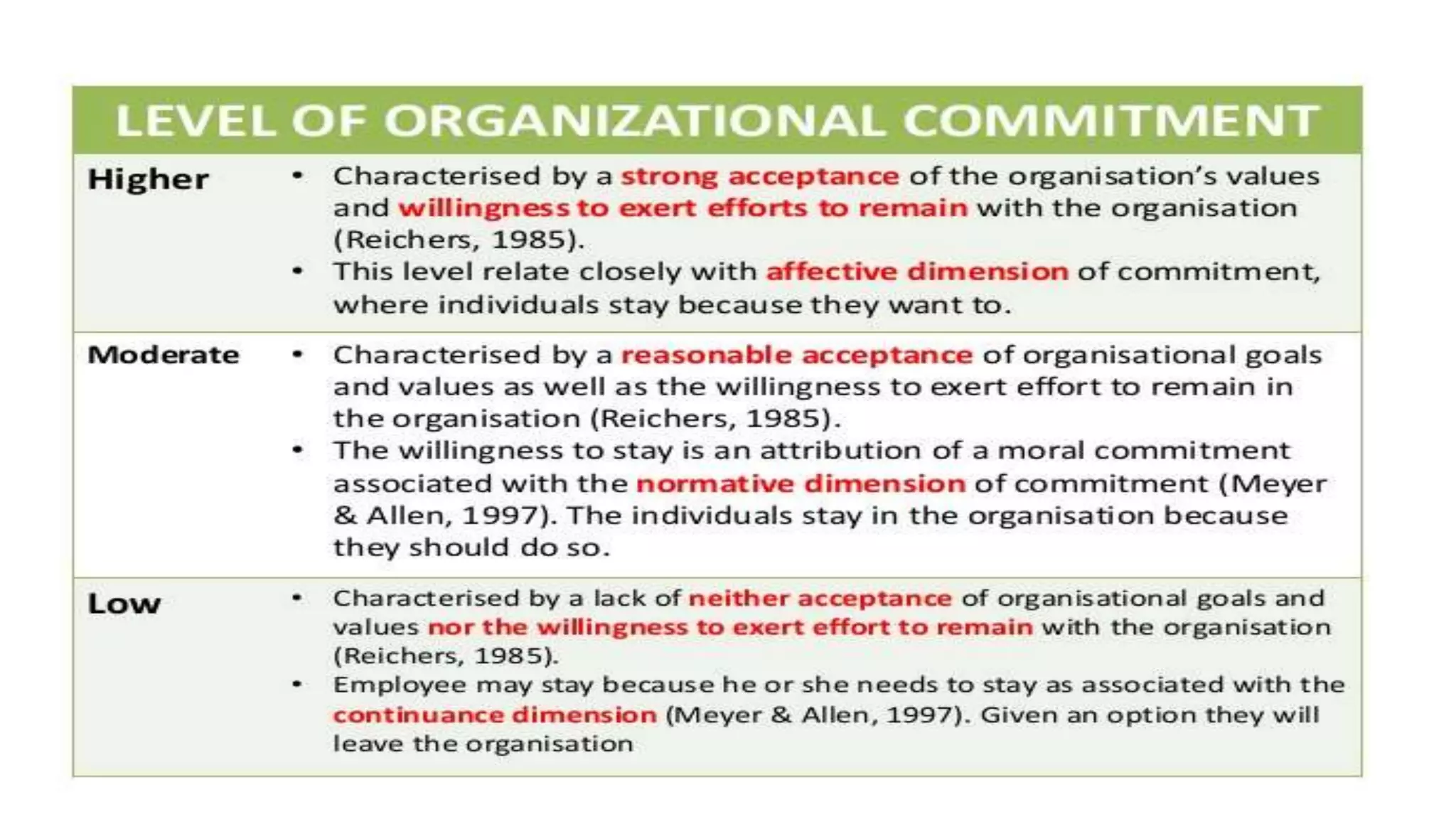
• The degree to which an employee identifies with a particular
organization and its goals, and wishes to maintain membership in the
organization.
• As an attitude, organizational commitment is often defined as:
o A strong desire to remain a member of a particular organization
o A willingness to exert high level of efforts on behalf of the
organization
o A definite belief in, and acceptance of, the values and goals of the
organization
MEYER AND ALLEN
John Meyer and Natalie Allen
• Ph.D.’s in Psychology
• University Professors in Canada
They developed Three Component Model of
Commitment and published it in the 1991
"Human Resource Management Review."
The model explains that commitment to an
organization is a psychological state, and that
it has three distinct components that affect
how employees feel about the organization
that they work for.
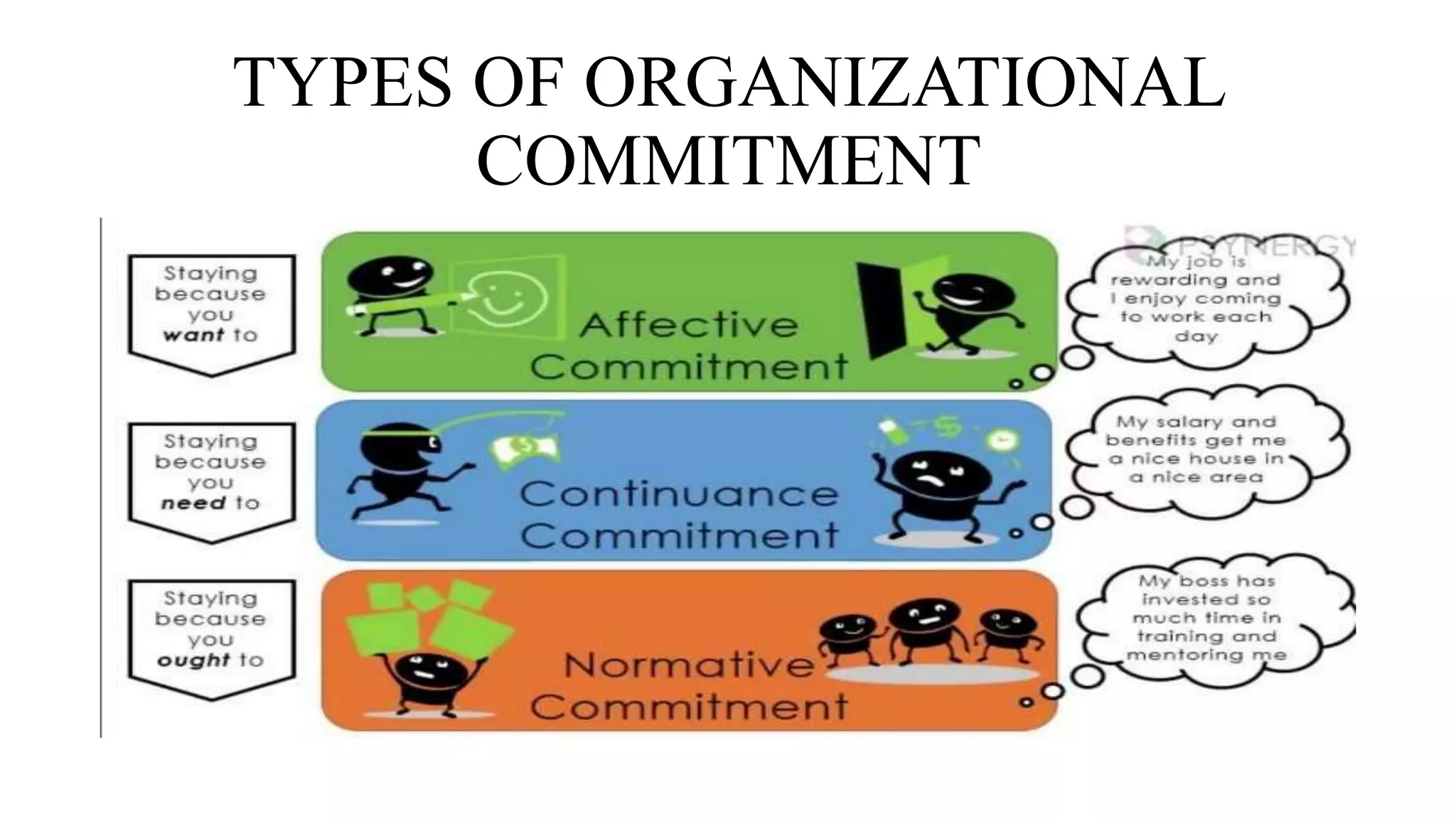
TYPES OF ORGANIZATIONAL
COMMITMENT
AFFECTIVE COMMITMENT
• Affection for our job occurs when we feel
a strong emotional attachment to our
organization, and to the work that we do.
We'll most likely identify with the
organization's goals and values, and we
genuinely want to be there.
• If we're enjoying our work, we're likely to
feel good, and be satisfied with our job. In
turn, this increased job satisfaction is
likely to add to our feeling of affective
commitment
CONTINUANCE COMMITMENT
Continuance commitment occurs when
individuals base their relationship with
the organization on what they are
receiving in return for their efforts and
what would be lost if they were to leave
(i.e., pay, benefits, associations). These
individuals put forth their best effort
only when the rewards match their
expectations.
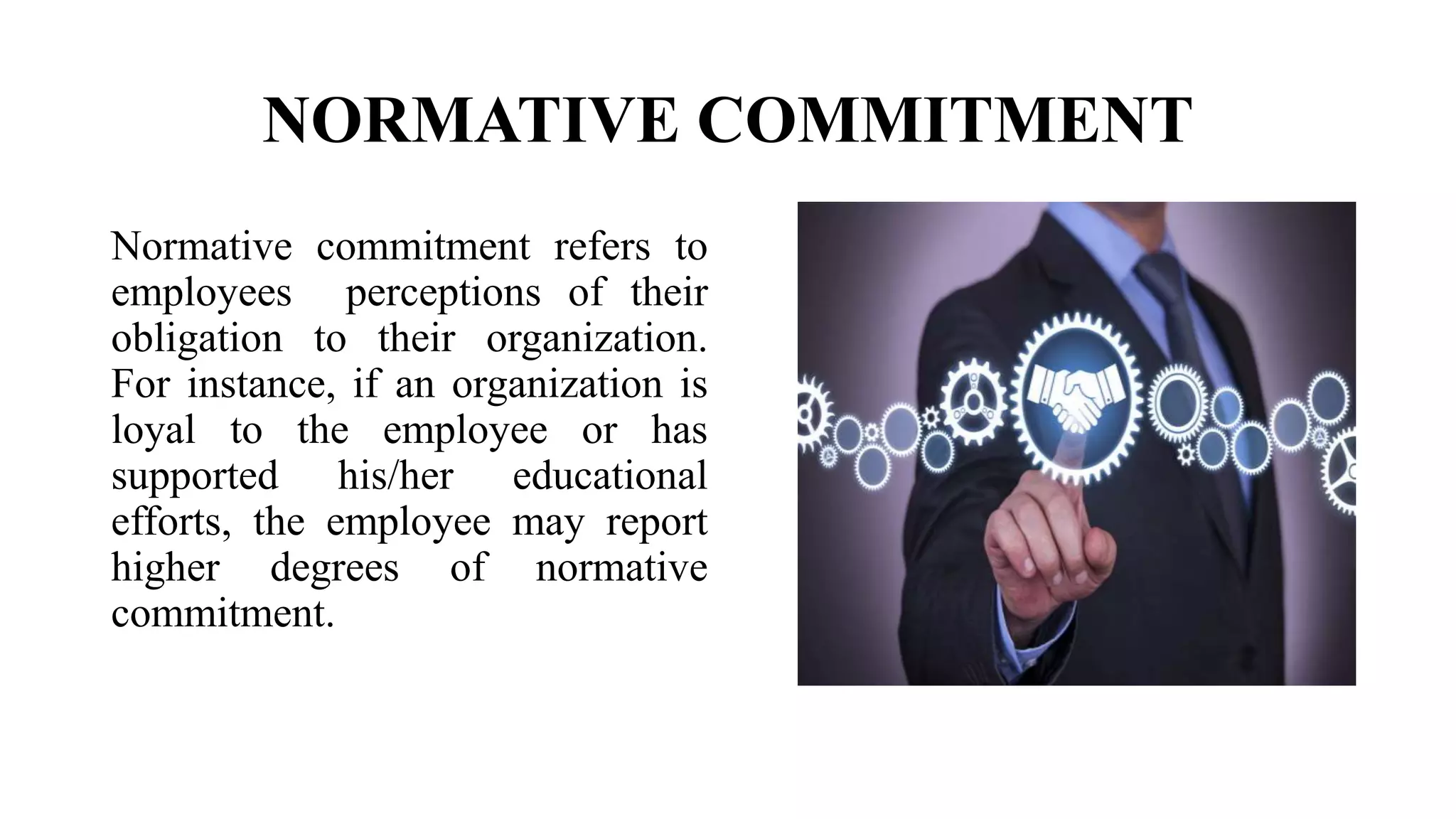
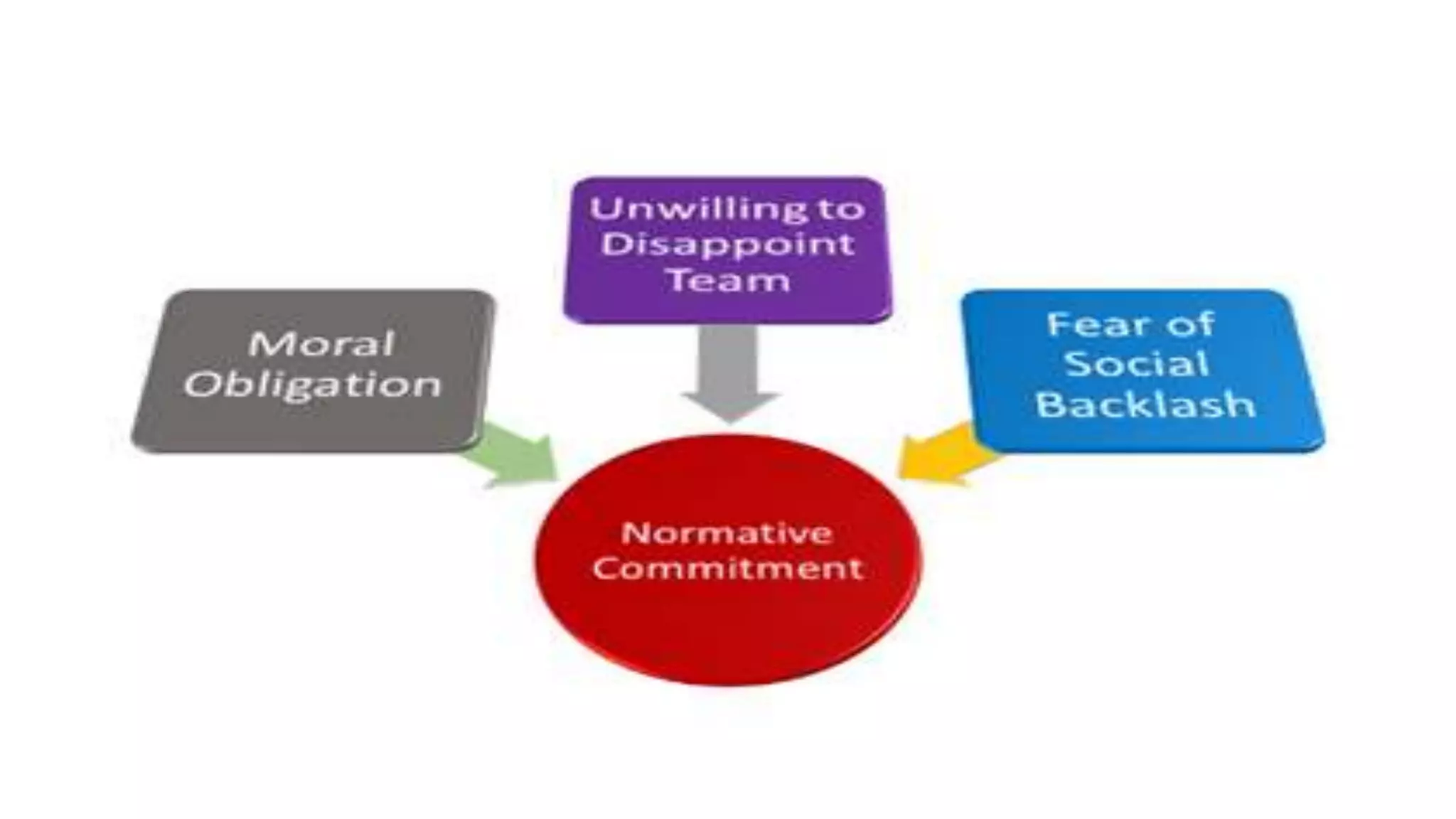
NORMATIVE COMMITMENT
Normative commitment refers to
employees perceptions of their
obligation to their organization.
For instance, if an organization is
loyal to the employee or has
supported his/her educational
efforts, the employee may report
higher degrees of normative
commitment.
ALIENATIVE COMMITMENT
Zangaro (2001) suggests that an additional type, alienative
commitment, may also exist. He writes that this occurs when
individuals feel they have little or no control or impact, and
would like to leave their jobs. These employees usually
demonstrate low levels of performance.
PREREQUISITES FOR
ORGANIZATIONAL COMMITMENT
Personal characteristics are important factors in the development of an
individual’s level of organizational commitment. Mathieu and Zajac
(1990) have identified several personal characteristics:
 Age
Gender
Education
Perceived competence
Protestant work ethics
• Job attitudes also contribute to an individual’s level of organizational
commitment.
Job satisfaction is the only attitude variable studied more than
organizational commitment. Job satisfaction is “the degree to which
people like their jobs” based on “what they receive from working
compared to what they expect, want, or think they deserve”
Individuals must be satisfied with their jobs before they can become
committed to the organization, other studies report an inverse
relationship—that job satisfaction is an outcome of one’s level of
organizational commitment.
• Organizational citizenship behavior (OCB) is another
attitude-linked concept that has been studied with
organizational commitment. Robinson and Morrison (1995,
p.289) explain that OCB refers to “employee behavior that is
extra-role, that promotes organizational effectiveness, and
that is not explicitly recognized by an organization’s reward
system.” Research findings indicate that there is a clear link
between organizational commitment and OCB (Morrison &
Robinson 1997). It is widely believed that organizations
could not survive unless employees were willing to
occasionally engage in OCB.
• Job characteristics also influence the development of
organizational commitment.
Job Level
Job Skills
Role stress
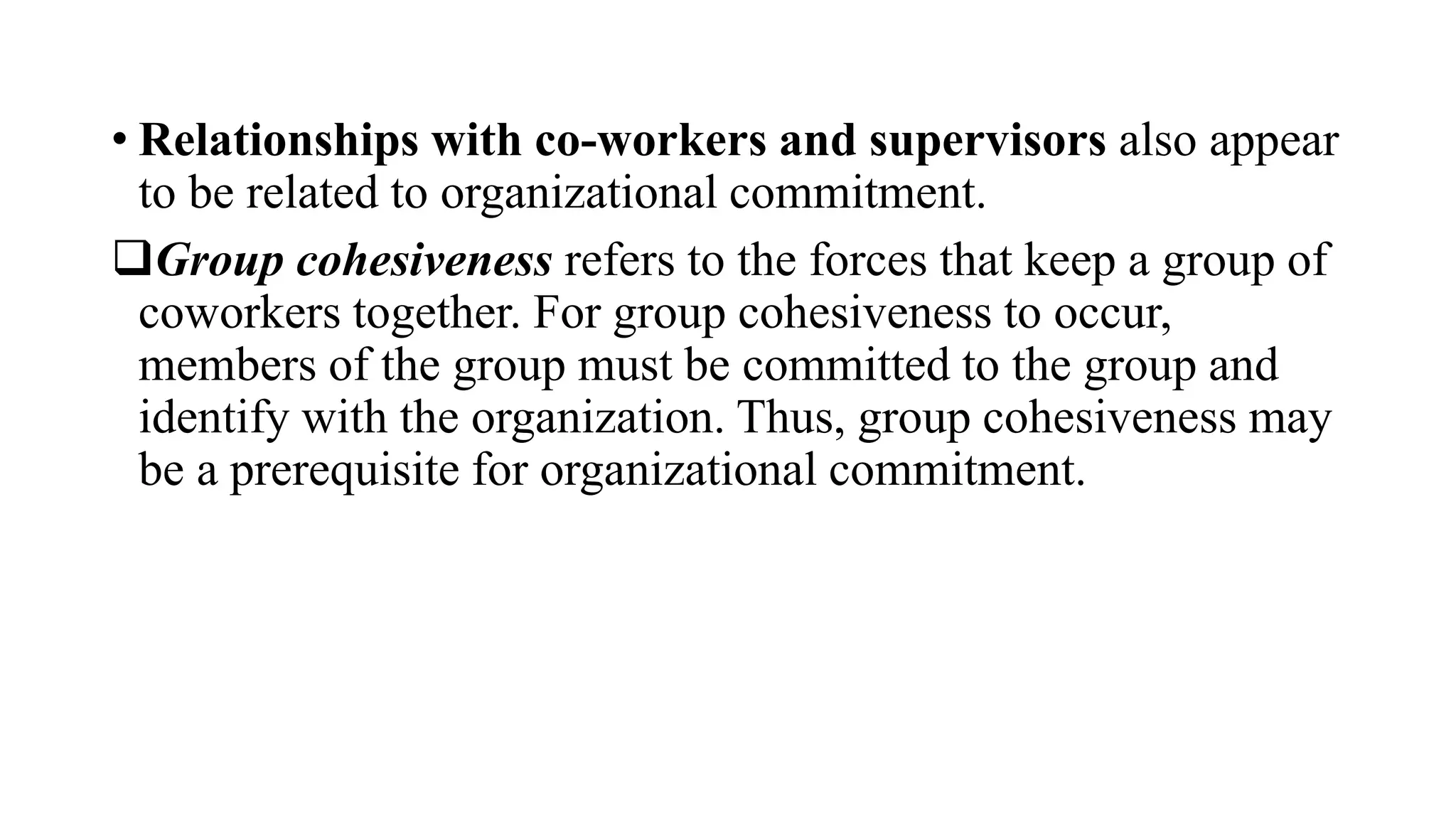
• Relationships with co-workers and supervisors also appear
to be related to organizational commitment.
Group cohesiveness refers to the forces that keep a group of
coworkers together. For group cohesiveness to occur,
members of the group must be committed to the group and
identify with the organization. Thus, group cohesiveness may
be a prerequisite for organizational commitment.
Studies of leadership have found that two
complementary behaviors are important for effective
leadership.
a. Initiating Structure
b. consideration
Both are positively related to organizational
commitment.
EFFECTS OF ORGANIZATIONAL COMMITMENT ON
JOB PERFORMANCE, ABSENTEEISM, AND
TURNOVER
• One of the most disappointing findings in the literature on
organizational commitment is its relationship to job performance
(Mathieu & Zajac, 1990). While studies using supervisor ratings have
found a positive relationship between organizational commitment and
job performance, the relationship is weak. Studies that examined
performance with worker output measures (e.g., productivity) found
no relationship.
• Employees who are more committed to the organization are less likely
to exhibit withdrawal behaviors, such as; absenteeism, intention to
leave their jobs, or leaving their jobs (turnover).
ORGANIZATIONAL COMMITMENT IN
THE 21ST CENTURY
Meyer and Allen (1997) offer three reasons for the continued
importance of organizational commitment:
Organizations are not disappearing
Organizations that outsource their work depend on the
quality of temporary workers.
Developing commitment is a natural response to being part
of a group.
ORGANIZATIONAL COMMITMENT IN OB

ORGANIZATIONAL COMMITMENT IN OB

  • 1.
  • 2.
    ATTITUDES • Attitudes areevaluative statements either favourable or unfavourable concerning objects, people or events. • A person can have thousands of attitudes, but OB concentrates on limited number of job related attitudes. Most of the research in OB has been concerned with three attitudes: 1. Job satisfaction 2. Job involvement 3. Organizational Commitment
  • 3.
    ORGANIZATIONAL COMMITMENT • Thedegree to which an employee identifies with a particular organization and its goals, and wishes to maintain membership in the organization. • As an attitude, organizational commitment is often defined as: o A strong desire to remain a member of a particular organization o A willingness to exert high level of efforts on behalf of the organization o A definite belief in, and acceptance of, the values and goals of the organization
  • 4.
    MEYER AND ALLEN JohnMeyer and Natalie Allen • Ph.D.’s in Psychology • University Professors in Canada They developed Three Component Model of Commitment and published it in the 1991 "Human Resource Management Review." The model explains that commitment to an organization is a psychological state, and that it has three distinct components that affect how employees feel about the organization that they work for.
  • 5.
  • 6.
    AFFECTIVE COMMITMENT • Affectionfor our job occurs when we feel a strong emotional attachment to our organization, and to the work that we do. We'll most likely identify with the organization's goals and values, and we genuinely want to be there. • If we're enjoying our work, we're likely to feel good, and be satisfied with our job. In turn, this increased job satisfaction is likely to add to our feeling of affective commitment
  • 8.
    CONTINUANCE COMMITMENT Continuance commitmentoccurs when individuals base their relationship with the organization on what they are receiving in return for their efforts and what would be lost if they were to leave (i.e., pay, benefits, associations). These individuals put forth their best effort only when the rewards match their expectations.
  • 10.
    NORMATIVE COMMITMENT Normative commitmentrefers to employees perceptions of their obligation to their organization. For instance, if an organization is loyal to the employee or has supported his/her educational efforts, the employee may report higher degrees of normative commitment.
  • 12.
    ALIENATIVE COMMITMENT Zangaro (2001)suggests that an additional type, alienative commitment, may also exist. He writes that this occurs when individuals feel they have little or no control or impact, and would like to leave their jobs. These employees usually demonstrate low levels of performance.
  • 14.
    PREREQUISITES FOR ORGANIZATIONAL COMMITMENT Personalcharacteristics are important factors in the development of an individual’s level of organizational commitment. Mathieu and Zajac (1990) have identified several personal characteristics:  Age Gender Education Perceived competence Protestant work ethics
  • 15.
    • Job attitudesalso contribute to an individual’s level of organizational commitment. Job satisfaction is the only attitude variable studied more than organizational commitment. Job satisfaction is “the degree to which people like their jobs” based on “what they receive from working compared to what they expect, want, or think they deserve” Individuals must be satisfied with their jobs before they can become committed to the organization, other studies report an inverse relationship—that job satisfaction is an outcome of one’s level of organizational commitment.
  • 16.
    • Organizational citizenshipbehavior (OCB) is another attitude-linked concept that has been studied with organizational commitment. Robinson and Morrison (1995, p.289) explain that OCB refers to “employee behavior that is extra-role, that promotes organizational effectiveness, and that is not explicitly recognized by an organization’s reward system.” Research findings indicate that there is a clear link between organizational commitment and OCB (Morrison & Robinson 1997). It is widely believed that organizations could not survive unless employees were willing to occasionally engage in OCB.
  • 17.
    • Job characteristicsalso influence the development of organizational commitment. Job Level Job Skills Role stress
  • 18.
    • Relationships withco-workers and supervisors also appear to be related to organizational commitment. Group cohesiveness refers to the forces that keep a group of coworkers together. For group cohesiveness to occur, members of the group must be committed to the group and identify with the organization. Thus, group cohesiveness may be a prerequisite for organizational commitment.
  • 19.
    Studies of leadershiphave found that two complementary behaviors are important for effective leadership. a. Initiating Structure b. consideration Both are positively related to organizational commitment.
  • 20.
    EFFECTS OF ORGANIZATIONALCOMMITMENT ON JOB PERFORMANCE, ABSENTEEISM, AND TURNOVER • One of the most disappointing findings in the literature on organizational commitment is its relationship to job performance (Mathieu & Zajac, 1990). While studies using supervisor ratings have found a positive relationship between organizational commitment and job performance, the relationship is weak. Studies that examined performance with worker output measures (e.g., productivity) found no relationship.
  • 21.
    • Employees whoare more committed to the organization are less likely to exhibit withdrawal behaviors, such as; absenteeism, intention to leave their jobs, or leaving their jobs (turnover).
  • 22.
    ORGANIZATIONAL COMMITMENT IN THE21ST CENTURY Meyer and Allen (1997) offer three reasons for the continued importance of organizational commitment: Organizations are not disappearing Organizations that outsource their work depend on the quality of temporary workers. Developing commitment is a natural response to being part of a group.