ORGANIZATONAL BEHAVIOR


COMMUNICATION IN AN ORGANIZATION


                      Presented By:
                                   Amit Kumar
                                   Anas.O.M
                                   Shwetha. J
                                    Srinivas Reddy
                                   Titto.K.S    1
What is communication?


                         2
• The imparting or interchange of thoughts, opinions, or
  information by speech, writing, or signs.

• Something imparted, interchanged, or transmitted

• A document or message imparting news, views, information etc.


  "Any act by which one person gives to or receives from another
person         information        about        that        person's
needs, desires, perceptions, knowledge, or affective states.
Communication may be intentional or unintentional, may involve
conventional or unconventional signals, may take linguistic or
nonlinguistic forms, and may occur through spoken or other modes."

                                                                 3
What is organizational communication?

                    And

How is it different from usual communication?


                                                4
“Organizational communication is the process by
which activities of an organization are collected and coordinated to
reach the goals of both individuals and the organization”

                “In simple terms it is the information flow that
happens in an organization but the flow of information has got a
structure , direction and process.”


                                                                  5
What kind of information flow happen in an
               organization?

                  And

Information flow happens between whom?


                                             6
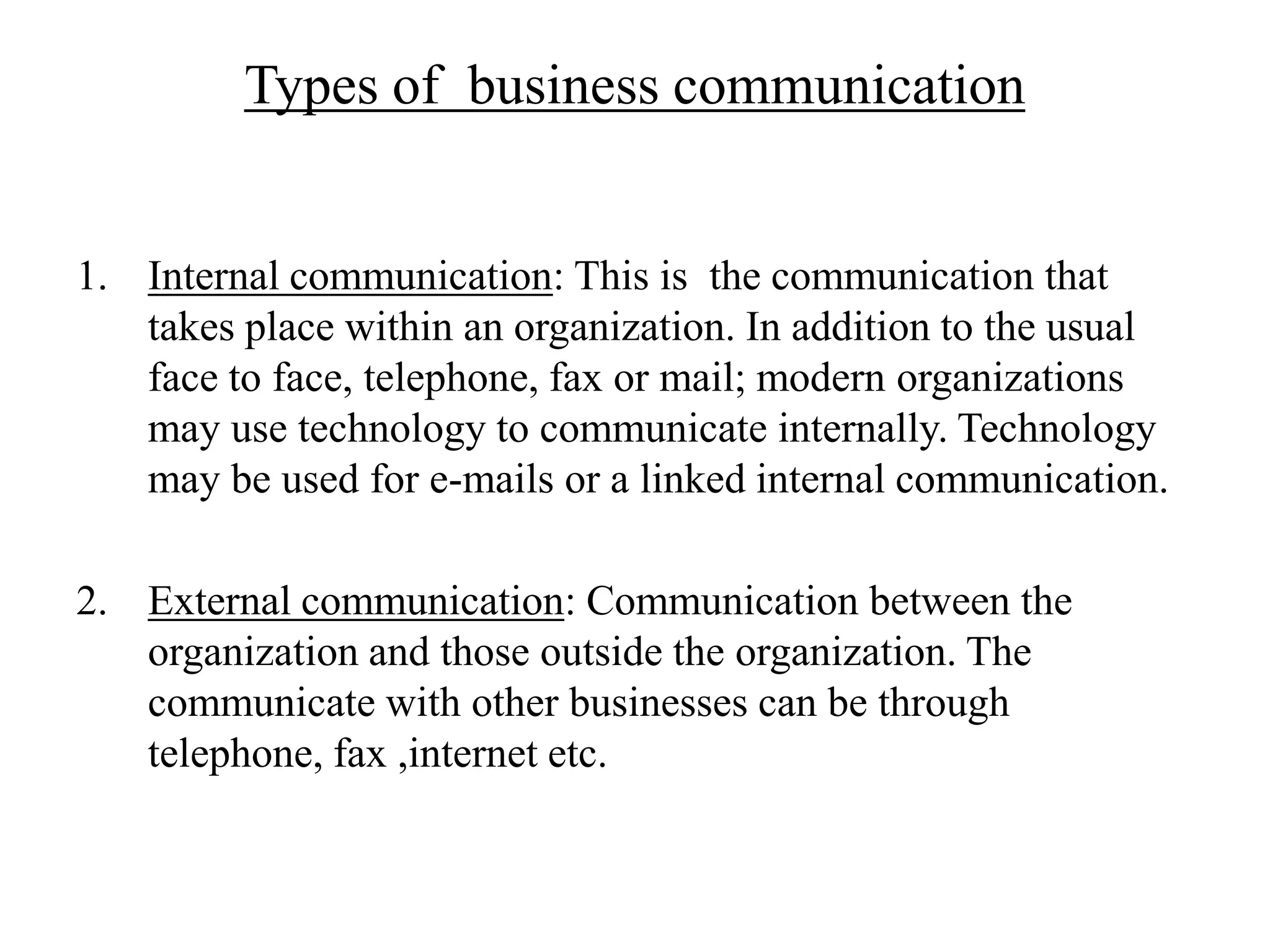
Types of business communication


1. Internal communication: This is the communication that
   takes place within an organization. In addition to the usual
   face to face, telephone, fax or mail; modern organizations
   may use technology to communicate internally. Technology
   may be used for e-mails or a linked internal communication.

2. External communication: Communication between the
   organization and those outside the organization. The
   communicate with other businesses can be through
   telephone, fax ,internet etc.
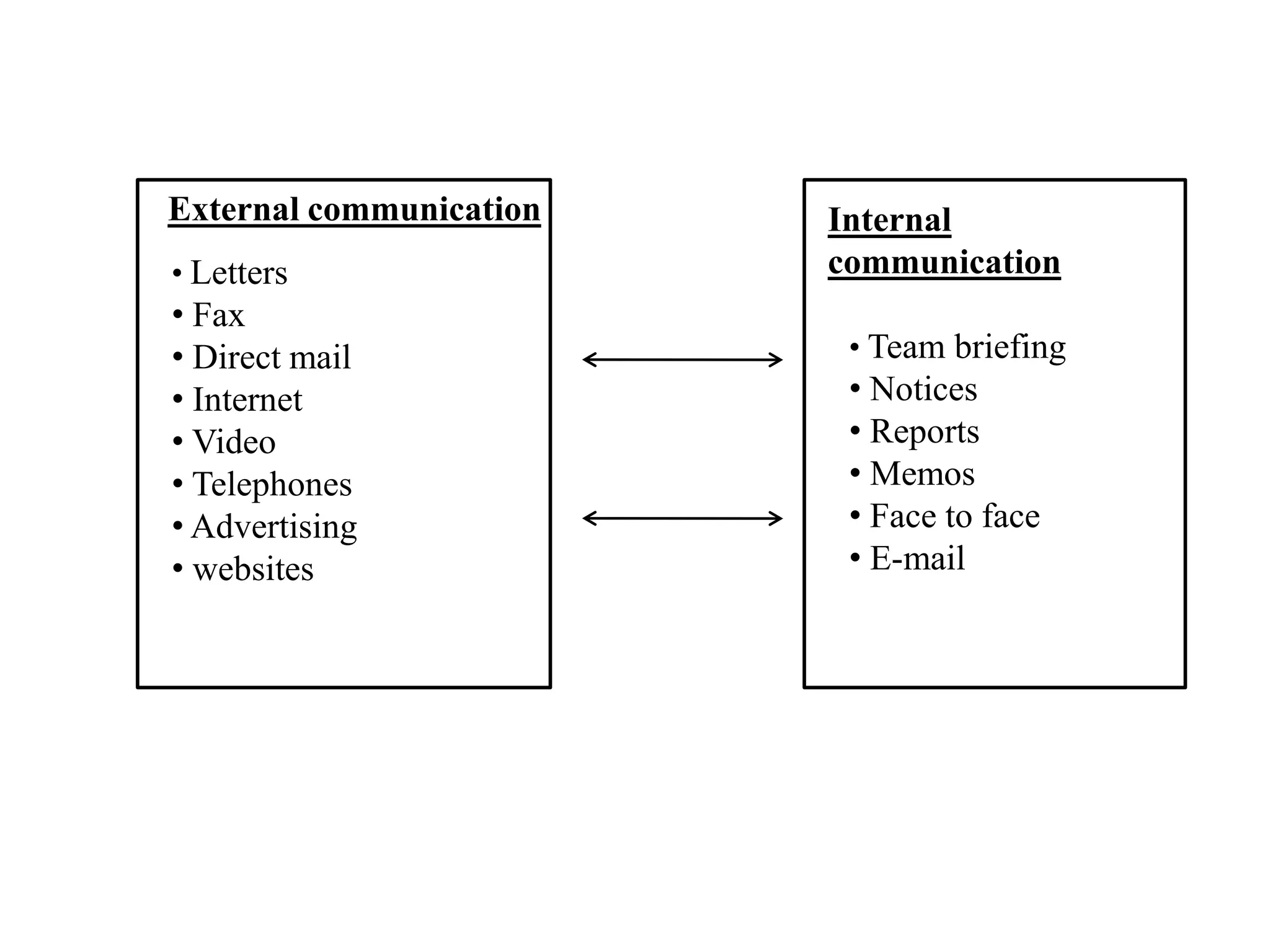
External communication   Internal
• Letters                communication
• Fax
• Direct mail             • Team briefing
• Internet                • Notices
• Video                   • Reports
• Telephones              • Memos
• Advertising             • Face to face
• websites                • E-mail
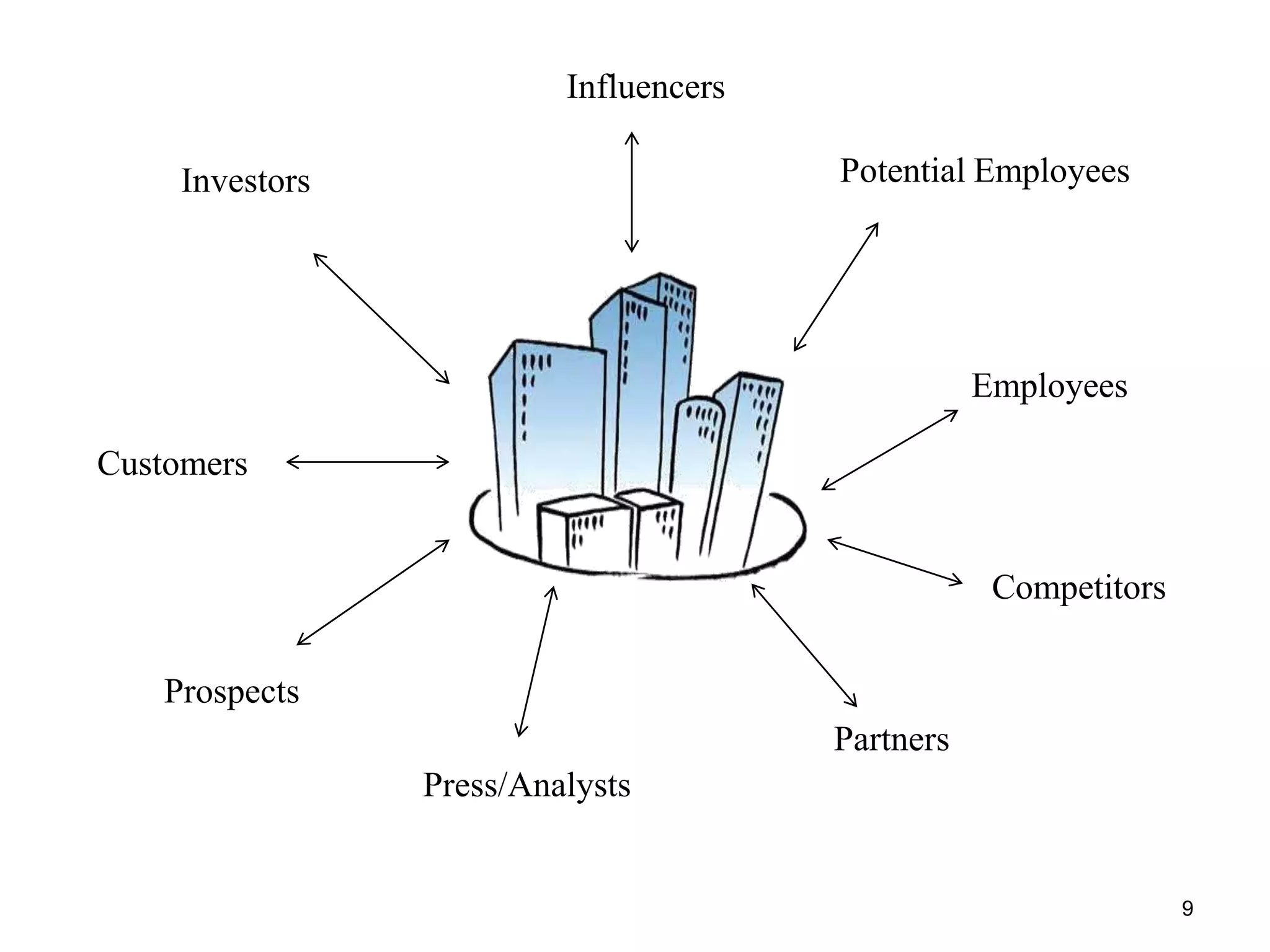
Influencers

    Investors                          Potential Employees


                                                  Employees

Customers


                                                   Competitors

   Prospects
                                       Partners
                Press/Analysts


                                                                 9
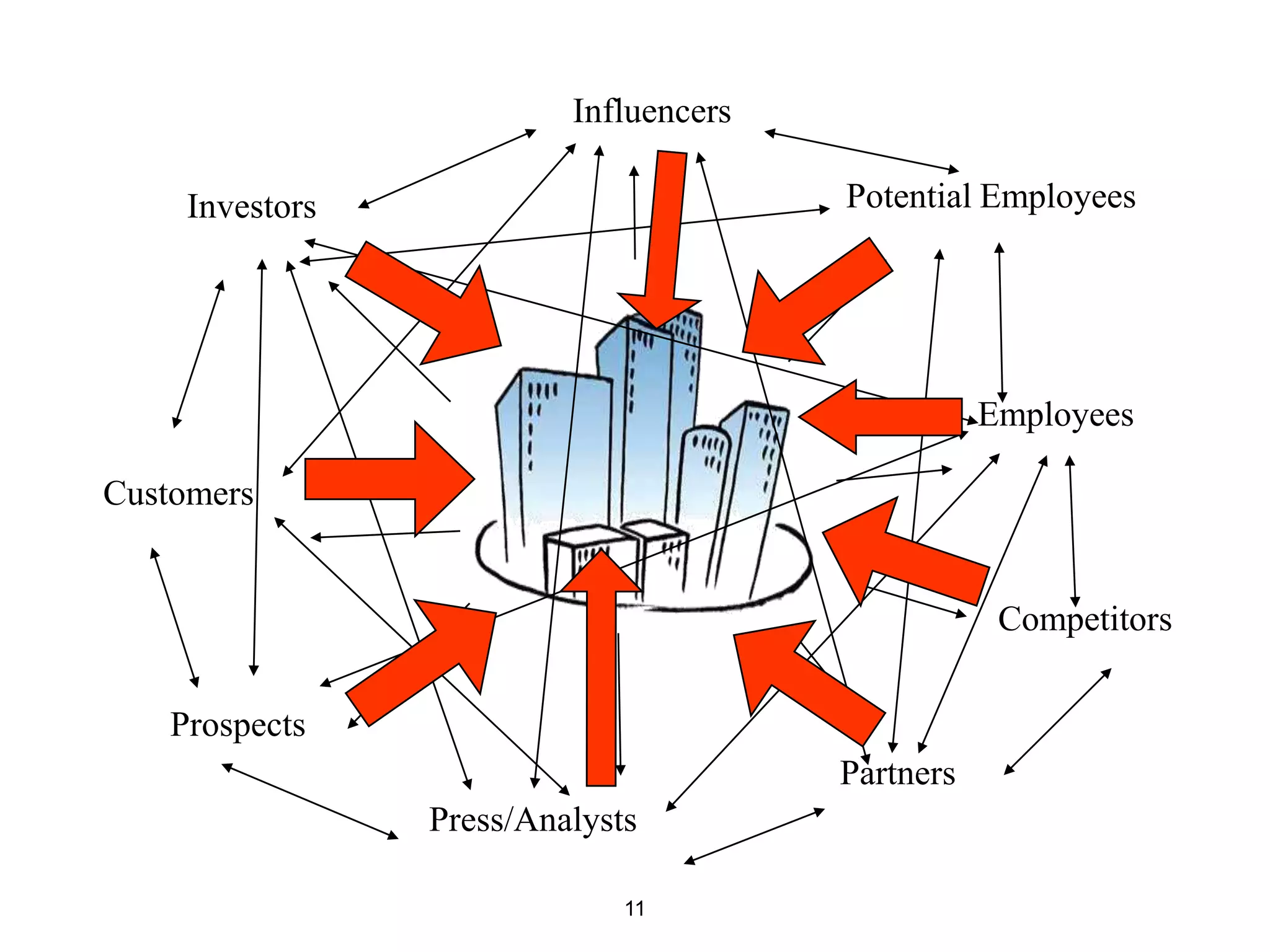
The communication looks fairly simple


                                        10
Influencers

     Investors                          Potential Employees


                                                   Employees

Customers


                                                    Competitors

    Prospects
                                        Partners
                 Press/Analysts

                              11
Now how complicated does it look ?


                                     12
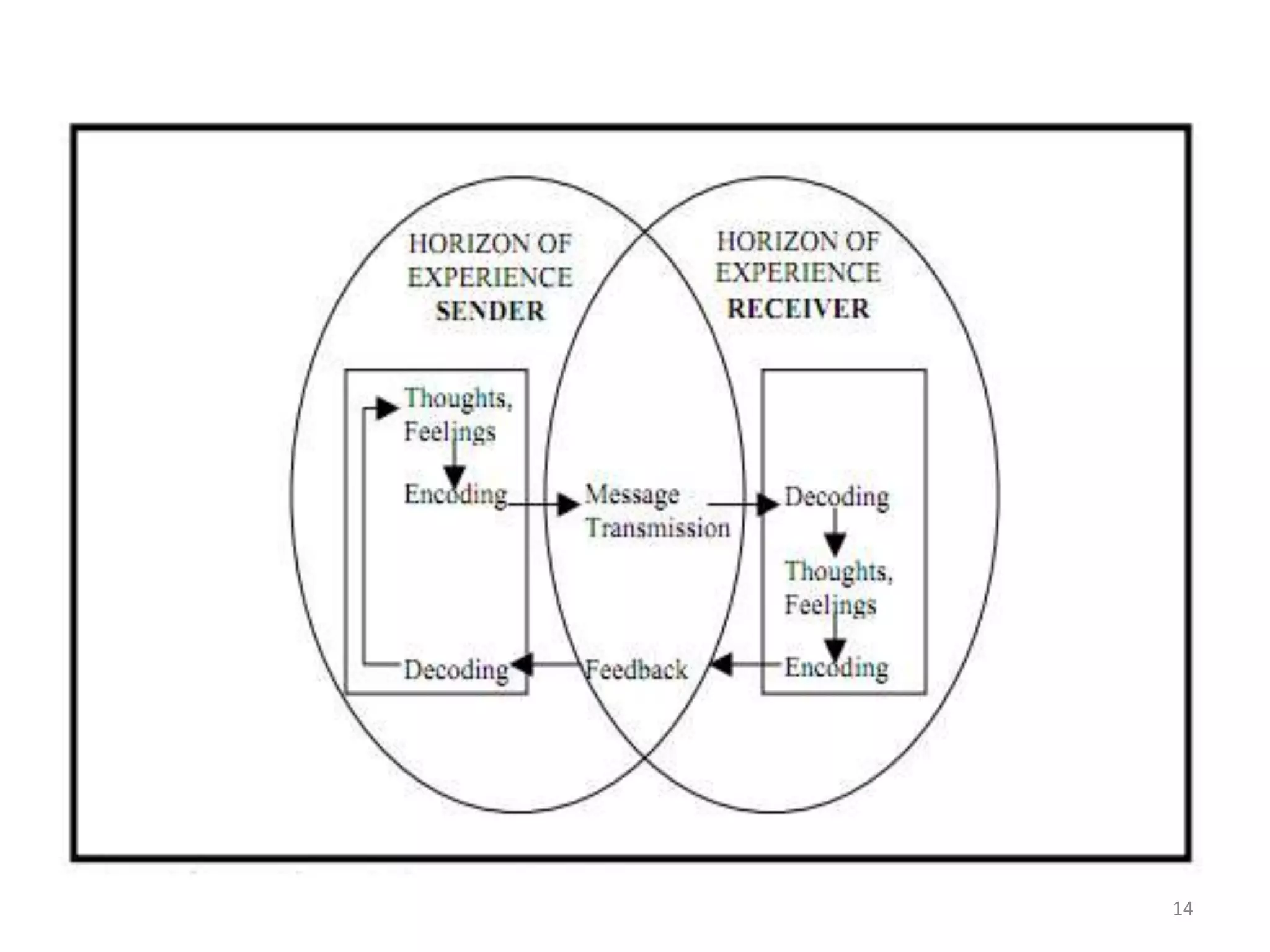
The Communication Process ?


                              13
14
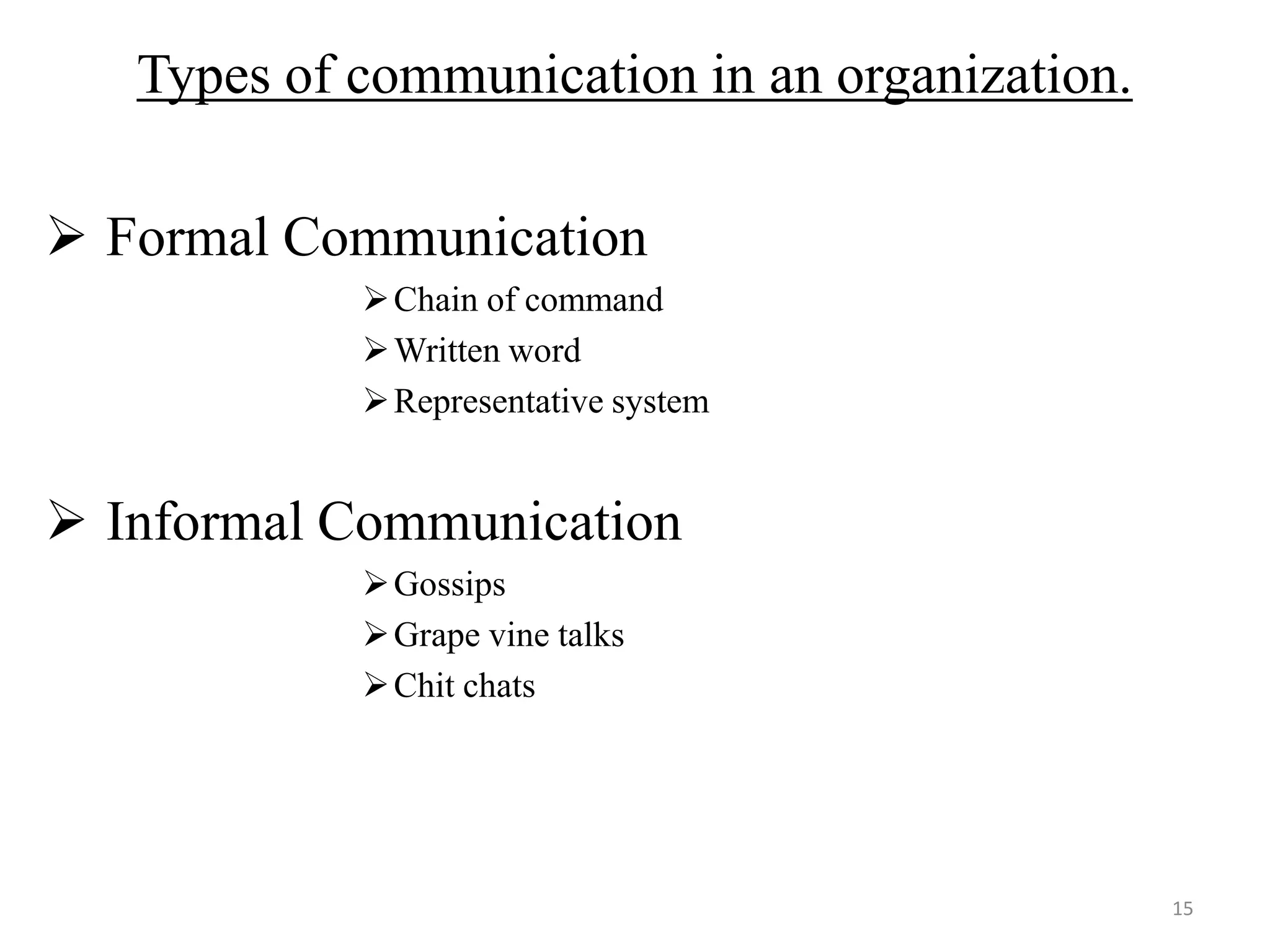
Types of communication in an organization.

 Formal Communication
             Chain of command
             Written word
             Representative system


 Informal Communication
             Gossips
             Grape vine talks
             Chit chats


                                                15
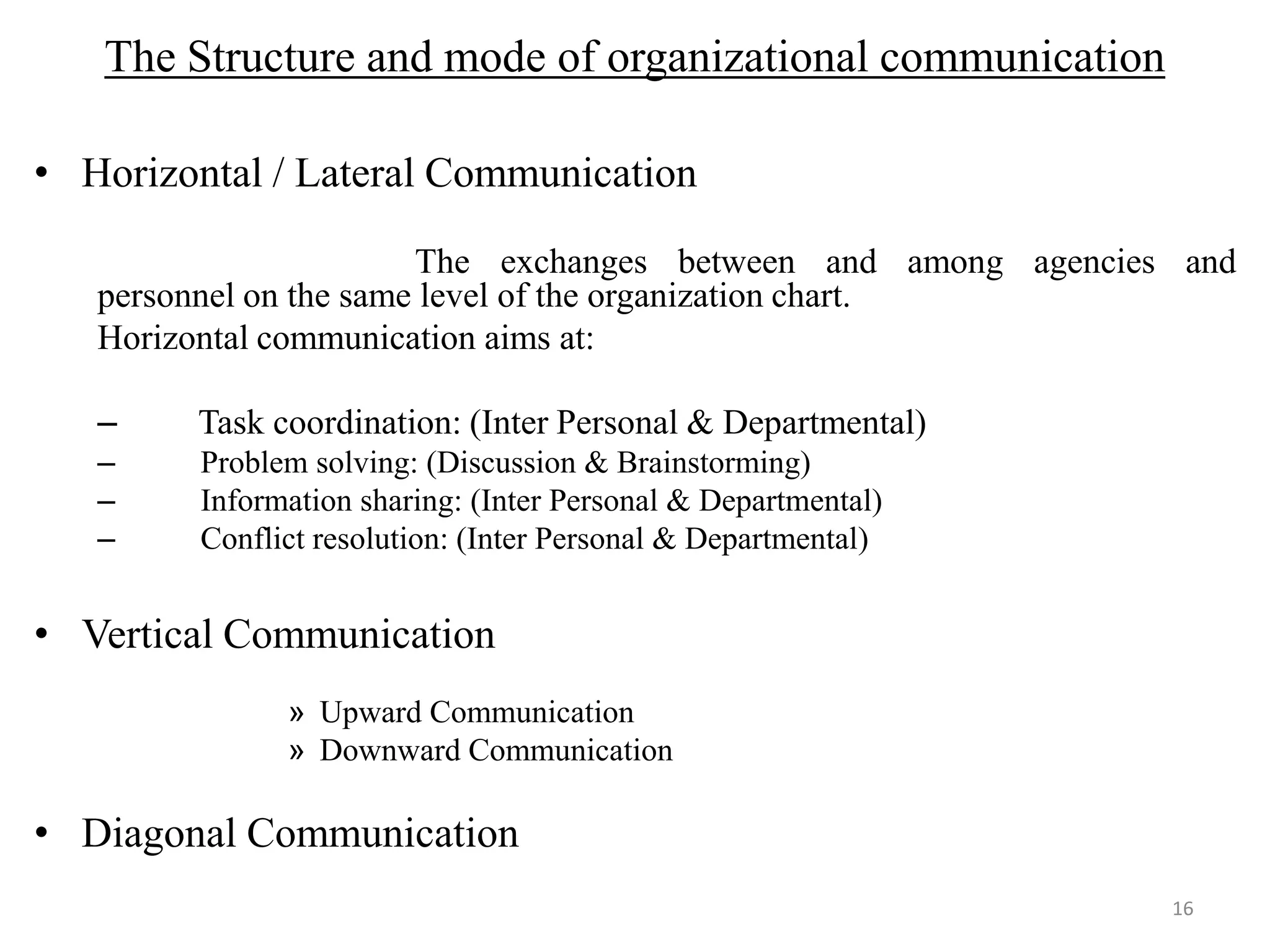
The Structure and mode of organizational communication

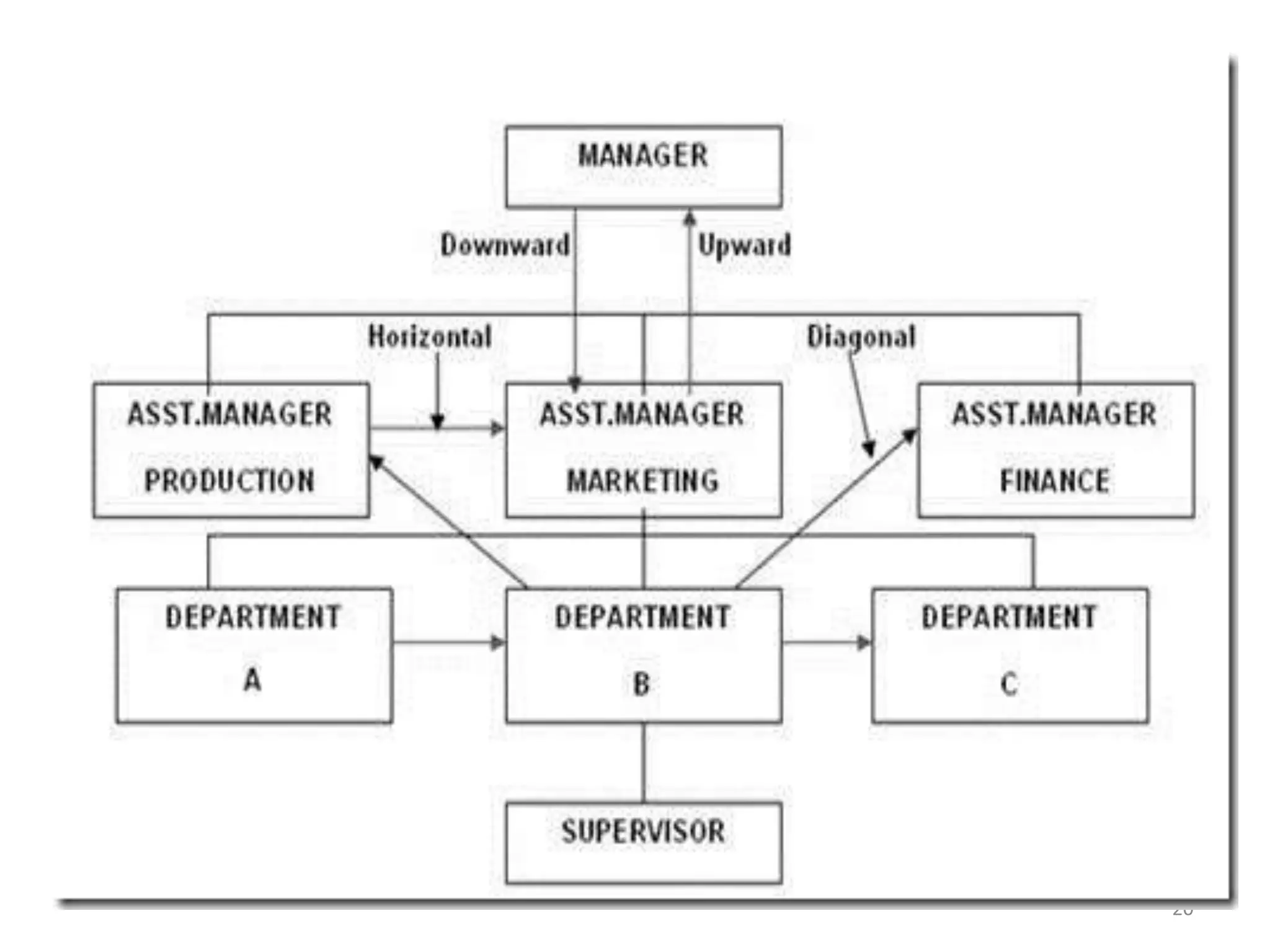
• Horizontal / Lateral Communication

                        The exchanges between and among agencies and
   personnel on the same level of the organization chart.
   Horizontal communication aims at:

   –    Task coordination: (Inter Personal & Departmental)
   –     Problem solving: (Discussion & Brainstorming)
   –     Information sharing: (Inter Personal & Departmental)
   –     Conflict resolution: (Inter Personal & Departmental)


• Vertical Communication
               » Upward Communication
               » Downward Communication

• Diagonal Communication
                                                                16
Upward communication
              Upward communication -the process whereby the
ideas, feelings, and perceptions of lower-level employee are
communicated to those at higher levels in the organization.

Functions:

• It provides management with needed information for decision
  making

• It helps employees relieve the pressures and frustrations of the
  work situation.

• It enhances employees’ sense of participation in the enterprise.
• It serves as a measure of the effectiveness of downward
  communication.
                                                               17
Downward communication
            Such communication is initiated by the organization’s
upper management and then filters downward through the “chain of
command”.

• People are limited as to the amount of information they can
  effectively absorb and react to.

• Therefore, management must, of necessity, restrict what it
  communicates to subordinates.

• Organization implies some restriction of communication. Without
  restrictions on communication, any organizational member could
  be buried under an avalanche of incoming messages from all the
  other members.
                                                              18
Diagonal Communication

• This occurs when communication occurs between workers in a
  different section of the organization where one worker is on a
  higher level.

• For example diagonal communication will occur when a
  department manager converses with an employee in another
  department.

• It allows cross communication between departments


                                                             19
20
Importance and advantages of communication in an
                  organization

• Help individuals to understand and pursue organizational
  objectives.

• Cover every management function.

• Organizational culture depends on communications.

• Improve both organizational and individual performance

• Better the communication better the performance

                                                             21
Modern era – Boundary less organizations

               Organization in which there are no barriers to
information flow ideas and information move to where they are most
needed.

                 In this modern era people have the facility to work in
their home and report it their superiors, there are employees who
report to their superiors in another country

• Concept promoted and implemented by General Electric ( Jack
  Welch)


                                                                   22
Designing communication mechanism for an organization

• An organization can be structured in many different ways, depending on
  their objectives. The structure of an organization will determine the
  ways in which it operates, performs and communicates.

• Communication in an organization also depends on the leadership style.

• Classical organizations supported information flow only through the
  chain of command, but this leads to the missing of information during
  the flow.

• There are organizations in which every official communication should
  be in a written form, especially in a bureaucratic set up.

• Organizations should keep a track of the communication between
  employees
                                                                    23
Contd..,

• One single method of communication process might not work well
  for an organization.

• So it will be better to have a communication process which is
  structured – vertical along with horizontal communication.

• The system should flexible where in decisions are to be made fast,
  or when the organization is facing problems – that is diagonal and
  by-pass communication should be allowed in important situations.

• As proposed by Jack Welch information should flow to where it is
  needed and not to unnecessary designations.

                                                                24
Communication helping growth of an organization

1. Conservative and structured

                          The communication process should be vertical for a
conservative and structured organization. Horizontal communication can be
allowed for better coordination between different departments.

                         Relationship of an organization with its customers is
very important, so the employees should be properly trained for the process.
Better the communication better the performance of any company.

                           Better communication helps in better interpersonal
relationships, less conflicts, better understanding, solving problems and helps
discussions which can lead to new ideas which will help the organization grow
better.
                                                                           25
2. Multinational company

• In a multinational company an employee might have to report to his superior
  who might be from another country or to a superior who might be in another
  country.

• So there will be cultural differences across the different units and
  subsidiaries of the same organization in different countries.

• Horizontal communication should be allowed between the units of the
  organization in different countries to keep a track on the work and its
  progress.

• Employees must be trained properly to communicate keeping in mind the
  cultural differences in different countries.


• The information should be allowed to reach where it is necessary.
                                                                        26
Contd..,

• Due to the fact that there is no single communication mechanism that
  is best fit in managing large and complex organization, a number of
  communication mechanisms are put into practice so that the MNC can
  efficiently communicate.


                                                                  27
THANK YOU


            28

Organizational Behaviour communicaion

  • 1.
    ORGANIZATONAL BEHAVIOR COMMUNICATION INAN ORGANIZATION Presented By: Amit Kumar Anas.O.M Shwetha. J Srinivas Reddy Titto.K.S 1
  • 2.
  • 3.
    • The impartingor interchange of thoughts, opinions, or information by speech, writing, or signs. • Something imparted, interchanged, or transmitted • A document or message imparting news, views, information etc. "Any act by which one person gives to or receives from another person information about that person's needs, desires, perceptions, knowledge, or affective states. Communication may be intentional or unintentional, may involve conventional or unconventional signals, may take linguistic or nonlinguistic forms, and may occur through spoken or other modes." 3
  • 4.
    What is organizationalcommunication? And How is it different from usual communication? 4
  • 5.
    “Organizational communication isthe process by which activities of an organization are collected and coordinated to reach the goals of both individuals and the organization” “In simple terms it is the information flow that happens in an organization but the flow of information has got a structure , direction and process.” 5
  • 6.
    What kind ofinformation flow happen in an organization? And Information flow happens between whom? 6
  • 7.
    Types of businesscommunication 1. Internal communication: This is the communication that takes place within an organization. In addition to the usual face to face, telephone, fax or mail; modern organizations may use technology to communicate internally. Technology may be used for e-mails or a linked internal communication. 2. External communication: Communication between the organization and those outside the organization. The communicate with other businesses can be through telephone, fax ,internet etc.
  • 8.
    External communication Internal • Letters communication • Fax • Direct mail • Team briefing • Internet • Notices • Video • Reports • Telephones • Memos • Advertising • Face to face • websites • E-mail
  • 9.
    Influencers Investors Potential Employees Employees Customers Competitors Prospects Partners Press/Analysts 9
  • 10.
    The communication looksfairly simple 10
  • 11.
    Influencers Investors Potential Employees Employees Customers Competitors Prospects Partners Press/Analysts 11
  • 12.
    Now how complicateddoes it look ? 12
  • 13.
  • 14.
  • 15.
    Types of communicationin an organization.  Formal Communication  Chain of command  Written word  Representative system  Informal Communication  Gossips  Grape vine talks  Chit chats 15
  • 16.
    The Structure andmode of organizational communication • Horizontal / Lateral Communication The exchanges between and among agencies and personnel on the same level of the organization chart. Horizontal communication aims at: – Task coordination: (Inter Personal & Departmental) – Problem solving: (Discussion & Brainstorming) – Information sharing: (Inter Personal & Departmental) – Conflict resolution: (Inter Personal & Departmental) • Vertical Communication » Upward Communication » Downward Communication • Diagonal Communication 16
  • 17.
    Upward communication Upward communication -the process whereby the ideas, feelings, and perceptions of lower-level employee are communicated to those at higher levels in the organization. Functions: • It provides management with needed information for decision making • It helps employees relieve the pressures and frustrations of the work situation. • It enhances employees’ sense of participation in the enterprise. • It serves as a measure of the effectiveness of downward communication. 17
  • 18.
    Downward communication Such communication is initiated by the organization’s upper management and then filters downward through the “chain of command”. • People are limited as to the amount of information they can effectively absorb and react to. • Therefore, management must, of necessity, restrict what it communicates to subordinates. • Organization implies some restriction of communication. Without restrictions on communication, any organizational member could be buried under an avalanche of incoming messages from all the other members. 18
  • 19.
    Diagonal Communication • Thisoccurs when communication occurs between workers in a different section of the organization where one worker is on a higher level. • For example diagonal communication will occur when a department manager converses with an employee in another department. • It allows cross communication between departments 19
  • 20.
  • 21.
    Importance and advantagesof communication in an organization • Help individuals to understand and pursue organizational objectives. • Cover every management function. • Organizational culture depends on communications. • Improve both organizational and individual performance • Better the communication better the performance 21
  • 22.
    Modern era –Boundary less organizations Organization in which there are no barriers to information flow ideas and information move to where they are most needed. In this modern era people have the facility to work in their home and report it their superiors, there are employees who report to their superiors in another country • Concept promoted and implemented by General Electric ( Jack Welch) 22
  • 23.
    Designing communication mechanismfor an organization • An organization can be structured in many different ways, depending on their objectives. The structure of an organization will determine the ways in which it operates, performs and communicates. • Communication in an organization also depends on the leadership style. • Classical organizations supported information flow only through the chain of command, but this leads to the missing of information during the flow. • There are organizations in which every official communication should be in a written form, especially in a bureaucratic set up. • Organizations should keep a track of the communication between employees 23
  • 24.
    Contd.., • One singlemethod of communication process might not work well for an organization. • So it will be better to have a communication process which is structured – vertical along with horizontal communication. • The system should flexible where in decisions are to be made fast, or when the organization is facing problems – that is diagonal and by-pass communication should be allowed in important situations. • As proposed by Jack Welch information should flow to where it is needed and not to unnecessary designations. 24
  • 25.
    Communication helping growthof an organization 1. Conservative and structured The communication process should be vertical for a conservative and structured organization. Horizontal communication can be allowed for better coordination between different departments. Relationship of an organization with its customers is very important, so the employees should be properly trained for the process. Better the communication better the performance of any company. Better communication helps in better interpersonal relationships, less conflicts, better understanding, solving problems and helps discussions which can lead to new ideas which will help the organization grow better. 25
  • 26.
    2. Multinational company •In a multinational company an employee might have to report to his superior who might be from another country or to a superior who might be in another country. • So there will be cultural differences across the different units and subsidiaries of the same organization in different countries. • Horizontal communication should be allowed between the units of the organization in different countries to keep a track on the work and its progress. • Employees must be trained properly to communicate keeping in mind the cultural differences in different countries. • The information should be allowed to reach where it is necessary. 26
  • 27.
    Contd.., • Due tothe fact that there is no single communication mechanism that is best fit in managing large and complex organization, a number of communication mechanisms are put into practice so that the MNC can efficiently communicate. 27
  • 28.