Interpersonal Behaviour and Group Dynamics By: Raghav  Malhotra MBA Gen. Presentation   On INSTITUTE  OF MANAGEMENT STUDIES AND RESEARCH M.D.U. ROHTAK
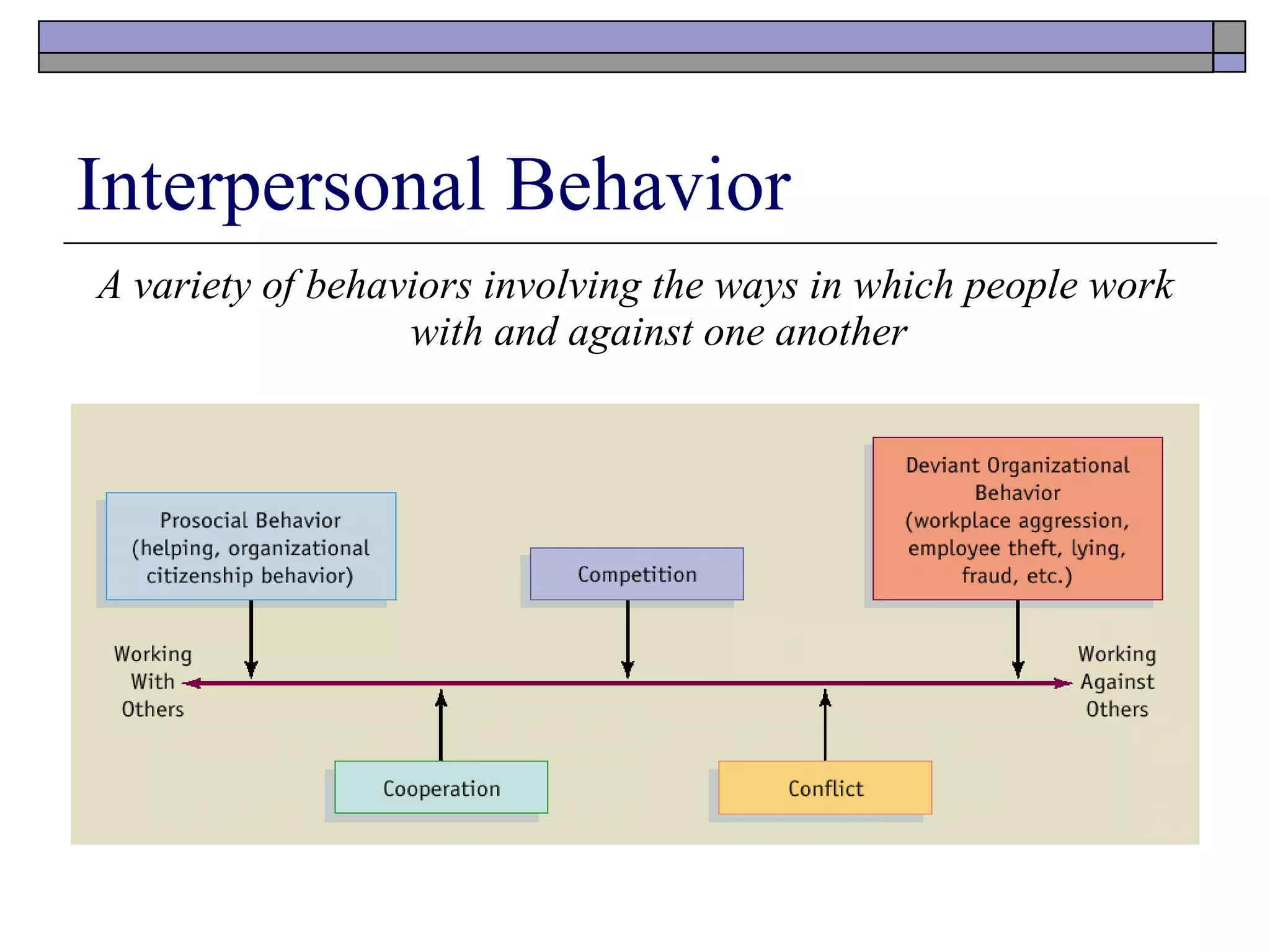
Interpersonal Behavior A variety of behaviors involving the ways in which people work with and against one another
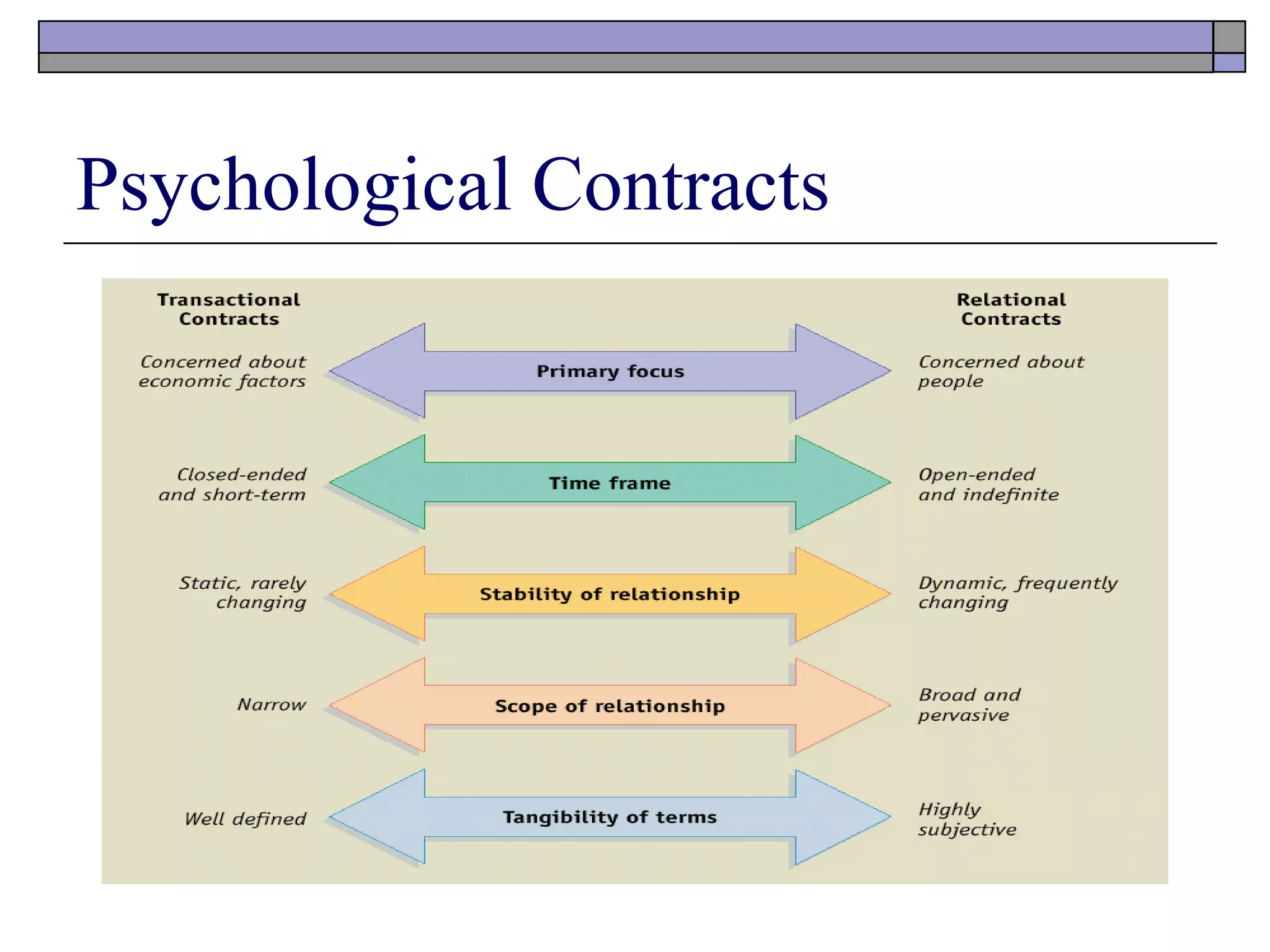
Psychological Contracts People’s beliefs about what is expected of another in a relationship Transactional Contract :  A type of psychological contract that is characterized by an exclusively economic focus, a brief time span, an unchanging nature, and is narrow and well defined in scope Relational Contract :  A type of psychological contract in which the parties have a long-term and widely defined relationship with a vast focus
Psychological Contracts
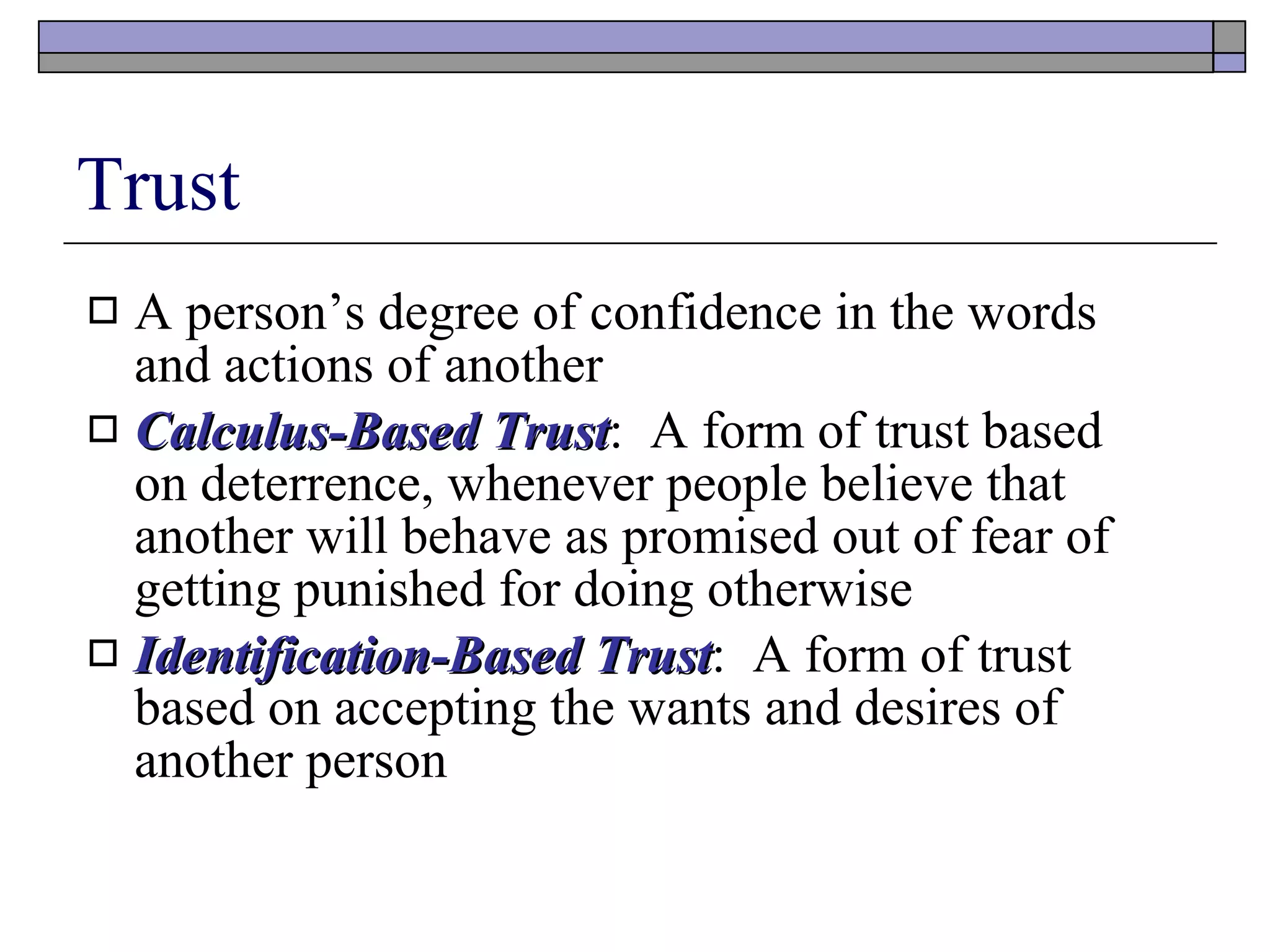
Trust A person’s degree of confidence in the words and actions of another Calculus-Based Trust :  A form of trust based on deterrence, whenever people believe that another will behave as promised out of fear of getting punished for doing otherwise Identification-Based Trust :  A form of trust based on accepting the wants and desires of another person
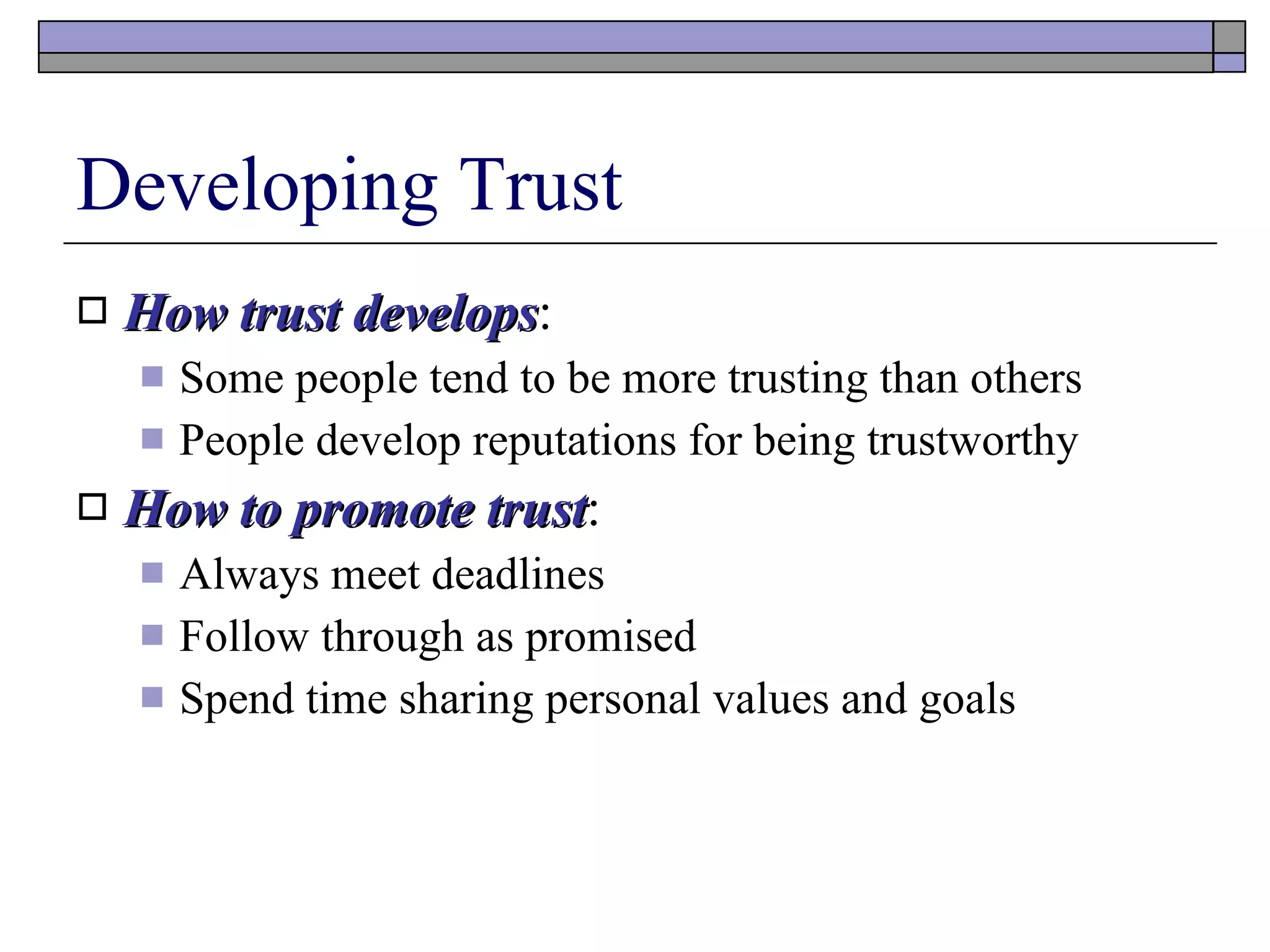
Developing Trust How trust develops : Some people tend to be more trusting than others People develop reputations for being trustworthy How to promote trust : Always meet deadlines Follow through as promised Spend time sharing personal values and goals
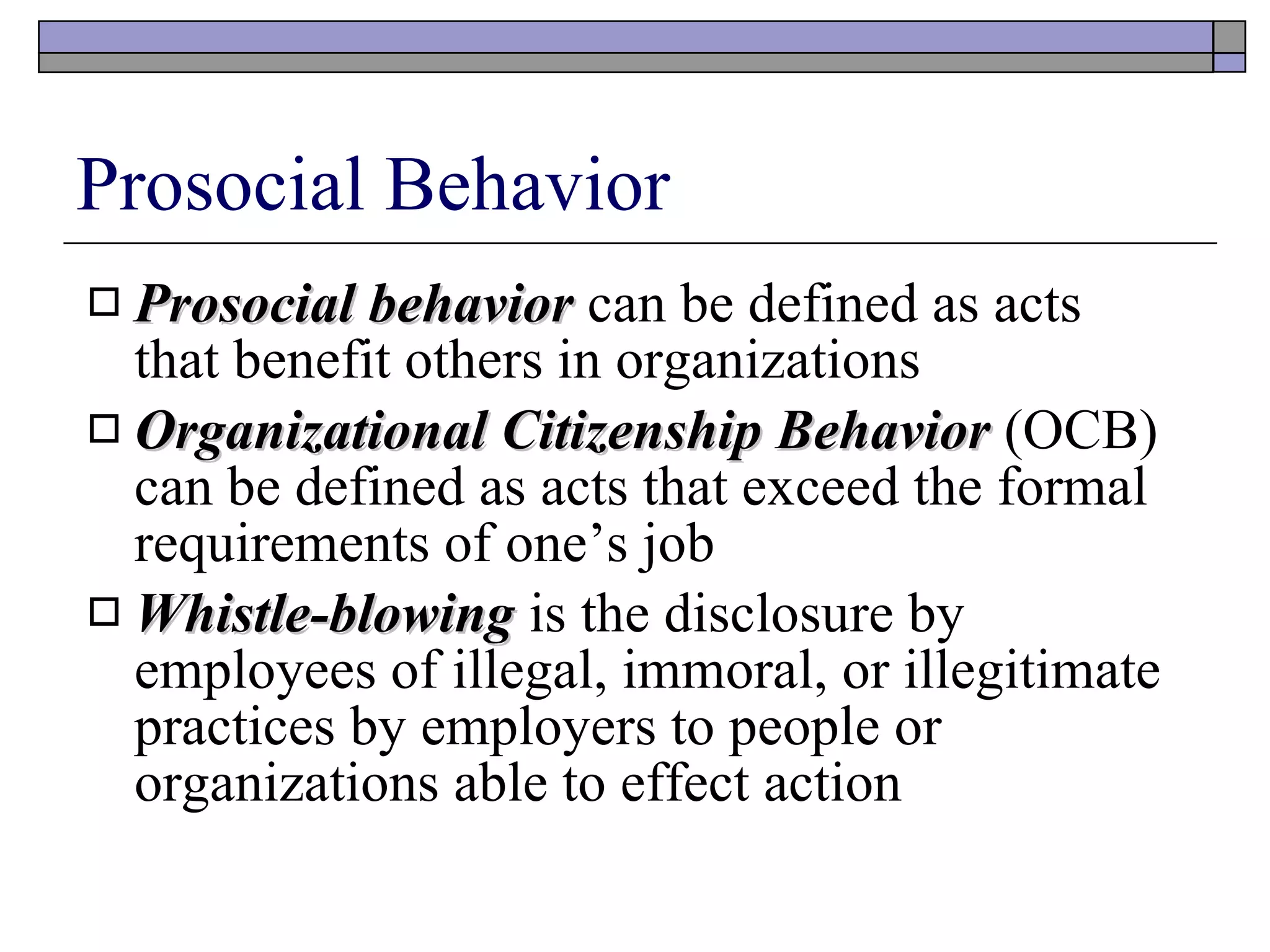
Prosocial Behavior Prosocial behavior   can be defined as acts that benefit others in organizations Organizational Citizenship Behavior  (OCB) can be defined as acts that exceed the formal requirements of one’s job Whistle-blowing   is the disclosure by employees of illegal, immoral, or illegitimate practices by employers to people or organizations able to effect action
Organizational Citizenship Behavior
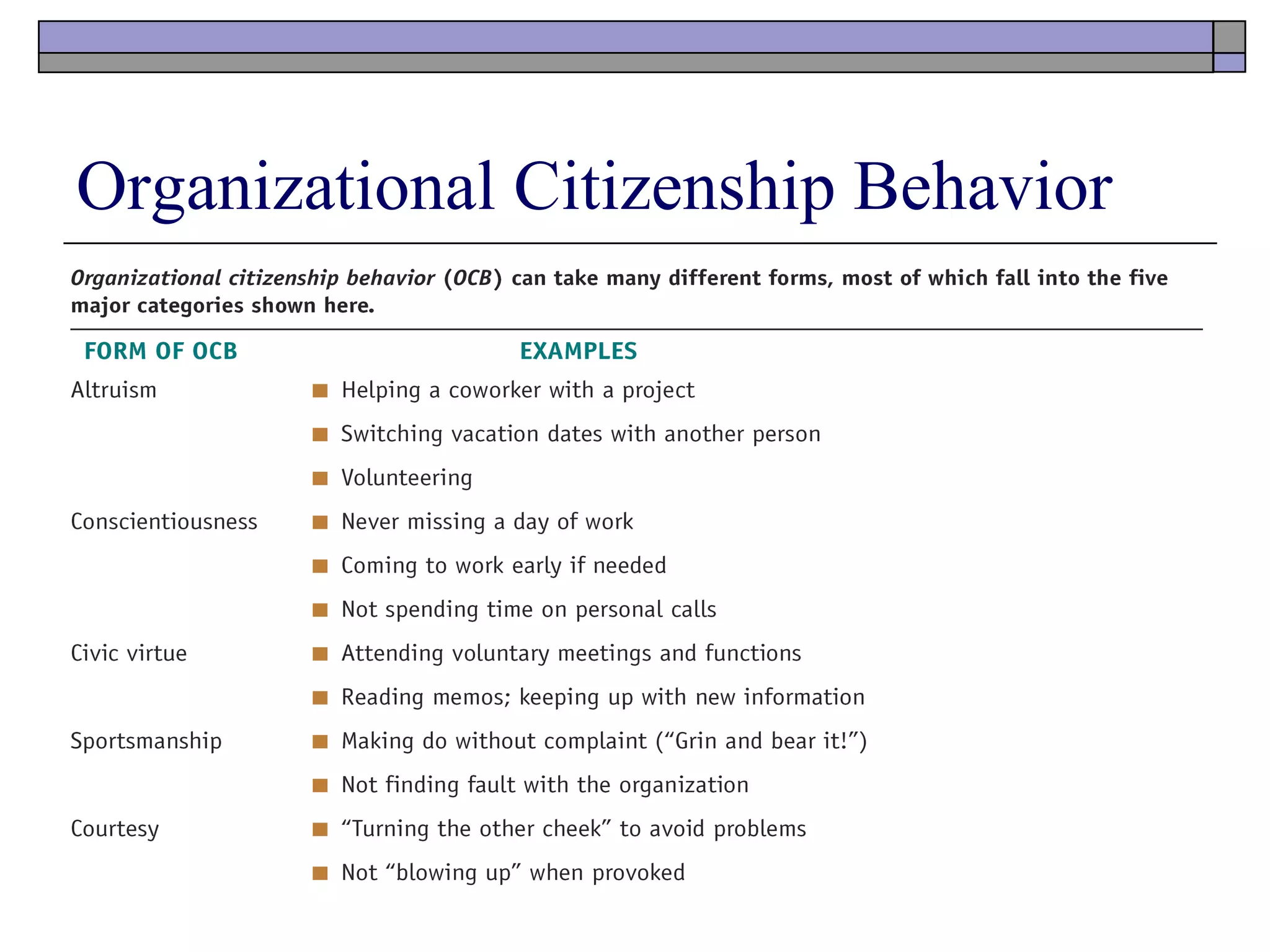
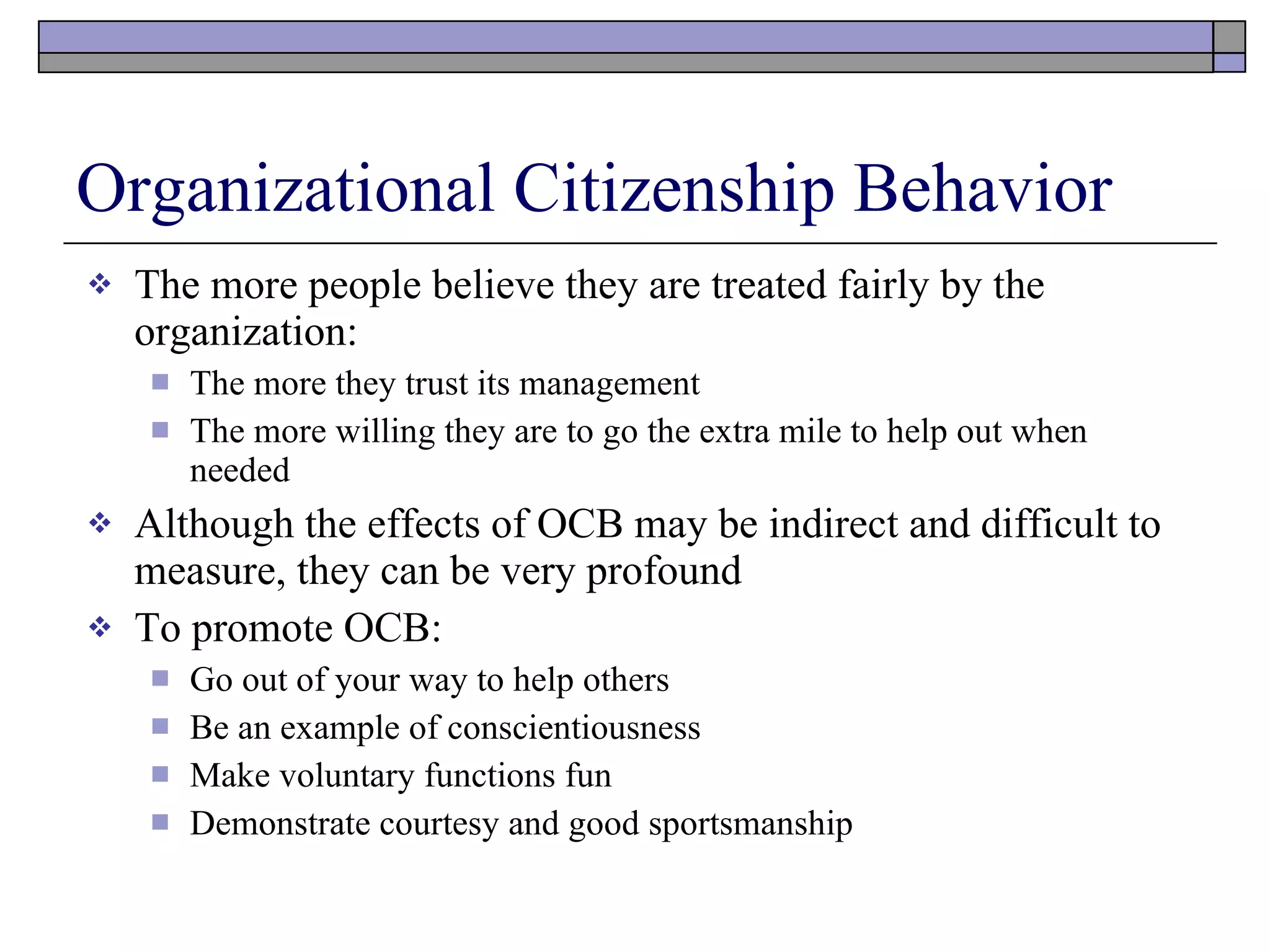
Organizational Citizenship Behavior The more people believe they are treated fairly by the organization: The more they trust its management The more willing they are to go the extra mile to help out when needed Although the effects of OCB may be indirect and difficult to measure, they can be very profound To promote OCB: Go out of your way to help others Be an example of conscientiousness Make voluntary functions fun Demonstrate courtesy and good sportsmanship
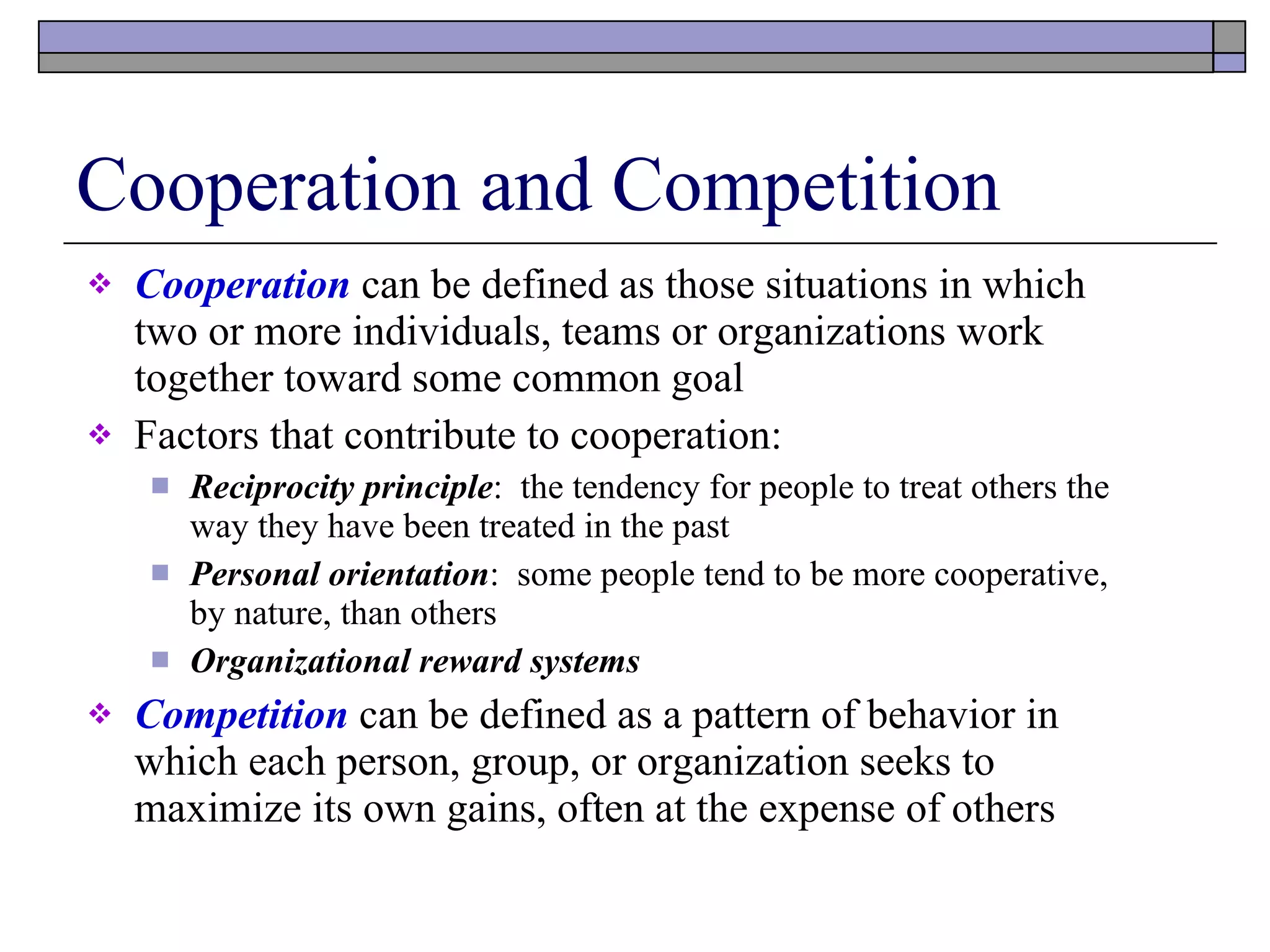
Cooperation and Competition Cooperation  can be defined as those situations in which two or more individuals, teams or organizations work together toward some common goal Factors that contribute to cooperation: Reciprocity principle :  the tendency for people to treat others the way they have been treated in the past Personal orientation :  some people tend to be more cooperative, by nature, than others Organizational reward systems Competition  can be defined as a pattern of behavior in which each person, group, or organization seeks to maximize its own gains, often at the expense of others
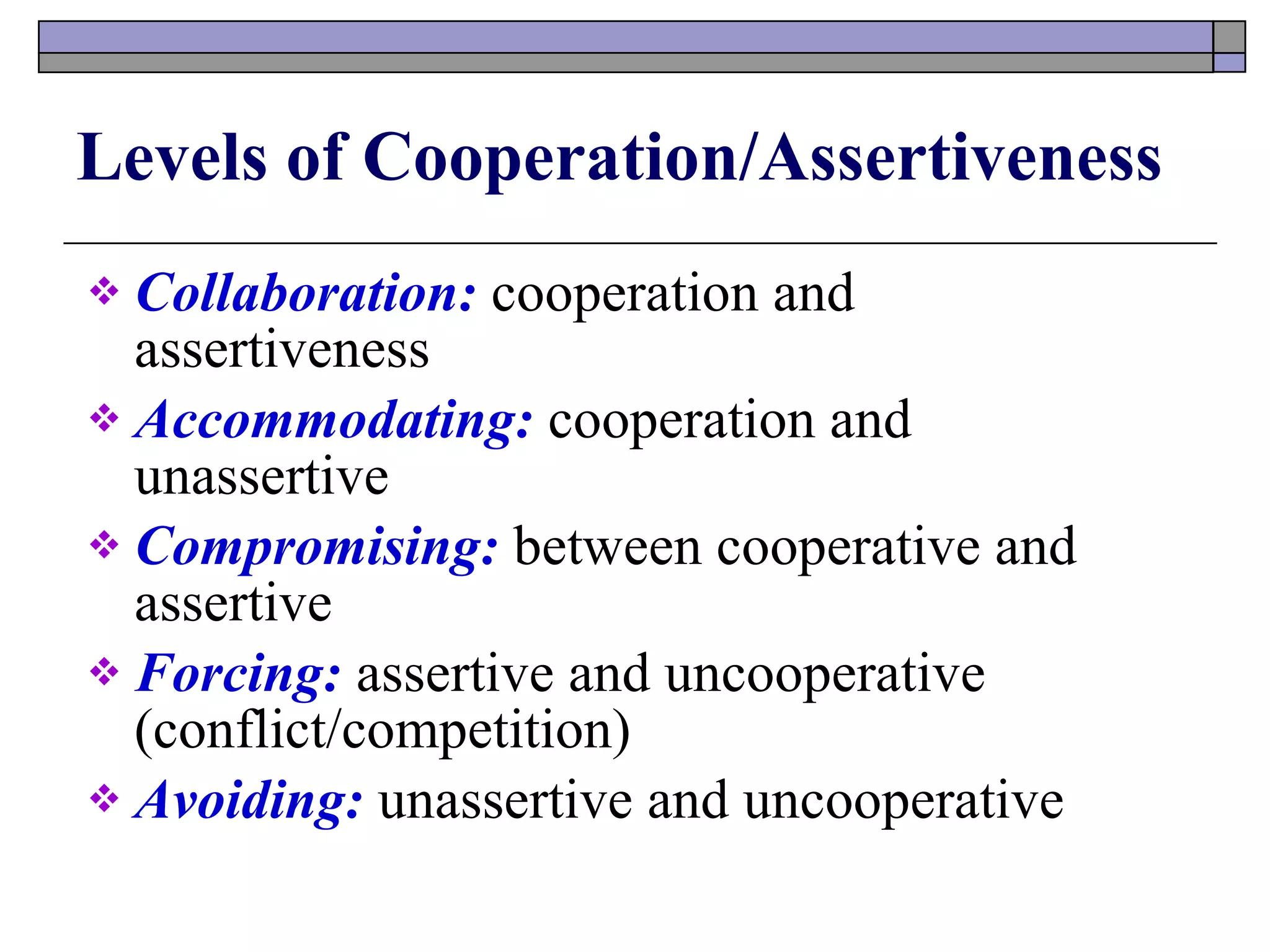
Levels of Cooperation/Assertiveness Collaboration:  cooperation and assertiveness Accommodating:  cooperation and unassertive Compromising:  between cooperative and assertive Forcing:  assertive and uncooperative (conflict/competition) Avoiding:  unassertive and uncooperative
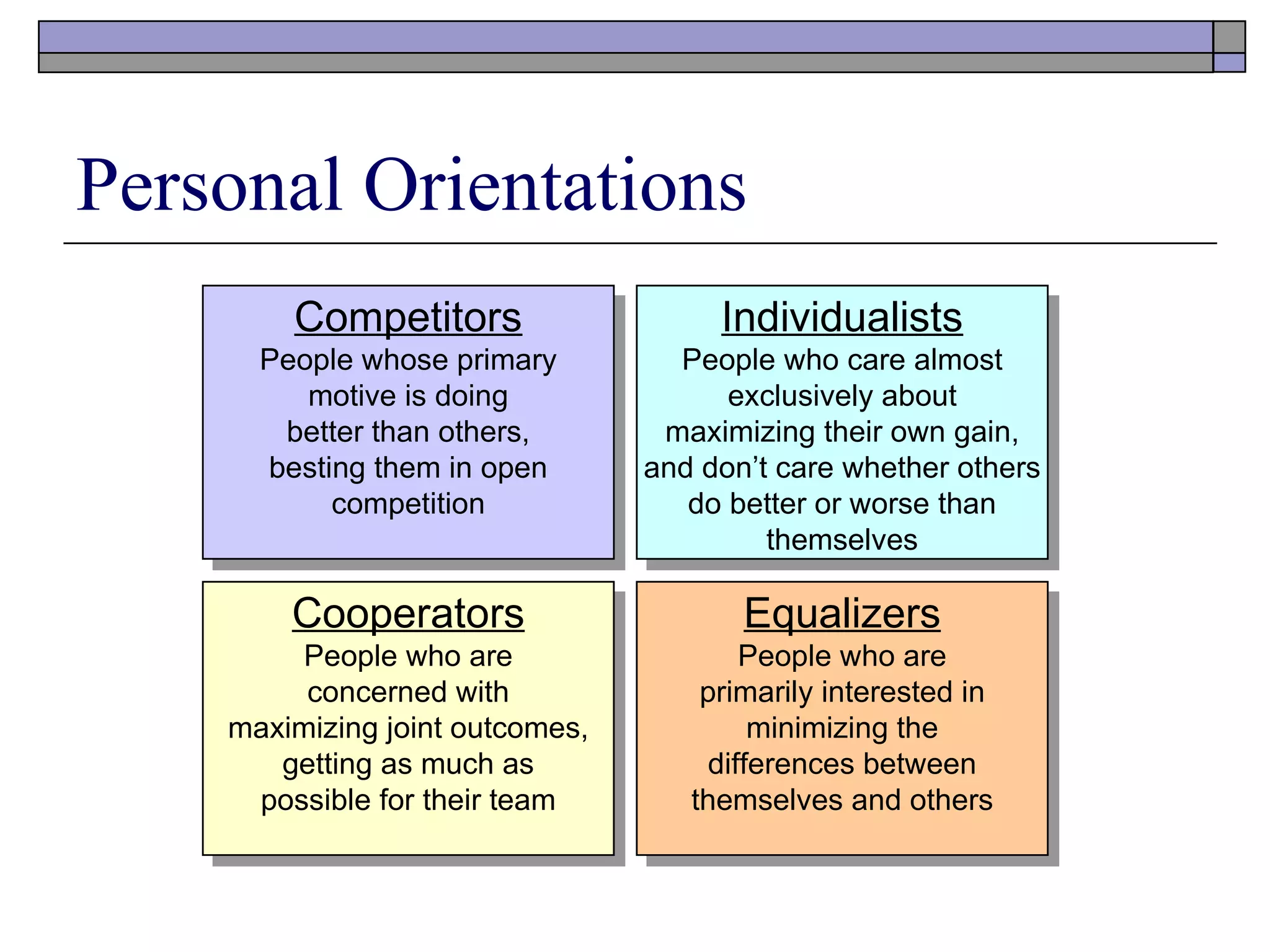
Personal Orientations Competitors People whose primary motive is doing better than others, besting them in open competition Individualists People who care almost exclusively about maximizing their own gain, and don’t care whether others do better or worse than themselves Cooperators People who are concerned with maximizing joint outcomes, getting as much as possible for their team Equalizers People who are primarily interested in minimizing the differences between themselves and others
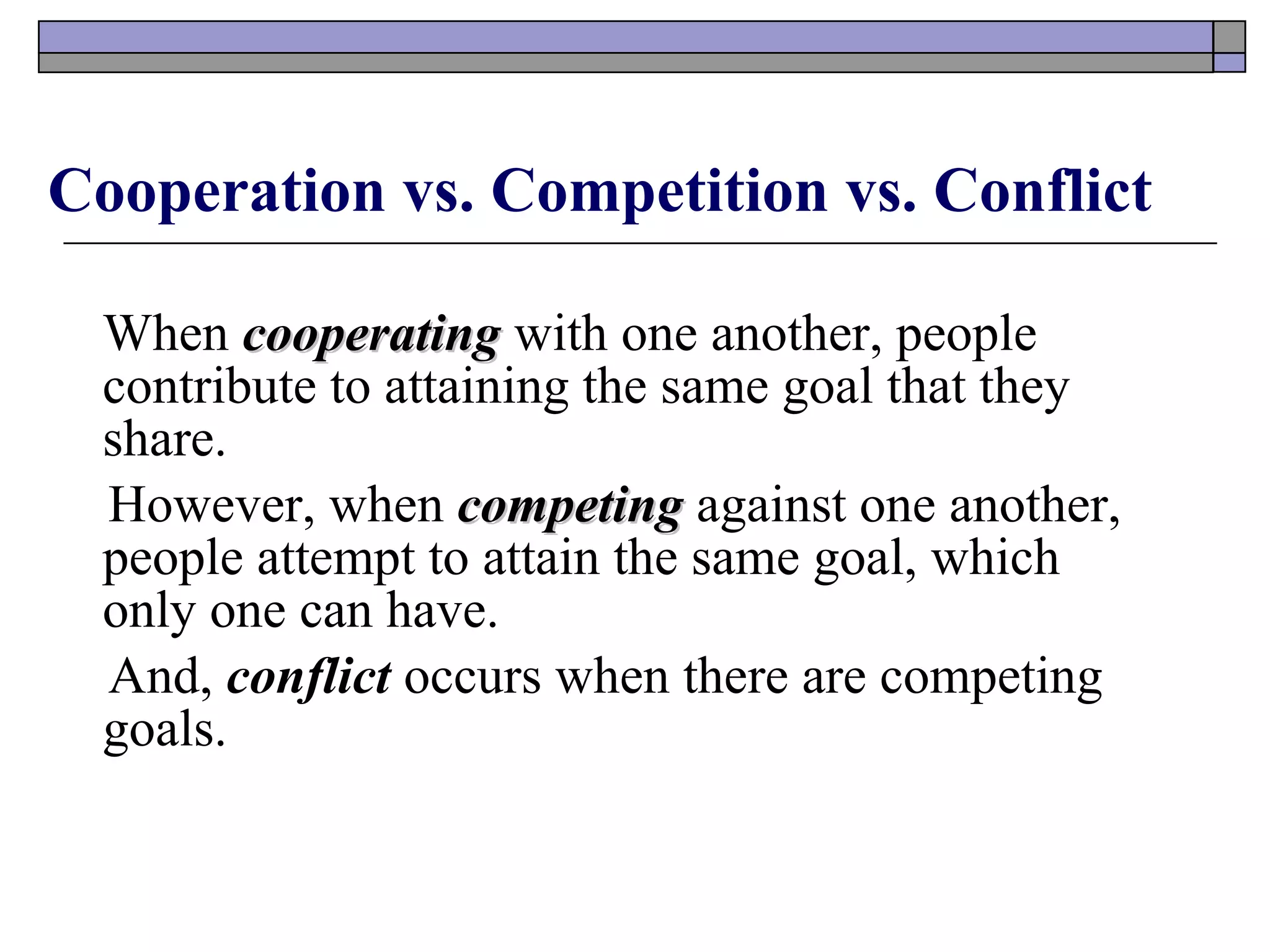
Cooperation vs. Competition vs. Conflict When  cooperating  with one another, people contribute to attaining the same goal that they share.  However, when  competing  against one another, people attempt to attain the same goal, which only one can have. And,  conflict  occurs when there are competing goals.


Refrences Books -Robbins, OB, Prentice Hall  -LM Prasad,OB, Sultan chand & Sons Web www.wikipedea.org www.Pagalguy.com www.freemba.in www.authorstream.com www.CartoonStock.com.
INSTITUTE  OF  MANAGEMENT  STUDIES  AND  RESEARCH   ROHTAK

Interpersonal Behaviour And Group Dynamics By Raghav Malhotra

  • 1.
    Interpersonal Behaviour andGroup Dynamics By: Raghav Malhotra MBA Gen. Presentation On INSTITUTE OF MANAGEMENT STUDIES AND RESEARCH M.D.U. ROHTAK
  • 2.
    Interpersonal Behavior Avariety of behaviors involving the ways in which people work with and against one another
  • 3.
    Psychological Contracts People’sbeliefs about what is expected of another in a relationship Transactional Contract : A type of psychological contract that is characterized by an exclusively economic focus, a brief time span, an unchanging nature, and is narrow and well defined in scope Relational Contract : A type of psychological contract in which the parties have a long-term and widely defined relationship with a vast focus
  • 4.
  • 5.
    Trust A person’sdegree of confidence in the words and actions of another Calculus-Based Trust : A form of trust based on deterrence, whenever people believe that another will behave as promised out of fear of getting punished for doing otherwise Identification-Based Trust : A form of trust based on accepting the wants and desires of another person
  • 6.
    Developing Trust Howtrust develops : Some people tend to be more trusting than others People develop reputations for being trustworthy How to promote trust : Always meet deadlines Follow through as promised Spend time sharing personal values and goals
  • 7.
    Prosocial Behavior Prosocialbehavior can be defined as acts that benefit others in organizations Organizational Citizenship Behavior (OCB) can be defined as acts that exceed the formal requirements of one’s job Whistle-blowing is the disclosure by employees of illegal, immoral, or illegitimate practices by employers to people or organizations able to effect action
  • 8.
  • 9.
    Organizational Citizenship BehaviorThe more people believe they are treated fairly by the organization: The more they trust its management The more willing they are to go the extra mile to help out when needed Although the effects of OCB may be indirect and difficult to measure, they can be very profound To promote OCB: Go out of your way to help others Be an example of conscientiousness Make voluntary functions fun Demonstrate courtesy and good sportsmanship
  • 10.
    Cooperation and CompetitionCooperation can be defined as those situations in which two or more individuals, teams or organizations work together toward some common goal Factors that contribute to cooperation: Reciprocity principle : the tendency for people to treat others the way they have been treated in the past Personal orientation : some people tend to be more cooperative, by nature, than others Organizational reward systems Competition can be defined as a pattern of behavior in which each person, group, or organization seeks to maximize its own gains, often at the expense of others
  • 11.
    Levels of Cooperation/AssertivenessCollaboration: cooperation and assertiveness Accommodating: cooperation and unassertive Compromising: between cooperative and assertive Forcing: assertive and uncooperative (conflict/competition) Avoiding: unassertive and uncooperative
  • 12.
    Personal Orientations CompetitorsPeople whose primary motive is doing better than others, besting them in open competition Individualists People who care almost exclusively about maximizing their own gain, and don’t care whether others do better or worse than themselves Cooperators People who are concerned with maximizing joint outcomes, getting as much as possible for their team Equalizers People who are primarily interested in minimizing the differences between themselves and others
  • 13.
    Cooperation vs. Competitionvs. Conflict When cooperating with one another, people contribute to attaining the same goal that they share. However, when competing against one another, people attempt to attain the same goal, which only one can have. And, conflict occurs when there are competing goals.
  • 14.
  • 15.
  • 16.
  • 17.
  • 18.
  • 19.
  • 20.
  • 21.
  • 22.
  • 23.
  • 24.
  • 25.
  • 26.
  • 27.
  • 28.
  • 29.
    Refrences Books -Robbins,OB, Prentice Hall -LM Prasad,OB, Sultan chand & Sons Web www.wikipedea.org www.Pagalguy.com www.freemba.in www.authorstream.com www.CartoonStock.com.
  • 30.
    INSTITUTE OF MANAGEMENT STUDIES AND RESEARCH ROHTAK