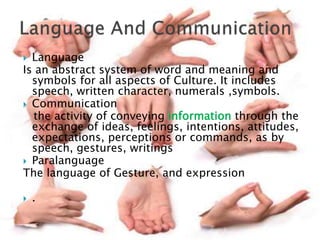
 Language 
Is an abstract system of word and meaning and 
symbols for all aspects of Culture. It includes 
speech, written character, numerals ,symbols. 
 Communication 
the activity of conveying information through the 
exchange of ideas, feelings, intentions, attitudes, 
expectations, perceptions or commands, as by 
speech, gestures, writings 
 Paralanguage 
The language of Gesture, and expression 
 .
Verbal Non-verbal
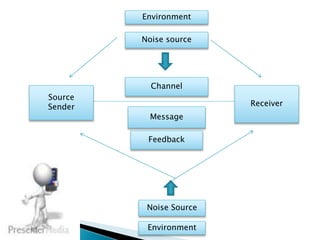
Environment 
Noise source 
Channel 
Source 
Sender Receiver 
Message 
Feedback 
Noise Source 
Environment
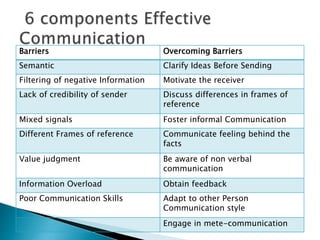
Barriers Overcoming Barriers 
Semantic Clarify Ideas Before Sending 
Filtering of negative Information Motivate the receiver 
Lack of credibility of sender Discuss differences in frames of 
reference 
Mixed signals Foster informal Communication 
Different Frames of reference Communicate feeling behind the 
facts 
Value judgment Be aware of non verbal 
communication 
Information Overload Obtain feedback 
Poor Communication Skills Adapt to other Person 
Communication style 
Engage in mete-communication
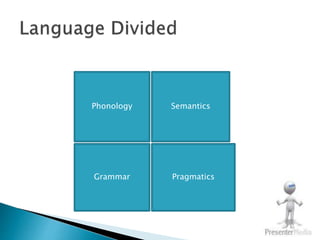
Phonology Semantics 
Grammar Pragmatics
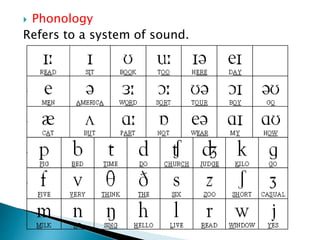
 Phonology 
Refers to a system of sound.
 Semantics 
Is a study of word meanings and word 
combination 
 Grammar 
Refers to the structure of language through its 
morphology and syntax. 
 Pragmatics 
Is Concerned rules for the use of appropriate 
language particular contexts.
 Refers to the attitudes,values,customs,and 
behavior patterns that characterize a social 
group.
 Culture is the learned 
norms,values,knowledge,artifacts,language,a 
nd symbols, that are constantly 
communicated among people who share a 
common way of life. 
- Calhoun,et al.,(1994) 
THE CHARACTERISTIC OF CULTURE 
Culture is: 
 Learned 
 Shared by a group of people
Cumulative 
Change 
Dynamic 
 Ideational 
Diverse 
Culture gives us a range of permissible 
behavior
1. Language-defines what is the mean of 
human. It forms the core of all culture. 
2. Symbols-is anything that that carries a 
particular meaning recognize by people who 
share culture. Symbols serve as the basis for 
everyday reality.
1.Ideas/Knowledge/Beliefs- 
2.Values-are defined as culturally defined 
standards of desirability, goodness and 
beauty which serve as the broad guidelines 
for social living. 
3. Accounts- Are how people use that common 
language to 
explain,justify,rationalize,excuse or 
legitimize our behavior to themselves and 
others.
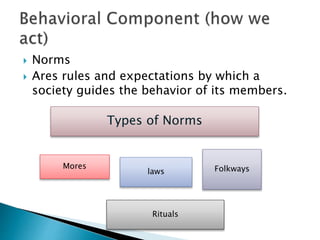
 Norms 
 Ares rules and expectations by which a 
society guides the behavior of its members. 
Types of Norms 
Mores 
laws Folkways 
Rituals
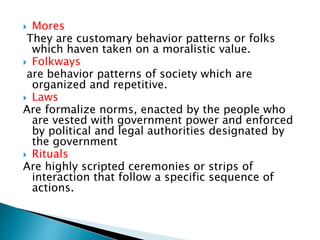
 Mores 
They are customary behavior patterns or folks 
which haven taken on a moralistic value. 
 Folkways 
are behavior patterns of society which are 
organized and repetitive. 
 Laws 
Are formalize norms, enacted by the people who 
are vested with government power and enforced 
by political and legal authorities designated by 
the government 
 Rituals 
Are highly scripted ceremonies or strips of 
interaction that follow a specific sequence of 
actions.
 Material components of culture refer to 
physical objects of culture such as machines, 
equipment, tools, books, clothing etc.
 The cultural of groups is an integrated 
network of folkways,mores,system of beliefs, 
and institutional patterns it can be broken 
into simple units or elements called Cultural 
traits. 
 Cultural traits, either of a material or non-material 
culture, represents a singled element 
or combination of elements related to a 
specific situation.
 Enculturation 
It is the process of learning culture of ones own 
group. 
 Acculturation 
It is the process of learning some new traits from 
another culture 
 Assimilation 
It is term used for a process in which an individual 
entirely loses any awareness of his/her previous 
group identity and takes on the culture and 
attitudes of one another group.
 Culture helps the individual fulfill his 
potential as a human being. 
 Through the development of culture, man can 
overcome his physical disadvantages and 
allows him to provide himself with 
fire,clothing,food and shelter. 
 Culture provides rules of proper conduct for 
living in a society. 
 Culture also provides the individual his 
concepts of family.
 Practices considered immoral or Taboo to a 
certain group of people but are accepted by 
other groups with a different cultural 
orientation.
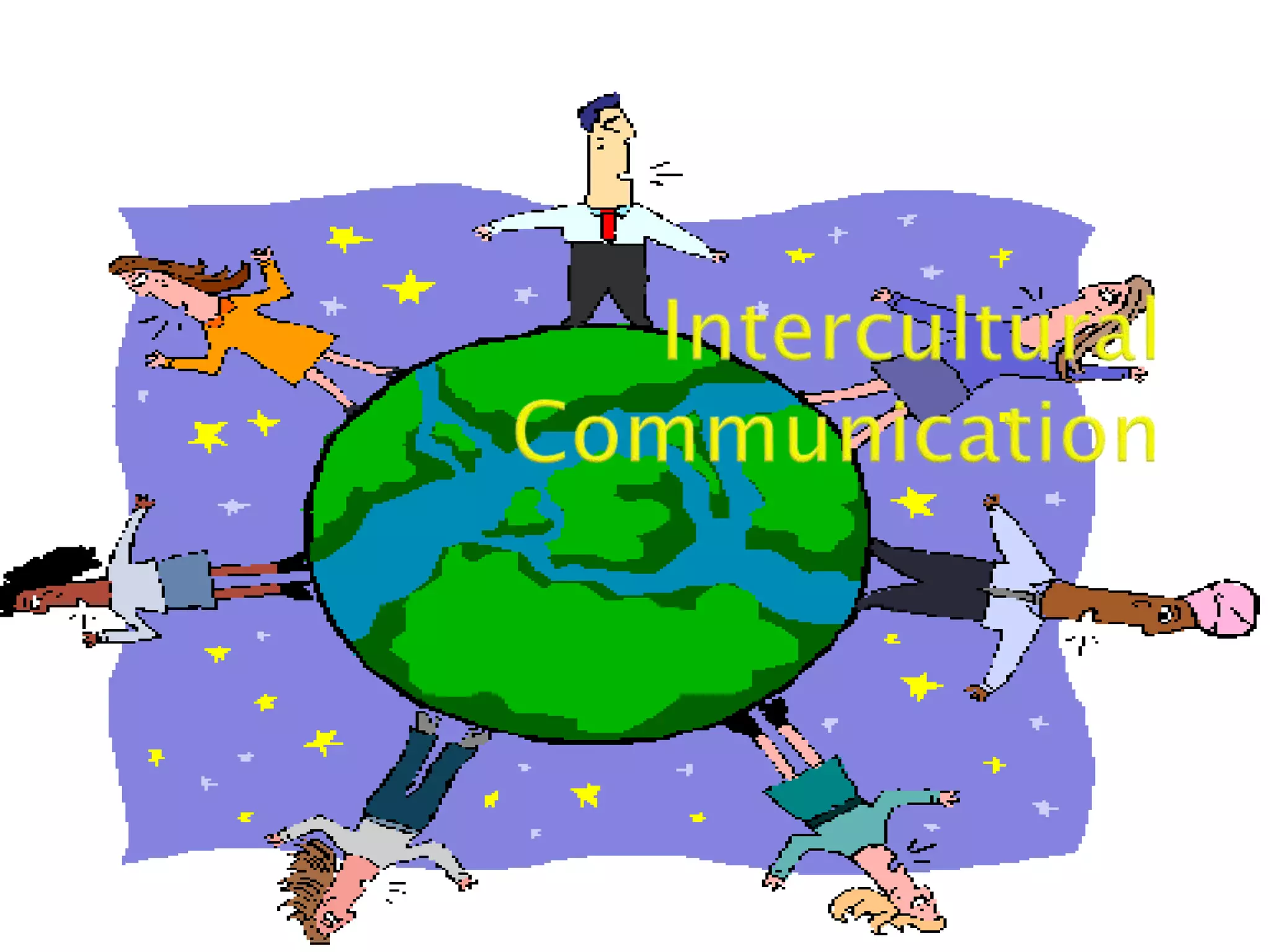
Intercultural Communication

Intercultural Communication

  • 2.
     Language Isan abstract system of word and meaning and symbols for all aspects of Culture. It includes speech, written character, numerals ,symbols.  Communication the activity of conveying information through the exchange of ideas, feelings, intentions, attitudes, expectations, perceptions or commands, as by speech, gestures, writings  Paralanguage The language of Gesture, and expression  .
  • 3.
  • 4.
    Environment Noise source Channel Source Sender Receiver Message Feedback Noise Source Environment
  • 5.
    Barriers Overcoming Barriers Semantic Clarify Ideas Before Sending Filtering of negative Information Motivate the receiver Lack of credibility of sender Discuss differences in frames of reference Mixed signals Foster informal Communication Different Frames of reference Communicate feeling behind the facts Value judgment Be aware of non verbal communication Information Overload Obtain feedback Poor Communication Skills Adapt to other Person Communication style Engage in mete-communication
  • 7.
  • 8.
     Phonology Refersto a system of sound.
  • 9.
     Semantics Isa study of word meanings and word combination  Grammar Refers to the structure of language through its morphology and syntax.  Pragmatics Is Concerned rules for the use of appropriate language particular contexts.
  • 11.
     Refers tothe attitudes,values,customs,and behavior patterns that characterize a social group.
  • 12.
     Culture isthe learned norms,values,knowledge,artifacts,language,a nd symbols, that are constantly communicated among people who share a common way of life. - Calhoun,et al.,(1994) THE CHARACTERISTIC OF CULTURE Culture is:  Learned  Shared by a group of people
  • 13.
    Cumulative Change Dynamic  Ideational Diverse Culture gives us a range of permissible behavior
  • 14.
    1. Language-defines whatis the mean of human. It forms the core of all culture. 2. Symbols-is anything that that carries a particular meaning recognize by people who share culture. Symbols serve as the basis for everyday reality.
  • 15.
    1.Ideas/Knowledge/Beliefs- 2.Values-are definedas culturally defined standards of desirability, goodness and beauty which serve as the broad guidelines for social living. 3. Accounts- Are how people use that common language to explain,justify,rationalize,excuse or legitimize our behavior to themselves and others.
  • 16.
     Norms Ares rules and expectations by which a society guides the behavior of its members. Types of Norms Mores laws Folkways Rituals
  • 17.
     Mores Theyare customary behavior patterns or folks which haven taken on a moralistic value.  Folkways are behavior patterns of society which are organized and repetitive.  Laws Are formalize norms, enacted by the people who are vested with government power and enforced by political and legal authorities designated by the government  Rituals Are highly scripted ceremonies or strips of interaction that follow a specific sequence of actions.
  • 18.
     Material componentsof culture refer to physical objects of culture such as machines, equipment, tools, books, clothing etc.
  • 19.
     The culturalof groups is an integrated network of folkways,mores,system of beliefs, and institutional patterns it can be broken into simple units or elements called Cultural traits.  Cultural traits, either of a material or non-material culture, represents a singled element or combination of elements related to a specific situation.
  • 20.
     Enculturation Itis the process of learning culture of ones own group.  Acculturation It is the process of learning some new traits from another culture  Assimilation It is term used for a process in which an individual entirely loses any awareness of his/her previous group identity and takes on the culture and attitudes of one another group.
  • 21.
     Culture helpsthe individual fulfill his potential as a human being.  Through the development of culture, man can overcome his physical disadvantages and allows him to provide himself with fire,clothing,food and shelter.  Culture provides rules of proper conduct for living in a society.  Culture also provides the individual his concepts of family.
  • 22.
     Practices consideredimmoral or Taboo to a certain group of people but are accepted by other groups with a different cultural orientation.